The Impact of Endocrine Disruptor Exposure During Pregnancy on Bacterial Complications and Viral Infections: A Narrative Review

 , , ,
, , ,  , , , ,
  and
and
Abstract
1. Introduction
2. Literature Search Strategy
3. EDCs: Sources and Exposure During Pregnancy
3.1. Definition and Mechanisms of Endocrine Disruption
3.2. Major Classes of EDCs Relevant to Pregnancy
3.3. Routes of Maternal Exposure
3.4. Placental Transfer and Fetal Exposure
4. Immunological Changes During Pregnancy
5. Impact of Endocrine Disruptors on the Maternal Microbiome
5.1. Microbiome in Pregnancy
5.2. EDC-Induced Dysbiosis
5.3. Consequences of Dysbiosis
6. Endocrine Disruptor Exposure and Bacterial Complications in Pregnancy
6.1. Urinary Tract Infections (UTIs)
6.2. Bacterial Vaginosis and Vaginal Dysbiosis
6.3. Intrauterine and Placental Infections
7. Endocrine Disruptors and Viral Infections in Pregnancy
7.1. Viral Infections Relevant to Pregnancy
7.2. Immunomodulatory Effects of EDCs
7.3. Evidence Linking EDC Exposure to Viral Susceptibility
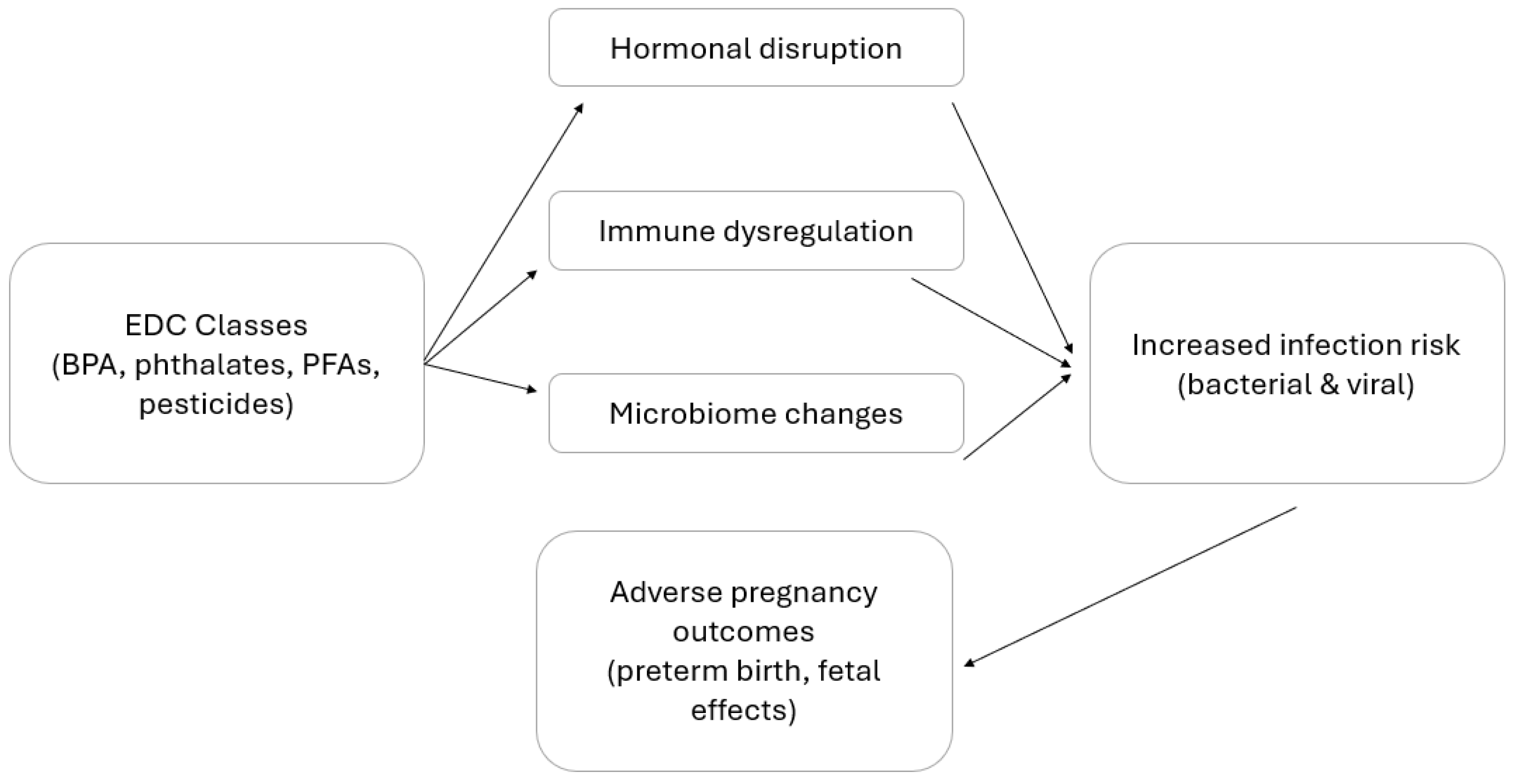
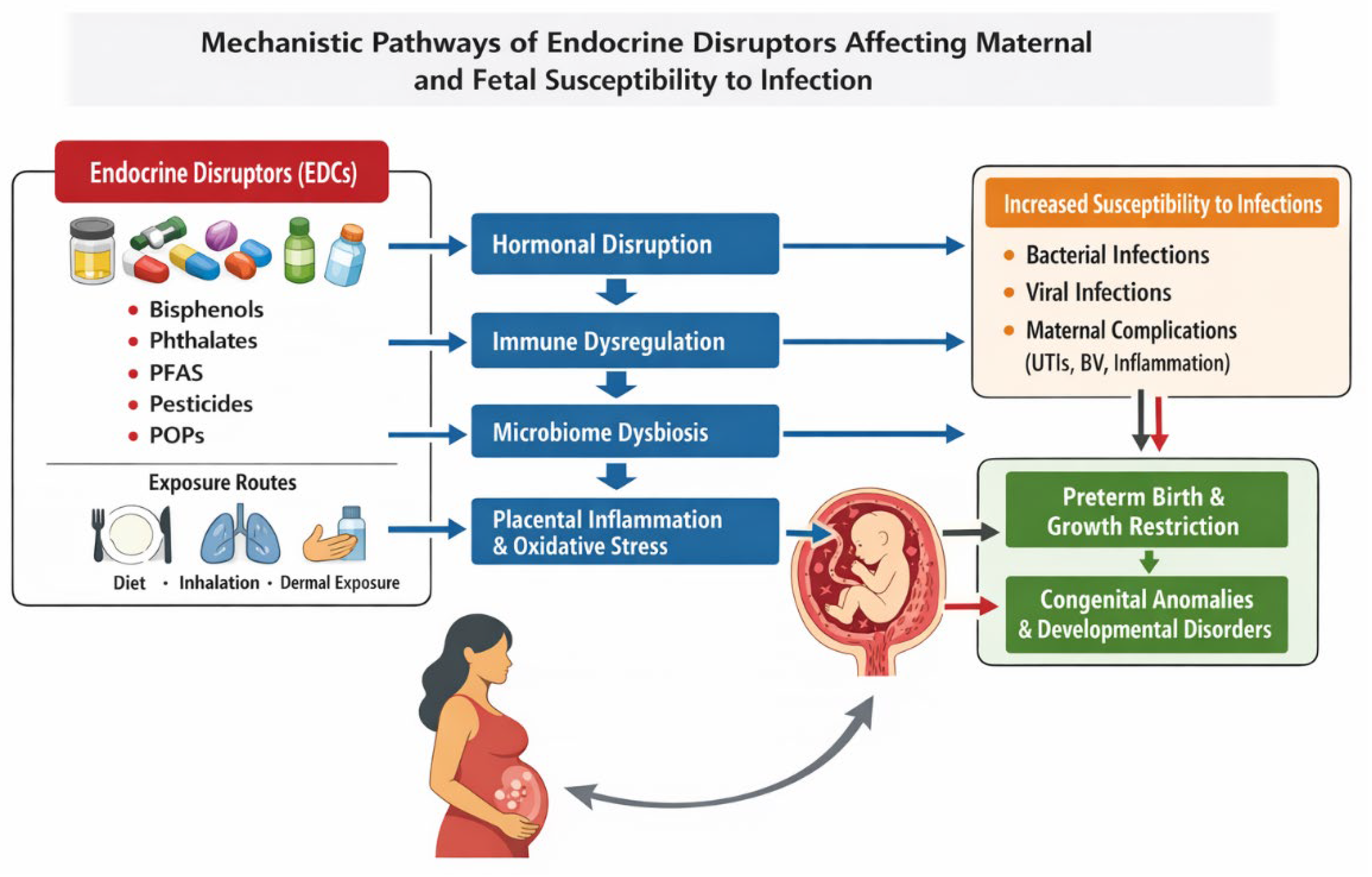
8. Mechanistic Pathways Linking EDCs to Infection Susceptibility
9. Implications for Maternal and Fetal Health
10. Research Gaps and Future Perspectives
11. Conclusions
Author Contributions
Funding
Institutional Review Board Statement
Informed Consent Statement
Data Availability Statement
Acknowledgments
Conflicts of Interest
Abbreviations
| EDCs | Endocrine-Disrupting Chemicals |
| OS | Oxidative Stress |
| BPA | Bisphenol A |
| PFAS | Per- and Polyfluoroalkyl Substances |
| POPs | Persistent Organic Pollutants |
| OCPs | Organochlorine Pesticides |
| UTIs | Urinary Tract Infections |
| BV | Bacterial Vaginosis |
| CMV | Cytomegalovirus |
| NK cells | Natural Killer Cells |
| Tregs | Regulatory T Cells |
| hCG | Human Chorionic Gonadotropin |
| DOHaD | Developmental Origins of Health and Disease |
| PCBs | Polychlorinated Biphenyls |
| SARS-CoV-2 | Severe Acute Respiratory Syndrome Coronavirus 2 |
| Th1 | T Helper 1 Cells |
| Th2 | T Helper 2 Cells |
| PFOS | Perfluorooctanesulfonic Acid |
| PFOA | Perfluorooctanoic Acid |
References
- Anne, B.; Raphael, R. Endocrine disruptor chemicals. In Endotext; Feingold, K.R., Ahmed, S.F., Anawalt, B., Blackman, M.R., Chrousos, G., Corpas, E., de Herder, W.W., Dhatariya, K., Dungan, K., Hamilton, E., et al., Eds.; MDText.com, Inc.: South Dartmouth, MA, USA, 2000. Available online: http://www.ncbi.nlm.nih.gov/books/NBK569327/ (accessed on 5 September 2025).
- Zhang, Y.; Tu, L.; Chen, J.; Zhou, L. Interference mechanisms of endocrine system and other systems of endocrine-disrupting chemicals in cosmetics—In vitro studies. Int. J. Endocrinol. 2024, 2024, 2564389. [Google Scholar] [CrossRef]
- Lee, H.-R.; Jeung, E.-B.; Cho, M.-H.; Kim, T.H.; Leung, P.C.; Choi, K.C. Molecular mechanism(s) of endocrine-disrupting chemicals and their potent oestrogenicity in diverse cells and tissues that express oestrogen receptors. J. Cell. Mol. Med. 2013, 17, 1–11. [Google Scholar] [CrossRef]
- Stiefel, C.; Stintzing, F. Endocrine-active and endocrine-disrupting compounds in food—Occurrence, formation and relevance. NFS J. 2023, 31, 57–92. [Google Scholar] [CrossRef]
- Diamanti-Kandarakis, E.; Bourguignon, J.-P.; Giudice, L.C.; Hauser, R.; Prins, G.S.; Soto, A.M.; Zoeller, R.T.; Gore, A.C. Endocrine-disrupting chemicals: An Endocrine Society scientific statement. Endocr. Rev. 2009, 30, 293–342. [Google Scholar] [CrossRef] [PubMed]
- Pan, J.; Liu, P.; Yu, X.; Zhang, Z.; Liu, J. The adverse role of endocrine disrupting chemicals in the reproductive system. Front. Endocrinol. 2024, 14, 1324993. [Google Scholar] [CrossRef]
- Ângelo-Dias, M.; Martins, C.G.; Mata, M.; Barata, M.; Chung, A.; Sarzedas, S.; Fernandes, É.; Appleton, C.; Lima, J.; Borrego, L.M. Immunological reference intervals in pregnancy: Longitudinal analysis of adaptive lymphocyte subsets. Front. Immunol. 2025, 16, 1634176. [Google Scholar] [CrossRef]
- Fox, R.; Akinboro, S.; Kędzia, A.; Niechciał, E. The effects of maternal endocrinopathies and exposure to endocrine disruptors during pregnancy on the fetus and newborn. Biomedicines 2025, 13, 1965. [Google Scholar] [CrossRef]
- Predieri, B.; Iughetti, L.; Bernasconi, S.; Street, M.E. Endocrine disrupting chemicals’ effects in children: What we know and what we need to learn? Int. J. Mol. Sci. 2022, 23, 11899. [Google Scholar] [CrossRef]
- Nowak, K.; Jabłońska, E.; Ratajczak-Wrona, W. Immunomodulatory effects of synthetic endocrine disrupting chemicals on the development and functions of human immune cells. Environ. Int. 2019, 125, 350–364. [Google Scholar] [CrossRef]
- Krishnan, L.; Nguyen, T.; McComb, S. From mice to women: The conundrum of immunity to infection during pregnancy. J. Reprod. Immunol. 2013, 97, 62–73. [Google Scholar] [CrossRef] [PubMed]
- Bonney, E.A. Immune regulation in pregnancy: A matter of perspective? Obstet. Gynecol. Clin. N. Am. 2016, 43, 679–698. [Google Scholar] [CrossRef]
- Das, B.K.; Roy, S.; Kumar, V.; Adhikari, A.; Ganguly, S.; Bisai, K. Modulation of immune gene expression profile in Labeo catla with chronic toxicity to emerging endocrine disruptors through a multiorgan approach. Sci. Rep. 2025, 15, 11244. [Google Scholar] [CrossRef]
- Gálvez-Ontiveros, Y.; Páez, S.; Monteagudo, C.; Rivas, A. Endocrine disruptors in food: Impact on gut microbiota and metabolic diseases. Nutrients 2020, 12, 1158. [Google Scholar] [CrossRef]
- Romero, R.; Theis, K.R.; Gomez-Lopez, N.; Winters, A.D.; Panzer, J.J.; Lin, H.; Galaz, J.; Greenberg, J.M.; Shaffer, Z.; Kracht, D.J.; et al. The vaginal microbiota of pregnant women varies with gestational age, maternal age, and parity. Microbiol. Spectr. 2023, 11, e0342922. [Google Scholar] [CrossRef] [PubMed]
- Shen, L.-P.; Cai, B.-J.; Guan, J.-X.; Peng, T.; Jin, L. Comprehensive analysis of vaginal microbiota, metabolites, and inflammatory factors in preterm and term pregnancies. Front. Microbiol. 2025, 16, 1689494. [Google Scholar] [CrossRef] [PubMed]
- Kumar, M.; Saadaoui, M.; Al Khodor, S. Infections and pregnancy: Effects on maternal and child health. Front. Cell. Infect. Microbiol. 2022, 12, 873253. [Google Scholar] [CrossRef]
- Vlad, T.; Eftenoiu, A.-E.; Voinescu, A.; Musuroi, S.I.; Musuroi, C.; Moatar, A.E.; Vlad, D.C.; Trandafir, A.; Vlad, C.S.; Cobec, I.M. Antimicrobial resistance in maternal infections during pregnancy. Biomedicines 2025, 13, 777. [Google Scholar] [CrossRef]
- Salem, G.M.; Azamor, T.; Familiar-Macedo, D.; Onwubueke, C.; Cambou, M.C.; Chen, W.; Nielsen-Saines, K.; Foo, S.S. Mechanistic insights into the impact of prenatal viral infections on maternal and offspring immunity. npj Viruses 2026, 4, 7. [Google Scholar] [CrossRef] [PubMed]
- Del Río Barrera, T.; Zambrano Ledesma, K.N.; Aguilar Hernández, M.; Reyes Chávez, K.; Aguirre Barajas, A.F.; Alvarez Vázquez, D.P.; Garcia Santiago, G.; Arias Castro, A. Endocrine disruptors and their impact on quality of life: A literature review. Cureus 2025, 17, e83890. [Google Scholar] [CrossRef]
- Peivasteh-Roudsari, L.; Barzegar-Bafrouei, R.; Sharifi, K.A.; Azimisalim, S.; Karami, M.; Abedinzadeh, S.; Asadinezhad, S.; Tajdar-Oranj, B.; Mahdavi, V.; Alizadeh, A.M.; et al. Origin, dietary exposure, and toxicity of endocrine-disrupting food chemical contaminants: A Comprehensive review. Heliyon 2023, 9, e18140. [Google Scholar] [CrossRef]
- Schjenken, J.E.; Green, E.S.; Overduin, T.S.; Mah, C.Y.; Russell, D.L.; Robertson, S.A. Endocrine Disruptor Compounds—A Cause of Impaired Immune Tolerance Driving Inflammatory Disorders of Pregnancy? Front. Endocrinol. 2021, 12, 607539. [Google Scholar] [CrossRef]
- Potiris, A.; Daponte, N.; Moustakli, E.; Zikopoulos, A.; Kokkosi, E.; Arkouli, N.; Anagnostaki, I.; Vogiatzoglou, A.L.; Tzeli, M.; Sarella, A.; et al. Prenatal dietary exposure to endocrine disruptors and its lasting impact on offspring health. Toxics 2025, 13, 864. [Google Scholar] [CrossRef] [PubMed]
- Di Pietro, G.; Forcucci, F.; Chiarelli, F. Endocrine disruptor chemicals and children’s health. Int. J. Mol. Sci. 2023, 24, 2671. [Google Scholar] [CrossRef]
- Puche-Juarez, M.; Toledano, J.M.; Moreno-Fernandez, J.; Gálvez-Ontiveros, Y.; Rivas, A.; Diaz-Castro, J.; Ochoa, J.J. The role of endocrine disrupting chemicals in gestation and pregnancy outcomes. Nutrients 2023, 15, 4657. [Google Scholar] [CrossRef]
- Amir, S.; Shah, S.T.A.; Mamoulakis, C.; Docea, A.O.; Kalantzi, O.I.; Zachariou, A.; Calina, D.; Carvalho, F.; Sofikitis, N.; Makrigiannakis, A.; et al. Endocrine disruptors acting on estrogen and androgen pathways cause reproductive disorders through multiple mechanisms: A review. Int. J. Environ. Res. Public Health 2021, 18, 1464. [Google Scholar] [CrossRef]
- Akanbi, C.A.; Rotimi, D.E.; Ojo, A.B.; Ojo, A.B. Endocrine-disrupting chemicals (EDCs) and epigenetic regulation in embryonic development: Mechanisms, impacts, and emerging trends. Toxicol. Rep. 2025, 14, 101885. [Google Scholar] [CrossRef] [PubMed]
- Merrill, A.K.; Sobolewski, M.; Susiarjo, M. Exposure to endocrine disrupting chemicals impacts immunological and metabolic status of women during pregnancy. Mol. Cell. Endocrinol. 2023, 577, 112031. [Google Scholar] [CrossRef]
- Rabotnick, M.H.; Ehlinger, J.; Haidari, A.; Goodrich, J.M. Prenatal exposures to endocrine disrupting chemicals: The role of multi-omics in understanding toxicity. Mol. Cell. Endocrinol. 2023, 578, 112046. [Google Scholar] [CrossRef] [PubMed]
- Cantonwine, D.E.; Hauser, R.; Meeker, J.D. Bisphenol A and human reproductive health. Expert Rev. Obstet. Gynecol. 2013, 8, 329–335. [Google Scholar] [CrossRef]
- Costa, H.E.; Medeiros, I.; Mariana, M.; Cairrao, E. Maternal–foetal effects of exposure to bisphenol A: Outcomes and long-term consequences. Appl. Sci. 2025, 15, 697. [Google Scholar] [CrossRef]
- Wang, Y.; Qian, H. Phthalates and their impacts on human health. Healthcare 2021, 9, 603. [Google Scholar] [CrossRef]
- Martínez-Ibarra, A.; Martínez-Razo, L.D.; MacDonald-Ramos, K.; Morales-Pacheco, M.; Vázquez-Martínez, E.R.; López-López, M.; Rodríguez Dorantes, M.; Cerbón, M. Multisystemic alterations in humans induced by bisphenol A and phthalates: Experimental, epidemiological and clinical studies reveal the need to change health policies. Environ. Pollut. 2021, 271, 116380. [Google Scholar] [CrossRef] [PubMed]
- Yang, Y.; Wang, J.; Tang, S.; Qui, J.; Luo, Y.; Yang, C.; Lai, X.; Cao, H. Per- and polyfluoroalkyl substances (PFAS) in consumer products: An overview of the occurrence, migration, and exposure assessment. Molecules 2025, 30, 994. [Google Scholar] [CrossRef]
- Muñoz-Bautista, J.M.; Bernal-Mercado, A.T.; Martínez-Cruz, O.; Burgos-Hernández, A.; López-Zavala, A.A.; Ruiz-Cruz, S.; Ornelas-Paz, J.J.; Borboa-Flores, J.; Ramos-Enríquez, J.R.; Del-Toro-Sánchez, C.L. Environmental and health impacts of pesticides and nanotechnology as an alternative in agriculture. Agronomy 2025, 15, 1878. [Google Scholar] [CrossRef]
- La Merrill, M.; Emond, C.; Kim, M.J.; Antignac, J.P.; Le Bizec, B.; Clément, K.; Birnbaum, L.S.; Barouki, R. Toxicological function of adipose tissue: Focus on persistent organic pollutants. Environ. Health Perspect. 2013, 121, 162–169. [Google Scholar] [CrossRef]
- Lü, L.; Liu, Y.; Yang, Y.; He, J.; Luo, L.; Chen, S.; Xing, H. Bisphenol A exposure interferes with reproductive hormones and decreases sperm counts: A systematic review and meta-analysis of epidemiological studies. Toxics 2024, 12, 294. [Google Scholar] [CrossRef]
- Radke, E.G.; Glenn, B.S.; Braun, J.M.; Cooper, G.S. Phthalate exposure and female reproductive and developmental outcomes: A systematic review of the human epidemiological evidence. Environ. Int. 2019, 130, 104580. [Google Scholar] [CrossRef]
- Lucas, A.; Herrmann, S.; Lucas, M. The role of endocrine-disrupting phthalates and bisphenols in cardiometabolic disease: The evidence is mounting. Curr. Opin. Endocrinol. Diabetes Obes. 2022, 29, 87–94. [Google Scholar] [CrossRef]
- Rappazzo, K.M.; Coffman, E.; Hines, E.P. Exposure to perfluorinated alkyl substances and health outcomes in children: A systematic review of the epidemiologic literature. Int. J. Environ. Res. Public Health 2017, 14, 691. [Google Scholar] [CrossRef] [PubMed]
- Bline, A.P.; DeWitt, J.C.; Kwiatkowski, C.F.; Pelch, K.E.; Reade, A.; Varshavsky, J.R. Public health risks of PFAS-related immunotoxicity are real. Curr. Environ. Health Rep. 2024, 11, 118–127. [Google Scholar] [CrossRef]
- Kim, K.-H.; Kabir, E.; Jahan, S.A. Exposure to pesticides and the associated human health effects. Sci. Total Environ. 2017, 575, 525–535. [Google Scholar] [CrossRef]
- Conejo-Bolaños, L.D.; Mora, A.M.; Hernández-Bonilla, D.; Cano, J.C.; Menezes-Filho, J.A.; Eskenazi, B.; Lindh, C.H.; van Wendel de Joode, B. Prenatal current-use pesticide exposure and children’s neurodevelopment at one year of age in the Infants’ Environmental Health (ISA) birth cohort, Costa Rica. Environ. Res. 2024, 249, 118222. [Google Scholar] [CrossRef]
- Vrijheid, M.; Casas, M.; Gascon, M.; Valvi, D.; Nieuwenhuijsen, M. Environmental pollutants and child health—A review of recent concerns. Int. J. Hyg. Environ. Health 2016, 219, 331–342. [Google Scholar] [CrossRef] [PubMed]
- Birnbaum, L.S. State of the science of endocrine disruptors. Environ. Health Perspect. 2013, 121, A107. [Google Scholar] [CrossRef] [PubMed]
- Martin, L.; Zhang, Y.; First, O.; Mustieles, V.; Dodson, R.; Rosa, G.; Coburn-Sanderson, A.; Adams, C.D.; Messerlian, C. Lifestyle interventions to reduce endocrine-disrupting phthalate and phenol exposures among reproductive age men and women: A review and future steps. Environ. Int. 2022, 170, 107576. [Google Scholar] [CrossRef] [PubMed]
- Kumar, M.; Sarma, D.K.; Shubham, S.; Kumawat, M.; Verma, V.; Prakash, A.; Tiwari, R. Environmental endocrine-disrupting chemical exposure: Role in non-communicable diseases. Front. Public Health 2020, 8, 553850. [Google Scholar] [CrossRef]
- Plunk, E.C.; Richards, S.M. Endocrine-disrupting air pollutants and their effects on the hypothalamus–pituitary–gonadal axis. Int. J. Mol. Sci. 2020, 21, 9191. [Google Scholar] [CrossRef]
- Hopf, N.B.; De Luca, H.P.; Borgatta, M.; Koch, H.M.; Pälmke, C.; Benedetti, M.; Berthet, A.; Reale, E. Human skin absorption of three phthalates. Toxicol. Lett. 2024, 398, 38–48. [Google Scholar] [CrossRef]
- Mitro, S.D.; Johnson, T.; Zota, A.R. Cumulative chemical exposures during pregnancy and early development. Curr. Environ. Health Rep. 2015, 2, 367–378. [Google Scholar] [CrossRef]
- Snijder, C.A.; Roeleveld, N.; te Velde, E.; Steegers, E.A.; Raat, H.; Hofman, A.; Jaddoe, V.W.; Burdorf, A. Occupational exposure to chemicals and fetal growth: The Generation R study. Hum. Reprod. 2012, 27, 910–920. [Google Scholar] [CrossRef]
- Kotta-Loizou, I.; Pritsa, A.; Antasouras, G.; Vasilopoulos, S.N.; Voulgaridou, G.; Papadopoulou, S.K.; Coutts, R.H.A.; Lechouritis, E.; Giaginis, C. Fetus exposure to drugs and chemicals: A holistic overview on the assessment of their transport and metabolism across the human placental barrier. Diseases 2024, 12, 114. [Google Scholar] [CrossRef]
- Vornic, I.; Buciu, V.; Furău, C.G.; Gaje, P.N.; Ceausu, R.A.; Dumitru, C.S.; Barb, A.C.; Novacescu, D.; Cumpanas, A.A.; Latcu, S.C.; et al. Oxidative stress and placental pathogenesis: A contemporary overview of potential biomarkers and emerging therapeutics. Int. J. Mol. Sci. 2024, 25, 12195. [Google Scholar] [CrossRef]
- Bommarito, P.A.; Martin, E.; Fry, R.C. Effects of prenatal exposure to endocrine disruptors and toxic metals on the fetal epigenome. Epigenomics 2017, 9, 333–350. [Google Scholar] [CrossRef]
- Mamsen, L.S.; Kristensen, S.G.; Pors, S.E.; Bøtkjær, J.A.; Ernst, E.; Macklon, K.T.; Gook, D.; Kumar, A.; Kalra, B.; Andersen, C.Y. Consequences of β-thalassemia or sickle cell disease for ovarian follicle number and morphology in girls who had ovarian tissue cryopreserved. Front. Endocrinol. 2021, 11, 593718. [Google Scholar] [CrossRef] [PubMed]
- Feng, J.; Mazari, M.E.; Yasmin, S.; Riaz, A.; Uddin, J.; Hussain, A.I.; Masmood, F.Z.; Zhong, J.; Kamal, G.M. Impact of bisphenol A exposure on fetal brain development and neurological health—A review. Environ. Sci. Adv. 2026, 5, 43–58. [Google Scholar] [CrossRef]
- O’Shaughnessy, K.L.; Fischer, F.; Zenclussen, A.C. Perinatal exposure to endocrine disrupting chemicals and neurodevelopment: How articles of daily use influence the development of our children. Best Pract. Res. Clin. Endocrinol. Metab. 2021, 35, 101568. [Google Scholar] [CrossRef]
- Hussain, T.; Murtaza, G.; Kalhoro, D.H.; Kalhoro, M.S.; Yin, Y.; Chughtai, M.I.; Yaseen, A.; Rehman, Z.U. Understanding the immune system in fetal protection and maternal infections during pregnancy. J. Immunol. Res. 2022, 2022, 7567708. [Google Scholar] [CrossRef]
- Abu-Raya, B.; Michalski, C.; Sadarangani, M.; Lavoie, P.M. Maternal immunological adaptation during normal pregnancy. Front. Immunol. 2020, 11, 575197. [Google Scholar] [CrossRef] [PubMed]
- Mor, G.; Cardenas, I. The immune system in pregnancy: A unique complexity. Am. J. Reprod. Immunol. 2010, 63, 425–433. [Google Scholar] [CrossRef]
- Zhang, X.; Wei, H. Role of decidual natural killer cells in human pregnancy and related pregnancy complications. Front. Immunol. 2021, 12, 728291. [Google Scholar] [CrossRef]
- Sojka, D.K.; Yang, L.; Yokoyama, W.M. Uterine natural killer cells: To protect and to nurture. Birth Defects Res. 2018, 110, 1531–1538. [Google Scholar] [CrossRef]
- Li, W.-X.; Xu, X.-H.; Jin, L.-P. Regulation of the innate immune cells during pregnancy: An immune checkpoint perspective. J. Cell. Mol. Med. 2021, 25, 10362–10375. [Google Scholar] [CrossRef]
- Guan, D.; Chen, Z.; Zhang, Y.; Sun, W.; Li, L.; Huang, X. Dual role of natural killer cells in early pregnancy: Immunopathological implications and therapeutic potential in recurrent spontaneous abortion and recurrent implantation failure. Cell Prolif. 2025, 58, e70037. [Google Scholar] [CrossRef]
- Sykes, L.; MacIntyre, D.A.; Yap, X.J.; Teoh, T.G.; Bennett, P.R. The Th1:Th2 dichotomy of pregnancy and preterm labour. Mediat. Inflamm. 2012, 2012, 967629. [Google Scholar] [CrossRef] [PubMed]
- Huang, N.; Chi, H.; Qiao, J. Role of regulatory T cells in regulating fetal–maternal immune tolerance in healthy pregnancies and reproductive diseases. Front. Immunol. 2020, 11, 1023. [Google Scholar] [CrossRef]
- Pazos, M.; Sperling, R.S.; Moran, T.M.; Kraus, T.A. The influence of pregnancy on systemic immunity. Immunol. Res. 2012, 54, 254–261. [Google Scholar] [CrossRef] [PubMed]
- Harding, A.T.; Heaton, N.S. The impact of estrogens and their receptors on immunity and inflammation during infection. Cancers 2022, 14, 909. [Google Scholar] [CrossRef]
- Robinson, D.P.; Klein, S.L. Pregnancy and pregnancy-associated hormones alter immune responses and disease pathogenesis. Horm. Behav. 2012, 62, 263–271. [Google Scholar] [CrossRef]
- Cortés, M.; Olate, P.; Rodriguez, R.; Diaz, R.; Martínez, A.; Hernández, G.; Sepulveda, N.; Paz, E.A.; Quiñones, J. Human microbiome as an immunoregulatory axis: Mechanisms, dysbiosis, and therapeutic modulation. Microorganisms 2025, 13, 2147. [Google Scholar] [CrossRef] [PubMed]
- Tian, M.; Li, Q.; Zheng, T.; Yang, S.; Chen, F.; Guan, W.; Zhang, S. Maternal microbe-specific modulation of the offspring microbiome and development during pregnancy and lactation. Gut Microbes 2023, 15, 2206505. [Google Scholar] [CrossRef]
- Jovandaric, M.Z.; Babic, S.; Milincic, M.; Medjo, B.; Raus, M.; Krstic, M.; Tiric, D. Microbiome, epigenetics, and nutritional factors in shaping perinatal pregnancy outcomes. Int. J. Mol. Sci. 2026, 27, 1622. [Google Scholar] [CrossRef] [PubMed]
- Hampl, R.; Stárka, L. Endocrine disruptors and gut microbiome interactions. Physiol. Res. 2020, 69, S211–S223. [Google Scholar] [CrossRef]
- Fabozzi, G.; Rebuzzini, P.; Cimadomo, D.; Allori, M.; Franzago, M.; Stuppia, L.; Garagna, S.; Ubaldi, F.M.; Zuccotti, M.; Rienzi, L. Endocrine-disrupting chemicals, gut microbiota, and human (in)fertility—It is time to consider the triad. Cells 2022, 11, 3335. [Google Scholar] [CrossRef]
- Safarchi, A.; Al-Qadami, G.; Tran, C.D.; Conlon, M. Understanding dysbiosis and resilience in the human gut microbiome: Biomarkers, interventions, and challenges. Front. Microbiol. 2025, 16, 1559521. [Google Scholar] [CrossRef] [PubMed]
- Sajdel-Sulkowska, E.M. The impact of maternal gut microbiota during pregnancy on fetal gut–brain axis development and life-long health outcomes. Microorganisms 2023, 11, 2199. [Google Scholar] [CrossRef]
- Miko, E.; Csaszar, A.; Bodis, J.; Kovacs, K. The maternal–fetal gut microbiota axis: Physiological changes, dietary influence, and modulation possibilities. Life 2022, 12, 424. [Google Scholar] [CrossRef]
- Koren, O.; Konnikova, L.; Brodin, P.; Mysorekar, I.U.; Collado, M.C. The maternal gut microbiome in pregnancy: Implications for the developing immune system. Nat. Rev. Gastroenterol. Hepatol. 2024, 21, 35–45. [Google Scholar] [CrossRef]
- Singh, P.; Elhaj, D.A.I.; Ibrahim, I.; Abdullahi, H.; Al Khodor, S. Maternal microbiota and gestational diabetes: Impact on infant health. J. Transl. Med. 2023, 21, 364. [Google Scholar] [CrossRef] [PubMed]
- Gorczyca, K.; Obuchowska, A.; Kimber-Trojnar, Ż.; Wierzchowska-Opoka, M.; Leszczyńska-Gorzelak, B. Changes in the gut microbiome and pathologies in pregnancy. Int. J. Environ. Res. Public Health 2022, 19, 9961. [Google Scholar] [CrossRef]
- Yurtseven, B.; Aydemir, E.; Ayaz, F. The role of intestinal microbiota and immune system interactions in autoimmune diseases. ImmunoTargets Ther. 2025, 14, 1347–1372. [Google Scholar] [CrossRef]
- Cheng, Q.; Lv, S.; Yin, N.; Wang, J. Microbial regulators of physiological and reproductive health in women of reproductive age: Their local, proximal and distal regulatory roles. npj Biofilms Microbiomes 2025, 11, 207. [Google Scholar] [CrossRef] [PubMed]
- Chee, W.J.Y.; Chew, S.Y.; Than, L.T.L. Vaginal microbiota and the potential of Lactobacillus derivatives in maintaining vaginal health. Microb. Cell Fact. 2020, 19, 203. [Google Scholar] [CrossRef]
- Yang, P.; Lu, T.; Liang, X.; Huang, T.; Wu, L.; He, Z.; Xiao, X.; Fan, S. The influence of placenta microbiota of normal term pregnant women on immune regulation during pregnancy. BMC Pregnancy Childbirth 2024, 24, 171. [Google Scholar] [CrossRef]
- Aguilera, M.; Gálvez-Ontiveros, Y.; Rivas, A. Endobolome, a new concept for determining the influence of microbiota disrupting chemicals (MDC) in relation to specific endocrine pathogenesis. Front. Microbiol. 2020, 11, 578007. [Google Scholar] [CrossRef]
- Feng, D.; Zhang, H.; Jiang, X.; Zou, J.; Li, Q.; Mai, H.; Su, D.; Ling, W.; Feng, X. Bisphenol A exposure induces gut microbiota dysbiosis and consequent activation of gut–liver axis leading to hepatic steatosis in CD-1 mice. Environ. Pollut. 2020, 265, 114880. [Google Scholar] [CrossRef] [PubMed]
- Reddivari, L.; Veeramachaneni, D.N.R.; Walters, W.A.; Lozupone, C.; Palmer, J.; Hewage, M.K.K.; Bhatnagar, R.; Amir, A.; Kennett, M.J.; Knight, R.; et al. Perinatal bisphenol A exposure induces chronic inflammation in rabbit offspring via modulation of gut bacteria and their metabolites. mSystems 2017, 2, e00093-17. [Google Scholar] [CrossRef]
- Calero-Medina, L.; Jimenez-Casquet, M.J.; Heras-Gonzalez, L.; Conde-Pipo, J.; Lopez-Moro, A.; Olea-Serrano, F.; Mariscal-Arcas, M. Dietary exposure to endocrine disruptors in gut microbiota: A systematic review. Sci. Total Environ. 2023, 886, 163991. [Google Scholar] [CrossRef]
- Campbell, C.; Kandalgaonkar, M.R.; Golonka, R.M.; Yeoh, B.S.; Vijay-Kumar, M.; Saha, P. Crosstalk between gut microbiota and host immunity: Impact on inflammation and immunotherapy. Biomedicines 2023, 11, 294. [Google Scholar] [CrossRef] [PubMed]
- Giannella, L.; Grelloni, C.; Quintili, D.; Fiorelli, A.; Montironi, R.; Alia, S.; Delli Carpini, G.; Di Giuseppe, J.; Vignini, A.; Ciavattini, A. Microbiome changes in pregnancy disorders. Antioxidants 2023, 12, 463. [Google Scholar] [CrossRef]
- Hiratsuka, D.; Matsuo, M.; Hirota, Y. The reproductive tract microbiome and female fertility: Dysbiosis, disease links, and emerging therapeutic strategies. Fertil. Steril. 2026, in press. [Google Scholar] [CrossRef]
- Lai, K.-P.; Chung, Y.-T.; Li, R.; Wan, H.T.; Wong, C.K. Bisphenol A alters gut microbiome: Comparative metagenomics analysis. Environ. Pollut. 2016, 218, 923–930. [Google Scholar] [CrossRef]
- Chiu, K.; Warner, G.; Nowak, R.A.; Flaws, J.A.; Mei, W. The impact of environmental chemicals on the gut microbiome. Toxicol. Sci. 2020, 176, 253–284. [Google Scholar] [CrossRef] [PubMed]
- Goyal, S.P.; Saravanan, C. An insight into the critical role of gut microbiota in triggering the phthalate-induced toxicity and its mitigation using probiotics. Sci. Total Environ. 2023, 904, 166889. [Google Scholar] [CrossRef] [PubMed]
- Jin, Y.; Wu, S.; Zeng, Z.; Fu, Z. Effects of environmental pollutants on gut microbiota. Environ. Pollut. 2017, 222, 1–9. [Google Scholar] [CrossRef] [PubMed]
- Heindel, J.J.; Blumberg, B.; Cave, M.; Machtinger, R.; Mantovani, A.; Mendez, M.A.; Nadal, A.; Palanza, P.; Panzica, G.; Sargis, R.; et al. Metabolism disrupting chemicals and metabolic disorders. Reprod. Toxicol. 2017, 68, 3–33. [Google Scholar] [CrossRef]
- Fox, C.; Eichelberger, K. Maternal microbiome and pregnancy outcomes. Fertil. Steril. 2015, 104, 1358–1363. [Google Scholar] [CrossRef]
- Ahmed, U.; Fatima, F.; Farooq, H.A. Microbial dysbiosis and associated disease mechanisms in maternal and child health. Infect. Immun. 2025, 93, e00179-25. [Google Scholar] [CrossRef]
- Márquez Ibarra, A.A.; Barrera Hernández, L.F.; Gregorio, E.V.; Olivas Aguirre, F.J.; de Jesús Quintero Vargas, J.T. Microbiota during pregnancy, childbirth, and postpartum, and its relationship with health and disease states. Med. Microecol. 2025, 25, 100141. [Google Scholar] [CrossRef]
- Alikamali, M.; Mohammad-Alizadeh-Charandabi, S.; Ahmadi, S.; Memar, M.Y.; Shahnazi, M. The role of the vaginal microbiome in preterm premature rupture of membranes: A comprehensive review of mechanisms and clinical implications. Health Sci. Rep. 2025, 8, e71484. [Google Scholar] [CrossRef]
- Xie, Z.; Chen, Z.; Ma, G. Dynamic changes in the pregnancy microbiome and their role in preterm birth. Front. Cell. Infect. Microbiol. 2025, 15, 1683610. [Google Scholar] [CrossRef]
- Maciel-Fiuza, M.F.; Muller, G.C.; Campos, D.M.S.; do Socorro Silva Costa, P.; Peruzzo, J.; Bonamigo, R.R.; Veit, T.; Vianna, F.S.L. Role of gut microbiota in infectious and inflammatory diseases. Front. Microbiol. 2023, 14, 1098386. [Google Scholar] [CrossRef]
- Lingasamy, P.; Modhukur, V.; Mändar, R.; Salumets, A. Exploring immunome and microbiome interplay in reproductive health: Current knowledge, challenges, and novel diagnostic tools. Semin. Reprod. Med. 2023, 41, 172–189. [Google Scholar] [CrossRef]
- Amir, M.; Brown, J.A.; Rager, S.L.; Sanidad, K.Z.; Ananthanarayanan, A.; Zeng, M.Y. Maternal microbiome and infections in pregnancy. Microorganisms 2020, 8, 1996. [Google Scholar] [CrossRef]
- Habak, P.J.; Carlson, K.; Griggs, J. Urinary tract infection in pregnancy. In StatPearls; StatPearls Publishing: Treasure Island, FL, USA, 2026. Available online: http://www.ncbi.nlm.nih.gov/books/NBK537047/ (accessed on 24 March 2026).
- Baimakhanova, B.; Sadanov, A.; Trenozhnikova, L.; Balgimbaeva, A.; Baimakhanova, G.; Orasymbet, S.; Tleubekova, D.; Amangeldi, A.; Turlybaeva, Z.; Nurgaliyeva, Z.; et al. Understanding the burden and management of urinary tract infections in women. Diseases 2025, 13, 59. [Google Scholar] [CrossRef]
- Moustakli, E.; Grigoriadis, T.; Potiris, A.; Drakaki, E.; Zikopoulos, A.; Anagnostaki, I.; Zachariou, A.; Domali, E.; Drakakis, P.; Stavros, S. The impact of endocrine disruptors on the female genital tract microbiome: A narrative review. Life 2025, 15, 1177. [Google Scholar] [CrossRef] [PubMed]
- Molinari, F.; Franco, G.A.; Tranchida, N.; Di Paola, R.; Cordaro, M. Molecular mechanism of action of endocrine-disrupting chemicals on the respiratory system. Int. J. Mol. Sci. 2024, 25, 12540. [Google Scholar] [CrossRef] [PubMed]
- Kumar, M.; Yan, Y.; Jiang, L.; Sze, C.H.; Kodithuwakku, S.P.; Yeung, W.S.B.; Lee, K.F. Microbiome–maternal tract interactions in women with recurrent implantation failure. Microorganisms 2025, 13, 844. [Google Scholar] [CrossRef]
- Zhou, Y.; Zhou, Z.; Zheng, L.; Gong, Z.; Li, Y.; Jin, Y.; Huang, Y.; Chi, M. Urinary tract infections caused by uropathogenic Escherichia coli: Mechanisms of infection and treatment options. Int. J. Mol. Sci. 2023, 24, 10537. [Google Scholar] [CrossRef] [PubMed]
- Colella, M.; Topi, S.; Palmirotta, R.; D’Agostino, D.; Charitos, I.A.; Lovero, R.; Santacroce, L. An overview of the microbiota of the human urinary tract in health and disease: Current issues and perspectives. Life 2023, 13, 1486. [Google Scholar] [CrossRef]
- Swidsinski, S.; Moll, W.M.; Swidsinski, A. Bacterial vaginosis—Vaginal polymicrobial biofilms and dysbiosis. Dtsch. Arztebl. Int. 2023, 120, 347–354. [Google Scholar] [CrossRef]
- Bayar, E.; Bennett, P.R.; Chan, D.; Sykes, L.; Maclntyre, D. The pregnancy microbiome and preterm birth. Semin. Immunopathol. 2020, 42, 487–499. [Google Scholar] [CrossRef]
- Ughade, P.A.; Shrivastava, D.; Chaudhari, K. Navigating the microbial landscape: Understanding dysbiosis in human genital tracts and its impact on fertility. Cureus 2024, 16, e67040. [Google Scholar] [CrossRef]
- Amabebe, E.; Anumba, D.O.C. The vaginal microenvironment: The physiologic role of Lactobacilli. Front. Med. 2018, 5, 181. [Google Scholar] [CrossRef]
- Zhang, Y.; Wei, T.; Zhao, C.; Zhang, L. The role of the vaginal microbiome in gynecological diseases: Mechanistic insights and emerging interventions. Biology 2026, 15, 432. [Google Scholar] [CrossRef]
- Orsaria, M.; Liviero, S.; Rossetti, E.; Pittini, C.; Driul, L.; Londero, A.P.; Mariuzzi, L. Placental acute inflammation infiltrates and pregnancy outcomes: A retrospective cohort study. Sci. Rep. 2021, 11, 24165. [Google Scholar] [CrossRef]
- Kim, C.J.; Romero, R.; Chaemsaithong, P.; Chaiyasit, N.; Yoon, B.H.; Kim, Y.M. Acute chorioamnionitis and funisitis: Definition, pathologic features, and clinical significance. Am. J. Obstet. Gynecol. 2015, 213, S29–S52. [Google Scholar] [CrossRef] [PubMed]
- Vidal, M.S.; Lintao, R.C.V.; Severino, M.E.L.; Tantengco, O.A.G.; Menon, R. Spontaneous preterm birth: Involvement of multiple feto-maternal tissues and organ systems, differing mechanisms, and pathways. Front. Endocrinol. 2022, 13, 1015622. [Google Scholar] [CrossRef] [PubMed]
- García-Morales, A.; Lomas-Soria, C.; Granados-Higa, G.; García-Quiroz, J.; Avila, E.; Olmos-Ortiz, A.; Díaz, L. Inflammation in pregnancy: Key drivers, signaling pathways and associated complications. Arch. Med. Res. 2026, 57, 103301. [Google Scholar] [CrossRef]
- Vidal, M.S.; Richardson, L.S.; Kumar Kammala, A.; Kim, S.; Lam, P.Y.; Cherukuri, R.; Thomas, T.J.; Bettayeb, M.; Han, A.; Rusyn, I.; et al. Endocrine-disrupting compounds and their impact on human placental function: Evidence from placenta organ-on-chip studies. Lab Chip 2024, 24, 1727–1749. [Google Scholar] [CrossRef]
- Figarska, A.; Witkowska-Piłaszewicz, O. Immunological response during pregnancy in humans and mares. Agriculture 2022, 12, 431. [Google Scholar] [CrossRef]
- Cornish, E.F.; Filipovic, I.; Åsenius, F.; Williams, D.J.; McDonnell, T. Innate immune responses to acute viral infection during pregnancy. Front. Immunol. 2020, 11, 572567. [Google Scholar] [CrossRef]
- Liu, Z.; Lu, Y.; Zhong, K.; Wang, C.; Xu, X. The associations between endocrine disrupting chemicals and markers of inflammation and immune responses: A systematic review and meta-analysis. Ecotoxicol. Environ. Saf. 2022, 234, 113382. [Google Scholar] [CrossRef] [PubMed]
- Kuo, C.-H.; Yang, S.-N.; Kuo, P.-L.; Hung, C.-H. Immunomodulatory effects of environmental endocrine disrupting chemicals. Kaohsiung J. Med. Sci. 2012, 28, S37–S42. [Google Scholar] [CrossRef]
- Al Beloushi, M.; Saleh, H.; Ahmed, B.; Konje, J.C. Congenital and perinatal viral infections: Consequences for the mother and fetus. Viruses 2024, 16, 1698. [Google Scholar] [CrossRef]
- Auriti, C.; De Rose, D.U.; Santisi, A.; Martini, L.; Piersigilli, F.; Bersani, I.; Ronchetti, M.P.; Caforio, L. Pregnancy and viral infections: Mechanisms of fetal damage, diagnosis and prevention of neonatal adverse outcomes from cytomegalovirus to SARS-CoV-2 and Zika virus. Biochim. Biophys. Acta Mol. Basis Dis. 2021, 1867, 166198. [Google Scholar] [CrossRef]
- Moutsopoulou, R.A.; Markou, A.; Lianou, A.; Leontari, K.; Iliodromiti, Z.; Boutsikou, T.; Kafalidis, G.; Paliatsiou, S.; Volaki, P.; Iacovidou, N.; et al. Congenital cytomegalovirus infection: From silent threat to vaccine horizon. Vaccines 2025, 13, 929. [Google Scholar] [CrossRef] [PubMed]
- Davis, N.L.; King, C.C.; Kourtis, A.P. Cytomegalovirus infection in pregnancy. Birth Defects Res. 2017, 109, 336–346. [Google Scholar] [CrossRef] [PubMed]
- Oseghale, O.; Vlahos, R.; O’Leary, J.J.; Brooks, R.D.; Brooks, D.A.; Liong, S.; Selemidis, S. Influenza virus infection during pregnancy as a trigger of acute and chronic complications. Viruses 2022, 14, 2729. [Google Scholar] [CrossRef]
- Chakhtoura, N.; Hazra, R.; Spong, C.Y. Zika virus: A public health perspective. Curr. Opin. Obstet. Gynecol. 2018, 30, 116–122. [Google Scholar] [CrossRef]
- González-Vanegas, O.; Martinez-Perez, O. SARS-CoV-2 infection and preeclampsia—How an infection can help us to know more about an obstetric condition. Viruses 2023, 15, 1564. [Google Scholar] [CrossRef]
- Wang, R.; Lan, C.; Benlagha, K.; Camara, N.O.S.; Miller, H.; Kubo, M.; Heegaard, S.; Lee, P.; Yang, L.; Forsman, H.; et al. The interaction of innate immune and adaptive immune system. MedComm 2024, 5, e714. [Google Scholar] [CrossRef]
- Golden, T.; Robles-Matos, N.; Dagpo, T.; Bansal, A. Immunomodulatory role of EDCs in disrupting metabolic health. In Endocrine Disruption and Human Health; Elsevier: Amsterdam, The Netherlands, 2020; pp. 341–354. [Google Scholar]
- Popescu, M.; Feldman, T.B.; Chitnis, T. Interplay between endocrine disruptors and immunity: Implications for diseases of autoreactive etiology. Front. Pharmacol. 2021, 12, 626107. [Google Scholar] [CrossRef]
- Adegoke, E.O.; Rahman, M.S.; Park, Y.-J.; Kim, Y.J.; Pang, M.G. Endocrine-disrupting chemicals and infectious diseases: From endocrine disruption to immunosuppression. Int. J. Mol. Sci. 2021, 22, 3939. [Google Scholar] [CrossRef]
- Phelps, D.W.; Connors, A.M.; Ferrero, G.; DeWitt, J.C.; Yoder, J.A. Per- and polyfluoroalkyl substances alter innate immune function: Evidence and data gaps. J. Immunotoxicol. 2024, 21, 2343362. [Google Scholar] [CrossRef]
- Lee, G.-H.; Choi, K.-C. Adverse effects of pesticides on the functions of immune system. Comp. Biochem. Physiol. Part C Toxicol. Pharmacol. 2020, 235, 108789. [Google Scholar] [CrossRef] [PubMed]
- Passoni, F.C.; Iulini, M.; Galbiati, V.; Marinovich, M.; Corsini, E. Disrupting defenses: Effects of bisphenol A and its analogs on human antibody production in vitro. Life 2025, 15, 1203. [Google Scholar] [CrossRef]
- Kelley, A.S.; Banker, M.; Goodrich, J.M.; Dolinoy, D.C.; Burant, C.; Domino, S.E.; Smith, Y.R.; Song, P.X.K.; Padmanabhan, V. Early pregnancy exposure to endocrine disrupting chemical mixtures are associated with inflammatory changes in maternal and neonatal circulation. Sci. Rep. 2019, 9, 5422. [Google Scholar] [CrossRef] [PubMed]
- Manicklal, S.; Emery, V.C.; Lazzarotto, T.; Boppana, S.B.; Gupta, R.K. The ‘silent’ global burden of congenital cytomegalovirus. Clin. Microbiol. Rev. 2013, 26, 86–102. [Google Scholar] [CrossRef] [PubMed]
- Rasmussen, S.A.; Jamieson, D.J.; Uyeki, T.M. Effects of influenza on pregnant women and infants. Am. J. Obstet. Gynecol. 2012, 207, S3–S8. [Google Scholar] [CrossRef]
- Noorbakhsh, F.; Abdolmohammadi, K.; Fatahi, Y.; Dalili, H.; Rasoolinejad, M.; Rezaei, F.; Salehi-Vaziri, M.; Shafiei-Jandaghi, N.Z.; Gooshki, E.S.; Zaim, M.; et al. Zika virus infection, basic and clinical aspects: A review article. Iran. J. Public Health 2019, 48, 20–31. [Google Scholar]
- Teffera, M.; Veith, A.C.; Ronnekleiv-Kelly, S.; Bradfield, C.A.; Nikodemova, M.; Tussing-Humphreys, L.; Malecki, K. Diverse mechanisms by which chemical pollutant exposure alters gut microbiota metabolism and inflammation. Environ. Int. 2024, 190, 108805. [Google Scholar] [CrossRef]
- Allotey, J.; Stallings, E.; Bonet, M.; Yap, M.; Chatterjee, S.; Kew, T.; Debenham, L.; Llavall, A.C.; Dixit, A.; Zhou, D.; et al. Clinical manifestations, risk factors, and maternal and perinatal outcomes of coronavirus disease 2019 in pregnancy: Living systematic review and meta-analysis. BMJ 2020, 370, m3320. [Google Scholar] [CrossRef]
- Martyniuk, C.J.; Martínez, R.; Navarro-Martín, L.; Kamstra, J.H.; Schwendt, A.; Reynaud, S.; Chalifour, L. Emerging concepts and opportunities for endocrine disruptor screening of the non-EATS modalities. Environ. Res. 2022, 204, 111904. [Google Scholar] [CrossRef]
- Silasi, M.; Cardenas, I.; Kwon, J.-Y.; Racicot, K.; Aldo, P.; Mor, G. Viral infections during pregnancy. Am. J. Reprod. Immunol. 2015, 73, 199–213. [Google Scholar] [CrossRef]
- Potiris, A.; Antsaklis, P.; Christopoulos, P.; Kathopoulis, N.; Moustakli, E.; Anagnostaki, I.; Drakaki, E.; Arkouli, N.; Vogiatzoglou, A.L.; Zikopoulos, A. The impact of endocrine-disrupting chemicals on embryonic recurrent implantation failure: A narrative review. J. Xenobiotics 2026, 16, 30. [Google Scholar] [CrossRef]
- Guarnotta, V.; Amodei, R.; Frasca, F.; Aversa, A.; Giordano, C. Impact of chemical endocrine disruptors and hormone modulators on the endocrine system. Int. J. Mol. Sci. 2022, 23, 5710. [Google Scholar] [CrossRef]
- Weng, J.; Couture, C.; Girard, S. Innate and adaptive immune systems in physiological and pathological pregnancy. Biology 2023, 12, 402. [Google Scholar] [CrossRef]
- Uğur, K. The influence of endocrine disruptors on the gut microbiota. Turk. J. Med. Sci. 2025, 55, 1635–1640. [Google Scholar] [CrossRef]
- Yan, Y.; Guo, F.; Liu, K.; Ding, R.; Wang, Y. The effect of endocrine-disrupting chemicals on placental development. Front. Endocrinol. 2023, 14, 1059854. [Google Scholar] [CrossRef]
- Lubrano, C.; Parisi, F.; Cetin, I. Impact of maternal environment and inflammation on fetal neurodevelopment. Antioxidants 2024, 13, 453. [Google Scholar] [CrossRef]
- Menzies, F.M. The placenta as an immunological environment. Br. J. Biomed. Sci. 2025, 82, 14910. [Google Scholar] [CrossRef] [PubMed]
- Rolfo, A.; Nuzzo, A.M.; De Amicis, R.; Moretti, L.; Bertoli, S.; Leone, A. Fetal-maternal exposure to endocrine disruptors: Correlation with diet intake and pregnancy outcomes. Nutrients 2020, 12, 1744. [Google Scholar] [CrossRef] [PubMed]
- Yavropoulou, M.P.; Sfikakis, P.P.; Chrousos, G.P. Immune system effects on the endocrine system. In Endotext; Feingold, K.R., Adler, R.A., Ahmed, S.F., Blackman, M.R., Chrousos, G., Corpas, E., de Herder, W.W., Dhatariya, K., Dungan, K., Hamilton, E., et al., Eds.; MDText.com, Inc.: South Dartmouth, MA, USA, 2000. Available online: http://www.ncbi.nlm.nih.gov/books/NBK279139/ (accessed on 24 March 2026).
- Habelrih, T.; Augustin, T.-L.; Mauffette-Whyte, F.; Ferri, B.; Sawaya, K.; Côté, F.; Gallant, M.; Olson, D.M.; Chemtob, S. Inflammatory mechanisms of preterm labor and emerging anti-inflammatory interventions. Cytokine Growth Factor Rev. 2024, 78, 50–63. [Google Scholar] [CrossRef] [PubMed]
- Elgueta, D.; Murgas, P.; Riquelme, E.; Yang, G.; Cancino, G.I. Consequences of viral infection and cytokine production during pregnancy on brain development in offspring. Front. Immunol. 2022, 13, 816619. [Google Scholar] [CrossRef]
- Yates, E.F.; Mulkey, S.B. Viral infections in pregnancy and impact on offspring neurodevelopment: Mechanisms and lessons learned. Pediatr. Res. 2024, 96, 64–72. [Google Scholar] [CrossRef]
- Duh-Leong, C.; Maffini, M.V.; Kassotis, C.D.; Vandenberg, L.N.; Trasande, L. The regulation of endocrine-disrupting chemicals to minimize their impact on health. Nat. Rev. Endocrinol. 2023, 19, 600–614. [Google Scholar] [CrossRef]



| EDC Class | Examples | Common Sources | Key Biological Effects | Pregnancy-Relevant Notes |
|---|---|---|---|---|
| Bisphenols [30,37] | BPA [30,37] | Plastics, epoxy resins, food containers | Estrogenic activity, endocrine disruption | Detected in maternal blood, urine, amniotic fluid, placenta |
| Phthalates [38,39] | DEHP, DBP [38,39] | Plastics, cosmetics, personal care products | Anti-androgenic, immune modulation | Affect reproductive and immune system development |
| PFAS [40,41] | PFOA, PFOS [40,41] | Non-stick cookware, stain-resistant fabrics, firefighting foams | Persistent, immune suppression, metabolic disorders | Cross placenta, accumulate in fetal circulation |
| Pesticides [42,43] | Organophosphates, carbamates, organochlorines [42,43] | Agriculture, soil, water | Thyroid, estrogenic, androgenic disruption | Can leach into food/water, cross placenta |
| POPs [44,45] | PCBs, dioxins [44,45] | Industrial byproducts, waste incineration | Lipophilic, immune and endocrine disruption | Accumulate in adipose tissue, mobilized during pregnancy |
| EDC Class | Direct Effects on Microbiota | Indirect Effects (Host-Mediated) | Pregnancy-Relevant Outcomes |
|---|---|---|---|
| Bisphenols [86,92] | Alters gut bacterial composition, including ↑ inflammation-associated taxa (e.g., Proteobacteria) [86,92] | Alters hormone levels, ↑ IL-6, TNF-α, epithelial barrier disruption | Increased gut dysbiosis, systemic inflammation, risk of bacterial and viral infections |
| Phthalates [93,94] | Changes microbial diversity including ↓ Lactobacillus spp. [93,94] | Immune modulation, hormone alterations, cytokine imbalance | Dysbiosis in gut and reproductive tract, increased susceptibility to BV, UTIs |
| POPs [95,96] | Alters microbial growth and metabolism, reduced beneficial commensals [95,96] | OS, chronic inflammation, immune activation pathways | Reduced colonization resistance, increased pathogen proliferation, higher infection risk |
| Combined EDC exposure [97,98] | Disruption of microbial community balance [97,98] | Altered cytokine production (IL-6, TNF-α), immune dysregulation | Gut and vaginal dysbiosis, potential adverse pregnancy outcomes including preterm labor, intrauterine infections |
| Virus | Maternal Risks | Fetal/Neonatal Risks | EDC-Mediated Mechanisms | Representative EDCs |
|---|---|---|---|---|
| Cytomegalovirus (CMV) [22,141] | Hearing loss, neurodevelopmental issues (maternal infection) | Vertical transmission, congenital infection, neurodevelopmental problems | Altered interferon signaling, ↓ antiviral response, immune cell dysregulation | BPA, PFAS, POPs |
| Influenza [142] | Respiratory complications, hospitalization | Preterm birth, pregnancy complications | Hormone disruption affecting antiviral defense, impaired cytokine response (IL-6, TNF-α) | PFAS, phthalates |
| Zika virus [143] | Minimal maternal illness in most cases | Congenital Zika syndrome, microcephaly, neurological disorders | Immune dysregulation, altered cytokine signaling, microbiome disruption | BPA, pesticides |
| SARS-CoV-2 [144,145] | Severe disease in some cases, respiratory complications | Placental inflammation, preterm birth | OS, chronic inflammation, ↑ pro-inflammatory cytokines (IL-6, TNF-α), immune suppression | PFAS, BPA, POPs |
| Hepatitis, Rubella, Varicella-Zoster [146,147] | Maternal illness | Congenital anomalies, developmental disorders | Hormonal and immune modulation, altered antiviral immune responses | Various EDCs (PFAS, pesticides) |
Disclaimer/Publisher’s Note: The statements, opinions and data contained in all publications are solely those of the individual author(s) and contributor(s) and not of MDPI and/or the editor(s). MDPI and/or the editor(s) disclaim responsibility for any injury to people or property resulting from any ideas, methods, instructions or products referred to in the content. |
© 2026 by the authors. Licensee MDPI, Basel, Switzerland. This article is an open access article distributed under the terms and conditions of the Creative Commons Attribution (CC BY) license.
Share and Cite
Stavros, S.; Gerede, A.; Zagorianakou, N.; Moustakli, E.; Potiris, A.; Anagnostaki, I.; Kozonis, A.; Tzeli, M.; Vogiatzoglou, A.L.; Machairoudias, P.; et al. The Impact of Endocrine Disruptor Exposure During Pregnancy on Bacterial Complications and Viral Infections: A Narrative Review. Microorganisms 2026, 14, 1012. https://doi.org/10.3390/microorganisms14051012
Stavros S, Gerede A, Zagorianakou N, Moustakli E, Potiris A, Anagnostaki I, Kozonis A, Tzeli M, Vogiatzoglou AL, Machairoudias P, et al. The Impact of Endocrine Disruptor Exposure During Pregnancy on Bacterial Complications and Viral Infections: A Narrative Review. Microorganisms. 2026; 14(5):1012. https://doi.org/10.3390/microorganisms14051012
Chicago/Turabian StyleStavros, Sofoklis, Angeliki Gerede, Nektaria Zagorianakou, Efthalia Moustakli, Anastasios Potiris, Ismini Anagnostaki, Alexios Kozonis, Maria Tzeli, Aikaterini Lydia Vogiatzoglou, Pavlos Machairoudias, and et al. 2026. "The Impact of Endocrine Disruptor Exposure During Pregnancy on Bacterial Complications and Viral Infections: A Narrative Review" Microorganisms 14, no. 5: 1012. https://doi.org/10.3390/microorganisms14051012
APA StyleStavros, S., Gerede, A., Zagorianakou, N., Moustakli, E., Potiris, A., Anagnostaki, I., Kozonis, A., Tzeli, M., Vogiatzoglou, A. L., Machairoudias, P., Zacharis, K., Zikopoulos, A., Loutradis, D., & Domali, E. (2026). The Impact of Endocrine Disruptor Exposure During Pregnancy on Bacterial Complications and Viral Infections: A Narrative Review. Microorganisms, 14(5), 1012. https://doi.org/10.3390/microorganisms14051012