Review

African Swine Fever: Vaccine Advancement and Major Gaps

1
Center on Biologics Development and Evaluation, College of Veterinary Medicine, Kansas State University, Manhattan, KS 66506, USA
2
Department of Anatomy and Physiology, College of Veterinary Medicine, Kansas State University, Manhattan, KS 66506, USA
*
Authors to whom correspondence should be addressed.
Microorganisms 2026, 14(3), 706; https://doi.org/10.3390/microorganisms14030706

Submission received: 17 February 2026 / Revised: 11 March 2026 / Accepted: 19 March 2026 / Published: 21 March 2026

Abstract

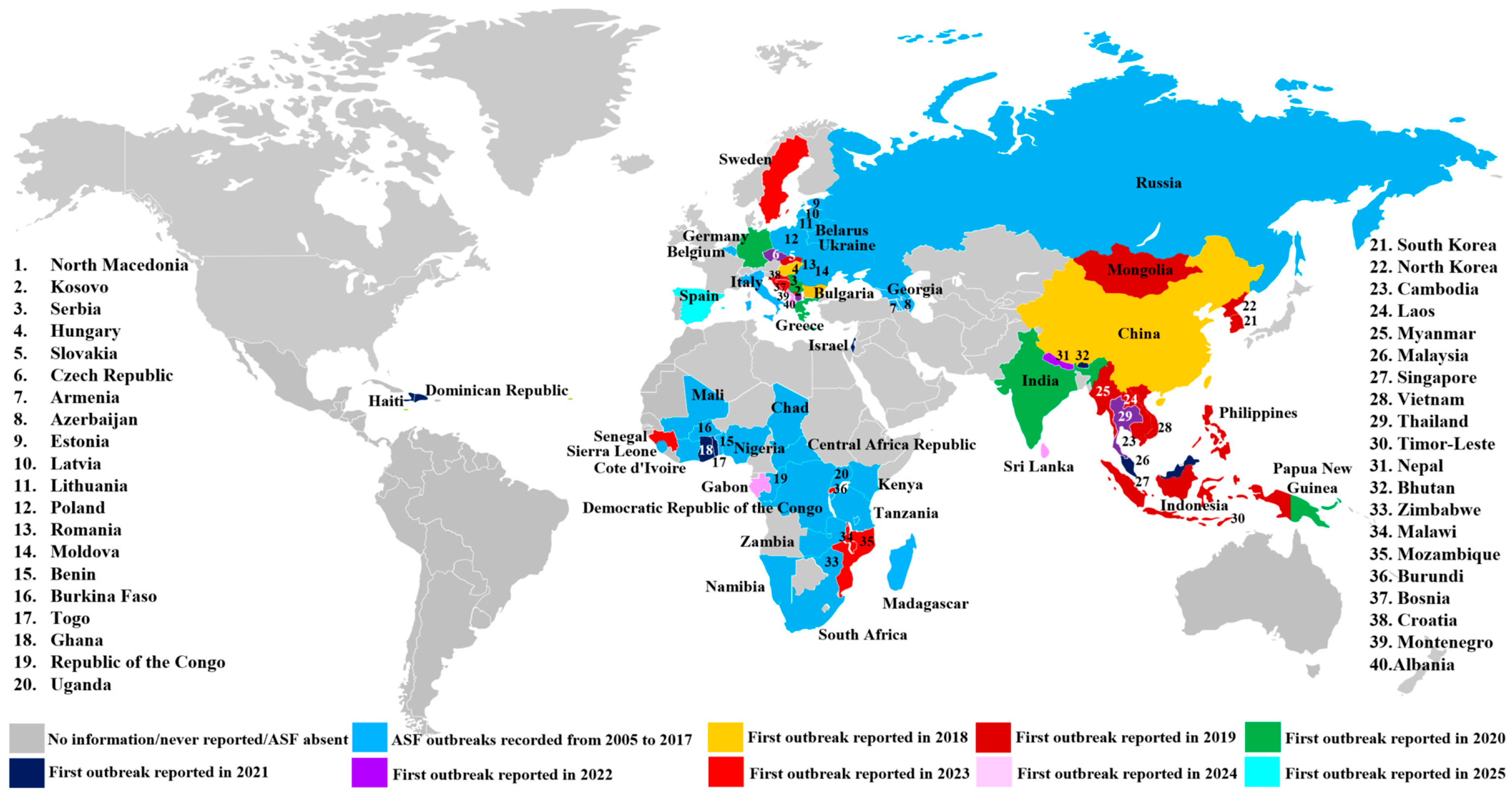
African swine fever (ASF), a highly contagious and lethal viral disease caused by the African swine fever virus (ASFV), poses a severe threat to the global swine industry. Recent outbreaks across Asia, Europe, and the Caribbean are exacerbating the challenge. Current control measures rely mainly on early detection, culling and strict biosecurity practices, underscoring the urgent need for a safe and effective vaccine. Since the mid-1960s, diverse vaccine strategies, including inactivated, subunit, DNA/mRNA, vectored, and live attenuated virus (LAV) vaccines, have been explored. Inactivated vaccines have consistently failed to confer protection due to insufficient functional antigen presentation and weak cellular immune activation. Subunit vaccines targeting single or multiple ASFV antigens have also shown limited success, often failing to induce sterile or long-lasting immunity. Among these approaches, LAV vaccines have demonstrated the greatest promise in eliciting robust and durable immune responses. However, major knowledge gaps remain regarding ASFV biology, ASFV–host interactions, ASFV immune evasion mechanisms, protective and cross-protective immunity, stable cell lines for LAV production, virulence reversion of LAVs, and the lack of harmonized standards for evaluating vaccine safety and efficacy, all of which impede the development of safe and broadly effective ASF vaccines. This narrative review summarizes recent advances in ASF vaccine research and highlights the critical obstacles that must be overcome to achieve successful ASF vaccine development.
Keywords: African swine fever; vaccine; advancement; gaps African swine fever; vaccine; advancement; gaps