Antibacterial Activity of the Pyrazolone Copper Complex P-FAH-Cu-phen Against Staphylococcus aureus and Promotion of Healing of Traumatized Infected Skin in Mice


Abstract
1. Introduction
2. Materials and Methods
2.1. Bacterial Strain and Reagent Preparation
2.2. In Vitro Bacterial Inhibition Assay
2.2.1. Agar Diffusion
2.2.2. Determination of MIC and MBC
2.2.3. Plate Experiment
2.2.4. Kinetic Sterilization Curve
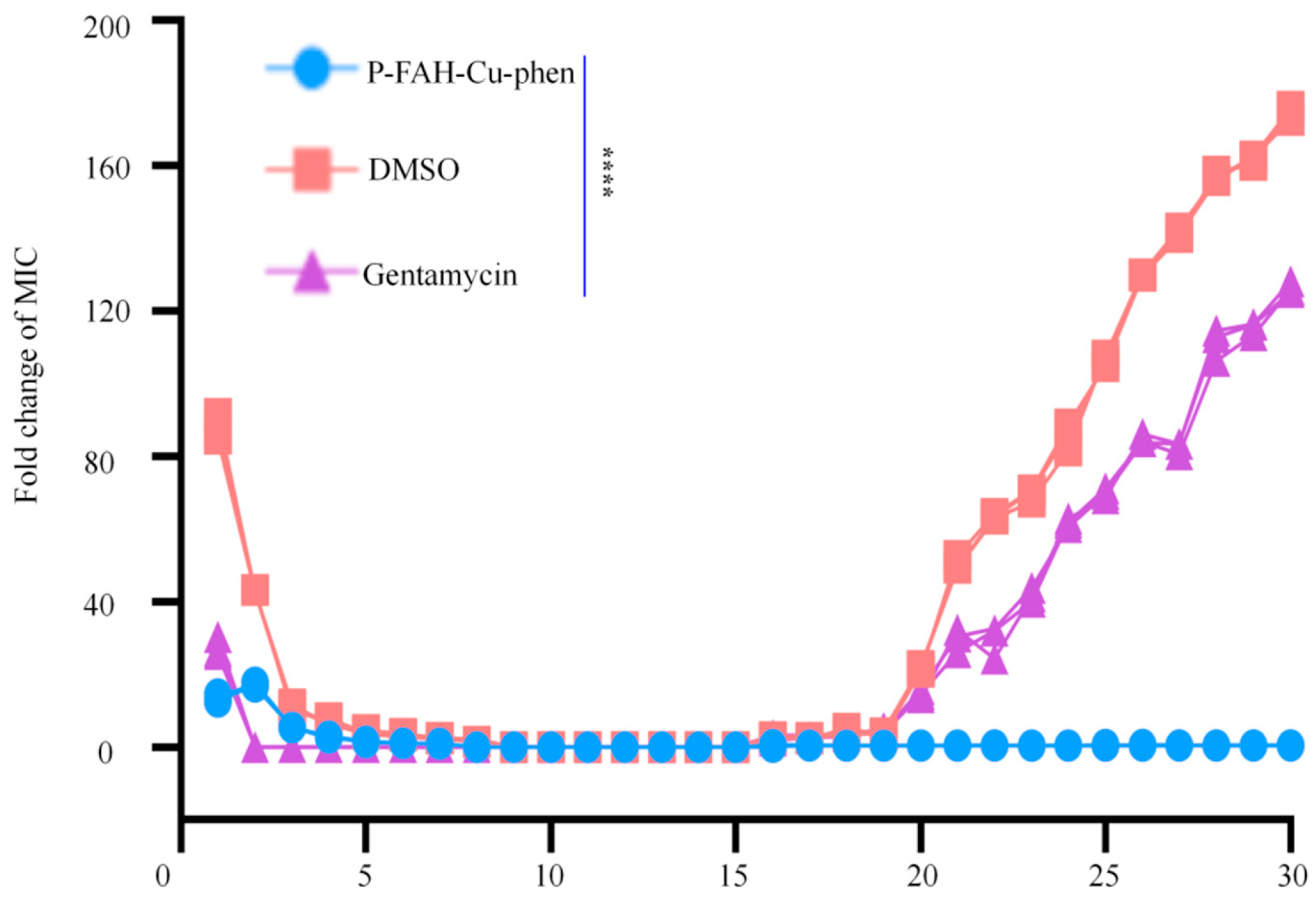
2.2.5. Multi-Step Resistance Screening
2.3. In Vitro Mode of Action of P-FAH-Cu-phen Against S. aureus
2.3.1. Cell Envelope Disruption Assays (AKP Leakage and Macromolecule Release)
2.3.2. Membrane-Associated ATPase Activity Assay
2.4. In Vitro Anti-Virulence Properties of P-FAH-Cu-phen Against S. aureus
2.4.1. Effect on Hemolytic Activity of Culture Supernatants of S. aureus
2.4.2. Effect on Coagulase Activity of S. aureus
2.4.3. Quantitative Real-Time Polymerase Chain Reaction (qRT-PCR) Analysis of Virulence Factor Expression in S. aureus
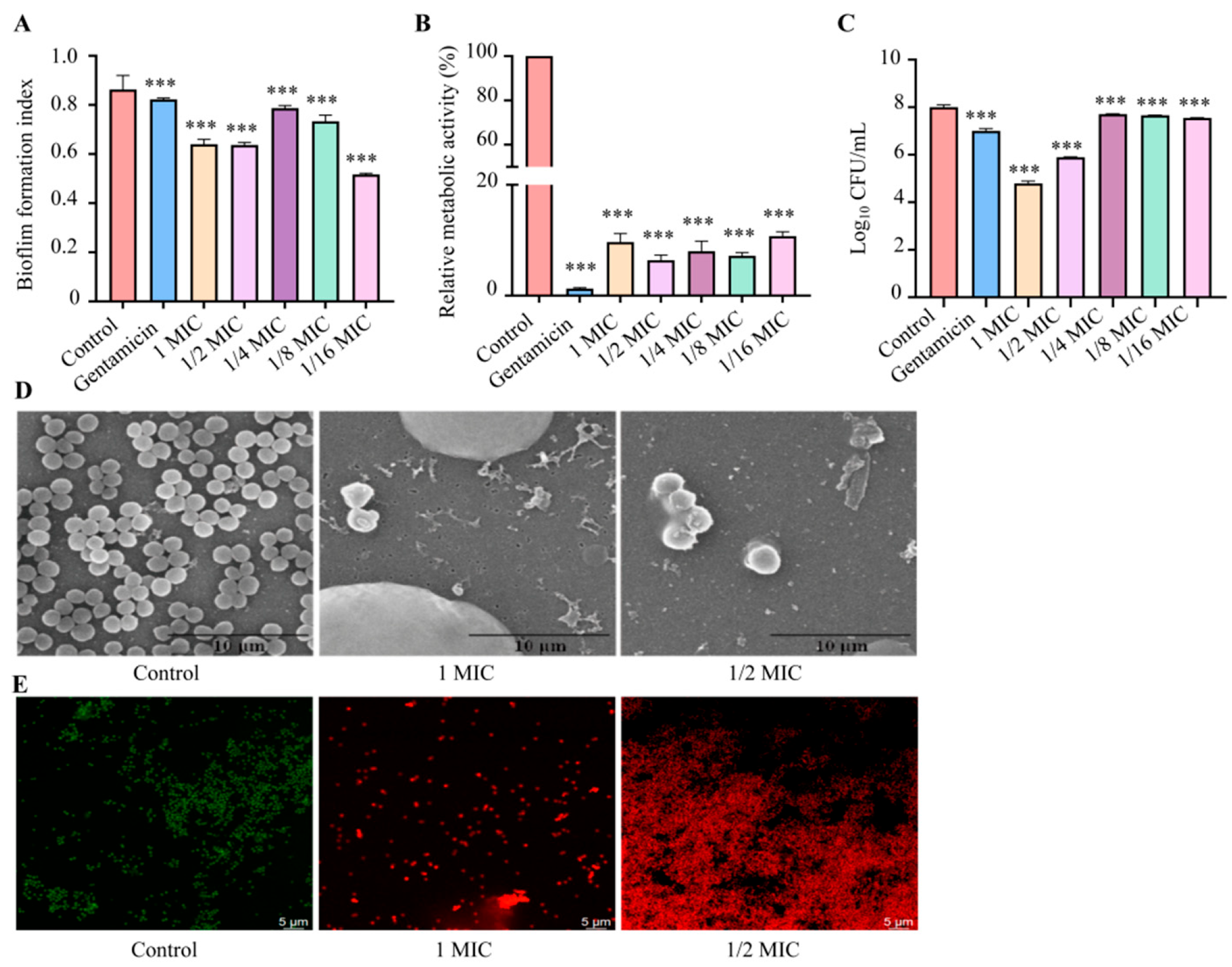
2.5. Effects of P-FAH-Cu-phen on S. aureus Biofilm Formation
2.5.1. Crystal Violet Stain
2.5.2. MTT Assay
2.5.3. Bacterial Counting
2.5.4. Scanning Electron Microscopy (SEM, Hitachi, Tokyo, Japan) Observation and Confocal Laser Scanning Microscope (CLSM, Andor, Purbeck, UK)
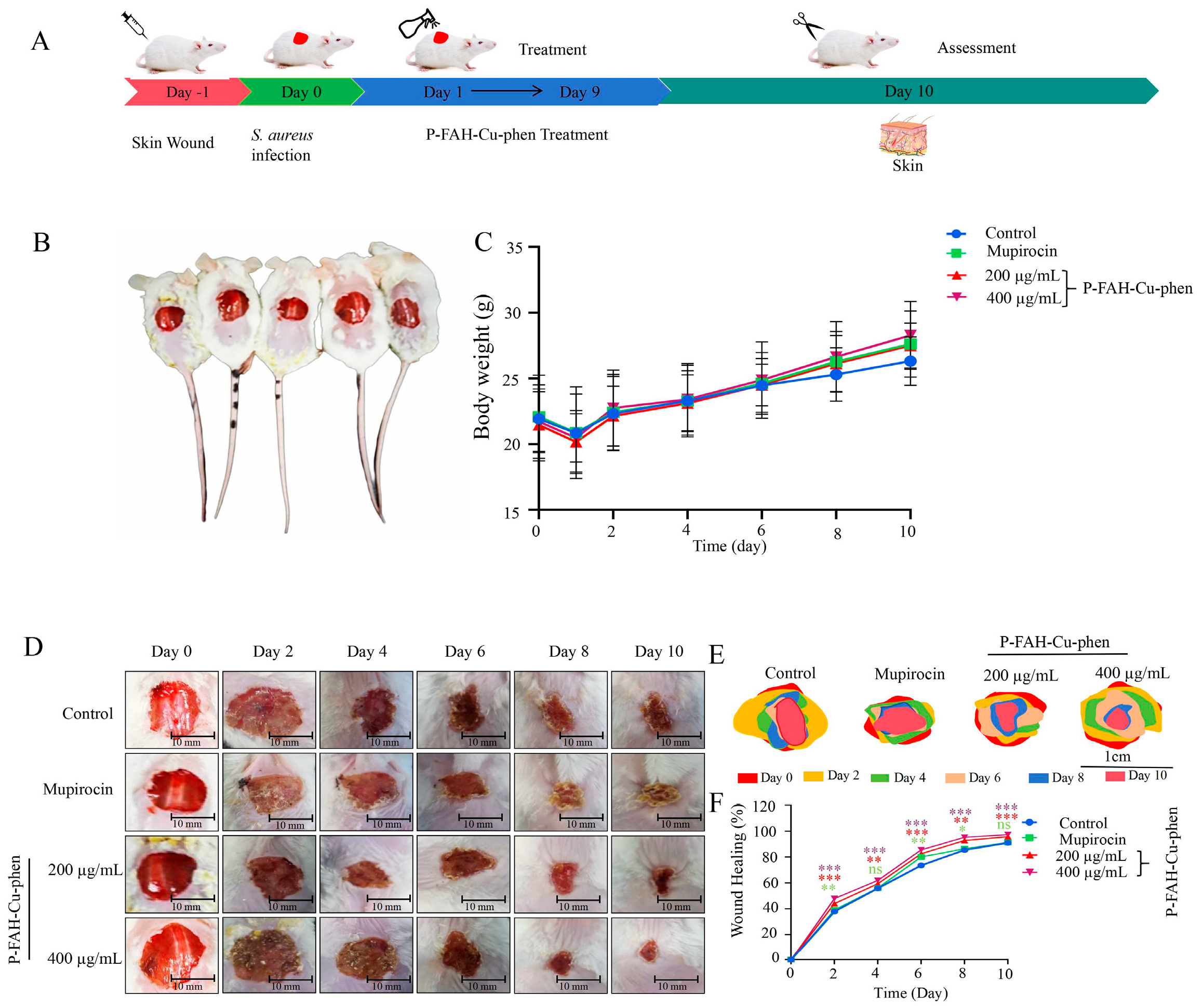
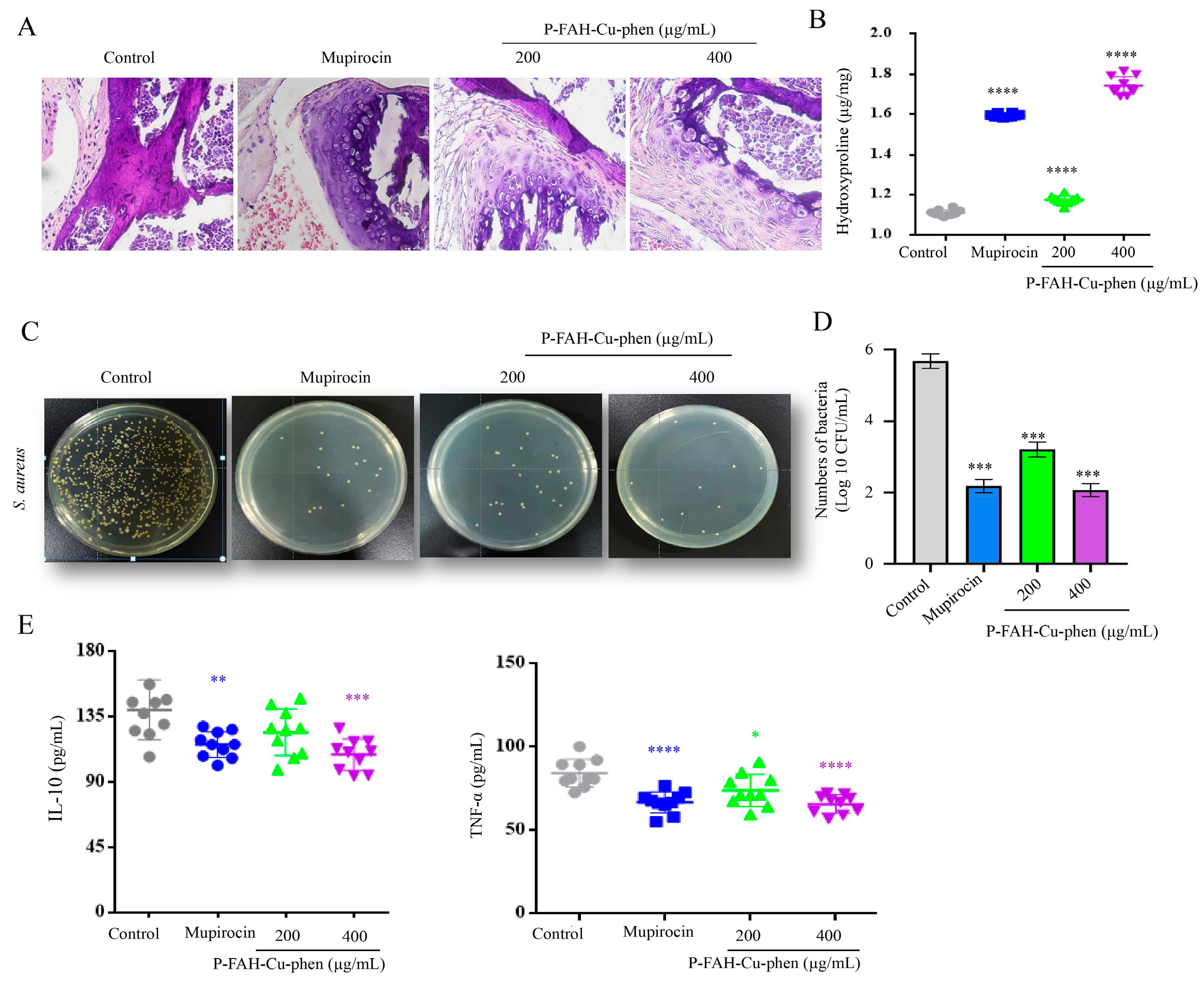
2.6. Wound-Healing Activity In Vivo
2.7. Statistical Analysis
3. Results
3.1. Antibacterial Activity of P-FAH-Cu-phen
3.2. Effect of Serial Passaging on the Susceptibility of S. aureus to P-FAH-Cu-phen
3.3. In Vitro Mechanism of Action
3.3.1. Envelope-Associated Dysfunction (AKP Leakage and Macromolecule Release)
3.3.2. Membrane-Associated ATPase Activity
3.4. Anti-Virulence Activity of P-FAH-Cu-phen Against S. aureus
3.5. Inhibition of Biofilm Formation by P-FAH-Cu-phen
3.6. Experimental Healing of Skin Wounds Infected with S. aureus
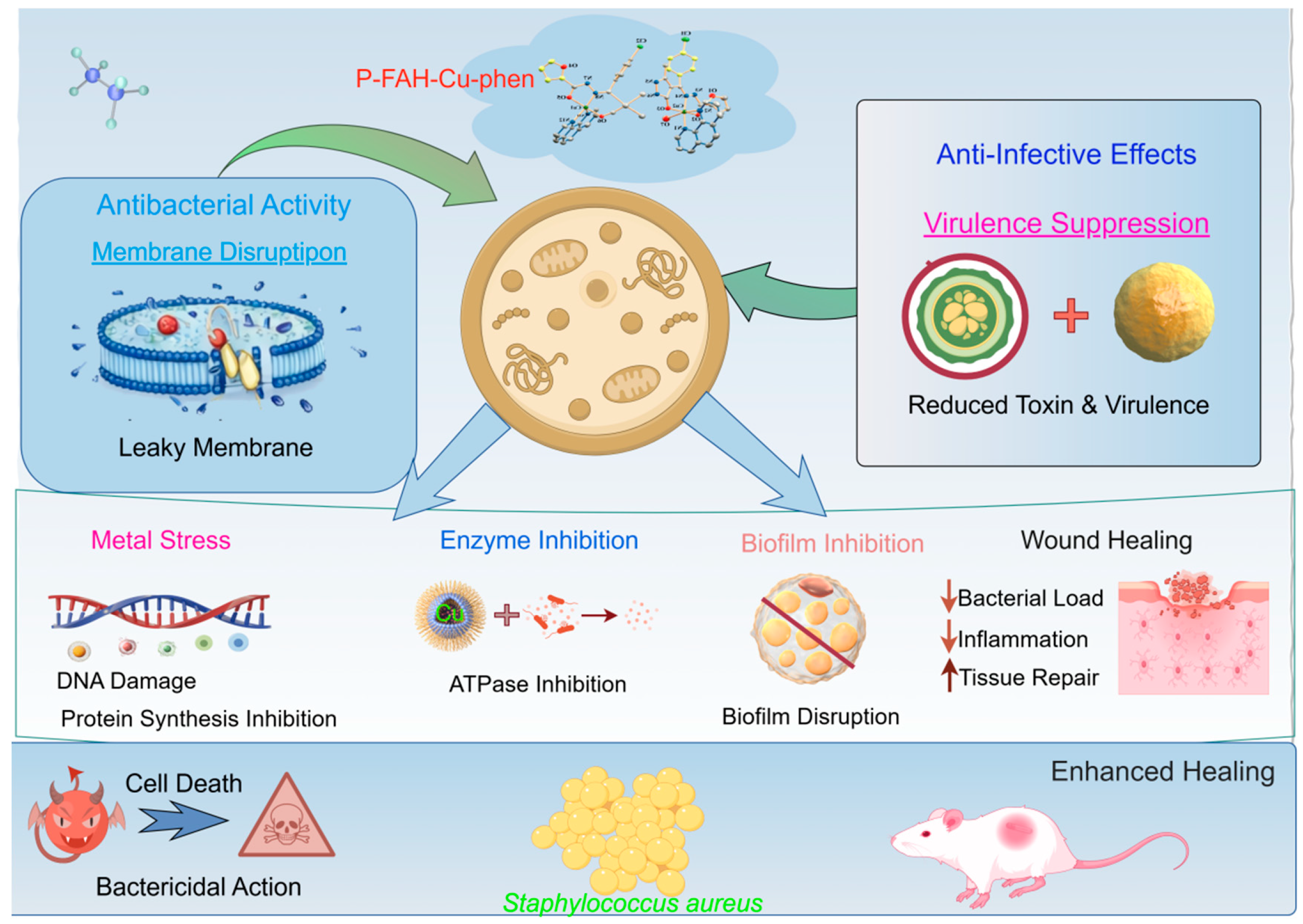
4. Discussion
5. Conclusions
Author Contributions
Funding
Institutional Review Board Statement
Informed Consent Statement
Data Availability Statement
Acknowledgments
Conflicts of Interest
References
- Jin, Y.; Zhou, W.; Zhan, Q.; Zheng, B.; Chen, Y.; Luo, Q.; Shen, P.; Xiao, Y. Genomic Epidemiology and Characterization of Methicillin-Resistant Staphylococcus aureus from Bloodstream Infections in China. mSystems 2021, 6, e00837-21. [Google Scholar] [CrossRef]
- Leuzzi, R.; Bodini, M.; Thomsen, I.P.; Soldaini, E.; Bartolini, E.; Muzzi, A.; Clemente, B.; Galletti, B.; Manetti, A.G.O.; Giovani, C.; et al. Dissecting the Human Response to Staphylococcus aureus Systemic Infections. Front. Immunol. 2021, 12, 749432. [Google Scholar] [CrossRef]
- Degu, S.; Abebe, A.; Gemeda, N.; Bitew, A. Evaluation of Antibacterial and Acute Oral Toxicity of Impatiens tinctoria A. Rich Root Extracts. PLoS ONE 2021, 16, e0255932. [Google Scholar] [CrossRef]
- Jo, J.-H.; Harkins, C.P.; Schwardt, N.H.; Portillo, J.A.; NISC Comparative Sequencing Program; Zimmerman, M.D.; Carter, C.L.; Hossen, M.A.; Peer, C.J.; Polley, E.C.; et al. Alterations of Human Skin Microbiome and Expansion of Antimicrobial Resistance after Systemic Antibiotics. Sci. Transl. Med. 2021, 13, eabd8077. [Google Scholar] [CrossRef] [PubMed]
- Li, Y.; Zhao, J.; He, C.-C.; Zhang, L.; Sun, S.-R.; Xu, G.-C. Synthesis, Crystal Structure and Biological Activity of Two Mn Complexes with 4-Acyl Pyrazolone Derivatives. J. Inorg. Biochem. 2015, 150, 28–37. [Google Scholar] [CrossRef] [PubMed]
- Sinicropi, M.S.; Ceramella, J.; Iacopetta, D.; Catalano, A.; Mariconda, A.; Rosano, C.; Saturnino, C.; El-Kashef, H.; Longo, P. Metal Complexes with Schiff Bases: Data Collection and Recent Studies on Biological Activities. Int. J. Mol. Sci. 2022, 23, 14840. [Google Scholar] [CrossRef]
- Bian, M.; Wang, X.; Sun, Y.; Liu, W. Synthesis and Biological Evaluation of Gold(III) Schiff Base Complexes for the Treatment of Hepatocellular Carcinoma through Attenuating TrxR Activity. Eur. J. Med. Chem. 2020, 193, 112234. [Google Scholar] [CrossRef] [PubMed]
- Poormohammadi, E.B.; Behzad, M.; Abbasi, Z.; Astaneh, S.D.A. Copper Complexes of Pyrazolone-Based Schiff Base Ligands: Synthesis, Crystal Structures and Antibacterial Properties. J. Mol. Struct. 2020, 1205, 127603. [Google Scholar] [CrossRef]
- Kurmanjiang, T.; Wang, X.; Li, J.; Mamat, N.; Nurmamat, M.; Xu, G. A Novel Pyrazolone Complex P-FAH-Cu-Bpy Induces Death of Escherichia coli and Staphylococcus aureus by Disrupting Cell Structure and Blocking Energy. Arch. Microbiol. 2023, 205, 376. [Google Scholar] [CrossRef]
- Miles, T.J.; Barfoot, C.; Brooks, G.; Brown, P.; Chen, D.; Dabbs, S.; Davies, D.T.; Downie, D.L.; Eyrisch, S.; Giordano, I.; et al. Novel Cyclohexyl-Amides as Potent Antibacterials Targeting Bacterial Type IIA Topoisomerases. Bioorganic Med. Chem. Lett. 2011, 21, 7483–7488. [Google Scholar] [CrossRef]
- Kahan, F.M.; Kahan, J.S.; Cassidy, P.J.; Kropp, H. THE MECHANISM OF ACTION OF FOSFOMYCIN (PHOSPHONOMYCIN). Ann. N. Y. Acad. Sci. 1974, 235, 364–386. [Google Scholar] [CrossRef] [PubMed]
- Aragoni, M.C.; Podda, E.; Caria, V.; Carta, S.A.; Cherchi, M.F.; Lippolis, V.; Murgia, S.; Orrù, G.; Pippia, G.; Scano, A.; et al. [AuIII (N^N)Br2](PF6): A Class of Antibacterial and Antibiofilm Complexes (N^N = 2,2′-Bipyridine and 1,10-Phenanthroline Derivatives). Inorg. Chem. 2023, 62, 2924–2933. [Google Scholar] [CrossRef] [PubMed]
- O’Shaughnessy, M.; McCarron, P.; Viganor, L.; McCann, M.; Devereux, M.; Howe, O. The Antibacterial and Anti-Biofilm Activity of Metal Complexes Incorporating 3,6,9-Trioxaundecanedioate and 1,10-Phenanthroline Ligands in Clinical Isolates of Pseudomonas Aeruginosa from Irish Cystic Fibrosis Patients. Antibiotics 2020, 9, 674. [Google Scholar] [CrossRef]
- Waters, J.E.; Stevens-Cullinane, L.; Siebenmann, L.; Hess, J. Recent Advances in the Development of Metal Complexes as Antibacterial Agents with Metal-Specific Modes of Action. Curr. Opin. Microbiol. 2023, 75, 102347. [Google Scholar] [CrossRef]
- Nurmamat, M.; Yan, H.; Wang, R.; Zhao, H.; Li, Y.; Wang, X.; Nurmaimaiti, K.; Kurmanjiang, T.; Luo, D.; Baodi, J.; et al. Novel Copper(II) Complex with a 4-Acylpyrazolone Derivative and Coligand Induce Apoptosis in Liver Cancer Cells. ACS Med. Chem. Lett. 2021, 12, 467–476. [Google Scholar] [CrossRef]
- Parvekar, P.; Palaskar, J.; Metgud, S.; Maria, R.; Dutta, S. The Minimum Inhibitory Concentration (MIC) and Minimum Bactericidal Concentration (MBC) of Silver Nanoparticles against Staphylococcus aureus. Biomater. Investig. Dent. 2020, 7, 105–109. [Google Scholar] [CrossRef]
- Guachalla, L.M.; Hartl, K.; Varga, C.; Stulik, L.; Mirkina, I.; Malafa, S.; Nagy, E.; Nagy, G.; Szijártó, V. Multiple Modes of Action of a Monoclonal Antibody against Multidrug-Resistant Escherichia Coli Sequence Type 131-H30. Antimicrob. Agents Chemother. 2017, 61, e01428-17. [Google Scholar] [CrossRef]
- Liu, D.; Liu, J.; Li, J.; Xia, L.; Yang, J.; Sun, S.; Ma, J.; Zhang, F. A Potential Food Biopreservative, CecXJ-37N, Non-Covalently Intercalates into the Nucleotides of Bacterial Genomic DNA beyond Membrane Attack. Food Chem. 2017, 217, 576–584. [Google Scholar] [CrossRef]
- Farrell, D.J.; Robbins, M.; Rhys-Williams, W.; Love, W.G. Investigation of the Potential for Mutational Resistance to XF-73, Retapamulin, Mupirocin, Fusidic Acid, Daptomycin, and Vancomycin in Methicillin-Resistant Staphylococcus aureus Isolates during a 55-Passage Study. Antimicrob. Agents Chemother. 2011, 55, 1177–1181. [Google Scholar] [CrossRef] [PubMed]
- Zhao, X.; Zhang, M.; Muhammad, I.; Cui, Q.; Zhang, H.; Jia, Y.; Xu, Q.; Kong, L.; Ma, H. An Antibacterial Peptide with High Resistance to Trypsin Obtained by Substituting d-Amino Acids for Trypsin Cleavage Sites. Antibiotics 2021, 10, 1465. [Google Scholar] [CrossRef]
- Ejidike, I.P. Cu(II) Complexes of 4-[(1E)-N-{2-[(Z)-Benzylidene-Amino]Ethyl}ethanimidoyl]Benzene-1,3-Diol Schiff Base: Synthesis, Spectroscopic, In-Vitro Antioxidant, Antifungal and Antibacterial Studies. Molecules 2018, 23, 1581. [Google Scholar] [CrossRef]
- Bradford, M.M. A Rapid and Sensitive Method for the Quantitation of Microgram Quantities of Protein Utilizing the Principle of Protein-Dye Binding. Anal. Biochem. 1976, 72, 248–254. [Google Scholar] [CrossRef]
- Worlitzsch, D.; Kaygin, H.; Steinhuber, A.; Dalhoff, A.; Botzenhart, K.; Döring, G. Effects of Amoxicillin, Gentamicin, and Moxifloxacin on the Hemolytic Activity of Staphylococcus aureus In Vitro and In Vivo. Antimicrob. Agents Chemother. 2001, 45, 196–202. [Google Scholar] [CrossRef]
- Shukla, S.K.; Rao, T.S. An Improved Crystal Violet Assay for Biofilm Quantification in 96-Well Microtitre Plate. bioRxiv 2017. [Google Scholar] [CrossRef]
- García-Heredia, A.; García, S.; Merino-Mascorro, J.Á.; Feng, P.; Heredia, N. Natural Plant Products Inhibits Growth and Alters the Swarming Motility, Biofilm Formation, and Expression of Virulence Genes in Enteroaggregative and Enterohemorrhagic Escherichia coli. Food Microbiol. 2016, 59, 124–132. [Google Scholar] [CrossRef]
- Jadhav, S.; Shah, R.; Bhave, M.; Palombo, E.A. Inhibitory Activity of Yarrow Essential Oil on Listeria Planktonic Cells and Biofilms. Food Control 2013, 29, 125–130. [Google Scholar] [CrossRef]
- Saising, J.; Dube, L.; Ziebandt, A.-K.; Voravuthikunchai, S.P.; Nega, M.; Götz, F. Activity of Gallidermin on Staphylococcus aureus and Staphylococcus epidermidis Biofilms. Antimicrob. Agents Chemother. 2012, 56, 5804–5810. [Google Scholar] [CrossRef] [PubMed]
- Umachigi, S.P.; Jayaveera, K.N.; Ashok Kumar, C.K.; Kumar, G.S.; Vrushabendra Swamy, B.M.; Kishore Kumar, D.V. Studies on Wound Healing Properties of Quercus infectoria. Trop. J. Pharm. Res. 2008, 7, 913–919. [Google Scholar] [CrossRef]
- Guo, N.; Xia, Y.; Zeng, W.; Chen, J.; Wu, Q.; Shi, Y.; Li, G.; Huang, Z.; Wang, G.; Liu, Y. Alginate-Based Aerogels as Wound Dressings for Efficient Bacterial Capture and Enhanced Antibacterial Photodynamic Therapy. Drug Deliv. 2022, 29, 1086–1099. [Google Scholar] [CrossRef]
- Liu, G.; Liu, A.; Yang, C.; Zhou, C.; Zhou, Q.; Li, H.; Yang, H.; Mo, J.; Zhang, Z.; Li, G.; et al. Portulaca Oleracea L. Organic Acid Extract Inhibits Persistent Methicillin-Resistant Staphylococcus aureus in Vitro and in Vivo. Front. Microbiol. 2023, 13, 1076154. [Google Scholar] [CrossRef]
- Guo, H.; Eleftheriadis, N.; Rohr-Udilova, N.; Dömling, A.; Dekker, F.J. Photoactivation Provides a Mechanistic Explanation for Pan-Assay Interference Behaviour of 2-Aminopyrroles in Lipoxygenase Inhibition. Eur. J. Med. Chem. 2017, 139, 633–643. [Google Scholar] [CrossRef] [PubMed]
- Jesus, A.R.; Vila-Viçosa, D.; Machuqueiro, M.; Marques, A.P.; Dore, T.M.; Rauter, A.P. Targeting Type 2 Diabetes with C-Glucosyl Dihydrochalcones as Selective Sodium Glucose Co-Transporter 2 (SGLT2) Inhibitors: Synthesis and Biological Evaluation. J. Med. Chem. 2017, 60, 568–579. [Google Scholar] [CrossRef] [PubMed]
- Liu, X.; Guo, W.; Cui, S.; Tang, X.; Zhao, J.; Zhang, H.; Mao, B.; Chen, W. A Comprehensive Assessment of the Safety of Blautia producta DSM 2950. Microorganisms 2021, 9, 908. [Google Scholar] [CrossRef] [PubMed]
- Evans, D.C.S.; Khamas, A.B.; Payne-Dwyer, A.; Wollman, A.J.M.; Rasmussen, K.S.; Klitgaard, J.K.; Kallipolitis, B.; Leake, M.C.; Meyer, R.L. Cooperation between Coagulase and von Willebrand Factor Binding Protein in Staphylococcus aureus Fibrin Pseudocapsule Formation. Biofilm 2024, 8, 100233. [Google Scholar] [CrossRef]
- Zafar, H.; Ahmad, A.; Khan, A.U.; Khan, T.A. Synthesis, Characterization and Antimicrobial Studies of Schiff Base Complexes. J. Mol. Struct. 2015, 1097, 129–135. [Google Scholar] [CrossRef]
- Arsene, M.M.J.; Viktorovna, P.I.; Alla, M.V.; Mariya, M.A.; Sergei, G.V.; Cesar, E.; Davares, A.K.L.; Parfait, K.; Wilfrid, K.N.; Nikolay, T.S.; et al. Optimization of Ethanolic Extraction of Enantia chloranta Bark, Phytochemical Composition, Green Synthesis of Silver Nanoparticles, and Antimicrobial Activity. Fermentation 2022, 8, 530. [Google Scholar] [CrossRef]
- Mohammad, H.; Abutaleb, N.S.; Seleem, M.N. Auranofin Rapidly Eradicates Methicillin-Resistant Staphylococcus aureus (MRSA) in an Infected Pressure Ulcer Mouse Model. Sci. Rep. 2020, 10, 7251. [Google Scholar] [CrossRef]
- Joshi, S.; Mumtaz, S.; Singh, J.; Pasha, S.; Mukhopadhyay, K. Novel Miniature Membrane Active Lipopeptidomimetics against Planktonic and Biofilm Embedded Methicillin-Resistant Staphylococcus aureus. Sci. Rep. 2018, 8, 1021. [Google Scholar] [CrossRef]
- Elshaier, Y.; Barakat, A.; Al-Qahtany, B.; Al-Majid, A.; Al-Agamy, M. Synthesis of Pyrazole-Thiobarbituric Acid Derivatives: Antimicrobial Activity and Docking Studies. Molecules 2016, 21, 1337. [Google Scholar] [CrossRef]
- Li, G.; Cheng, Y.; Han, C.; Song, C.; Huang, N.; Du, Y. Pyrazole-Containing Pharmaceuticals: Target, Pharmacological Activity, and Their SAR Studies. RSC Med. Chem. 2022, 13, 1300–1321. [Google Scholar] [CrossRef] [PubMed]
- Mermer, A.; Keles, T.; Sirin, Y. Recent Studies of Nitrogen Containing Heterocyclic Compounds as Novel Antiviral Agents: A Review. Bioorganic Chem. 2021, 114, 105076. [Google Scholar] [CrossRef]
- Fayed, E.A.; Eissa, S.I.; Bayoumi, A.H.; Gohar, N.A.; Mehany, A.B.M.; Ammar, Y.A. Design, Synthesis, Cytotoxicity and Molecular Modeling Studies of Some Novel Fluorinated Pyrazole-Based Heterocycles as Anticancer and Apoptosis-Inducing Agents. Mol. Divers. 2019, 23, 165–181. [Google Scholar] [CrossRef]
- Huang, F.; Zhao, S.; Yu, F.; Yang, Z.; Ding, G. Protective Effects and Mechanism of Meretrix meretrix Oligopeptides against Nonalcoholic Fatty Liver Disease. Mar. Drugs 2017, 15, 31. [Google Scholar] [CrossRef]
- Meyrat, A.; Von Ballmoos, C. ATP Synthesis at Physiological Nucleotide Concentrations. Sci. Rep. 2019, 9, 3070. [Google Scholar] [CrossRef]
- Kong, C.; Neoh, H.; Nathan, S. Targeting Staphylococcus aureus Toxins: A Potential Form of Anti-Virulence Therapy. Toxins 2016, 8, 72. [Google Scholar] [CrossRef]
- Kim, S.; Lee, J.-H.; Kim, Y.-G.; Tan, Y.; Lee, J. Hydroquinones Inhibit Biofilm Formation and Virulence Factor Production in Staphylococcus aureus. Int. J. Mol. Sci. 2022, 23, 10683. [Google Scholar] [CrossRef]
- Liu, Y.; Shi, D.; Guo, Y.; Li, M.; Zha, Y.; Wang, Q.; Wang, J. Dracorhodin Perochlorate Attenuates Staphylococcus aureus USA300 Virulence by Decreasing α-Toxin Expression. World J. Microbiol. Biotechnol. 2017, 33, 17. [Google Scholar] [CrossRef] [PubMed]
- Peetermans, M.; Verhamme, P.; Vanassche, T. Coagulase Activity by Staphylococcus aureus: A Potential Target for Therapy? Semin. Thromb. Hemost. 2015, 41, 433–444. [Google Scholar] [CrossRef]
- Li, Q.-Q.; Luo, J.; Liu, X.-Q.; Kang, O.-H.; Kwon, D.-Y. Eleutheroside K Isolated from Acanthopanax henryi (Oliv.) Harms Inhibits the Expression of Virulence-Related Exoproteins in Methicillin-Resistant Staphylococcus aureus. Curr. Microbiol. 2021, 78, 3980–3988. [Google Scholar] [CrossRef]
- Qiu, J.; Zhang, X.; Luo, M.; Li, H.; Dong, J.; Wang, J.; Leng, B.; Wang, X.; Feng, H.; Ren, W.; et al. Subinhibitory Concentrations of Perilla Oil Affect the Expression of Secreted Virulence Factor Genes in Staphylococcus aureus. PLoS ONE 2011, 6, e16160. [Google Scholar] [CrossRef] [PubMed]
- Mohammed, Y.H.E.; Manukumar, H.M.; Rakesh, K.P.; Karthik, C.S.; Mallu, P.; Qin, H.-L. Vision for Medicine: Staphylococcus aureus Biofilm War and Unlocking Key’s for Anti-Biofilm Drug Development. Microb. Pathogen. 2018, 123, 339–347. [Google Scholar] [CrossRef]
- Liao, Y.; Yang, J.; Brandt, B.W.; Li, J.; Crielaard, W.; Van Loveren, C.; Deng, D.M. Genetic Loci Associated with Fluoride Resistance in Streptococcus Mutans. Front. Microbiol. 2018, 9, 3093. [Google Scholar] [CrossRef]
- Kumar Srivastava, A.; Khare, P.; Kumar Nagar, H.; Raghuwanshi, N.; Srivastava, R. Hydroxyproline: A Potential Biochemical Marker and Its Role in the Pathogenesis of Different Diseases. Curr. Protein Pept. Sci. 2016, 17, 596–602. [Google Scholar] [CrossRef]
- Montgomery, C.P.; Daniels, M.D.; Zhao, F.; Spellberg, B.; Chong, A.S.; Daum, R.S. Local Inflammation Exacerbates the Severity of Staphylococcus aureus Skin Infection. PLoS ONE 2013, 8, e69508. [Google Scholar] [CrossRef]
- Saraiva, M.; O’Garra, A. The Regulation of IL-10 Production by Immune Cells. Nat. Rev. Immunol. 2010, 10, 170–181. [Google Scholar] [CrossRef] [PubMed]
- Chiriac, U.; Rau, H.; Frey, O.R.; Röhr, A.C.; Klein, S.; Meyer, A.L.; Morath, B. Validation and Application of an HPLC-UV Method for Routine Therapeutic Drug Monitoring of Dalbavancin. Antibiotics 2022, 11, 541. [Google Scholar] [CrossRef] [PubMed]





| Gene Code | Forvard Primers Sequence | Reverse Primers Sequence | Amplicon Size (bp) |
|---|---|---|---|
| 16S rRNA | GCTGCCCTTTGTATTGTC | AGATGTTGGGTTAAGT CCC | 187 |
| sea | ATGGTGCTTATTATGGTTATC | CGTTTCCAAAGGTACTGTATT | 426 |
| hla | TTGGTGCAAATGTTTC | TCACTTTCCAGCCTACT | 312 |
| agrA | TGATAATCCTTATGAGGTGCTT | CACTGTGCTCGTAACGAAA | 259 |
Disclaimer/Publisher’s Note: The statements, opinions and data contained in all publications are solely those of the individual author(s) and contributor(s) and not of MDPI and/or the editor(s). MDPI and/or the editor(s) disclaim responsibility for any injury to people or property resulting from any ideas, methods, instructions or products referred to in the content. |
© 2026 by the authors. Licensee MDPI, Basel, Switzerland. This article is an open access article distributed under the terms and conditions of the Creative Commons Attribution (CC BY) license.
Share and Cite
Zhou, D.; Nie, C.; Xu, G.; Xie, G.; Nurmamat, M.; Kurmanjiang, T.; Liu, C.; Li, J. Antibacterial Activity of the Pyrazolone Copper Complex P-FAH-Cu-phen Against Staphylococcus aureus and Promotion of Healing of Traumatized Infected Skin in Mice. Microorganisms 2026, 14, 659. https://doi.org/10.3390/microorganisms14030659
Zhou D, Nie C, Xu G, Xie G, Nurmamat M, Kurmanjiang T, Liu C, Li J. Antibacterial Activity of the Pyrazolone Copper Complex P-FAH-Cu-phen Against Staphylococcus aureus and Promotion of Healing of Traumatized Infected Skin in Mice. Microorganisms. 2026; 14(3):659. https://doi.org/10.3390/microorganisms14030659
Chicago/Turabian StyleZhou, Dongyuan, Changyi Nie, Guancheng Xu, Guoxuan Xie, Marhaba Nurmamat, Tamasha Kurmanjiang, Chunyu Liu, and Jinyu Li. 2026. "Antibacterial Activity of the Pyrazolone Copper Complex P-FAH-Cu-phen Against Staphylococcus aureus and Promotion of Healing of Traumatized Infected Skin in Mice" Microorganisms 14, no. 3: 659. https://doi.org/10.3390/microorganisms14030659
APA StyleZhou, D., Nie, C., Xu, G., Xie, G., Nurmamat, M., Kurmanjiang, T., Liu, C., & Li, J. (2026). Antibacterial Activity of the Pyrazolone Copper Complex P-FAH-Cu-phen Against Staphylococcus aureus and Promotion of Healing of Traumatized Infected Skin in Mice. Microorganisms, 14(3), 659. https://doi.org/10.3390/microorganisms14030659