Bacterial Load of Gardnerella spp. and Fannyhessea vaginae and Its Association with Cervicovaginal Inflammatory Cytokine Responses Across Vaginal Microbiota Patterns
 , , , , , , , and
Abstract
1. Introduction
2. Materials and Methods
2.1. Study Design and Population
2.2. Microscopic Diagnosis and Vaginal Sample Collection
2.3. Molecular Screening for Sexually Transmitted Infections
2.4. Quantification of Gardnerella spp. by Quantitative PCR
2.5. Quantification of Fannyhessea vaginae by Quantitative PCR
2.6. Cytokine Quantification
2.7. Statistical Analysis
3. Results
3.1. Sociodemographic Characteristics
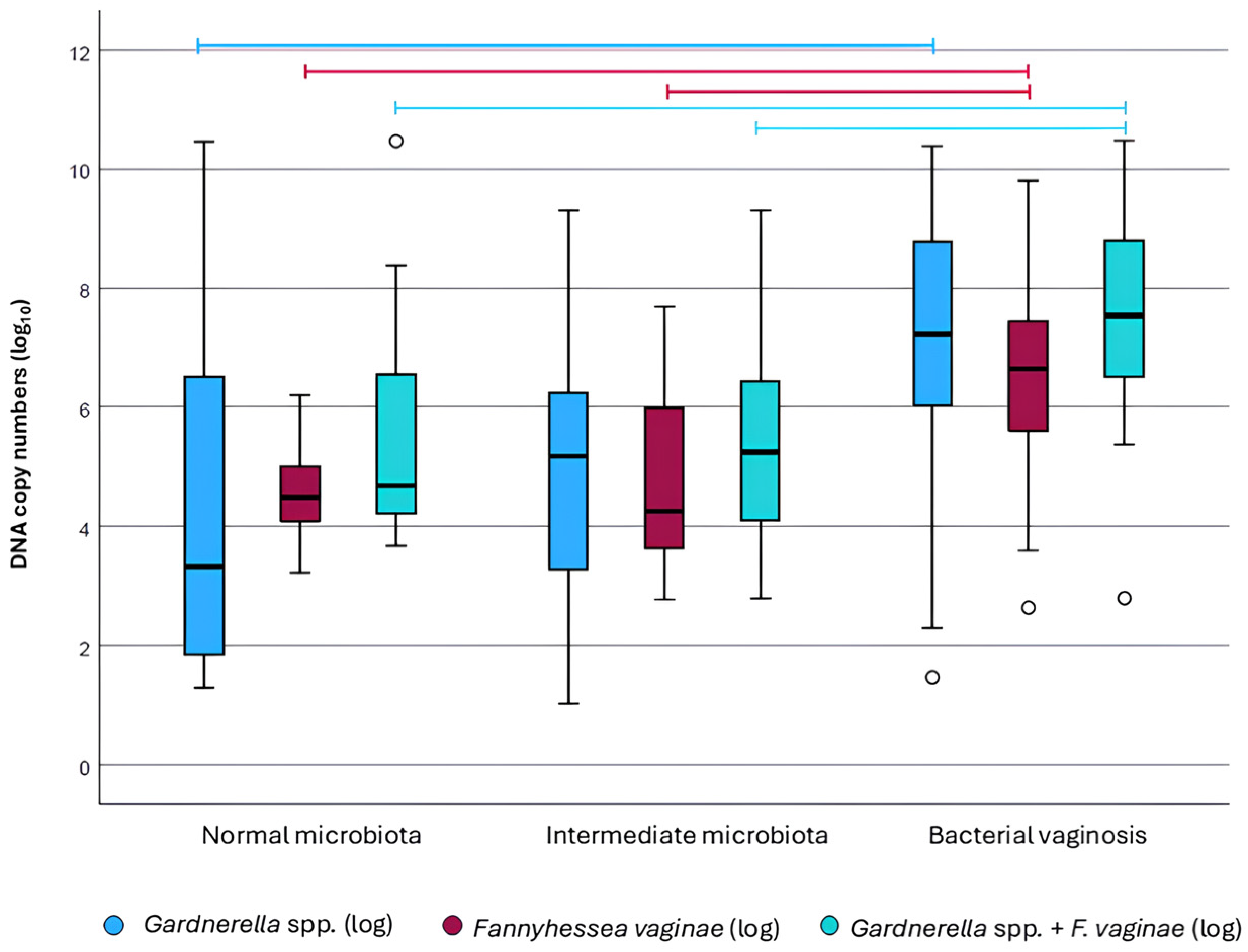
3.2. Quantitative Profile of Bacterial Species Associated with BV
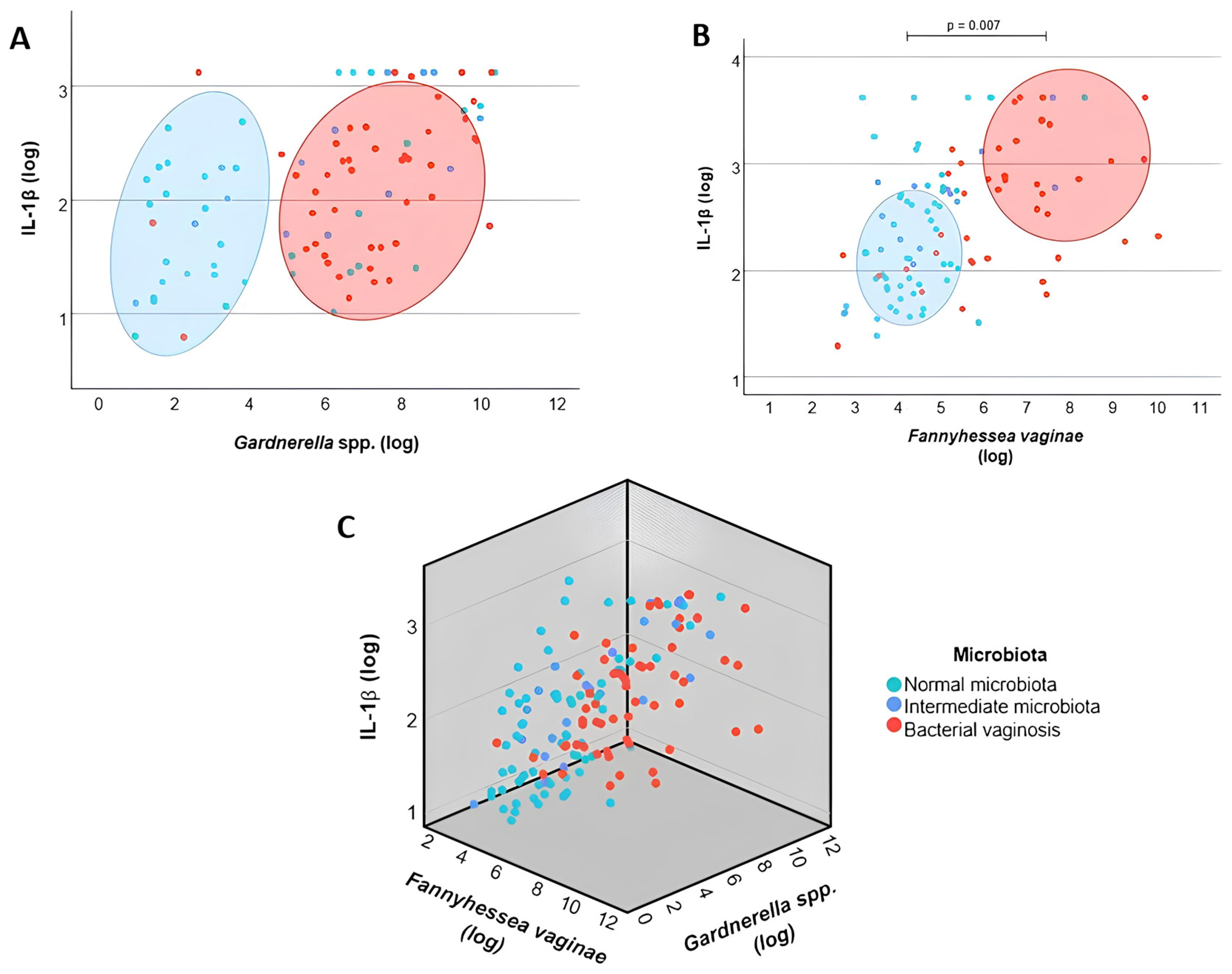
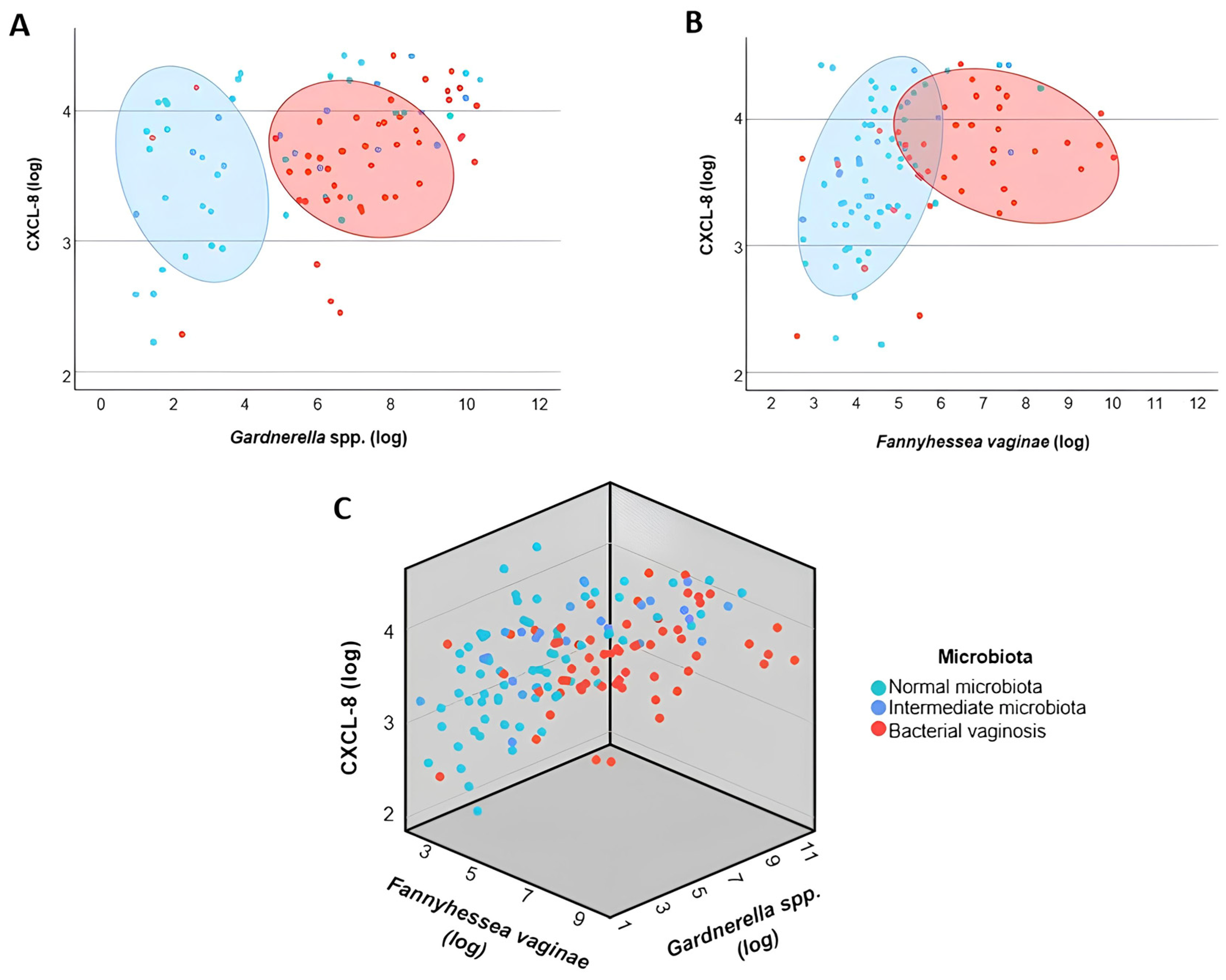
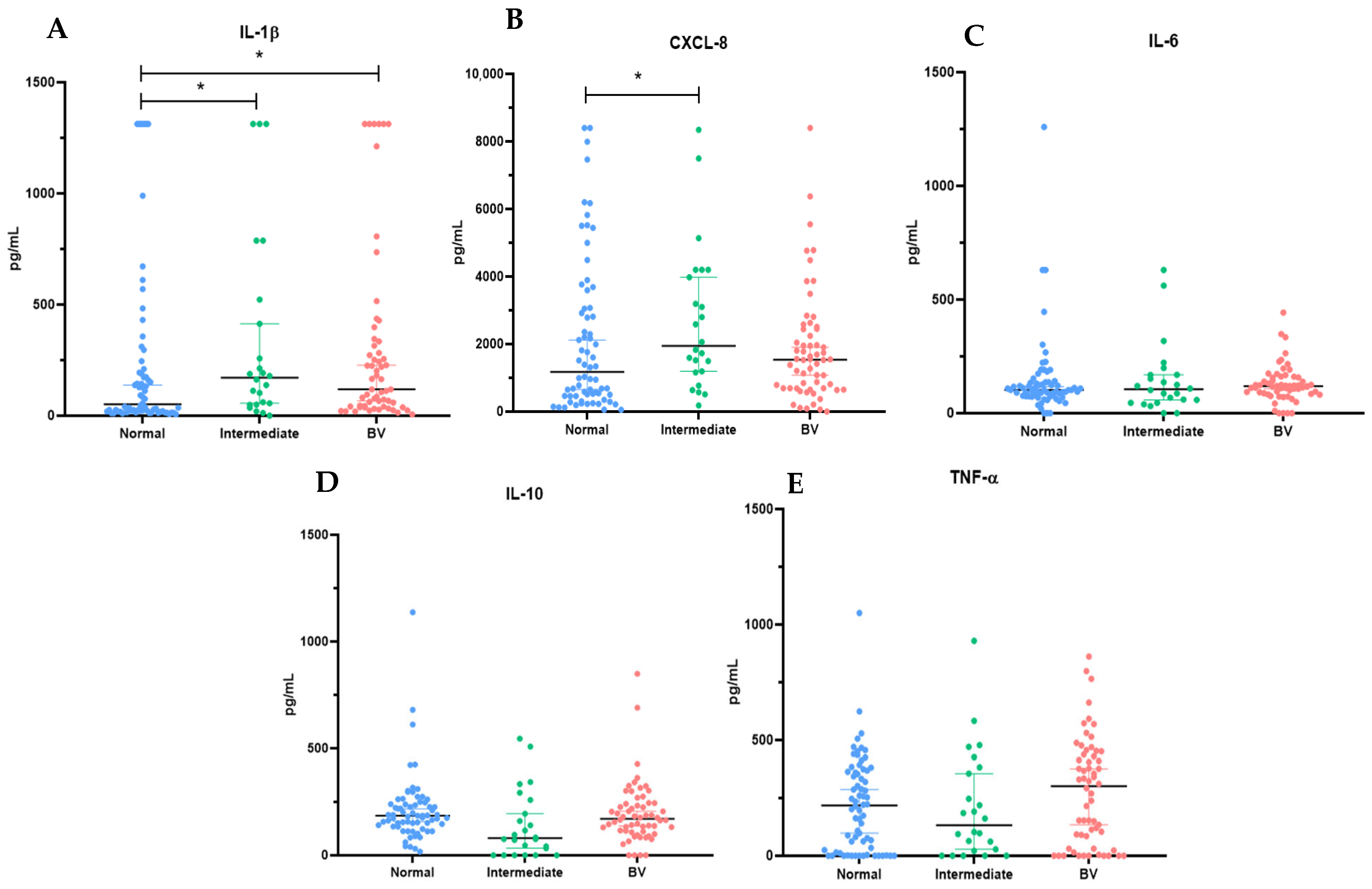
3.3. Inflammatory Cytokines Associated with the Vaginal Microbiota Profile
4. Discussion
5. Conclusions
Author Contributions
Funding
Institutional Review Board Statement
Informed Consent Statement
Data Availability Statement
Conflicts of Interest
Abbreviations
| ATCC | American Type Culture Collection |
| BV | Bacterial vaginosis |
| CST | Community State Type |
| CT | Cycle threshold |
| CXCL-8 | CXC chemokine ligand 8 |
| HIV | Human Immunodeficiency Virus |
| HPV | Human Papillomavirus |
| IL | Interleukin |
| MIP-1β | Macrophage inflammatory protein 1β |
| RANTES | Regulated upon activation normal T expressed and secreted |
| TNF-α | Tumor Necrosis Factor α |
References
- Saraf, V.S.; Sheikh, S.A.; Ahmad, A.; Gillevet, P.M.; Bokhari, H.; Javed, S. Vaginal microbiome: Normalcy vs. dysbiosis. Arch. Microbiol. 2021, 203, 3793–3802. [Google Scholar] [CrossRef] [PubMed]
- Amabebe, E.; Anumba, D.O.C. The Vaginal Microenvironment: The Physiologic Role of Lactobacilli. Front. Med. 2018, 5, 181. [Google Scholar] [CrossRef] [PubMed]
- Haahr, T.; Jensen, J.S.; Thomsen, L.; Duus, L.; Rygaard, K.; Humaidan, P. Abnormal vaginal microbiota may be associated with poor reproductive outcomes: A prospective study in IVF patients. Hum. Reprod. 2016, 31, 795–803. [Google Scholar] [CrossRef] [PubMed]
- Abou Chacra, L.; Fenollar, F.; Diop, K. Bacterial Vaginosis: What Do We Currently Know? Front. Cell. Infect. Microbiol. 2022, 11, 672429. [Google Scholar] [CrossRef] [PubMed]
- Chen, X.; Lu, Y.; Chen, T.; Li, R. The Female Vaginal Microbiome in Health and Bacterial Vaginosis. Front. Cell. Infect. Microbiol. 2021, 11, 31972. [Google Scholar] [CrossRef]
- Coudray, M.S.; Madhivanan, P. Bacterial vaginosis-A brief synopsis of the literature. Eur. J. Obstet. Gynecol. Reprod. Biol. 2020, 245, 143–148. [Google Scholar] [CrossRef]
- Aldunate, M.; Srbinovski, D.; Hearps, A.C.; Latham, C.F.; Ramsland, P.A.; Gugasyan, R.; Cone, R.A.; Tachedjian, G. Antimicrobial and immune modulatory effects of lactic acid and short chain fatty acids produced by vaginal microbiota associated with eubiosis and bacterial vaginosis. Front. Physiol. 2015, 6, 164. [Google Scholar] [CrossRef]
- France, M.; Alizadeh, M.; Brown, S.; Ma, B.; Ravel, J. Towards a deeper understanding of the vaginal microbiota. Nat. Microbiol. 2022, 7, 367–378. [Google Scholar] [CrossRef]
- Javed, A.; Parvaiz, F.; Manzoor, S. Bacterial vaginosis: An insight into the prevalence, alternative treatments regimen and it’s associated resistance patterns. Microb. Pathog. 2019, 127, 21–30. [Google Scholar] [CrossRef]
- Amsel, R.; Totten, P.A.; Spiegel, C.A.; Chen, K.C.; Eschenbach, D.; Holmes, K.K. Nonspecific vaginitis. Diagnostic criteria and microbial and epidemiologic associations. Am. J. Med. 1983, 74, 14–22. [Google Scholar] [CrossRef]
- Nugent, R.P.; Krohn, M.A.; Hillier, S.L. Reliability of diagnosing bacterial vaginosis is improved by a standardized method of gram stain interpretation. J. Clin. Microbiol. 1991, 29, 297–301. [Google Scholar] [CrossRef] [PubMed]
- Muzny, C.A.; Cerca, N.; Elnaggar, J.H.; Taylor, C.M.; Sobel, J.D.; Van Der Pol, B. State of the Art for Diagnosis of Bacterial Vaginosis. J. Clin. Microbiol. 2023, 61, e0083722. [Google Scholar] [CrossRef]
- Castro, J.; Jefferson, K.K.; Cerca, N. Genetic Heterogeneity and Taxonomic Diversity among Gardnerella Species. Trends Microbiol. 2020, 28, 202–211. [Google Scholar] [CrossRef] [PubMed]
- Hardy, L.; Jespers, V.; Van den Bulck, M.; Buyze, J.; Mwambarangwe, L.; Musengamana, V.; Vaneechoutte, M.; Crucitti, T. The presence of the putative Gardnerella vaginalis sialidase A gene in vaginal specimens is associated with bacterial vaginosis biofilm. PLoS ONE 2017, 12, e0172522. [Google Scholar] [CrossRef]
- Onderdonk, A.B.; Delaney, M.L.; Fichorova, R.N. The Human Microbiome during Bacterial Vaginosis. Clin. Microbiol. Rev. 2016, 29, 223–238. [Google Scholar] [CrossRef] [PubMed]
- Morrill, S.; Gilbert, N.M.; Lewis, A.L. Gardnerella vaginalis as a Cause of Bacterial Vaginosis: Appraisal of the Evidence From in vivo Models. Front. Cell. Infect. Microbiol. 2020, 10, 168. [Google Scholar] [CrossRef]
- Elnaggar, J.H.; Lammons, J.W.; Taylor, C.M.; Toh, E.; Ardizzone, C.M.; Dong, A.; Aaron, K.J.; Luo, M.; Tamhane, A.; Lefkowitz, E.J.; et al. Characterization of Vaginal Microbial Community Dynamics in the Pathogenesis of Incident Bacterial Vaginosis, a Pilot Study. Sex. Transm. Dis. 2023, 50, 523–530. [Google Scholar] [CrossRef]
- Nouioui, I.; Carro, L.; García-López, M.; Meier-Kolthoff, J.P.; Woyke, T.; Kyrpides, N.C.; Pukall, R.; Klenk, H.P.; Goodfellow, M.; Göker, M. Genome-Based Taxonomic Classification of the Phylum Actinobacteria. Front. Microbiol. 2018, 9, 2007. [Google Scholar] [CrossRef]
- Sousa, L.G.V.; Castro, J.; França, A.; Almeida, C.; Muzny, C.A.; Cerca, N. A New PNA-FISH Probe Targeting. Front. Cell. Infect. Microbiol. 2021, 11, 779376. [Google Scholar] [CrossRef]
- Polatti, F. Bacterial vaginosis, Atopobium vaginae and nifuratel. Curr. Clin. Pharmacol. 2012, 7, 36–40. [Google Scholar] [CrossRef]
- Hardy, L.; Jespers, V.; Abdellati, S.; De Baetselier, I.; Mwambarangwe, L.; Musengamana, V.; van de Wijgert, J.; Vaneechoutte, M.; Crucitti, T. A fruitful alliance: The synergy between Atopobium vaginae and Gardnerella vaginalis in bacterial vaginosis-associated biofilm. Sex. Transm. Infect. 2016, 92, 487–491. [Google Scholar] [CrossRef] [PubMed]
- Shvartsman, E.; Hill, J.E.; Sandstrom, P.; MacDonald, K.S. Gardnerella Revisited: Species Heterogeneity, Virulence Factors, Mucosal Immune Responses, and Contributions to Bacterial Vaginosis. Infect. Immun. 2023, 91, e0039022. [Google Scholar] [CrossRef] [PubMed]
- Muzny, C.A.; Łaniewski, P.; Schwebke, J.R.; Herbst-Kralovetz, M.M. Host-vaginal microbiota interactions in the pathogenesis of bacterial vaginosis. Curr. Opin. Infect. Dis. 2020, 33, 59–65. [Google Scholar] [CrossRef] [PubMed]
- Ravel, J.; Moreno, I.; Simón, C. Bacterial vaginosis and its association with infertility, endometritis, and pelvic inflammatory disease. Am. J. Obstet. Gynecol. 2021, 224, 251–257. [Google Scholar] [CrossRef]
- Cibley, L.J.; Cibley, L.J. Cytolytic vaginosis. Am. J. Obstet. Gynecol. 1991, 165, 1245–1249. [Google Scholar] [CrossRef]
- Dong, M.; Wang, C.; Li, H.; Yan, Y.; Ma, X.; Li, H.; Li, X.; Wang, H.; Zhang, Y.; Qi, W.; et al. Aerobic Vaginitis Diagnosis Criteria Combining Gram Stain with Clinical Features: An Establishment and Prospective Validation Study. Diagnostics 2022, 12, 185. [Google Scholar] [CrossRef]
- Bauer, H.M.; Ting, Y.; Greer, C.E.; Chambers, J.C.; Tashiro, C.J.; Chimera, J.; Reingold, A.; Manos, M.M. Genital human papillomavirus infection in female university students as determined by a PCR-based method. JAMA 1991, 265, 472–477. [Google Scholar] [CrossRef]
- Marconi, C.; Donders, G.G.; Parada, C.M.; Giraldo, P.C.; da Silva, M.G. Do Atopobium vaginae, Megasphaera sp. and Leptotrichia sp. change the local innate immune response and sialidase activity in bacterial vaginosis? Sex. Transm. Infect. 2013, 89, 167–173. [Google Scholar] [CrossRef]
- Bradshaw, C.S.; Tabrizi, S.N.; Fairley, C.K.; Morton, A.N.; Rudland, E.; Garland, S.M. The association of Atopobium vaginae and Gardnerella vaginalis with bacterial vaginosis and recurrence after oral metronidazole therapy. J. Infect. Dis. 2006, 194, 828–836. [Google Scholar] [CrossRef]
- Sehgal, P.G.; Dadwal, R.; Sharma, B.; Sehgal, A.; Bagga, R.; Chopra, S.; Angrup, A.; Yadav, R.; Sharma, N.; Sethi, S. Detection of co-infection of Gardnerella vaginalis and Atopobium vaginae using qualitative PCR: A better predictor of bacterial vaginosis. Anaerobe 2021, 69, 102343. [Google Scholar] [CrossRef]
- France, M.T.; Ma, B.; Gajer, P.; Brown, S.; Humphrys, M.S.; Holm, J.B.; Waetjen, L.E.; Brotman, R.M.; Ravel, J. VALENCIA: A nearest centroid classification method for vaginal microbial communities based on composition. Microbiome 2020, 8, 166. [Google Scholar] [CrossRef] [PubMed]
- Shipitsyna, E.; Krysanova, A.; Khayrullina, G.; Shalepo, K.; Savicheva, A.; Guschin, A.; Unemo, M. Quantitation of all Four Gardnerella vaginalis Clades Detects Abnormal Vaginal Microbiota Characteristic of Bacterial Vaginosis More Accurately than Putative G. vaginalis Sialidase A Gene Count. Mol. Diagn. Ther. 2019, 23, 139–147. [Google Scholar] [CrossRef] [PubMed]
- Tettamanti Boshier, F.A.; Srinivasan, S.; Lopez, A.; Hoffman, N.G.; Proll, S.; Fredricks, D.N.; Schiffer, J.T. Complementing 16S rRNA Gene Amplicon Sequencing with Total Bacterial Load To Infer Absolute Species Concentrations in the Vaginal Microbiome. mSystems 2020, 5, e00777-19. [Google Scholar] [CrossRef] [PubMed]
- van de Wijgert, J.H.; Borgdorff, H.; Verhelst, R.; Crucitti, T.; Francis, S.; Verstraelen, H.; Jespers, V. The vaginal microbiota: What have we learned after a decade of molecular characterization? PLoS ONE 2014, 9, e105998. [Google Scholar] [CrossRef]
- Fredricks, D.N.; Fiedler, T.L.; Marrazzo, J.M. Molecular identification of bacteria associated with bacterial vaginosis. N. Engl. J. Med. 2005, 353, 1899–1911. [Google Scholar] [CrossRef]
- Menard, J.P.; Fenollar, F.; Henry, M.; Bretelle, F.; Raoult, D. Molecular quantification of Gardnerella vaginalis and Atopobium vaginae loads to predict bacterial vaginosis. Clin. Infect. Dis. 2008, 47, 33–43. [Google Scholar] [CrossRef]
- Sirichoat, A.; Sankuntaw, N.; Engchanil, C.; Buppasiri, P.; Faksri, K.; Namwat, W.; Chantratita, W.; Lulitanond, V. Comparison of different hypervariable regions of 16S rRNA for taxonomic profiling of vaginal microbiota using next-generation sequencing. Arch. Microbiol. 2021, 203, 1159–1166. [Google Scholar] [CrossRef]
- Abou Chacra, L.; Drouet, H.; Ly, C.; Bretelle, F.; Fenollar, F. Evaluation of Various Diagnostic Strategies for Bacterial Vaginosis, Including a New Approach Based on MALDI-TOF Mass Spectrometry. Microorganisms 2024, 12, 111. [Google Scholar] [CrossRef]
- Santos-Greatti, M.M.V.; da Silva, M.G.; Ferreira, C.S.T.; Marconi, C. Cervicovaginal cytokines, sialidase activity and bacterial load in reproductive-aged women with intermediate vaginal flora. J. Reprod. Immunol. 2016, 118, 36–41. [Google Scholar] [CrossRef]
- Fichorova, R.N.; Morrison, C.S.; Chen, P.L.; Yamamoto, H.S.; Govender, Y.; Junaid, D.; Ryan, S.; Kwok, C.; Chipato, T.; Salata, R.A.; et al. Aberrant cervical innate immunity predicts onset of dysbiosis and sexually transmitted infections in women of reproductive age. PLoS ONE 2020, 15, e0224359. [Google Scholar] [CrossRef]
- Libby, E.K.; Pascal, K.E.; Mordechai, E.; Adelson, M.E.; Trama, J.P. Atopobium vaginae triggers an innate immune response in an in vitro model of bacterial vaginosis. Microbes Infect. 2008, 10, 439–446. [Google Scholar] [CrossRef]
- Doerflinger, S.Y.; Throop, A.L.; Herbst-Kralovetz, M.M. Bacteria in the vaginal microbiome alter the innate immune response and barrier properties of the human vaginal epithelia in a species-specific manner. J. Infect. Dis. 2014, 209, 1989–1999. [Google Scholar] [CrossRef]
- Swidsinski, A.; Mendling, W.; Loening-Baucke, V.; Ladhoff, A.; Swidsinski, S.; Hale, L.P.; Lochs, H. Adherent biofilms in bacterial vaginosis. Obstet. Gynecol. 2005, 106, 1013–1023. [Google Scholar] [CrossRef] [PubMed]
- Nikolaitchouk, N.; Andersch, B.; Falsen, E.; Strömbeck, L.; Mattsby-Baltzer, I. The lower genital tract microbiota in relation to cytokine-, SLPI- and endotoxin levels: Application of checkerboard DNA-DNA hybridization (CDH). APMIS 2008, 116, 263–277. [Google Scholar] [CrossRef] [PubMed]
- Marconi, C.; Donders, G.G.; Bellen, G.; Brown, D.R.; Parada, C.M.; Silva, M.G. Sialidase activity in aerobic vaginitis is equal to levels during bacterial vaginosis. Eur. J. Obstet. Gynecol. Reprod. Biol. 2013, 167, 205–209. [Google Scholar] [CrossRef] [PubMed]
- Spear, G.T.; Kendrick, S.R.; Chen, H.Y.; Thomas, T.T.; Bahk, M.; Balderas, R.; Ghosh, S.; Weinberg, A.; Landay, A.L. Multiplex immunoassay of lower genital tract mucosal fluid from women attending an urban STD clinic shows broadly increased IL1ß and lactoferrin. PLoS ONE 2011, 6, e19560. [Google Scholar] [CrossRef]
- Łaniewski, P.; Gomez, A.; Hire, G.; So, M.; Herbst-Kralovetz, M.M. Human Three-Dimensional Endometrial Epithelial Cell Model To Study Host Interactions with Vaginal Bacteria and Neisseria gonorrhoeae. Infect. Immun. 2017, 85, e01049-16. [Google Scholar] [CrossRef]
- Łaniewski, P.; Herbst-Kralovetz, M.M. Bacterial vaginosis and health-associated bacteria modulate the immunometabolic landscape in 3D model of human cervix. NPJ Biofilms Microbiomes 2021, 7, 88. [Google Scholar] [CrossRef]
- Eade, C.R.; Diaz, C.; Wood, M.P.; Anastos, K.; Patterson, B.K.; Gupta, P.; Cole, A.L.; Cole, A.M. Identification and characterization of bacterial vaginosis-associated pathogens using a comprehensive cervical-vaginal epithelial coculture assay. PLoS ONE 2012, 7, e50106. [Google Scholar] [CrossRef]
- Kyongo, J.K.; Crucitti, T.; Menten, J.; Hardy, L.; Cools, P.; Michiels, J.; Delany-Moretlwe, S.; Mwaura, M.; Ndayisaba, G.; Joseph, S.; et al. Cross-Sectional Analysis of Selected Genital Tract Immunological Markers and Molecular Vaginal Microbiota in Sub-Saharan African Women, with Relevance to HIV Risk and Prevention. Clin. Vaccine Immunol. 2015, 22, 526–538. [Google Scholar] [CrossRef]




| Variables | Normal Microbiota (n = 68) | Intermediate Microbiota (n = 24) | Bacterial Vaginosis (n = 60) |
|---|---|---|---|
| Age | 37 (22–54) | 39 (19–55) | 41 (20–58) |
| Ethnicity * | |||
| White | 44 (63.2%) | 12 (50.0%) | 32 (53.3%) |
| Black | 2 (2.9%) | 1 (4.2%) | 7 (11.7%) |
| Others | 5 (7.4%) | 4 (16.7%) | 2 (3.3%) |
| Marital status ** | |||
| Single | 25 (36.8%) | 5 (20.8%) | 23 (38.3%) |
| Married | 25 (36.8%) | 12 (50.0%) | 18 (30.0%) |
| Vaginal discharge | |||
| Yes | 11 (16.2%) | 9 (37.5%) | 9 (15.0%) |
| No | 40 (62.5%) | 9 (37.5%) | 37 (61.7%) |
| Vaginal odor | |||
| Yes | 4 (6.3%) | 2 (8.3%) | 6 (10.0%) |
| No | 35 (51.5%) | 13 (54.2%) | 30 (50.0%) |
| Vaginal pruritus | |||
| Yes | 3 (4.4%) | 2 (8.3%) | 4 (6.7%) |
| No | 40 (62.5%) | 15 (62.5%) | 37 (61.7%) |
Disclaimer/Publisher’s Note: The statements, opinions and data contained in all publications are solely those of the individual author(s) and contributor(s) and not of MDPI and/or the editor(s). MDPI and/or the editor(s) disclaim responsibility for any injury to people or property resulting from any ideas, methods, instructions or products referred to in the content. |
© 2026 by the authors. Licensee MDPI, Basel, Switzerland. This article is an open access article distributed under the terms and conditions of the Creative Commons Attribution (CC BY) license.
Share and Cite
Yonezawa, L.E.; Sena Baptista Ferreira, J.; Tesini Rocha, M.E.; Gomes Barnabé, R.; Miot, H.A.; da Rocha Tristão, A.; Marconi, C.; de Castro Silva, M.; Guimarães da Silva, M. Bacterial Load of Gardnerella spp. and Fannyhessea vaginae and Its Association with Cervicovaginal Inflammatory Cytokine Responses Across Vaginal Microbiota Patterns. Microorganisms 2026, 14, 651. https://doi.org/10.3390/microorganisms14030651
Yonezawa LE, Sena Baptista Ferreira J, Tesini Rocha ME, Gomes Barnabé R, Miot HA, da Rocha Tristão A, Marconi C, de Castro Silva M, Guimarães da Silva M. Bacterial Load of Gardnerella spp. and Fannyhessea vaginae and Its Association with Cervicovaginal Inflammatory Cytokine Responses Across Vaginal Microbiota Patterns. Microorganisms. 2026; 14(3):651. https://doi.org/10.3390/microorganisms14030651
Chicago/Turabian StyleYonezawa, Laura Emi, Jeniffer Sena Baptista Ferreira, Maria Eduarda Tesini Rocha, Rafael Gomes Barnabé, Hélio Amante Miot, Andréa da Rocha Tristão, Camila Marconi, Mariana de Castro Silva, and Márcia Guimarães da Silva. 2026. "Bacterial Load of Gardnerella spp. and Fannyhessea vaginae and Its Association with Cervicovaginal Inflammatory Cytokine Responses Across Vaginal Microbiota Patterns" Microorganisms 14, no. 3: 651. https://doi.org/10.3390/microorganisms14030651
APA StyleYonezawa, L. E., Sena Baptista Ferreira, J., Tesini Rocha, M. E., Gomes Barnabé, R., Miot, H. A., da Rocha Tristão, A., Marconi, C., de Castro Silva, M., & Guimarães da Silva, M. (2026). Bacterial Load of Gardnerella spp. and Fannyhessea vaginae and Its Association with Cervicovaginal Inflammatory Cytokine Responses Across Vaginal Microbiota Patterns. Microorganisms, 14(3), 651. https://doi.org/10.3390/microorganisms14030651