Characterization and Proteomic Analyses of the High Cr Resistance and Removability of a Novel Lysinibacillus capsici FPHNCRA4-48 Isolated from Highly Cr-Polluted Water

 , , and
Abstract
1. Introduction
2. Materials and Methods
2.1. Chemicals and Reagents
2.2. Isolation and Identification of Cr(VI)-Chelating Strains
2.3. Cr(VI) Sensitivity Analysis of the Isolates
2.4. Microscopic Analyses for L. capsici FPHNCRA4-48
2.5. Removal Performance of Cr(VI) by L. capsici FPHNCRA4-48
2.6. EPS Extraction and Compositional Analysis
2.7. Adsorption Kinetics and Isothermal Adsorption Experiments
2.8. EPS Characterization Techniques
2.8.1. Three-Dimensional Fluorescence Spectroscopy (3D-EEM) Analysis
2.8.2. Fluorescence Spectral Analysis
2.8.3. Fourier Transform Infrared Spectroscopy (FTIR) Analysis
2.8.4. X-Ray Photoelectron Spectroscopy (XPS) Analysis
2.9. Proteome Sequencing Analysis of L. capsici FPHNCRA4-48 EPS
2.10. Statistical Analysis
3. Results and Discussion
3.1. Isolation, Identification, and the Tolerance of the Isolate
3.2. Removal of Cr(VI) by L. capsici FPHNCRA4-48
3.3. Adsorption Kinetics and Isothermal Adsorption
3.4. Characterization of Cr(VI) Removal by L. capsici FPHNCRA4-48 EPS
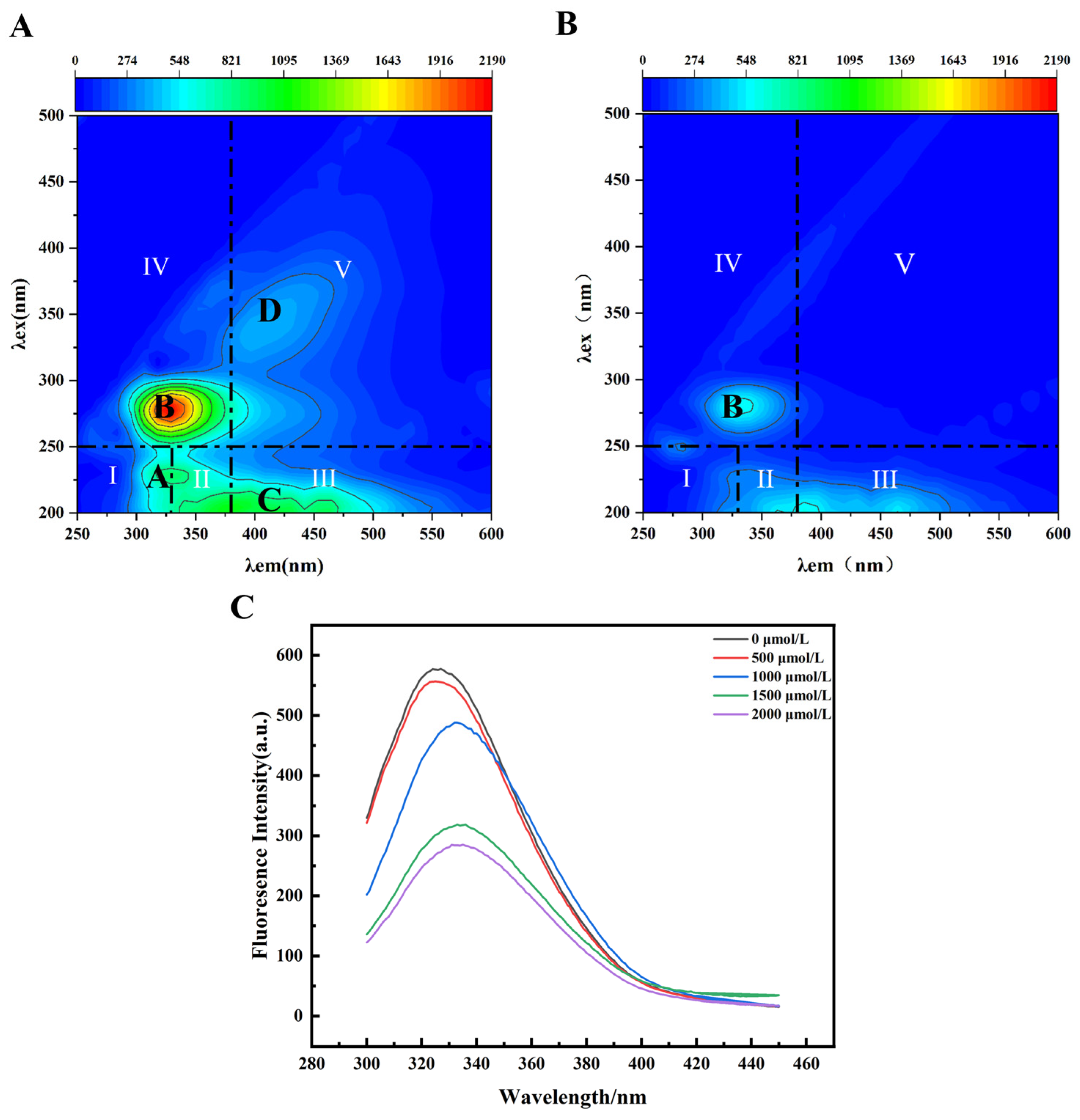
3.4.1. Three-Dimensional EEM Analysis and Fluorescence Spectroscopy of EPS Following Cr(VI) Exposure
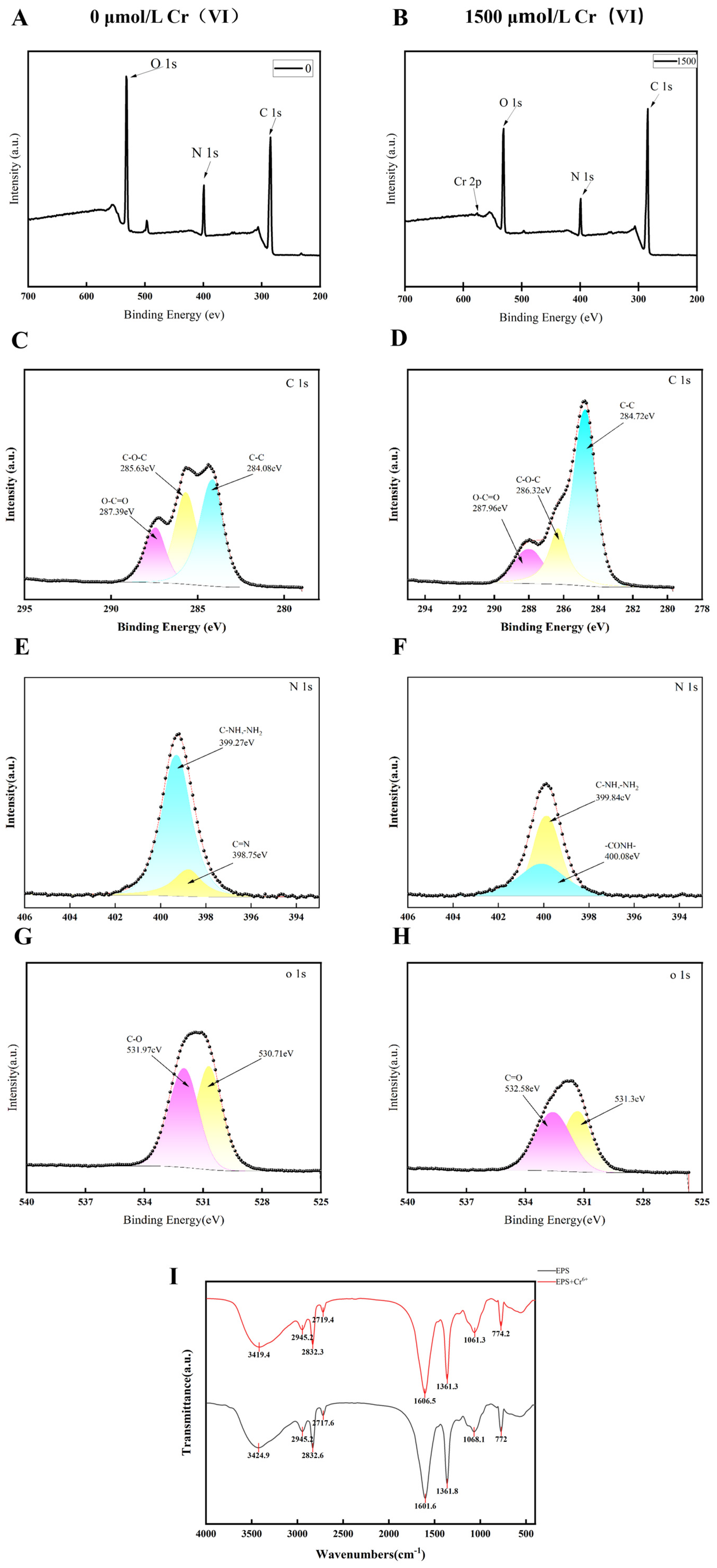
3.4.2. The Primary Functional Groups Involved in the Cr(VI) Adsorption
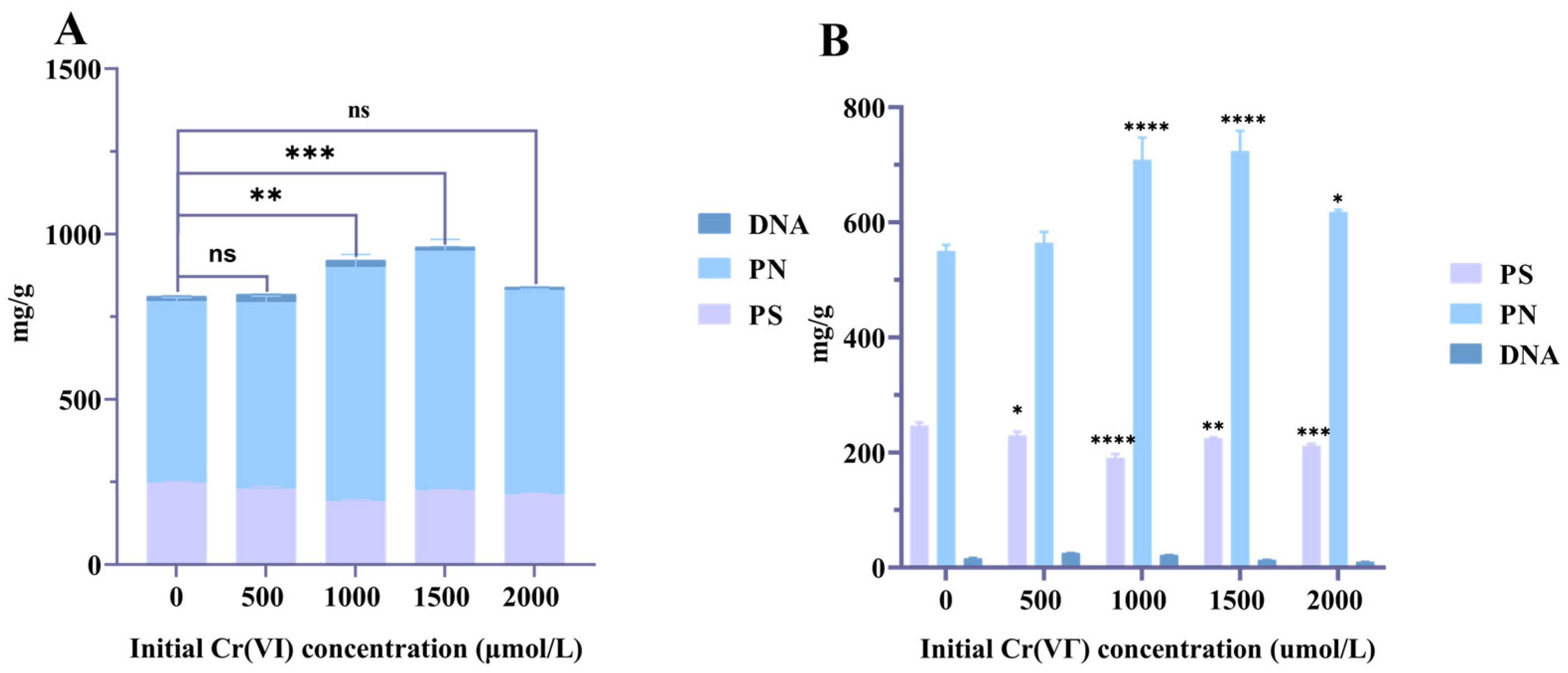
3.4.3. Analysis of EPS Compositions
4. Proteomic Analysis of L. capsici FPHNCRA4-48 EPS
4.1. Differential Protein Analysis
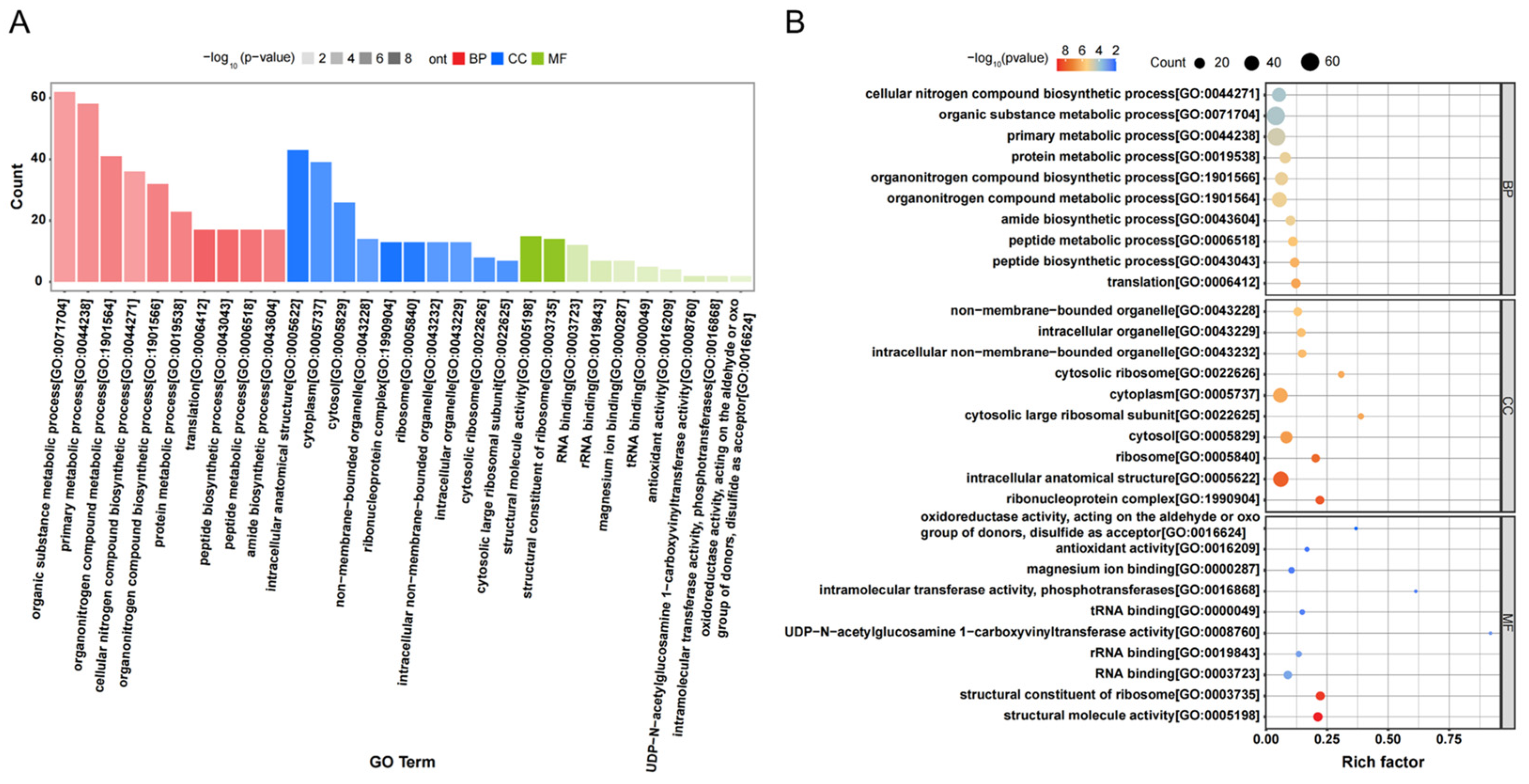
4.2. GO Analysis
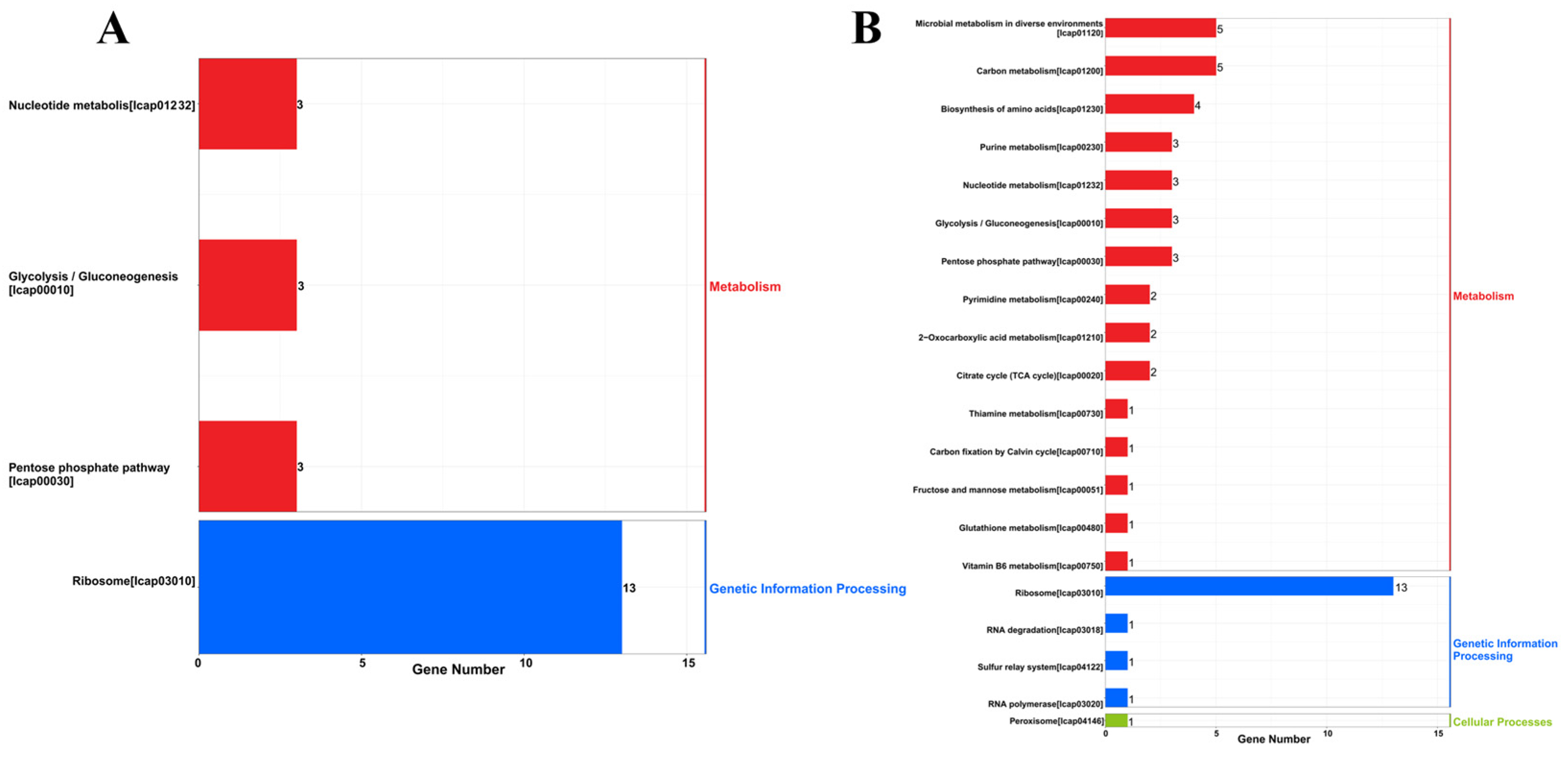
4.3. KEGG Analysis
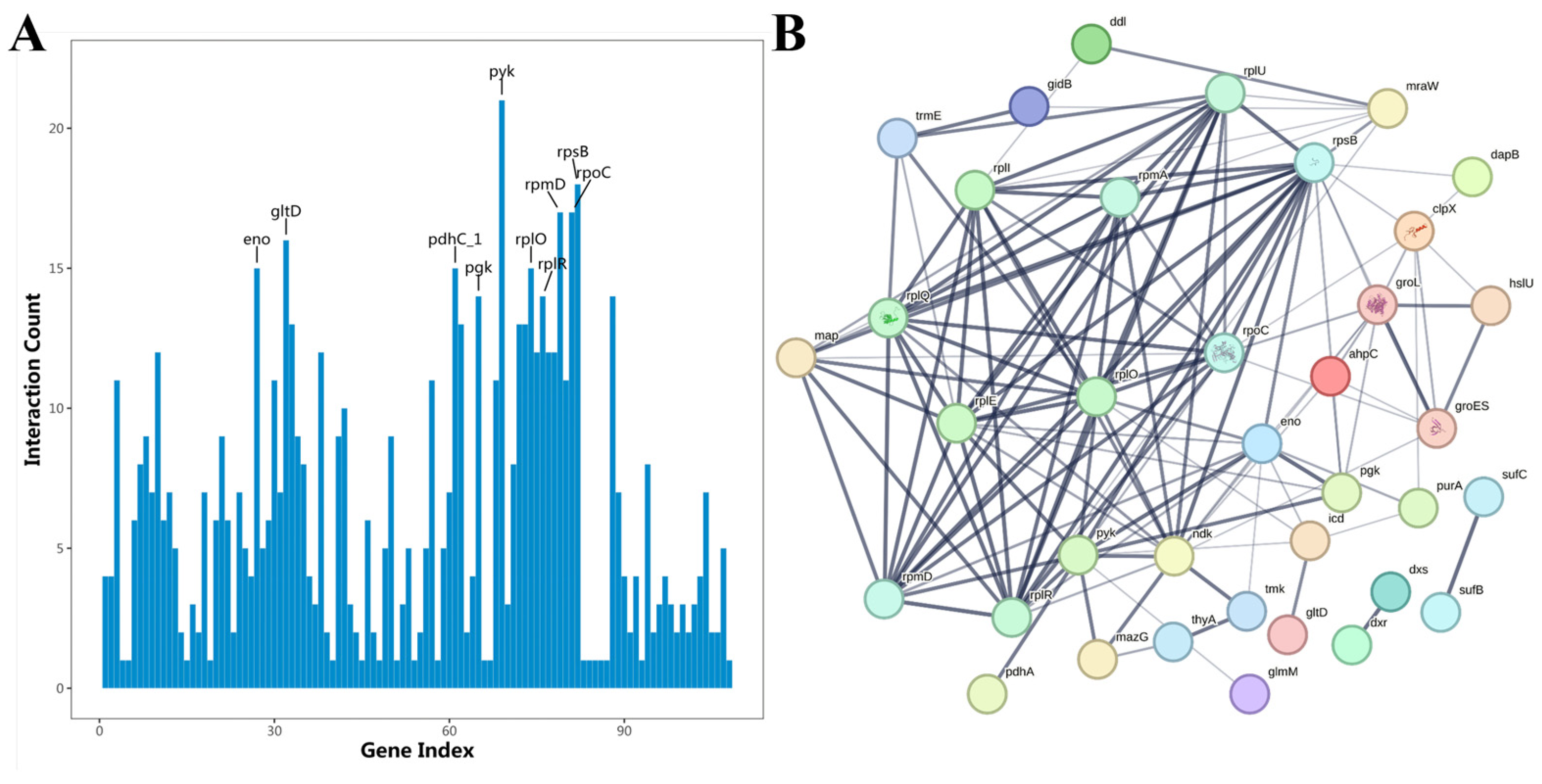
4.4. Protein Interaction Analysis
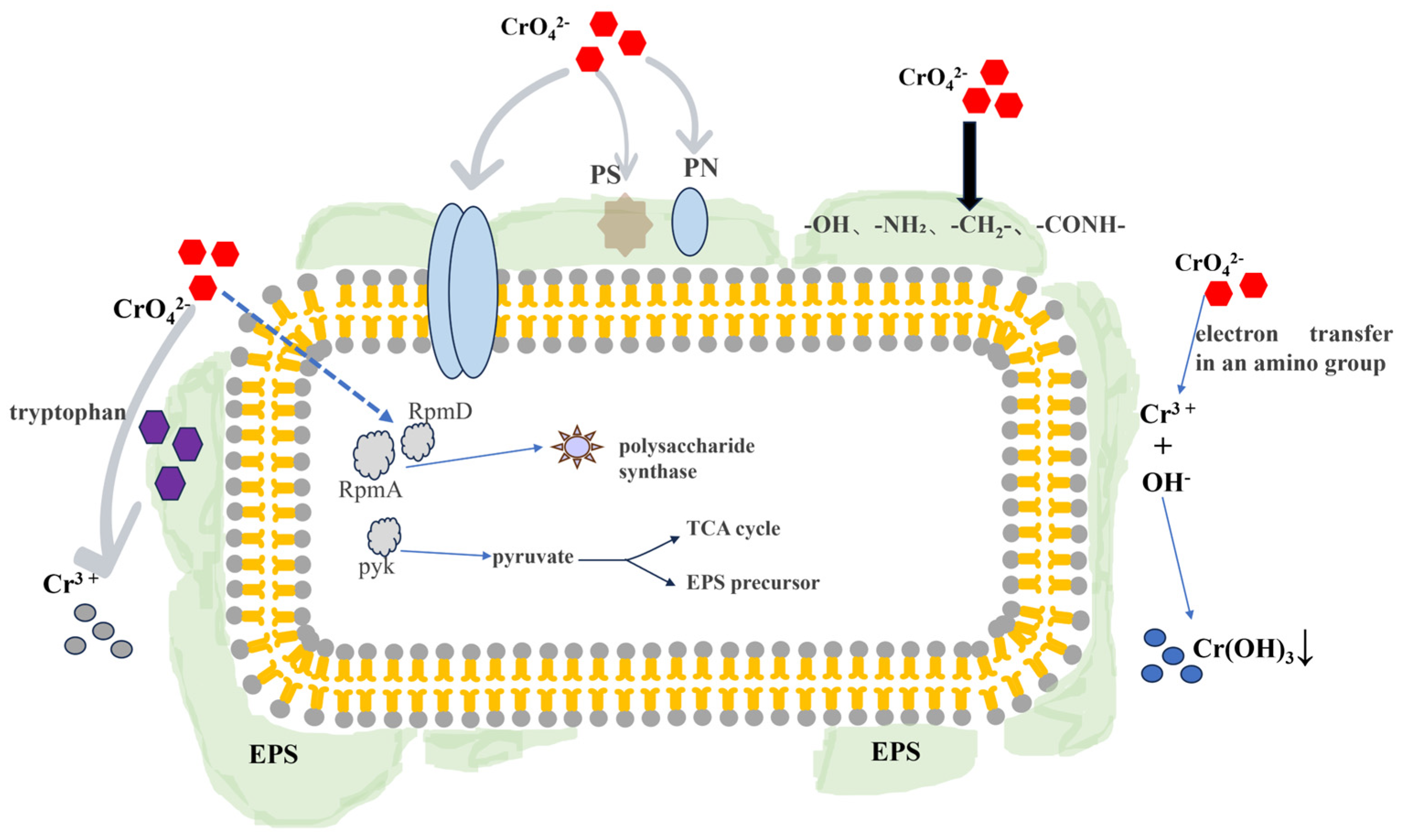
5. EPS-Mediated Cr(VI) Removal Mechanisms
6. Conclusions
Supplementary Materials
Author Contributions
Funding
Institutional Review Board Statement
Informed Consent Statement
Data Availability Statement
Conflicts of Interest
References
- Dotaniya, M.; Thakur, J.; Meena, V.; Jajoria, D.; Rathor, G. Chromium pollution: A threat to environment-A review. Agric. Rev. 2014, 35, 153–157. [Google Scholar] [CrossRef]
- Ahemad, M. Bacterial mechanisms for Cr(VI) resistance and reduction: An overview and recent advances. Folia Microbiol. 2014, 59, 321–332. [Google Scholar] [CrossRef] [PubMed]
- Gibb, H.J.; Lees, P.S.; Pinsky, P.F.; Rooney, B.C. Lung cancer among workers in chromium chemical production. Am. J. Ind. Med. 2000, 38, 115–126. [Google Scholar] [CrossRef] [PubMed]
- Guo, X.; Feng, L.; Lemos, B.; Lou, J. DNA methylation modifications induced by hexavalent chromium. J. Environ. Sci. Health Part C 2019, 37, 133–145. [Google Scholar] [CrossRef]
- Deepa, A.; Mastan, A.; Buddolla, V.; Kumar, Y.A.; Lakshmi, B.A.; Kim, Y.-J. Bioremediation approaches for chromium detoxification and transformation: Advanced strategies and future Perspectives. Int. Biodeterior. Biodegradation 2025, 196, 105951. [Google Scholar] [CrossRef]
- Duwiejuah, A.B.; Abubakari, A.H.; Quainoo, A.K.; Amadu, Y. Review of Biochar Properties and Remediation of Metal Pollution of Water and Soil. J. Health Pollut. 2020, 10, 200902. [Google Scholar] [CrossRef]
- Abioye, O.P.; Oyewole, O.A.; Oyeleke, S.B.; Adeyemi, M.O.; Orukotan, A.A. Biosorption of lead, chromium and cadmium in tannery effluent using indigenous microorganisms. Braz. J. Biol. Sci. 2018, 5, 25–32. [Google Scholar] [CrossRef]
- Tarekegn, M.M.; Salilih, F.Z.; Ishetu, A.I. Microbes used as a tool for bioremediation of heavy metal from the environment. Cogent Food Agric. 2020, 6, 1783174. [Google Scholar] [CrossRef]
- Das, S.; Mishra, J.; Das, S.K.; Pandey, S.; Rao, D.S.; Chakraborty, A.; Sudarshan, M.; Das, N.; Thatoi, H. Investigation on mechanism of Cr(VI) reduction and removal by Bacillus amyloliquefaciens, a novel chromate tolerant bacterium isolated from chromite mine soil. Chemosphere 2014, 96, 112–121. [Google Scholar] [CrossRef]
- More, T.; Yadav, J.; Yan, S.; Tyagi, R.; Surampalli, R. Extracellular polymeric substances of bacteria and their potential environmental applications. J. Environ. Manag. 2014, 144, 1–25. [Google Scholar] [CrossRef]
- Xirong, H.; Nianqin, J.; Shuhua, H.; Wenjuan, Z.; Jianping, H. Chromogenic reaction of bromopyrogallol red with tri- and hexavalent chromium in the presence of cetyltrimethyl ammonium bromide and its application in Cr speciation. Microchim. Acta 1997, 126, 329–333. [Google Scholar]
- Patel, S.K.; Sahu, S.R.; Utkalaja, B.G.; Bose, S.; Acharya, N. Pol32, an accessory subunit of DNA polymerase delta, plays an essential role in genome stability and pathogenesis of Candida albicans. Gut Microbes 2023, 15, 2163840. [Google Scholar] [CrossRef] [PubMed]
- Huang, L.; Fang, Z.; Gao, J.; Wang, J.; Li, Y.; Sun, L.; Wang, Y.; Liao, J.; Gooneratne, R. Protective role of l-threonine against cadmium toxicity in Saccharomyces cerevisiae. J. Basic Microbiol. 2021, 61, 339–350. [Google Scholar] [CrossRef] [PubMed]
- Chen, Y.; Fang, Z.; Iddrisu, L.; Ye, J.; Pan, X.; Liang, Y.; Gooneratne, R. Integrated analyses of characterization and transcriptome reveal the adaptive response mechanism of Bacillus cereus FCHN 7–1 in cadmium adsorption. J. Hazard. Mater. 2025, 489, 137525. [Google Scholar] [CrossRef] [PubMed]
- Guan, W.; Fang, Z.; Chen, Y.; Li, Y.; Peng, Z.; Sun, L.; Deng, Q.; Gooneratne, R. Cadmium-chelating ability of the siderophore DHBS secreted by Leclercia adecarboxylata FCH-CR2 and its action mechanism. Sci. Total. Environ. 2023, 900, 165850. [Google Scholar] [CrossRef]
- Fang, L.; Wei, X.; Cai, P.; Huang, Q.; Chen, H.; Liang, W.; Rong, X. Role of extracellular polymeric substances in Cu(II) adsorption on Bacillus subtilis and Pseudomonas putida. Bioresour. Technol. 2011, 102, 1137–1141. [Google Scholar] [CrossRef]
- Fang, Z.; Chen, Y.; Li, Y.; Sun, L.; Deng, Q.; Wang, J.; Gooneratne, R. Oleic acid facilitates cd excretion by increasing the abundance of Burkholderia in Cd-exposed mice. Int. J. Mol. Sci. 2022, 23, 14718. [Google Scholar] [CrossRef]
- Yue, F.; Zhang, J.; Xu, J.; Niu, T.; Lü, X.; Liu, M. Effects of monosaccharide composition on quantitative analysis of total sugar content by phenol-sulfuric acid method. Front. Nutr. 2022, 9, 963318. [Google Scholar] [CrossRef]
- Bin, Z.; Baosheng, S.; Min, J.; Taishi, G.; Zhenghong, G. Extraction and analysis of extracellular polymeric substances in membrane fouling in submerged MBR. Desalination 2008, 227, 286–294. [Google Scholar] [CrossRef]
- Sun, Y.; Clinkenbeard, K.D.; Clarke, C.; Cudd, L.; Highlander, S.K.; Dabo, S.M. Pasteurella haemolytica leukotoxin induced apoptosis of bovine lymphocytes involves DNA fragmentation. Vet. Microbiol. 1999, 65, 153–166. [Google Scholar] [CrossRef]
- Vijayaraghavan, K.; Padmesh, T.; Palanivelu, K.; Velan, M. Biosorption of nickel(II) ions onto Sargassum wightii: Application of two-parameter and three-parameter isotherm models. J. Hazard. Mater. 2006, 133, 304–308. [Google Scholar] [CrossRef] [PubMed]
- Gao, S.; Nie, C.; Wang, J.; Wang, J.; Kang, L.; Zhou, Y.; Wang, J.L. Colloidal gold-based immunochromatographic test strip for rapid detection of abrin in food samples. J. Food Prot. 2012, 75, 112–117. [Google Scholar] [CrossRef]
- Kwan, Y.C.G.; Ng, G.M.; Huan, C.H.A. Identification of functional groups and determination of carboxyl formation temperature in graphene oxide using the XPS O 1s spectrum. Thin Solid Film. 2015, 590, 40–48. [Google Scholar] [CrossRef]
- Liu, X.; Wang, J.; Gao, L.; Liu, H.; Liu, C. iTRAQ-Based Proteomic Analysis of Neonatal Kidney from Offspring of Protein Restricted Rats Reveals Abnormalities in Intraflagellar Transport Proteins. Cell. Physiol. Biochem. 2017, 44, 185–199. [Google Scholar] [CrossRef] [PubMed]
- Hussein, H.; Farag, S.; Kandil, K.; Moawad, H. Tolerance and uptake of heavy metals by Pseudomonads. Process. Biochem. 2005, 40, 955–961. [Google Scholar] [CrossRef]
- Dogan, N.M.; Kantar, C.; Gulcan, S.; Dodge, C.J.; Yilmaz, B.C.; Mazmanci, M.A. Chromium(VI) Bioremoval by Pseudomonas Bacteria: Role of Microbial Exudates for Natural Attenuation and Biotreatment of Cr(VI) Contamination. Environ. Sci. Technol. 2011, 45, 2278–2285. [Google Scholar] [CrossRef]
- Wu, M.; Li, Y.; Li, J.; Wang, Y.; Xu, H.; Zhao, Y. Bioreduction of hexavalent chromium using a novel strain CRB-7 immobilized on multiple materials. J. Hazard. Mater. 2019, 368, 412–420. [Google Scholar] [CrossRef]
- Imron, M.F.; Kurniawan, S.B.; Purwanti, I.F. Biosorption of Chromium by Living Cells of Azotobacter S8, Bacillus subtilis and Pseudomonas aeruginosa using Batch System Reactor. J. Ecol. Eng. 2019, 20, 184–189. [Google Scholar] [CrossRef]
- Sharma, P.; Singh, S.P.; Parakh, S.K.; Tong, Y.W. Health hazards of hexavalent chromium (Cr (VI)) and its microbial reduction. Bioengineered 2022, 13, 4923–4938. [Google Scholar] [CrossRef]
- Mu, H.; Wang, G.; Huang, B.; Fu, X.; Cheng, S.; Wen, J. Effect of hexavalent chromium exposure on the reproductive status and biomarker responses of female Geloina erosa. Ecotoxicol. Environ. Saf. 2023, 32, 736–745. [Google Scholar] [CrossRef]
- Fernández-Montalván, A.E. Structural Requirements for Activation and Membrane Binding of Human μ-Calpain. Ph.D. Thesis, Technische Universität München, München, Germany, 2004. [Google Scholar]
- Zhang, D.; Lee, D.-J.; Pan, X. Fluorescent quenching for biofilm extracellular polymeric substances (EPS) bound with Cu(II). J. Taiwan Inst. Chem. Eng. 2012, 43, 450–454. [Google Scholar] [CrossRef]
- Yan, J.; Ye, W.; Liang, X.; Wang, S.; Xie, J.; Zhong, K.; Bao, M.; Yang, J.; Wen, H.; Li, S.; et al. Enhanced reduction of sulfate and chromium under sulfate-reducing condition by synergism between extracellular polymeric substances and graphene oxide. Environ. Res. 2020, 183, 109157. [Google Scholar] [CrossRef] [PubMed]
- Wu, J.; Zhang, H.; He, P.-J.; Shao, L.-M. Insight into the heavy metal binding potential of dissolved organic matter in MSW leachate using EEM quenching combined with PARAFAC analysis. Water Res. 2011, 45, 1711–1719. [Google Scholar] [CrossRef] [PubMed]
- Kang, F.; Qu, X.; Alvarez, P.J.J.; Zhu, D. Extracellular saccharide-mediated reduction of Au3+ to gold nanoparticles: New insights for heavy metals biomineralization on microbial surfaces. Environ. Sci. Technol. 2017, 51, 2776–2785. [Google Scholar] [CrossRef] [PubMed]
- McLean, J.; Beveridge, T.J. Chromate Reduction by a Pseudomonad Isolated from a Site Contaminated with Chromated Copper Arsenate. Appl. Environ. Microbiol. 2001, 67, 1076–1084. [Google Scholar] [CrossRef]
- Cheng, P.; Wei, Z.; Arbid, Y.; Fu, T.; Liu, X.; Monfort, O. Insights into the performance and mechanism of Cr(VI) and U(VI) removal in water using innovative cross-linked chitosan adsorbent. J. Environ. Chem. Eng. 2024, 12, 111731. [Google Scholar] [CrossRef]
- Mangaiyarkarasi, M.M.; Vincent, S.; Janarthanan, S.; Rao, T.S.; Tata, B. Bioreduction of Cr(VI) by alkaliphilic Bacillus subtilis and interaction of the membrane groups. Saudi J. Biol. Sci. 2011, 18, 157–167. [Google Scholar] [CrossRef]
- Karjalainen, E.L. The Choreography of Protein Vibrations: Improved Methods of Observing and Simulating the Infrared Absorption of Proteins. Doctoral Thesis, Department of Biochemistry Biophysics, Stockholm University, Stockholm, Sweden, 2011. [Google Scholar]
- Fang, H.H.; Xu, L.-C.; Chan, K.-Y. Effects of toxic metals and chemicals on biofilm and biocorrosion. Water Res. 2002, 36, 4709–4716. [Google Scholar] [CrossRef]
- Leong, Y.K.; Chang, J.-S. Bioremediation of heavy metals using microalgae: Recent advances and mechanisms. Bioresour. Technol. 2020, 303, 122886. [Google Scholar] [CrossRef]
- Wang, Z.; Gao, M.; Wei, J.; Ma, K.; Zhang, J.; Yang, Y.; Yu, S. Extracellular polymeric substances, microbial activity and microbial community of biofilm and suspended sludge at different divalent cadmium concentrations. Bioresour. Technol. 2016, 205, 213–221. [Google Scholar] [CrossRef]
- Benndorf, D.; Loffhagen, N.; Babel, W. Protein synthesis patterns in Acinetobacter calcoaceticus induced by phenol and catechol show specificities of responses to chemostress. FEMS Microbiol. Lett. 2001, 200, 247–252. [Google Scholar] [CrossRef]
- Wang, X.; Dai, H.; Zhang, J.; Yang, T.; Chen, F. Unraveling the long-term effects of Cr(VI) on the performance and microbial community of nitrifying activated sludge system. Water 2017, 9, 909. [Google Scholar] [CrossRef]
- Thomas, P.D. The gene ontology and the meaning of biological function. In The Gene Ontology Handbook; Springer: New York, NY, USA, 2017; pp. 15–24. [Google Scholar]
- Liu, Y.; Qiu, Y.; Yin, Q.; Li, X.; Bai, Q.; Li, Y.; Xiao, H. iTRAQ-based quantitative proteomic reveals proteomic changes in Serratia sp. CM01 and mechanism of Cr(VI) resistance. Ecotoxicol. Environ. Saf. 2021, 228, 112899. [Google Scholar] [CrossRef] [PubMed]
- Moss, T.; Langlois, F.; Gagnon-Kugler, T.; Stefanovsky, V. A housekeeper with power of attorney: The rRNA genes in ribosome biogenesis. Cell. Mol. Life Sci. 2007, 64, 29–49. [Google Scholar] [CrossRef] [PubMed]
- Gang, H.; Xiao, C.; Xiao, Y.; Yan, W.; Bai, R.; Ding, R.; Yang, Z.; Zhao, F. Proteomic analysis of the reduction and resistance mechanisms of Shewanella oneidensis MR-1 under long-term hexavalent chromium stress. Environ. Int. 2019, 127, 94–102. [Google Scholar] [CrossRef] [PubMed]
- Pelava, A.; Schneider, C.; Watkins, N.J. The importance of ribosome production, and the 5S RNP–MDM2 pathway, in health and disease. Biochem. Soc. Trans. 2016, 44, 1086–1090. [Google Scholar] [CrossRef]
- Ye, Y.-N.; Ma, B.-G.; Dong, C.; Zhang, H.; Chen, L.-L.; Guo, F.-B. A novel proposal of a simplified bacterial gene set and the neo-construction of a general minimized metabolic network. Sci. Rep. 2016, 6, 35082. [Google Scholar] [CrossRef]
- Kılıç, N.K.; Stensballe, A.; Otzen, D.E.; Dönmez, G. Proteomic changes in response to chromium(VI) toxicity in Pseudomonas aeruginosa. Bioresour. Technol. 2010, 101, 2134–2140. [Google Scholar] [CrossRef]
- Tripathi, S.; Poluri, K.M. Heavy metal detoxification mechanisms by microalgae: Insights from transcriptomics analysis. Environ. Pollut. 2021, 285, 117443. [Google Scholar] [CrossRef]
- Yang, X.; Lin, X.; Zhou, Z.; Lin, B.; Liu, X. Metabolic response of Bacillus spp. to heavy metal stress: Pathway alterations and metabolite profiles. Biotechnol. Lett. 2025, 47, 50. [Google Scholar] [CrossRef]
- Szklarczyk, D.; Gable, A.L.; Lyon, D.; Junge, A.; Wyder, S.; Huerta-Cepas, J.; Simonovic, M.; Doncheva, N.T.; Morris, J.H.; Bork, P.; et al. STRING v11: Protein–protein association networks with increased coverage, supporting functional discovery in genome-wide experimental datasets. Nucleic Acids Res. 2019, 47, D607–D613. [Google Scholar] [CrossRef]
- Belchik, S.M.; Kennedy, D.W.; Dohnalkova, A.C.; Wang, Y.; Sevinc, P.C.; Wu, H.; Lin, Y.; Lu, H.P.; Fredrickson, J.K.; Shi, L. Extracellular reduction of hexavalent chromium by cytochromes MtrC and OmcA of Shewanella oneidensis MR-1. Appl. Environ. Microbiol. 2011, 77, 4035–4041. [Google Scholar] [CrossRef] [PubMed]
- Thatoi, H.; Das, S.; Mishra, J.; Rath, B.P.; Das, N. Bacterial chromate reductase, a potential enzyme for bioremediation of hexavalent chromium: A review. J. Environ. Manag. 2014, 146, 383–399. [Google Scholar] [CrossRef]
- Gray, L.R.; Tompkins, S.C.; Taylor, E.B. Regulation of pyruvate metabolism and human disease. Cell. Mol. Life Sci. 2014, 71, 2577–2604. [Google Scholar] [CrossRef]
- Jaworska, M.; Szczudło, J.; Pietrzyk, A.; Shah, J.; Trojan, S.E.; Ostrowska, B.; Kocemba-Pilarczyk, K.A. The Warburg effect: A score for many instruments in the concert of cancer and cancer niche cells. Pharmacol. Rep. 2023, 75, 876–890. [Google Scholar] [CrossRef]
- Duffitt, A.D.; Reber, R.T.; Whipple, A.; Chauret, C. Gene Expression during Survival of Escherichia coli O157:H7 in Soil and Water. Int. J. Microbiol. 2010, 2011, 179–184. [Google Scholar] [CrossRef]
- Ma, J.; Chen, T.; Wu, S.; Yang, C.; Bai, M.; Shu, K.; Li, K.; Zhang, G.; Jin, Z.; He, F.; et al. iProX: An integrated proteome resource. Nucleic Acids Res. 2019, 47, D1211–D1217. [Google Scholar] [CrossRef]
- Chen, T.; Ma, J.; Liu, Y.; Chen, Z.; Xiao, N.; Lu, Y.; Fu, Y.; Yang, C.; Li, M.; Wu, S.; et al. iProX in 2021: Connecting proteomics data sharing with big data. Nucleic Acids Res. 2021, 50, D1522–D1527. [Google Scholar] [CrossRef]


Disclaimer/Publisher’s Note: The statements, opinions and data contained in all publications are solely those of the individual author(s) and contributor(s) and not of MDPI and/or the editor(s). MDPI and/or the editor(s) disclaim responsibility for any injury to people or property resulting from any ideas, methods, instructions or products referred to in the content. |
© 2026 by the authors. Licensee MDPI, Basel, Switzerland. This article is an open access article distributed under the terms and conditions of the Creative Commons Attribution (CC BY) license.
Share and Cite
Pan, D.; Chen, Y.; Fang, Z.; Mo, Z.; Iddrisu, L.; Qiu, M.; Deng, Q.; Sun, L.; Gooneratne, R. Characterization and Proteomic Analyses of the High Cr Resistance and Removability of a Novel Lysinibacillus capsici FPHNCRA4-48 Isolated from Highly Cr-Polluted Water. Microorganisms 2026, 14, 611. https://doi.org/10.3390/microorganisms14030611
Pan D, Chen Y, Fang Z, Mo Z, Iddrisu L, Qiu M, Deng Q, Sun L, Gooneratne R. Characterization and Proteomic Analyses of the High Cr Resistance and Removability of a Novel Lysinibacillus capsici FPHNCRA4-48 Isolated from Highly Cr-Polluted Water. Microorganisms. 2026; 14(3):611. https://doi.org/10.3390/microorganisms14030611
Chicago/Turabian StylePan, Dongmei, Yinyan Chen, Zhijia Fang, Zhanghan Mo, Lukman Iddrisu, Mei Qiu, Qi Deng, Lijun Sun, and Ravi Gooneratne. 2026. "Characterization and Proteomic Analyses of the High Cr Resistance and Removability of a Novel Lysinibacillus capsici FPHNCRA4-48 Isolated from Highly Cr-Polluted Water" Microorganisms 14, no. 3: 611. https://doi.org/10.3390/microorganisms14030611
APA StylePan, D., Chen, Y., Fang, Z., Mo, Z., Iddrisu, L., Qiu, M., Deng, Q., Sun, L., & Gooneratne, R. (2026). Characterization and Proteomic Analyses of the High Cr Resistance and Removability of a Novel Lysinibacillus capsici FPHNCRA4-48 Isolated from Highly Cr-Polluted Water. Microorganisms, 14(3), 611. https://doi.org/10.3390/microorganisms14030611