Dual-Transcriptome Dissection of the Mechanisms Underlying Alfalfa Phenotypic Differences Induced by Two Rhizobial Isolates
Abstract
1. Introduction
2. Materials and Methods
2.1. Plant Material and Rhizobial Inoculation
2.2. RNA Extraction, Library Preparation, and Sequencing
2.3. Quality Control, Alignment, and Expression Quantification
2.4. Differential Expression Analysis
2.5. Functional Annotation and Enrichment Analysis
2.6. Modular Integration and Candidate Gene Selection
2.7. Module Score Calculation
2.8. Alfalfa Phenotyping and Nitrogenase Activity Assay
2.9. Reverse-Transcription Quantitative PCR (RT-qPCR) Validation
3. Results
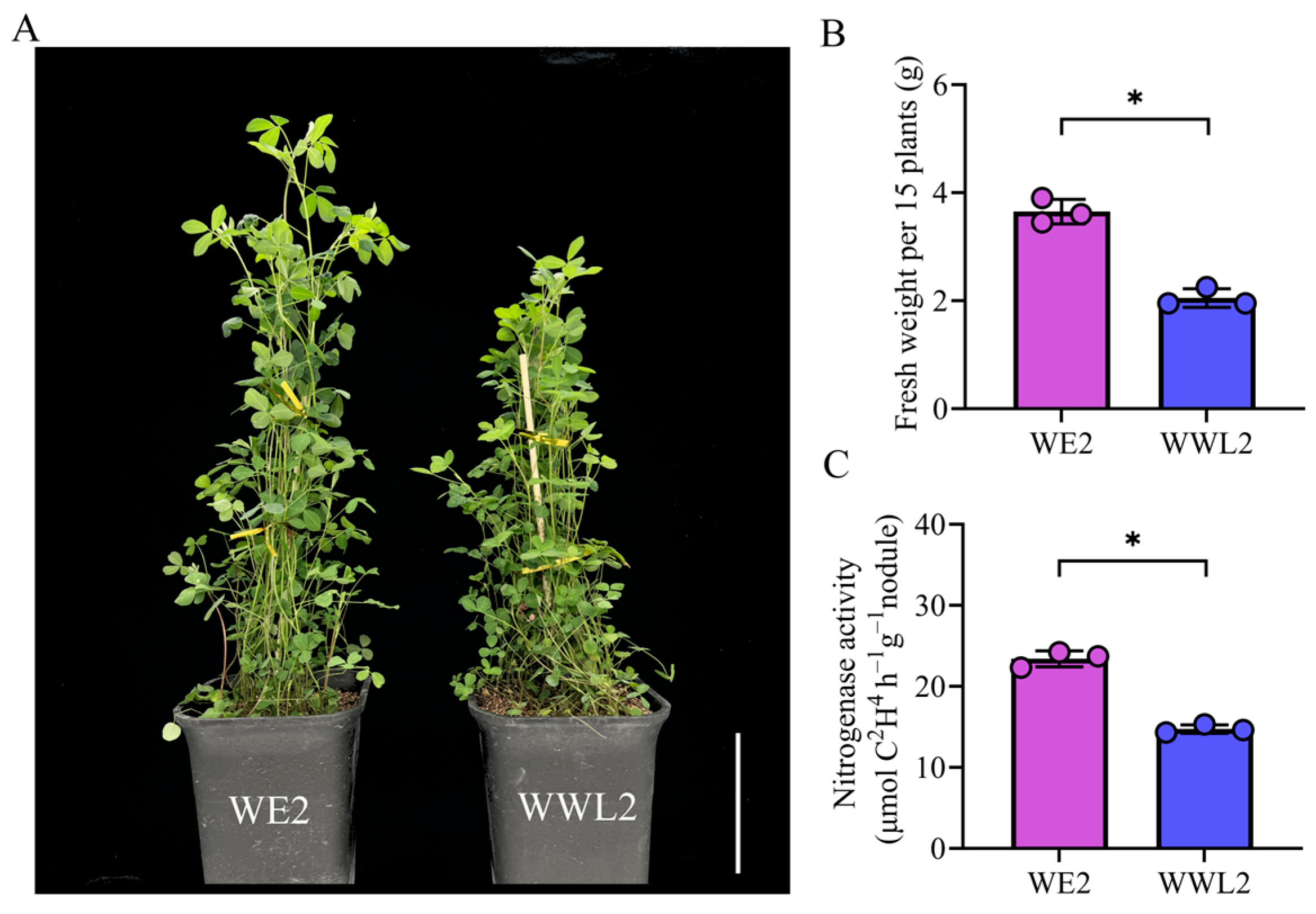
3.1. Phenotypic Differences in Alfalfa Induced by Inoculation with Two Rhizobial Strains
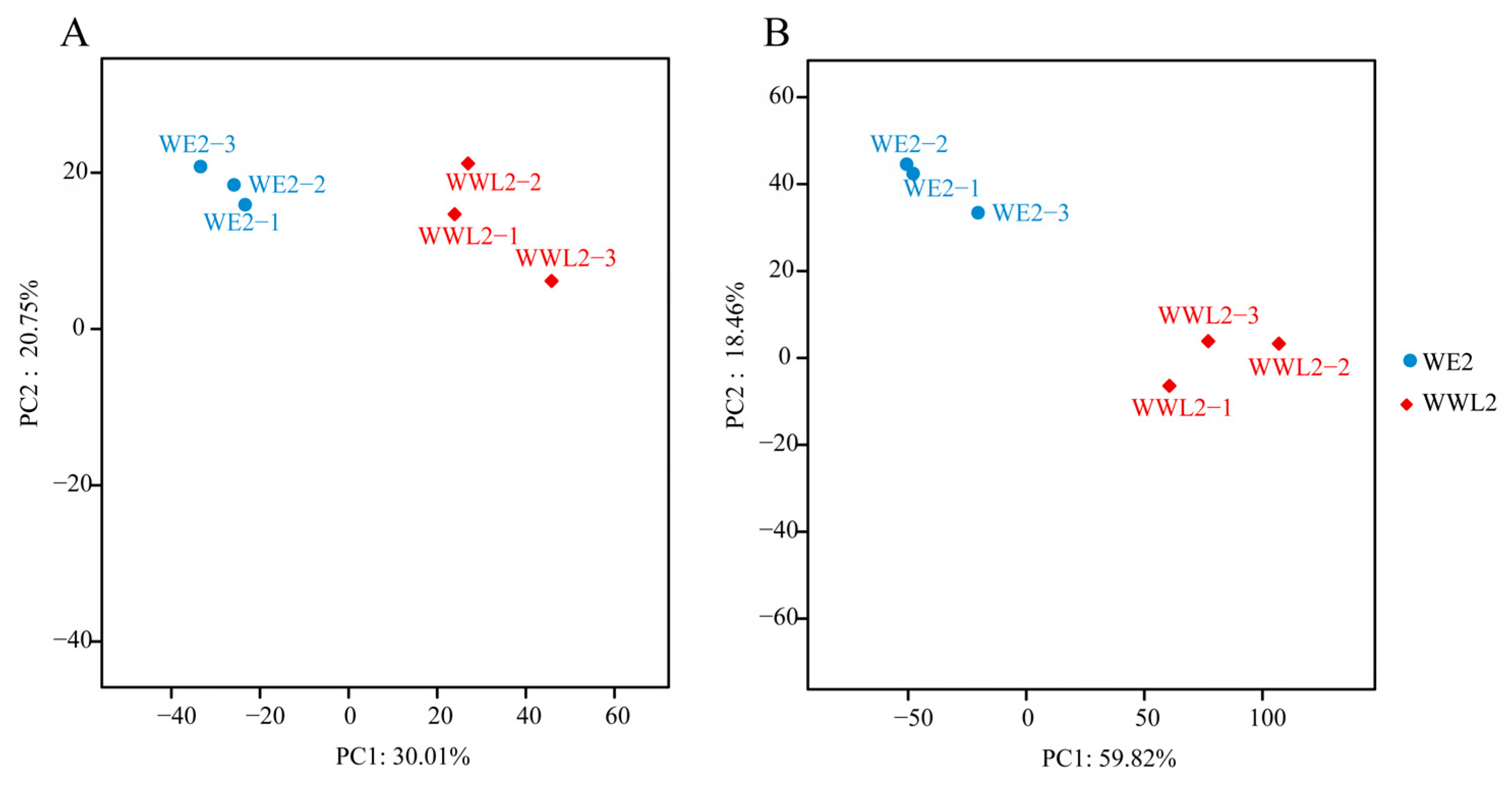
3.2. Overall Distribution of Transcriptome Data and Sample Consistency (PCA)
3.3. Differential Expression and Functional Enrichment in the Host (Alfalfa) (WE2 vs. WWL2)
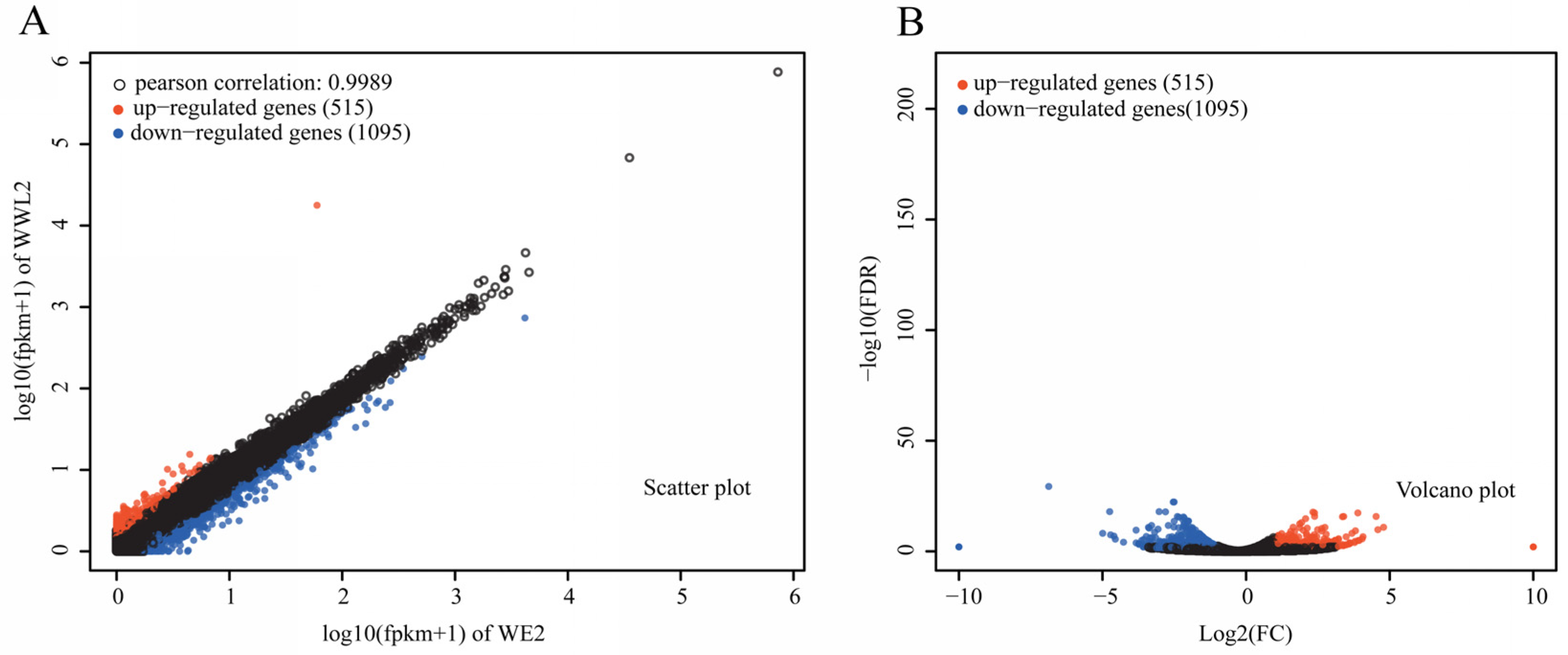
3.3.1. Overview of Host Differentially Expressed Genes (Volcano Plot/Number of DEGs)
3.3.2. GO Enrichment: Transport, Redox, and Nodule-Development-Related Processes
3.3.3. KEGG Enrichment: Differential Responses in Metabolic and Signaling Pathways
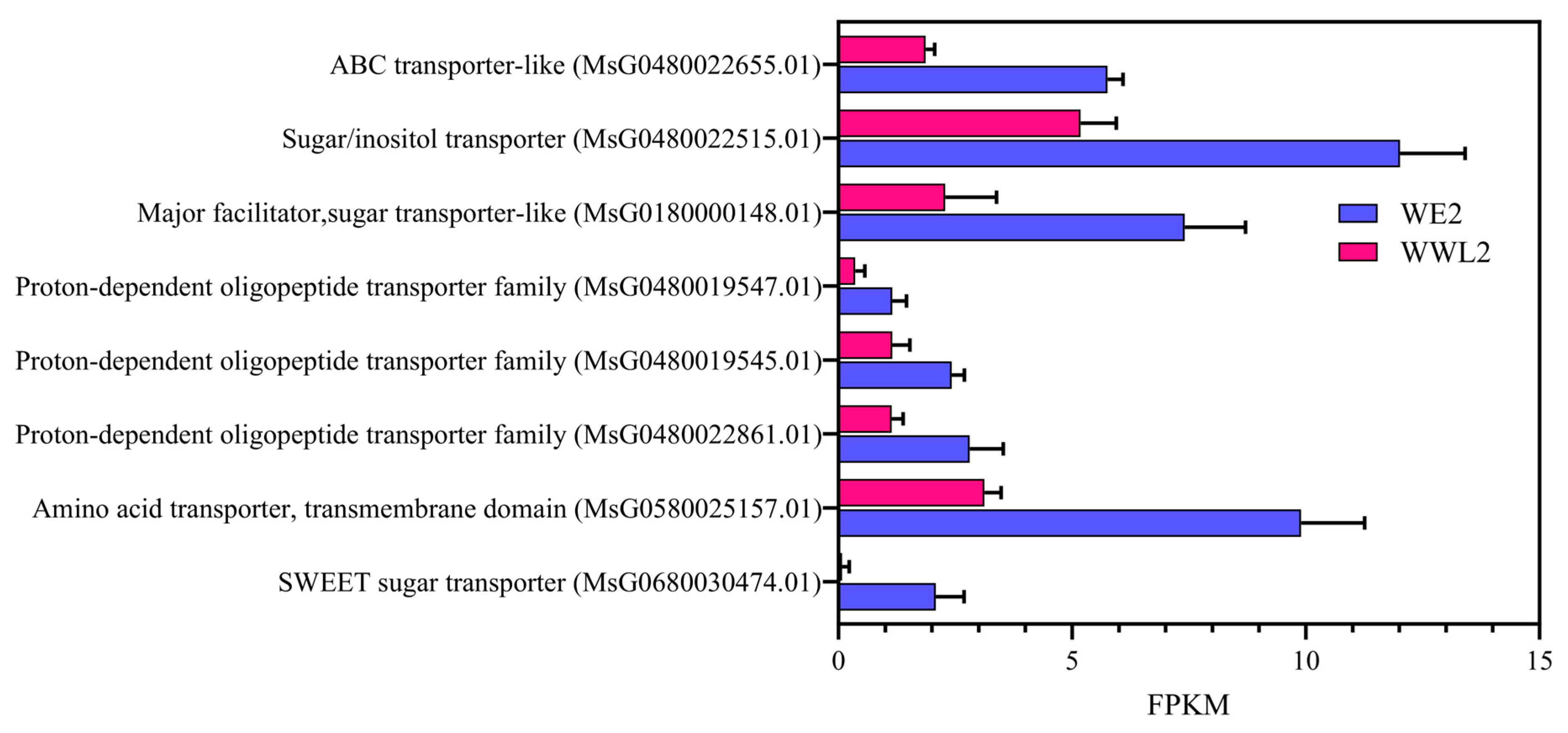
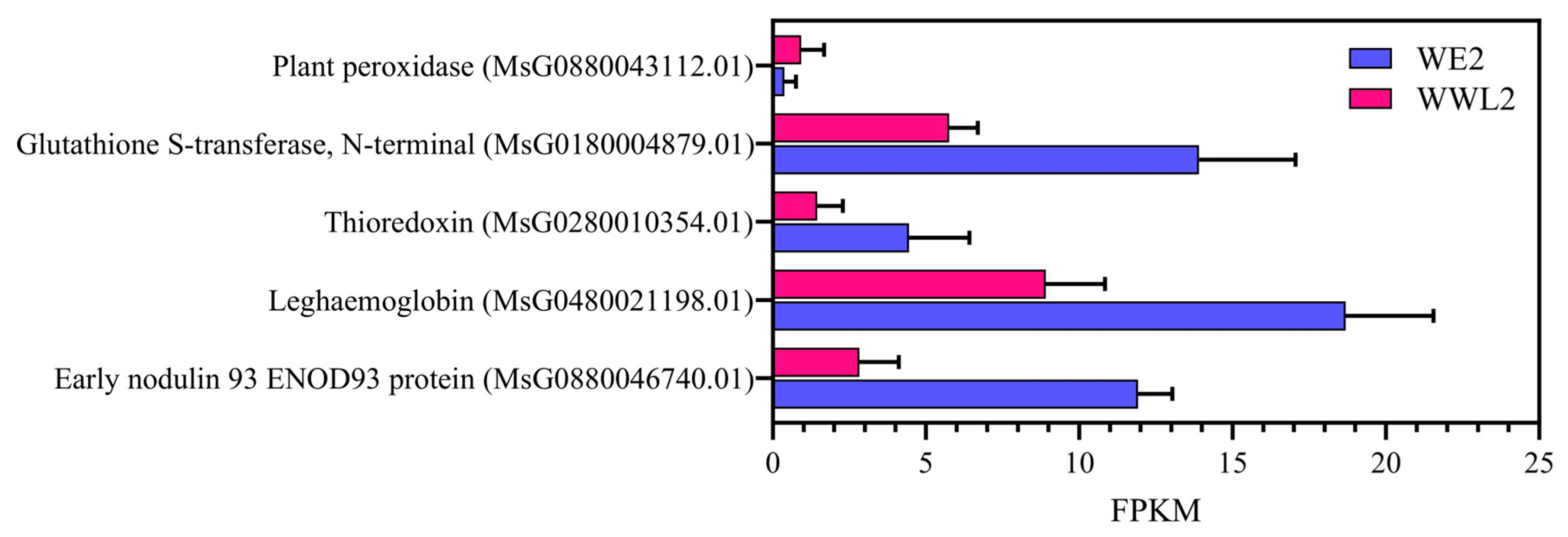
3.3.4. Representative DEGs: Nodes Related to Microaerobic Homeostasis and Substrate Exchange
3.3.5. Enhanced Host Modules Related to “Substrate Supply-Microaerobic Homeostasis”
3.4. Differential Expression and Functional Modules on the Symbiont (Rhizobium) Side (WE2 vs. WWL2)
3.4.1. Overview of Rhizobial DEGs (Number and Direction)
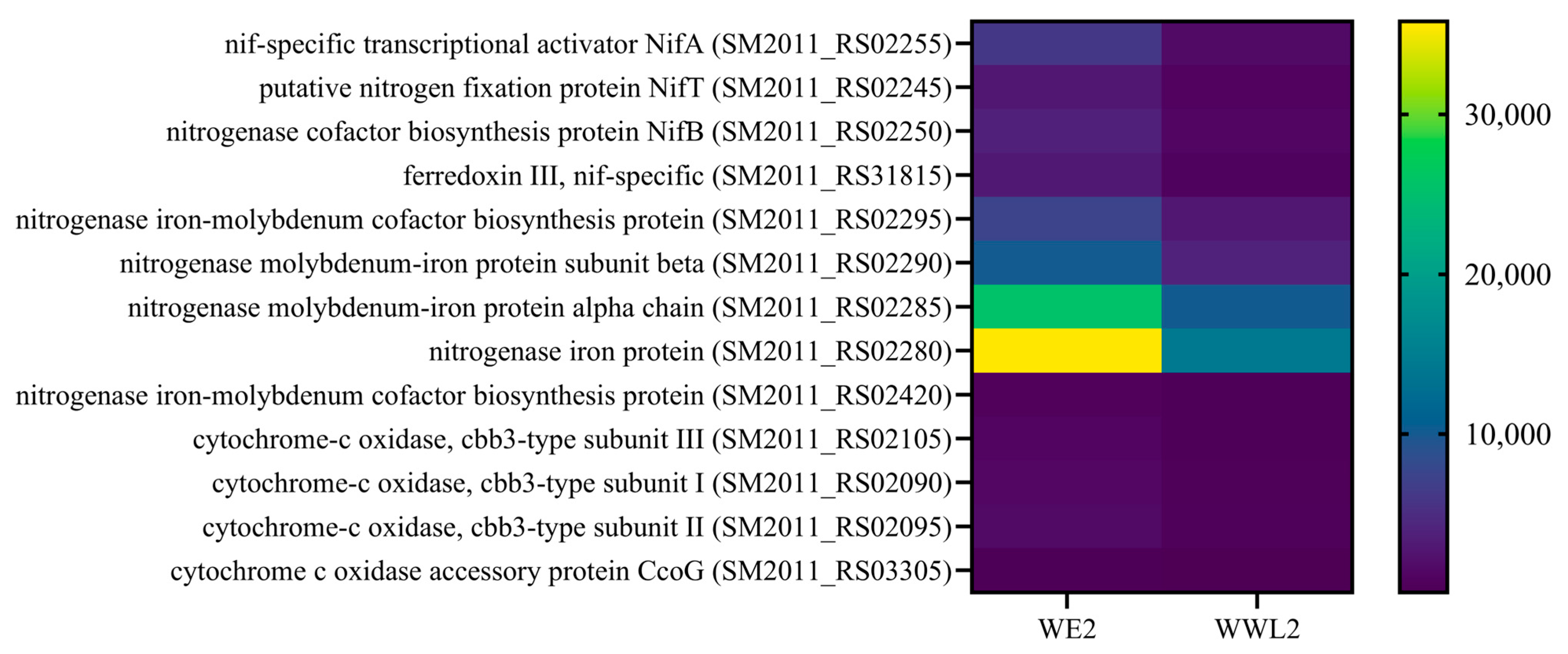
3.4.2. Nitrogen Fixation and Microaerobic Respiration Genes Are Overall Higher in WE2
3.4.3. WWL2 Shows More Prominent Nodulation Signal/Surface-Structure Genes
3.4.4. WWL2 Shows More Prominent Chemotaxis/Motility and Environmental-Response Regulation
3.5. Cross-Partner Integration: Coordinated Changes Between Host Supply/Microaerobic Homeostasis and Rhizobial Expression of Nitrogen Fixation Genes
3.5.1. Module Scores and Key Gene Evidence Support Coordinated Cross-Partner Enhancement
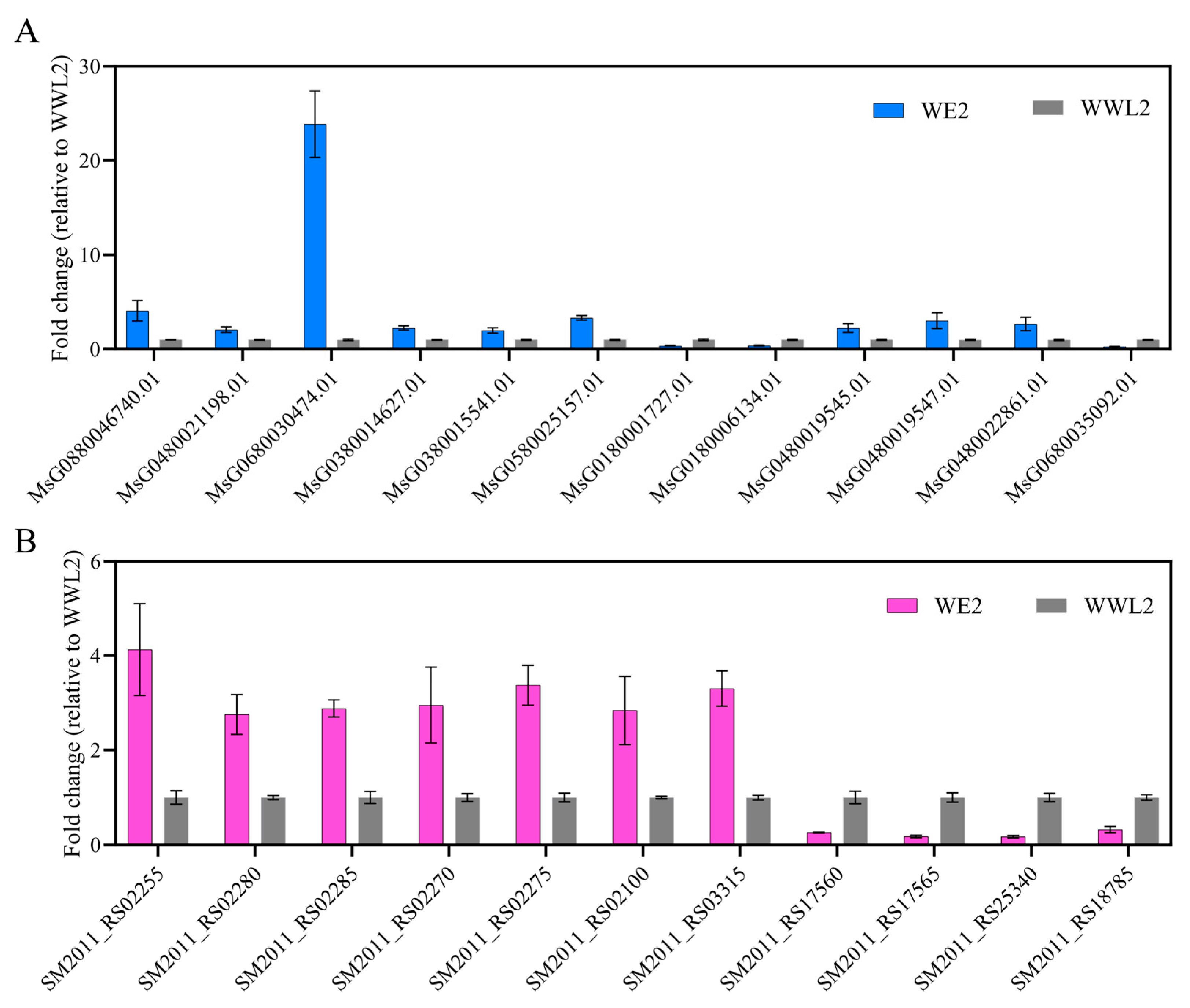
3.5.2. RT-qPCR Validation of Key Gene-Expression Trends
4. Discussion
4.1. Host Hormone- and Defense-Related Differences and Their Relationship to Mature Nodule Maintenance
4.2. Differences Related to Redox Homeostasis and Secondary Metabolism: Implications for Regulation of the Nodule Microenvironment
4.3. Differences in Symbiont Infection/Adaptation-Related Expression and Activation of the Nitrogen Fixation Program
4.4. Summary of Transcriptional Evidence for Phenotypic Differences and Study Limitations
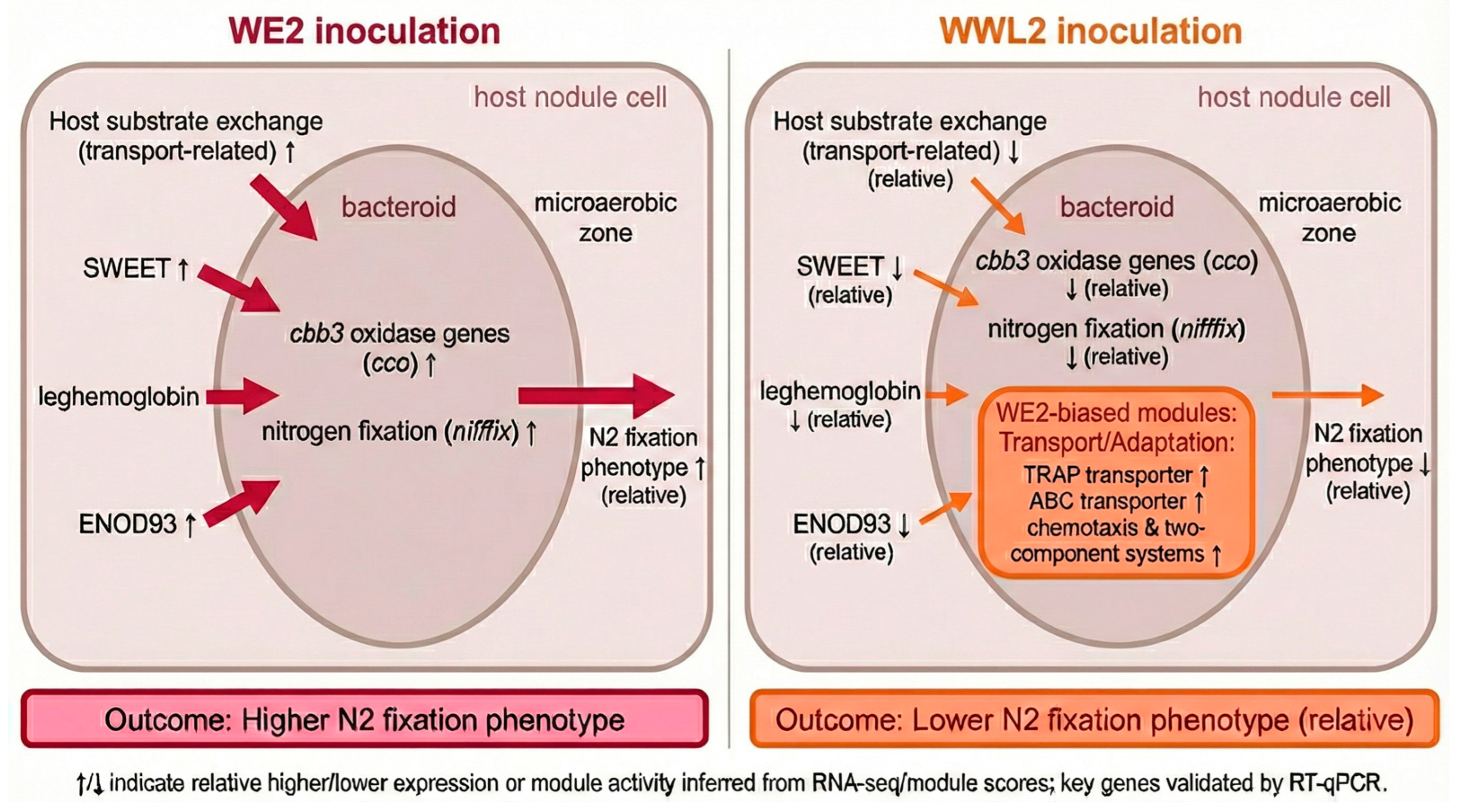
4.5. Working Hypothesis Derived from Integrated Dual Transcriptomes: Differences in Functional Emphasis at the Mature Nodule Stage
4.6. Statistical Assumptions and Limitations
5. Conclusions
Supplementary Materials
Author Contributions
Funding
Institutional Review Board Statement
Informed Consent Statement
Data Availability Statement
Acknowledgments
Conflicts of Interest
Abbreviations
| ARA | Acetylene reduction assay |
| BP | Biological process (Gene Ontology) |
| CC | Cellular component (Gene Ontology) |
| cDNA | Complementary DNA |
| COG | Cluster of Orthologous Groups of proteins |
| DEGs | Differentially expressed genes |
| DNase | Deoxyribonuclease |
| dpi | Days post-inoculation |
| FC | Fold change |
| FDR | False discovery rate |
| FPKM | Fragments per kilobase of transcript per million mapped reads |
| GO | Gene Ontology |
| MAPK | Mitogen-activated protein kinase |
| MF | Molecular function (Gene Ontology) |
| MFS | Major facilitator superfamily |
| PCA | Principal component analysis |
| RefSeq | Reference Sequence database (NCBI) |
| RIN | RNA integrity number |
| RNA-seq | RNA sequencing |
| RPKM | Reads per kilobase of transcript per million mapped reads |
| RT-qPCR | Reverse-transcription quantitative PCR |
| SEM | Standard error of the mean |
| SRA | Sequence Read Archive |
| TMM | Trimmed mean of M-values |
| TRAP | Tripartite ATP-independent periplasmic transporter |
| UNG | Uracil-N-glycosylase |
References
- Xu, P.; Wang, E. Diversity and regulation of symbiotic nitrogen fixation in plants. Curr. Biol. 2023, 33, R543–R559. [Google Scholar] [CrossRef] [Scilit]
- Yang, J.; Lan, L.; Jin, Y.; Yu, N.; Wang, D.; Wang, E. Mechanisms underlying legume-rhizobium symbioses. J. Integr. Plant Biol. 2022, 64, 244–267. [Google Scholar] [CrossRef] [Scilit]
- Oldroyd, G.E.D.; Downie, J.A. Coordinating nodule morphogenesis with rhizobial infection in legumes. Annu. Rev. Plant Biol. 2008, 59, 519–546. [Google Scholar] [CrossRef] [Scilit] [PubMed]
- Gao, J.P.; Liang, W.; Liu, C.W.; Xie, F.; Murray, J.D. Unraveling the rhizobial infection thread. J. Exp. Bot. 2024, 75, 2235–2245. [Google Scholar] [CrossRef] [Scilit] [PubMed]
- D’Amours, E.; Bertrand, A.; Cloutier, J.; Claessens, A.; Rocher, S.; Seguin, P. Impact of Sinorhizobium meliloti strains and plant population on regrowth and nodule freezing tolerance of alfalfa. Plant Soil 2024, 500, 161–179. [Google Scholar] [CrossRef] [Scilit]
- Poole, P.; Ramachandran, V.; Terpolilli, J. Rhizobia: From saprophytes to endosymbionts. Nat. Rev. Microbiol. 2018, 16, 291–303. [Google Scholar] [CrossRef] [Scilit]
- Zipfel, C.; Oldroyd, G.E.D. Plant signalling in symbiosis and immunity. Nature 2017, 543, 328–336. [Google Scholar] [CrossRef] [Scilit] [PubMed]
- Udvardi, M.; Poole, P.S. Transport and metabolism in legume-rhizobia symbioses. Annu. Rev. Plant Biol. 2013, 64, 781–805. [Google Scholar] [CrossRef] [Scilit]
- Jiang, S.; Jardinaud, M.F.; Gao, J.; Pecrix, Y.; Wen, J.; Mysore, K.; Xu, P.; Sanchez-Canizares, C.; Ruan, Y.; Li, Q.; et al. NIN-like protein transcription factors regulate leghemoglobin genes in legume nodules. Science 2021, 374, 625–628. [Google Scholar] [CrossRef] [Scilit]
- Minguillon, C.; Guo, S.; Bright, L.; Li, L.; Xu, L.; Brear, E.; Tadege, M.; Florencio, F.J.; Zhang, X. Leghemoglobins help symbiotic nitrogen fixation in plant root nodules by removing redox active free heme. J. Exp. Bot. 2024, 75, 2258–2274. [Google Scholar] [CrossRef] [Scilit]
- Van de Velde, W.; Zehirov, G.; Szatmari, A.; Debreczeny, M.; Ishihara, H.; Kevei, Z.; Farkas, A.; Mikulass, K.; Nagy, A.; Tiricz, H.; et al. Plant peptides govern terminal differentiation of bacteria in symbiosis. Science 2010, 327, 1122–1126. [Google Scholar] [CrossRef] [Scilit] [PubMed]
- Lin, J.; Frank, M.; Reid, D. No home without hormones: How plant hormones control legume nodule organogenesis. Plant Commun. 2020, 1, 100104. [Google Scholar] [CrossRef] [Scilit] [PubMed]
- Gupta, M.; Sharma, G.; Saxena, D.; Budhwar, R.; Vasudevan, M.; Gupta, V.; Gupta, A.; Chandran, D. Dual RNA-Seq analysis of Medicago truncatula and the pea powdery mildew Erysiphe pisi uncovers distinct host transcriptional signatures during incompatible and compatible interactions and pathogen effector candidates. Genomics 2020, 112, 2130–2145. [Google Scholar] [CrossRef] [Scilit]
- Lang, C.; Long, S.R. Transcriptomic Analysis of Sinorhizobium meliloti and Medicago truncatula Symbiosis Using Nitrogen Fixation-Deficient Nodules. Mol. Plant Microbe Interact. 2015, 28, 856–868. [Google Scholar] [CrossRef] [Scilit]
- Westermann, A.J.; Barquist, L.; Vogel, J. Resolving host-pathogen interactions by dual RNA-seq. PLoS Pathog. 2017, 13, e1006033. [Google Scholar] [CrossRef] [Scilit]
- Zhang, R.; Shen, Y.; He, J.; Zhang, C.; Ma, Y.; Sun, C.; Song, X.; Li, L.; Zhang, S.; Biró, J.B.; et al. Nodule-specific cysteine-rich peptide 343 is required for symbiotic nitrogen fixation in Medicago truncatula. Plant Physiol. 2023, 193, 1897–1912. [Google Scholar] [CrossRef] [Scilit]
- Hoagland, D.R.; Arnon, D.I. The Water-Culture Method for Growing Plants Without Soil; California Agricultural Experiment Station: Berkeley, CA, USA, 1950. [Google Scholar]
- Bolger, A.M.; Lohse, M.; Usadel, B. Trimmomatic: A flexible trimmer for Illumina sequence data. Bioinformatics 2014, 30, 2114–2120. [Google Scholar] [CrossRef] [Scilit] [PubMed]
- Kim, D.; Langmead, B.; Salzberg, S.L. HISAT: A fast spliced aligner with low memory requirements. Nat. Methods 2015, 12, 357–360. [Google Scholar] [CrossRef] [Scilit]
- McClure, R.; Balasubramanian, D.; Sun, Y.; Bobrovskyy, M.; Sumby, P.; Genco, C.A.; Vanderpool, C.K.; Tjaden, B. Computational analysis of bacterial RNA-Seq data. Nucleic Acids Res. 2013, 41, e140. [Google Scholar] [CrossRef] [Scilit]
- Liao, Y.; Smyth, G.K.; Shi, W. featureCounts: An efficient general purpose program for assigning sequence reads to genomic features. Bioinformatics 2014, 30, 923–930. [Google Scholar] [CrossRef] [Scilit]
- Robinson, M.D.; McCarthy, D.J.; Smyth, G.K. edgeR: A Bioconductor package for differential expression analysis of digital gene expression data. Bioinformatics 2010, 26, 139–140. [Google Scholar] [CrossRef] [Scilit]
- Robinson, M.D.; Oshlack, A. A scaling normalization method for differential expression analysis of RNA-seq data. Genome Biol. 2010, 11, R25. [Google Scholar] [CrossRef] [Scilit]
- Ashburner, M.; Ball, C.A.; Blake, J.A.; Botstein, D.; Butler, H.; Cherry, J.M.; Davis, A.P.; Dolinski, K.; Dwight, S.S.; Eppig, J.T.; et al. Gene ontology: Tool for the unification of biology. Nat. Genet. 2000, 25, 25–29. [Google Scholar] [CrossRef] [Scilit]
- Kanehisa, M.; Furumichi, M.; Sato, Y.; Matsuura, Y.; Ishiguro-Watanabe, M. KEGG: Biological systems database as a model of the real world. Nucleic Acids Res. 2025, 53, D672–D677. [Google Scholar] [CrossRef] [Scilit]
- Hänzelmann, S.; Castelo, R.; Guinney, J. GSVA: Gene set variation analysis for microarray and RNA-Seq data. BMC Bioinform. 2013, 14, 7. [Google Scholar] [CrossRef] [Scilit]
- Barbie, D.A.; Tamayo, P.; Boehm, J.S.; Kim, S.Y.; Moody, S.E.; Dunn, I.F.; Schinzel, A.C.; Sandy, P.; Meylan, E.; Scholl, C.; et al. Systematic RNA interference reveals that oncogenic KRAS-driven cancers require TBK1. Nature 2009, 462, 108–112. [Google Scholar] [CrossRef] [Scilit]
- Hardy, R.W.F.; Holsten, R.D.; Jackson, E.K.; Burns, R.C. The acetylene-ethylene assay for N2 fixation: Laboratory and field evaluation. Plant Physiol. 1968, 43, 1185–1207. [Google Scholar] [CrossRef] [Scilit] [PubMed]
- Livak, K.J.; Schmittgen, T.D. Analysis of relative gene expression data using real-time quantitative PCR and the 2(−ΔΔCT) method. Methods 2001, 25, 402–408. [Google Scholar] [CrossRef] [Scilit] [PubMed]
- Westermann, A.J.; Gorski, S.A.; Vogel, J. Dual RNA-seq of pathogen and host. Nat. Rev. Microbiol. 2012, 10, 618–630. [Google Scholar] [CrossRef] [Scilit] [PubMed]
- Sauviac, L.; Rémy, A.; Huault, E.; Dalmasso, M.; Kazmierczak, T.; Jardinaud, M.; Legrand, L.; Moreau, C.; Ruiz, B.; Cazalé, A.; et al. A dual legume-rhizobium transcriptome of symbiotic nodule senescence reveals coordinated plant and bacterial responses. Plant Cell Environ. 2022, 45, 3100–3121. [Google Scholar] [CrossRef] [Scilit]
- Cameron, T.C.; Broad, R.C.; Smith, P.M.C.; Reid, D. Opportunities and challenges to optimise symbiotic nitrogen fixation. Trends Microbiol. 2025, 33, 1344–1353. [Google Scholar] [CrossRef] [Scilit]
- Li, X.; Xiao, R. Molecular dialogue in legume-rhizobium symbiosis: Signaling mechanisms and genetic insights. Rhizosphere 2025, 33, 101034. [Google Scholar] [CrossRef] [Scilit]
- Poole, P.S.; Ramachandran, V.K.; Terpolilli, J.J. How rhizobia adapt to the nodule environment. J. Bacteriol. 2021, 203, e00539-20. [Google Scholar] [CrossRef] [Scilit] [PubMed]
- Zhang, X.; Tan, X.; Wang, E. Networks of the symbiosis-immunity continuum in plants. Cell Host Microbe 2025, 33, 1256–1275. [Google Scholar] [CrossRef] [Scilit] [PubMed]
- Grundy, E.B.; Gresshoff, P.M.; Su, H.; Ferguson, B.J. Legumes regulate symbiosis with rhizobia via their innate immune system. Int. J. Mol. Sci. 2023, 24, 2800. [Google Scholar] [CrossRef] [Scilit]
- Velandia, K.; Reid, J.B.; Foo, E. Right time, right place: The dynamic role of hormones in rhizobial infection and nodulation of legumes. Plant Commun. 2022, 3, 100327. [Google Scholar] [CrossRef] [Scilit] [PubMed]
- Minguillón, S.; Matamoros, M.A.; Duanmu, D.; Becana, M. Signaling by reactive molecules and antioxidants in legume nodules. New Phytol. 2022, 236, 815–832. [Google Scholar] [CrossRef] [Scilit]
- Zhang, X.; Wu, J.; Kong, Z. Cellular basis of legume-rhizobium symbiosis. Plant Commun. 2024, 5, 101045. [Google Scholar] [CrossRef] [Scilit]
- Wu, T.; Hu, E.; Xu, S.; Chen, M.; Guo, P.; Dai, Z.; Feng, T.; Zhou, L.; Tang, W.; Zhan, L.; et al. clusterProfiler 4.0: A universal enrichment tool for interpreting omics data. Innovation 2021, 2, 100141. [Google Scholar] [CrossRef] [Scilit]





| Category | GeneID | Name | Product | log2FC | FDR |
|---|---|---|---|---|---|
| Host (alfalfa) | MsG0880046740.01 | ENOD93 | Early nodulin 93 protein | −2.079 | 1.53 × 10⁻¹⁰ |
| MsG0480021198.01 | leghemoglobin | Leghaemoglobin | −1.069 | 3.84 × 10⁻³ | |
| Rhizobium | SM2011_RS02280 | nifH | nitrogenase iron protein | −1.341 | 2.19 × 10⁻³ |
| SM2011_RS02275 | fixA | electron transfer flavoprotein subunit beta/FixA family protein | −1.539 | 1.47 × 10⁻¹⁵ | |
| SM2011_RS02090 | ccoN | cytochrome-c oxidase, cbb3-type subunit I | −1.815 | 4.63 × 10⁻¹⁹ |
| Module | WE2 (Mean ± SD) | WWL2 (Mean ± SD) |
|---|---|---|
| Host (alfalfa): substrate supply and microaerobic homeostasis | 0.930 ± 0.247 a | −0.930 ± 0.302 b |
| Rhizobium: N fixation and microaerobic respiration | 0.938 ± 0.117 a | −0.938 ± 0.241 b |
| Rhizobium: nodulation signal and surface structure | −0.864 ± 0.170 b | 0.864 ± 0.294 a |
| Rhizobium: chemotaxis and motility | −0.886 ± 0.530 b | 0.886 ± 0.312 a |
| Rhizobium: transport and nutrient acquisition | −0.841 ± 0.211 b | 0.841 ± 0.318 a |
Disclaimer/Publisher’s Note: The statements, opinions and data contained in all publications are solely those of the individual author(s) and contributor(s) and not of MDPI and/or the editor(s). MDPI and/or the editor(s) disclaim responsibility for any injury to people or property resulting from any ideas, methods, instructions or products referred to in the content. |
© 2026 by the authors. Licensee MDPI, Basel, Switzerland. This article is an open access article distributed under the terms and conditions of the Creative Commons Attribution (CC BY) license.
Share and Cite
Guan, J.; Li, W.; Li, J.; Lu, B.; Han, Y.; Du, Y.-Y.; Xu, X.; Zhao, B.; Xie, X.; Kang, W.-J.; et al. Dual-Transcriptome Dissection of the Mechanisms Underlying Alfalfa Phenotypic Differences Induced by Two Rhizobial Isolates. Microorganisms 2026, 14, 571. https://doi.org/10.3390/microorganisms14030571
Guan J, Li W, Li J, Lu B, Han Y, Du Y-Y, Xu X, Zhao B, Xie X, Kang W-J, et al. Dual-Transcriptome Dissection of the Mechanisms Underlying Alfalfa Phenotypic Differences Induced by Two Rhizobial Isolates. Microorganisms. 2026; 14(3):571. https://doi.org/10.3390/microorganisms14030571
Chicago/Turabian StyleGuan, Jian, Weizhen Li, Jinli Li, Baofu Lu, Yilin Han, Yuan-Yuan Du, Xiaoyu Xu, Bingsen Zhao, Xilin Xie, Wen-Juan Kang, and et al. 2026. "Dual-Transcriptome Dissection of the Mechanisms Underlying Alfalfa Phenotypic Differences Induced by Two Rhizobial Isolates" Microorganisms 14, no. 3: 571. https://doi.org/10.3390/microorganisms14030571
APA StyleGuan, J., Li, W., Li, J., Lu, B., Han, Y., Du, Y.-Y., Xu, X., Zhao, B., Xie, X., Kang, W.-J., & Shi, S.-L. (2026). Dual-Transcriptome Dissection of the Mechanisms Underlying Alfalfa Phenotypic Differences Induced by Two Rhizobial Isolates. Microorganisms, 14(3), 571. https://doi.org/10.3390/microorganisms14030571