Review

Deciphering Cronobacter sakazakii Pathogenesis: From Host Invasion to Future Directions

1
Department of Critical Care Medicine, Sir Run Run Shaw Hospital, College of Medicine, Zhejiang University, Hangzhou 310016, China
2
Department of Psychology and Human Development, University College London, Faculty of Education and Society, Bloomsbury Campus, London WC1E 6BT, UK
3
School of Health Science and Engineering, University of Shanghai for Science and Technology, Shanghai 200093, China
*
Authors to whom correspondence should be addressed.
Microorganisms 2026, 14(3), 572; https://doi.org/10.3390/microorganisms14030572

Submission received: 20 January 2026 / Revised: 23 February 2026 / Accepted: 24 February 2026 / Published: 3 March 2026
(This article belongs to the Section Molecular Microbiology and Immunology)

Abstract

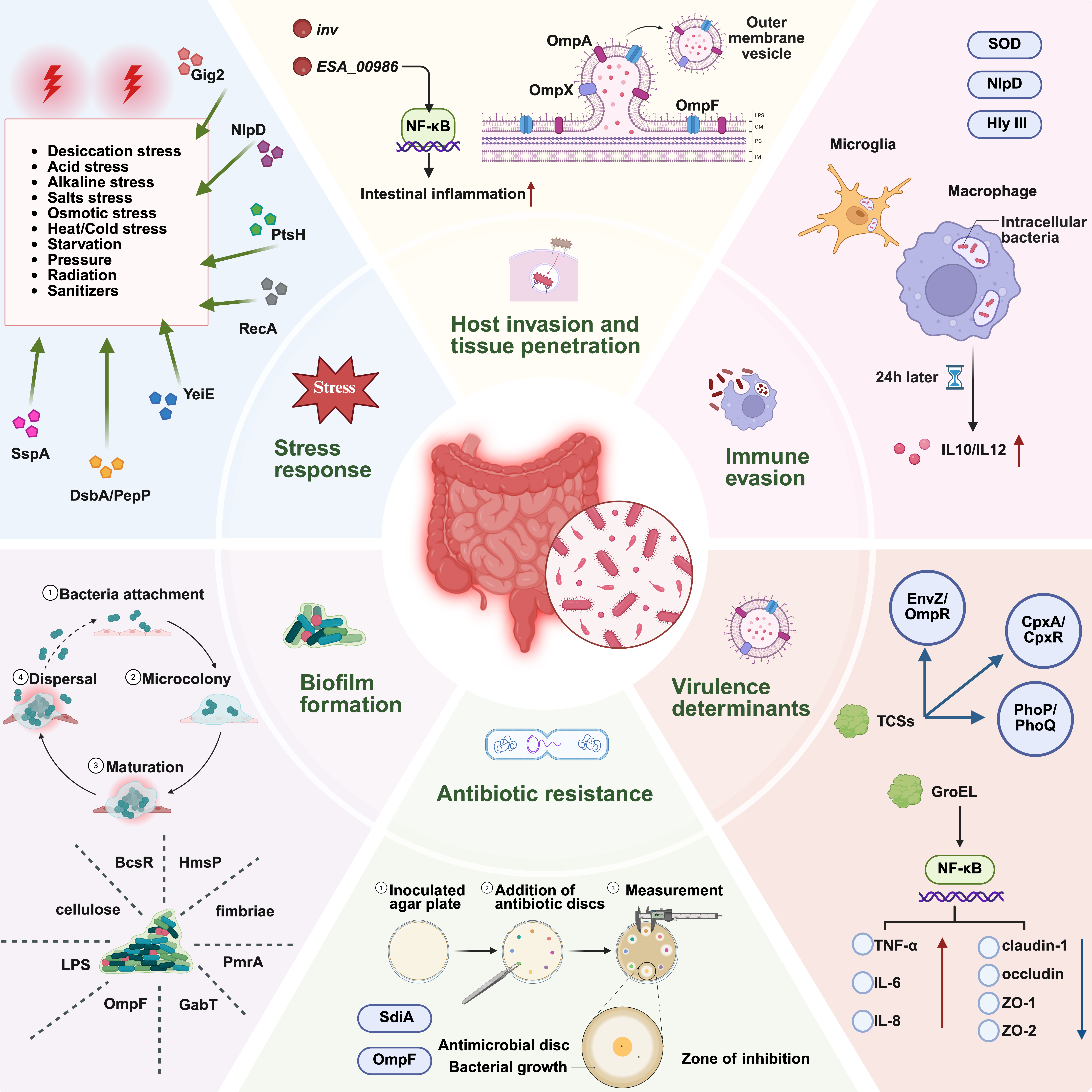
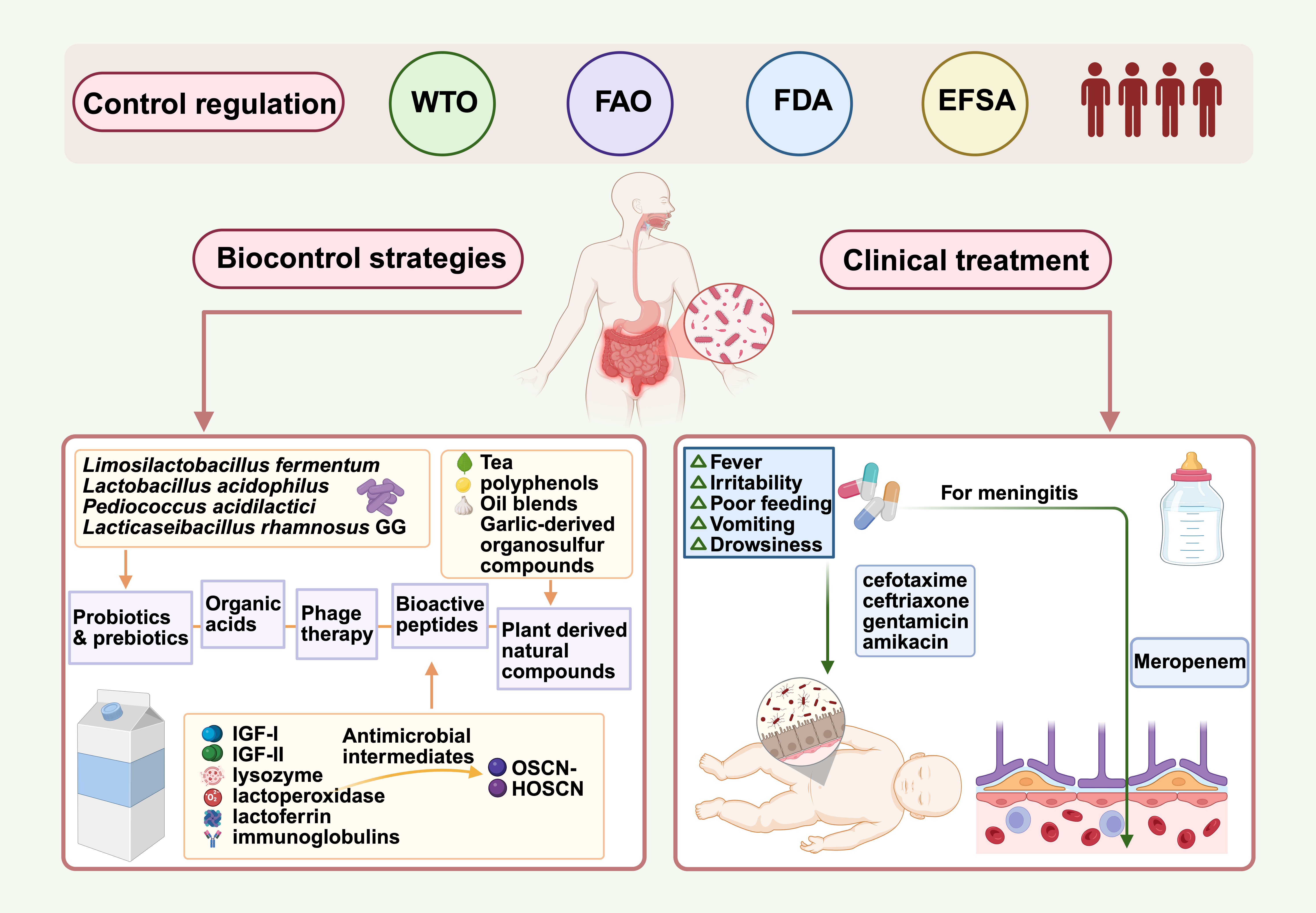
Cronobacter sakazakii is a formidable foodborne pathogen that poses a severe, often fatal threat to neonates and immunocompromised individuals, with contaminated powdered infant formula as the primary transmission vehicle. Infections can lead to devastating conditions, such as meningitis, necrotizing enterocolitis, and sepsis, with alarmingly high mortality rates. Clinical management is hampered by the lack of standardized treatment guidelines and the emergence of antibiotic resistance. However, ongoing research into its molecular pathogenesis continually covers novel targets for intervention. In this review, we synthesize recent advances in our understanding of the sophisticated mechanisms that enable C. sakazakii to cause disease. We argue that its virulence hinges on a multi-faceted strategy, including efficient host invasion and tissue penetration via outer membrane proteins, sophisticated immune evasion tactics for intracellular survival, a repertoire of regulated virulence determinants, resilient biofilm formation, and robust stress response systems that ensure environmental persistence. As research continues to decipher these intricate host–pathogen interactions, we highlight promising future directions, including the development of rapid on-site diagnostics, the application of effective biocontrol strategies like phage therapy and probiotics, and the formulation of targeted therapeutic regimens. Ultimately, integrating these multifaceted insights is paramount to developing comprehensive strategies for preventing and controlling the global health burden imposed by C. sakazakii.
Keywords: Cronobacter sakazakii; virulence determinants; pathogenesis; foodborne pathogens; powdered infant formula; biocontrol strategies Cronobacter sakazakii; virulence determinants; pathogenesis; foodborne pathogens; powdered infant formula; biocontrol strategies