Article

Planococcus circulans sp. nov., A Novel Bacterium Isolated from Kubuqi Desert Soil

1
Key Laboratory of Molecular Medicine and Biotherapy, School of Life Science, Beijing Institute of Technology, Beijing 100081, China
2
China General Microbiological Culture Collection Center, Institute of Microbiology, Chinese Academy of Sciences, Beijing 100101, China
*
Author to whom correspondence should be addressed.
Microorganisms 2026, 14(1), 231; https://doi.org/10.3390/microorganisms14010231
Submission received: 6 December 2025 / Revised: 7 January 2026 / Accepted: 14 January 2026 / Published: 19 January 2026
(This article belongs to the Section Environmental Microbiology)

Abstract

A novel bacterial strain, designated as 4-30T, was isolated from a soil sample collected from the Kubuqi Desert in Inner Mongolia, northern China. The isolate was a Gram-stain-positive, aerobic, motile, and coccus-shaped bacterium, and its colonies were circular, opaque, convex, smooth, and orange-pigmented on Luria–Bertani agar. Phylogenetic analysis based on 16S rRNA gene sequences showed that strain 4-30T belonged to the genus Planococcus. Growth occurred at 4–38 °C (optimum, 25–28 °C), pH 6.0–11.0 (optimum, pH 9.0), and in 0–10% (w/v) NaCl (optimum, 1%). Strain 4-30T contained iso-C14:0, anteiso-C15:0, C16:1 ω7c alcohol, and iso-C16:0 as major cellular fatty acids (>10%) and MK-7 and MK-8 as predominant menaquinones. Its polar lipid profile consisted of diphosphatidylglycerol, phosphatidylglycerol, phosphatidylethanolamine, and two unidentified polar lipids. The genomic DNA G+C content was 45.9%. The average nucleotide identity (ANI) values between strain 4-30T and the closely related species were relatively low (ANIm < 85.6%, ANIb < 82.9% and OrthoANIu < 83.3%), and the digital DNA–DNA hybridization (dDDH) between strain 4-30T and type strains of the genus Planococcus were 20.0–26.7%. Based on phylogenetic, genotypic, chemotaxonomic, and phenotypic analyses, strain 4-30T is considered to represent a novel species of the genus Planococcus, for which the name Planococcus circulans sp. nov. is proposed. The type strain is 4-30T (=CDMCC 1.2409T = KCTC 43405T).

1. Introduction

The genus Planococcus within the family Caryophanaceae was first proposed by Migula (1894) to accommodate aerobic, Gram-stain-positive, and motile bacteria and the description of its taxon was amended many times according to the differences in physiological and biochemical characteristics, menaquinone profile, fatty acid composition, and DNA G+C content, primarily driven by advances in systematic methodologies [1]. The changes to the description of the genus Planocococcus were mainly based on physiological, biochemical, and molecular characteristics. In the early stages, it relied mainly on physiological and biochemical characteristics. Later, with the development of technology, chemical taxonomy methods were adopted, such as measuring predominant menaquinones, polar lipid profile, and cellular fatty acid composition to improve genus boundaries and distinguish them from the closely related genera. Then, developments in molecular biology and the widespread use of 16S rRNA gene sequence analysis led to the transfer of several species from Planocococcus to other genera. For example, five bacterial species originally allocated to the genus Planococcus, namely Planococcus okeanokoites (2001) [1,2], Planococcus mcmeekinii (2001) [2,3], Planococcus alkanoclasticus (2005) [4,5], Planococcus psychrophilus (2005) [5,6], and Planococcus stackebrandtii (2009) [7,8], were transferred to a newly proposed genus Planomicrobium, containing the signature nucleotides C and G in the 16S rRNA gene sequences at positions 183 and 190, and Planococcus halophilus had been reclassified to Marinococcus halophilus. At present, whole-genome sequences provide clear criteria for species classification within this genus, which can provide an accurate description of the Planocococcus genus. In addition, the Planocococcus genus can usually produce a variety of natural active compounds, leading it to receive extensive research interest for its broad stability and functionality under hard environmental conditions [9]. The genus Planococcus comprises 34 species with validly published and correct names (http://www.bacterio.net/planococcus.html, accessed on 6 December 2025); the type species is Planococcus citreus [10]. Members of the genus Planococcus have strong resistance to environmental stress, such as high salt concentration and low temperature. Some species within this genus can even grow at temperatures below −10 °C. A remarkable example is the extreme sub-zero-adapted Planococcus halocryophilus, which can actively grow and reproduce at −15 °C and exhibits exceptional tolerance to both cold and high salinity [11]. The genus Planococcus can widely exist in various ecological environments, such as desert [12], soil [13], sea [14], spring [15], and even in Antarctica [16].
The Kubuqi Desert is located in the north of the ridge of the Ordos Plateau in Inner Mongolia, China. It is characterized by an arid climate (annual precipitation is about 250~300 mm, but annual evaporation is 2100~2700 mm), extreme temperatures (ranging from −10 °C in winter to 40 °C in summer), high soil salinity, strong ultraviolet radiation, and nutrient-poor soil (soil organic matter content can be less than 0.5 %). As a result, the animal and plant resources in the habitat are scarce, and in this context, microorganisms become the main driving force of material metabolism and energy cycle in the ecosystem, playing a significant role in the fixation of organic substances and the composition of soil structure. Their persistence is sustained by inputs of water (from rare rainfall or dew) and minimal organic carbon supplies from decaying plant litter and root exudation, or atmospheric deposition. In addition, the soil microbial biomass is the active part of soil organic matter and a source of available nutrients, and photoautotrophic and chemoautotrophic bacteria are responsible for the majority of biological carbon fixation. Simultaneously, biological nitrogen fixation caused by nitrogen-fixing bacteria associated with soil crusts or plant rhizospheres represents a critical nitrogen input into these nitrogen-poor soils. Beyond biogeochemistry, these microorganisms play a foundational role in soil stabilization through the formation of biological soil crusts. Therefore, microbiomes in the Kubuqi Desert are not merely survivors but essential engineers of ecosystem function and structure. During an investigation of the microbial diversity of the Kubuqi Desert, we obtained and described a novel member of the genus Planococcus, designated strain 4-30T. The taxonomic characterization was determined, and this was crucial for our understanding of desert soil-related bacterial communities, as well as understanding potential biotechnological applications and their mechanism of extreme environmental adaptation. Based on the results from the polyphasic taxonomic study presented, strain 4-30T was characterized and classified as a novel species of the genus Planococcus. The bacteria successfully isolated from the Kubuqi Desert, like Planococcus circulans strain 4-30T in this study, are expected to possess characteristics about tolerance to salt, radiation, and drought, reflecting direct adaptation to these prevalent stresses. However, previous studies in this area have primarily focused on the isolation and phenotypic characterization of halotolerant strains, leaving their molecular adaptive mechanisms to high salinity largely unexplored. To address this gap, we not only isolated a novel halotolerant strain 4-30T from the Kubuqi Desert, but also conducted whole-genome sequencing analysis to identify key genes and pathways involved in its adaptation. The accurate taxonomic description of this halophilic Planococcus strain establishes a clear reference for future studies. This work provides a foundation for subsequent genomic and mechanistic investigations aimed at understanding its salt tolerance at the genetic level. Identifying and characterizing such strains is a crucial first step toward exploring their potential ecological roles and adaptation mechanisms in hypersaline environments and evaluating their possible industrial applications. In addition, most studies on desert microbiomes have focused on dominant phyla such as Actinobacteria and Cyanobacteria, and the genus Planococcus (belonging to the Firmicutes) remains remarkably underrepresented in culture collections from extreme arid deserts. Thus, the specific physiological characteristics and genomic foundations that enable Planococcus species to colonize and adapt to the combined stresses of salinity, drought, and oligotrophy in desert ecosystems are largely unknown. This limits our understanding of the full functional diversity and adaptive strategies within desert soil communities.
The study can help to form a better understanding of the ecological roles of Planococcus species in hypersaline habitats. In addition, strain 4-30T contained macrolide antibiotic resistance genes, tetracycline antibiotic resistance genes, and fluoroquinolone antibiotic resistance genes, and more studies about whether it has antibiotic biodegradation capability to control antibiotic pollution could be conducted to develop a method for the biodegradation of antibiotics.

2. Materials and Methods

2.1. Bacterial Isolation and Cultivation

Strain 4-30T was isolated from a soil sample collected from Kubuqi Desert (39° 40.198′ N, 110° 8.153′ E) in Inner Mongolia, northern China. The soil sample was collected in September at an altitude of 1441 m. The temperature at the moment of sampling was about 20 °C; the soil moisture content was extremely low, below 0.5%; and the organic matter content was less than 0.1%. The pH of the soil sample collected was 8.7, and the salt content was 3.3%. We used sterilized sampling spoons to take samples at the sampling point, mixed them evenly, placed them in sterile sampling bags, and quickly transported them back to the laboratory at room temperature. Before being used for research, the samples were sieved through a 0.5 mm sieve and stored in a refrigerator at 4 °C. The desert soil sample (0.5 g) was suspended in 4.5 ml sterile water and then shaken at a speed of 200 rpm for 30 min under 30 °C to mix evenly. After that, the mixture was diluted to four gradients (10−1, 10−3, 10−5, 10−7); 200 μL of the diluted solution with a dilution factor of 10−7 was aspirated by a pipette and spread onto Luria–Bertani agar plates (containing, per liter, 10 g NaCl, 10 g peptone, 5 g bacto-yeast extract and 20 g agar, pH 7.2–7.4), followed by incubation at 28 °C for 3 days. An orange-pigmented colony, designated 4-30T, was isolated and subsequently purified on LB agar plates at 28 °C. The purified strain was cultured on LB agar plates at 28 °C for further taxonomic experiments and maintained both on LB slants at 4 °C and in suspensions with 20% (v/v) glycerol (Beijing Chemical Works, Beijing, China) at −20 °C for long-term preservation.
The reference strains of the genus Planococcus, Planococcus wigleyi Sa1BUA13T, Planococcus donghaensis DSM 22276T, Planococcus versutus L10.15T, Planococcus halocryophilus Or1T, Planococcus salinarum DSM 23820T, and Planococcus citreus DSM 20549T were obtained from the Leibniz Institute-Deutsche Sammlung von Mikroorganismen und Zellkulturen (DSMZ) culture collection for phenotypic characterization, fatty acid analysis, and other analyses.

2.2. 16S rRNA Gene Sequencing and Phylogenetic Analysis

Genomic DNA of strain 4-30T was obtained using TIANamp Bacteria Genomic DNA Extraction Kit (TIANGEN BIOTECH, Beijing, China) according to the manufacturer’s instructions. The 16S rRNA genes were amplified using the universal forward primer 27F (5’-AGAGTTTGATCCTGGCTCAG-3’) and universal reverse primer 1525R (5’-AGAAAGGAGGTGATCCAGCC-3’), as described previously [17]. The purified PCR product was cloned into the pEASY-T1 vectors (TransGen Biotech, Beijing, China) and transformed into Trans1-T1 phage-resistant chemically competent cells (TransGen Biotech) for sequencing at ORI-GENE (Beijing, China). The sequences obtained were quality-checked and assembled via the SeqMan program (DNASTAR software version 7.1.0). After sequencing, the 16S rRNA gene sequence was submitted to the GenBank database and compared with the closest phylogenetic neighbors available from the EzBioCloud database (http://www.ezbiocloud.net, accessed on 6 December 2025) [18]. The 16S rRNA gene sequences of the related bacterial strains were retrieved from the GenBank database. Phylogenetic analysis based on the 16S rRNA gene was performed by the software package MEGA 11 [19] after multiple alignments of the sequence data with the Clustal_X program [20]. Phylogenetic trees were reconstructed with the neighbor-joining (NJ) [21], maximum-likelihood (ML) [22], and minimum-evolution (ME) [23] methods. The topology of the phylogenetic tree was evaluated by the bootstrap resampling method of Felsenstein [24] with 1000 replicates. The evolutionary distances were estimated by the algorithm of Kimura’s two-parameter model and are in the units of the number of base substitutions per site [25].

2.3. Whole-Genome Sequencing and Analysis

Genomic DNA of strain 4-30T was prepared using the liquid nitrogen grinding method according to the procedure of Marmur [26]. The draft genome sequencing of strain 4-30T was conducted using the paired-end sequencing technology with both the PacBio RS II and the Illumina HiSeq systems and assembled by SPAdes genome assembler (version 3.5.0) at Sangon Biotech (Shanghai, China). The DNA G+C content was determined with the RAST server using the draft genome sequence [27]. The rRNA and tRNA genes of genome sequences were predicted using the Barrnap version 0.8 and the tRNA-scan-SE version 2.0. Genes were identified using Glimmer version 3.02, and the predicted protein-coding sequences were then annotated against the KEGG (Kyoto Encyclopedia of Genes and Genomes) [28], COG (Clusters of Orthologous Groups of proteins) [29], Swiss-Prot [30], Pfam (Protein Families) [31], and GO (Gene Ontology) [32] databases to assign or improve general function annotations.

2.4. DNA–DNA Hybridization and Genome-Based Phylogenetic Analysis

The available genomes of Planococcus species were retrieved from the National Center for Biotechnology Information (NCBI) database. The digital estimation of DNA–DNA hybridization (dDDH) between strain 4-30T and the reference species was carried out with the Genome-to-Genome Distance Calculator (http://ggdc.dsmz.de, accessed on 6 December 2025), provided by the DSMZ website, and the values lower than the 70% cut-off point were used as a standard for species delineation [33]. The average nucleotide identity (ANI) values based on the blast algorithm (ANIb), MUM-mer ultra-rapid aligning tool (ANIm), and usearch algorithm (orthoANIu) were calculated using the JSpecies WS (https://jspecies.ribohost.com/jspeciesws/, accessed on 6 December 2025) [34]. The orthoANIu values were estimated using the EzGenome web service (http://www.ezbiocloud.net/tools/ani, accessed on 6 December 2025) [35]. Moreover, a phylogenetic tree of strain 4-30T and related species based on the whole genome was constructed using a bioinformatics platform: Type (Strain) Genome Server (http://tygs.dsmz.de/, accessed on 6 December 2025) [36]. Genomes of closely related species were retrieved from the GenBank database.

2.5. Morphological, Physiological, and Biochemical Analyses

The cultural characteristics of strain 4-30T were determined on LB agar plates, with subculturing at 28 °C for 3 days. The cell morphology of strain 4-30T was observed by scanning electron microscope after incubation on LB agar medium at 28 °C for 3 days. Standard Gram staining was performed according to the method described by Gerhardt et al. [37] and observed using light microscopy (BH-2; Olympus). Motility was detected by the presence of turbidity throughout tubes containing semi-solid LB medium and was confirmed by the hanging-drop method, as described by Bernardet et al. [38]. The anaerobic growth test [39] was performed on LB agar plates, and 1 g pyrogallic acid and 2 mL 10% NaOH (w/v) (Beijing Chemical Works, Beijing, China) were added to the plate, which was then sealed with Vaseline, and growth was monitored for up to 2 weeks. Growth at different temperatures (−20, −10, −5, 0, 4, 10, 15, 20, 25, 28, 30, 32, 35, 38, and 40 °C) was determined by monitoring the OD600 of the culture broth during cultivation. The pH range for growth (pH 4.0–12.0, at intervals of 0.5 pH unit) was determined by using the appropriate biological buffer system described by Xu et al. [40]. NaCl tolerance was tested by growing the cells in LB supplemented with 0–10% (w/v) NaCl at increments of 1% for 7 days. Catalase activity was determined from the production of oxygen bubbles after the addition of a drop of 3% (v/v) H2O2, and oxidase activity was detected by the oxidation of 1% (w/v) tetramethyl-p-phenylenediamine [41]. Methyl red and Voges–Proskauer tests and assays for nitrate reduction, hydrolysis of casein, gelatin, starch, and Tweens 20, 40, 60, and 80 were performed according to methods described by Dong and Cai [42]. Then, an assessment of enzyme activity and other physiological and biochemical tests were performed. The experiments were carried out in triplicate.

2.6. Chemotaxonomic Characterization

Biomass for chemotaxonomic analysis was collected by centrifugation from cultures grown in LB medium in shake flasks for 7 days at 28 °C and then washed twice with distilled water. Fatty acid methyl ester mixtures were obtained from the cells by saponification, methylation, and extraction according to the methods of Kämpfer et al. [43], analyzed according to the standard protocol of the Sherlock Microbial Identification System (MIDI Sherlock software package, version 6.0), and identified using version 6.0 of the TSBA database [44]. This standardized cultivation and harvest procedure is widely adopted for reliable comparison of fatty acid profiles among bacterial taxa. Isoprenoid quinones were extracted from lyophilized cells, purified, and analyzed by HPLC using the menaquinones of the reference type strains as standards according to the method described by Collins [45]. Polar lipids were extracted from 100 mg freeze-dried cells and separated by two-dimensional TLC on 10 × 10 cm silica-gel plates (silica gel 60 F254, Merck, Darmstadt, Germany), with chloroform–methanol–water (65:25:4, v/v) as the first solvent and chloroform–acetic acid–methanol–water (80:15:12:4, v/v) as the second one [46,47]. Total polar lipids were detected by spraying with the phosphomolybdic acid solution followed by heating at 110 °C for 10 min. Aminolipids were detected by spraying with a 0.4% (w/v) solution of ninhydrin in butanol saturated with water, followed by heating at 105 °C for 10 min. Phospholipids were detected by spraying with the reagent of Dittmer and Lester.

3. Results and Discussion

3.1. Phylogenetic Characteristics

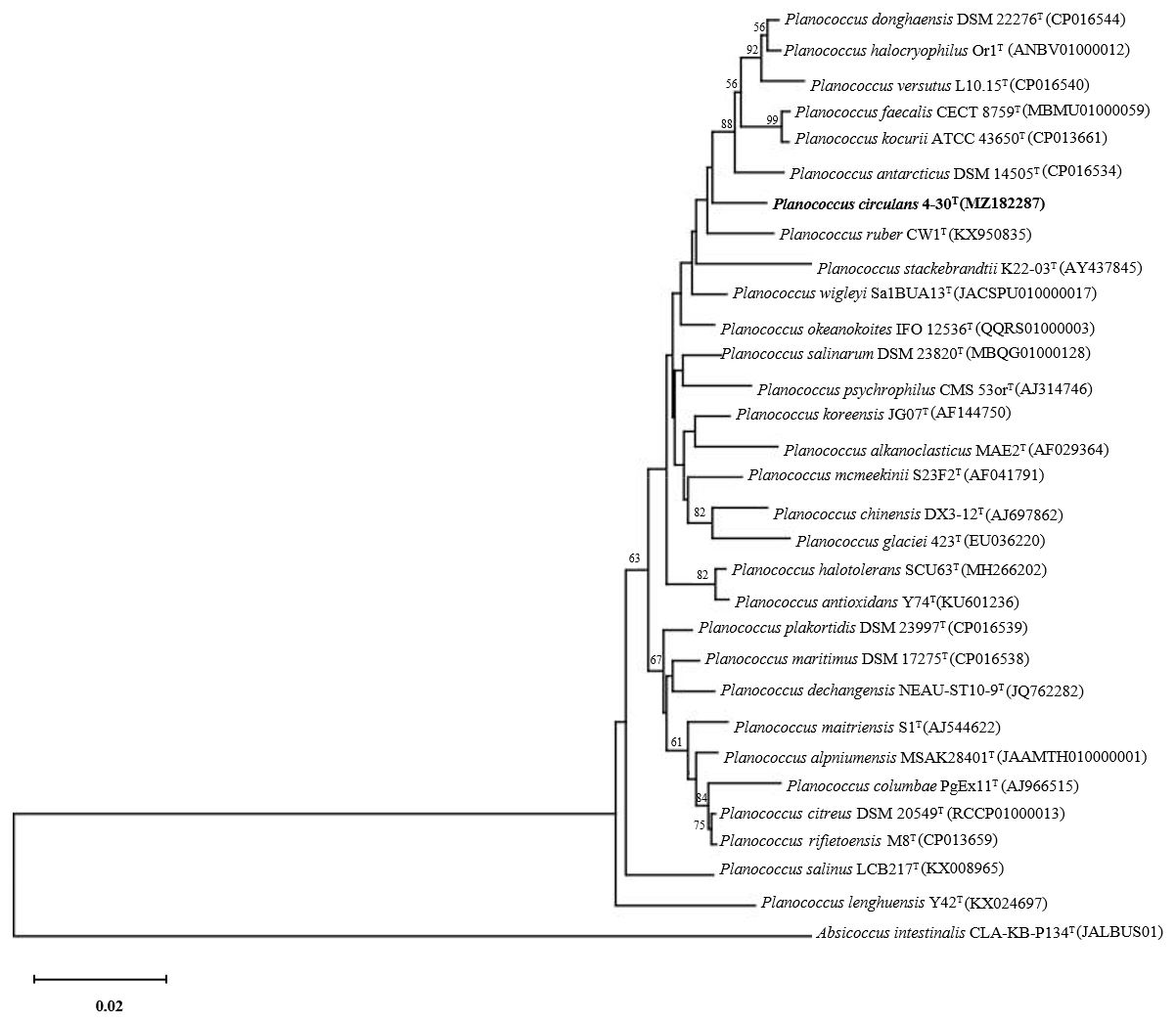
Analysis of the 16S rRNA gene sequence of strain 4-30T indicated that it was phylogenetically affiliated to the genus Planococcus and was closely related to Planococcus wigleyi Sa1BUA13T (98.8%), followed by Planococcus donghaensis DSM 22276T (98.5%), Planococcus versutus L10.15T (98.4%), and Planococcus halocryophilus Or1T (98.3%). In addition, analysis of the 16S rRNA gene sequence revealed that strain 4-30T possesses signature nucleotides T and A at positions 183 and 190, respectively, which could distinguish it from the recognized species of the genus Planomicrobium. Because a comprehensive comparison across all currently recognized Planomicrobium species showed that all species in the genus consistently exhibit C and G at positions 183 and 190, which is different from strain 4-30T (T183, A190). This distinct signature provides further molecular evidence supporting the differentiation of strain 4-30T from its congeners and its belonging to the genus Planococcus. Figure 1 shows the positions of strain 4-30T and its closest phylogenetic neighbors according to the NJ tree. The same relationships were obtained with phylogenetic reconstructions using ML (Figure S1, available in the online version of this article) and ME (Figure S2) methods.

3.2. Genome Features

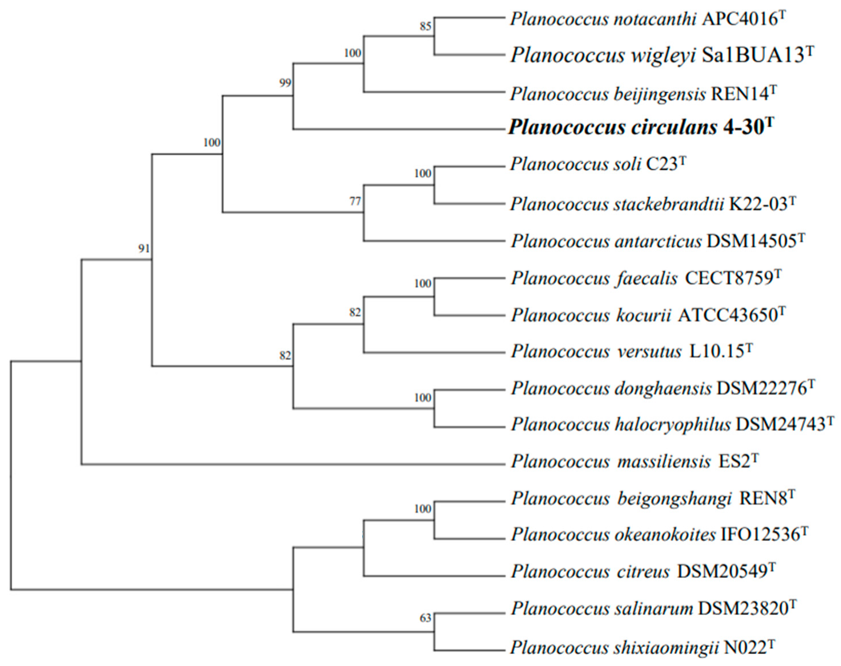
The assembled genome sequence of strain 4-30T has been deposited in the GenBank database under the accession number JAIQCL000000000. The draft genome of strain 4-30T consisted of 3,917,538 bp in length and 74 contigs with the N50 value of 246,970 bp. The sequencing depth coverage was 285×. The DNA G+C content of strain 4-30T was calculated directly from the genome sequence and determined to be 45.9% (WGS), within the range reported for species of the genus Planococcus. The detailed genomic features of 4-30T are shown in Table S1 (available in the online version of this article). The genome had 3948 predicted protein-coding genes and 43 RNAs, of which 37 tRNAs and 6 rRNAs were predicted. Moreover, the dDDH values of strain 4-30T with P. wigleyi Sa1BUA13T, P. donghaensis DSM 22276T, P. versutus L10.15T, and P. halocryophilus Or1T were 26.7%, 22.6%, 21.8%, and 23.0%, respectively, and the dDDH value of strain 4-30T with the type species of the genus Planococcus, Planococcus citreus, was 16.7%. To assess the genomic relatedness, we calculated pairwise Average Nucleotide Identity using three established algorithms: ANIb (using BLASTn, version 2.14.0), ANIm (using MUMmer, version 4), and OrthoANIu (using USEARCH, version 11.0.667). These methods were chosen as they provide complementary insights and are based on different calculation methods. ANIm is suitable for assessing average nucleotide consistency based on whole genome sequence alignment and has higher accuracy, while ANIb is suitable for processing large amounts of genomic data. It involves cutting a genome sequence into fixed-length segments and finally calculating the percentage of identity of all segments that can be aligned. In addition, when using OrthoANIu, only orthologous fragment pairs can be taken into consideration for calculating nucleotide identities. The ANIb, ANIm, and orthoANIu values between strain 4-30T and the reference strains were 73.1–82.9%, 82.9–85.6%, and 73.8–83.3%. Therefore, the data obtained by different calculation methods and comparison strategies are different, which can comprehensively compare the average nucleotide similarity to understand the genomic structure and overall similarity relationship between strains. Obviously, the ANI and dDDH values are far below the commonly accepted cut-off values (ANI < 95–96%, dDDH < 70%) for species delineation [48], supporting the notion that strain 4-30T is different from all closely related species described previously and represents a novel species within the genus Planococcus (refer to Table S2 for a list of all analyses performed on Planococcus type strains). The phylogenomic tree based on the genomes of strain 4-30T and its closest relatives (with available genomes) is presented in Figure 2.
The comparison using different databases included 3948 genes in total; among them were 3044 protein-coding genes in the Swiss-Prot database, 3276 protein-coding genes in the Pfam database, 3398 protein-coding genes in the COG database, 2682 protein-coding genes in the GO database, and 2055 protein-coding genes in the KEGG database. According to the obtained annotation from the COG analysis, we found that 86.1% of protein-coding genes could be annotated to COG. Among the 3398 genes with known COG functional categories, 313 genes were related to amino acid transport and metabolism, accounting for 9.2% of the COG-annotated genes. This was followed by 257 genes (7.6%) related to carbohydrate transport and metabolism, and 234 genes (6.9%) related to inorganic ion transport and metabolism. To elucidate the genetic basis of salt tolerance in strain 4-30T, we screened its genome for putative stress-tolerant genes. Based on the genomes of strain 4-30T according to COG annotation (E-value < 1 × 10⁻⁵), we analyzed the number of inorganic ion transport and metabolism gene clusters, and found that it contained genes related to the sodium–hydrogen exchanger. Genomic analysis based on COG annotation revealed that strain 4-30T possesses two key genes involved in sodium homeostasis within the “inorganic ion transport and metabolism” category, and the locations were Scaffold1: 720013–721224 and Scaffold2: 377730–379763, which function as Na+/H+ antiporters. This may suggest a capacity for ion balance and pH regulation in fluctuating environments and further illustrates the fact that strain 4-30T, as a member of the genus Planococcus, is usually salt-tolerant. From the study, we found that Na+ could be pumped out of the cell through the sodium–hydrogen exchanger on the cell membrane to maintain the proper concentration of Na+, pH homeostasis, and ion dynamic balance, which provided a first impression of the salt tolerance of the strain. In addition, 48 stress-tolerant genes were identified in strain 4-30T in the COG database, which could also help to explain the salt tolerance of strain 4-30T. Out of these, 32 genes were responsible for osmotic stress, 6 genes were identified as having a drug-resistance mechanism, and 8 genes were found to belong to the stress protein family. Among the 32 genes responsible for osmotic stress tolerance, 21 were identified as genes encoding ABC transporters related to inorganic ion transport and metabolism, which could regulate microbial membrane functions and inorganic ion transmembrane transport. Furthermore, a broader functional landscape was revealed through Gene Ontology (GO) annotation using the Blast2GO pipeline with standard parameters (E-value ≤ 1 × 10⁻⁵). Functional annotation of genes by comparison against the GO database revealed that there were 2107 genes related to molecular function, 1249 genes related to cellular components, and 1236 genes related to biological processes; the details of these genes are shown in Figures S3 and S4.
In addition, the antibiotic resistance genes and virulence genes of strain 4-30T were predicted. The information on the antibiotic resistance genes of strain 4-30T was obtained from the CARD database (http://arpcard.Mcmaster.ca, accessed on 5 December 2025). For the CARD database (version 1.1.3), RGI 5.2.1 software, including Perfect and Strict algorithms, was used as the screening criteria. Macrolide antibiotic resistance genes, tetracycline antibiotic resistance genes, and fluoroquinolone antibiotic resistance genes were predicted from the database. The antibiotics mentioned above were chosen for detecting antibiotic resistance, and the results indicated that strain 4-30T could tolerate the selected antibiotics. Virulence genes of strain 4-30T were annotated through the VFDB database (http://www.mgc.ac.cn/VFs/, accessed on 5 December 2025), and no gene related to known virulence was predicted from the databases mentioned above. In addition, it was found that there were three secondary metabolite synthesis gene clusters in the genome of strain 4-30T, two terpenes and one T3PKS, and the similarity between one terpene and the carotinoid gene cluster was 66%, suggesting that the bacterium could be used for industrial production in the pharmaceutical and food industries. In addition, through the annotation of carbohydrate active enzymes of strain 4-30T, it was found that both the GH35 family and GH42 family had β-galactosidase genes, which have potential application value in the food industry.

3.3. Morphological, Physiological, and Biochemical Characteristics

Strain 4-30T was Gram-stain-positive, aerobic, motile, and catalase-positive, but oxidase-negative, which was similar to the closely related strains of the genus Planococcus. Colonies grown on LB agar plates for 3 days at 28 °C were orange-pigmented, circular, smooth, convex, and opaque. Growth of strain 4-30T occurred at 4–38 °C (optimum, 25–28 °C), pH 6.0–11.0 (optimum, pH 9.0), and in the presence of 0–10% (w/v) NaCl (optimum, 1%). The physiological profile of strain 4-30T reveals its adaptation to its desert isolation source. The broad salt tolerance range (0–10%) is likely a critical survival characteristic, enabling the strain to withstand periods of high salinity induced by extreme evaporation in surface soils, while the lower optimum salinity for growth suggests that its competitive advantage and active metabolic state are achieved under more moderate conditions, reflecting its adaptation to the desert ecosystem, which is a key characteristics of many microorganisms in fluctuating environments. Compared with its closest phylogenetic neighbors, strain 4-30T had some different physiological and biochemical characteristics, such as being negative for hydrolysis of gelatin, which could distinguish strain 4-30T from its closest phylogenetic relative P. wigleyi Sa1BUA13T. Other cultural, biochemical, and physiological characteristics of strain 4-30T, and the detailed comparison of selective characteristics between strain 4-30T and closely related type strains, are summarized in Table 1 and in the species description.

3.4. Chemotaxonomic Characteristics

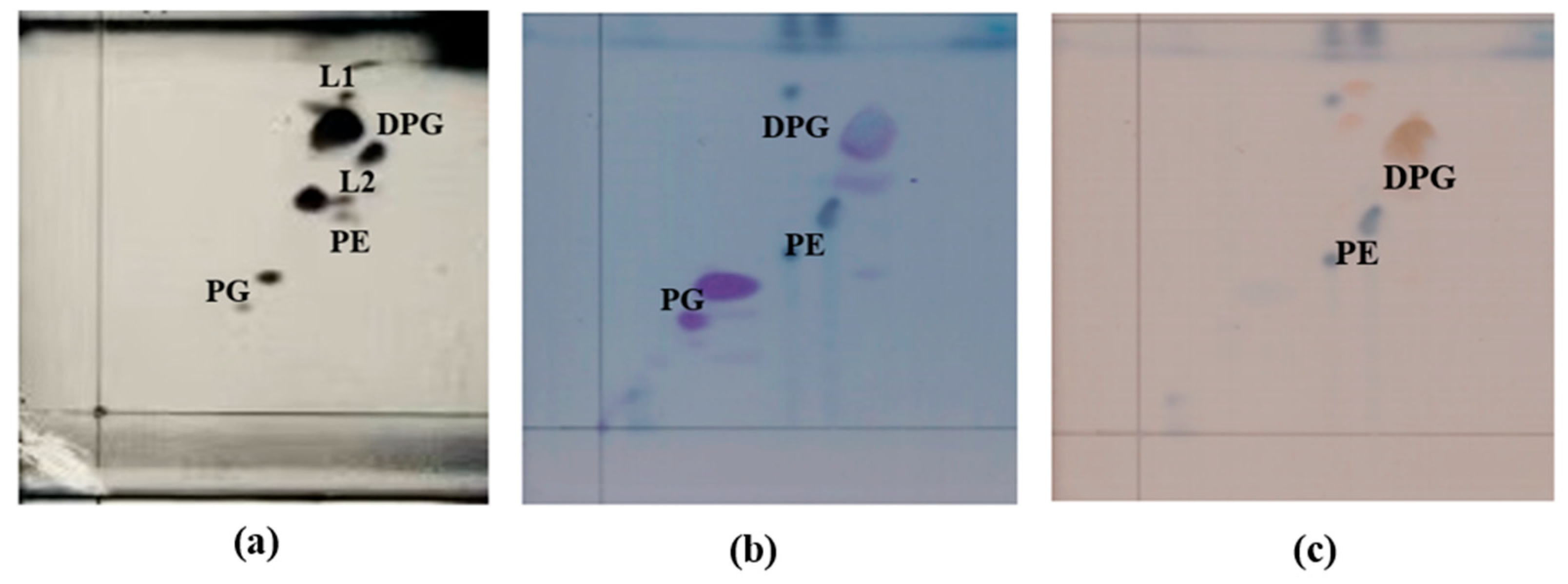
Under the standardized growth conditions described and comparable conditions, the cellular fatty acids of strain 4-30T mainly consisted of iso-C14:0 (27.1%), anteiso-C15:0 (20.2%), C16:1 ω7c alcohol (18.7%), and iso-C16:0 (10.6%), consistent with other members of the genus Planococcus. Compared with the closely related strains within the genus Planococcus, strain 4-30T contained 3.1% C17:1 ω9c, which was not found in other similar bacteria, and the contents of iso-C14:0 and C16:1 ω7c alcohol were notably higher than those in other reference strains. As detailed in Table 2, strain 4-30T possessed a distinctive fatty acid profile when compared to its closest relatives. The predominant menaquinones in strain 4-30T were MK-7 (54%) and MK-8 (46%), as in most other species of the genus Planococcus. The main polar lipids were diphosphatidylglycerol, phosphatidylglycerol, phosphatidylethanolamine, and two unknown lipids. (Figure 3). The chemotaxonomic characteristics of strain 4-30T are consistent with its classification in the genus Planococcus.

3.5. Taxonomic Conclusion

Phylogenetic, phenotypic, and chemotaxonomic characteristics suggested that strain 4-30T belonged to the genus Planococcus. Physiological and biochemical characteristics distinguished strain 4-30T from the closely related type strains. Therefore, strain 4-30T should be placed in the genus Planococcus, representing a novel species, for which the name Planococcus circulans sp. nov. is proposed.

4. Conclusions

Based on its phenotypic, phylogenetic, and chemotaxonomic characteristics, such as phylogenetic position, strain 4-30T can be confirmed as a novel species within the genus Planococcus. The type strain 4-30T (=CDMCC 1.2409T=KCTC 43405T) was isolated from a soil sample of the Kubuqi Desert in Inner Mongolia, China. The 16S rRNA gene and genome sequences of the type strain 4-30T were deposited under the accession numbers MZ182287 and JAIQCL000000000, respectively.

Description of Planococcus circulans sp. nov.

Planococcus circulans (cir’cu.lans. L. part. adj. circulans, making circles or round, circling).
Strain 4-30T was positive for catalase, but negative for oxidase, nitrate reduction, methyl red, and Voges–Proskauer tests. Hydrolyses starch, Tween 20, Tween 40, and Tween 60, but not casein, cellulose, gelatin, urea, and Tween 80. Nitrate is reduced. Hydrolyzes aesculin, but not gelatin. Assimilates D-glucose, N-acetylglucosamine, D-mannitol, gluconic acid, malic acid, and maltose, but not L-arabinose, D-mannose, capric acid, adipic acid, citric acid, and phenylacetic acid as the sole source. Produces naphthol-AS-BI-phosphohydrolase, and valine arylamidase, but not alkaline phosphatase, arginine hydrolase, chymotrypsin, cystine arylamidase, acid phosphatase, esterase (C4), esterase lipase (C8), lipase (C14), leucine arylamidase, trypsin, urease, α-mannosidase, α-galactosidase, α-glucosidase, β-fucosidase, β-galactosidase, β-glucuronidase, β-glucosidase, and N-acetyl β-glucosaminidase.
This study fills a specific knowledge gap by providing a comprehensive taxonomic and functional description of a novel Planococcus species from an under-explored high salt desert. Prior to this work, the adaptive mechanisms of Planococcus species to the polyextreme conditions (high salt, aridity, UV) of inland deserts were speculative. In addition, the research on microorganisms in the desert mainly focuses on the phylum Actinobacteria, and there has been no study of the Planococcus species in the desert. Its distinct phylogenetic position and specific phenotypic profile expand the known ecological and genetic diversity within the genus, offering new insights for understanding microbial community assembly and resilience in desert ecosystems. This work fills a specific niche in our knowledge of desert Planococcus and provides a mechanistic framework for understanding bacterial adaptation to polyextreme environments.
In conclusion, we isolated a novel bacterium, designated as 4-30T, from the saline desert soil of the Kubuqi Desert. The aims of this study were to determine its precise taxonomic position using a polyphasic approach, elucidate its phenotypic and genotypic adaptive features, and propose it as the type strain of a novel species, Planococcus circulans sp. nov. In the future, we will conduct in-depth research on antibiotic resistance genes of the bacterial strain to verify whether it has the potential for application in the biodegradation of antibiotics and toxic substances.

Supplementary Materials

The following supporting information can be downloaded at https://www.mdpi.com/article/10.3390/microorganisms14010231/s1: Figure S1: Phylogenetic tree constructed with the maximum-likelihood method based on 16S rRNA gene sequences of strain 4-30T and other closely related species of the genus Planococcus within the family Caryophanaceae, showing the position of strain 4-30T among its phylogenetic neighbors. Absicoccus intestinalis CLA-KB-P134T was used as an outgroup. Numbers in notes represent bootstrap percentages (>50%) based on 1000 replicates; Figure S2: Phylogenetic tree constructed with the minimum-evolution method based on 16S rRNA gene sequences of strain 4-30T and other closely related species of the genus Planococcus within the family Caryophanaceae, showing the position of strain 4-30T among its phylogenetic neighbors. Absicoccus intestinalis CLA-KB-P134T was used as an outgroup. Numbers in notes represent bootstrap percentages (>50%) based on 1000 replicates; Figure S3: Result of genes associated with general COG functional category prediction. On the left side is the distribution of the number of COG functional analyses. The abscissa represents the COG functional classification, and different colors and codes correspond to different types. The left vertical axis is the number of genes. On the right side of the figure is the legend, which gives the COG functional classification. Figure S4: GO gene annotation of strain 4-30T. The abscissa represents the three branches of GO, namely BP (biological process), CC (cellular component), and MF (molecular function), and further level 2 classification. The ordinate represents the proportion of genes; Figure S5: Transmission electron micrograph of cells of strain 4-30T grown on LB medium for 3 days at 28 °C. Most of the cells were observed as single cocci. Bar, 0.2 μm; Table S1: General features of the genome of strain 4-30T; Table S2: Average nucleotide identity (ANIm, ANIb, and OrthoANIu), and digital DNA–DNA hybridization (dDDH) values (%) between strain 4-30T (JAIQCL000000000) and the related strains of the genus Planococcus.

Author Contributions

Conceptualization, J.Z., Y.X. and S.C.; methodology, S.C., S.Z. and W.P.; investigation, S.C. and S.Z.; writing—original draft preparation, S.C., Y.C., J.D. and P.B.; writing—review and editing, J.Z. All authors have read and agreed to the published version of the manuscript.

Funding

This research was supported by the Beijing Natural Science Foundation (grant number 5232017).

Institutional Review Board Statement

Not applicable.

Informed Consent Statement

Not applicable.

Data Availability Statement

The GenBank/EMBL/DDBJ accession numbers for the 16S rRNA gene and the genome sequences of strain 4-30T are MZ182287 and JAIQCL000000000, respectively, and other data are presented in the article and its Supplementary Materials.

Conflicts of Interest

The authors declare no conflicts of interest.

References

  1. Nakagawa, Y.; Sakane, T.; Yokota, A. Emendation of the genus Planococcus and transfer of Flavobacterium okeanokoites Zobell and Upham 1944 to the genus Planococcus as Planococcus okeanokoites comb. nov. Int. J. Syst. Bacteriol. 1996, 46, 866–870. [Google Scholar] [CrossRef]
  2. Yoon, J.H.; Kang, S.S.; Lee, K.C.; Lee, E.S.; Kho, Y.H.; Kang, K.H.; Park, Y.H. Planomicrobium koreense gen. nov., sp. nov., a bacterium isolated from the Korean traditional fermented seafood jeotgal, and transfer of Planococcus okeanokoites (Nakagawa et al. 1996) and Planococcus mcmeekinii (Junge et al. 1998) to the genus Planomicrobium. Int. J. Syst. Evol. Microbiol. 2001, 51, 1511–1520. [Google Scholar] [CrossRef][Green Version]
  3. Junge, K.; Gosink, J.J.; Hoppe, H.G.; Staley, J.T. Arthrobacter, Brachybacterium and Planococcus isolates identified from Antarctic sea ice brine. Description of Planococcus mcmeekinii, sp. nov. Syst. Appl. Microbiol. 1998, 21, 306–314. [Google Scholar] [CrossRef]
  4. Engelhardt, M.A.; Daly, K.; Swannell, R.P.J.; Head, I.M. Isolation and characterization of a novel hydrocarbon-degrading, Gram-positive bacterium, isolated from intertidal beach sediment, and description of Planococcus alkanoclasticus sp. nov. J. Appl. Microbiol. 2001, 90, 237–247. [Google Scholar] [CrossRef]
  5. Dai, X.; Wang, Y.N.; Wang, B.J.; Liu, S.J.; Zhou, Y.G. Planomicrobium chinense sp. nov., isolated from coastal sediment, and transfer of Planococcus psychrophilus and Planococcus alkanoclasticus to Planomicrobium as Planomicrobium psychrophilum comb. nov. and Planomicrobium alkanoclasticum comb. nov. Int. J. Syst. Evol. Microbiol. 2005, 55, 699–702. [Google Scholar] [CrossRef] [PubMed][Green Version]
  6. Reddy, G.S.N.; Prakash, J.S.S.; Vairamani, M.; Prabhakar, S.; Matsumoto, G.I.; Shivaji, S. Planococcus antarcticus and Planococcus psychrophilus spp. nov. isolated from cyanobacterial mat samples collected from ponds in Antarctica. Extremophiles 2002, 6, 253–261. [Google Scholar] [CrossRef]
  7. Mayilraj, S.; Prasad, G.S.; Suresh, K.; Saini, H.S.; Shivaji, S.; Chakrabarti, T. Planococcus stackebrandtii sp. nov., isolated from a cold desert of the Himalayas, India. Int. J. Syst. Evol. Microbiol. 2005, 55, 91–94. [Google Scholar] [CrossRef] [PubMed]
  8. Jung, Y.T.; Kang, S.J.; Oh, T.K.; Yoon, J.H.; Kim, B.H. Planomicrobium flavidum sp. nov., isolated from a marine solar saltern, and transfer of Planococcus stackebrandtii Mayilraj et al. 2005 to the genus Planomicrobium as Planomicrobium stackebrandtii comb. nov. Int. J. Syst. Evol. Microbiol. 2009, 59, 2929–2933. [Google Scholar] [CrossRef] [PubMed]
  9. Waghmode, S.; Suryavanshi, M.; Sharma, D.; Satpute, S.K. Planococcus Species-An Imminent Resource to Explore Biosurfactant and Bioactive Metabolites for Industrial Applications. Front. Bioeng. Biotechnol. 2020, 8, 996. [Google Scholar] [CrossRef]
  10. Migula, W. Über ein neues System der Bakterien. Arb. Aus Dem Bakteriol. Inst. Der Tech. Hochsch. Zu Karlsr 1894, 1, 235–238. [Google Scholar]
  11. Mykytczuk, N.C.; Wilhelm, R.C.; Whyte, L.G. Planococcus halocryophilus sp. nov., an extreme sub-zero species from high Arctic permafrost. Int. J. Syst. Evol. Microbiol. 2012, 62, 1937–1944. [Google Scholar] [CrossRef] [PubMed]
  12. Zhang, B.; Yang, R.; Zhang, G.; Liu, Y.; Zhang, D.; Zhang, W.; Chen, T.; Liu, G. Characteristics of Planococcus antioxidans sp. nov., an antioxidant-producing strain isolated from the desert soil in the Qinghai-Tibetan Plateau. Microbiologyopen 2020, 9, 1183–1196. [Google Scholar] [CrossRef]
  13. Yang, R.; Zhang, B.; Wang, J.; Tai, X.; Sun, H.; Zhang, G.; Zhang, W.; Chen, T.; Liu, G. Planococcus lenghuensis sp. nov., an oil-degrading bacterium isolated from petroleum-contaminated soil. Antonie Van Leeuwenhoek 2020, 113, 839–850. [Google Scholar] [CrossRef]
  14. Choi, J.H.; Im, W.T.; Liu, Q.M.; Yoo, J.S.; Shin, J.H.; Rhee, S.K.; Roh, D.H. Planococcus donghaensis sp. nov., a starch-degrading bacterium isolated from the East Sea, South Korea. Int. J. Syst. Evol. Microbiol. 2007, 57, 2645–2650. [Google Scholar] [CrossRef][Green Version]
  15. Romano, I.; Giordano, A.; Lama, L.; Nicolaus, B.; Gambacorta, A. Planococcus rifietensis sp. nov, isolated from algal mat collected from a sulfurous spring in Campania (Italy). Syst. Appl. Microbiol. 2003, 26, 357–366. [Google Scholar] [CrossRef]
  16. Zhang, S.; Ping, W.; Xin, Y.; Xin, D.; Zhang, J. Planococcus soli sp. nov., isolated from Antarctic soil. Antonie Van Leeuwenhoek 2021, 114, 1107–1115. [Google Scholar] [CrossRef]
  17. Xu, P.; Li, W.J.; Xu, L.H.; Jiang, C.L. A microwave-based method for genomic DNA extraction from actinomycetes. Microbiology 2003, 30, 82–84. [Google Scholar]
  18. Yoon, S.H.; Ha, S.M.; Kwon, S.; Lim, J.; Kim, Y.; Seo, H.; Chun, J. Introducing EzBioCloud: A taxonomically united database of 16S rRNA gene sequences and whole-genome assemblies. Int. J. Syst. Evol. Microbiol. 2017, 67, 1613–1617. [Google Scholar] [CrossRef]
  19. Kumar, S.; Stecher, G.; Li, M.; Knyaz, C.; Tamura, K. MEGA X: Molecular Evolutionary Genetics Analysis across computing platforms. Mol. Biol. Evol. 2018, 35, 1547–1549. [Google Scholar] [CrossRef]
  20. Larkin, M.A.; Blackshields, G.; Brown, N.P.; Chenna, R.; McGettigan, P.A.; McWilliam, H.; Valentin, F.; Wallace, I.M.; Wilm, A.; Lopez, R.; et al. Clustal W and Clustal X version 2.0. Bioinformatics 2007, 23, 2947–2948. [Google Scholar] [CrossRef] [PubMed]
  21. Saitou, N.; Nei, M. The neighbor-joining method: A new method for reconstructing phylogenetic trees. Mol. Biol. Evol. 1987, 4, 406–425. [Google Scholar] [CrossRef]
  22. Felsenstein, J. Evolutionary trees from DNA sequences: A maximum likelihood approach. J. Mol. Evol. 1981, 17, 368–376. [Google Scholar] [CrossRef]
  23. Cavalli-Sforza, L.L.; Edwards, A.W. Phylogenetic analysis: Models and estimation procedures. Am. J. Hum. Genet. 1967, 19, 233–257. [Google Scholar] [CrossRef]
  24. Felsenstein, J. Confidence limits on phylogenies: An approach using the bootstrap. Evolution 1985, 39, 783–791. [Google Scholar] [CrossRef]
  25. Kimura, M. A simple method for estimating evolutionary rates of base substitutions through comparative studies of nucleotide sequences. J. Mol. Evol. 1980, 16, 111–120. [Google Scholar] [CrossRef]
  26. Marmur, J. A procedure for the isolation of deoxyribonucleic acid from microorganisms. J. Mol. Biol. 1961, 3, 208–218. [Google Scholar] [CrossRef]
  27. Brettin, T.; Davis, J.J.; Disz, T. RASTtk: A modular and extensible implementation of the RAST algorithm for building custom annotation pipelines and annotating batches of genomes. Sci. Rep. 2015, 5, 8365–8370. [Google Scholar] [CrossRef] [PubMed]
  28. Kanehisa, M.; Goto, S.; Kawashima, S.; Okuno, Y.; Hattori, M. The KEGG resource for deciphering the genome. Nucleic Acids Res. 2004, 32, 277–280. [Google Scholar] [CrossRef]
  29. Tatusov, R.L.; Galperin, M.Y.; Natale, D.A.; Koonin, E.V. The COG database: A tool for genome-scale analysis of protein functions and evolution. Nucleic Acids Res. 2000, 28, 33–36. [Google Scholar] [CrossRef] [PubMed]
  30. Bairoch, A.; Apweiler, R. The SWISS-PROT protein sequence database and its supplement TrEMBL in 2000. Nucleic Acids Res. 2000, 28, 45–48. [Google Scholar] [CrossRef]
  31. Finn, R.D.; Coggill, P.; Eberhardt, R.Y.; Eddy, S.R.; Mistry, J.; Mitchell, A.L.; Potter, S.C.; Punta, M.; Gan, L.; Zhang, H.; et al. Planococcus salinus sp. nov., a moderately halophilic bacterium isolated from a saline-alkali soil. Int. J. Syst. Evol. Microbiol. 2018, 68, 589–595. [Google Scholar] [CrossRef] [PubMed]
  32. Chun, J.; Oren, A.; Ventosa, A.; Christensen, H.; Arahal, D.R.; Costa, M.D.; Rooney, A.; Yi, H.; Xu, X.W.; Consortium, T.G.O. Gene ontology consortium: Going forward. Nucleic Acids Res. 2015, 43, 1049–1056. [Google Scholar] [CrossRef]
  33. Meier-Kolthoff, J.P.; Auch, A.F.; Klenk, H.P.; Göker, M. Genome sequence-based species delimitation with confidence intervals and improved distance functions. BMC Bioinform. 2013, 14, 60. [Google Scholar] [CrossRef]
  34. Richter, M.; Rosselló-Móra, R. Shifting the genomic gold standard for the prokaryotic species definition. Proc. Natl. Acad. Sci. USA 2009, 106, 19126–19131. [Google Scholar] [CrossRef] [PubMed]
  35. Yoon, S.H.; Ha, S.M.; Lim, J.; Kwon, S.; Chun, J. A large-scale evaluation of algorithms to calculate average nucleotide identity. Antonie Van Leeuwenhoek 2017, 110, 1281–1286. [Google Scholar] [CrossRef]
  36. Meier-Kolthoff, J.P.; Göker, M. TYGS is an automated high-throughput platform for state-of-the-art genome-based taxonomy. Nat. Commun. 2019, 10, 2182. [Google Scholar] [CrossRef] [PubMed]
  37. Gerhardt, P.; Murray, R.G.E.; Wood, W.A.; Krieg, N.R. Methods for General and Molecular Bacteriology; American Society for Microbiology: Washington, DC, USA, 1994. [Google Scholar] [CrossRef]
  38. Bernardet, J.F.; Nakagawa, Y.; Holmes, B.; Flavobacteri, S.T. Proposed minimal standards for describing new taxa of the family Flavobacteriaceae and emended description of the family. Int. J. Syst. Evol. Microbiol. 2002, 52, 1049–1070. [Google Scholar] [CrossRef]
  39. Zhang, Y.; Zhuang, J.L.; Pang, H.C.; Wang, Y.N.; Li, Y.Y.; Zhang, J.L. Paenibacillus luteus sp. nov., isolated from soil. Int. J. Syst. Evol. Microbiol. 2019, 69, 2354–2359. [Google Scholar] [CrossRef]
  40. Xu, P.; Li, W.J.; Tang, S.K.; Zhang, Y.Q.; Chen, G.Z.; Chen, H.H.; Xu, L.H.; Jiang, C.L. Naxibacter alkalitolerans gen. nov., sp. nov., a novel member of the family ‘Oxalobacteraceae’ isolated from China. Int. J. Syst. Evol. Microbiol. 2005, 55, 1149–1153. [Google Scholar] [CrossRef]
  41. Ohta, H.; Hattori, T. Agromonas oligotrophica gen. nov., sp. nov., a nitrogen-fixing oligotrophic bacterium. Antonie Van Leeuwenhoek 1983, 49, 429–446. [Google Scholar] [CrossRef]
  42. Dong, X.Z.; Cai, M.Y. Determinative Manual for Routine Bacteriology; Scientific Press: Beijing, China, 2001. [Google Scholar]
  43. Kämpfer, P.; Kroppenstedt, R.M. Numerical analysis of fatty acid patterns of coryneform bacteria and related taxa. Can. J. Microbiol. 1996, 42, 989–1005. [Google Scholar] [CrossRef]
  44. Sasser, M. Identification of Bacteria by Gas Chromatography of Cellular Fatty Acids; MIDI Technical Note 101; MIDI Inc.: Newark, DE, USA, 1990. [Google Scholar]
  45. Collins, M.D. In Chemical Methods in Bacterial Systematics; Goodfellow, M., Minnikin, D.E., Eds.; Isoprenoid quinone analysis in classification and identification. Academic Press: London, UK, 1985; pp. 267–287. [Google Scholar]
  46. Minnikin, D.E.; Collins, M.D.; Goodfellow, M. Fatty acid and polar lipid composition in the classification of Cellulomonas, Oerskovia and related taxa. J. Appl. Bacteriol. 1979, 47, 87–95. [Google Scholar] [CrossRef]
  47. Collins, M.D.; Jones, D. Lipids in the classification and identification of coryneform bacteria containing peptidoglycan based on 2, 4-diaminobutyric acid. J. Appl. Bacteriol. 1980, 48, 459–470. [Google Scholar] [CrossRef]
  48. Luo, C.; Rodriguez, R.L.M.; Konstantinidis, K.T. MyTaxa: An advanced taxonomic classifier for genomic and metagenomic sequences. Nucleic Acids Res. 2014, 42, e73. [Google Scholar] [CrossRef]
  49. See-Too, W.-S.; Ee, R.; Madhaiyan, M.; Kwon, S.-W.; Tan, J.Y.; Lim, Y.L.; Convey, P.; Pearce, D.A.; Yin, W.F.; Chan, K.-G. Planococcus versutus sp. nov., isolated from soil. Int. J. Syst. Evol. Microbiol. 2017, 67, 944–950. [Google Scholar]
  50. Yoon, J.-H.; Kang, S.-J.; Lee, S.-Y.; Oh, K.-H.; Oh, T.-K. Planococcus salinarum sp. nov., isolated from a marine solar saltern, and emended description of the genus Planococcus. Int. J. Syst. Evol. Microbiol. 2010, 60, 754–758. [Google Scholar]
Figure 1. Neighbor-joining phylogenetic tree based on 16S rRNA gene sequences showing the relationships between strain 4-30T and closely related species of the genus Planococcus within the family Caryophanaceae. Numbers at nodes represent bootstrap percentages (>50%) based on 1000 replicates. Absicoccus intestinalis CLA-KB-P134T was used as an outgroup. Bar, 0.02 substitutions per nucleotide position.
Microorganisms 14 00231 g001
Figure 2. Whole-genome sequence tree generated with TYGS for strain 4-30T and phylogenetically related type strains in the genus Planococcus. Tree inferred with FastME from GBDP distances calculated from genome sequences. Branch lengths are scaled in terms of GBDP distance formula d5. The numbers above branches are GBDP pseudo-bootstrap support values >60% from 100 replications.
Microorganisms 14 00231 g002
Figure 3. Cellular polar liquid profiles of strain 4-30T after separation by two-dimensional TLC detected with ethanolic phosphomolybdic acid hydrate reagent (a), ninhydrin reagent (b), and molybdenum blue (c). Abbreviations: PE—phosphatidylethanolamine; DPG—diphosphatidylglycerol; PG—phosphatidylglycerol; L1–L2—unidentified phospholipids.
Microorganisms 14 00231 g003
Table 1. Differential characteristics between strain 4-30T and the closely related species of Planococcus. Strains: 1, 4-30T; 2, Planococcus donghaensis DSM 22276T; 3, Planococcus versutus L10.15T; 4, Planococcus halocryophilus Or1T; 5, Planococcus salinarum DSM 23820T; 6, Planococcus citreus DSM 20549T. All data are from this study except where otherwise indicated. +: positive; –: negative; w: weakly positive.
Characteristic123456
Colony colorOrangeOrangeOrangeOrangeReddish-orangeOrange/yellow
Ranges for growth:      
Temperature (°C) 4–384–374–30−10–374–384–37
NaCl (%, w/v)0–100–120–150–190–130–10
pH 6.0–11.06.0–10.06.0–11.06.0–11.06.0–7.56.0–10.0
Hydrolysis of:      
Gelatin++
Starch+++
Tween 80++
Casein++
Enzyme activity:      
Esterase (C4)ww
Valine arylamidase+
α-Chymotrypsin++
β-Galactosidasew+
β-Glucosidase+++
Alkaline phosphatase+
Assimilation of:     
D-Mannose++
D-Maltose++++
N-acetylglucosamine++++
DNA G+C content (%)45.947.0 *39.4 §40.5 44.8 48.5 &
* Data from Choi et al. (2007) [14]. § Data from See-Too et al. (2017) [49]. Data from Mykytczuk et al. (2012) [11]. Data from Yoon et al. (2010) [50]. & Data from Migula et al. (1894) [10].
Table 2. Fatty acid profiles of strain 4-30T and the closely related species of the genus Planococcus. Strains: 1, 4-30T; 2, Planococcus donghaensis DSM 22276T; 3, Planococcus versutus L10.15T; 4, Planococcus halocryophilus Or1T; 5, Planococcus salinarum DSM 23820T; 6, Planococcus citreus DSM 20549T. Values are percentages of total fatty acids. The fatty acids in bold are the major cellular fatty acids (10% and above). All tests were carried out using similar methods. -: not detected; tr: trace amounts (<1.0%).
Fatty Acid (%)123456
Straight-chain fatty acids      
C15:03.51.71.2tr-6.7
C16:01.26.34.06.8--
C17:0tr1.3trtr-2.3
Branched fatty acid      
iso-C14:027.13.43.42.24.28.8
iso -C15:01.84.71.92.52.7-
iso-C16:010.69.45.54.97.58.1
iso-C17:01.06.41.93.62.5-
iso-C18:0tr-1.3tr--
anteiso-C15:020.243.846.244.444.852.1
anteiso-C17:01.115.510.715.710.85.2
Unsaturated fatty acids      
C16:1 ω7c alcohol18.71.66.52.916.79.8
C16:1 ω11c2.21.3--1.42.5
C17:1 ω9c3.1-----
Mixed components      
Summed Feature 4 *3.11.96.06.16.04.5
* Summed features are fatty acids that cannot be resolved reliably from other fatty acids using the chromatographic conditions chosen. The MIDI system groups these fatty acids together as one feature with a single percentage of the total. Summed feature 4 comprised iso-C17:1 I and/or anteiso-C17:1B.
Disclaimer/Publisher’s Note: The statements, opinions and data contained in all publications are solely those of the individual author(s) and contributor(s) and not of MDPI and/or the editor(s). MDPI and/or the editor(s) disclaim responsibility for any injury to people or property resulting from any ideas, methods, instructions or products referred to in the content.