UV-Assisted Silver Functionalization of Cotton Gauze for Antimicrobial and Biocompatible Wound Healing Applications




Abstract
1. Introduction
2. Materials and Methods
2.1. Materials
2.2. Treatment of Cotton Gauzes
2.3. Quantification of Ag+
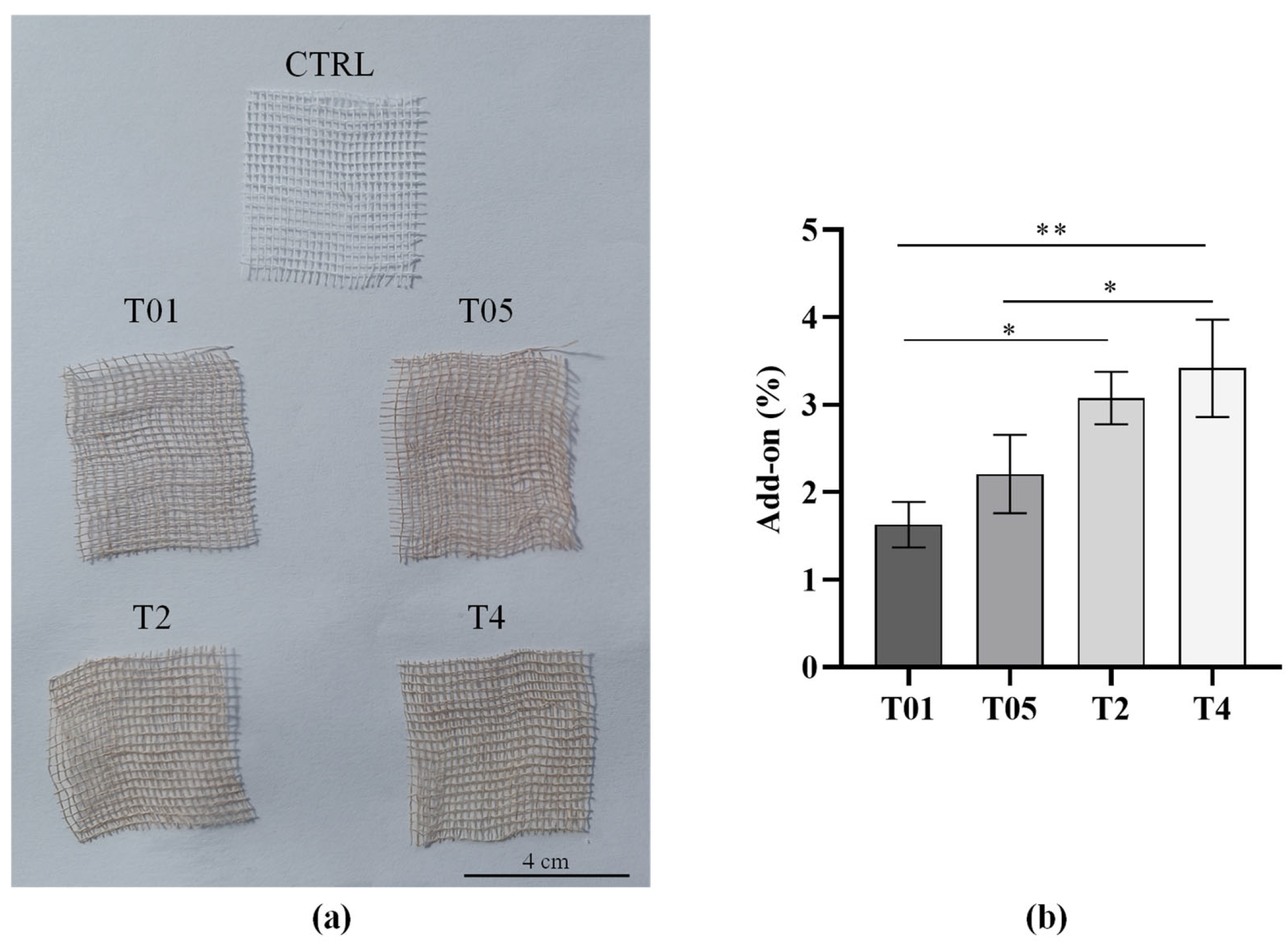
2.4. Add-On Ratio
2.5. Absorption and Retention of Fluids
2.6. Vertical Wicking Test
2.7. Antimicrobial Properties of Untreated and Treated Cotton Gauzes
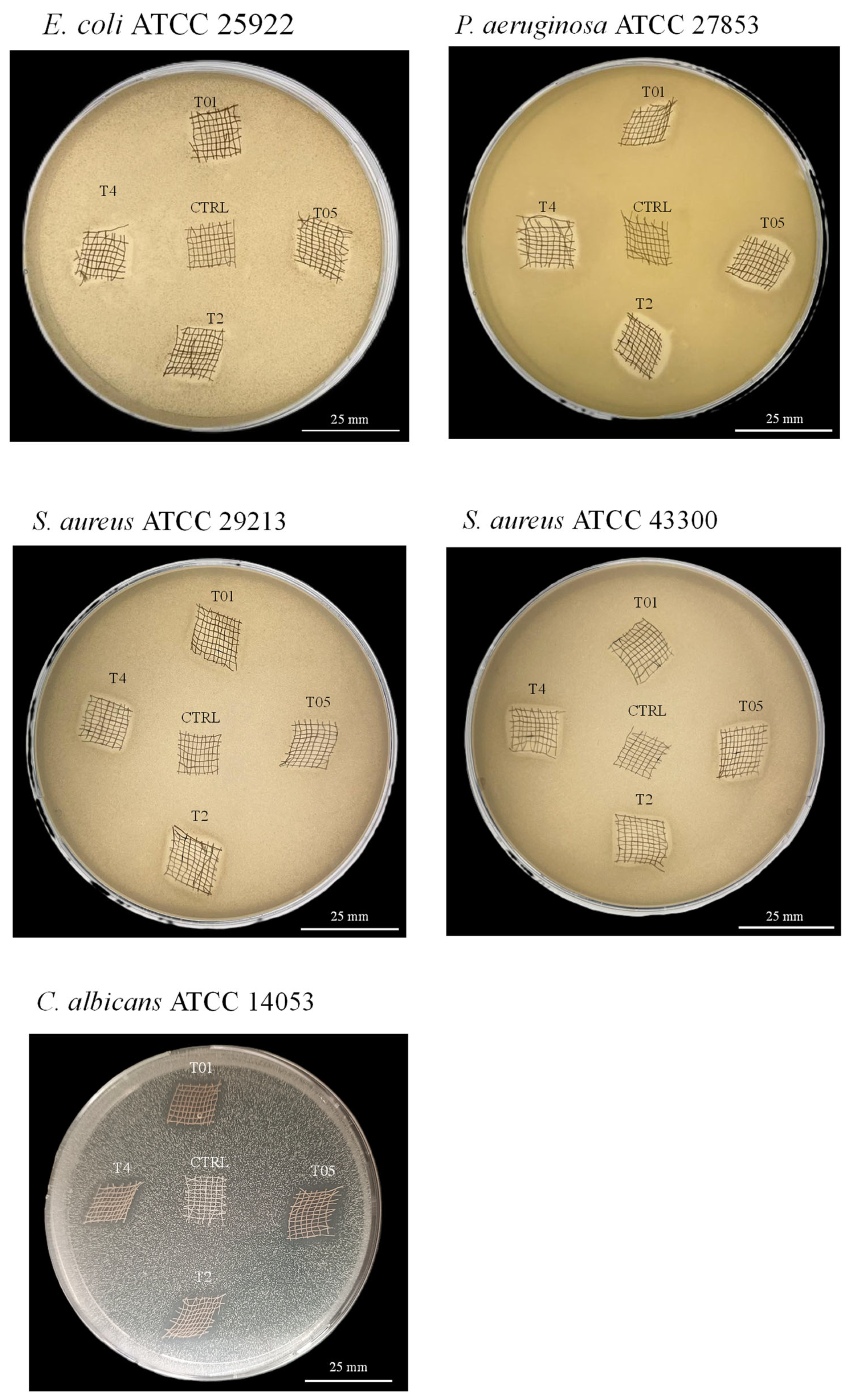
2.7.1. Qualitative Antimicrobial Properties of Cotton Gauzes
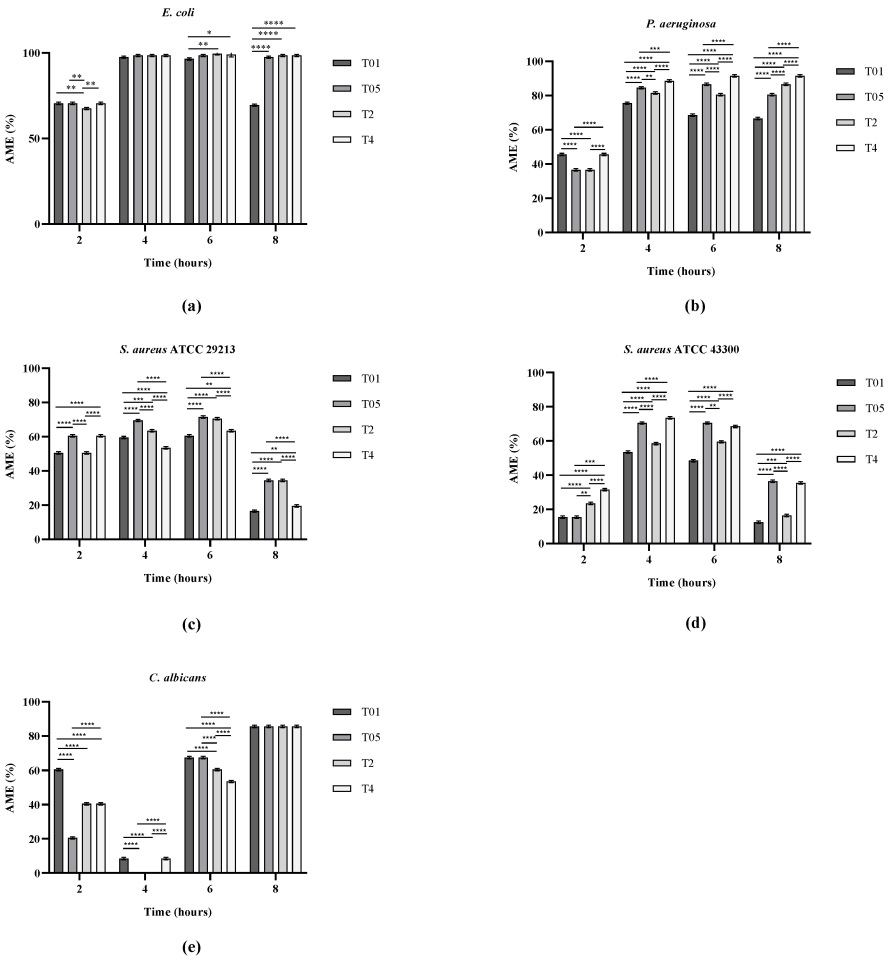
2.7.2. Microbial Growth Curves in the Presence of Untreated and Treated Cotton Gauzes and Antimicrobial Efficacy (AME)
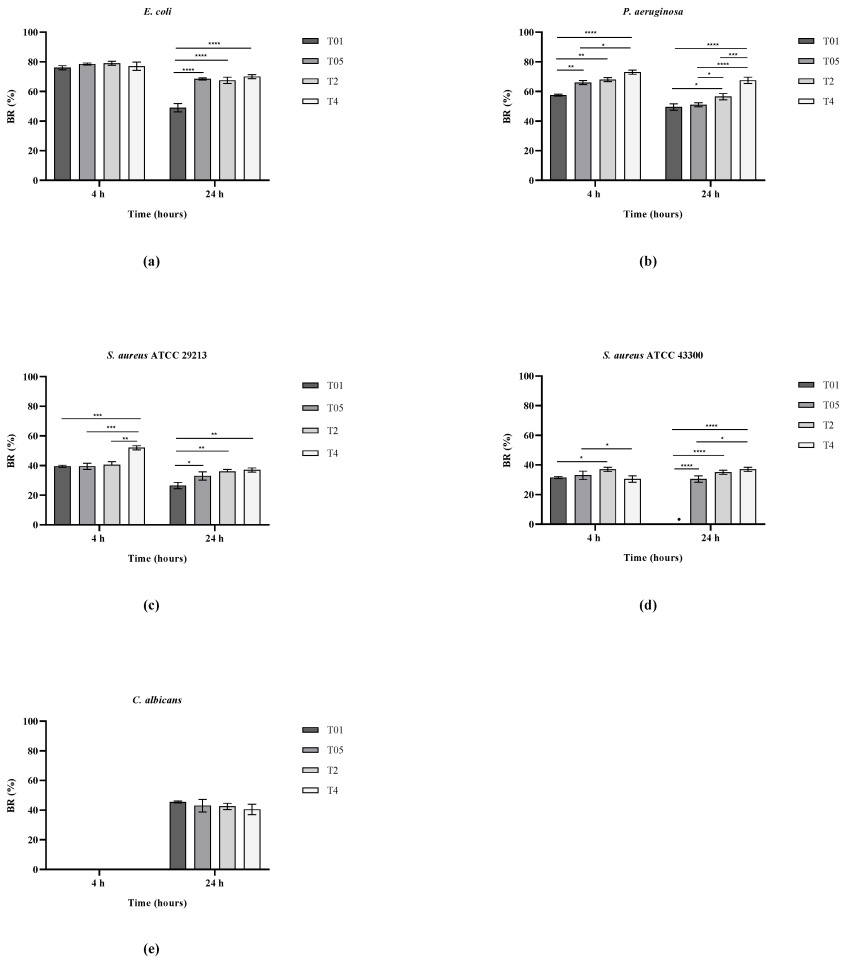
2.7.3. Biofilm Formation in the Presence of Untreated and Treated Gauzes
2.8. Biocompatibility Assessment
2.8.1. MTT Assay
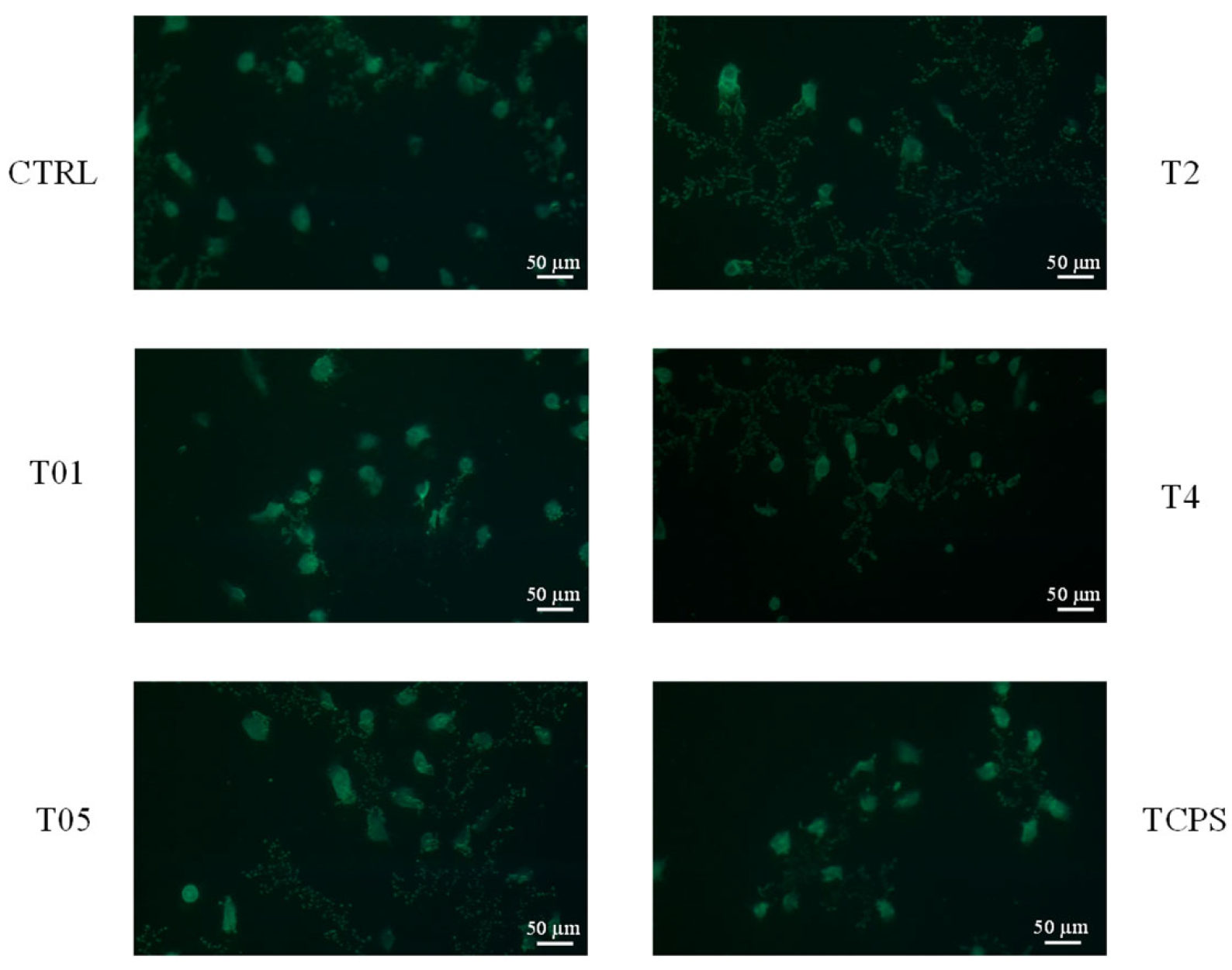
2.8.2. Live/Dead Assay
2.8.3. In Vitro Scratch Assay
2.9. Statistical Analysis
3. Results
3.1. Treatment and Characterization of Cotton Gauzes
3.2. Antimicrobial Properties
3.3. Biocompatibility Evaluation
4. Discussion
5. Conclusions
Author Contributions
Funding
Institutional Review Board Statement
Informed Consent Statement
Data Availability Statement
Acknowledgments
Conflicts of Interest
Abbreviations
| AgNPs | Silver Nanoparticles |
| ROS | Reactive Oxygen Species |
| MW | Molecular Weight |
| PBS | Phosphate-Buffered Saline |
| UV | Ultraviolet |
| RT | Room Temperature |
| SWF | Simulated Wound Fluid |
| CV | Crystal Violet |
| MRSA | Methicillin-Resistant |
| TSB | Tryptic Soy Broth |
| PDA | Potato Dextrose Agar |
| OD | Optical Density |
| ATCC | American Type Culture Collection |
| AME | Antimicrobial Efficacy |
| CFUs | Colony-Forming Units |
| BR | Biofilm Reduction |
| DMEM | Dulbecco’s Modified Eagle Medium |
| FBS | Fetal Bovine Serum |
| TCPS | Tissue Culture Polystyrene |
| DMSO | Dimethyl Sulfoxide |
| WC | Wound Closure |
| SD | Standard Deviation |
References
- Gao, Y.; Wang, L.; Zhou, C.; Zhao, Y.; Huang, H.; Wu, J. Low-dimensional antimicrobial nanomaterials in anti-infection treatment and wound healing. Chin. Chem. Lett. 2025, 36, 110028. [Google Scholar] [CrossRef] [Scilit]
- Uberoi, A.; McCready-Vangi, A.; Grice, E.A. The wound microbiota: Microbial mechanisms of impaired wound healing and infection. Nat. Rev. Microbiol. 2024, 22, 507–521. [Google Scholar] [CrossRef] [Scilit]
- Li, S.; Renick, P.; Senkowsky, J.; Nair, A.; Tang, L. Diagnostics for Wound Infections. Adv. Wound Care 2020, 10, 317–327. [Google Scholar] [CrossRef] [Scilit] [PubMed]
- Malone, M.; Schultz, G. Challenges in the diagnosis and management of wound infection. Br. J. Dermatol. 2022, 187, 159–166. [Google Scholar] [CrossRef] [Scilit]
- Wang, W.; Gao, P.; Gui, H.; Wei, X.; Zhang, H.; Wang, X. Copper-based nanomaterials for the treatment of bacteria-infected wounds: Material classification, strategies and mechanisms. Coord. Chem. Rev. 2025, 522, 216205. [Google Scholar] [CrossRef] [Scilit]
- Li, W.; Chen, Q.; Ma, Y.; Su, H.; Ren, H.; Wang, H. Antibacterial hydrogels for bacteria-infected wound treatment. Biomed. Technol. 2025, 9, 100066. [Google Scholar] [CrossRef] [Scilit]
- Teymouri, S.; Yousefi, M.H.; Heidari, S.; Farokhi, S.; Afkhami, H.; Kashfi, M. Beyond antibiotics: Mesenchymal stem cells and bacteriophages-new approaches to combat bacterial resistance in wound infections. Mol. Biol. Rep. 2024, 52, 64. [Google Scholar] [CrossRef] [Scilit]
- Urban-Chmiel, R.; Marek, A.; Stępień-Pyśniak, D.; Wieczorek, K.; Dec, M.; Nowaczek, A.; Osek, J. Antibiotic Resistance in Bacteria—A Review. Antibiotics 2022, 11, 1079. [Google Scholar] [CrossRef] [Scilit]
- Baran, A.; Kwiatkowska, A.; Potocki, L. Antibiotics and Bacterial Resistance—A Short Story of an Endless Arms Race. Int. J. Mol. Sci. 2023, 24, 5777. [Google Scholar] [CrossRef] [Scilit]
- Gürsoy, E.N.; Sener, K.; Külahci, M.B.; Balabanli, K.B.; Cevher, Ş.C. Modern Strategies in Wound Healing: The Rise of Bacterial Cellulose Dressings. Adv. Ther. 2025, 8, e00072. [Google Scholar] [CrossRef] [Scilit]
- Rezvani Ghomi, E.; Niazi, M.; Ramakrishna, S. The evolution of wound dressings: From traditional to smart dressings. Polym. Adv. Technol. 2023, 34, 520–530. [Google Scholar] [CrossRef] [Scilit]
- Ullah, A.; Ullah, M.; Lee, G.-J.; Lim, S.I. A review of recent advances in nanotechnology for the delivery of therapeutics in wound healing. J. Pharm. Investig. 2025, 55, 33–54. [Google Scholar] [CrossRef] [Scilit]
- Zhu, J.; Xia, F.; Wang, S.; Guan, Y.; Hu, F.; Yu, F. Recent advances in nanomaterials and their mechanisms for infected wounds management. Mater. Today Bio 2025, 31, 101553. [Google Scholar] [CrossRef] [Scilit] [PubMed]
- Singh, M.; Thakur, V.; Kumar, V.; Raj, M.; Gupta, S.; Devi, N.; Upadhyay, S.K.; Macho, M.; Banerjee, A.; Ewe, D.; et al. Silver Nanoparticles and Its Mechanistic Insight for Chronic Wound Healing: Review on Recent Progress. Molecules 2022, 27, 5587. [Google Scholar] [CrossRef] [Scilit]
- Dias, M.; Zhang, R.; Lammers, T.; Pallares, R.M. Clinical translation and landscape of silver nanoparticles. Drug Deliv. Transl. Res. 2025, 15, 789–797. [Google Scholar] [CrossRef] [Scilit]
- Godakhindi, V.; Kravitz, E.; Vivero-Escoto, J.L. Light-Activable Silver Nanoparticles for Combatting Antibiotic-Resistant Bacteria and Biofilms. Molecules 2025, 30, 626. [Google Scholar] [CrossRef] [Scilit]
- Bruna, T.; Maldonado-Bravo, F.; Jara, P.; Caro, N. Silver Nanoparticles and Their Antibacterial Applications. Int. J. Mol. Sci. 2021, 22, 7202. [Google Scholar] [CrossRef] [Scilit] [PubMed]
- Vila Domínguez, A.; Ayerbe Algaba, R.; Miró Canturri, A.; Rodríguez Villodres, Á.; Smani, Y. Antibacterial Activity of Colloidal Silver against Gram-Negative and Gram-Positive Bacteria. Antibiotics 2020, 9, 36. [Google Scholar] [CrossRef] [Scilit]
- Pollini, M.; Paladini, F.; Sannino, A. Processes for Deposition of Elemental Silver onto a Substrate. U.S. Patent 10,774,465, 15 September 2020. [Google Scholar]
- Paladini, F.; Di Franco, C.; Panico, A.; Scamarcio, G.; Sannino, A.; Pollini, M. In Vitro Assessment of the Antibacterial Potential of Silver Nano-Coatings on Cotton Gauzes for Prevention of Wound Infections. Materials 2016, 9, 411. [Google Scholar] [CrossRef] [Scilit]
- Panico, A.; Paladini, F.; Sannino, A.; Pollini, M. Antibacterial silver treatments n polymeric membranes for fouling control and disinfection in water filtration. J. Appl. Polym. Sci. 2016, 133, 43848. [Google Scholar] [CrossRef] [Scilit]
- Kim, H.W.; Kim, B.R.; Rhee, Y.H. Imparting durable antimicrobial properties to cotton fabrics using alginate–quaternary ammonium complex nanoparticles. Carbohydr. Polym. 2010, 79, 1057–1062. [Google Scholar] [CrossRef] [Scilit]
- Bradford, C.; Freeman, R.; Percival, S.L. In vitro study of sustained antimicrobial activity of a new silver alginate dressing. J. Am. Coll. Certif. Wound Spec. 2009, 1, 117–120. [Google Scholar] [CrossRef] [Scilit] [PubMed]
- Kim, T.-S.; Cha, J.-R.; Gong, M.-S. Facile procedure for producing silver nanocoated cotton gauze and antibacterial evaluation for biomedical applications. Fibers Polym. 2017, 18, 453–459. [Google Scholar] [CrossRef] [Scilit]
- SNV 195920-1992; Textile Fabrics—Determination of the Antibacterial Activity—Agar Diffusion Plate Test. Swiss Association for Standardization (SNV): Winterthur, Switzerland, 1992.
- Paladini, F.; Lanzillotti, C.; Panico, A.; Pollini, M. Biological Evaluation of Silver-Treated Silk Fibroin Scaffolds for Application as Antibacterial and Regenerative Wound Dressings. Nanomaterials 2025, 15, 919. [Google Scholar] [CrossRef] [Scilit]
- Lanzillotti, C.; Iaquinta, M.R.; De Pace, R.; Mosaico, M.; Patergnani, S.; Giorgi, C.; Tavoni, M.; Dapporto, M.; Sprio, S.; Tampieri, A.; et al. Osteosarcoma cell death induced by innovative scaffolds doped with chemotherapeutics. J. Cell. Physiol. 2024, 239, e31256. [Google Scholar] [CrossRef] [Scilit] [PubMed]
- ISO 10993-5:2009; Biological Evaluation of Medical Devices—Part 5: Tests for in vitro Cytotoxicity. International Organization for Standardization: Geneva, Switzerland, 2009.
- Gruber, S.; Nickel, A. Toxic or not toxic? The specifications of the standard ISO 10993-5 are not explicit enough to yield comparable results in the cytotoxicity assessment of an identical medical device. Front. Med. Technol. 2023, 5, 1195529. [Google Scholar] [CrossRef] [Scilit]
- Dube, E.; Okuthe, G.E. Silver Nanoparticle-Based Antimicrobial Coatings: Sustainable Strategies for Microbial Contamination Control. Microbiol. Res. 2025, 16, 110. [Google Scholar] [CrossRef] [Scilit]
- Sonkar, C.; Ranjan, R.; Mukhopadhyay, S. Inorganic nanoparticle-based nanogels and their biomedical applications. Dalton Trans. 2025, 54, 6346–6360. [Google Scholar] [CrossRef] [Scilit]
- Pollini, M.; Paladini, F.; Licciulli, A.; Maffezzoli, A.; Sannino, A. Engineering Nanostructured Silver Coatings for Antimicrobial Applications. In Nano-Antimicrobials: Progress and Prospects; Cioffi, N., Rai, M., Eds.; Springer Berlin Heidelberg: Berlin/Heidelberg, Germany, 2012; pp. 313–336. [Google Scholar]
- Paladini, F.; Sannino, A.; Pollini, M. In vivo testing of silver treated fibers for the evaluation of skin irritation effect and hypoallergenicity. J. Biomed. Mater. Res. B Appl. Biomater. 2014, 102, 1031–1037. [Google Scholar] [CrossRef] [Scilit]
- Cooper, I.R.; Pollini, M.; Paladini, F. The potential of photo-deposited silver coatings on Foley catheters to prevent urinary tract infections. Mater. Sci. Eng. C Mater. Biol. Appl. 2016, 69, 414–420. [Google Scholar] [CrossRef] [Scilit]
- Ferraz, M.P. Wound Dressing Materials: Bridging Material Science and Clinical Practice. Appl. Sci. 2025, 15, 1725. [Google Scholar] [CrossRef] [Scilit]
- Khalifa, H.O.; Oreiby, A.; Mohammed, T.; Abdelhamid, M.A.A.; Sholkamy, E.N.; Hashem, H.; Fereig, R.M. Silver nanoparticles as next-generation antimicrobial agents: Mechanisms, challenges, and innovations against multidrug-resistant bacteria. Front. Cell. Infect. Microbiol. 2025, 15, 1599113. [Google Scholar] [CrossRef] [Scilit]
- Goswami, S.R.; Sahareen, T.; Singh, M.; Kumar, S. Role of biogenic silver nanoparticles in disruption of cell–cell adhesion in Staphylococcus aureus and Escherichia coli biofilm. J. Ind. Eng. Chem. 2015, 26, 73–80. [Google Scholar] [CrossRef] [Scilit]
- Gallo, A.L.; Pollini, M.; Paladini, F. A combined approach for the development of novel sutures with antibacterial and regenerative properties: The role of silver and silk sericin functionalization. J. Mater. Sci. Mater. Med. 2018, 29, 133. [Google Scholar] [CrossRef] [Scilit]
- Gupta, A.K.; Thornbush, M.; Wang, T. Climate Change, Natural Disasters, and Cutaneous Fungal Infections. Int. J. Dermatol. 2025, 64, 1349–1355. [Google Scholar] [CrossRef] [Scilit]
- Konop, M.; Damps, T.; Misicka, A.; Rudnicka, L. Certain Aspects of Silver and Silver Nanoparticles in Wound Care: A Minireview. J. Nanomater. 2016, 2016, 7614753. [Google Scholar] [CrossRef] [Scilit]
- Rybka, M.; Mazurek, Ł.; Konop, M. Beneficial Effect of Wound Dressings Containing Silver and Silver Nanoparticles in Wound Healing—From Experimental Studies to Clinical Practice. Life 2023, 13, 69. [Google Scholar] [CrossRef] [Scilit] [PubMed]
- Sahoo, M.; Avinashe, A.A.; Das, S.; Biswas, S.; Mitra, D. Surface modification of cotton gauze with polysaccharides and silver nanoparticles for potential application as a bactericidal, fouling-resistant and biofilm-inhibitory wound dressing. Surf. Coat. Technol. 2026, 520, 132942. [Google Scholar] [CrossRef] [Scilit]
- Zhang, Z.; Xie, J.; Chen, M.; Fu, F.; Liu, X. Cellulose Solution As Both Mercerizing and Sizing Agent to Impart Antibacterial Properties to Gauze Fabrics. Fibers Polym. 2025, 26, 5487–5499. [Google Scholar] [CrossRef] [Scilit]
- Preetha, K.; Anand, A. Therapeutic profiling of Saraca indica bark oil silver nanoparticles: Bioactivity and cytocompatibility in human keratinocyte (HaCaT) cells. Next Nanotechnol. 2025, 8, 100269. [Google Scholar] [CrossRef] [Scilit]





| Sample | Unreacted [Ag+] (ppm) | Reacted [Ag+] (ppm) | Fraction Unreacted/Reacted |
|---|---|---|---|
| T01 | 96 | 251 | 28/72 |
| T05 | 124 | 283 | 30/70 |
| T2 | 793 | 423 | 65/35 |
| T4 | 548 | 496 | 53/47 |
| Sample | Mean Time of Drying (min) | ||
|---|---|---|---|
| Water | SWF | Blood | |
| CTRL | 45 | 90 | 75 |
| T01 | 60 | 90 | 90 |
| T05 | 60 | 90 | 105 |
| T2 | 60 | 90 | 75 |
| T4 | 60 | 90 | 75 |
| Sample | Vertical Wicking Measurements (cm) | ||
|---|---|---|---|
| 1 min | 5 min | 10 min | |
| CTRL | 1.77 ± 0.15 | 3.17 ± 0.15 | 3.63 ± 0.21 |
| T01 | 2.40 ± 0.10 ** | 3.40 ± 0.36 | 4.10 ± 0.26 * |
| T05 | 2.23 ± 0.21 * | 3.17 ± 0.15 | 4.00 ± 0.17 |
| T2 | 2.23 ± 0.21 * | 3.00 ± 0.06 | 3.67 ± 0.15 |
| T4 | 2.10 ± 0.17 | 3.17 ± 0.15 | 3.67 ± 0.15 |
| Sample | Dimension of the Inhibition Zone (mm) | ||||
|---|---|---|---|---|---|
| E. coli | P. aeruginosa | S. aureus ATCC 29213 | S. aureus ATCC 43300 | C. albicans | |
| CTRL | / | / | / | / | / |
| T01 | 1.19 ± 0.06 | 0.80 ± 0.25 | / | / | 1.12 ± 0.13 |
| T05 | 1.10 ± 0.18 | 1.43 ± 0.12 | 0.67 ± 0.08 | 1.03 ± 0.07 | 1.18 ± 0.08 |
| T2 | 1.03 ± 0.35 | 1.73 ± 0.08 | 1.09 ± 0.19 | 1.16 ± 0.26 | 1.20 ± 0.15 |
| T4 | 1.22 ± 0.14 | 1.38 ± 0.11 | 1.53 ± 0.02 | 1.45 ± 0.40 | 1.23 ± 0.04 |
Disclaimer/Publisher’s Note: The statements, opinions and data contained in all publications are solely those of the individual author(s) and contributor(s) and not of MDPI and/or the editor(s). MDPI and/or the editor(s) disclaim responsibility for any injury to people or property resulting from any ideas, methods, instructions or products referred to in the content. |
© 2026 by the authors. Licensee MDPI, Basel, Switzerland. This article is an open access article distributed under the terms and conditions of the Creative Commons Attribution (CC BY) license.
Share and Cite
Pellegrino, R.; Lanzillotti, C.; Pollini, M.; Paladini, F. UV-Assisted Silver Functionalization of Cotton Gauze for Antimicrobial and Biocompatible Wound Healing Applications. Microorganisms 2026, 14, 213. https://doi.org/10.3390/microorganisms14010213
Pellegrino R, Lanzillotti C, Pollini M, Paladini F. UV-Assisted Silver Functionalization of Cotton Gauze for Antimicrobial and Biocompatible Wound Healing Applications. Microorganisms. 2026; 14(1):213. https://doi.org/10.3390/microorganisms14010213
Chicago/Turabian StylePellegrino, Rebecca, Carmen Lanzillotti, Mauro Pollini, and Federica Paladini. 2026. "UV-Assisted Silver Functionalization of Cotton Gauze for Antimicrobial and Biocompatible Wound Healing Applications" Microorganisms 14, no. 1: 213. https://doi.org/10.3390/microorganisms14010213
APA StylePellegrino, R., Lanzillotti, C., Pollini, M., & Paladini, F. (2026). UV-Assisted Silver Functionalization of Cotton Gauze for Antimicrobial and Biocompatible Wound Healing Applications. Microorganisms, 14(1), 213. https://doi.org/10.3390/microorganisms14010213