Article

Effect of Glutamate Concentration and Atmosphere of Incubation on the Production of ɣ-Aminobutyric Acid in Levilactobacillus brevis LB12


Department of Agricultural, Forestry, Food and Environmental Sciences, University of Basilicata, 85100 Potenza, Italy
*
Author to whom correspondence should be addressed.
Microorganisms 2026, 14(1), 108; https://doi.org/10.3390/microorganisms14010108
Submission received: 2 December 2025 / Revised: 27 December 2025 / Accepted: 1 January 2026 / Published: 4 January 2026

Abstract

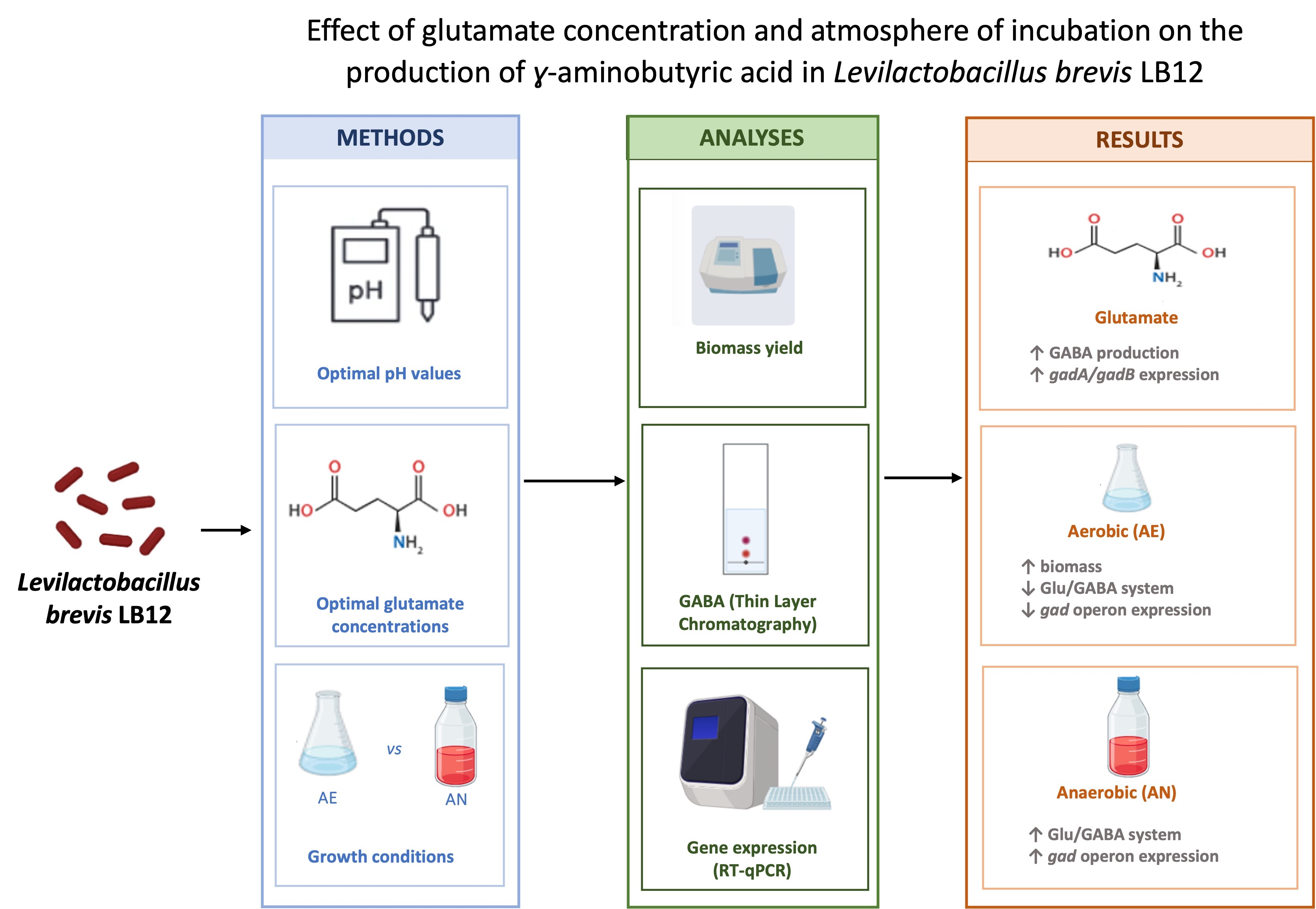
Levilactobacillus brevis is able to produce ɣ-aminobutyric acid (GABA), a non-proteogenic amino acid that provides several benefits to human health. In this study, we investigated the effect of glutamate (Glu) and oxygen (O2) on biomass yield, GABA production and regulation of the gad operon in Lvb. brevis LB12. A change in incubation atmosphere from anaerobiosis (AN) to aerobiosis (AE) was applied to elucidate if AE pre-adaptation and cultivation could be exploited to improve cell density, as well as to determine the role of O2 on the expression of the gad operon. AE increased biomass yield, but impaired Glu to GABA conversion, in both the cultivation and the adaptation phases. The gad operon (gadR, gadC, gadB, gltX) was up-regulated in the presence of Glu, while O2 strongly reduced the transcription of gadC and gadB. Switching the incubation atmosphere (AE vs. AN) and Glu supplementation did not restore the gene functionality, suggesting that the negative effect of O2 was persistent and more prolonged adaptation to AN would be required. This study provides additional data on the regulation of the gad operon, but further insight on the effect of O2 upon GABA production by Lvb. brevis must be expanded to understand the possible mechanisms involved.

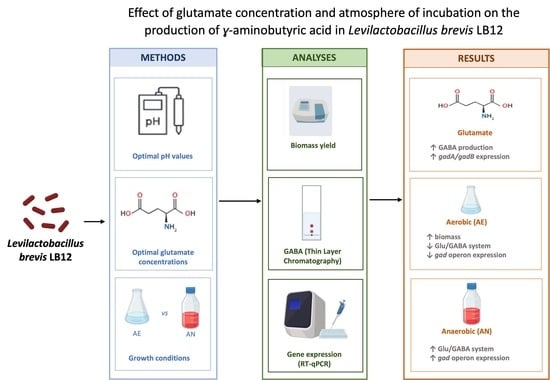
Graphical Abstract

1. Introduction

Levilactobacillus brevis is a heterofermentive lactic acid bacterium (LAB) used as starter and/or adjunct culture for the production of several fermented foods, especially vegetable- and cereal-based products [1,2]). Some Lvb. brevis strains, moreover, have been investigated for their potential probiotic features [3,4].
Most Lvb. brevis are able to synthetize ɣ-aminobutyric acid (GABA), a non-proteogenic amino acid that provides several benefits to human health [5,6,7]. In LAB, GABA production is regulated by the gad operon, which includes the genes encoding glutamate decarboxylase (gadB) and glutamate/GABA antiporter (gadC), responsible, respectively, for the irreversible decarboxylation of glutamate to GABA (GAD) and for the external secretion of GABA (GadC). The gad operon also includes the transcriptional regulator gadR (upstream of gadC), which positively regulates the expression of gadB and gadC, and a gltX sequence (glutamyl-tRNA synthase; in some LAB, it is located downstream of gadB), whose roles in GABA production need further investigation [8,9,10]. A stand-alone glutamate decarboxylase gadA, away from the gad operon, is also present in many LAB genomes, but it seems not to be directly involved in GABA synthesis [11].
Among LAB, most Lvb. brevis strains harbor the complete gad operon [12]. The presence of the gad operon is crucial for the production of GABA and studies on its regulation may be of practical relevance for boosting glutamate to GABA conversion in Lvb. brevis.
To date, many authors have investigated and characterized Lvb. brevis strains for their capability to produce GABA in synthetic and/or food matrices [13,14], highlighting that several factors, such as pH values, PLP cofactor, glutamate content, and genetic equipment, may affect the level of glutamate decarboxylation and GABA accumulation. Efficient conversion of glutamate to GABA certainly requires high cell density and, therefore, the optimal growth conditions of GABA producers should be satisfied.
LAB are generally recognized as O2-tolerant anaerobes that use fermentative pathways for the production of biomass and energy. Recently, several authors have demonstrated that the shift from anaerobic (AN) fermentative metabolism to aerobic (AE) and respiratory (RS) cultivation may result in several physiological advantages, including increase in biomass and robustness to oxidation, long-term starvation and freeze-drying stresses [15].
Lvb. brevis is an O2-tolerant species, and for many strains AE cultivation significantly improves cell density [16]; therefore, its aerobic phenotypes could be exploited as microbial factories for high-efficiency GABA production.
The effect of O2 on GABA production has recently been investigated in some Lvb. brevis [17,18], suggesting that AE cultivation impairs glutamate to GABA conversion compared to AN growth. Wu and Shah [17] demonstrated that AE conditions reduced both biomass and GABA production in Lvb. brevis NPS-QW 145 (an O2-sensitive phenotype), and acidification of the growth medium did not fully restore the GABA machinery in AE cells, although low pH generally promotes GAD activity; in Lvb. brevis NPS-QW 145 the transcription of the gad operon was also impaired in AE-growing cells. Zotta et al. [18] evaluated the effect of O2 in Lvb. brevis LB12 (an O2-tolerant strain), confirming that AE growth promoted biomass yield but reduced GABA accumulation in AE-growing cells.
In this study, we investigated the effect of glutamate induction and atmosphere of incubation (anaerobic vs. aerobic cultivation; AN vs. AE) on the biomass yield, GABA production and relative expression of the gad operon of Lvb. brevis LB12. We also evaluated whether the inhibitory effect of O2 on the GABA production pathway was irreversible by using a cultivation approach based on metabolic shift and AN or AE adaptation, in order to verify if AE cultivation could be exploited as a first step for the massive production of biomass, and the subsequent shift to AN conditions could be used to restore the Glu/GABA system and ensure a high conversion rate.

2. Materials and Methods

2.1. Strain and Culture Conditions

Levilactobacillus brevis LB12 (isolated from sourdough) was used in this study. The strain was maintained as freeze-dried stock (11% w/v skim milk with 0.1% w/v ascorbic acid) in the Unibas Yeasts and Bacteria Culture Collection (code UBYBCC015), Università degli Studi della Basilicata (Potenza, Italy), and routinely propagated in Weissella Medium Broth pH 6.8 (WMB [19]) before each assay.
Lvb. brevis LB12 was selected for its ability to produce ɣ-aminobutyric acid (GABA [18]), and here was used to evaluate the effect of glutamate induction and atmosphere of incubation (anaerobiosis vs. aerobiosis, i.e., AN vs. AE) on the biomass yield, GABA production, and expression of the gad operon genes. The optimal pH value and glutamate concentration (hereinafter Glu) to be used for LB12 cultivation and GABA production assays were preliminarily assessed as described in Section 2.2 and Section 2.3.

2.2. Assessment of Optimal pH for GABA Production in Buffer System

WMB precultures (24 h, 30 °C) of Lvb. brevis LB12 were standardized at a final absorbance at 650 nm (A650) of 1.0 (SmartSpec™ Plus Spectrophotometer, Bio-Rad Laboratories Inc., Milan, Italy) and used to inoculate (2% v/v) a modified WMB (mWMB; [18]) supplemented or not with monosodium glutamate (MSG 10 g/L; hereinafter mWMB+G and mWMB, respectively). At the end of incubation (40 h, 30 °C, static growth in screw cap bottles), the pH value (CyberScan-pH110meter, Oakton Instruments, Vernon Hills, IL, USA), cell density (A650) and biomass yield (cell dry weight, CDW, g/L) were measured. Supernatants were collected (8000 rpm, 5 min, 4 °C) and used to estimate the production of GABA with Thin Layer Chromatography (TLC [18]). Harvested cells were washed twice (8000 rpm, 5 min, 4 °C) with 20 mM potassium phosphate buffer pH 7 (PB7), standardized to a final biomass of 1 g/L and resuspended in a reaction buffer containing 50 mM sodium acetate, 0.1 mM pyridoxal-5′-phosphate (PLP) and 10 g/L of MSG [18], adjusted to a pH value of 3.5, 4.0, 4.5, 5.0, 5.5, or 6.0. Reaction mixtures were incubated for 4 h at 37 °C and 150 rpm (orbital shaker, Heidolph Unimax 2010, Heidolph Instruments GmbH & Co. KG, Nuremberg, Germany) as reported in Zotta et al. [18]. At the end of incubation, the pH value, cell density (A650), and GABA accumulation (TLC) were measured. Two biological replicates were carried out.

2.3. Assessment of Optimal Glutamate Concentration for GABA Production in Synthetic Medium

WMB precultures (cultivated at 30 °C for 24 h; standardized at A650 of 1.0) were used to inoculate (2% v/v) mWMB supplemented with different glutamate (Glu) concentrations (0, 1, 2, 5 or 10 g/L of MSG, corresponding to 0, 5.9, 11.8, 29.6 or 59.1 mM of Glu). At the end of incubation (40 h, 30 °C, static condition), the pH value, cell density (A650), biomass production and GABA accumulation in growth medium (TLC assay) were measured. Cells collected (8000 rpm, 5 min, 4 °C) from the different Glu-supplemented mWMB were standardized (1 g/L) and incubated in the reaction buffer at pH 4.5 (optimum pH resulting from the previous assay, Section 2.2) at 37 °C, 4 h, 150 rpm, as described before. At the end of incubation, the pH value, cell density (A650), and GABA accumulation (TLC) were measured. Two biological replicates were carried out.

2.4. Effect of Glutamate Induction and Atmosphere of Incubation on Biomass Yield and GABA Production

Standardized WMB precultures (24 h, 30 °C; A650 of 1.0) were inoculated (2% v/v) in mWMB or mWMB+G (10 g/L MSG, the optimal concentration resulting from previous assay; Section 2.3) and incubated in anaerobic (AN; static growth in screw-cap bottles) and aerobic (AE; shaken flasks, 150 rpm) conditions, at 30 °C for 40 h [18]. At the end of incubation, the pH value, cell density (A650), biomass yield and GABA accumulation in growth medium (TLC assay) were measured. Stationary cells collected (8000 rpm, 5 min, 4 °C) from each growth condition (mWMB-AN, mWMB-AE, mWMB+G-AN, mWMB+G-AE) were washed twice in PB7, resuspended in a new batch of mWMB+G (maintaining the same volume used for the previous cultivation), and incubated in both AN and AE conditions for 8 h at 30 °C to reach a metabolic shift and adaptation phase, as reported in Figure 1.
During the adaptation phase, samples were aseptically withdrawn at 2 h intervals for detecting pH, cell density (A650), biomass yield and GABA accumulation (TLC) in both the growth medium and the buffer system. After 4 h or 8 h of adaptation, the relative expression of genes belonging to the gad operon (see Section 2.5) was evaluated as described below.

2.5. Effect of Glutamate Induction and Atmosphere of Incubation on Relative Expression of GAD Operon Genes

2.5.1. In Silico Analysis and Primer Design

Sequences of genes belonging to the gad operon (i.e., gadB/gadA, glutamate decarboxylase; gadC, glutamate:gamma-aminobutyrate antiporter; gadR, transcriptional regulator; gltX, glutaminyl-tRNA synthetase or glutamate-tRNA ligase) were retrieved from 33 finished Lvb. brevis genomes, publicly available on the Integrated Microbial Genomes database (IMG, https://img.jgi.doe.gov/; on 1 April 2025).
For all genes, sequences were aligned and analyzed with MEGA software version 11.0.13 (ClustalW alignment), and the conserved regions were used to design primers (Table S1) with Primer Express software 4.1.0 [20] (University of Tartu, Tartu, Estonia; https://primer3.ut.ee).

2.5.2. Extraction of Total RNA

Total RNA was isolated from cells collected after 40 h of cultivation in mWMB-AN, mWMB-AE, mWMB+G-AN and mWMB+G-AE (1st step in Figure 1), and from cells withdrawn after 4 h and 8 h for metabolic shift and adaptation phase (all conditions; second step in Figure 1). The ZR Fungal/Bacterial RNA kit (Zymo Research, Irvine, CA, USA) was used, and an on-column DNA-digestion step (DNase I RNase-free; Invitrogen™, Burlington, ON, Canada) was added to the RNA extraction protocol. RNA samples were quantified with a NanoDrop™ One/OneC Microvolume UV-VIS spectrophotometer (Thermo ScientificTM; Milano, Italy) and used as templates for the synthesis of complementary DNA (cDNA). One microgram of RNA was mixed with 4 μL of Maxima™ H Minus cDNA Synthesis Master Mix (Thermo ScientificTM, Waltham, MA, USA) and incubated as described in the manufacturer’s instructions. cDNA samples were stored at −80 °C before use.

2.5.3. Quantitative RT-PCR and Gene Expression Analysis

qRT-PCR was performed in a StepOnePlus Real-Time PCR instrument (Applied Biosystems, Foster City, CA, USA), using a PowerTrack™ SYBR Green Master Mix (Applied Biosystems, Vilnius, Lithuania). The amplification program included 1 cycle at 95 °C for 2 min, 40 cycles at 95 °C for 5 s and 60 °C for 30 s, with a melting curve of 95 °C for 15 s, 60 °C for 1 min and 95 °C for 15 s (ramping rate 0.3 C/s). Reaction mixtures without a cDNA template were used as negative controls. Two technical replicates were carried out for each growth condition and biological replicate. The relative expression of all genes was estimated according to the ΔΔCt method [21], using glyceraldehyde-3-phosphate dehydrogenase (gapdh) as reference gene and AN cultivation in unsupplemented mWMB as reference growth condition.

2.6. Statistical Analyses

All statistics and graphs were created with R (version 4.5.0 [22]) and relevant R packages. Analysis of Variance (ANOVA) and post-hoc Tukey’s HSD (Honesty Significant Difference) test were used to estimate statistically significant differences (p ≤ 0.01).
Densitometric analysis of TLC spots was performed with NIS-Elements BR v5.41.00 (Nikon Instruments Inc., Tokyo, Japan), as described in Zotta et al. [18].

3. Results and Discussion

3.1. Assessment of Optimal pH and Glutamate Concentration for GABA Production by Lvb. brevis LB12

In this study, preliminary trials to identify the optimal pH and glutamate (Glu) concentration for GABA production by Lvb. brevis LB12 were carried out. The highest % of Glu uptake by cells (i.e., 50% of the total Glu concentration) and the highest % of Glu to GABA conversion (i.e., 95% of the available Glu) were measured at pH 4.5 (trial in buffer system; Figure S1). pH values lower or higher than 4.5 significantly impaired Glu consumption and GABA production, indicating that both glutamate decarboxylase (GAD) and Glu/GABA antiporter (GadC) were affected by pH.
As expected, the Glu intake and, consequently, the efficiency of GABA synthesis proportionally increased with Glu concentration (trial in growth medium; Figure S2), and the highest values were measured in LB12 cells cultivated in mWMB supplemented with 10 g/L MSG (i.e., 59.1 mM Glu). A very low amount of GABA was also found in unsupplemented mWMB, as a low content of glutamate (i.e., 7.6 mM) was present in the cultivation medium. The small amount of Glu naturally present in mWMB was considered in the calculations of GABA production and % efficiency for all trials.
Liu et al. [23] tested different pH values (4.0, 4.5, 5.0, 5.5, 6.0) and Glu concentrations (0, 0.25, 0.50, 0.75, 1.00, 1.25, 1.50, 2.00% w/v) in Lvb. brevis YSJ3, confirming that GABA biosynthesis was higher in the presence of 1.25% Glu and pH 4.5. Previously, Banerjee et al. [9] demonstrated that Lvb. brevis Lbr-610 was able to consume a high amount of Glu (90 g/L) during prolonged cultivation, but the % of Glu/GABA conversion was not strongly correlated to Glu content, as other factors, such as the increase in pH in the growth medium, could occur and affect the Glu/GABA system. These data suggest that optimal pH and Glu concentrations are strain-specific and need to be optimized on the basis of cultivation and GABA production processes.

3.2. Effect of Glutamate Induction and Atmosphere of Incubation on Biomass Yield and GABA Production by Lvb. brevis LB12

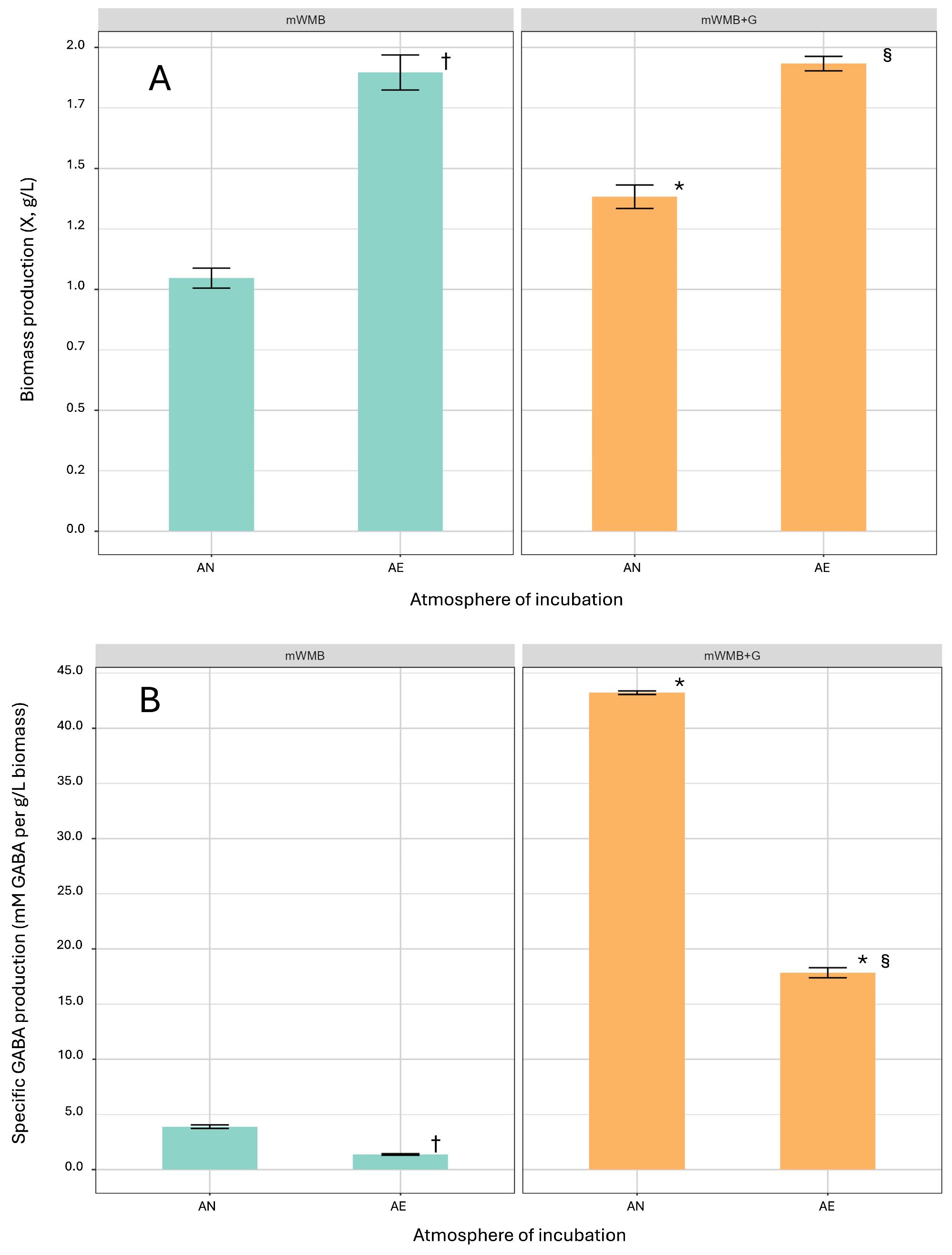
The effect of Glu (10 g/L MSG, i.e., 59.1 mM Glu) and the incubation atmosphere (anaerobiosis vs. aerobiosis, i.e., AN vs. AE) on biomass production and GABA accumulation was evaluated in Lvb. brevis LB12 after 40 h of cultivation in Glu-supplemented and unsupplemented WMB (Figure 2).
As expected (an O2-tolerant phenotype was previously observed in Lvb. brevis LB12; [16,18]), AE cultivation significantly increased the biomass yield of LB12, regardless of Glu supplementation (Figure 2A), but strongly impaired the specific GABA production (Figure 2B).
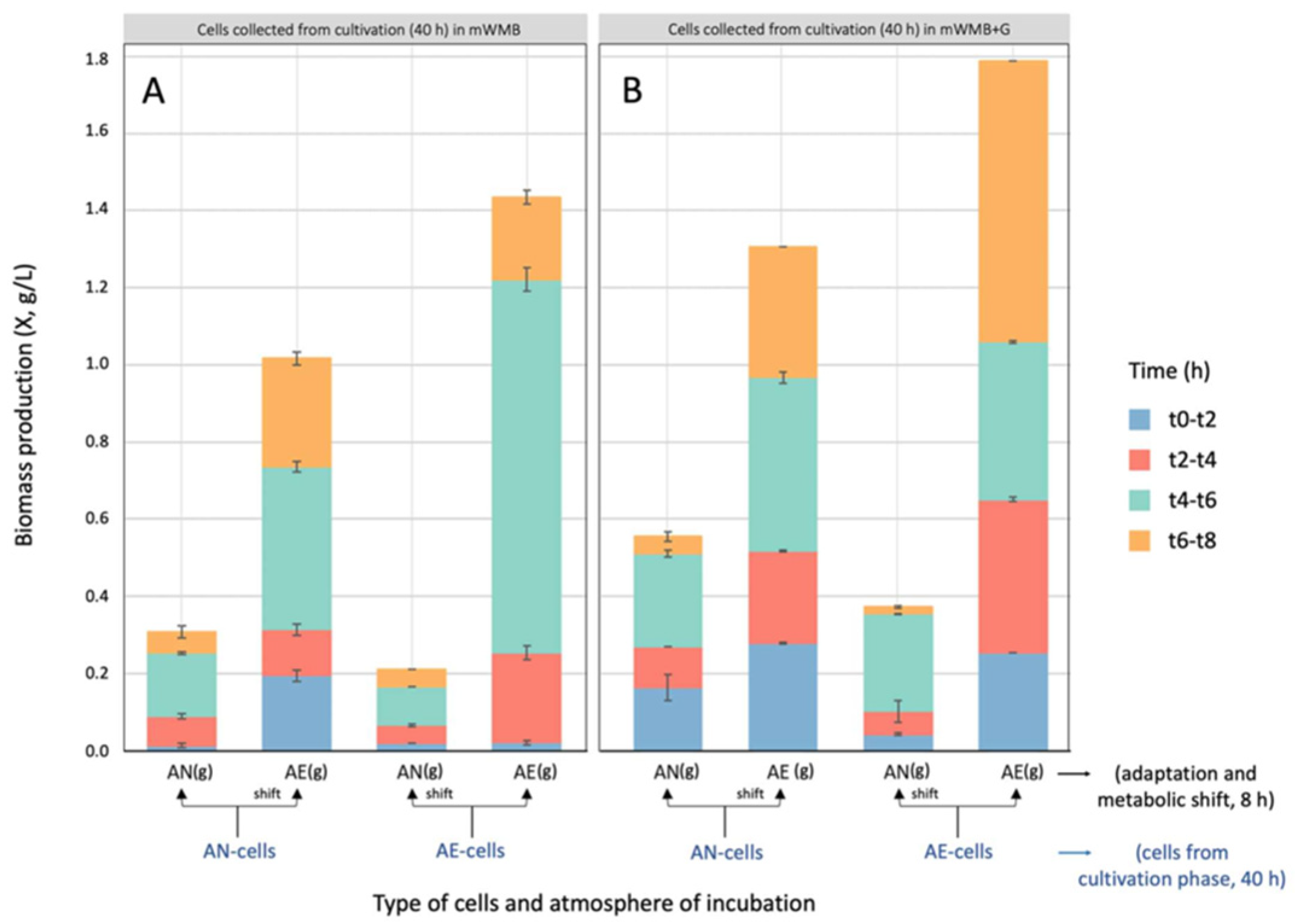
Data collected during the adaptation phase (Figure 3) confirmed that maintenance of the AE state (cultivation in AE and subsequent adaptation to AE) and the shift from AN to AE conditions (cultivation in AN and subsequent adaptation to AE) significantly increased biomass yield, suggesting that AE growth is a convenient strategy to boost cell density in Lvb. brevis LB12. Prolonged adaptation (up to 8 h) to AE and Glu supplementation further increased biomass production.
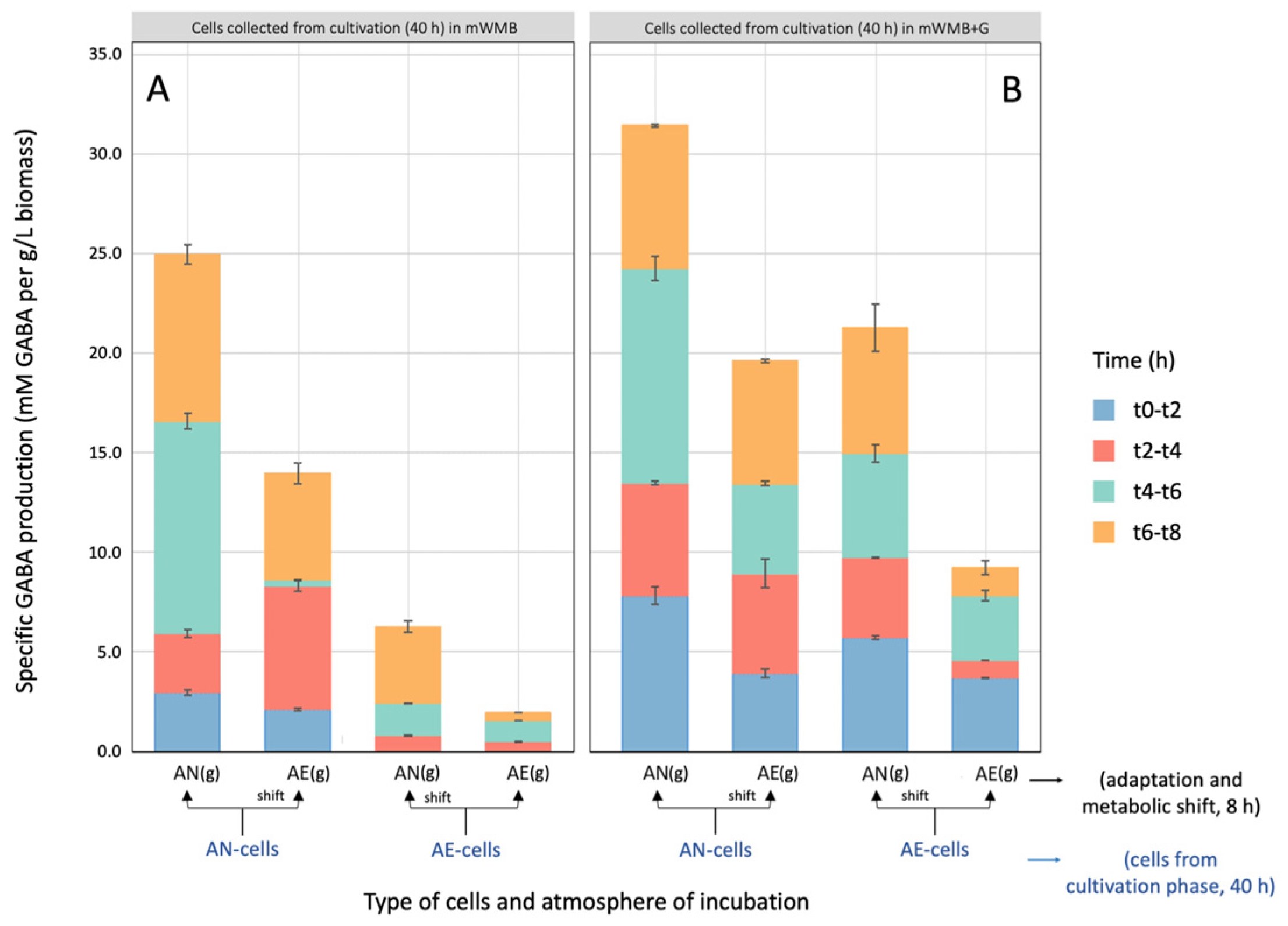
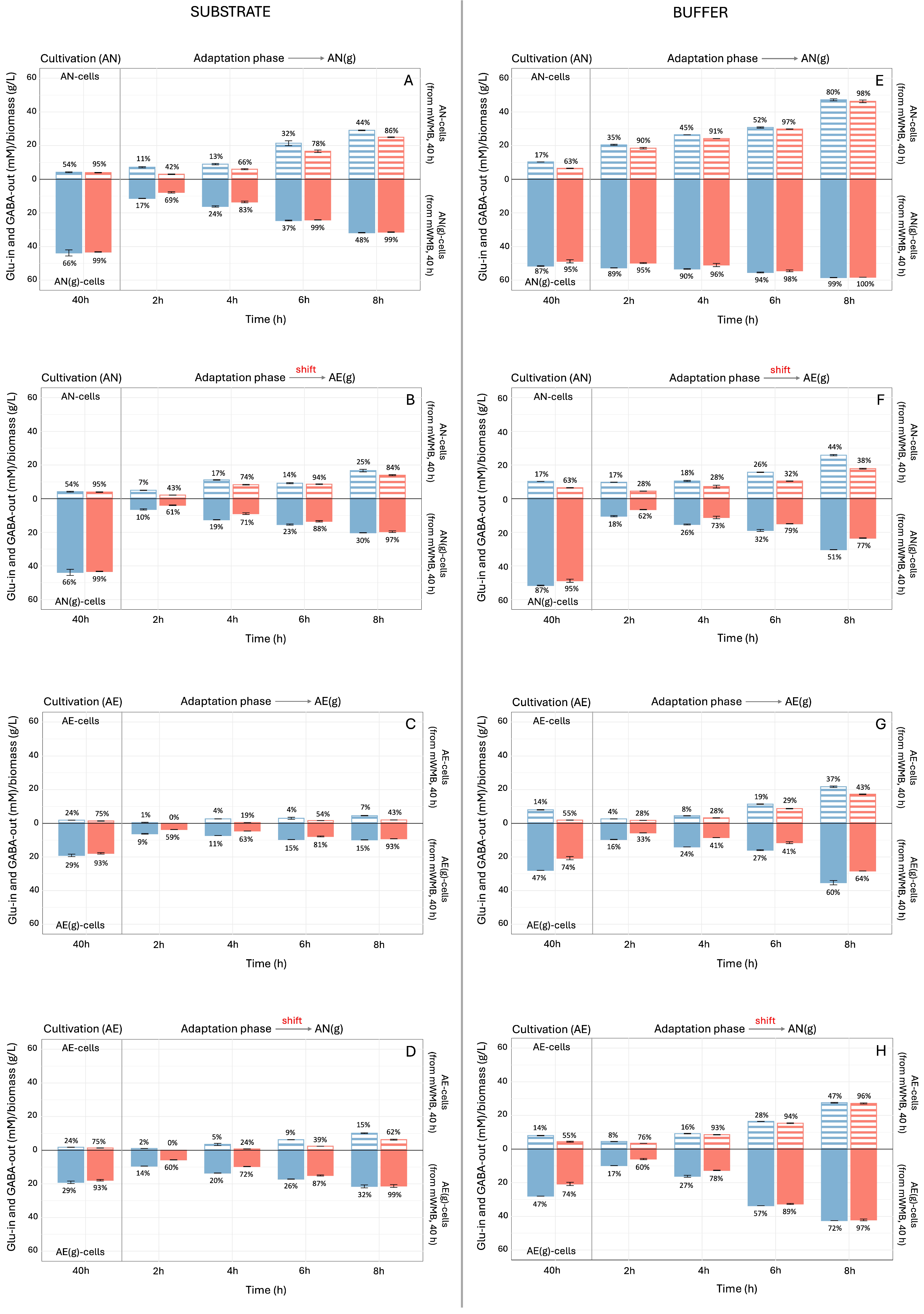
However, despite the high cell density, the shift to AE conditions significantly reduced the specific GABA production compared to the levels measured in AN-growing and AN-adapted cells (Figure 4). Specifically, the presence of O2 impaired both Glu intake (% on blue bars) and the efficiency (% on red bars) of Glu/GABA conversion (Figure 5, panels A–D), suggesting an inhibitory effect on both GAD and Glu/GABA antiporter. However, the major effect of atmosphere of incubation observed, in both the cultivation (40 h) and adaptation (8 h) phases, was that on the % of Glu uptake rather than on the % of Glu/GABA transformation, suggesting that O2 mainly impaired the activity of Glu/GABA antiporter rather than GAD. Our data confirmed the inductive effect of Glu (Figure 4 and Figure 5), because within the same incubation atmosphere between the cultivation and adaptation phases, cells previously grown in the presence of Glu (40 h, mWMB+G) had a greater capability to produce GABA. The % of Glu uptake and Glu/GABA conversion measured in the buffer system (Figure 5, panels E–H) confirmed the higher efficiency of the Glu/GABA pathway in AN-growing and AN-adapted cells, and the reduced activity when AE cultivation was applied.

3.3. Effect of Glutamate Induction and Atmosphere of Incubation on the Relative Expression of Gad Operon in Lvb. brevis LB12

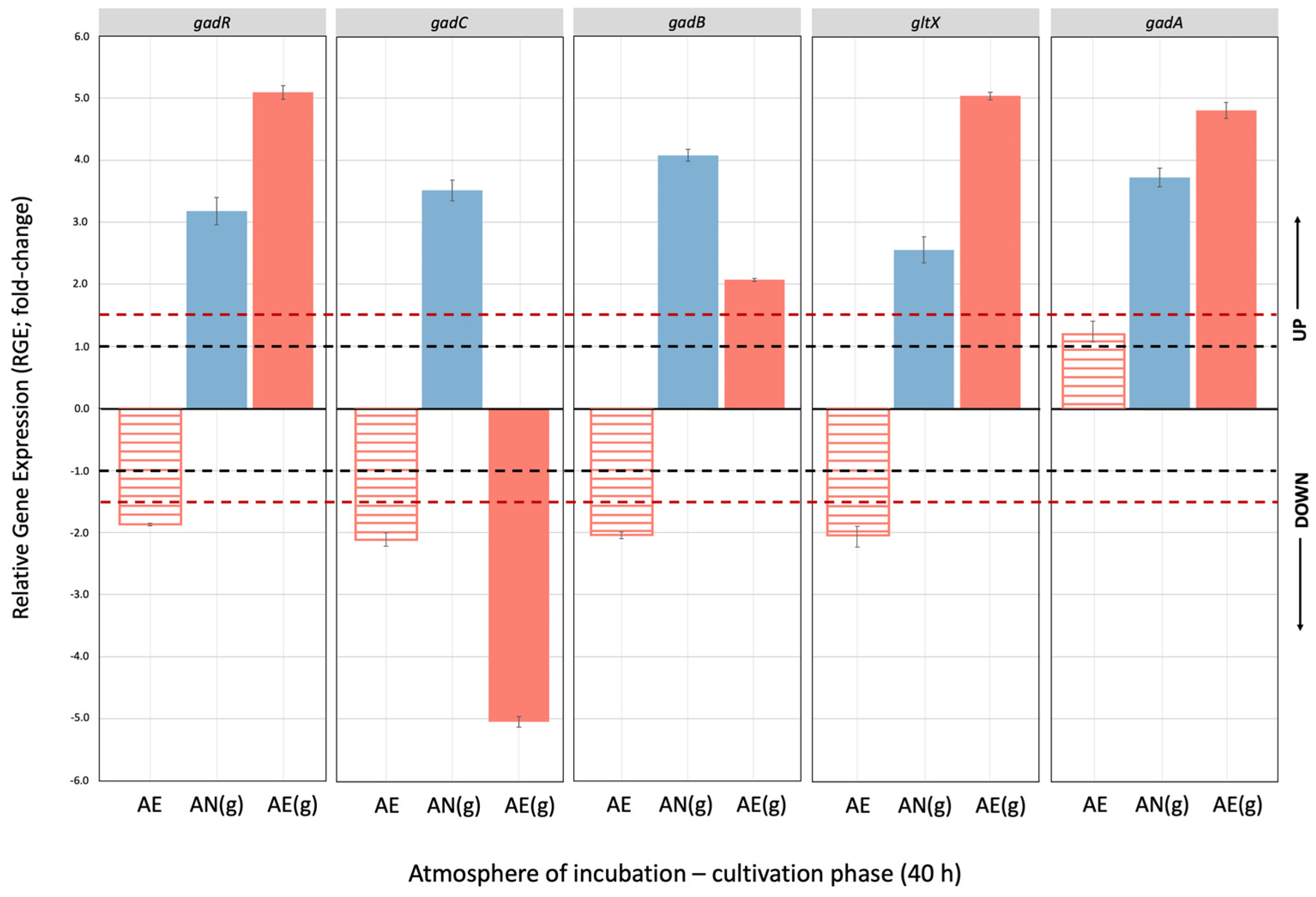
The relative gene expression (RGE) of genes belonging to the gad operon (i.e., gadR, gadC, gadB, gltX) in response to Glu supplementation and atmosphere of incubation, after 40 h of incubation (stationary phase cells), is reported in Figure 6. Unsupplemented AN cultivation was used as reference condition (dotted black lines), while RGE values ≥ or ≤ than a +/−1.5-fold change (red dotted lines) indicated significant differences (Tukey’s HSD, p ≤ 0.01) in gene transcription.
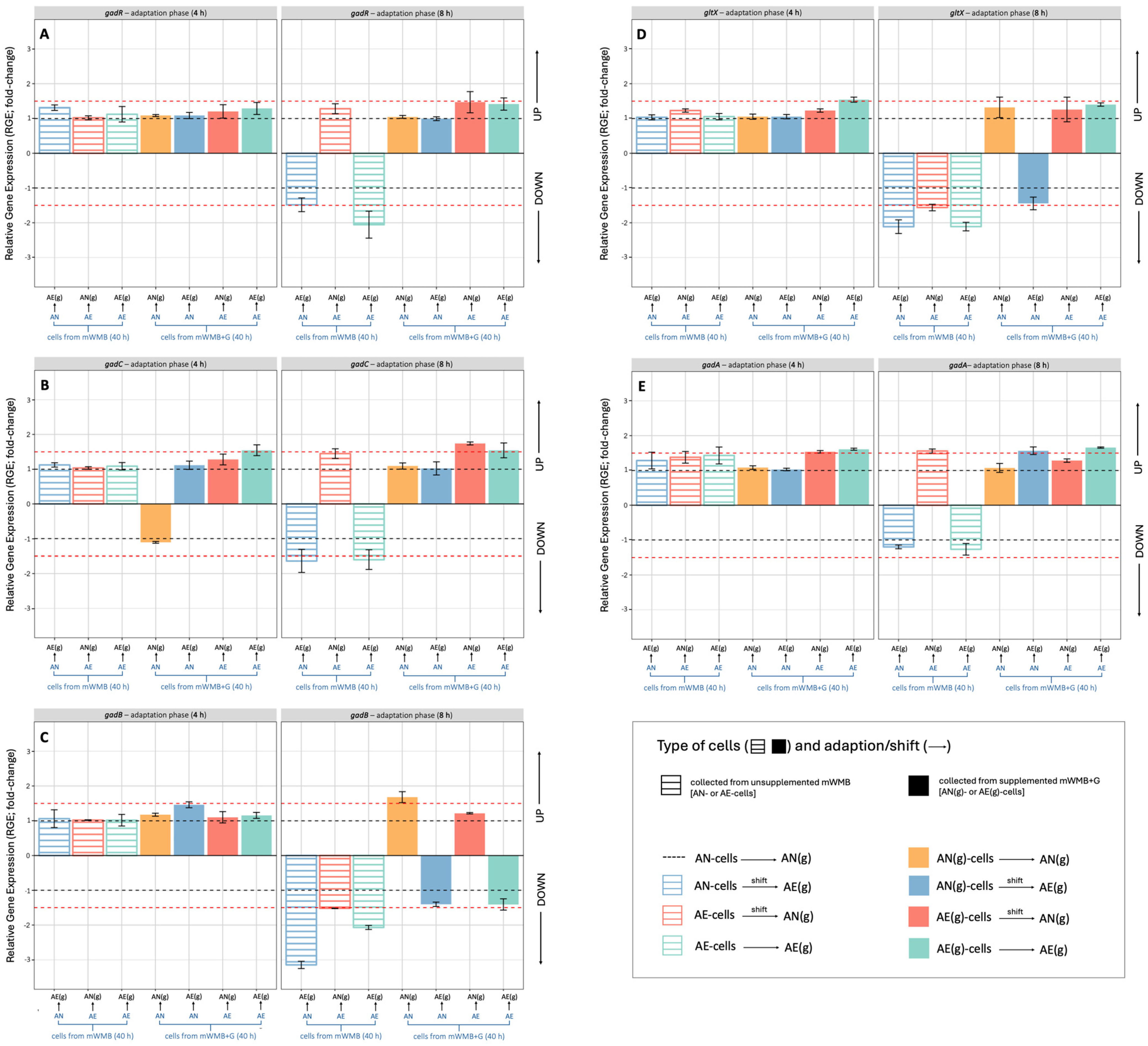
As expected, the presence of Glu in AN-growing cells (blue bars) significantly promoted the transcription of all gad operon genes, but strongly impaired the relative expression of gadC in AE cells (−5.0-fold change), confirming that Glu/GABA antiporter was strongly affected by O2 and the presence of Glu was not able to restore its functionality. Contrarily, the presence of Glu induced transcription of gadR and gltX also in AE-growing cells, demonstrating that the expression of these genes was mainly related to Glu addition rather than incubation atmosphere. The presence of O2 impaired the expression of all gad operon genes in non-supplemented AE cells, but did not affect gadA, suggesting that the latter gene had different regulation than those of the gad operon. The switch of incubation atmosphere and the prolonged adaptation to AN and Glu-supplemented conditions (Figure 7; 8 h) did not restore the expression of gad operon genes, indicating that LB12 cells need additional time to resume gene transcription. For cells cultivated in unsupplemented mWMB, the shift to the AE state significantly impaired the expression of gad operon genes, despite Glu addition.
Several authors [10,12] demonstrated the presence of the complete gad operon in Lvb. brevis. Our data confirmed the co-regulation of gadR, gadC, gadB, and gltX in response to Glu supplementation, as already reported [9,11], but highlighted a different behavior of gadC under AE conditions suggesting that the transcription profile of the gad operon may differ depending on the O2 availability. Regulation of gad operon genes has been extensively investigated in response to Glu addition and pH values (generally demonstrating a positive correlation between acid stress robustness and gad expression [8,11]), but limited data are available on the effect of O2.
Wu and Shah [17] first demonstrated that AE conditions reduced growth, GABA production and the expression of gad operon in Lvb. brevis NPS-QW 145. Specifically, RGE of gadR (+10-fold change), gadC (+60-fold change) and gadB (+45-fold change; in Wu and Shah [17] annotated as gadA) was significantly higher in AN-growing cells compared to AE ones. The behavior of the gad operon in Lvb. brevis NPS-QW 145 [17] and Lvb. brevis LB12 (this study) was comparable as, in both strains, gadB and gadC were mostly affected by O2. However, strain NPS-QW 145 is an O2-sensitive phenotype (as indicated by viable count in AE and AN conditions) and, therefore, AE cultivation probably impaired the strain performance in a more complex way. The acidification of growth medium to pH 5 only partially restored GABA production in aerated cells of Lvb. brevis NPS-QW 145, confirming the strong inhibitory effect of O2. Subsequently, Zotta et al. [18] evaluated the effect of AE cultivation on the O2-tolerant strain Lvb. brevis LB12 (also used in this study), confirming that AE growth promoted biomass yield but impaired GABA accumulation in AE-growing cells. More recently, Ding et al. [24] also demonstrated that AE conditions, although increasing cell density, significantly decreased GABA production and gad operon expression in Lvb. brevis CGMCC 24975. Specifically, gadR (+30.54-fold change), gadC (+83.76-fold change) and gadB (+88.41-fold change) were strongly up-regulated in AN conditions. The stand-alone gene gadA was not affected by atmosphere of incubation. Both Wu and Shah [17] and Ding et al. [24] did not investigated the effect of O2 on the gltX gene.
Based on the above considerations, in this study we applied changes in incubation atmosphere (AN vs. AE; AE vs. AN) as a strategy to investigate the effect of O2 on the Glu/GABA conversion and regulation of gad operon genes, and to evaluate whether a switch to AN conditions could restore the functionality of the GABA system in AE-growing cells. Unfortunately, the shift and adaptation towards the AN state did not resume the activation of the Glu/GABA pathway, suggesting that the negative effect of O2 was severe. This study, moreover, demonstrated that the factors promoting the growth of Lvb. brevis (such as the AE conditions) does not always correspond to the optimal parameters for GABA production. The expression profile of the gad operon of Lvb. brevis LB12 (Figure 7, this study), however, showed that AE growth (in presence of glutamate) had a negative effect mainly on gadC (Glu/GABA antiporter; probably because it impairs the proton motive force across the membrane), while the other genes were weakly (gadB) or not at all affected (gadR, gltX) by O2, suggesting that the atmosphere of incubation impacts the regulation of the gad operon in a more complex way and further studies are needed to elucidate the role of O2 in order to optimize the cultivation and GABA production processes of Lvb. brevis.
Regulation of the gad operon, however, is strain-dependent and may be affected by other factors. Banerjee et al. [9] found different gene expression in some Lvb. brevis strains also in response to incubation time and growth phase. Lvb. brevis Lbr-6108 exhibited GABA production already during the early growth stage (6 h), consistent with early activation of the gad operon, while strains Lbr-35 and ATCC 14,869 accumulated significant amounts of GABA only after 24–48 h of incubation. In Lvb. brevis YSJ3 [23] the GABA production rate was higher from 8 to 30 h of incubation, while early (0–7 h) or late (>31 h) growth phases significantly impaired the GABA system, as also indicated by the low expression of gad operon genes (gadR, gadC, gadB).
In our study, Lvb. brevis LB12 accumulated GABA during prolonged cultivation (40 h), while the time of adaptation to the metabolic shift (up to 8 h) was not sufficient to induce significant transcription of gad operon genes and to restore GABA production, suggesting that in Lvb. brevis LB12 the incubation time and growth phase were also critical factors for the activation of the GAD system, and tailored cultivation processes should be optimized. Our data confirmed that gadA was not directly correlated to GABA production (as already demonstrated [9,23,25]), but could be involved in other glutamate-related mechanisms, and its role needs further investigation. The gltX gene, which catalyzes the attachment of glutamate to the corresponding tRNA, has been identified as part of the gad operon in Lvb. brevis by several authors ([9,10,13]; mainly through genome and sequence occurrence analyses), but its role in GABA production was poorly elucidated. We found an expression profile similar to gadR in all conditions, confirming a co-transcriptional mechanism, but partially similar to gadB and gadC only for the AN condition (while the behavior in presence of O2 was different), suggesting that regulation of the gad operon could be more complex. Banerjee et al. [9] demonstrated a full co-transcription for gadR, gadC, gadB and gltX in Lvb. brevis Lbr-6108, while Cataldo et al. [25] highlighted the presence of two transcriptional units (gadR and gadC units; gadC, gadB and gltX units) in Lvb. brevis CRL2013, confirming that the activation and regulation of the gad operon could be strain-specific and differ in response to several factors.

4. Conclusions

In this study, we evaluated the effect of Glu induction and atmosphere of incubation (AN vs. AE) on the GABA production and regulation of gad operon genes in Lvb. brevis LB12. Indeed, although the ability to synthesize GABA is widely distributed in the species Lvb. brevis, several factors may affect the efficiency of Glu/GABA conversion, resulting in low GABA yield. Although the detrimental effect of O2 on GABA production by Lvb. brevis LB12 was already observed (our previous data; [18]), this study provided further insight on the relative expression of the gad operon in response to AE cultivation; specifically, we demonstrated that the behavior of gadR, gadC, gadB and gltX, although belonging to the same gene cluster, may differ in response to O2 and interaction between AE growth and Glu supplementation.
Many members of Lvb. brevis, in fact, have an O2-tolerant phenotype, and the shift towards AE conditions may be exploited as a useful strategy to improve cell density and stress robustness, in order to develop more competitive starter and/or functional cultures. For Lvb. brevis LB12, however, AE growth and a following switch to the AN condition was not an adequate strategy for GABA production because, despite a greater biomass yield reached in the AE state, the Glu/GABA system was strongly compromised. Therefore, further studies (e.g., membrane-associated mechanisms) could be useful to elucidate the effect of O2 in the regulation of gad operon genes. Moreover, controlled cultivations (e.g., batch, fed-batch in bioreactor) modulating other parameters (e.g., pH values, incubation time, growth phase) could be exploited to implement a suitable process for concurrent production of high-yield biomass, robust cells, and GABA accumulation.

Supplementary Materials

The following supporting information can be downloaded at: https://www.mdpi.com/article/10.3390/microorganisms14010108/s1, Figure S1: Production of GABA from Levilactobacillus brevis LB12 in the reaction buffer (Section 2.2); Figure S2: Production of GABA from Levilactobacillus brevis LB12 cultivated in mWMB supplemented with different glutamate concentrations (Section 2.3); Table S1: Forward (F) and reverse (R) primer sequences used for the quantification of relative gene expression in Lvb. brevis LB12.

Author Contributions

Conceptualization, T.Z.; methodology, E.L., M.G., A.R. and T.Z.; software, M.G.; validation, T.Z.; formal analysis, E.L.; investigation, E.L., M.G. and T.Z.; resources, T.Z. and A.R.; data curation, M.G. and T.Z.; writing—original draft preparation, T.Z.; writing—review and editing, E.L., M.G., A.R. and T.Z.; visualization, E.L., M.G., A.R. and T.Z.; supervision, T.Z.; project administration, T.Z.; funding acquisition, T.Z. All authors have read and agreed to the published version of the manuscript.

Funding

This research was funded by the European Commission—NextGenerationEU, Project “Strengthening the MIRRI Italian Research Infrastructure for Sustainable Bioscience and Bioeconomy”, code n. IR0000005.

Institutional Review Board Statement

Not applicable.

Informed Consent Statement

Not applicable.

Data Availability Statement

The original contributions presented in this study are included in the article/Supplementary Materials. Further inquiries can be directed to the corresponding author.

Conflicts of Interest

The authors declare no conflicts of interest.

Abbreviations

The following abbreviations are used in this manuscript:
GABAɣ-aminobutyric acid
TLCThin Layer Chromatography
LvbLevilactobacillus
LABLactic Acid Bacteria

References

  1. Zheng, J.; Wittouck, S.; Salvetti, E.; Franz, C.M.A.P.; Harris, H.M.B.; Mattarelli, P.; O’Toole, P.W.; Pot, B.; Vandamme, P.; Walter, J.; et al. taxonomic note on the genus Lactobacillus: Description of 23 novel genera, emended description of the genus Lactobacillus Beijerinck 1901, and union of Lactobacillaceae and Leuconostocaceae. Int. J. Syst. Evol. Microbiol. 2020, 70, 2782–2858. [Google Scholar] [CrossRef]
  2. Feyereisen, M.; Mahony, J.; Kelleher, P.; Roberts, R.J.; O’Sullivan, T.; Geertman, J.M.A.; van Sinderen, D. Comparative genome analysis of the Lactobacillus brevis species. BMC Genom. 2019, 20, 416. [Google Scholar] [CrossRef]
  3. Bhutada, S.; Dahikar, S.; Hassan, M.Z.; Kovaleva, E.G. A comprehensive review of probiotics and human health—Current prospective and applications. Front. Microbiol. 2025, 15, 1487641. [Google Scholar] [CrossRef]
  4. Pizzi, A.; Parolin, C.; Gottardi, D.; Ricci, A.; Parpinello, G.P.; Lanciotti, R.; Patrignani, F.; Vitali, B.A. Novel GABA-producing Levilactobacillus brevis strain isolated from organic tomato as a promising probiotic. Biomolecules 2025, 15, 979. [Google Scholar] [CrossRef] [PubMed]
  5. Dhakal, R.; Bajpai, V.K.; Baek, K.H. Production of GABA (γ-aminobutyric acid) by microorganisms: A review. Braz. J. Microbiol. 2012, 43, 1230–1241. [Google Scholar] [CrossRef]
  6. Xu, N.; Wei, L.; Liu, J. Biotechnological advances and perspectives of gamma-aminobutyric acid production. World J. Microbiol. Biotechnol. 2017, 33, 64. [Google Scholar] [CrossRef]
  7. Icer, M.A.; Sarikaya, B.; Kocyigit, E.; Atabilen, B.; Çelik, M.N.; Capasso, R.; Budán, F. Contributions of gamma-aminobutyric acid (GABA) produced by lactic acid bacteria on food quality and human health: Current applications and future prospects. Foods 2024, 13, 2437. [Google Scholar] [CrossRef] [PubMed]
  8. Lyu, C.; Zhao, W.; Peng, C.; Hu, S.; Fang, H.; Hua, Y.; Yao, S.; Huang, J.; Mei, L. Exploring the contributions of two glutamate decarboxylase isozymes in Lactobacillus brevis to acid resistance and γ-aminobutyric acid production. Microb. Cell Factories 2018, 17, 18. [Google Scholar] [CrossRef] [PubMed]
  9. Banerjee, S.; Poore, M.; Gerdes, S.; Nedveck, D.; Lauridsen, L.; Kristensen, H.T.; Jensen, H.M.; Byrd, P.M.; Ouwehand, A.C.; Patterson, E.; et al. Transcriptomics reveal different metabolic strategies for acid resistance and gamma-aminobutyric acid (GABA) production in select Levilactobacillus brevis strains. Microb. Cell Factories 2021, 20, 173. [Google Scholar] [CrossRef]
  10. Sezgin, E.; Tekin, B. Molecular evolution and population genetics of glutamate decarboxylase acid- resistance pathway in lactic acid bacteria. Front. Genet. 2023, 14, 1027156. [Google Scholar] [CrossRef]
  11. Gong, L.; Li, J.; Liu, Y.; Guo, Y.; Yu, L.; Li, Y.; Zhang, J.; Chen, W.; Chen, H. Deciphering the crucial roles of transcriptional regulator GadR on gamma-aminobutyric acid production and acid resistance in Lactobacillus brevis. Microb. Cell Factories 2019, 18, 108. [Google Scholar] [CrossRef]
  12. Wu, Q.; Tun, H.M.; Law, Y.; Khafipour, E.; Shah, N.P. Common distribution of gad operon in Lactobacillus brevis and its GadA contributes to efficient GABA synthesis toward cytosolic near-neutral pH. Front. Microbiol. 2017, 8, 206–222. [Google Scholar] [CrossRef]
  13. Cui, Y.; Miao, K.; Niyaphorn, S.; Qu, X. Production of gamma-aminobutyric acid from lactic acid bacteria: A systematic review. Int. J. Mol. Sci. 2020, 21, 995. [Google Scholar] [CrossRef]
  14. Pannerchelvan, S.; Rios-Solis, L.; Wong, F.W.F.; Zaidan, U.H.; Wasoh, H.; Mohamed, M.S.; Tan, J.S.; Mohamad, R.; Halim, M. Strategies for improvement of gamma-aminobutyric acid (GABA) biosynthesis via lactic acid bacteria fermentation. Food Funct. 2023, 14, 3929–3948. [Google Scholar] [CrossRef]
  15. Zotta, T.; Parente, E.; Ricciardi, A. Aerobic metabolism in the genus Lactobacillus: Impact on stress response and potential applications in the food industry. J. Appl. Microbiol. 2017, 122, 857–869. [Google Scholar] [CrossRef]
  16. Zotta, T.; Ricciardi, A.; Ianniello, R.G.; Storti, L.V.; Gibota, N.A.; Parente, E. Aerobic and respirative growth of heterofermentative lactic acid bacteria: A screening study. Food Microbiol. 2018, 76, 117–127. [Google Scholar] [CrossRef]
  17. Wu, Q.; Shah, N.P. Restoration of GABA production machinery in Lactobacillus brevis by accessible carbohydrates, anaerobiosis and early acidification. Food Microbiol. 2018, 69, 151–158. [Google Scholar] [CrossRef]
  18. Zotta, T.; Faraone, I.; Giavalisco, M.; Parente, E.; Lela, L.; Storti, L.V.; Ricciardi, A. The production of γ-aminobutyric acid from free and immobilized cells of Levilactobacillus brevis cultivated in anaerobic and aerobic conditions. Microorganisms 2022, 10, 2184. [Google Scholar] [CrossRef]
  19. Zotta, T.; Ricciardi, A.; Guidone, A.; Sacco, M.; Muscariello, L.; Mazzeo, M.F.; Cacace, G.; Parente, E. Inactivation of ccpA and Aeration Affect Growth, Metabolite Production and Stress Tolerance in Lactobacillus plantarum WCFS1. Int. J. Food Microbiol. 2012, 155, 51–59. [Google Scholar] [CrossRef]
  20. Untergasser, A.; Cutcutache, I.; Koressaar, T.; Ye, J.; Faircloth, B.C.; Remm, M.; Rozen, S.G. Primer3—New Capabilities and Interfaces. Nucleic Acids Res. 2012, 40, e115. [Google Scholar] [CrossRef]
  21. Pfaffl, M.W. A new mathematical model for relative quantification in real-time RT–PCR. Nucleic Acids Res. 2001, 29, e45. [Google Scholar] [CrossRef] [PubMed]
  22. R Core Team. R: A Language and Environment for Statistical Computing; R Foundation for Statistical Computing: Vienna, Austria, 2024; Available online: https://www.R-project.org/ (accessed on 1 October 2025).
  23. Liu, H.; Daiyao, L.; Zhang, C.; Niu, H.; Xin, X.; Yi, H.; Liu, D.; Zhang, J. Whole-genome analysis, evaluation and regulation of in vitro and in vivo GABA production from Levilactobacillus brevis YSJ3. Int. J. Food Microbiol. 2024, 421, 110787. [Google Scholar] [CrossRef]
  24. Ding, J.; Ba, W.; You, S.; Qi, W.; Su, R. Development of an oil-sealed anaerobic fermentation process for high production of γ-aminobutyric acid with Lactobacillus brevis isolated by directional colorimetric screening. Biochem. Eng. J. 2023, 196, 108893. [Google Scholar] [CrossRef]
  25. Cataldo, P.G.; Urquiza Martínez, M.P.; Villena, J.; Kitazawa, H.; Saavedra, L.; Hebert, E.M. Comprehensive characterization of γ-aminobutyric acid (GABA) production by Levilactobacillus brevis CRL 2013: Insights from physiology, genomics, and proteomics. Front. Microbiol. 2024, 15, 1408624. [Google Scholar] [CrossRef] [PubMed]
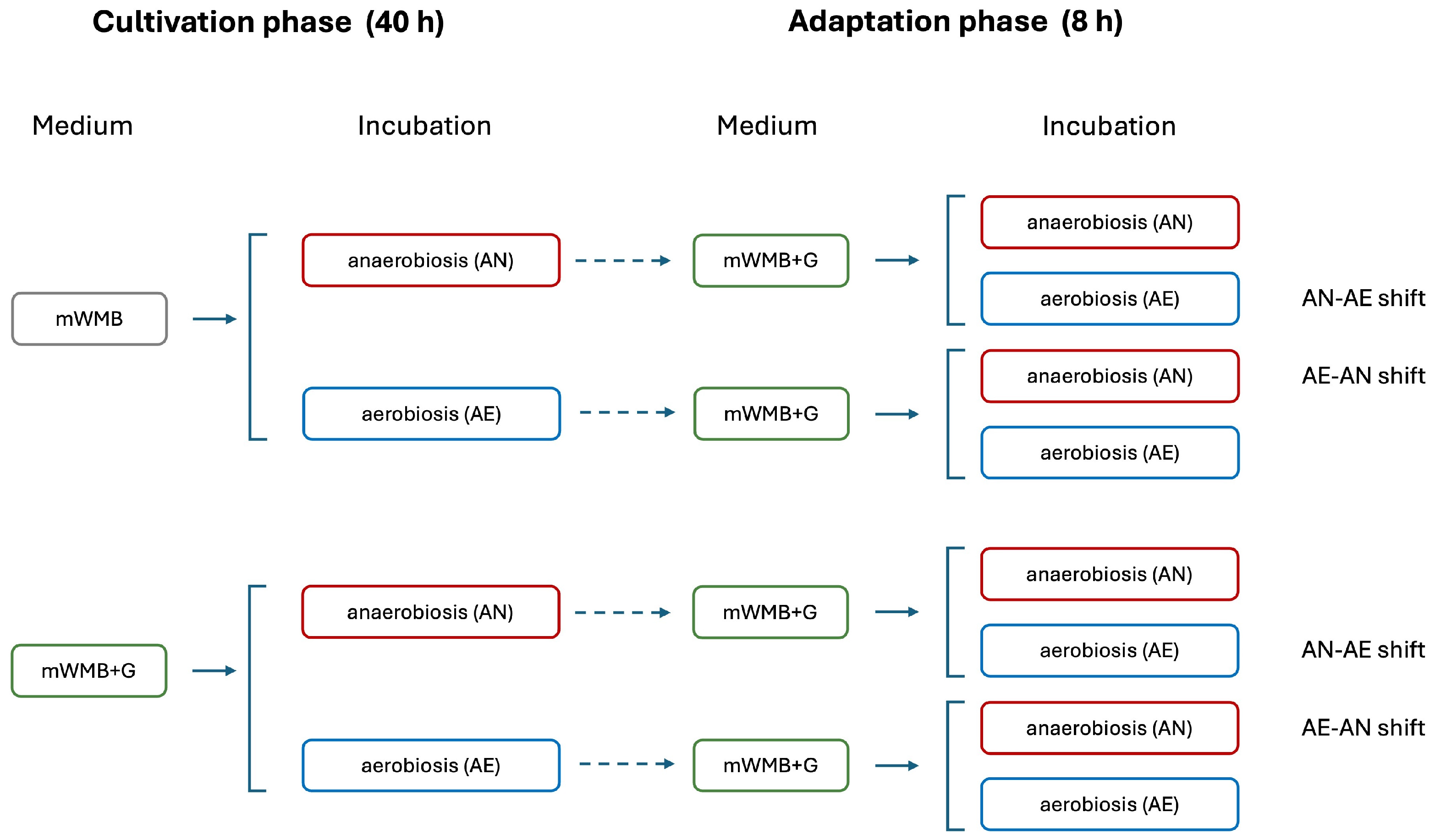
Figure 1. Substrates and incubation atmospheres used for cultivation (40 h) and adaptation (8 h) phases (as reported in Section 2.4).
Microorganisms 14 00108 g001
Figure 2. (A) Biomass production (X, g/L; Y-axis) and (B) specific GABA production (GABA/X; GABA out, mM/produced biomass, g/L) by Levilactobacillus brevis LB12 cultivated (40 h) in mWMB supplemented (mWMB+G; orange bars) or not (mWMB; green bars) with monosodium glutamate (MSG 10 g/L, i.e., 59.1 mM glutamate), under anaerobic (AN) and aerobic (AE) conditions (X-axis). GABA was measured in substrate supernatants. * significant differences (p < 0.01, Tukey’s HSD multiple comparisons) between unsupplemented and supplemented mWMB under the same growth condition (AN or AE); significant differences (p < 0.01) between AN and AE cultivation in unsupplemented mWMB; § significant differences (p < 0.01) between AN and AE cultivation in supplemented mWMB+G.
Microorganisms 14 00108 g002
Figure 3. Biomass production (X, g/L; Y-axis) by Levilactobacillus brevis LB12 during the adaptation phase (8 h of cultivation; metabolic shift) to anaerobic (AN) and aerobic (AE) conditions in supplemented mWMB+G (with MSG 10 g/L, i.e., 59.1 mM glutamate). X-axis: adapted and metabolically shifted cells previously cultivated (40 h) in AN or AE state (AN-cells vs. AE-cells) in unsupplemented (mWMB; panel (A)) or Glu-supplemented (mWMB+G; panel (B)) medium. Colour in stacked bars (adaptation phase): blue, t0–t2, biomass production from 0 to 2 h of incubation; red, t2–t4, biomass production from 2 to 4 h of incubation; green, t4–t6, biomass production from 4 to 6 h of incubation; orange, t6–t8, biomass production from 6 to 8 h of incubation. Total biomass production was significantly different (Tukey’s HSD, p ≤ 0.01) in all conditions.
Microorganisms 14 00108 g003
Figure 4. Specific production of GABA (GABA/X; GABA out, mM/produced biomass, g/L) by Levilactobacillus brevis LB12 during the adaptation phase (8 h of cultivation; metabolic shift) to anaerobic (AN) and aerobic (AE) conditions in supplemented mWMB+G (with MSG 10 g/L, i.e., 59.1 mM glutamate). GABA was measured in substrate supernatants. X-axis: adapted and metabolically shifted cells previously cultivated (40 h) in AN or AE state (AN-cells vs. AE-cells) in unsupplemented (mWMB; panel (A)) or Glu-supplemented (mWMB+G; panel (B)) medium. Colour in stacked bars (adaptation phase): blue, t0–t2, biomass production from 0 to 2 h of incubation; red, t2–t4, biomass production from 2 to 4 h of incubation; green, t4–t6, biomass production from 4 to 6 h of incubation; orange, t6–t8, biomass production from 6 to 8 h of incubation. Total GABA concentration was significantly different (Tukey’s HSD, p ≤ 0.01) in all conditions.
Microorganisms 14 00108 g004
Figure 5. Glutamate uptake (Glu-in; blue bars) and GABA production (GABA-out; red bars) (Glu or GABA, mM/biomass, g/L) by Levilactobacillus brevis LB12, during cultivation (40 h) and adaptation phase (8 h of incubation). Glu in and GABA out were measured in both substrate supernatants (panels (AD)) and buffer system (panels (EH)). Cultivation section: growth (40 h) in mWMB supplemented (mWMB+G; filled bars) or not (mWMB; dashed bars) with monosodium glutamate (MSG 10 g/L, i.e., 59.1 mM glutamate), under anaerobic (AN) and aerobic (AE) conditions. Adaptation phase: 8 h of cultivation in supplemented mWMB+G (with MSG 10 g/L, i.e., 59.1 mM glutamate), with a metabolic shift of cells previously cultivated (40 h) in the AN or AE state (AN-cells vs. AE-cells; AE-cells vs. AN-cells). In the adaptation phase, Glu-in and GABA-out were measured at 2 h intervals. % on bars: blue, efficiency of Glu uptake; red, efficiency of Glu/GABA conversion.
Microorganisms 14 00108 g005
Figure 6. Relative gene expression (RGE) of gadR (transcriptional regulator), gadC (glutamate:gamma-aminobutyrate antiporter), gadB/gadA (glutamate decarboxylase) and gltX (glutaminyl-tRNA synthetase) genes of Levilactobacillus brevis LB12 cultivated (40 h) in unsupplemented (dashed bars) and Glu-supplemented (filled bars) mWMB medium, under anaerobic (AN) and aerobic (AE) conditions; (g) indicates mWMB supplementation with 10 g/L MSG (i.e., 59.1 mM glutamate). Mean values of three biological and two technical replicates are shown. UP, up-regulation (positive fold change); DOWN, down-regulation (negative fold change). Values ≥ and ≤ than +/−1.5-fold change (red dotted lines) indicate significant differences (Tukey’s HSD, p ≤ 0.01) in RGE compared to the reference growth conditions (AN, unsupplemented mWMB; black dotted lines).
Microorganisms 14 00108 g006
Figure 7. Relative gene expression (RGE) of gadR (transcriptional regulator, panel (A)), gadC (glutamate:gamma-aminobutyrate antiporter, panel (B)), gadB/gadA (glutamate decarboxylase, panel (C) and (E)) and gltX (glutaminyl-tRNA synthetase, panel (D)) genes of Levilactobacillus brevis LB12 during the adaptation phase (4 and 8 h incubation) to anaerobic [AN(g)] and aerobic [AE(g)] conditions. Adapted and metabolically shifted cells were previously cultivated (40 h) in unsupplemented (dashed bars) and Glu-supplemented (filled bars) mWMB medium, under anaerobic (AN) and aerobic (AE) conditions; (g) indicates mWMB supplementation with 10 g/L MSG (i.e., 59.1 mM glutamate). Mean values of three biological and two technical replicates are shown. UP, up-regulation (positive fold change); DOWN, down-regulation (negative fold change). Values ≥ and ≤ than +/−1.5-fold change (red dotted lines) indicate significant differences (Tukey’s HSD, p ≤ 0.01) in RGE compared to the reference growth conditions (AN, unsupplemented mWMB; black dotted lines).
Microorganisms 14 00108 g007
Disclaimer/Publisher’s Note: The statements, opinions and data contained in all publications are solely those of the individual author(s) and contributor(s) and not of MDPI and/or the editor(s). MDPI and/or the editor(s) disclaim responsibility for any injury to people or property resulting from any ideas, methods, instructions or products referred to in the content.