Article

Exploring Virulence Characteristics of Clinical Escherichia coli Isolates from Greece

by
Lazaros A. Gagaletsios
1,
Elisavet Kikidou
1,
Christos Galbenis
1,
Ibrahim Bitar
2 and
Costas C. Papagiannitsis
1,*
1
Department of Microbiology, University Hospital of Larissa, 41334 Larissa, Greece
2
Department of Microbiology, Faculty of Medicine, University Hospital in Plzen, Charles University, 32300 Plzen, Czech Republic
*
Author to whom correspondence should be addressed.
Microorganisms 2025, 13(7), 1488; https://doi.org/10.3390/microorganisms13071488

Submission received: 30 May 2025 / Revised: 23 June 2025 / Accepted: 25 June 2025 / Published: 26 June 2025
(This article belongs to the Section Molecular Microbiology and Immunology)

Abstract

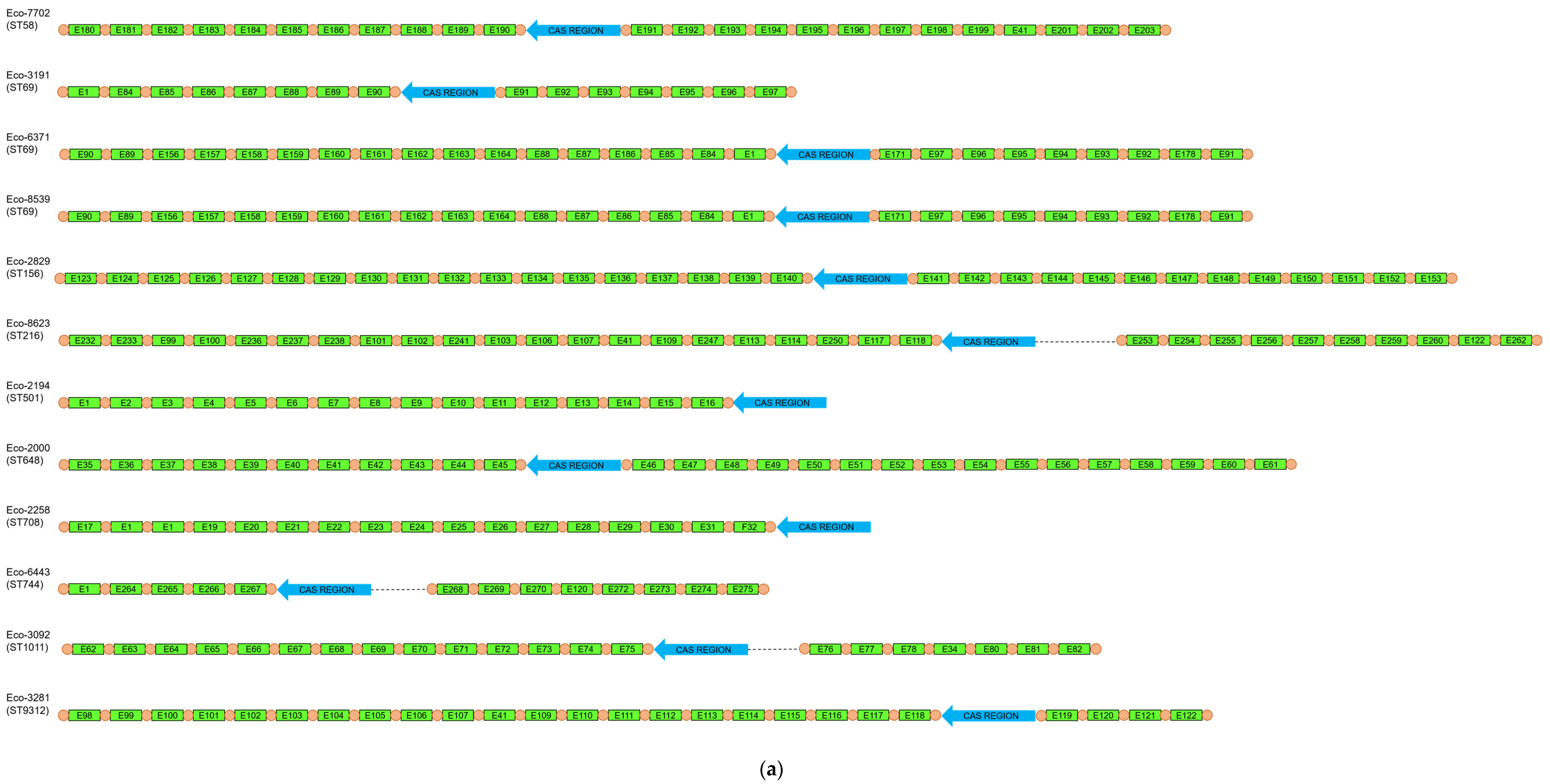
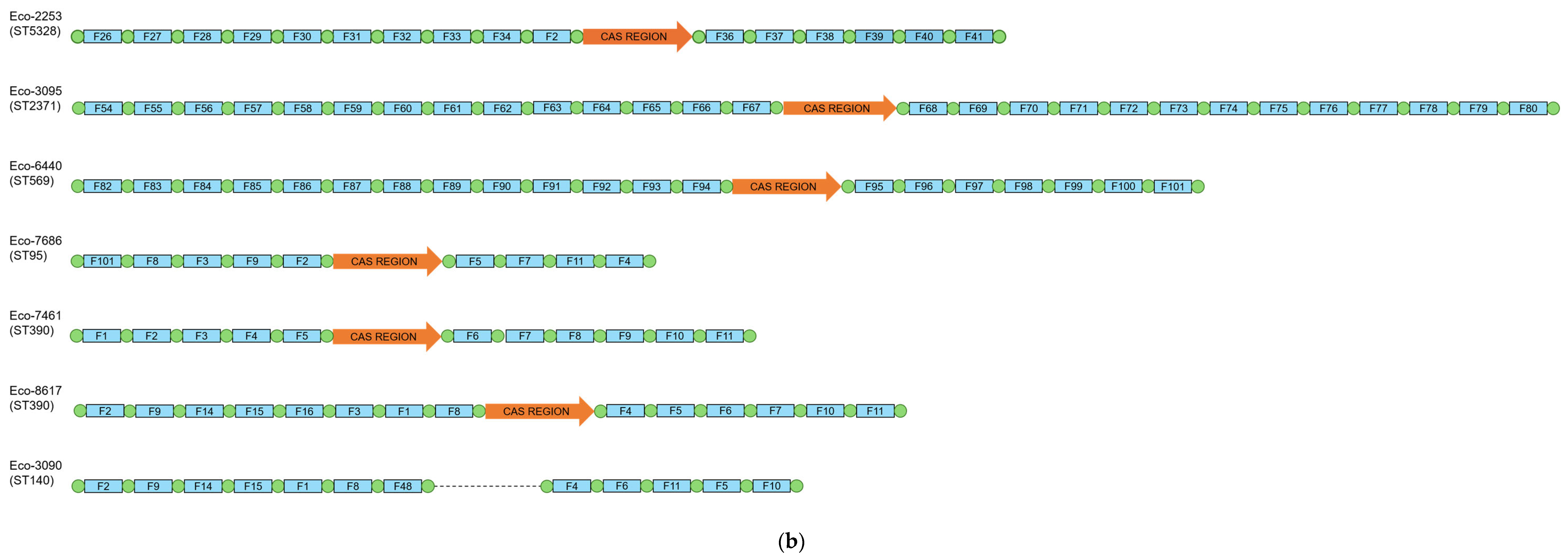
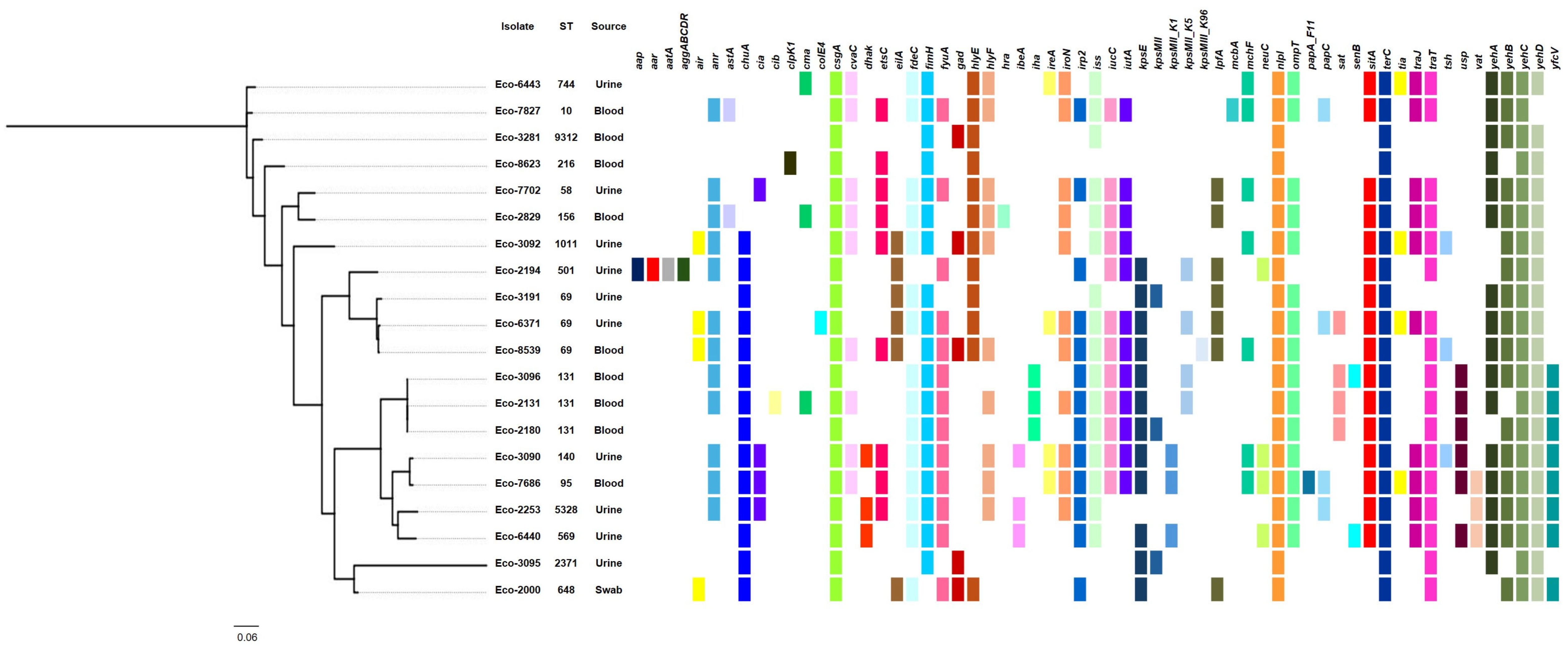
The aim of this study was to examine the genetic characteristics that could be associated with the virulence characteristics of Escherichia coli collected from clinical samples. A collection of 100 non-repetitive E. coli isolates was analyzed. All isolates were typed by MLST. String production, biofilm formation and serum resistance were examined for all isolates. Twenty E. coli isolates were completely sequenced Illumina platform. The results showed that the majority of E. coli isolates (87%) produced significant levels of biofilm, while none of the isolates were positive for string test and resistance to serum. Additionally, the presence of CRISPR/Cas systems (type I-E or I-F) was found in 18% of the isolates. Analysis of WGS data found that all sequenced isolates harbored a variety of virulence genes that could be implicated in adherence, invasion, iron uptake. Also, WGS data confirmed the presence of a wide variety of resistance genes, including ESBL- and carbapenemase-encoding genes. In conclusion, an important percentage (87%) of the E. coli isolates had a significant ability to form biofilm. Biofilms, due to their heterogeneous nature and ability to make microorganisms tolerant to multiple antimicrobials, complicate treatment strategies. Thus, in combination with the presence of multidrug resistance, expression of virulence factors could challenge antimicrobial therapy of infections caused by such bacteria.
Keywords: biofilm formation; Escherichia coli; CRISPR/Cas; plasmids; multidrug resistance biofilm formation; Escherichia coli; CRISPR/Cas; plasmids; multidrug resistance