Review

MecVax, an Epitope- and Structure-Based Broadly Protective Subunit Vaccine Against Enterotoxigenic Escherichia coli (ETEC)


Department of Pathobiology, University of Illinois Urbana-Champaign, 2001 South Lincoln Avenue, Urbana, IL 61802, USA
Microorganisms 2025, 13(12), 2866; https://doi.org/10.3390/microorganisms13122866
Submission received: 24 November 2025 / Revised: 1 December 2025 / Accepted: 12 December 2025 / Published: 17 December 2025
(This article belongs to the Special Issue Advancement in Enterotoxigenic Escherichia coli (ETEC) Vaccines)

Abstract

No vaccines are licensed against enterotoxigenic Escherichia coli (ETEC), a leading diarrheal cause in children and travelers. ETEC adhesins and enterotoxins are the virulence determinants and become the primary targets in ETEC vaccine development. However, ETEC strains produce > 25 adhesins and two potent enterotoxins, particularly the poorly immunogenic heat-stable toxin (STa), greatly hindering ETEC vaccine development. To overcome these challenges, we developed a multiepitope-fusion-antigen (MEFA) platform. MEFA presented multiple adhesin epitopes on a backbone and generated a polyvalent adhesin immunogen, CFA/I/II/IV MEF. CFA/I/II/IV protected against the seven ETEC adhesins (CFA/I, CS1-CS6) associated with two-thirds of ETEC diarrheal cases. We further used toxoids as safe antigens and created a toxoid fusion, 3xSTaN12S-mnLTR192G/L211A. This antigen induced antibodies neutralizing the enterotoxicity of STa and heat-labile toxin (LT), which, alone or together, cause all ETEC diarrheal cases. By combining two polyvalent proteins, we developed a multivalent ETEC vaccine, MecVax, that protects against seven ETEC adhesins and two enterotoxins. MecVax is broadly immunogenic. MecVax prevents intestinal colonization by ETEC strains expressing any of the seven adhesins and protects against clinical diarrhea from ETEC strains producing LT or STa enterotoxin preclinically, becoming a broadly protective ETEC vaccine candidate against children’s diarrhea and travelers’ diarrhea.

1. Introduction

Enterotoxigenic Escherichia coli (ETEC) strains produce adhesins that bind host receptors to colonize the small intestine and deliver enterotoxins that disrupt intestinal epithelial cell homeostasis. ETEC strains are the primary cause of diarrheal disease in animals and humans, particularly in young animals and children [1,2]. Indeed, ETEC infection is among the top four causes of diarrhea in children under 5 years old in developing countries [3,4], and it is also a common cause of diarrhea in the elderly population [5,6]. Additionally, ETEC is often the most common cause of diarrhea among travelers, particularly those from high-income countries traveling to ETEC-endemic regions or countries, including civilian and military personnel deployed in these areas [7,8,9]. ETEC infection is estimated to be associated with more than 200,000,000 clinical diarrhea cases and up to 80,000 deaths annually [10,11,12]. ETEC diarrhea is further linked to long-term negative impacts in children, including poor physical growth and impaired cognitive development [13,14,15,16]. Currently, there are no effective countermeasures against ETEC diarrhea [17,18,19].
ETEC diarrhea, like other enteric infections, is preventable. Clean drinking water and improved sanitation and hygiene (WASH) would effectively prevent ETEC infection, as demonstrated in industrialized countries where ETEC infection is under control. Unfortunately, due to financial constraints, rapid implementation of nation- or community-wide sanitation systems and improvements to water supply infrastructure, which require substantial investment, are unlikely to be achieved in the coming decades in developing countries, particularly in ETEC-endemic countries in South and Southeast Asia, Sub-Saharan Africa, and Central America. Medical interventions, including the use of antibiotics and oral rehydration with a salt-and-electrolyte solution, can effectively treat severe ETEC diarrheal cases. However, commonly prescribed antibiotics are less effective, or even ineffective, due to the increasing prevalence of antimicrobial resistance (AMR) in ETEC bacteria [20,21,22,23,24]. A lack of medical facilities in rural areas limits access to rehydration treatment. Vaccines administered to a large population to build herd immunity and prevent disease transmission would be a highly effective countermeasure against ETEC diarrhea and other infectious diseases. Sadly, there are no vaccines licensed against ETEC children’s diarrhea and travelers’ diarrhea.
Developing effective vaccines against ETEC diarrhea has historically been challenging. The key difficulties include (1) virulence heterogeneity among ETEC strains, (2) difficulties in protecting against ETEC enterotoxins, and (3) a lack of suitable animal models for vaccine preclinical efficacy assessment. ETEC bacterial strains produce two types of virulence determinants: adhesin and enterotoxin. Adhesins include colonization factor antigens (CFAs) and coli surface antigens (CSs). These adhesins promote ETEC bacterial attachment to host receptors and colonization of the host small intestine. Enterotoxins include heat-labile toxin (LT) and heat-stable toxin (STa). These enterotoxins enter host intestinal epithelial cells and significantly elevate intracellular levels of cyclic adenosine monophosphate (cAMP) or guanosine monophosphate (cGMP). An elevation of cAMP or cGMP disrupts host cell homeostasis and causes fluid hypersecretion into the gut lumen, resulting in watery diarrhea. The problems are that ETEC strains produce more than 25 immunologically heterogeneous adhesins and two potent and very distinctive enterotoxins. Since an ETEC strain that produces any one or two adhesins and one toxin can cause diarrhea, an effective ETEC vaccine needs to induce broad immunity to protect against many (if not all) ETEC adhesins and both toxins. Unfortunately, developing a vaccine against these many ETEC adhesins and two toxins has been overwhelmingly difficult [19]. Second, LT and STa are potent toxins; therefore, they are unsafe to be used directly as vaccine antigens. Moreover, the potent 19-amino acid STa toxin is poorly immunogenic. It has long been believed that an STa antigen can induce neutralizing antibodies only when it retains its enterotoxicity (which cannot be a safe antigen for a vaccine), but not from any nontoxic STa mutants [25]. Therefore, STa has generally been excluded as an ETEC vaccine antigen for decades. The dilemma is that STa plays a more important role in causing children’s diarrhea and travelers’ diarrhea [26,27]; thus, safe STa antigen(s) need to be carried by an effective ETEC vaccine to induce protective anti-STa immunity [19,28,29,30,31]. Third, there is not a single suitable animal model available to evaluate the preclinical efficacy of ETEC vaccine candidates. Mice, including zinc-deficient mice [32], cannot be efficiently colonized by ETEC bacteria in the small intestines and are not naturally susceptible to ETEC infection. Rabbits can be colonized by ETEC strains [33,34], but they rarely develop clinical diarrhea after ETEC infection. While pigs [35,36] and nonhuman primates [37,38] are susceptible to ETEC and develop clinical diarrhea, they either exhibit species-specificity in bacterial attachment and intestinal colonization or are impractical due to limited availability and financial or ethical constraints [17,19].
Different approaches have been attempted to overcome the challenges in ETEC vaccine development. Developing a vaccine that covers all ETEC adhesins is currently not feasible. Thus, one strategy is to target a few adhesins that are associated with the majority of diarrheal clinical cases, especially the moderate-to-severe cases [39,40,41,42], or to identify conserved adhesins as vaccine antigens [43]. To overcome the challenge posed by STa’s potent toxicity and poor immunogenicity, genetic fusions or conjugations with STa peptides were attempted to generate safe antigens that induce neutralizing antibodies [39,40,41]. This review article outlines the application of novel epitope- and structure-based multiepitope-fusion-antigen (MEFA) for the creation of a polyvalent adhesin protein immunogen for broad immunity against the seven most prevalent and virulent ETEC adhesins. It also summarizes the generation of a toxoid fusion protein for neutralizing antibodies against both ETEC toxins (STa, LT) and the development of a broadly protective ETEC vaccine candidate. Additionally, this paper introduces an application of a combined animal challenge model. This dual-animal challenge model allows us to evaluate the preclinical efficacy of the ETEC vaccine candidate (MecVax) against ETEC intestinal colonization and ETEC toxin-mediated clinical diarrhea.

2. CFA/I/II/IV MEFA, a Broadly Immunogenic and Protective ETEC Adhesin Antigen Constructed with a Novel Epitope- and Structure-Based Multiepitope-Fusion-Antigen (MEFA) Platform

ETEC strains expressing adhesins CFA/I, CFA/II (CS1, CS2, CS3), or CFA/IV (CS4, CS5, CS6) cause about two-thirds of the ETEC-associated diarrheal cases and the moderate-to-severe cases [42,44,45,46]. These seven ETEC adhesins (CFA/I, CS1-CS6) become the primary antigen targets for immunity against ETEC bacterial attachment and colonization in the small intestines, the first line of defense against ETEC infection [19]. Unlike the whole-cell approach that mixes four inactivated strains expressing four adhesins (CFA/I, CS3, CS5, CS6) [47] or three live strains producing six adhesins (CFA/I, CS1, CS2, CS3, CS5, CS6) [48] for broad immunity, we applied an epitope- and structure-based vaccinology platform called multiepitope-fusion-antigen (MEFA) and constructed a polyvalent chimeric protein as an adhesin immunogen for broad immunity against the seven ETEC adhesins (CFA/I, CS1-CS6) [49].
This MEFA platform combines the epitope vaccine concept and structural vaccine concept. MEFA presents multiple foreign epitopes (from heterogeneous virulence factors or pathogenic strains) on a backbone immunogen for a polyvalent chimeric immunogen and maintains foreign epitope native antigenic propensity for broadly protective immunity (Figure 1), thus overcoming the virulence or antigen heterogeneity challenge [17,18,50]. This platform uses structural and computational biology techniques to replace surface-exposed epitopes on a backbone with B-cell and T-cell epitopes from other virulence determinants or heterogeneous strains of interest, creating a broadly immunogenic polyvalent MEFA immunogen. A backbone (ideally also a virulence determinant of interest) typically has a stable structure and multiple well-separated epitopes, can be expressed using commonly used vector systems, and can be easily extracted with routine laboratory protocols. B-cell or T-cell epitopes can be predicted in silico using prediction software, including the IEDB (http://www.iedb.org), whereas functional or protective epitopes are identified empirically [51,52,53,54,55]. The position and presentation of the foreign epitopes on the MEFA are initially assessed and adjusted in silico to maintain native antigenic properties and then further evaluated empirically for broad immunogenicity and cross-protection against infections caused by heterogeneous strains [50].
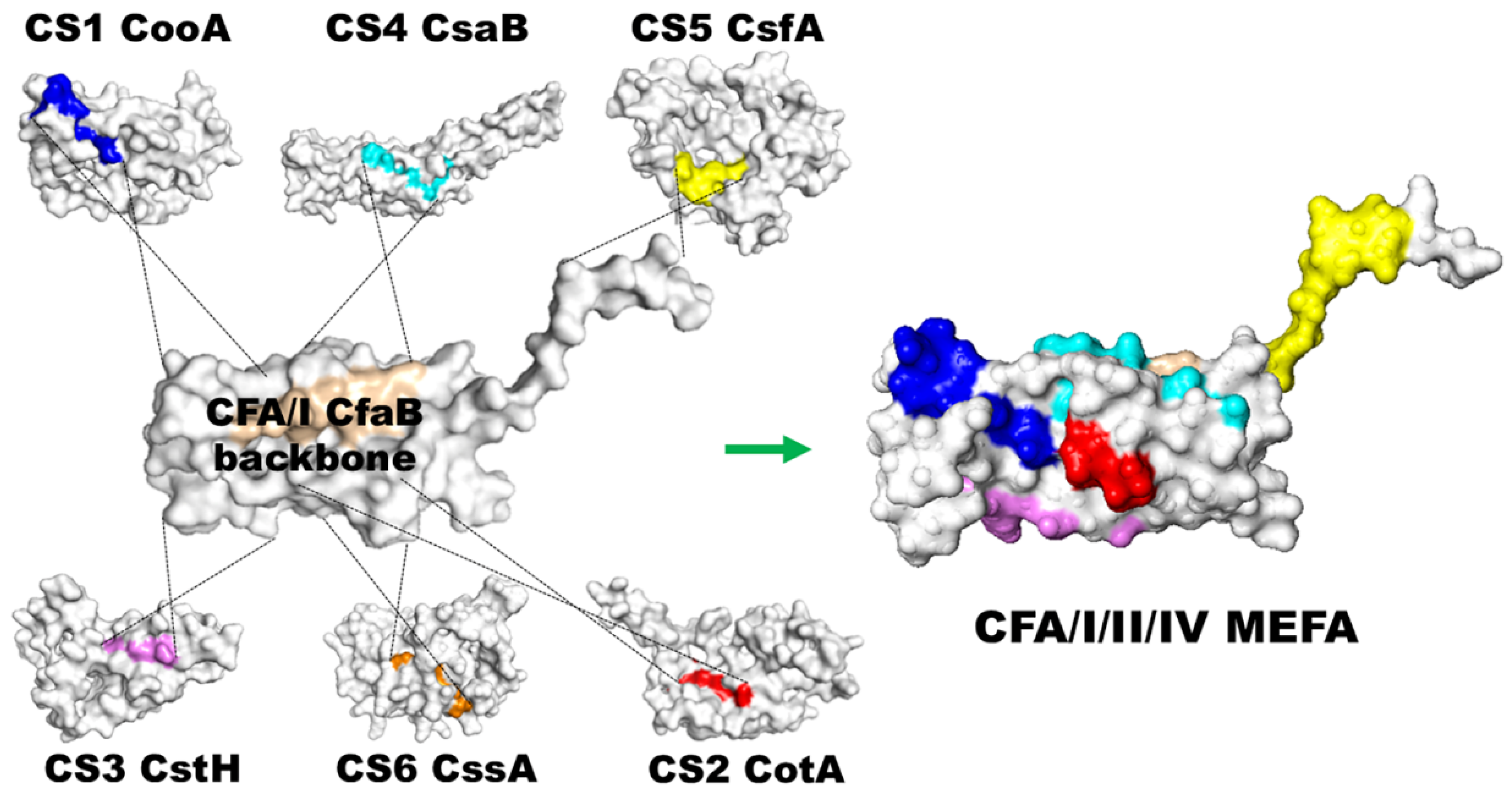
Aided by this MEFA platform, we aimed to develop a broadly protective MEFA immunogen targeting the seven most significant ETEC adhesins (CFA/I, CS1-CS6). Using the major structural subunit of adhesin CFA/I, CfaB, as the backbone, we retained the most immunogenic B-cell conformational epitopes of the backbone, replaced the remaining epitopes with the most immunodominant epitope from each major structural subunit of the other six important ETEC adhesins, CooA of CS1, CotA or CS2, CstH of CS3, CsaB of CS4, CsfA of CS5, and CssA of CS6, and constructed a chimeric polyvalent protein, CFA/I/II/IV MEFA (Figure 2). This CFA/I/II/IV MEFA gene was synthesized and expressed in E. coli BL21 (DE3) [49], and recombinant CFA/I/II/IV MEFA protein had a stable tertiary structure close to backbone CfaB and the foreign epitopes retained native antigenic propensity [57].
This CFA/I/II/IV MEFA protein elicited robust antibody responses to all seven ETEC adhesins, and the antigen-specific antibodies blocked adherence of ETEC bacteria that produce any of the seven adhesins. Mice intraperitoneally immunized with the 6xHis-tagged CFA/I/II/IV MEFA protein, adjuvanted with incomplete Freund’s adjuvant (Sigma), or intramuscularly or subcutaneously administered with the tagless CFA/I/II/IV MEFA and adjuvanted with double mutant LT (dmLT; LTR192G/L211A), developed high titers of IgG antibodies to CFA/I, CS1, CS2, CS3, CS4, CS5, and CS6 [49,58,59]. Moreover, mouse serum antibodies significantly blocked the adherence of ETEC or E. coli strains expressing any of the seven target adhesins (blocking 40–75% of bacterial adherence to Caco-2 cells) [49,58,59].
More importantly, this CFA/I/II/IV MEFA protein antigen protected against ETEC bacterial intestinal colonization. Rabbits immunized intradermally or intramuscularly with CFA/I/II/IV MEFA protein, adjuvanted with 1 μg dmLT, developed robust IgG antibodies to the seven adhesins: CFA/I, CS1-CS6. Rabbit serum antibodies significantly blocked the in vitro adherence of ETEC or E. coli strains expressing CFA/I, CS1-CS6 adhesins, reducing bacterial adherence by 50–77% (CFUs). Furthermore, the immunized rabbits, when challenged with the ETEC strain B7A (CS6, STa, LT), exhibited a 2- to 3-log reduction in bacterial colonization of the small intestine. Protection against B7A bacterial intestinal colonization in the rabbits intradermally or intramuscularly with CFA/I/II/IV MEFA protein was the same as in the rabbits that were challenged (equivalent to oral immunization with B7A) and rechallenged (equivalent to oral challenge) with B7A. This indicated that parenterally administered CFA/I/II/IV MEFA protein antigen protects against ETEC colonization in the small intestines [60].

3. Toxoid Fusion 3xSTaN12S-mnLTR192G/L211A, a Nontoxic Toxin Antigen That Induces Neutralizing Antibodies Against ETEC Toxins STa and LT

ETEC adhesins mediate bacterial attachment to host cells and subsequent colonization of the host small intestine; anti-adhesin immunity serves as a first-line defense against ETEC infection. However, it is the enterotoxins produced by ETEC that directly disrupt homeostasis in intestinal epithelial cells, resulting in fluid hypersecretion and watery diarrhea. Thus, antitoxin immunity plays a crucial role in protecting against ETEC diarrhea. Additionally, toxin-mediated fluid secretion in epithelial cells disrupts epithelial tight junctions, further enhancing ETEC colonization in the small intestine [61]. Since ETEC strains producing STa or LT alone sufficiently cause diarrhea, an effective ETEC vaccine would need to carry both toxin antigens to stimulate protective antibodies against LT and STa. To achieve this goal, we need to address two key issues. The first is to eliminate the potent toxicity of LT and STa, allowing them to serve as safe antigens. The second is to facilitate the poor immunogenicity of STa, as this small-sized toxin naturally does not stimulate host immune response [19].
Past efforts to overcome ETEC toxin enterotoxicity have achieved limited success. For LT, the nontoxic B subunit, LTB, was used as a safe antigen to induce anti-LT antibodies. Antibodies to the LTB prevent the AB5 LT holotoxin from binding to the host receptor GM1, which is facilitated by the LTB pentamer, blocking LT endocytosis into host intestinal epithelial cells to some degree. However, anti-LTB antibodies do not neutralize LT enterotoxicity, which is contributed to by the A subunit (LTA) and plays a crucial role in causing water secretion from intestinal epithelial cells. The bigger problem lies in identifying safe antigens to induce neutralizing antibodies against the potent STa toxin. Early studies found that disruption of disulfide bonds, truncation, mutation, or fusion to a carrier abolished or reduced the biological toxicity of STa [62,63,64,65,66]. However, these modifications to the 19-amino acid peptide significantly alter the structural and antigenic properties of STa, and the resultant molecules (after being fused or coupled to a carrier) were unable to elicit antibodies against the native STa toxin. Indeed, it was speculated that only native STa or STa peptides with enterotoxicity can induce antibodies that react with STa and neutralize its enterotoxicity [67,68].
In a study of developing a vaccine against ETEC diarrhea in pigs, we noticed that a full-length pig ETEC-originated STa (pSTa or STp, an 18-amino acid peptide, homologous to the 19-amino acid human ETEC STa) abolished enterotoxicity after the substitution at the 11 12, or 13 residue. More profoundly, these full-length STa toxoids, after being genetically fused to the C-terminus of a monomeric LT mutant, showed no STa or LT enterotoxicity but induced antitoxin antibodies neutralizing both toxins [28]. This monomeric LT mutant had the 192 residue of the LTA subunit mutated and fused to the LTB subunit as an A1B1 monomer (not AB5 holotoxin). Pregnant pigs (sows) intramuscularly immunized with an STa-LT toxoid fusion developed neutralizing antibodies to both toxins. Furthermore, piglets born to the immunized mother were protected against clinical diarrhea after challenge with an STa ETEC strain [28]. One STa toxoid, even with the truncation of four N-terminal amino acids, elicited neutralizing anti-STa antibodies when this shortened STa toxoid peptide was fused to an adhesin major subunit gene and expressed in a chimeric adhesin [69].
Studies of the pig ETEC STa and LT toxoids and toxoid fusions highlighted that (1) mutations at a few non-cysteine residues of STa and fusion of a mutant LT A subunit with an LTB subunit deprive STa or LT of enterotoxicity, as they can no longer elevate intracellular cyclic guanosine or adenosine monophosphate or stimulate fluid secretion in gut loops, and (2) STa-LT toxoid fusions enhance STa immunogenicity and induce antibodies that neutralize STa and LT enterotoxicity and protect against clinical diarrhea. Encouraged by these exciting results, we expanded our investigation to study human ETEC STa and LT toxoids, as well as STa-LT toxoid fusions. We created a full-length STa toxoid STaP13F, which had the 13 residue proline replaced with phenylalanine. Then we genetically fused STaP13F to the N-terminus, C-terminus, or between the A1 and A2 domains, or A and B subunit domains, of a monomeric LT toxoid, LTR192G, for STa-LT toxoid fusions. We found that serum antibodies from mice immunized with each of the four STaP13F-mnLTR192G toxoid fusions neutralized STa toxin at levels that were either the same or similar [29].
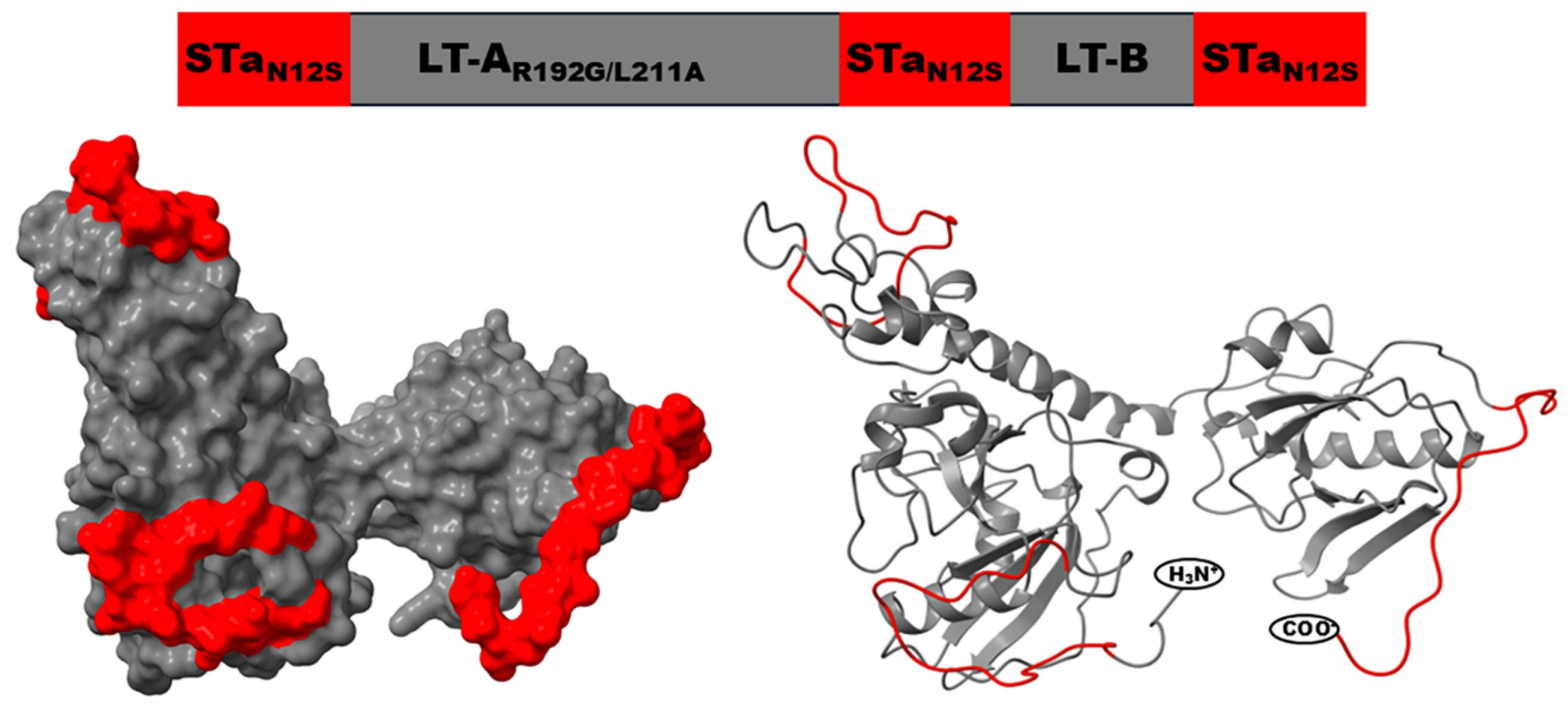
Since an STa toxoid on either terminus or inside the monomeric LTR192G maintained STa antigenicity similarly, we next fused three copies of an STa toxoid to a monomeric LT double mutant (mnLTR192G/L211A) on both termini, as well as between the A and the B subunit domains, to further enhance STa antigenicity (Figure 3). The initial study indicated that an STa-LT toxoid fusion carrying three copies of an STa toxoid increased anti-STa immunogenicity [70]. In a subsequent study, we constructed a panel of 12 6xHis-tagged 3xSTa-LT toxoid fusion proteins, each carrying a different STa toxoid, and compared their immunogenicity and antibody-neutralization activities [39]. While all 12 toxoid fusions were nontoxic and immunogenic, the toxoid fusion carrying STa toxoid STaN12S (that has the 12th asparagine substituted by serine), 3xSTaN12S-dmLT, was the most effective in eliciting neutralizing anti-STa antibodies [39]. This 3xSTaN12S-dmLT was later named as 3xSTaN12S-mnLTR192G/L211A, to differentiate the A1B1 monomeric mnLTR192G/L211A from the A1B5 holotoxin-structured LTR192G/L211A, dmLT. Serum antibodies from the mice parenterally administered with 3xSTaN12S-mnLTR192G/L211A, with a different adjuvant (Freund’s adjuvant, SEPPIC ISA51, or dmLT), neutralized STa and LT enterotoxicity [39,71]. More importantly, toxoid fusion 3xSTaN12S-mnLTR192G/L211A induced antibodies that protected against STa ETEC clinical diarrhea. Piglets born to mothers intramuscularly immunized with this toxoid fusion protein, adjuvanted with dmLT, acquired maternal antitoxin antibodies; when challenged with an STa ETEC strain, these piglets were protected against clinical diarrhea [72].
We have overcome a long-standing obstacle in ETEC vaccine development by identifying a nontoxic ETEC toxin antigen that induces antibodies neutralizing STa and LT enterotoxicity and protecting against STa ETEC clinical diarrhea. But another concern was raised immediately: whether the protective anti-STa antibodies derived from a safe toxoid fusion antigen react with guanylin or uroguanylin. Guanylin and uroguanylin are the two STa-like ligands that critically regulate fluid and electrolyte transport and maintain homeostasis in human intestinal and renal epithelial cells. Cross-reactivity from anti-STa antibodies induced by ETEC vaccines with guanylin or uroguanylin would raise serious health concerns. To address this issue, we conducted a study to measure the cross-reactivity of anti-STa antibodies to the two ligands. We found that the neutralizing anti-STa antibodies derived from a toxoid fusion carrying an STa toxoid with a single mutation (STaN12S), a double mutation (STaL9A/N12S or STaN12S/A14T), or a triple mutation (STaL9A/N12S/A14T) had little or no reactivity with guanylin or uroguanylin [73]. This paves the way for the use of toxoid fusion 3xSTaN12S-mnLTR192G/L211A as a safe ETEC vaccine antigen.

4. MecVax, an ETEC Vaccine Candidate Composed of CFA/I/II/IV MEFA and Toxoid Fusion 3xSTaN12S-mnLTR192G/L211A, for Broad Protection Against ETEC Intestinal Colonization and Clinical Diarrhea

To develop an ETEC vaccine to induce broad anti-adhesin antibodies against ETEC bacterial intestinal colonization and also antitoxin antibodies against both STa and LT toxins, we combined the CFA/I/II/IV MEFA with the toxoid fusion 3xSTaN12S-mnLTR192G/L211A. CFA/I/II/IV MEFA was demonstrated to prevent in vitro adherence of ETEC bacteria expressing any of the seven important adhesins (CFA/I, CS1-CS6) and in vivo colonization in rabbit small intestines against ETEC strain B7A [49,59,60]. Toxoid fusion 3xSTaN12S-mnLTR192G/L211A was shown to be nontoxic and induce antibodies to neutralize STa and LT enterotoxicity but also protect against STa ETEC clinical diarrhea in pigs [39,72]. These two protein antigens, however, were initially constructed to carry a 6xHis tag, which is considered undesirable for human vaccines. Additionally, it is untested whether these two proteins are antigenically compatible for co-administration. Therefore, we first constructed a tagless CFA/I/II/IV MEFA and a tagless toxoid fusion 3xSTaN12S-mnLTR192G/L211A and verified each new antigen for broad immunogenicity. We then examined whether the tagless CFA/I/II/IV MEFA and the tagless toxoid fusion protein compromised each other’s antigenicity when administered together.
We found no differences in protein expression, immunogenicity, or antibody functions of the tagless and 6xHis-tagged CFA/I/II/IV MEFA or toxoid fusion 3xSTaN12S-mnLTR192G/L211A. Both 6xHis-tagged and tagless counterparts were expressed by E. coli BL21 (DE3) as inclusion body proteins and subsequently solubilized and refolded. They had the same level of yield, integrity or purity estimated based on SDS-PAGE Coomassie blue staining and reaction with antigen-specific antibodies [58]. Moreover, mice immunized with the tagless or 6xHis-tagged CFA/I/II/IV MEFA or toxoid fusion 3xSTaN12S-mnLTR192G/L211A developed the same level of IgG antibodies to the seven ETEC adhesins (CFA/I, CS1-CS6) or toxins STa and LT. The derived antibodies in mouse sera exhibited the same levels of functional activity against adherence of ETEC bacteria expressing any of the seven target adhesins or against enterotoxicity induced by STa or CT (cholera toxin, LT homolog) [58].
We subsequently immunized mice intramuscularly or subcutaneously with the tagless CFA/I/II/IV MEFA, the tagless toxoid fusion 3xSTaN12S-mnLTR192G/L211A, or both. We observed that mice developed the same levels of anti-adhesin antibodies to the seven ETEC adhesins after immunization with the tagless CFA/I/II/IV MEFA alone or together with toxoid fusion 3xSTaN12S-mnLTR192G/L211A, or the same levels of anti-STa and anti-LT antibodies after immunization with toxoid fusion 3xSTaN12S-mnLTR192G/L211A alone or in combination with CFA/I/II/IV MEFA [74,75]. Moreover, the derived mouse serum antitoxin antibodies, or anti-adhesin antibodies, from a single antigen or both proteins, equally inhibited ETEC bacterial adherence or neutralized STa or LT enterotoxicity [74,75]. Data from these studies demonstrated that the tagless toxoid fusion 3xSTaN12S-mnLTR192G/L211A and CFA/I/II/IV MEFA retain broad immunogenicity and are antigenically compatible for co-administration.
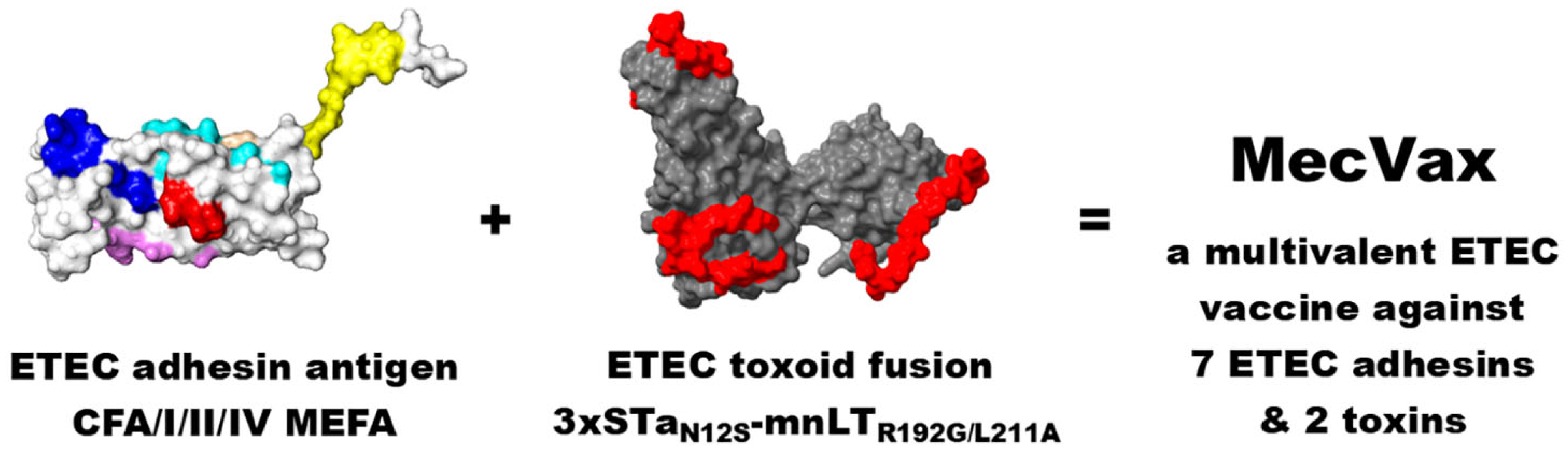
We developed MecVax, a multivalent ETEC vaccine candidate, by combining the tagless CFA/I/II/IV MEFA and toxoid fusion 3xSTaN12S-mnLTR192g/L211A [58,74] (Figure 4). This vaccine candidate is to induce host anti-adhesin immunity to prevent adherence and intestinal colonization from any ETEC strains with any of the seven adhesins (CFA/I, CS1-CS6; together with STa and/or LT toxin). This vaccine is also to induce antitoxin immunity to neutralize the enterotoxicity of ETEC toxins STa and LT, which, alone or together, are produced by all ETEC strains. Therefore, the anti-adhesin antibodies induced by MecVax protect against infection from ETEC strains that express the seven adhesins, and the antitoxin antibodies protect against ETEC strains that express STa and/or LT toxin together with the seven adhesins or any other adhesins, thus protecting against all ETEC infections and associated diarrhea.
MecVax demonstrated broad immunogenicity and cross-protective activity against ETEC intestinal colonization and clinical diarrhea in preclinical studies [74,75,76,77,78,79,80]. MecVax, administered intramuscularly or intradermally, elicited robust antibody responses to the seven adhesins and two toxins in mice [74,75], even at a dose as low as 3 μg per protein antigen [76]. MecVax-induced mouse serum antibodies, just as the antibodies derived from the CFA/I/II/IV MEFA or the toxoid fusion, prevented the adherence of ETEC strains expressing any of the seven adhesins (CFA/I, CS1-CS6) by 40% to 66% and completely neutralized the enterotoxicity of STa and LT (CT homolog). When administered intramuscularly to pregnant sows, adjuvanted with dmLT, MecVax elicited robust serum and colostrum IgG and colostrum IgA to the seven target adhesins (CFA/I, CS1-CS6) and two toxins (STa, LT), and the born piglets acquired antigen-specific maternal antibodies (serum IgG). Sow serum or colostrum antibodies, as well as piglet serum antibodies, inhibited adherence of ETEC strains expressing the target adhesins and neutralized STa and LT enterotoxicity. Moreover, after challenge with an STa or an LT ETEC strain, piglets born to immunized mothers were protected at 100% against watery diarrhea and 71% or 92% against any diarrhea [74].
Adult rabbits intramuscularly immunized with MecVax developed antigen-specific IgG antibodies. Rabbit serum antibodies prevented 51% to 66% ETEC bacterial adherence to Caco-2 cells. When orally infected with the ETEC strain H10407 (CFA/I, STa, LT), the immunized rabbits showed an over 99.9% reduction in H10407 colonization in the small intestine compared to the control rabbits [77]. Similarly, when challenged with ETEC field isolate EL392-75 (CS1/CS3, STa, LT), ETP05011 (CS2/CS3, STa, LT), E106 (CS4/CS6, STa, LT), UM75688 (CS5/CS6, STa, LT), or B7A (CS6, STa, LT), the rabbits intramuscularly immunized with MecVax were protected from 99% to 99.9% bacterial colonization in small intestines [78].
Data from the rabbit and pig immunization and challenge studies clearly demonstrated that MecVax is broadly immunogenic and protective. This protein-based injectable ETEC vaccine candidate protected against ETEC intestinal colonization and clinical diarrhea. MecVax can induce robust IgG and IgA (in pregnant sows) antibodies to the seven ETEC adhesins (CFA/I, CS1-CS6) and two toxins (STa, LT). The vaccine-induced antibodies are broadly functional, inhibiting adherence of ETEC strains that produce any of the seven adhesins and neutralizing both toxins. Furthermore, MecVax, administered intramuscularly, prevents ETEC colonization of the rabbit intestine and protects newly born piglets that acquired maternal antibodies from the immunized sows against ETEC clinical diarrhea. It is worth noting that our rabbit immunization and challenge studies showed intramuscular immunization with a protein-based vaccine adjuvanted with dmLT protects against colonization of the small intestine by enteric bacteria such as ETEC or Vibrio cholerae [60,74,77,78,81]. This certainly warrants further investigation into how, and to what extent, the primarily systemic anti-adhesin (and antitoxin) immunity provides local mucosal protection against intestinal colonization by ETEC or other enteric pathogens.
Additionally, MecVax, when supplemented with another polyvalent protein immunogen, broadens protection against additional ETEC strains or other enteric pathogens. When co-administered with CFA MEFA-II, another polyvalent ETEC adhesin immunogen that covers five second-tier ETEC adhesins (CS7, CS12, CS14, CS17, CS21) [82], MecVax induced anti-adhesin antibodies to inhibit adherence from ETEC bacteria expressing any of the twelve target ETEC adhesins (CFA/I, CS1-CS7, CS12, CS14, CS17, CS21), as well as to neutralize STa and LT enterotoxicity, potentially preventing adherence and intestinal colonization from the ETEC adhesins that are associated with 86% of ETEC diarrheal clinical cases and nearly all moderate-to-severe cases [83].
Similarly, after co-administration with a polyvalent Shigella MEFA protein, intramuscularly immunized MecVax (and the Shigella MEFA) induced IgG antibodies to the nine ETEC antigens (CFA/I, CS1-CS6, STa, LT) and seven Shigella antigens (IpaB, IpaD, GuaB, VirG, StxA, Stx2A, StxB). This Shigella MEFA presents heterogeneous epitopes of Shigella invasion plasmid antigen B (IpaB) and D (IpaD), virulence factor G (VirG), and Shiga toxins (Stx, Stx2) on backbone IpaD and is designed to provide broad protection against shigellosis [84]. These antibodies inhibited the adherence of ETEC bacteria producing any of the seven adhesins, neutralized ETEC STa and LT toxicity, inhibited the adherence of all four Shigella species (S. flexneri, S. sonnei, S. boydii, and S. dysenteriae) and the important serogroup strains, blocked the invasion of Shigella strains, and neutralized the cytotoxicity of Shiga toxins. Most interestingly, co-administration of MecVax and Shigella MEFA protected against Shigella lethal pulmonary infections, ETEC bacterial intestinal colonization, and ETEC clinical diarrhea, leading to the development of a combined vaccine candidate, ShecVax, to protect against ETEC and Shigella infections [85].
While MecVax clearly shows potential as a broadly protective vaccine against ETEC diarrhea and as a combined vaccine against ETEC and other enteric bacteria, its clinical efficacy has yet to be investigated. Currently, efforts are underway to optimize MecVax processing and analytical development toward GMP vaccine production, with specific attention to downstream processing to improve product purity and uniformity further and to scale up production. Afterwards, MecVax will be evaluated for safety and broad immunogenicity in human volunteers, then efficacy in the controlled human infection model (CHIM) and field trials.

5. MecVax Preclinical Efficacy Can Be Evaluated in a Dual Animal Challenge Model, a Combination of a Rabbit Model Against ETEC Intestinal Colonization and a Pig Passive Protection Model Against ETEC Toxin-Mediated Diarrhea

Animal models for testing vaccine immunogenicity, safety, and efficacy are a cornerstone of vaccine development and are invaluable. A suitable animal model uses an animal species that is naturally susceptible to the pathogen, develops identical or similar clinical outcomes to humans after infection, tricks the immune response, and remains protected against subsequent homologous infection. Unfortunately, there is no suitable animal model for preclinical evaluation of vaccine efficacy in ETEC. The species commonly used in research laboratories, including rodents, are not naturally susceptible to ETEC or do not develop diarrhea after infection; thus, they provide limited value in ETEC vaccine research and development [17,19]. The nonhuman primate Aotus nancymaae, on the other hand, is susceptible to ETEC, develops diarrhea after challenge, and can serve as a good infection model to test ETEC vaccine candidacy [86]. However, resource scarcity, high costs, and ethical concerns make this model essentially unattainable for most research laboratories.
Rabbits, particularly under the RITARD (removable intestinal tie adult rabbit diarrhea) model, can be colonized by ETEC or Vibrio cholerae in the small intestine, enabling them to be used to study ETEC pathogenesis and protection of anti-adhesin immunity [33,87]. However, although ETEC bacteria can colonize the rabbit’s small intestine after oral inoculation, infected rabbits rarely develop clinical diarrhea. Therefore, rabbits can be used to evaluate ETEC vaccine candidates for efficacy against ETEC intestinal colonization but not against ETEC-associated clinical diarrhea.
On the other hand, pigs, particularly young pigs, are naturally susceptible to ETEC and develop clinical diarrhea, as well as anti-adhesin and antitoxin antibodies, after infection. However, the ETEC strains that cause diarrhea in pigs produce host-specific fimbrial adhesins to recognize pig-specific receptors in the pig small intestine. Adhesins of human ETEC strains do not attach to pig receptors and thus cannot colonize the pig small intestine. Therefore, pigs cannot be used to evaluate the protection conferred by ETEC vaccine candidates against intestinal colonization by human ETEC strains. On the other hand, STa and LT toxins produced by pig- or human-specific ETEC bacteria are highly homologous [36]. Indeed, recombinant E. coli strains expressing a pig-specific adhesin and the pig-type or human-type STa or LT equally elevate intracellular cGMP or cAMP and stimulate fluid accumulation in the ligated small intestinal loops in pigs [88]. Pigs orally inoculated with an ETEC strain expressing a pig-type adhesin and a human ETEC STa or LT toxin develop watery diarrhea [41,72,89]. That makes pigs a challenging model for assessing vaccine efficacy against ETEC toxin-mediated clinical diarrhea [19,41,72,90].
Now that a rabbit model can be used to evaluate ETEC vaccine candidate protection against ETEC bacterial intestinal colonization but not against clinical diarrhea, whereas a pig model can assess vaccine efficacy against toxin-mediated clinical diarrhea but not against ETEC intestinal colonization, a dual-animal challenge model that combines a rabbit colonization model and a pig infection model enables us to examine protection against bacterial intestinal colonization and clinical diarrhea synergistically, making it suitable to evaluate ETEC vaccine candidacy.
Examined with a rabbit colonization model, MecVax prevented ETEC colonization in rabbit small intestines significantly, showing a two- to three-log (99–99.9%) reduction by ETEC wildtype strains expressing CFA/I, CS1/CS3, CS2/CS3, CS3, CS4/CS6, CS5/CS6, or CS6 adhesins [77,78]. When evaluated in a pig passive infection model, MecVax protected piglets born to mothers immunized with MecVax from watery diarrhea (100%) and any diarrhea (71–92%) when challenged with recombinant ETEC strains with a pig-specific adhesin (p87P) and a human-type STa or LT toxin [74,85]. Combining the preclinical efficacy data from the dual-animal challenge model, we conclude that MecVax is broadly effective against ETEC intestinal colonization and clinical diarrhea, potentially serving as a broadly protective vaccine against ETEC-associated children’s diarrhea and travelers’ diarrhea.

6. Conclusions

An effective vaccine is urgently needed to protect against ETEC-caused diarrhea in children and travelers. Progress has been made in developing broadly protective ETEC vaccines, including three advanced to Phase 2 studies [17]. MecVax, a protein-based multivalent ETEC vaccine candidate composed of two polyvalent proteins, unprecedentedly targets seven ETEC adhesins (CFA/I, CS1-CS6), which are associated with two-thirds of clinical cases, and both toxins (STa, LT), which cause all clinical cases. MecVax induces functional antibodies against the adherence of ETEC bacteria expressing any of the seven adhesins and the enterotoxicity of both ETEC toxins and also prevents ETEC bacterial intestinal colonization and toxin-mediated clinical diarrhea in a rabbit-pig dual-animal challenge model. Future studies examining efficacy in clinical trials will determine whether MecVax is an effective vaccine against ETEC-associated children’s diarrhea and travelers’ diarrhea.

Funding

This work is supported by NIH R01AI177144 and R01AI175214.

Institutional Review Board Statement

Not applicable.

Informed Consent Statement

Not applicable.

Data Availability Statement

All data were published in the original publications and are available.

Conflicts of Interest

The author declares no conflicts of interest.

Abbreviations

The following abbreviations are used in this manuscript:
ETECEnterotoxigenic Escherichia coli
MEFAMultiepitope fusion antigen
MecVaxMultivalent ETEC vaccine
CFAColonization factor antigen
CSColi surface antigen
LTHeat-labile toxin
STaHeat-stable toxin
WASHWater, sanitation, hygiene
AMRAntimicrobial resistance
cAMPCyclic adenosine monophosphate
cGMPCyclic guanosine monophosphate
LTAHeat-labile toxin A subunit
LTBHeat-labile toxin B subunit
GM1GM1 gangliosidosis
dmLTDouble mutant heat-labile toxin
IgGImmunoglobin G
IgAImmunoglobin A
CHIMControlled human infection models

References

  1. Nataro, J.P.; Kaper, J.B. Diarrheagenic Escherichia coli. Clin. Microbiol. Rev. 1998, 11, 142–201. [Google Scholar] [CrossRef]
  2. Dubreuil, J.D.; Isaacson, R.E.; Schifferli, D.M. Animal Enterotoxigenic Escherichia coli. EcoSal Plus 2016, 7, 10–1128. [Google Scholar] [CrossRef]
  3. Kotloff, K.L.; Nataro, J.P.; Blackwelder, W.C.; Nasrin, D.; Farag, T.H.; Panchalingam, S.; Wu, Y.; Sow, S.O.; Sur, D.; Breiman, R.F.; et al. Burden and aetiology of diarrhoeal disease in infants and young children in developing countries (the Global Enteric Multicenter Study, GEMS): A prospective, case-control study. Lancet 2013, 382, 209–222. [Google Scholar] [CrossRef]
  4. Platts-Mills, J.A.; Babji, S.; Bodhidatta, L. Pathogen-specific burdens of community diarrhoea in developing countries: A multisite birth cohort study (MAL-ED). Lancet Glob. Health 2015, 3, E527. [Google Scholar] [CrossRef]
  5. Akhtar, M.; Begum, Y.A.; Rahman, S.I.A.; Afrad, M.H.; Parvin, N.; Akter, A.; Tauheed, I.; Amin, M.A.; Ryan, E.T.; Khan, A.I.; et al. Age-dependent pathogenic profiles of enterotoxigenic diarrhea in Bangladesh. Front. Public Health 2024, 12, 1484162. [Google Scholar] [CrossRef]
  6. Chowdhury, F.; Islam, M.T.; Ahmmed, F.; Akter, A.; Mwebia, M.B.; Im, J.; Rickett, N.Y.; Mbae, C.K.; Aziz, A.B.; Ongadi, B.; et al. Epidemiological and Clinical Features of Enterotoxigenic Escherichia coli (ETEC) Diarrhea in an Urban Slum in Dhaka, Bangladesh. Open Forum Infect. Dis. 2025, 12, ofaf375. [Google Scholar] [CrossRef]
  7. Hill, D.R.; Beeching, N.J. Travelers’ diarrhea. Curr. Opin. Infect. Dis. 2010, 23, 481–487. [Google Scholar] [CrossRef]
  8. Jiang, Z.D.; DuPont, H.L. Etiology of travellers’ diarrhea. J. Travel. Med. 2017, 24, S13–S16. [Google Scholar] [CrossRef]
  9. Anderson, M.S.; Mahugu, E.W.; Ashbaugh, H.R.; Wellbrock, A.G.; Nozadze, M.; Shrestha, S.K.; Soto, G.M.; Nada, R.A.; Pandey, P.; Esona, M.D.; et al. Etiology and Epidemiology of Travelers’ Diarrhea among US Military and Adult Travelers, 2018–2023. Emerg. Infect. Dis. 2024, 30, 240308. [Google Scholar] [CrossRef]
  10. Kirk, M.D.; Pires, S.M.; Black, R.E.; Caipo, M.; Crump, J.A.; Devleesschauwer, B.; Dopfer, D.; Fazil, A.; Fischer-Walker, C.L.; Hald, T.; et al. World Health Organization Estimates of the Global and Regional Disease Burden of 22 Foodborne Bacterial, Protozoal, and Viral Diseases, 2010: A Data Synthesis. PLoS Med. 2015, 12, e1001921. [Google Scholar] [CrossRef]
  11. Vos, T.; Allen, C.; Arora, M.; Barber, R.M.; Bhutta, Z.A.; Brown, A. Global, regional, and national incidence, prevalence, and years lived with disability for 310 diseases and injuries, 1990-2015: A systematic analysis for the Global Burden of Disease Study 2015. Lancet 2016, 388, 1459–1544. [Google Scholar] [CrossRef]
  12. Khalil, I.A.; Troeger, C.; Blacker, B.F.; Rao, P.C.; Brown, A.; Atherly, D.E.; Brewer, T.G.; Engmann, C.M.; Houpt, E.R.; Kang, G.; et al. Morbidity and mortality due to shigella and enterotoxigenic diarrhoea: The Global Burden of Disease Study 1990-2016. Lancet Infect. Dis. 2018, 18, 1229–1240. [Google Scholar] [CrossRef]
  13. Guerrant, R.L.; Kosek, M.; Moore, S.; Lorntz, B.; Brantley, R.; Lima, A.A. Magnitude and impact of diarrheal diseases. Arch. Med. Res. 2002, 33, 351–355. [Google Scholar] [CrossRef]
  14. Black, R.E.; Cousens, S.; Johnson, H.L.; Lawn, J.E.; Rudan, I.; Bassani, D.G.; Jha, P.; Campbell, H.; Walker, C.F.; Cibulskis, R.; et al. Global, regional, and national causes of child mortality in 2008: A systematic analysis. Lancet 2010, 375, 1969–1987. [Google Scholar] [CrossRef]
  15. World Gastroenterology Organization. Acute Diarrhea in Adults and Children: A Global Perspective. Available online: https://www.worldgastroenterology.org/UserFiles/file/guidelines/acute-diarrhea-english-2012.pdf (accessed on 28 November 2025).
  16. Nataro, J.P.; Guerrant, R.L. Chronic consequences on human health induced by microbial pathogens: Growth faltering among children in developing countries. Vaccine 2017, 35, 6807–6812. [Google Scholar] [CrossRef]
  17. Zhang, W.; Sack, D.A. Recent progress in enterotoxigenic Escherichia coli vaccine research and development. Infect. Immun. 2025, e0036825. [Google Scholar] [CrossRef]
  18. Seo, H.; Duan, Q.; Zhang, W. Vaccines against gastroenteritis, current progress and challenges. Gut Microbes 2020, 11, 1486–1517. [Google Scholar] [CrossRef]
  19. Zhang, W.; Sack, D.A. Progress and hurdles in the development of vaccines against enterotoxigenic Escherichia coli in humans. Expert. Rev. Vaccines 2012, 11, 677–694. [Google Scholar] [CrossRef]
  20. Tribble, D.R. Resistant pathogens as causes of traveller’s diarrhea globally and impact(s) on treatment failure and recommendations. J. Travel Med. 2017, 24, S6–S12. [Google Scholar] [CrossRef]
  21. Laaveri, T.; Vilkman, K.; Pakkanen, S.; Kirveskari, J.; Kantele, A. Despite antibiotic treatment of travellers’ diarrhoea, pathogens are found in stools from half of travellers at return. Travel Med. Infect. Dis. 2018, 23, 49–55. [Google Scholar] [CrossRef]
  22. Humphries, R.M.; Schuetz, A.N. Antimicrobial Susceptibility Testing of Bacteria That Cause Gastroenteritis. Clin. Lab. Med. 2015, 35, 313–331. [Google Scholar] [CrossRef]
  23. Ouyang-Latimer, J.; Jafri, S.; VanTassel, A.; Jiang, Z.D.; Gurleen, K.; Rodriguez, S.; Nandy, R.K.; Ramamurthy, T.; Chatterjee, S.; McKenzie, R.; et al. In vitro antimicrobial susceptibility of bacterial enteropathogens isolated from international travelers to Mexico, Guatemala, and India from 2006 to 2008. Antimicrob. Agents Chemother. 2011, 55, 874–878. [Google Scholar] [CrossRef]
  24. Gomi, H.; Jiang, Z.D.; Adachi, J.A.; Ashley, D.; Lowe, B.; Verenkar, M.P.; Steffen, R.; Dupont, H.L. In vitro antimicrobial susceptibility testing of bacterial enteropathogens causing traveler’s diarrhea in four geographic regions. Antimicrob. Agents Chemother. 2001, 45, 212–216. [Google Scholar] [CrossRef]
  25. Svennerholm, A.M.; Holmgre, J. Oral B-subunit whole-cell vaccines against cholera and enterotoxigenic Escherichia coli diarrhoea. In Molecular and Clinical Aspects of Bacterial Vaccine Development; Ala’Aldeen, D., Hormaeche, C.E., Eds.; John Wiley & Sons: Chichester, UK, 1995; pp. 205–232. [Google Scholar]
  26. Qadri, F.; Saha, A.; Ahmed, T.; Al Tarique, A.; Begum, Y.A.; Svennerholm, A.-M. Disease burden due to enterotoxigenic Escherichia coli in the first 2 years of life in an urban community in Bangladesh. Infect. Immun. 2007, 75, 3961–3968. [Google Scholar] [CrossRef]
  27. Turunen, K.; Antikainen, J.; Laaveri, T.; Kirveskari, J.; Svennerholm, A.M.; Kantele, A. Clinical aspects of heat-labile and heat-stable toxin-producing enterotoxigenic Escherichia coli: A prospective study among Finnish travellers. Travel Med. Infect. Dis. 2020, 38, 101855. [Google Scholar] [CrossRef]
  28. Zhang, W.; Zhang, C.; Francis, D.H.; Fang, Y.; Knudsen, D.; Nataro, J.P.; Robertson, D.C. Genetic fusions of heat-labile (LT) and heat-stable (ST) toxoids of porcine enterotoxigenic Escherichia coli elicit neutralizing anti-LT and anti-STa antibodies. Infect. Immun. 2010, 78, 316–325. [Google Scholar] [CrossRef]
  29. Liu, M.; Ruan, X.; Zhang, C.; Lawson, S.R.; Knudsen, D.E.; Nataro, J.P.; Robertson, D.C.; Zhang, W. Heat-labile- and heat-stable-toxoid fusions (LTR192G-STaP13F of human enterotoxigenic Escherichia coli elicit neutralizing antitoxin antibodies. Infect. Immun. 2011, 79, 4002–4009. [Google Scholar] [CrossRef]
  30. Taxt, A.M.; Diaz, Y.; Bacle, A.; Grauffel, C.; Reuter, N.; Aasland, R.; Sommerfelt, H.; Puntervoll, P. Characterization of immunological cross-reactivity between enterotoxigenic Escherichia coli heat-stable toxin and human guanylin and uroguanylin. Infect. Immun. 2014, 82, 2913–2922. [Google Scholar] [CrossRef]
  31. Seo, H.; Zhang, W. Development of effective vaccines for enterotoxigenic Escherichia coli. Lancet Infect. Dis. 2020, 20, 150–152. [Google Scholar] [CrossRef]
  32. Bolick, D.T.; Medeiros, P.; Ledwaba, S.E.; Lima, A.A.M.; Nataro, J.P.; Barry, E.M.; Guerrant, R.L. Critical Role of Zinc in a New Murine Model of Enterotoxigenic Escherichia coli Diarrhea. Infect. Immun. 2018, 86, 10–1128. [Google Scholar] [CrossRef]
  33. Spira, W.M.; Sack, R.B.; Froehlich, J.L. Simple adult rabbit model for Vibrio cholerae and enterotoxigenic Escherichia coli diarrhea. Infect. Immun. 1981, 32, 739–747. [Google Scholar] [CrossRef]
  34. Svennerholm, A.M.; Wenneras, C.; Holmgren, J.; McConnell, M.M.; Rowe, B. Roles of different coli surface antigens of colonization factor antigen II in colonization by and protective immunogenicity of enterotoxigenic Escherichia coli in rabbits. Infect. Immun. 1990, 58, 341–346. [Google Scholar] [CrossRef]
  35. Smith, H.W.; Linggood, M.A. Observations on the pathogenic properties of the K88, Hly and Ent plasmids of Escherichia coli with particular reference to porcine diarrhoea. J. Med. Microbiol. 1971, 4, 467–485. [Google Scholar] [CrossRef]
  36. Zhang, C.; Rausch, D.; Zhang, W. Little heterogeneity among genes encoding heat-labile and heat-stable toxins of enterotoxigenic Escherichia coli strains isolated from diarrheal pigs. Appl. Environ. Microbiol. 2009, 75, 6402–6405. [Google Scholar] [CrossRef]
  37. Jones, F.R.; Hall, E.R.; Tribble, D.; Savarino, S.J.; Cassels, F.J.; Porter, C.; Meza, R.; Nunez, G.; Espinoza, N.; Salazar, M.; et al. The New World primate, Aotus nancymae, as a model for examining the immunogenicity of a prototype enterotoxigenic Escherichia coli subunit vaccine. Vaccine 2006, 24, 3786–3792. [Google Scholar] [CrossRef]
  38. Ramakrishnan, A.; Joseph, S.S.; Reynolds, N.D.; Poncet, D.; Maciel, M., Jr.; Nunez, G.; Espinoza, N.; Nieto, M.; Castillo, R.; Royal, J.M.; et al. Evaluation of the immunogenicity and protective efficacy of a recombinant CS6-based ETEC vaccine in an Aotus nancymaae CS6 + ETEC challenge model. Vaccine 2021, 39, 487–494. [Google Scholar] [CrossRef]
  39. Ruan, X.; Robertson, D.C.; Nataro, J.P.; Clements, J.D.; Zhang, W.; STa Toxoid Vaccine Consortium Group. Characterization of heat-stable (STa) toxoids of enterotoxigenic Escherichia coli fused to a double mutant heat-labile toxin (dmLT) peptide in inducing neutralizing anti-STa antibodies. Infect. Immun. 2014, 82, 1823–1832. [Google Scholar] [CrossRef]
  40. Taxt, A.M.; Diaz, Y.; Aasland, R.; Clements, J.D.; Nataro, J.P.; Sommerfelt, H.; Puntervoll, P. Towards Rational Design of a Toxoid Vaccine against the Heat-Stable Toxin of Escherichia coli. Infect. Immun. 2016, 84, 1239–1249. [Google Scholar] [CrossRef]
  41. Seo, H.; Lu, T.; Nandre, R.M.; Duan, Q.; Zhang, W. Immunogenicity characterization of genetically fused or chemically conjugated heat-stable toxin toxoids of enterotoxigenic Escherichia coli in mice and pigs. FEMS Microbiol. Lett. 2019, 366, fnz037. [Google Scholar] [CrossRef]
  42. Svennerholm, A.M.; Holmgren, J.; Sack, D.A. Development of oral vaccines against enterotoxinogenic Escherichia coli diarrhoea. Vaccine 1989, 7, 196–198. [Google Scholar] [CrossRef]
  43. Kuhlmann, F.M.; Laine, R.O.; Afrin, S.; Nakajima, R.; Akhtar, M.; Vickers, T.; Parker, K.; Nizam, N.N.; Grigura, V.; Goss, C.W.; et al. Contribution of Noncanonical Antigens to Virulence and Adaptive Immunity in Human Infection with Enterotoxigenic E. coli. Infect. Immun. 2021, 89, e00041-21. [Google Scholar] [CrossRef]
  44. Isidean, S.D.; Riddle, M.S.; Savarino, S.J.; Porter, C.K. A systematic review of ETEC epidemiology focusing on colonization factor and toxin expression. Vaccine 2011, 29, 6167–6178. [Google Scholar] [CrossRef]
  45. von Mentzer, A.; Connor, T.R.; Wieler, L.H.; Semmler, T.; Iguchi, A.; Thomson, N.R.; Rasko, D.A.; Joffre, E.; Corander, J.; Pickard, D.; et al. Identification of enterotoxigenic Escherichia coli (ETEC) clades with long-term global distribution. Nat. Genet. 2014, 46, 1321–1326. [Google Scholar] [CrossRef]
  46. Kuhlmann, F.M.; Martin, J.; Hazen, T.H.; Vickers, T.J.; Pashos, M.; Okhuysen, P.C.; Gomez-Duarte, O.G.; Cebelinski, E.; Boxrud, D.; Del Canto, F.; et al. Conservation and global distribution of non-canonical antigens in Enterotoxigenic Escherichia coli. PLoS Negl. Trop. Dis. 2019, 13, e0007825. [Google Scholar] [CrossRef]
  47. Lundgren, A.; Bourgeois, L.; Carlin, N.; Clements, J.; Gustafsson, B.; Hartford, M.; Holmgren, J.; Petzold, M.; Walker, R.; Svennerholm, A.M. Safety and immunogenicity of an improved oral inactivated multivalent enterotoxigenic Escherichia coli (ETEC) vaccine administered alone and together with dmLT adjuvant in a double-blind, randomized, placebo-controlled Phase I study. Vaccine 2014, 32, 7077–7084. [Google Scholar] [CrossRef]
  48. Turner, A.K.; Stephens, J.C.; Beavis, J.C.; Greenwood, J.; Gewert, C.; Randall, R.; Freeman, D.; Darsley, M.J. Generation and Characterization of a Live Attenuated Enterotoxigenic Escherichia coli Combination Vaccine Expressing Six Colonization Factors and Heat-Labile Toxin Subunit B. Clin. Vaccine Immunol. 2011, 18, 2128–2135. [Google Scholar] [CrossRef]
  49. Ruan, X.; Knudsen, D.E.; Wollenberg, K.M.; Sack, D.A.; Zhang, W. Multiepitope fusion antigen induces broadly protective antibodies that prevent adherence of Escherichia coli strains expressing colonization factor antigen I (CFA/I), CFA/II, and CFA/IV. Clin. Vaccine Immunol. 2014, 21, 243–249. [Google Scholar] [CrossRef]
  50. Li, S.; Lee, K.H.; Zhang, W. Multiepitope fusion antigen: MEFA, an epitope- and structure-based vaccinology platform for multivalent vaccine development. In Methods in Molecular Biology; Bidmos, F., Bosse, J., Langford, P., Eds.; Bacterial Vaccines; Springer Nature: Berlin/Heidelberg, Germany, 2022; Volume 2414, pp. 151–169. [Google Scholar]
  51. Lu, T.; Moxley, R.A.; Zhang, W. Mapping the neutralizing epitopes of enterotoxigenic Escherichia coli (ETEC) K88 (F4) fimbrial adhesin and major subunit FaeG. Appl. Environ. Microbiol. 2019, 85, e00329-19. [Google Scholar] [CrossRef]
  52. Lu, T.; Seo, H.; Moxley, R.A.; Zhang, W. Mapping the neutralizing epitopes of F18 fimbrial adhesin subunit FedF of enterotoxigenic Escherichia coli (ETEC). Vet. Microbiol. 2019, 230, 171–177. [Google Scholar] [CrossRef]
  53. Li, S.; Han, X.; Upadhyay, I.; Zhang, W. Characterization of Functional B-Cell Epitopes at the Amino Terminus of Shigella Invasion Plasmid Antigen B (IpaB). Appl. Environ. Microbiol. 2022, 88, e0038422. [Google Scholar] [CrossRef]
  54. Li, S.; Zhang, W. Mapping the functional B-cell epitopes of Shigella invasion plasmid antigen D (IpaD). Appl Environ Microbiol 2024, 90, e0098824. [Google Scholar] [CrossRef]
  55. Madhwal, A.; Vakamalla, S.S.R.; Li, S.; Zhang, W. Characterization of Shigella virulence factor intracellular spread A (IcsA, or VirG) functional epitopes against S. flexneri 2a and S. sonnei invasion and adherence. Appl. Environ. Microbiol. 2025, 91, e0117525. [Google Scholar] [CrossRef]
  56. Li, S.; Seo, H.; Upadhyay, I.; Zhang, W. A Polyvalent Adhesin-Toxoid Multiepitope-Fusion-Antigen-Induced Functional Antibodies against Five Enterotoxigenic Escherichia coli Adhesins (CS7, CS12, CS14, CS17, and CS21) but Not Enterotoxins (LT and STa). Microorganisms 2023, 11, 2473. [Google Scholar] [CrossRef]
  57. Duan, Q.; Lee, K.H.; Nandre, R.M.; Garcia, C.; Chen, J.; Zhang, W. MEFA (multiepitope fusion antigen)-novel technology for structural vaccinology, proof from computational and empirical immunogenicity characterization of an enterotoxigenic Escherichia coli (ETEC) adhesin MEFA. J. Vaccines Vaccin 2017, 8, 367. [Google Scholar] [CrossRef]
  58. Duan, Q.; Lu, T.; Garcia, C.; Yanez, C.; Nandre, R.M.; Sack, D.A.; Zhang, W. Co-administered tag-less toxoid fusion 3xSTaN12S-mnLTR192G/L211A and CFA/I/II/IV MEFA (multiepitope fusion antigen) induce neutralizing antibodies to 7 adhesins (CFA/I, CS1-CS6) and both enterotoxins (LT, STa) of enterotoxigenic Escherichia coli (ETEC). Front. Microbiol. 2018, 9, e1198. [Google Scholar] [CrossRef]
  59. Seo, H.; Nandre, R.M.; Nietfeld, J.; Chen, Z.; Duan, Q.; Zhang, W. Antibodies induced by enterotoxigenic Escherichia coli (ETEC) adhesin major structural subunit and minor tip adhesin subunit equivalently inhibit bacteria adherence in vitro. PLoS ONE 2019, 14, e0216076. [Google Scholar] [CrossRef]
  60. Jones, R.M., Jr.; Seo, H.; Zhang, W.; Sack, D.A. A multi-epitope fusion antigen candidate vaccine for Enterotoxigenic Escherichia coli is protective against strain B7A colonization in a rabbit model. PLoS Negl. Trop. Dis. 2022, 16, e0010177. [Google Scholar] [CrossRef]
  61. Zhang, W.; Berberov, E.M.; Freeling, J.; He, D.; Moxley, R.A.; Francis, D.H. Significance of heat-stable and heat-labile enterotoxins in porcine colibacillosis in an additive model for pathogenicity studies. Infect. Immun 2006, 74, 3107–3114. [Google Scholar] [CrossRef]
  62. Svennerholm, A.M.; Lindblad, M.; Svennerholm, B.; Holmgren, J. Synthesis of Nontoxic, Antibody-Binding Escherichia-Coli Heat-Stable Entero-Toxin (Sta) Peptides. FEMS Microbiol. Lett. 1988, 55, 23–28. [Google Scholar] [CrossRef]
  63. Yamasaki, S.I.H.; Hirayama, T.; Takeda, Y.; Shimonishi, Y. Effects on the activity of amino acids replacement at positions 12, 13, and 14 heat-stable enterotoxin (STh) by chemical synthesis. In Proceedings of the 24th Joint Conf. U.S.-Japan Cooperative Med. Sci. Program on Cholera and Related Diarrheal Disease Panel, Tokyo, Japan, 13–16 November 1988; p. 42. [Google Scholar]
  64. Clements, J.D. Construction of a nontoxic fusion peptide for immunization against Escherichia coli strains that produce heat-labile and heat-stable enterotoxins. Infect. Immun. 1990, 58, 1159–1166. [Google Scholar]
  65. Sanchez, J.; Svennerholm, A.M.; Holmgren, J. Genetic fusion of a non-toxic heat-stable enterotoxin-related decapeptide antigen to cholera toxin B-subunit. FEBS Lett. 1988, 241, 110–114. [Google Scholar] [CrossRef]
  66. Sanchez, J.; Uhlin, B.E.; Grundstrom, T.; Holmgren, J.; Hirst, T.R. Immunoactive chimeric ST-LT enterotoxins of Escherichia coli generated by in vitro gene fusion. FEBS Lett. 1986, 208, 194–198. [Google Scholar] [CrossRef]
  67. Svennerholm, A.M.; Holmgren, J. Oral vaccines against cholera and enterotoxigenic Escherichia coli diarrhea. Adv. Exp. Med. Biol. 1995, 371B, 1623–1628. [Google Scholar]
  68. Batisson, I.; Der Vartanian, M. Contribution of defined amino acid residues to the immunogenicity of recombinant Escherichia coli heat-stable enterotoxin fusion proteins. FEMS Microbiol. Lett. 2000, 192, 223–229. [Google Scholar] [CrossRef]
  69. Zhang, C.; Zhang, W. Escherichia coli K88ac fimbriae expressing heat-labile and heat-stable (STa) toxin epitopes elicit antibodies that neutralize cholera toxin and STa toxin and inhibit adherence of K88ac fimbrial E. coli. Clin. Vaccine Immunol. 2010, 17, 1859–1867. [Google Scholar] [CrossRef]
  70. Zhang, C.; Knudsen, D.E.; Liu, M.; Robertson, D.C.; Zhang, W.; STa Toxoid Vacine Consortium Group. Toxicity and immunogenicity of enterotoxigenic Escherichia coli heat-labile and heat-stable toxoid fusion 3xSTaA14Q-LTS63K/R192G/L211A in a murine model. PLoS ONE 2013, 8, e77386. [Google Scholar] [CrossRef]
  71. Nandre, R.; Ruan, X.; Duan, Q.; Zhang, W. Enterotoxigenic Escherichia coli heat-stable toxin and heat-labile toxin toxoid fusion 3xSTaN12S-dmLT induces neutralizing anti-STa antibodies in subcutaneously immunized mice. FEMS Microbiol. Lett. 2016, 363, fnw246. [Google Scholar] [CrossRef]
  72. Nandre, R.M.; Duan, Q.; Wang, Y.; Zhang, W. Passive antibodies derived from intramuscularly immunized toxoid fusion 3xSTaN12S-dmLT protect against STa+ enterotoxigenic Escherichia coli (ETEC) diarrhea in a pig model. Vaccine 2017, 35, 552–556. [Google Scholar] [CrossRef]
  73. Duan, Q.; Huang, J.; Xiao, N.; Seo, H.; Zhang, W. Neutralizing anti-STa antibodies derived from enterotoxigenic Escherichia coli (ETEC) toxoid fusions with heat-stable toxin (STa) mutant STaN12S, STaL9A/N12S or STaN12S/A14T show little cross-reactivity with guanylin or uroguanylin. Appl. Environ. Microbiol. 2017, 84, e01737-17. [Google Scholar] [CrossRef]
  74. Seo, H.; Garcia, C.; Ruan, X.; Duan, Q.; Sack, D.A.; Zhang, W. Preclinical characterization of immunogenicity and efficacy against diarrhea from MecVax, a multivalent enterotoxigenic E. coli vaccine candidate. Infect. Immun. 2021, 89, e0010621. [Google Scholar] [CrossRef]
  75. Garcia, C.Y.; Seo, H.; Sack, D.A.; Zhang, W. Intradermally Administered Enterotoxigenic Escherichia coli Vaccine Candidate MecVax Induces Functional Serum Immunoglobulin G Antibodies against Seven Adhesins (CFA/I and CS1 through CS6) and Both Toxins (STa and LT). Appl. Environ. Microbiol. 2022, 88, e0213921. [Google Scholar] [CrossRef]
  76. Seo, H.; Duan, Q.; Upadhyay, I.; Zhang, W. Evaluation of Multivalent Enterotoxigenic Escherichia coli Vaccine Candidate MecVax Antigen Dose-Dependent Effect in a Murine Model. Appl. Environ. Microbiol. 2022, 88, e0095922. [Google Scholar] [CrossRef]
  77. Upadhyay, I.; Lauder, K.L.; Li, S.; Ptacek, G.; Zhang, W. Intramuscularly Administered Enterotoxigenic Escherichia coli (ETEC) Vaccine Candidate MecVax Prevented H10407 Intestinal Colonization in an Adult Rabbit Colonization Model. Microbiol. Spectr. 2022, 10, e0147322. [Google Scholar] [CrossRef]
  78. Upadhyay, I.; Parvej, S.M.D.; Shen, Y.; Li, S.; Lauder, K.L.; Zhang, C.; Zhang, W. Protein-based vaccine candidate MecVax broadly protects against enterotoxigenic Escherichia coli intestinal colonization in a rabbit model. Infect. Immun. 2023, 91, e0027223. [Google Scholar] [CrossRef]
  79. Edao, B.; Upadhyay, I.; Zhang, W. Effect of 5% lactose and 0.1% polysorbate 80 buffer on protein-based multivalent ETEC vaccine candidate MecVax stabilization and immunogenicity. Vaccine 2025, 63, 127634. [Google Scholar] [CrossRef]
  80. Upadhyay, I.; Edao, B.; Zhang, W. Enterotoxigenic Escherichia coli Vaccine Candidate MecVax With Protein Antigens Prepared From Animal-Free Media Is Equally Immunogenic and Protective Against Adhesins CFA/I, CS1-CS6 and Toxins LT and STa. Microbiol. Immunol. 2025, 69, 553–561. [Google Scholar] [CrossRef]
  81. Upadhyay, I.; Li, S.; Ptacek, G.; Seo, H.; Sack, D.A.; Zhang, W. A polyvalent multiepitope protein cross-protects against Vibrio cholerae infection in rabbit colonization and passive protection models. Proc. Natl. Acad. Sci. USA 2022, 119, e2202938119. [Google Scholar] [CrossRef]
  82. Upadhyay, I.; Parvej, S.M.D.; Li, S.; Lauder, K.L.; Shen, Y.; Zhang, W. Polyvalent Protein Adhesin MEFA-II Induces Functional Antibodies against Enterotoxigenic Escherichia coli (ETEC) Adhesins CS7, CS12, CS14, CS17, and CS21 and Heat-Stable Toxin (STa). Appl. Environ. Microbiol. 2023, 89, e0068323. [Google Scholar] [CrossRef]
  83. Zhang, C.Y.; Li, S.Q.; Upadhyay, I.; Lauder, K.L.; Sack, D.A.; Zhang, W.P. MecVax supplemented with CFA MEFA-II induces functional antibodies against 12 adhesins (CFA/I, CS1-CS7, CS12, CS14, CS17, and CS21) and 2 toxins (STa, LT) of enterotoxigenic Escherichia coli (ETEC). Microbiol. Spectr. 2024, 12, e0415323. [Google Scholar] [CrossRef]
  84. Li, S.; Anvari, S.; Ptacek, G.; Upadhyay, I.; Kaminski, R.W.; Sack, D.A.; Zhang, W. A broadly immunogenic polyvalent Shigella multiepitope fusion antigen protein protects against Shigella sonnei and Shigella flexneri lethal pulmonary challenges in mice. Infect. Immun. 2023, 91, e0031623. [Google Scholar] [CrossRef]
  85. Li, S.; Upadhyay, I.; Seo, H.; Vakamalla, S.S.R.; Madhwal, A.; Sack, D.A.; Zhang, W. Immunogenicity and preclinical efficacy characterization of ShecVax, a combined vaccine against Shigella and enterotoxigenic Escherichia coli. Infect. Immun. 2025, 93, e0000425. [Google Scholar] [CrossRef]
  86. Gregory, M.; Kaminski, R.W.; Lugo-Roman, L.A.; Carrillo, H.G.; Tilley, D.H.; Baldeviano, C.; Simons, M.P.; Reynolds, N.D.; Ranallo, R.T.; Suvarnapunya, A.E.; et al. Development of an Aotus nancymaae Model for Shigella Vaccine Immunogenicity and Efficacy Studies. Infect. Immun. 2014, 82, 2027–2036. [Google Scholar] [CrossRef]
  87. Cray, W.C., Jr.; Tokunaga, E.; Pierce, N.F. Successful colonization and immunization of adult rabbits by oral inoculation with Vibrio cholerae O1. Infect. Immun. 1983, 41, 735–741. [Google Scholar] [CrossRef]
  88. Zhang, W.; Robertson, D.C.; Zhang, C.; Bai, W.; Zhao, M.; Francis, D.H. Escherichia coli constructs expressing human or porcine enterotoxins induce identical diarrheal diseases in a piglet infection model. Appl. Environ. Microbiol. 2008, 74, 5832–5837. [Google Scholar] [CrossRef] [PubMed]
  89. Nandre, R.; Ruan, X.; Lu, T.; Duan, Q.; Sack, D.; Zhang, W. Enterotoxigenic Escherichia coli adhesin-toxoid multiepitope fusion antigen CFA/I/II/IV-3xSTaN12S-mnLTR192G/L211A-derived antibodies inhibit adherence of seven adhesins, neutralize enterotoxicity of LT and STa toxins, and protect piglets against diarrhea. Infect. Immun. 2018, 86, e00550-00517. [Google Scholar] [CrossRef] [PubMed]
  90. Zhang, W.; Sack, D.A. Current Progress in Developing Subunit Vaccines against Enterotoxigenic Escherichia coli-Associated Diarrhea. Clin. Vaccine Immunol. 2015, 22, 983–991. [Google Scholar] [CrossRef] [PubMed]
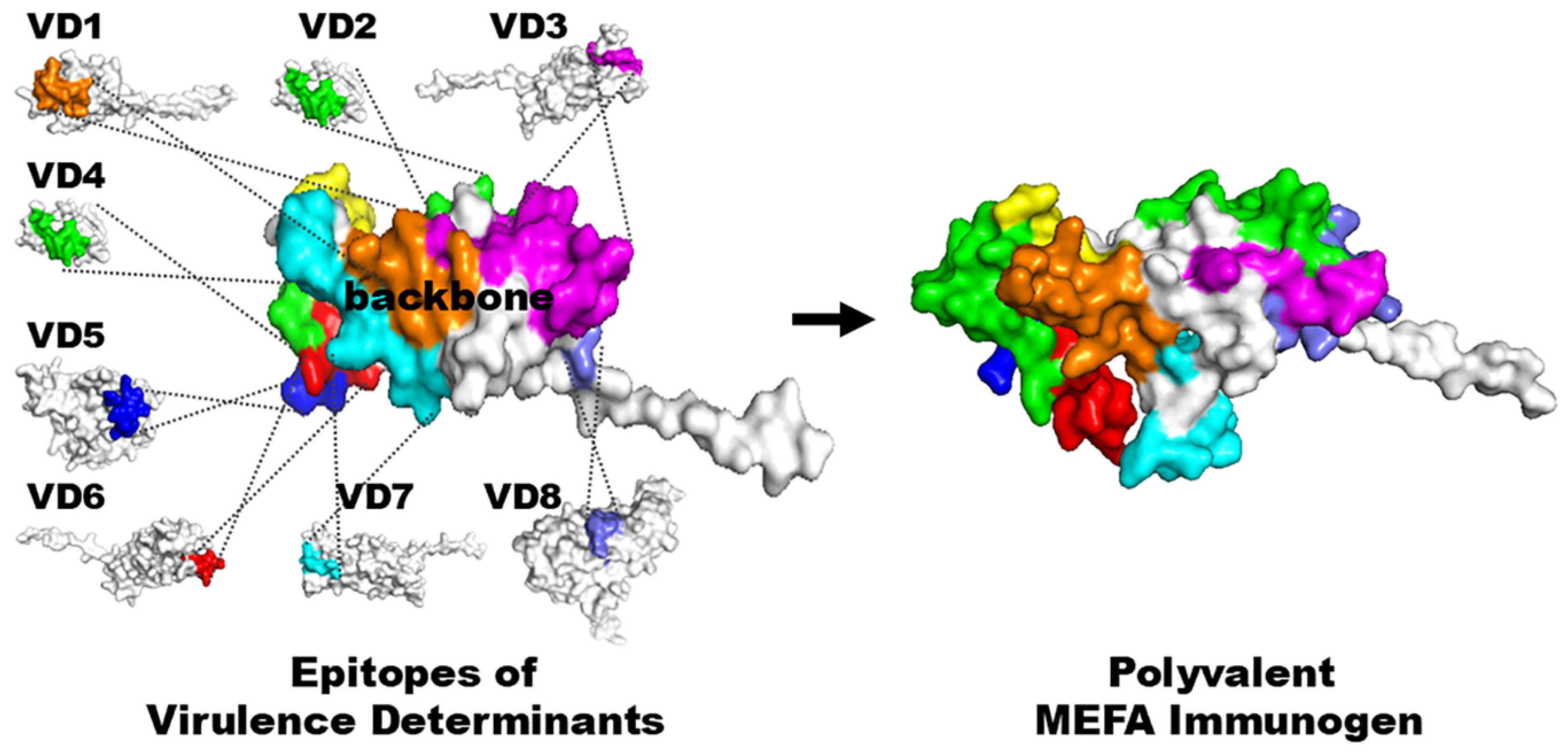
Figure 1. Scheme of the epitope- and structure-based multiepitope-fusion-antigen (MEFA) vaccinology platform in constructing a polyvalent immunogen for broad immunity and cross-protection against heterogeneous virulence factors or strains. (This figure was modified from Figure 1 of Microorganism 2023, 11(10):e11102473 [56]).
Microorganisms 13 02866 g001
Figure 2. Illustration of the polyvalent ETEC adhesin immunogen, CFA/I/II/IV MEFA. Assisted by the MEFA platform, we presented the B-cell epitopes of the major subunits from seven ETEC adhesins (CFA/I, CS1-CS6) on the backbone CFA/I major subunit CfaB to generate a polyvalent protein immunogen CFA/I/II/IV MEFA.
Microorganisms 13 02866 g002
Figure 3. Illustration of the polyvalent ETEC toxoid fusion protein immunogen, 3xSTaN12S-mnLTR192G/L211A. By genetically fusing three copies of STa toxoid, STaN12S, to a monomeric LT double mutant, mnLTR192G/L211A, we created an STa-LT toxoid fusion immunogen. Note: STa toxoid is in rd.
Microorganisms 13 02866 g003
Figure 4. Scheme of MecVax, a protein-based multivalent ETEC vaccine candidate. MecVax is composed of two polyvalent proteins, CFA/I/II/IV MEFA and toxoid fusion 3xSTaN12S-mnLTR192G/L211A to protect against the seven most significant ETEC adhesins (CFA/I, CS1-CS6) and two enterotoxins (STa and LT), which are associated with all ETEC clinical cases. Note: CFA adhesin epitopes and STa toxoid are indicated in different colors.
Microorganisms 13 02866 g004
Disclaimer/Publisher’s Note: The statements, opinions and data contained in all publications are solely those of the individual author(s) and contributor(s) and not of MDPI and/or the editor(s). MDPI and/or the editor(s) disclaim responsibility for any injury to people or property resulting from any ideas, methods, instructions or products referred to in the content.