Article

Comparative Effects of Cigarette Smoke and Heated Tobacco Product Aerosols on Biofilm Production by Respiratory Pathogens


by
Pavel Schiopu
1,2,
Dan Alexandru Toc
1,*,
Ioana Alina Colosi
1,
Carmen Costache
1,
Paul-Ștefan Panaitescu
1,
Vlad Sever Neculicioiu
1,*,
Codrina Mihaela Gorcea
3,
Tudor-Ioan Zăgărin
3,
Andreea Roxana Murarasu
3 and
Doina Adina Todea
2
1
Department of Microbiology, “Iuliu Hațieganu” University of Medicine and Pharmacy, 400012 Cluj-Napoca, Romania
2
Department of Pneumology, “Iuliu Hațieganu” University of Medicine and Pharmacy, 400332 Cluj-Napoca, Romania
3
Faculty of Medicine, “Iuliu Hațieganu” University of Medicine and Pharmacy, 400012 Cluj-Napoca, Romania
*
Authors to whom correspondence should be addressed.
Microorganisms 2025, 13(11), 2459; https://doi.org/10.3390/microorganisms13112459
Submission received: 29 September 2025 / Revised: 23 October 2025 / Accepted: 23 October 2025 / Published: 28 October 2025
(This article belongs to the Special Issue Research on Biofilm)

Abstract

Biofilms are involved in both acute and chronic respiratory infections. While cigarette smoke extract (CSE) has been shown to increase biofilm formation by certain respiratory pathogens, the impact of emerging heated tobacco products (HTPs) remains unclear. We compared the effects of CSE with two HTP aerosol extracts on biofilm biomass and metabolic activity of common respiratory pathogens. Reference strains of Staphylococcus aureus, Pseudomonas aeruginosa, Klebsiella pneumoniae, Streptococcus pneumoniae, and non-typeable Haemophilus influenzae (NTHi), known respiratory pathogens, were grown as 24 h biofilms in 96-well plates (48 h for S. aureus and P. aeruginosa). These were exposed to CSE and HTP extracts from iQOS™ (Terea™ Turquoise, ILUMA™ device) and glo™ (neo™ Azure, HyperPro™ device), prepared in liquid culture media. Biofilm density was quantified by the crystal violet assay. Metabolic activity (planktonic and biofilm) was assessed by MTT reduction to formazan. At 24 h, CSE markedly reduced H. influenzae biomass versus iQOS™, glo™, and control, while K. pneumoniae, S. aureus, and P. aeruginosa showed no significant biomass differences. At 48 h, CSE significantly increased biomass in P. aeruginosa and S. aureus versus other exposures. Biofilm MTT assay measured metabolic activity increased in CSE exposure for K. pneumoniae versus iQOS™ and control, and for S. aureus versus control. Overall, HTP extracts showed limited, inconsistent effects compared with CSE, indicating combustion-derived constituents more strongly promote biofilm maturation in this model.

1. Introduction

1.1. Biofilm Formation in the Pathogenesis of Acute and Chronic Lung Infections

Bacterial biofilms are structured communities of microorganisms encased in a self-produced extracellular matrix (“slime”) composed of polysaccharides, proteins, and extracellular DNA (eDNA). This matrix acts as a protective barrier, shielding bacteria from antibiotics and the host’s immune system, contributing to persistent infections and chronic inflammation [1].
Biofilms are implicated in respiratory infections, both acute and chronic. As early as 1980, the presence of P. aeruginosa mucoid microcolonies in cystic fibrosis pulmonary tissue was demonstrated [2]. They have been detected in the sputum of patients suffering from pneumonia and chronic obstructive pulmonary disease (COPD) [3,4,5], being described as similar to those in cystic fibrosis (CF) [3], where their role in pathogenesis is better established [6]. They can rapidly colonize endotracheal tubes and serve as polymicrobial reservoirs that seed ventilator-associated pneumonia [7].
Previously thought to be a means of bacterial persistence in chronic infections, biofilms have been shown to predominate versus planktonic bacteria in sputum samples not only in chronic conditions such as COPD and CF, but also in community-acquired pneumonia (CAP), an acute disease, using quantitative confocal fluorescence microscopy [5].
The clinical relevance of these findings comes from the fact that both bacterial and fungal biofilms can be extremely resistant to treatment or removal. In diseases of the respiratory system, such as CF and Aspergillus infections, drug-tolerant biofilm aggregates have been shown to drive chronic disease and treatment failure [7].

1.2. Smoking and COPD

Smoking remains one of the most significant risk factors for COPD [8]. Compared to non-smokers, cigarette smokers experience respiratory symptoms and impaired lung function more frequently, have a more rapid yearly decline in forced expiratory volume in 1 s (FEV1), and face a higher risk of dying from COPD [9]. Despite its known harm, around 40% of patients with COPD continue to smoke, which worsens symptoms and long-term outcomes [10,11].
Patients who continue to smoke have a significantly higher risk of hospitalization due to COPD exacerbations [12]. These can be triggered by viral, bacterial, or mixed respiratory infections, as well as by environmental factors such as air pollution or temperature changes. Bacterial or mixed (bacterial and viral) infections are implicated in nearly half (49.5%) of exacerbations [13].
Any effect of tobacco products on bacterial biofilm formation is therefore particularly relevant in COPD patients, since many continue smoking even after diagnosis, thereby exposing their respiratory microbiota to cigarette smoke, electronic cigarette vapor extract (ECVE), and heated tobacco product (HTP) aerosols.

1.3. Conventional Cigarette Smoke Effect on Biofilm Formation by COPD and Pneumonia Associated Pathogens

The most frequently isolated bacteria in COPD exacerbations are Haemophilus influenzae, Pseudomonas aeruginosa, Acinetobacter baumannii, Klebsiella pneumoniae, Streptococcus pneumoniae, Escherichia coli, Haemophilus parainfluenzae, and Staphylococcus aureus [14].
Among them, S. aureus, P. aeruginosa, and S. pneumoniae have been found to produce a denser biofilm when exposed to cigarette smoke extract/condensate [15,16,17,18,19,20,21,22].

1.4. Emergence of Heated Tobacco Products (HTPs) Such as iQOS™ and Glo™

In recent years, the tobacco industry has reintroduced heated tobacco products (HTPs), also called tobacco heating products. The main characteristic that differentiates HTPs from regular, traditional combustible cigarettes (TCCs) is that it is heated (using a specific electronic device) to a lower temperature, 350–550 °C, than when they are burned in conventional cigarettes (900 °C) [23,24]. However, charring due to pyrolysis has also been demonstrated in iQOS™ [23]. Innovative technologies, design, marketing, and health-related claims associated with these products have weakened tobacco control measures in some countries, where there were relatively strict laws for regulating conventional cigarettes, and attempts by the tobacco industry to reposition itself as a public health partner. Descriptions such as “heat-not-burn”, “smoke-free”, and “ash-free” have prompted regulatory disputes over inclusion in smoke-free policies. HTPs generate aerosols that contain toxic products, many at lower levels than those in conventional cigarette smoke, but in some cases at higher levels. These harmful and potentially harmful constituents (HPHC–Harmful and Potentially Harmful Constituents) include nicotine, carbon monoxide, formaldehyde, acrolein, and various tobacco-specific nitrosamines [25].
Although some studies show that these products generate fewer HPHCs overall compared to traditional cigarettes [26,27] many of those studies are funded by tobacco industry companies [27,28]. The WHO maintains that a lower level of HPHCs does not necessarily mean a lower risk and that the long-term health effects of these products remain unknown, and further studies should be conducted to determine health risks [25].
It is expected that HTPs will achieve a significant market share [29]. A meta-analysis including studies from 42 countries found a 1.5% prevalence of HTP use. A proportion of 5% of the population has used HTPs at least once, with a prevalence of 5.25% among adolescents. Usage is higher in Europe and the Western Pacific region, with an upward trend between 2015 and 2020 [30].

1.5. HTP Substitution in COPD

There is some interest regarding the health effects of substituting cigarettes with HTPs as a therapeutic intervention in COPD. One small cohort study has evaluated the long-term impact of HTP use in COPD patients, showing that switching from cigarettes to HTPs, either exclusively or with a ≥70% reduction in cigarette use, led to sustained improvements over three years. Patients experienced about a 40% reduction in exacerbations and respiratory symptoms, higher exercise tolerance, and improved quality of life, outcomes comparable to those seen with rehabilitation programs or standard medications [31]. However, the Global Initiative for Chronic Obstructive Lung Disease (GOLD) guidelines maintain that quitting smoking has the greatest potential to improve quality of life, reduce symptom burden, and lower the frequency of exacerbations [8], and do not currently recommend switching to heated tobacco products (HTPs). Similarly, a 2022 Cochrane review concluded that there is insufficient evidence to support recommending HTPs as a smoking cessation method [28].
We chose to investigate the tobacco products in equal concentrations in cigarettes or sticks per volume of media, to better reflect the practical exposure of a user. The number of cigarettes smoked versus the number of HTP sticks consumed per day does not differ by a large amount. Daily smokers smoke 16 cigarettes per day, while daily iQOS users consume on average 15 sticks per day, and glo users 13 sticks per day [32].

1.6. Gaps in Knowledge About the Effect of Cigarette Smoke and HTPs on Biofilm Formation

Cigarette smoke has been shown to increase biofilm formation by the respiratory tract pathogens, namely S. pneumoniae, S. aureus, and P. aeruginosa [15,16,17,18,19,20,21,22]. An effect on H. influenzae has been investigated but not demonstrated [22]. We have not been able to identify studies investigating this effect in K. pneumoniae, another important respiratory pathogen.
For HTPs, however, there is very little published evidence of biofilm promotion. Given that in some respiratory pathogens (S. aureus, P. aeruginosa, and S. pneumoniae) an increase in biofilm formation was demonstrated not only with CSE exposure but also with electronic cigarette vapor extract (ECVE) exposure [22], in which combustion compounds are absent, it is plausible that HTPs would have a similar effect.
Any biofilm-promoting activity of HTPs would be highly relevant to their evaluation as substitution therapies, given that biofilm formation is a well-recognized pathogenic mechanism in many infectious diseases, including respiratory infections [6,33], where it contributes to chronicity and renders antimicrobial therapy less effective [33].

1.7. Aim

The aim of this study was to investigate the effects of vapors generated by heated tobacco products (HTPs) on biofilm formation by bacteria frequently involved in respiratory infections, and to compare these effects with those of cigarette smoke.
The hypothesis was that HTP vapors increase biofilm formation by these respiratory pathogens.

2. Materials and Methods

2.1. Bacterial Strains

Overnight cultures of bacterial strains were performed from frozen (−80 °C) stocks on solid non-selective media, namely S. aureus ATCC 25923, P. aeruginosa ATCC 27853, K. pneumoniae ATCC 700603, S. pneumoniae ATCC 49619, on Columbia agar with sheep blood (Oxoid, Basingstoke, UK), and non-typeable H. influenzae ATCC 49247 on chocolate agar (Bio-Rad, Hercules, CA, USA).

2.2. Preparation of Smoke and Vapor Extracts

In order to expose the bacteria to the various water-soluble compounds produced by cigarettes and HTPs, an established method was adapted [34]. Smoke from Marlboro Red™ cigarettes (containing 0.8 mg nicotine, 10 mg tar, and 10 mg carbon monoxide per cigarette) was bubbled through liquid culture media. The HTPs used were Terea™ (Philip Morris International Inc., Stamford, CT, USA) turquoise variant (4/10 intensity listed on the manufacturer’s website), used with an iQOS™ ILUMA™ device and glo™ neo™ Azure sticks with a glo™ HyperPro™ device, used in boost mode, according to the manufacturer’s instructions.
The concentrations used were 2 cigarettes per 50 mL and 2 HTP sticks per 50 mL. To approximate real-world exposure, we normalized extract concentrations by unit of product consumed—one conventional cigarette or one heated tobacco product (HTP) stick—per volume of medium. This approach is behavior-anchored, as daily consumption is broadly similar across products; daily cigarette smokers average ~16 cigarettes/day, while daily HTP users report comparable stick counts (IQOS ≈ 15 sticks/day; glo ≈ 13 sticks/day) [32].
The media utilized were BHI (Brain Heart Infusion) broth (Oxoid, United Kingdom), sBHI–BHI supplemented with 10 µg/mL hemin (Oxoid, United Kingdom), and 10 µg/mL β-NAD (Oxoid, UK), and TSB–Tryptone Soy Broth (Oxoid, UK). For S. aureus, P. aeruginosa, and K. pneumoniae, the extracts were prepared in TSB; for S. pneumoniae and non-typeable H. influenzae, the extracts were prepared in BHI and sBHI.
The resulting liquids were filter sterilised using 0.45 μm and 0.2 μm filters (Macherey-Nagel, Hoerdt, France).

2.3. Evaluating Biofilm Density: Biofilm Culture and Crystal Violet Staining

Biofilms were grown in tissue-culture-treated 96-well polystyrene plates (VWR, Radnor, PA, USA) according to a published protocol [35]. Bacterial suspensions were prepared by adjusting overnight liquid cultures to 1.5 × 10⁸ CFU/mL using a McFarland densitometer (BioMérieux, France), then diluting 100 μL into 10 mL of species-appropriate broth. The target concentration was 7.5 × 10⁵ CFU/mL (final in well) and was verified by serially diluting and plating on solid media.
Wells were inoculated with 100 μL bacterial suspension and 100 μL of smoke/vapor extract. The microtiter plates were incubated for 24 h at 37 °C, with 10% CO2 for S. pneumoniae and H. influenzae. A water tray was placed inside the incubator to maintain high humidity. For S. aureus and P. aeruginosa 48 h biofilms were grown as well, with media replenishment (1/4 of volume) after 24 h. After removing the planktonic cells, biofilms were fixed with methanol (20 min), stained with 0.1% crystal violet w/v, eluted in 95% ethanol, and absorbance was measured at 620 nm using a microplate spectrophotometer type 250 (BioMérieux, Craponne, France).
On each plate, six wells were filled only with culture media (negative controls), and three wells were assigned to each species + exposure condition. The whole experiment was repeated three times.
Following incubation, planktonic cell optical density at 620 nm was measured as well to determine if the extracts had bacteriostatic effects. The media used as a negative control was inoculated on Columbia agar to verify sterility. The content of wells containing only bacteria (growth controls) was plated as well to check culture purity.

2.4. Evaluating Metabolic Activity of Planktonic Bacteria

The metabolic activity of CSE and HTP-exposed planktonic cultures was measured in a 3-(4,5-dimethylthiazol-2-yl)-2,5-diphenyltetrazolium bromide (MTT) assay [36]. Briefly, after 18 h of incubation, the supernatant containing planktonic cells was carefully transferred to new sterile plates to avoid disturbing the adherent biofilms. A freshly prepared MTT solution (final concentration 0.5 mg/mL) was added, and plates were incubated for 4 h at 37 °C, protected from light. Metabolically active bacteria reduced MTT to purple formazan crystals, which were subsequently solubilized using 100 μL dimethyl sulfoxide (DMSO). After a 20 min incubation on an orbital shaker (70 RPM), absorbance was measured at 620 nm using 690 nm as a reference wavelength. Background absorbance from blank wells was subtracted, and results were normalized to negative control wells (liquid culture media). The reagents were procured from Sigma-Aldrich (Sigma-Aldrich, St. Louis, MO, U.S.A.)

2.5. Evaluating Biofilm Metabolic Activity

After 18 h of incubation, planktonic cells and spent medium were carefully removed, and wells were washed three times with sterile PBS to eliminate unattached bacteria. A freshly prepared MTT solution (0.5 mg/mL) was added to each well, and plates were incubated in the dark at 37 °C for 4 h to allow metabolically active cells within the biofilm to reduce MTT to purple formazan crystals. The MTT solution was then removed without disturbing the biofilm, and formazan crystals were solubilized by adding DMSO and shaking for 20 min at room temperature. Absorbance was measured at 620 nm using a microplate reader, with 690 nm as the reference wavelength. Background values from negative control wells (liquid culture media) were subtracted.

2.6. Fluorescent Staining and Microscopy

Biofilms were grown on steam-sterilized round glass coverslips placed in 6-well plates. Each well contained 1 mL of an overnight culture of the respective species, mixed 1:1 with the extracts described above. Uninoculated medium served as the negative control. Plates were incubated for 24 h at 37 °C. Following incubation, coverslips were rinsed twice with PBS, fixed in 4% paraformaldehyde, and blocked for 20–30 min with blocking buffer (10% sheep serum, 0.05% Tween-20 in PBS), then rinsed to minimize background.
Staining protocols varied by species. For H. influenzae biofilms, 200 µL of FilmTracer™ SYPRO® Ruby Biofilm Matrix Stain (ready-to-use) was applied for 30 min at room temperature, followed by three rinses with filter-sterilized water.
S. aureus biofilms were first stained with 200 µL SYTO® 9 (5 μM in PBS) for 15 min at room temperature in the dark. To visualize GlcNAc-rich exopolysaccharides and peptidoglycan, Alexa Fluor™ 594 wheat germ agglutinin (WGA; 5 μg/mL) was then applied for 20 min.
For P. aeruginosa, K. pneumoniae, and S. pneumoniae, the first stain was SYTO® 9 as described above, followed by Texas Red®-conjugated concanavalin A (ConA; 200 µg/mL in PBS, 20 min) to detect biofilm matrix polysaccharides.
Between staining steps, coverslips were gently rinsed three times with PBS to reduce background and preserve biofilm structure. After a final rinse (twice with PBS, once with filter-sterilized water), coverslips were air-dried and mounted face-down on glass slides with a drop of anti-fade mounting oil.
The slides were examined using a Zeiss Axio Lab A1 epifluorescence microscope (Carl Zeiss Microscopy GmbH, Oberkochen, Germany), equipped with a 100×/1.25 oil immersion objective lens, a 470 nm LED with filter set 9, a 530 nm LED with filter set 14, and an Erc 5 s camera (Carl Zeiss Microscopy GmbH, Germany). Image post-processing consisted of a minimal contrast increase that was applied identically across all images within the same staining set.
All stains were obtained from Thermo Fisher Scientific, Waltham, MA, USA.

2.7. Statistical Analysis

For CV assays, 620 nm readings were first adjusted by subtracting ODc (the average OD of the negative control + 3 SD of the negative control), as recommended by Stepanović et al. [35]. For MTT assays, 620 nm was first adjusted by subtracting 690 nm as the reference wavelength, then subtracting the average OD of the negative (sterility) control wells containing only the liquid culture media.
The microtiter plate layout included three replicates per bacterium and condition, and the experiment was repeated three times.
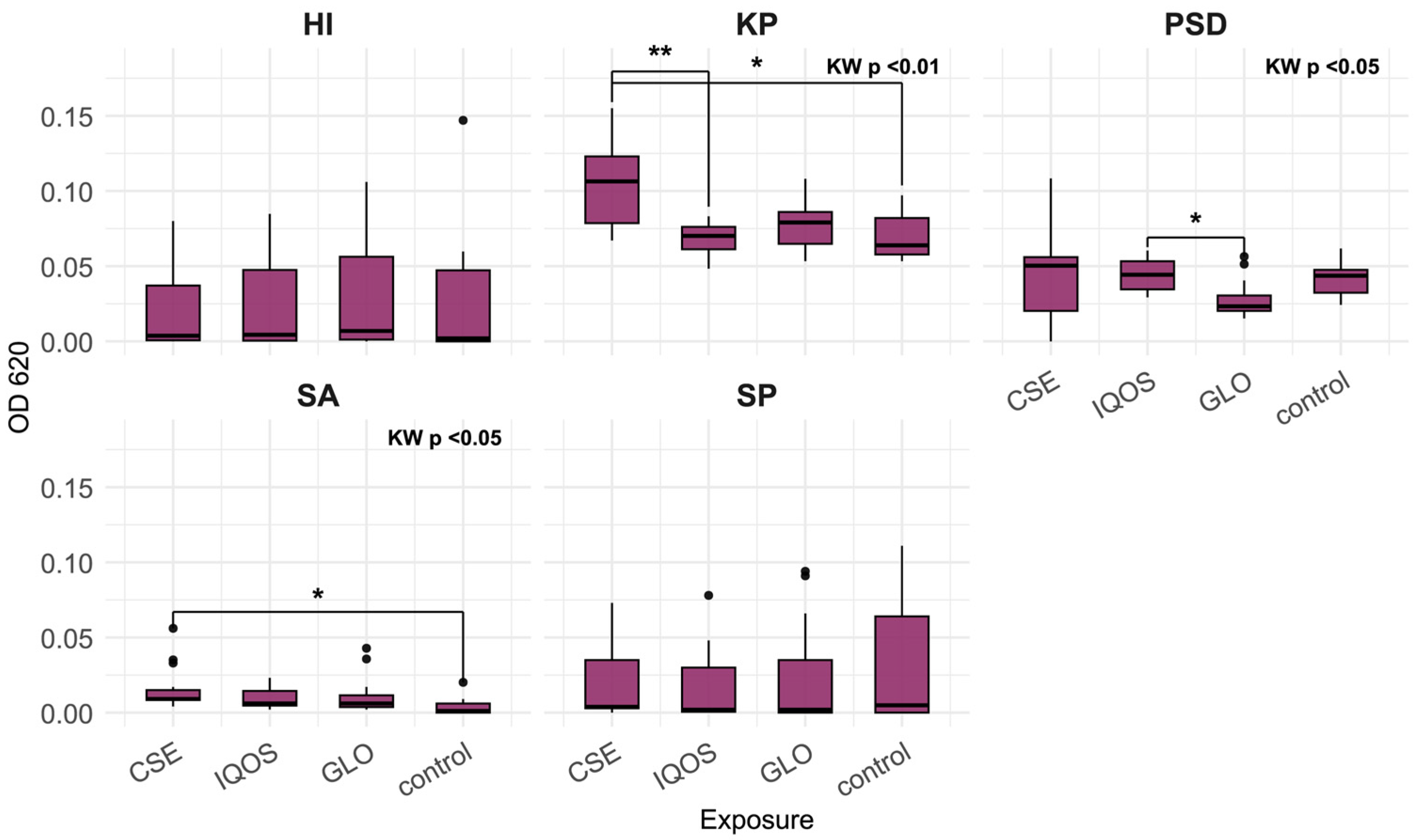
A Kruskal–Wallis test within each strain–time subset to check for overall differences among groups without assuming normality. To account for multiple testing across species, the Benjamini–Hochberg procedure was applied to control the false discovery rate (FDR). The value of p < 0.05 was considered significant. Where the adjusted Kruskal–Wallis p-value was below 0.05, a Dunn’s post-hoc pairwise test with Holm correction was performed. Kruskal–Wallis significance levels are shown as text labels, while Dunn’s pairwise comparisons are marked with brackets and stars (“*” for p < 0.05, “**” for p < 0.01).
Box plots display the median as the central line, the box spanning the interquartile range (Q1–Q3), whiskers extending to the most extreme values within 1.5 × IQR, and individual points beyond the whiskers plotted as outliers.
The software used for running the statistical tests and graphics generation was R version 4.5.0 [37] using RStudio version 2025.05.01+513 [38].

3. Results

3.1. Effect of CSE and HTP Extract on Biofilm Density (Crystal Violet Assay)

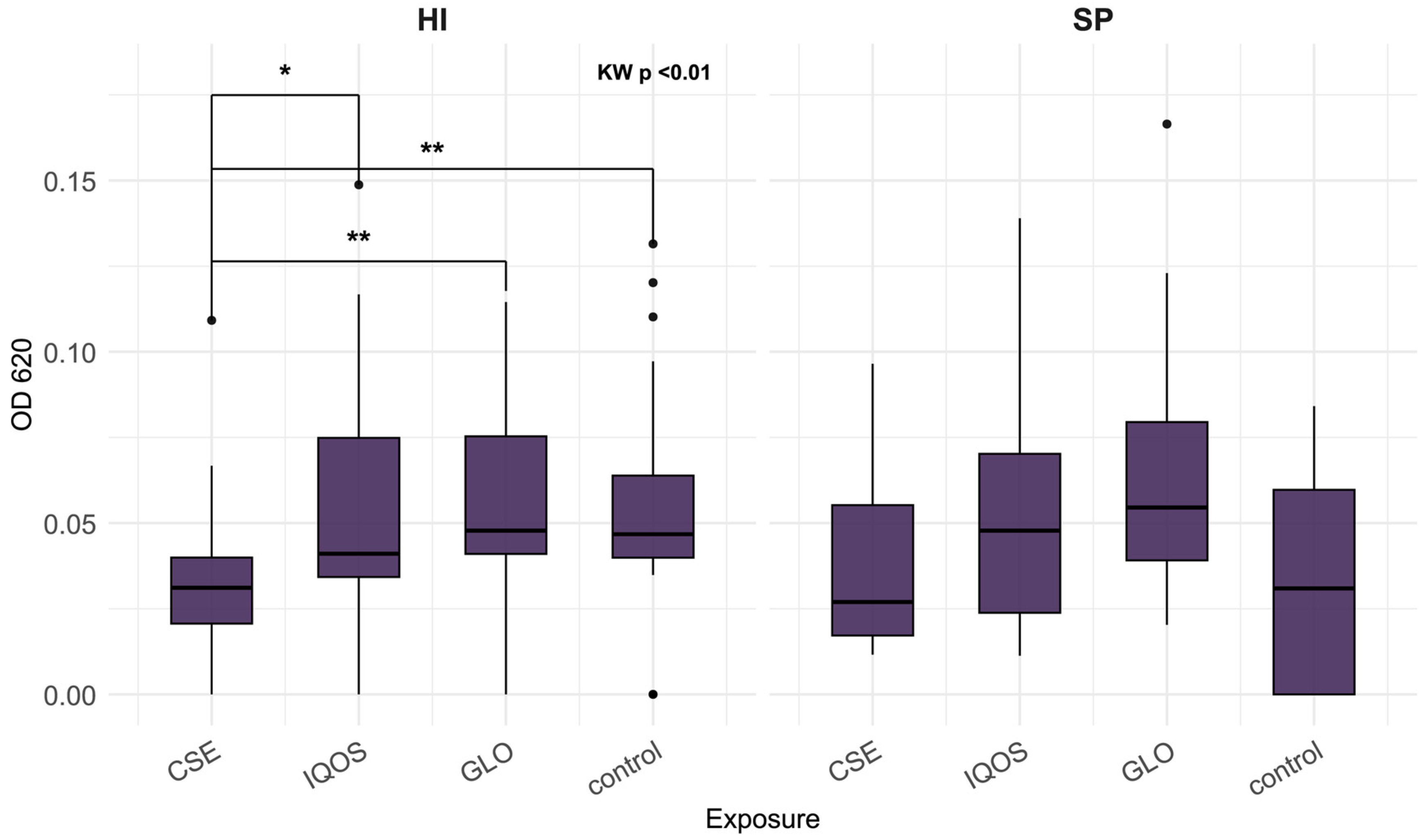
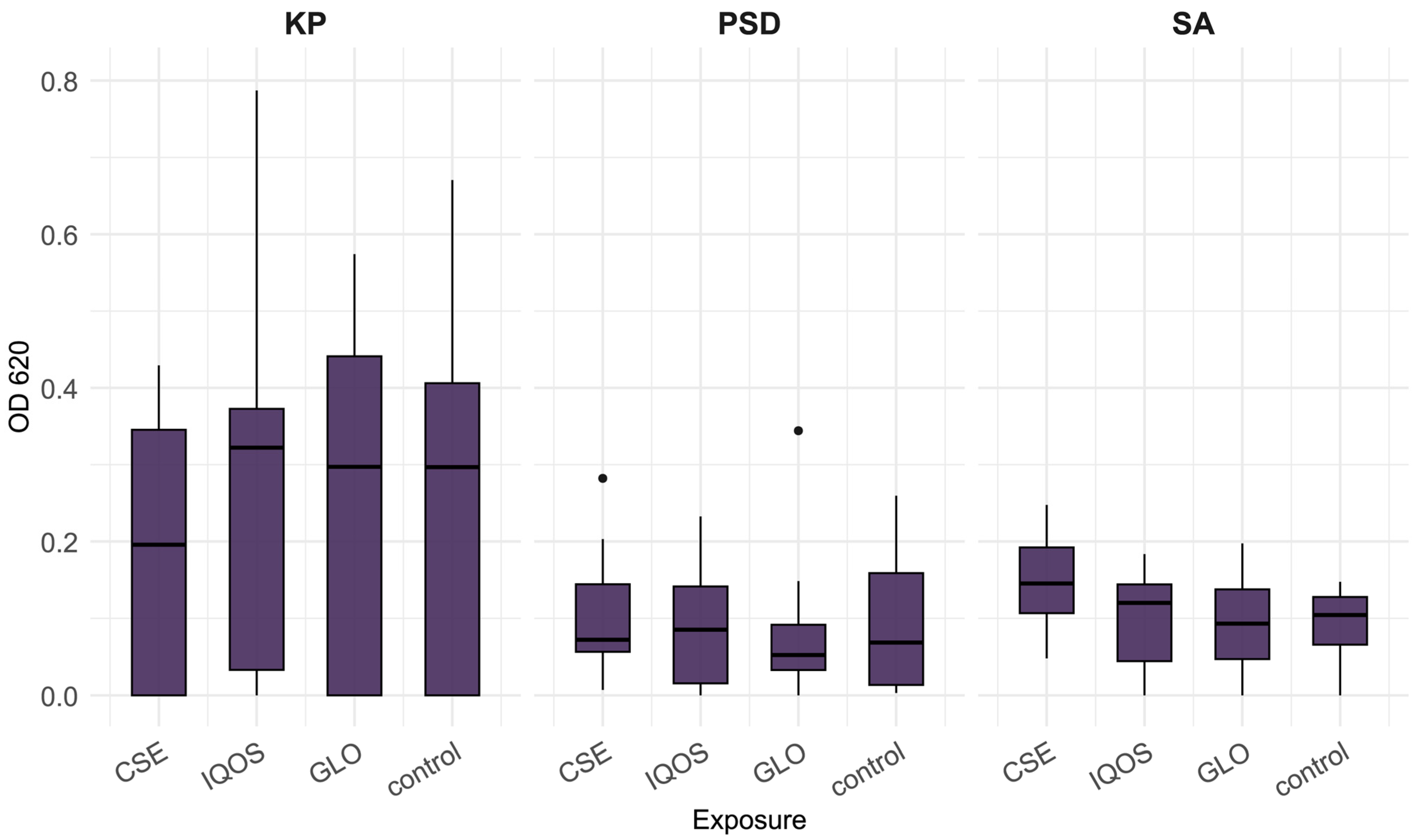
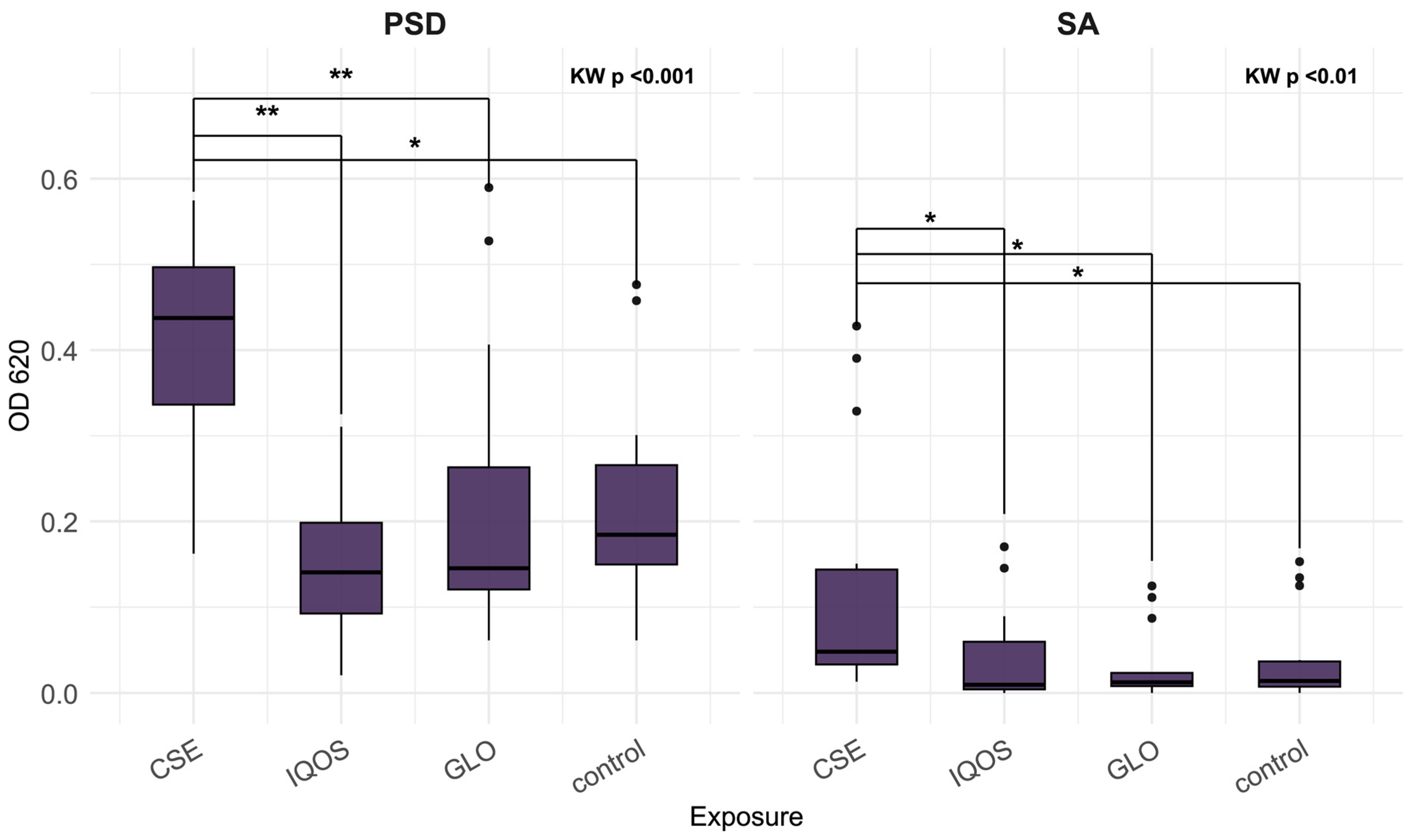
The distributions for CSE, iQOS, glo, and control indicate that the effects of tobacco product extracts on 24 h biofilm vary across species, both in direction and magnitude (Figure 1, Figure 2 and Figure 3). At 24 h, K. pneumoniae, S. aureus, and P. aeruginosa biofilms did not differ significantly across exposures (Figure 1). In contrast, H. influenzae biofilms showed a marked reduction in biomass under CSE exposure compared with all other conditions, including the heated tobacco product (HTP) extracts (Kruskal–Wallis p < 0.01; Figure 2). By 48 h, the pattern shifted, CSE exposure resulted in substantially increased biofilm density in both P. aeruginosa and S. aureus, with median values for P. aeruginosa at least twofold higher than those observed for iQOS, glo, or control (Kruskal–Wallis p < 0.001 and p < 0.01, respectively; Figure 3). It is apparent that glo-exposed S. pneumoniae biofilms were the most dense; however, this was not a significant result (Figure 2).

3.2. Effect of CSE and HTP Extract on Bacterial Metabolic Activity (MTT Assay)

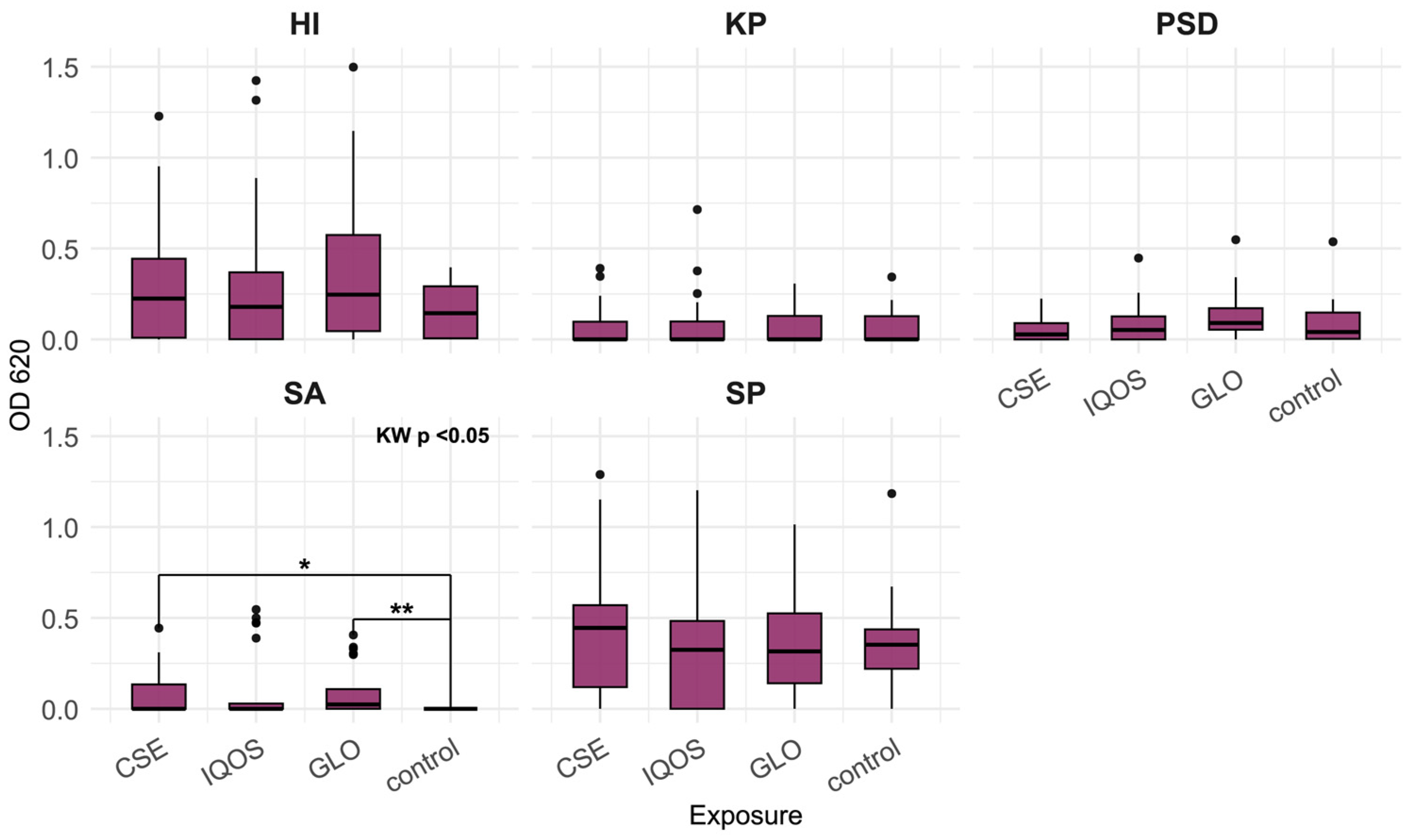
The results in Figure 4 show that the metabolic activity of S. aureus planktonic cells is significantly increased in both glo and CSE (p < 0.05).

3.3. Effect of CSE and HTP Extract on Biofilm Metabolic Activity (Biofilm MTT Assay)

Figure 5 shows a more intense reduction of MTT to formazan in CSE-exposed biofilms relative to iQOS and control in the case of K. pneumoniae and relative to control in the case of S. aureus.

3.4. Biofilm Structure and Matrix Composition

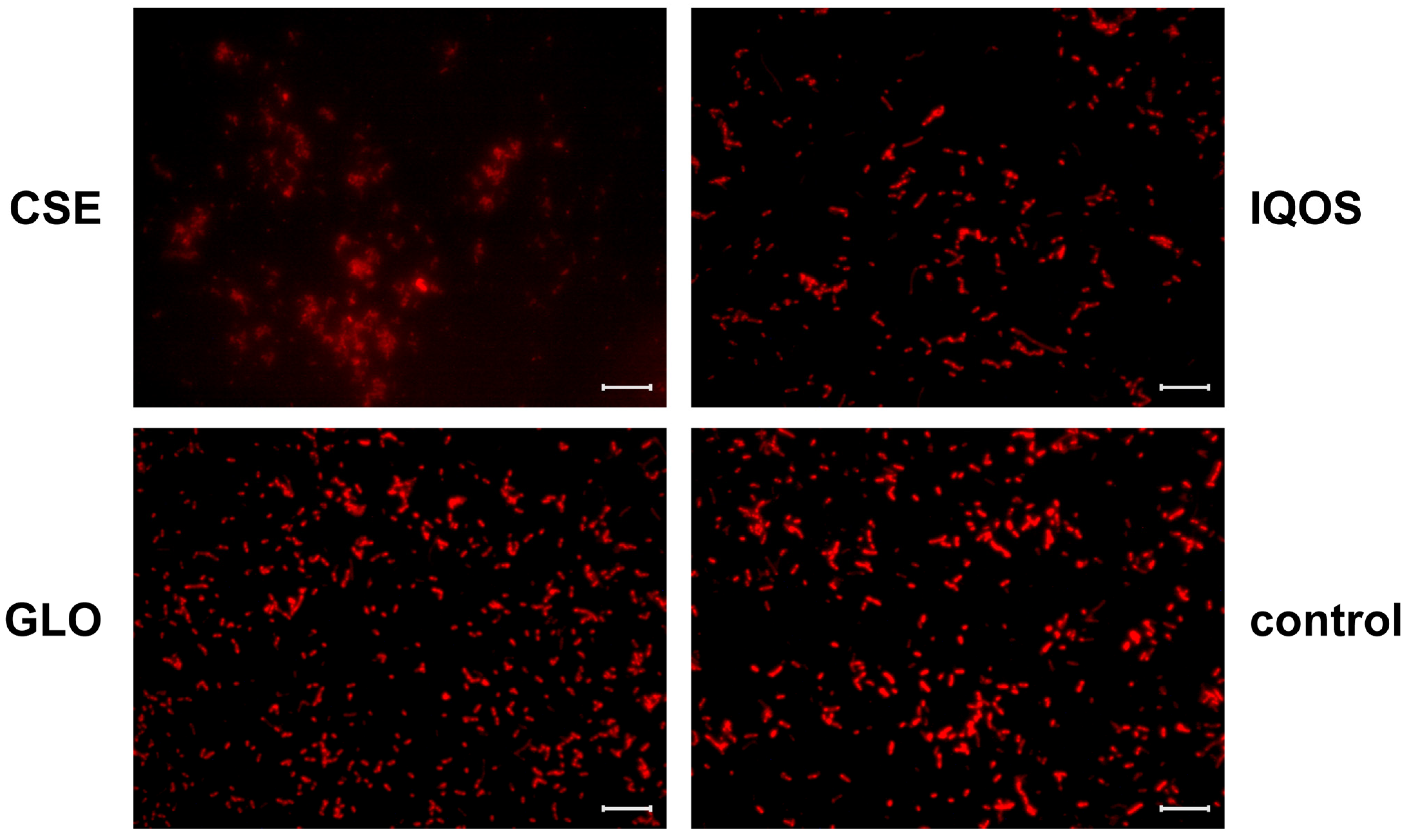
CSE exposure resulted in less dense H. influenzae biofilms than those formed under iQOS, GLO, or control conditions (Figure 6).
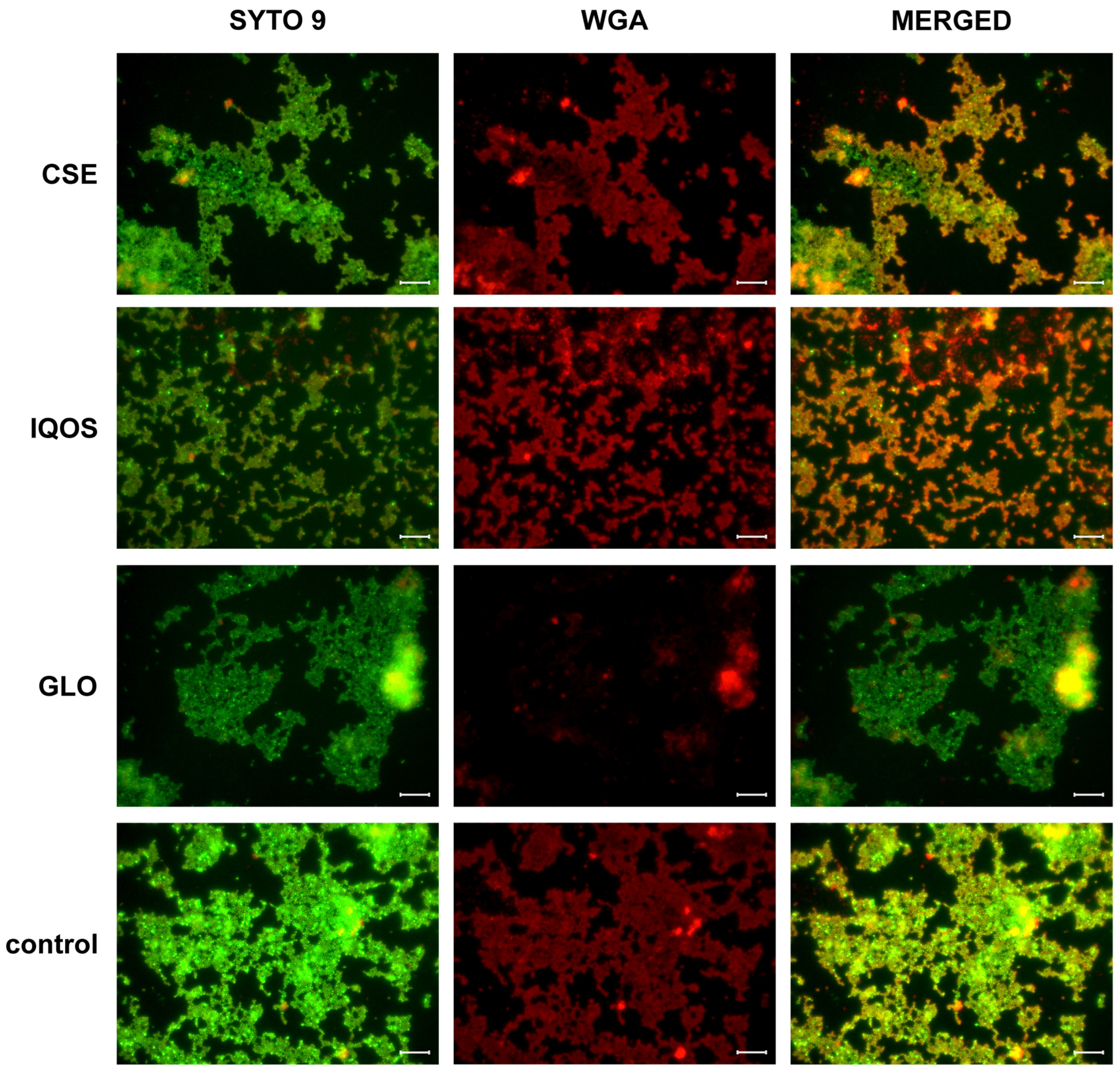
In S. aureus biofilms, SYTO® 9 and WGA staining show that glo exposure produced a decrease in WGA-AF594 signal, suggesting reduced GlcNAc-rich matrix (Figure 7).
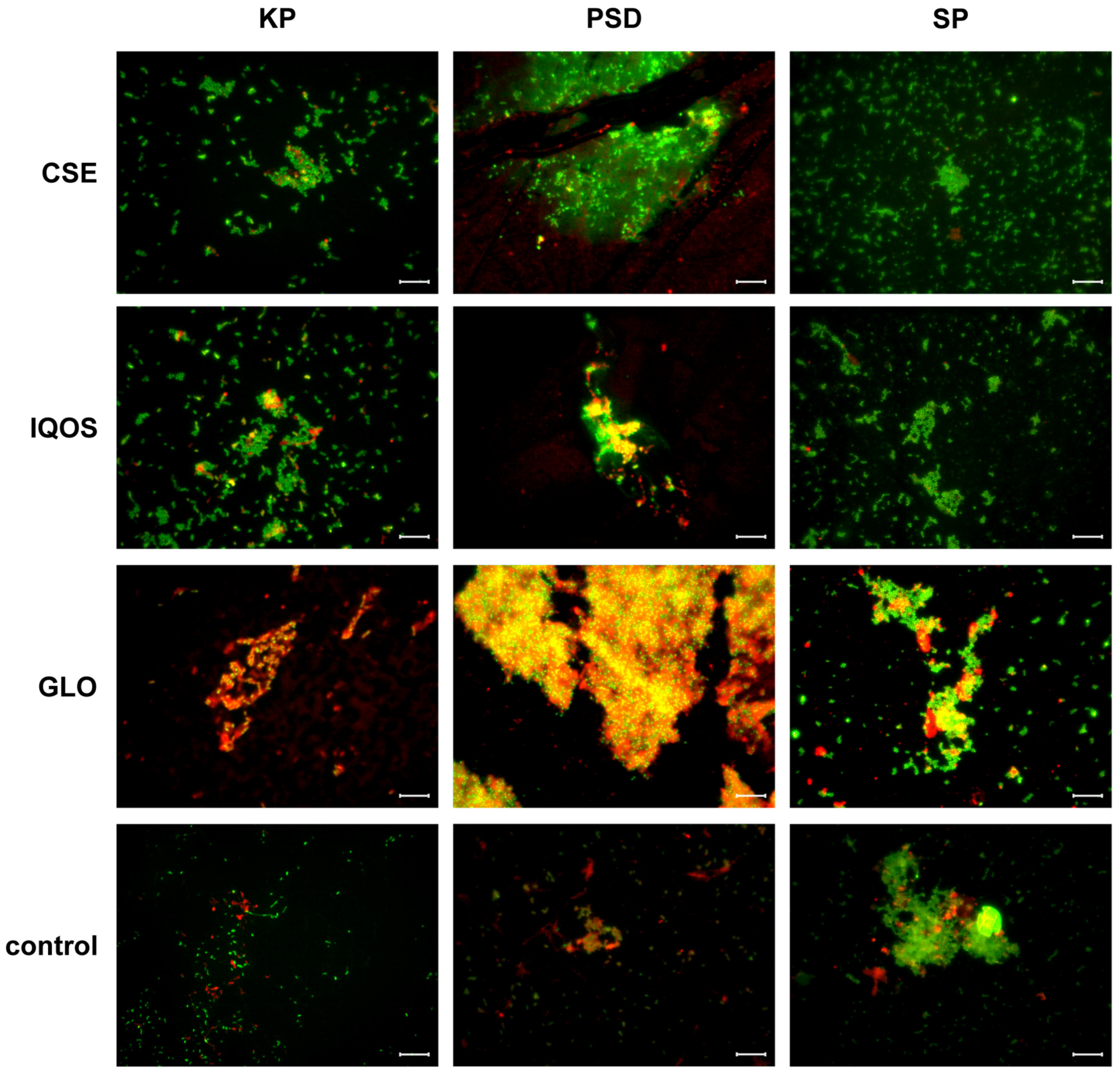
Qualitative comparison of the micrographs suggests that biofilms exposed to glo extract exhibited stronger Texas Red-ConA staining of the extracellular matrix (Figure 8 and Figures S1–S3). This observation indicates a possible increase in matrix polysaccharides in K. pneumoniae, P. aeruginosa, and S. pneumoniae following glo exposure.

4. Discussion

Our study shows that, while tobacco products can increase biofilm production by species commonly isolated in respiratory infections, this effect is variable, depending on the type of tobacco product, the length of exposure, and the species/strain examined. This variability is a common theme across multiple studies in this area [39].

4.1. Biofilm Density

In H. influenzae, our crystal violet assay data show that CSE exposure produced a decrease in biofilm density compared to iQOS, glo, or control. One study investigated H. influenzae in vitro, finding no significant difference for CSE exposure and electronic cigarette vapor extract (ECVE) exposure [22]. By contrast, in an in vivo COPD ferret model, cigarette smoke exposure enhanced H. influenzae biofilm formation [40].
We did not find a significant effect in the case of K. pneumoniae biofilm density. One small study on chronic rhinosinusitis isolates has found an increase in biofilm density after, albeit with a slightly different method-direct colony exposure to tobacco smoke [16].
Both CSE and electronic cigarette vapor extract (ECVE) exposure have been shown to promote P. aeruginosa biofilm production [22]. We also observed an effect of CSE, but only in 48 h biofilms, and not 24 h biofilms. A study by Antunes et al. found that for P. aeruginosa in a slightly different 96-well plate model, found that 2 or 3 daily exposures were required for biofilm mass to increase significantly [21]. Smoke exposure was found to upregulate motility genes (flgK, pilF), which promote surface attachment and microcolony formation, and to alter quorum-sensing genes; lasI was upregulated, rhlA downregulated, and lasB unchanged. The extracellular matrix gene algC (involved in alginate biosynthesis) was also significantly induced. Parallel experiments with hydrogen peroxide showed that oxidative stress alone can trigger similar, dose- and time-dependent increases in biofilm mass, suggesting that smoke-induced oxidative stress is one driver of the phenotype [21].
An effect of CSE [19,22,41] and of ECVE [22] increases in the density of S. aureus biofilms were previously demonstrated. We replicated the effect of CSE on S. aureus, but only in more mature 48 h biofilms. This difference might highlight regional variation in the composition of unstandardized cigarettes, non-chemically defined culture media, or the polystyrene plates used. Kulkarni et al. have described a mechanism for this effect, namely the induction of oxidative stress, which upregulates oxidoreductase defenses, suppresses the agr quorum-sensing system, and stimulates adhesin expression. The resulting biofilms are rich in eDNA and proteins, more adhesive to host substrates, and likely more resilient [19]. One study found that nicotine exposure increased in Staphylococcus aureus biofilm formation in a dose-dependent manner, characterized by enhanced initial attachment, greater extracellular DNA release, and higher autolysis, with upregulation of lytN and atlA. These effects were linked to suppression of the accessory gene regulator (Agr) quorum-sensing system, since nicotine downregulated agrA–D and the phenotype was absent in agrA and agrC mutants [42].
Unlike prior reports, we did not observe a CSE-mediated increase in S. pneumoniae biofilm biomass [22]. Mutepe et al. showed denser pneumococcal biofilms in the presence of cigarette smoke, most notably at lower CSC concentrations, and they cautioned that prolonged, higher-dose CSC may inhibit growth [18]. Methodological and chemical differences likely explain the discrepancy with our following results: CSC (tar-rich, DMSO-solubilized) versus our aqueous CSE capture distinct smoke fractions, doses, and exposure kinetics; therefore, they can differ. In another study, across serotypes 6A, 19F, and 23F, CSC has repeatedly been linked to biofilm augmentation with early induction of TCS11 and stress/cation efflux genes (cat eff, abc), suggesting a conserved stress-response–linked mechanism with strain-dependent magnitude [17,43]. Complementing these findings, Manna et al. reported that CSE exposure of S. pneumoniae elicits a survival-oriented transcriptomic signature, upregulating TCS11, detox enzymes, efflux pumps, and competence genes, while downregulating pneumolysin and fatty-acid/D-alanylation pathways—without immediate changes in viability, adherence, hydrophobicity, or lysis susceptibility [44].
A similar CSC-induced biofilm density increase was also found to occur through oxidative stress–related mechanisms in M. tuberculosis [45].

4.2. Biofilm Metabolic Activity

The MTT assay quantifies NAD(P)H-dependent oxidoreductase activity in living bacteria, which reduces yellow MTT to insoluble purple formazan; the resulting absorbance is a proxy for cellular metabolic activity/viability. It has been previously used to test the metabolically inhibiting effect of antibiofilm agents in several studies [46,47,48].
We found that, in Klebsiella pneumoniae, biofilm metabolic activity was significantly increased in CSE, even though biomass did not differ significantly across conditions at 24 h, indicating early metabolic activation in the absence of detectable biomass augmentation.
In Staphylococcus aureus, CSE significantly enhanced metabolic activity at 24 h and an increase in biomass at 48 h, suggesting metabolic activation preceding biomass accumulation.
To our knowledge, there are no other studies measuring MTT reduction to formazan in the context of tobacco product exposure.

4.3. Growth and Metabolic Activity of Planktonic Cultures

We found that the metabolic activity of planktonic S. aureus cells was significantly increased in both glo and CSE. No significant decreases relative to control were found in this study.
Gilpin et al., using transmission electron microscopy and total viable count, found both CSE and ECVE to have no effect on the growth of any isolate tested [22]. This is consistent with our findings. One other study published only in abstract shows that the growth of planktonic cultures of P. aeruginosa, S. pneumoniae, and H. influenzae was not significantly inhibited by concentrations of CSE similar to those used in this study [49].
One study investigating the effect of CSE prepared with 6 cigarettes per 40 mL Mueller–Hinton broth and an extract of Heets sticks in an iQOS Duo device of 10 sticks per 40 mL on S. pneumoniae ATCC 49619 and K. pneumoniae ATCC 700603 found that both bacteria had an MIC of 6.25% v/v and an MBC of 12.5% v/v for the iQOS extract and MICs and MBCs of 6.25% v/v for the cigarette extract [50]. Converting these results for comparison, the MIC values are 0.47 cig/50 mL and 0.78 sticks/50 mL, so slightly below the 1 cigarette and 1 stick per 50 mL we used (when taking into account the 1:1 dilution we performed when mixing cultures with extracts in the microtiter plates).

4.4. Exposure to Tobbaco Extracts Modulates Biofilm Matrix Composition

The fluorescence imaging results were largely consistent with the quantitative assays while also providing qualitative insight into biofilm architecture and matrix composition. In H. influenzae, CSE exposure produced thinner, less confluent biofilms than iQOS, glo, or control, in line with the crystal violet assay showing reduced 24 h biomass. In an in vivo COPD ferret model, however, cigarette smoke exposure promoted H. influenzae biofilm formation, with an increase in lectin staining of the extracellular matrix [40].
In S. aureus, dual staining with SYTO® 9 and WGA revealed that CSE exposure yielded more extensive nucleic acid and peptidoglycan/polysaccharide signal, whereas biofilms exposed to glo appeared to show weaker WGA staining. This suggests reduced accumulation of GlcNAc-rich matrix components compared with other conditions, even though biomass was not significantly different at 24 h. These qualitative differences are consistent with the 48 h CV assay and MTT assay results, which indicated enhanced biofilm growth and metabolic activity with CSE but not with glo. One study has found that pure nicotine enhances S. aureus biofilms through stronger attachment and an increase in eDNA release, but without increasing PIA (poly-N-acetylglucosamine, a GlcNAc-rich polysaccharide) [42].
In K. pneumoniae, P. aeruginosa, and S. pneumoniae, glo-exposed biofilms displayed stronger ConA staining of extracellular polysaccharides, suggesting an increase in matrix production. Although this effect did not translate into significant biomass differences in the crystal violet assay, it indicates that glo may alter extracellular matrix composition rather than overall cell number.
Microscopy supports some species and exposure-specific differences: CSE disrupted H. influenzae but promoted S. aureus and P. aeruginosa maturation, while glo exposure appeared to reduce matrix-associated staining in S. aureus yet enhance extracellular polysaccharide production in several gram-negative species.
To our knowledge, no previous study has applied matrix-specific fluorescence staining to visualize in vitro biofilm architecture of the included species under cigarette smoke or HTP exposure, making this a novel contribution.
One study on an unrelated species, S. gordonii found nicotine to enhance matrix polysaccharide synthesis within the biofilm, though the boost in extracellular polysaccharides (EPS) was not statistically significant [51]. S. mutans was found to produce less EPS when exposed to cigarette smoke [52].

4.5. Explanations for the Reduced HTP Effect

To our knowledge, no other studies have examined the effects of HTP extracts on biofilm formation by respiratory pathogens. In our study, we did not find the tested HTP extracts to significantly increase or decrease biofilm density or metabolic activity, even in species where we (or others) found CSE or ECVE to have an effect. This finding was not expected, given that HTPs generate aerosols that contain many potentially stressful/mutagenic compounds, even though they are present at lower levels than those in conventional cigarette smoke [26,27]. Furthermore, even electronic cigarette extracts/condensates have been shown to increase biofilm formation by some of these bacterial species, suggesting that combustion is not necessary for the production of biofilm-promoting compounds [22].
When comparing cigarette smoke and HTP aerosol, several chemical components stand out as particularly relevant for influencing bacterial biofilm formation. Nicotine is only slightly higher in TCCs vs. HTPs (0.5–1.50 mg/cigarette vs. 0.7–2.1 mg/HTP stick). Reactive oxygen species (ROS), however, are 1.5–8 times higher in TCC smoke than in HTP aerosol [53]. Given that oxidative stress often triggers protective bacterial responses, including an increase in production of extracellular matrix components and stress-regulated adhesins, which can enhance biofilm formation (as discussed above) this is a likely explanation for the HTPs comparatively low effect on biofilm formation.
Cigarette smoke has also been found to be more mutagenic than iQOS [50] and glo vapor [54] using the Ames test, although mutagenicity is at most a secondary driver of biofilm formation.
Different tobacco products can influence biofilm formation indirectly, by modifying surface characteristics (tar adhesion to surfaces, thermal effect, surface dissolving action of various aromatic hydrocarbons). For example, in an in vitro denture-materials model inoculated with Streptococcus mutans, HTP vapor was more effective than conventional cigarette smoke in increasing biofilm CFU count. However, this is not directly comparable to our study–surfaces were exposed to whole smoke and not aqueous CSE, so that the effect can be attributed mainly to the particulate fraction of the smoke. The authors attributed the increase primarily to smoke-induced increases in surface roughness, in line with prior work linking roughness to bacterial adhesion [55].
The difference between the effect of smoke and the effect of HTPs was investigated on bacteria implicated in other diseases. Both cigarette smoke and HTP aerosols promote a dysbiotic shift in the subgingival biofilm, favoring colonization by periodontopathogens, although the effect of HTP use was less pronounced than that of conventional smoking [56].

4.6. Limitations

This study employed a static in vitro 96-well biofilm model, meaning that no host factors, immune response, or airway surface fluid components were taken into account. We maintain that this model was appropriate given the exploratory nature of the research conducted.
Only one type of cigarette and two HTPs were included. The substantial variety of tobacco products on the market precludes any generalizable conclusion. This is compounded by the frequent changes to the availability and format of the devices and sticks. For example, we cited a 2025 study using Heets sticks with an iQOS Duo device [50], but at the date of publication of our study, these are already marked as discontinued on the local (Romanian) website, with the suggestion that users should switch to Terea sticks and the newer iQOS Iluma device [57].
We used only one concentration of CSE and HTP extract. Future studies should employ a range of concentrations of HTP vapor.
Clinical isolates might react differently to the reference strains we used. Given the genetic and metabolic diversity of clinical strains, we considered standard strains appropriate for this exploratory study. For example, K. pneumoniae strains isolated from sputum have been found to form no biofilm [58], and to form moderate to strong biofilms [59] in different studies. Patient characteristics could influence biofilm formation as well: in a study of bacteria isolated from chronic rhinosinusitis patients, it was found to be more likely that smoke exposure would increase biofilm formation if said bacteria were isolated from smokers [16].
This study does not provide insight into which exact substances produced by cigarettes and HTPs are responsible for the microbiological effects. Cigarette smoke alone contains over 8400 chemical components that could plausibly have an effect and/or various synergisms/antagonisms [60], requiring further studies.

5. Conclusions

This study demonstrates that cigarette smoke extract (CSE) has a stronger and more consistent impact on biofilm formation and metabolic activity of respiratory pathogens than heated tobacco product (HTP) extracts. CSE reduced early biofilm biomass in H. influenzae, but an increase in biomass in mature S. aureus and P. aeruginosa biofilms and enhanced metabolic activity in early S. aureus and K. pneumoniae biofilms. By contrast, HTP extracts (iQOS and glo) showed little effect, with only glo-exposure associated with an increase in extracellular polysaccharide staining in some gram-negative species. These findings support the idea that combustion-derived constituents, particularly reactive oxygen species, play a key role in driving biofilm-promoting phenotypes. The absence of significant HTP effects in our model does not exclude potential impacts under different conditions. Future studies should investigate a broader range of concentrations, clinical isolates, and airway-mimetic models, while also identifying the chemical mediators of these effects.

Supplementary Materials

The following supporting information can be downloaded at: https://www.mdpi.com/article/10.3390/microorganisms13112459/s1, Figure S1: Epifluorescence microscopy images of 24-h K. pneumoniae biofilms. Nucleic acids were stained with SYTO® 9 (green), and polysaccharides were stained with concanavalin A conjugated to Texas Red® (ConA, red). Exposure categories are: CSE, cigarette smoke extract; IQOS, IQOS™ vapor extract; GLO, glo™ vapor extract; control, unexposed bacteria. Scale bar = 10 μm; Figure S2: Epifluorescence microscopy images of 24-h P. aeruginosa biofilms. Nucleic acids were stained with SYTO® 9 (green), and polysaccharides were stained with concanavalin A conjugated to Texas Red® (ConA, red). Exposure categories are: CSE, cigarette smoke extract; IQOS, IQOS™ vapor extract; GLO, glo™ vapor extract; control, unexposed bacteria. Scale bar = 10 μm; Figure S3: Epifluorescence microscopy images of 24-h S. pneumoniae biofilms. Nucleic acids were stained with SYTO® 9 (green), and polysaccharides were stained with concanavalin A conjugated to Texas Red® (ConA, red). Exposure categories are: CSE, cigarette smoke extract; IQOS, IQOS™ vapor extract; GLO, glo™ vapor extract; control, unexposed bacteria. Scale bar = 10 μm.

Author Contributions

Conceptualization, P.S.; Data curation, P.-Ș.P.; Formal analysis, P.S. and D.A.T. (Dan Alexandru Toc); Funding acquisition, D.A.T. (Doina Adina Todea); Investigation, P.S., C.M.G., T.-I.Z. and A.R.M.; Methodology, P.S., D.A.T. (Dan Alexandru Toc), I.A.C., C.C., P.-Ș.P., V.S.N. and A.R.M.; Project administration, I.A.C., C.C. and D.A.T. (Doina Adina Todea); Resources, C.C.; Software, V.S.N.; Supervision, I.A.C., C.C. and D.A.T. (Doina Adina Todea); Validation, P.S., D.A.T. (Dan Alexandru Toc), I.A.C. and P.-Ș.P.; Visualization, P.S., P.-Ș.P., V.S.N., C.M.G., T.-I.Z. and A.R.M.; Writing—original draft, P.S., D.A.T. (Dan Alexandru Toc), I.A.C., C.C., V.S.N., C.M.G., T.-I.Z. and A.R.M.; Writing—review and editing, P.S., D.A.T. (Dan Alexandru Toc), I.A.C., C.C. and D.A.T. (Doina Adina Todea). All authors have read and agreed to the published version of the manuscript.

Funding

This research was funded by the “Iuliu Hațieganu” University of Medicine and Pharmacy–Cluj-Napoca, Romania, through grant PCD 776/56/13 January 2025.

Institutional Review Board Statement

Not applicable.

Informed Consent Statement

Not applicable.

Data Availability Statement

The datasets presented in this article are not readily available because the data are part of an ongoing study. Requests to access the datasets should be directed to the corresponding authors.

Acknowledgments

The authors thank Roxana Roman for her skilled technical assistance in preparing culture media and solutions used in the biofilm experiments.

Conflicts of Interest

The authors declare no conflicts of interest. The funders had no role in the design of the study; in the collection, analyses, or interpretation of data; in the writing of the manuscript; or in the decision to publish the results.

Abbreviations

The following abbreviations are used in this manuscript:
ATCCAmerican Type Culture Collection
BHIBrain Heart Infusion
CFUColony Forming Units
COPDChronic Obstructive Pulmonary Disease
ConAConcanavalin A
CSCCigarette Smoke Condensate
CSECigarette Smoke Extract
CVCrystal Violet
DMSODimethyl Sulfoxide
ECVEElectronic Cigarette Vapor Extract
EPSExtracellular Polysaccharides
FDRFalse Discovery Rate
HPHCHarmful and Potentially Harmful Constituent
HTPHeated Tobacco Product
KWKruskal–Wallis
MICMinimum Inhibitory Concentration
MBCMinimum Bactericidal Concentration
MTT3-(4,5-Dimethylthiazol-2-yl)-2,5-diphenyltetrazolium bromide
NADNicotinamide Adenine Dinucleotide
ODOptical Density
PBSPhosphate-Buffered Saline
PMMAPolymethyl Methacrylate
RPMRotations Per Minute
sBHISupplemented Brain Heart Infusion (with hemin and β-NAD)
TSBTryptone Soy Broth
WGAWheat Germ Agglutinin
WHOWorld Health Organization
HIHaemophilus influenzae
KPKlebsiella pneumoniae
PSDPseudomonas aeruginosa
SAStaphylococcus aureus
SPStreptococcus pneumoniae

References

  1. Høiby, N.; Bjarnsholt, T.; Givskov, M.; Molin, S.; Ciofu, O. Antibiotic Resistance of Bacterial Biofilms. Int. J. Antimicrob. Agents 2010, 35, 322–332. [Google Scholar] [CrossRef] [PubMed]
  2. Lam, J.; Chan, R.; Lam, K.; Costerton, J.W. Production of Mucoid Microcolonies by Pseudomonas Aeruginosa within Infected Lungs in Cystic Fibrosis. Infect. Immun. 1980, 28, 546–556. [Google Scholar] [CrossRef] [PubMed]
  3. Hassett, D.J.; Borchers, M.T.; Panos, R.J. Chronic Obstructive Pulmonary Disease (COPD): Evaluation from Clinical, Immunological and Bacterial Pathogenesis Perspectives. J. Microbiol. 2014, 52, 211–226. [Google Scholar] [CrossRef] [PubMed]
  4. Høiby, N.; Bjarnsholt, T.; Moser, C.; Jensen, P.Ø.; Kolpen, M.; Qvist, T.; Aanæs, K.; Pressler, T.; Skov, M.; Ciofu, O. Diagnosis of Biofilm Infections in Cystic Fibrosis Patients. APMIS 2017, 125, 339–343. [Google Scholar] [CrossRef]
  5. Kolpen, M.; Kragh, K.N.; Enciso, J.B.; Faurholt-Jepsen, D.; Lindegaard, B.; Egelund, G.B.; Jensen, A.V.; Ravn, P.; Mathiesen, I.H.M.; Gheorge, A.G.; et al. Bacterial Biofilms Predominate in Both Acute and Chronic Human Lung Infections. Thorax 2022, 77, 1015–1022. [Google Scholar] [CrossRef]
  6. Bjarnsholt, T.; Jensen, P.Ø.; Fiandaca, M.J.; Pedersen, J.; Hansen, C.R.; Andersen, C.B.; Pressler, T.; Givskov, M.; Høiby, N. Pseudomonas aeruginosa Biofilms in the Respiratory Tract of Cystic Fibrosis Patients: Pseudomonas aeruginosa Biofilms in the Cystic Fibrosis Lung. Pediatr. Pulmonol. 2009, 44, 547–558. [Google Scholar] [CrossRef]
  7. Boisvert, A.-A.; Cheng, M.P.; Sheppard, D.C.; Nguyen, D. Microbial Biofilms in Pulmonary and Critical Care Diseases. Ann. Am. Thorac. Soc. 2016, 13, 1615–1623. [Google Scholar] [CrossRef]
  8. Global Initiative for Chronic Obstructive Lung Disease. Global Strategy for the Diagnosis, Management, and Prevention of Chronic Obstructive Pulmonary Disease (2024 Report); Global Initiative for Chronic Obstructive Lung Disease: Deer Park, IL, USA, 2024. [Google Scholar]
  9. Kohansal, R.; Martinez-Camblor, P.; Agustí, A.; Buist, A.S.; Mannino, D.M.; Soriano, J.B. The Natural History of Chronic Airflow Obstruction Revisited. Am. J. Respir. Crit. Care Med. 2009, 180, 3–10. [Google Scholar] [CrossRef]
  10. Celli, B.R.; Christenson, S.A.; Rabe, K.F.; Han, M.K.; van den Berge, M.; Criner, G.J.; Soler, X.; Djandji, M.; Radwan, A.; Rowe, P.J.; et al. Current Smoker: A Clinical Chronic Obstructive Pulmonary Disease Phenotype Affecting Disease Progression and Response to Therapy. Am. J. Respir. Crit. Care Med. 2025, 211, 729–736. [Google Scholar] [CrossRef]
  11. Global Initiative for Chronic Obstructive Lung Disease. Global Strategy for the Diagnosis, Management, and Prevention of Chronic Obstructive Pulmonary Disease (2025 Report); Global Initiative for Chronic Obstructive Lung Disease: Deer Park, IL, USA, 2025; Available online: https://goldcopd.org/2025-gold-report/ (accessed on 20 September 2025).
  12. Hunter, L.C.; Lee, R.J.; Butcher, I.; Weir, C.J.; Fischbacher, C.M.; McAllister, D.; Wild, S.H.; Hewitt, N.; Hardie, R.M. Patient Characteristics Associated with Risk of First Hospital Admission and Readmission for Acute Exacerbation of Chronic Obstructive Pulmonary Disease (COPD) Following Primary Care COPD Diagnosis: A Cohort Study Using Linked Electronic Patient Records. BMJ Open 2016, 6, e009121. [Google Scholar] [CrossRef]
  13. Moghoofei, M.; Azimzadeh Jamalkandi, S.; Moein, M.; Salimian, J.; Ahmadi, A. Bacterial Infections in Acute Exacerbation of Chronic Obstructive Pulmonary Disease: A Systematic Review and Meta-Analysis. Infection 2020, 48, 19–35. [Google Scholar] [CrossRef]
  14. Messous, S.; Elargoubi, A.; Pillet, S.; Rajoharison, A.; Hoffmann, J.; Trabelsi, I.; Grissa, M.H.; Boukef, R.; Beltaief, K.; Mastouri, M.; et al. Bacterial and Viral Infection in Patients Hospitalized for Acute Exacerbation of Chronic Obstructive Pulmonary Disease: Implication for Antimicrobial Management and Clinical Outcome. COPD J. Chronic Obstr. Pulm. Dis. 2021, 18, 53–61. [Google Scholar] [CrossRef] [PubMed]
  15. Kulkarni, R.; Caskey, J.; Singh, S.K.; Paudel, S.; Baral, P.; Schexnayder, M.; Kim, J.; Kim, N.; Kosmider, B.; Ratner, A.J.; et al. Cigarette Smoke Extract–Exposed Methicillin-Resistant Staphylococcus Aureus Regulates Leukocyte Function for Pulmonary Persistence. Am. J. Respir. Cell Mol. Biol. 2016, 55, 586. [Google Scholar] [CrossRef] [PubMed]
  16. Goldstein-Daruech, N.; Cope, E.K.; Zhao, K.-Q.; Vukovic, K.; Kofonow, J.M.; Doghramji, L.; González, B.; Chiu, A.G.; Kennedy, D.W.; Palmer, J.N.; et al. Tobacco Smoke Mediated Induction of Sinonasal Microbial Biofilms. PLoS ONE 2011, 6, e15700. [Google Scholar] [CrossRef] [PubMed]
  17. Cockeran, R.; Herbert, J.A.; Mitchell, T.J.; Dix-Peek, T.; Dickens, C.; Anderson, R.; Feldman, C. Exposure of a 23F Serotype Strain of Streptococcus Pneumoniae to Cigarette Smoke Condensate Is Associated with Selective Upregulation of Genes Encoding the Two-Component Regulatory System 11 (TCS11). BioMed Res. Int. 2014, 2014, 976347. [Google Scholar] [CrossRef]
  18. Mutepe, N.D.; Cockeran, R.; Steel, H.C.; Theron, A.J.; Mitchell, T.J.; Feldman, C.; Anderson, R. Effects of Cigarette Smoke Condensate on Pneumococcal Biofilm Formation and Pneumolysin. Eur. Respir. J. 2013, 41, 392–395. [Google Scholar] [CrossRef]
  19. Kulkarni, R.; Antala, S.; Wang, A.; Amaral, F.E.; Rampersaud, R.; Larussa, S.J.; Planet, P.J.; Ratner, A.J. Cigarette Smoke Increases Staphylococcus Aureus Biofilm Formation via Oxidative Stress. Infect. Immun. 2012, 80, 3804–3811. [Google Scholar] [CrossRef]
  20. McEachern, E.K.; Hwang, J.H.; Sladewski, K.M.; Nicatia, S.; Dewitz, C.; Mathew, D.P.; Nizet, V.; Crotty Alexander, L.E. Analysis of the Effects of Cigarette Smoke on Staphylococcal Virulence Phenotypes. Infect. Immun. 2015, 83, 2443–2452. [Google Scholar] [CrossRef]
  21. Antunes, M.B.; Chi, J.J.; Liu, Z.; Goldstein-Daruech, N.; Palmer, J.N.; Zhu, J.; Cohen, N.A. Molecular Basis of Tobacco-Induced Bacterial Biofilms: An In Vitro Study. Otolaryngol. Neck Surg. 2012, 147, 876–884. [Google Scholar] [CrossRef]
  22. Gilpin, D.F.; McGown, K.-A.; Gallagher, K.; Bengoechea, J.; Dumigan, A.; Einarsson, G.; Elborn, J.S.; Tunney, M.M. Electronic Cigarette Vapor Increases Virulence and Inflammatory Potential of Respiratory Pathogens. Respir. Res. 2019, 20, 267. [Google Scholar] [CrossRef]
  23. Davis, B.; Williams, M.; Talbot, P. iQOS: Evidence of Pyrolysis and Release of a Toxicant from Plastic. Tob. Control 2019, 28, 34–41. [Google Scholar] [CrossRef] [PubMed]
  24. Auer, R.; Concha-Lozano, N.; Jacot-Sadowski, I.; Cornuz, J.; Berthet, A. Heat-Not-Burn Tobacco Cigarettes: Smoke by Any Other Name. JAMA Intern. Med. 2017, 177, 1050–1052. [Google Scholar] [CrossRef] [PubMed]
  25. World Health Organization. WHO Study Group on Tobacco Product Regulation: Report on the Scientific Basis of Tobacco Product Regulation: Eighth Report of a WHO Study Group; WHO Technical Report Series; World Health Organization: Geneva, Switzerland, 2021; Available online: https://www.who.int/publications/i/item/9789240022720 (accessed on 26 September 2025).
  26. Smith, M.R.; Clark, B.; Lüdicke, F.; Schaller, J.-P.; Vanscheeuwijck, P.; Hoeng, J.; Peitsch, M.C. Evaluation of the Tobacco Heating System 2.2. Part 1: Description of the System and the Scientific Assessment Program. Regul. Toxicol. Pharmacol. 2016, 81, S17–S26. [Google Scholar] [CrossRef] [PubMed]
  27. Chen, D.T.-H.; Grigg, J.; Filippidis, F.T. European Respiratory Society Statement on Novel Nicotine and Tobacco Products, Their Role in Tobacco Control and “Harm Reduction”. Eur. Respir. J. 2024, 63, 2301808. [Google Scholar] [CrossRef]
  28. Tattan-Birch, H.; Hartmann-Boyce, J.; Kock, L.; Simonavicius, E.; Brose, L.; Jackson, S.; Shahab, L.; Brown, J. Heated Tobacco Products for Smoking Cessation and Reducing Smoking Prevalence. Cochrane Database Syst. Rev. 2022, 1, CD013790. [Google Scholar] [CrossRef]
  29. World Health Organization. Heated Tobacco Products: A Brief; World Health Organization: Geneva, Switzerland, 2020; p. 11. Available online: https://www.who.int/europe/publications/i/item/WHO-EURO-2020-4571-44334-62636 (accessed on 16 September 2024).
  30. Sun, T.; Anandan, A.; Lim, C.C.W.; East, K.; Xu, S.S.; Quah, A.C.K.; Rutherford, B.N.; Johnson, B.; Qi, Y.; Stjepanovic, D.; et al. Global Prevalence of Heated Tobacco Product Use, 2015–2022: A Systematic Review and Meta-Analysis. Addiction 2023, 118, 1430–1444. [Google Scholar] [CrossRef]
  31. Polosa, R.; Morjaria, J.B.; Prosperini, U.; Busà, B.; Pennisi, A.; Gussoni, G.; Rust, S.; Maglia, M.; Caponnetto, P. Health Outcomes in COPD Smokers Using Heated Tobacco Products: A 3-Year Follow-Up. Intern. Emerg. Med. 2021, 16, 687–696. [Google Scholar] [CrossRef]
  32. Adamson, J.; Kanitscheider, C.; Prasad, K.; Camacho, O.M.; Beyerlein, E.; Bhagavan, Y.K.; Proctor, C.; Murphy, J. Results from a 2018 Cross-Sectional Survey in Tokyo, Osaka and Sendai to Assess Tobacco and Nicotine Product Usage after the Introduction of Heated Tobacco Products (HTPs) in Japan. Harm. Reduct. J. 2020, 17, 32. [Google Scholar] [CrossRef]
  33. Høiby, N.; Bjarnsholt, T.; Moser, C.; Bassi, G.L.; Coenye, T.; Donelli, G.; Hall-Stoodley, L.; Holá, V.; Imbert, C.; Kirketerp-Møller, K.; et al. ESCMID∗ Guideline for the Diagnosis and Treatment of Biofilm Infections 2014. Clin. Microbiol. Infect. 2015, 21, S1–S25. [Google Scholar] [CrossRef]
  34. Comer, D.M.; Elborn, J.S.; Ennis, M. Comparison of Nasal and Bronchial Epithelial Cells Obtained from Patients with COPD. PLoS ONE 2012, 7, e32924. [Google Scholar] [CrossRef]
  35. Stepanović, S.; Vuković, D.; Hola, V.; Bonaventura, G.D.; Djukić, S.; Ćirković, I.; Ruzicka, F. Quantification of Biofilm in Microtiter Plates: Overview of Testing Conditions and Practical Recommendations for Assessment of Biofilm Production by Staphylococci. APMIS 2007, 115, 891–899. [Google Scholar] [CrossRef] [PubMed]
  36. Mosmann, T. Rapid Colorimetric Assay for Cellular Growth and Survival: Application to Proliferation and Cytotoxicity Assays. J. Immunol. Methods 1983, 65, 55–63. [Google Scholar] [CrossRef] [PubMed]
  37. R Core Team. R: A Language and Environment for Statistical Computing, version 4.4.2; R foundation for Statistical Computing: Vienna, Austria, 2021. [Google Scholar]
  38. Posit Team. RStudio: Integrated Development Environment for R, version 2025.05.01+513; Posit Software, PBC: Boston, MA, USA, 2025. [Google Scholar]
  39. Bagale, K.; Kulkarni, R. A Systematic Review of the Literature Examining the Effects of Cigarette Smoke and E-Cigarette Vapor on the Virulence of Human Pathogenic Bacteria. Int. J. Environ. Res. Public Health 2022, 19, 12518. [Google Scholar] [CrossRef] [PubMed]
  40. Hunt, B.C.; Stanford, D.; Xu, X.; Li, J.; Gaggar, A.; Rowe, S.M.; Raju, S.V.; Swords, W.E. Haemophilus Influenzae Persists in Biofilm Communities in a Smoke-Exposed Ferret Model of COPD. ERJ Open Res. 2020, 6, 00200–02020. [Google Scholar] [CrossRef]
  41. Lacoma, A.; Edwards, A.M.; Young, B.C.; Domínguez, J.; Prat, C.; Laabei, M. Cigarette Smoke Exposure Redirects Staphylococcus Aureus to a Virulence Profile Associated with Persistent Infection. Sci. Rep. 2019, 9, 10798. [Google Scholar] [CrossRef]
  42. Shi, L.; Wu, Y.; Yang, C.; Ma, Y.; Zhang, Q.; Huang, W.; Zhu, X.; Yan, Y.; Wang, J.; Zhu, T.; et al. Effect of Nicotine on Staphylococcus Aureus Biofilm Formation and Virulence Factors. Sci. Rep. 2019, 9, 20243. [Google Scholar] [CrossRef]
  43. Cockeran, R.; Dix-Peek, T.; Dickens, C.; Steel, H.C.; Anderson, R.; Feldman, C. Biofilm Formation and Induction of Stress Response Genes Is a Common Response of Several Serotypes of the Pneumococcus to Cigarette Smoke Condensate. J. Infect. 2020, 80, 204–209. [Google Scholar] [CrossRef]
  44. Manna, S.; Waring, A.; Papanicolaou, A.; Hall, N.E.; Bozinovski, S.; Dunne, E.M.; Satzke, C. The Transcriptomic Response of Streptococcus Pneumoniae Following Exposure to Cigarette Smoke Extract. Sci. Rep. 2018, 8, 15716. [Google Scholar] [CrossRef]
  45. Cholo, M.C.; Rasehlo, S.S.M.; Venter, E.; Venter, C.; Anderson, R. Effects of Cigarette Smoke Condensate on Growth and Biofilm Formation by Mycobacterium Tuberculosis. BioMed Res. Int. 2020, 2020, 8237402. [Google Scholar] [CrossRef]
  46. Chusri, S.; Sompetch, K.; Mukdee, S.; Jansrisewangwong, S.; Srichai, T.; Maneenoon, K.; Limsuwan, S.; Voravuthikunchai, S.P. Inhibition of Staphylococcus epidermidis Biofilm Formation by Traditional Thai Herbal Recipes Used for Wound Treatment. Evid. Based Complement. Alternat. Med. 2012, 2012, 159797. [Google Scholar] [CrossRef]
  47. He, Z.; Wang, Q.; Hu, Y.; Liang, J.; Jiang, Y.; Ma, R.; Tang, Z.; Huang, Z. Use of the Quorum Sensing Inhibitor Furanone C-30 to Interfere with Biofilm Formation by Streptococcus Mutans and Its luxS Mutant Strain. Int. J. Antimicrob. Agents 2012, 40, 30–35. [Google Scholar] [CrossRef]
  48. He, Z.; Huang, Z.; Zhou, W.; Tang, Z.; Ma, R.; Liang, J. Anti-Biofilm Activities from Resveratrol against Fusobacterium Nucleatum. Front. Microbiol. 2016, 7, 1065. [Google Scholar] [CrossRef] [PubMed]
  49. McGown, K.; Tunney, M.M.; McGrath, S.J.; Elborn, J.S.; Gilpin, D.F. S22 The Effect Of Cigarette Smoke On Important Pathogens In Copd Lung Infection. Thorax 2014, 69, A14. [Google Scholar] [CrossRef]
  50. Furnari, S.; Emma, R.; Caruso, M.; Furneri, P.M.; Fuochi, V. Evaluating the Risks of Heated Tobacco Products: Toxicological Effects on Two Selected Respiratory Bacteria and Human Lung Cells. Toxics 2025, 13, 70. [Google Scholar] [CrossRef] [PubMed]
  51. Huang, R.; Li, M.; Ye, M.; Yang, K.; Xu, X.; Gregory, R.L. Effects of Nicotine on Streptococcus Gordonii Growth, Biofilm Formation, and Cell Aggregation. Appl. Environ. Microbiol. 2014, 80, 7212. [Google Scholar] [CrossRef]
  52. Han, Y. Effects of Cigarette Smoking on the Growth of Streptococcus Mutans Biofilms: An in Vitro Study. PLoS ONE 2021, 16, e0259895. [Google Scholar] [CrossRef]
  53. Upadhyay, S.; Rahman, M.; Johanson, G.; Palmberg, L.; Ganguly, K. Heated Tobacco Products: Insights into Composition and Toxicity. Toxics 2023, 11, 667. [Google Scholar] [CrossRef]
  54. Keyser, B.M.; Leverette, R.; McRae, R.; Wertman, J.; Shutsky, T.; Jordan, K.; Szeliga, K.; Makena, P. In Vitro Toxicological Evaluation of Glo Menthol and Non-Menthol Heated Tobacco Products. Toxicology 2024, 504, 153801. [Google Scholar] [CrossRef]
  55. El Shafei, S.F.; Amin, A.H.; Abdelghaffar, E.G.; Moataz, S.; Makkeyah, F.; Shamel, M.; Al Ankily, M. The Effect of Cigarette Smoking and Heated Tobacco Products on Different Denture Materials; an in Vitro Study. BMC Oral Health 2025, 25, 179. [Google Scholar] [CrossRef]
  56. Mišković, I.; Kuiš, D.; Špalj, S.; Pupovac, A.; Mohar-Vitezić, B.; Prpić, J. Does Exposure to Burning and Heated Tobacco Affect the Abundance of Perio-Pathogenic Species in the Subgingival Biofilm? Appl. Sci. 2024, 14, 4824. [Google Scholar] [CrossRef]
  57. Philip Morris Trading SRL. HEETS Își Ia Rămas Bun. Available online: https://www.iqos.ro/old-categories/iqos-originals-duo/heets-iqos-duo (accessed on 21 September 2025).
  58. Karimi, K.; Zarei, O.; Sedighi, P.; Taheri, M.; Doosti-Irani, A.; Shokoohizadeh, L. Investigation of Antibiotic Resistance and Biofilm Formation in Clinical Isolates of Klebsiella Pneumoniae. Int. J. Microbiol. 2021, 2021, 5573388. [Google Scholar] [CrossRef]
  59. Seifi, K.; Kazemian, H.; Heidari, H.; Rezagholizadeh, F.; Saee, Y.; Shirvani, F.; Houri, H. Evaluation of Biofilm Formation Among Klebsiella Pneumoniae Isolates and Molecular Characterization by ERIC-PCR. Jundishapur J. Microbiol. 2016, 9, e30682. [Google Scholar] [CrossRef]
  60. Rodgman, A.; Perfetti, T. The Chemical Components of Tobacco and Tobacco Smoke, 2nd ed.; CRC Press: Boca Raton, FL, USA, 2013; ISBN 978-1-4665-1548-2. [Google Scholar]
Figure 1. Optical density of Klebsiella pneumoniae (KP), Pseudomonas aeruginosa (PSD), and Staphylococcus aureus (SA) 24 h biofilms, following crystal violet staining, relative to tobacco product extract exposure; CSE = cigarette smoke extract, iQOS = iQOS vapor extract, GLO = glo vapor extract, control = unexposed bacteria.
Microorganisms 13 02459 g001
Figure 2. Optical density of Haemophilus influenzae (HI) and Streptococcus pneumoniae (SP) 24 h biofilms, following crystal violet staining, relative to tobacco product extract exposure; CSE = cigarette smoke extract, iQOS = iQOS vapor extract, GLO = glo vapor extract, control = unexposed bacteria. KW = Kruskal–Wallis H test. Significant Dunn’s pairwise comparisons are marked with brackets and stars (“*” for p < 0.05, “**” for p < 0.01).
Microorganisms 13 02459 g002
Figure 3. Optical density of P. aeruginosa (PSD) and S. aureus (SA) 48 h biofilms, following crystal violet staining, relative to tobacco product extract exposure; CSE = cigarette smoke extract, iQOS = iQOS vapor extract, GLO = glo vapor extract, control = unexposed bacteria. KW = Kruskal–Wallis H test. Significant Dunn’s pairwise comparisons are marked with brackets and stars (“*” for p < 0.05, “**” for p < 0.01).
Microorganisms 13 02459 g003
Figure 4. Planktonic cell metabolic activity measured by MTT assay (OD 620 nm–690 nm) of H. influenzae (HI), K. pneumoniae (KP), P. aeruginosa (PSD), S. aureus (SA), and S. pneumoniae (SP) after 24 h of incubation, relative to tobacco product extract exposure; CSE = cigarette smoke extract, iQOS = iQOS vapor extract, GLO = glo vapor extract, control = unexposed bacteria. KW = Kruskal–Wallis H test. Significant Dunn’s pairwise comparisons are marked with brackets and stars (“*” for p < 0.05, “**” for p < 0.01).
Microorganisms 13 02459 g004
Figure 5. Biofilm metabolic activity measured by MTT assay (OD 620 nm–690 nm) of H. influenzae (HI), K. pneumoniae (KP), P. aeruginosa (PSD), S. aureus (SA), and S. pneumoniae (SP), after 24 h of incubation, relative to tobacco product extract exposure; CSE = cigarette smoke extract, iQOS = iQOS vapor extract, GLO = glo vapor extract, control = unexposed bacteria. KW = Kruskal–Wallis H test. Significant Dunn’s pairwise comparisons are marked with brackets and stars (“*” for p < 0.05, “**” for p < 0.01).
Microorganisms 13 02459 g005
Figure 6. Epifluorescence microscopy images of 24-h H.influenzae biofilms, stained with FilmTracer SYPRO® Ruby Biofilm Matrix Stain. The biofilms were exposed to: CSE, cigarette smoke extract, iQOS, iQOS vapor extract, GLO, glo vapor extract, and control, unexposed bacteria. Scale bar = 10 μm.
Microorganisms 13 02459 g006
Figure 7. Epifluorescence microscopy images of 24-h S. aureus biofilms. Nucleic acids were stained with SYTO® 9 (green), and peptidoglycan/polysaccharides were stained with wheat germ agglutinin conjugated to Alexa Fluor 594 (WGA, red). The biofilms were exposed to: CSE, cigarette smoke extract, iQOS, iQOS vapor extract, GLO, glo vapor extract, and control, unexposed bacteria. Scale bar = 10 μm.
Microorganisms 13 02459 g007
Figure 8. Merged epifluorescence microscopy images of 24-h K. pneumoniae, P.aeruginosa, and S. pneumoniae biofilms. Nucleic acids were stained with SYTO® 9 (green), and polysaccharides were stained with concanavalin A conjugated to Texas Red® (ConA, red). Exposure categories are: CSE, cigarette smoke extract; iQOS, iQOS vapor extract; GLO, glo vapor extract; and control, unexposed bacteria. Scale bar = 10 μm. Full panels of single-channel and merged images are available in Figures S1–S3.
Microorganisms 13 02459 g008
Disclaimer/Publisher’s Note: The statements, opinions and data contained in all publications are solely those of the individual author(s) and contributor(s) and not of MDPI and/or the editor(s). MDPI and/or the editor(s) disclaim responsibility for any injury to people or property resulting from any ideas, methods, instructions or products referred to in the content.