Article

The Probiotic Properties and Safety of Limosilactobacillus mucosae NK41 and Bifidobacterium longum NK46

1
PB Business Department, NVP Healthcare Inc., Suwon 16209, Republic of Korea
2
Department of Food Regulatory Science, Korea University, Sejong 30019, Republic of Korea
3
Neurobiota Research Center, College of Pharmacy, Kyung Hee University, Seoul 02447, Republic of Korea
*
Author to whom correspondence should be addressed.
Microorganisms 2024, 12(4), 776; https://doi.org/10.3390/microorganisms12040776
Submission received: 15 March 2024 / Revised: 1 April 2024 / Accepted: 10 April 2024 / Published: 11 April 2024
(This article belongs to the Special Issue Probiotics: The Current State of Scientific Knowledge)

Abstract

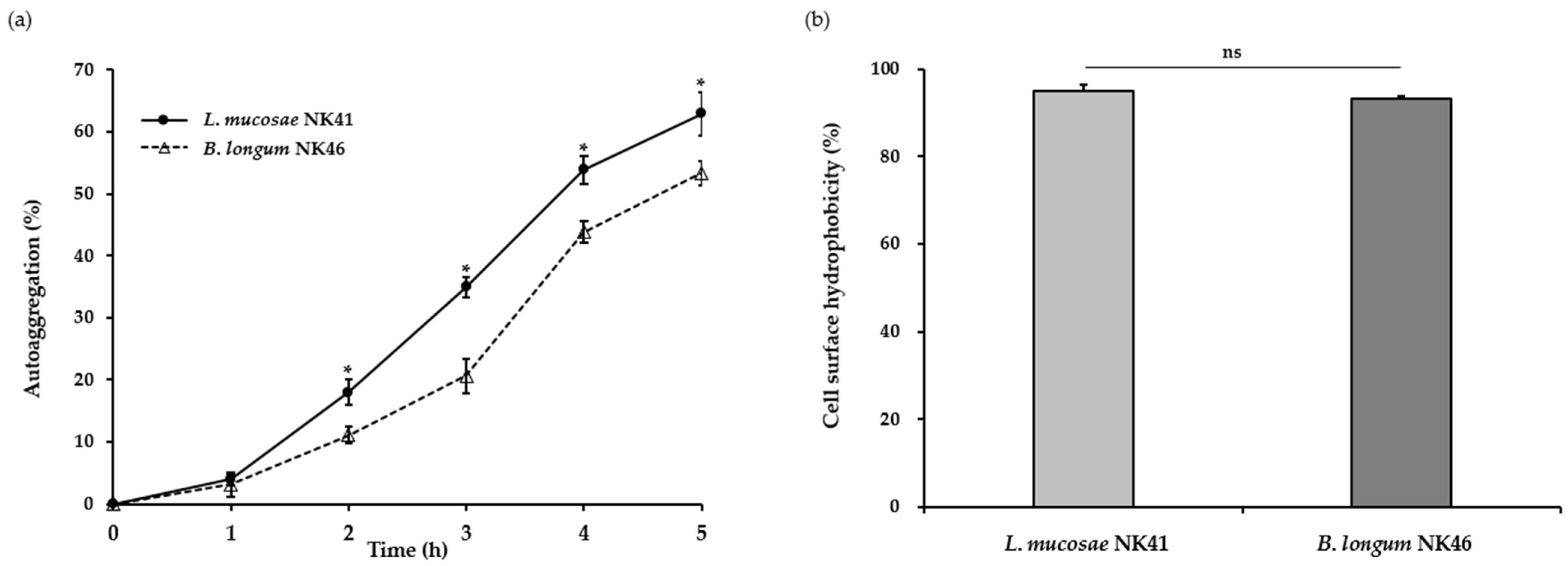
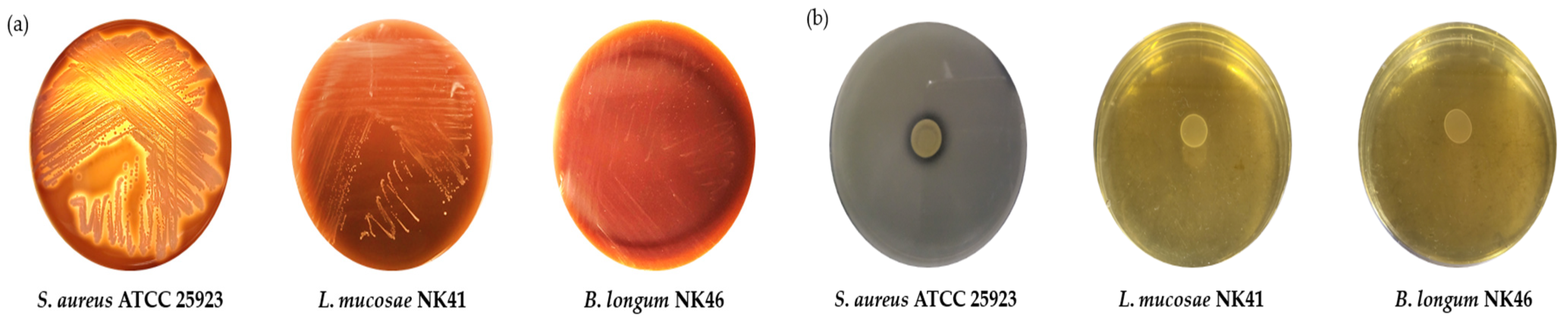
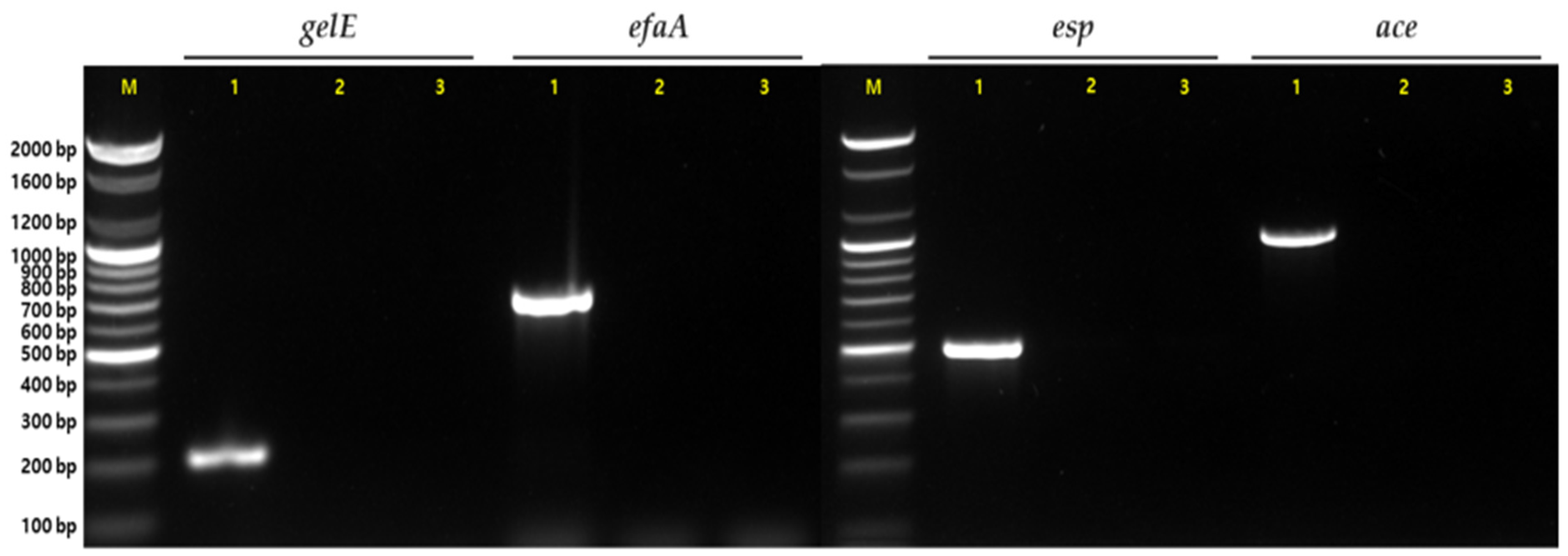
Probiotics should possess specific properties to exert beneficial effects, and their safety must be ensured for human consumption. The purpose of this study was to evaluate the probiotic properties and safety of Limosilactobacillus mucosae NK41 and Bifidobacterium longum NK46 isolated from human feces in vitro. Both strains exhibited high resistance to simulated gastrointestinal fluid. Furthermore, probiotic-related cell surface characteristics including auto-aggregation and cell surface hydrophobicity were assessed by measuring the absorbance at a wavelength of 600 nm, which demonstrated good auto-aggregation ability and affinity for xylene, indicating their effective adhesion to Caco-2 cells. In addition, hemolytic, gelatinase, and β-glucuronidase activities were found to be negative in both strains. The susceptibility to nine commonly used antibiotics was assessed using the broth macrodilution method, which demonstrated that both strains were susceptible to all tested antibiotics. Furthermore, L. mucosae NK41 and B. longum NK46 produced significantly higher levels of L-lactate (71.8 ± 0.7% and 97.8 ± 0.4%) than D-lactate (28.2 ± 0.7% and 2.2 ± 0.4%, respectively). Using PCR amplification to investigate genes associated with virulence factors, we found that neither strain harbored any virulence genes. These findings suggest that L. mucosae NK41 and B. longum NK46 have the potential to be used as probiotics and are considered safe for human consumption.

Keywords: probiotics; Limosilactobacillus mucosae; Bifidobacterium longum; probiotic properties; safety probiotics; Limosilactobacillus mucosae; Bifidobacterium longum; probiotic properties; safety