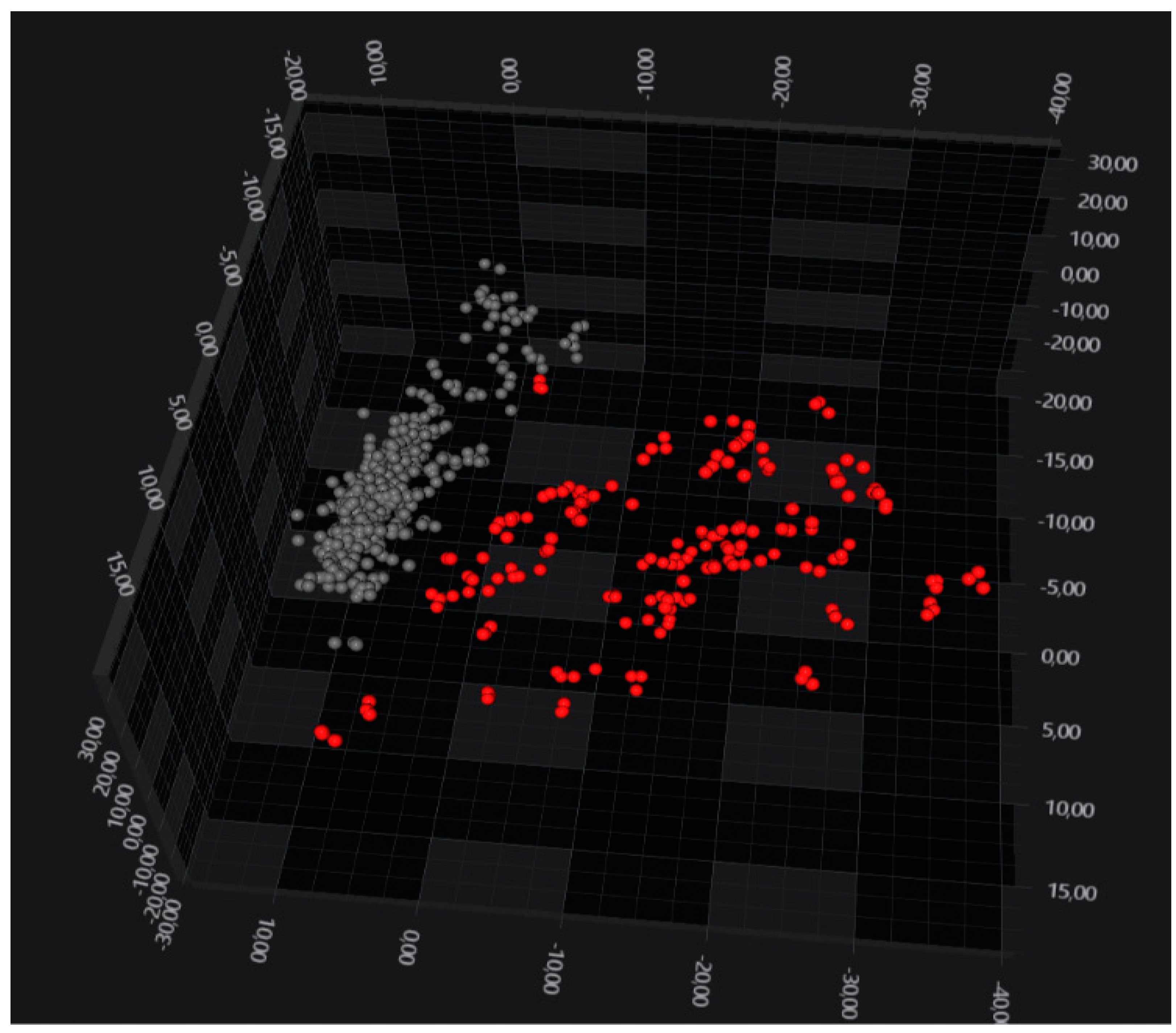
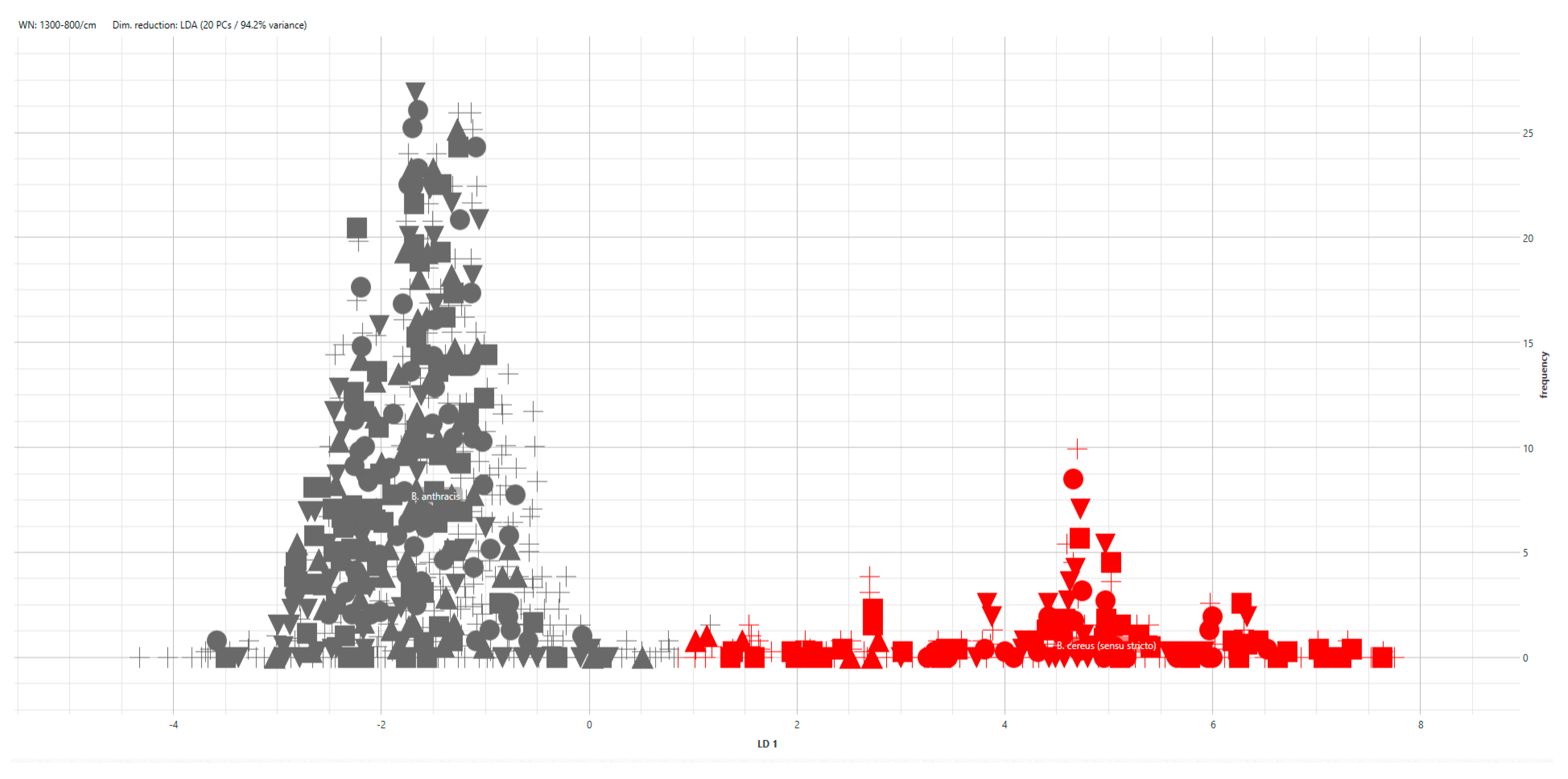
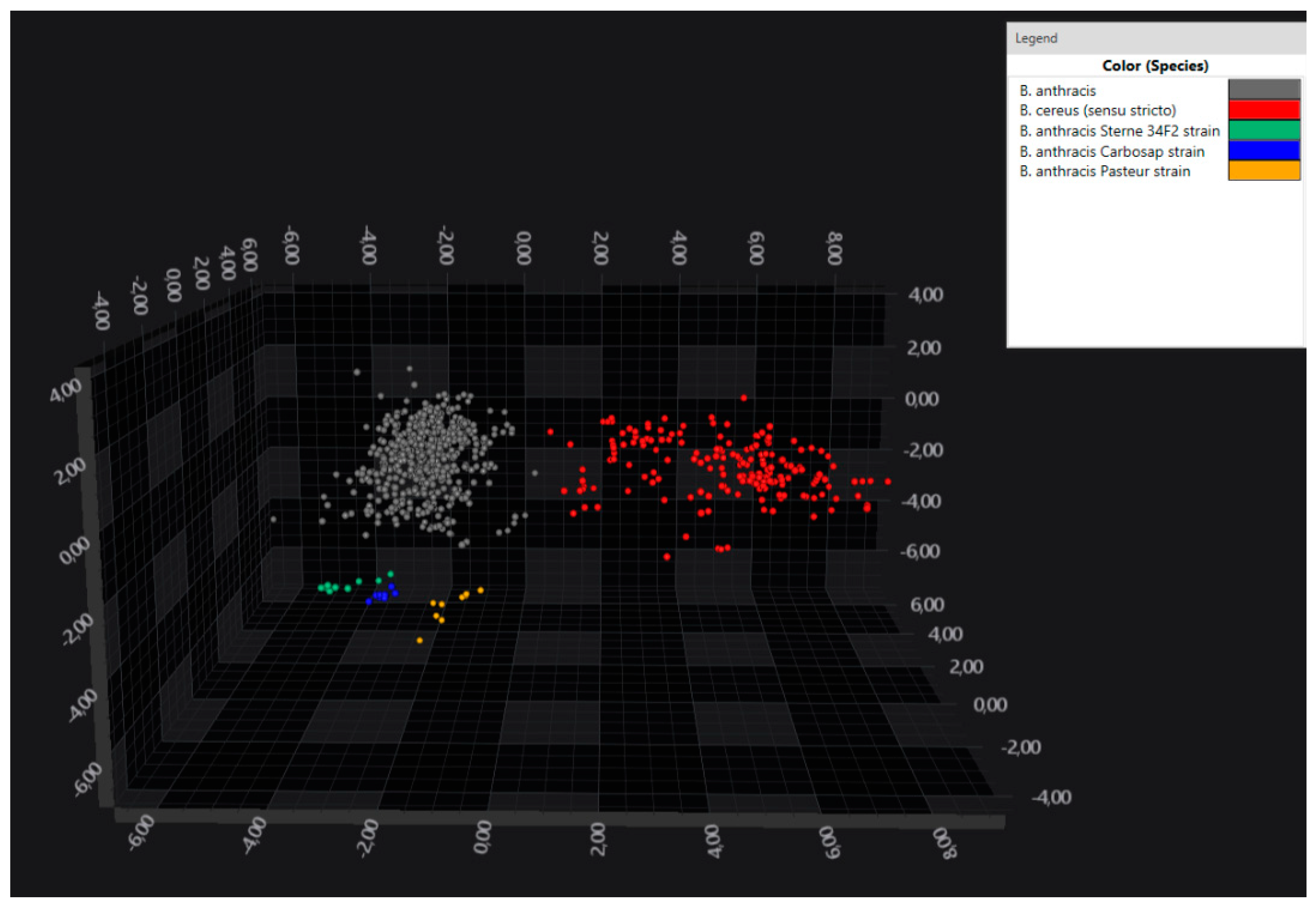
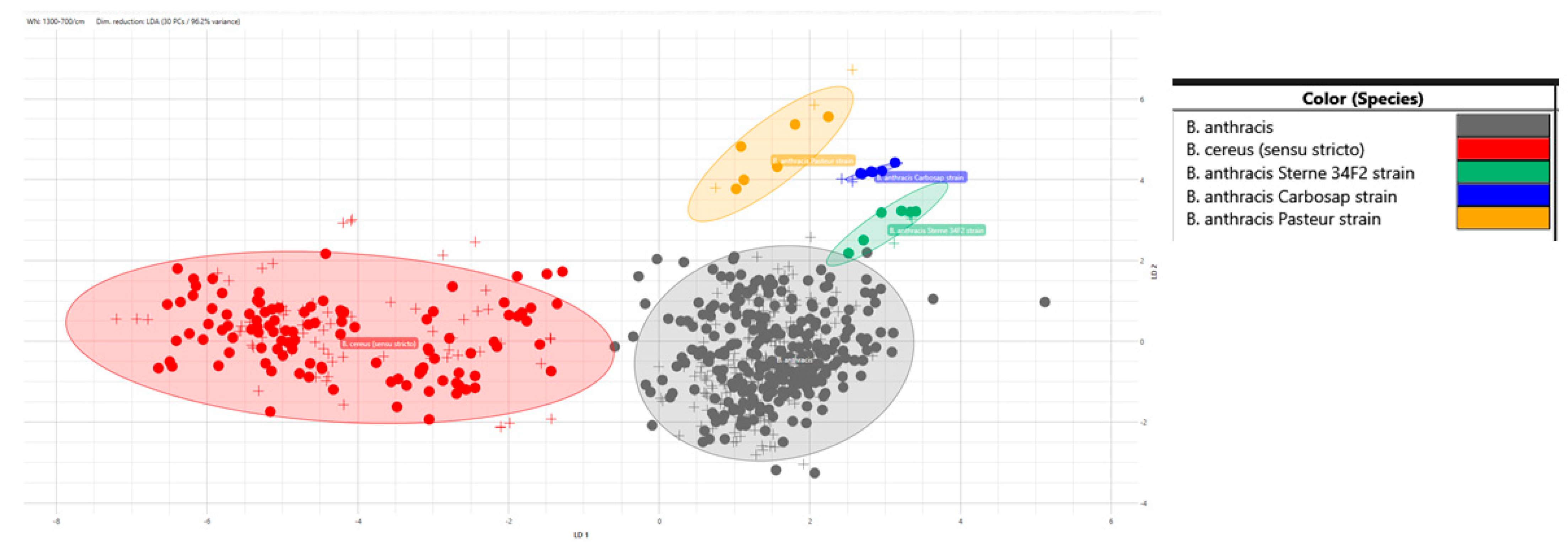
Application of Fourier Transform Infrared Spectroscopy to Discriminate Two Closely Related Bacterial Species: Bacillus anthracis and Bacillus cereus Sensu Stricto

 , , , ,
Abstract
Share and Cite
Manzulli, V.; Cordovana, M.; Serrecchia, L.; Rondinone, V.; Pace, L.; Farina, D.; Cipolletta, D.; Caruso, M.; Fraccalvieri, R.; Difato, L.M.; et al. Application of Fourier Transform Infrared Spectroscopy to Discriminate Two Closely Related Bacterial Species: Bacillus anthracis and Bacillus cereus Sensu Stricto. Microorganisms 2024, 12, 183. https://doi.org/10.3390/microorganisms12010183
Manzulli V, Cordovana M, Serrecchia L, Rondinone V, Pace L, Farina D, Cipolletta D, Caruso M, Fraccalvieri R, Difato LM, et al. Application of Fourier Transform Infrared Spectroscopy to Discriminate Two Closely Related Bacterial Species: Bacillus anthracis and Bacillus cereus Sensu Stricto. Microorganisms. 2024; 12(1):183. https://doi.org/10.3390/microorganisms12010183
Chicago/Turabian StyleManzulli, Viviana, Miriam Cordovana, Luigina Serrecchia, Valeria Rondinone, Lorenzo Pace, Donatella Farina, Dora Cipolletta, Marta Caruso, Rosa Fraccalvieri, Laura Maria Difato, and et al. 2024. "Application of Fourier Transform Infrared Spectroscopy to Discriminate Two Closely Related Bacterial Species: Bacillus anthracis and Bacillus cereus Sensu Stricto" Microorganisms 12, no. 1: 183. https://doi.org/10.3390/microorganisms12010183
APA StyleManzulli, V., Cordovana, M., Serrecchia, L., Rondinone, V., Pace, L., Farina, D., Cipolletta, D., Caruso, M., Fraccalvieri, R., Difato, L. M., Tolve, F., Vetritto, V., & Galante, D. (2024). Application of Fourier Transform Infrared Spectroscopy to Discriminate Two Closely Related Bacterial Species: Bacillus anthracis and Bacillus cereus Sensu Stricto. Microorganisms, 12(1), 183. https://doi.org/10.3390/microorganisms12010183