Article

Seasonal and Zonal Succession of Bacterial Communities in North Sea Salt Marsh Sediments
1
Institute for Chemistry and Biology of the Marine Environment, University of Oldenburg, Carl-von-Ossietzky-Straße 9-11, 26133 Oldenburg, Germany
2
Institute of Microbiology and Genetics, Department of Genomic and Applied Microbiology, Georg-August University of Göttingen, 37077 Göttingen, Germany
3
School of Life Sciences, University of Warwick, Gibbet Hill Road, Coventry CV4 7AL, UK
*
Author to whom correspondence should be addressed.
Microorganisms 2022, 10(5), 859; https://doi.org/10.3390/microorganisms10050859

Submission received: 25 March 2022 / Revised: 14 April 2022 / Accepted: 19 April 2022 / Published: 21 April 2022
(This article belongs to the Special Issue Bacterial Functions in Carbon, Nitrogen, and Sulfur Cycles)

Abstract

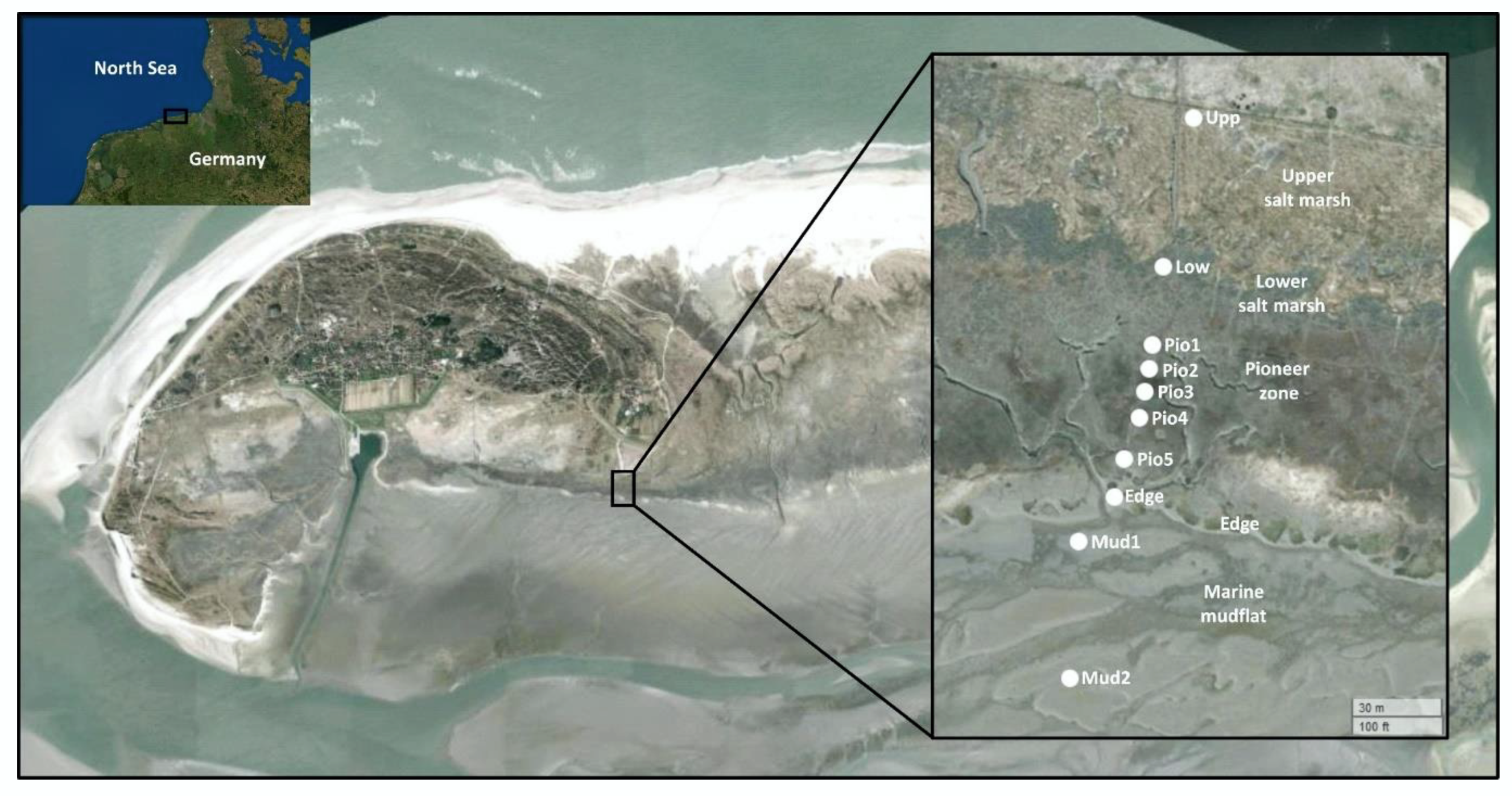
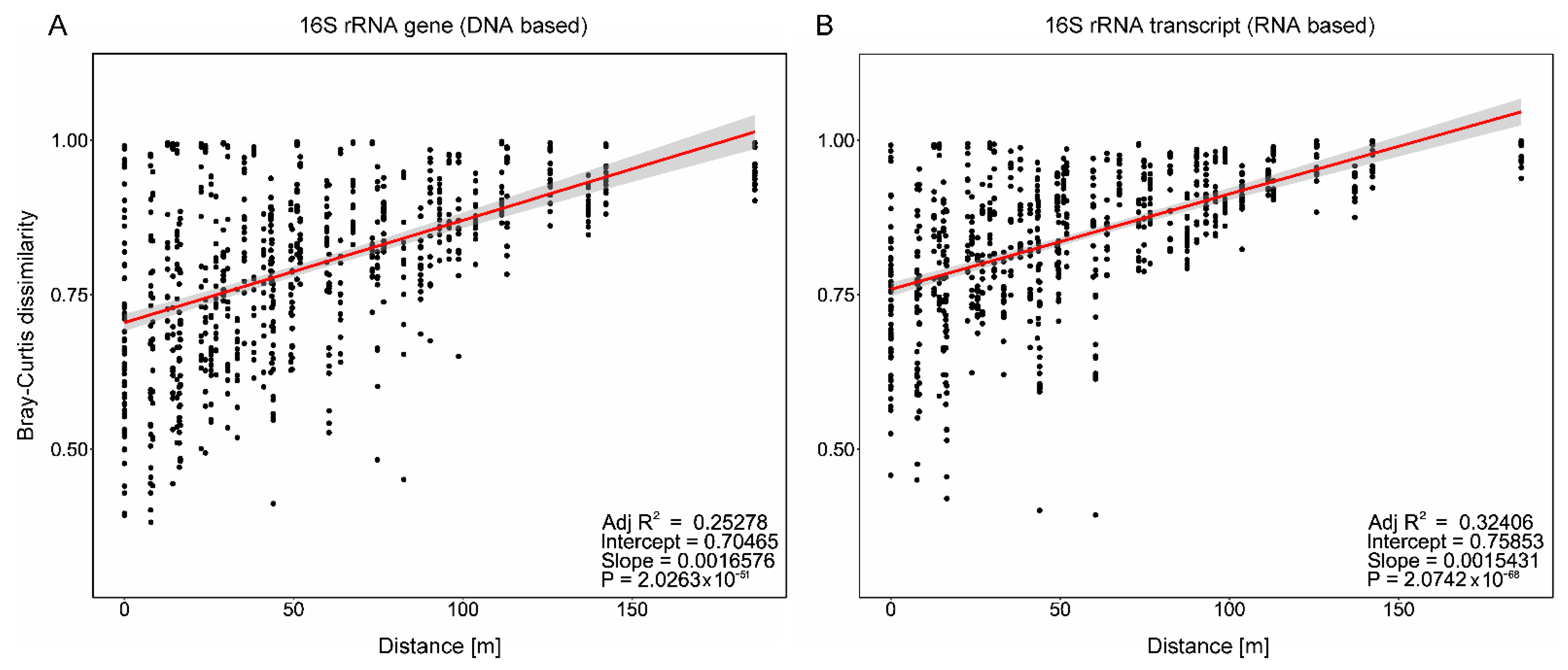
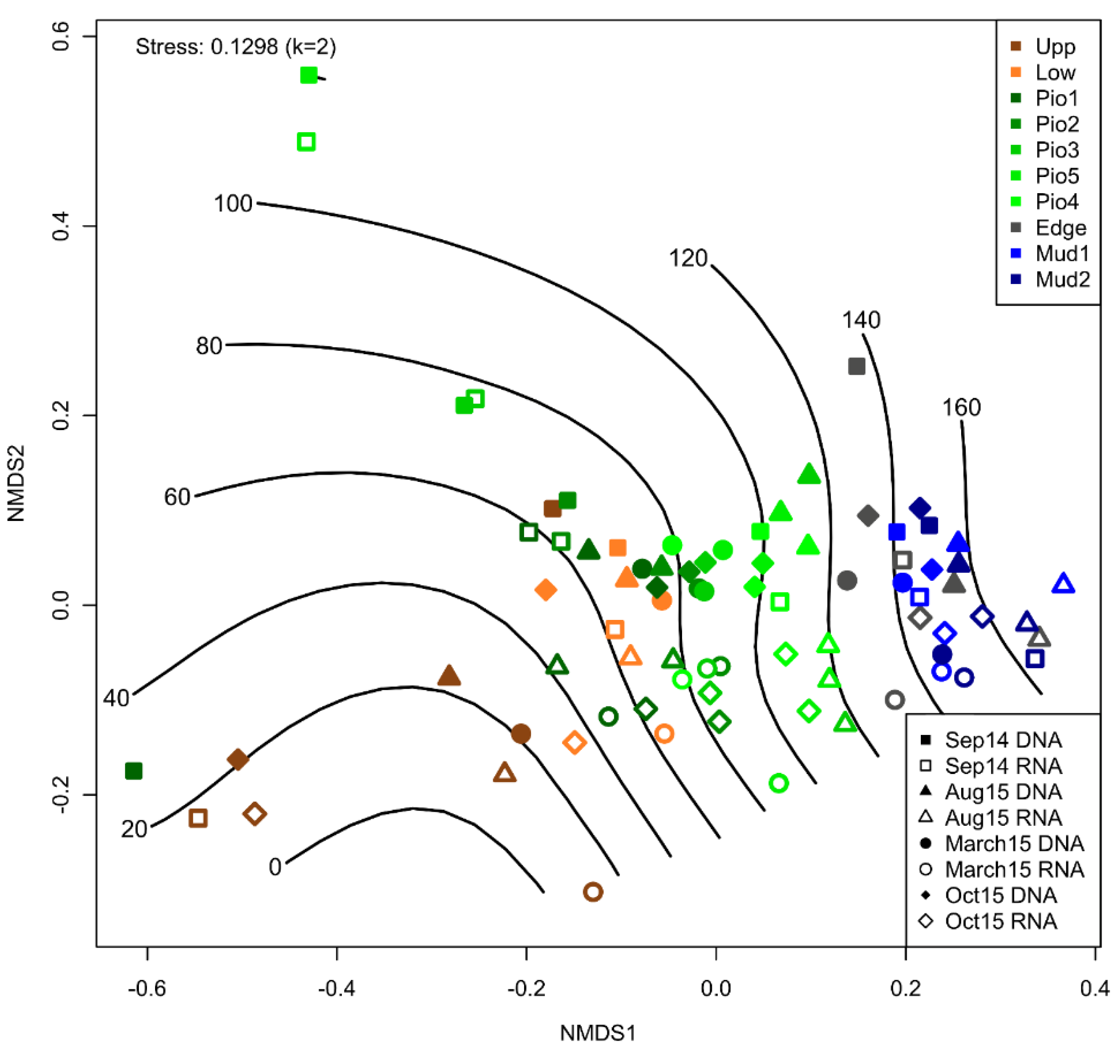
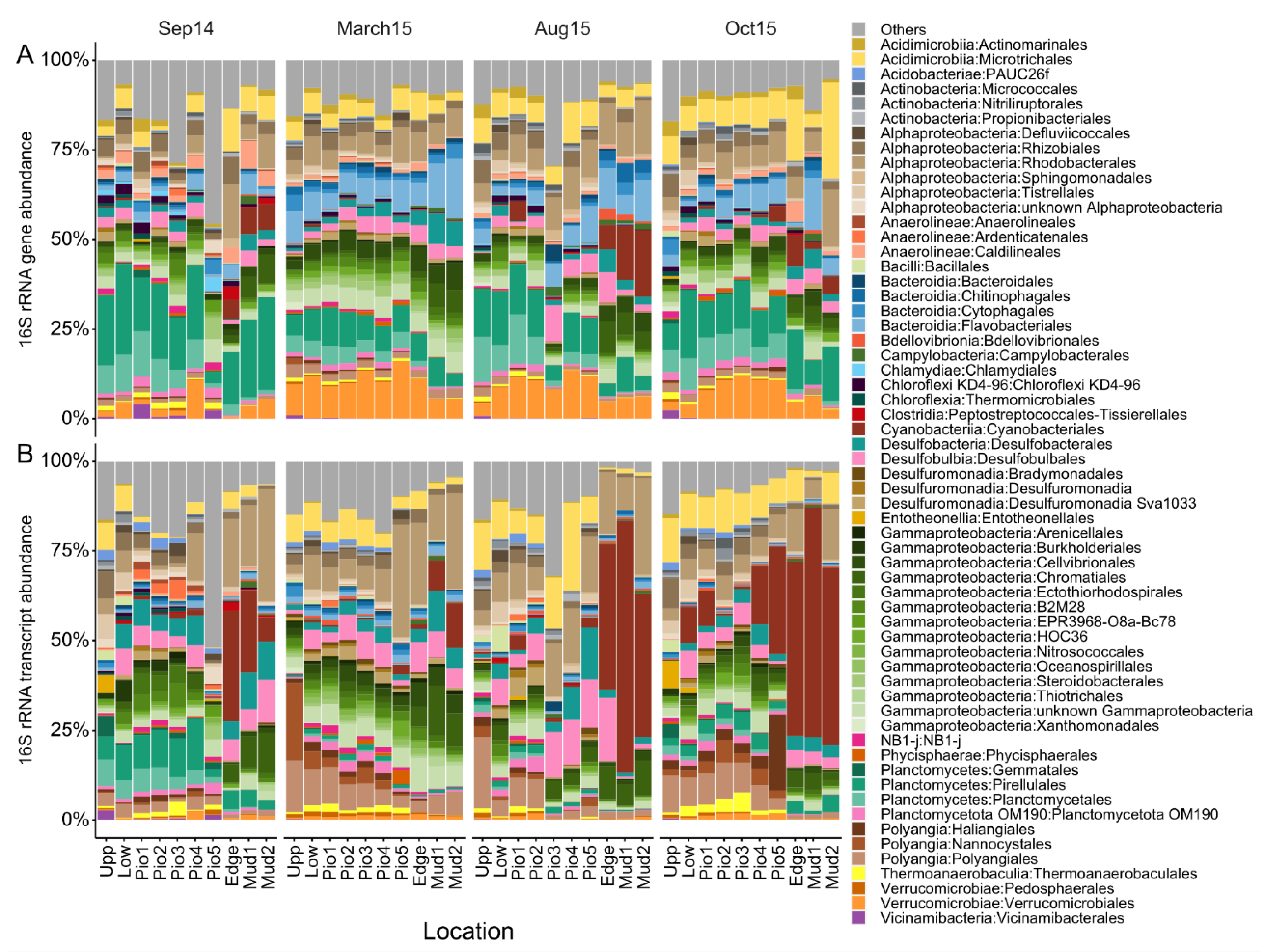
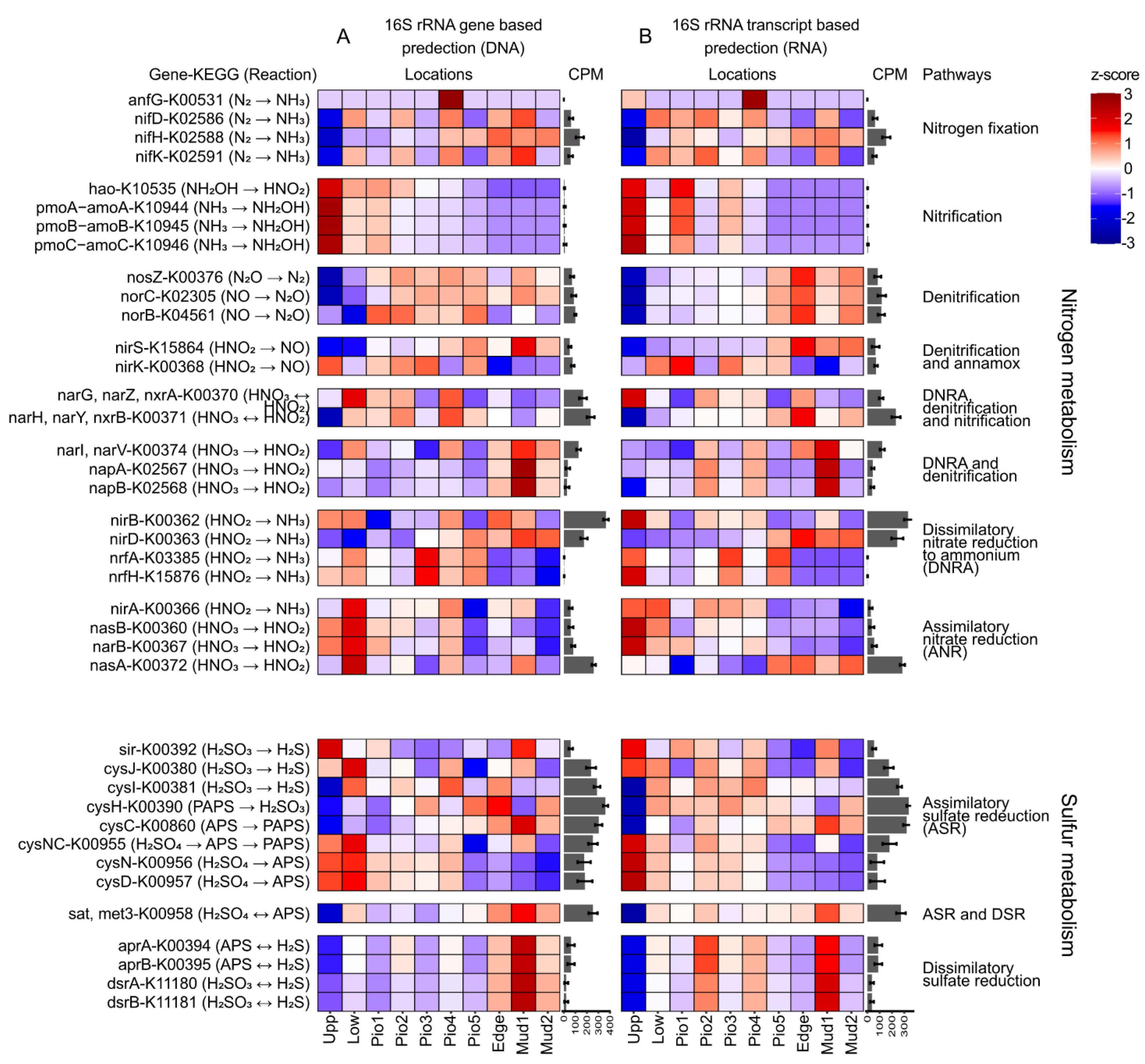
Benthic microbial communities of intertidal zones perform important biogeochemical processes and provide accessible nutrients for higher organisms. To unravel the ecosystem services of salt marsh microbial communities, we analyzed bacterial diversity and metabolic potential along the land–sea transition zone on seasonal scales on the German North Sea Island of Spiekeroog. Analysis of bacterial community was based on amplicon sequencing of 16S rRNA genes and –transcripts. Insights into potential community function were obtained by applying the gene prediction tool tax4fun2. We found that spatial variation of community composition was greater than seasonal variations. Alphaproteobacteria (15%), Gammaproteobacteria (17%) and Planctomycetes (11%) were the most abundant phyla across all samples. Differences between the DNA-based resident and RNA-based active communities were most pronounced within the Planctomycetes (17% and 5%) and Cyanobacteriia (3% and 12%). Seasonal differences were seen in higher abundance of Gammaproteobacteria in March 2015 (25%) and a cyanobacterial summer bloom, accounting for up to 70% of the active community. Taxonomy-based prediction of function showed increasing potentials for nitrification, assimilatory nitrate and sulfate reduction from sea to land, while the denitrification and dissimilatory sulfate reduction increased towards the sea. In conclusion, seasonal differences mainly occurred by blooming of individual taxa, while the overall community composition strongly corresponded to locations. Shifts in their metabolism could drive the salt marsh’s function, e.g., as a potential nitrogen sink.
Keywords: microbial communities; intertidal; marine; soil; zonation; seasonality; amplicon sequencing; tax4fun2; gene prediction; nitrogen cycle microbial communities; intertidal; marine; soil; zonation; seasonality; amplicon sequencing; tax4fun2; gene prediction; nitrogen cycle