
Article

Backstepping-Based Recursive Virtual-Heading Path-Tracking Control for Reverse Driving of a Multi-Trailer System

1
Department of Intelligent Drone Convergence, Sejong University, Seoul 05006, Republic of Korea
2
Department of Electrical and Control Engineering, Cheongju University, Cheongju 28503, Republic of Korea
3
Department of Mechanical and System Design Engineering, Hongik University, Seoul 04066, Republic of Korea
4
AI+X Research Center, Advanced Institute of Convergence Technology (AICT), Suwon 16229, Republic of Korea
*
Author to whom correspondence should be addressed.
These authors contributed equally to this work.
Actuators 2026, 15(9), 493; https://doi.org/10.3390/act15090493 (registering DOI)
Submission received: 2 August 2026 / Revised: 13 September 2026 / Accepted: 16 September 2026 / Published: 19 September 2026

Abstract

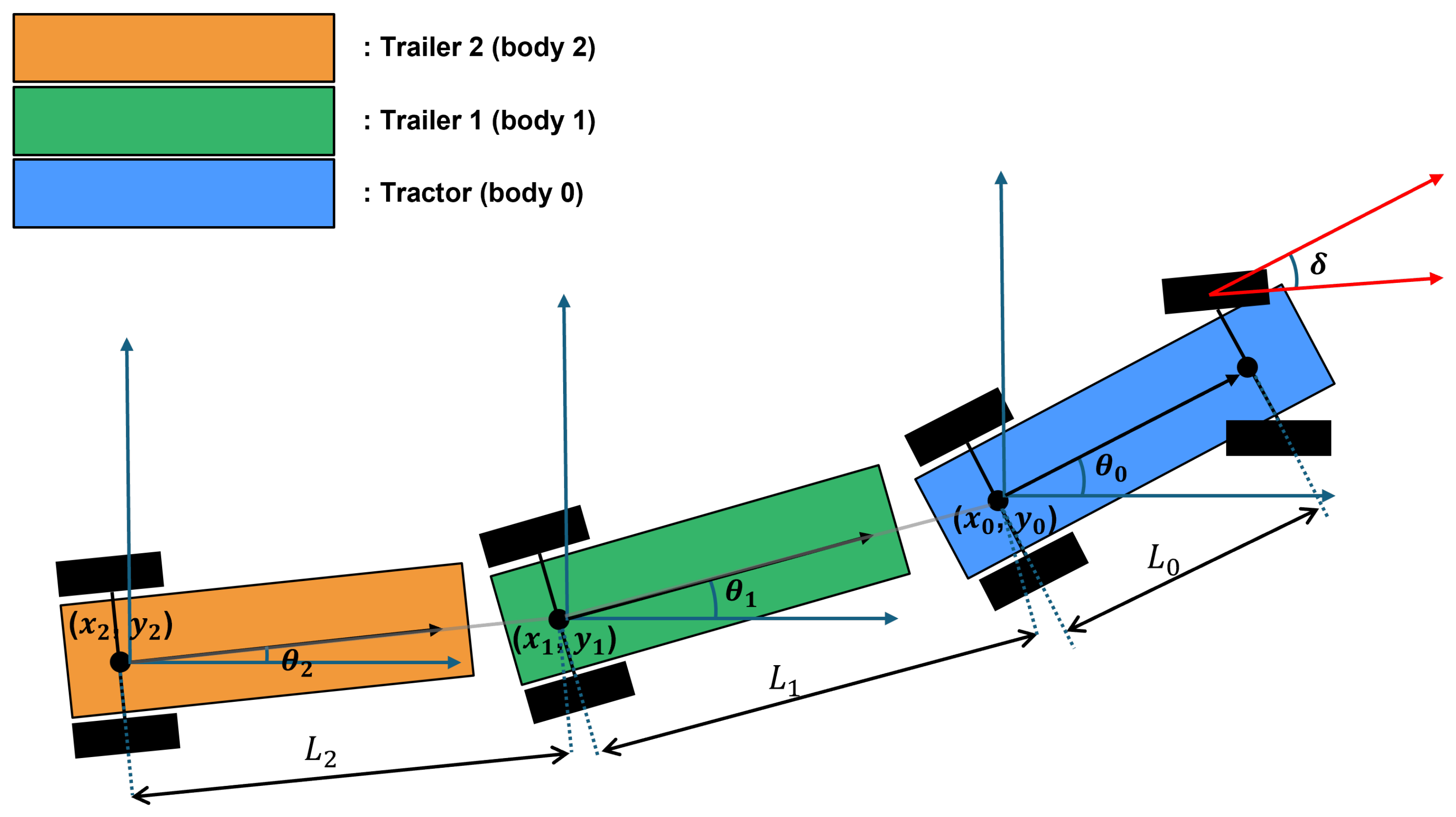
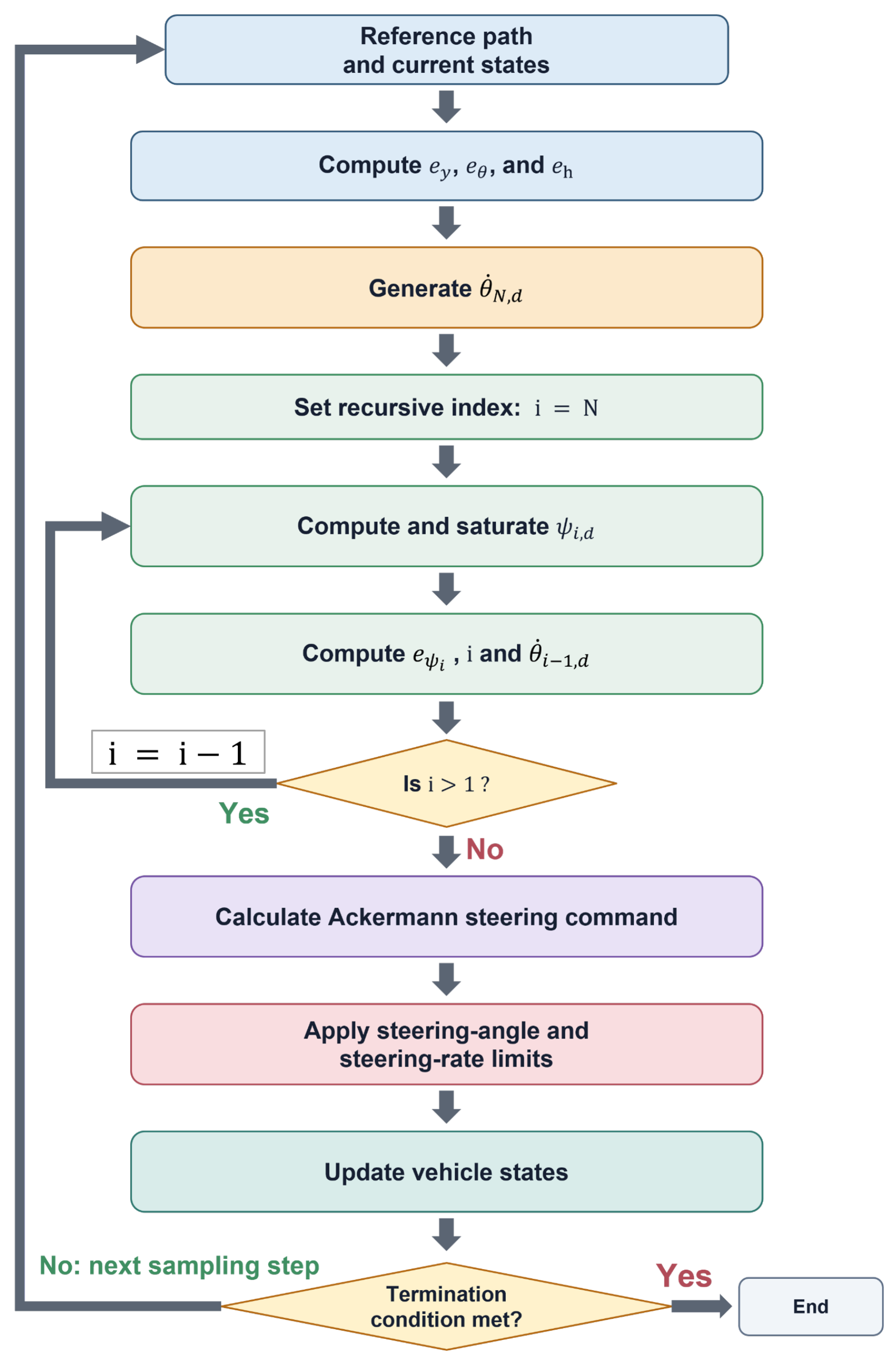
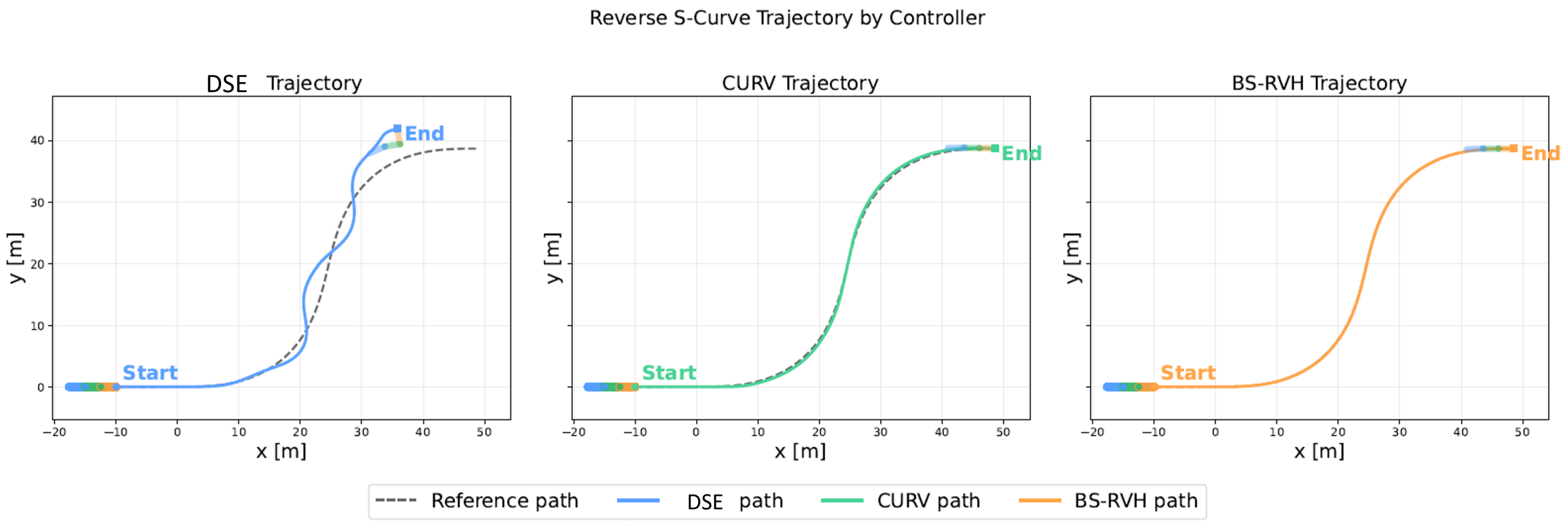
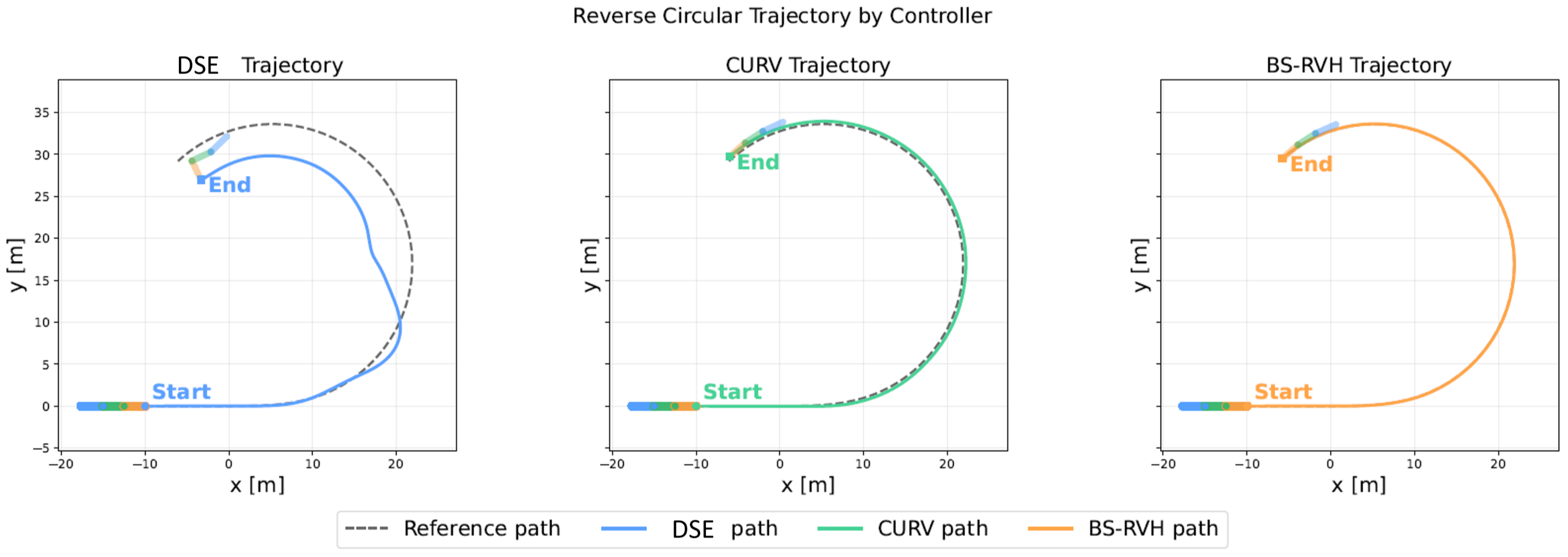
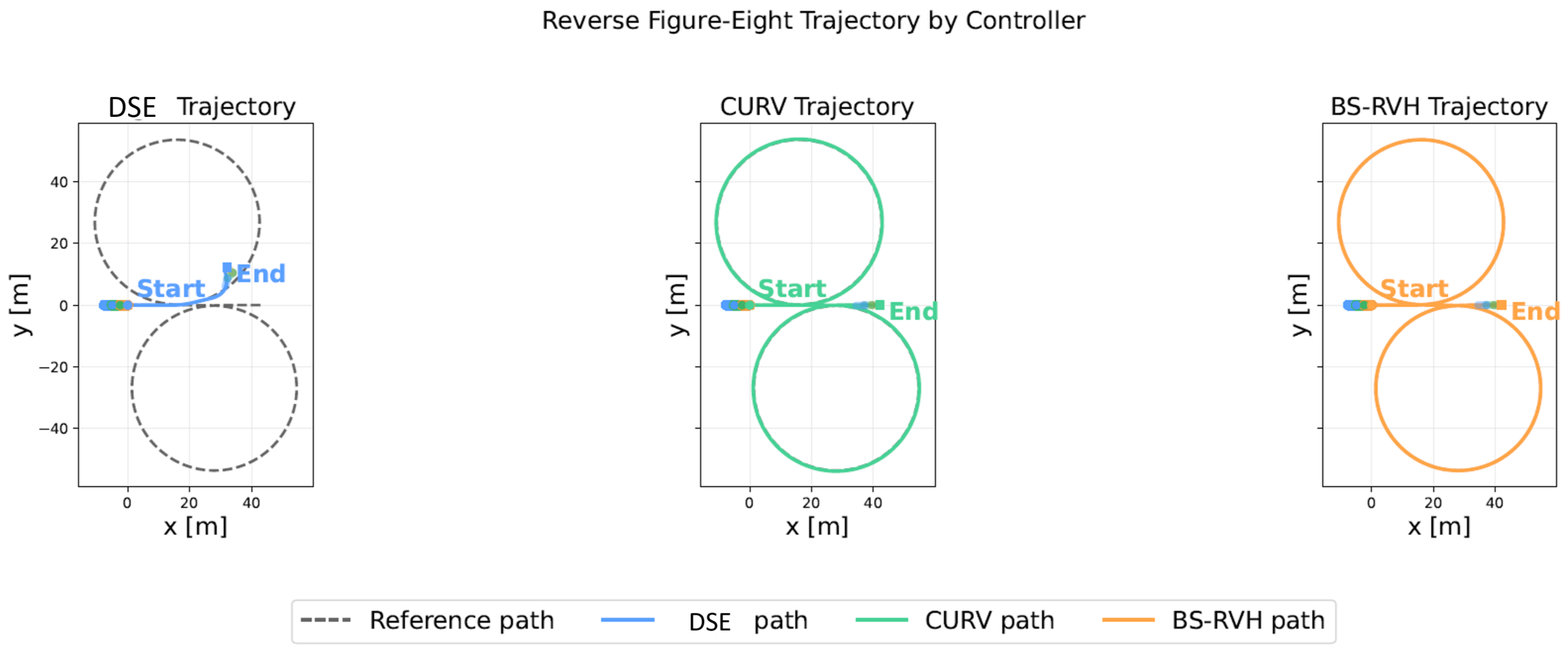
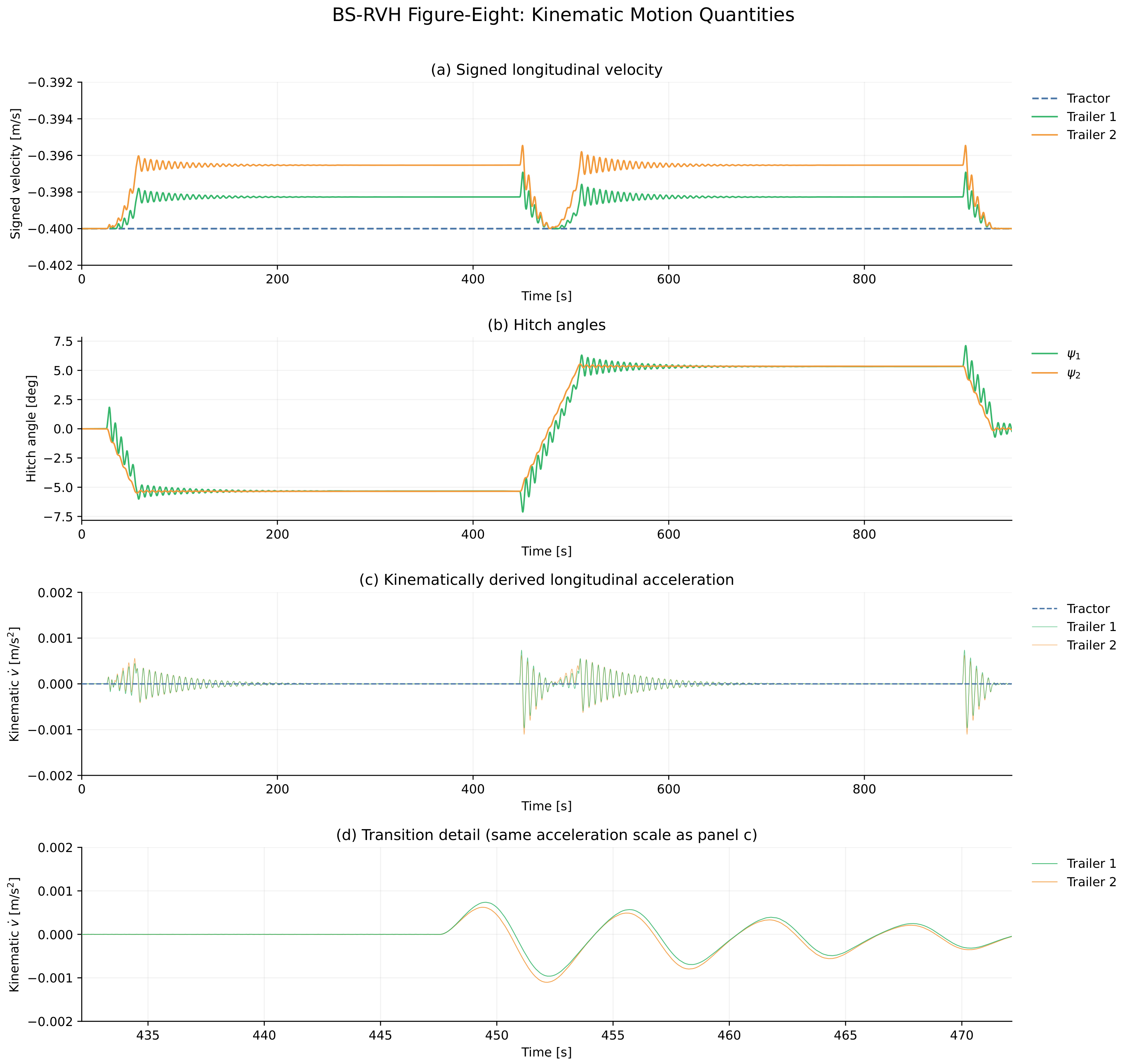
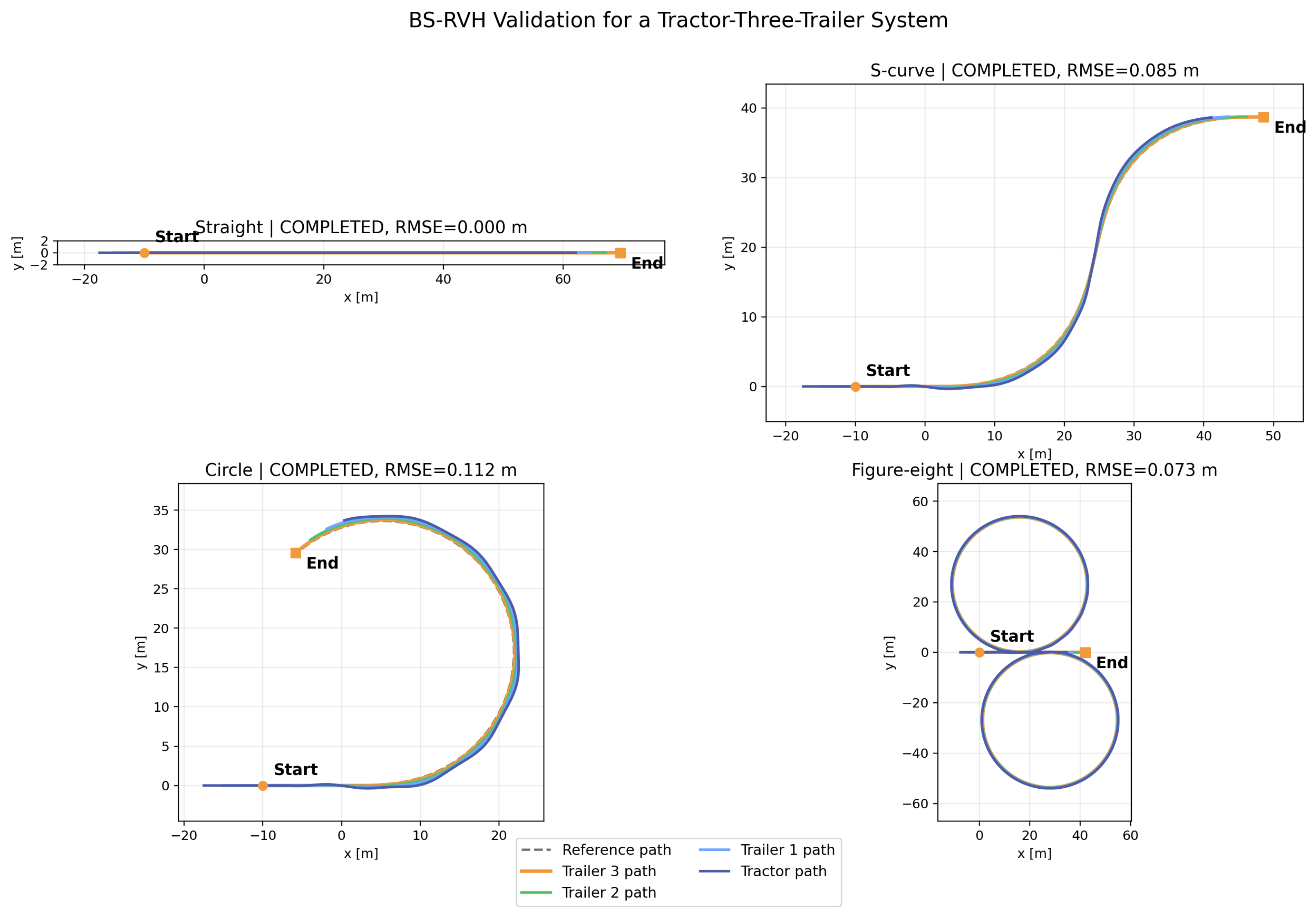
Reverse path tracking of multi-trailer systems is challenging because tractor steering affects the following bodies only through passive hitch joints, causing tracking-error propagation and increasing the risk of jackknifing. This paper proposes a backstepping-based recursive virtual-heading (BS-RVH) controller that converts the path-tracking error of the final trailer into a desired heading rate and recursively generates the desired hitch angles, preceding-body heading rates, and tractor steering command. Desired hitch-angle saturation is included, and local boundedness and the effect of saturation residuals are analyzed. For a tractor–two-trailer system, BS-RVH achieves lateral root-mean-square errors of 0.015 m, 0.021 m, and 0.013 m on the S-curve, circular, and figure-eight paths, respectively. These values represent reductions of 93.0–93.4% compared with the curvature-based controller. The maximum absolute hitch angles remain below 12°, and all paths reach the predefined 99.5% completion threshold without jackknifing. An additional tractor–three-trailer evaluation completes the same paths without jackknifing, with lateral root-mean-square errors ranging from 0.073 m to 0.112 m. These results demonstrate the effectiveness and stage-wise extensibility of BS-RVH under low-speed kinematic conditions.
Keywords: multi-trailer system; reverse driving; path tracking; virtual heading; hitch-angle stabilization; jackknife prevention; autonomous vehicle multi-trailer system; reverse driving; path tracking; virtual heading; hitch-angle stabilization; jackknife prevention; autonomous vehicle