Article

Control-Oriented Comparison of Electrode Placement Strategies in an Electrohydrodynamic Actuation System


Department of Mechanical Engineering and Mechatronics, Ariel University, Ariel 4077625, Israel
*
Author to whom correspondence should be addressed.
Actuators 2026, 15(6), 326; https://doi.org/10.3390/act15060326 (registering DOI)
Submission received: 3 May 2026 / Revised: 1 June 2026 / Accepted: 5 June 2026 / Published: 8 June 2026
(This article belongs to the Section Control Systems)

Abstract

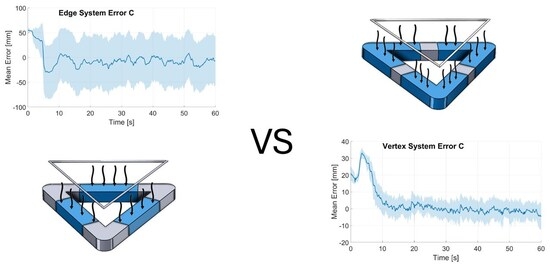
This study investigates the controllability of a hovering platform based on ion thrust generated through the Biefeld–Brown effect. The primary objective is to examine the feasibility of stabilizing a triangular structure under laboratory conditions. To this end, three custom high-voltage power supplies were developed, each independently controlled. These power supplies can be modulated through the control loop, enabling closed-loop adjustment of thrust levels and allowing assessment of how electrode placement influences stability. Two electrode configurations were tested: edge-based placement, where thrust is produced along the triangle’s sides, and vertex-based placement, where thrust is generated near the corners. Experimental results demonstrated that, while both configurations provide similar lifting capability, the vertex-based configuration significantly improves stabilization and orientation control. The improvement stems from reduced actuator coupling and a larger effective moment arm relative to the platform’s center of mass, enabling more efficient torque generation.

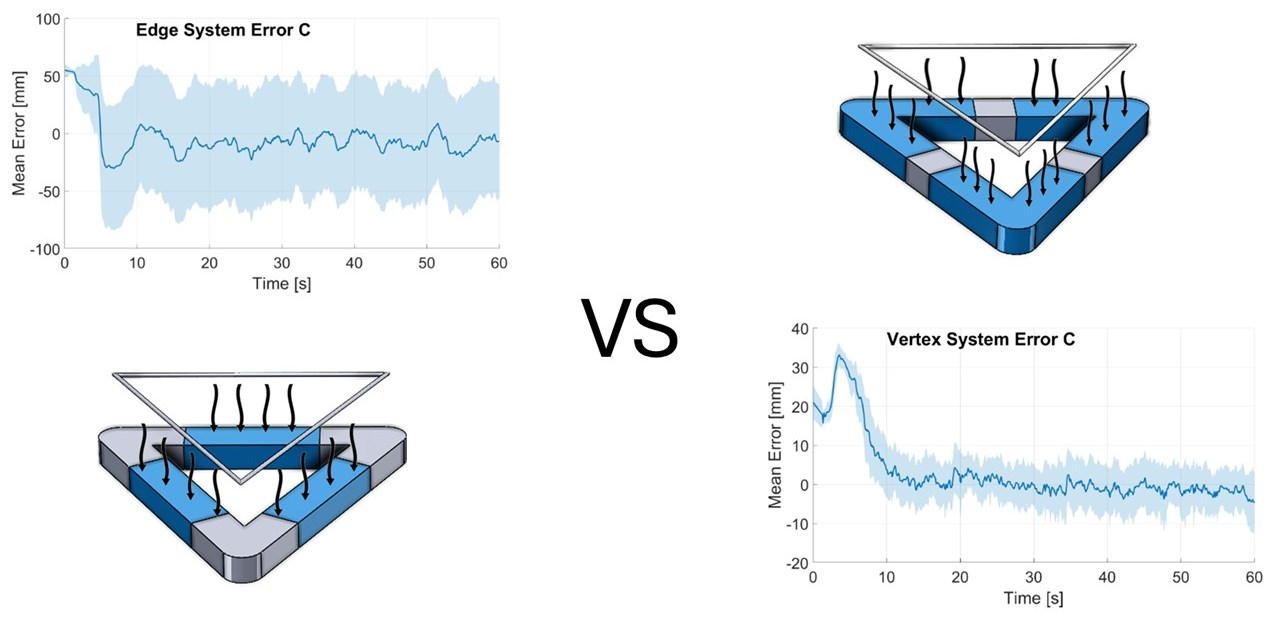
Graphical Abstract

1. Introduction

Contemporary aerial vehicles encompass a diverse spectrum of configurations, extending from conventional manned airplanes and helicopters to novel categories of unmanned systems [1]. Over the past few decades, the unmanned aerial vehicle (UAV) sector has undergone remarkable expansion, encompassing platforms that range from micro-drones to large-scale systems capable of transporting significant payloads [2]. Unmanned aerial vehicles are now extensively utilized in fields such as aerial imaging, environmental monitoring, agriculture, logistics, and scientific research. This breadth of applications is mirrored in the diversity of UAV architectures, which in turn exhibit substantial variation in propulsion technologies. Predominant approaches include the use of electric motor-propeller systems as well as compact turbojet engines [3]. Nonetheless, these systems exhibit several inherent limitations, as the inclusion of moving mechanical components elevates noise levels, diminishes overall reliability, and necessitates periodic maintenance [4]. These limitations are especially critical for ultralight platforms, in which the mass of the propulsion system directly influences flight endurance and maneuverability.
As a result, increasing attention has been directed toward alternative thrust-generation mechanisms that eliminate moving parts while preserving low acoustic signatures during operation [5]. The electrohydrodynamics propulsion exploits the ionic wind generated by corona discharge between asymmetric electrodes subjected to high-voltage excitation [6]. This principle enables the design of compact and low-noise propulsion systems that may be used in lightweight UAV applications [7].
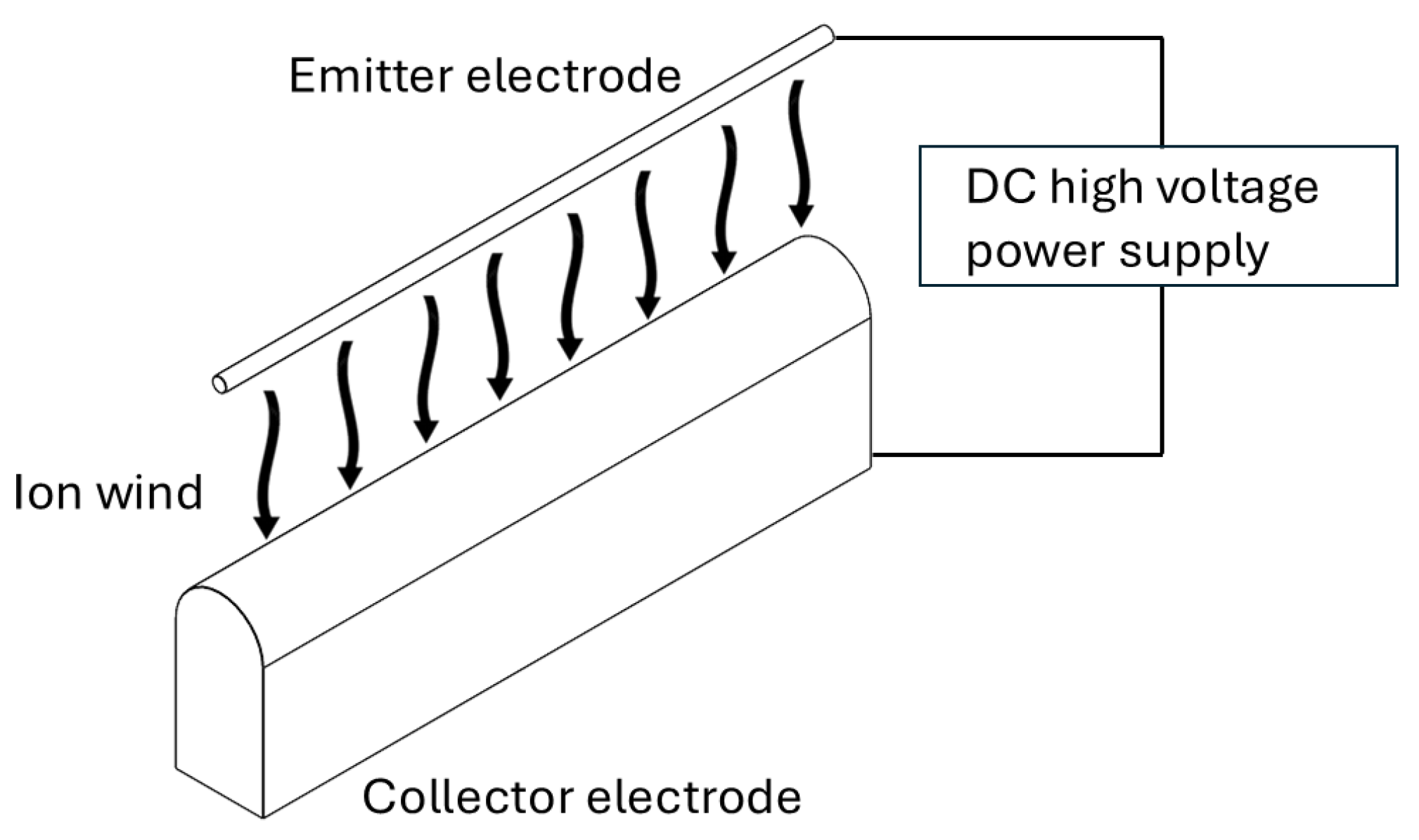
Electrohydrodynamic thrust—also referred to as ionic thrust or the Biefeld–Brown effect—was first systematically examined in the 1920s by the American engineer and inventor Thomas Townsend Brown. In his 1928 patent [8], Brown outlined a device that produced a directional force through the use of asymmetric electrodes (see Figure 1).
The ion stream generated between asymmetric electrodes, propagating from the emitter to the collector electrode, transfers momentum through collisions with neutral air molecules, resulting in a net thrust force. This momentum-exchange mechanism underlies the phenomenon generally referred to as ionic propulsion. Recent advances in electric propulsion research have identified ion thrusters as important components for motion and attitude control of small spacecraft, improving maneuverability and extending satellite operational lifetime [9]. The fundamental principles of electric propulsion—including ion acceleration mechanisms and plasma interactions with surrounding structures—have been extensively analyzed in review studies [10]. Detailed descriptions of the design, operating principles, and in-flight performance of ion and Hall-effect thrusters are provided in specialized monographs, highlighting their high efficiency due to the combination of low thrust and exceptionally high specific impulse, which makes them well-suited for interplanetary missions [11]. Contemporary research further explores thrust vector control strategies, scalability, power management, and thermal regulation to improve spacecraft maneuverability and support complex orbital and interplanetary missions [12,13]. A series of experimental studies [14] have demonstrated the possibility of generating measurable thrust in electrohydrodynamic engines, as well as analyzed aerodynamic losses associated with the formation of ionic wind. Other investigations [15] have confirmed the potential of employing such systems for small unmanned aerial vehicles, while also emphasizing the challenges of scaling.
Recent studies have focused on improving the aerodynamic performance and controllability of atmospheric electrohydrodynamic propulsion systems. Experimental investigations have demonstrated that external airflow conditions significantly influence ionic wind generation and thrust production, highlighting the importance of aerodynamic interactions in practical flight applications [16]. In parallel, numerical and experimental optimization studies have shown that appropriate electrode configurations can improve thrust-to-power characteristics and support stable operation of plasma-propelled aerial platforms [17]. Furthermore, advanced electrode architectures employing sawtooth emitters and multi-ring collectors have demonstrated substantial thrust enhancement, emphasizing the critical role of geometric optimization in the development of efficient ion-propelled aircraft [18].
Theoretical developments [19] have enabled the construction of mathematical models of plasma-based electrohydrodynamic engines that take into account discharge parameters and energy balance analysis. Comparative studies of energy efficiency [20] indicate that electrohydrodynamic propulsion still lags behind conventional electric motors in terms of specific performance. Nevertheless, in contexts where noiseless operation and the absence of mechanical components are critical, such systems exhibit distinct advantages.
Recent advances in electrode design [21], particularly the use of serrated emitters and multi-ring collectors, have demonstrated the potential for significant thrust enhancement. This underscores the importance of optimizing geometry and structural configuration to improve the efficiency of propulsion.
While the majority of research on ion propulsion has concentrated on thrust characterization and on addressing challenges of space applications and their terrestrial verification. The present study departs from this approach by focusing on the design of a closed-loop control system for an experimental ion-thrust aerial vehicle. It should be noted that several studies have addressed the measurement and control of ion-thrust systems (see, e.g., ref. [6] for airflow control using non-thermal plasma actuators). In addition, an ion-propelled blimp with a closed-loop control system has been reported, demonstrating stable propulsion and maneuverability without mechanical propellers [22]. However, in such systems, the platform is inherently capable of hovering, and the ion thrust is primarily used for propulsion or altitude adjustment. In contrast, the present study focuses on the stabilization and attitude control of a platform whose hovering capability relies entirely on ion thrust.
The main contributions of this work are twofold. First, we present the design, implementation, and experimental validation of a controlled ion-thrust aerial vehicle, featuring custom high-voltage converters and a vision-based feedback system for closed-loop hovering stabilization. The results demonstrate the feasibility of controlling and stabilizing an atmospheric electrohydrodynamic hovering platform under laboratory conditions.
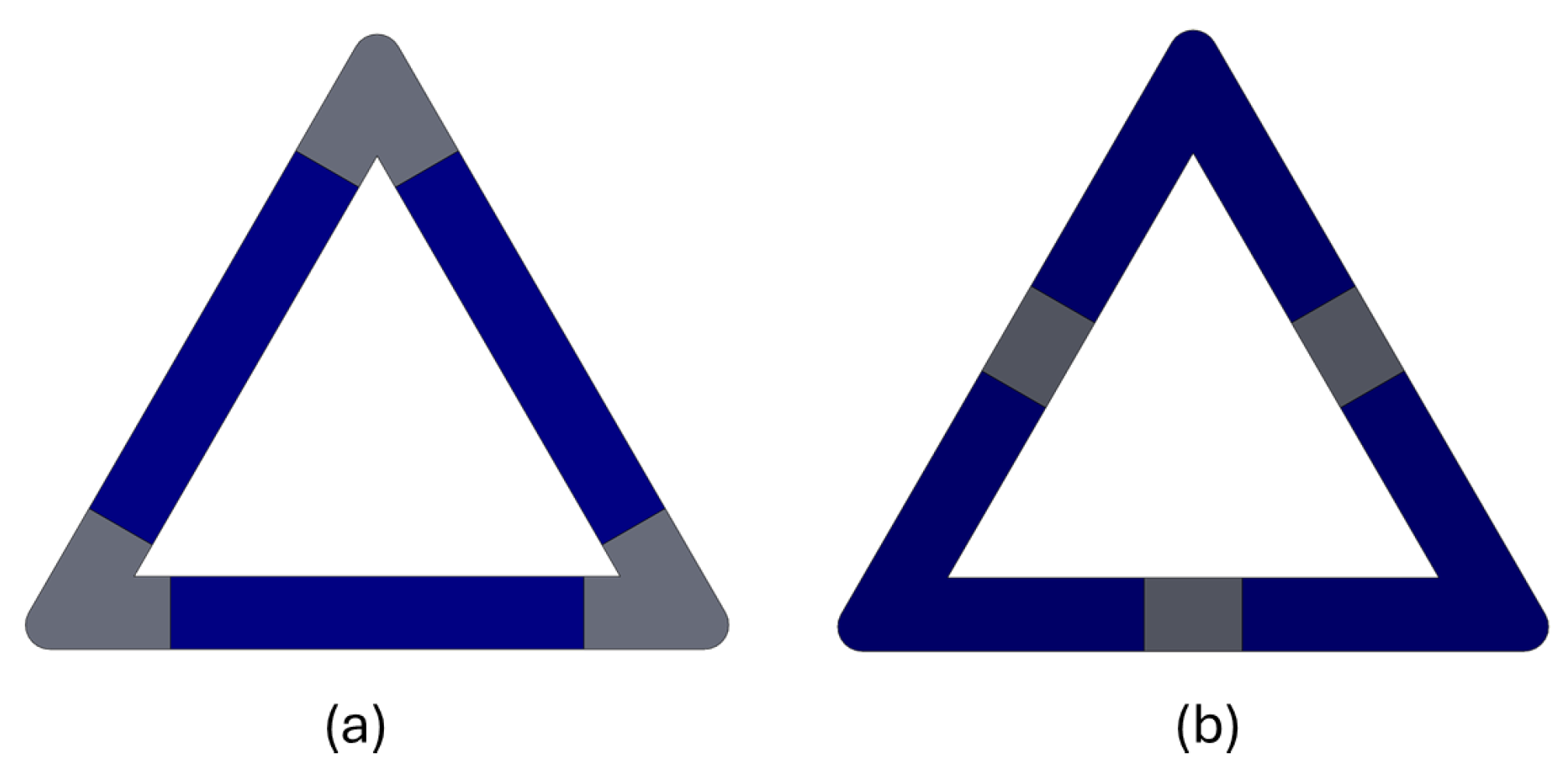
Second, we investigate how actuator placement influences the controllability of the platform by comparing two electrode configurations implemented on the same triangular aircraft (see Figure 2). While both configurations provide sufficient lift for hovering, the vertex-based arrangement improves stabilization performance not only through increased torque authority but also through a more direct correspondence between the measured position errors and the applied control actions, thereby reducing actuator coupling and improving closed-loop control effectiveness.
This paper is organized as follows. Section 2 presents the laboratory ion-thrust aircraft system and describes the configurations of the platform and the fabrication of the high-voltage power supply. Section 3 introduces the mathematical model of the ion-thrust platform. Section 4 describes the operating principle, measurement methods, and experimental conditions. Section 5 presents and analyzes the experimental results. Section 6 discusses the experimental process and key findings. Finally, Section 7 summarizes the main conclusions of the study and outlines directions for future research.

2. System Model

The experimental setup is structurally divided into three main parts: the power supply system, the support platform, and the ion-propelled aircraft.

2.1. High-Voltage Power Supply Architecture

  • Circuit design:
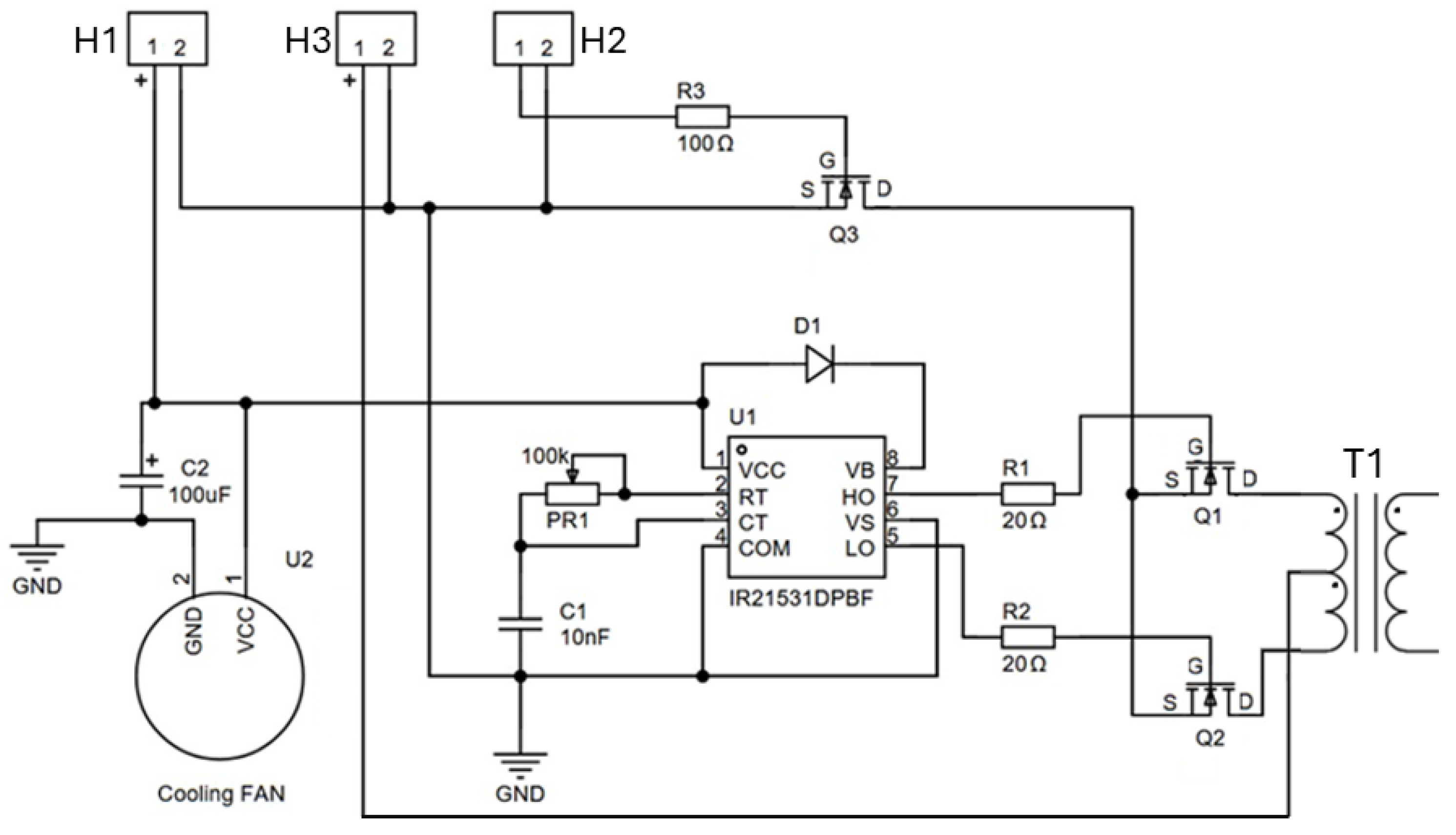
The developed circuit is a high-voltage converter based on the push–pull topology, designed to generate a high-voltage output from low-voltage power sources. The micro-controller U1 (see Figure 3) produces PWM pulses whose frequency is set by an RC network composed of the trimming resistor PR1 and capacitor C1. These pulses drive MOSFET transistors Q1 and Q2, which switch a pulsating voltage of up to 30 V across the primary winding of the high-voltage transformer T1. Power is supplied from two sources: a 12 V through connector H3 supplies the micro-controller U1 and the cooling fan, and 30 V through connector H1 supplies the controlled MOSFET Q3, which delivers energy to the main transformer T1. A control signal for Q3 is provided via connector H2. Resistors R1, R2, and R3 serve as current limiters to protect the circuit elements. In operation, U1 generates a sequence of PWM pulses that alternately switch Q1 and Q2, creating an alternating pulsating voltage on the transformer’s primary winding. The transformer steps this voltage up to the required level, which is then fed to the converter output. Q3 acts as an electronic switch that regulates the 30 V supply using PWM. When the control signal operates at a 100% duty cycle, transistors Q1 and Q2 switch the full 30 V. As the duty cycle of the control signal decreases, the effective switched voltage is reduced accordingly. This results in a lower voltage being applied to the transformer’s primary winding, which enables regulation of the voltage on the secondary winding (output).
The IR2153 micro-controller was selected as the control element due to its simplicity. It offers stable operation within a wide supply voltage range (approximately 9.5 V to 15 V) and allows manual adjustment of the pulse generation frequency through an external RC network, which makes it well suited for this application.
The IRLZ44N was selected as transistor Q3 due to its low gate threshold voltage of approximately 2 V, which allows direct control from the ESP32 micro-controller operating at a maximum output level of 3.3 V. Furthermore, its high current rating of up to 47 A ensures reliable operation within the power stage of the circuit.
Voltages of up to 30 V are commutated by transistors Q1 and Q2; therefore, their breakdown voltage must be at least twice this value to withstand voltage spikes originating from the transformer’s primary winding. For this reason, IRFB3077 transistors were employed, featuring a breakdown voltage of 75 V and a maximum current rating of 210 A.
  • PCB fabrication:
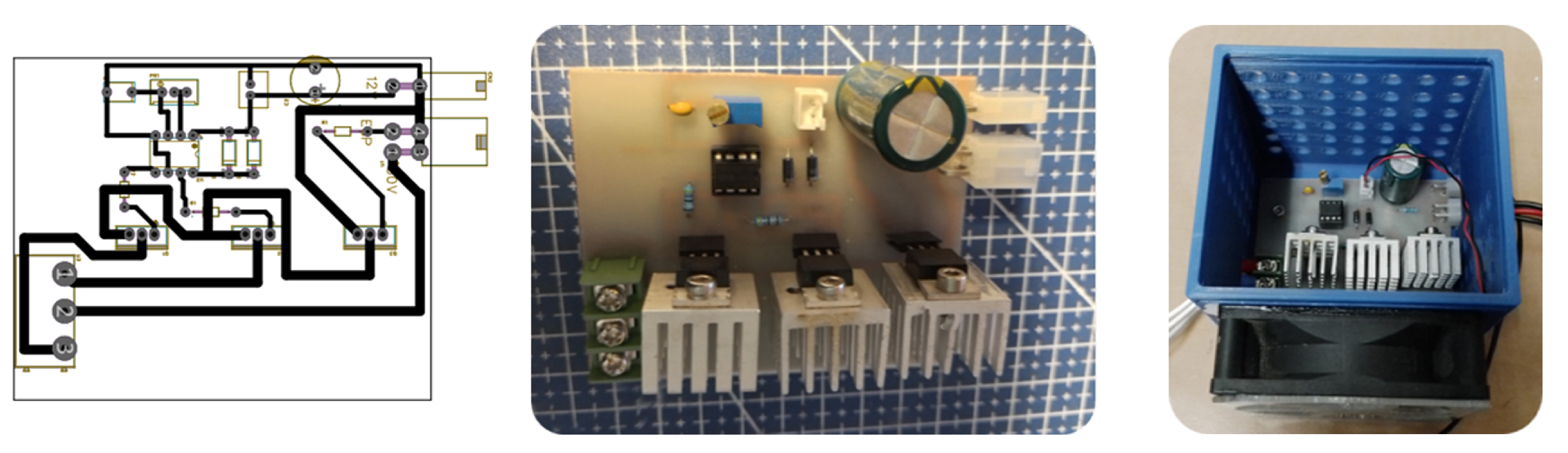
After completing the electrical circuit design, a custom PCB was developed and fabricated for the high-voltage power supply system (see Figure 4). The design accounted for the specific requirements of high-voltage operation, including increased clearances, insulation considerations, and thermal management.
After component assembly, the PCB was integrated into a protective enclosure designed to provide electrical insulation, mechanical support, and thermal dissipation during operation.
  • Calculation of transformer primary winding turns:
The theoretical foundation for the transformer design calculations is based on Power Electronics by Daniel W. Hart [23]. The number of primary winding turns was determined according to Faraday’s law and the saturation constraint of the employed UY20 MnZn PC40 ferrite material (see Equation (1)), in order to maintain the magnetic flux density below the core saturation limit.
N p = V i n D m a x 2 B m a x A e f
where:
  • N p —number of turns in the primary winding;
  • D m a x —duty cycle of a single switch in the push–pull topology;
  • B m a x —maximum magnetic flux density of the core;
  • A e —effective cross-sectional area of the magnetic core;
  • f—switching frequency of the converter.
To determine B m a x , Faraday’s law is applied to a coil (winding):
V i n = N p d Φ d t
where Φ is the magnetic flux.
Substituting Φ = B A e , we obtain:
V = N p A e d B d t
If a constant voltage V is applied to the winding for a time interval t (a rectangular pulse), then d B d t remains approximately constant, and integration yields the change in flux density:
Δ B = V t N A e
Here, Δ B represents the change in magnetic flux density B during the pulse duration. In a push–pull topology, B oscillates symmetrically from B m a x to + B m a x ; therefore,
Δ B 2 B m a x B m a x V t 2 N A e
During the design process, B m a x is maintained below the saturation level of the core material, which is typically chosen within the range of 0.15–0.20 T for ferrites operating at tens of kilohertz, to provide a safety margin for temperature variations and material tolerances. According to reference tables [24], B m a x typically should not exceed 0.15 T.
t (seconds, s)—the time during which the voltage is applied to the winding within a single pulse.
In PWM operation,
t = T o n = D f
After substitution, we obtain:
B m a x V · D f 2 N A e
In a push–pull converter, the two switches operate alternately. The theoretical maximum duty ratio of each switch is 0.5 (half of the period).
Operating at this limit provides no margin for dead time, core demagnetization, or compensation of possible asymmetries, which can result in residual magnetization and eventual core saturation. To prevent this, a safety margin is introduced in practice:
0.40 D max 0.45
During the design process, it is assumed that, in the worst case, the controller may extend the pulse width up to 45% of the period, and this value is used in the saturation calculation.
According to a typical datasheet for the UY20 core, A e = 2.9 × 10 4 m 2 . The number of turns selected for verification is N p = 5 . Upon substituting the values into the equation B m a x 0.116 T .
This value is below the typical safe upper limit 0.15 T for ferrite cores operating at a frequency of 40 kHz . Therefore, the core is expected to operate without saturation under these conditions.
  • Calculation of transformer secondary winding turns:
The theoretical basis for the calculations is also derived from [23].
V s = N s N p V p
where V s is the peak voltage on the secondary winding, V p is the peak voltage on the primary winding (approximately equal to the input voltage V i n in a push–pull topology), N p is the number of primary turns, and N s is the number of secondary turns.
To obtain an output voltage of approximately 12 kV , the secondary winding turns number is calculated to be approximately N s 2000 using a 0.4 mm diameter wire.
  • Transformer winding process:
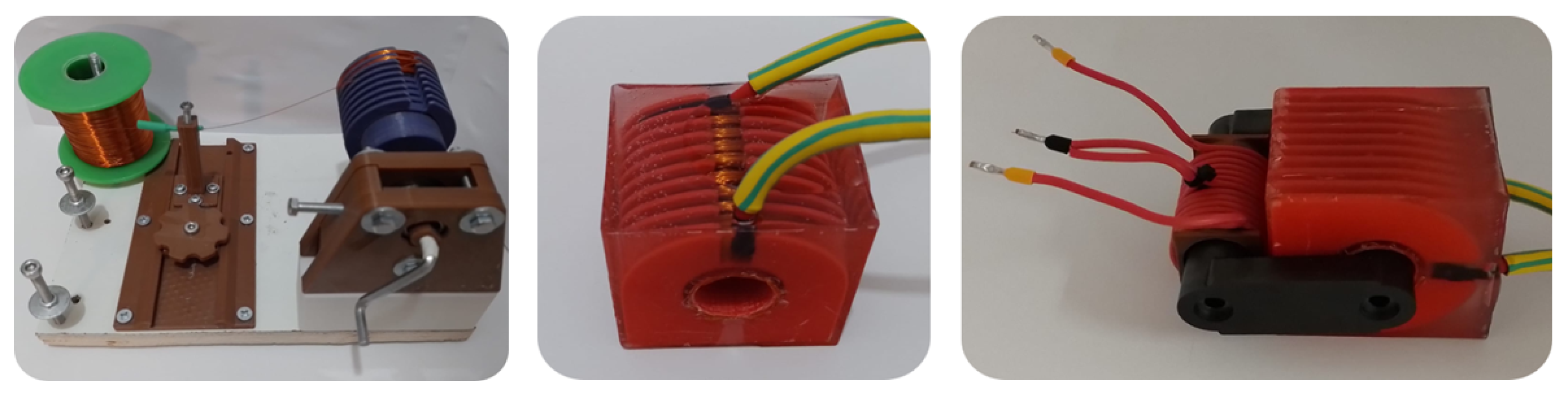
The transformer was wound manually (see Figure 5). To facilitate this process, a dedicated winding mechanism was designed in SolidWorks 2025 and subsequently manufactured using 3D printing.
After the winding process, consisting of nine sections of 220 windings each, the coil was placed into a specially designed container and was subsequently encapsulated in epoxy resin to ensure electrical insulation and mechanical strength.
  • Voltage multiplier:
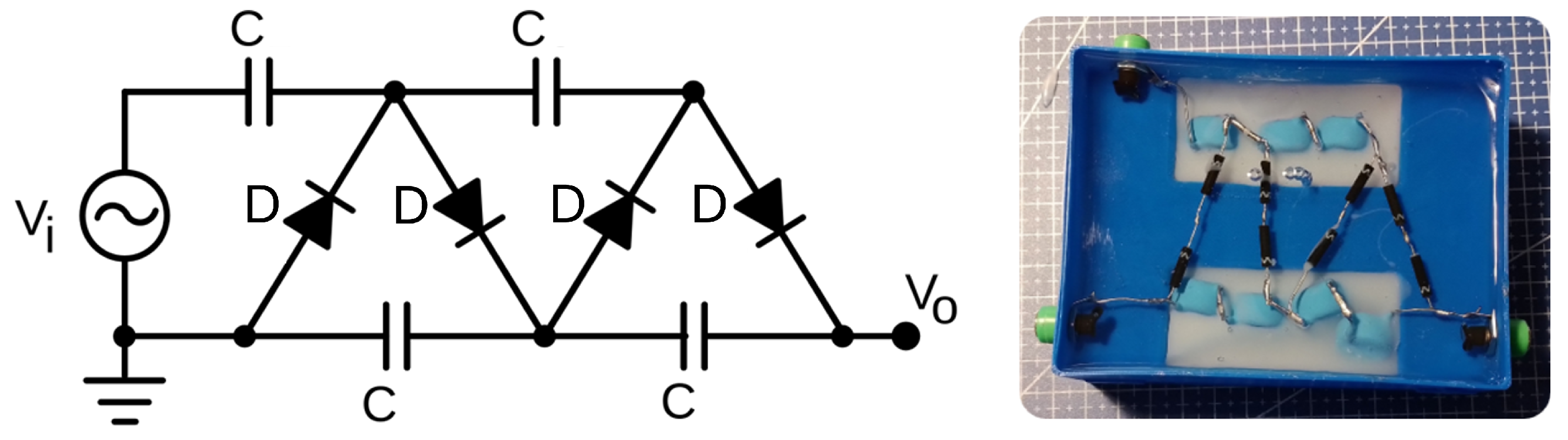
A Cockcroft–Walton voltage multiplier [25] is a rectifier circuit designed to increase the amplitude of an alternating voltage. Its operation is based on the sequential charging and discharging of capacitors through diodes, by which a stepwise summation of voltages across the individual stages is achieved. This principle makes it possible to obtain a DC output voltage that is a multiple of the amplitude of the input AC signal, without the need for a transformer with a high turns ratio. The output voltage is determined by the number of stages incorporated in the multiplier. The voltage multiplier was assembled manually. High-voltage diodes (max. current 50 mA) and capacitors (3.3 nF), each rated for 30 kV, were connected in series to increase their permissible operating voltage (see Figure 6). In this configuration, a factor-of-four voltage multiplication is achieved, and the effective operating voltage across each component chain reaches approximately 60 kV.
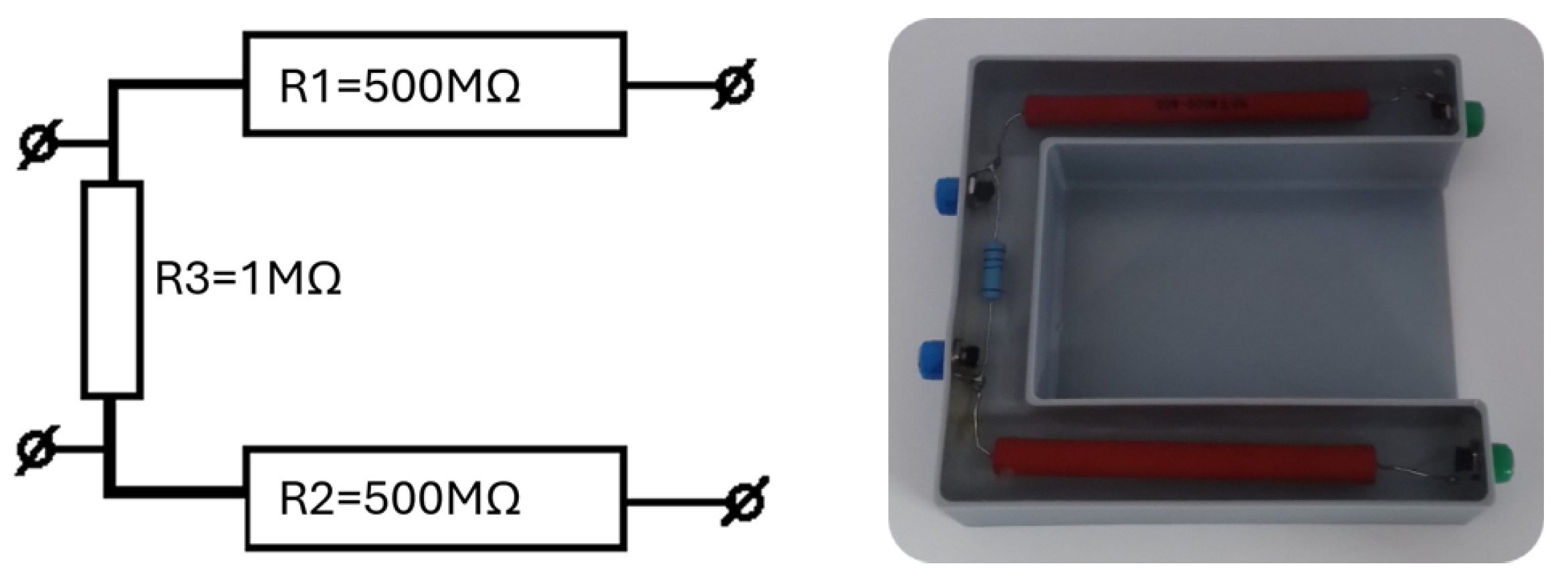
To measure such a high voltage, a voltage divider with a total resistance of 1 G Ω was constructed. It consisted of two 500 M Ω resistors connected in series, with a 1 M Ω resistor tapped between them as the measurement point. The voltage was measured across the 1 M Ω resistor using a digital oscilloscope, and the obtained value was multiplied by 1000 to determine the actual voltage (see Figure 7).
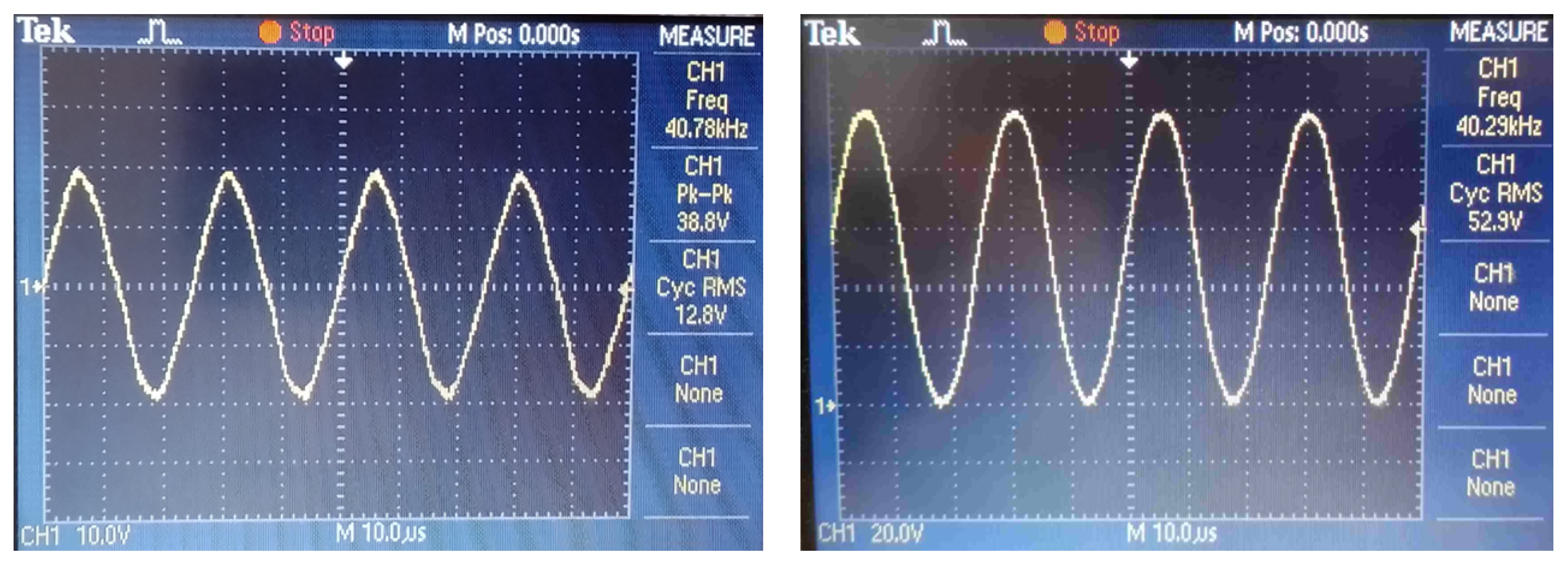
The output voltage of the transformer secondary winding in the push–pull topology is inherently a high-frequency AC waveform. Measurements indicated a secondary voltage of approximately 12 kV RMS. After passing through the Cockcroft–Walton voltage multiplier, the output voltage reached approximately 52 kV RMS. Representative oscilloscope measurements of the transformer secondary waveform and the voltage-multiplier output are presented in Figure 8.
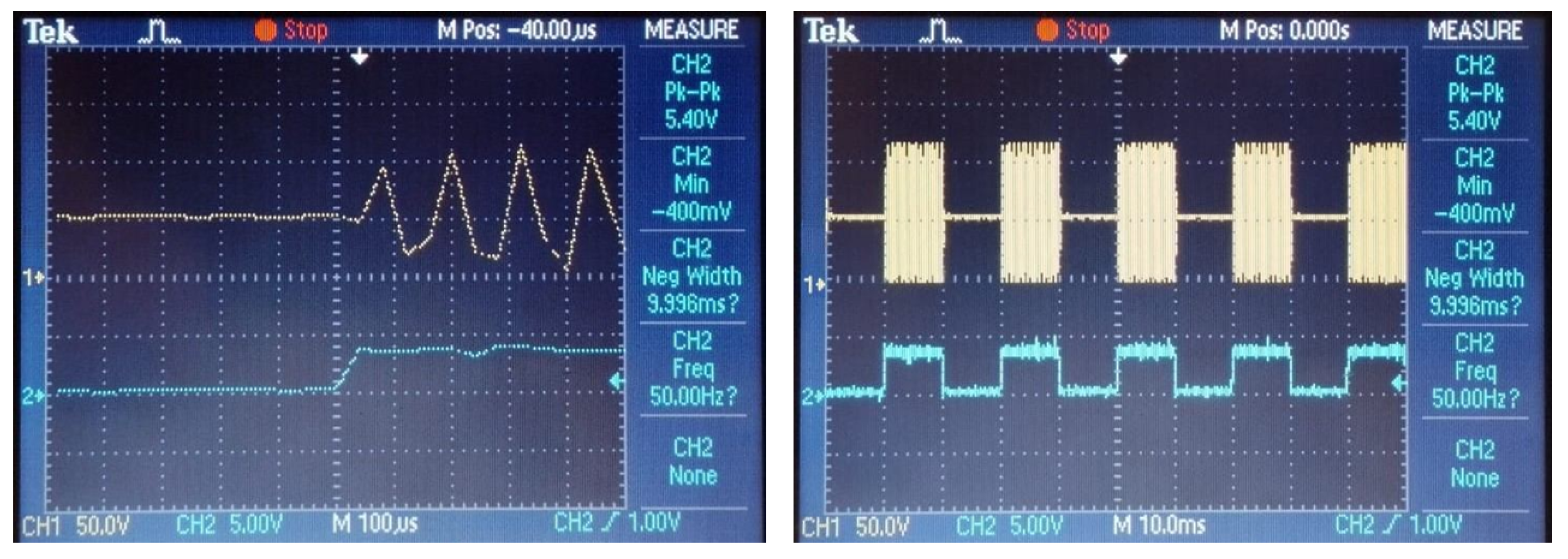
The dynamic response of the high-voltage actuation system is presented in Figure 9. The measured delay between the PWM command and the resulting high-voltage output was approximately 400 μs.
It should be noted that the divider was designed primarily for approximate high-voltage characterization and comparative validation of the converter operation rather than precision metrology. Due to the very high impedance of the divider relative to the load, the measurement circuit minimally affected the converter operation. The measurement arrangement was validated experimentally by verifying the expected proportional scaling behavior between the transformer secondary voltage and the voltage-multiplier output.

2.2. Support Platform

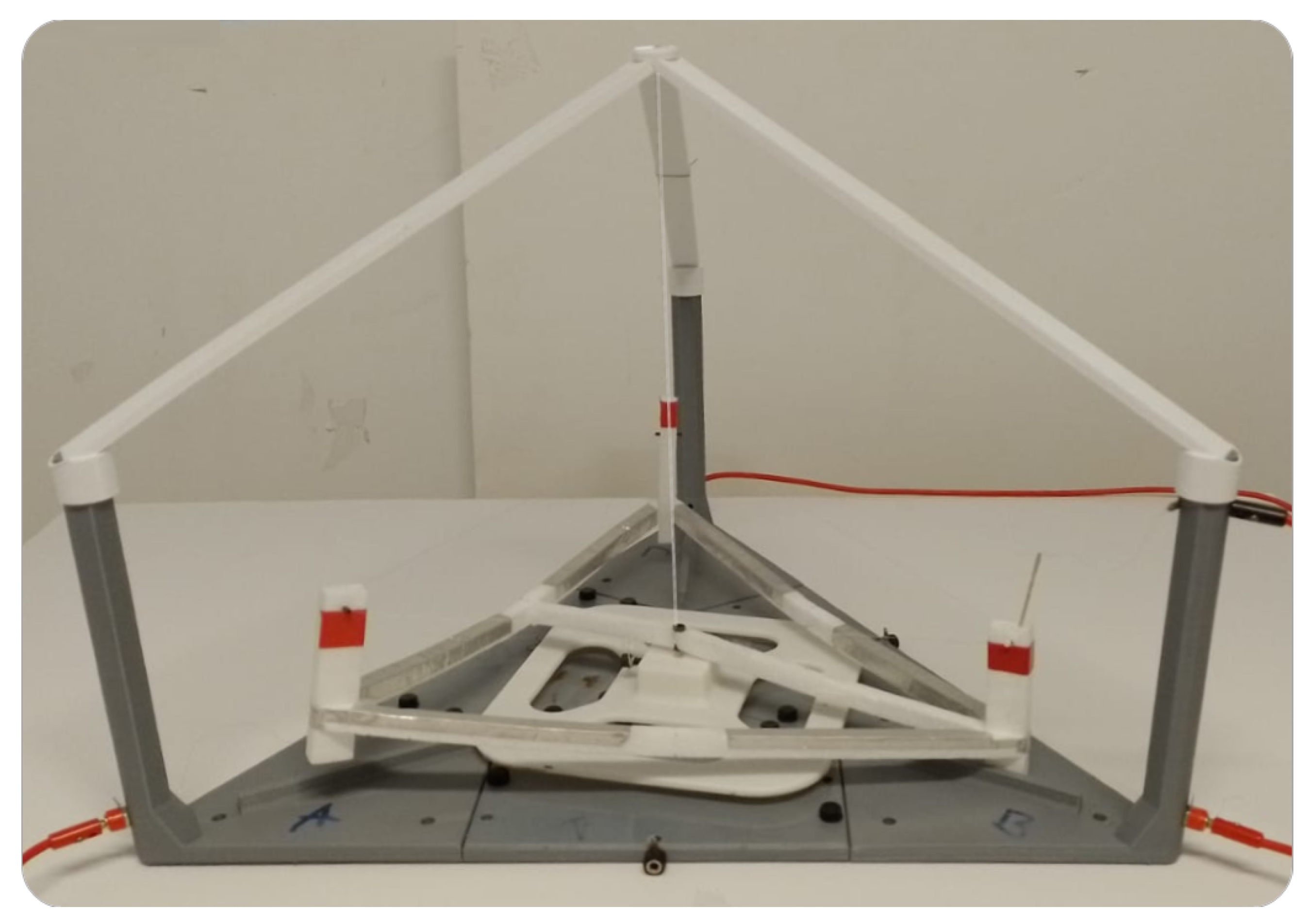
The support platform (see Figure 10) serves as a base for launching and controlling the ion aircraft. It enables hovering up to 20 cm along the vertical Z-axis and allows adjustment of the tilt angles. To prevent arbitrary displacement of the aircraft in the XY plane, a thin stretched thread is used, serving as a spatial constraint. This design ensures experimental stability and makes it possible to maintain controlled hovering within a confined region of space.

2.3. Ion-Propelled Aircraft

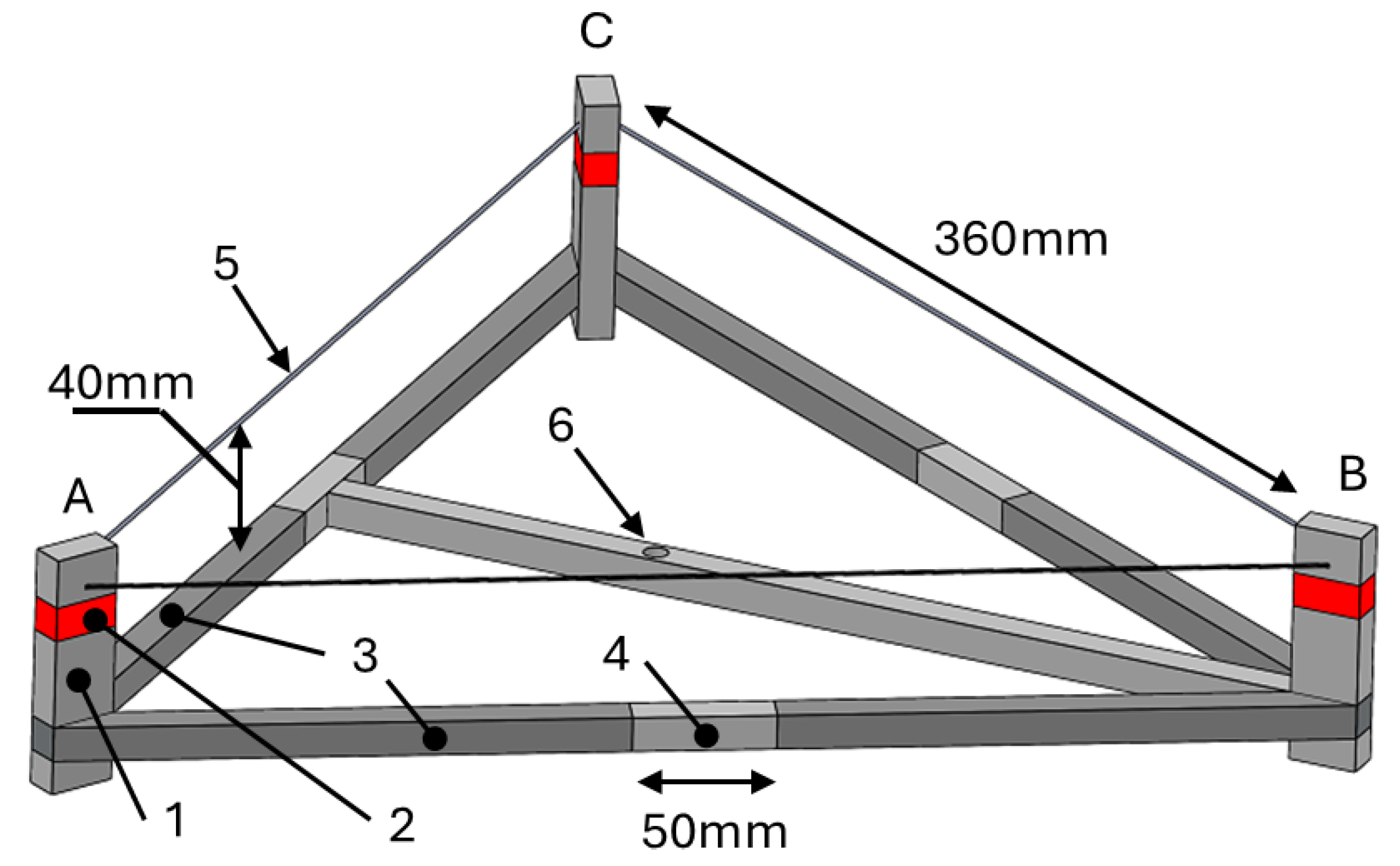
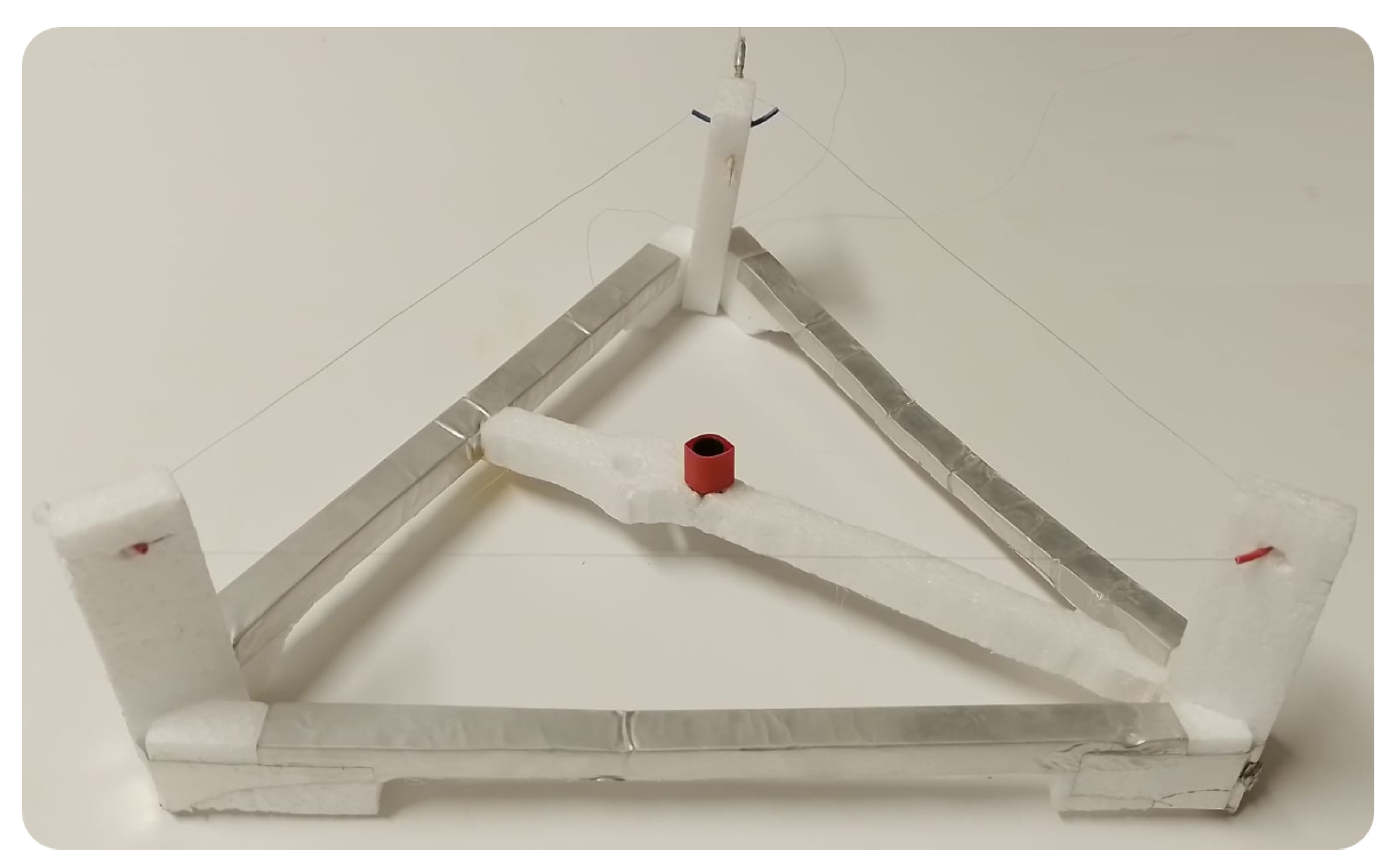
The aircraft is constructed from lightweight foam, with a total mass of 4.2 g. Since the generated thrust is relatively low, minimizing the structural mass was a primary design consideration. For this reason, lightweight foam elements were selected for the airframe, providing a favorable balance between low mass, manufacturability, and structural stiffness. It is shaped as an equilateral triangle with a side length of 360 mm. Power is supplied by three independent high-voltage units, each connected to a separate collector electrode, while the emitter electrode is common to all three circuits (see Figure 11). The main design considerations are as follows:
1.
Insulators maintain the required distance between the emitter and collector electrodes, fixing their relative positions and preventing electrical breakdown. Based on prior experiments, the spacing was set to approximately 40 mm as a practical compromise intended to reduce the probability of electrical breakdown during normal operation while maintaining sufficient ionic thrust generation. These were made from 10mm ultralight foam sheet.
2.
Red markers are mounted on the structure and tracked by a video camera, providing measurement data for altitude and tilt-angle control.
3.
Collector electrodes, with a 10 × 15 mm rectangle cross-section made from 10 mm ultralight foam sheet, covered with aluminum foil, one at each edge of the triangular design.
4.
Uncoated gaps of 50 mm are left between the foil-covered areas, enabling separate connection of each collector electrode to its dedicated high-voltage power supply (used in the vertex-based system as described later).
5.
Emitter electrode is realized as a thin aluminum wire with a diameter of 0.08 mm, stretched above the collector electrodes.
6.
Central beam with hole is positioned at the center of mass of the triangular structure; the hole accommodates a thin thread that secures the apparatus within the working area and constrains lateral displacement in the XY-plane.
Preliminary experiments [27] demonstrated that the generated ion thrust was comparable for electrodes with semicircular and square cross-sections. From a technological standpoint, however, electrodes with a square-cross-section are more practical to manufacture and implement. Based on the experimental results, electrodes with a 10 × 15 mm square cross-section were identified as suitable for the present study.

3. Mathematical Model

A simplified rigid-body dynamic model was developed to describe the platform dynamics and to verify the controllability of the proposed configuration. Note that the model was not used for controller synthesis or parameter identification. Instead, the controller gains were tuned experimentally, as detailed modeling of the electrohydrodynamic actuator dynamics is beyond the scope of the present study.
The platform consists of three identical thin beams of length L and mass m, arranged as an equilateral triangle. The structure behaves as a rigid body whose total mass is M = 3 m . The center of mass is located at the geometric centroid of the triangle.
To simplify the model and match the experimental setup, the platform is constrained to move only along the vertical axis z and around two rotational degrees of freedom, namely roll ( ϕ ) and pitch ( θ ). Translations in the x-y plane are mechanically restricted (the platform is guided along a vertical axis), and yaw motion is neglected.
Thus, the generalized coordinates are
q = [ z , ϕ , θ ] T .

3.1. Kinematics

The body orientation is described by the rotation matrix
R = R y ( θ ) R x ( ϕ ) .
The unit normal vector of the triangular platform (i.e., the body z B axis) expressed in the inertial frame is
n = R 0 0 1

3.2. Energy Formulation

The potential energy V and kinetic energy T are defined as
V = M g z ,
T = 1 2 M z ˙ 2 + 1 2 ω T I B ω ,
where I B denotes the inertia tensor of the platform constructed from the three beams, and ω is the angular velocity vector obtained from Ω = R T R ˙ .
The system dynamics are derived using the Euler-Lagrange formulation with L = T V and:
d d t L q ˙ L q = Q ,
where Q = [ Q z , Q ϕ , Q θ ] T denotes the generalized forces and moments generated by the three ion thrusters.
The generalized force associated with the vertical translation is given by
Q z = e z T i F i ,
where
e z = 0 0 1 ,
and F i are expressed in the world frame.
The total torque about the center of mass generated by the thrusters is
τ tot = i r i × F i ,
where r i denotes the position of the i-th thrust application point relative to the center of mass.
Assuming small angular deviations around the equilibrium configuration, the generalized rotational forces are approximated by the projections of the total torque onto the world-frame roll and pitch axes:
Q ϕ e x T τ tot , Q θ e y T τ tot ,
where
e x = 1 0 0 , e y = 0 1 0 .

3.3. Control over the Vertex Position

The control system regulates the vertical position z and the platform orientation through measurements of the three vertex positions.
Let P i B R 3 , i = 1 , 2 , 3 , denote the positions of the triangle vertices expressed in the body frame. Their world-frame positions are given by
P i = R ( ϕ , θ ) P i B + 0 0 z ,
where
P i = x i y i z i .
The desired equilibrium condition is
z 1 = z 2 = z 3 = z desired ,
which geometrically implies that all vertices lie in the desired horizontal plane.
The vertical error vector is defined as
e = e 1 e 2 e 3 , e i = z desired z i .
Error reduction is achieved by implementing feedback control through the two investigated thrust configurations, which regulate the platform’s altitude and orientation.

4. Experimental Methodology

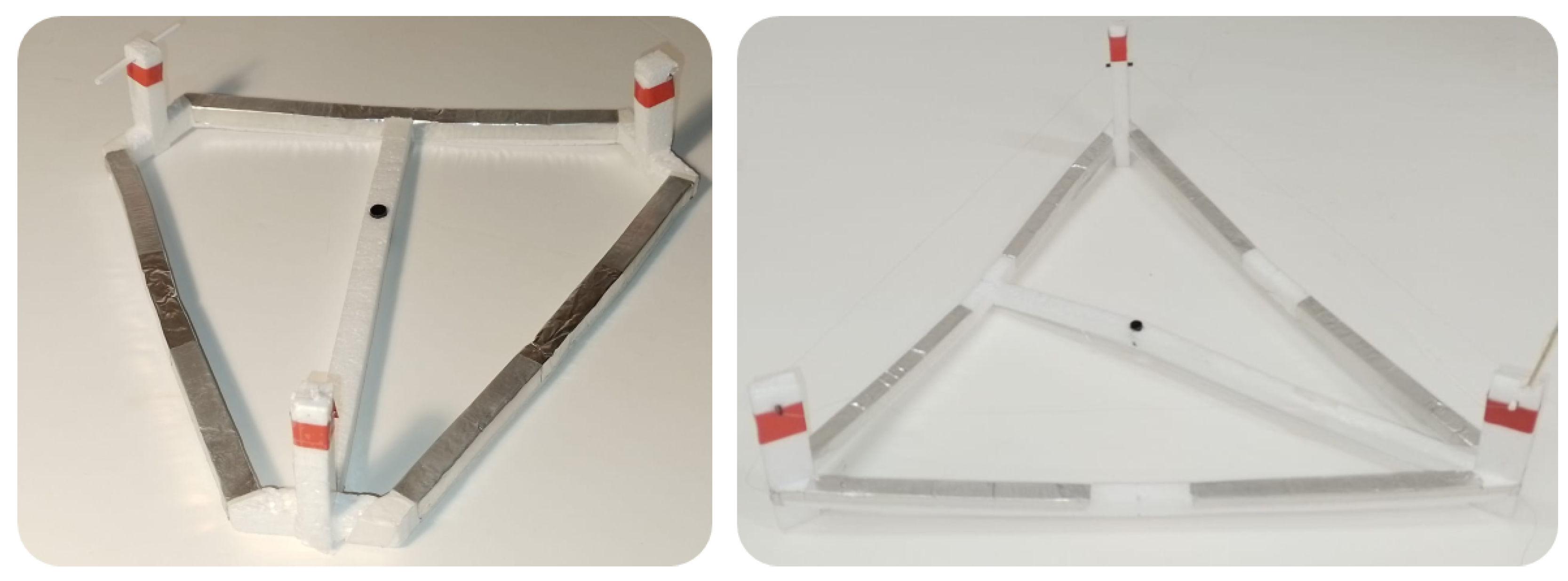
As described in the previous paragraph, to enable thrust generation, three custom high-voltage transformers were designed and manufactured, each converting a 30 V DC input into a PWM-controllable output of up to 50 kV. To regulate altitude as well as pitch and roll, three red markers were mounted on the structure and tracked using a Logitech C920 HD 1080p webcam, enabling height estimation at the triangle’s vertices. The camera was positioned at a distance of 120 cm from the platform. Two thrust configurations were investigated: (1) thrust generated beneath each edge of the triangle (Edge System); and (2) thrust produced at the corners of the triangle by “bending“ the collector electrode around each vertex, thus concentrating effective thrust generation near the corners (Vertex System, see Figure 12). The control system utilizes the camera measurements together with the desired altitude to compute error signals for each corner, ensuring uniform height across the structure. These errors are processed to determine the required actuation signals, generated by an ESP32 micro-controller to drive the high-voltage converters.
The thrust-generation mechanism in the present system is controlled indirectly through PWM modulation of the high-voltage converter input stage. Increasing the PWM duty cycle results in a higher effective voltage applied to the transformer primary winding, thereby raising the secondary high voltage and the electric field intensity between the emitter and collector electrodes. Consequently, the corona discharge intensity increases and ionic wind generation is enhanced, producing greater thrust forces.
The relationship between electrode geometry, applied voltage, and generated ionic thrust was experimentally investigated in our previous study [27].
The experiments were conducted in a closed indoor environment in order to minimize external disturbances such as airflow or environmental perturbations. Under these controlled conditions, the objective of the experiment was to demonstrate the hovering capability of the system rather than free-flight operation.
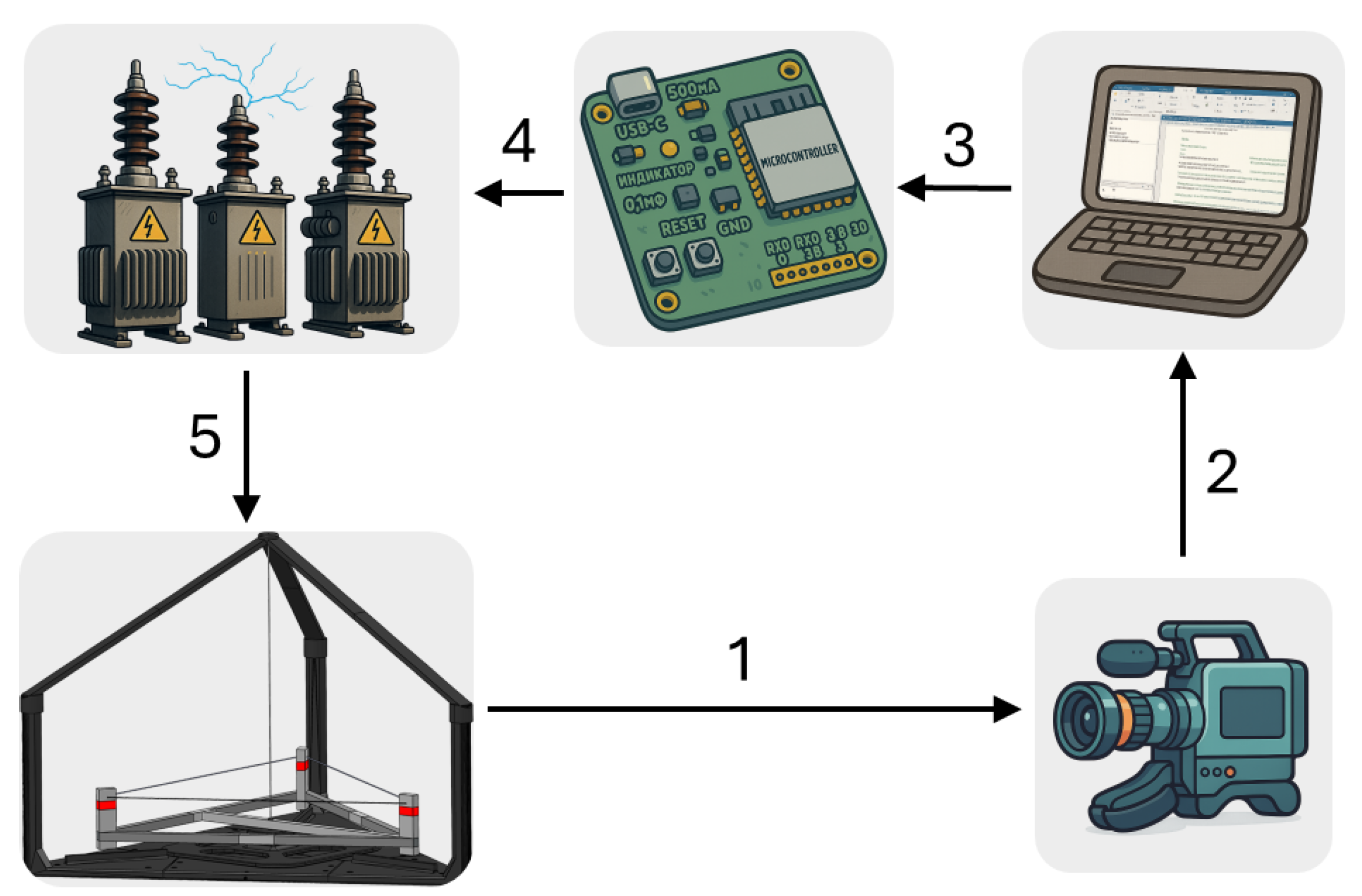
The hovering close loop control is as follows (see Figure 13):
1.
Image Acquisition: A camera captures the real-time image of the red markers mounted on the aircraft structure.
2.
Image Processing: The captured frames are transmitted to a PC, where pixel-wise processing is performed to identify the markers and determine their coordinates.
3.
Control Computation: Utilizing MATLAB R2024b software, a PI control algorithm processes the positional error to compute the required PWM control commands. The data is then transmitted from the PC to the ESP32 micro-controller.
4.
Signal Generation: The ESP32 receives the control data and regulates three high-voltage power supplies via Pulse Width Modulation (PWM) signals.
5.
Thrust Actuation: Each power supply energizes a distinct section of the ion-craft structure, providing the necessary thrust for the hover stabilization.

5. Experiments and Results

To validate the proposed control approach, a preliminary experiment was conducted using a single-degree-of-freedom ion-thrust aircraft designed to regulate altitude only. In this setup, the camera provided feedback on the vehicle’s height by tracking a red marker (placed at the CoG), with the desired altitude (see Figure 14).
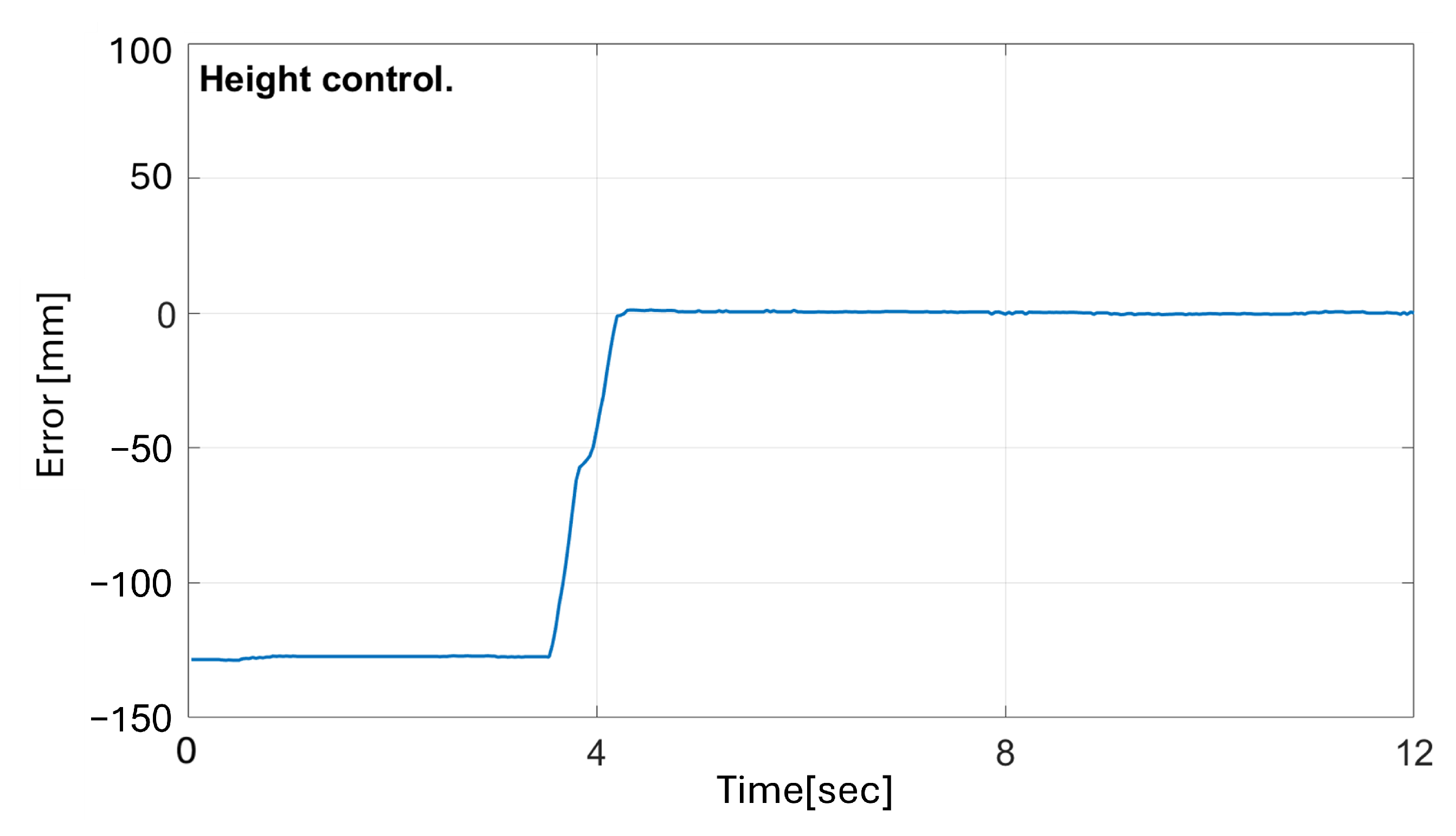
The control loop adjusted the thrust amplitude through a PWM signal generated by the microcontroller and applied to the high-voltage supply. Experimental results confirmed that the system successfully maintained the aircraft at the desired height, demonstrating the feasibility of closed-loop control using vision-based feedback, as presented in Figure 15. A PI controller was implemented for altitude regulation, where the controller gains were calibrated using a Ziegler–Nichols-like tuning approach.
The control signal is computed as
P W M = K p · e + K i · I
where
e = y desired y current K p = 3.2 K i = 2.88 d t = 0.05 s I = I + e · d t
A video clip of the experiment is available in [29].

5.1. Edge System

After confirming the feasibility of camera-based feedback and validating the functionality of the electronic system, the next stage focused on controlling both the height and orientation of the aircraft. We first examined the configuration in which thrust was generated beneath the edges of the triangular structure. The control signals were computed as:
P W M A B = K p · e A B + K i · I A B P W M A C = K p · e A C + K i · I A C P W M C B = K p · e C B + K i · I C B
t = 0.05 s e A B = ( e A + e B ) I A B = I A B + e A B t e A = Y desired Y A e A C = ( e A + e C ) I A C = I A C + e A C t e B = Y desired Y B e C B = ( e C + e B ) I C B = I C B + e C B t e C = Y desired Y C            
where we empirically chose the constants:
K p = 0.03 K i = 0.1
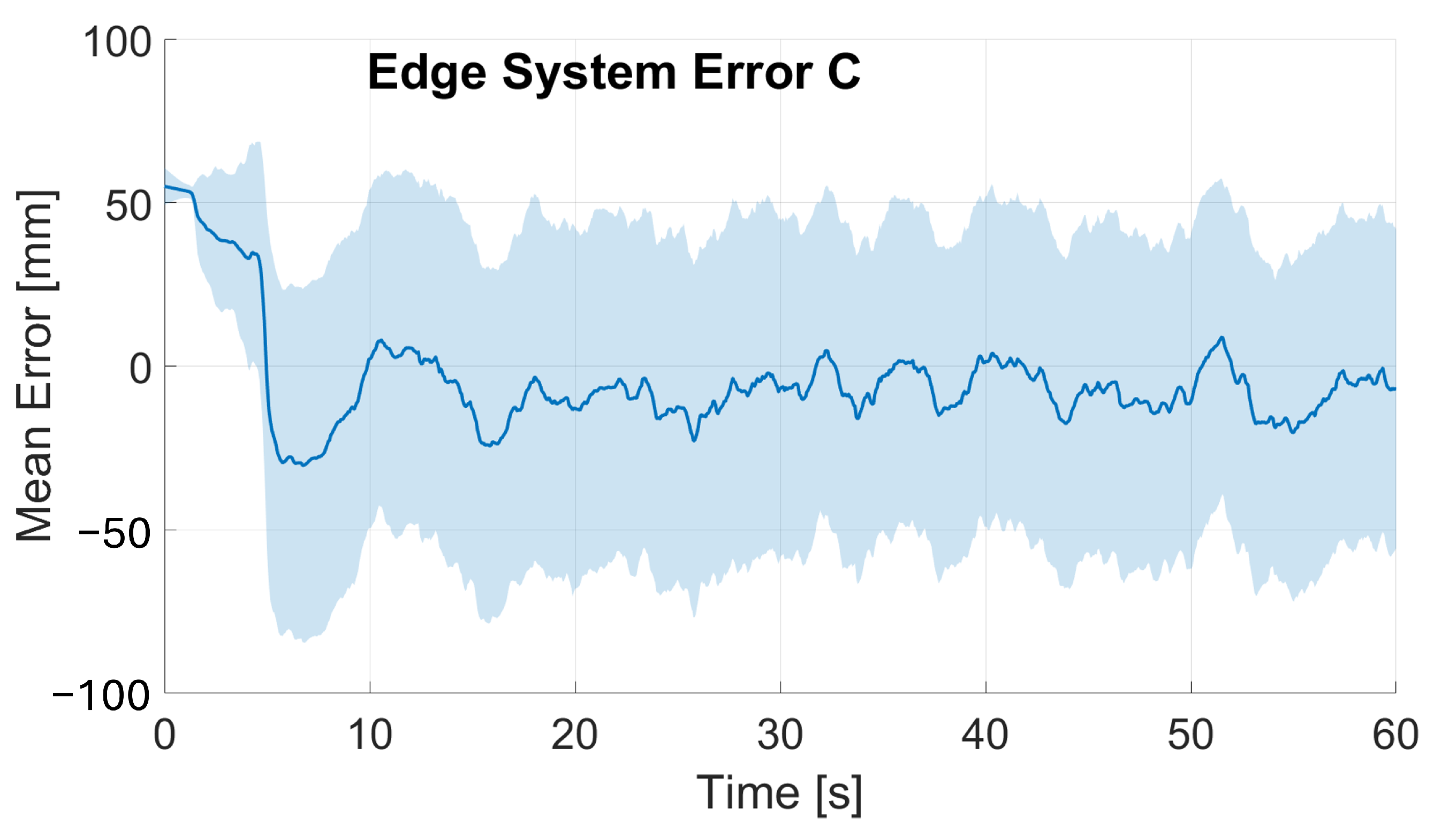
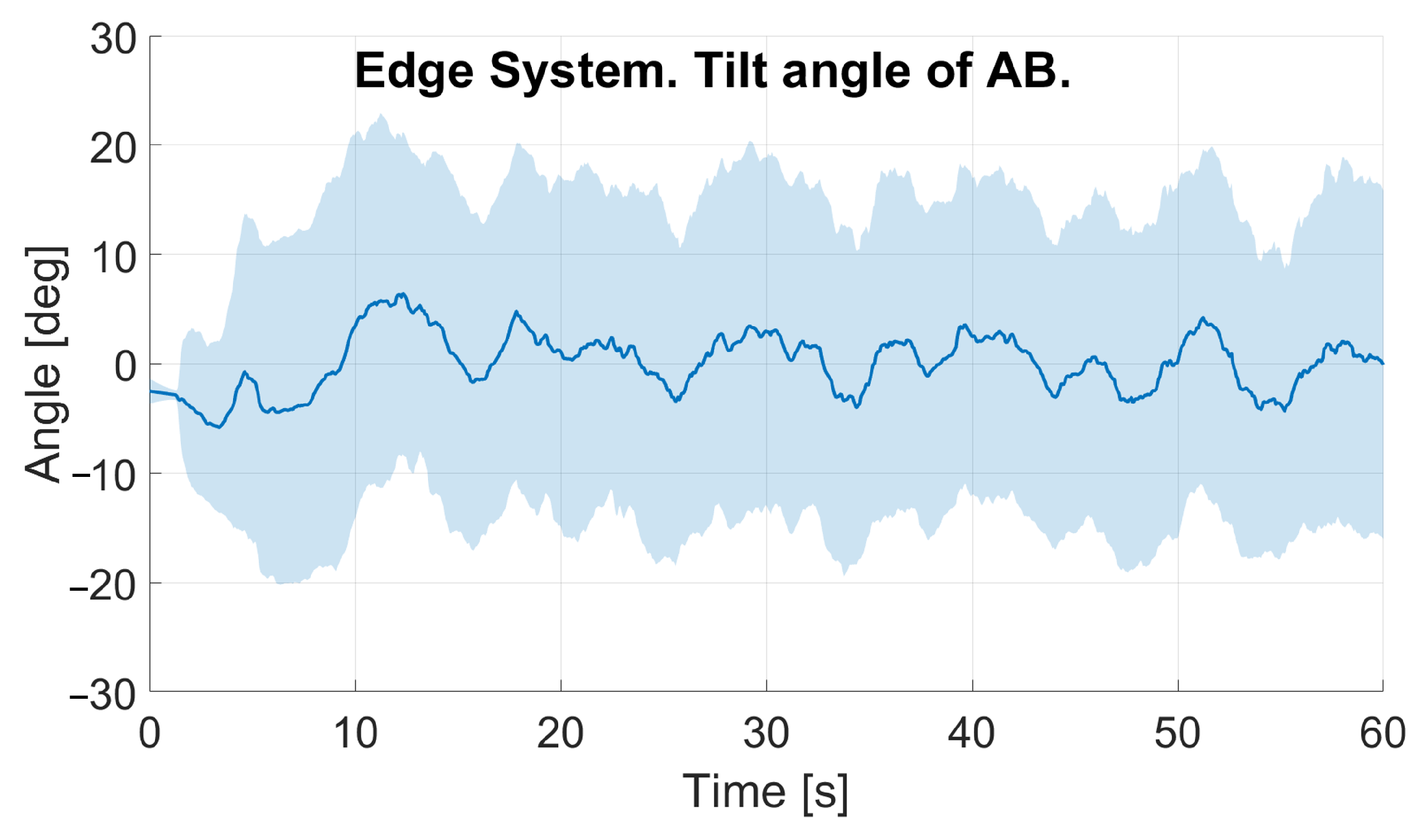
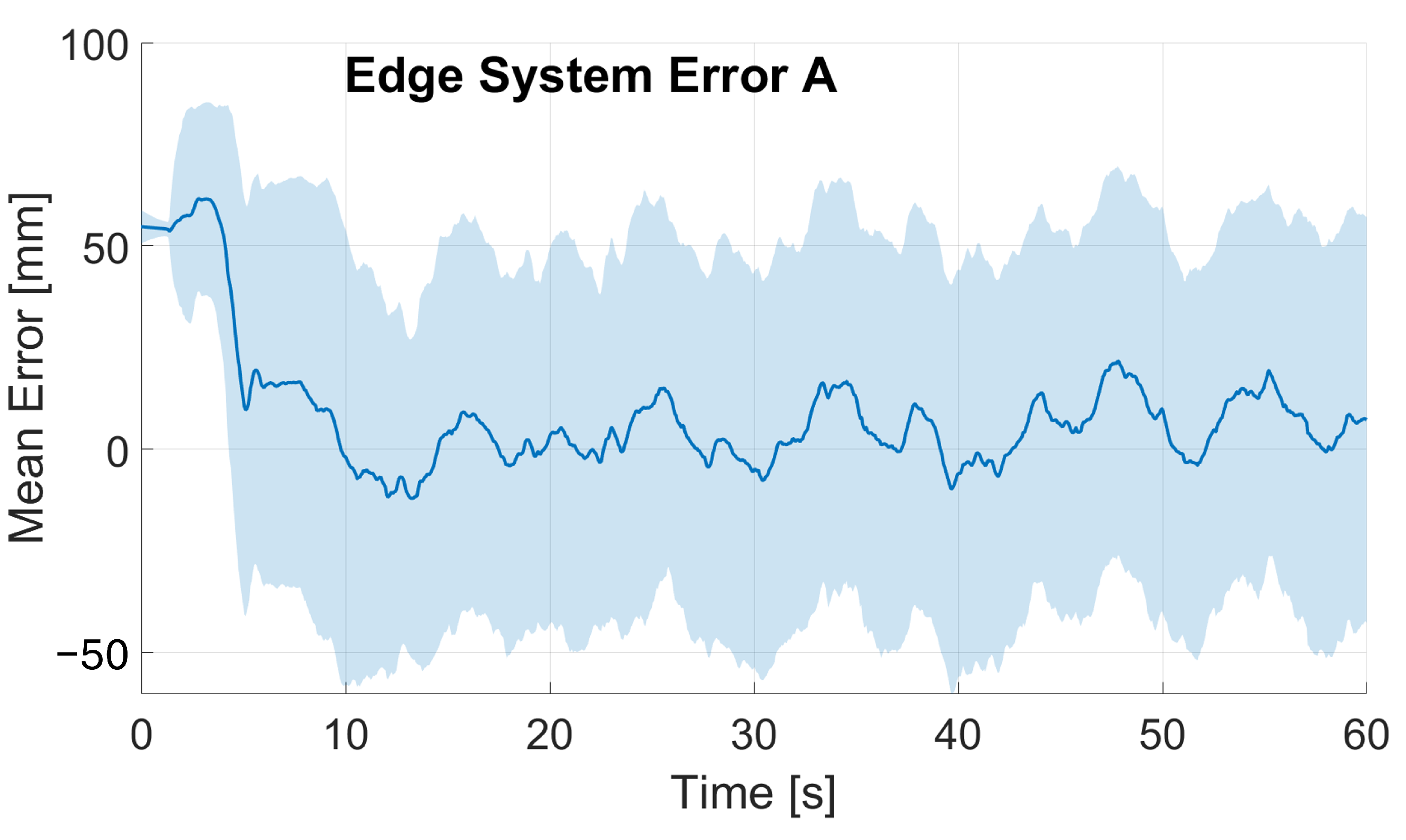
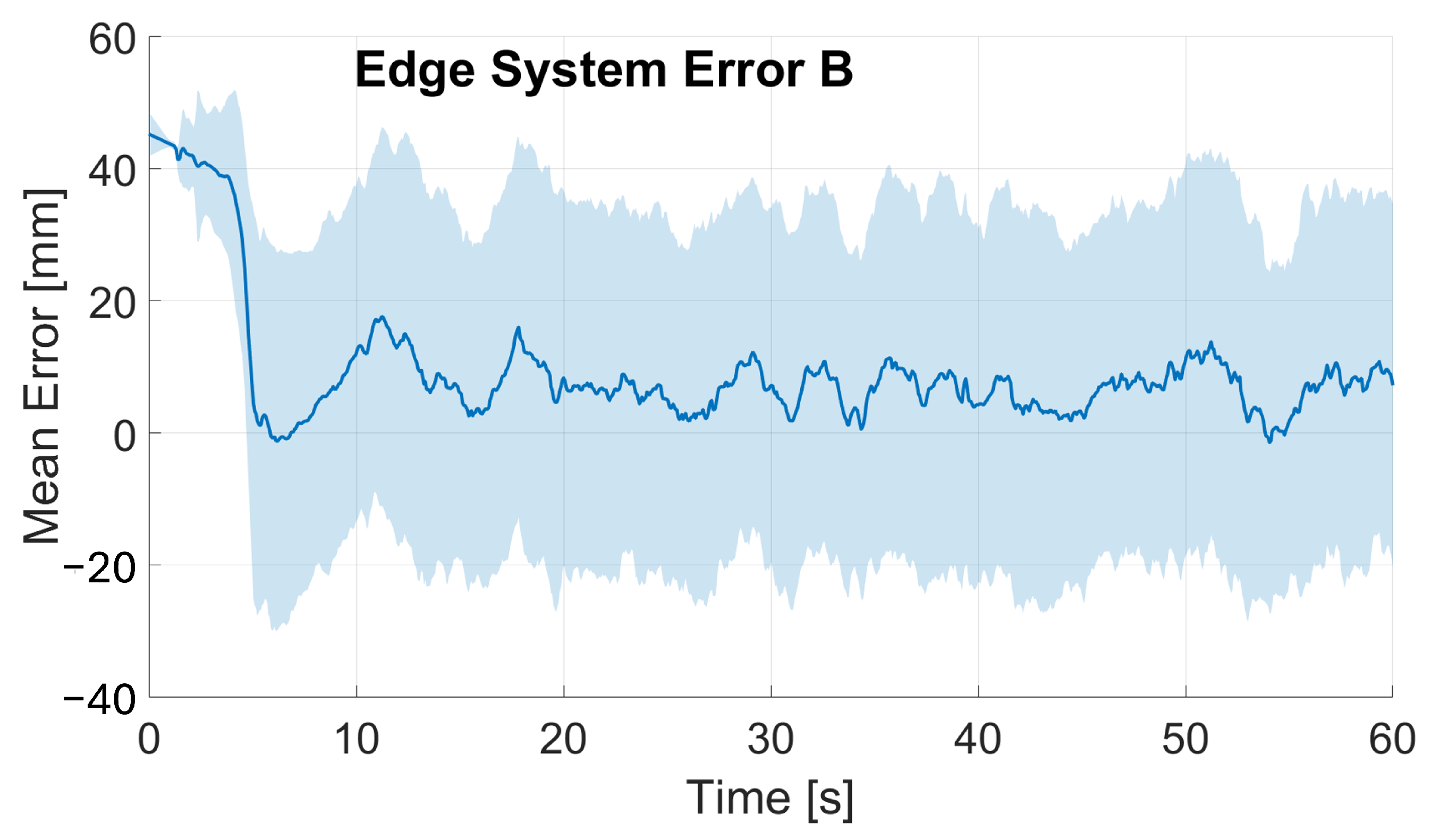
Experimental results revealed that in this case, control of the aircraft was challenging, as the thrust vectors are located relatively close to the center of gravity. Consequently, relatively high thrust levels were required to generate sufficient rotational torque, leading to unstable lateral rotations and preventing the system from maintaining a steady configuration, as illustrated in Figure 16, which shows the angle between edge AB and the horizontal plane. The height errors of the triangular edges (A–C, as depicted in Figure 11) are illustrated in Figure 17, Figure 18 and Figure 19. The difficulty in controlling the platform using edge actuators arises from control coupling between adjacent vertices and the resulting error cancellation effect.
PWM ¯ = K p e A + e B e A + e C e B + e C + K i I A + I B I A + I C I B + I C
As shown in Equation (18), each edge actuator receives a command based on the combined errors of the two vertices connected to that edge. As a result, the control input is not applied directly to an individual vertex. In situations where the errors of two adjacent vertices have opposite signs, their contributions may partially or fully cancel each other, reducing the effectiveness of the control action. In addition, edge actuators are positioned closer to the platform’s center of mass compared to vertex actuators, resulting in a shorter moment arm and reduced torque generation capability. These two effects make the edge-based configuration less effective for orientation stabilization.

5.2. Vertex System

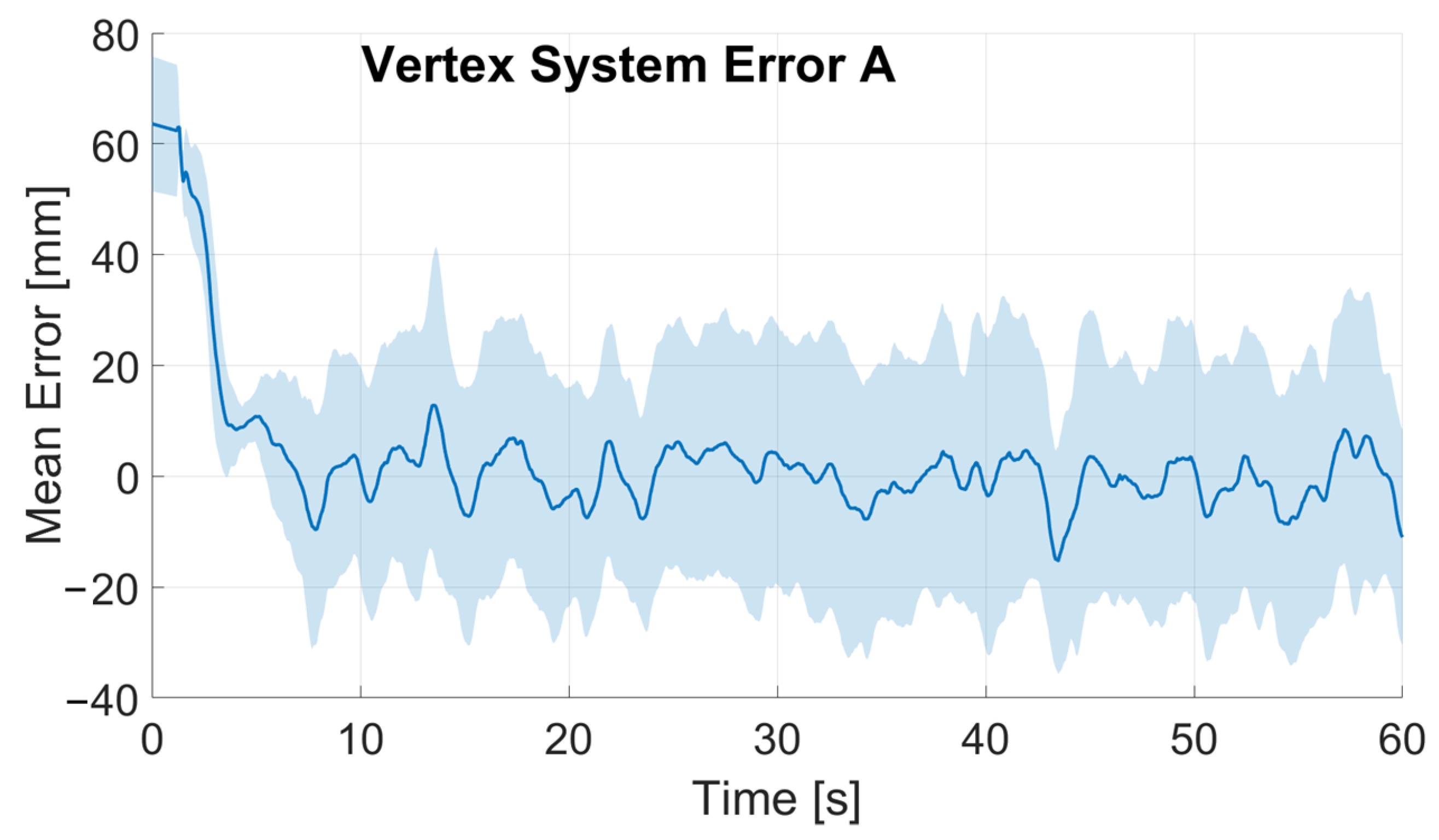
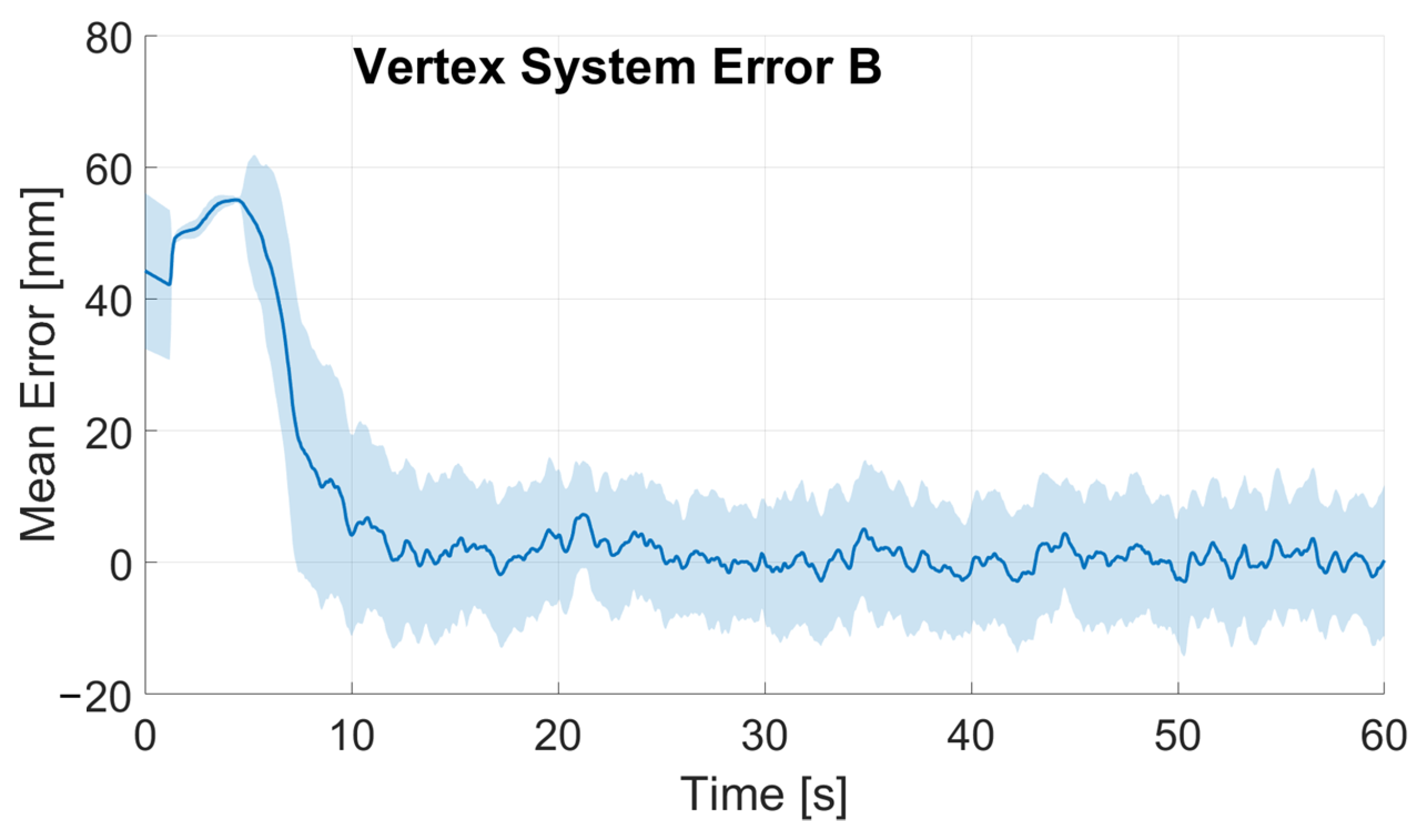
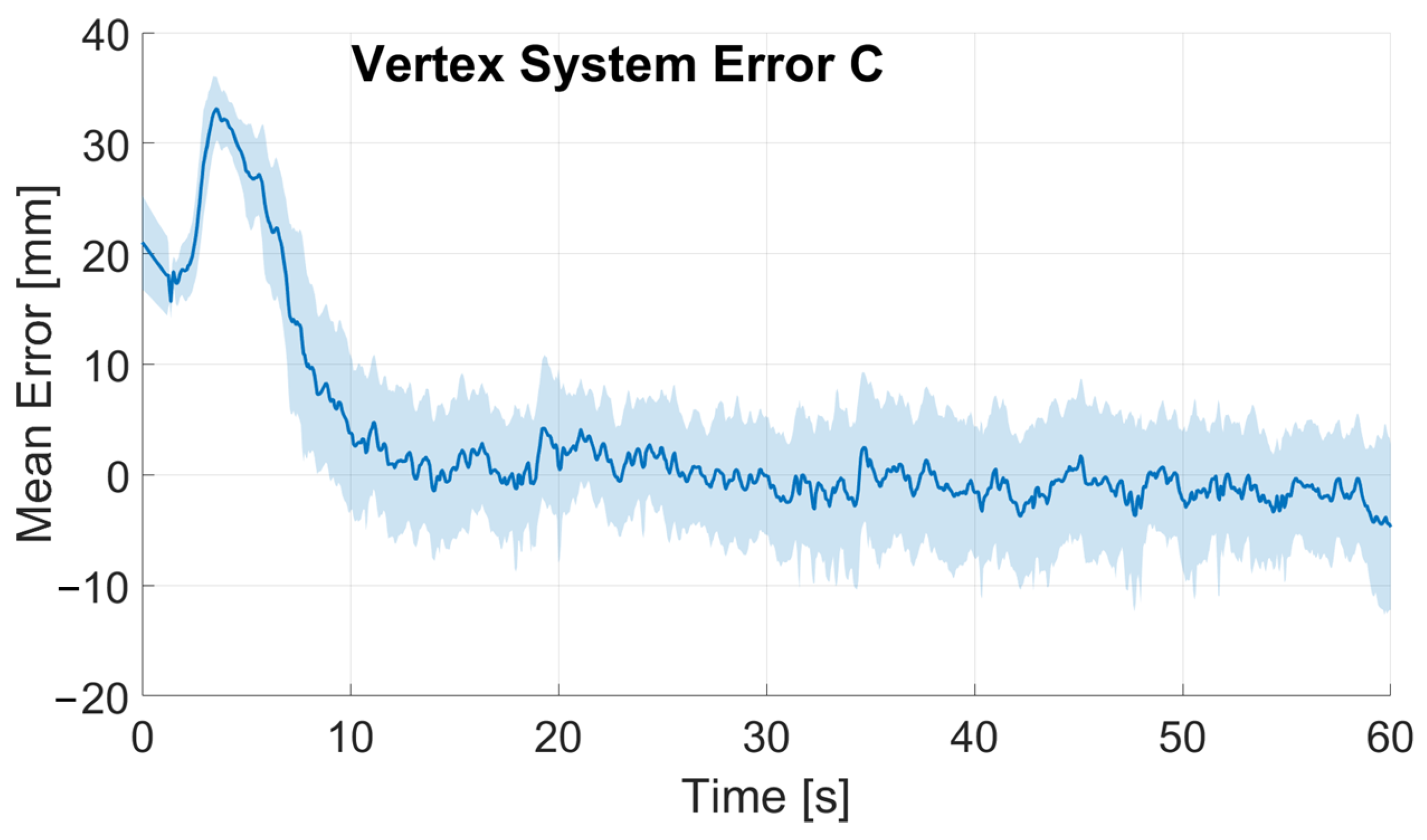
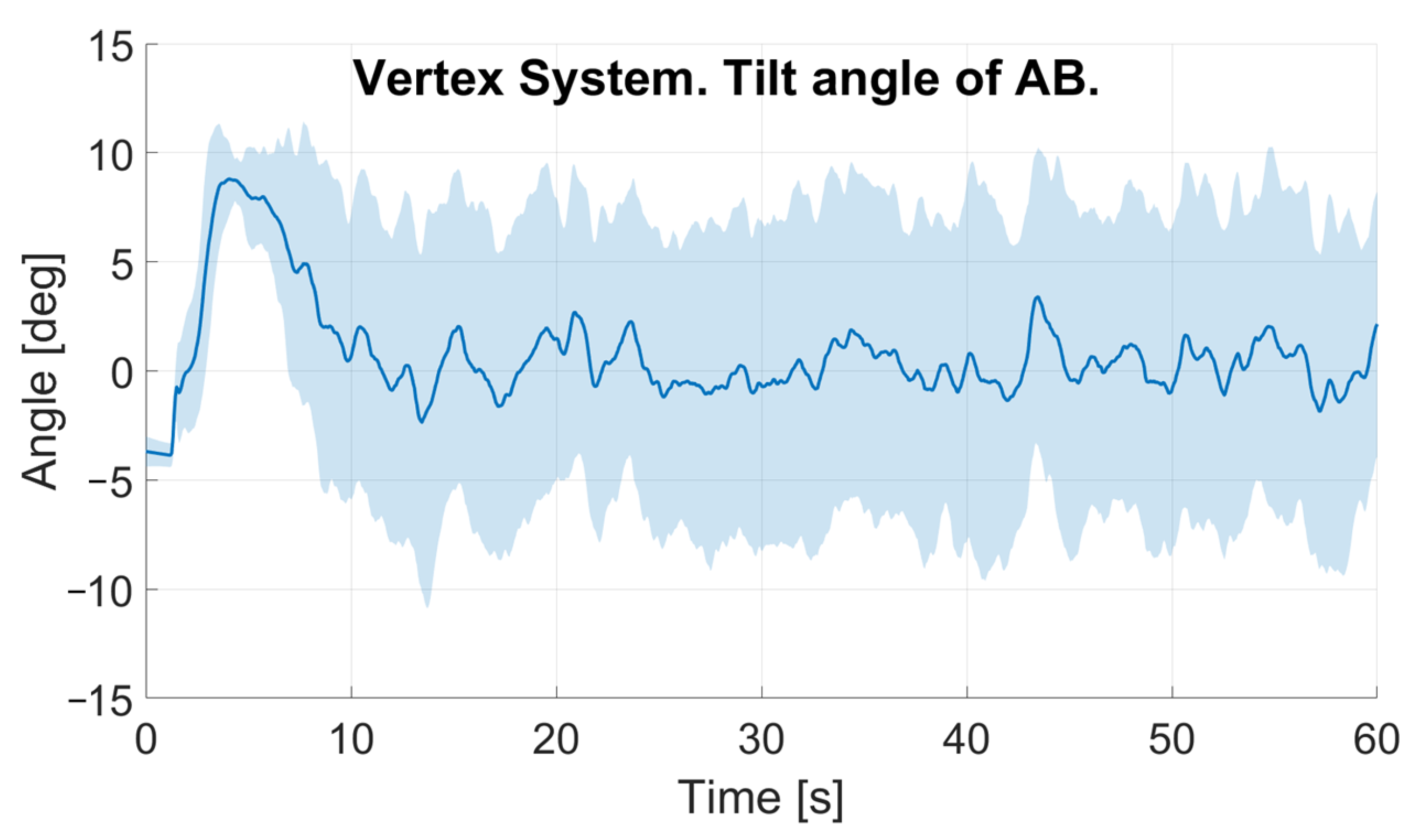
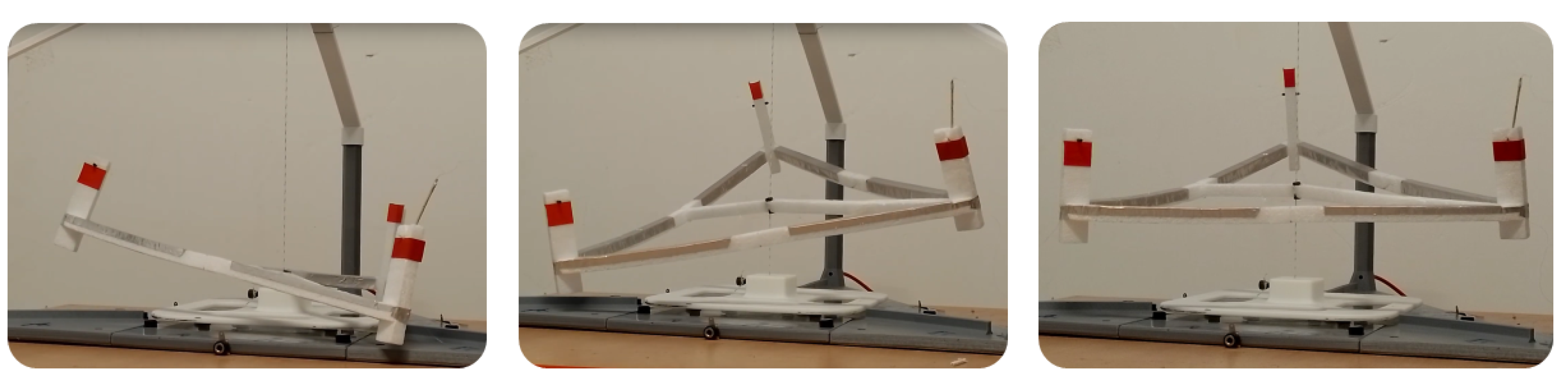
In the second configuration, where thrust was generated near the vertices of the triangular structure, the control performance improved considerably. This setup allowed the system to produce larger rotational moments, as the thrust vectors were applied farther from the center of gravity. Positioning the actuators at the corners is analogous to the design of industrial drones, which also exploit corner-mounted propulsion for efficient torque generation. Under this configuration, both the vertex position error and the aircraft’s angular error were minimized, resulting in stable altitude and orientation control (see Figure 20, Figure 21, Figure 22 and Figure 23). A video clip of the experiment is available in [26]. Figure 24 illustrates three representative states of the aircraft during the control process: grounded, transient tilt during controller activation, and stabilized hover. Note that despite the similarity of the control constants between the two methods, the second approach yields a markedly improved control performance.
The control signals were computed as:
P W M A = K p · e A + K i · I A P W M B = K p · e B + K i · I B P W M C = K p · e C + K i · I C
where
K p = 0.03 I A = I A + e A · t e A = Y desired Y A K i = 0.05 I B = I B + e B · t e B = Y desired Y B t = 0.05   s I C = I C + e C · t e C = Y desired Y C
To further validate the observed differences between the Edge and Vertex configurations, repeated experiments were conducted for both systems. A total of 50 trials were performed for each configuration in order to evaluate the repeatability and positioning performance of the platform. Table 1 summarizes the mean positioning error, standard deviation, and RMS measured at points A, B, and C, providing a quantitative comparison between both electrode configurations and highlighting the improved stability of the Vertex system. Since the platform initially starts from a grounded posture, the initial transient phase was excluded from the analysis, and the statistics reported in Table 1 were computed only for t > 10 s, which corresponds approximately to the settling time of the closed-loop system, after which the platform reached a quasi-steady hovering condition suitable for statistical evaluation.

6. Discussion

The experiments demonstrated the feasibility of closed-loop hovering control for an ion-thrust platform under controlled laboratory conditions, while also revealing several practical limitations.
First, the development process itself highlighted the difference between the two thrust configurations. The study initially focused on the intuitive edge-based control system, and considerable effort was invested in tuning the controller gains for this configuration. In practice, stable hovering with the edge system proved difficult to achieve, which motivated the transition to the novel vertex-based configuration. In that case, the controller gains were easier to tune, and the resulting hovering performance was significantly better, as shown in the Experiments and Results Section.
The difference between the two configurations is not explained solely by the larger moment arm available in the vertex-based arrangement. In the vertex-based configuration, the measurement and actuation points are colocated, while the edge-based configuration introduces coupling between adjacent vertices. This coupling may lead to partial error cancellation and reduced control effectiveness.
Second, the vision-based feedback system relied on a standard 30 FPS webcam. Although this was sufficient to demonstrate hovering control, the limited frame rate and processing speed constrained the responsiveness of the control loop. Improved performance is expected with a faster camera and a dedicated high-speed computing unit.
Overall, these observations indicate that the limitations of the current platform arise not only from the sensing and power electronics, but also from the intrinsic controllability of the selected thrust configuration.
Third, industrial controllable high-voltage power supplies are expensive, and at the beginning of this study it was not clear whether the proposed concept would generate sufficient thrust and controllability. For this reason, the high-voltage power supplies were designed and fabricated in-house. This enabled low-cost prototyping and experimental validation, but the resulting units were relatively noisy and inefficient compared to commercial solutions. Future improvements in the power electronics design may therefore enhance thrust consistency and overall control performance.
It should be emphasized that the primary objective of the present study was not optimization of thrust-to-power efficiency, but rather the demonstration of controllability and closed-loop stabilization of an ion-thrust hovering platform. Compared to conventional propeller-based UAVs, atmospheric EHD propulsion currently exhibits significantly lower thrust-to-power efficiency and limited payload capability, which remain important challenges for future research.
Furthermore, the present study is limited to hover stabilization under controlled laboratory conditions. Free-flight operation, disturbance rejection, outdoor environmental effects, and autonomous navigation were beyond the scope of this work and remain important directions for future research.
A thin guiding thread was employed to prevent excessive lateral drift during the experiments. The thread passed through a relatively large guide, allowing approximately 30 degrees of angular freedom before contact occurred. In addition, the thread was only lightly tensioned, permitting further motion even after contact with the guide. Consequently, the thread primarily served as a safety and repeatability mechanism rather than a rigid constraint on the platform’s rotational dynamics.
Occasional arcing events were observed during operation, particularly under transient conditions and during platform oscillations. These events were attributed to local electric-field concentration effects, small electrode misalignments, and temporary reductions in effective electrode spacing caused by structural motion. The phenomenon was observed more frequently in the Edge configuration, where the reduced control effectiveness required larger control commands and consequently higher operating voltages. In contrast, the Vertex configuration provided improved controllability and required less aggressive actuation, resulting in fewer arcing events during steady hovering. Although the selected 40 mm spacing significantly reduced the probability of continuous electrical breakdown, it did not completely eliminate localized discharge events under all operating conditions. All experiments were therefore conducted exclusively under controlled laboratory conditions using low-current high-voltage sources and appropriate safety precautions.

7. Conclusions

The experiments confirmed the feasibility of controlling an ion-thrust aircraft with a triangular structure under laboratory conditions. Practical tests demonstrated that vertex-based control provides a more stable configuration compared to edge-based control, where actuator coupling between adjacent vertices and a shorter moment arm reduce the effectiveness of attitude stabilization. In this paper, our primary objective was to demonstrate the feasibility of closed-loop control for an ion-thrust hovering platform and to compare two electrode configurations, rather than to achieve full autonomous stabilization. Relatively small control constants were employed (to avoid overshooting), without attempting to fully optimize the system’s dynamic response. Future work will focus on developing more advanced control strategies aimed at reducing the system’s settling time and achieving smoother and more precise hovering.

Author Contributions

Both authors contributed equally to this work. All authors have read and agreed to the published version of the manuscript.

Funding

This research received no external funding.

Institutional Review Board Statement

Not applicable.

Informed Consent Statement

Not applicable.

Data Availability Statement

The raw data supporting the conclusions of this article will be made available by the authors on request.

Acknowledgments

The authors acknowledge the use of generative AI (ChatGPT-5.5) solely for the purposes of grammar checking and language refinement during manuscript preparation. No AI system was used to generate research ideas, concepts, data, figures, results, or analysis; all scientific contributions and conclusions are entirely the authors’ own.

Conflicts of Interest

The authors declare no conflicts of interest.

References

  1. Austin, R. Unmanned Aircraft Systems: UAVS Design, Development and Deployment; John Wiley & Sons: Hoboken, NJ, USA, 2010. [Google Scholar] [CrossRef]
  2. Colomina, I.; Molina, P. Unmanned aerial systems for photogrammetry and remote sensing: A review. ISPRS J. Photogramm. Remote Sens. 2014, 92, 79–97. [Google Scholar] [CrossRef]
  3. Valavanis, K.P.; Vachtsevanos, G.J. (Eds.) Handbook of Unmanned Aerial Vehicles; Springer: Berlin/Heidelberg, Germany, 2015. [Google Scholar] [CrossRef]
  4. Watts, A.C.; Ambrosia, V.G.; Hinkley, E.A. Unmanned aircraft systems in remote sensing and scientific research: Classification and considerations of use. Remote Sens. 2012, 4, 1671–1692. [Google Scholar] [CrossRef]
  5. Čurma, P.; Lázár, M.; Jasminská, N.; Brestovič, T.; Duda, F.; Milenovskỳ, P. Electrohydrodynamic Propeller as One of the Alternatives to Replace Conventional Propulsion Systems. Appl. Sci. 2024, 14, 10885. [Google Scholar] [CrossRef]
  6. Moreau, E. Airflow control by non-thermal plasma actuators. J. Phys. D Appl. Phys. 2007, 40, 605–636. [Google Scholar] [CrossRef]
  7. Barrett, S.R.H. Propulsion and lift from a solid-state flyer. Nature 2018, 563, 532–535. [Google Scholar] [CrossRef]
  8. Brown, T.T. A Method of and an Apparatus or Machine for Producing Force or Motion. GB Patent GB300311A, 15 November 1928. [Google Scholar]
  9. O’Reilly, D.; Herdrich, G.; Kavanagh, D.F. Electric Propulsion Methods for Small Satellites: A Review. Aerospace 2021, 8, 22. [Google Scholar] [CrossRef]
  10. Martinez-Sanchez, M.; Pollard, J.E. Spacecraft Electric Propulsion—An Overview. J. Propuls. Power 1998, 14, 688–699. [Google Scholar] [CrossRef] [PubMed]
  11. Goebel, D.M.; Katz, I. Fundamentals of Electric Propulsion: Ion and Hall Thrusters; Wiley: Hoboken, NJ, USA, 2008. [Google Scholar] [CrossRef]
  12. Shumeiko, A. Thrust-vectoring schemes for electric propulsion systems. Aerosp. Sci. Technol. 2025, 38, 103401. [Google Scholar]
  13. Wagh, S.A.; Pawar, P. Challenges and Innovations in Electric Propulsion Systems for Space Transportation: A Comprehensive Review. Acceleron Aerosp. J. 2025, 4, 929–944. [Google Scholar] [CrossRef]
  14. Monrolin, N.; Plouraboué, F.; Praud, O. Electrohydrodynamic Thrust for In-Atmosphere Propulsion. AIAA J. 2017, 55, 4296–4305. [Google Scholar] [CrossRef]
  15. Gilmore, C.K.; Barrett, S.R.H. Electrohydrodynamic thrust density using positive corona–induced ionic winds for in-atmosphere propulsion. Proc. R. Soc. A 2015, 471, 2175. [Google Scholar] [CrossRef]
  16. Grosse, S.; Benard, N.; Moreau, E. Electroaerodynamic thrusters: Influence of a freestream on current, ionic wind and force generation. J. Electrost. 2024, 130, 103950. [Google Scholar] [CrossRef]
  17. Xia, Z.; Ying, Y.; Li, H.; Lin, T.; Yao, Y.; Qi, N.; Huo, M. Optimization of Plasma-Propelled Drone Performance through Electrohydrodynamic Propulsion Modeling. Aerospace 2024, 11, 667. [Google Scholar] [CrossRef]
  18. Hou, M.; Zhang, J.; Zhao, X.; Quan, R. High-Thrust, Low-Noise Ionic Wind Thrusters with Sawtooth Multi-Ring Airfoil Electrodes. Aerosp. Sci. Technol. 2025, 168, 111081. [Google Scholar] [CrossRef]
  19. Calvo, E.M. Modeling of Electrohydrodynamic (EHD) Plasma Thrusters. Appl. Sci. 2022, 12, 1637. [Google Scholar] [CrossRef]
  20. Cabanas, M.F. Analysis of the Efficiency of the Electrohydrodynamic Propulsion System. Appl. Sci. 2022, 12, 2997. [Google Scholar] [CrossRef]
  21. Hou, M. Sawtooth multi-ring electrodes for ionic wind propulsion. Sci. Rep. 2025, 15, 17471. [Google Scholar] [CrossRef]
  22. Wang, Z. PUB: A Plasma-Propelled Ultra-Quiet Blimp with Two-DOF Vector Thrusting. arXiv 2025, arXiv:2508.12395. [Google Scholar]
  23. Hart, D.W. Power Electronics; McGraw-Hill: New York, NY, USA, 2011; Volume 166. [Google Scholar]
  24. Pressman, A. Switching Power Supply Design; McGraw-Hill, Inc.: New York, NY, USA, 1997. [Google Scholar]
  25. Young, C.M.; Chen, M.H.; Chang, T.A.; Ko, C.C.; Jen, K.K. Cascade Cockcroft–Walton voltage multiplier applied to transformerless high step-up DC–DC converter. IEEE Trans. Ind. Electron. 2012, 60, 523–537. [Google Scholar] [CrossRef]
  26. Goshen, I. Our Ion Aircraft Control System Is Implemented Through the Regions Around the Vertices. Available online: https://youtu.be/Hz-mLJZ3XI0 (accessed on 30 March 2026).
  27. Goshen, I.; Medina, O. The Role of Big Electrode Geometry in Ionic Propulsion. Res. Sq. 2025. [Google Scholar] [CrossRef]
  28. Goshen, I. Our System for Controlling an Ion Aircraft by MEANS of Edges. YouTube Video. 2025. Available online: https://youtu.be/9tYMSYXQSFw (accessed on 7 September 2025).
  29. Goshen, I. Our Ion Aircraft Altitude Control System. YouTube Video. 2025. Available online: https://youtube.com/shorts/Ugiw7oqYMCY?feature=share (accessed on 6 September 2025).
Figure 1. Schematic of the Biefeld–Brown effect: asymmetric electrodes generating thrust via a non-uniform electric field and localized ionization [8].
Actuators 15 00326 g001
Figure 2. Two thrust configurations are investigated: (a) Edge System—thrust generated beneath each edge of the triangle (the blue area); and (b) Vertex System—thrust produced at the triangle’s corners by “bending“ the collector electrode (presented in blue) around each vertex, thereby concentrating the effective thrust generation near the corners.
Actuators 15 00326 g002
Figure 3. Schematic of the high-voltage converter based on the push–pull topology. The converter generates a high-voltage output from low-voltage sources. PWM signals generated by the micro-controller U1 drive MOSFETs Q1–Q2, which switch the primary winding of the high-voltage transformer. A 12 V supply (H3) powers the control circuitry and cooling fan, while a 30 V supply (H1) is delivered through Q3 to the power stage. Resistors R1, R2, and R3 function as current-limiting elements to enhance circuit protection.
Actuators 15 00326 g003
Figure 4. Stages of PCB fabrication: The PCB layout and the fully assembled power supply.
Actuators 15 00326 g004
Figure 5. Transformer unit. The (left) image shows a custom winding mechanism designed for transformer coil fabrication, the (middle) image shows the secondary winding encapsulated in epoxy resin, and the (right) image shows the completed unit incorporating both primary and secondary windings.
Actuators 15 00326 g005
Figure 6. The schematic diagram of a Cockcroft–Walton voltage multiplier is shown on the (left), while the custom-built multiplier is shown on the (right).
Actuators 15 00326 g006
Figure 7. Resistive voltage divider designs: (left) schematic with a 1:1000 ratio; (right) custom-made unit for safe high-voltage measurement.
Actuators 15 00326 g007
Figure 8. Measured output waveforms, using the Resistive voltage divider: (left) sinusoidal output of the secondary winding Vrms = 12.8 kV, (right) voltage multiplier output Vrms = 52.9 kV.
Actuators 15 00326 g008
Figure 9. Electrical response of the high-voltage actuation system. (Right) Channel 2 (blue) presents a 50 Hz control signal generated by the microcontroller, while Channel 1 (yellow) presents the voltage-multiplier output. The (left) image shows the transient response of the circuit, indicating a response time of approximately 400 μs from the control command to the high-voltage maximal output.
Actuators 15 00326 g009
Figure 10. An image of the experimental setup with the ion aircraft, capable of sustaining lift along the Z-axis up to 20 cm and enabling controlled variation of its inclination angles in three-dimensional space. Motion in the XY-plane is constrained by a stretched wire. A short video clip of the system is available in [26].
Actuators 15 00326 g010
Figure 11. Ion aircraft composed of ultralight foam. Key components: (1) insulators separating emitter and collector electrodes, (2) red marker for height tracking, (3) collector electrode made of aluminum foil tape, (4) uncoated areas for electrical isolation, (5) emitter electrode wire (0.08 mm diameter), and (6) central beam with hole for the stretched wire, acting as a linear joint that permits rotation about all three axes.
Actuators 15 00326 g011
Figure 12. Photographs of the ion aircraft prototypes. (Left) “edge system“ configuration, where thrust is generated independently beneath each edge [28]. (Right) “vertex system“ configuration, where thrust is generated independently beneath each vertex [26].
Actuators 15 00326 g012
Figure 13. Schematic representation of the operating principle of the laboratory ion-thrust aircraft. (1) An onboard camera captures the image of the aircraft. (2) The image is transmitted to a PC, where pixel-wise processing is performed to identify the red markers and compute the positional error. (3) The computed PWM control data are sent from the PC to the micro-controller. (4) The micro-controller regulates three power supplies through PWM signals. (5) Each power supply energizes a distinct section of the ion-craft structure.
Actuators 15 00326 g013
Figure 14. An image of a single-DOF ion aircraft is shown, where the system is capable of controlling only the altitude. In this configuration, all three electrodes were powered from a single high-voltage source, and a red marker placed at the center of mass was tracked by a camera to provide feedback for Z-axis control [29].
Actuators 15 00326 g014
Figure 15. Error response of the altitude control system. The lifting height of the structure is adjusted smoothly, with negligible overshoot.
Actuators 15 00326 g015
Figure 16. Edge system: Mean angle between edge AB and the horizontal plane over 50 experiments. The shaded region indicates the standard deviation.
Actuators 15 00326 g016
Figure 17. Edge system: Mean positioning error at point A over 50 experiments. The shaded region indicates the standard deviation.
Actuators 15 00326 g017
Figure 18. Edge system: Mean positioning error at point B over 50 experiments. The shaded region indicates the standard deviation.
Actuators 15 00326 g018
Figure 19. Edge system: Mean positioning error at point C over 50 experiments. The shaded region indicates the standard deviation.
Actuators 15 00326 g019
Figure 20. Vertex system: Mean positioning error at point A over 50 experiments. The shaded region indicates the standard deviation.
Actuators 15 00326 g020
Figure 21. Vertex system: Mean positioning error at point B over 50 experiments. The shaded region indicates the standard deviation.
Actuators 15 00326 g021
Figure 22. Vertex system: Mean positioning error at point C over 50 experiments. The shaded region indicates the standard deviation.
Actuators 15 00326 g022
Figure 23. Vertex system: Mean angle between edge AB and the horizontal plane over 50 experiments. The shaded region indicates the standard deviation.
Actuators 15 00326 g023
Figure 24. Experimental results. The (left) image shows the system in a grounded, inactive state, the (middle) image shows the aircraft response during controller activation with a visible tilt, and the (right) image shows a stabilized hovering state above the base.
Actuators 15 00326 g024
Table 1. Comparison of positioning error statistics for the Edge and Vertex configurations over 50 experimental trials.
PointEdge SystemVertex System
Mean [mm]STD [mm]RMS [mm]Mean [mm]STD [mm]RMS [mm]
A3.848.248.3−0.123.523.5
B7.127.928.8−1.210.310.4
C−7.351.752.20.86.26.3
Disclaimer/Publisher’s Note: The statements, opinions and data contained in all publications are solely those of the individual author(s) and contributor(s) and not of MDPI and/or the editor(s). MDPI and/or the editor(s) disclaim responsibility for any injury to people or property resulting from any ideas, methods, instructions or products referred to in the content.