
Control-Oriented Comparison of Electrode Placement Strategies in an Electrohydrodynamic Actuation System


Abstract
1. Introduction
2. System Model
2.1. High-Voltage Power Supply Architecture
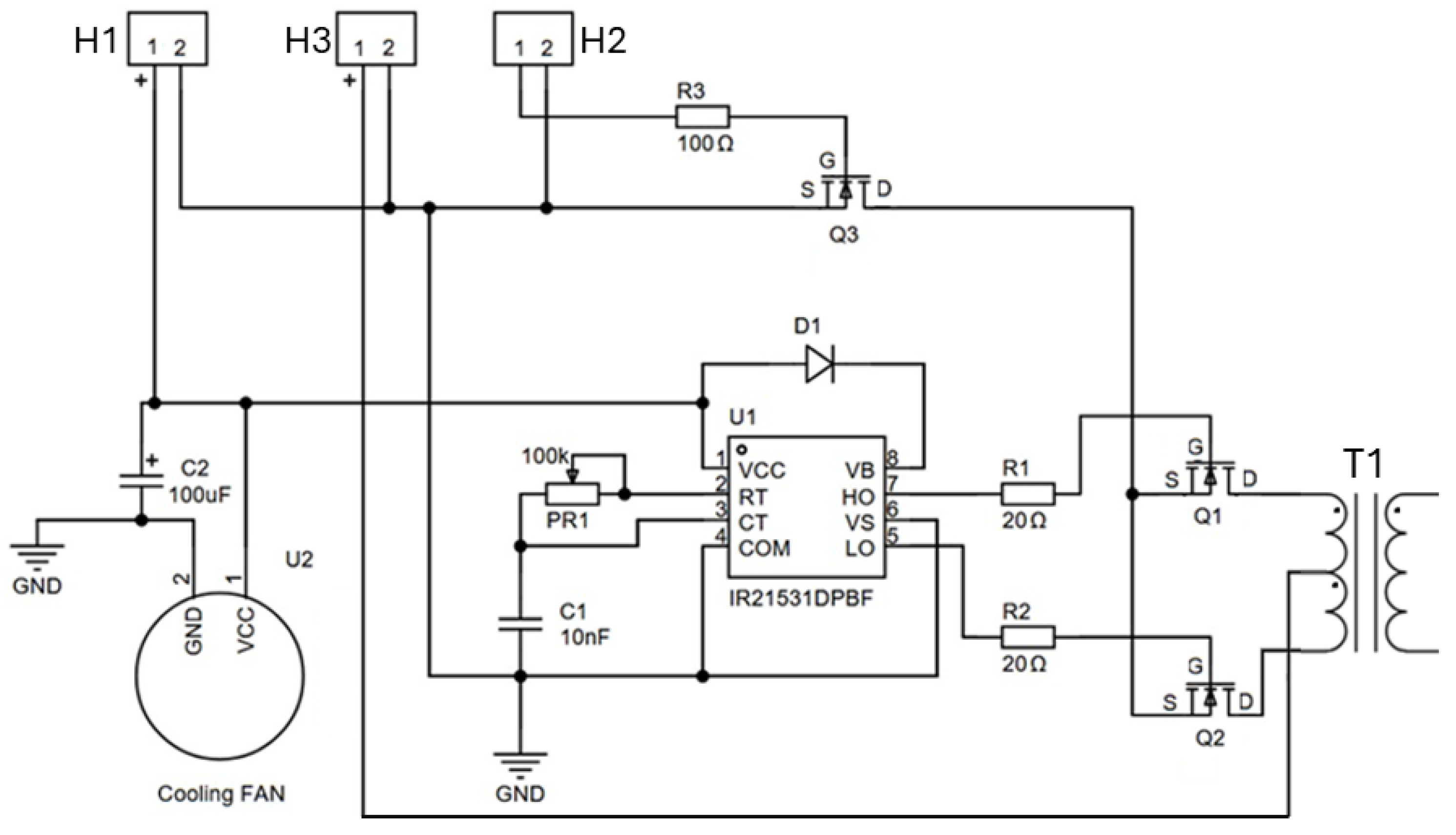
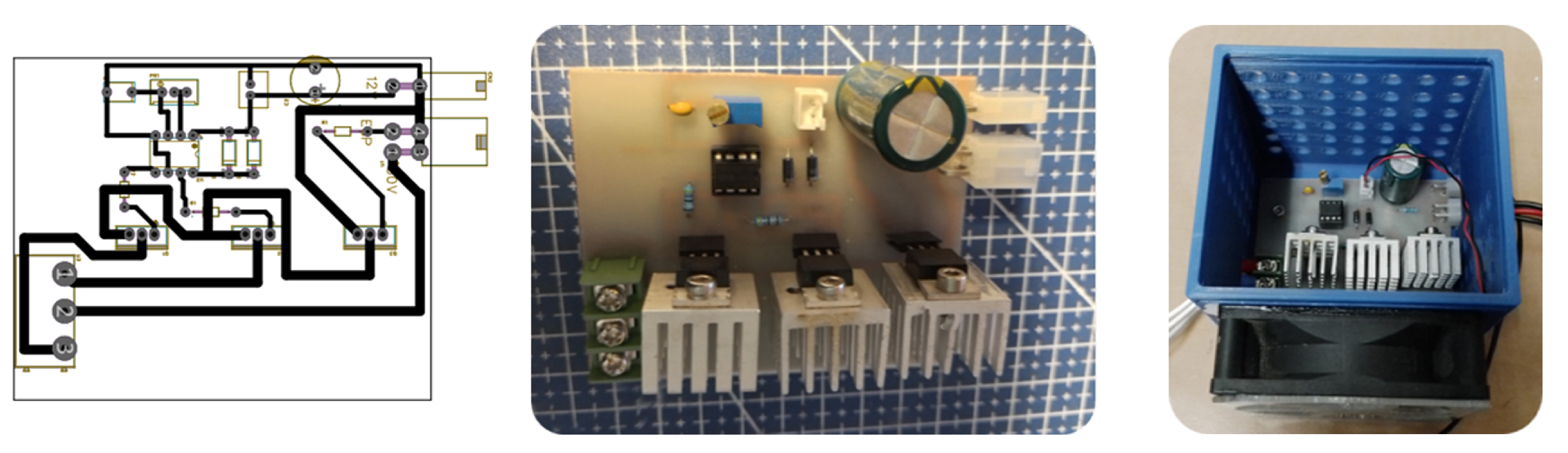
- Circuit design:
- PCB fabrication:
- Calculation of transformer primary winding turns:
- —number of turns in the primary winding;
- —duty cycle of a single switch in the push–pull topology;
- —maximum magnetic flux density of the core;
- —effective cross-sectional area of the magnetic core;
- f—switching frequency of the converter.
- Calculation of transformer secondary winding turns:
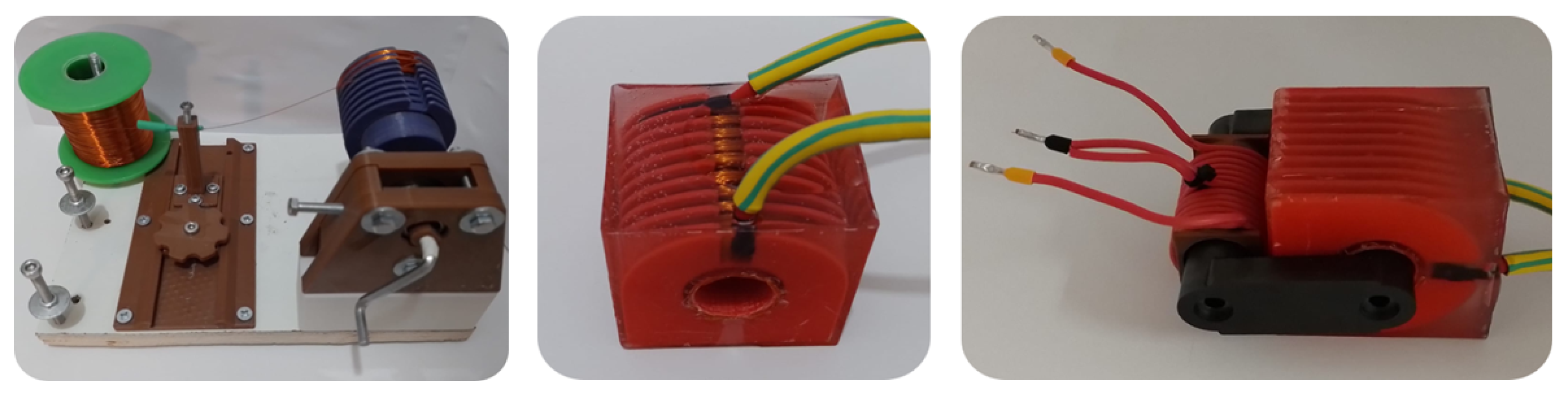
- Transformer winding process:
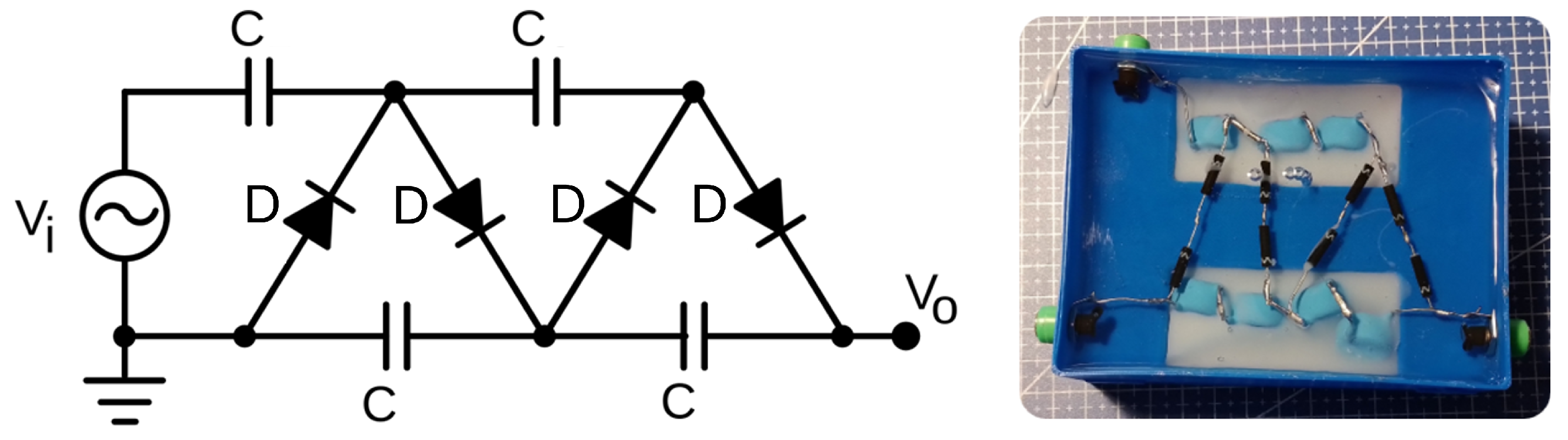
- Voltage multiplier:
2.2. Support Platform
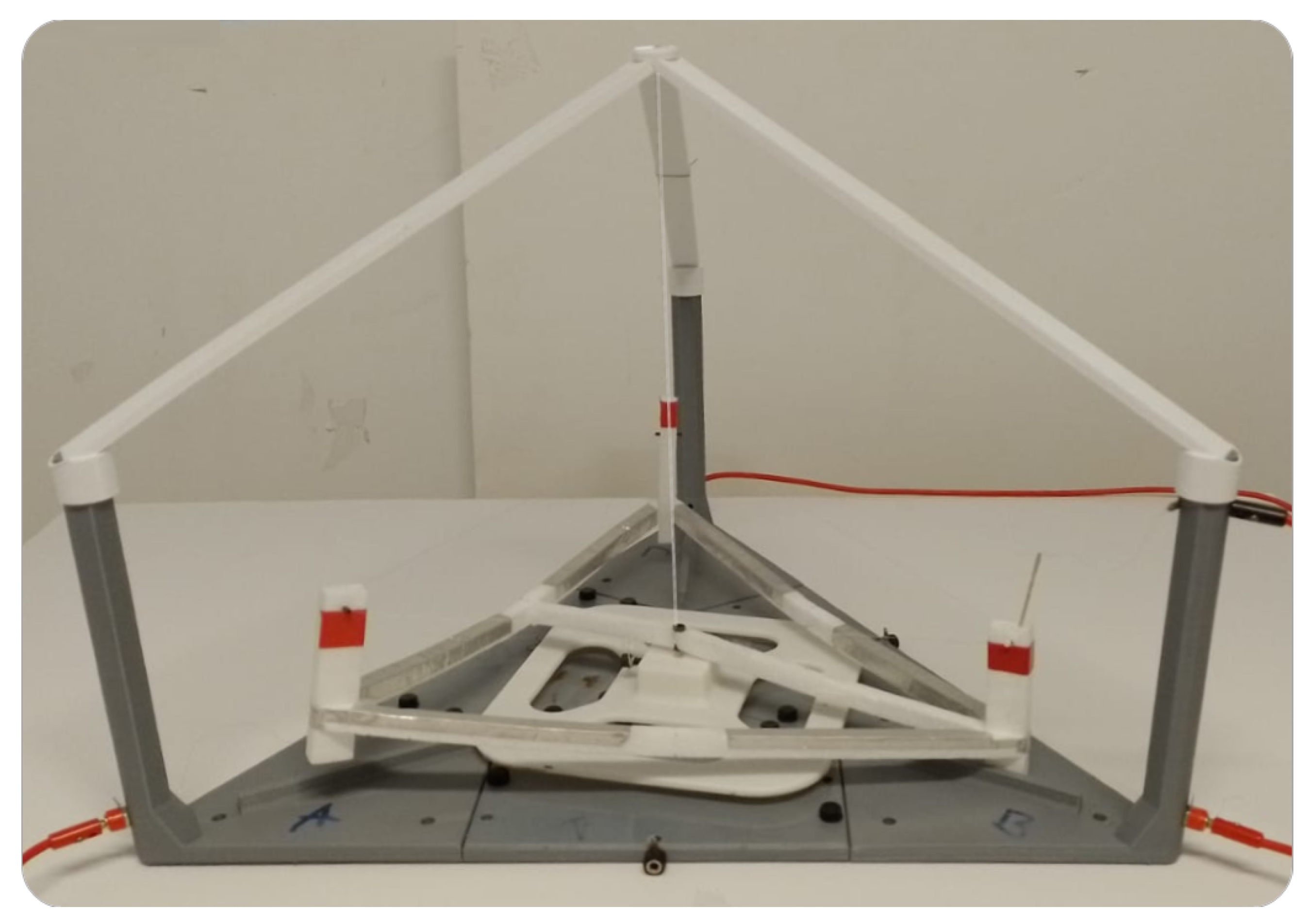
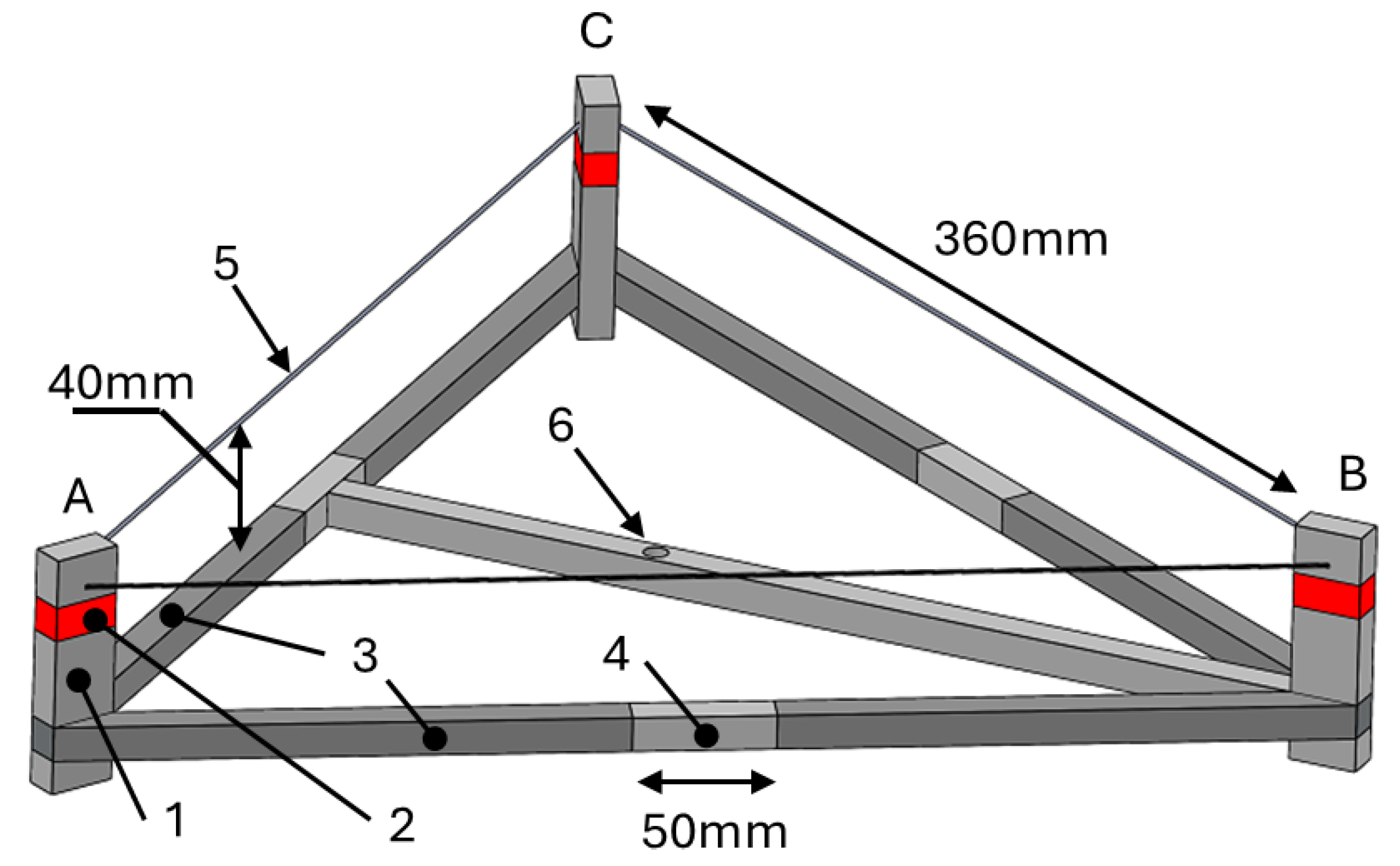
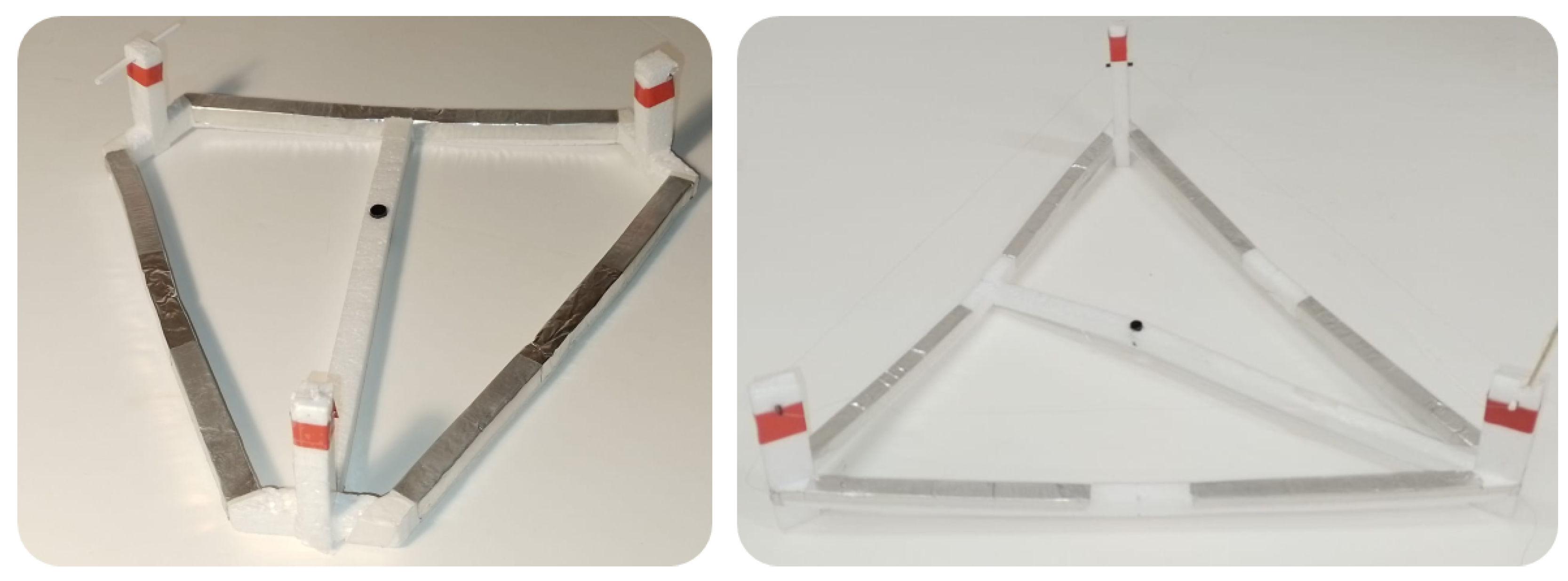
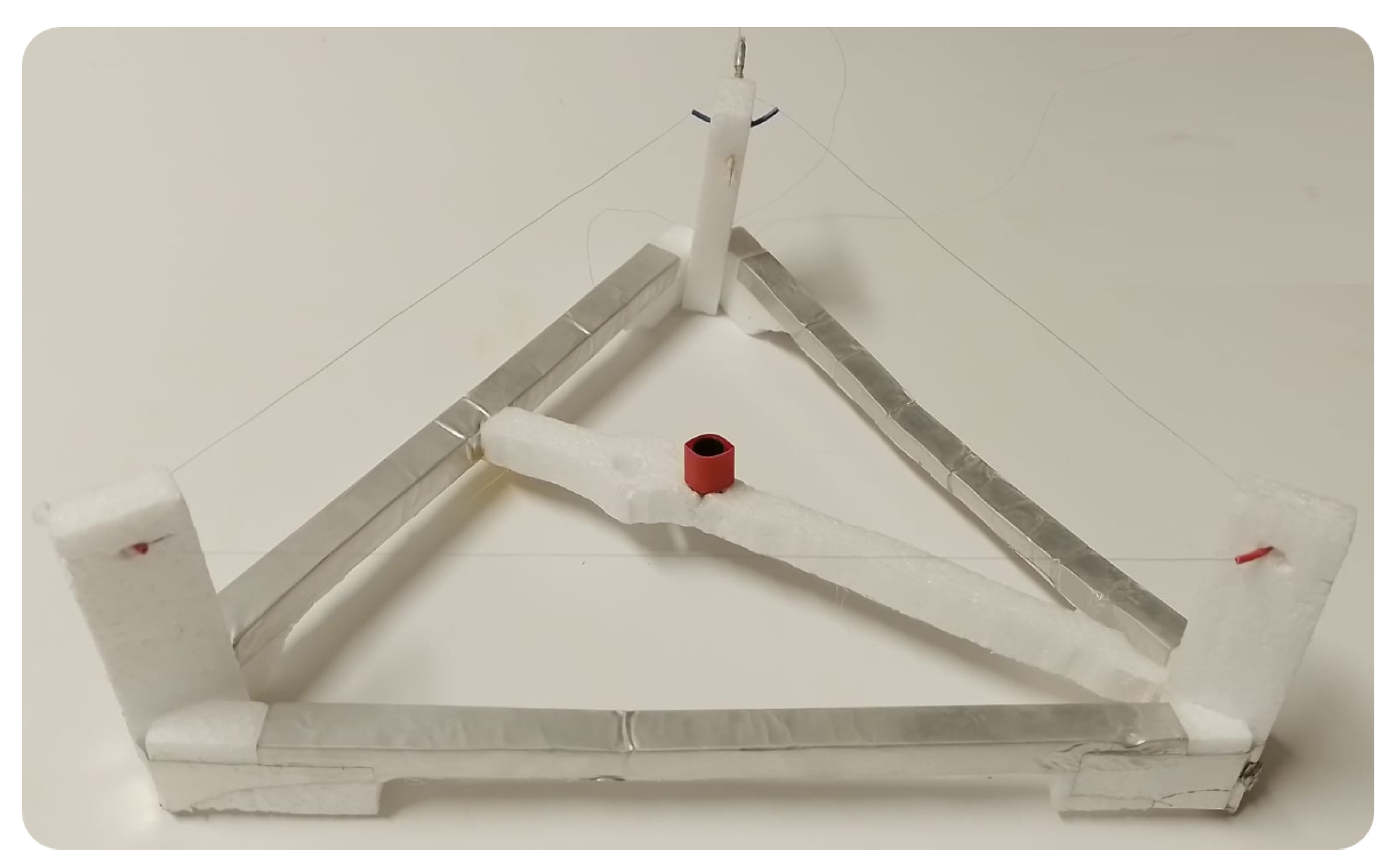
2.3. Ion-Propelled Aircraft
- 1.
- Insulators maintain the required distance between the emitter and collector electrodes, fixing their relative positions and preventing electrical breakdown. Based on prior experiments, the spacing was set to approximately 40 mm as a practical compromise intended to reduce the probability of electrical breakdown during normal operation while maintaining sufficient ionic thrust generation. These were made from 10mm ultralight foam sheet.
- 2.
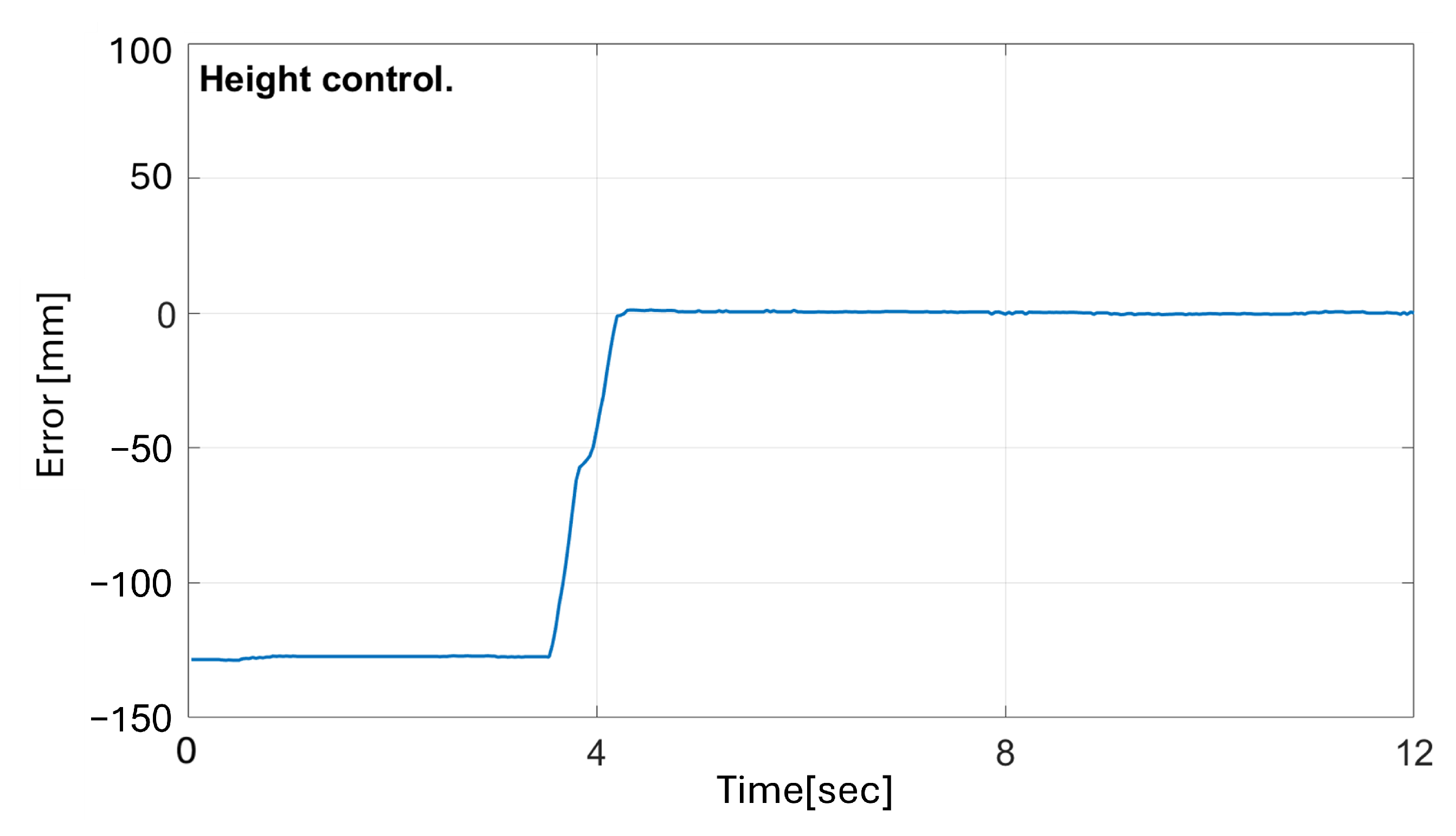
- Red markers are mounted on the structure and tracked by a video camera, providing measurement data for altitude and tilt-angle control.
- 3.
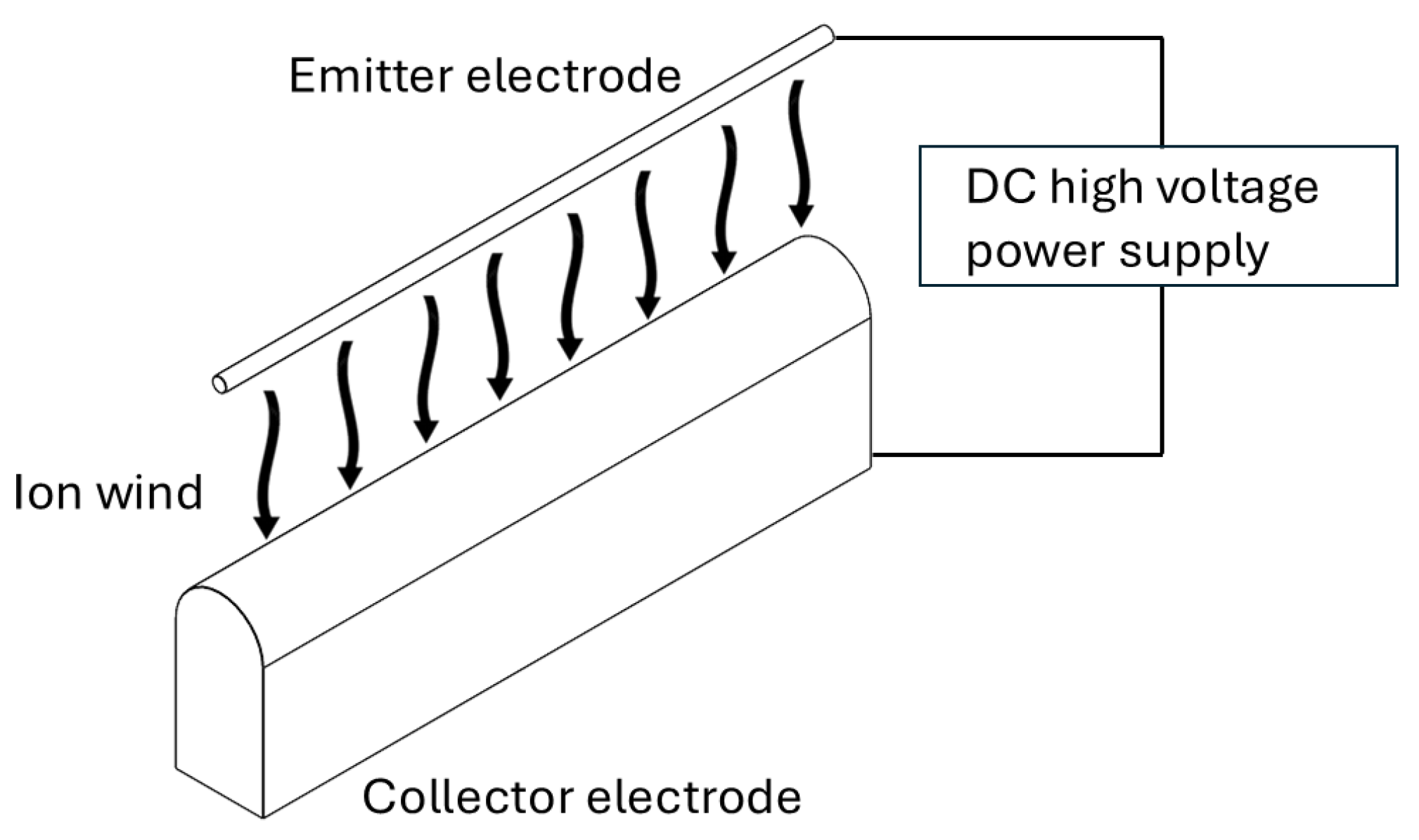
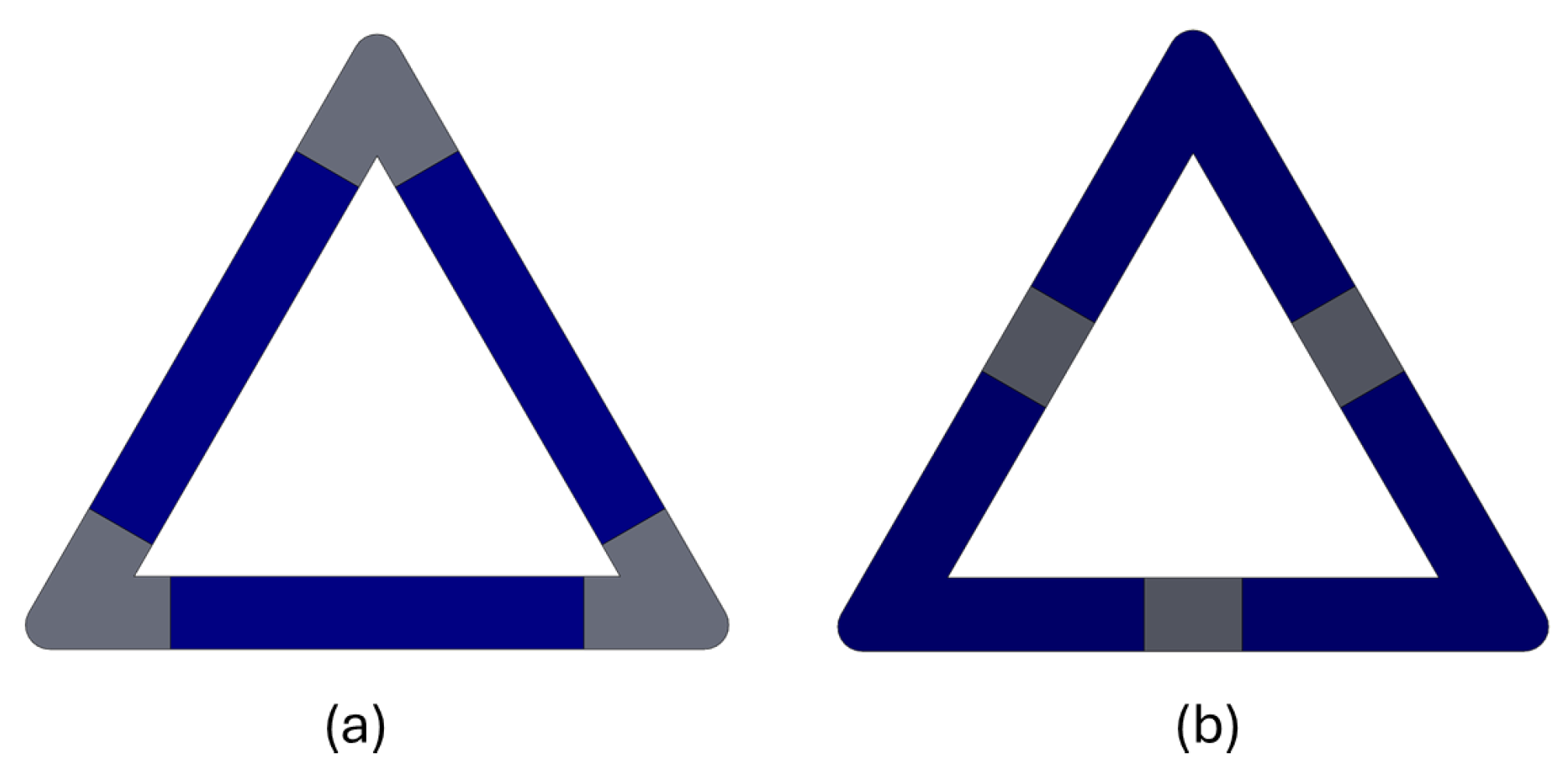
- Collector electrodes, with a mm rectangle cross-section made from 10 mm ultralight foam sheet, covered with aluminum foil, one at each edge of the triangular design.
- 4.
- Uncoated gaps of 50 mm are left between the foil-covered areas, enabling separate connection of each collector electrode to its dedicated high-voltage power supply (used in the vertex-based system as described later).
- 5.
- Emitter electrode is realized as a thin aluminum wire with a diameter of mm, stretched above the collector electrodes.
- 6.
- Central beam with hole is positioned at the center of mass of the triangular structure; the hole accommodates a thin thread that secures the apparatus within the working area and constrains lateral displacement in the XY-plane.
3. Mathematical Model
3.1. Kinematics
3.2. Energy Formulation
3.3. Control over the Vertex Position
4. Experimental Methodology
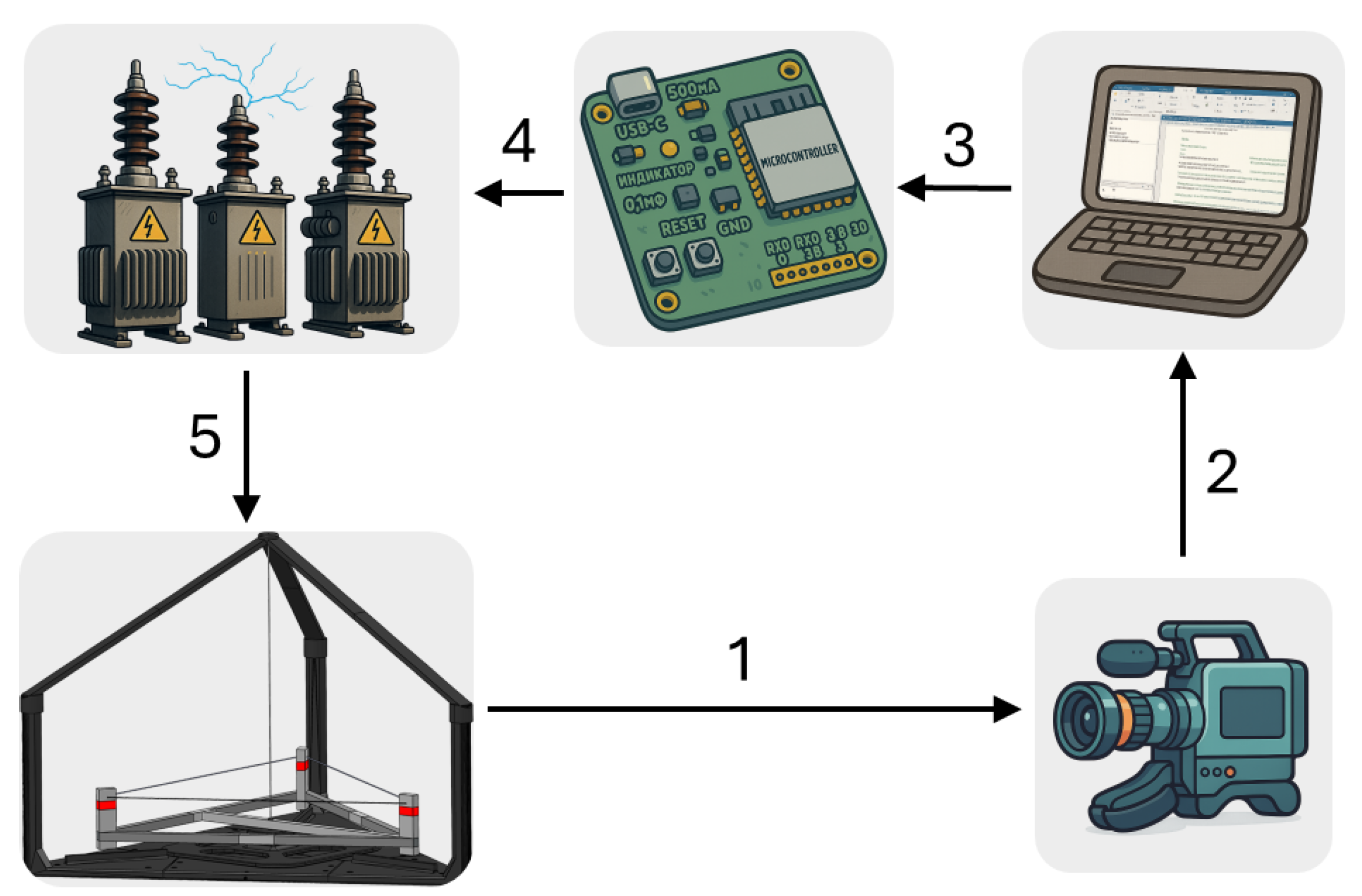
- 1.
- Image Acquisition: A camera captures the real-time image of the red markers mounted on the aircraft structure.
- 2.
- Image Processing: The captured frames are transmitted to a PC, where pixel-wise processing is performed to identify the markers and determine their coordinates.
- 3.
- Control Computation: Utilizing MATLAB R2024b software, a PI control algorithm processes the positional error to compute the required PWM control commands. The data is then transmitted from the PC to the ESP32 micro-controller.
- 4.
- Signal Generation: The ESP32 receives the control data and regulates three high-voltage power supplies via Pulse Width Modulation (PWM) signals.
- 5.
- Thrust Actuation: Each power supply energizes a distinct section of the ion-craft structure, providing the necessary thrust for the hover stabilization.
5. Experiments and Results
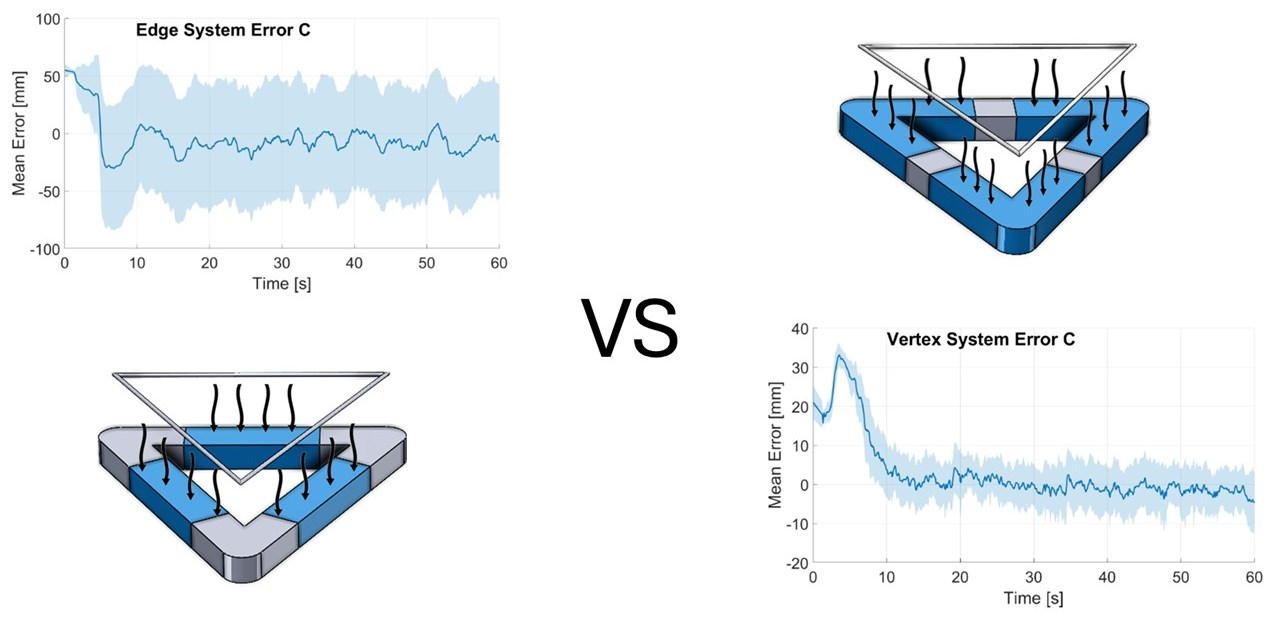
5.1. Edge System
5.2. Vertex System
6. Discussion
7. Conclusions
Author Contributions
Funding
Institutional Review Board Statement
Informed Consent Statement
Data Availability Statement
Acknowledgments
Conflicts of Interest
References
- Austin, R. Unmanned Aircraft Systems: UAVS Design, Development and Deployment; John Wiley & Sons: Hoboken, NJ, USA, 2010. [Google Scholar] [CrossRef] [Scilit]
- Colomina, I.; Molina, P. Unmanned aerial systems for photogrammetry and remote sensing: A review. ISPRS J. Photogramm. Remote Sens. 2014, 92, 79–97. [Google Scholar] [CrossRef] [Scilit]
- Valavanis, K.P.; Vachtsevanos, G.J. (Eds.) Handbook of Unmanned Aerial Vehicles; Springer: Berlin/Heidelberg, Germany, 2015. [Google Scholar] [CrossRef] [Scilit]
- Watts, A.C.; Ambrosia, V.G.; Hinkley, E.A. Unmanned aircraft systems in remote sensing and scientific research: Classification and considerations of use. Remote Sens. 2012, 4, 1671–1692. [Google Scholar] [CrossRef] [Scilit]
- Čurma, P.; Lázár, M.; Jasminská, N.; Brestovič, T.; Duda, F.; Milenovskỳ, P. Electrohydrodynamic Propeller as One of the Alternatives to Replace Conventional Propulsion Systems. Appl. Sci. 2024, 14, 10885. [Google Scholar] [CrossRef] [Scilit]
- Moreau, E. Airflow control by non-thermal plasma actuators. J. Phys. D Appl. Phys. 2007, 40, 605–636. [Google Scholar] [CrossRef] [Scilit]
- Barrett, S.R.H. Propulsion and lift from a solid-state flyer. Nature 2018, 563, 532–535. [Google Scholar] [CrossRef] [Scilit]
- Brown, T.T. A Method of and an Apparatus or Machine for Producing Force or Motion. GB Patent GB300311A, 15 November 1928. [Google Scholar]
- O’Reilly, D.; Herdrich, G.; Kavanagh, D.F. Electric Propulsion Methods for Small Satellites: A Review. Aerospace 2021, 8, 22. [Google Scholar] [CrossRef] [Scilit]
- Martinez-Sanchez, M.; Pollard, J.E. Spacecraft Electric Propulsion—An Overview. J. Propuls. Power 1998, 14, 688–699. [Google Scholar] [CrossRef] [Scilit] [PubMed]
- Goebel, D.M.; Katz, I. Fundamentals of Electric Propulsion: Ion and Hall Thrusters; Wiley: Hoboken, NJ, USA, 2008. [Google Scholar] [CrossRef] [Scilit]
- Shumeiko, A. Thrust-vectoring schemes for electric propulsion systems. Aerosp. Sci. Technol. 2025, 38, 103401. [Google Scholar]
- Wagh, S.A.; Pawar, P. Challenges and Innovations in Electric Propulsion Systems for Space Transportation: A Comprehensive Review. Acceleron Aerosp. J. 2025, 4, 929–944. [Google Scholar] [CrossRef] [Scilit]
- Monrolin, N.; Plouraboué, F.; Praud, O. Electrohydrodynamic Thrust for In-Atmosphere Propulsion. AIAA J. 2017, 55, 4296–4305. [Google Scholar] [CrossRef] [Scilit]
- Gilmore, C.K.; Barrett, S.R.H. Electrohydrodynamic thrust density using positive corona–induced ionic winds for in-atmosphere propulsion. Proc. R. Soc. A 2015, 471, 2175. [Google Scholar] [CrossRef] [Scilit]
- Grosse, S.; Benard, N.; Moreau, E. Electroaerodynamic thrusters: Influence of a freestream on current, ionic wind and force generation. J. Electrost. 2024, 130, 103950. [Google Scholar] [CrossRef] [Scilit]
- Xia, Z.; Ying, Y.; Li, H.; Lin, T.; Yao, Y.; Qi, N.; Huo, M. Optimization of Plasma-Propelled Drone Performance through Electrohydrodynamic Propulsion Modeling. Aerospace 2024, 11, 667. [Google Scholar] [CrossRef] [Scilit]
- Hou, M.; Zhang, J.; Zhao, X.; Quan, R. High-Thrust, Low-Noise Ionic Wind Thrusters with Sawtooth Multi-Ring Airfoil Electrodes. Aerosp. Sci. Technol. 2025, 168, 111081. [Google Scholar] [CrossRef] [Scilit]
- Calvo, E.M. Modeling of Electrohydrodynamic (EHD) Plasma Thrusters. Appl. Sci. 2022, 12, 1637. [Google Scholar] [CrossRef] [Scilit]
- Cabanas, M.F. Analysis of the Efficiency of the Electrohydrodynamic Propulsion System. Appl. Sci. 2022, 12, 2997. [Google Scholar] [CrossRef] [Scilit]
- Hou, M. Sawtooth multi-ring electrodes for ionic wind propulsion. Sci. Rep. 2025, 15, 17471. [Google Scholar] [CrossRef] [Scilit]
- Wang, Z. PUB: A Plasma-Propelled Ultra-Quiet Blimp with Two-DOF Vector Thrusting. arXiv 2025, arXiv:2508.12395. [Google Scholar]
- Hart, D.W. Power Electronics; McGraw-Hill: New York, NY, USA, 2011; Volume 166. [Google Scholar]
- Pressman, A. Switching Power Supply Design; McGraw-Hill, Inc.: New York, NY, USA, 1997. [Google Scholar]
- Young, C.M.; Chen, M.H.; Chang, T.A.; Ko, C.C.; Jen, K.K. Cascade Cockcroft–Walton voltage multiplier applied to transformerless high step-up DC–DC converter. IEEE Trans. Ind. Electron. 2012, 60, 523–537. [Google Scholar] [CrossRef] [Scilit]
- Goshen, I. Our Ion Aircraft Control System Is Implemented Through the Regions Around the Vertices. Available online: https://youtu.be/Hz-mLJZ3XI0 (accessed on 30 March 2026).
- Goshen, I.; Medina, O. The Role of Big Electrode Geometry in Ionic Propulsion. Res. Sq. 2025. [Google Scholar] [CrossRef] [Scilit]
- Goshen, I. Our System for Controlling an Ion Aircraft by MEANS of Edges. YouTube Video. 2025. Available online: https://youtu.be/9tYMSYXQSFw (accessed on 7 September 2025).
- Goshen, I. Our Ion Aircraft Altitude Control System. YouTube Video. 2025. Available online: https://youtube.com/shorts/Ugiw7oqYMCY?feature=share (accessed on 6 September 2025).





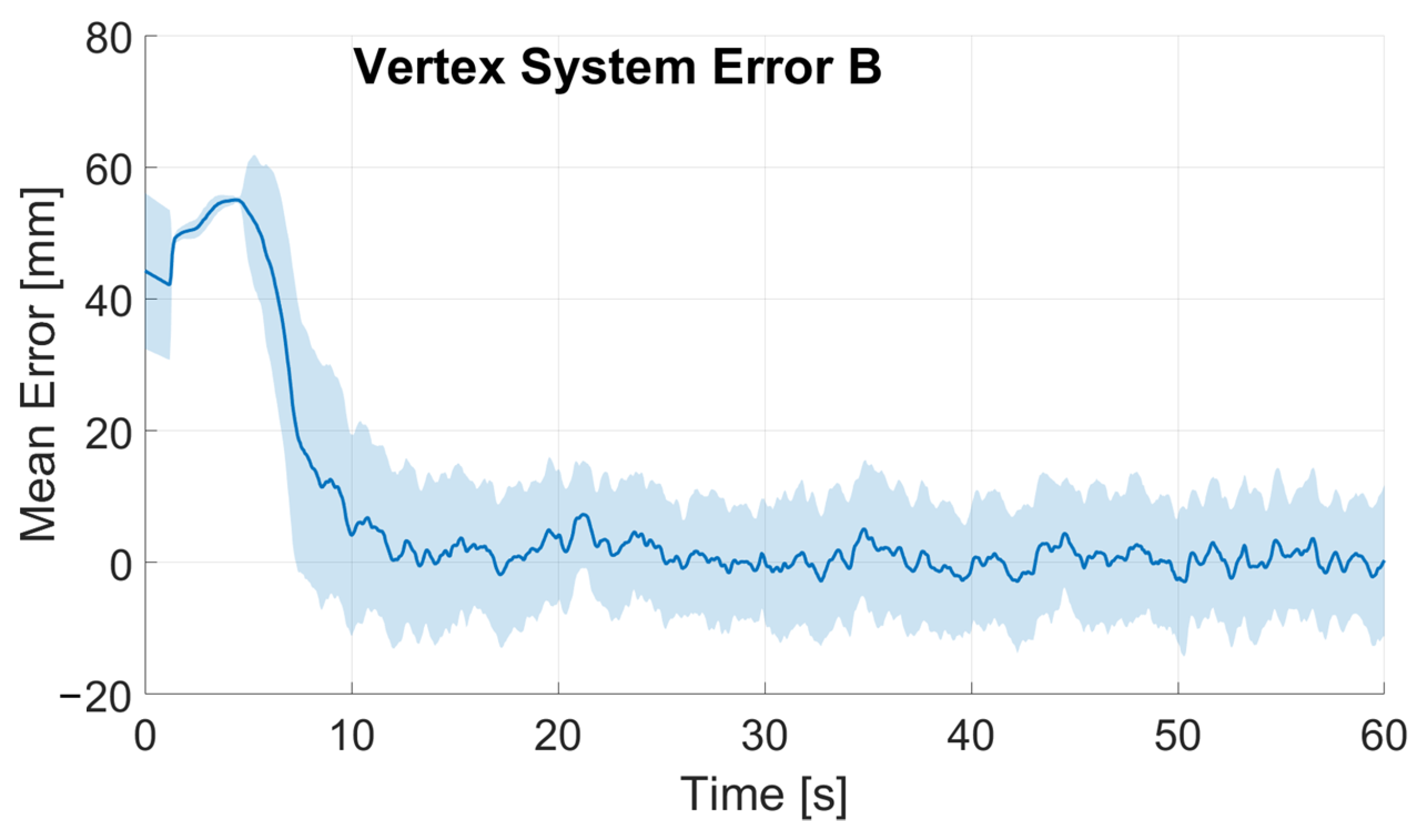
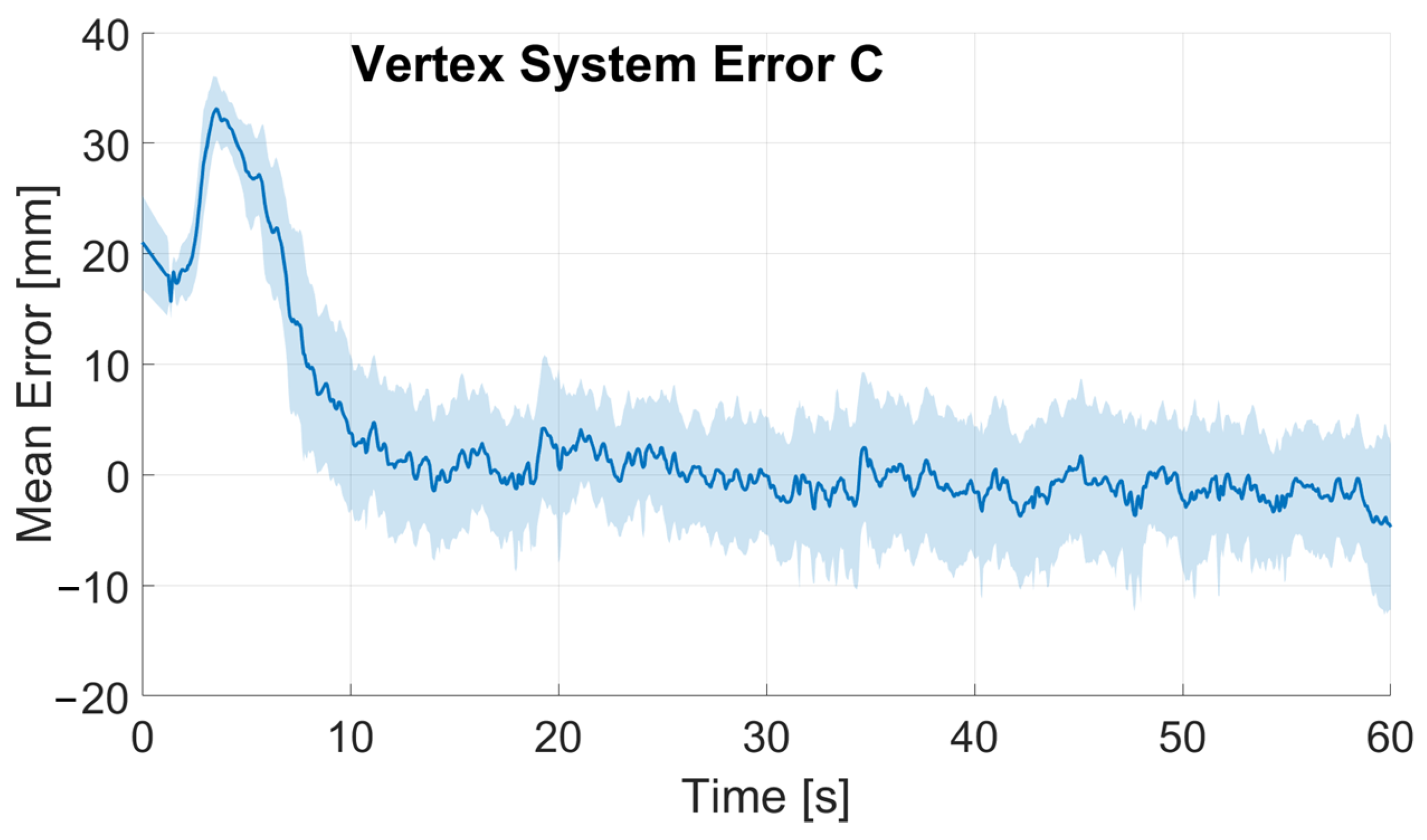
| Point | Edge System | Vertex System | ||||
|---|---|---|---|---|---|---|
| Mean [mm] | STD [mm] | RMS [mm] | Mean [mm] | STD [mm] | RMS [mm] | |
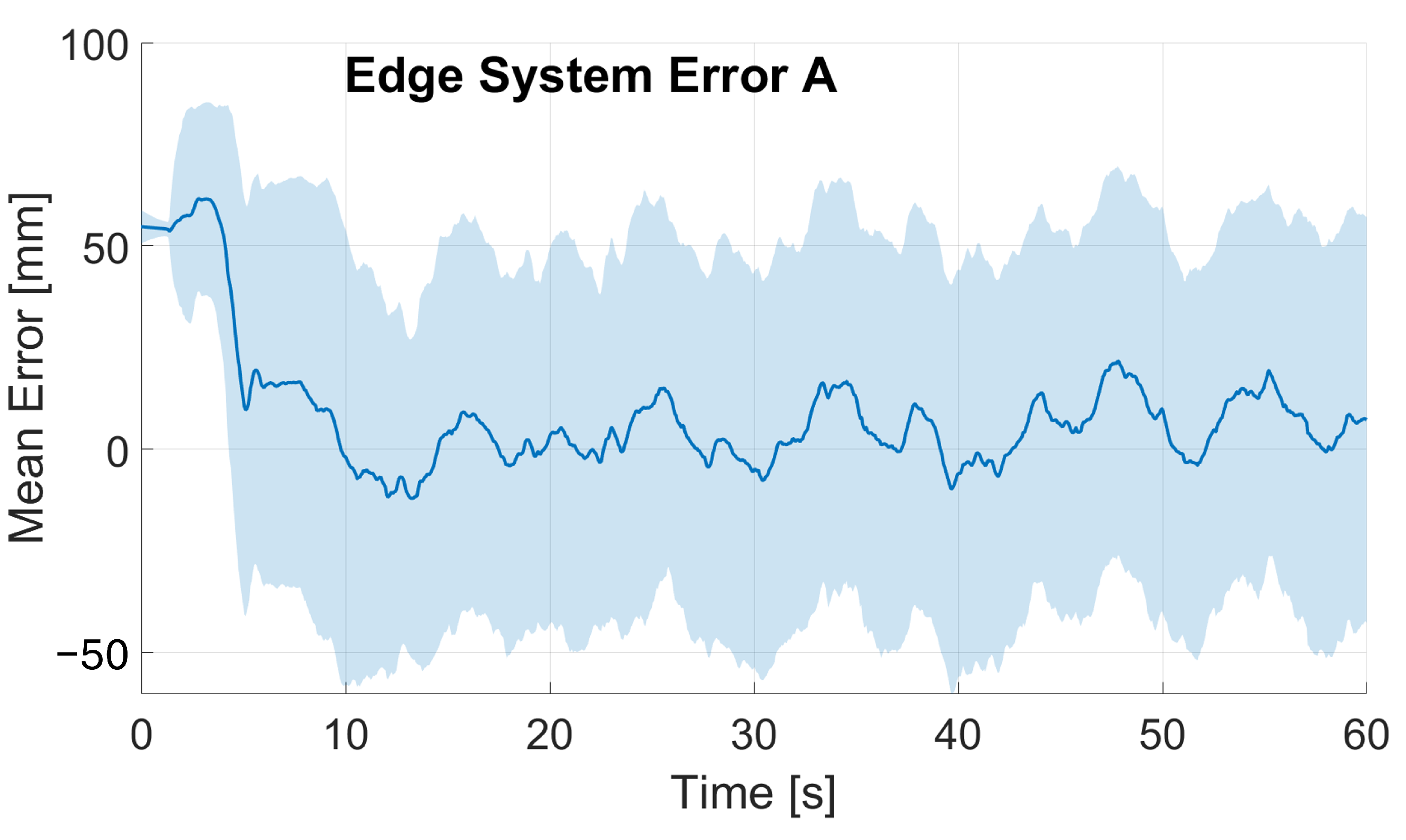
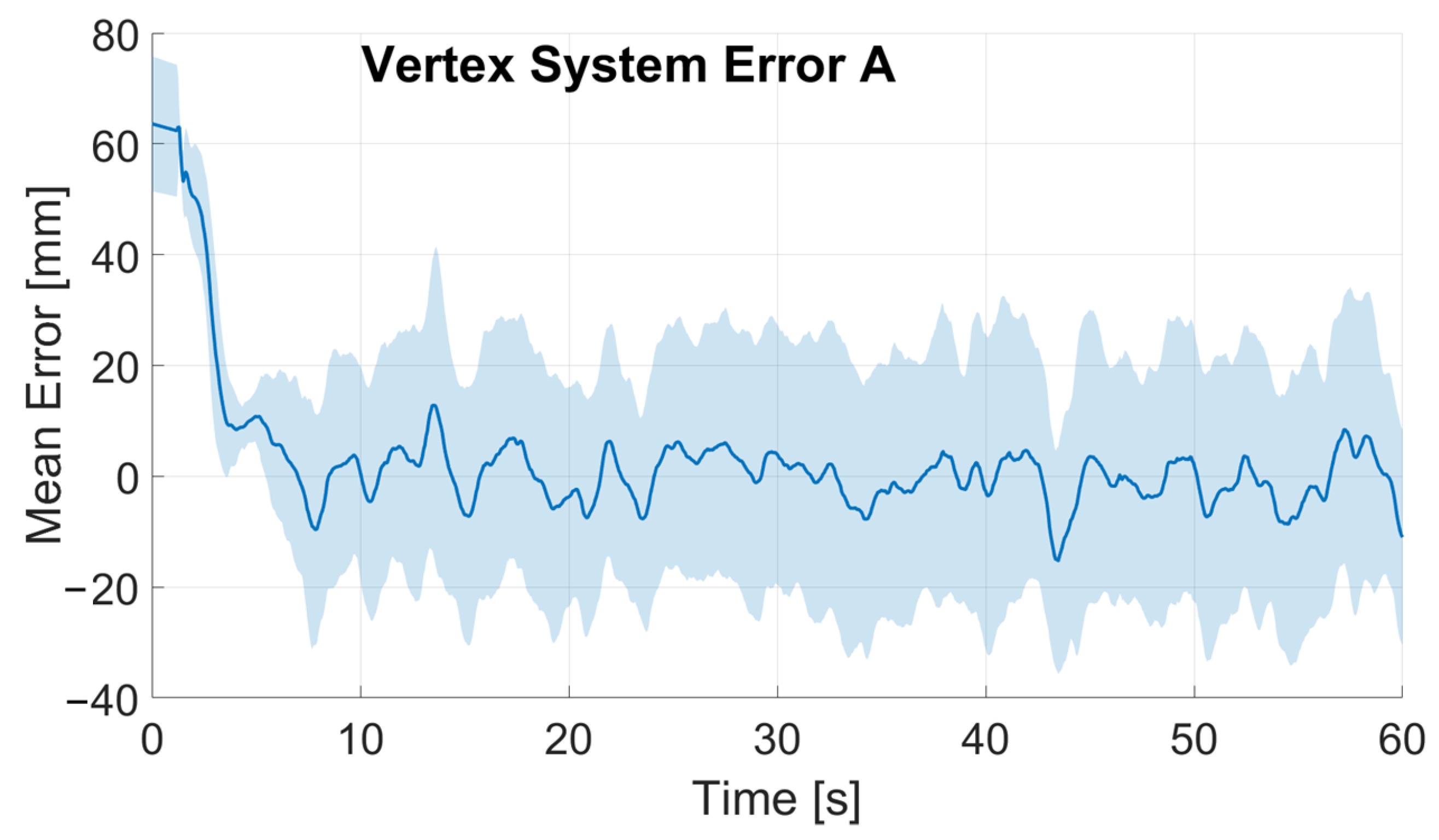
| A | 3.8 | 48.2 | 48.3 | −0.1 | 23.5 | 23.5 |
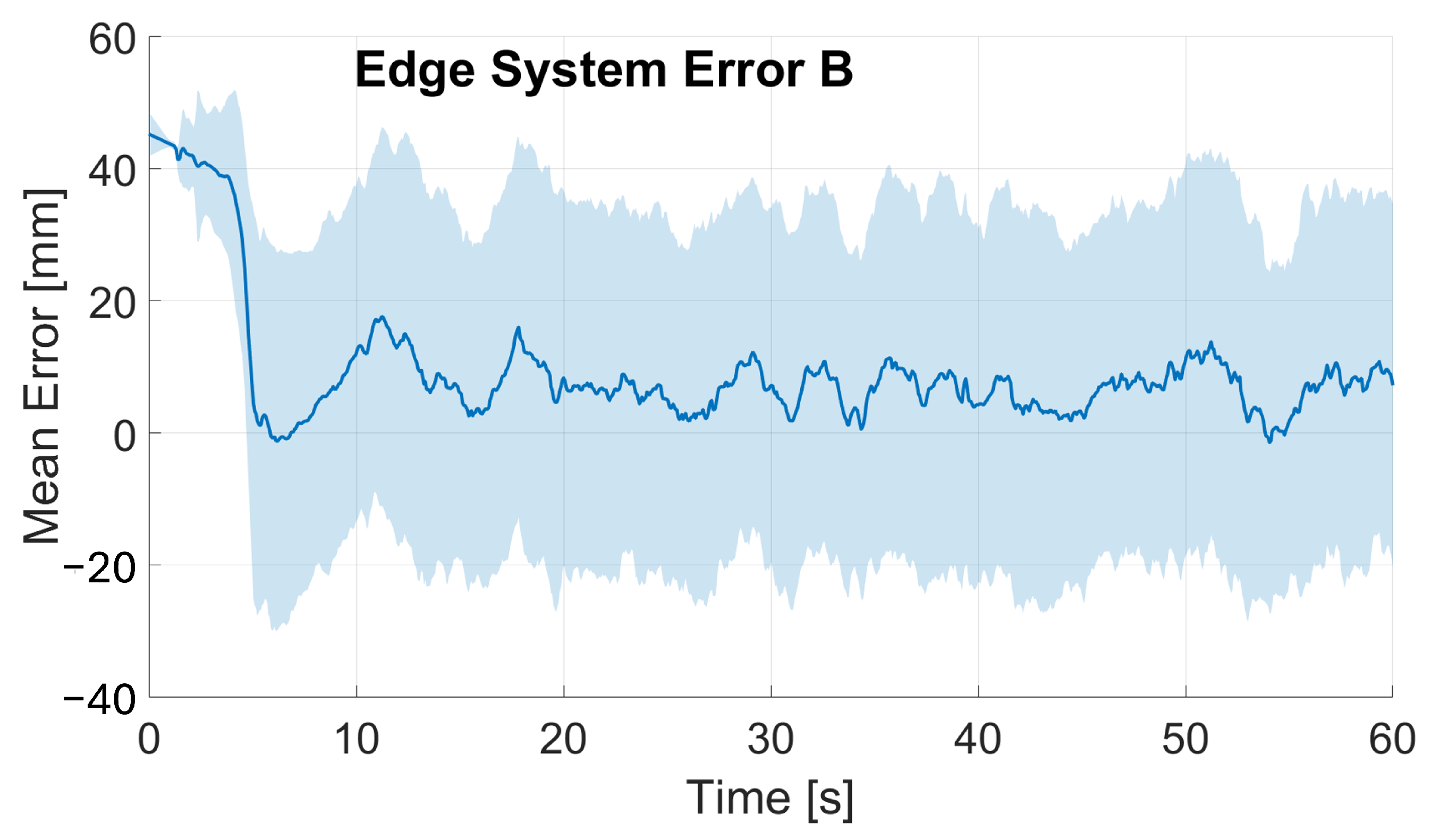
| B | 7.1 | 27.9 | 28.8 | −1.2 | 10.3 | 10.4 |
| C | −7.3 | 51.7 | 52.2 | 0.8 | 6.2 | 6.3 |
Disclaimer/Publisher’s Note: The statements, opinions and data contained in all publications are solely those of the individual author(s) and contributor(s) and not of MDPI and/or the editor(s). MDPI and/or the editor(s) disclaim responsibility for any injury to people or property resulting from any ideas, methods, instructions or products referred to in the content. |
© 2026 by the authors. Licensee MDPI, Basel, Switzerland. This article is an open access article distributed under the terms and conditions of the Creative Commons Attribution (CC BY) license.
Share and Cite
Goshen, I.; Medina, O. Control-Oriented Comparison of Electrode Placement Strategies in an Electrohydrodynamic Actuation System. Actuators 2026, 15, 326. https://doi.org/10.3390/act15060326
Goshen I, Medina O. Control-Oriented Comparison of Electrode Placement Strategies in an Electrohydrodynamic Actuation System. Actuators. 2026; 15(6):326. https://doi.org/10.3390/act15060326
Chicago/Turabian StyleGoshen, Itamar, and Oded Medina. 2026. "Control-Oriented Comparison of Electrode Placement Strategies in an Electrohydrodynamic Actuation System" Actuators 15, no. 6: 326. https://doi.org/10.3390/act15060326
APA StyleGoshen, I., & Medina, O. (2026). Control-Oriented Comparison of Electrode Placement Strategies in an Electrohydrodynamic Actuation System. Actuators, 15(6), 326. https://doi.org/10.3390/act15060326