Article

Jamming Mechanism with Constrictional Chainmail Structures for Robotic Leg Mechanisms Under Uneven Terrain Contact


1
Graduate School of Science and Technology, Meiji University, Kawasaki 214-8571, Japan
2
Department of Mechanical Engineering Informatics, Meiji University, Kawasaki 214-8571, Japan
*
Author to whom correspondence should be addressed.
Actuators 2026, 15(2), 88; https://doi.org/10.3390/act15020088
Submission received: 24 December 2025 / Revised: 27 January 2026 / Accepted: 29 January 2026 / Published: 2 February 2026

Abstract

Legged robots exhibit high mobility on uneven terrain but face challenges in stability, complex control systems, and energy efficiency. This study proposes a leg mechanism that significantly alters its stiffness by inducing jamming in a chainmail structure through only gravity-induced compression. To evaluate the fundamental characteristics of the proposed mechanism, experiments were conducted to identify the jamming point and to assess stiffness in the jammed state. The results confirmed that the force required to trigger jamming increases proportionally with the mass applied from above, which demonstrates properties similar to friction between solid materials. Furthermore, the stiffness in the jammed state is strongly correlated with the contact points within the structure. These results prove the effectiveness of the proposed passive leg mechanism for stiffness switching. In a case study assuming landing on uneven terrain, the mechanism could be fixed in any orientation based on the designed compressive force.

1. Introduction

Legged robots offer high mobility and agility, making them promising for applications on uneven terrain, such as disaster response and environmental exploration. However, legged robots face challenges such as reduced postural and locomotion stability due to uncertainties in ground contact positions on rough surfaces, landing impacts, and the effects of external disturbances.
To address these challenges, numerous techniques have been proposed to stabilize such legs through control [1]. These methods enable highly precise stabilization against disturbances by actively controlling actuators based on the leg’s dynamic model. Conversely, control-based stabilization methods are susceptible to model errors and uncertainties in disturbances. Furthermore, active compensation via actuators to achieve high stability may increase energy consumption.
Consequently, in addition to control-based leg stabilization, passive stabilization methods focusing on the structural design of legs are gaining attention. Some studies are underway to enhance stability by mechanically mitigating impacts and disturbances through the introduction of compliance or variable stiffness into the legs [2]. These mechanism-based approaches show potential to reduce energy consumption and improve environmental adaptability.
Recently, jamming actuation has gained particular attention as a means to achieve variable stiffness, especially in the field of soft robotics [3]. Jamming is a phenomenon in which a structure composed of elements (such as particles, fibers, and layers) imposes geometric constraints between the elements under applied pressure, thereby strengthening frictional coupling and reversibly increasing the structure’s stiffness. Regarding the application of jamming to impart variable stiffness to leg mechanisms, many studies have been conducted using fiber jamming as a tendon mechanism in the leg [4,5] and granular jamming as a ground contact mechanism in the sole of the foot [6,7,8]. These studies introduce jamming actuation into legged robots, enabling passive adaptation to uneven terrains where predicting ground contact configurations is difficult, such as slopes and soft or irregular surfaces. In contrast, conventional studies on jamming actuation employ methods in which the mechanism is placed inside a sealed bag and compressed by evacuating the air with a vacuum pump. However, the weight of the apparatus and its power consumption pose challenges for legged robots.
As one approach to structural design using granular jamming, studies have been conducted on chainmail structures. Conventional chainmail structures are primarily composed of interconnected ring elements (chain particles) arranged in a planar pattern. Fabric formed from chainmail structures can be compressed inside a sealed bag, inducing jamming through geometric constraints between the chain particles. Jamming between chain particles reversibly changes mechanical properties such as stiffness and impact resistance [9,10,11]. Key features of chainmail structures include their lightweight nature compared with materials traditionally used for granular jamming. In addition, jamming can be induced in various shapes by forming different configurations prior to jamming [9,10,11]. Furthermore, the shape of the chain particles can be freely designed to tailor their mechanical properties [12]. These characteristics make chainmail structures promising candidates for applications such as joint support [13]. Furthermore, since the chainmail structure is designed to be constricted through mutual interlocking, there are also examples where jamming and stiffness changes are achieved without sealing the chainmail structure [14].
This study proposes a leg mechanism that utilizes a chainmail structure to passively induce jamming under the gravitational force from the robot’s own weight, thereby enabling stiffness variations according to ground contact conditions.
Most conventional leg jamming actuation methods rely on active pressure control, primarily targeting the sole or tendons. In contrast, the proposed mechanism utilizes the robot’s own weight applied during ground contact as the jamming actuation source and aims for passive stiffness changes near the leg joints.
Furthermore, while conventional studies employ planar chainmail structures, this study adopts a three-dimensional chainmail structure formed by connecting chain particles in three dimensions. This three-dimensional design enables a configuration in which the chainmail structure tightens laterally when compressed from above. This ensures efficient compression of the entire mechanism even when force is applied from a single direction. The jamming transition of the chainmail structure allows stiffness changes to be achieved at any posture during ground contact on uneven terrain. Consequently, improvements in walking stability on uneven terrain, simplified walking control, and enhanced energy efficiency are anticipated.
This study evaluated the fundamental characteristics of the proposed mechanism. Experiments were conducted by continuously varying the mass added from above to observe the jamming behavior of the chainmail structure. In addition, experiments were conducted in which a horizontal force was applied while mass was added from above to evaluate changes in structural stiffness with increasing mass. To assess practical applicability, the proposed mechanism was placed sideways and compressed from one direction while changing its posture. The results showed that the stiffness at any posture increased sufficiently to support the applied load and the designed external force. These experiments demonstrated the applicability of the proposed structure to robotic legs.

2. Proposal of the Mechanism

2.1. Concept of the Proposed Mechanism

This study proposes a passive variable-stiffness mechanism based on a chainmail structure. This section explains the functional principle of the proposed mechanism.
The proposed approach uses a non-sealed chainmail mechanism for robotic legs. The weight of the robot body, applied from above, compresses the entire structure, imposing geometric constraints and frictional coupling between chain particles, thereby increasing overall stiffness. Conversely, when an upward motion is applied, gaps are formed between the chain particles and result in a significant decrease in stiffness. However, because the chain particles are interconnected, they do not separate.
Unlike previous studies, which used sealed bags to compress chainmail structures from all directions [9,10,11,12,13], the proposed mechanism does not apply compression isotropically. As a result, when mass is applied from above, the entire structure may bulge laterally, potentially hindering the formation of strong contact between chain particles. Therefore, this study proposes a mechanism in which the chainmail structure tightens laterally when compressed from above.

2.2. Configuration of the Proposed Mechanism

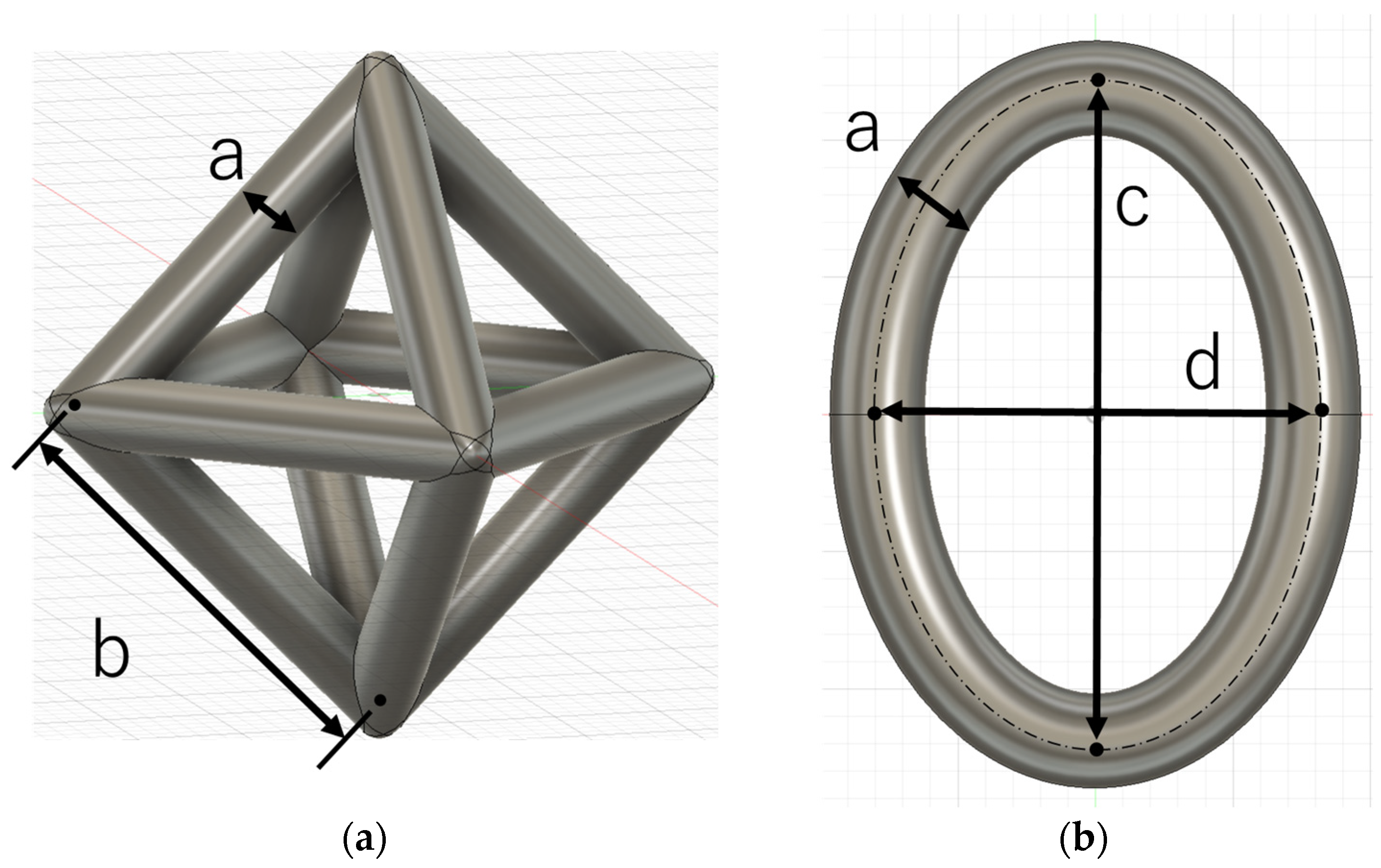
This study constructs a chainmail structure by combining hollow octahedral chain particles (Figure 1a) with elliptical chain particles (Figure 1b). The hollow octahedral chain particles provide multiple contact points during linkage and contribute to a lightweight structure due to their low density. To arrange the chain particles three-dimensionally, elliptical chain particles are also used in some areas. The pipe diameter of each chain particle is defined as ‘a’. The side length parameter of the hollow octahedral chain particle is defined as ‘b’, and the major and minor axes of the elliptical chain particle are defined as ‘c’ and ‘d’, respectively.
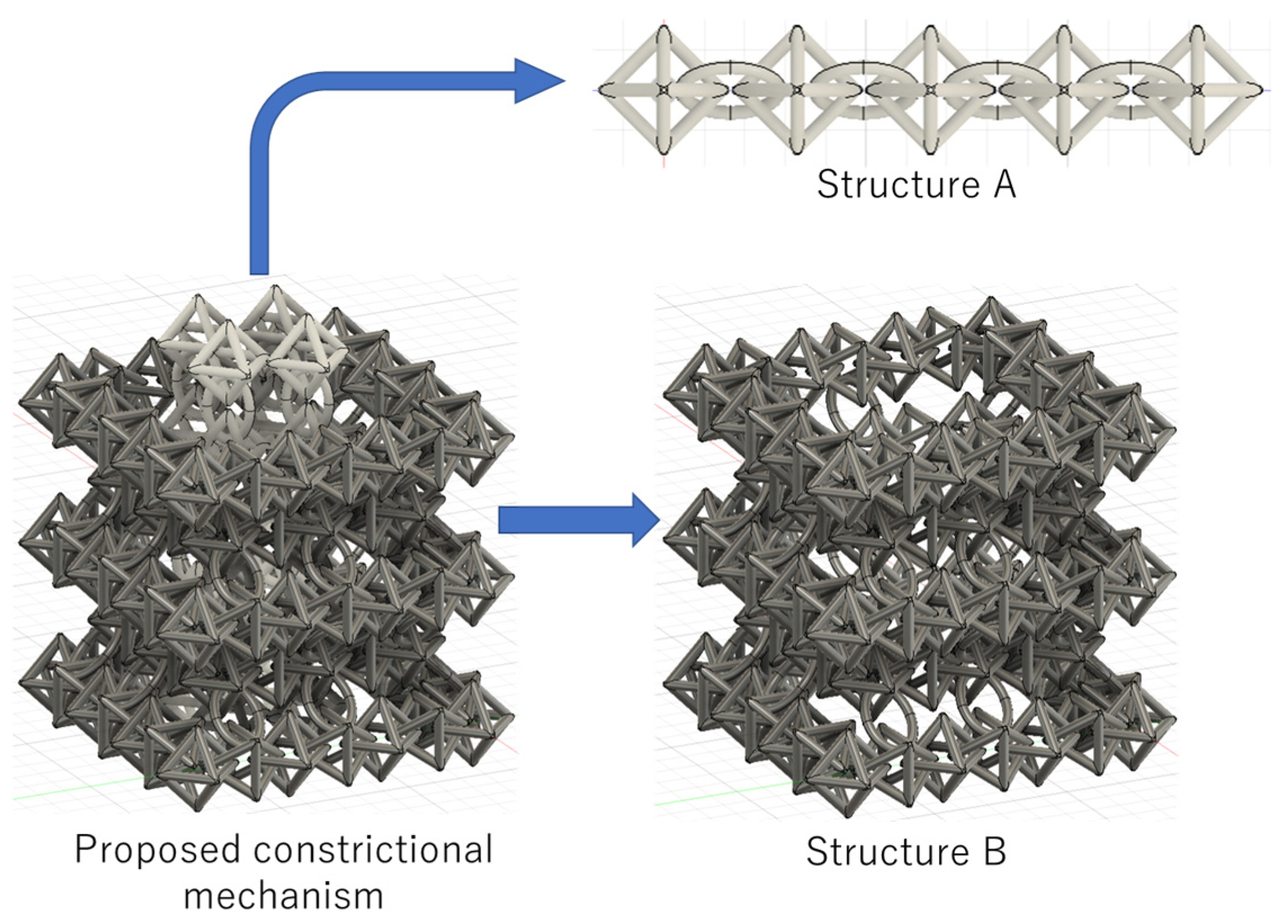
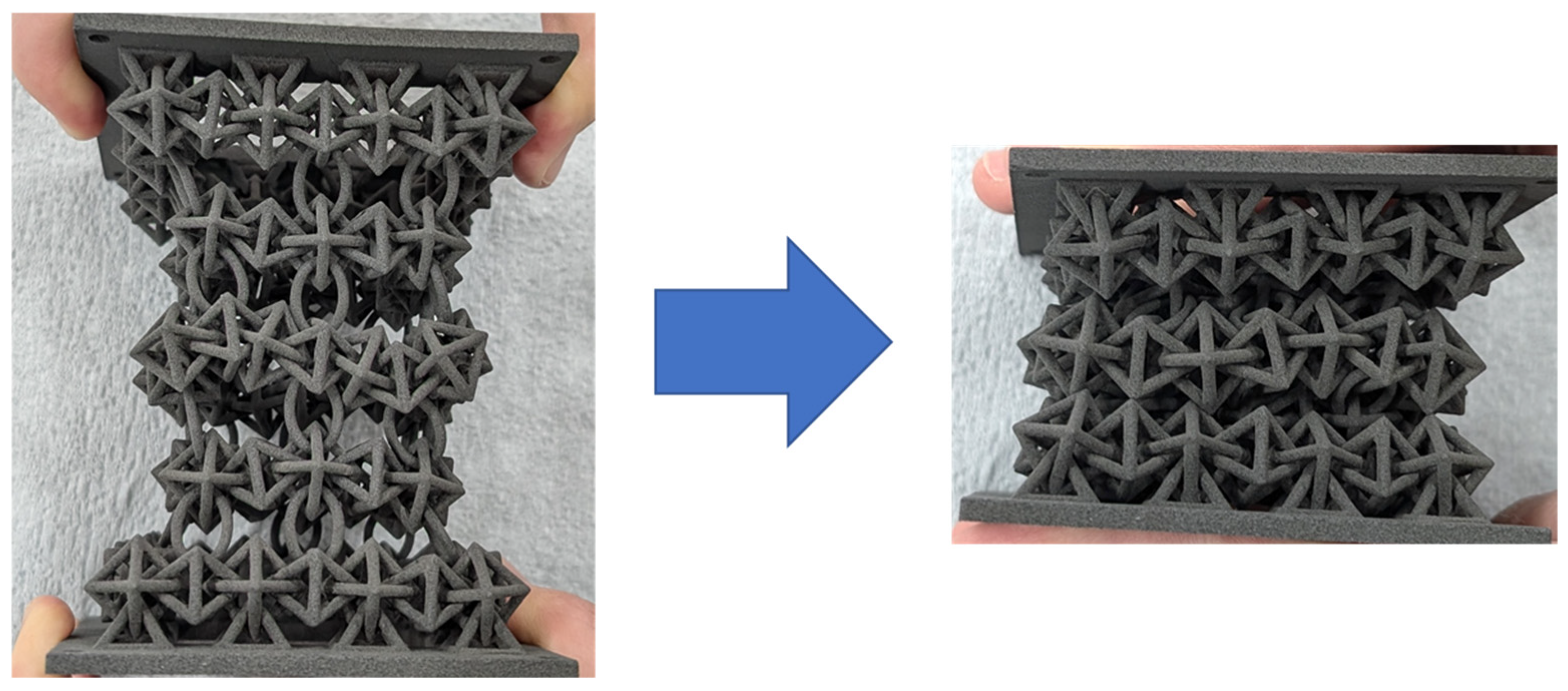
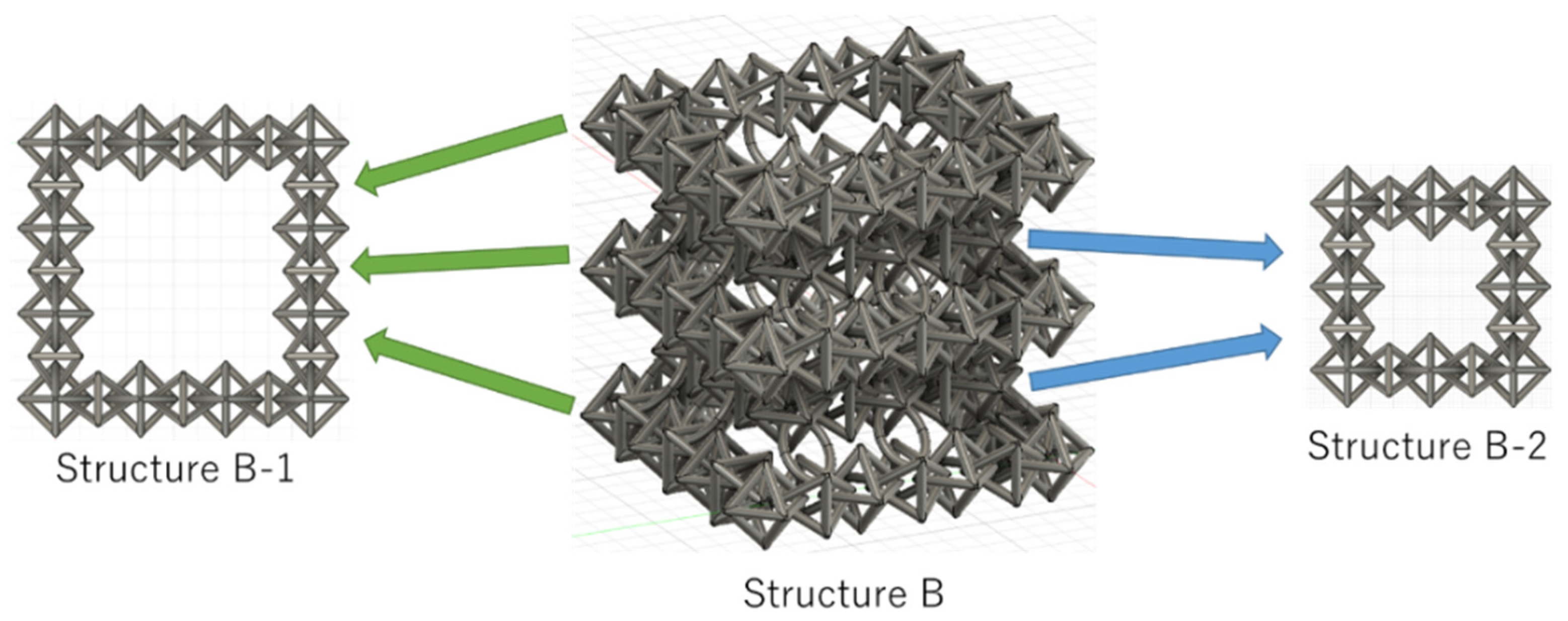
Figure 2 shows the proposed constrictional mechanism and its configuration. The constrictional mechanism consists of a structural section (Structure A) formed by linearly connecting chain particles and a structural section (Structure B) formed by connecting chain particles into a tubular shape. Four Structure A units are inserted into the interior of Structure B. Structure A is composed of nine chain particles arranged alternately as hollow octahedral chain particles and elliptical chain particles. Structure B is composed of two square-type chainmail structures. The larger structure (Structure B-1) consists of 24 hollow octahedral chain particles arranged in a single layer, whereas the smaller structure (Structure B-2) consists of 16 hollow octahedral chain particles arranged in a single layer. These layers are alternately connected using elliptical chain particles, as shown in Figure 3. In this way, the alternating arrangement of square-shaped chainmail structures of different sizes within Structure B creates constrictions. When mass is applied from above, Structure B-2 is pushed inward as shown in Figure 4, resulting in lateral tightening. This mechanism is expected to enhance contact between the chain particles of Structure B and the internal Structure A, thereby increasing stiffness through jamming.
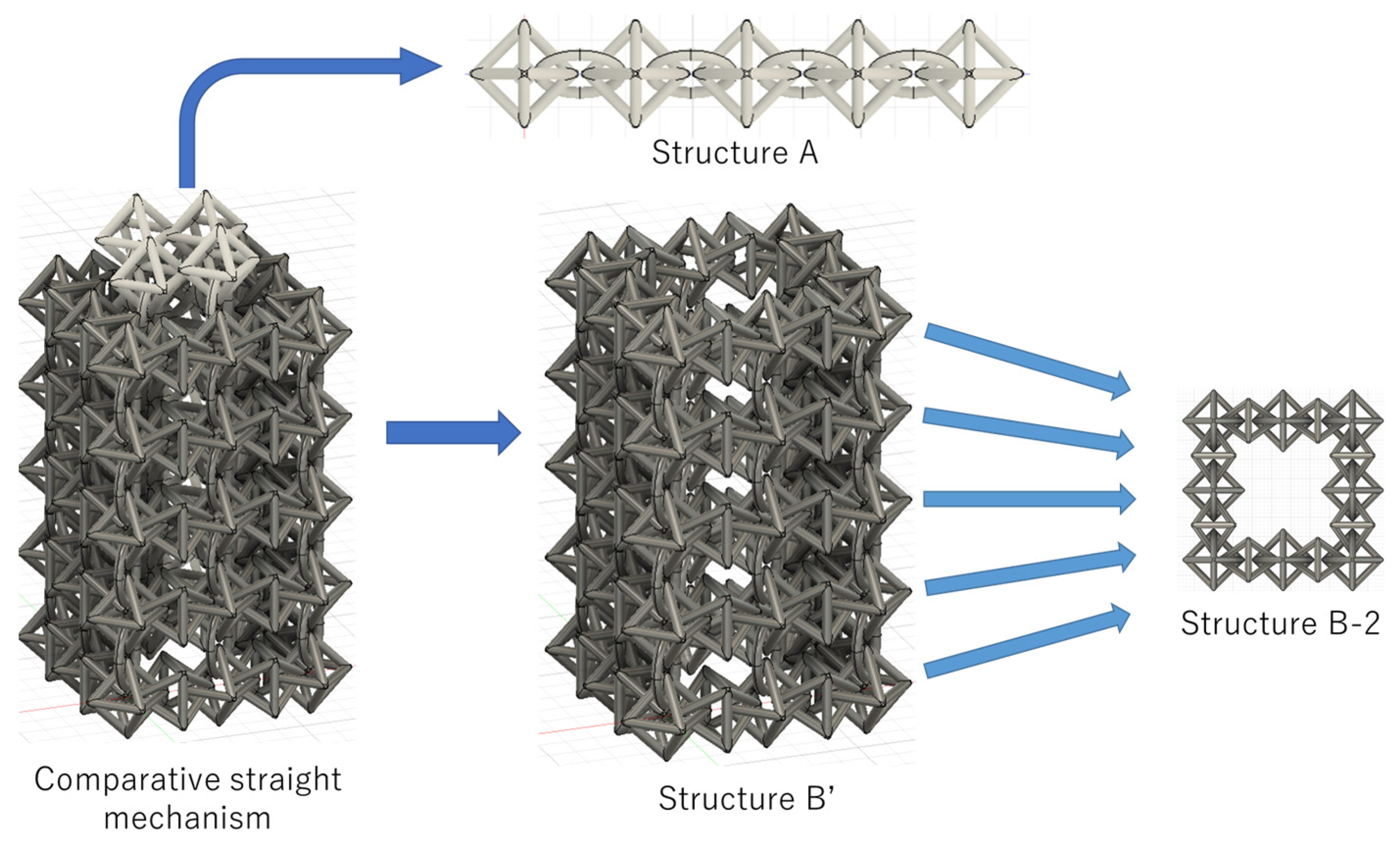
To evaluate the constrictional mechanism, a comparative mechanism (straight mechanism) is introduced, as shown in Figure 5. The straight mechanism consists of a tubular structure (Structure B′) composed of five Structure B-2 units, with four Structure A units placed inside Structure B′. Because Structure B′ in the straight mechanism lacks constrictions, inward compression does not occur when mass is applied from above. Consequently, the stiffness of the straight mechanism is expected to be lower than that of the constrictional mechanism.

3. Experiments

In this section, experiments were conducted to evaluate the quasi-static mechanical characteristics of the proposed mechanism under conditions simulating the ground contact state during low-speed walking of a single robotic leg.

3.1. Jamming Point Evaluation Experiment

3.1.1. Purpose of the Experiment

For the proposed constrictional mechanism, an experiment was conducted in which a shearing force was applied while the mechanism was compressed by adding mass from above. Subsequently, the applied mass was reduced at a constant rate. This method measures the compressive mass at which jamming between the chain particles is released. This compressive mass is defined as the jamming point. That is, the jamming point represents the relationship between the shearing force and the compressive mass.

3.1.2. Specimen Dimensions and Fabrication

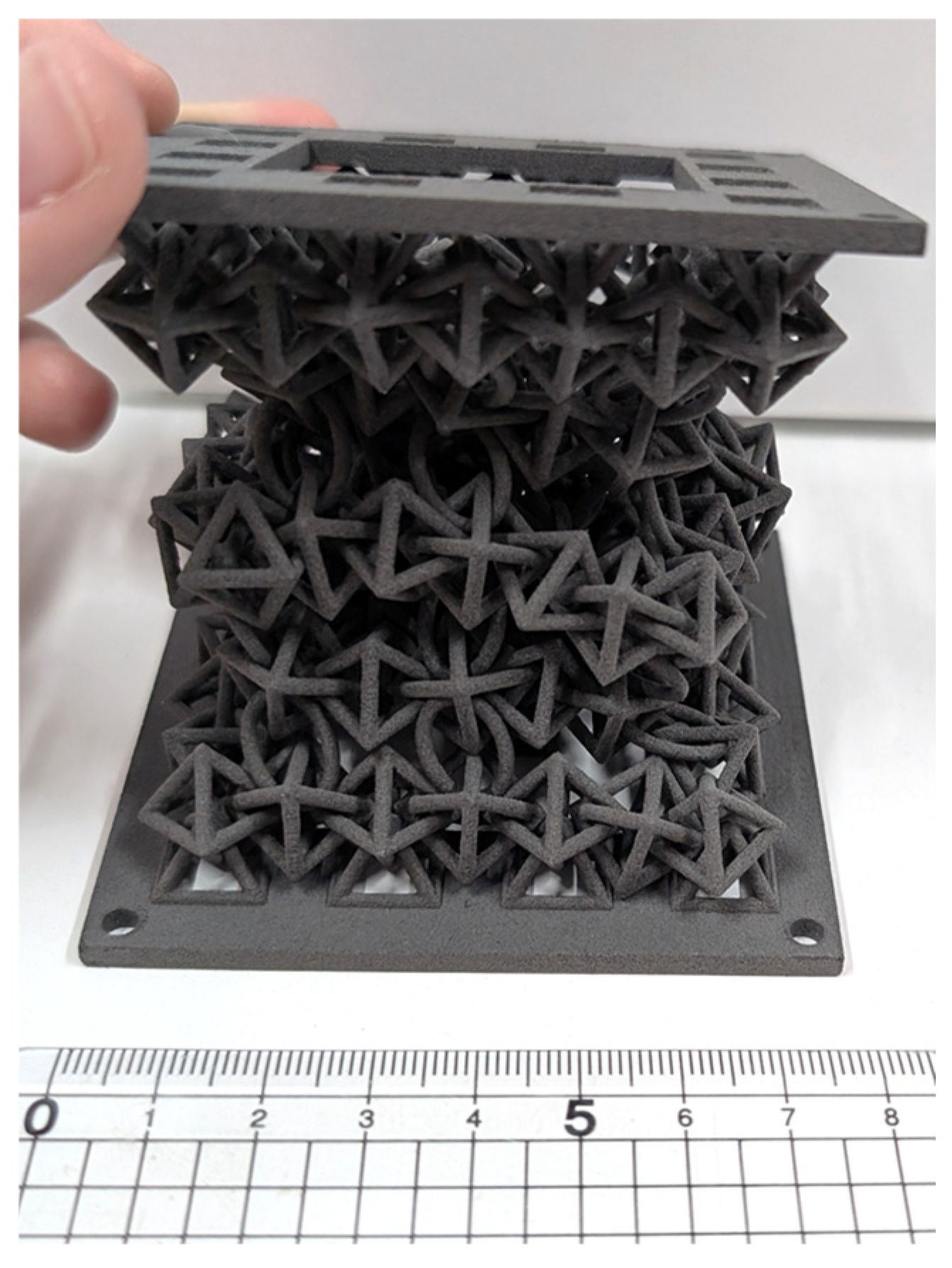
Experiments were conducted on Test Specimen C-1, which was the constrictional mechanism. A photograph of Test Specimen C-1 is shown in Figure 6, and the detailed parameters of Test Specimen C-1 are listed in Table 1. For the specimen fabrication, a powder sintering AM device (Formlabs, Somerville, MA, USA, Fuse 1 + 30W) was used with Nylon12 powder as the material. The mass of Specimen C-1 was 91 g.

3.1.3. Experimental Setup

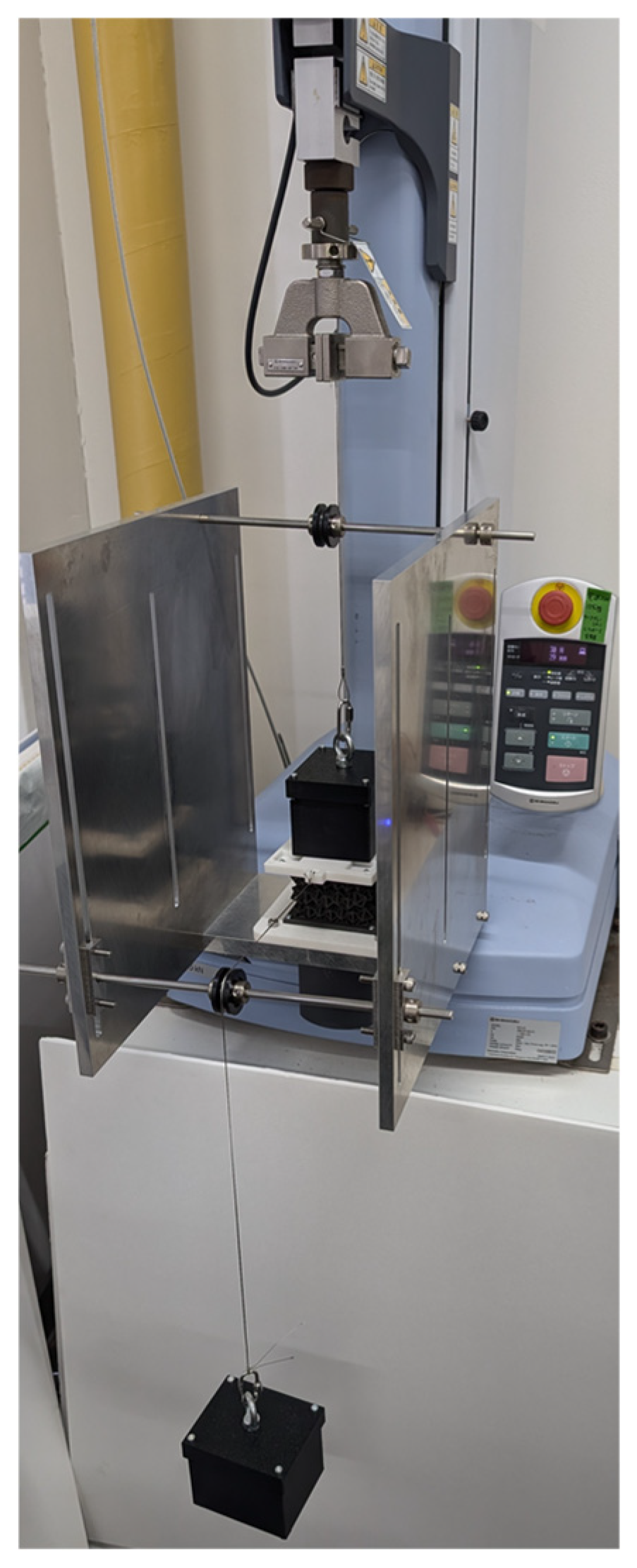
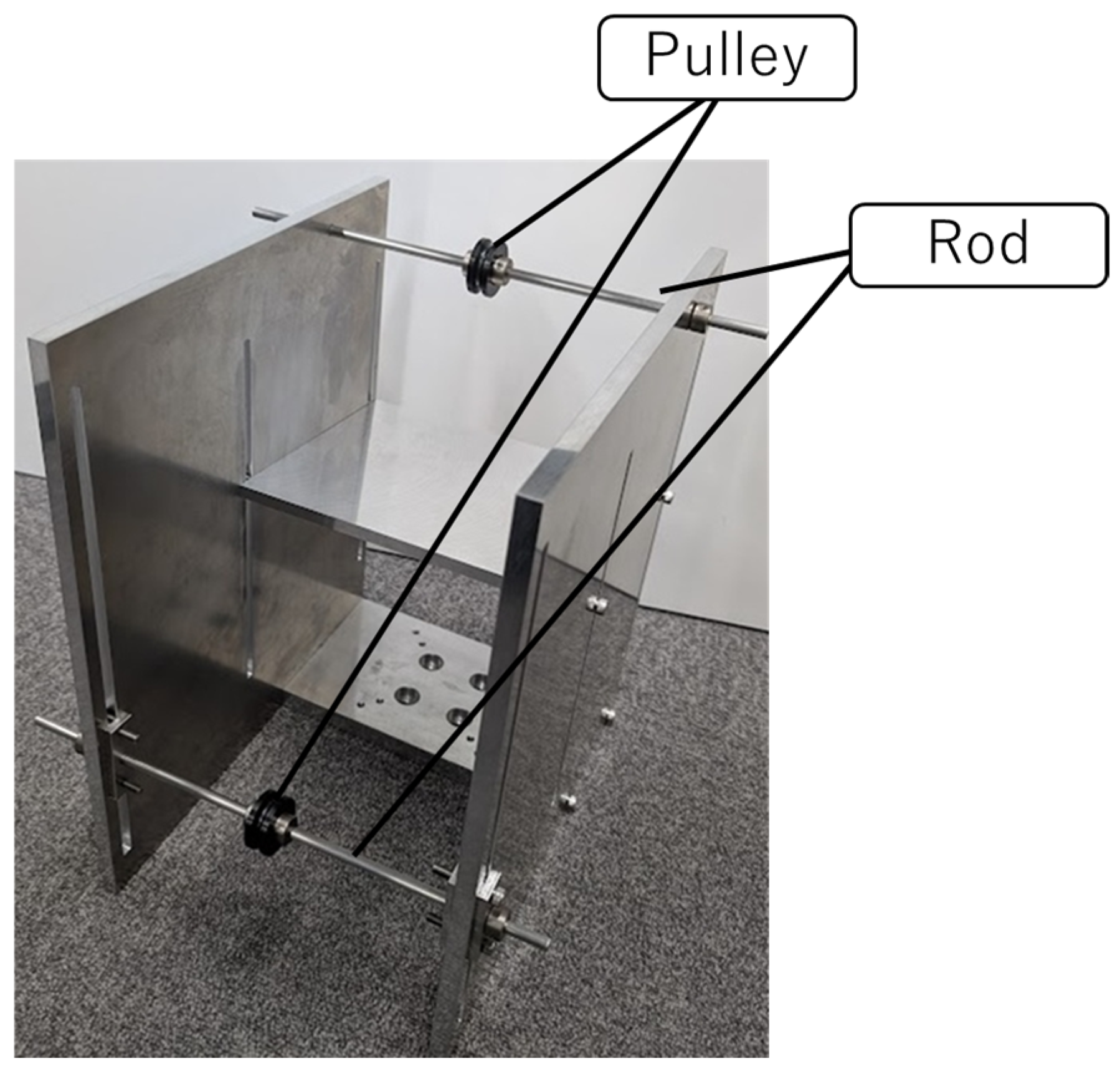
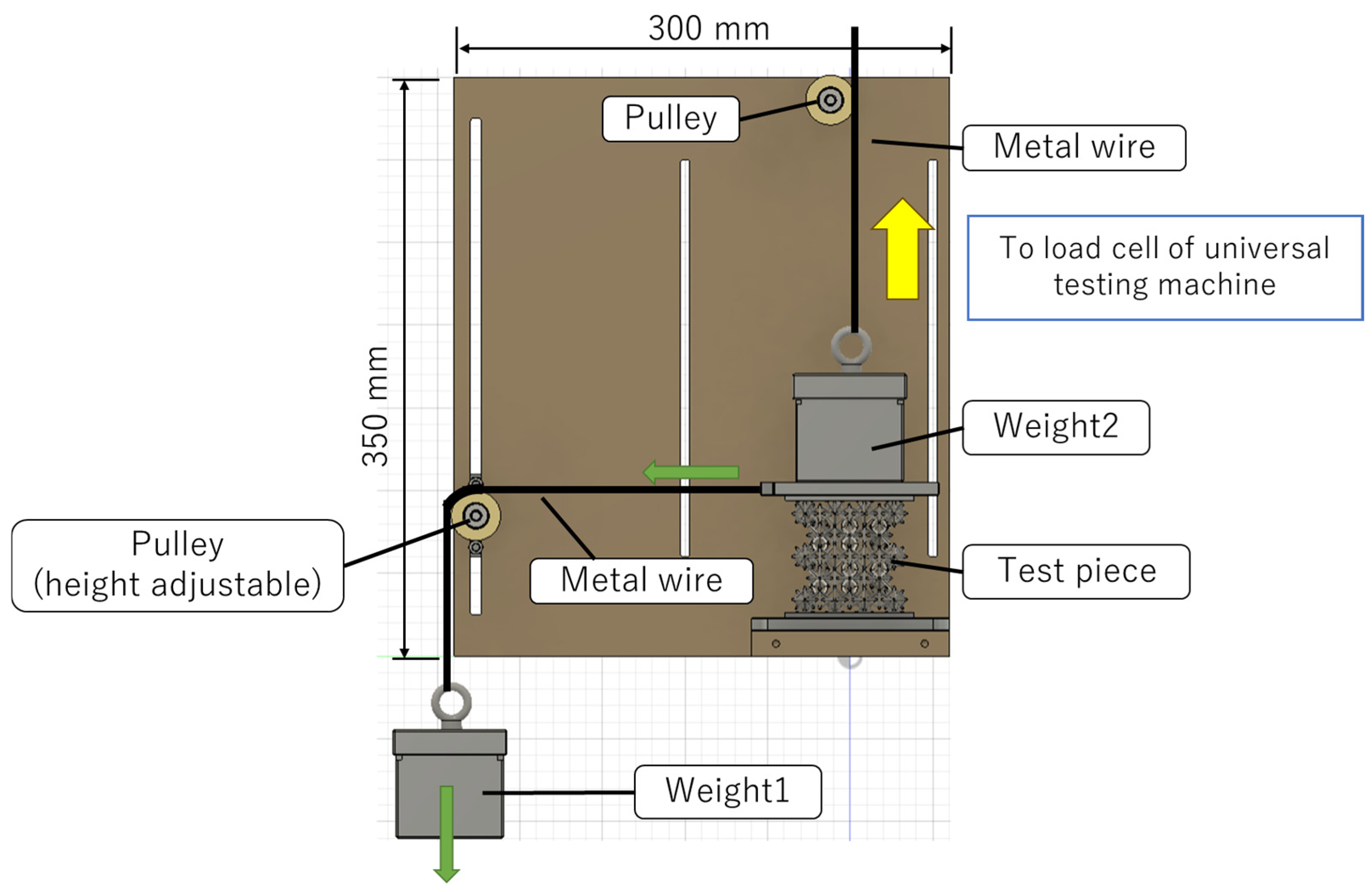
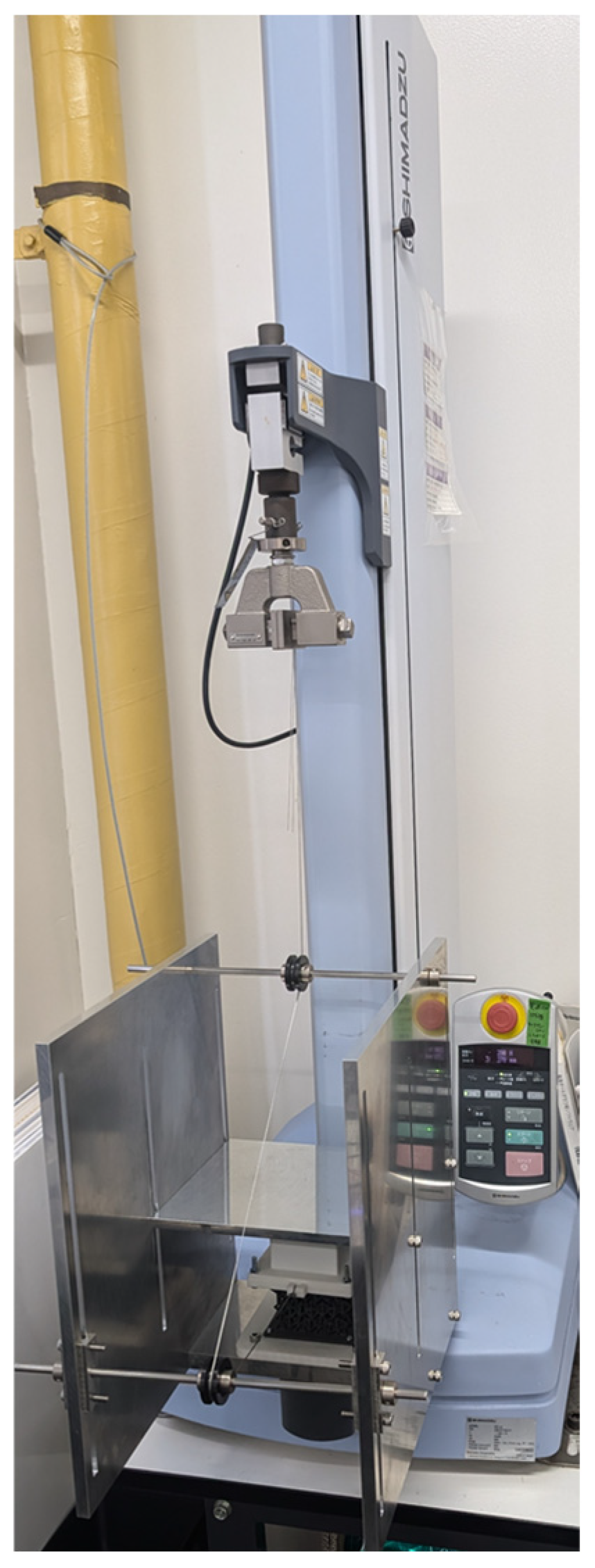
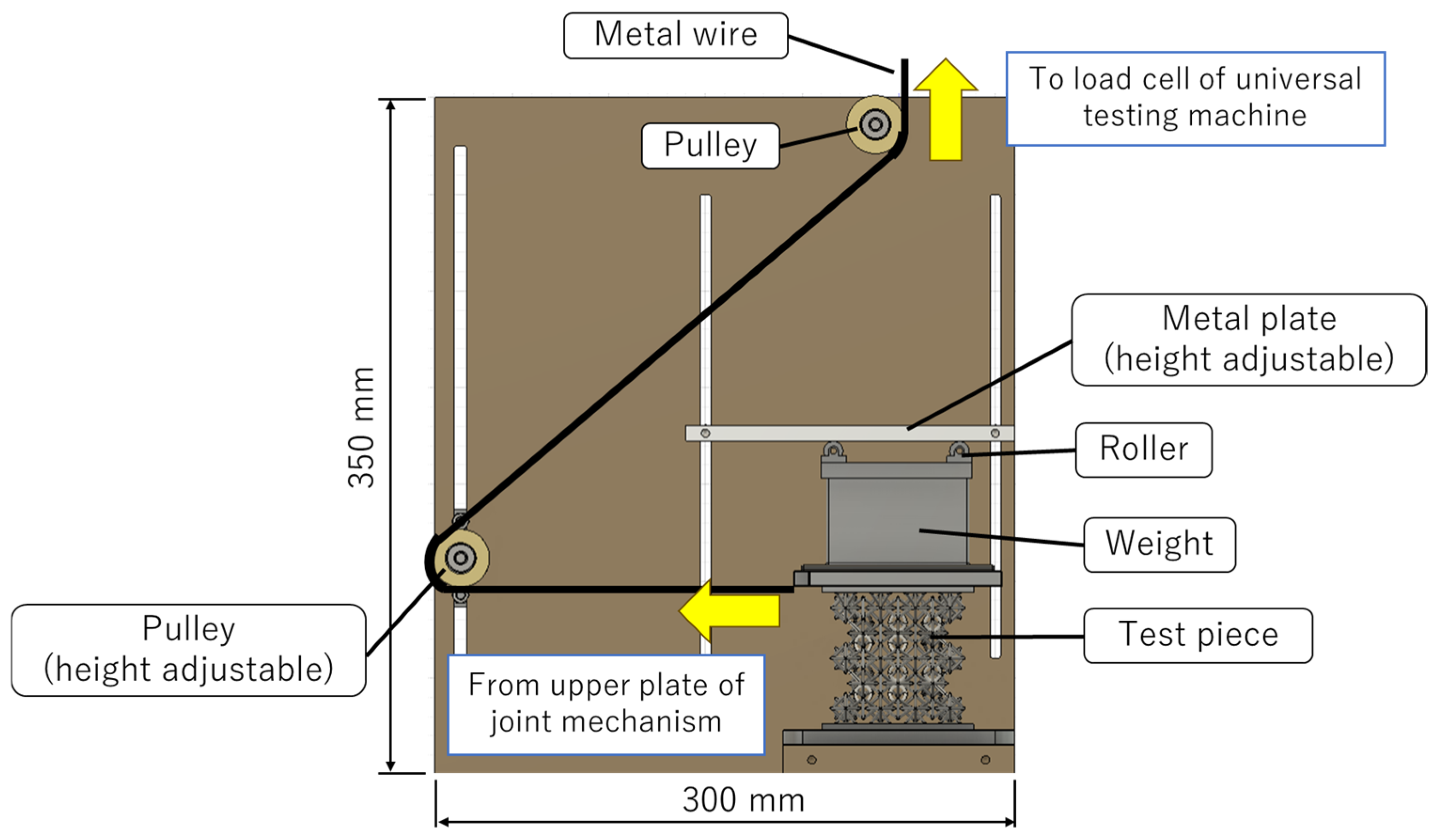
Measurements in this experiment were performed using a universal testing machine (Shimadzu, Kyoto, Japan, EZ-LX) and a custom-made fixture. Figure 7 shows the experimental setup, Figure 8 presents a photograph of the custom fixture, and Figure 9 illustrates a schematic diagram of the arrangement of the custom fixture and specimen in this experiment.
The base of this fixture was mounted onto the universal testing machine, and the test specimen was attached. Two metal rods were installed so they spanned both ends of the fixture, with a pulley mounted at the center of each. A wire was attached to one side of the upper end of the test specimen. The other end of this wire was connected to a weight (referred to as Weight 1). This weight was suspended downward via the pulley, applying a shearing force to the test specimen. The height of the metal rod with the lower pulley was adjusted so that the wire pulled the test specimen horizontally. This arrangement enabled the force exerted by the wire with Weight 1 to be regarded as a shearing force. Another weight (referred to as Weight 2) was placed on top of the test specimen to compress it. A different wire was connected to Weight 2. The other end of this wire was connected to the gripper of the universal testing machine’s load cell. Weight 2 was pulled upward via this wire.
During the experiment, the crosshead was raised upward at a loading rate of 1 N/min. This lifted Weight 2, causing the compressive mass applied to the specimen from above to decrease at a constant rate. The shearing force and elapsed time were recorded by the universal testing machine during this process.
Measurements were continued until the specimen could no longer withstand the shearing force due to the decreasing compressive mass. The magnitude of the shearing force applied by Weight 1 was varied incrementally from 1 to 10 N in 1 N steps, with five measurements performed for each load.
The mass of Weight 2 was set to a stable state that ensures sufficient balance before the measurement began. A 1435 g weight was used when the shearing force was 1 to 5 N, and a 1980 g weight was used when the shearing force was 6 to 10 N.

3.1.4. Method for Defining Mass at the Jamming Point

In this experiment, the crosshead was raised vertically at a constant speed. Therefore, the tensile force, measured by the universal testing machine’s load cell, increased at a constant rate. When the load was reduced to the jamming point, slipping occurred between chain particles, resulting in a sudden force fluctuation. The time point just before this fluctuation occurred was judged as the jamming point.
Let T denote the tensile force at the jamming point, m2 the mass of Weight 2, mt the mass of the test specimen, and g the gravitational acceleration. To calculate the compressive mass mc applied to the mechanism at the jamming point, the following Equation (1) is defined. The compressive mass serves as an indicator representing the relationship between the jamming point and the robot’s self-weight applied to the legs, thereby providing design guidelines for the mechanism.
m c = m 2 m t T g

3.1.5. Experimental Results

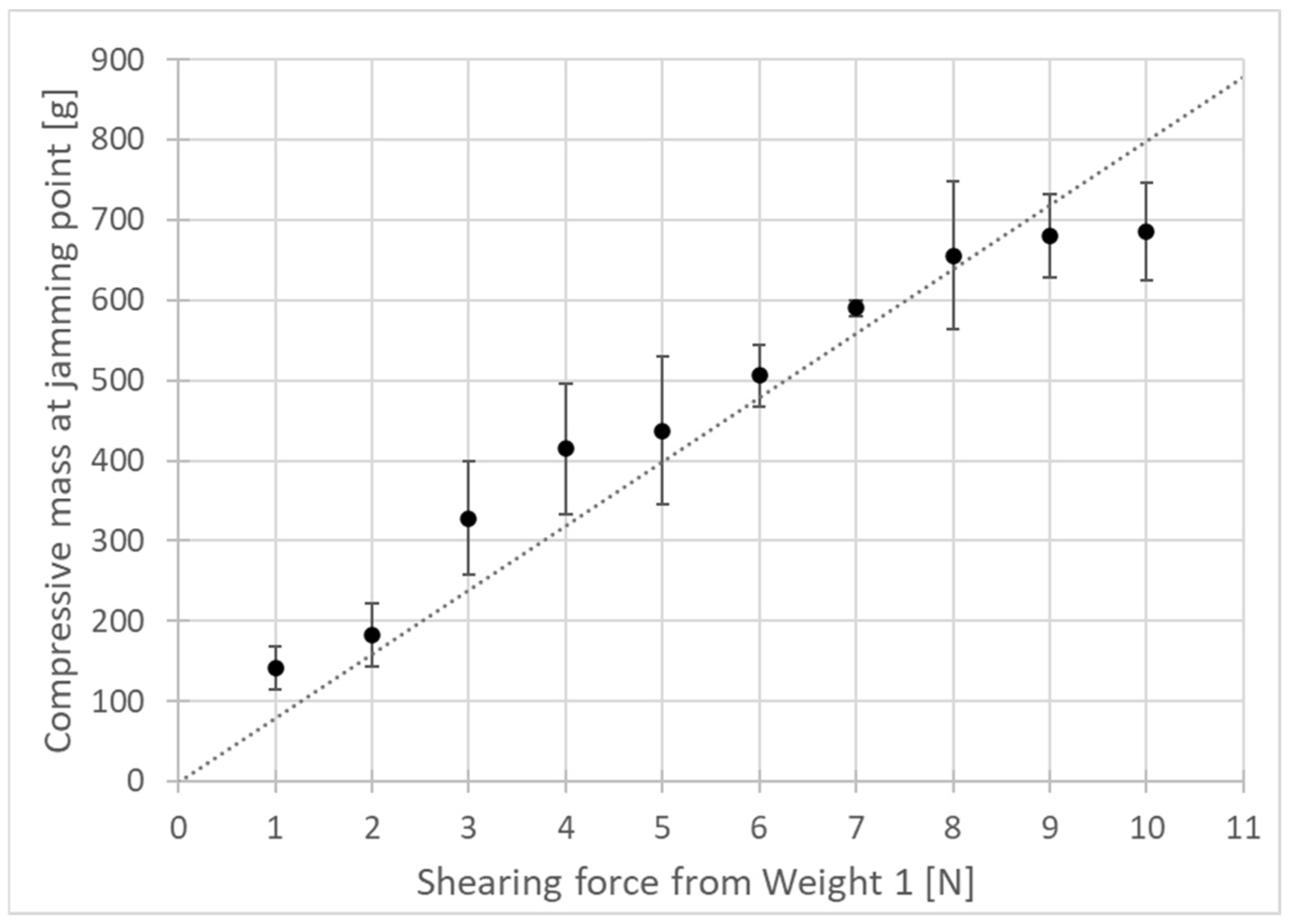
Figure 10 shows plots of the average and standard deviation of the compressive mass at the jamming point for each shearing force. The standard deviation indicates the magnitude of variation in the measurements taken five times for each condition.

3.1.6. Discussion

Although variation is indicated by error bars, focusing on changes in the average reveals a tendency for the compressive mass at the jamming point to increase with increasing shear force. This indicates that a larger compressive mass enables the jamming state to be maintained even against a greater shearing force.
The jamming in this experiment is considered to be caused by the geometric constraint and frictional interactions between chain particles induced by compression from above. As the applied shearing force increases, the frictional coupling is released due to chain particle slip. Therefore, the jamming phenomenon corresponds to the occurrence of static friction. In this experiment, the shearing force corresponds to the maximum static friction force, and the compressive mass at the jamming point corresponds to the normal force.
Generally, a proportional relationship expressed by Equation (2) exists between the maximum static friction force Fmax and the normal force N. Here, µs is the coefficient of static friction as the proportionality constant.
F m a x = μ s N
Similarly, a proportional relationship is considered to exist between the shearing force f and the compressive mass m at the jamming point, as shown in Equation (3).
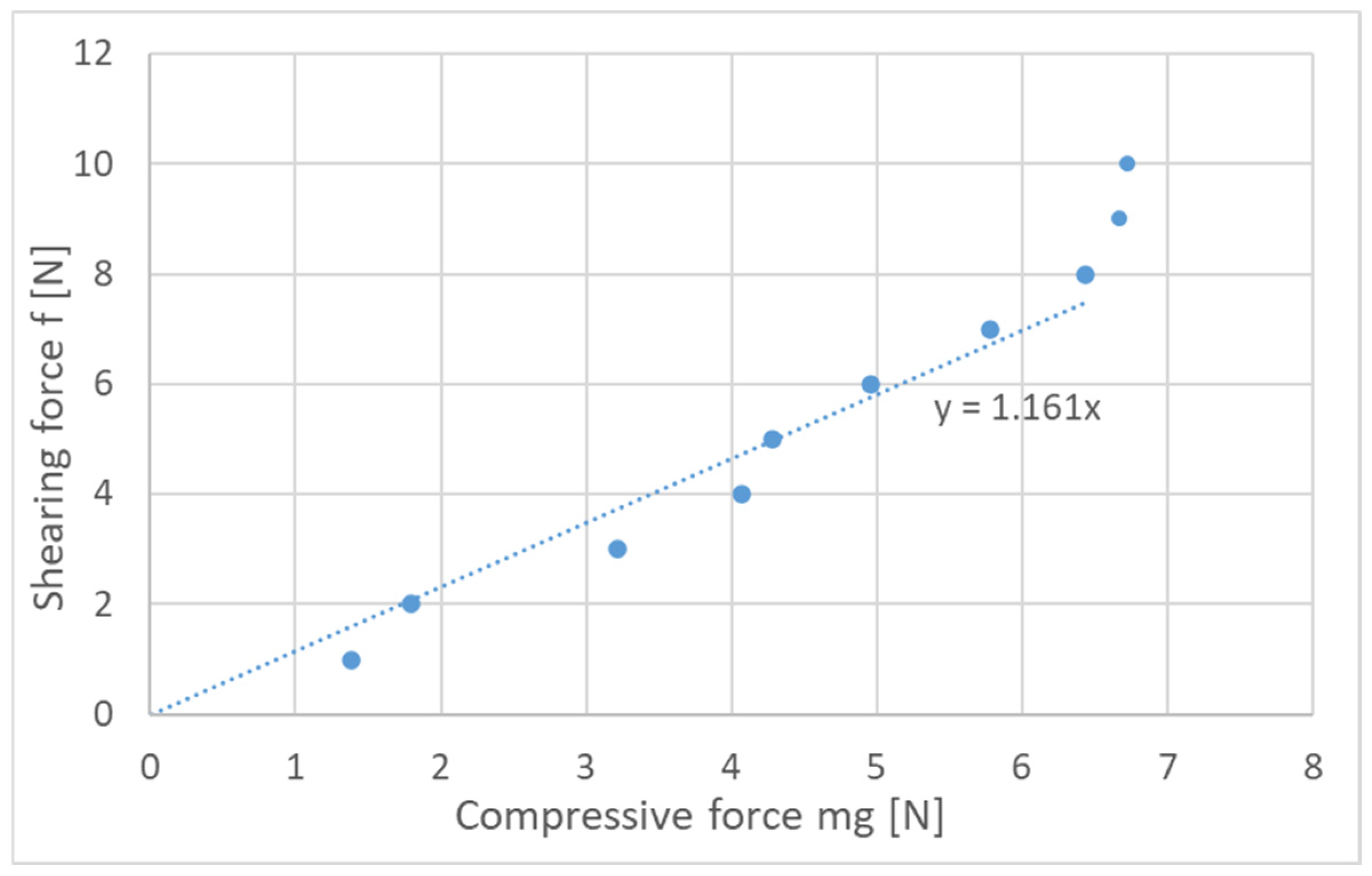
f = α m g
Here, g is the gravitational acceleration, and ‘α’ is a coefficient of the effective parameter arising from multi-point contact, geometric interlocking, and friction coupling within the structure. It is very interesting that solid friction and jamming resistance have similar properties, although they are generated by different principles. Normally, in mechanism design, the coefficient of solid friction is adjusted by changing the material. However, the results of this experiment show that it can be adjusted by changing the shape rather than the material in the case of chainmail mechanisms.
Figure 11 shows a graph plotting the shear force f at the jamming point obtained in this experiment on the vertical axis, and the average value of the compressive force mg on the horizontal axis. From this figure, for the test specimen in this experiment, α ≈ 1.161 is valid for mg < 6.5. For mg > 6.5, the large compressive mass is thought to cause greater structural deformation, increasing the number of contact points between chain particles and leading to different characteristics.

3.2. Stiffness and Strength Experiments in the Jamming State

3.2.1. Purpose of the Experiment

Considering application to robotic leg joints, experiments were conducted to evaluate the strength and stiffness of the proposed constrictional mechanism under jamming conditions. The comparative straight mechanism was also tested. The effects of differences in mechanisms and dimensions were evaluated.

3.2.2. Test Specimen Dimensions and Fabrication

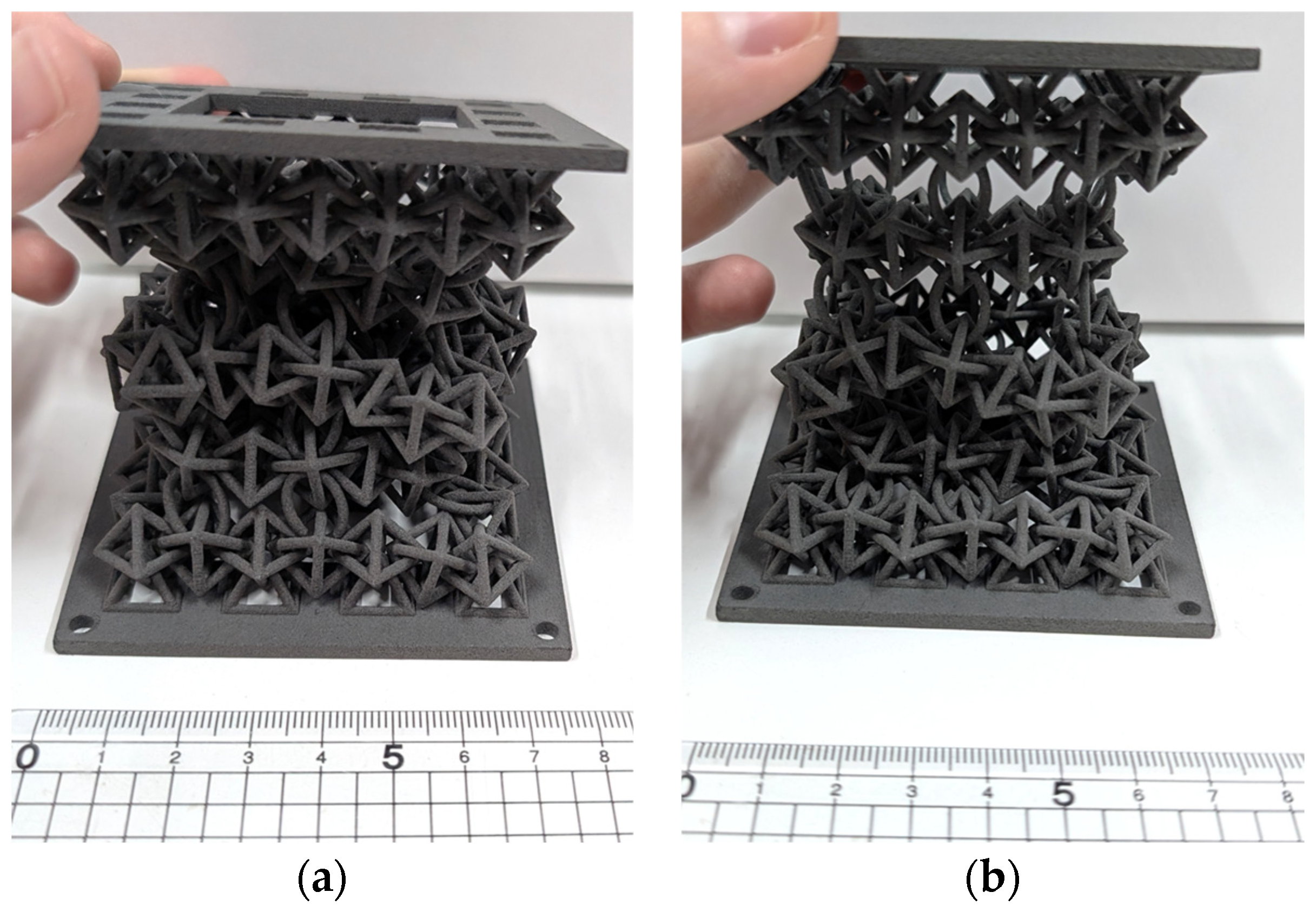
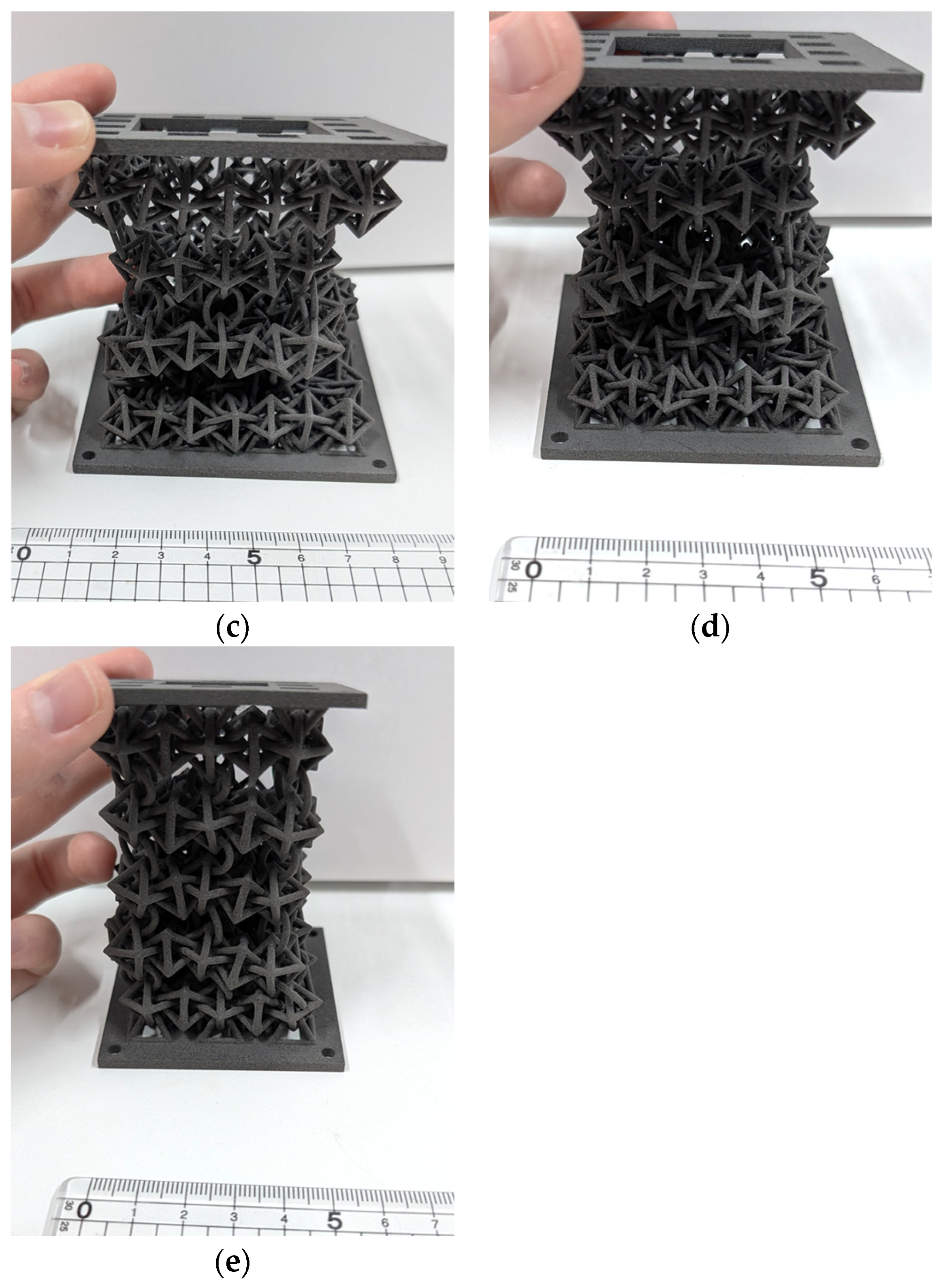
Experiments were conducted on multiple specimens using both the constrictional and straight mechanisms. Photographs of each specimen are shown in Figure 12, and detailed parameters are listed in Table 2.
Specimens C-1, C-2, C-3, and C-4 correspond to the constrictional mechanism. Specimen C-1 was identical to the one used in the experiment described in Section 3.1. Using the chain particle size of Specimen C-1 as the standard, Specimen C-3 employed particles with a pipe diameter that was 0.25 mm thinner. Specimen C-4 applied an overall scale factor of 0.85 applied to the standard particles. Comparing these specimens allowed for an evaluation of size effects on mechanical properties. Specimen C-2 consisted of particles with the same dimensions as those used in Specimen C-1 but the internal linear chainmail structure (Structure A) was lacking. In addition, Specimen S, which consisted of a straight mechanism, was used for comparison.

3.2.3. Experimental Setup

Similar to the experiment in Section 3.1., this experiment used a universal testing machine equipped with a custom-made fixture to apply a shearing force to the specimens and measure the relationship between force and stroke (Figure 13).
Figure 14 shows a schematic diagram of the custom fixture and specimen arrangement in this experiment, viewed from the side. A wire was connected between the specimen and the load cell of the universal testing machine through two pulleys, and the specimen was pulled horizontally when the crosshead pulls the wire upward. The metal rod with the lower pulley was adjusted so that the wire pulled the specimen horizontally. This arrangement allowed the tensile force in the wire to act as a shearing force on the specimen.
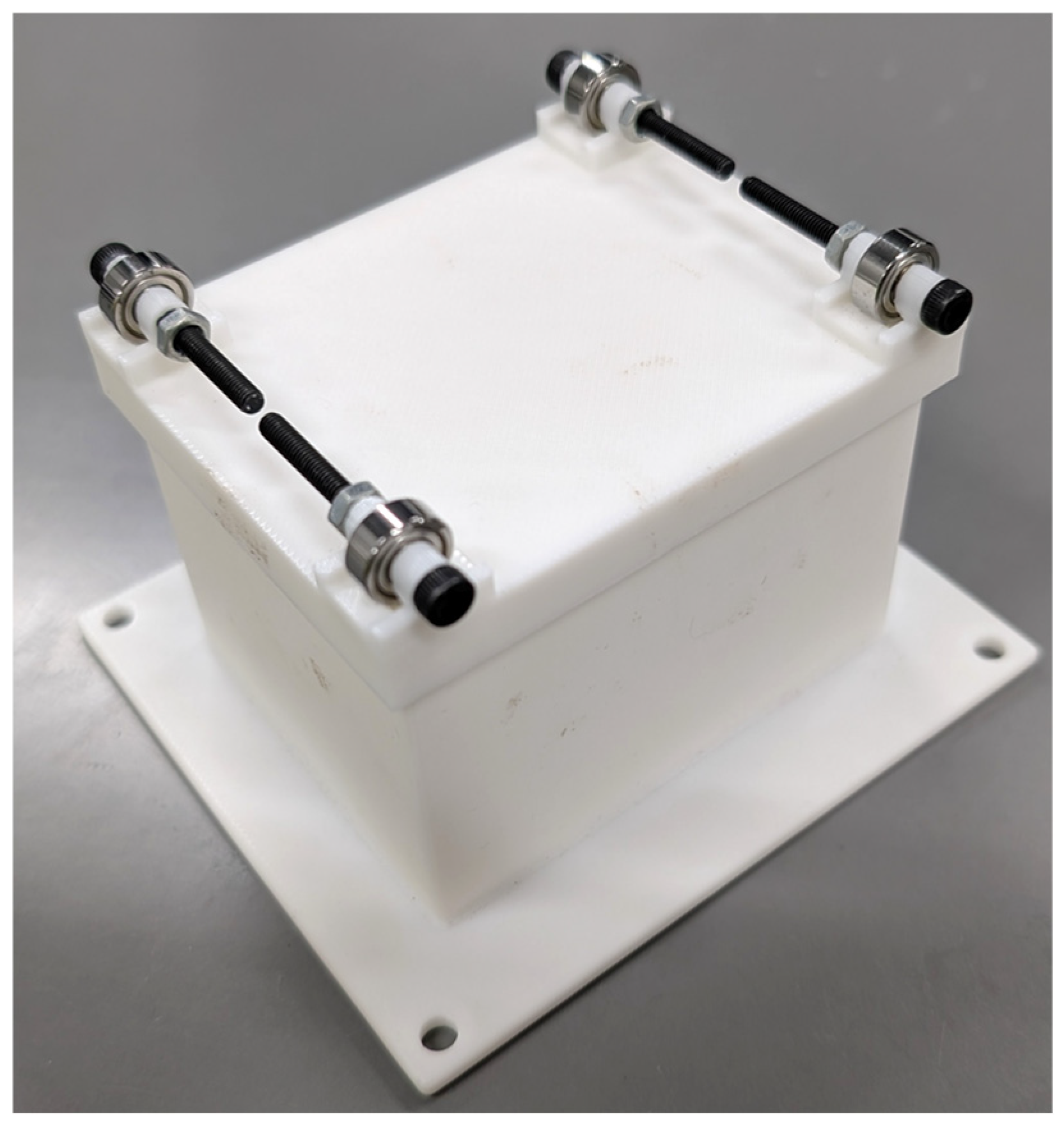
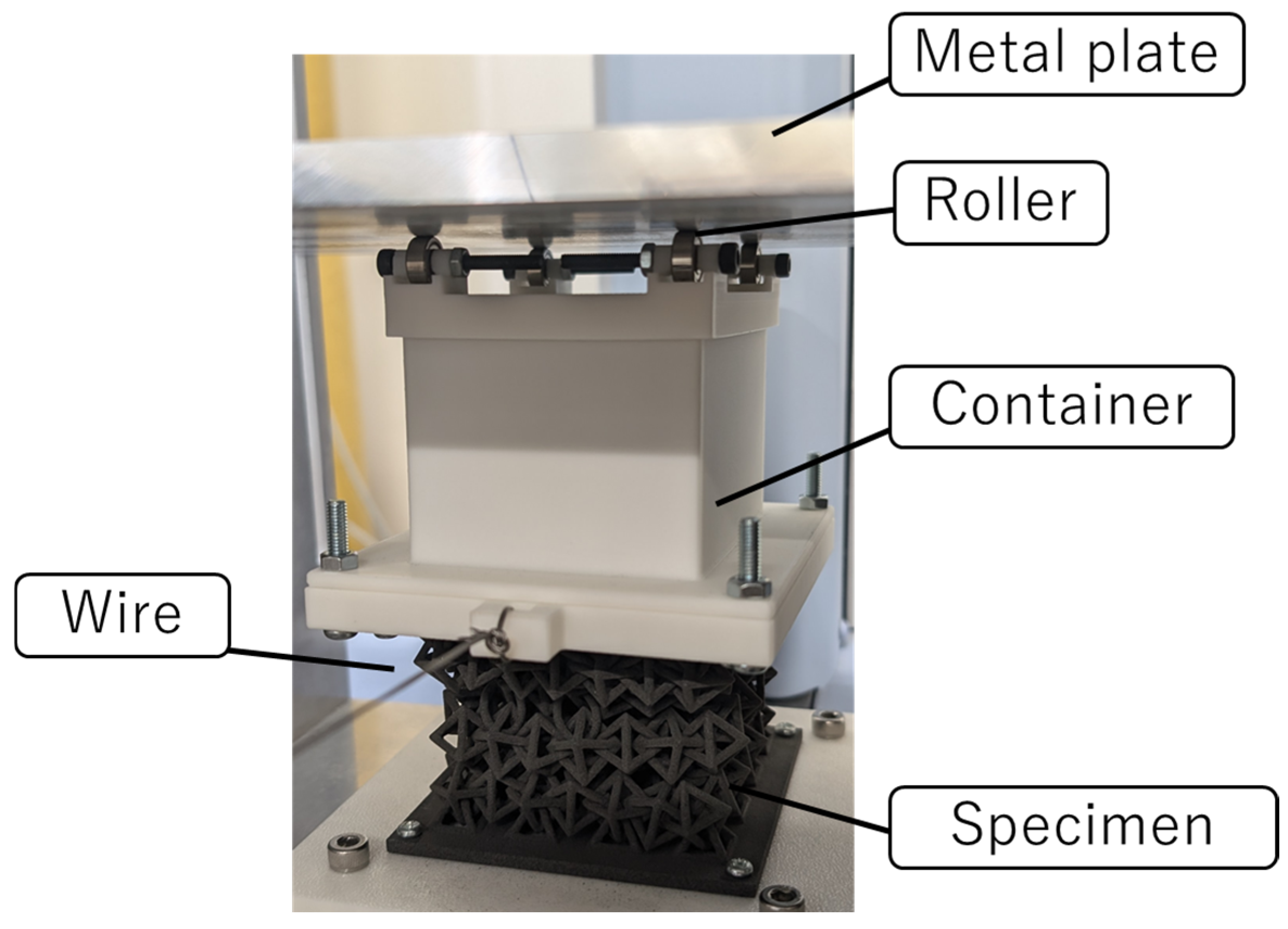
A container was attached above the specimen, and weights of arbitrary mass were placed inside it. Four bearings were mounted as rollers on the top of this container’s lid, as shown in Figure 15. The fixture had a thin metal plate spanning both sides, which could be adjusted vertically (Figure 14). Figure 16 shows the metal plate being adjusted and constrained to contact the rollers at the top of the container. In this configuration, when the test specimen was pulled in the shear direction, the upper part of the container moved horizontally due to rotation of the rollers in contact with the metal plate. This configuration restricted the upward movement of the weight, and thus, reduced the effects caused by the swaying or rotational motion of the weight. However, the downward movement was unconstrained, and thus, gaps could appear as the chainmail deformed and shrank.
The wire was connected to the crosshead’s load cell of the universal testing machine and to the top of the test specimen via the fixture’s pulley. The crosshead was moved vertically upward at 10 mm/min. The wire displacement and applied shearing force were measured during this process using the universal testing machine’s displacement gauge and load cell.

3.2.4. Experimental Method and Results

(1)
Stiffness measurement
This section describes the partial tensile test used to evaluate the stiffness of each test specimen in the jamming state. In the partial tensile test, a displacement of up to 10 mm was applied to the test specimen in the shear direction to measure the shearing force. The slope of the initial ascending section on the resulting force–stroke curve was defined and evaluated as the “apparent initial stiffness.” The initial ascending section was defined as the displacement range of 0–1 mm, which consistently exhibited elastic behavior in the resulting force–stroke curve.
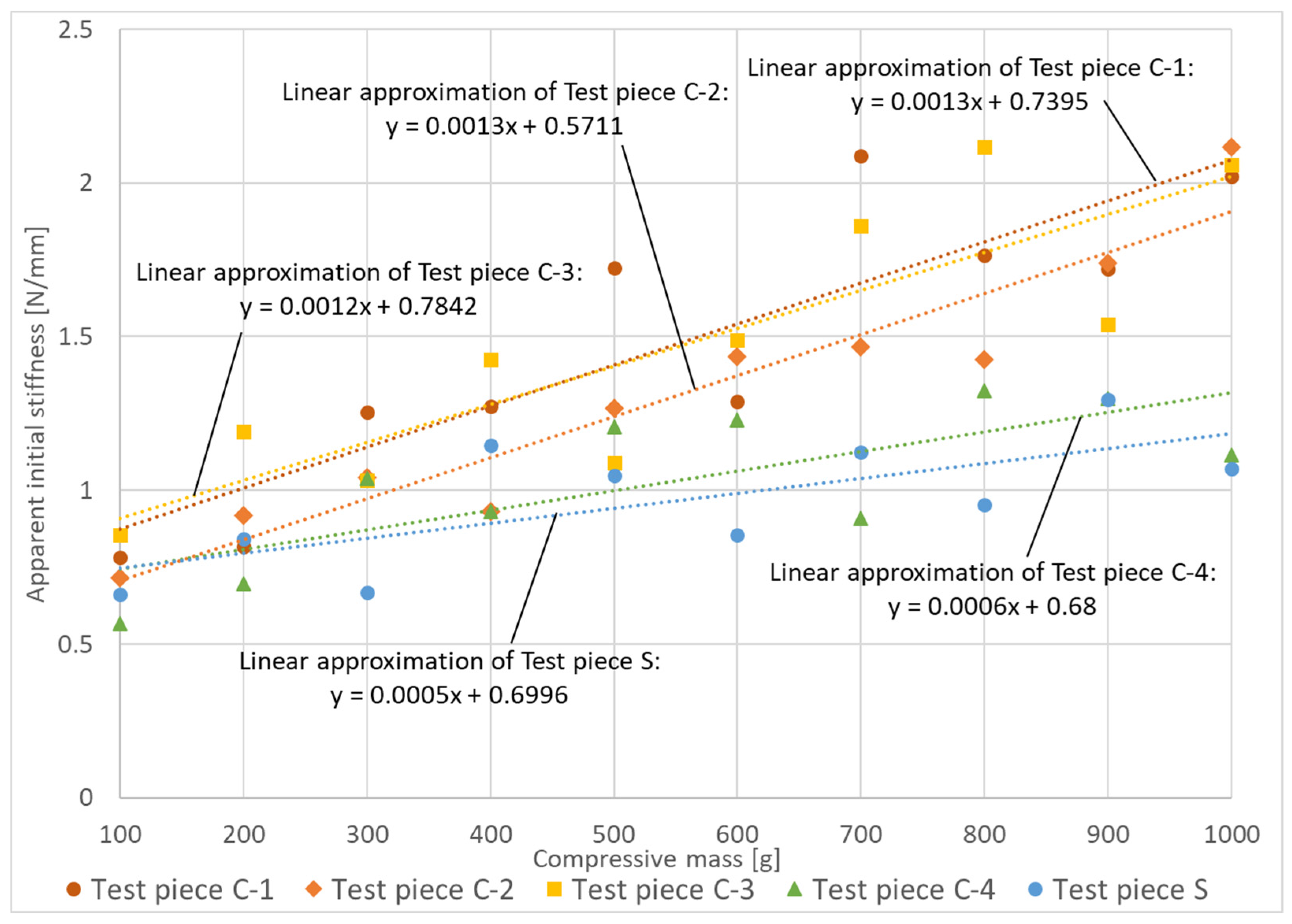
Partial tensile tests were performed on all specimens. For each specimen, the mass of the weight attached to the top was varied in 100 g increments from 100 to 1000 g. The same measurement was performed twice for each combination of specimen and weight. For Specimens C-1 and S, the apparent initial stiffness for the conditions using 200, 400, and 600 g weights was calculated from the force–stroke curves obtained in the subsequent fracture test.
Figure 17 plots the average apparent initial stiffness values obtained from the partial tensile tests for each condition, grouped by compressive mass, along with the approximate straight lines.
(2)
Fracture Test
This section describes the fracture test to evaluate each specimen’s behavior until its breaking point. In this test, a stroke was applied to the specimen in the shear direction to measure the shearing force until chain particle fracture occurred and the entire specimen collapsed significantly.
Fracture tests were conducted on Specimens C-1 and S. For each specimen, weights of 200, 400, and 600 g were placed in the container. The measurements were performed twice for each combination of specimen and weight.
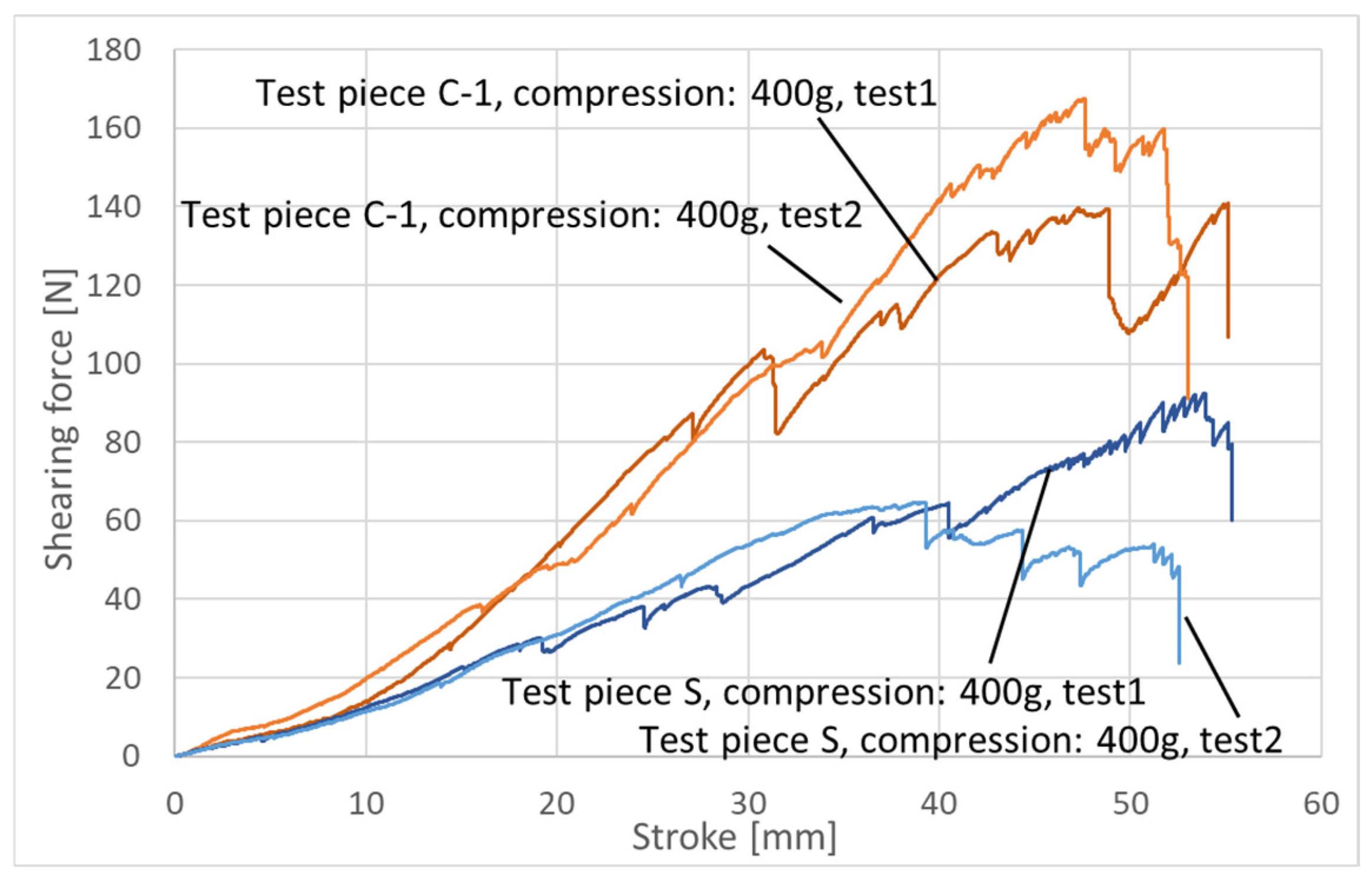
Figure 18 shows the force–stroke curve obtained from the fracture test with a 400 g weight applied, combining the two measurements for Specimen C-1 and the two measurements for Specimen S.
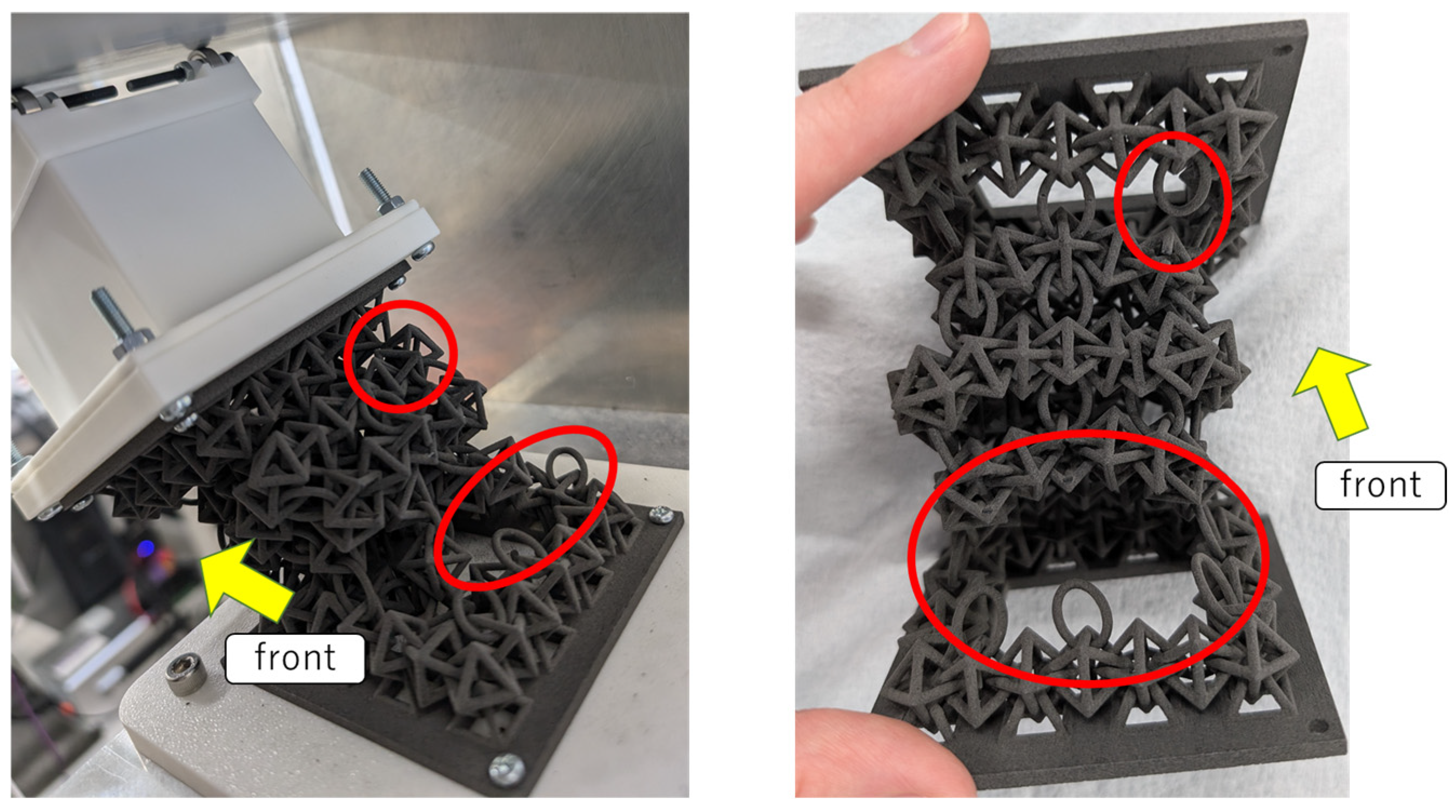
Figure 19 shows the fracture area of the specimen. These images are views taken from the rear side, which is the opposite side from where the shearing force was applied; chain particles indicated by red circles are damaged.
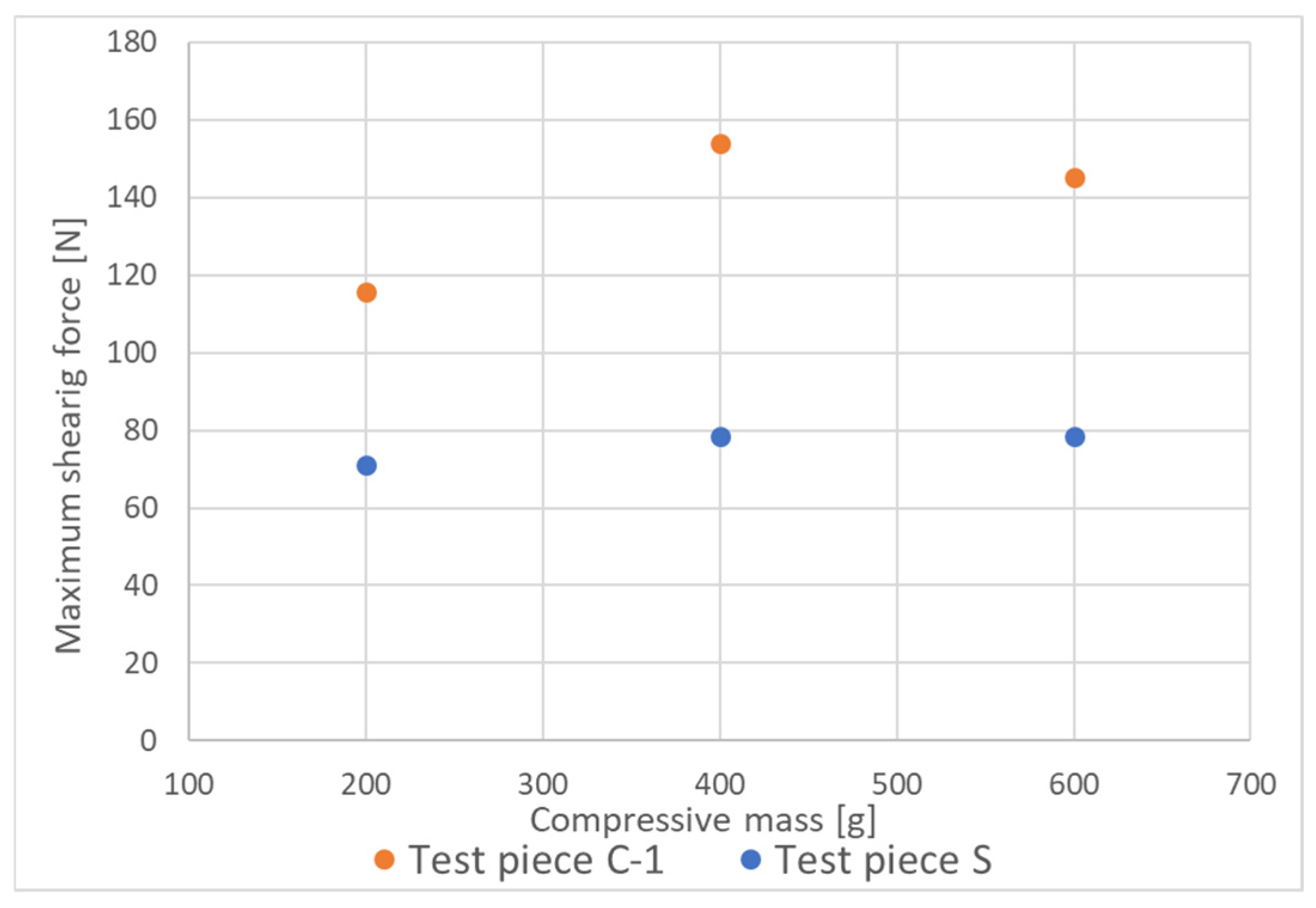
Figure 20 plots the average of maximum shearing force for each compressive mass.

3.2.5. Discussion

As seen from the increase in the approximate straight line for apparent initial stiffness in Figure 17, for all specimens, the apparent initial stiffness tends to increase as the compressive mass increases, suggesting that the compressive mass strengthens the geometric constraints between chain particles and increases frictional coupling. Consequently, the mechanism’s overall stiffness increases.
Previous studies have shown that increasing pressure on a chainmail structure enclosed within a sealed bag leads to increased structural stiffness [10,11]. The results of this experiment suggest that a similar phenomenon occurs when compression is applied from only one direction.
Next, we compare Test Specimens C-1 and C-2, which differ in whether internal Structure A is present within the constrictional mechanism. From Figure 17, the rates of increase in the apparent initial stiffness approximation lines are similar, but the minimum value is larger for Test Specimen C-1. Therefore, the apparent initial stiffness tends to be higher for Specimen C-1 at each compressive mass. This result suggests that higher stiffness is achieved when Structure A is present, i.e., where the total number of chain particles is greater. A greater number of chain particles increases the number of contact points during jamming.
Similarly, Specimens C-2 and S are compared, where Specimen C-2 is a constrictional mechanism without Structure A and Specimen S is a straight mechanism with Structure A. From Figure 17, although the minimum values of the apparent initial stiffness approximation lines are similar, the rate of increase for Specimen C-2 is greater. Therefore, the apparent initial stiffness tends to be smaller for Specimen S at each compressive mass. However, since the total number of chain particles is greater in Specimen S (Table 2), these results indicate that stiffness is influenced not only by the total number of chain particles but also by the type of structure. This consideration suggests that lateral constriction creates stronger jamming.
In addition, we compare Specimen C-1, with a chain particle pipe diameter a of 1.75 mm, and Specimen C-3, with a pipe diameter a of 1.5 mm. Both specimens employ the constrictional mechanism. Figure 17 show that the apparent initial stiffness approximation lines are nearly identical. This indicates that changing the chain particle pipe diameter by 0.25 mm does not generate a significant difference in the jamming strength of the two specimens.
On the other hand, comparing the apparent initial stiffness approximation lines for Specimens C-1 and C-4 (which has overall dimensions reduced to 0.85 times those of Specimen C-1) in Figure 17, Specimen C-4 has both a minimum value and a smaller rate of increase. This indicates that Specimen C-4 tends to exhibit lower apparent initial stiffness at each compressive mass. Although Specimens C-1 and C-4 are geometrically similar, suggesting no significant difference in the number of chain particle contacts, the smaller size of each chain particle in Specimen C-4 results in insufficient support for the contact force at each contact point.
Regarding the fracture test, Figure 18 shows that the shearing force at the same stroke for Specimen C-1 tends to be larger than that for Specimen S, suggesting that the constrictional mechanism’s internal tightening effect enhances the contact between chain particles. Consequently, rearrangement of chain particles due to slippage and changes in contact becomes less likely, thereby increasing the stiffness during the behavior leading to failure.
Figure 18 shows that the shearing force suddenly decreases at some points. This suggests that jamming between chain particles is temporarily relieved at certain points, leading to slip. Subsequently, as pressure from above continues to be applied, jamming reoccurs with altered arrangements and contact points of the chain particles. Then, the particles resume solid-like behavior. This repeated cycle of jamming, release, and re-occurrence continues until the interconnected chain particles are pulled apart and broken, as shown in Figure 19.
Figure 20 indicates that the maximum shearing force for Specimen C-1 is larger than that for Specimen S. This suggests that the constrictional mechanism’s internal tightening effect increases its stiffness, making it more difficult to pull the chain particles apart, thereby improving the breaking strength.
These considerations suggest that, in mechanisms employing chainmail structures, the greater the number of contact points between chain particles and the more effectively each contact point supports the contact force, the greater the stiffness of the mechanism becomes. Furthermore, as stiffness increases, the interconnected chain particles become more resistant to deformation, thereby enhancing the breaking strength. Consequently, the important design parameters outlined below are considered effective for achieving high stiffness and strength when a robot’s leg supports its weight upon grounding:
  • Increase the number of chain particles;
  • Employ the inward-tightening mechanism;
  • Increase the size of the chain particles.

4. Application

As an application of the proposed constrictional mechanism, which consists of a chainmail structure, a universal joint clutch is considered. This mechanism increases in stiffness due to jamming when it is compressed in different orientations.
This case study assumes that a legged robot uses the constrictional mechanism in its legs to walk on uneven terrain. Predicting the exact orientation of the leg upon contact with uneven ground is difficult. Therefore, even if the orientation of the mechanism changes arbitrarily, its stiffness needs to increase, and the mechanism must lock in place under gravity-induced compression.
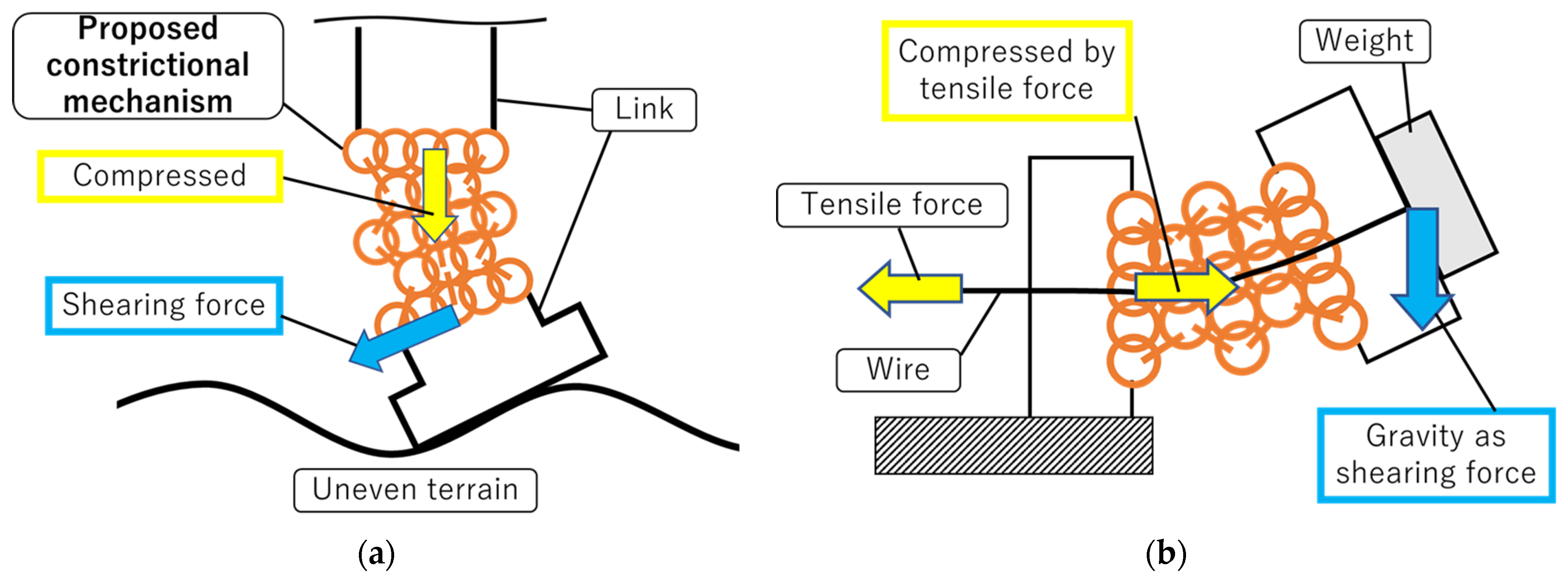
This chapter simulates and experimentally verifies the behavior of a robotic leg equipped with a constrictional mechanism when it contacts uneven terrain. Figure 21 shows a schematic diagram of the leg contacting the ground and the corresponding verification experiment. In the verification experiment, the constrictional mechanism is mounted horizontally on a wall surface, with one end rigidly fixed. A wire is attached to the free end of the constrictional mechanism and passes through the mechanism’s interior to apply a tensile force to this end. During this process, the entire constrictional mechanism is compressed laterally. This compression simulates the upward compression applied when the leg comes into contact with the ground. A weight is also attached to the free end of the constrictional mechanism. The gravitational force exerted by this weight on the free end of the constrictional mechanism simulates the shearing force applied during leg contact. In the verification experiment, tests were conducted by changing the posture at the free end of the constrictional mechanism, simulating the fixation of the leg in any posture when the leg contacts the ground.
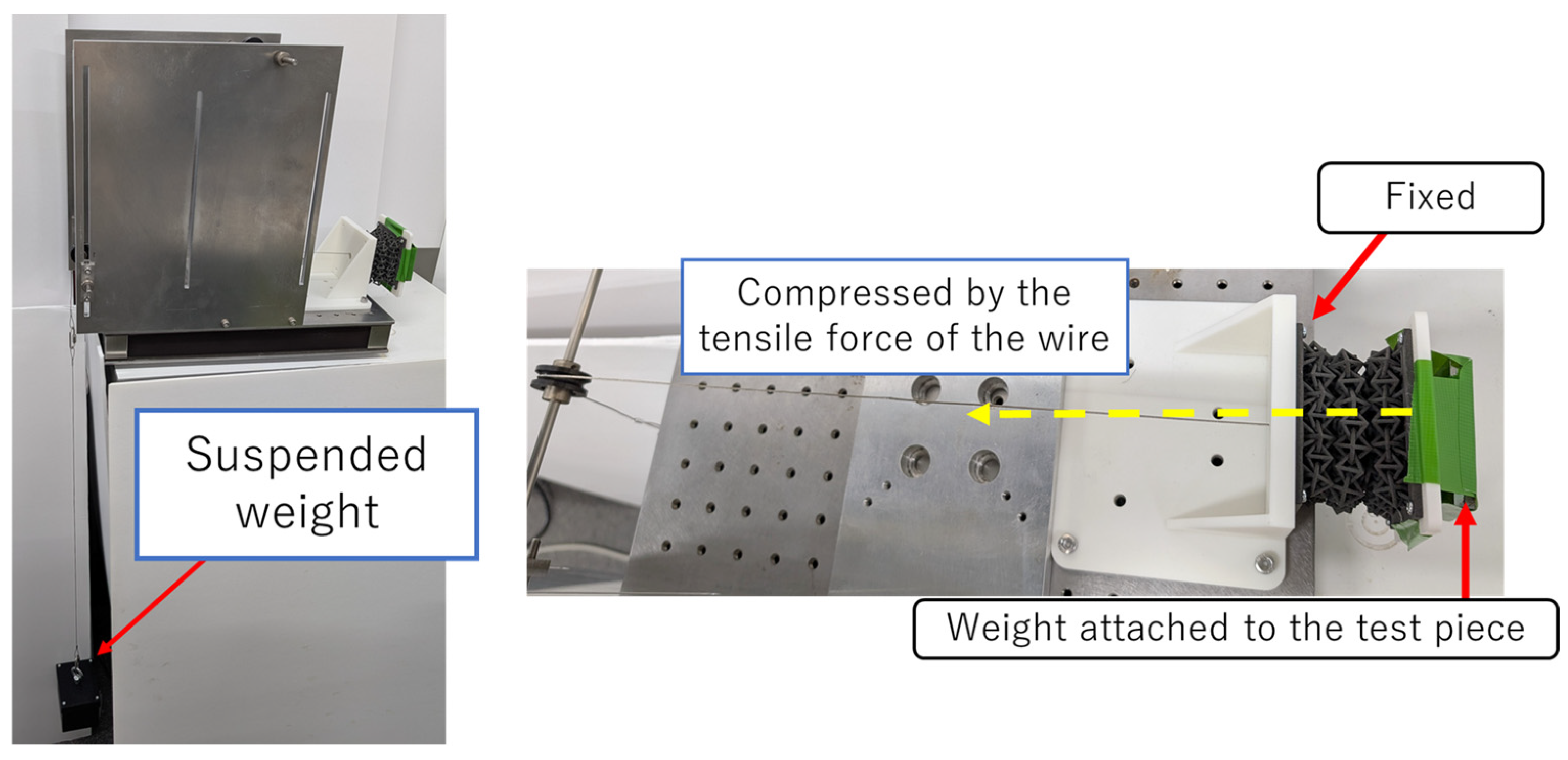
Figure 22 shows the apparatus used in the actual verification experiment. The wire passes through a pulley to suspend another weight, causing the wire to pull on the free end of the constrictional mechanism and generate compression. Additionally, a 200 g weight was attached to the free end of the constrictional mechanism to apply a shearing force. From Figure 10, the compressive mass required to reach the jamming point when 2 N is applied in the shear direction is approximately 140–200 g. To ensure stable jamming even when the posture changes, the compressive mass of the constrictional mechanism (the mass of the weight pulling the wire) was set to 600 g.
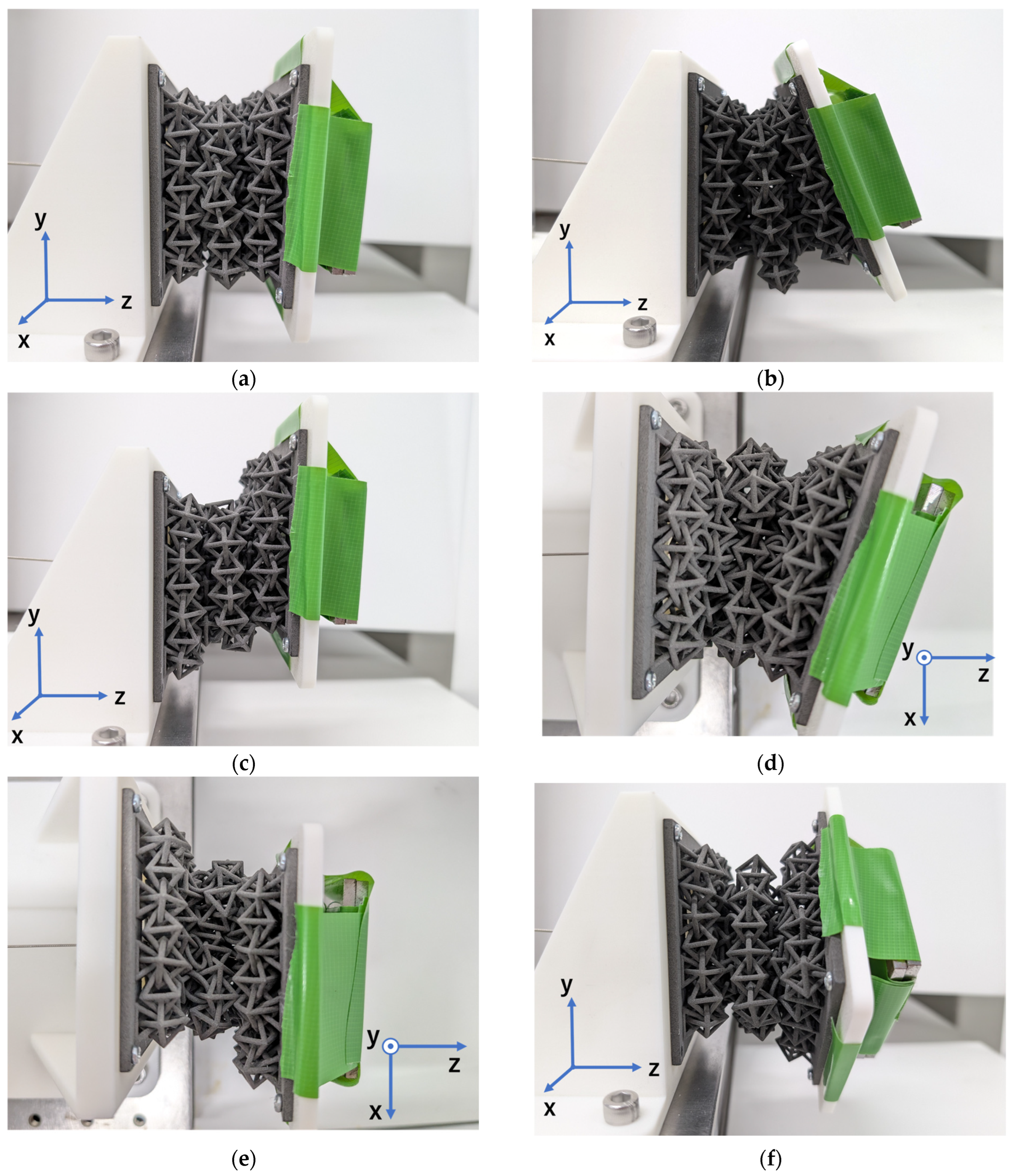
Figure 23 shows the mechanism compressed laterally while in various postures successfully gripping a weight. These results confirm that the mechanism can be jammed even when compressed unidirectionally in a changed posture. These results demonstrate that the constrictional mechanism can fix the robot leg in any desired posture, making it potentially useful for maintaining leg posture on uneven terrain. However, these results describe properties under quasi-static conditions, so further verification is required for properties under dynamic conditions, such as impact loads and sudden increases in shear forces during foot contact and walking.

5. Conclusions

This paper proposes a mechanism that changes its stiffness by inducing jamming in a chainmail structure through gravity-induced compression and investigates its applicability to leg mechanisms in legged robots. The proposed mechanism differs from conventional chainmail structures and jamming-based approaches in that it can passively change its stiffness without employing vacuum-driven approaches.
A constrictional mechanism that tightens when compressed was proposed. Its mechanical properties were evaluated through experiments to identify the jamming point and to assess the stiffness and strength in the jammed state. The results confirmed that the force required to induce jamming increases proportionally with the compressive mass applied to the proposed mechanism, demonstrating properties like solid friction. Furthermore, the stiffness and strength in the jamming state were found to be significantly related to the contact points between chain particles within the structure. The constrictional mechanism was confirmed to achieve higher stiffness and strength by increasing the number of contact points, and its mechanical properties can be adjusted through design.
Additionally, case studies demonstrated that the proposed mechanism can increase stiffness via jamming by applying a designed compressive force, regardless of posture orientation.
These results provide design guidelines for leg mechanisms using chainmail structures under quasi-static conditions, such as slow walking, and are useful for maintaining the posture of robotic legs on uneven terrain.
However, the proposed chainmail structure is not enclosed within a sealed bag. Therefore, a reduction in the jamming effect may occur due to applied bending and torsional moments. Additionally, impact forces and high-frequency vibrations may have an effect under dynamic conditions. These aspects could not be verified in this study.
Therefore, future work should further verify the effectiveness of the proposed mechanism by determining the degrees of freedom, evaluating the mechanism under dynamic conditions, and implementing it on actual robotic legs.

Author Contributions

Conceptualization, S.Y. and T.T.; methodology, S.Y.; software, S.Y.; validation, T.T.; formal analysis, S.Y.; investigation, S.Y.; resources, T.T.; data curation, S.Y.; writing—original draft preparation, S.Y.; writing—review and editing, T.T.; visualization, S.Y.; supervision, T.T.; project administration, T.T.; funding acquisition, T.T. All authors have read and agreed to the published version of the manuscript.

Funding

This work was supported by JSPS KAKENHI Grant Number JP23K03636.

Institutional Review Board Statement

Not applicable.

Informed Consent Statement

Not applicable.

Data Availability Statement

The raw data supporting the conclusions of this article will be made available by the authors on request.

Conflicts of Interest

The authors declare no conflicts of interest.

References

  1. Zhao, Y.; Wang, J.; Cao, G.; Yuan, Y.; Yao, X.; Qi, L. Intelligent Control of Multilegged Robot Smooth Motion: A Review. IEEE Access 2023, 11, 86645–86685. [Google Scholar] [CrossRef]
  2. Chen, J.; Liang, Z.; Zhu, Y.; Liu, C.; Zhang, L.; Hao, L.; Zhao, J. Towards the Exploitation of Physical Compliance in Segmented and Electrically Actuated Robotic Legs: A Review Focused on Elastic Mechanisms. Sensors 2019, 19, 5351. [Google Scholar] [CrossRef] [PubMed]
  3. Fitzgerald, S.G.; Delaney, G.W.; Howard, D. A Review of Jamming Actuation in Soft Robotics. Actuators 2020, 9, 104. [Google Scholar] [CrossRef]
  4. Liow, L.; Brett, J.; Pinskier, J.; Hanson, L.; Tidswell, L.; Kottege, N.; Howard, D. A Compliant Robotic Leg Based on Fibre Jamming. IEEE Trans. Robot. 2024, 40, 4578–4597. [Google Scholar] [CrossRef]
  5. Pinskier, J.; Brett, J.; Hanson, L.; Surdo, K.L.; Howard, D. Jammkle: Fibre Jamming 3D Printed Multi-Material Tendons and Their Application in a Robotic Ankle. In Proceedings of the 2022 IEEE/RSJ International Conference on Intelligent Robots and Systems (IROS), Kyoto, Japan, 23–27 October 2022; pp. 8507–8514. [Google Scholar]
  6. Hauser, S.; Mutlu, M.; Banzet, P.; Ijspeert, A.J. Compliant Universal Grippers as Adaptive Feet in Legged Robots. Adv. Robot. 2018, 32, 825–836. [Google Scholar] [CrossRef]
  7. Hauser, S.; Eckert, P.; Tuleu, A.; Ijspeert, A. Friction and Damping of a Compliant Foot Based on Granular Jamming for Legged Robots. In Proceedings of the 2016 6th IEEE International Conference on Biomedical Robotics and Biomechatronics (BioRob), Singapore, 26–29 June 2016; pp. 1160–1165. [Google Scholar]
  8. Chopra, S.; Tolley, M.T.; Gravish, N. Granular Jamming Feet Enable Improved Foot-Ground Interactions for Robot Mobility on Deformable Ground. IEEE Robot. Autom. Lett. 2020, 5, 3975–3981. [Google Scholar] [CrossRef]
  9. Xu, J.; Zhang, Y.; Huang, Y.; Chang, L.; Chen, T.; Ren, T.; Cai, Z. Dynamic Response of Chain Mail Fabrics with Variable Stiffness. Int. J. Mech. Sci. 2024, 264, 108840. [Google Scholar] [CrossRef]
  10. Wang, Y.; Li, L.; Hofmann, D.; Andrade, J.E.; Daraio, C. Structured Fabrics with Tunable Mechanical Properties. Nature 2021, 596, 238–243. [Google Scholar] [CrossRef] [PubMed]
  11. Xu, J.; Chang, L.; Chen, T.; Ren, T.; Zhang, Y.; Cai, Z. Study of the Bending Properties of Variable Stiffness Chain Mail Fabrics. Compos. Struct. 2023, 322, 117369. [Google Scholar] [CrossRef]
  12. Tian, Y.; Chen, K.; Zheng, H.; Kripalani, D.R.; Zeng, Z.; Jarlöv, A.; Chen, J.; Bai, L.; Ong, A.; Du, H.; et al. Additively Manufactured Dual-Faced Structured Fabric for Shape-Adaptive Protection. Adv. Sci. 2023, 10, 2301567. [Google Scholar] [CrossRef] [PubMed]
  13. Ahmed, A.; Hu, Z.; Wan, W.; Watanabe, T.; Yuan, J.; Harada, K. Design, Fabrication, and Testing of a Chain Mail Jamming-Based Stiffness-Changeable Robotic Supporter. IEEE/ASME Trans. Mechatron. 2025, 30, 3351–3361. [Google Scholar] [CrossRef]
  14. Lu, T.; Zhou, Z.; Bordeenithikasem, P.; Chung, N.; Franco, D.F.; Andrade, J.E.; Daraio, C. Role of Friction and Geometry in Tuning the Bending Stiffness of Topologically Interlocking Materials. Extrem. Mech. Lett. 2024, 71, 102212. [Google Scholar] [CrossRef]
Figure 1. Chain particles and dimensional parameters. (a) Hollow octahedral chain particle. (b) Elliptical chain particle.
Actuators 15 00088 g001
Figure 2. Constrictive mechanism and its configuration.
Actuators 15 00088 g002
Figure 3. Configuration of Structure B.
Actuators 15 00088 g003
Figure 4. Structure B-2 being pushed inward.
Actuators 15 00088 g004
Figure 5. Straight mechanism and its configuration.
Actuators 15 00088 g005
Figure 6. Specimen C-1.
Actuators 15 00088 g006
Figure 7. Jamming point evaluation experiment setup.
Actuators 15 00088 g007
Figure 8. Custom-made fixture.
Actuators 15 00088 g008
Figure 9. Schematic diagram of the custom fixture and specimen arrangement.
Actuators 15 00088 g009
Figure 10. Compressive mass at jamming point.
Actuators 15 00088 g010
Figure 11. Relationship between shearing and compressive forces.
Actuators 15 00088 g011
Figure 12. Photographs of each specimen. (a) Specimen C-1. (b) Specimen C-2. (c) Specimen C-3. (d) Specimen C-4. (e) Specimen S.
Actuators 15 00088 g012aActuators 15 00088 g012b
Figure 13. Strength and stiffness evaluation experiment setup.
Actuators 15 00088 g013
Figure 14. Schematic diagram of the homemade fixture and specimen arrangement (from side view).
Actuators 15 00088 g014
Figure 15. Weight and rollers.
Actuators 15 00088 g015
Figure 16. Contact between rollers and metal plates.
Actuators 15 00088 g016
Figure 17. Apparent initial stiffness and approximation line.
Actuators 15 00088 g017
Figure 18. Results of the fracture test (compressive mass: 400 g).
Actuators 15 00088 g018
Figure 19. Appearance of specimen fracture: Fractures are shown in red circles.
Actuators 15 00088 g019
Figure 20. Maximum shearing force.
Actuators 15 00088 g020
Figure 21. Schematic diagram. (a) Grounding condition. (b) Simulated verification experiment.
Actuators 15 00088 g021
Figure 22. Verification apparatus.
Actuators 15 00088 g022
Figure 23. Weight grasping in arbitrary postures. (a) Horizontal state. (b) Rotation of the free end approximately 20 degrees around the x-axis. (c) Movement of the free end approximately 20 mm in the y-axis direction. (d) Rotation of the free end approximately 20 degrees about the y-axis. (e) Movement of the free end approximately 20 mm in the x-axis direction. (f) Rotation of the free end approximately 45 degrees around the z-axis.
Actuators 15 00088 g023
Table 1. Parameters of Specimen C-1.
Size (mm)Number of
Chain Particles
Notes
abcd
Specimen C-11.7510128172Constrictional mechanism
with Structure A
Table 2. Parameters of each specimen.
Size (mm)Number of
Chain Particles
Notes
abcd
Specimen C-11.7510128172Constrictional mechanism
with Structure A
Specimen C-21.7510128136Constrictional mechanism
without Structure A
Specimen C-31.510128172Constrictional mechanism
with Structure A
Specimen C-41.4888.510.26.8172Constrictional mechanism
with Structure A
Specimen S1.7510128148Straight mechanism
with Structure A
Disclaimer/Publisher’s Note: The statements, opinions and data contained in all publications are solely those of the individual author(s) and contributor(s) and not of MDPI and/or the editor(s). MDPI and/or the editor(s) disclaim responsibility for any injury to people or property resulting from any ideas, methods, instructions or products referred to in the content.