2.1. Model Specifications
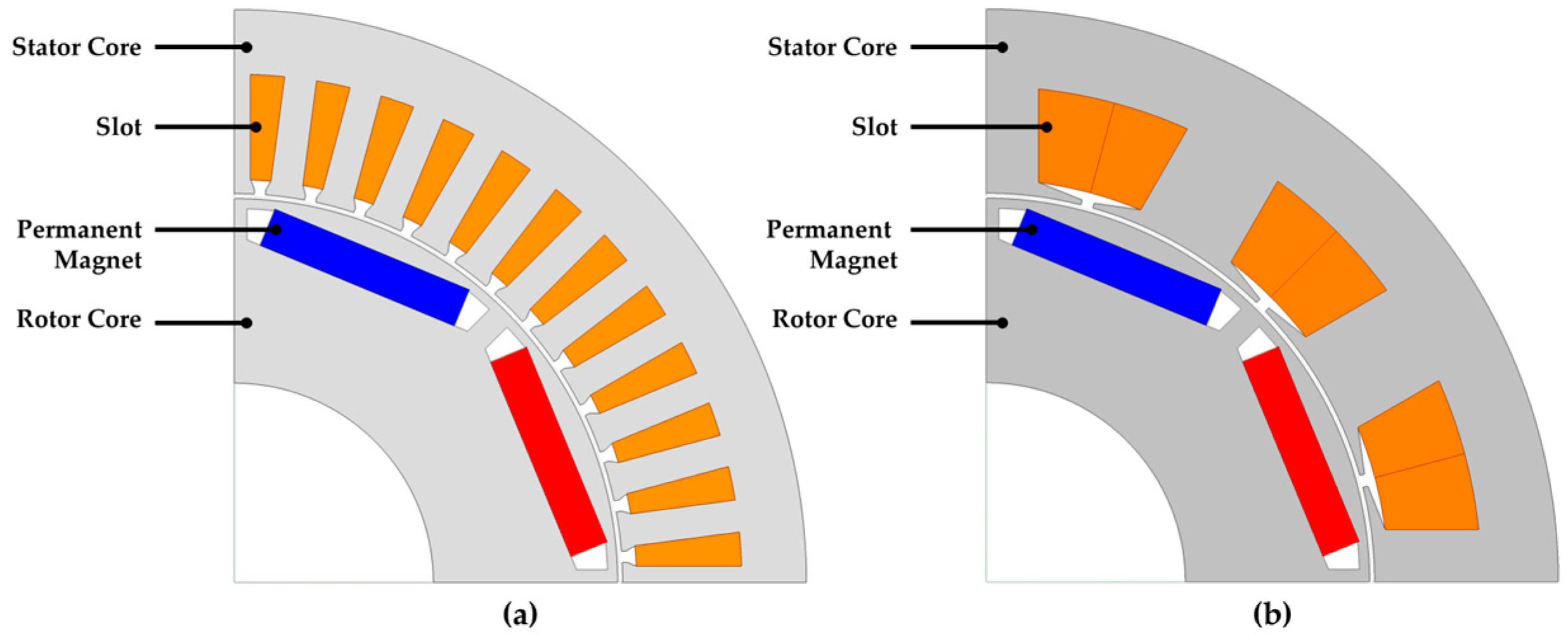
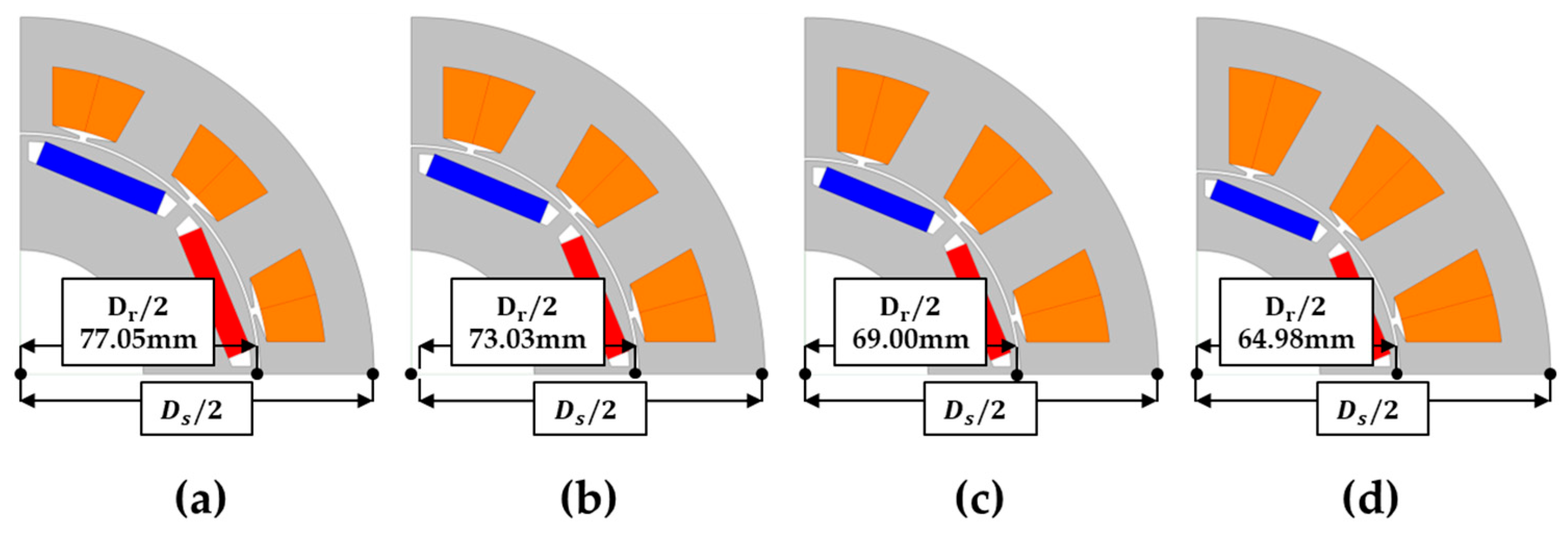
Figure 1 presents the baseline geometries of the DW and CW models. The baseline models were established under identical geometric constraints to isolate and analyze the influence of winding topology alone on the loss distribution and the resulting efficiency-map characteristics. The two models were designed with the same number of pole pairs
, while only the number of slots was varied so that the slots per pole per phase
, defined by (1), can represent distributed and concentrated winding configurations, respectively.
Here,
denotes the total number of slots and
denotes the number of phases. In this study, the DW model corresponds to a representative distributed-winding configuration with
, whereas the CW model corresponds to a representative non-overlapping concentrated-winding configuration with
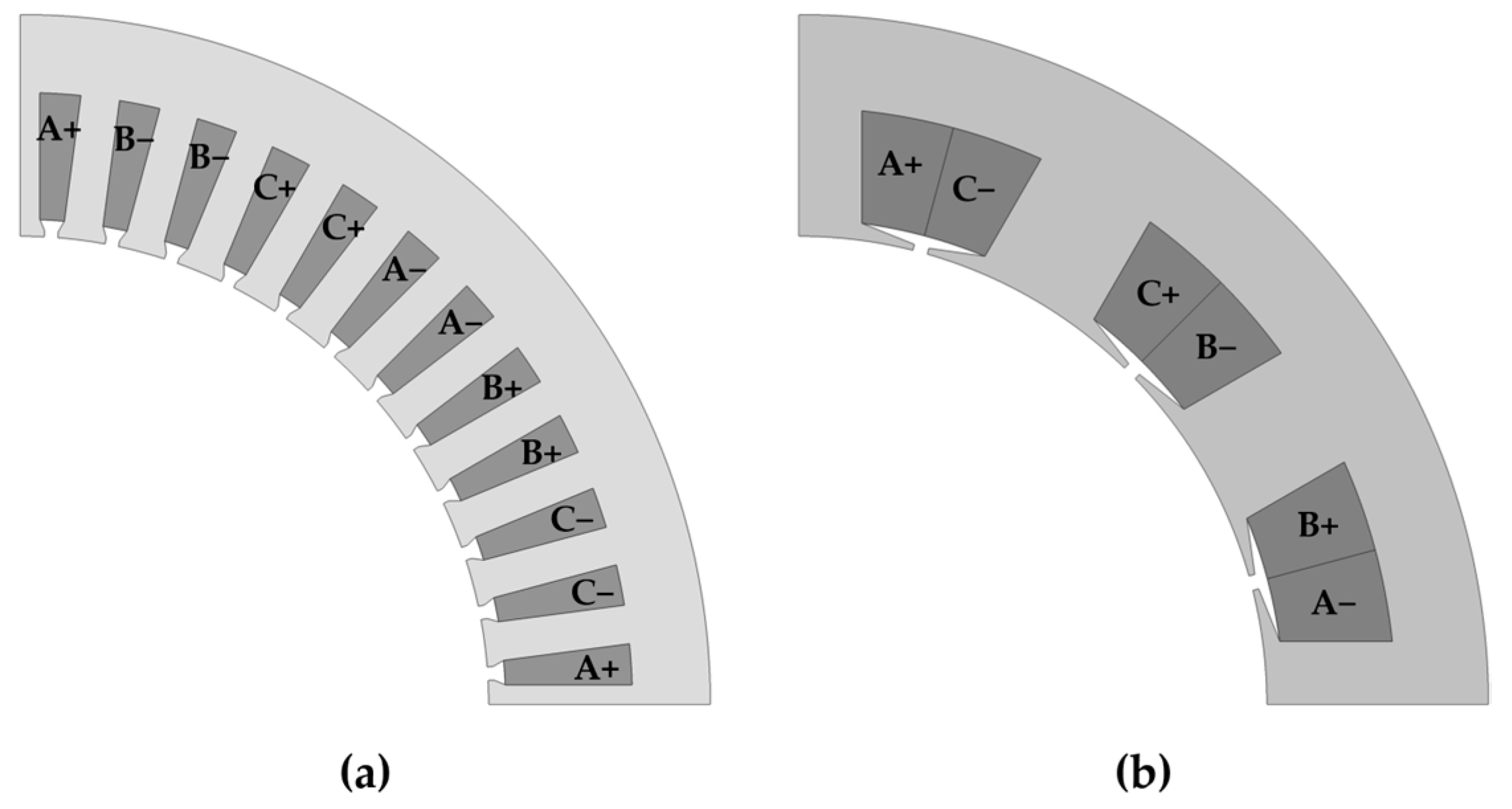
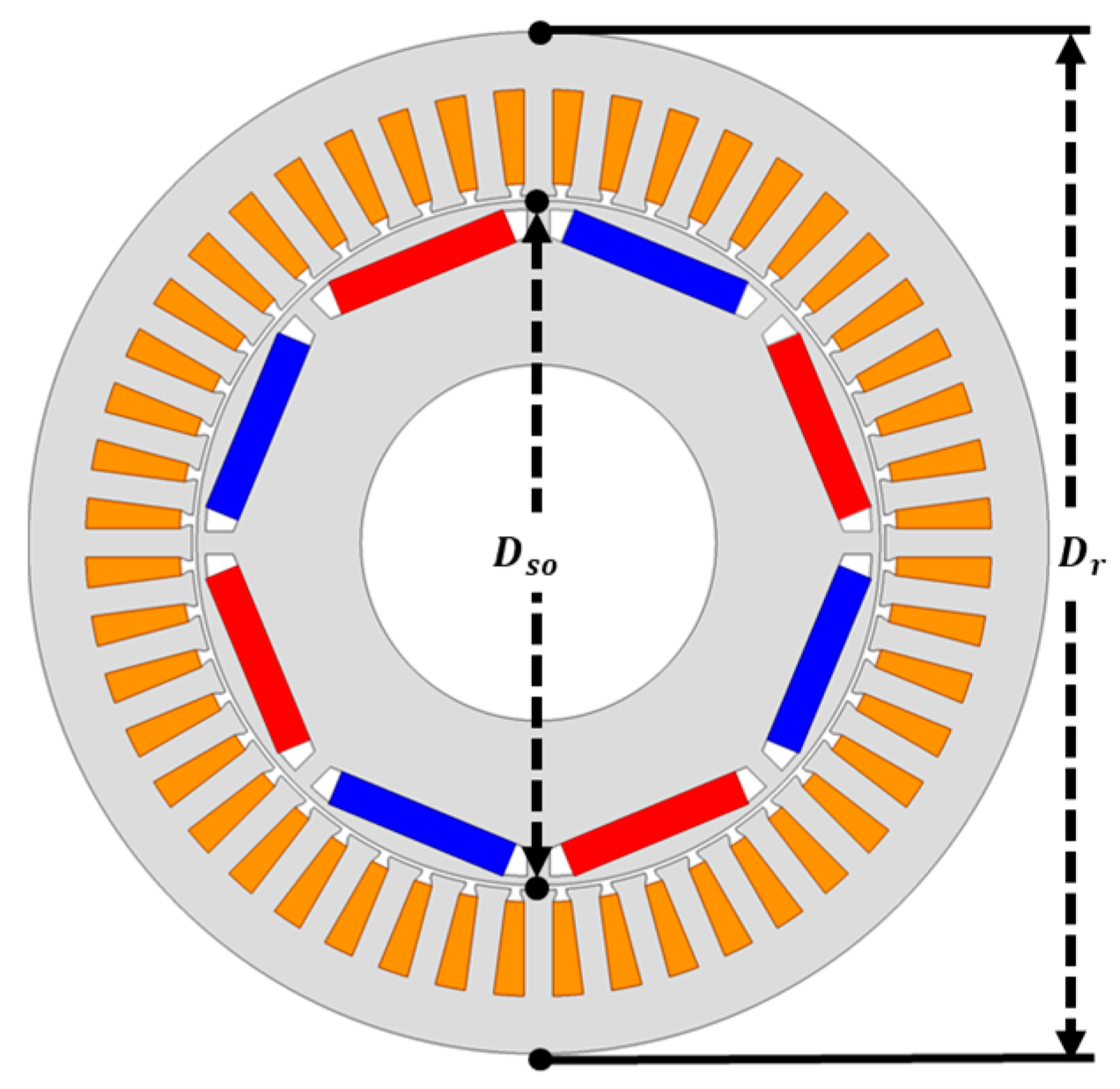
. In addition, the differences in winding layout and phase allocation are illustrated in
Figure 2. The air-gap length
was set to 1 mm considering manufacturing tolerances and potential eccentricity, and the rationale for selecting
is provided in (A1) of
Appendix A.1.
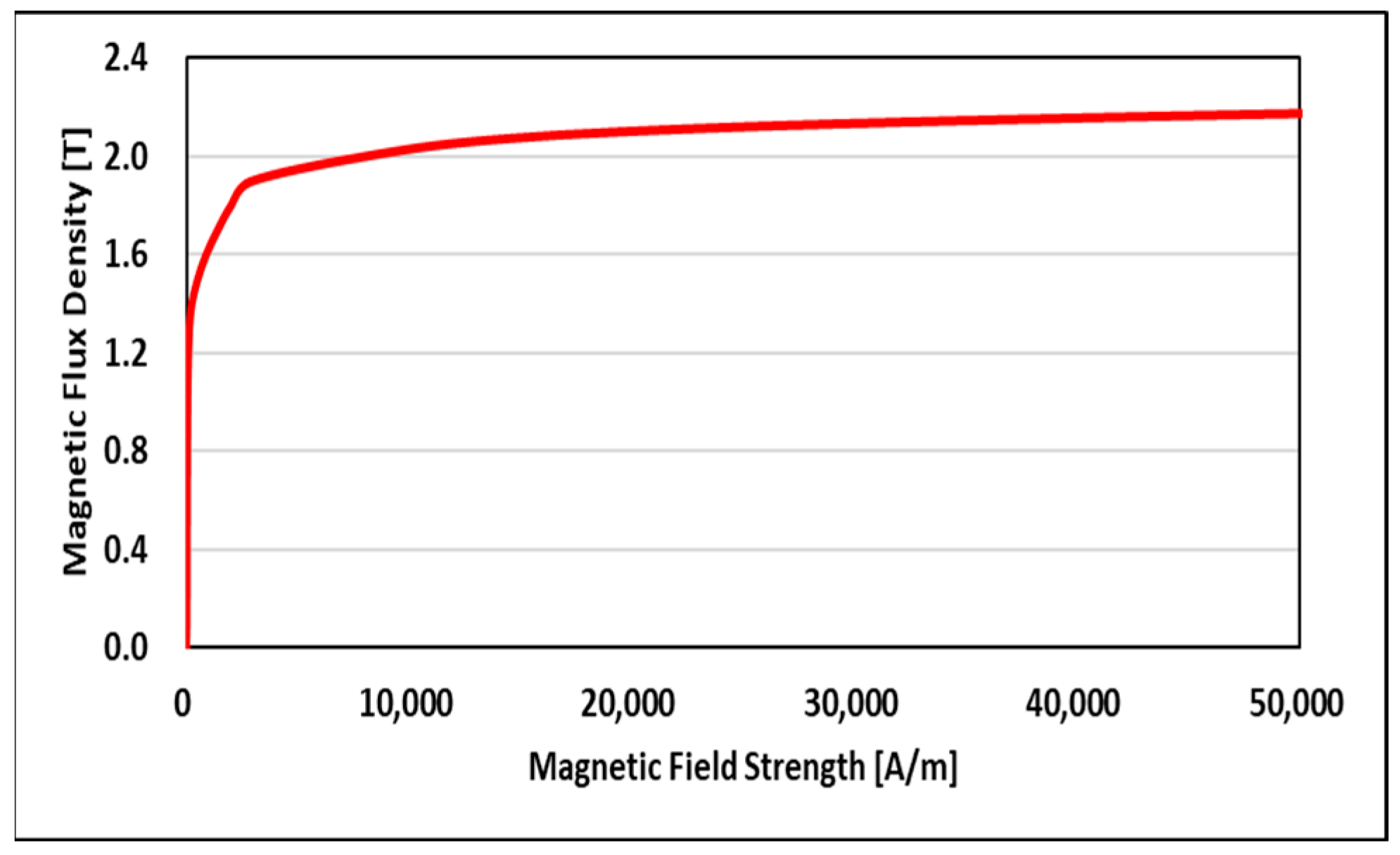
Table 1 summarizes the basic geometric specifications and applied materials for both models. The B–H curve of the 35PN230 steel used for the core is provided in
Appendix A.2, and
Table 2 summarizes the analysis conditions and reference performance.
2.2. Design Procedure
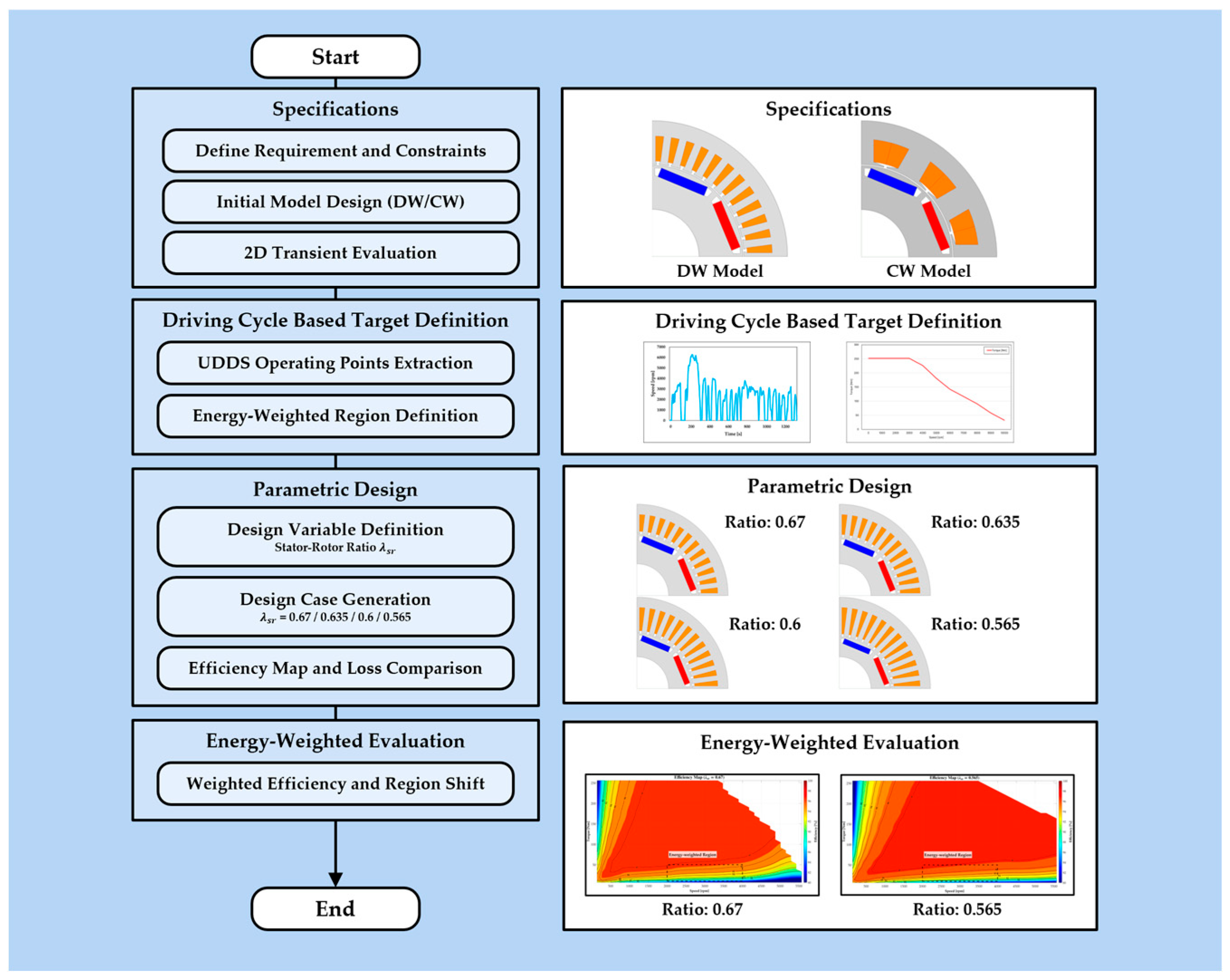
This section summarizes the analysis and evaluation methodology following the design procedure illustrated in
Figure 3. The overall workflow consists of: (i) establishing the baseline models; (ii) calculating efficiency and loss components via finite element analysis; (iii) clarifying the analysis scope and limitations; (iv) defining the UDDS-cycle-based energy-weighted operating region
; and (v) comparing the design cases and deriving dependent performance indicators. First, the DW and CW baseline models were established under identical geometric constraints, and their efficiency and loss components were obtained using ANSYS Maxwell-based 2D transient finite element analysis in Ansys Electronics Desktop (Maxwell), 2025 R2 (Ansys, Inc., Canonsburg, PA, USA).
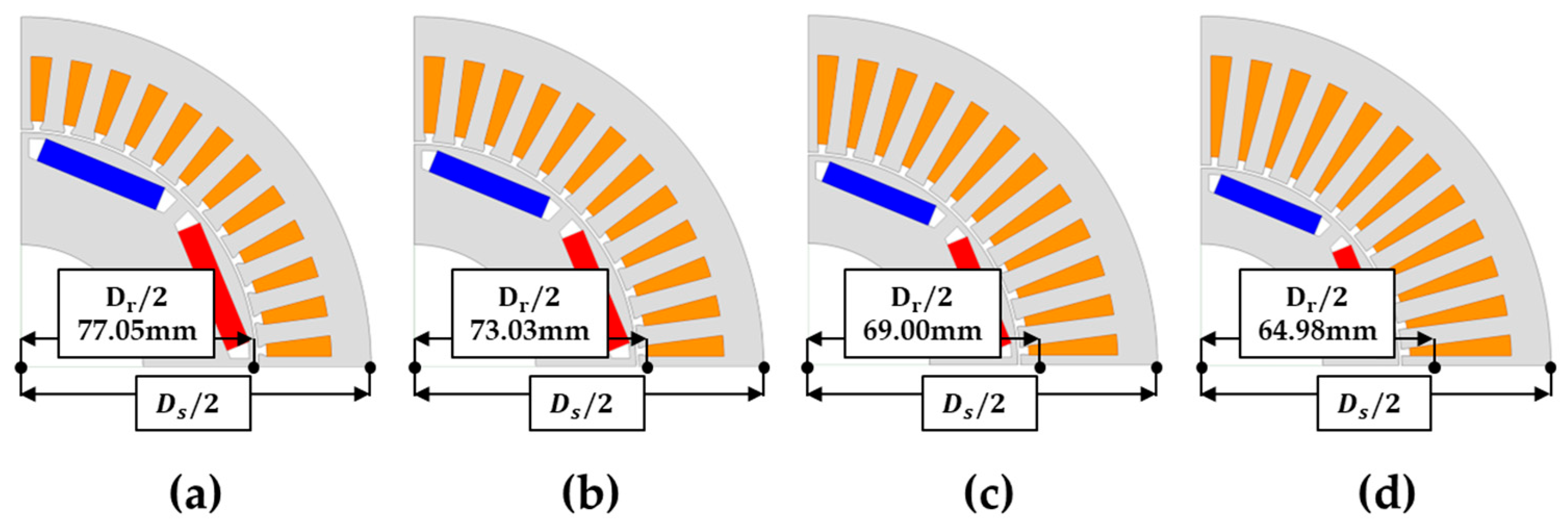
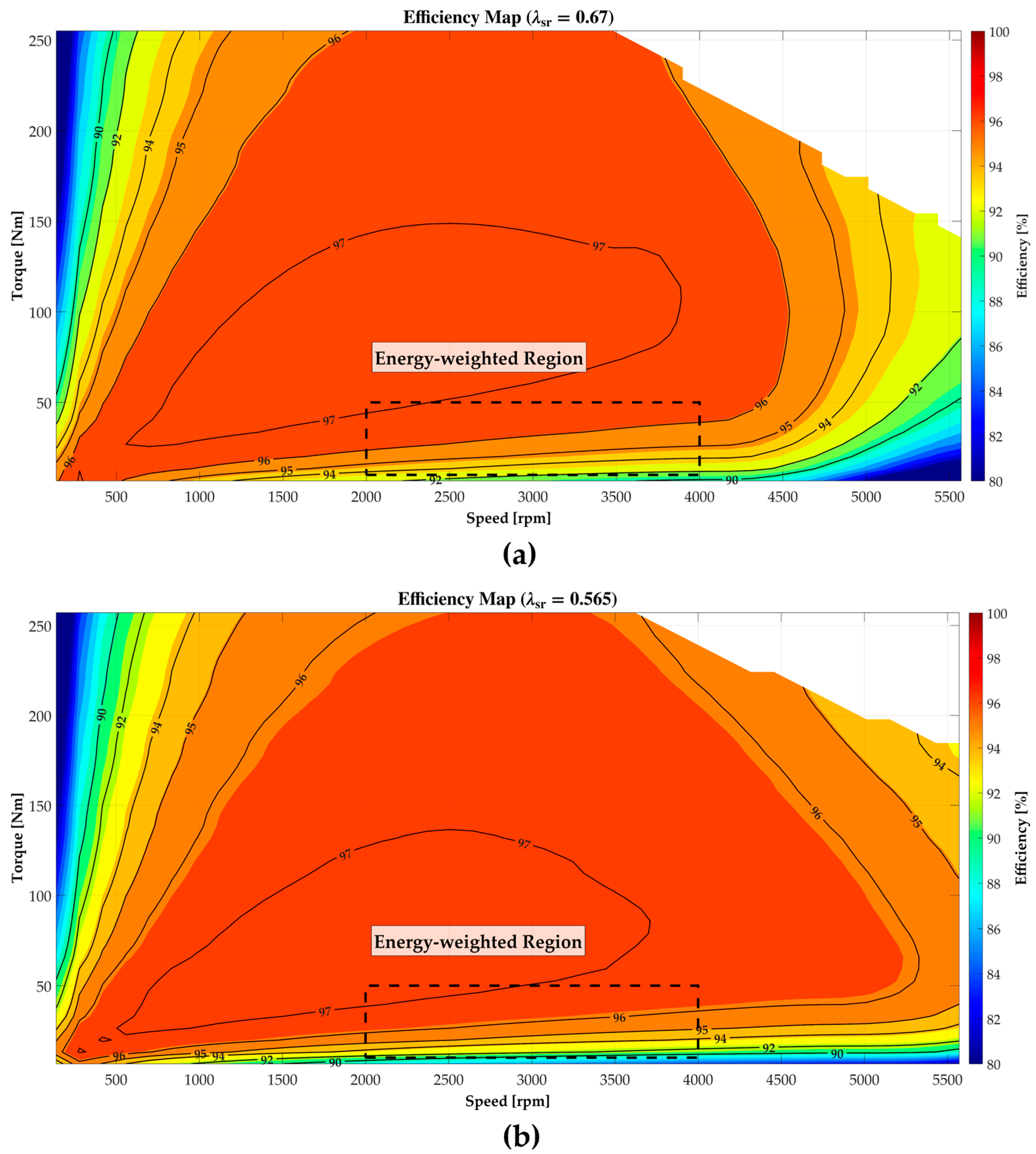
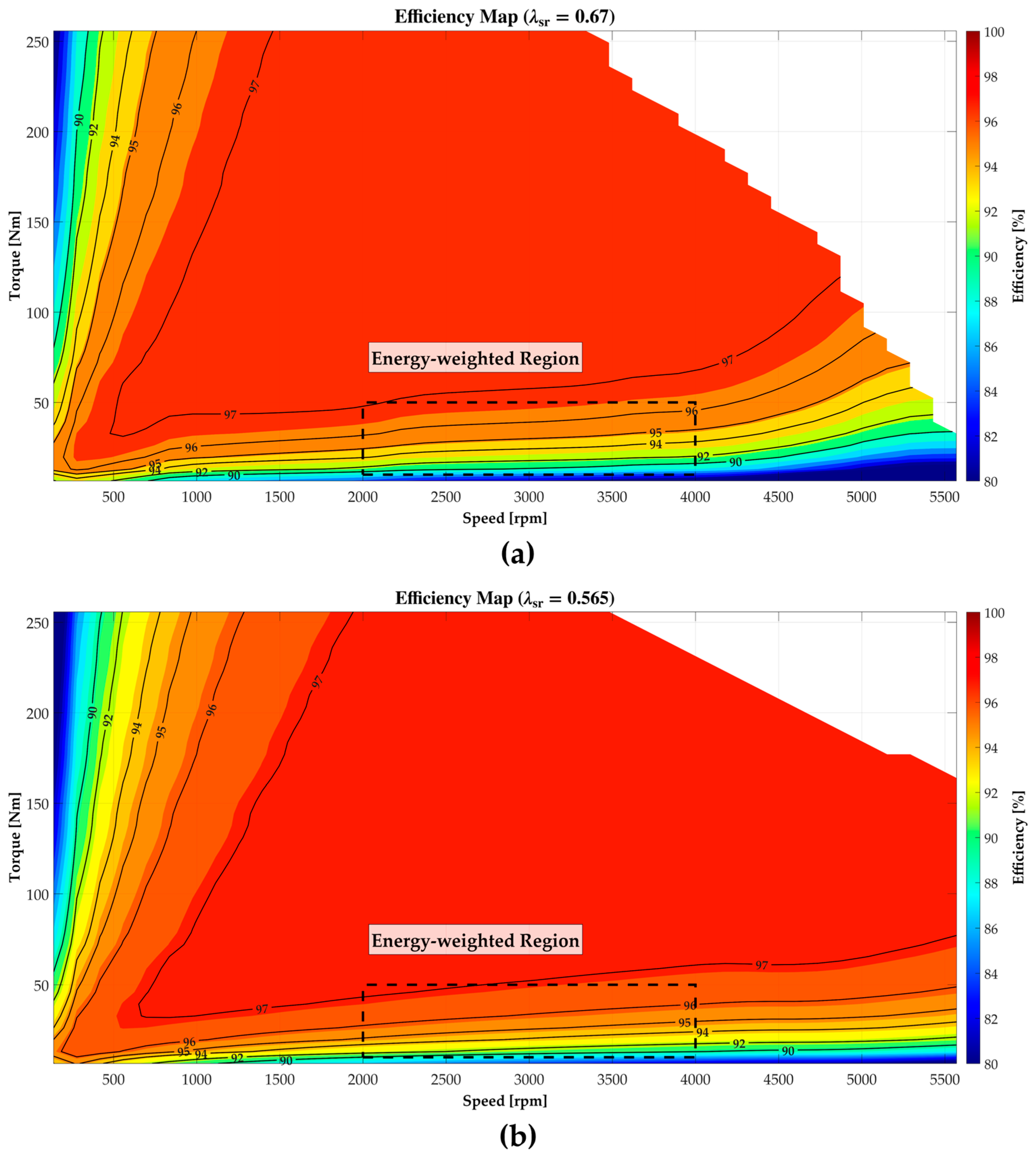
The efficiency map in this study was constructed based on the electromagnetic efficiency obtained from 2D transient FEA, and the considered loss components were limited to electromagnetic losses, i.e., copper loss and core loss. Mechanical losses and inverter losses were excluded from the evaluation because they can vary significantly depending on control conditions and operating environment, thereby introducing unnecessary uncertainty into the model-to-model comparison. Regarding meshing, the air-gap region and adjacent boundaries exhibit steep flux variations, making torque prediction relatively sensitive to mesh density. Therefore, a finer mesh was applied in these regions than in other parts of the model. A mesh-sensitivity study was performed at the reference operating point, confirming that key outputs, including average torque, were sufficiently converged with respect to the mesh settings. Next, speed–torque operating points were extracted from the UDDS driving cycle, and the region where cumulative energy consumption is concentrated was defined as the energy-weighted region . The stator-to-rotor diameter ratio was then selected as the design variable, and four design cases ( and ) were configured and compared under identical conditions. In addition, the loading ratio adjusted according to was treated as a dependent indicator, and its influence on the weighted-average efficiency and loss reduction within was quantitatively evaluated.
Meanwhile, because this study relies on cross-sectional 2D transient FEA, it cannot explicitly capture three-dimensional effects such as axial leakage flux, end-winding effects, three-dimensional thermal distribution and cooling conditions along the stack direction, high-frequency components introduced by inverter PWM, and manufacturing tolerances. These factors can affect both the absolute values and the detailed spatial shape of the efficiency map. Therefore, in this study, all analysis conditions were kept identical across models, and only the relative trends in loss distribution and efficiency distribution with respect to the design-variable variation were compared and evaluated.
2.3. Driving Cycle-Based Target Definition
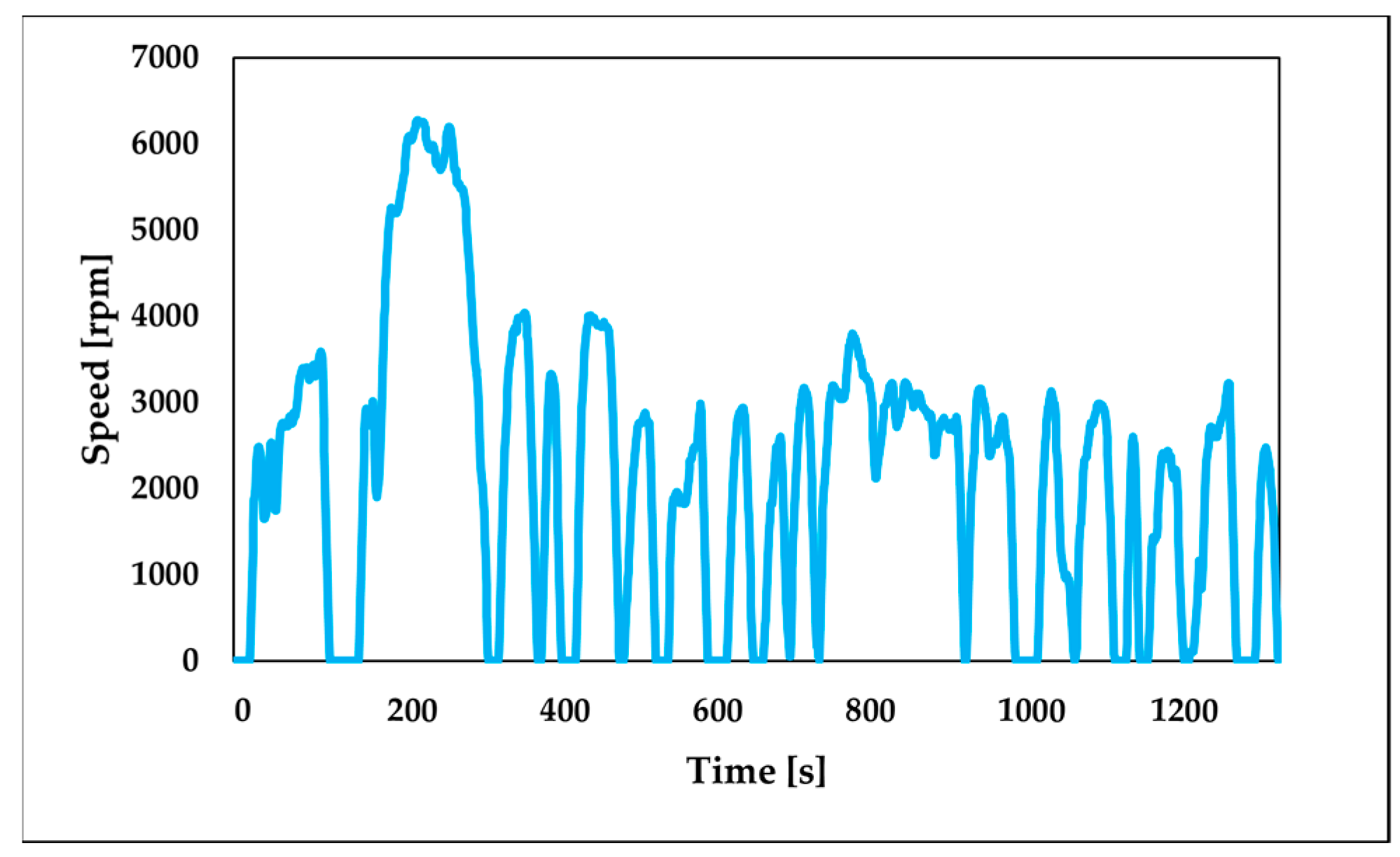
In this study, to define an energy-weighted operating region of the traction motor based on a real-vehicle driving cycle, the UDDS speed–time data in
Figure 4 and the vehicle parameters in
Table 3 were used to determine the motor operating point
and the motor mechanical output power
at each discrete time sample
. The UDDS speed data
(mph) were converted into the vehicle speed
(m/s) through unit conversion, as expressed in (2).
The motor angular speed
and rotational speed
were calculated from vehicle speed by applying the gear ratio
and the effective tire radius
, as given in (3).
The longitudinal tractive force demand
was modeled as the sum of rolling resistance, aerodynamic drag, and the inertial term. The vehicle acceleration
was obtained by numerically differentiating
, and
was defined as in (4).
The wheel torque
was defined as the product of the tractive force demand and the effective tire radius
, as given in (5). The motor torque
was then computed by accounting for the gear ratio and drivetrain efficiency
, as expressed in (6).
The motor mechanical output power
was defined as the product of the motor torque and angular speed, as given in (7).
Subsequently, the energy in the motoring region was accumulated and used to calculate energy weighting. With the sample time interval
, the total motoring energy
is given in (8) and was calculated as 5,399,354.79 J.
To align with the efficiency map, the
plane was discretized into a speed–torque grid, and
was accumulated in each grid cell. The speed interval was set to
and the torque interval to ΔT = 10 Nm, and the grid indices (i,j) of each sample were defined as in (9).
Finally, a
bin search was performed on the energy grid to define the region with the maximum accumulated energy as the energy-weighted region
, and the result is presented in (10). The accumulated energy in
was calculated as
J, and the energy share
was obtained as
using (11). Accordingly, it was confirmed that approximately
of the UDDS-cycle-based motoring energy is concentrated within
.
To generate the efficiency maps, the maximum achievable operating speed for each design case was calculated under the voltage constraint. As a result, the maximum speed in all design cases exceeded the upper speed limit of (4000 rpm). For the DW model, the maximum speeds for and are 5570 rpm, 6709 rpm, 8481 rpm, and 10,000 rpm, respectively. For the CW model, the maximum speeds in the same order are 7974 rpm, 9873 rpm, 10,000 rpm, and 10,000 rpm, respectively. Therefore, even when the voltage limit is considered, the maximum achievable speed sufficiently exceeds the upper speed bound of for all design cases, indicating that the efficiency and loss comparisons within are conducted under conditions where the influence of the maximum-speed constraint is limited.