


Abstract
In many unmanned aerial vehicle (UAV) applications, achieving stable flight despite actuator failures is crucial. Among the many existing fault-tolerant control (FTC) methods, adaptive control is a practical approach. In this article, we present experimental verification of a backstepping-based adaptive fault-tolerant controller previously proposed by the authors. As the first step of the experimental verification, we focus on the attitude-loop control of the quadrotor. We construct a quadrotor testbed integrating a self-developed flight controller. After parameter identification, we implement the adaptive fault-tolerant controller on the quadrotor. Finally, real-time experiments on attitude stabilization following actuator faults are conducted. As a result, we confirmed that the controller can be implemented and can stabilize the attitude even in the presence of multi-actuator faults.
1. Introduction
Unmanned aerial vehicles (UAVs), including quadrotors, have been widely adopted for applications such as logistics, agriculture, and infrastructure inspection. In these applications, UAVs are operated in uncertain environments where some kinds of faults can easily occur. Specifically, actuator faults, such as partial thrust loss or propeller damage, are critical issues for UAVs; minor actuator degradation can cause severe instability during flight. To achieve safe and reliable UAV operations, fault-tolerant control (FTC) methods are therefore crucial.
In previous studies, various fault-tolerant control methods have been proposed for quadrotors, for instance, gain-scheduled PID control [1], sliding mode control [2], randomized control [3], AI-based approaches [4,5], and so on (for more details, see, e.g., [6] and the references therein). In a broader sense, disturbance observer-based control [7,8,9], or active disturbance rejection control [10], can also be considered a fault-tolerant control method because it guarantees robustness against uncertainties caused by the faults. Recently, more advanced nonlinear control approaches, such as uniform passive FTC [11], incremental nonlinear dynamic inversion (INDI) [12] and nonlinear model predictive control (NMPC) [13,14], have also been applied. When applying such advanced control methods to real quadrotors, however, several problems remain, including the need for an accurate system model and the high computational burden.
Among the various existing FTC control methods, adaptive control is one of the most practical approaches. Since adaptive control can handle uncertainties in systems as unknown parameters, an accurate and detailed system model is not necessary. Moreover, the computational cost is relatively small compared to online optimization-based approaches, such as NMPC. To deal with actuator failures, for example, a fractional-order model-reference adaptive controller (FO-MRAC) based on the linearized quadrotor model has been proposed [15]. Since the quadrotor model is originally nonlinear, it is natural to apply nonlinear adaptive control methods to the FTC problem. In [16,17], the adaptive backstepping method, a useful algorithm for nonlinear adaptive control, has also been applied. Based on Lyapunov stability analysis, the proposed controller ensures stability even in the presence of actuator faults. The effectiveness is confirmed through both simulations and experiments.
To extend the backstepping-based FTC of [16,17] to handle a broader range of actuator faults, two issues need to be addressed. The first is how the quadrotor’s attitude is represented. Since the controller is designed using Euler angles, singularity issues may arise. One solution to this problem is to use unit quaternions instead of Euler angles [18]. The second issue is with the actuator failure model. The adaptive FTC method only considers failures that reduce rotation speed. Therefore, it cannot handle failures that do not affect rotation speed, such as propeller damage. One approach to handling general actuator failures is to use a comprehensive system model that incorporates the propeller or motor [19,20]. However, this complicates system identification and controller design.
Based on the background discussed above, an extended adaptive backstepping-based FTC method has been proposed in [21]. The authors employed unit-quaternion attitude representation and proposed a novel actuator-failure model that describes the failures as changes in thrust and torque coefficients (a similar approach is also proposed in [22]). The key idea of the proposed FTC controller is to estimate these coefficients by adaptive control. The effectiveness of the proposed controller is confirmed through numerical simulations.
The objective of this paper is to validate the effectiveness of the controller proposed in [21] through experiments on a quadrotor testbed. Specifically, as the first step of complete flight validation, we address the following points:
- We develop a quadrotor testbed that integrates a self-developed flight controller, and perform system identification experiments. Note that the experimental validation in [17] does not provide detailed specifications or parameters for the testbed.
- We implement the controller in the developed testbed and perform real-time experiments of attitude-loop control. Through experiments comparing it with a PID-type controller, we confirm that the controller is implementable and can stabilize the quadrotor’s attitude under actuator faults. We also demonstrate that the proposed controller can stabilize the quadrotor’s attitude under multi-actuator failures.
Complete flight validation, including position-loop control, is a future consideration.
The rest of the paper is organized as follows: In Section 2, we introduce the mathematical model of the quadrotor and the actuator faults. Section 3 introduces the adaptive fault-tolerant controller proposed in [21]. We then formulate the problem considered in this article in Section 4. Section 5 is devoted to the development and system identification of a quadrotor testbed. In Section 6, we implement the adaptive fault-tolerant controller on the developed quadrotor and confirm its effectiveness through real-time experiments. Finally, Section 7 provides a brief conclusion.
Notation
Let and be the set of real numbers and the n-dimensional real vector space, respectively. The identity matrix and the zero matrix are denoted by and , respectively.
2. Mathematical Modelling
2.1. Representation of Rigid-Body Attitude [23,24,25]
A rigid-body attitude can be represented as an element of the SO(3) defined as follows:
A unit quaternion q defined by
is also used to represent the attitude. For a given unit quaternion , the corresponding rotation matrix is given by
where is a skew-symmetric matrix defined by
Since in (4), note that q and correspond to the same rotation matrix R; i.e., holds.
2.2. Dynamics of a Quadcopter
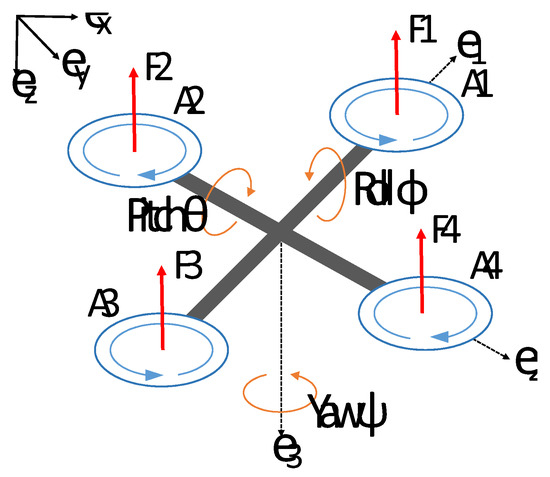
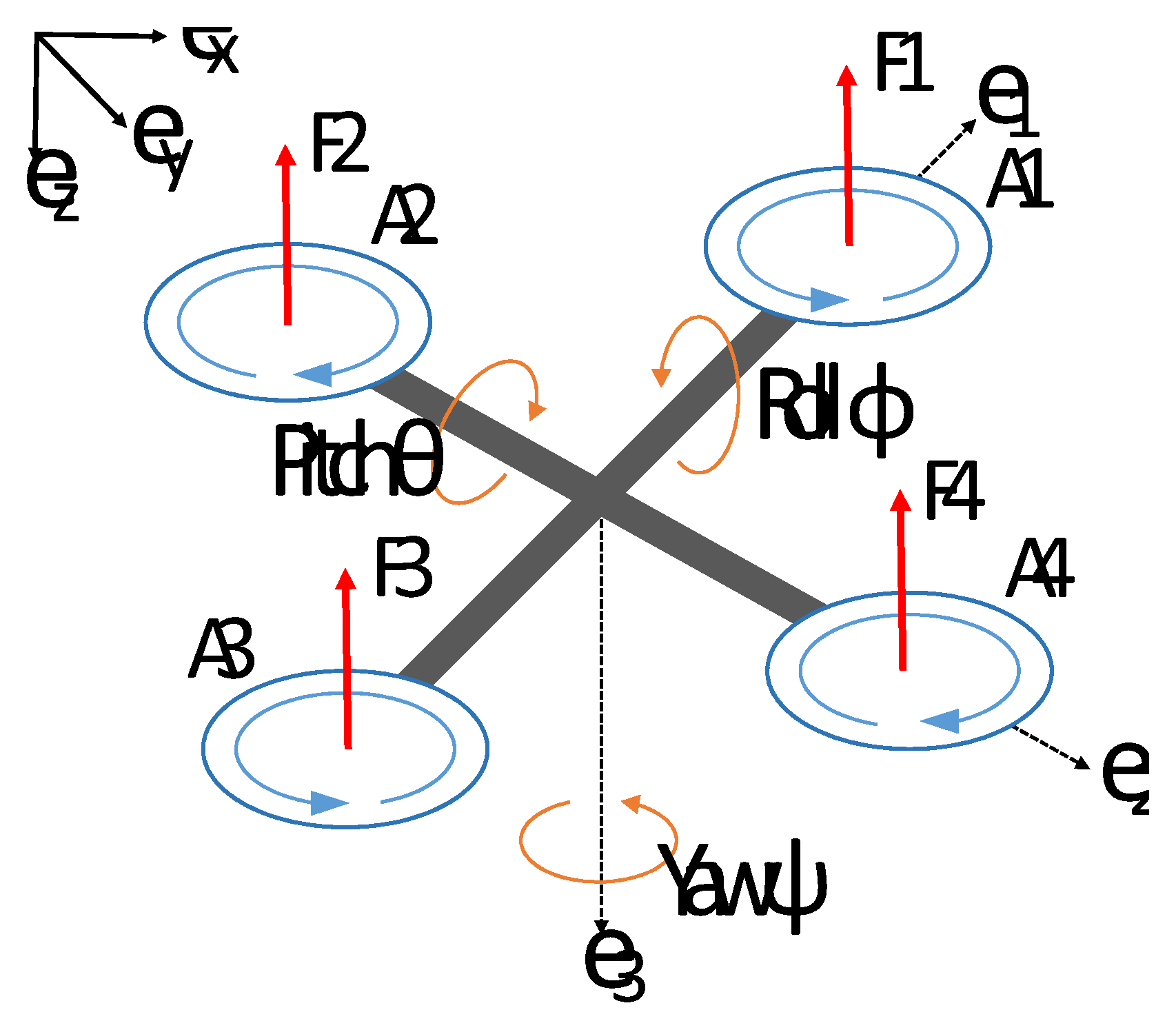
We consider a standard quadcopter dynamic model for attitude and vertical motion, shown in Figure 1. Let denote the vertical position (altitude) of the quadcopter in the inertial frame, and the vertical velocity. The attitude is represented by a rotation matrix that transforms vectors from the body-fixed frame to the inertial frame. The body angular velocity is , expressed in the body-fixed frame.
Figure 1.
Quadrotor UAV.
Then, the dynamics of the quadcopter are given by
where g is the gravitational acceleration, m is the mass of the quadcopter, and is the moment of the inertia matrix. Moreover, are roll–pitch–yaw angles (ZYX-Euler angles) corresponding to the unit quaternion q and the rotation matrix . For the transformation among the unit quaternion q, the rotation matrix R, and the roll–pitch–yaw angles , see, e.g., [24,25].
The control inputs for system (5)–(8) are the total thrust U and the torque . According to a similar discussion in [26], (6) and (7) are transformed into the following unit quaternion representations, respectively:
Remark 1.
In previous works [16,17], the dynamics of the quadrotor are represented using Euler angles. In this paper, we employ the unit quaternion representation to avoid the singularity of Euler angles.
2.3. Actuator Model and the Definition of Faults [21]
As shown in Figure 1, the quadcopter has four actuators . Each actuator consists of a propeller, a motor, and an amplifier circuit that drives the motor. Let be the rotation speed of the actuator and let . Then, the control inputs are represented as the function of as follows [23]:
where is the thrust coefficient relating rotor speed to thrust, is the torque (drag) coefficient, and ℓ is the distance from the vehicle’s center of mass to each rotor axis. The matrix M encodes how the four rotor forces combine to produce total thrust and torques about the body axes. Based on actuator model (11), the authors of [16,17] introduced the following model of actuator faults:
where is the actual rotation speed of actuator and is an unknown constant. The actuator faults here are decreases in actuator rotation speed caused by changes in from 1 to other constant values at an unknown time. However, real faults can occur independently of the loss of rotation speed—for example, damage to propellers. Moreover, such faults can affect thrust and torque differently.
In [21], the authors proposed the following generalized model that expresses actuator faults as changes in the thrust coefficient and torque coefficient in (11) rather than in actuator rotation speeds :
where and are actual values of the constants, and and are unknown constants. Similar to the fault model (11), the actuator faults here are changes in and from 1 to other constant values at an unknown time.
Remark 2.
We then introduce the following unknown parameters and to represent the degree of actuator failures:
2.4. Overall Control System
In this paper, we consider the quadrotor dynamics (5), (8), (9) and (10), and the actuator model (15). Let be the state variable defined by
Then, the overall control system containing actuator faults is given by
where the mappings , and are defined as follows:
The fault-tolerant control for system (19) and (20) considered in [16,17,21] aims to address actuator faults by designing the control input such that the following desired equilibrium is asymptotically stable:
where is the desired altitude.
Remark 3.
As discussed in Section 2.1, there exist two unit quaternions q and that correspond to a rotation matrix R (i.e., satisfying (3)). This is known as the double-covering property and causes the unwinding phenomenon [27], which leads to undesirable transitions or destabilization of the attitude in the global stabilization problem. In fact, the unit quaternions corresponding to are and . In this article, for the sake of the simplicity of the discussion, we focus solely on the semi-global asymptotic stabilization of the desired attitude .
3. Backstepping-Based Adaptive Fault-Tolerant Controller [21]
In this section, we briefly introduce the adaptive fault-tolerant controller for system (19) and (20) proposed in [21].
Before considering actuator faults, we first design a nominal stabilizing controller for (19) and (20). Here, we assume no actuator failures occur, i.e., in (20). In this case, we can construct the following nominal stabilizing state feedback controller:
where , , and are positive constant parameters.
To deal with actuator faults, we extend the nominal controller (25) to an adaptive fault-tolerant controller. Let and be estimates of and , respectively. Moreover, we define estimation errors as follows:
Then, we can construct the following adaptive fault-tolerant controller:
where and are adaptation gains. Furthermore, the projection operators and restrict the parameter estimates and to the compact set ; these relations are also represented as follows (see, e.g., [28]):
where and are defined as follows:
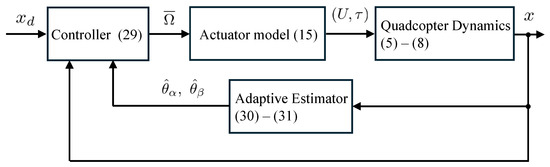
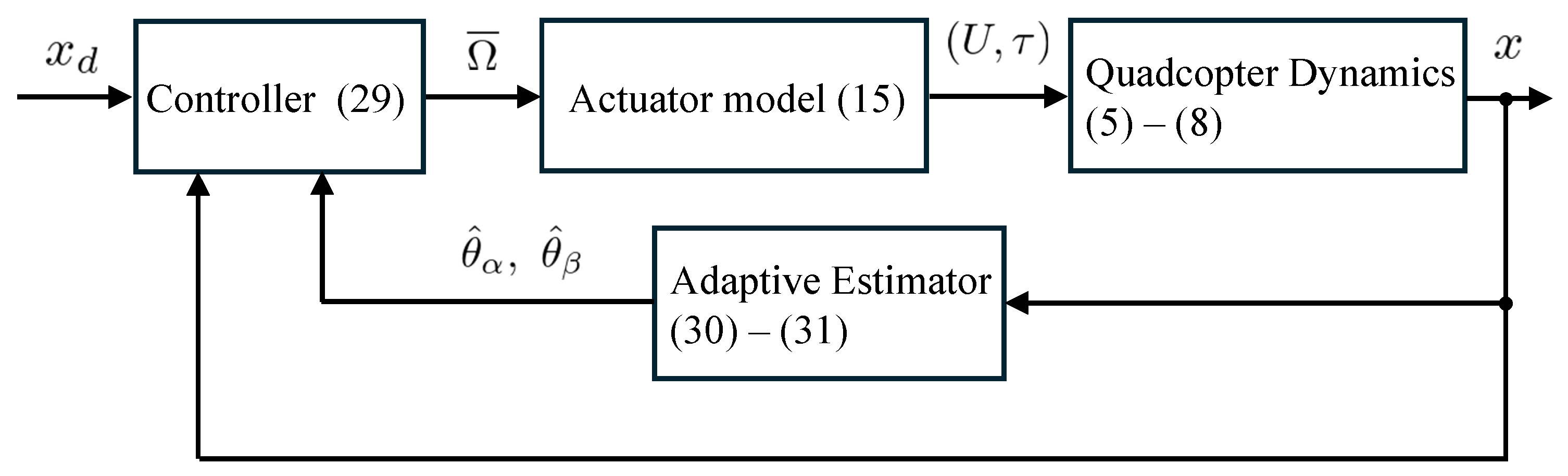
The overall structure of the proposed controller is summarized in Figure 2.
Figure 2.
Structure of the proposed controller.
Remark 4.
Because the proposed FTC method is based on adaptive control, which estimates constant parameters online, it cannot treat time-varying failures. To address this issue, combining the proposed method with disturbance-rejection methods seems effective.
Remark 5.
Remark 6.
As noted in Remark 3, the controllers (25) and (28)–(30) achieve semi-global asymptotic stabilization of the attitude. We note that these controllers can be extended to achieve global attitude stabilization by introducing quaternion-based switching, as also shown in [21,26]. For global asymptotic stabilization by discontinuous state feedback controllers (including the above quaternion switching), we refer to [29].
4. Problem Formulation
The objective of this work is to confirm the effectiveness of the controller (28)–(30) through the development of a quadrotor testbed and real-time experiment on the testbed. In this paper, as the first step, we focus only on the attitude-loop control of the quadrotor. This is because attitude recovery following actuator faults is more crucial than precise altitude control. Experimental verification of the overall system, including the altitude-loop control, remains as future work.
5. Development of a Quadrotor Testbed
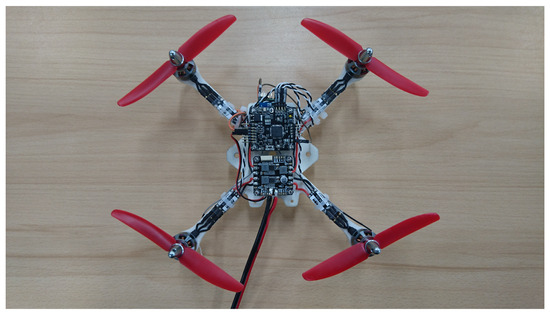
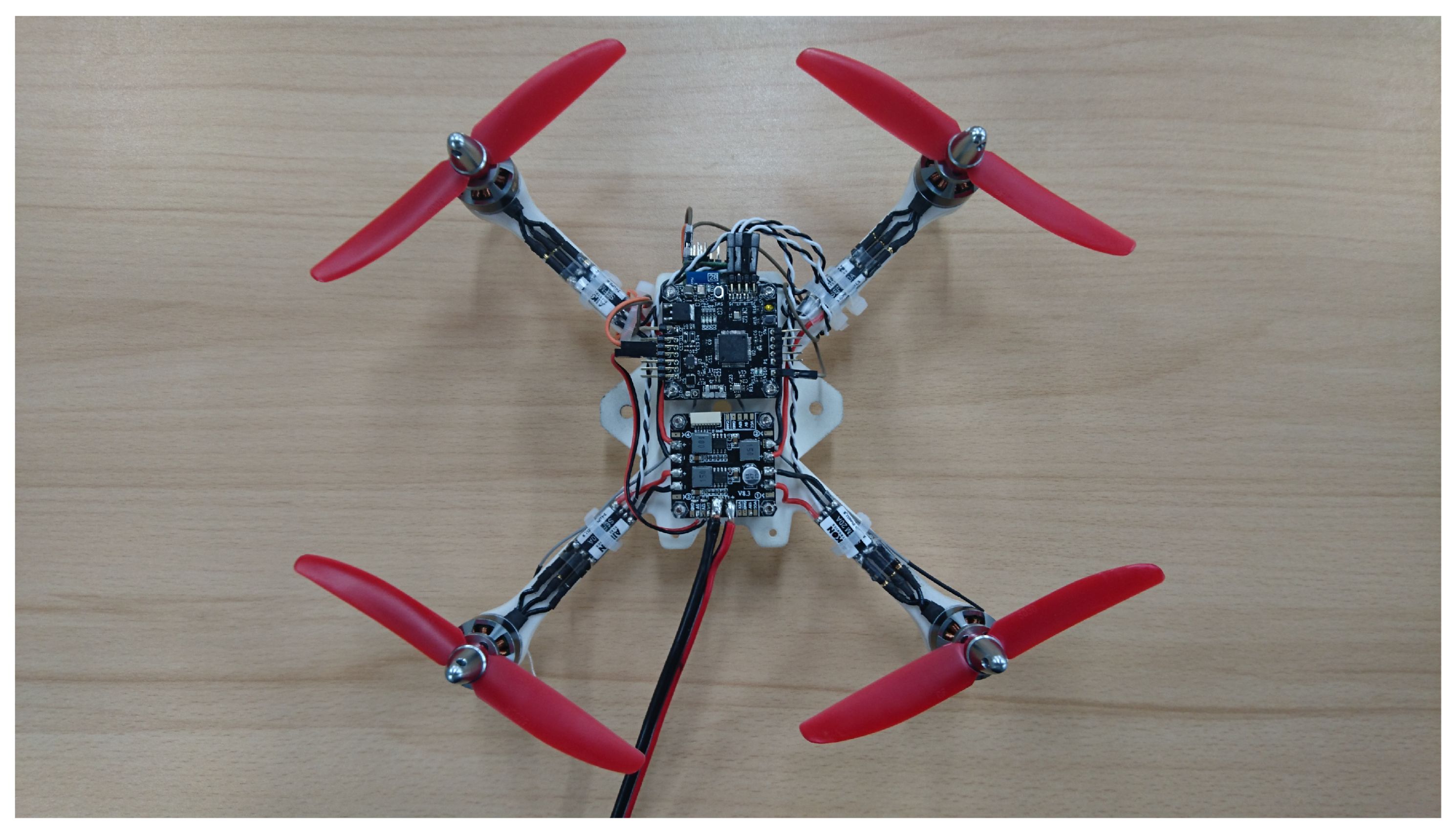
To verify the effectiveness of the adaptive fault-tolerant controller (28)–(30), we developed the quadrotor testbed shown in Figure 3. The physical parameters of the quadrotor are summarized in Table 1. The rotational inertia was identified based on the bifilar suspension experiments [30]. The details of the parameter identification of and will be explained in Section 5.2.
Figure 3.
Appearance of the Developed Quadrotor testbed.
Table 1.
Physical parameters.
5.1. System Configuration
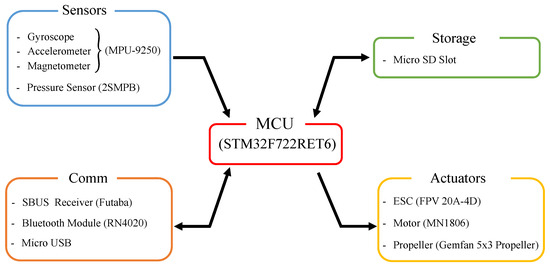
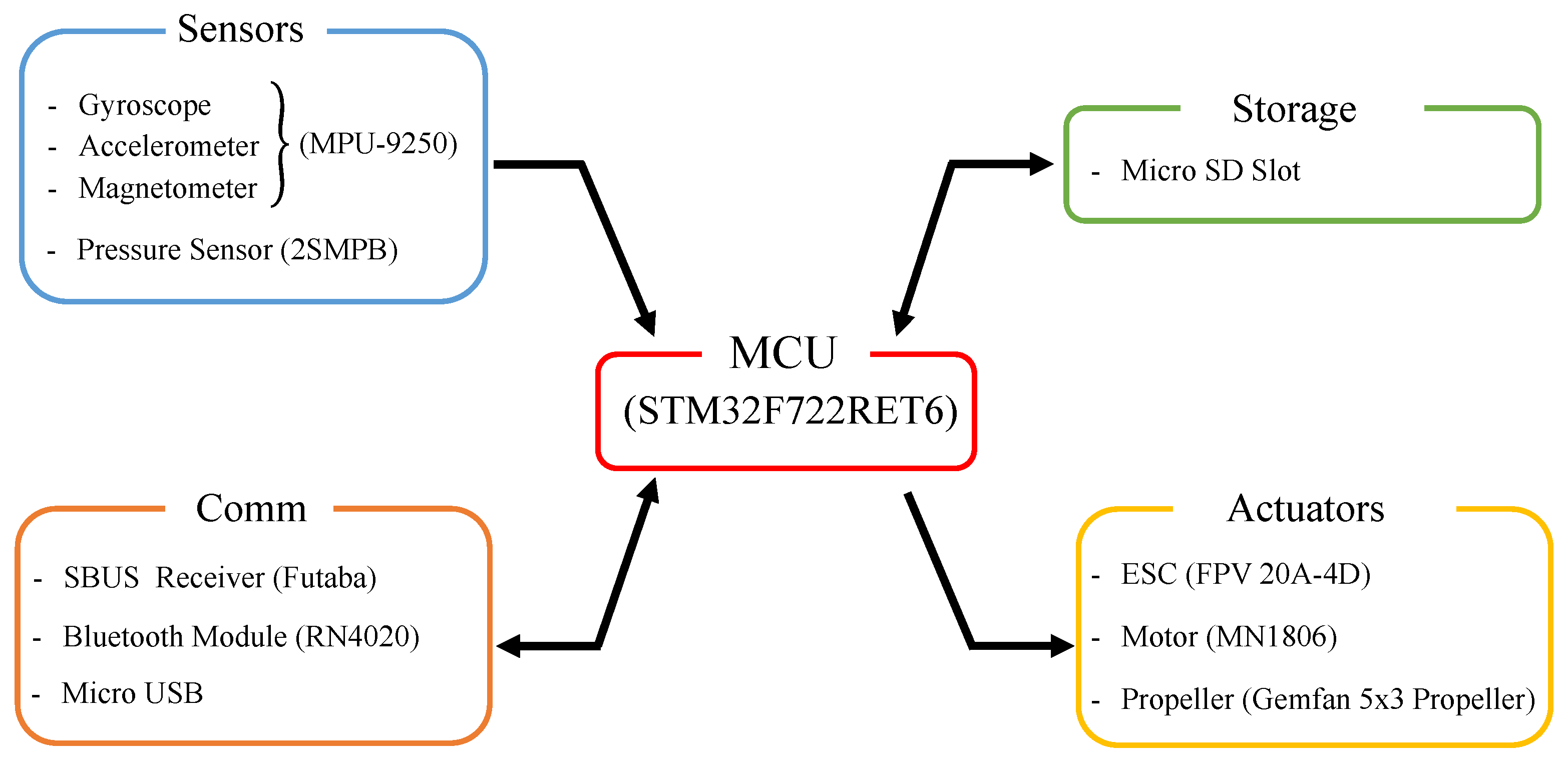
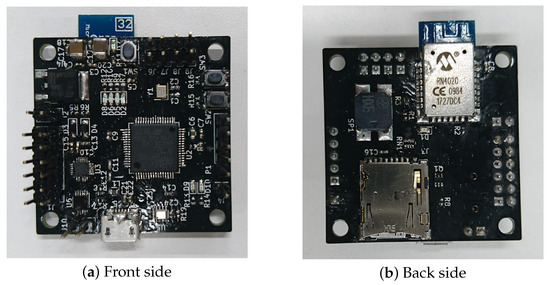
The configuration of the developed quadrotor is summarized in Figure 4. To implement the proposed controller (28)–(30), we employ STM32F722RET6 as the microcontroller unit (MCU). The angular velocity of the quadrotor is measured through the sensor module (MPU-9250). Figure 5 shows the self-developed flight controller board integrating the MCU and the sensor module.
Figure 4.
System configuration of the quadrotor.
Figure 5.
Developed flight controller board.
We note that all computations for the proposed controller are performed on this flight controller. We implemented the proposed controller using the C++ language and the TrueStudio and Cube MX development platforms. The calculation flow on the flight controller is summarized as follows:
- Estimate the attitude q of the quadrotor based on the measured and the Madgwick filter [31];
- Convert into the corresponding pulse width modulation (PWM) signals and send them to the electric speed controllers (ESCs) for the actuators.
Details on item 3 will be given in Section 5.2.
5.2. Parameter Identification
In this subsection, we discuss the parameter identification of the quadrotor testbed. To implement the proposed controller in the flight controller, we need to identify
- The relationship between and torque/thrust (i.e., the parameters and in (11));
- The relationship between and the corresponding PWM signal to the ESC.
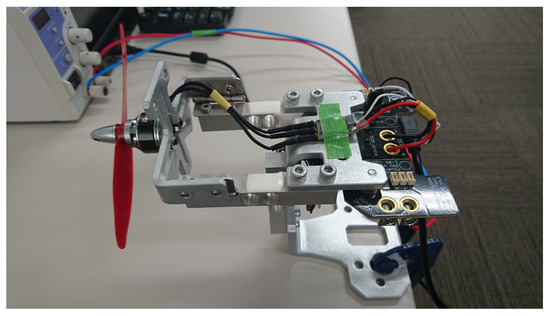
We perform the identification experiment using the RCbenchmark 1580 thrust stand (Tyto Robotics, Gatineau, QC, Canada), as shown in Figure 6.
Figure 6.
The thrust stand (RCbenchmark 1580).
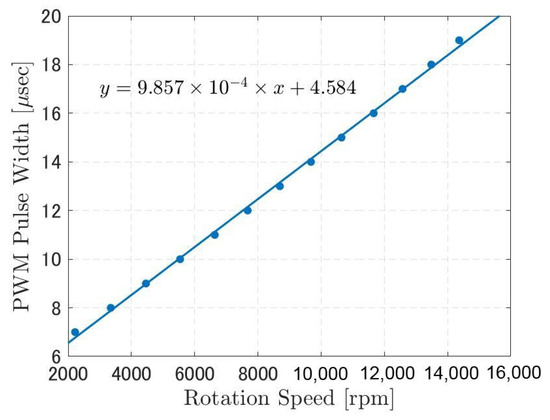
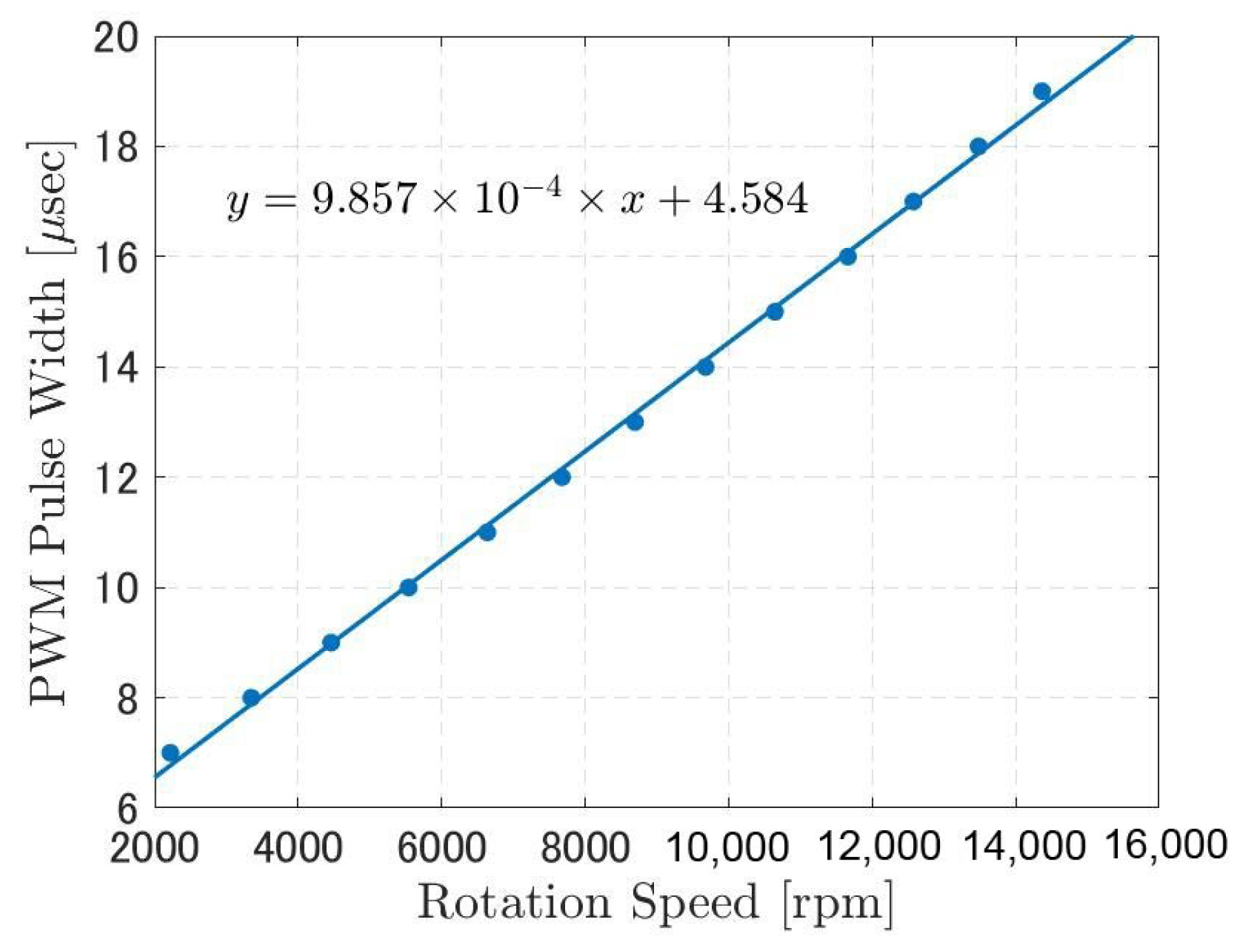
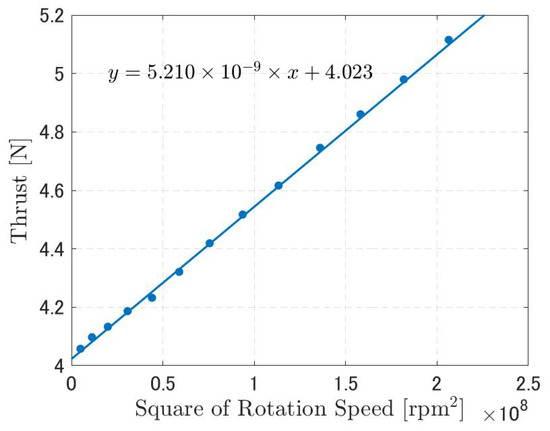
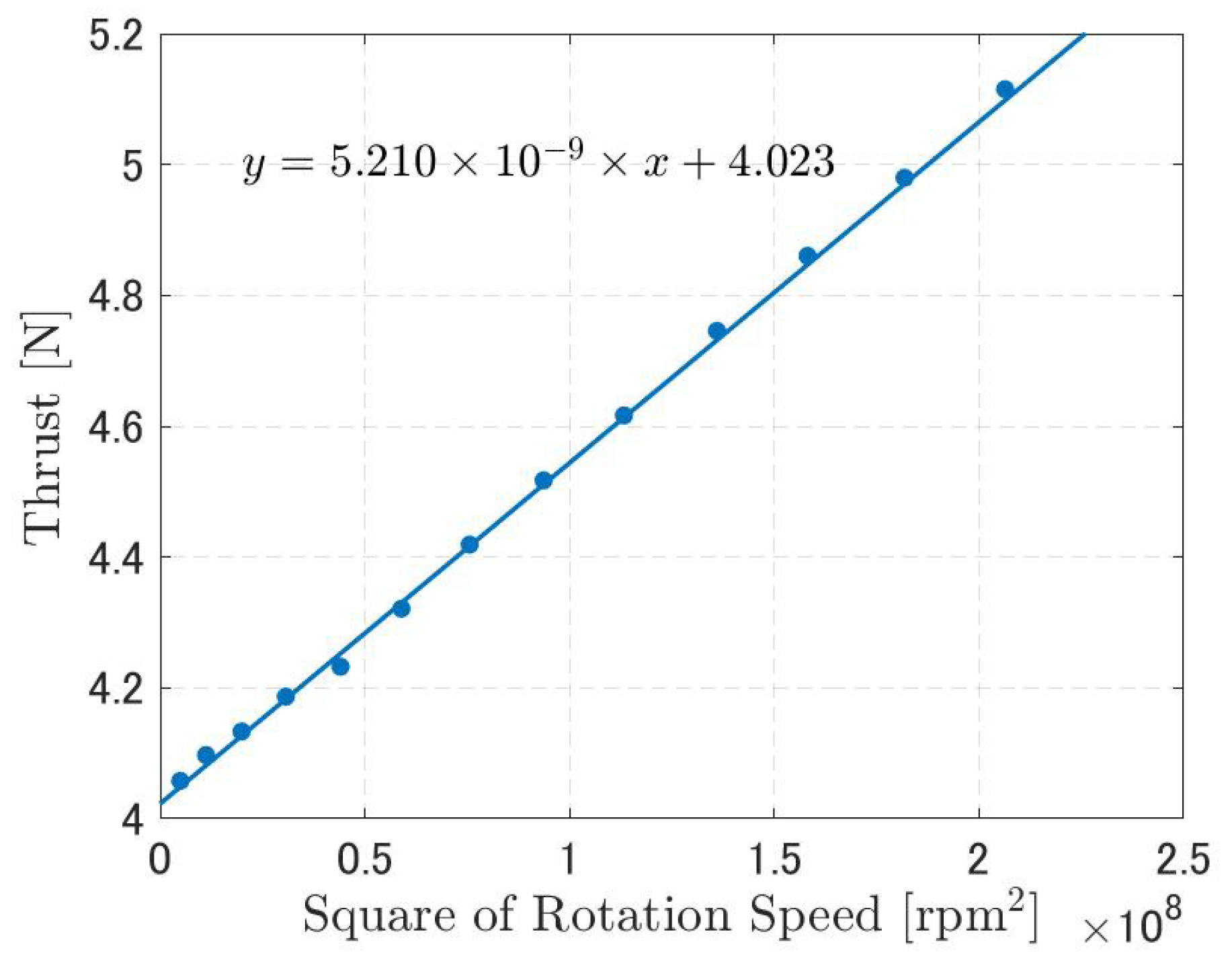
The experimental method involves measuring the rotation speed, thrust, and torque of the actuator by varying the pulse width of the PWM signal input from 7 [μs] to 19 [μs] in 1 [μs] increments.
Figure 7.
The relationship between rotation speed and PWM pulse width.
Figure 8.
The relationship between the square of rotation speed and thrust.
Figure 9.
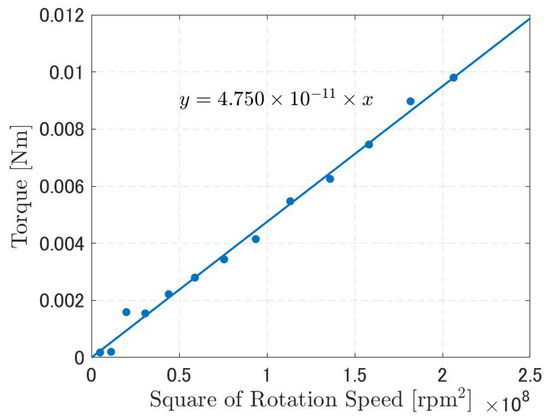
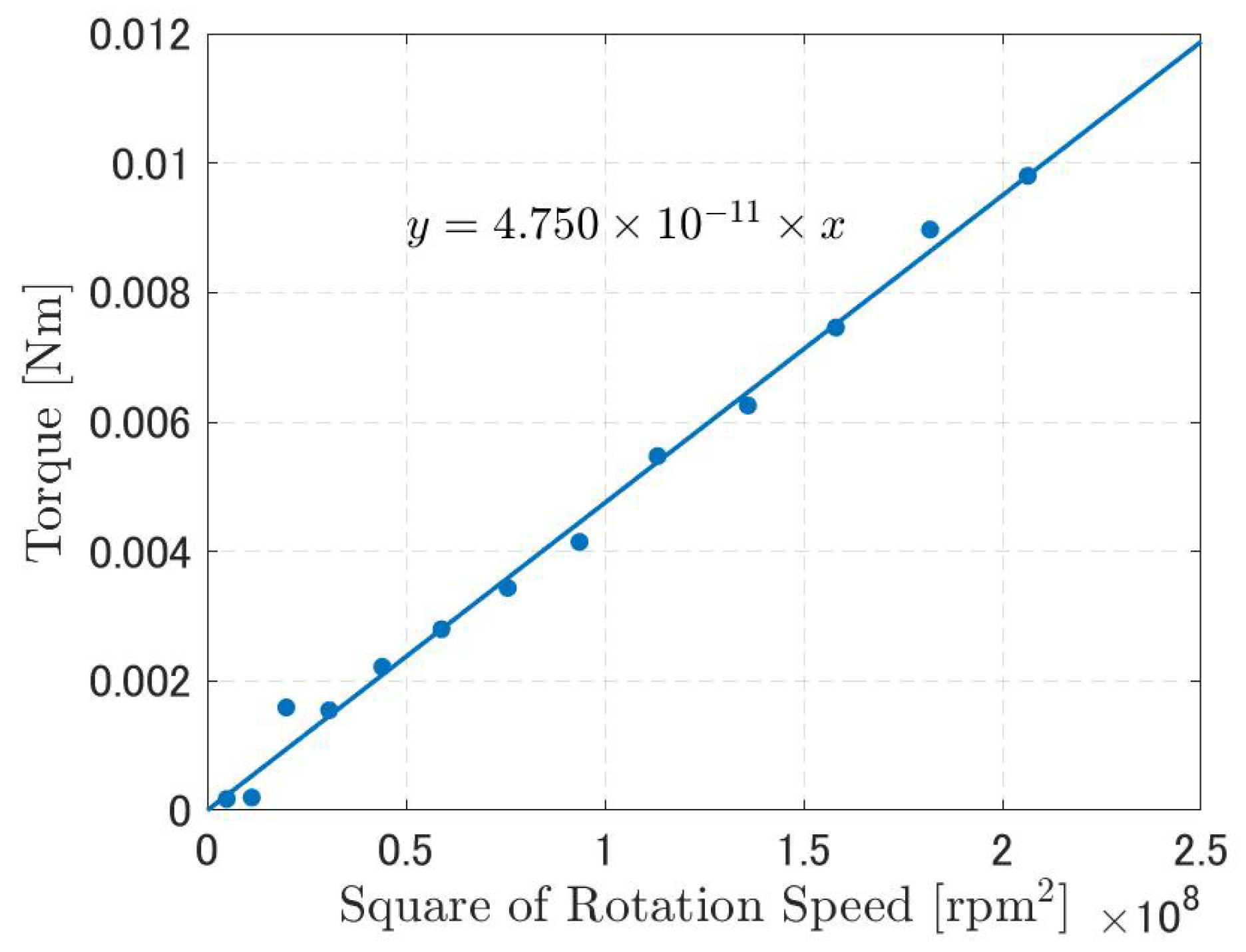
The relationship between the square of rotation speed and torque.
Figure 7 shows the relationship between the rotation speed and the PWM pulse width. According to the approximation line of the figure, the pulse width [μs], which corresponds to the rotation speed [rpm], is given by
Figure 8 and Figure 9 illustrate the relationship between the square of the rotation speed and thrust/torque. Based on the slopes of the approximate lines in Figure 8 and Figure 9, we can obtain and , respectively.
6. Experimental Verification
6.1. Experimental Conditions
In this section, we implement the adaptive fault-tolerant controller (28)–(30) on the quadrotor testbed and confirm the effectiveness through experiments.
The experimental procedure is as follows:
- Take the quadrotor off the ground and manually control its vertical position (the attitude is stabilized by the implement controller);
- An actuator failure is triggered (this time denoted as );
- Observe the behavior of the attitude of the quadrotor.
Although conventional actuator-fault models can handle such failures, we will confirm that the proposed model can as well. Experiments involving vertical position control and more general actuator faults, such as propeller damage, are future directions.
The control period of the flight controller is 1 [ms], and the measured data are sent to the PC through Bluetooth.
The control parameters of the controller (28)–(30) are summarized in Table 2. We set to a relatively high value to quickly recover attitude following a failure. In contrast, we set small adaptive gains to prevent sudden changes in the control input due to adaptive parameter estimation.
Table 2.
Control parameters.
6.2. Experiment 1: Single Actuator Failure
For the first experiment, we reduced the rotation speed of actuator 1 to 80%. More precisely, we set
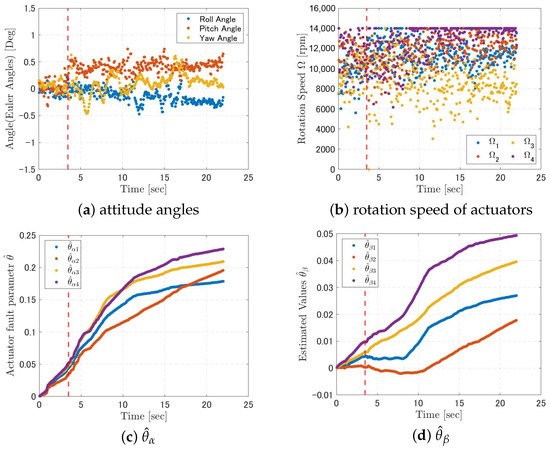
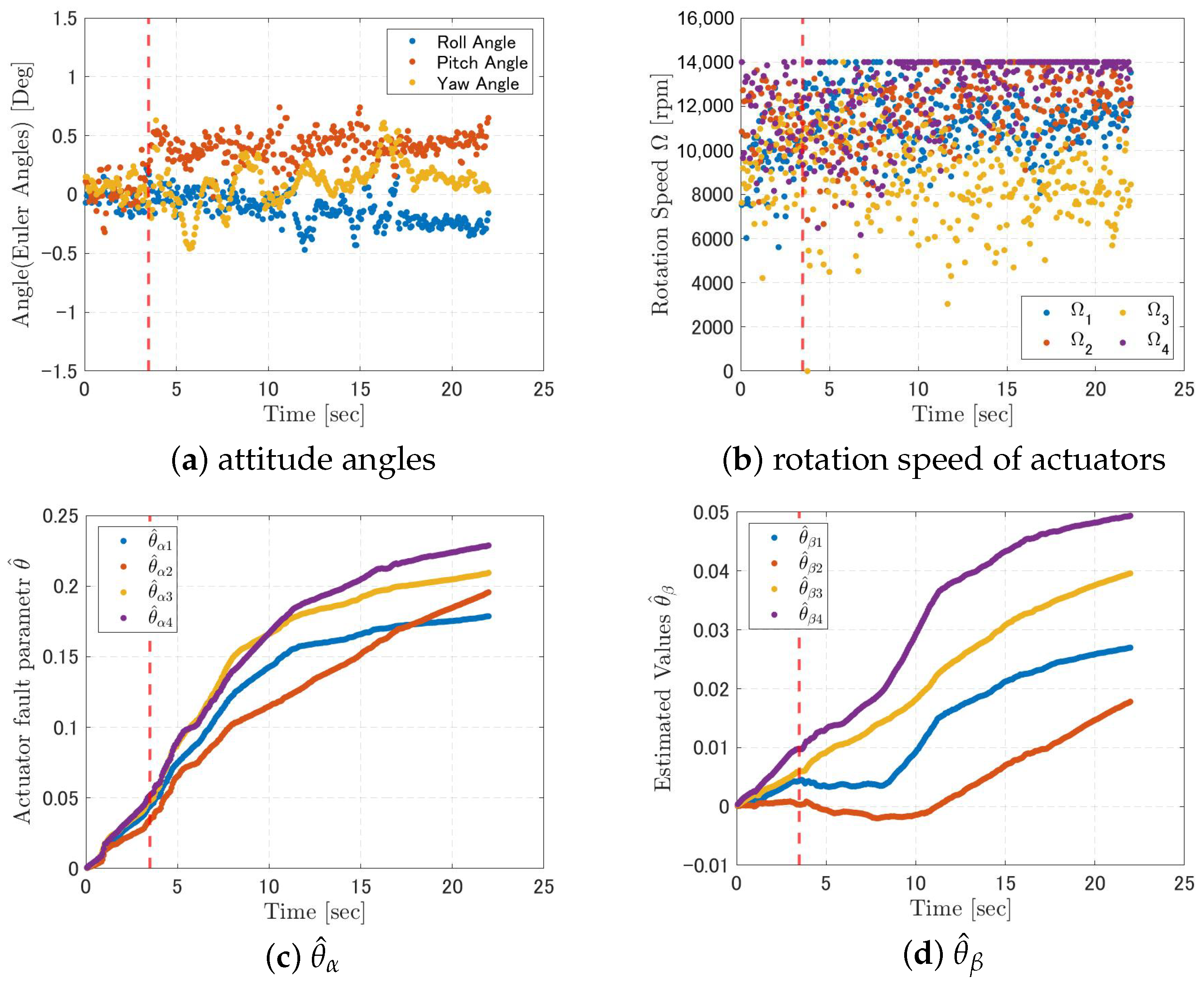
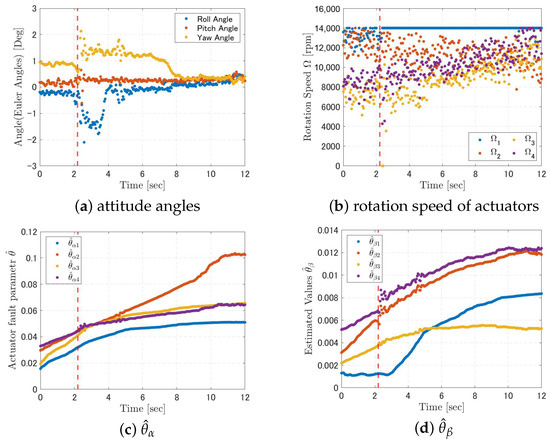
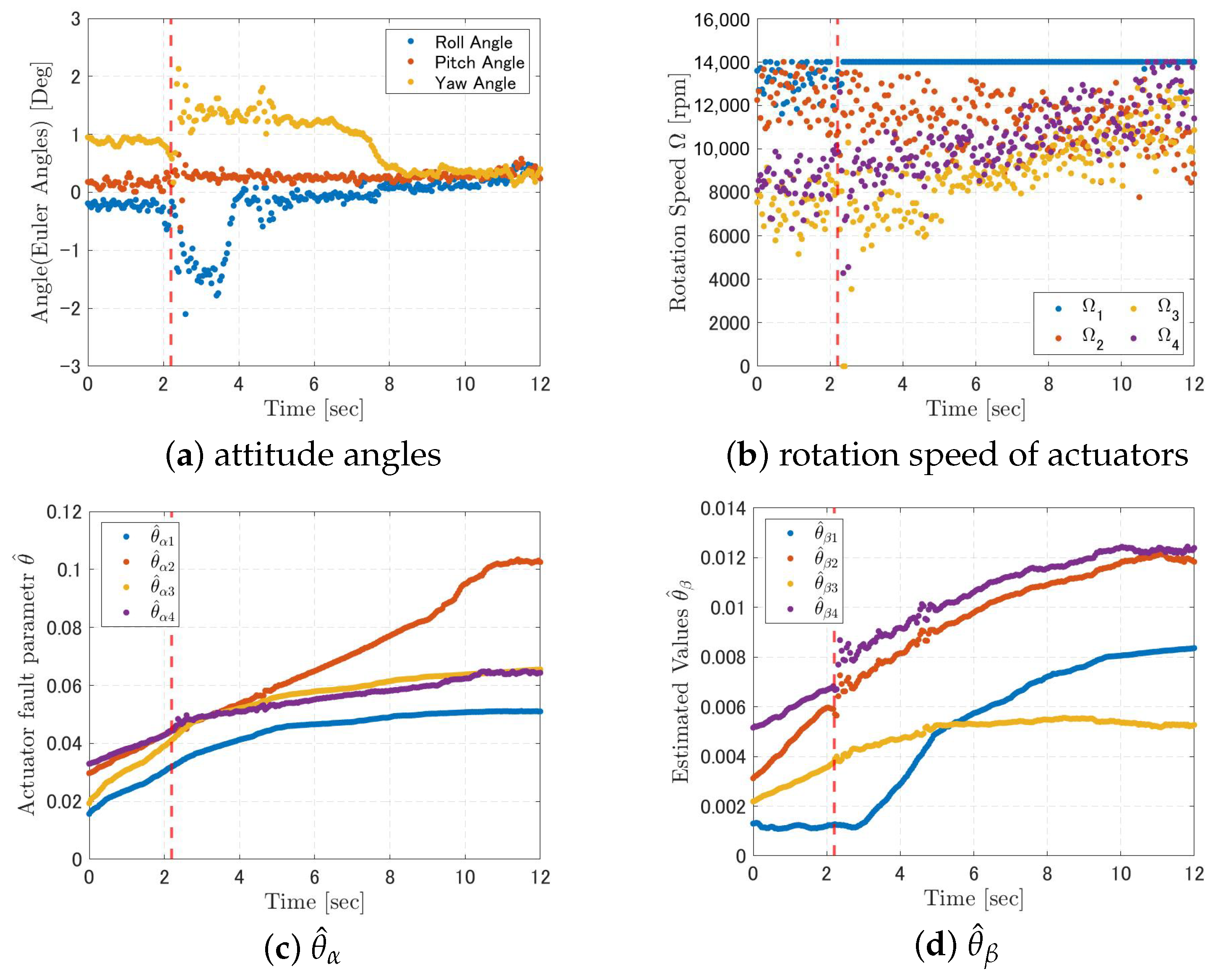
Experimental results with controller (28)–(30) are shown in Figure 10. The red dashed line indicates the time the failure occurred.
As illustrated in Figure 10a, the proposed controller successfully maintains stable flight even in the presence of actuator failure. We can also confirm that the rotation speed reaches its upper limit (14,000 [rpm]) in Figure 10b; this appears to cause the fluctuation in attitude angles to increase after the failure. According to Figure 10c,d, the estimates tend to converge slowly. One way to speed up convergence is to increase the adaptive gain; however, this is challenging in practice due to the rotation speed limit of the actuators mentioned above.
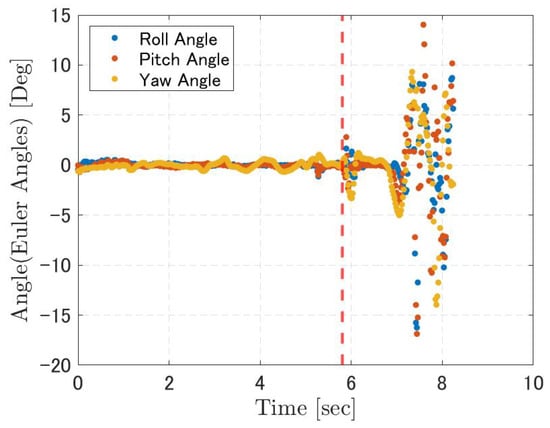
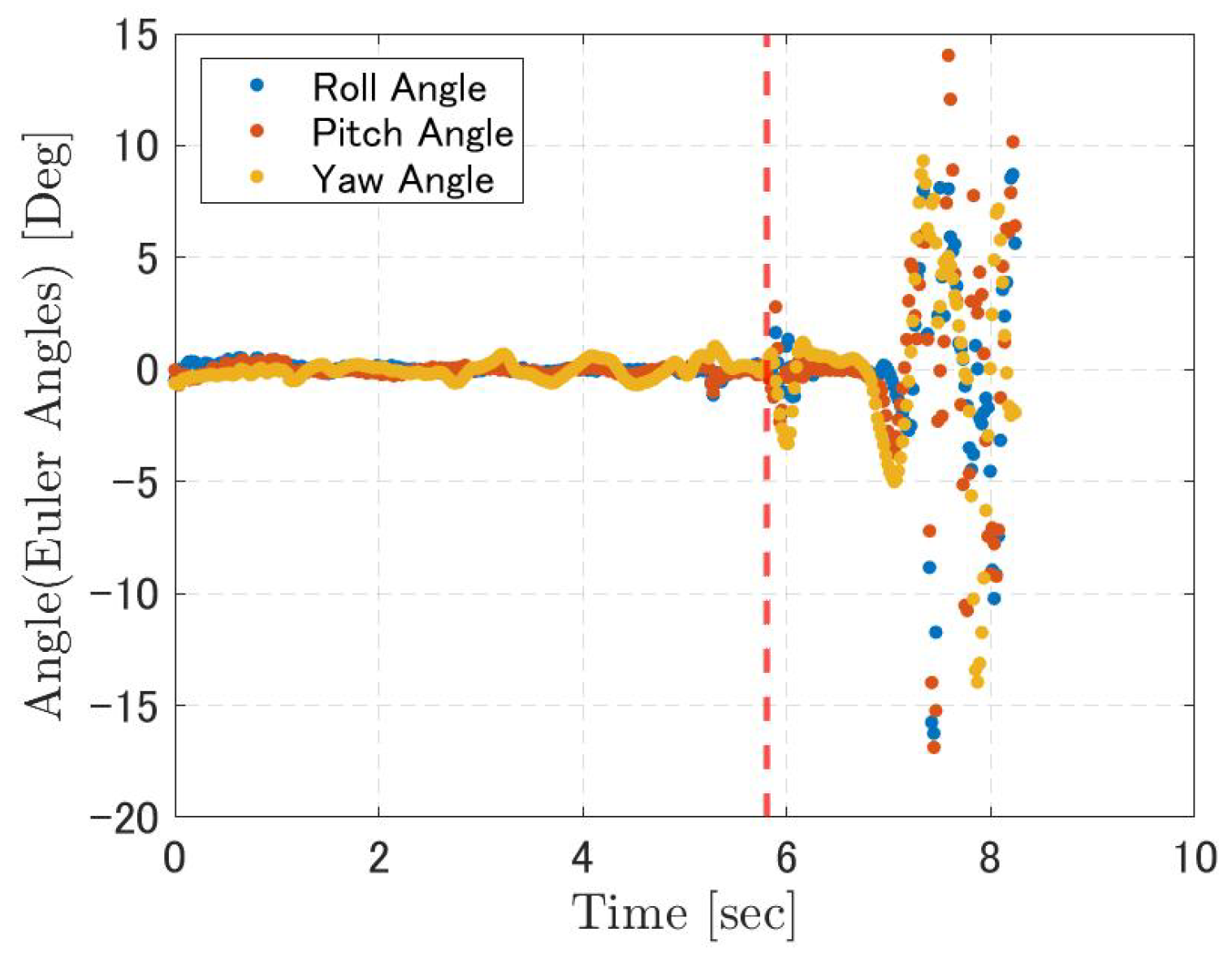
For comparison, we also present the results of the same experiments using a standard PID-type controller in Figure 11.
Figure 11.
Experimental results with a PID controller (Experiment 1).
We can see the attitude angles diverge after the actuator failure. Therefore, the effectiveness of the proposed controller in the presence of a single actuator fault is confirmed.
6.3. Experiment 2: Two Actuator Failures
In the second experiment, we reduced the rotation speed of actuator 1 and 2 to 80% and 90%, respectively. More precisely, we set
The experimental results are summarized in Figure 12.
As in Experiment 1, we observe that stable flight is maintained even after actuator faults. Hence, it was demonstrated that the proposed controller can deal with multiple actuator faults. However, since the rotation speed of the actuator reached its upper limit, as in Experiment 1, it will be challenging to conduct verification experiments under more severe conditions with the developed quadrotor.
7. Conclusions
In this article, we have confirmed the effectiveness of the adaptive fault-tolerant controller (28)–(30) proposed in [21] through development of a quadrotor testbed and real-time experiments. Specifically, as the first step in the experimental verification, we focused on attitude-loop control. We first developed the quadrotor testbed equipped with the self-developed flight controller. We then conducted parameter identification experiments and implemented the proposed FTC method on the STM32F722RET6, the MCU used in the flight controller. Finally, according to real-time experiments of attitude stabilization following actuator faults, we confirmed that the controller (28)–(30) can be implemented in the MCU and can achieve attitude stabilization following actuator faults. We also demonstrated that the controller can deal with two actuator faults.
Although the effectiveness of controller (28)–(30) for the attitude-loop control was partially validated in the experiments, additional validation is still required. As mentioned in Section 6, the rotation speed of the actuator reached its upper limit in both experiments. To perform comprehensive flight experiments, including position-loop control and three- or four-actuator faults, developing an additional quadrotor testbed that accounts for actuator limits is an important future direction. Experiments with more realistic actuator failures, such as propeller damage, are also an important research topic. To demonstrate the effectiveness and reliability of the proposed method more clearly, it is important to conduct comparative experiments against other FTC methods.
Author Contributions
Conceptualization, Y.S. and A.T.; Methodology, Y.S. and A.T.; Software, A.T.; Validation, Y.S. and A.T.; Formal analysis, Y.S. and A.T.; Investigation, Y.S. and A.T.; Data curation, A.T.; Writing—original draft, Y.S., and A.T.; Writing—review and editing, Y.S.; Visualization, A.T.; Supervision, Y.S.; Project administration, Y.S.; Funding acquisition, Y.S. All authors have read and agreed to the published version of the manuscript.
Funding
This work was partially supported by JSPS KAKENHI Grant Numbers JP20K14769 and JP25K07805.
Institutional Review Board Statement
Not applicable.
Informed Consent Statement
Not applicable.
Data Availability Statement
The raw data supporting the conclusions of this article will be made available by the authors on request.
Conflicts of Interest
The authors declare no conflicts of interest.
References
- Sadeghzadeh, I.; Mehta, A.; Chamseddine, A.; Zhang, Y. Active Fault Tolerant Control of a Quadrotor UAV Based on Gain-Scheduled PID Control. In Proceedings of the 25th IEEE Canadian Conference on Electrical and Computer Engineering, Montreal, QC, Canada, 29 April–2 May 2012. [Google Scholar]
- Xing, X.; Ma, Z.; Chen, X.; Huang, L. Fault-Tolerant Flight Control of Quad-rotor UAV Based on Sliding Mode Theory. In Proceedings of the Chinese Control and Decision Conference, Shenyang, China, 9–11 June 2018. [Google Scholar]
- Provan, G.; Sohége, Y. Fault-Tolerant Control for Unseen Faults Using Randomized Methods. In Proceedings of the 4th Conference on Control and Fault Tolerant Systems, Casablanca, Morocco, 18–20 September 2019. [Google Scholar]
- Huang, S.; Liao, F.; Teo, R. AI-based Fault-Tolerant Controller Design for Handling both Actuator and Sensor Faults of Multirotors. In Proceedings of the 2022 International Conference on Unmanned Aircraft Systems (ICUAS), Dubrovnik, Croatia, 21–24 June 2022. [Google Scholar]
- Yang, S.; Zou, Z.; Li, Y.; Shi, H.; Fu, Q. Adaptive Fault-Tolerant Tracking Control of Quadrotor UAVs against Uncertainties of Inertial Matrices and State Constraints. Drones 2023, 7, 107. [Google Scholar] [CrossRef] [Scilit]
- Saied, M.; Shraim, H.; Francis, C. A Review on Recent Development of Multirotor UAV Fault-Tolerant Control Systems. IEEE Aerosp. Electron. Syst. Mag. 2024, 39, 146–180. [Google Scholar] [CrossRef] [Scilit]
- Hu, X.; Wang, B.; Shen, Y.; Fu, Y.; Li, N. Disturbance Observer-Enhanced Adaptive Fault-Tolerant Control of a Quadrotor UAV against Actuator Faults and Disturbances. Drones 2023, 7, 541. [Google Scholar] [CrossRef] [Scilit]
- Hernndez-Gonzlez, O.; Targui, B.; Valencia-Palomo, G.; Guerrero-Snchez, M.E. Robust Cascade Observer for a Disturbance Unmanned Aerial Vehicle Carrying a Load under Multiple Time-Varying Delays and Uncertainties. Int. J. Syst. Sci. 2024, 55, 1056–1072. [Google Scholar] [CrossRef] [Scilit]
- Campos-Martnez, S.N.; Hernndez-Gonzlez, O.; Guerrero-Snchez, M.E.; Valencia-Palomo, G.; Targui, B.; Lpez-Estrada, F.R. Consensus Tracking Control of Multiple Unmanned Aerial Vehicles Subject to Distinct Unknown Delays. Machienes 2024, 12, 337. [Google Scholar] [CrossRef] [Scilit]
- Du, Y.; Huang, P.; Cheng, Y.; Fan, Y.; Yuan, Y. Fault Tolerant Control of a Quadrotor Unmanned Aerial Vehicle Based on Active Disturbance Rejection Control and Two-Stage Kalman Filter. IEEE Access 2023, 11, 67556–67566. [Google Scholar] [CrossRef] [Scilit]
- Ke, C.; Cai, K.; Quan, Q. Uniform Passive Fault-Tolerant Control of a Quadcopter With One, Two, or Three Rotor Failure. IEEE Trans. Robot. 2021, 37, 116–130. [Google Scholar] [CrossRef] [Scilit]
- Sun, S.; Wang, X.; Chu, Q.; Visser, C.D. Incremental Nonlinear Fault-Tolerant Control of a Quadrotor With Complete Loss of Two Opposing Rotors. IEEE Trans. Robot. 2023, 39, 4297–4311. [Google Scholar] [CrossRef] [Scilit]
- Aoki, Y.; Asano, Y.; Honda, A.; Motooka, N.; Hoshino, K.; Ohtsuka, T. Nonlinear model predictive control for hexacopter with failed rotors based on quaternions –simulations and hardware experiments–. Mech. Eng. J. 2021, 8, 21-00204. [Google Scholar] [CrossRef] [Scilit]
- Nan, F.; Sun, S.; Foehn, H.; Scaramuzza, D. Nonlinear MPC for Quadrotor Fault-Tolerant Control. IEEE Robot. Autom. Lett. 2022, 7, 5047–5054. [Google Scholar] [CrossRef] [Scilit]
- Yang, X.; Hu, X.; Ye, H.; Liu, W.; Shen, H. Fraction-order MRAC Method Based Fault Tolerant Control for Plant Protection UAV With Actuator Failure and Uncertainty. Int. J. Control. Autom. Syst. 2023, 21, 2623–2633. [Google Scholar] [CrossRef] [Scilit]
- Avram, R.C.; Zhang, X.; Muse, J.; Clark, M. Nonlinear Adaptive Control Design and Controller Integrity Monitoring for Quadrotor UAVs. In Proceedings of the International Conference on Unmanned Aircraft Systems, Arlington, VA, USA, 7–10 June 2016. [Google Scholar]
- Avram, R.C.; Zhang, X.; Muse, J. Nonlinear Adaptive Fault-Tolerant Quadrotor Altitude and Attitude Tracking with Multiple Actuator Faults. IEEE Trans. Control Syst. Technol. 2018, 26, 701–707. [Google Scholar] [CrossRef] [Scilit]
- Shen, Q.; Wang, D.; Zhu, S.; Poh, E.K. Fault-Tolerant Attitude Tracking Control for a Quadrotor Aircraft. In Proceedings of the 53rd IEEE Conference on Decision and Control, Los Angeles, CA, USA, 15–17 December 2014. [Google Scholar]
- Yu, H.; Wu, S.; He, W.; Liang, X.; Han, J.; Fang, Y. Fault-Tolerant Control for Multirotor Aerial Transportation Systems with Blade Damage. IEEE Trans. Ind. Electron. 2024, 71, 12718–12731. [Google Scholar] [CrossRef] [Scilit]
- Seshasayanan, S.; De, S.; Sahoo, S.R. Robust Attitude Control With Fixed Exponential Rate of Convergence and Consideration of Motor Dynamics for Tilt Quadrotor Using Quaternions. IEEE Trans. Autom. Sci. Eng. 2025, 22, 2445–2459. [Google Scholar] [CrossRef] [Scilit]
- Tabata, A.; Satoh, Y.; Nakamura, H.; Kato, K. Adaptive Fault Tolerant Control of Quadcopter by Using Minimum Projection Method. In Proceedings of the 44th Annual Conference of the IEEE Industrial Electronics Society, Washington, DC, USA, 21–23 October 2018. [Google Scholar]
- Liang, W.; Chen, Z.; Yao, B. High-Accuracy Adaptive Robust Fault-Tolerant Control for Quadrotor With Actuator Uncertainties and Aerodynamic Drag Compensation. IEEE Trans. Autom. Sci. Eng. 2025, 22, 8123–8136. [Google Scholar] [CrossRef] [Scilit]
- Nonami, K.; Kendoul, F.; Suzuki, S.; Wang, W.; Nakazawa, D. Autonomous Flying Robots: Unmanned Aerial Vehicles and Micro Aerial Vehicles; Springer: Tokyo, Japan, 2014. [Google Scholar]
- Siciliano, B.; Sciavicco, L.; Villani, L.; Oriolo, G. Robotics: Modelling, Planning and Control; Springer: London, UK, 2010. [Google Scholar]
- Wie, B. Space Vehicle Dynamics and Control, 2nd ed.; American Institute of Aeronautics: Reston, VA, USA, 2008. [Google Scholar]
- Hatayama, T.; Nakamura, H. Discontinuous Adaptive Control of Attitude of Rigid Body by Using Minimum Projection Method. In Proceedings of the SICE Annual Conference 2014, Sapporo, Japan, 9–12 September 2014. [Google Scholar]
- Bhat, S.P.; Bernstein, D.S. A Topological Obstruction to Continuous Global Stabilization of Rotational Motion and the Unwinding Phenomenon. Syst. Control Lett. 2000, 39, 63–70. [Google Scholar] [CrossRef] [Scilit]
- Ioannou, P.; Sun, J. Robust Adaptive Controls; Prentice Hall: Englewood Cliffs, NJ, USA, 1995. [Google Scholar]
- Nakamura, H.; Tsuzuki, T.; Fukui, Y.; Nakamura, N. Asymptotic Stabilization with Locally Semiconcave Control Lyapunov Function on General Manifolds. Syst. Control Lett. 2013, 62, 902–909. [Google Scholar] [CrossRef] [Scilit]
- Jardin, M.R.; Mueller, E.R. Optimized Measurements of UAV Mass Moment of Inertia with a Bifilar Pendulum. J. Aircr. 2009, 46, 763–775. [Google Scholar] [CrossRef] [Scilit]
- Madgwick, S.O.H. An Efficient Orientation Filter for Inertial and Inertial/Magnetic Sensor Arrays; Report x-io and University of Bristol: Bristol, UK, 2010; Volume 25, pp. 763–775. [Google Scholar]

Disclaimer/Publisher’s Note: The statements, opinions and data contained in all publications are solely those of the individual author(s) and contributor(s) and not of MDPI and/or the editor(s). MDPI and/or the editor(s) disclaim responsibility for any injury to people or property resulting from any ideas, methods, instructions or products referred to in the content. |
© 2026 by the authors. Licensee MDPI, Basel, Switzerland. This article is an open access article distributed under the terms and conditions of the Creative Commons Attribution (CC BY) license.