Abstract
As a critical component in tunnel construction, the segment erector of shield tunneling machines critically influences segment assembly quality and construction efficiency, largely determined by its dual-cylinder synchronization control. Addressing challenges such as dynamic coupling, nonlinear disturbances, and significant inertial force fluctuations inherent in hydraulic cylinder synchronization under large-inertia loads and variable working conditions, this study proposes an optimized inertial force suppression strategy utilizing an improved sliding mode control (SMC). Mechanical and hydraulic dynamic models of the dual-cylinder lifting mechanism were established to analyze load distribution and force-arm variation patterns, thereby elucidating the influence of inertial forces on synchronization accuracy. Based on this analysis, an adaptive boundary-layer SMC, incorporating real-time inertial force compensation, was designed. This design effectively suppresses system chattering and enhances robustness. Simulation and experimental results demonstrate that the proposed method achieves synchronization errors within ±0.5 mm during step responses, reduces inertial force peaks by 50%, and exhibits significantly superior anti-interference performance compared to conventional PID control. This research provides theoretical foundations and practical engineering insights for high-precision synchronization control in shield tunneling, demonstrating substantial application value.
1. Introduction
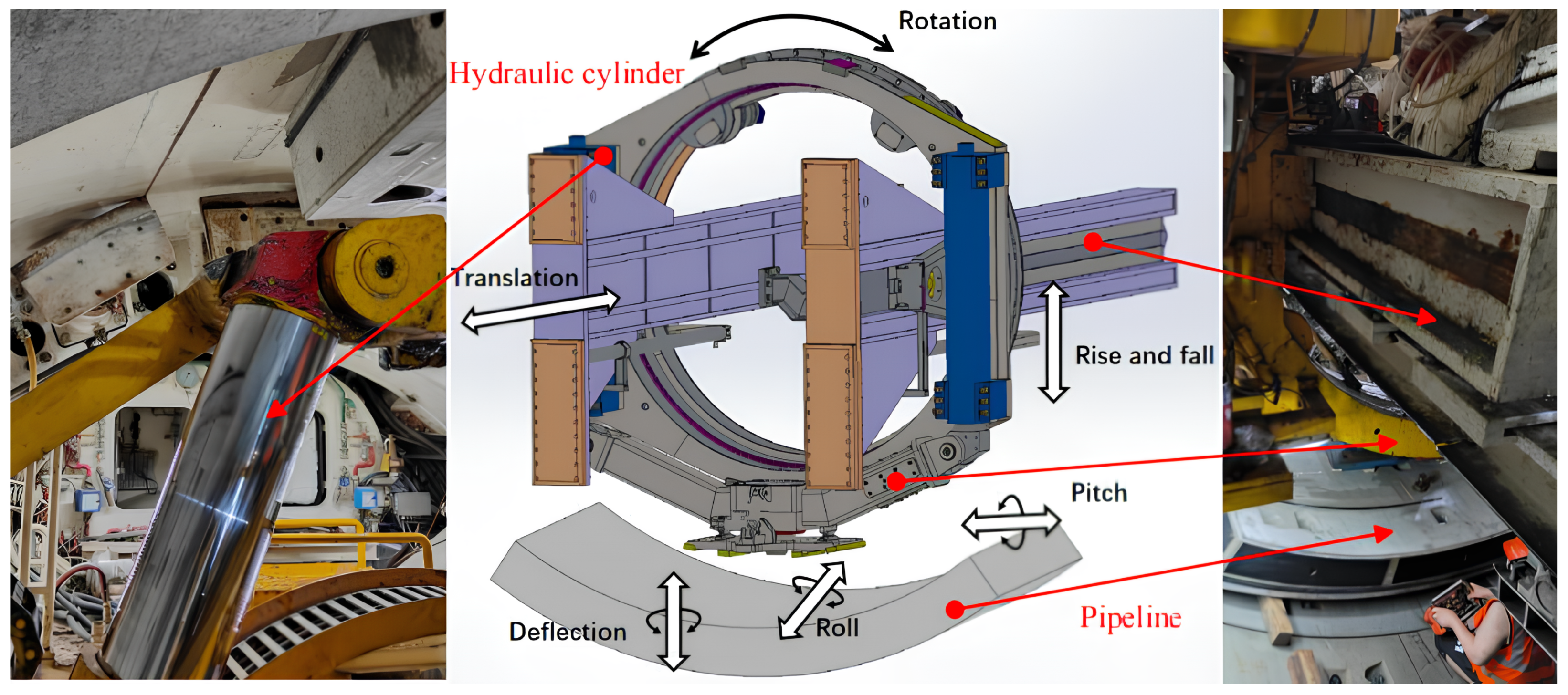
The segment erector is a critical subsystem in shield tunneling machines [1,2,3], directly impacting the structural stability [4,5,6] and waterproofing integrity of tunnel linings [7,8,9]. The system, which includes rotary, lifting, translation, tilting, and posture adjustment mechanisms (Figure 1), achieves the high-precision installation of precast concrete segments through coordinated multi-degree-of-freedom motion [10]. Of these, the dual-cylinder synchronous control of the lifting mechanism is paramount, as its accuracy fundamentally determines assembly quality. However, controlling this system presents significant challenges, including dynamic coupling, inherent nonlinearities, and inertial force disturbances, especially under large-inertia loads and variable working conditions. These issues represent major technical bottlenecks that limit performance. Therefore, in-depth research into advanced control methods for the lifting system is crucial for ensuring high-quality segment assembly.
Figure 1.
Six-degree-of-freedom motion realization of the segment erector.
Zhao Min et al. [11] analyzed the generation mechanism of pressure surge phenomena in the hydraulic system of pruning machines, with a particular focus on the impact effects resulting from changes in the motion state of the saw blade. A synthesis of existing research indicates that when a hydraulic actuator drives a large inertial load, a sudden change in its motion state can generate substantial inertial forces, thereby inducing severe hydraulic shock. Such shocks not only critically compromise the stability and safety of system operation but also significantly reduce the service life of hydraulic components. In his study, Liu Changlong [12] systematically demonstrated the hydraulic shock caused by inertial forces during the operation of the directional control valve in concrete pump trucks, including its impact on the system and physical images of damaged valves. Through causal analysis, it was proposed that employing proportional directional control valves and reducing system pressure could effectively mitigate the effects of inertial forces and hydraulic shock.
Stosiak M et al. [13] investigated the correlation mechanism between low-frequency mechanical vibrations and pressure pulsations in hydraulic systems. Their study analyzed the causes of pressure pulsations, and their spectral characteristics clarified the influence of different vibration frequencies on the dynamic response of control valves, and systematically evaluated the load conditions of the spool in directional valves under various operating conditions.
Zhang Jiwu [14] analyzed the causes of hydraulic shock in ultra-high pressure equipment and proposed the adoption of an S-shaped drive curve to effectively mitigate impacts on the hydraulic pump. These studies demonstrate that by improving control strategies, such as optimizing drive profiles or applying proportional control technologies, the inertial forces and system shocks resulting from abrupt changes in motion state can be effectively suppressed.
Scholars worldwide have conducted extensive research on synchronous control methods. Traditional Proportional-Integral-Derivative (PID) control and its variants have been widely explored. For instance, Peng et al. [15], Shi et al. [16], and Bian et al. [17] employed fuzzy PID, dedicated PID, and synchronous PID algorithms, respectively, to enhance control accuracy. Other approaches, such as those by Han et al. [18], Zhang et al. [19], and Liu et al. [20], further improved performance by incorporating low-pass filters and intelligent optimization algorithms. However, these methods often suffer from a strong dependence on linear models and limited dynamic response, particularly in nonlinear systems [21]. In contrast, intelligent control algorithms like fuzzy logic control [22], backstepping control [23], neural network sliding mode control [24], and active disturbance rejection control [25] have demonstrated improved synchronization accuracy. Despite their success, these methods frequently face challenges in practical engineering applications due to their complexity, limited real-time performance, and steady-state chattering [26,27]. Alongside control strategy development, crucial foundational work has been conducted in hydraulic system modeling. Jin [28] established dynamic models for segment erector lifting systems, and Guo et al. [29] developed corresponding simulation methods, providing a basis for analyzing hydraulic synchronization characteristics. More recent studies [30] continue to highlight the persistent difficulties in achieving millimeter-level synchronization for segment erectors, especially under dynamic loading.
Beyond traditional control, researchers have also leveraged co-simulation and optimization techniques to improve performance. For example, AMESim-Adams co-simulation was used to analyze load impacts [31], and the NSGA-II algorithm was applied for multi-objective optimization [32]. Additionally, BIM digital twin technology has been shown to reduce control deviations [33]. Similarly, sliding mode control (SMC) has been a focus of research, with methods like sliding mode cross-coupling [34] and adaptive SMC [35] enhancing system accuracy. A key drawback of many of these SMC methods, however, is the persistent chattering phenomenon [36,37]. Novel technology applications, such as WebGL algorithms [38] and integrated electro-hydraulic systems with real-time monitoring [39,40], have also been explored to boost assembly efficiency. As illustrated in Table 1, although these diverse methods have their respective advantages and limitations, they share common constraints such as discrepancies between simulation and reality [31], limitations in real-time performance [32], and inadequate suppression of inertial forces [41].
Table 1.
Limitations of different control methods.
In practical engineering applications, hydraulic control systems are often required to operate under stringent resource constraints, where control strategies must balance multiple requirements such as low cost, low computational complexity, and high real-time performance. This is particularly critical in working conditions involving frequent start-stop operations or directional changes in large inertial loads, where traditional control methods often struggle to maintain satisfactory dynamic performance while effectively suppressing hydraulic shock. Meanwhile, some computationally intensive intelligent algorithms are difficult to deploy on practical embedded control platforms due to their high hardware resource demands. Based on the characteristics of the shield segment erector hydraulic system studied in this paper and actual engineering conditions, there is a clear necessity and practical applicability for developing a lightweight intelligent control method aimed at inertial force suppression. This research direction not only aligns with the dual demands of economic efficiency and reliability in industrial settings, but also provides a feasible technical pathway and practical reference for the implementation of advanced control algorithms under resource-constrained conditions.
In summary, while existing research has provided valuable methods for addressing challenges like variable loads, disturbances, and system nonlinearities in shield machine hydraulic systems, significant limitations remain. Although synchronization accuracy, dynamic response, and anti-interference capabilities have been advanced, key issues persist, including inadequate inertial force suppression, the inherent chattering-robustness trade-off, and limited engineering applicability. To overcome these shortcomings, this paper proposes an optimized inertial force suppression strategy based on an improved sliding mode control.
2. Related Work
2.1. Problem Description
The dual-cylinder synchronous control of the segment erector system faces significant challenges from substantial inertia loads (3.5 to 12 t per segment) and dynamic load variations. Factors such as the sinusoidal fluctuation of load torque due to installation angle changes, hydraulic leakage, and friction disparities severely compromise synchronization accuracy. To address these issues, this study first establishes a mechanical model of the dual-cylinder lifting mechanism. This model is used to analyze the influence of structural parameters (e.g., cylinder extension length and installation distance) on load distribution and to investigate how force arms vary with different installation angles. Subsequently, a dynamic model of the hydraulic system is developed, which incorporates key components like proportional directional and counterbalance valves. By deriving the flow rate and force equilibrium equations, we establish the dynamic relationship between hydraulic cylinder displacement and the input current, which provides a theoretical foundation for the proposed control strategy.
2.2. Force Equilibrium Equations
Despite employing symmetrically configured dual hydraulic cylinders, the lifting system faces complex dynamic load challenges. Sinusoidal fluctuations in load torque, caused by variations in installation angles, combined with factors like hydraulic leakage and inter-cylinder friction disparities, lead to significant load imbalance. Consequently, individual cylinders can bear up to 60–70% of the total load. When a master–slave control strategy is used, position tracking errors can propagate, which in turn alters the load-force coupling relationship. Therefore, this study performs an in-depth analysis of the angle-dependent load distribution in the dual-cylinder hydraulic system, with the findings comprehensively validated through simulation experiments.
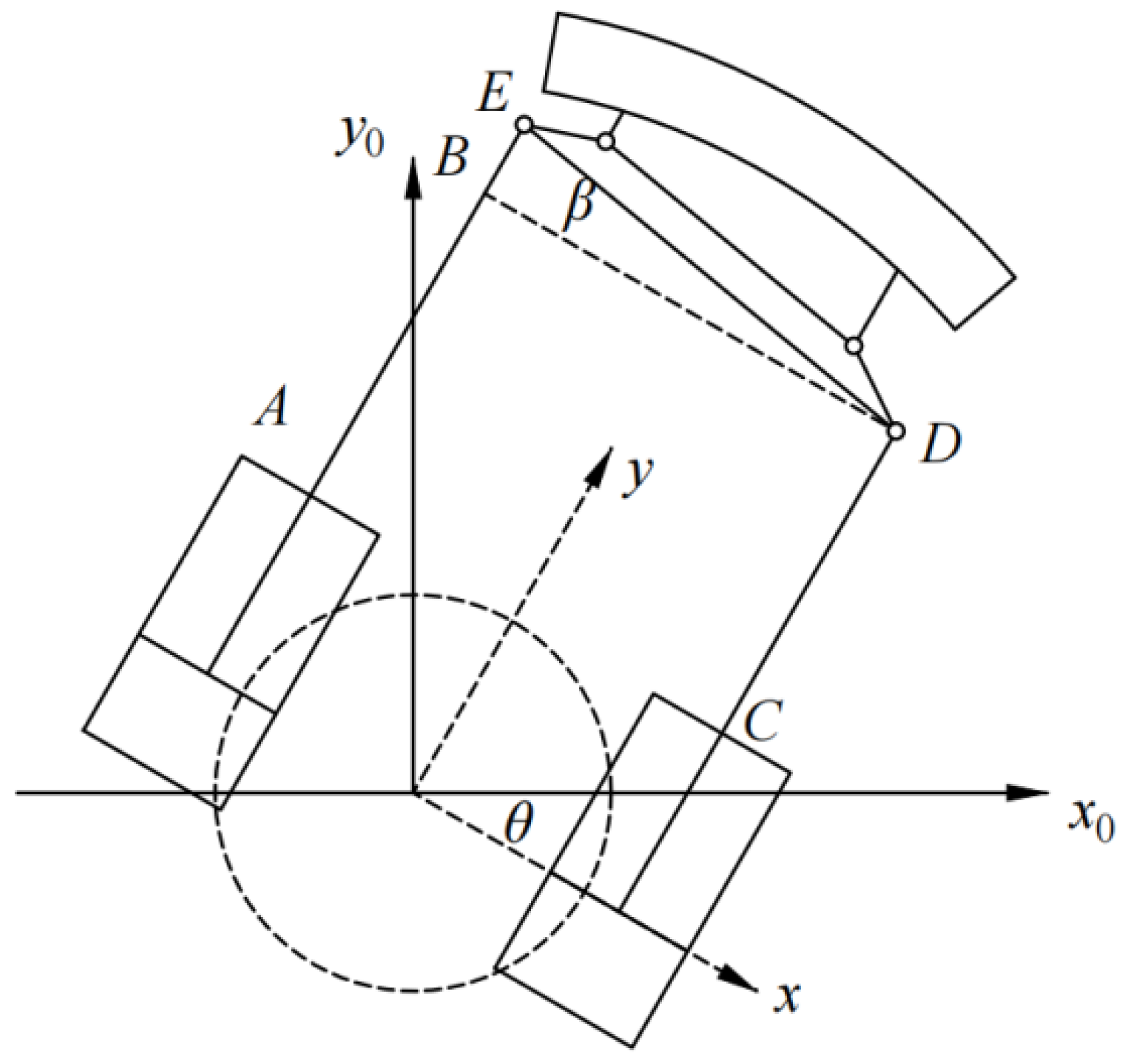
The schematic structure of the dual-cylinder lifting mechanism is illustrated in Figure 2. The installation distance between the two hydraulic cylinders is denoted as L, with their initial extension lengths being equal, . Due to master–slave control errors and segment load imbalance, a displacement error can occur between the synchronized cylinders. The rotation angle of the mechanism, , is defined as the deflection angle of the segment’s center of mass.
Figure 2.
Dual-cylinder mechanism structure.
When the hydraulic cylinders extend at a constant velocity, the force equilibrium equation can be expressed as follows:
where M represents equivalent total load mass (); stands for equivalent load mass of the left hydraulic cylinder (); signifies equivalent load mass of the right hydraulic cylinder (); is left hydraulic cylinder load mass moment about the center of mass (); indicates right hydraulic cylinder load mass moment about the center of mass ().
Based on the dual-cylinder structural schematic, the mechanical equilibrium equation between the hydraulic cylinders and the load is established as follows:
where represents the driving force of the left hydraulic cylinder (); denotes the driving force of the right hydraulic cylinder (); indicates the friction force of the left hydraulic cylinder (); symbolizes the friction force of the right hydraulic cylinder (); J stands for the rotational inertia (); a signifies the segment motion acceleration (); defines the segment angular acceleration ().
The eccentricity of the segment’s center of mass is denoted as x, and the corresponding moment arms are determined as follows:
Combining the above equations, the relationship between the driving forces of the left and right hydraulic cylinders and the load force is obtained as follows:
Based on the derived equation, the changes in load force acting on individual hydraulic cylinders under varying installation angles can be calculated, thereby providing theoretical support for the subsequent design of simulation parameters.
2.3. Integrated Flow Equation
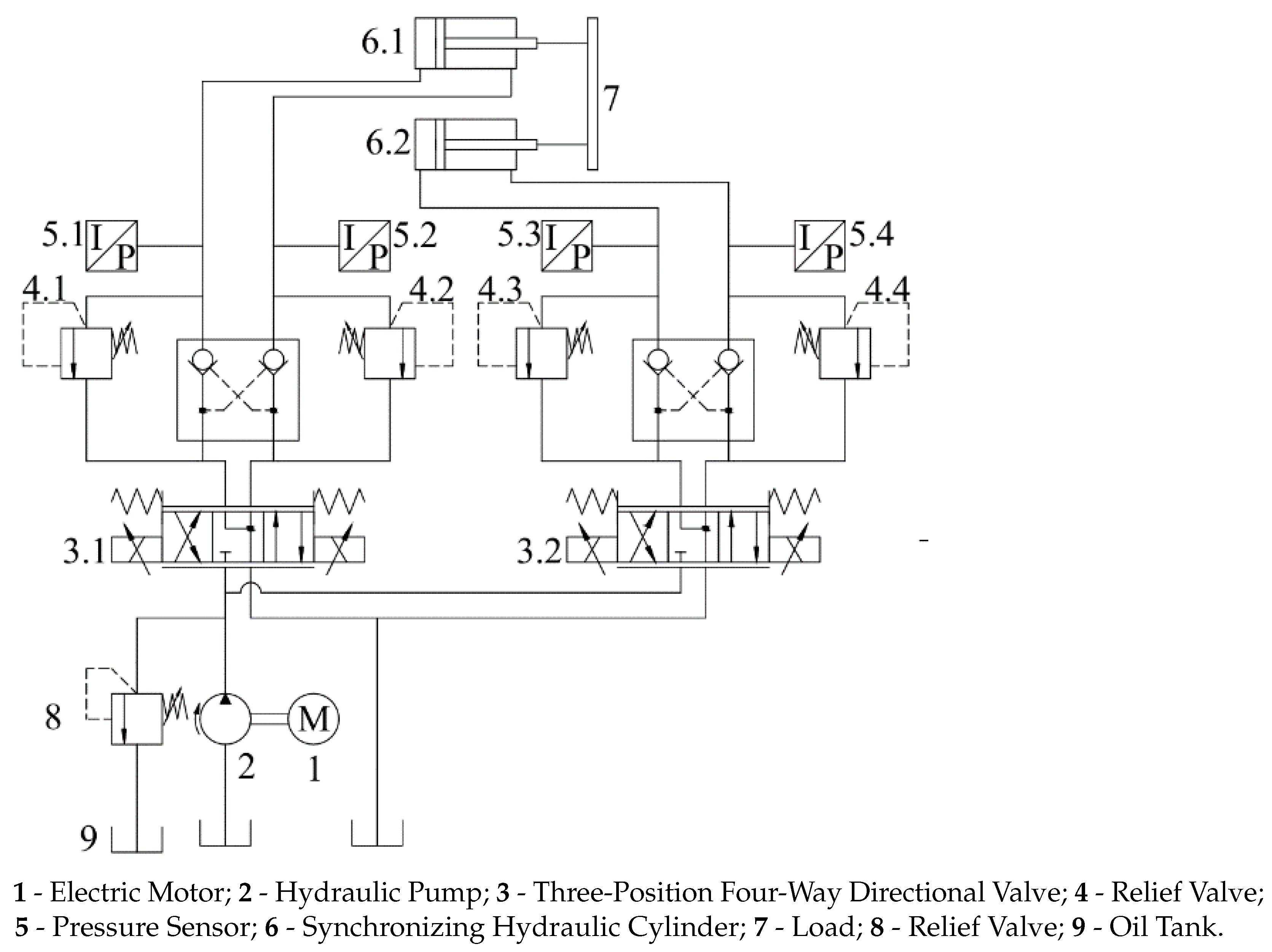
The segment erector’s dual-cylinder synchronous system is hydraulically actuated. It consists of a hydraulic pump, an electro-proportional directional control valve, a counterbalance valve, a pressure relief valve, and two identical hydraulic actuators, as shown in Figure 3. The system uses a proportional directional valve to control each cylinder, allowing for closed-loop operation. This design provides superior trajectory tracking and enhanced disturbance rejection, which are essential for high-precision tasks.
Figure 3.
Schematic diagram of hydraulic cylinder.
The system pressure and flow are supplied by a constant-pressure oil supply unit, which includes a hydraulic pump and a relief valve. The key functions of the main components are as follows:
- Relief valve: regulates system input pressure.
- Electro-proportional directional valve: controls the direction and displacement of the hydraulic cylinders.
- Counterbalance valve: ensures system pressure stability and provides instantaneous overpressure relief.
- Displacement sensor: facilitates closed-loop control through real-time monitoring of cylinder displacement.
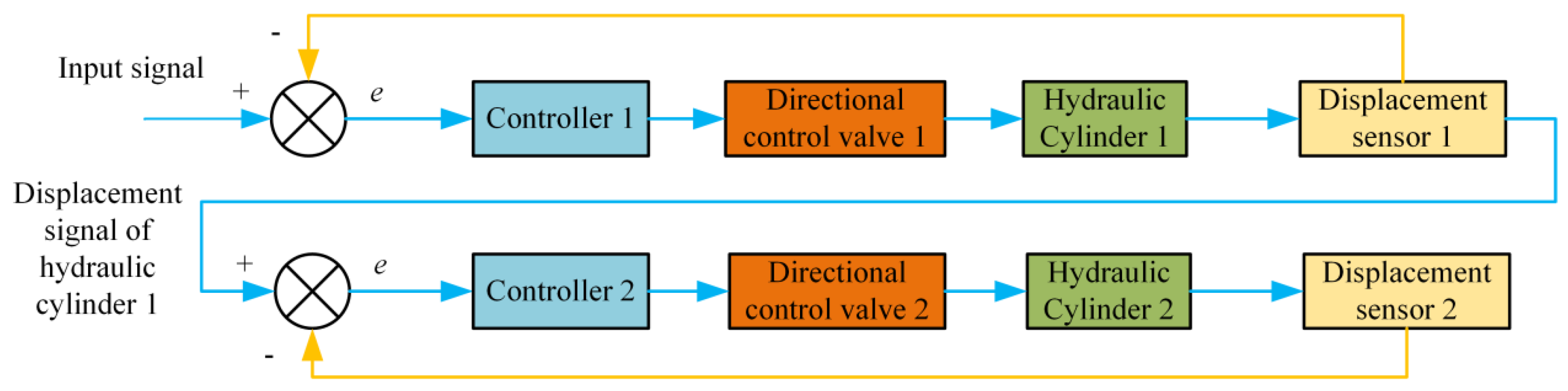
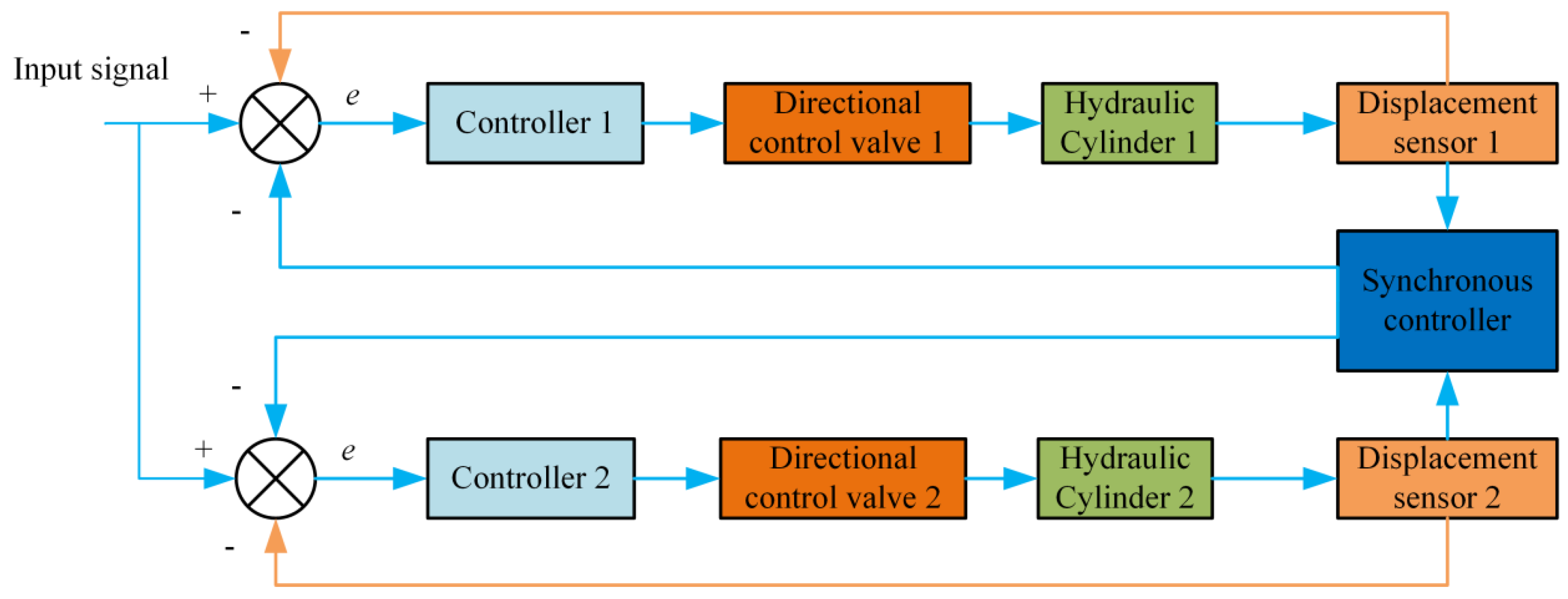
As conceptually illustrated in Figure 4 and Figure 5, synchronous control mechanisms for segment erectors are typically based on either series-connected or parallel-connected systems. The series-connected configuration offers structural simplicity and enhanced disturbance rejection but is limited by a compromised dynamic response and steady-state performance. In contrast, the parallel-connected configuration provides a superior transient response yet suffers from implementation complexity, including intricate control signal pathways and a high susceptibility to stability degradation from multi-source disturbances. This fundamental trade-off in performance guides their application: TBMs often utilize series-connected systems for operational reliability in uncertain geological environments, whereas shield-type erectors, which require high precision, preferentially adopt parallel-connected systems to achieve millimeter-level positioning accuracy.
Figure 4.
Series-connected configuration.
Figure 5.
Parallel-connected configuration.
Assuming the proportional directional valve operates within its linear characteristic range, the input and output flow rates of the valve can be expressed as follows:
where represents the flow rate through the proportional valve orifice; denotes the current flow gain of the proportional directional valve; I indicates the input current of the control signal.
Hydraulic cylinder flow equations:
where defines the total leakage coefficient of the hydraulic cylinder; represents the hydraulic cylinder load pressure; denotes the effective volume of the hydraulic cylinder; symbolizes the hydraulic fluid bulk modulus; indicates the effective area of the rodless chamber in the lifting cylinder; k expresses the relationship between the effective areas of the rodless chamber and the rodded chamber.
Hydraulic cylinder force equilibrium equation:
where m represents the equivalent mass of the segment; B defines the viscous damping coefficient; denotes the load disturbance force.
Based on the relationship between chamber pressures and effective areas, Equation (7) can be transformed to the following:
By combining Equations (5), (6) and (8) and applying the Laplace transform, the following result is obtained:
In modern high-performance hydraulic components, leakage flow is strictly controlled at a low level, typically two to three orders of magnitude smaller than the output flow of the pump. During the analysis of dynamic system response, the leakage flow is significantly smaller than the flow demand required for actuator motion. Therefore, it can be reasonably neglected in the modeling process. When neglecting the viscous damping coefficient and leakage coefficient in Equation (9), the expression can be simplified to the following:
Consequently, the relationship between the control current of the proportional directional valve and the hydraulic cylinder displacement can be modeled as follows:
3. Methodology
3.1. Controller Design
The SMC offers a primary advantage in its strong robustness against model uncertainties, parameter perturbations, and external disturbances. The method exhibits complete invariance to matched disturbances on the sliding surface. However, the inherent discontinuity of the switching control can induce chattering phenomena in practical applications, which necessitates suppression through methods such as saturation functions, higher-order sliding modes, or adaptive techniques. This creates an inherent trade-off between robustness and chattering mitigation.
When designing an SMC for a proportional valve-controlled hydraulic cylinder system, the first essential step is to define a sliding surface. For the second-order system discussed here, the sliding surface is designed as shown in Equation (12) for a step input signal.
where s defines the sliding mode variable, which represents the deviation from the target trajectory; denotes the desired displacement of the hydraulic cylinder (m); x indicates the actual displacement of the hydraulic cylinder (m); represents the velocity of the hydraulic cylinder (m/s); symbolizes the acceleration of the hydraulic cylinder (m/s2); are the sliding surface coefficients (dimensionless), which determine the dynamic response.
Based on the above description, it can be concluded that the sliding mode control will drive the system states to slide along the sliding surface until reaching the stable condition.
When , the state variables of the system satisfy the equation:
Through Laplace transformation, we obtain the following:
The dynamic characteristics of the system can be regulated by adjusting parameters and . Furthermore, a control law must be designed to ensure that any point in the state space converges to the sliding surface . The expression of the power reaching law is adopted, where the reaching speed is proportional to the power of the distance from the system state to the sliding surface. When far from the sliding surface, the reaching speed is faster. As the system approaches the sliding surface, the reaching speed decreases, thereby mitigating chattering phenomena to some extent.
where k serves as the convergence rate gain (dimensionless), higher values of this parameter accelerate convergence; represents the power exponent (dimensionless), which tunes the nonlinear reaching speed when the system is far from the sliding surface; sgn(s) denotes the sign function, which ensures global convergence.
Substituting Equation (15), we obtain the following:
where represents the effective area of the hydraulic cylinder’s rodless chamber (m2); denotes the flow gain coefficient of the proportional valve (m3/(s·A)); defines the natural frequency of the hydraulic system (rad/s); symbolizes the damping ratio of the hydraulic system; indicates the third derivative of the desired displacement (m/s3).
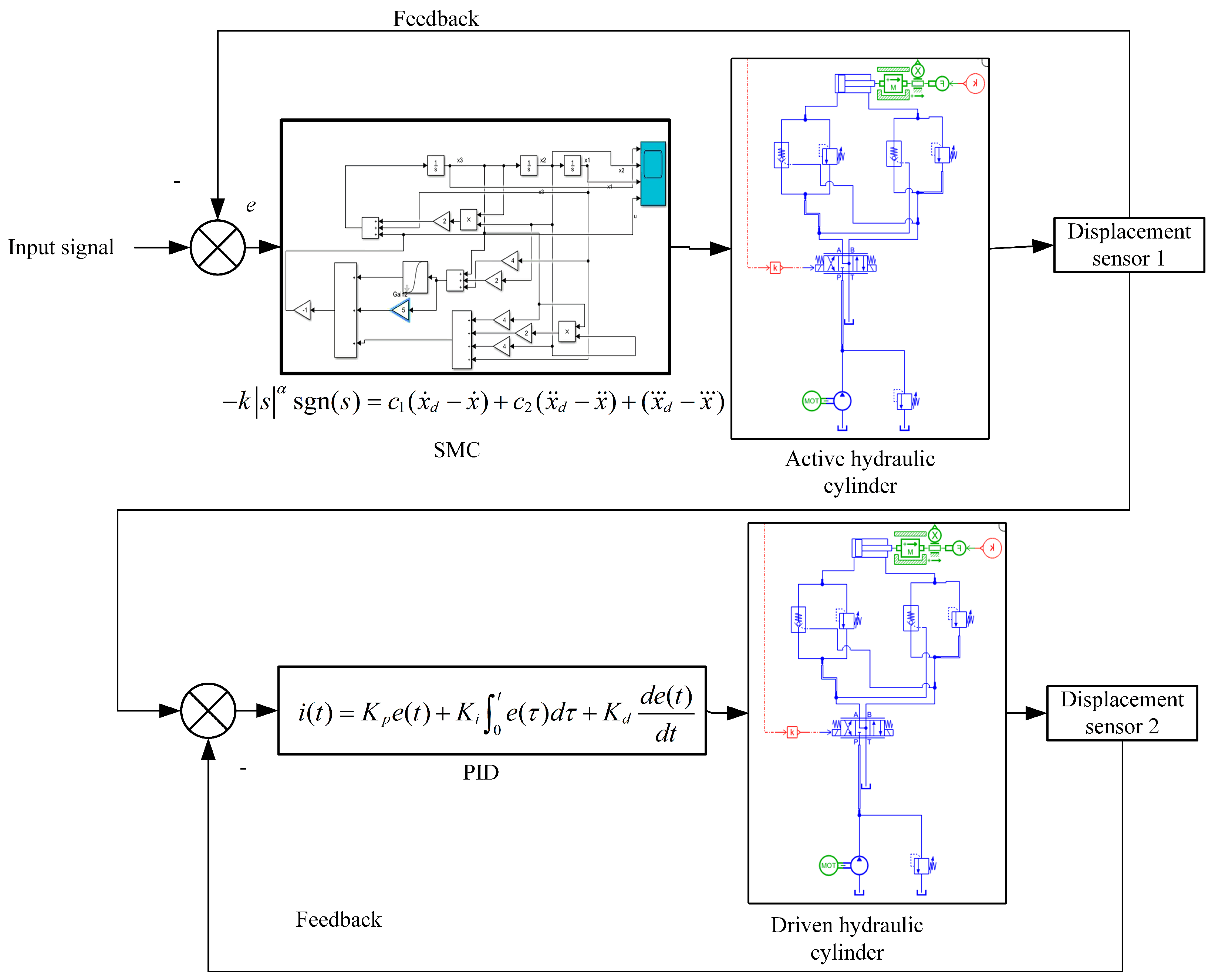
To evaluate the effectiveness of the proposed control algorithm, a co-simulation environment was established using AMESim 2019 and MATLAB 2020, as depicted in Figure 6.
Figure 6.
Parallel-connected configuration.
3.2. Simulation and Analysis
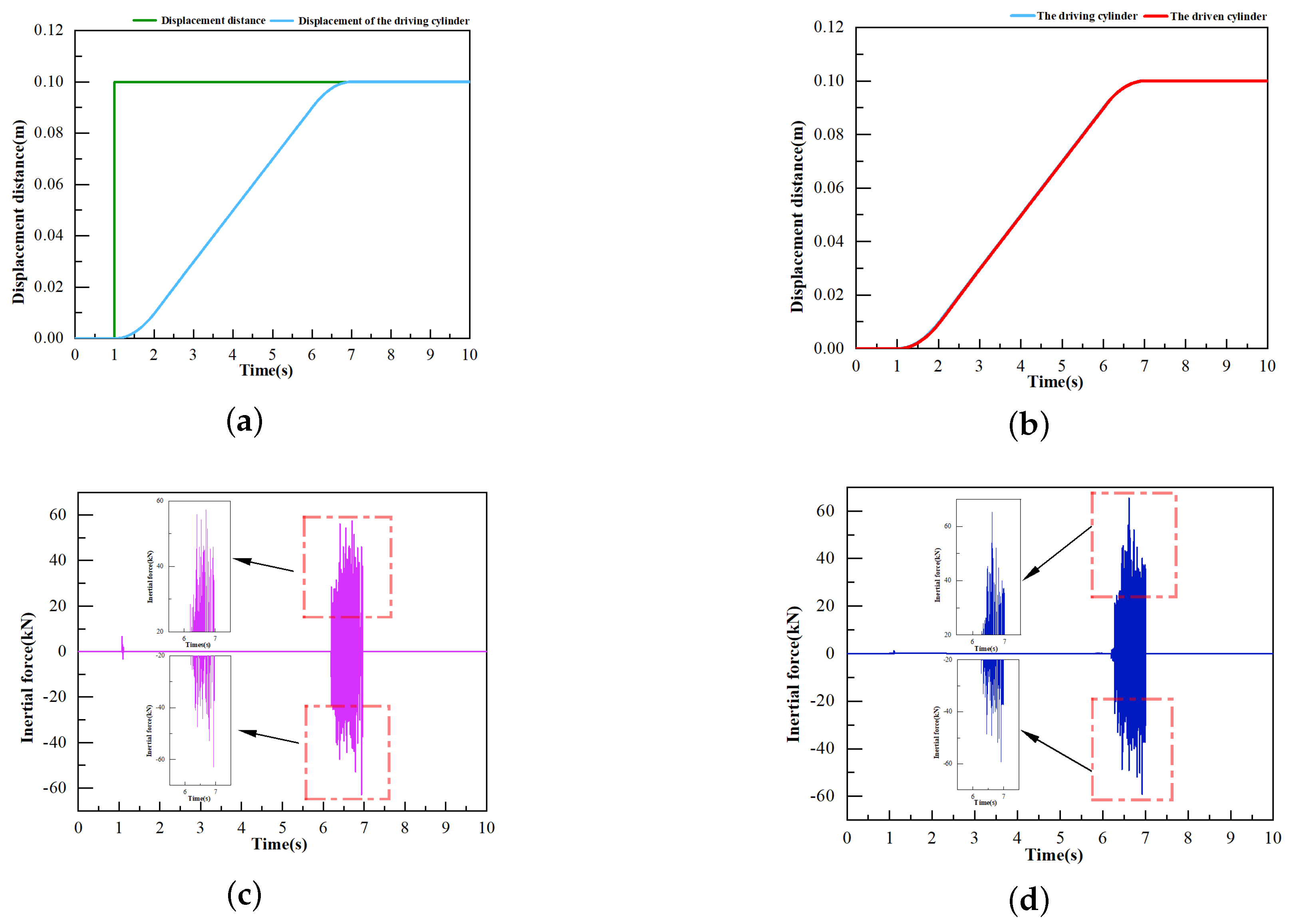
A sliding mode controller (SMC) was implemented in the co-simulation environment, and a 0.1 m step displacement signal was applied to the system. The simulation results of this test are presented in Figure 7.
Figure 7.
(a) Displacement variation in the driving cylinder; (b) relative displacement between driving and driven cylinders; (c) inertial force variation in the driving cylinder; (d) inertial force variation in the driven cylinder.
Figure 7 illustrates that the dynamic response of the dual-cylinder system is significantly improved with SMC. In contrast to PID control, which can cause flow rate discontinuities, the SMC law nonlinearly regulates the proportional valve opening, leading to smooth piston acceleration. This results in a 50% reduction in the peak inertial force of the active cylinder, stabilizing it within 40 kN. Concurrently, the follower cylinder’s inertial force amplitude matches that of the active cylinder, and the synchronization error is constrained to within ±0.5 mm. These performance advantages are attributed to three key factors:
- The strong robustness of the sliding surface against uncertainties.
- The use of an adaptive boundary layer to suppress high-frequency switching.
- Inertial force compensation, which effectively counteracts dynamic coupling effects.
High-frequency (>50 Hz), low-amplitude (±0.05 mm) oscillations observed during steady-state operation are primarily attributed to hydraulic fluid compressibility. Overall, the results confirm that SMC effectively mitigates mechanical shocks, balances load distribution, and is well-suited for segment assembly applications involving large inertia and variable loading conditions.
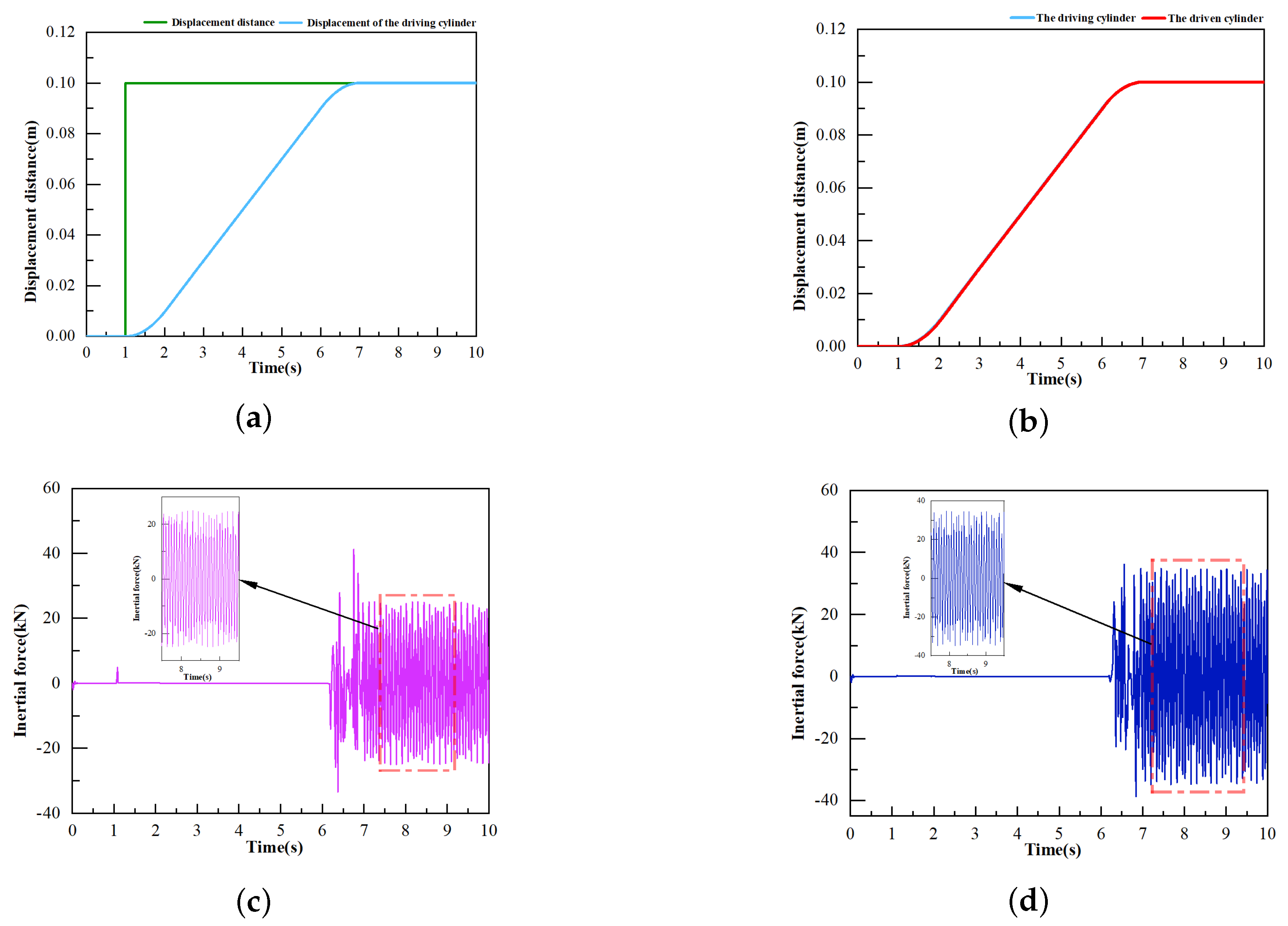
While Figure 7 highlights SMC’s advantages in suppressing inertial forces and maintaining synchronization accuracy, it also reveals an inherent limitation: steady-state chattering, which necessitates further improvement. To evaluate the controller’s disturbance rejection capability, the constant load was intentionally replaced with a fluctuating one during the simulation. The resulting cylinder displacements and inertial forces under this disturbance are presented in Figure 8.
Figure 8.
(a) Displacement variation in the driving cylinder; (b) positional variation between driving and driven cylinders; (c) inertial force variation in the driving cylinder; (d) change in inertial force of the driving cylinder.
The disturbance rejection test presented in Figure 8 demonstrates that the SMC exhibits remarkable robustness under a ±2 t step load disturbance. Its variable structure enables the proportional valve to achieve adaptive flow regulation, which controls displacement fluctuations within ±0.05 mm and results in no observable phase lag. This superior performance is attributed to the following:
- The inherent disturbance invariance of sliding surfaces.
- A power-rate reaching law that ensures rapid convergence.
- Inertial force compensation that effectively counteracts dynamic impacts.
Although high-frequency (>50 Hz), low-amplitude oscillations are observed, their energy impact remains negligible. Overall, the results confirm that SMC effectively resolves synchronization error issues under variable loading conditions, significantly enhancing system stability.
In summary, the SMC with a power-rate reaching law demonstrates superior performance in step displacement control. It progressively adjusts the proportional directional valve opening, resulting in smoother response characteristics and a more effective reduction in cylinder inertial forces compared to PID control. However, as the displacement approaches the target position, the system exhibits significant oscillations, revealing the inherent limitations of this approach in suppressing steady-state chattering. Consequently, further refinement of the SMC algorithm is necessary to mitigate this issue.
The conventional sliding mode control law typically employs a discontinuous sign function (sgn) to achieve rapid convergence of state variables. However, this discontinuous nature is the primary cause of high-frequency chattering. To mitigate this issue, this study adopts a continuous saturation function (sat) as a replacement for the sign function, which is defined as follows:
where represents the boundary layer thickness.
The present study employs a saturation function to replace the sign function. This achieves a continuous transition near the sliding surface through a boundary layer of thickness , thereby effectively suppressing chattering. To counteract the reduced convergence speed typically associated with a fixed boundary layer, we propose an adaptive boundary layer adjustment strategy:
where represents the initial boundary layer thickness; denotes the adaptive gain coefficient.
This strategy enables the dynamic adjustment of the boundary layer thickness based on real-time system states, thus achieving rapid convergence while effectively mitigating chattering.
Furthermore, to address the significant inertial force disturbances in the hydraulic system, this study introduces an inertial force compensation term into the SMC law. Based on the load force model derived from Equation (4), this term is designed as follows:
The real-time calculation and compensation of inertial forces significantly enhance the system’s dynamic performance. By incorporating all the aforementioned strategies—including the adaptive boundary layer and inertial force compensation—the final, improved control law is derived as follows:
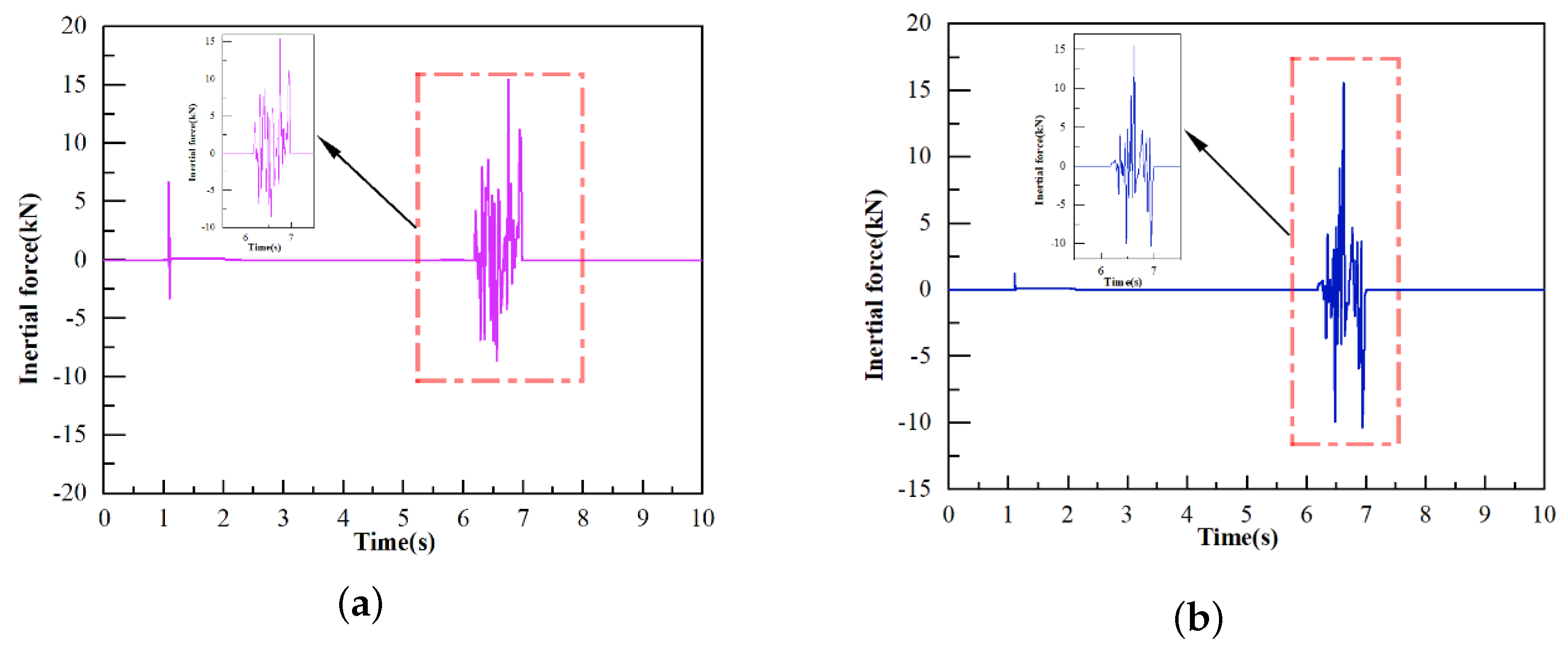
The proposed control law optimizes conventional sliding mode control by incorporating adaptive boundary layer adjustment and inertial force compensation. Under the condition that steady-state accuracy and motion profiles are maintained, the simulation curve of inertial force under the new control law is shown in the figure below:
As presented in Figure 9, both simulation and experimental results demonstrate that the improved SMC maintains a synchronization accuracy of ±0.5 mm. Crucially, it reduces the amplitude of inertial force fluctuations to just 30% of that achieved by traditional SMC, while also significantly attenuating steady-state chattering.
Figure 9.
(a) Inertial force fluctuation of the SMC active cylinder; (b) inertial force fluctuation of the SMC slave cylinder.
4. Experiments
4.1. Description of the Experimental Platform
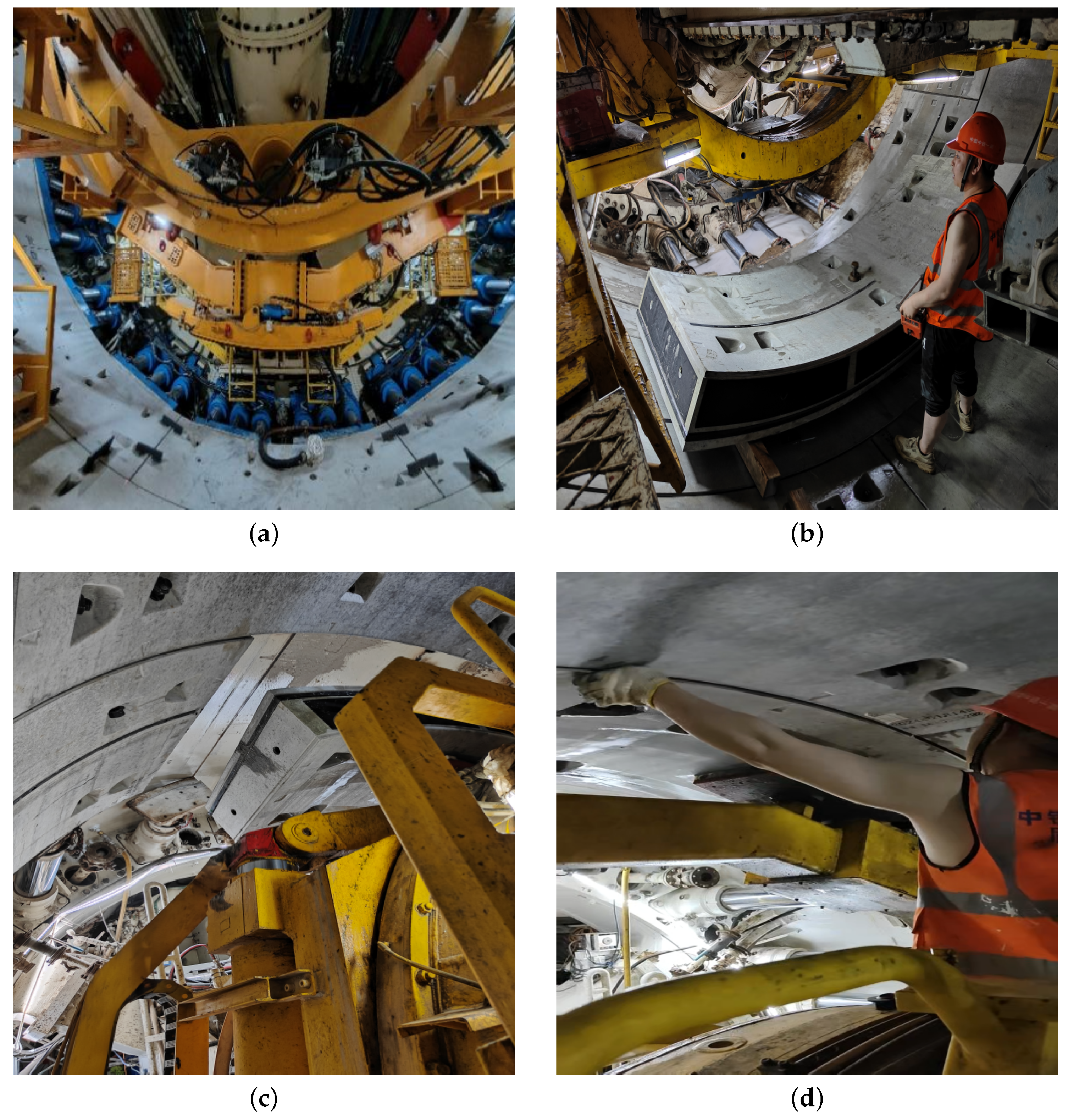
The experimental platform used in this study is a scaled model of a 6-meter-class shield segment erector. Its core components include a dual-cylinder synchronous lifting system, a hydraulic drive unit, high-precision displacement sensors, and a dedicated data acquisition system for real-time monitoring. Figure 10 provides a schematic illustration of the overall setup, and the principal technical specifications are summarized in Table 2.
Figure 10.
(a) segment erector full view; (b) segment Erection preparation; (c) erection process stages; (d) erection completion phase.
Table 2.
Technical specifications of the experimental platform.
The experimental platform uses a modular design. Its hydraulic system, which includes a constant-pressure variable displacement pump, as well as electro-proportional directional and counterbalance valves, ensures stable pressure and dynamic response. Real-time cylinder positions are monitored by displacement sensors, with data acquired by an NI cRIO-9035 controller (National Instruments, Austin, Texas, United States).
To compare the performance of the sliding mode controller with conventional PID control, two experimental tests were designed: a step displacement response test and a variable load disturbance test.
- Step displacement test: The target synchronous lifting displacement was set to 800 mm. We recorded the displacement error, inertial forces, and response time.
- Variable load test: Step load disturbances of ±2 t were applied during motion to evaluate the controller’s disturbance rejection capability.
During testing, experimental data were calibrated in real time using an AMESim-MATLAB co-simulation model to ensure consistency between simulation and experimental conditions (Figure 6). The tests were conducted on a 6-meter-class segment erector at the site shown in Figure 10, where comparative step displacement tests were performed for both PID and SMC controllers.
4.2. Experimental Results and Analysis
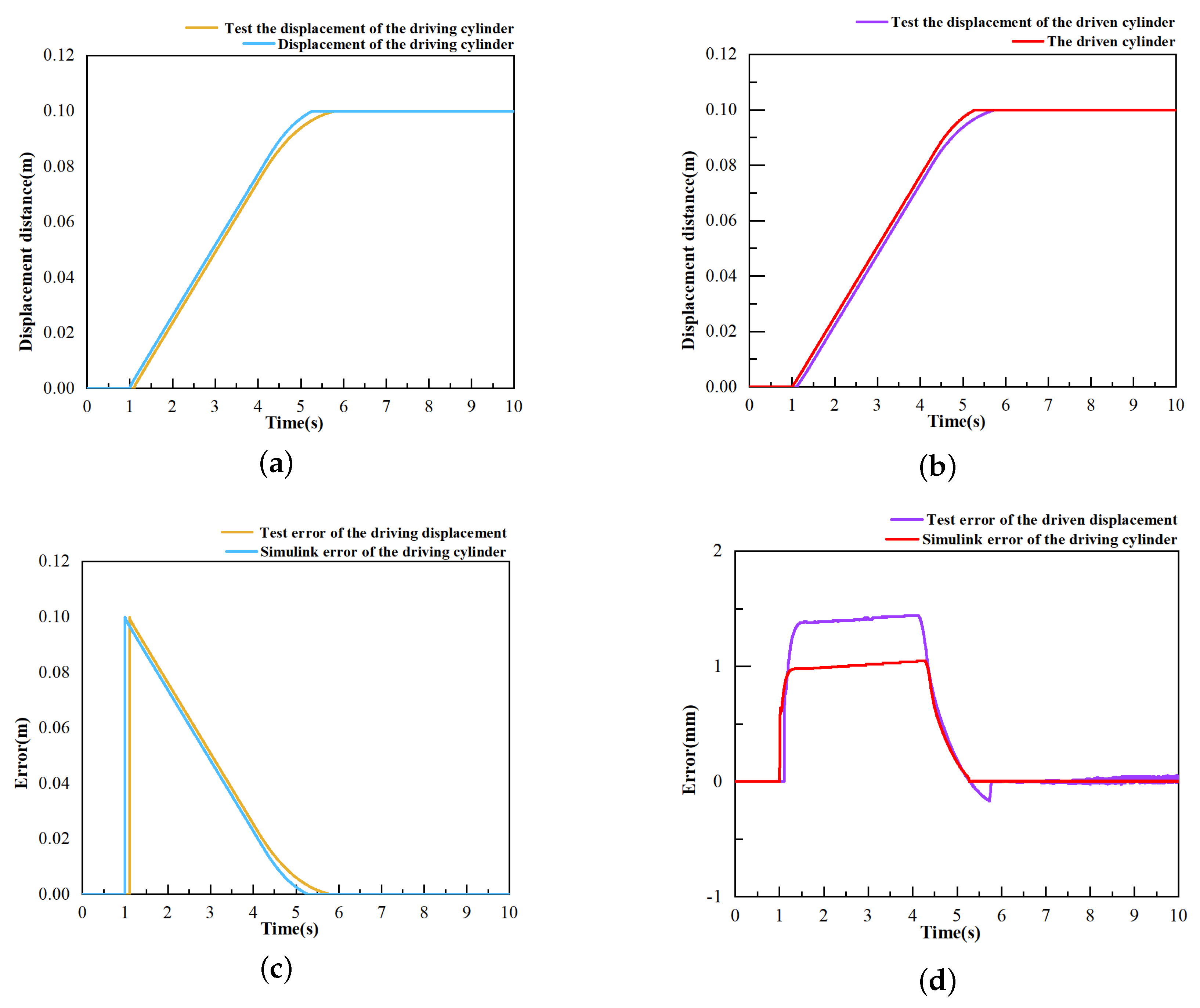
The test results of the PID controller are graphically presented in Figure 11.
Figure 11.
(a) Position variation in the driving cylinder; (b) position variation between driving and driven cylinders; (c) position variation comparison between experimental tests and Simulink simulation; (d) position variation between driving displacement and driven displacement.
Figure 11 illustrates the significant performance limitations of the dual-cylinder system under PID control. The fixed-parameter PID algorithm causes linear regulation of the proportional valve, which leads to rapid piston acceleration and substantial overshoot. Experimental measurements show that the inertial force of the active cylinder exceeds 100 kN with severe fluctuations. Simultaneously, the passive cylinder, affected by coupling effects, exhibits a peak synchronization error of 1.8 mm and a steady-state error of ±0.3 mm. These deficiencies primarily stem from the following:
- The inadequate adaptability of PID control to nonlinear systems.
- The inability of its fixed parameters to compensate for time-varying characteristics.
- The absence of an effective coupling suppression mechanism.
The results indicate that PID control tends to induce impact loads and significant synchronization errors under high-inertia and variable-load conditions. This highlights the necessity of implementing more advanced control algorithms for this application.
The sliding mode controller is designed as follows:
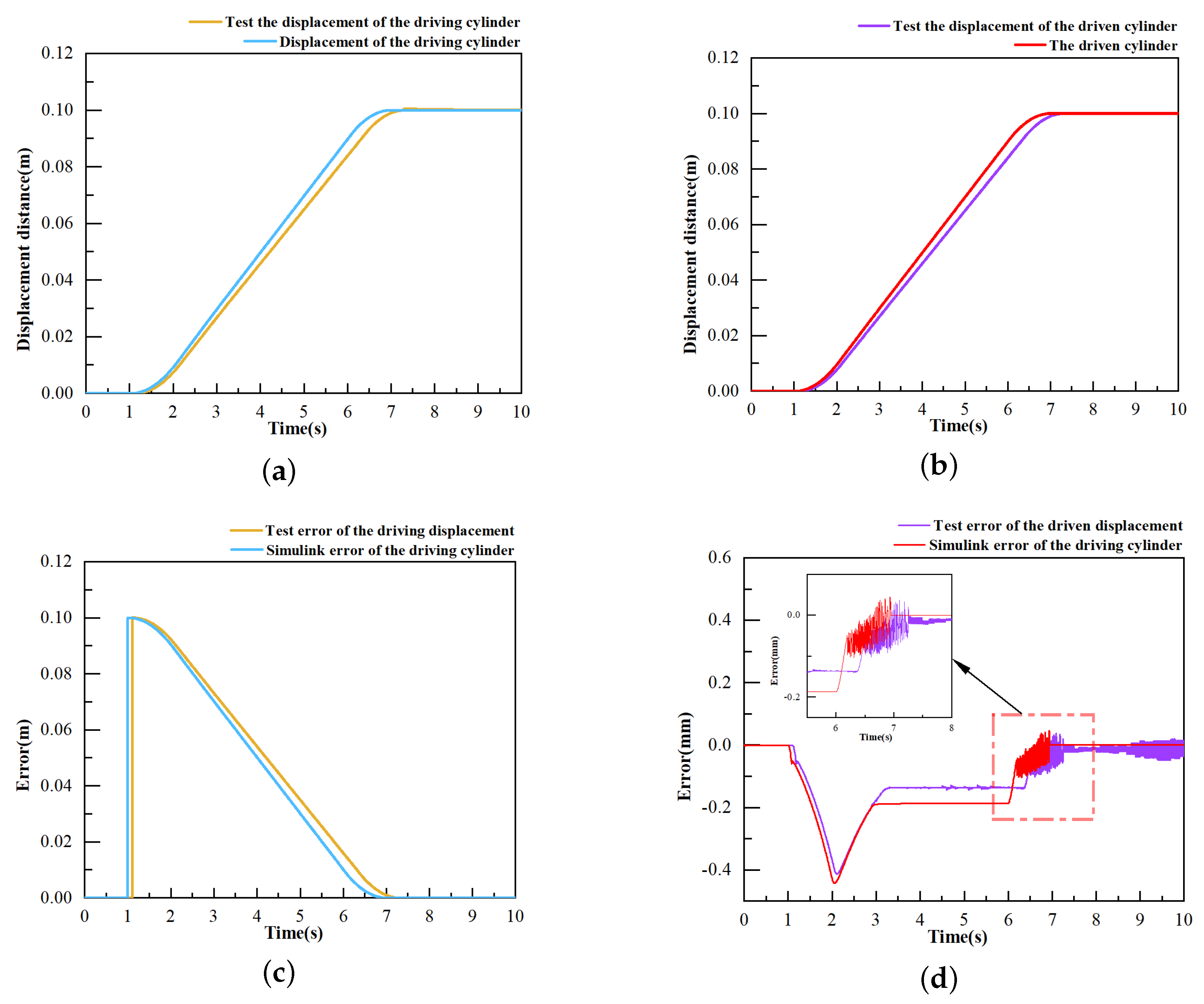
As evidenced in Figure 12, the SMC demonstrates significant superiority over conventional PID control in terms of dynamic response, synchronization accuracy, and disturbance rejection. Compared to traditional PID, the SMC maintains step response overshoot within 3%, reduces steady-state oscillation amplitude to ±0.15 mm, and confines the synchronization error to the designed range of ±0.5 mm. Experimental data also indicate that the SMC effectively suppresses dynamic coupling effects, with the maximum transient error limited to 0.4 mm and no observable phase lag.
Figure 12.
(a) Position variation in the driving cylinder; (b) position variation between driving and driven cylinders; (c) position variation comparison between experimental tests and Simulink simulation; (d) position variation between driving displacement and driven displacement.
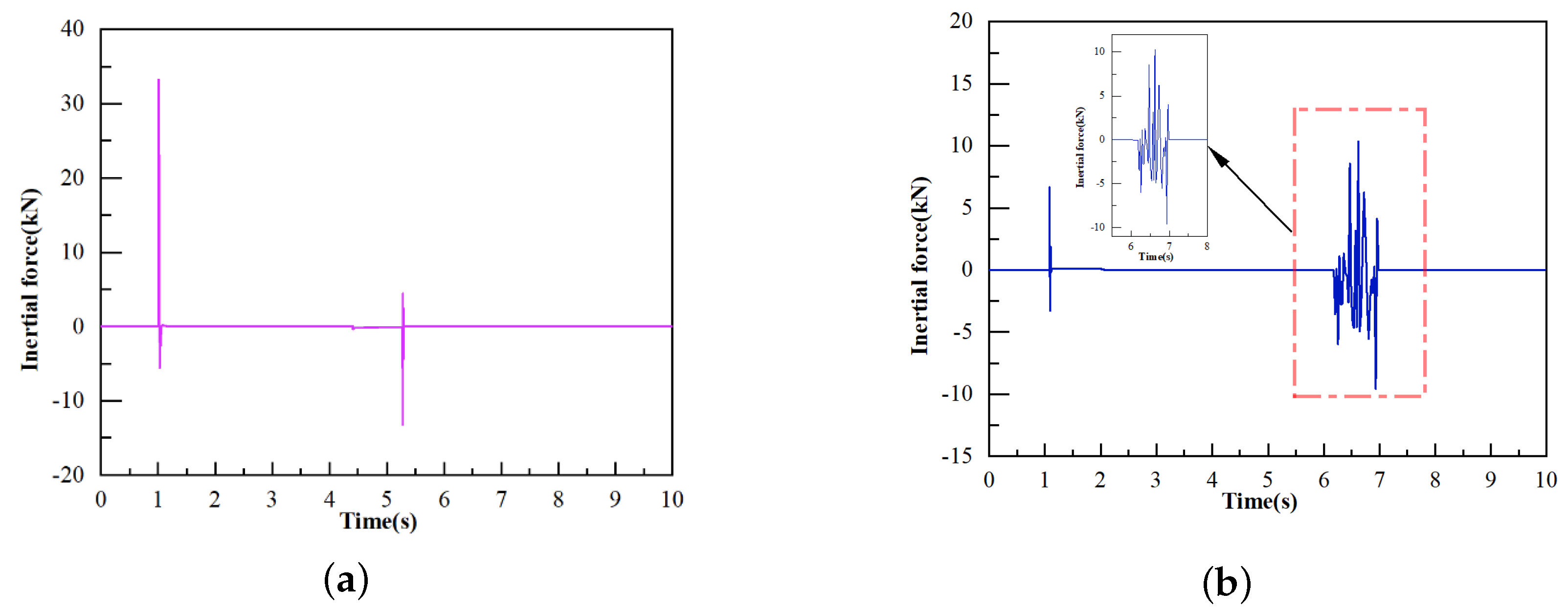
In terms of dynamic performance, the SMC demonstrates excellent inertial force suppression. Through optimized acceleration control, the peak inertial force during system startup is reduced by 50%, which significantly mitigates mechanical shock. During variable load tests, the displacement response remains stable, verifying the controller’s strong robustness. Although the experimental results show good agreement with the simulation model (with a dynamic response deviation <5%), sensor noise in the actual system leads to slightly higher steady-state chattering than expected. This indicates a potential direction for future optimization.
The step response data of both SMC and PID control were processed, and their characteristic parameters were extracted, as shown in the table below:
Further processing of the experimental data presented in Table 3 yields the system’s inertial force variation curve, as shown in the figure below:
Table 3.
Characteristic parameters.
Analysis of the experimental results in Figure 13 indicates that in the hydraulic system employing conventional PID control, the application of a step input signal leads to substantial tracking errors and significant overshoot during both the initial response phase and the braking termination phase. This results in output saturation of the PID controller, causing the hydraulic directional valve orifice to fully open or close within an extremely short duration. Such step-like flow changes induce abrupt variations in actuator acceleration, thereby generating high instantaneous inertial forces. These forces cause severe hydraulic shocks during start-stop phases, considerably compromising both the dynamic smoothness of the system and the service life of its components.
Figure 13.
(a) Inertial force diagram of the PID active cylinder; (b) inertial force diagram of the SMC active cylinder.
In contrast, sliding mode control (SMC), by virtue of its variable structure characteristics, enables smoother and more gradual regulation during both system acceleration and deceleration braking phases. By continuously modulating the control output, this method effectively avoids sudden valve actions, significantly suppresses peak inertial forces, and thus reduces the intensity of hydraulic shocks while improving dynamic response quality. Additionally, SMC contributes to enhanced steady-state accuracy, reduced tracking error, and improved synchronization performance.
However, the continuous approximation control strategy adopted to mitigate chattering also results in a relatively conservative dynamic response in SMC, extending the system’s settling time to some extent. This phenomenon reflects the inherent trade-off between high-precision control and rapid response, providing a theoretical basis and practical reference for the design and parameter tuning of controllers in high-inertia hydraulic systems oriented towards low-impact and high-precision applications.
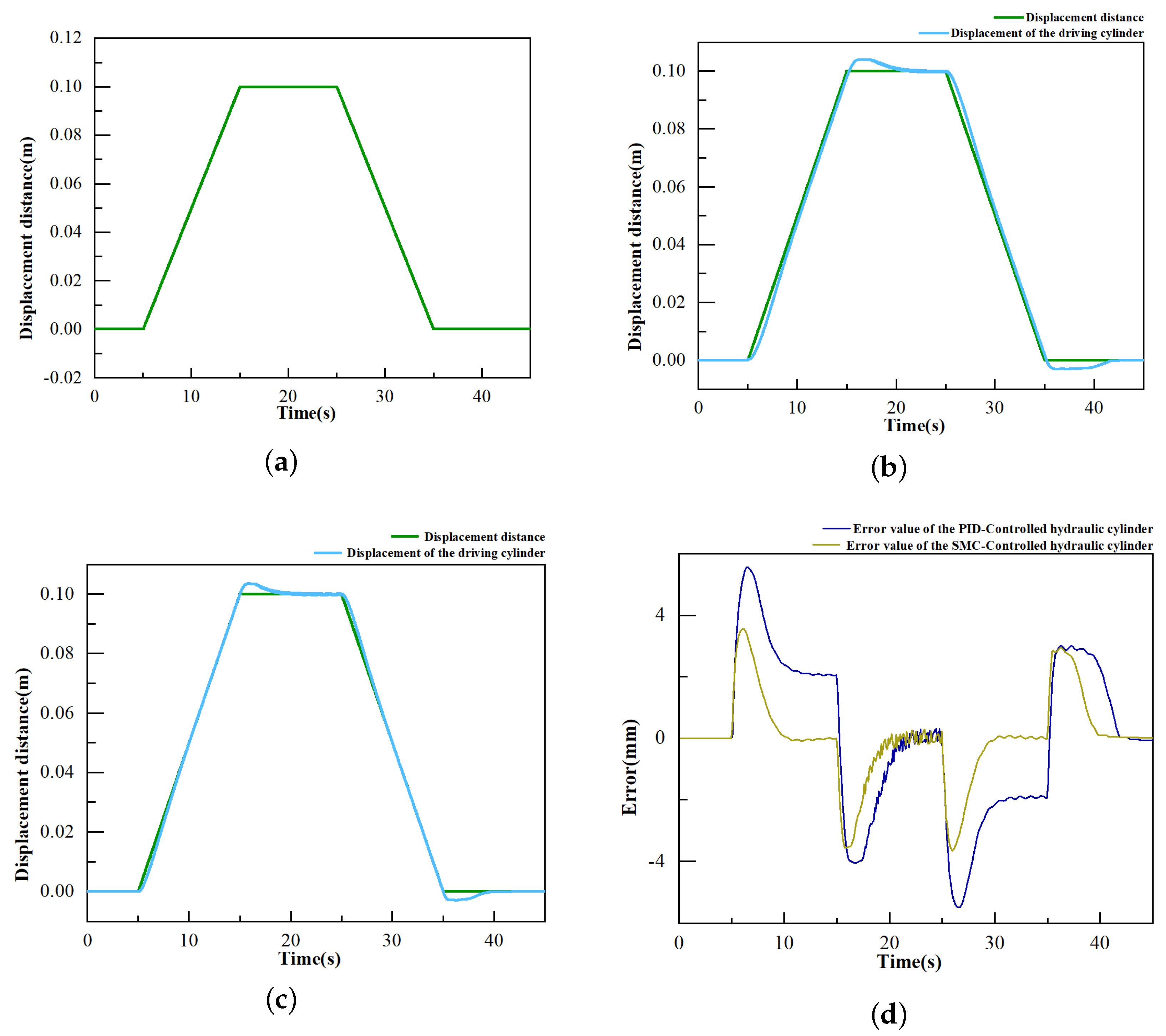
To evaluate the dynamic response performance of sliding mode control (SMC), a ramp displacement signal, as illustrated in the accompanying figure, was designed as the input reference for comparing the tracking performance between the PID controller and the SMC controller.
As shown in Figure 14, the ramp displacement signal exhibits distinct step changes at both the initial and final stages, resulting in noticeable motion lag and overshoot during actual tracking.
Figure 14.
(a) Ramp displacement curve; (b) experimental displacement with PID control; (c) experimental displacement with SMC; (d) hydraulic cylinder error comparison.
A comparison of the error curves under the two control strategies in Figure 14d reveals that the PID controller exhibits considerable delay in responding to the ramp signal. Its control action heavily relies on the continuous accumulation of error, requiring an error of approximately 5 mm to initiate movement of the hydraulic cylinder. Furthermore, limited by the inherent characteristics of proportional gain, a steady-state error of about ±2 mm persists even after the system enters steady-state tracking. In addition, the system demonstrates weak recovery capability after overshoot occurs, with a settling time of approximately 4.59 s.
In contrast, the sliding mode control (SMC) strategy demonstrates superior tracking performance. This controller rapidly responds to dynamic variations in the ramp signal, promptly adjusts the control input during the initial phase, and achieves accurate tracking of the target trajectory, with the overall error confined within ±0.2 mm. The control mechanism based on the sliding surface enhances system robustness, effectively suppressing the influence of parameter variations and external disturbances. Following overshoot, SMC converges rapidly to the desired trajectory within approximately 2.77 s, significantly improving both the dynamic response speed and tracking accuracy of the system. This makes it particularly suitable for precision motion control applications with time-varying velocity signals.
In summary, leveraging its variable structure control characteristics, SMC effectively addresses issues such as significant lag, large steady-state error, and slow recovery speed that are commonly associated with PID control when tracking ramp signals. This makes SMC more suitable for motion control applications requiring high precision and high dynamic performance.
5. Conclusions
The proposed sliding mode control (SMC) strategy successfully achieved high-precision and high-stability control of the dual-cylinder synchronization system. Compared with the conventional PID method, the maximum synchronization error was reduced by 33%, and the steady-state fluctuation was confined to within ±0.5 mm, demonstrating significantly superior dynamic response and disturbance rejection capabilities. By integrating inertial force compensation and an adaptive boundary layer, the system effectively suppresses hydraulic shocks, reducing maximum inertial forces by 50% and significantly enhancing robustness. While steady-state chattering induced by sensor noise in real-world conditions requires further optimization, our research validates the effectiveness of SMC for synchronization challenges involving large inertia and variable loads. This provides crucial technical support for intelligent shield construction and lays a foundation for implementing advanced control strategies in industrial hydraulic systems. Future work will focus on noise suppression and parameter self-optimization to further improve engineering applicability.
Author Contributions
Conceptualization, Z.W. and F.Z.; methodology, F.Z.; software, F.Z.; validation, X.Z. and X.W.; formal analysis, Z.W.; investigation, F.Z.; resources, X.Z. and X.W.; data curation, F.Z.; writing—original draft preparation, F.Z.; writing—review and editing, F.Z. and X.H.; visualization, X.Z.; supervision, X.W. All authors have read and agreed to the published version of the manuscript.
Funding
This research received no external funding.
Data Availability Statement
The data presented in this study are available upon request from the corresponding author.
Conflicts of Interest
Xiaori Zhang was employed by the company Raising Measurement (Shanghai) Co., Ltd. The remaining authors declare that the research was conducted in the absence of any commercial or financial relationships that could be construed as a potential conflict of interest.
References
- Hong, K.R.; Du, Y.L.; Chen, K.; Feng, H.H.; Jia, L.H.; Xu, F. Full-Face Tunnel Boring Machines(Shields/TBMs) in China: History, Achievements, and Prospects. Tunn. Constr. 2022, 42, 739–756. [Google Scholar]
- Miao, W.; Yan, S.; Li, J.; Ding, W.; Li, Y. Development Status and Trend of Tunnel Boring Machine (TBM). Intern. Combust. Engine Parts 2021, 203–205. [Google Scholar] [CrossRef]
- Li, F.; Zeng, C. Development Status and Trend of Intelligent Manufacturing Operation and Maintenance for Full-Face Tunnel Boring Machine. Tunn. Constr. 2023, 43, 6–13. [Google Scholar]
- Bi, Z.; Zhao, H.; Tao, Y.; He, E. Research status of segment erector in shield tunneling machine at home and abroad. Min. Process. Equip. 2014, 42, 1–6. [Google Scholar] [CrossRef]
- Hang, C. Research on Fully Automatic Assembly of Segment Assembly Machine. Master’s Thesis, East China Jiaotong University, Nanchang, China, 2022. [Google Scholar]
- Wang, S.; Zhang, C.; Fu, J.; Yang, J. Shield Tunnel Engineering: From Theory to Practice; Elsevier: Amsterdam, The Netherlands, 2021. [Google Scholar]
- Xu, Z.; Li, J.; Zhao, X.; Li, L.; Wang, Z.; Tong, X.; Bin, T.; Jun, H.; Guiping, W.; Qian, Z. A review on intelligent road and its related key technologies. China J. Highw. Transp. 2019, 32, 1–24. [Google Scholar]
- Cao, T.; Xu, J.; Cao, R.; Qiu, J.; Cheng, B.; Li, B. Design and analysis of gripping device of grasping device for six-degree-freedom pipe segment assembly machine. China Civ. Eng. J. 2024, 57, 141–146. [Google Scholar] [CrossRef]
- He, X.; Wu, Q. Intelligent type selection system of full face rock tunnel boring machine. China Mech. Eng. 2007, 681–686. [Google Scholar]
- Hu, S. Investigation into Electrohydraulic Control Systems for Shield Tunneling Machine and Simulated Experiment Method. Ph.D. Thesis, Zhejiang University, Hangzhou, China, 2012. [Google Scholar]
- Min, Z.; Bo, Y.; Li, W.; Lü, C.; Zheng, W. Impact Design and Simulation of Hydraulic System for AMESim Pruning Machine. J. Agric. Mech. Res. 2025, 47, 284–291. [Google Scholar] [CrossRef]
- Liu, C. Research on Influencing Factors of Reversing Impact of Pendulum Valve in Truck-Mounted Concrete Pump. Constr. Mach. Equip. 2025, 56, 65–67+69. [Google Scholar]
- Stosiak, M.; Karpenko, M.; Skačkauskas, P.; Deptuła, A. Identification of pressure pulsation spectrum in a hydraulic system with a vibrating proportional valve. J. Vib. Control 2024, 30, 4917–4930. [Google Scholar] [CrossRef]
- Zhang, J. Research on the Configuration and Pressure Shock Suppression Method of Servo Booster System for Ultrahigh Pressure Equipment. Master’s Thesis, Taiyuan University of Technology, Taiyuan, China, 2024. [Google Scholar]
- Peng, X.; Gong, G.; Chen, K. Synchronization fuzzy pid control of lifting hydraulic cylinders forsegment erector. J. Zhejiang Univ. Eng. Sci. 2014, 48, 2002–2008. [Google Scholar]
- Shi, Y. Simulation analysis of hydraulic synchronous lifting system based on fuzzy PID control. Comput. Eng. Sci. 2016, 38, 2334. [Google Scholar]
- Bian, Y.; Fang, X. Design of synchronous control system of segment erector for rectangular shield. J. Tongji Univ. (Nat. Sci.) 2016, 44, 637–644. [Google Scholar]
- Han, M.; Song, Y.; Zhao, W.; Cheng, Y.; Xiang, J. Simulation and optimization of synchronization control system for CFETR water hydraulic manipulator based on AMESim. J. Fusion Energy 2015, 34, 566–570. [Google Scholar] [CrossRef]
- Zhang, L.; Li, Y. Synchronous control of double hydraulic cylinders of scissors aerial work platform based on fuzzy PID. In Proceedings of the 2020 5th International Conference on Electromechanical Control Technology and Transportation (ICECTT), Nanchang, China, 15–17 May 2020; pp. 349–354. [Google Scholar]
- Liu, X.; Shan, Z.; Yang, F.; Li, J. Research on Key Problems of Synchronous Control of Hydraulic System Based on Particle Swarm Fuzzy PID. In Proceedings of the 2023 IEEE International Conference on Mechatronics and Automation (ICMA), Harbin, China, 6–9 August 2023; pp. 1732–1737. [Google Scholar]
- Wu, C.; Xin, H. Fuzzy self-tuning integral separation PID synchronous control on multi-cylinder hydraulic press. Forg. Stamp. Technol. 2022, 47, 146–153. [Google Scholar]
- Kassem, S.; El-Din, T.S.; Helduser, S. Motion synchronization enhancement of hydraulic servo cylinders for mould oscillation. Int. J. Fluid Power 2012, 13, 51–60. [Google Scholar] [CrossRef]
- Liu, H.; Liu, Q. Research on synchronous motion control of double-cylinder hydraulic system based on backstepping controller. Mach. Tool Hydraul. 2024, 52, 168–174. [Google Scholar]
- Xu, C.; Xu, X.; Liu, Z. Research on multi-cylinder synchronous control system of multi-directional forging hydraulic press. J. Phys. Conf. Ser. 2022, 2338, 012081. [Google Scholar] [CrossRef]
- Yao, S.; Gao, G.; Gao, Z.; Li, S. Active disturbance rejection synchronization control for parallel electro-coating conveyor. ISA Trans. 2020, 101, 327–334. [Google Scholar] [CrossRef] [PubMed]
- Yang, L.; Cen, Y.; Ye, X.; Huang, J. Synchronous control research for hydraulic bending machine based on single neuron PID strategy. Mach. Tool Hydraul. 2017, 45, 119–123. [Google Scholar]
- Mishra, A.K.; Kulkarni, A.; Moholkar, V. Automatic leveling mechanism for weapon systems launching platform using induction motor. In Proceedings of the 2012 1st International Conference on Power and Energy in NERIST (ICPEN), Nirjuli, India, 28–29 December 2012; pp. 1–4. [Google Scholar]
- Jin, L. Modeling Simulation and Testing of Hydraulic Lifting System of Segment Erector of Shield Machine. Master’s Thesis, Shanghai Jiao Tong University, Shanghai, China, 2012. [Google Scholar]
- Guo, K.; Tao, J. The modeling and simulation of the hydraulic lift system for shield machine erector. Hydraul. Pneum. Seals 2013, 33, 17–21. [Google Scholar]
- Jiang, Z. Research on Design and Precision Control of Segment Erector for Subway Shield. Master’s Thesis, Huazhong University of Science and Technology, Wuhan, China, 2024. [Google Scholar]
- Li, J.; Zhang, X.; Ma, C.; Yang, L.; Guo, J. Analysis and experimental research on synchronous performance of segment erector lifting system. Tunn. Constr. 2020, 40, 1072–1080. [Google Scholar]
- An, Z. Research on Multi-Objective Trajectory Planning of Segment Erector Considering Error Uncertainty. Master’s Thesis, Zhengzhou University of Light Industry, Zhengzhou, China, 2024. [Google Scholar]
- Gong, J.; Bao, T.; Zhu, Z.; Yu, H.; Li, Y. BIM-based framework of automatic tunnel segment assembly and deviation control. Undergr. Space 2024, 16, 59–78. [Google Scholar] [CrossRef]
- Sun, C.; Dong, X.; Li, J. Cross-coupled sliding mode synchronous control for a double lifting point hydraulic hoist. Sensors 2023, 23, 9387. [Google Scholar] [CrossRef] [PubMed]
- Zhang, L.; Feng, J.; Qiu, W.; Zhang, L. Experiment and simulation research on synchronization control of shaking tables system based on adaptive sliding mode controller. J. Vib. Eng. Technol. 2023, 11, 1623–1645. [Google Scholar] [CrossRef]
- Meng, D.; Tao, G.; Li, A.; Li, W. Motion synchronization of dual-cylinder pneumatic servo systems with integration of adaptive robust control and cross-coupling approach. J. Zhejiang Univ. Sci. C 2014, 15, 651–663. [Google Scholar] [CrossRef]
- Kam, J.; Oh, D.; Lee, I.; Kim, J.; Lee, H. Synchronization Control of Two Hydraulic Cylinders Using Feedback Linearization Compensator and Disturbance Observer. J. Drive Control 2013, 10, 14–20. [Google Scholar] [CrossRef][Green Version]
- Xie, P.; Chen, K.; Zhu, Y.; Luo, H. Dynamic parametric modeling of shield tunnel: A WebGL-based framework for assisting shield segment assembly point selection. Tunn. Undergr. Space Technol. 2023, 142, 105395. [Google Scholar] [CrossRef]
- Wang, L.; Sun, W.; Gong, G.; Yang, H. Electro-hydraulic control of high-speed segment erection processes. Autom. Constr. 2017, 73, 67–77. [Google Scholar] [CrossRef]
- Wang, L.; Gong, G.; Hu, S.; Hou, D. Positioning precision and impact force control of segment erector for shield tunneling machine. In Proceedings of the 2012 Third International Conference on Digital Manufacturing & Automation, Guilin, China, 31 July–2 August 2012; pp. 612–617. [Google Scholar]
- Wang, W.; Zhang, Y. Research on real-time attitude detection method of shield machine. In Proceedings of the 2021 International Conference on Big Data Engineering and Education (BDEE), Guiyang, China, 23–25 July 2021; pp. 90–95. [Google Scholar]
Disclaimer/Publisher’s Note: The statements, opinions and data contained in all publications are solely those of the individual author(s) and contributor(s) and not of MDPI and/or the editor(s). MDPI and/or the editor(s) disclaim responsibility for any injury to people or property resulting from any ideas, methods, instructions or products referred to in the content. |
© 2025 by the authors. Licensee MDPI, Basel, Switzerland. This article is an open access article distributed under the terms and conditions of the Creative Commons Attribution (CC BY) license (https://creativecommons.org/licenses/by/4.0/).