Article

Coupled Dynamics Modeling and Validation of Maglev Vehicle and Bridge Systems

College of Intelligence Science and Technology, National University of Defense Technology, Changsha 410073, China
*
Author to whom correspondence should be addressed.
These authors contributed equally to this work.
Actuators 2025, 14(3), 107; https://doi.org/10.3390/act14030107
Submission received: 14 January 2025 / Revised: 19 February 2025 / Accepted: 20 February 2025 / Published: 21 February 2025
(This article belongs to the Special Issue Advanced Theory and Application of Magnetic Actuators—2nd Edition)

Abstract

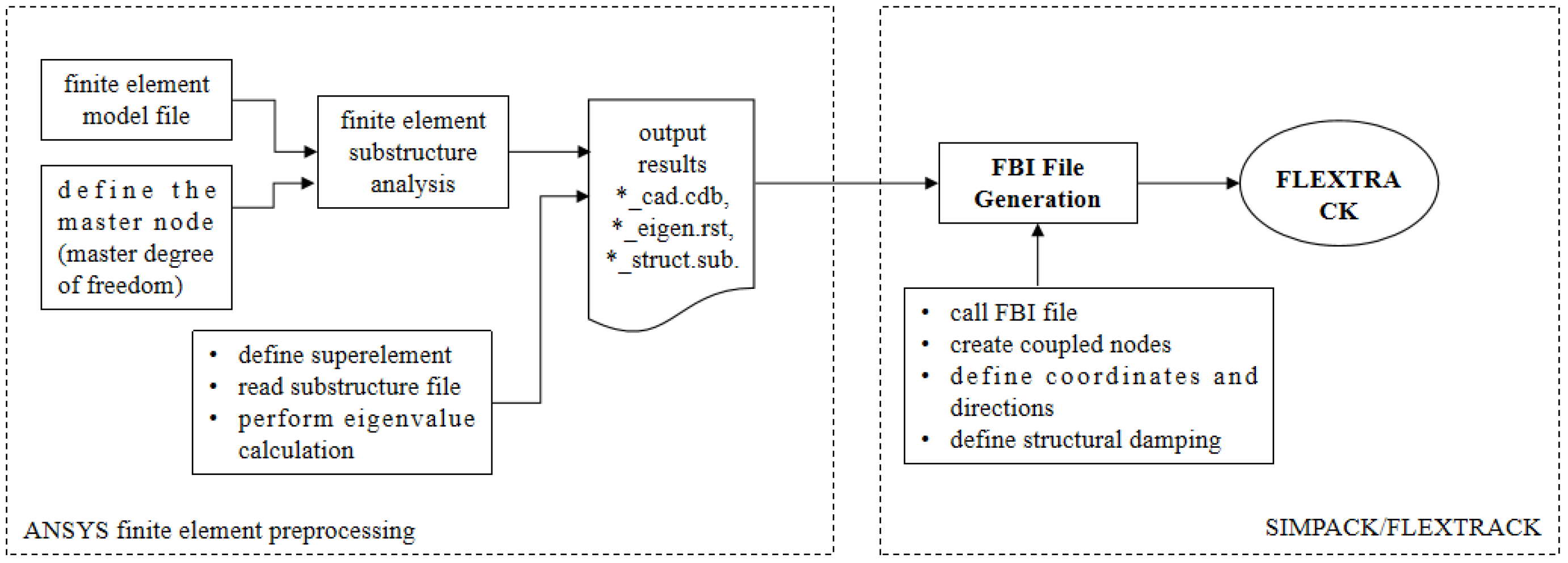
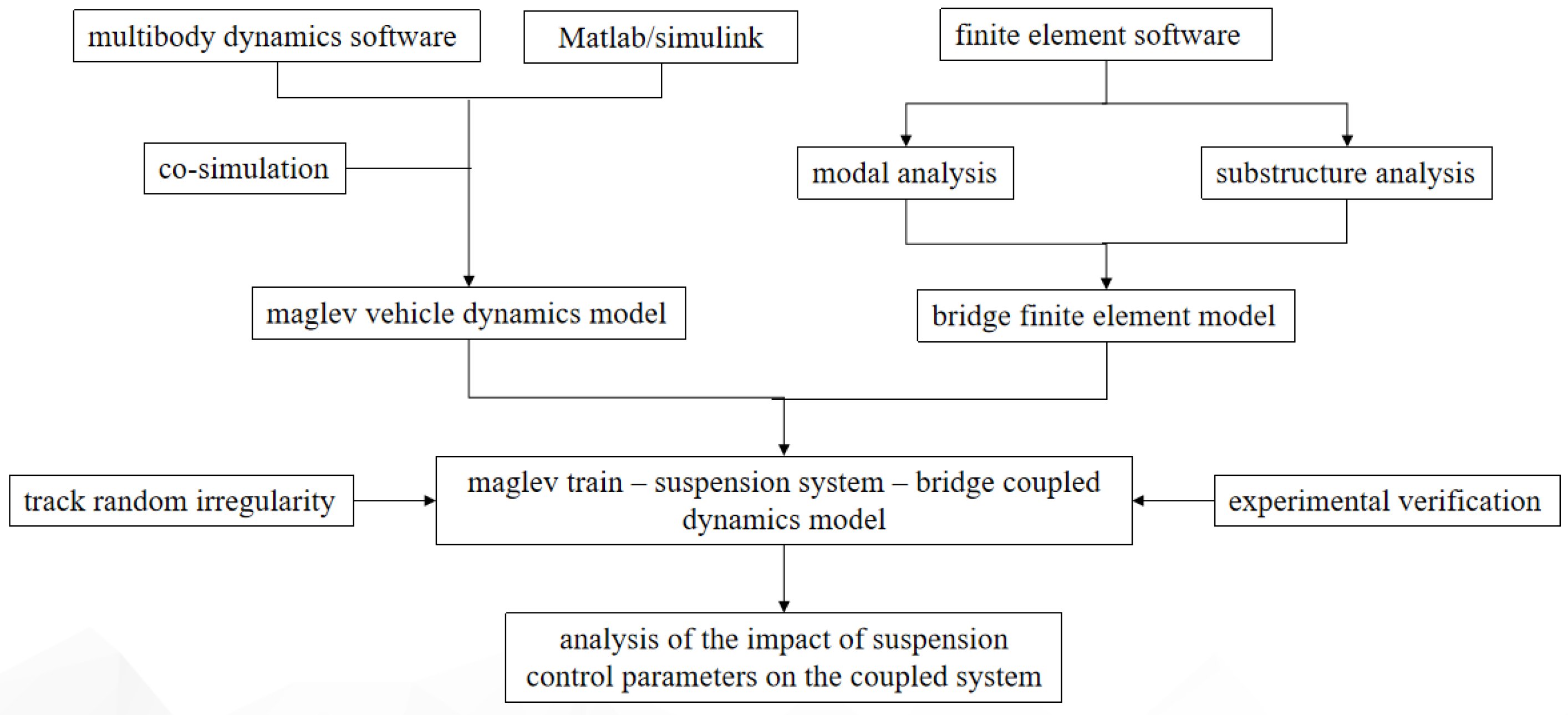
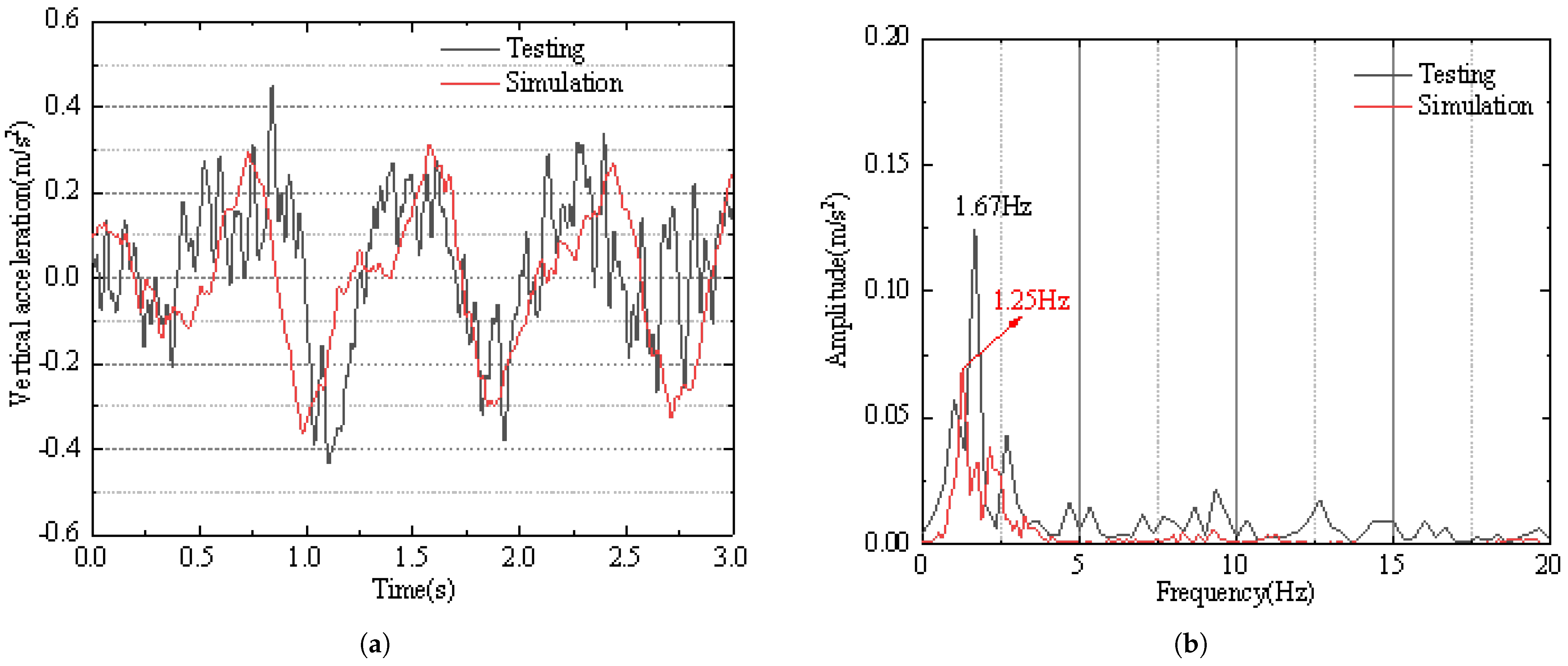
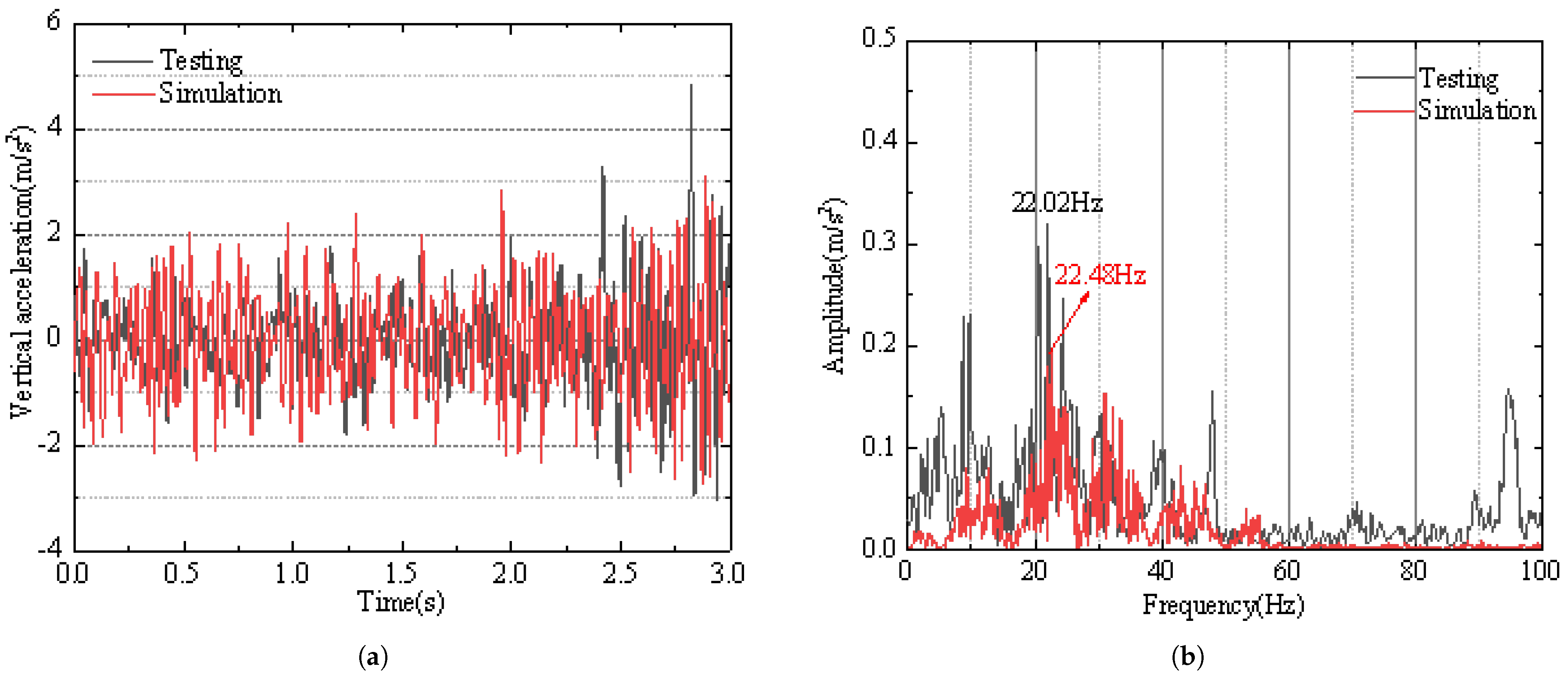
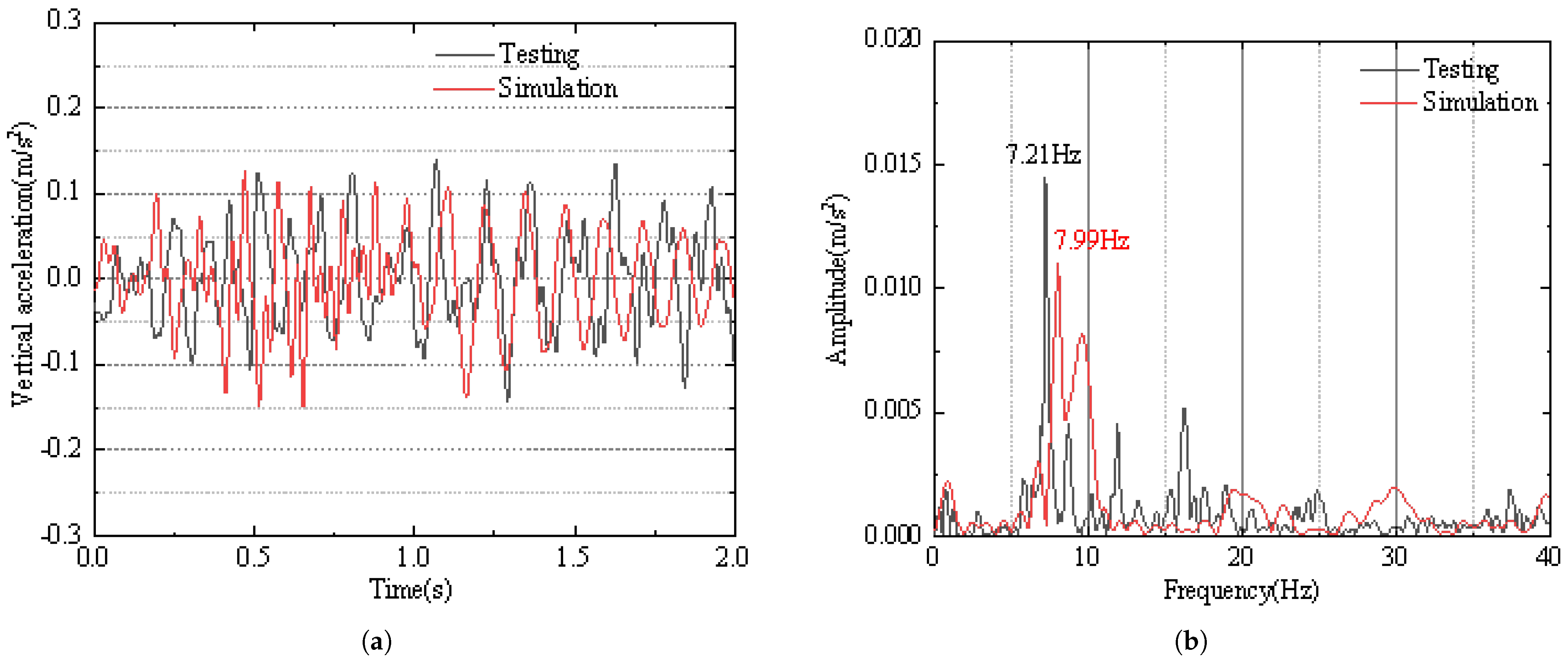
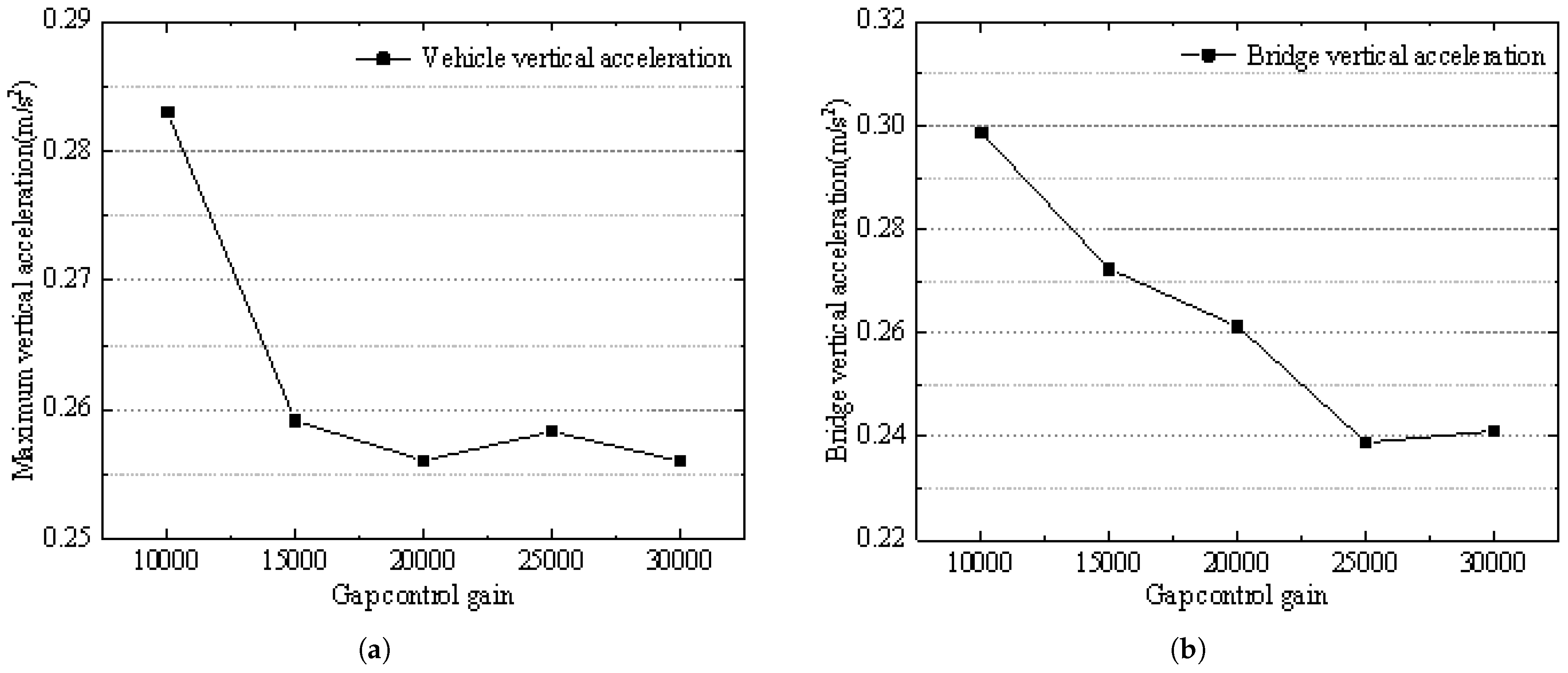
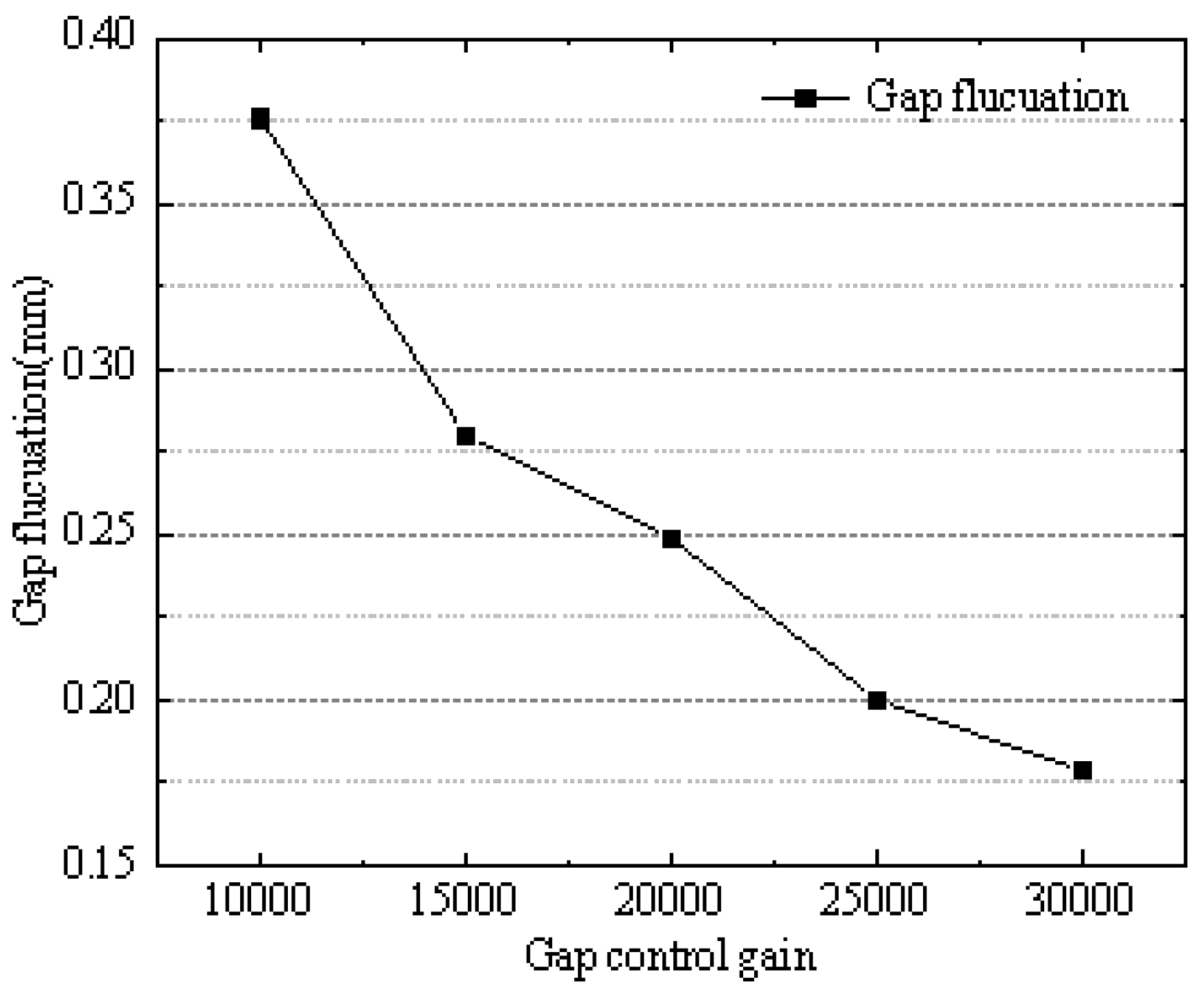
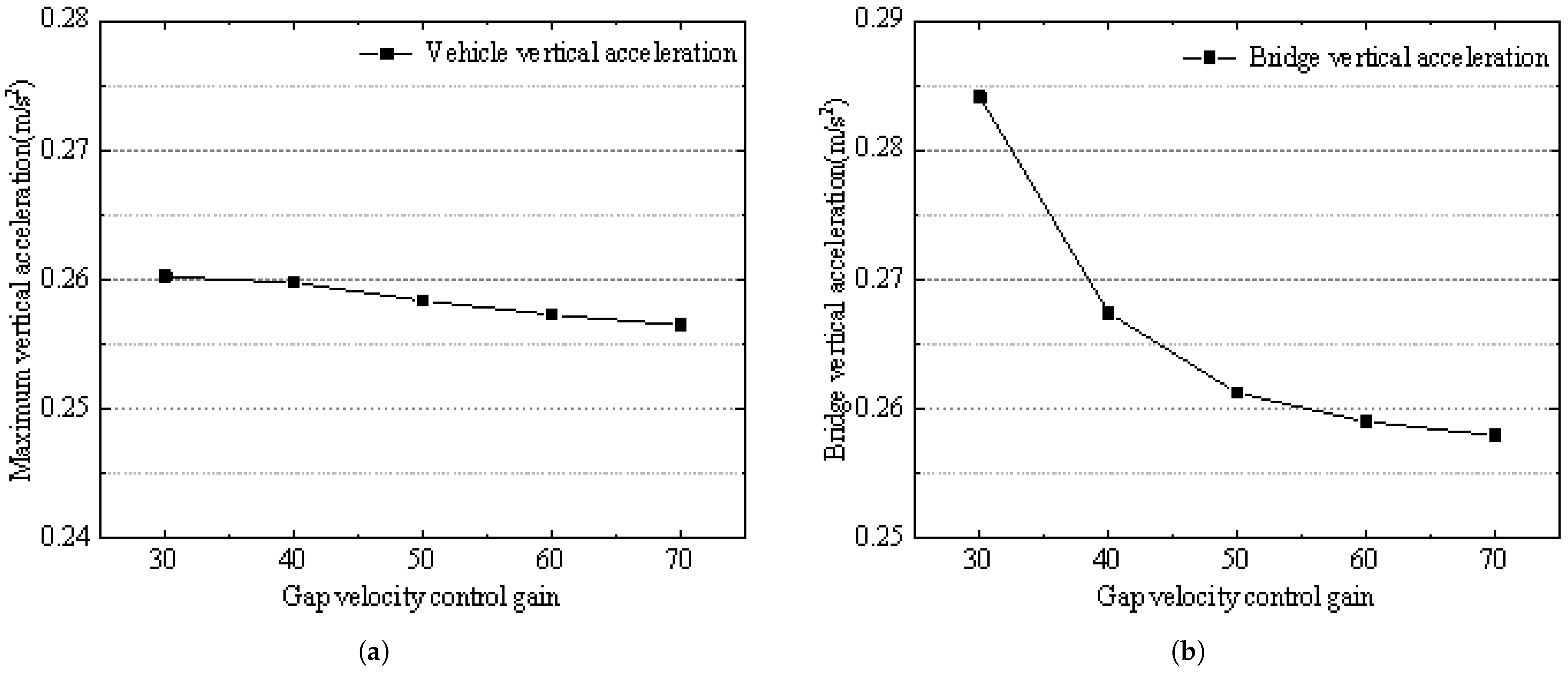
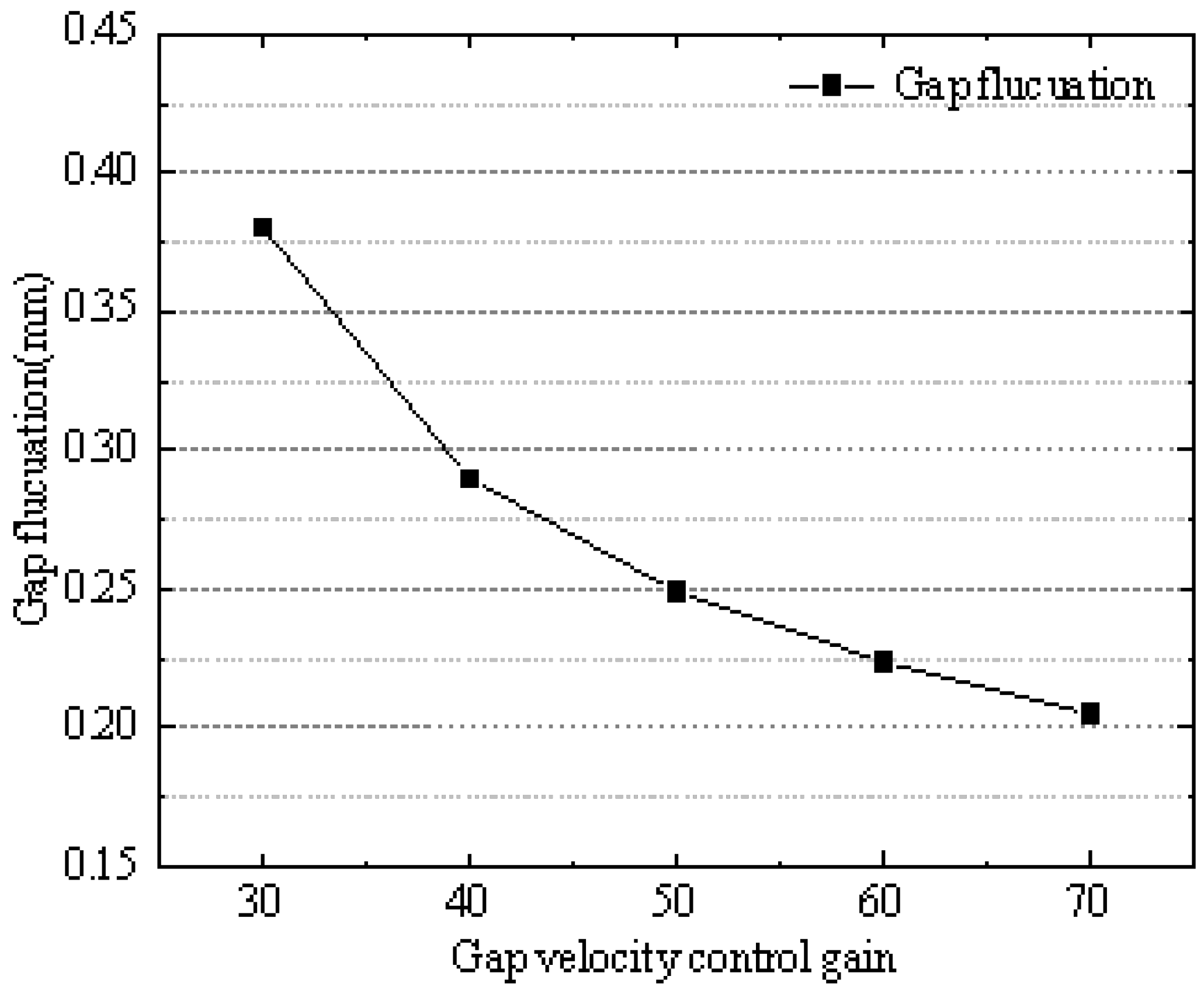
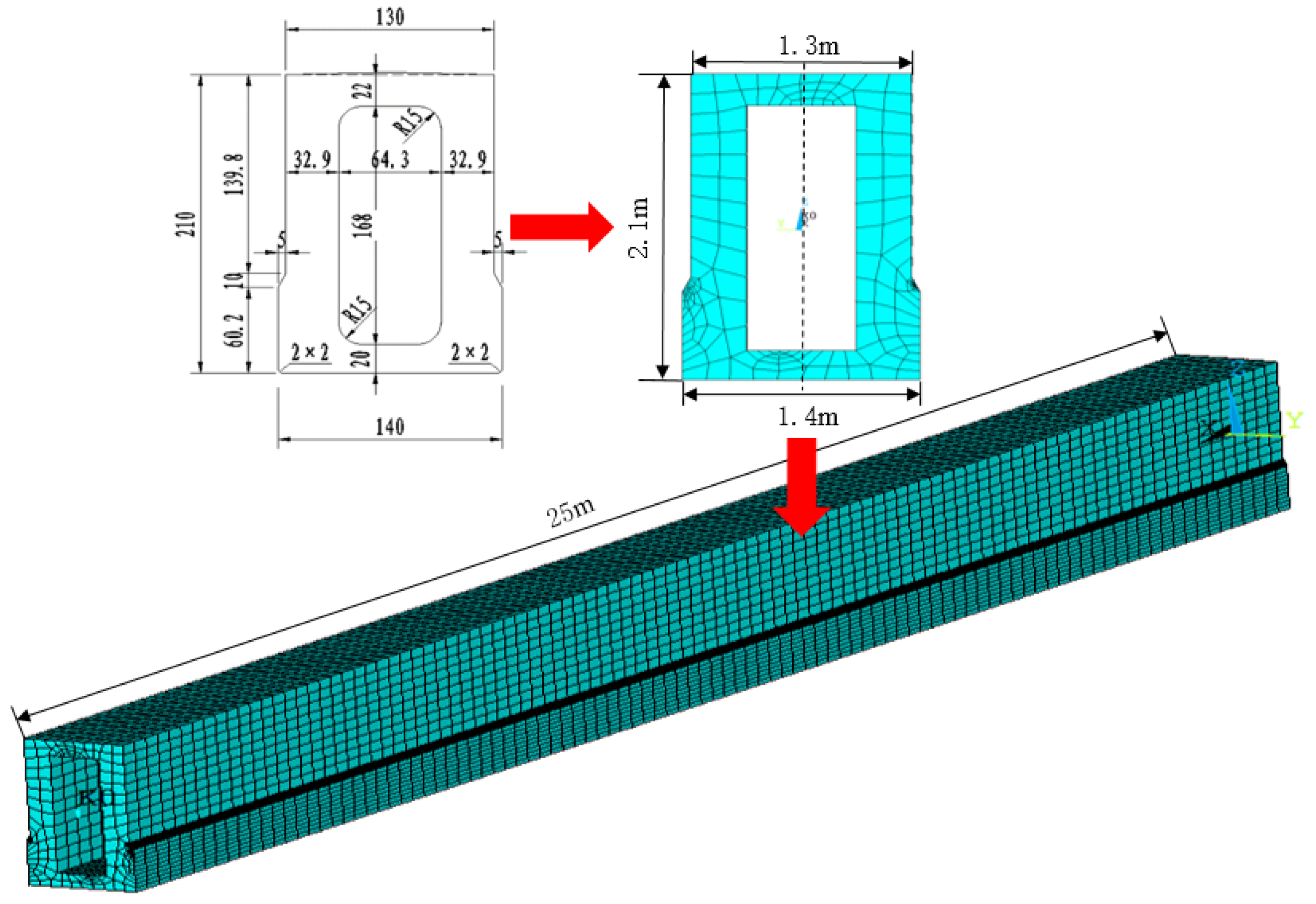
To address the vehicle-bridge coupling vibration issue of the Qingyuan Maglev Tourist Line, it is necessary to establish a maglev vehicle–bridge coupling dynamics simulation model that reflects the actual line conditions. Based on the vehicle and bridge structural parameters of the Qingyuan Maglev Tourist Line, this paper utilizes multi-body dynamics simulation software to create a medium–low-speed maglev vehicle dynamics model, and employs finite element software to construct a bridge model. Using the modal reduction method, the bridge finite element model is imported into the vehicle dynamics model through a rigid–flex coupling interface, establishing a medium–low-speed maglev vehicle suspension system–bridge coupling dynamics model. The accuracy of the established coupling simulation model was verified by comparing the simulation data from the coupling model with the dynamic response measured data from the Qingyuan Maglev Tourist Line. Finally, the impact of different control parameters on the vehicle–bridge coupling system was calculated, and the results indicate that selecting appropriate suspension control parameters can reduce the coupling vibration response between the maglev vehicle and the bridge. The main work of this paper is closely related to engineering, modeling based on the actual maglev line’s vehicle and bridge parameters, and validating the model through the dynamic test results of the line, laying the foundation for the suppression of maglev vehicle–bridge coupling vibration and system optimization.
Keywords: maglev vehicle; vehicle–bridge coupling; modal reduction method; combined simulation maglev vehicle; vehicle–bridge coupling; modal reduction method; combined simulation