1. Introduction
Advancements in design, control, and modeling have driven the widespread use of modern robots across various sectors, creating a demand for lightweight and efficient actuators capable of reliable motion generation and impedance control [
1], which directly impacts overall system performance. The evolution of mechanical actuators from conventional technologies such as electric, hydraulic, and pneumatic actuators to bioinspired artificial muscles is briefly outlined in [
2], where actuators are described as systems that transform energy into motion [
3]. Traditional actuators in robotic systems include hydraulic, pneumatic, and electric motors, which convert fluid or electrical energy into mechanical energy [
4]. Among these, electric motors provide portability, flexibility, and ease of use; however, they struggle to generate significant forces at low speeds and can introduce friction, noise, and backlash into the system [
4,
5]. To address these challenges, the careful selection of a speed reducer or gearbox becomes essential to ensure actuator compactness, power density, efficiency, and productivity, while avoiding excessive control and design complexity. Despite the emergence of new-generation transmission technologies with application-specific priorities, planetary gearheads [
6,
7], cycloidal drives, and Harmonic gearboxes (HGs) [
8] remain the most widely employed in robotics [
9]. Although the concept of HGs is relatively mature, researchers continue to refine and adapt this technology for modern robotic applications to achieve higher torque density and precision [
10,
11].
As a lightweight strain-wave gearbox, HGs, in contrast to the previously mentioned systems, combine the advantages of inherent compliance, zero backlash, and high single-stage speed reduction ratios with fewer moving parts, making them dominant in the field of collaborative robots [
12]. A comparison of the operating principles of harmonic and cycloidal drives is presented in [
13]. To enable torque estimation without the use of an output-mounted torque sensor, one approach described in [
14] integrates a torsional spring at the input of the harmonic drive. The angular deformation of the spring is measured using encoders, which allows for indirect torque estimation while maintaining low sensing noise. HGs also find applications in exoskeletons, where high torque demands are critical. For instance, a SEA-based exoskeleton with high-fidelity closed-loop torque control is presented in [
15], while a lightweight and modular robotic exoskeleton for walking assistance after spinal cord injury is introduced in [
16]. Other developments include the integration of shape memory alloys for joint torque estimation in harmonic drive systems [
17] and the use of cycloidal gears in robotic knee joints [
18]. HGs have also been adopted in space robotics applications [
19].
In HGs [
20], a revolving wave generator (WG) deforms a flexible external gear called the flexspline (FS) against a rigid internal gear known as the circular spline (CS), creating relative motion. The FS is designed with two fewer teeth than the CS. The WG, an elliptical cam housed in a ball-bearing assembly, rotates inside the FS, pressing it firmly into the CS at two diametrically opposite contact points. These contact points rotate at a speed determined by the tooth difference between the splines, resulting in single-stage speed reduction. The FS provides additional advantages such as inherent torsional stiffness, which can be exploited for system control and output torque estimation, making HGs highly suitable for robotic applications [
21]. A flexible multibody modeling framework for simulating HGs is presented in [
22], incorporating elastic deformation of the FS and dynamic contacts between the main components to replicate the contact mechanics of the drive. While most FS and CS gear profiles are nearly conjugate and non-involute [
23], some studies have attempted to design fully conjugate gear pairs with purely involute profiles [
24,
25]. An alternative concept is the Vernier drive, a high-ratio involute gear reducer that uses the Vernier effect [
26].
Despite their advantages, the cost of modern HGs remains high due to the complex machining processes required to manufacture the FS, which must combine a rigid output end with thin, flexible external splines. This design also creates dead volume within the actuator. High-precision tooling is essential to achieve higher speed reduction ratios in compact volumes, as the ratio directly depends on the tooth difference between the CS and FS. Additionally, being gear transmission systems, HG components are prone to failures caused by impulse torques and overheating, which degrade performance and shorten service life. The FS is particularly vulnerable, with common failure modes including wear at the WG–FS interface, fatigue cracks in the FS rear cross-section, and difficulty in early crack detection, all of which necessitate frequent maintenance [
27]. These fatigue-related limitations also restrict the achievable transmission ratios, and commercially available HGs are typically constrained to single-stage reductions between 30:1 and 320:1 [
28]. Consequently, the redesign and modification of critical HG components remains a worthwhile direction for future research.
The literature points to the importance of developing a low-cost, modular transmission mechanism built from commercially available components while retaining the functional benefits of Harmonic Drives (HGs). Such an actuator would be highly suitable for modern robotic systems, particularly quadrupeds, as it enhances compactness, torque density, and design flexibility. Unlike conventional HGs, which are constrained to gear ratios typically between 30:1 and 320:1 due to tooth profile limitations and meshing issues [
29], the proposed design aims to support both high and relatively low ratios. This broadens the applicability of HG-inspired mechanisms by overcoming the narrow wedge angle problem at very high ratios and the backlash and efficiency issues at very low ratios.
Therefore, this concept broadens the horizon of utilising the HGs. The EM-Act actuator presented in [
28] is designed to be used as a limb of a quadruped robot. To improve the mobility in the hip joint, this work explores the design of an actuator that can provide abduction and adduction motions in the hip, which provides the form factor, nominal torque, and torque density requirements for the actuator. These goals drive the design presented in this study. However, the concept is not limited to quadrupeds and can be adapted for other applications as well.
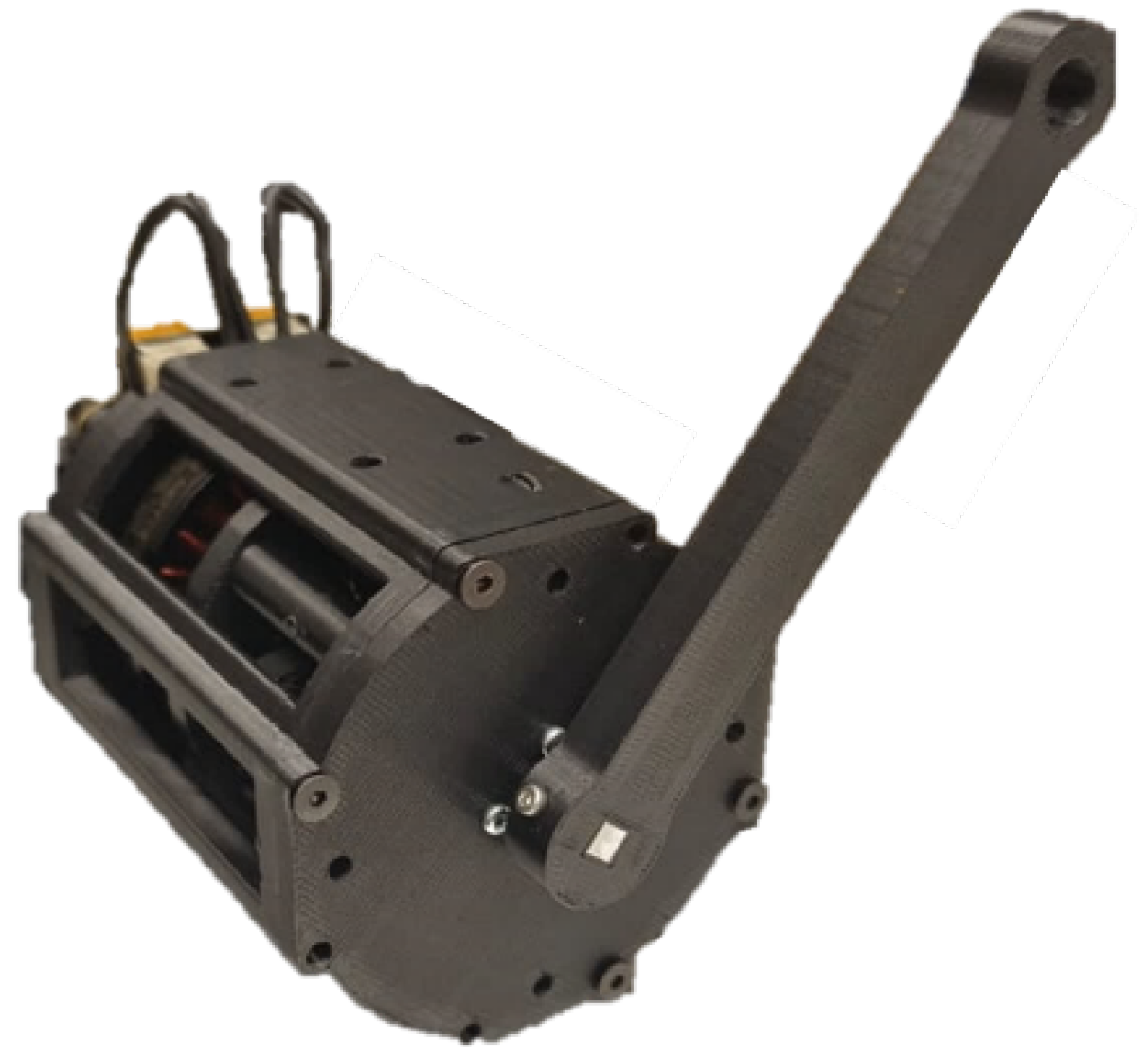
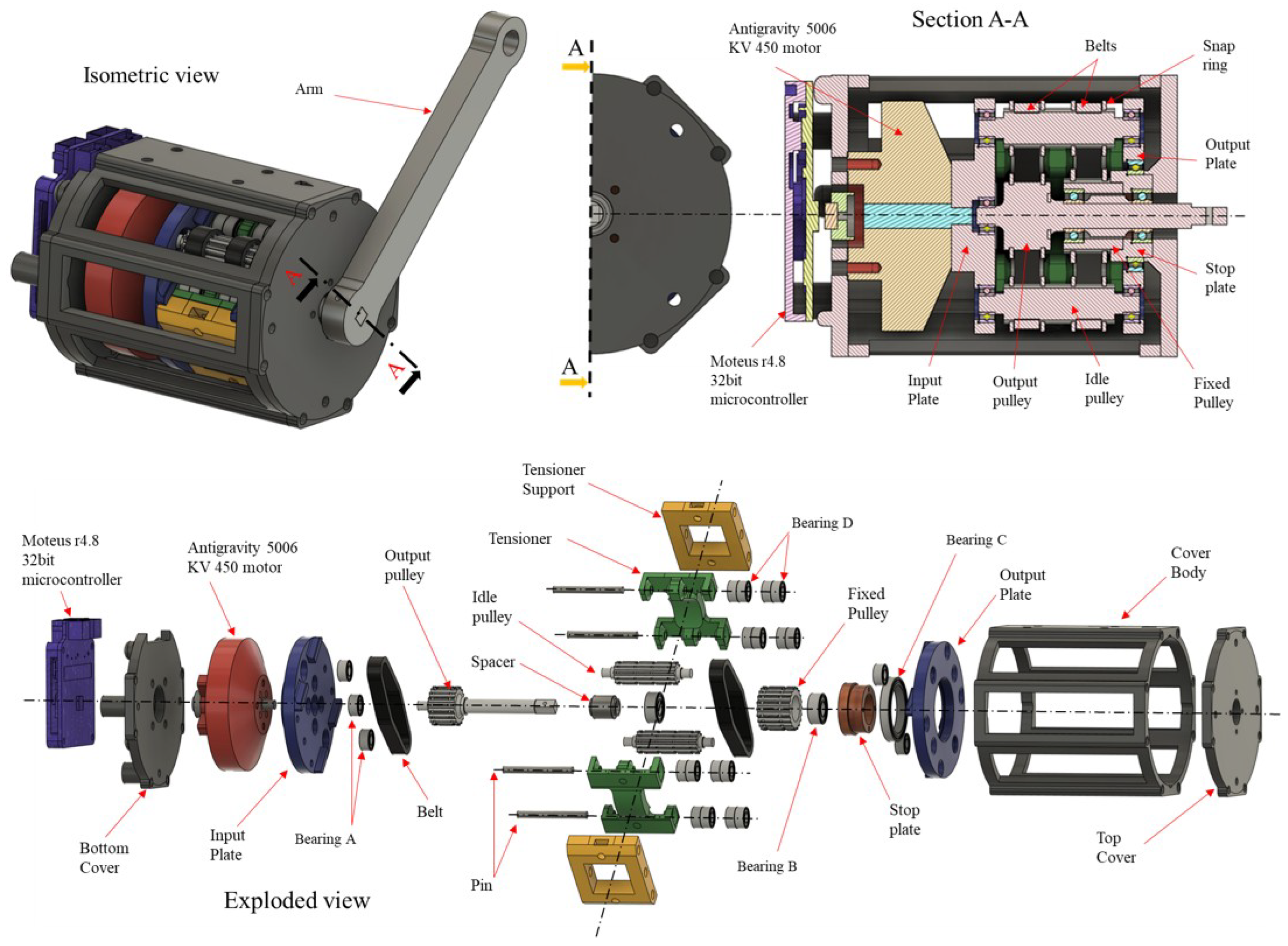
The contributions of this paper include the introduction of a novel actuator architecture that preserves the advantages of traditional HGs—such as zero backlash, high single-stage reduction, and torsional stiffness—while tackling their main drawbacks, namely high cost, complex flexspline (FS) machining, and a limited fatigue life. By reinterpreting the harmonic drive principle using commercially available synchronous timing belts and pulleys, we present a low-cost, modular transmission system that emulates the strain-wave motion of FS-based HGs. This approach eliminates the need for precision-machined FSs, reduces dead volume, and provides improved robustness against impulsive loads, lowering maintenance requirements. The proposed Radial Modular Actuator (RM-Act), shown in
Figure 1, improves actuator compactness and torque density while being built entirely from off-the-shelf components. The design is validated through static testing and model identification, laying the groundwork for future dynamic validation and integration into robotic platforms. Although the initial prototype is tailored for quadruped hip actuation, the concept is generalizable to a wide range of robotic systems, with the flexibility to achieve very high gear ratios through appropriate component selection.
The structure of this paper is as follows:
Section 2 introduces the design inspiration and concept;
Section 3 details the design process and component selection;
Section 4 presents the final CAD model and specifications;
Section 5 reports static and dynamic tests;
Section 6 provides model identification and parameter estimation; and
Section 7 concludes with key findings and directions for future research.
2. Concept and Inspiration
A harmonic speed reducer, or strain-wave gearing mechanism, consists of a wave generator (WG, input), a flexspline (FS, output), and a circular spline (CS, fixed). If the number of teeth in the CS is
and that in the FS is
, with the difference between them being
t, the single-stage speed reduction ratio
s is given by
The negative sign indicates that the output rotates in the opposite direction to the input. Typically, t equals 2 in strain-wave gearing mechanisms.
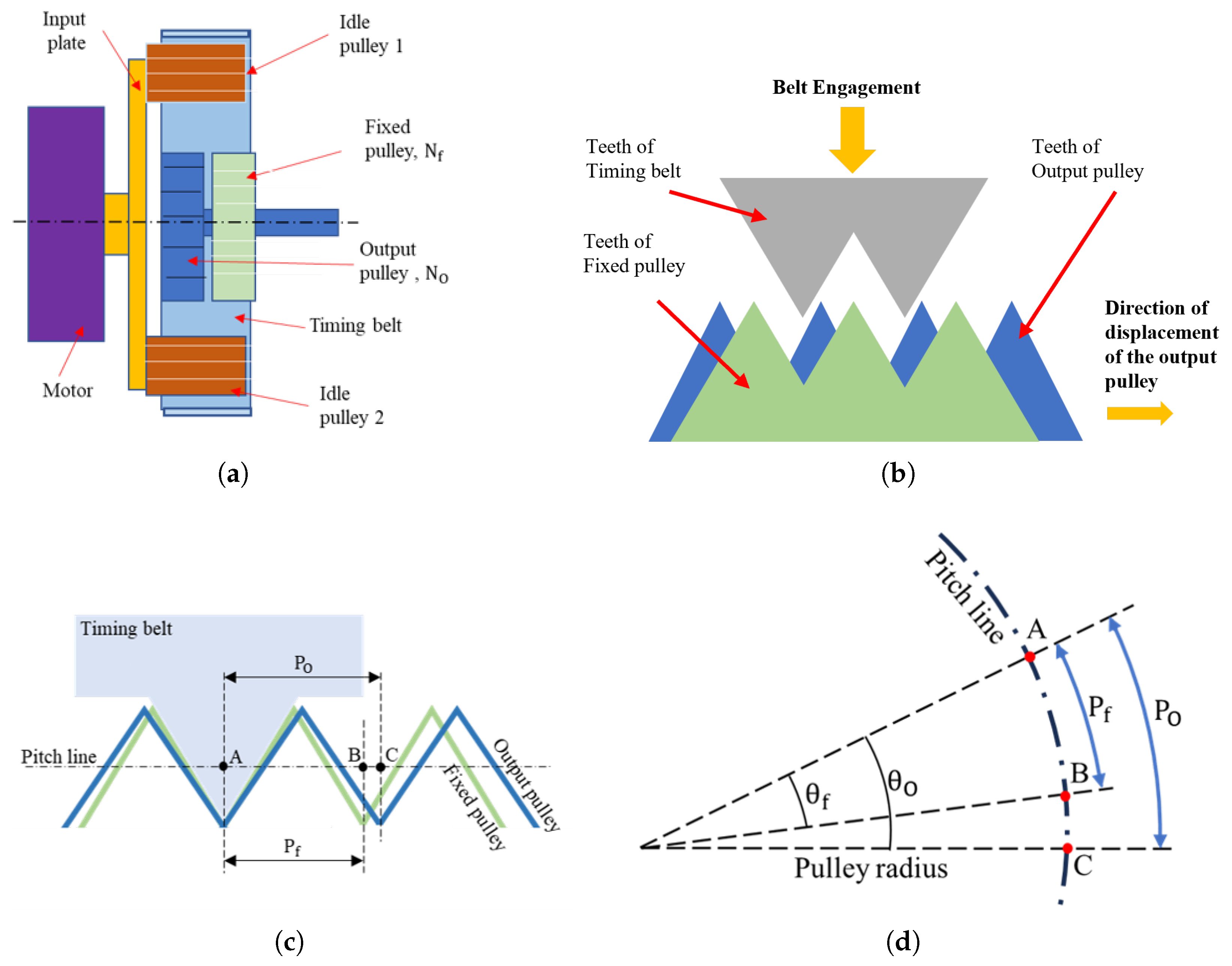
The basic concept of the present design is to realize a harmonic speed reducer using commercially available components by replacing the FS with a timing belt and using an external gear as the CS. This approach eliminates the manufacturing complexity of the FS and internal gear, significantly reducing the cost of the speed reducer. In the current design, as shown in
Figure 2a, an input plate driven by a motor moves a pair of toothed idle pulleys in a circular orbit, deforming the timing belt. The belt is in limited contact with a pair of co-axial toothed central pulleys with different pitch values (
and
) or different numbers of teeth (
and
). Of the central pulleys, one is fixed while the other, forming the output end, is free to rotate. The fixed pulley restrains the motion of the belt engaged to it, and as the circular plate attached to the idle pulleys via bearings rotates, the idle pulleys rotate only by deforming the belt. This deformation imparts motion to the output pulley, as illustrated in
Figure 2d, through engagement of the belt teeth with the central pulleys.
Consider the situation shown in
Figure 2c, where a belt tooth is engaged with the central pulleys. As depicted in
Figure 2d, let
and
represent the angular pitches of the fixed and output pulleys, respectively, where the angular pitch is defined as the angle corresponding to the circular pitch [
30]. As the input circular plate rotates, for every angle
, the belt tooth engages with the pulleys, causing the output pulley to move a distance of
along the pitch line. This results in an angular displacement of
in the output pulley,
, opposite to the direction of rotation of the input. Hence,
For a complete rotation of the circular plate, the belt tooth engages with all teeth of the fixed pulley, causing the output pulley to rotate by an angle of in the opposite direction. This motion produces a single-stage speed reduction of , consistent with conventional harmonic speed reducers. Since manufacturing two toothed pulleys or external gears with identical diameters but a specific pitch difference requires custom machining, and this design aims to minimize machining, the discussion hereafter focuses on central pulleys that differ in the number of teeth.
The current design also significantly reduces the size of the reducer module, as its dimensions depend only on the width of the timing belts and the diameter of the pulleys.
Section 4 details the relationship between these factors and the overall actuator size. In addition, this mechanism allows for greater flexibility in selecting the tooth difference,
t.
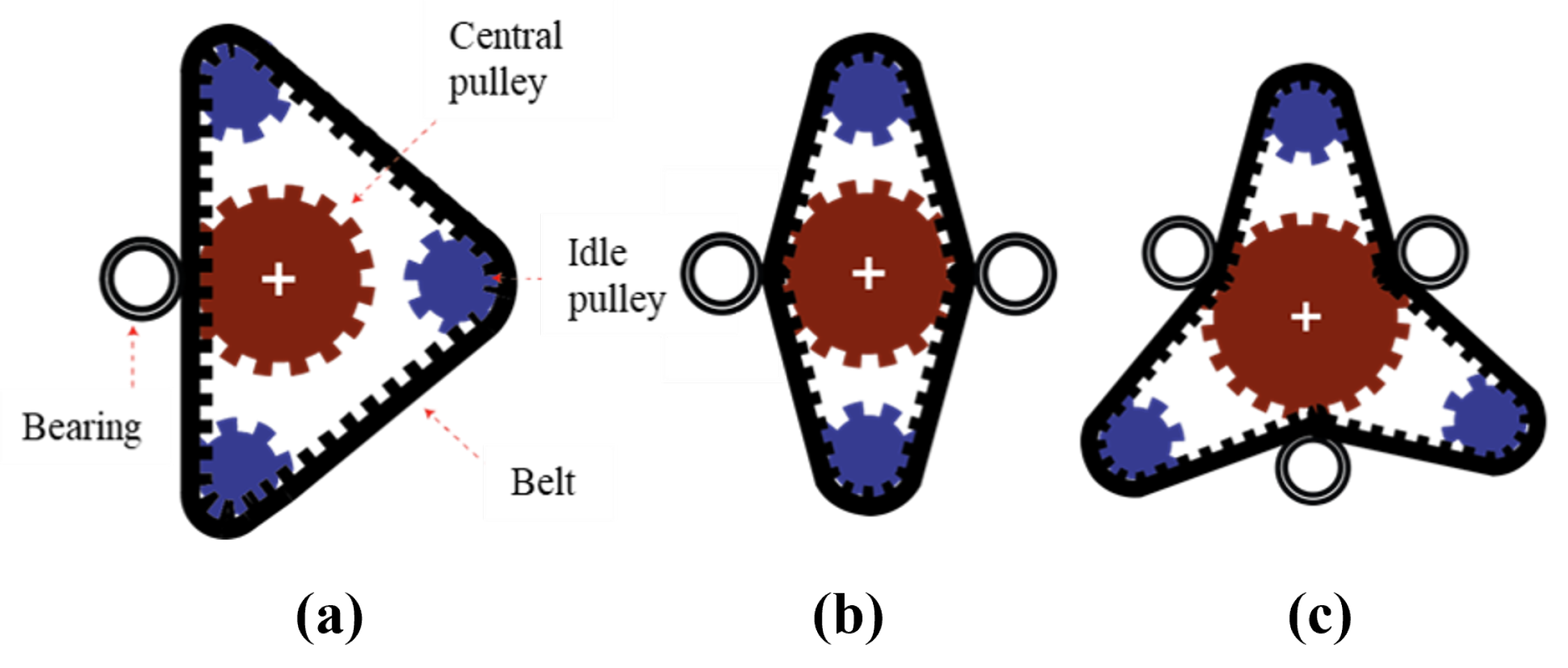
Figure 3 illustrates possible belt and pulley arrangements for different values of
t. The two main criteria to choose the design in
Figure 3b are its compactness and its balanced design. Both the designs in
Figure 3b and
Figure 3c are balanced about the central axis, but the design in
Figure 3b is more compact and requires fewer parts, making it more suitable for the proposed actuator design. Bearings or rollers can be employed to maintain proper contact between the timing belt and the central pulleys. Keeping
t as an even number ensures a compact and simple design while reducing the number of components.
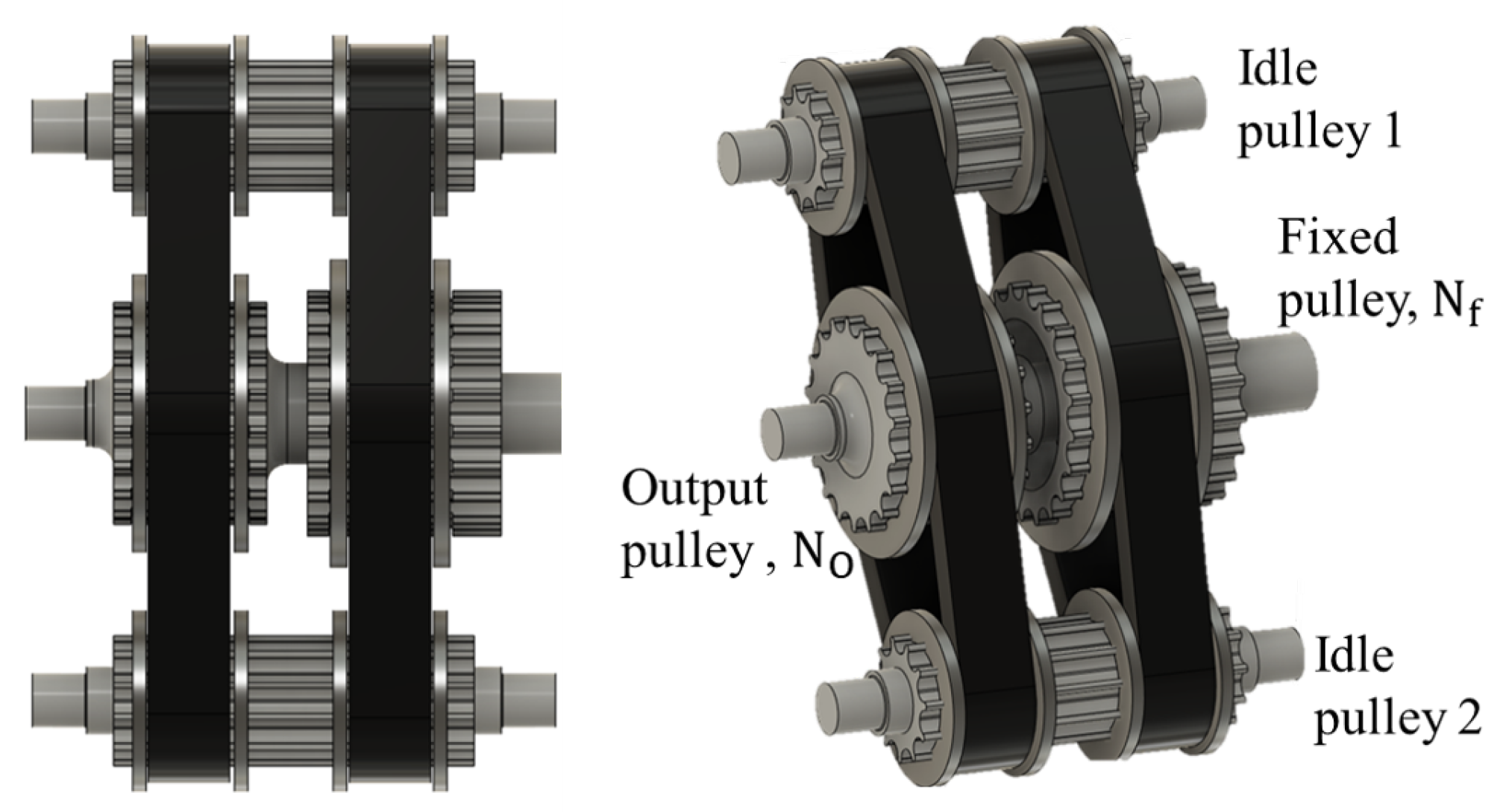
For larger values of
t, as the difference in pitch diameter (
) between the central pulleys increases, it is advisable to use two belts, one for each central pulley, as shown in
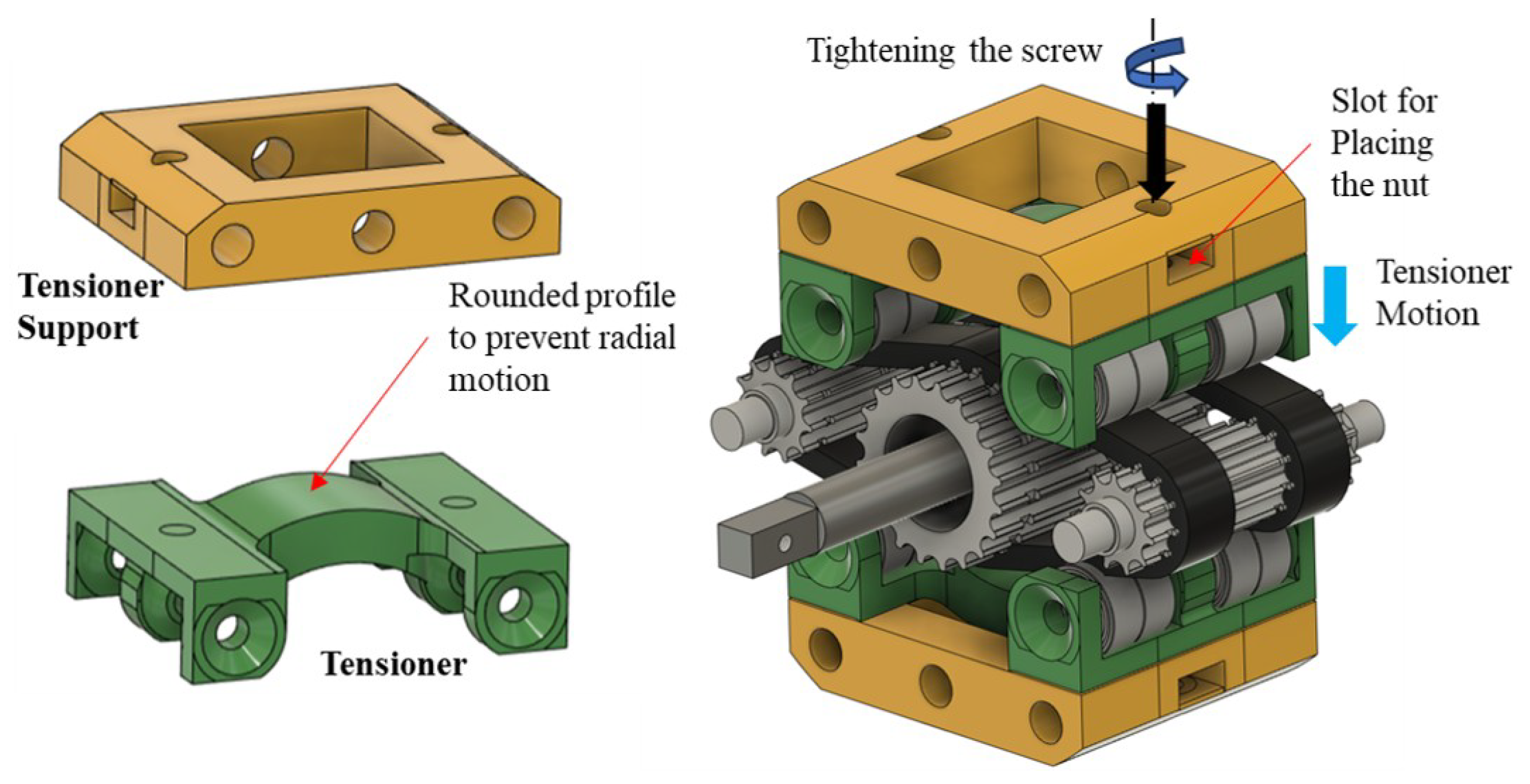
Figure 4. Since both belts are deformed by the same idle pulleys with an equal number of teeth, they move at the same speed, preserving the operational principle of the system. However, belt tensions may differ, requiring an independent tension adjustment for each belt.
3. Design and Component Selection Procedure
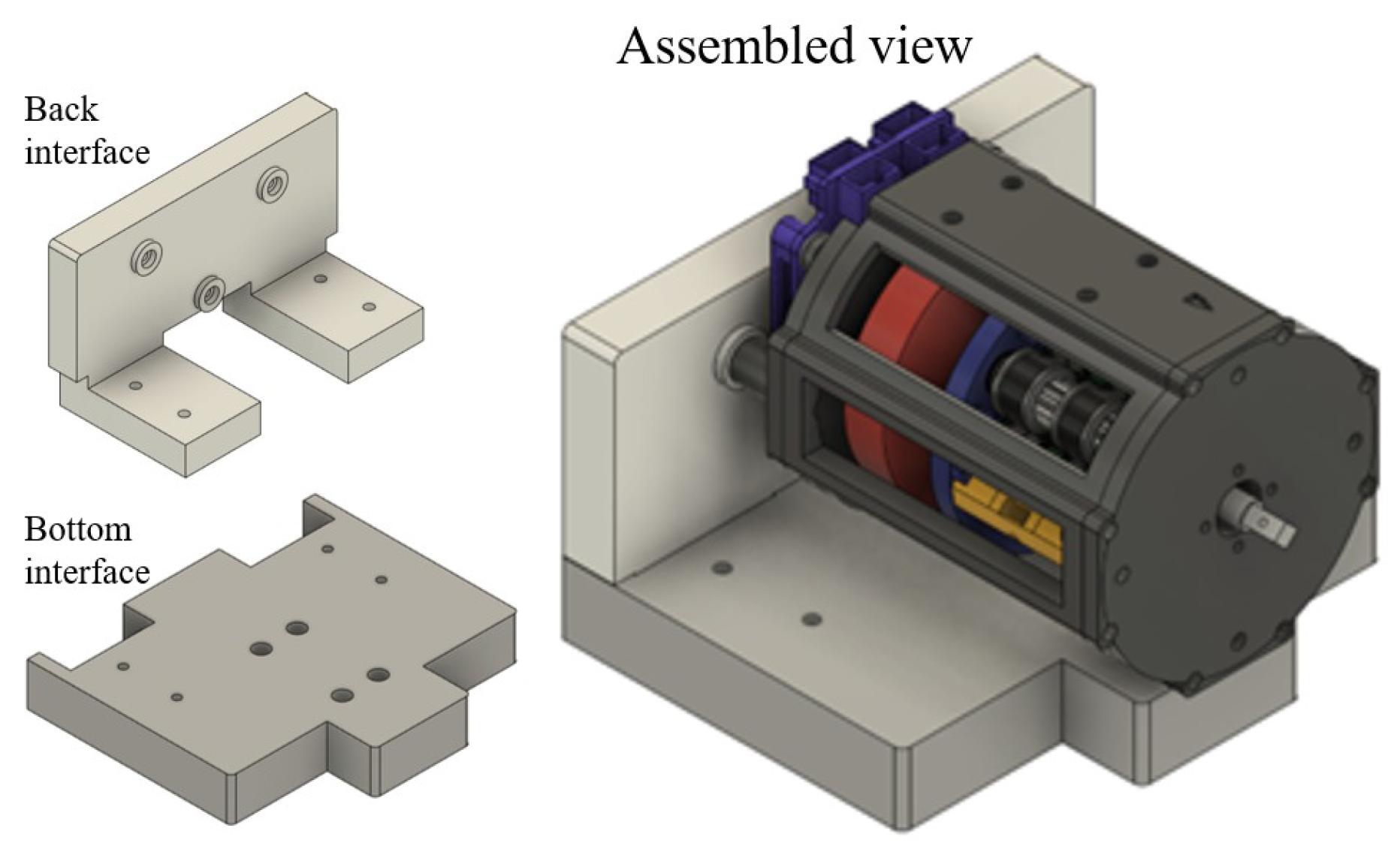
This section outlines the details of the design and component selection procedure of the presented RM-Act. The development of this actuator is presented as a general concept that can be applied to any system requiring high torque combined with a good bandwidth. In this work, however, we specifically target its use in the abduction–adduction joint of a quadruped robot. The actuator’s dimensions and torque requirements are derived from this application. The maximum outer diameter of the actuator should be approximately , while its length should not exceed . Minimizing the length is particularly important to achieve high torque density. The nominal torque requirement is around , and the maximum output velocity is approximately .
In the design process described in this section, the module and dimensions of the central and idle pulleys are first selected. Then, using the tooth difference and the desired gear ratio, the dimensions of the fixed pulley are determined. Based on these selections, the expected diameter of the mechanism, , is calculated, which subsequently provides the necessary dimensions to model the actuator in CAD software Creo Parametric 8.0.
The components were selected to minimize actuator size while considering commercial availability, thereby improving torque density and reducing machining costs. After reviewing the available timing belts and pulleys, components from POGGI
® were identified as suitable, offering a wide range of pitch values [
31,
32]. A pitch of 3M was chosen, as it provided greater flexibility across different component specifications. To minimize actuator volume, the motor diameter was used as a reference for selecting the remaining components.
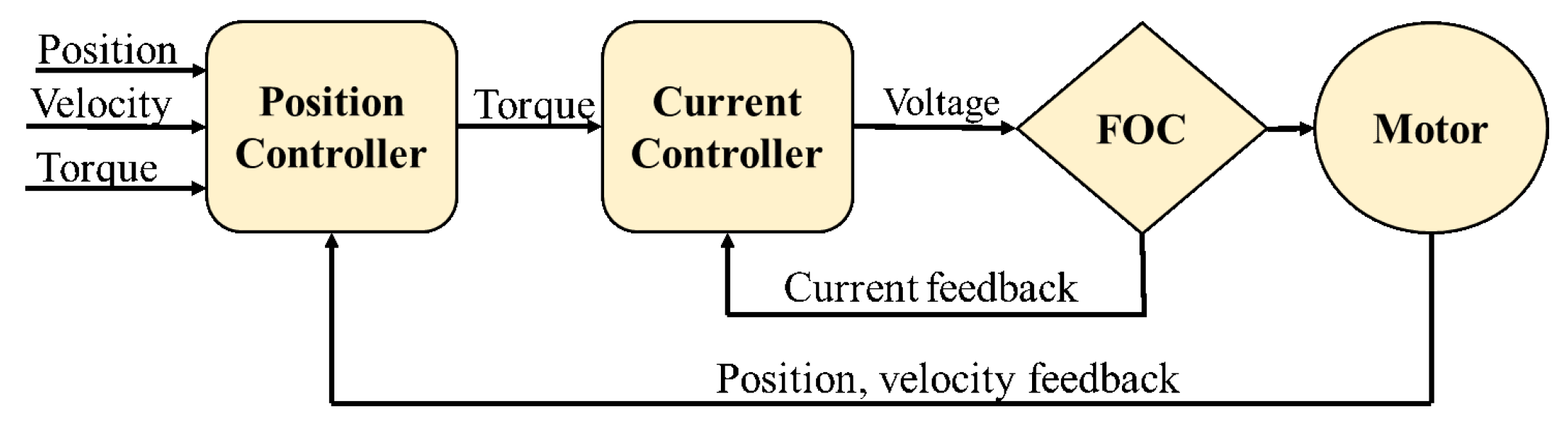
The next step was choosing the motor. Brushless motors were preferred for their lightweight construction and high torque-to-volume ratio. In particular, motors from T-Motors, which produce lightweight brushless motors for unmanned aerial vehicles with high thrust-to-weight ratios, were considered. Simultaneously, a compact driver capable of controlling the motor with sufficient accuracy for dynamic operation was sought. The Moteus r4.8 controller from MJBOTS was selected, featuring a 24 V power supply, an encoder with at least 12-bit precision, and a peak current exceeding 25 A.
Based on these driver specifications and the desired motor performance, motors with operating voltages below 24 V from T-Motors were evaluated. The T-Motors Antigravity 5006 KV450 motor was selected [
33], as it is also used in the EM-Act actuator [
34], allowing for a suitable performance comparison. The chosen driver was compatible with assembly alongside this motor, ensuring its integration into the actuator design.
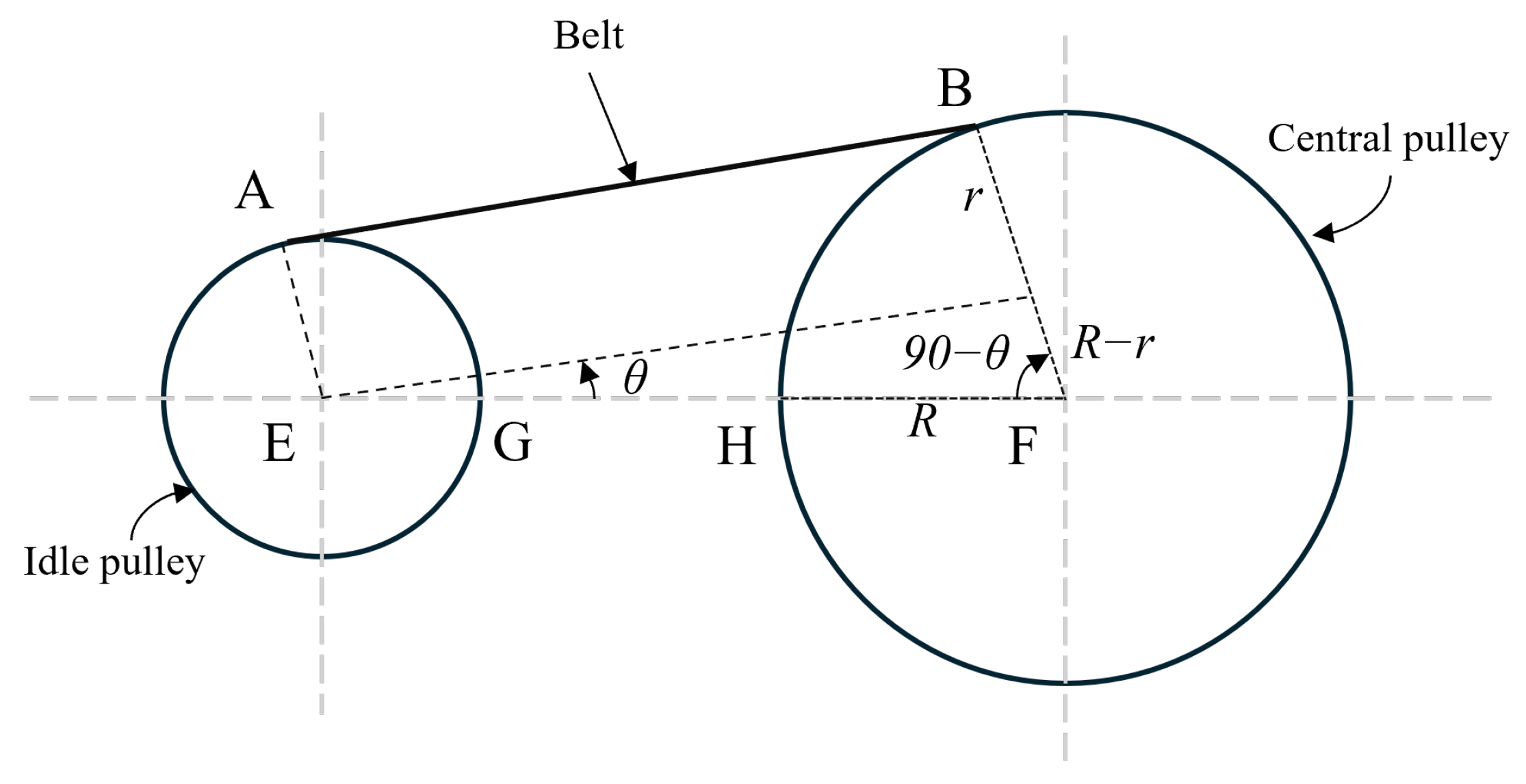
For the selection of the idle and central pulleys, calculations were performed as illustrated in
Figure 5. Here, the term “central pulley” refers to the larger of the two pulleys, whether fixed or output.
Let the pitch length of the belt be
b, and the radii of the idle pulley and the central pulley be
r and
R, respectively. Considering the clearance between the idle and central pulleys
, from
Figure 5, we have
It should be noted that
depends on the parameters of the tensioning system and the snap ring diameters, allowing for the smooth motion of the belt tensioners between the pulleys. Given a motor diameter of 56 mm, a timing belt with a pitch length of 120 mm [
31] was selected to align the belt’s half-length with the motor diameter.
For pulley selection, the expected diameter of the mechanism,
, is computed. This can be determined based on
and the pitch diameters
of the available pulleys [
32] (see
Table 1), using
The combinations of idle and central pulleys identified, with a minimum clearance
of 2 mm and an expected mechanism diameter
close to the motor diameter (56 ± 1 mm), are shown in
Table 1. Pulley names indicate the number of teeth; for example, P11 refers to a pulley with 11 teeth. In
Table 1, the indicators
and
denote combinations that violate the upper and lower bounds of the constraint
, while
indicates combinations that violate the clearance constraint
. The “*” symbol indicates that, for that combination, the pulleys cannot be arranged within the given belt length, as illustrated in
Figure 4.
Maintaining close to the motor diameter allows greater flexibility in pulley selection and increases the possible range of speed reduction ratios. The combinations with central pulleys P10 to P28 and idle pulleys P09 to P17 satisfy all the above constraints.
Table 2 lists the pulleys corresponding to the possible range of speed reduction ratios within the given constraints. The tooth difference between the central pulleys was selected as 2, as this provides a compact and balanced design, minimizing eccentric masses and loads while reducing the number of components. According to
Table 2, speed reduction ratios ranging from −3 to −27 and 4.7 to 29 are achievable within the volume and component criteria.
To allow an output shaft through the fixed pulley, selecting a smaller diameter for the output pulley simplifies the design and facilitates the arresting of the fixed pulley to the casing. Additionally, an intermediate speed reduction ratio is preferable, balancing output velocity and torque for dynamic robotic applications. Considering these factors and preferring a non-decimal value, a speed reduction of −9 was selected.
Accordingly, the fixed and output pulleys were chosen with 20 and 18 teeth, respectively. An idle pulley with 11 teeth was selected to provide greater spacing between pulleys, which accommodates the dimensions of the tensioning system. Using the values of
and
z, representing the clearance between the body cover and rotating elements inside the actuator, and the thickness of the actuator cover, respectively, the final actuator diameter
can be determined by
6. Model Identification
This section discusses the series of dynamic tests performed to determine the parameters of the RM-Act, including inertia, stiffness, and friction. In addition, the properties of the RM-Act are compared with those of another indigenously developed actuator, the EM-Act [
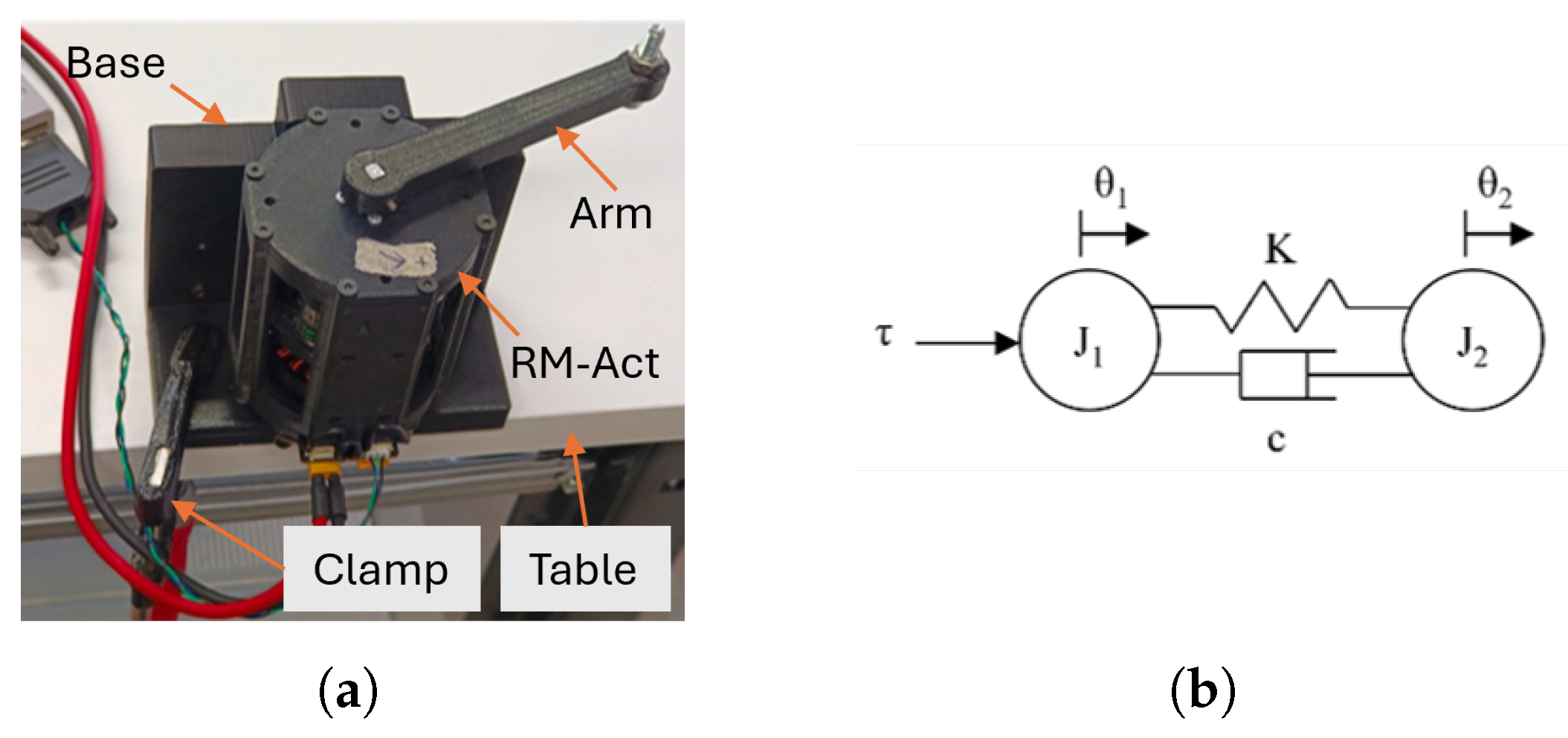
34]. The EM-Act employs a two-stage compound belt gear drive with a 9:1 gear ratio, similar to that of the RM-Act. For model identification, the RM-Act was fixed on a laboratory table with its rotational axis vertical, using the interfaces and clamps, as shown in
Figure 13a. At the output end, i.e., at the end of the arm, a known weight of 10 g was attached and oscillated using a sinusoidal frequency ranging from 0.005 Hz to 100 Hz with an input torque of 0.23 N·m. The motor position was recorded to obtain the Bode plot of the transfer function’s modulus. The actuator was modeled as consisting of motor inertia
and link inertia
, interconnected by a torsion spring
K and a damper
c, as illustrated in
Figure 13b.
For an input motor torque
, the angular positions of both the motor,
, and the link,
, can be measured as system outputs. Considering the angular positions and velocities of the two inertias as the states of the system, the equations of motion can be expressed as
If the state variables are defined as
, then,
,
, therefore,
The state-space form becomes
Here, the angular position and velocity of the motor are denoted by
and
, respectively, while
and
represent the angular position and velocity of the link. Subsequently, frequency domain analysis was performed using a transfer function comprising one integrator, two complex conjugate poles, and a zero.
which was generated from the state space form, where
and
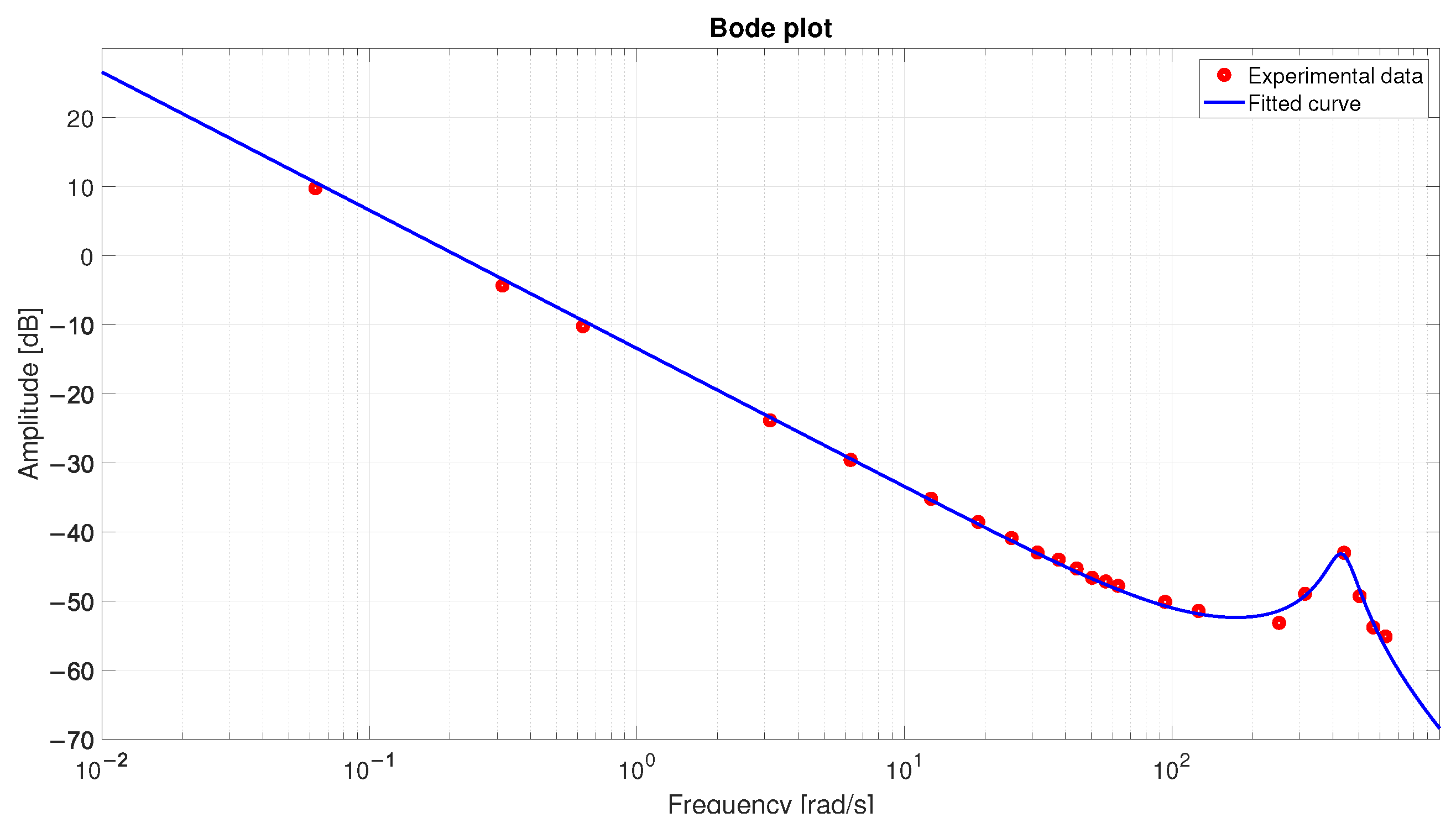
Figure 14 shows the curve fitted to the measured Bode plot of the transfer function’s modulus using the MATLAB R2023b curve fitting toolbox [
36] to estimate the parameters
g,
,
d, and
. Subsequently, using (
9)–(
11), the values of
,
,
K, and
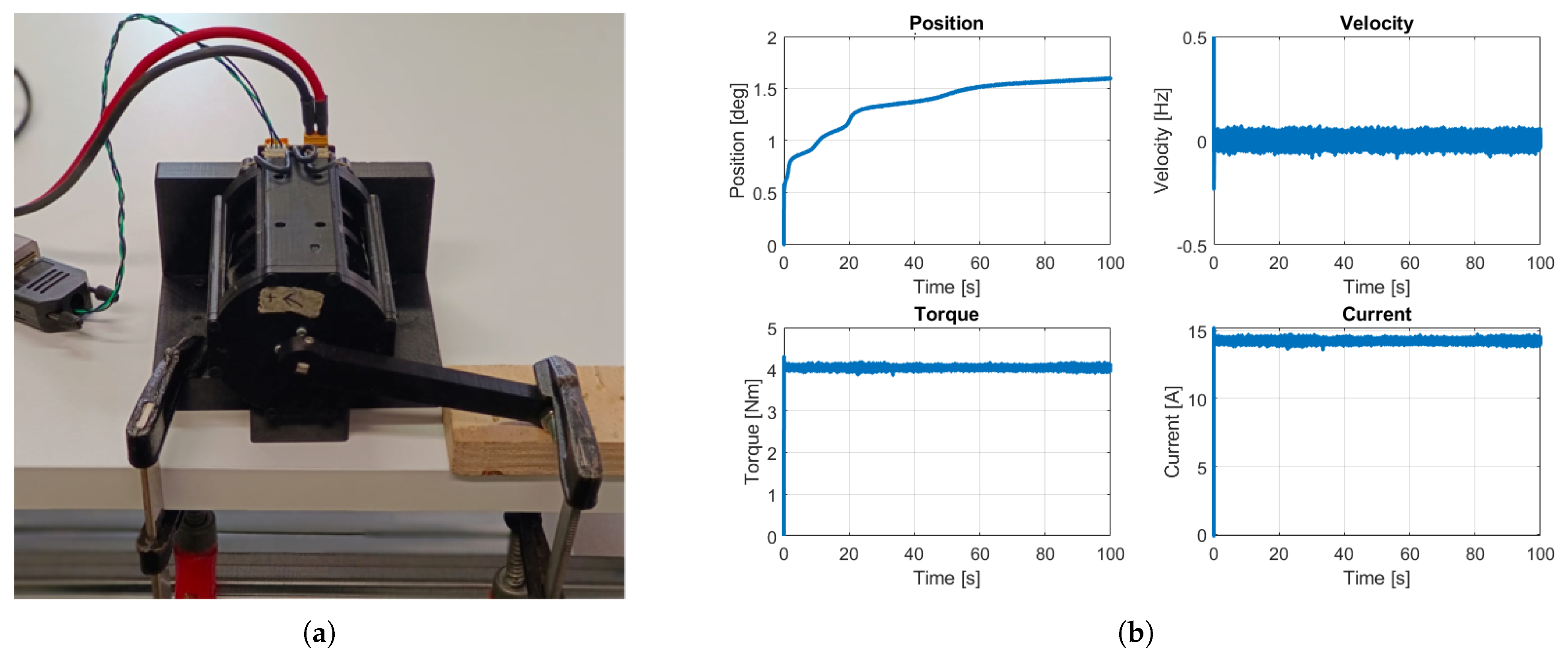
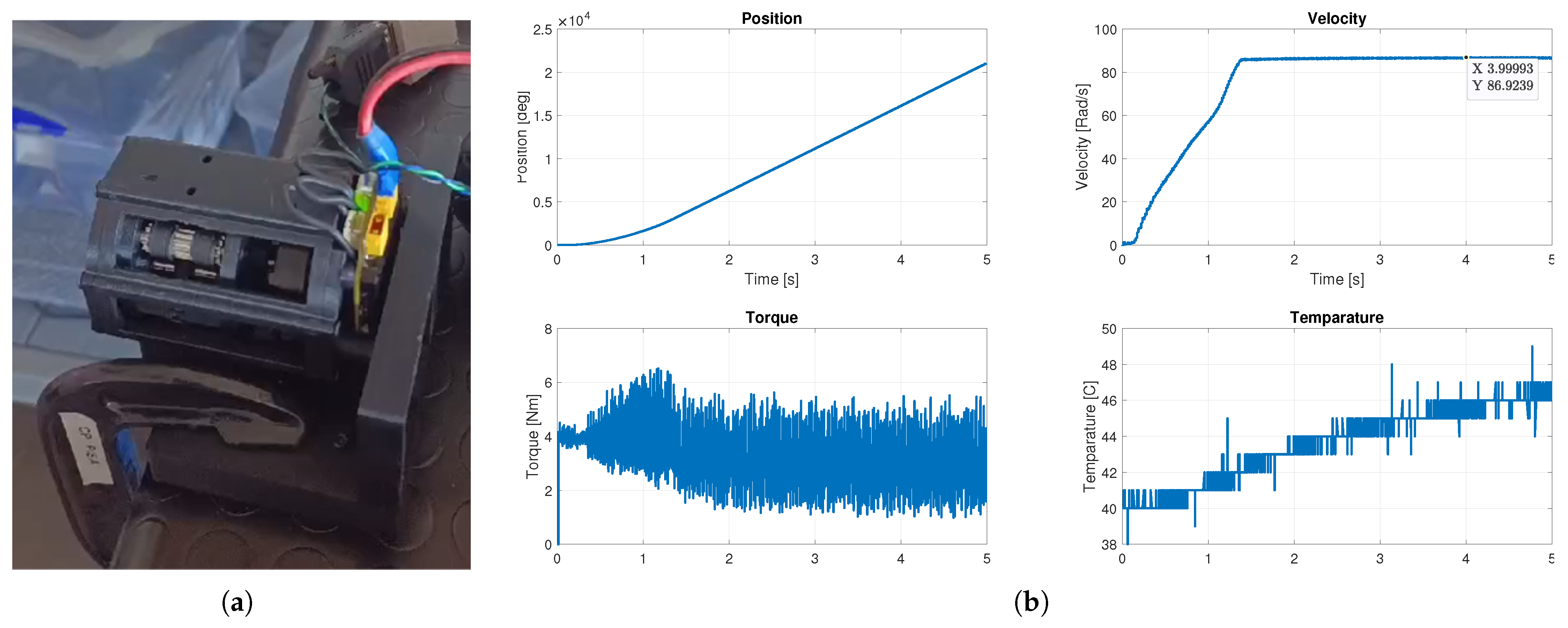
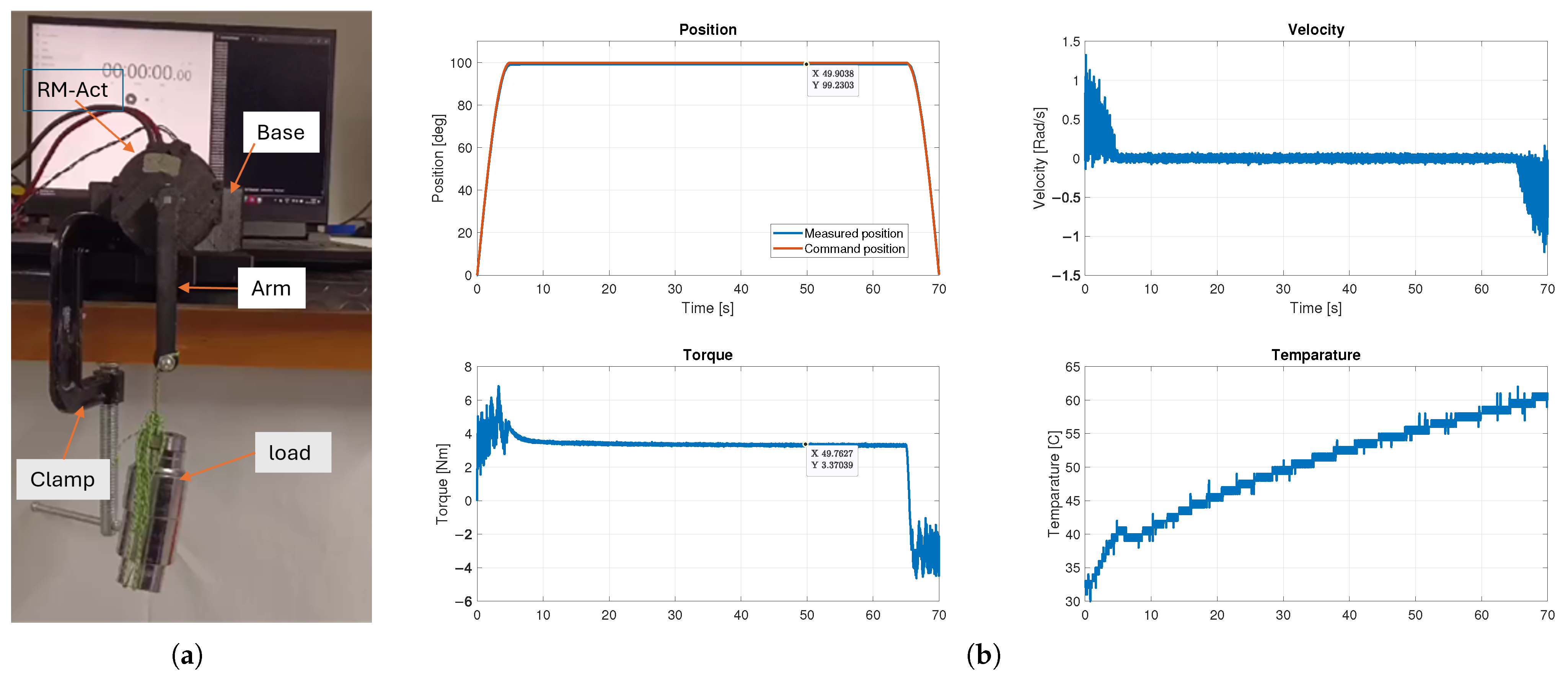
c were calculated. The values of continuous output power and angular resolution are determined by the characteristics of the driver, while the nominal voltage is defined by the motor. The nominal speed of the actuator was derived from the continuous output power and nominal torque. The maximum torque was measured from the static tests with the end effector arrested, ensuring no slippage or overheating of the components.
To evaluate the torque density capabilities of the proposed actuator, a comparison is made with another indigenously developed actuator designed for legged robots and robotic arms, namely the EM-Act [
34]. The EM-Act has a limb-like form factor, integrating a motor, encoder, motor driver, and a compound belt–pulley reduction gearbox. It can be connected in series as a chain link, enabling the construction of modular robots with increased degrees of freedom. Its compound belt–pulley transmission provides approximately the same gear ratio as the proposed actuator. Comparing the two actuators is meaningful because both were developed at the same facility and share similar design principles, including the use of 3D printing and belt–pulley mechanisms. This comparison shows that the proposed RM-Act achieves higher nominal torque and torque density. A detailed comparison between the actuators is presented in
Table 4. The values of
,
,
K, and
c are reported in
Table 5. The identified stiffness is observed to be in a range similar to that obtained from the static tests. The final specifications of the RM-Act are summarized in
Table 6.
7. Conclusions
At present, harmonic gearboxes remain the preferred solution for many robotic applications, particularly in collaborative robots, due to their unmatched torque capabilities and reduction ratios. This paper introduces RM-Act, a compact, modular harmonic speed reducer capable of achieving high single-stage reduction ratios using a minimal number of components, most of which are commercially available. This design reduces manufacturing complexity and cost while retaining key advantages of harmonic drives, such as zero-backlash operation and torsional stiffness.
The actuator’s design, component selection, and assembly are discussed in detail. Static and dynamic tests demonstrate the functionality of RM-Act. While the torque delivery shows good performance, friction in the 3D-printed parts slightly limits output, highlighting opportunities for future iterations to approach commercial-grade performance. The dynamic characterization identified key parameters, including inertia, stiffness, and friction. RM-Act exhibits a nominal torque density of 10.08 N·m/kg, confirming its potential for efficient robotic applications.
When compared to the indigenously developed EM-Act, which incorporates series elasticity, RM-Act shows higher stiffness (130.4 N·m/rad vs. 45.5 N·m/rad). This higher stiffness is beneficial for precise position control but may limit performance in highly dynamic tasks that benefit from compliance and energy storage. Integrating series elasticity, either within the actuator or through a coupling system, could improve adaptability and task-specific performance.
The modular construction and use of commercially available components reduce dead volume, simplify maintenance, and provide flexibility for adaptation to various robotic platforms. By replicating harmonic motion with timing belts and pulleys, RM-Act avoids complex flexspline manufacturing while maintaining functional characteristics of harmonic drives.
The RM-Act is particularly suitable for applications requiring compact, high-torque actuators with precise position control, such as hip and shoulder joints in legged robots, modular robotic arms, or collaborative manipulators. Its high nominal torque density and modular design make it ideal for tasks where multiple actuators must be chained or arranged in confined spaces. Planned future work will focus on improving the actuator’s performance characteristics, including reducing friction, increasing specific power, exploring single-belt configurations, and integrating series elasticity where beneficial. These enhancements aim to expand RM-Act’s applicability to highly dynamic robotic tasks, including jumping, running, or rapid manipulation, while retaining compactness and ease of maintenance.



 ,
,