
Article

Reconfigurable Slip Vectoring Control in Four In-Wheel Drive Electric Vehicles
Department of Electronic Engineering, University of Rome Tor Vergata, via del Politecnico, 00133 Rome, Italy
*
Authors to whom correspondence should be addressed.
Actuators 2021, 10(7), 157; https://doi.org/10.3390/act10070157
Submission received: 21 May 2021 / Revised: 4 July 2021 / Accepted: 7 July 2021 / Published: 10 July 2021
(This article belongs to the Special Issue Vehicle Modeling and Control)

Abstract

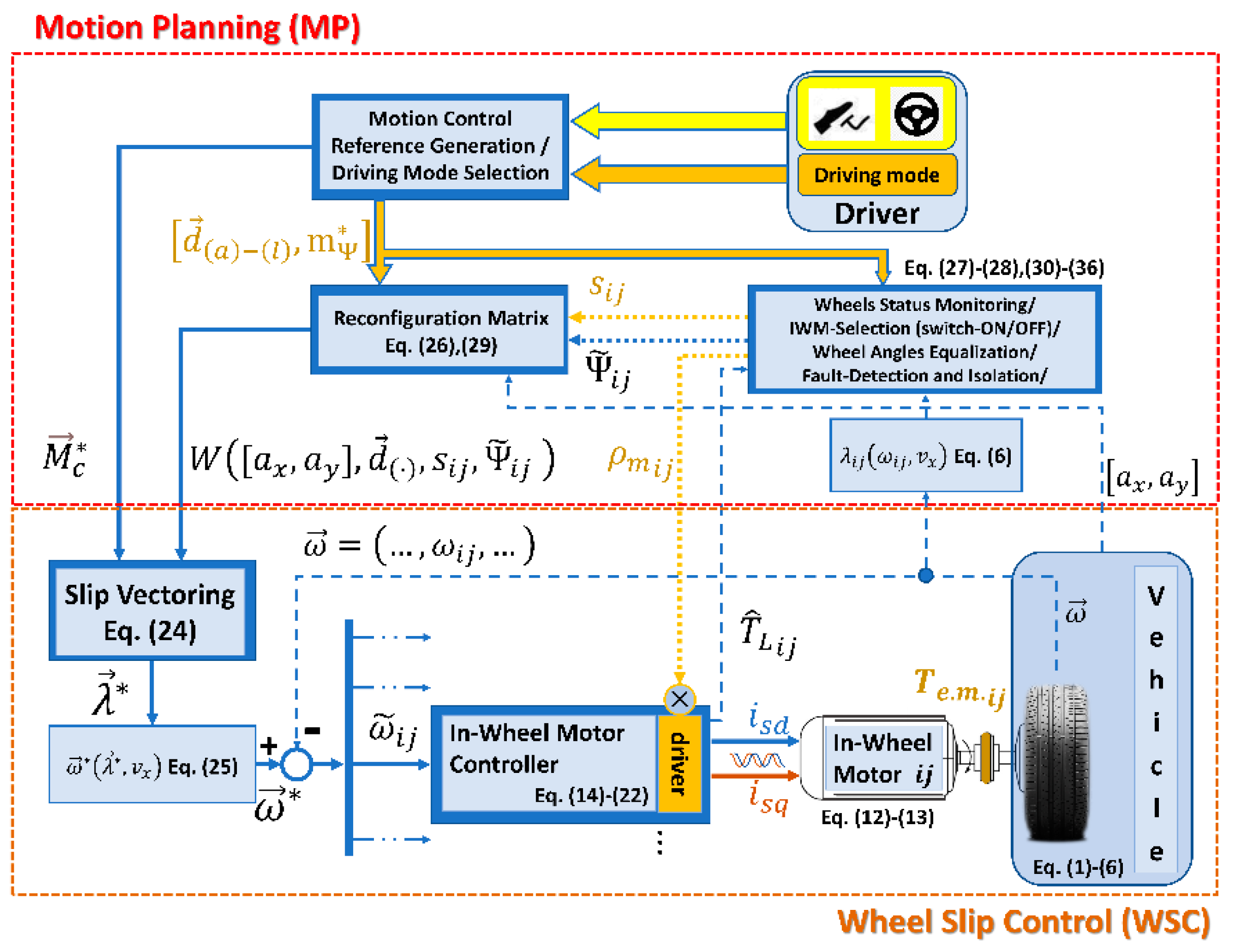
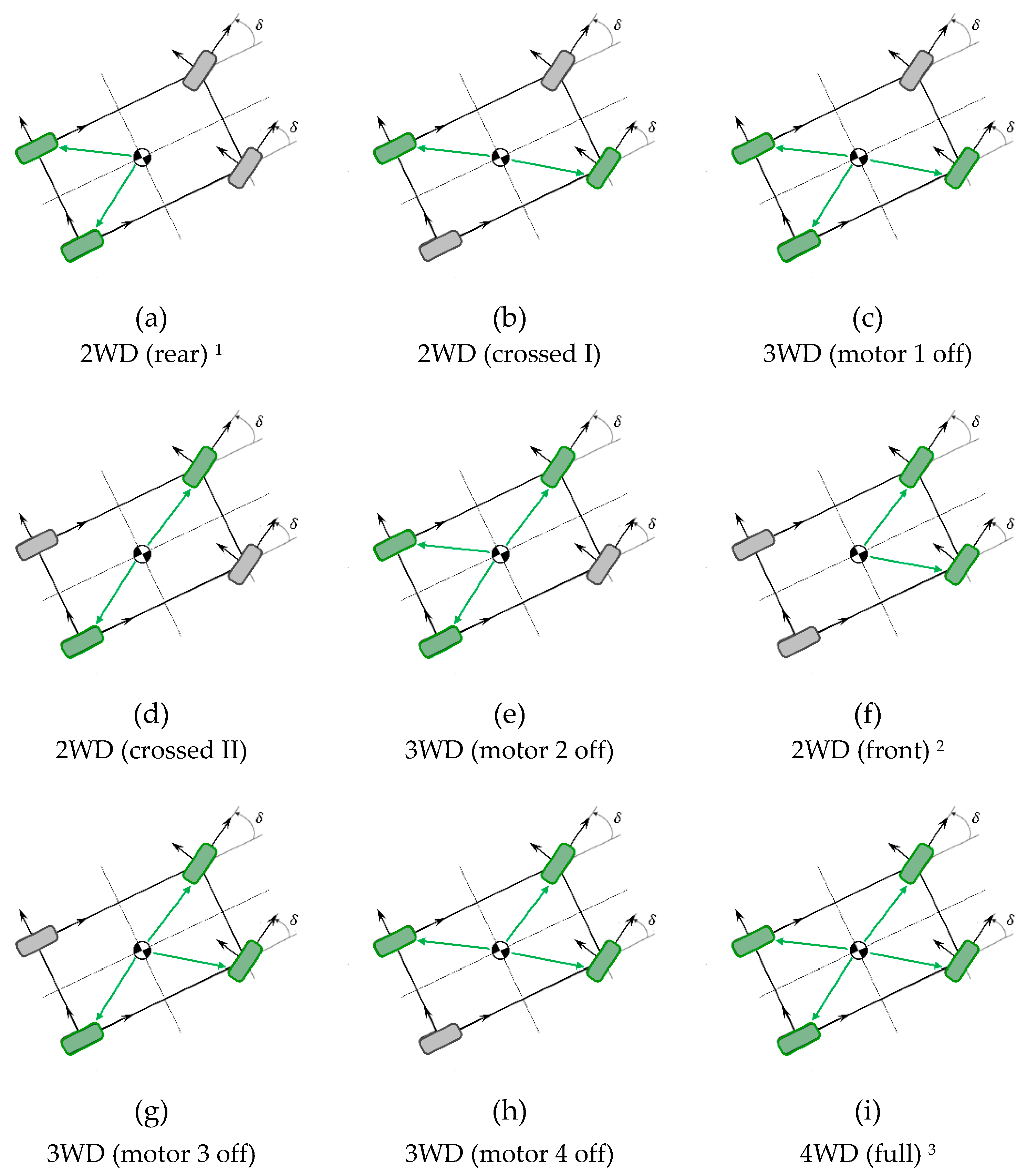
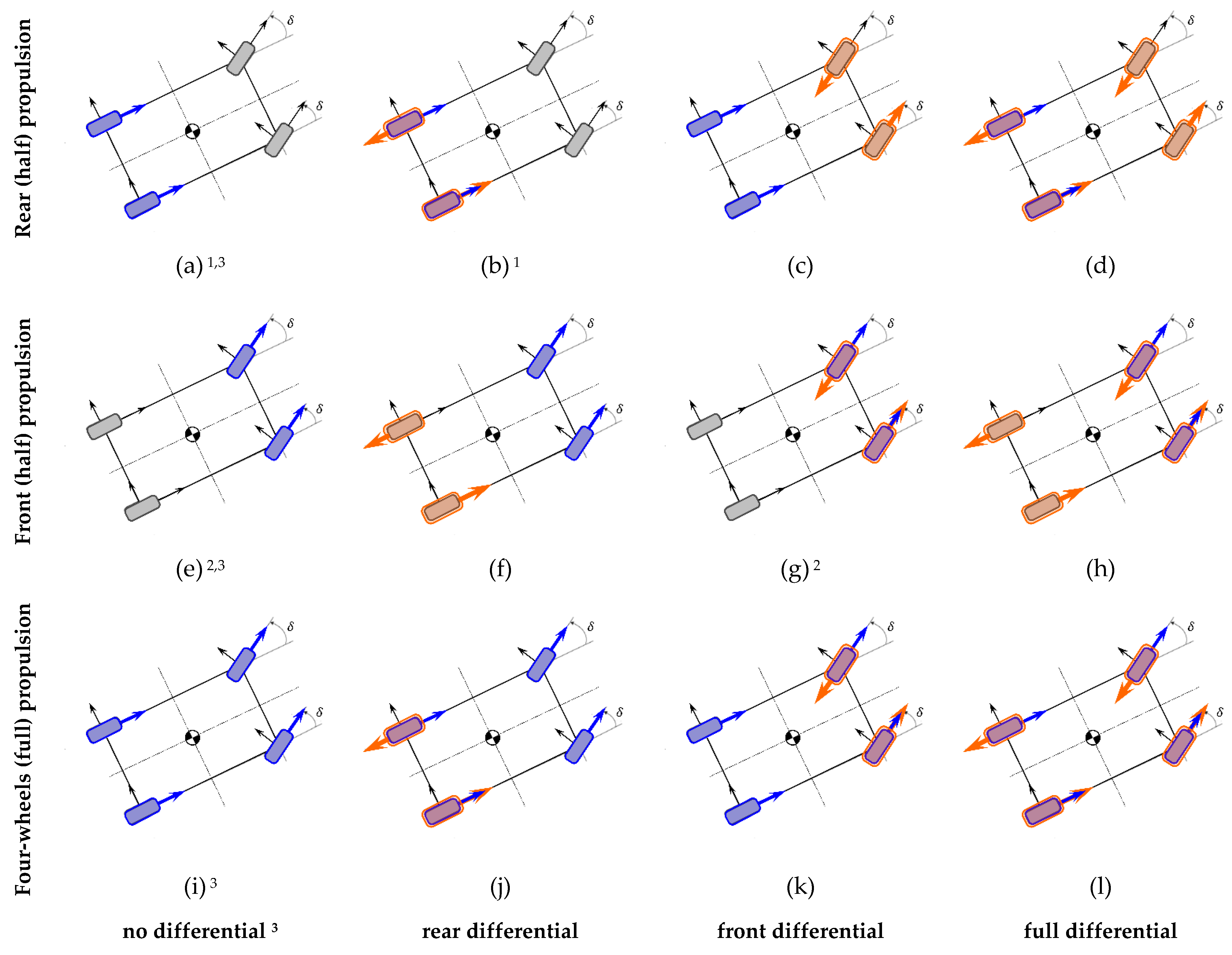
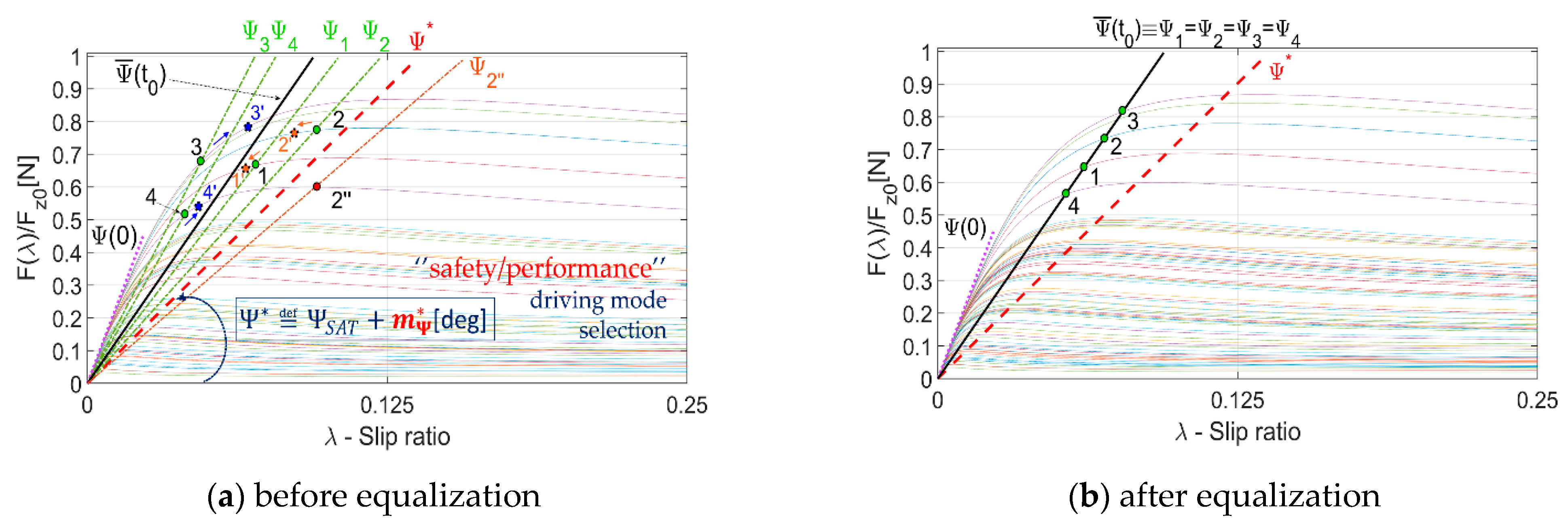
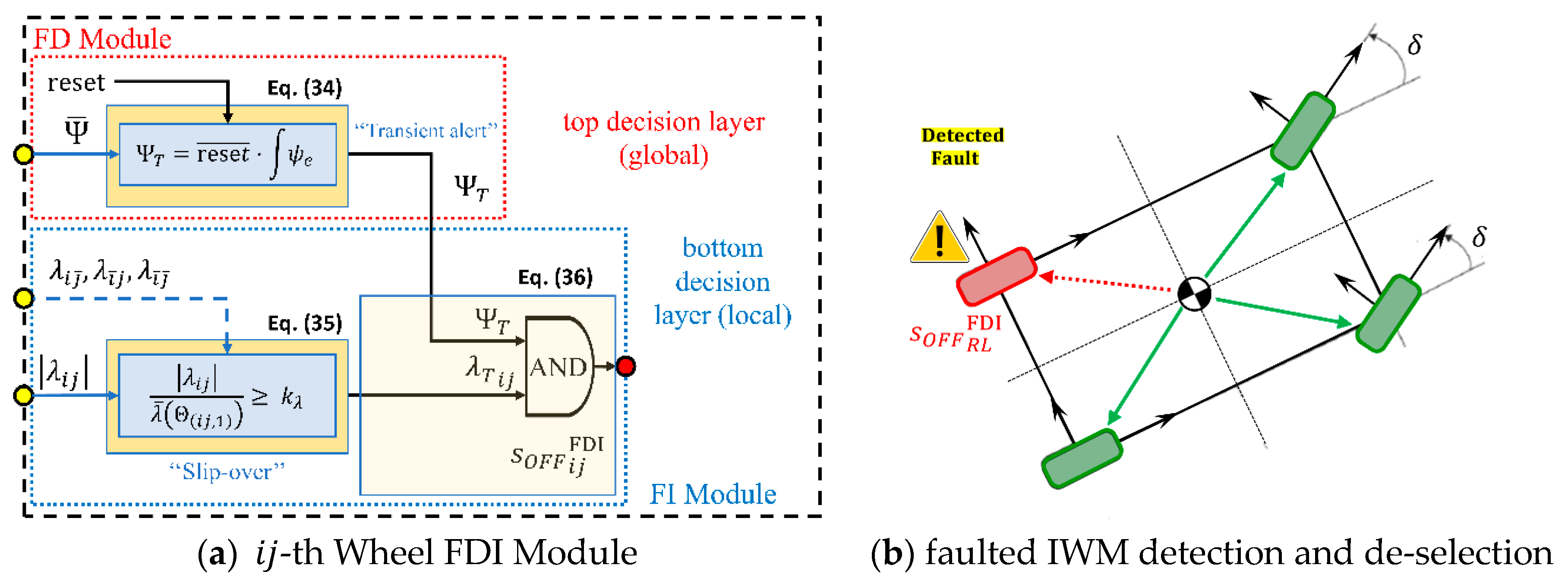
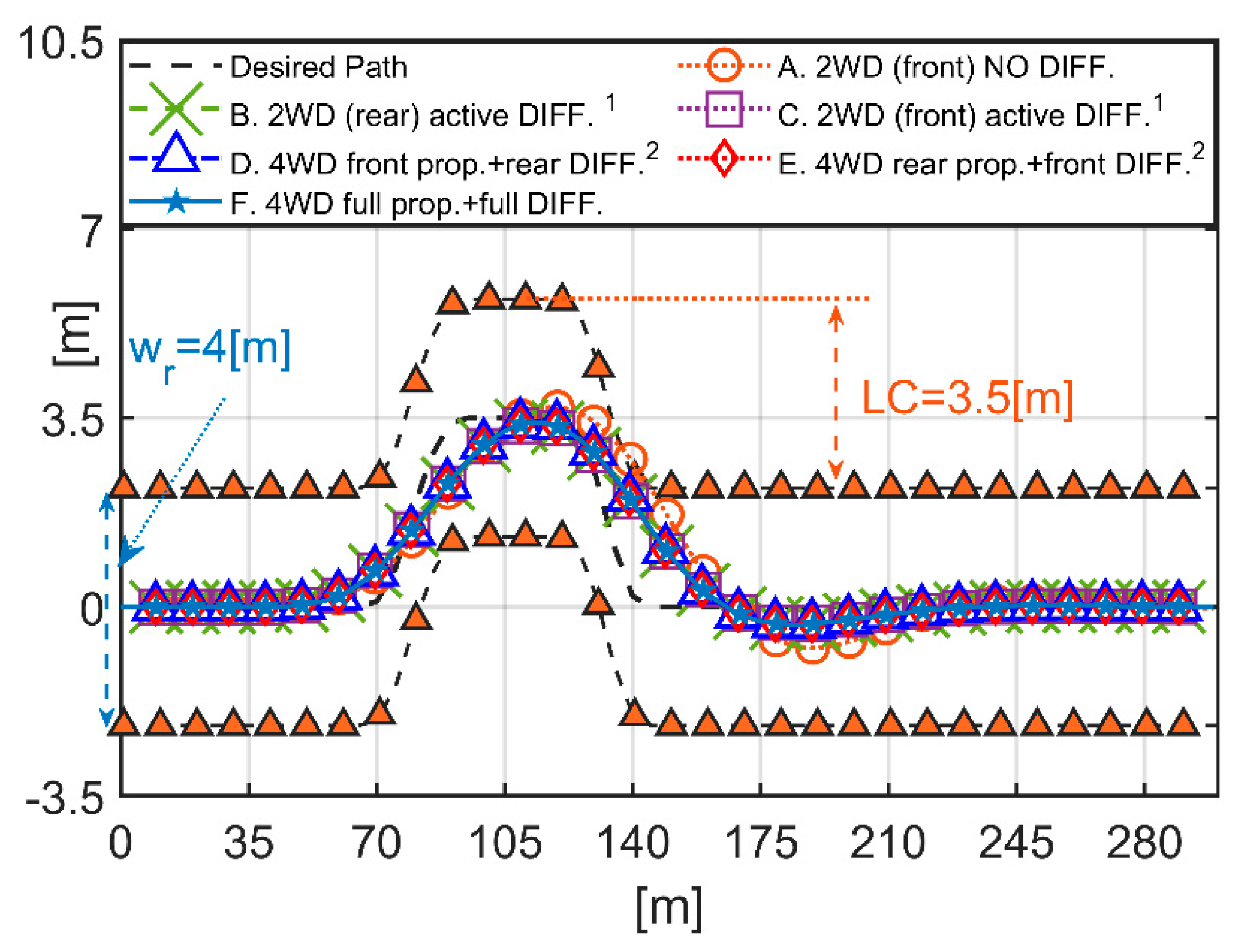
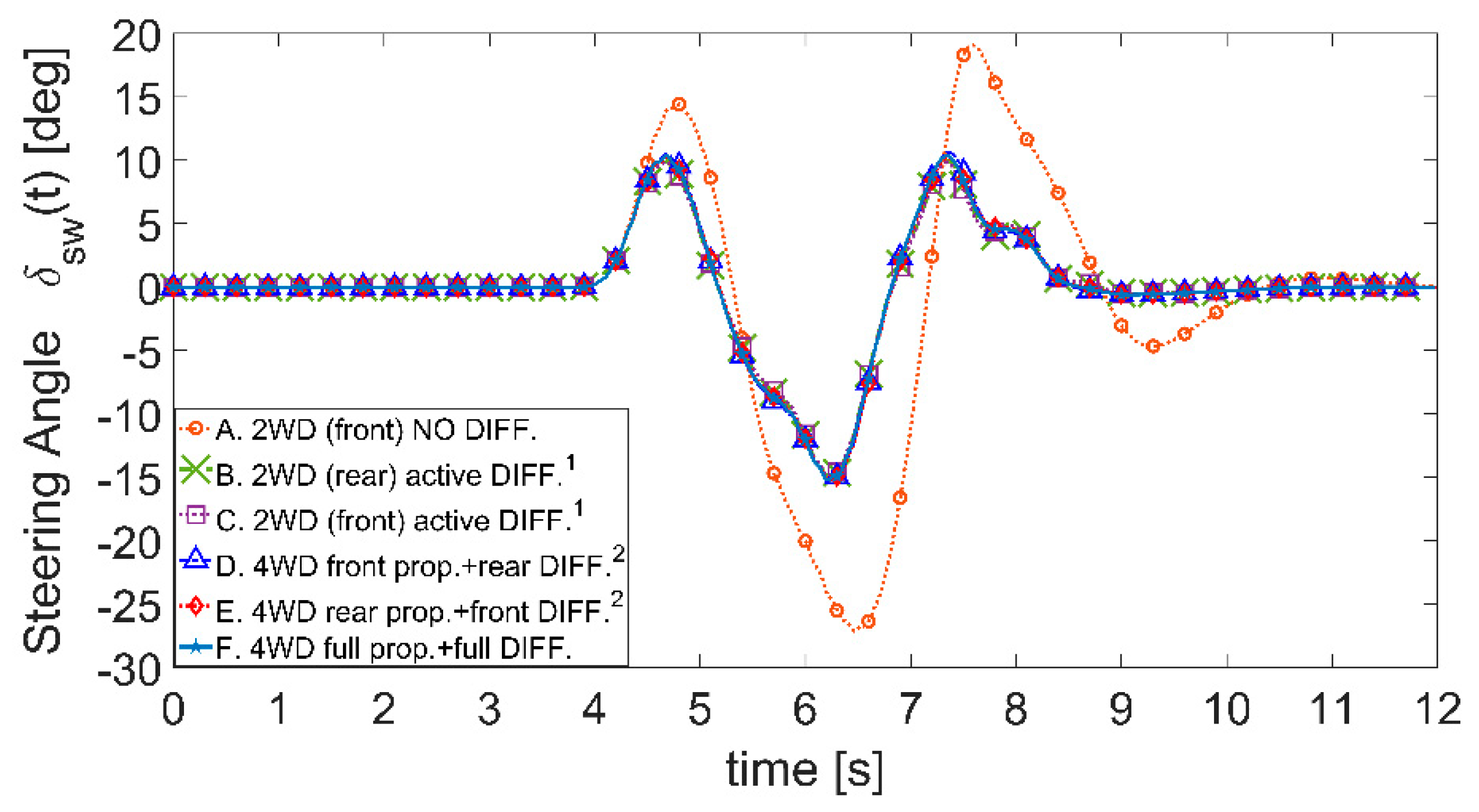
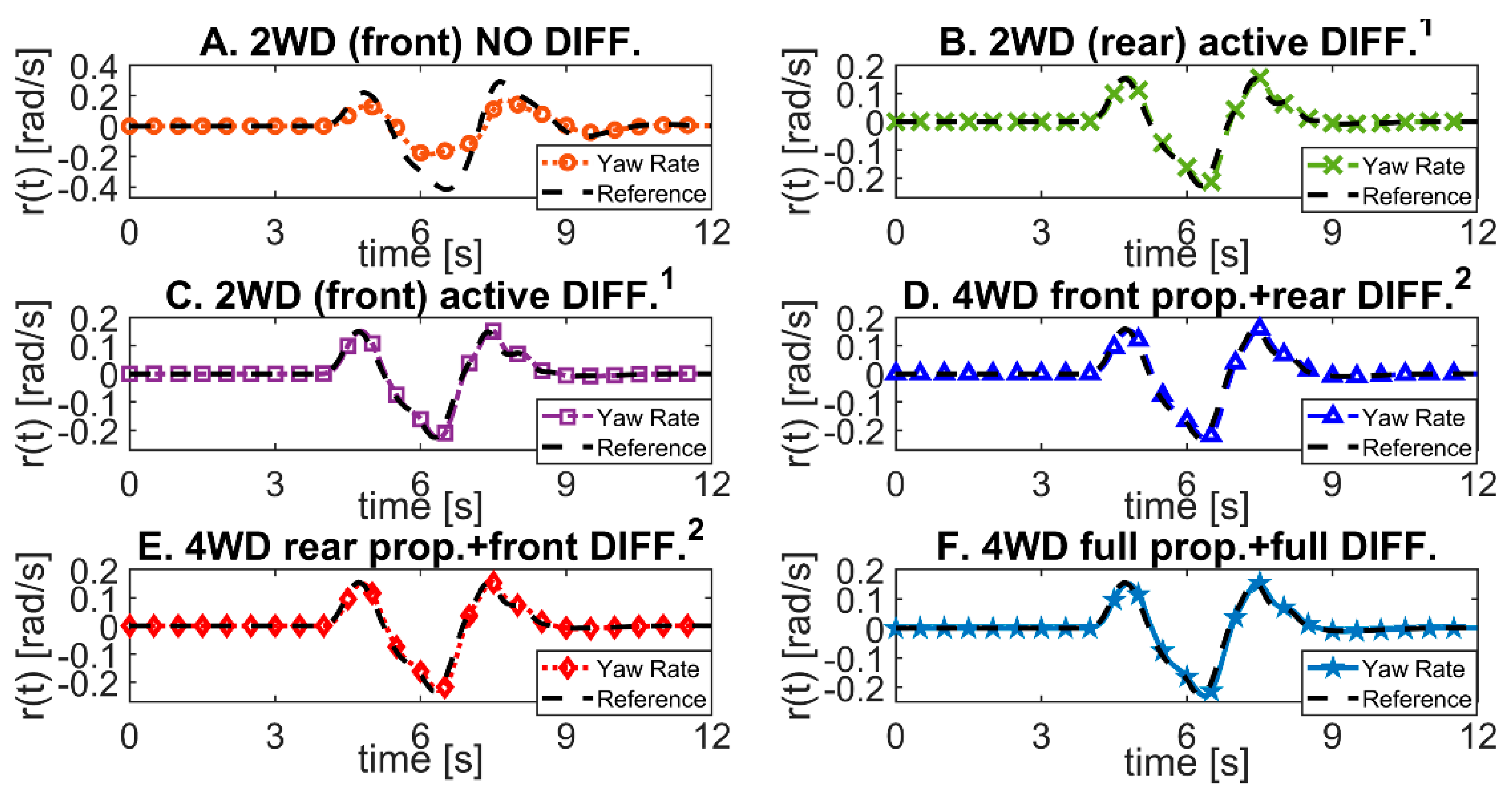
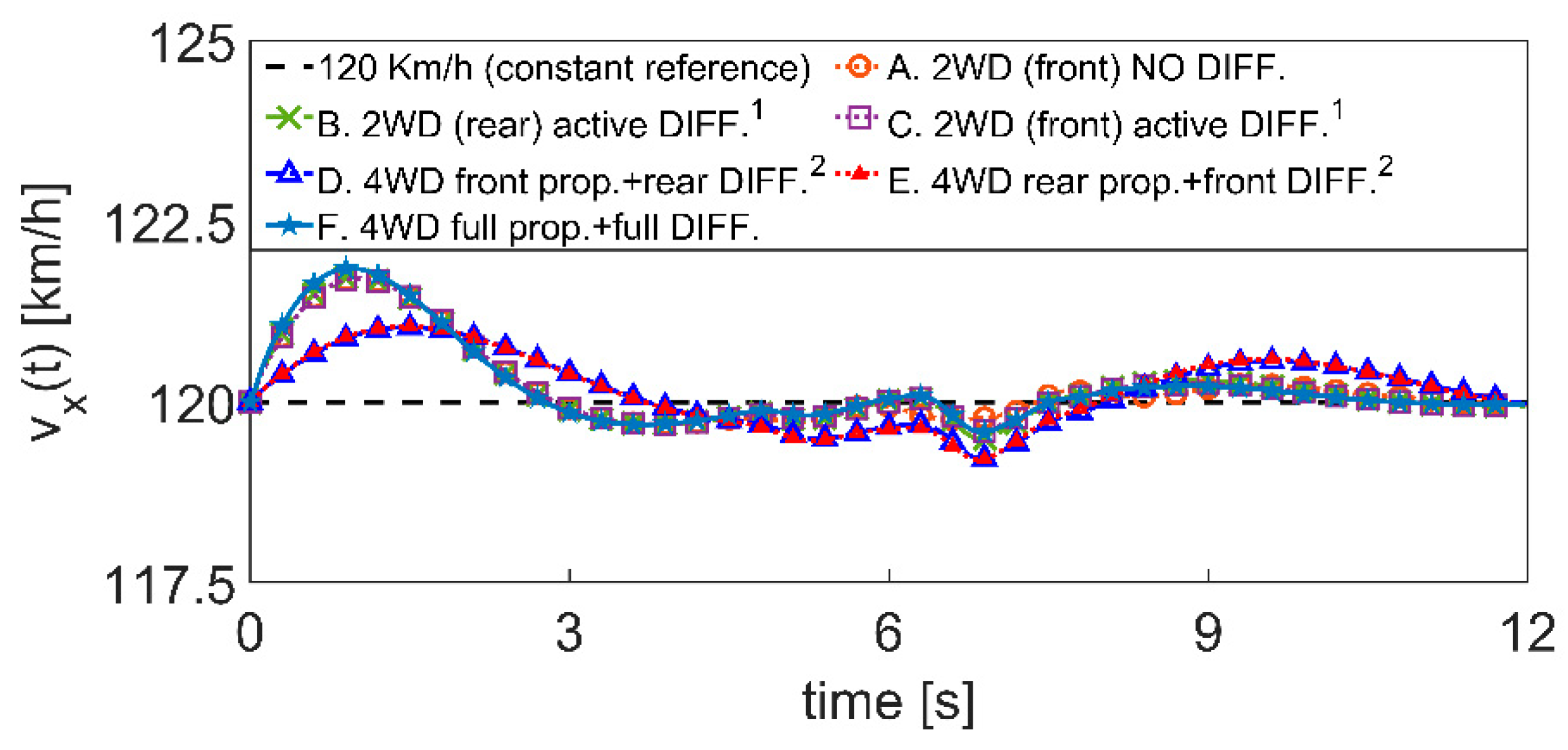
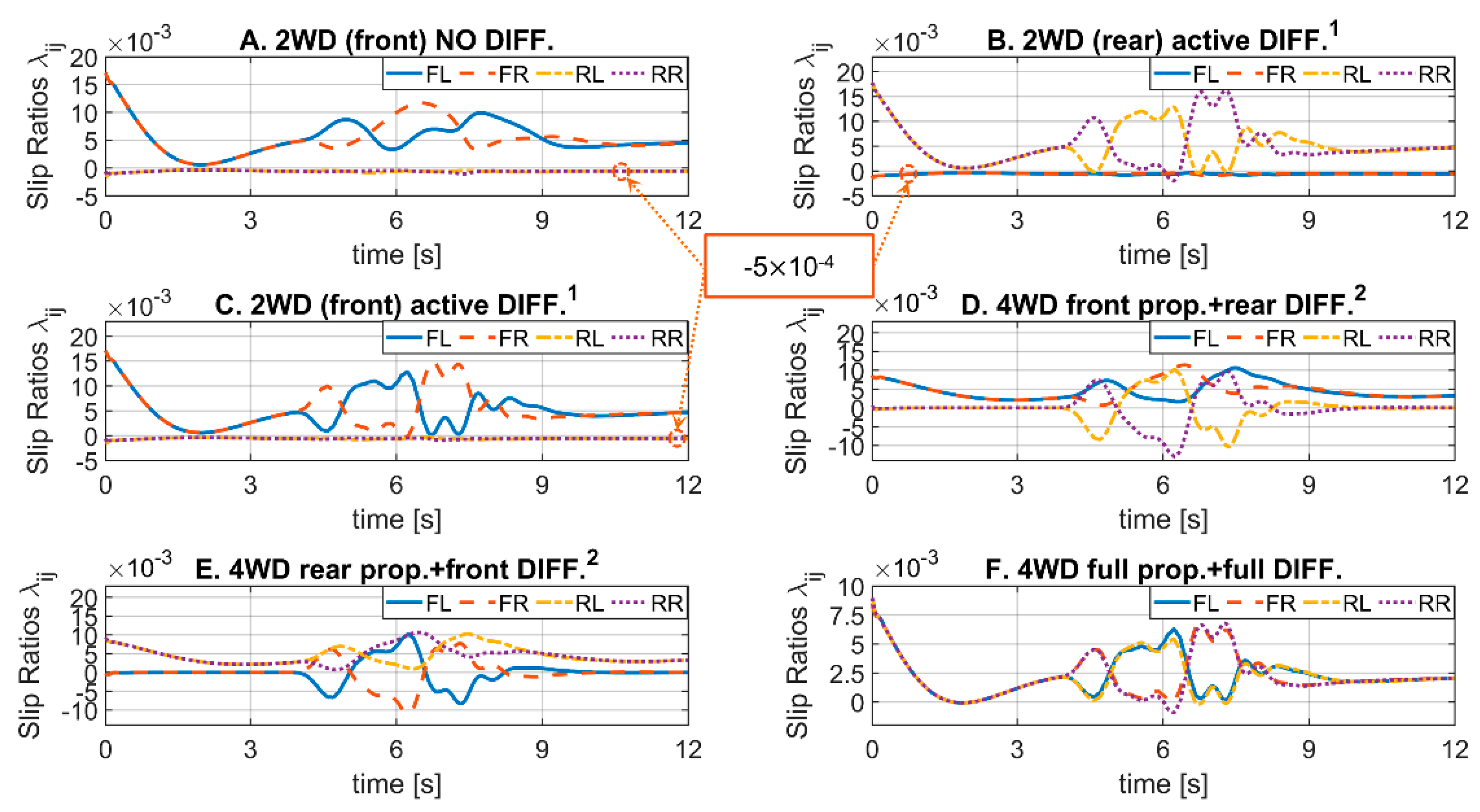
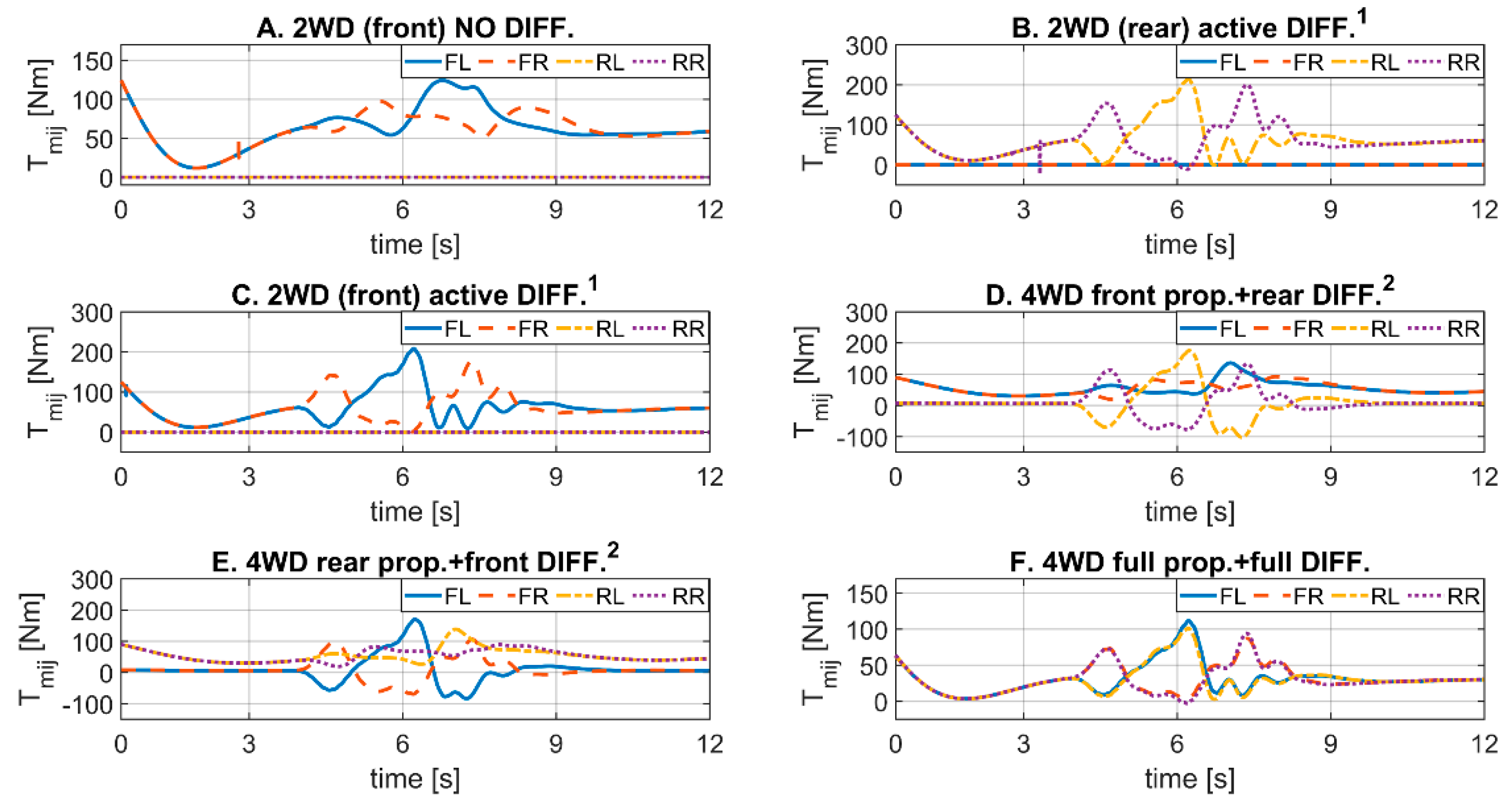
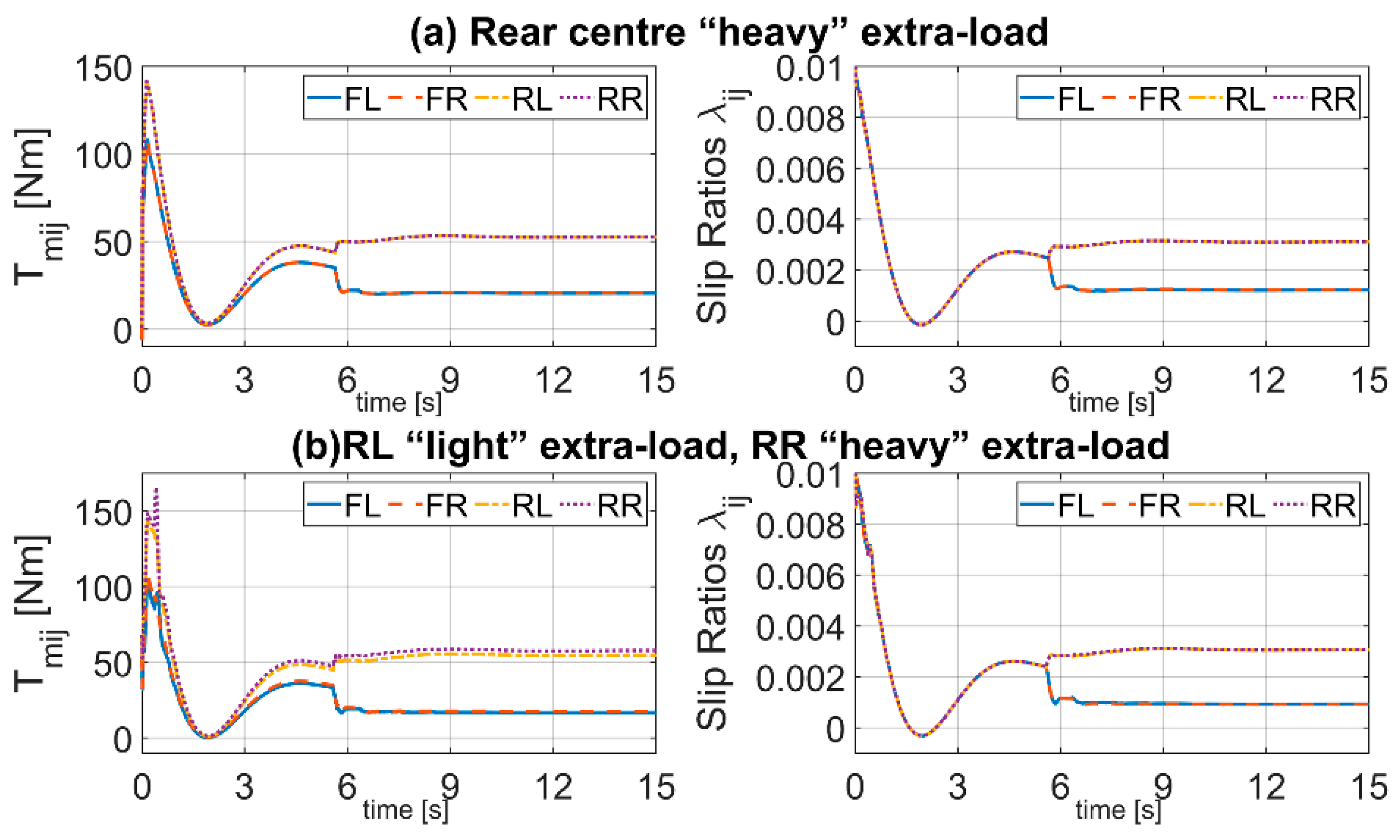
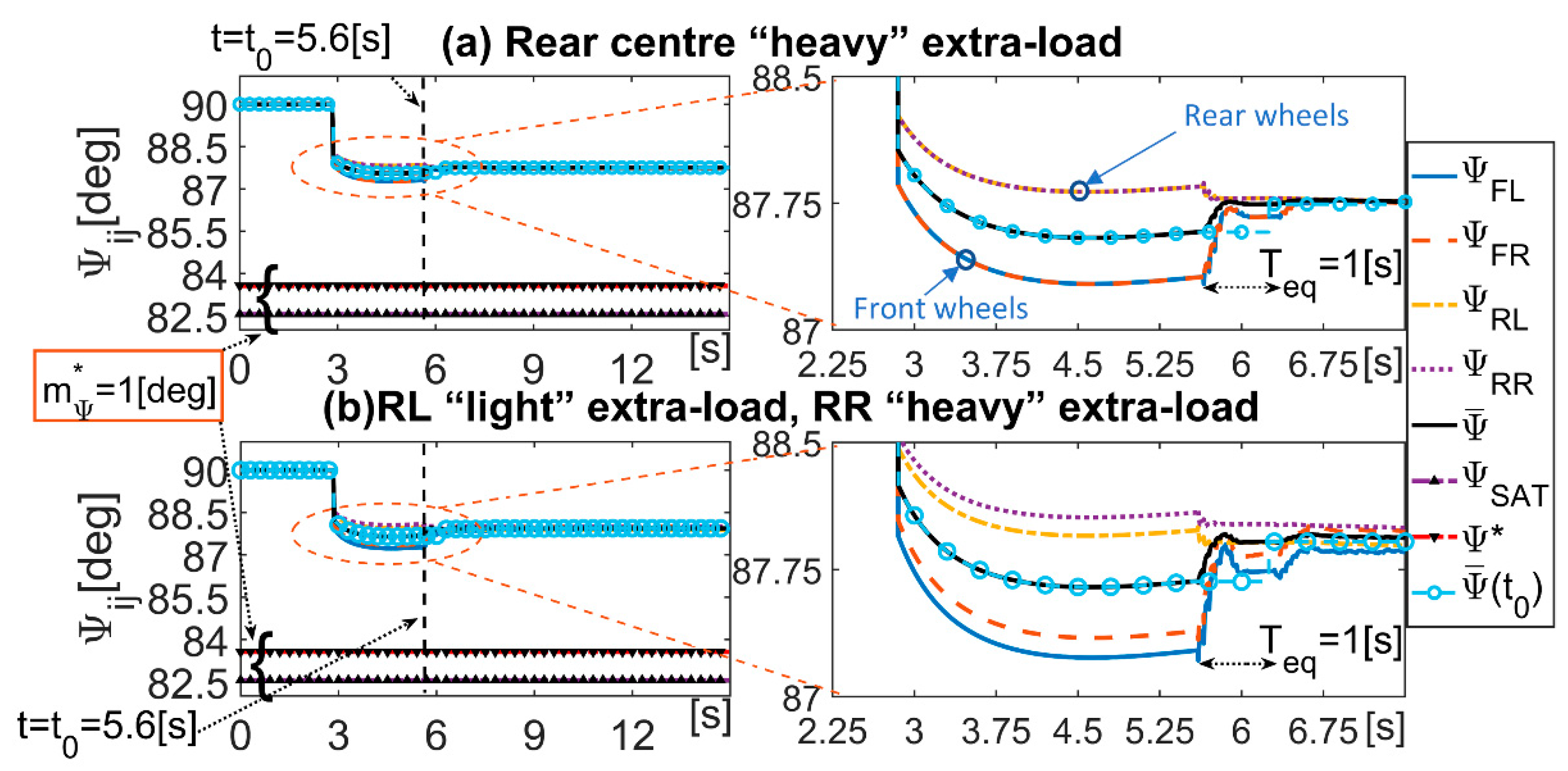
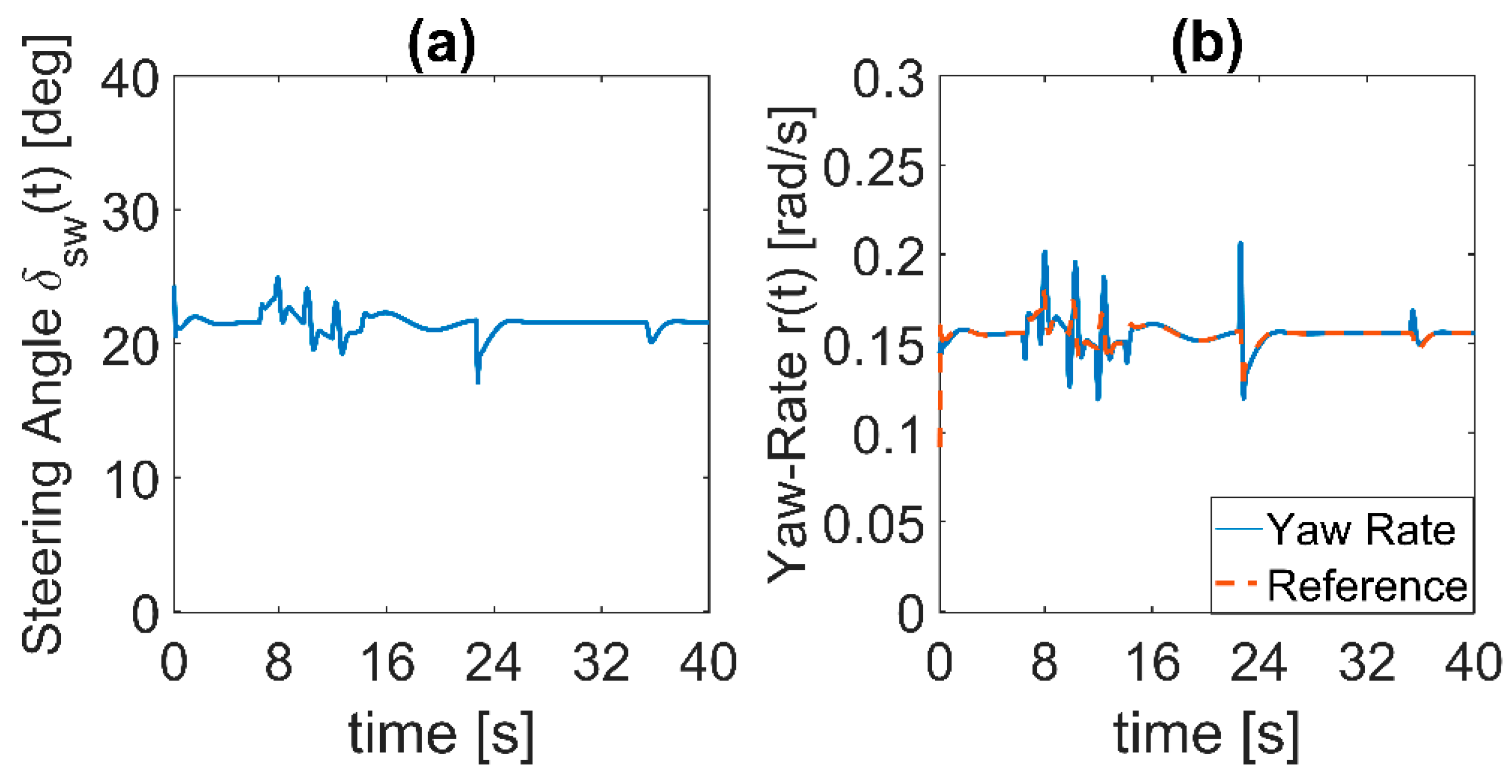
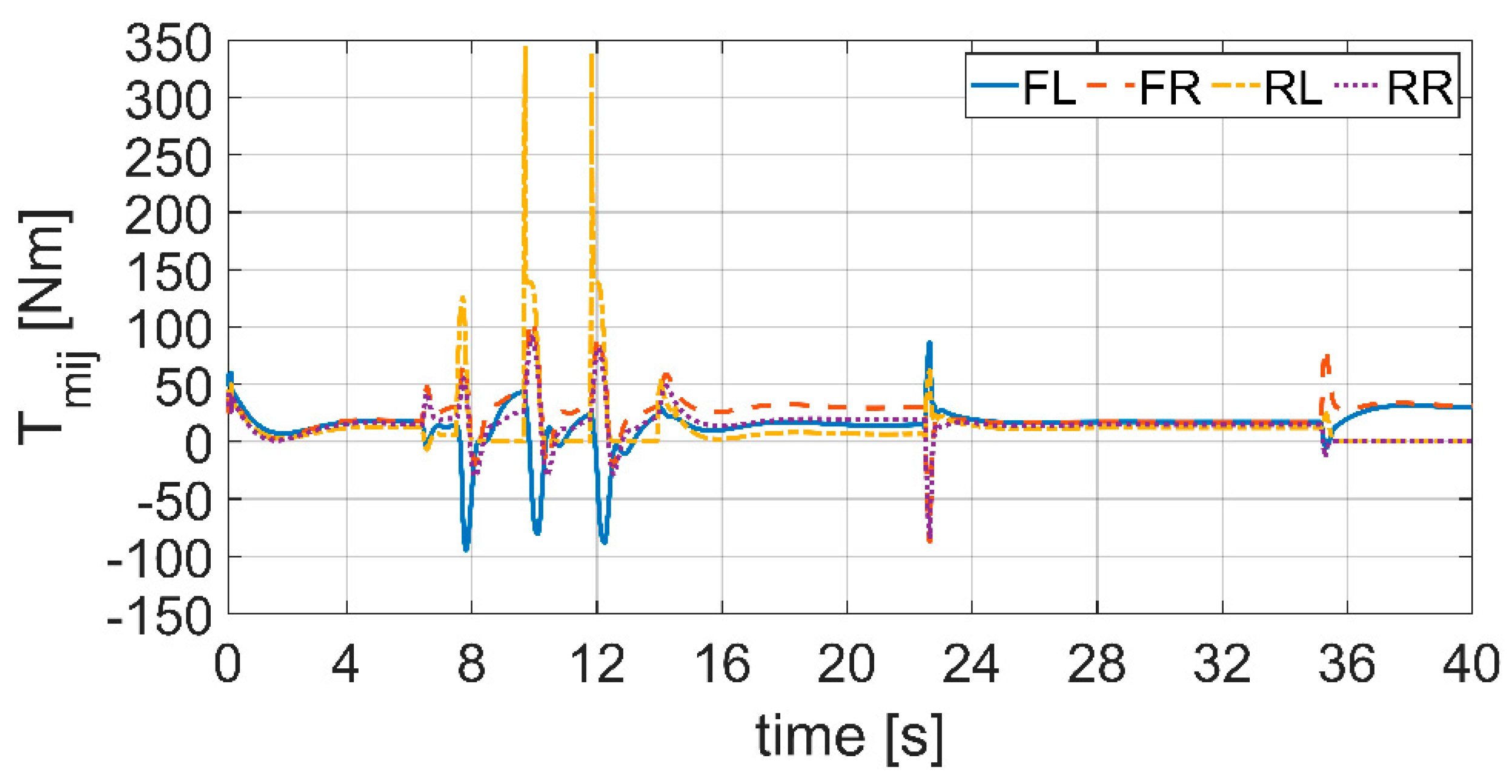
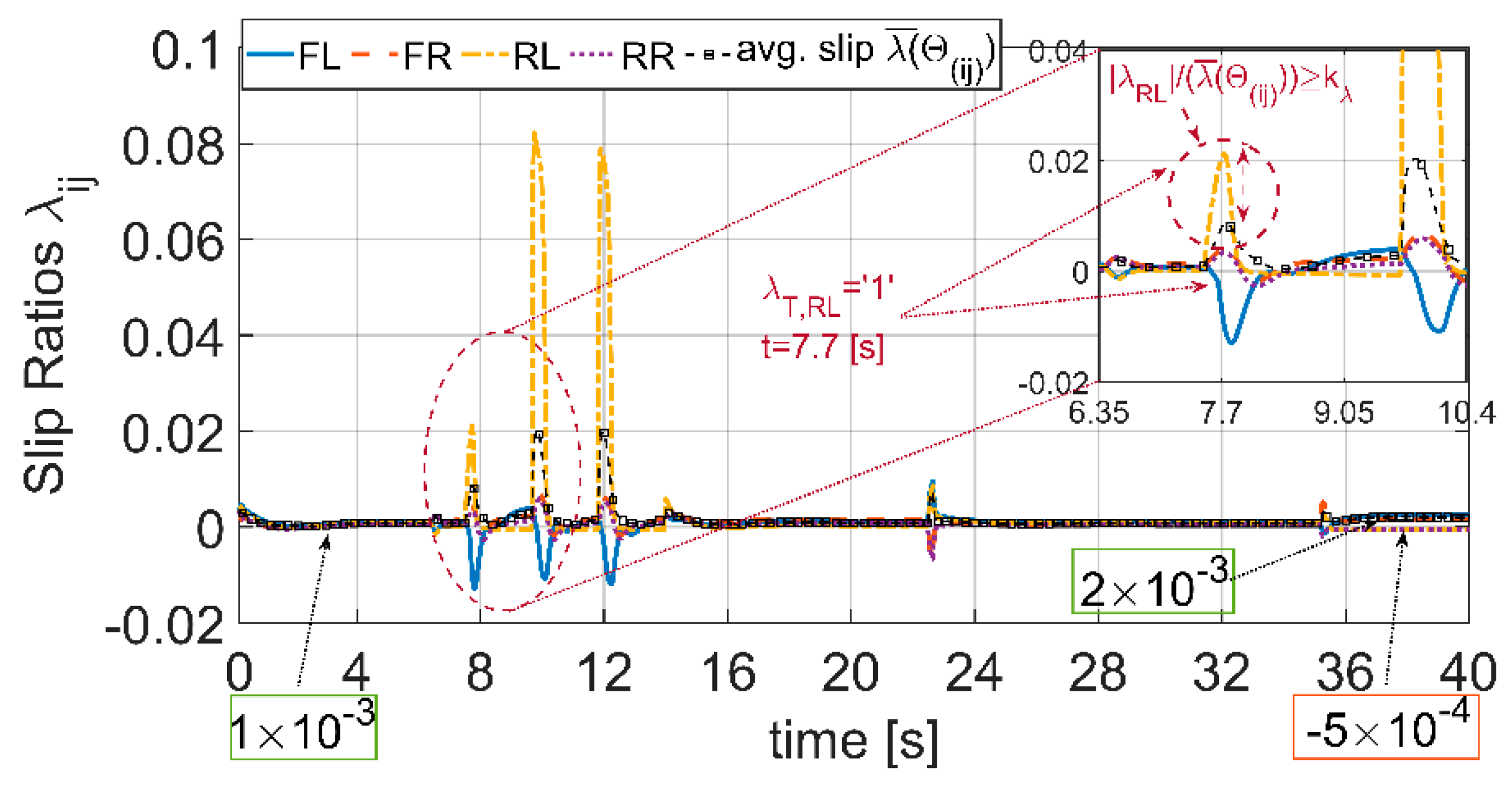
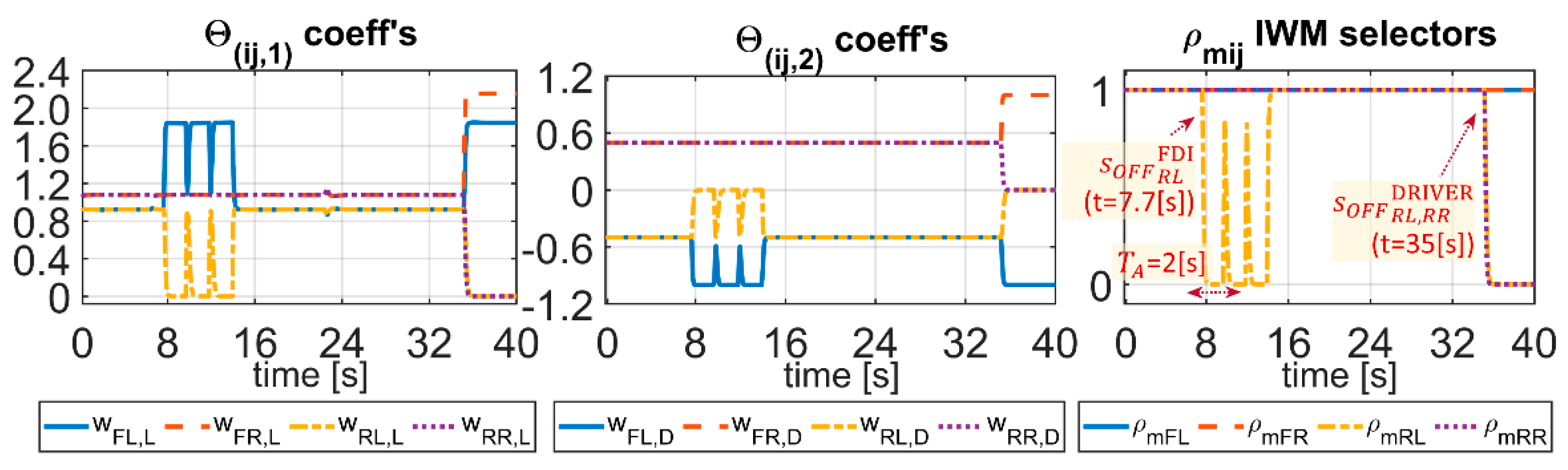
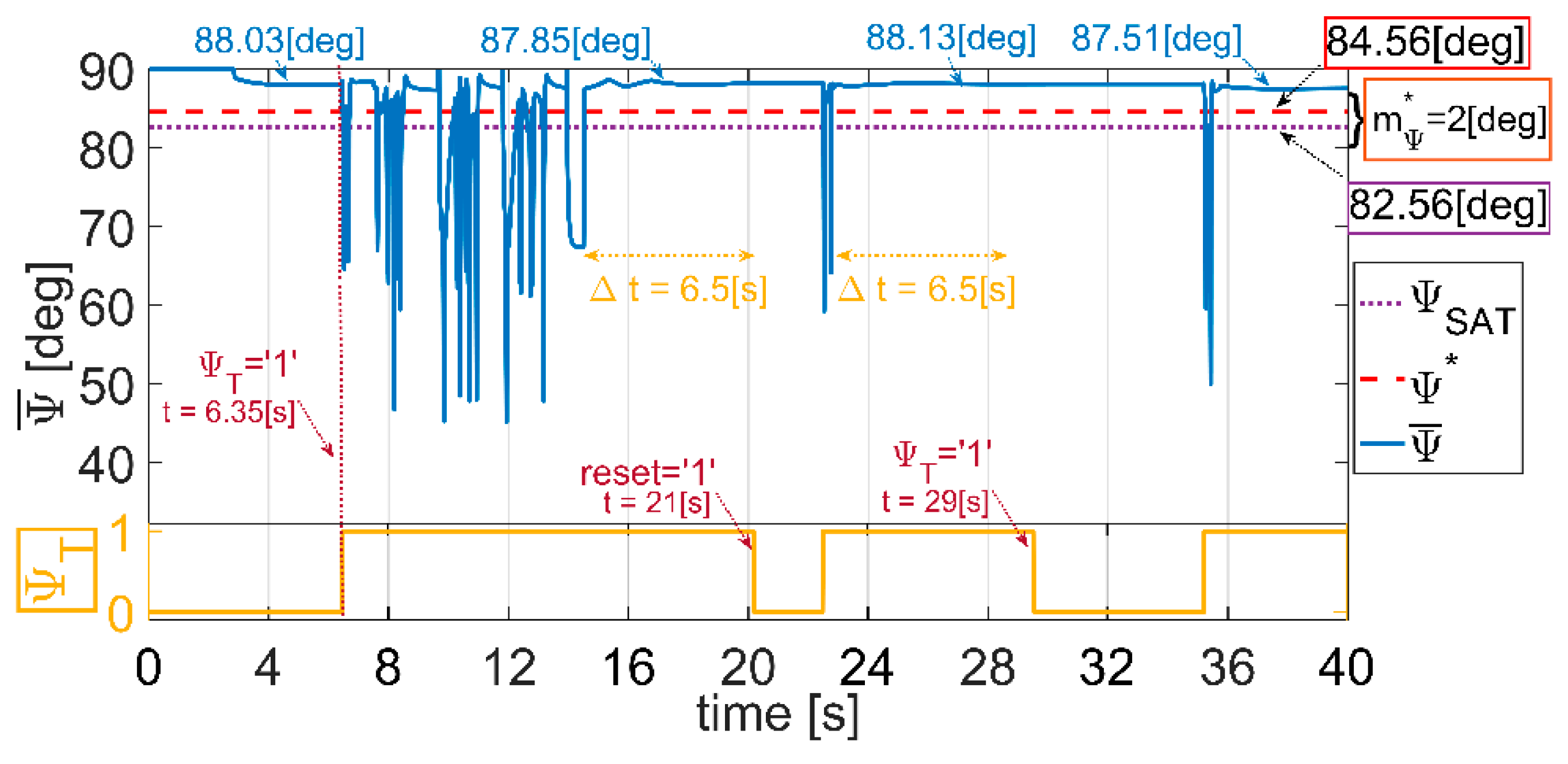
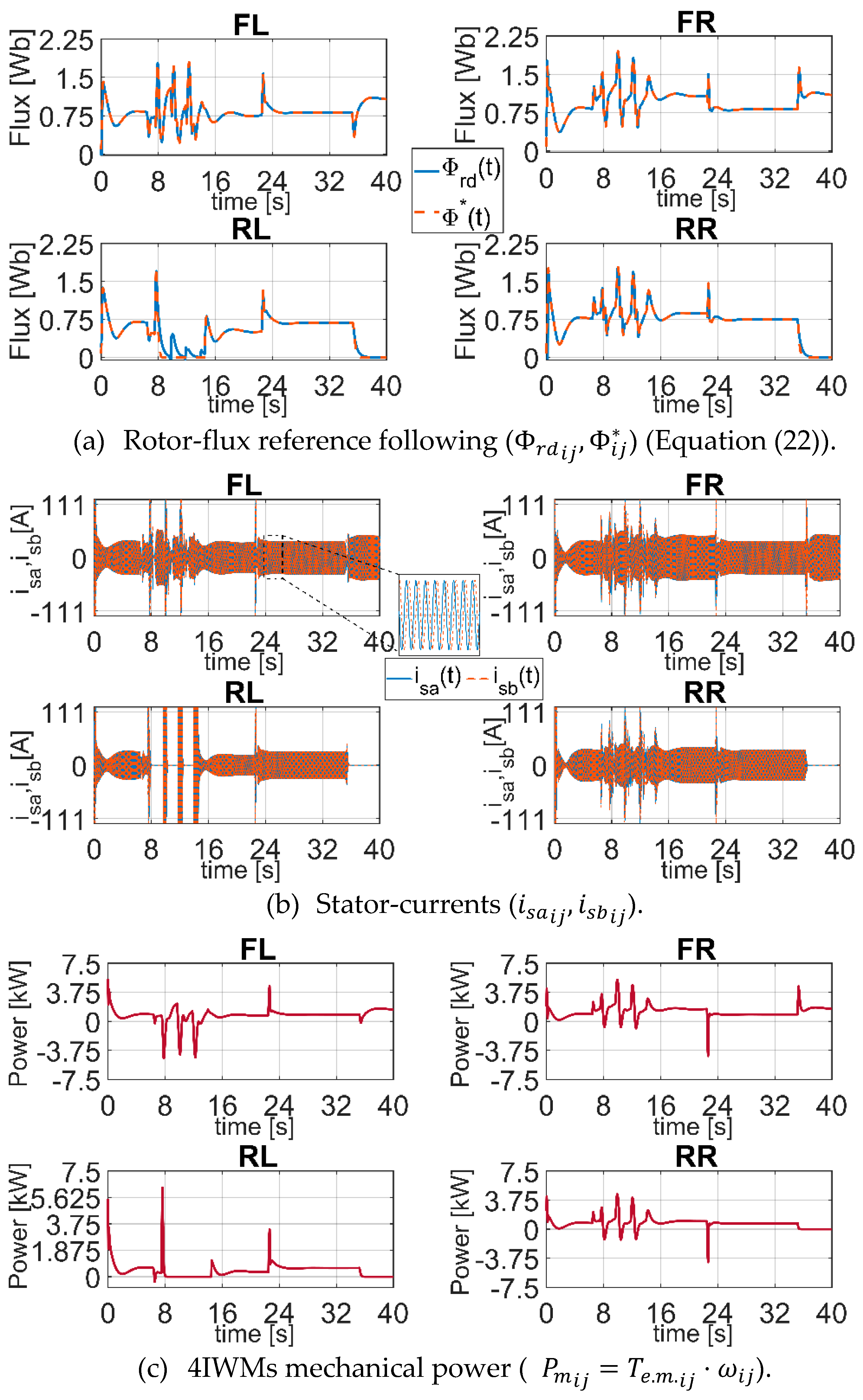
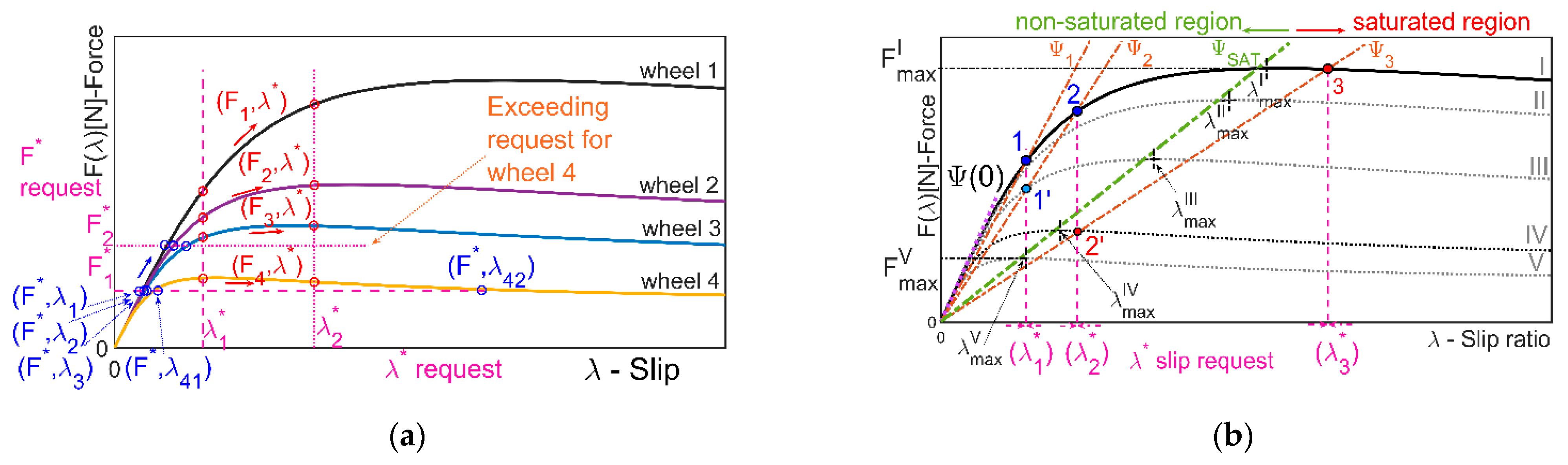
Controllability, maneuverability, fault-tolerance/isolation and safety are significantly enhanced in electric vehicles (EV) equipped with the redundant actuator configuration of four-in-wheel electric motors (4IWM). A highly reconfigurable architecture is proposed and illustrated for the adaptive, nonmodel-based control of 4IWM-EVs. Given the longitudinal force, yaw-moment requests and the reconfiguration matrix, each IWM is given a slip reference according to a Slip Vectoring (SV) allocation strategy, which minimizes the overall slip vector norm. The distributed electric propulsion and the slip vector reference allow for a decentralized online estimation of the four-wheel torque-loads, which are uncertain depending on loading and road conditions. This allows for the allocation of four different torques depending on individual wheel conditions and to determine in which region (linear/nonsaturated or nonlinear/saturated) of the torque/slip characteristics each wheel is operating. Consequently, the 4IWMs can be equalized or reconfigured, including actuator fault-isolation as a special case, so that they are enforced to operate within the linear tire region. The initial driving-mode selection can be automatically adjusted and restored among eighteen configurations to meet the safety requirements of linear torque/slip behavior. Three CarSim realistic simulations illustrate the equalization algorithm, the quick fault-isolation capabilities and the importance of a continuous differential action in a critical double-lane-change maneuver.
Keywords: four in-wheel motors (4IWMs); slip vectoring control (SV); electric vehicles (EVs); reconfigurable control; driving-mode selection; distributed estimation; fault detection and fault tolerant control; intelligent vehicles four in-wheel motors (4IWMs); slip vectoring control (SV); electric vehicles (EVs); reconfigurable control; driving-mode selection; distributed estimation; fault detection and fault tolerant control; intelligent vehicles