Arthrobotrys thaumasia and A. musiformis (Fungi: Orbiliales) as Natural Potential Enemies of Haemonchus contortus (Nematoda: Trichostrongylidae)

 , , ,
, , ,  ,
,  , and
, and
Abstract
1. Introduction
2. Materials and Methods
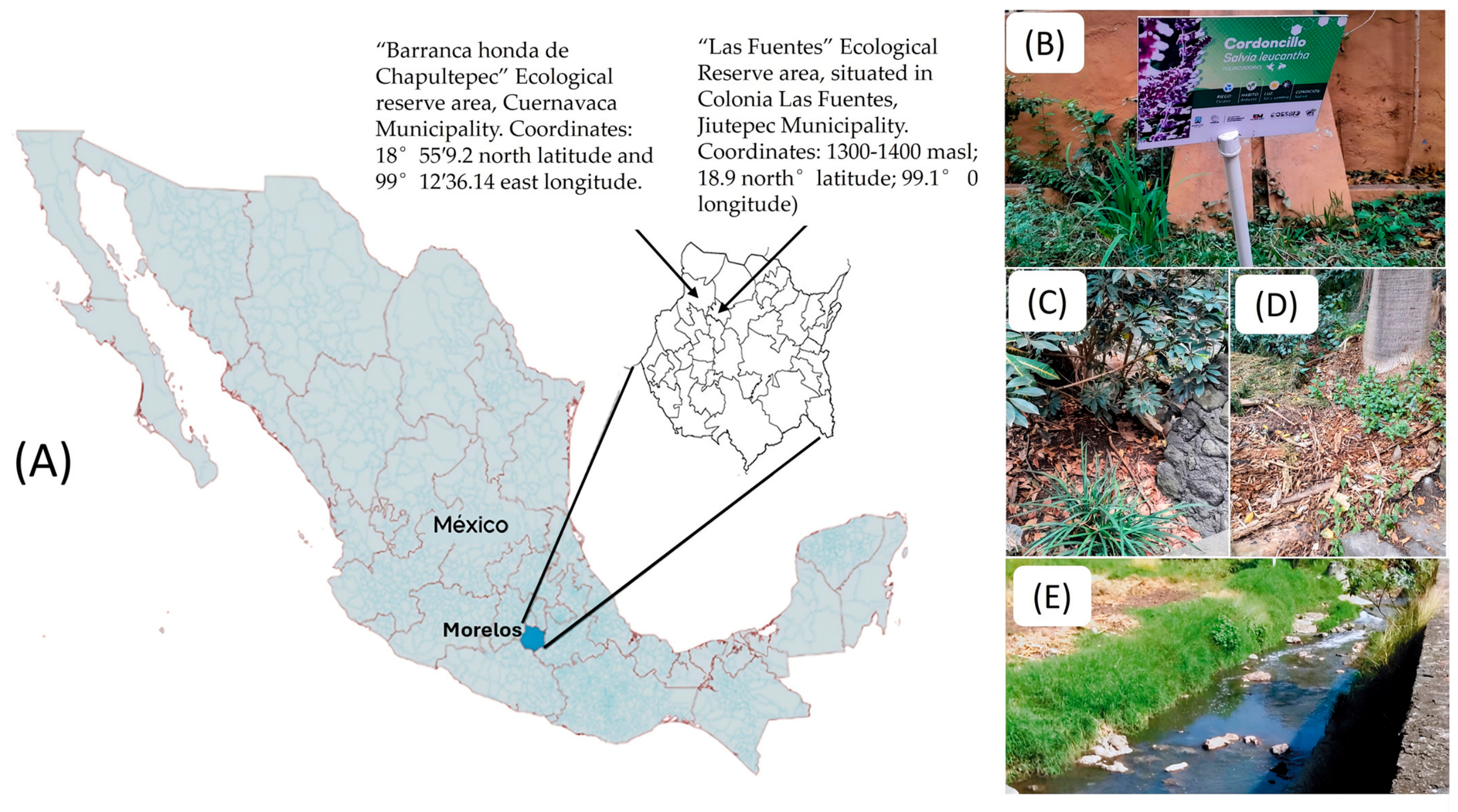
2.1. Location
2.2. Biological Material
2.2.1. Nematodes Panagrellus redivivus
2.2.2. Obtaining Haemonchus contortus Infective Larvae (L3)
2.3. Isolation of Nematophagous Fungi
2.4. Morphological Identification of the Fungi
2.5. Molecular Identification of Fungal Isolates
2.6. Phylogenetic Analysis
2.7. Predatory Activity Assessment
- •
- LRC = larvae recovered from the control group.
- •
- LRI = larvae recovered from the fungus/larvae interaction group.
- •
- The data were analyzed using paired Student’s t-tests, with the mean number of recovered larvae from the groups as the dependent variable.
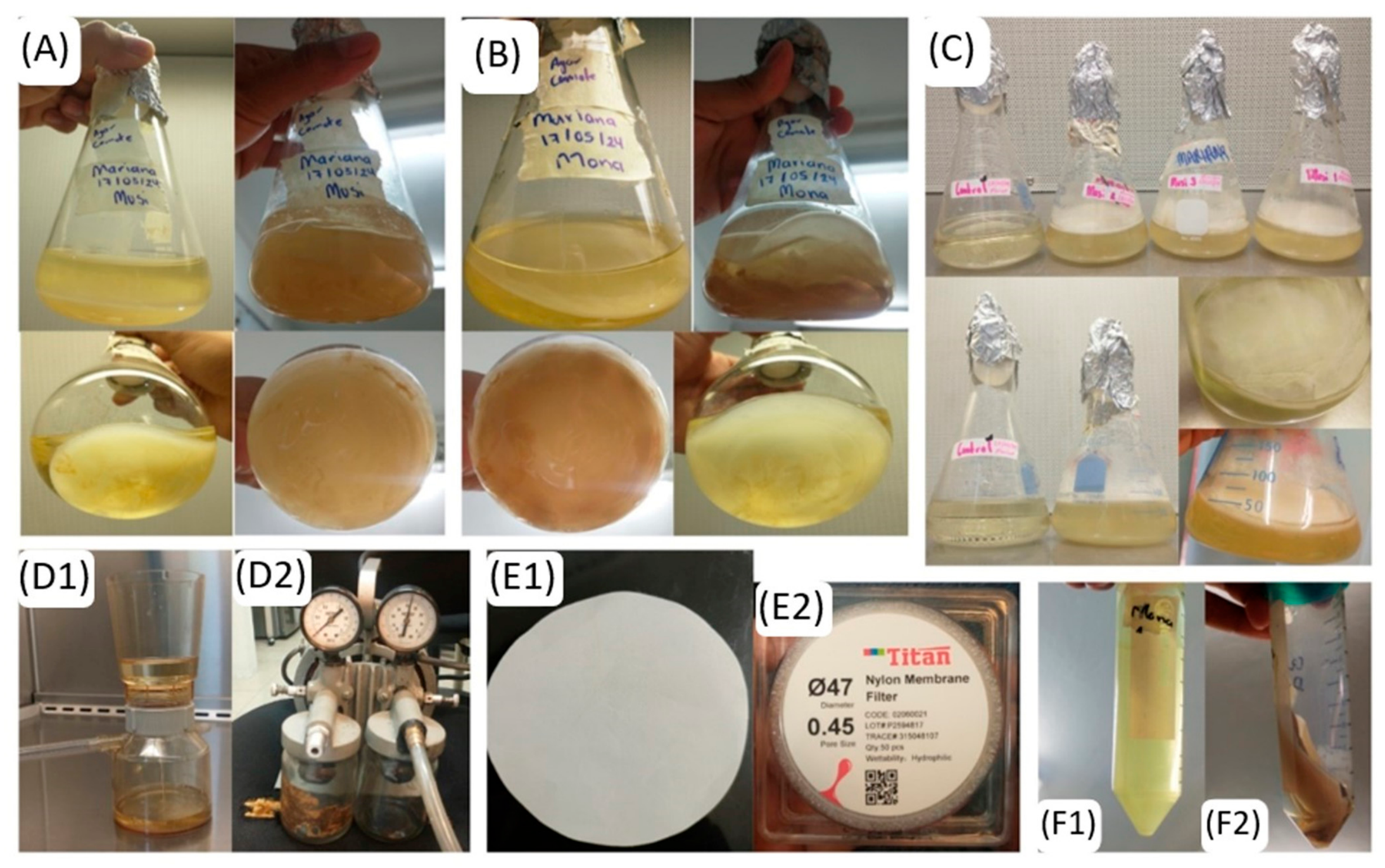
2.8. Obtaining Filtrates from Liquid Cultures of Nematophagous Fungi
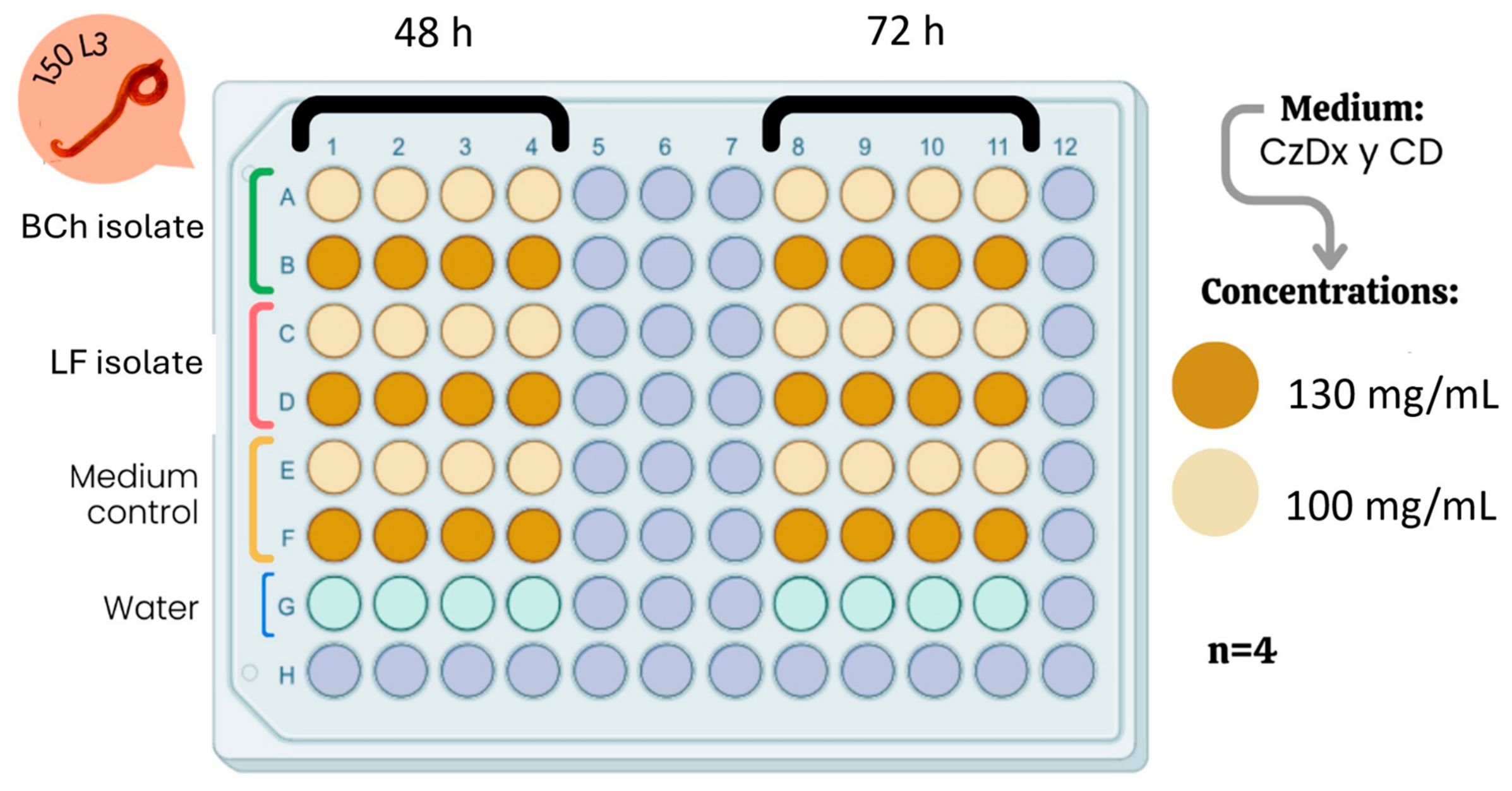
2.9. Evaluation of the Nematicidal Activity of Liquid Culture Filtrates of Nematophagous Fungi
3. Results
3.1. Fungal Isolation
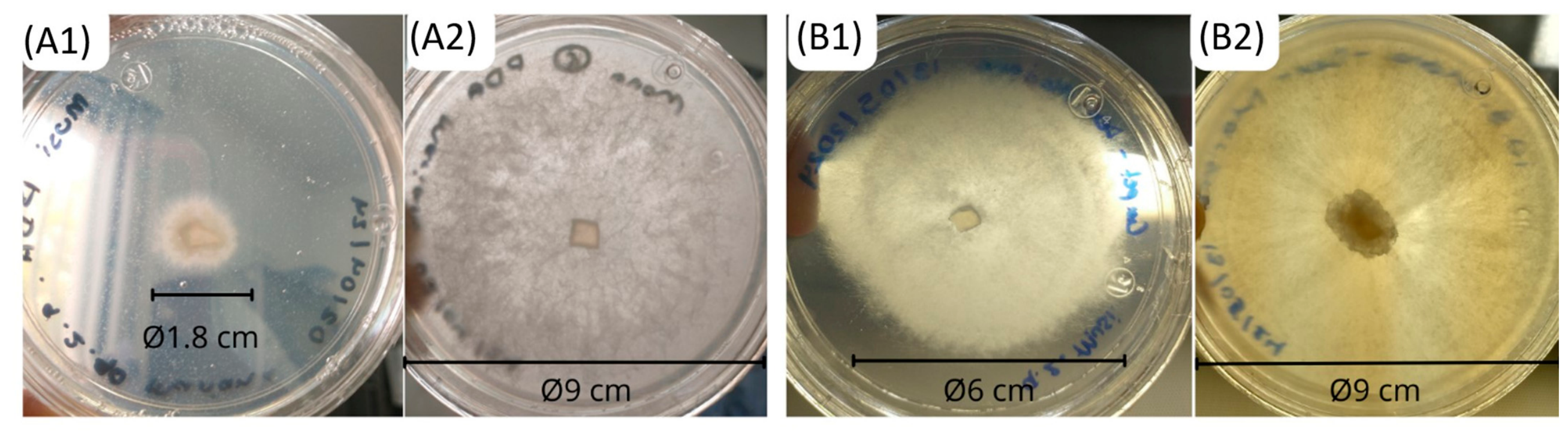
3.2. Macroscopic Comparison of Both Fungal Isolates
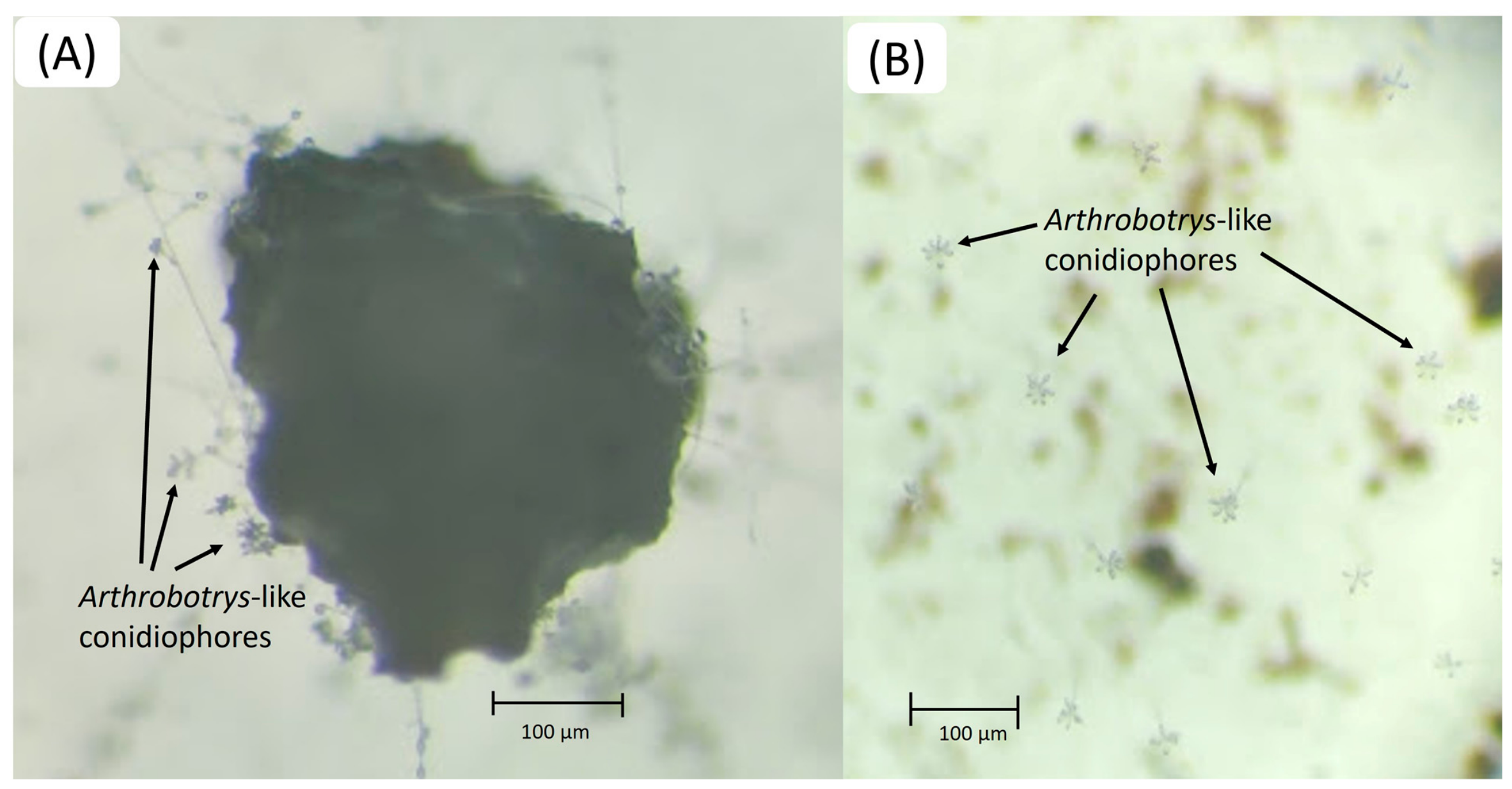
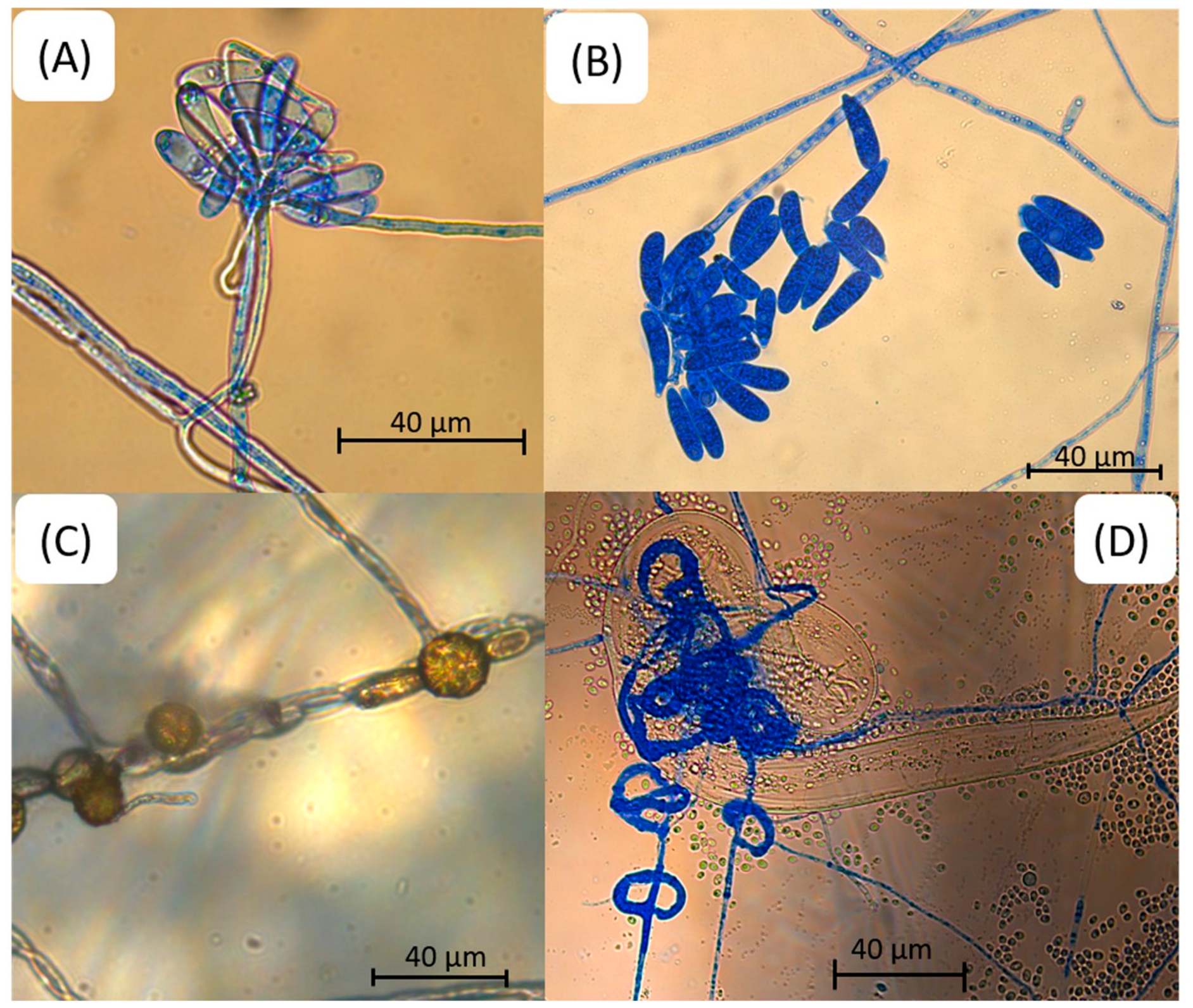
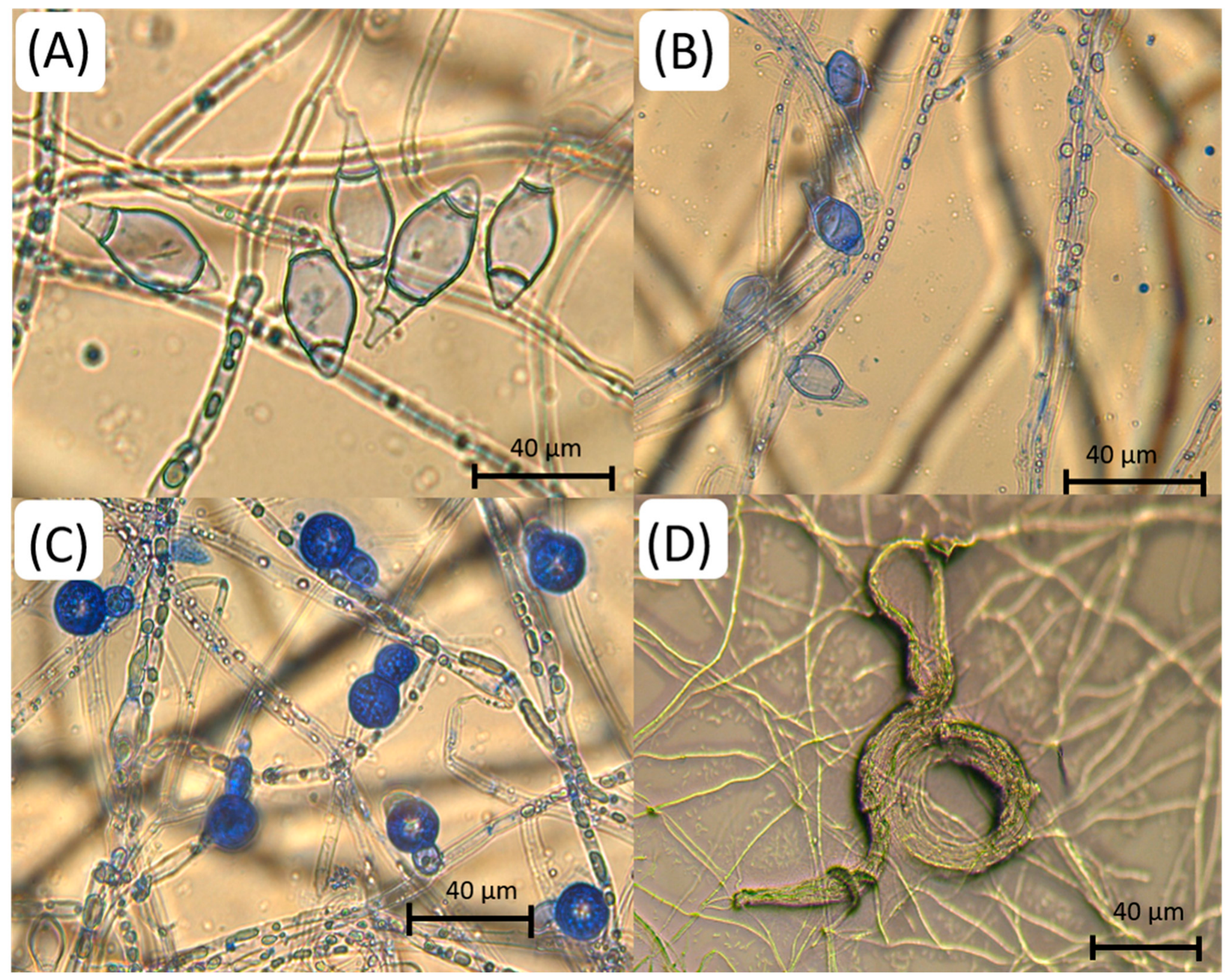
3.3. Microscopic Comparison of Both Fungal Isolates
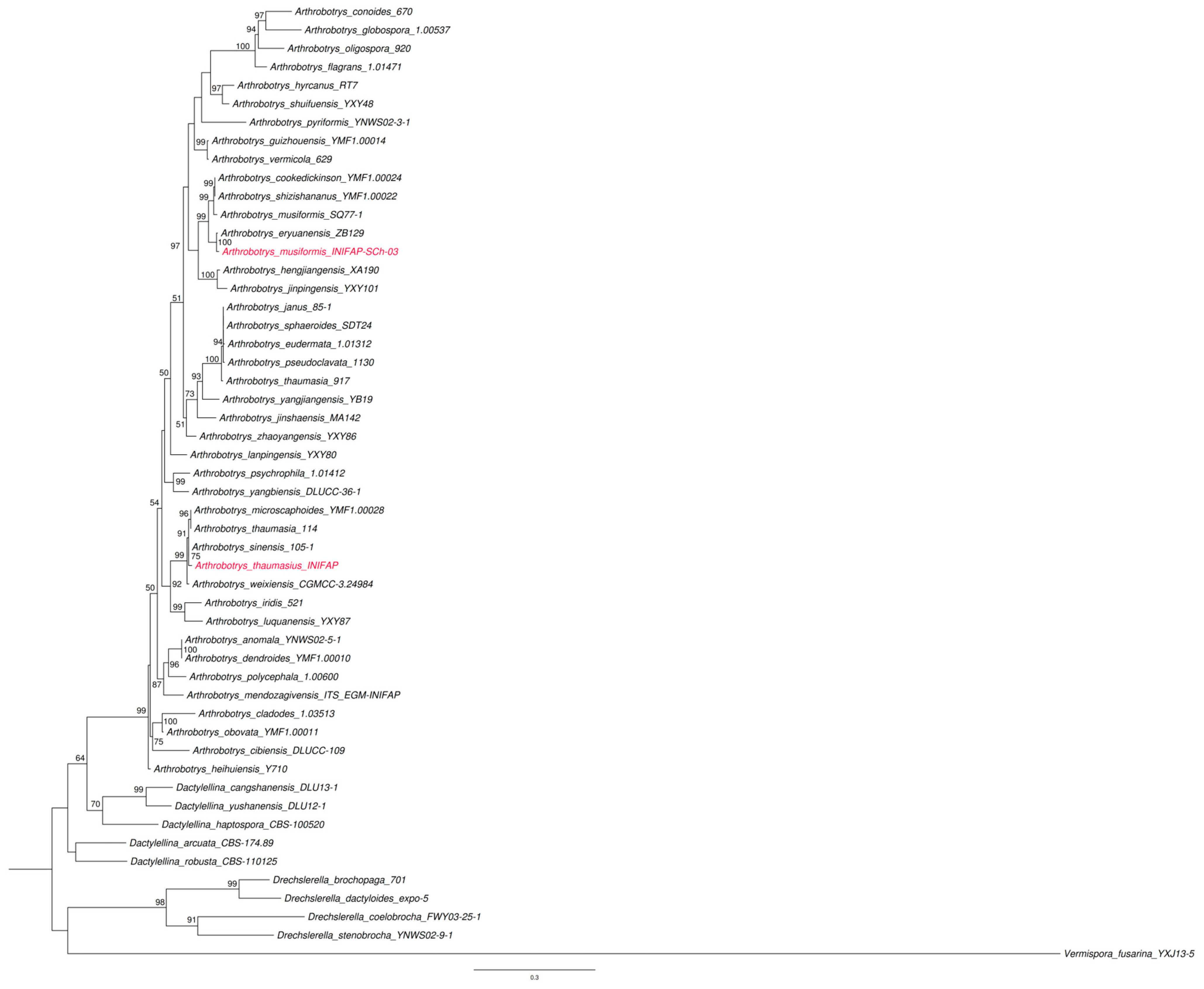
3.4. Molecular Identification of Arthrobotrys spp.
3.5. Predatory Activity of the Arthrobotrys musiformis and A. thaumasia Strains Against the Larvae (L3) of Haemonchus contortus
3.6. Nematicidal Effects of Liquid Culture Filtrates from Arthrobotrys musiformis and A. thaumasia Strains on Third-Stage Larvae (L3) of Haemonchus contortus
4. Discussion
4.1. Isolation and Molecular Characterization of the Isolate BCh of Arthrobotrys musiformis
4.2. Assessment of the Predatory Activity of Arthrobotrys musiformis and A. thaumasia
4.3. Nematicidal Activity of Liquid Filtrates from the Arthrobotrys musiformis and A. thaumasia Strains
5. Conclusions
Author Contributions
Funding
Institutional Review Board Statement
Informed Consent Statement
Data Availability Statement
Acknowledgments
Conflicts of Interest
References
- Nolinda, N.; Ikusika, O.O.; Akinmoladun, O.F.; Mpendulo, C.T. Impact of nematode infestation in livestock production and the role of natural feed additives—A review. Open Agric. 2024, 9, 20220234. [Google Scholar] [CrossRef] [Scilit]
- Flay, K.J.; Hill, F.I.; Muguiro, D.H. A Review: Haemonchus contortus infection in pasture-based sheep production systems, with a focus on the pathogenesis of anaemia and changes in Haematological parameters. Animals 2022, 12, 1238. [Google Scholar] [CrossRef] [Scilit] [PubMed]
- Charlier, J.; Rinaldi, L.; Musella, V.; Ploeger, H.; Chartier, C.; Vineer, H.R.; Hinney, B.; von Samson-Himmelstjerna, G.; Băcescu, B.; Mickiewicz, M.; et al. Initial assessment of the economic burden of major parasitic helminth infections on the ruminant livestock industry in Europe. Prev. Vet. Med. 2020, 182, 105103. [Google Scholar] [CrossRef] [Scilit] [PubMed]
- Charlier, J.; Rinaldi, L.; Morgan, E.R.; Claerebout, E.; Bartley, D.J.; Sotiraki, S.; Mickiewicz, M.; Martinez-Valladares, M.; Meunier, N.; Wang, T.; et al. Sustainable worm control in ruminants in Europe: Current perspectives. Anim. Front. 2024, 14, 13–23. [Google Scholar] [CrossRef] [Scilit] [PubMed]
- Rodrigues, J.F.V.; Monteiro, J.P.; Almeida, T.M.; Molento, M.B. A systematic review of the molecular mechanisms related to anthelmintic resistance in Haemonchus contortus: A contemporary narrative. Vet. Parasitol. 2025, 334, 110394. [Google Scholar] [CrossRef] [Scilit] [PubMed]
- Solis-Carrasco, J.D.; Castro-del-Campo, N.; Enríquez-Verdugo, I.; Rodríguez-Gaxiola, M.A.; Reyes-Guerrero, D.E.; Pérez-Anzúres, G.; Barraza-Tizoc, C.L.; Gaxiola-Camacho, S.M.; López-Arellano, M.E. Albendazole resistance in naturally infected sheep with gastrointestinal nematodes in two northwest municipalities of Sinaloa, Mexico. Vet. Parasitol. Reg. Stud. Rep. 2025, 59, 101223. [Google Scholar] [CrossRef] [Scilit] [PubMed]
- Mi, K.; Wu, X.; Lin, Z. Chemical risk assessment in food animals via physiologically based pharmacokinetic modeling− Part I: Veterinary drugs on human food safety assessment. Environ. Int. 2025, 197, 109339. [Google Scholar] [CrossRef] [Scilit] [PubMed]
- Bártíková, H.; Podlipná, R.; Skálová, L. Veterinary drugs in the environment and their toxicity to plants. Chemosphere 2016, 144, 2290–2301. [Google Scholar] [CrossRef] [Scilit] [PubMed]
- Vokřál, I.; Podlipná, R.; Matoušková, P.; Skálová, L. Anthelmintics in the environment: Their occurrence, fate, and toxicity to non-target organisms. Chemosphere 2023, 345, 140446. [Google Scholar] [CrossRef] [Scilit] [PubMed]
- Pandit, M.A.; Tarkeshwar. Ivermectin. In Chemistry and Biological Activities of Ivermectin; Ali, R., ul-Islam, S., Eds.; Wiley: Hoboken, NJ, USA, 2023; pp. 163–197. [Google Scholar] [CrossRef] [Scilit]
- Szewc, M.; De Waal, T.; Zintl, A. Biological methods for the control of gastrointestinal nematodes. Vet. J. 2021, 268, 105602. [Google Scholar] [CrossRef] [Scilit] [PubMed]
- Kumar, P.; Kumar, D.; Pal, S.; Singh, S. Plant secondary metabolites in defense against Phytopathogens: Mechanisms, biosynthesis, and applications. Physiol. Mol. Plant Pathol. 2025, 138, 102639. [Google Scholar] [CrossRef] [Scilit]
- Walkden-Brown, S.W.; Colvin, A.F.; Hall, E.; Knox, M.R.; Mackay, D.F.; Scott, J.M. Grazing systems and worm control in sheep: A long-term case study involving three management systems with analysis of factors influencing faecal worm egg count. Univ. Tasman. J. Contrib. 2013, 53, 765–779. [Google Scholar] [CrossRef] [Scilit]
- Adduci, I.; Sajovitz, F.; Hinney, B.; Lichtmannsperger, K.; Joachim, A.; Wittek, T.; Yan, S. Haemonchosis in Sheep and Goats, Control Strategies and Development of Vaccines against Haemonchus contortus. Animals 2022, 12, 2339. [Google Scholar] [CrossRef] [Scilit] [PubMed]
- Wen, Z.; Amu, J.; Aimulajiang, K.; Feng, J.; Chen, C.; Xu, Y.; Lu, M.; Song, X.; Li, X.; Yan, R. Enzymes involved in trehalose-chitin synthesis in Haemonchus contortus could be vaccine candidates for goats. Parasites Vectors 2025, 20, 61. [Google Scholar] [CrossRef] [Scilit] [PubMed]
- O’Brien, D.; Matthews, K.; Wildeus, S.; Whitley, N.C.; Schoenian, S. 163 The Efficacy of Copper Oxide Wire Particles Alone or in Combination with Moxidectin to Reduce Parasite Loads in Meat Goat Kids. J. Anim. Sci. 2023, 4, 107–108. [Google Scholar] [CrossRef] [Scilit] [PubMed Central]
- Jorge-Neto, P.N.; Requena, L.A.; Pizzutto, C.S.; Balieiro, J.C.d.C. Haemonchosis control in sheep with Duddingtonia flagrans Fungi: Evaluation of the first commercial product in Brazil. Parasitologia 2025, 5, 11. [Google Scholar] [CrossRef] [Scilit]
- Mendoza-de Gives, P. Soil-borne Nematodes: Impact in agriculture and livestock and sustainable strategies of prevention and control with special reference to the use of nematode natural enemies. Pathogens 2022, 11, 640. [Google Scholar] [CrossRef] [Scilit] [PubMed]
- de Lara, R.; Castro, T.; Castro, J.; Castro, G. Cultivo del nematodo Panagrellus redivivus (Goodey, 1945) en un medio de avena enriquecida con Spirulina sp. Biol. Mar. Oceanogr. 2007, 42, 29–36. [Google Scholar] [CrossRef] [Scilit]
- Valcárcel-Sancho, F.; Rojo-Vázquez, F.A.; Olmeda-García, A.S.; Arribas-Novillo, B.; Márquez-Sopeña, L.; Fernando-Pat, N. Atlas de Parasitología Ovina; Editorial Servet, Universidad Complutense Madrid: Madrid, Spain, 2009; Volume 1, p. 137. [Google Scholar]
- Iliev, P.; Ivanov, A.; Prelezov, P. Effects of temperature and desiccation on survival rate of Haemonchus contortus infective larval stage. Trakia J. Sci. 2018, 16, 17–21. [Google Scholar] [CrossRef] [Scilit]
- Cedillo-Borda, M.; López-Arellano, M.; Reyes-Guerrero, D.E. In vitro assessment of ivermectin resistance and gene expression profiles of P-glycoprotein genes from Haemonchus contortus (L3). Bio-Protoc. 2020, 10, e3851. [Google Scholar] [CrossRef] [Scilit]
- Reyes-Guerrero, D.E.; Cedillo-Borda, M.; Alonso-Morales, R.A.; Alonso-Díaz, M.A.; Olmedo-Juárez, A.; Mendoza-de-Gives, P.; López-Arellano, M.E. Comparative study of transcription profiles of the P-glycoprotein transporters of two Haemonchus contortus isolates: Susceptible and resistant to ivermectin. Mol. Biochem. Parasitol. 2020, 238, 111281. [Google Scholar] [CrossRef] [Scilit] [PubMed]
- Barron, G.L. The nematode-destroying fungi. In Topics in Mycobiology; University of Guelph: Guelph, ON, Canada; Canada Press: Lancaster, PA, USA, 1977; Volume 1, p. 140. [Google Scholar]
- Drechsler, C. Some Hyphomycetes that prey on free-living terricolous nematodes. Mycologia 1937, 29, 447–552. [Google Scholar] [CrossRef] [Scilit]
- Zhang, F.; Boonmee, S.; Bhat, J.D.; Xiao, W.; Yang, X.-Y. New Arthrobotrys Nematode-Trapping Species (Orbiliaceae) from Terrestrial Soils and Freshwater Sediments in China. J. Fungi 2022, 8, 671. [Google Scholar] [CrossRef] [Scilit] [PubMed]
- Tigano-Milani, M.S.; Honeycutt, R.J.; Lacey, L.A.; Assis, R.; McClelland, M.; Sobral, B.W. Genetic variability of Paecilomyces fumosoroseus isolates revealed by molecular markers. J. Invertebr. Pathol. 1995, 65, 274–282. [Google Scholar] [CrossRef] [Scilit] [PubMed]
- White, T.J.; Bruns, T.; Lee, S.; Taylor, J. Amplification and direct sequencing of fungal ribosomal RNA genes for phylogenetics. In PCR Protocols: A Guide to Methods and Applications; Innis, M.A., Gelfand, D.H., Sninsky, J.J., White, T.J., Eds.; Academic Press: New York, NY, USA, 1990; Volume 18, pp. 315–322. [Google Scholar]
- Pérez-Anzúrez, G.; Olmedo-Juárez, A.; von-Son de Fernex, E.; Alonso-Díaz, M.Á.; Delgado-Núñez, E.J.; López-Arellano, M.E.; González-Cortázar, M.; Zamilpa, A.; Ocampo-Gutierrez, A.Y.; Paz-Silva, A.; et al. Arthrobotrys musiformis (Orbiliales) kills Haemonchus contortus infective larvae (Tichostronylidae) through its predatory activity and its fungal culture filtrates. Pathogens 2022, 11, 1068. [Google Scholar] [CrossRef] [Scilit] [PubMed]
- Gutiérrez-Medina, E.; Mendoza-de Gives, P.; Pérez-Anzúrez, G.; Colinas-Picazo, A.; Bautista-García, G.A.; Alonso-Díaz, M.Á.; von Son-de Fernex, E.; López-Arellano, M.E. Arthrobotrys mendozadegivensis sp. nov. (Fungi: Orbiliales) from Mexico: Predatory activity and nematocidal activity of its liquid culture filtrates against Haemonchus contortus (Nematoda: Trichostrongylidae). J. Fungi 2024, 10, 888. [Google Scholar] [CrossRef] [Scilit] [PubMed]
- Olmedo-Juárez, A.; Rojo-Rubio, R.; Zamilpa, A.; de Gives, P.M.; Arece-García, J.; López-Arellano, M.E.; Fernex, E. In vitro larvicidal effect of a hydroalcoholic extract from Acacia cochliacantha leaf against ruminant parasitic nematodes. Veter Res. Commun. 2017, 41, 227–232. [Google Scholar] [CrossRef] [Scilit] [PubMed]
- de Hoog, G.S. (Ed.) A review of Arthrobotrys in Alied genera. In Taxonomy of the Dactylaria Complex, IV–VI; Studies in Mycology; Centraalbureau voor Schimmelcultures: Baarn, The Netherlands, 1985; Volume 26, pp. 61–96. [Google Scholar]
- Yu, Z.; Mo, M.; Zhang, Y.; Zhang, K.Q. Taxonomy of Nematode-Trapping Fungi from Orbiliaceae, Ascomycota. In Nematode-Trapping Fungi; Fungal Diversity Research Series; Zhang, K.Q., Hyde, K., Eds.; Springer: Dordrecht, The Netherlands, 2014; Volume 23. [Google Scholar] [CrossRef] [Scilit]
- Ojeda-Robertos, N.F.; Aguilar-Marcelino, L.; Olmedo-Juárez, A.; Luna-Palomera, C.; Peralta-Torres, J.A.; López-Arellano, M.E.; Mendoza-de Gives, P. In vitro predatory activity of nematophagous fungi isolated from water buffalo feces and from soil in the Mexican southeastern. Rev. Bras. Parasitol. Vet. 2019, 28, 314–319. [Google Scholar] [CrossRef] [Scilit] [PubMed]
- Jaramillo-Tlalapango, J.; Gives, P.M.-D.; Isabel-Higuera-Piedrahita, R.; Ocampo-Gutiérrez, A.Y.; Eugenia-López-Arellano, M.; Pérez-Anzúrez, G.; Olmedo-Juárez, A.; Hernández-Romano, J.; Maza-Lopez, J.; Delgado-Núñez, E.J.; et al. Study of a Mexican isolate of Arthrobotrys musiformis (Orbiliales): Predatory behavior and nematocidal activity of liquid culture filtrates against Haemonchus contortus (Trichostrongylidae), protein profile and myco-constituent groups. Fungal Biol. 2023, 127, 1345–1361. [Google Scholar] [CrossRef] [Scilit] [PubMed]
- Colinas-Picazo, A.; Mendoza-de Gives, P.; Pérez-Anzúrez, G.; Gutiérrez-Medina, E.; Bautista-García, G.A.; Delgado-Núñez, E.J.; Olmedo-Juárez, A. Assessing the In Vitro Individual and Combined Effect of Arthrobotrys oligospora and A. musiformis (Orbiliales) Liquid Culture Filtrates against Infective Larvae of the Sheep Blood-Feeding Nematode Haemonchus contortus (Trichostrongylidae). Pathogens 2024, 13, 498. [Google Scholar] [CrossRef] [Scilit] [PubMed]
- Dai, H.W.; Xu, Q.; Wang, B.B.; Jia, X.Y.; Wan, X.M.; Yang, X.C.; Cai, K.Z.; Liu, Z.B. In Vitro, in Vivo, and Interaction Studies of Nematophagous Fungus Arthrobotrys thaumasia (Monacrosporium thaumasium) with the Larvae of Trichostrongylides of Sheep. J. Parasitol. 2017, 103, 692–698. [Google Scholar] [CrossRef] [Scilit] [PubMed]
- Wang, B.; Chen, Y.; He, J.; Xue, H.; Yan, N.; Zeng, Z.; Bennett, J.W.; Zhang, K.; Niu, X. Integrated Metabolomics and Morphogenesis Reveal Volatile Signalling of the Nematode-Trapping Fungus Arthrobotrys oligospora. Appl. Environ. Microbiol. 2018, 84, e02749-17. [Google Scholar] [CrossRef] [Scilit] [PubMed]
- Santos, C.D.P.; Padilha, T.; Rodrigues, M.D.L.D.A. Predatory activity of Arthrobotrys oligospora and Duddingtonia flagrans on pre-parasitic larval stages of cyathostominae under different constant temperatures. Ciênc. Rural 2001, 31, 839–842. [Google Scholar] [CrossRef] [Scilit]
- Jiang, X.; Xiang, M.; Liu, X. Nematode-trapping fungi. Microbiol. Spectr. 2016, 5, FUNK-0022-2016. [Google Scholar] [CrossRef] [Scilit]
- Eslami, A.; Ranjbar-Bahadori, S.; Zare, R.; Razzaghi-Abyaneh, M. The predatory capability of Arthrobotrys cladodes var. macroides in the control of Haemonchus contortus infective larvae. Vet. Parasitol. 2005, 130, 263–266. [Google Scholar] [CrossRef] [Scilit] [PubMed]
- Gomes, A.P.S.; Araújo, J.V.D.; Guimarães, M.P. Arthrobotrys robusta no controle biológico de nematóides parasitos gastrointestinais de bovinos. Rev. Bras. Ciênc. Vet. 2000, 7, 69–74. [Google Scholar] [CrossRef] [Scilit]
- Wang, B.; Wang, F.; Xu, Q.; Wang, K.; Xue, Y.; Ren, R.; Zeng, J.; Liu, Y.; Zhang, H.; Wang, H.; et al. In vitro and in vivo studies of the native isolates of nematophagous fungi from China against the larvae of trichostrongylides. J. Basic Microbiol. 2017, 57, 265–275. [Google Scholar] [PubMed]
- Xue, Y.J.; Li, E.L.; Wang, A.H.; Cai, K.Z. Predatory activity and passage of six nematophagous fungi species in gastrointestinal tract of trichostrongylide-infected sheep. Biocontrol Sci. Technol. 2018, 28, 654–662. [Google Scholar] [CrossRef] [Scilit]
- Degenkolb, T.; Vilcinskas, A. Metabolites from nematophagous fungi and nematicidal natural products from fungi as an alternative for biological control. Part I: Metabolites from nematophagous ascomycetes. Appl. Microbiol. Biotechnol. 2016, 100, 3799–3812. [Google Scholar] [CrossRef] [Scilit] [PubMed]
- Ocampo-Gutiérrez, A.Y.; Hernández-Velázquez, V.M.; Aguilar-Marcelino, L.; Cardoso-Taketa, A.; Zamilpa, A.; López-Arellano, M.E.; González-Cortázar, M.; Hernández-Romano, J.; Reyes-Estebanez, M.; Gives, P.M.-D. Morphological and molecular characterization, predatory behaviour and effect of organic extracts of four nematophagous fungi from Mexico. Fungal Ecol. 2021, 49, 101004. [Google Scholar] [CrossRef] [Scilit]
- Mendoza-de Gives, P.; Rodriguez-Labastida, M.; Olmedo-Juarez, A.; Gamboa-Angulo, M.M.; Reyes-Estebanez, M. A nematode crude extract acts as an elicitor of the nematocidal activity of nematophagous fungi liquid culture filtrates against Haemonchus contortus (Nematoda: Trichostrongylidae). Acta Parasitol. 2022, 67, 678–686. [Google Scholar] [CrossRef] [Scilit]
- Acevedo-Ramírez, P.M.; Figueroa-Castillo, J.A.; Ulloa-Arvizú, R.; Martínez-García, L.G.; Guevara-Flores, A.; Rendón, J.L.; Valero-Coss, R.O.; Mendoza-de Gives, P.; Quiroz-Romero, H. Proteolytic activity of extracellular products from Arthrobotrys musiformis and their effect in vitro against Haemonchus contortus infective larvae. Vet. Rec. Open 2015, 16, e000103. [Google Scholar] [CrossRef] [Scilit] [PubMed]
- Kassam, R.; Yadav, J.; Chawla, G.; Kundu, A.; Hada, A.; Jaiswal, N.; Bollinedi, H.; Kamil, D.; Devi, P.; Rao, U. Identification, Characterization, and Evaluation of Nematophagous Fungal Species of Arthrobotrys and Tolypocladium for the Management of Meloidogyne incognita. Front. Microbiol. 2021, 12, 790223. [Google Scholar] [CrossRef] [Scilit] [PubMed]
- Soares, F.E.d.F.; de Queiroz, J.H.; de Araújo, J.V.; Queiroz, P.V.; Gouveia, A.d.S.; Hiura, E.; Braga, F.R. Nematicidal action of chitinases produced by the fungus Monacrosporium thaumasium under laboratory conditions. Biocontrol Sci. Technol. 2015, 25, 337–344. [Google Scholar] [CrossRef] [Scilit]
- Tzean, Y.; Chou, T.H.; Hsiao, C.C.; Shu, P.Y.; Walton, J.D.; Tzean, S.S. Cloning and characterization of cuticle-degrading serine protease from nematode-trapping fungus Arthrobotrys musiformis. Mycoscience 2016, 57, 136–143. [Google Scholar] [CrossRef] [Scilit]
- Hou, X.; Shen, Z.; Li, N.; Kong, X.; Sheng, K.; Wang, W.Y. A novel fungal beta-propeller phytase from nematophagous Arthrobotrys oligospora: Characterization and potential application in phosphorus and mineral release for feed processing. Microb. Cell Fact. 2020, 19, 84. [Google Scholar] [CrossRef] [Scilit] [PubMed] [PubMed Central]
- Zhao, H.; Qiao, J.; Meng, Q.; Gong, S.; Chen, C.; Liu, T.; Tian, L.; Cai, X.; Luo, J.; Chen, C. Expression of serine proteinase P186 of Arthrobotrys oligospora and analysis of its nematode-degrading activity. Antonie Van. Leeuwenhoek 2015, 108, 1485–1494. [Google Scholar] [CrossRef] [Scilit] [PubMed]
- Gong, S.; Meng, Q.; Qiao, J.; Huang, Y.; Zhong, W.; Zhang, G.; Zhang, K.; Li, N.; Shang, Y.; Li, Z.; et al. Biological Characteristics of Recombinant Arthrobotrys oligospora Chitinase AO-801. Korean J. Parasitol. 2022, 60, 345–352. [Google Scholar] [CrossRef] [Scilit] [PubMed] [PubMed Central]
- Zhong, W.; Chen, Y.; Gong, S.; Qiao, J.; Meng, Q.; Zhang, X.; Wang, X.; Huang, Y.; Tian, L.; Niu, Y. Enzymological properties and nematode-degrading activity of recombinant chitinase AO-379 of Arthrobotrys oligospora. Kafkas Üniversitesi Vet. Fakültesi Derg. 2019, 25, 435–444. [Google Scholar] [CrossRef] [Scilit]
- Braga, F.R.; Soares, F.E.F.; Giuberti, T.Z.; Lopes, A.D.C.G.; Lacerda, T.; Ayupe, T.d.H.; Queiroz, P.V.; Gouveia, A.d.S.; Pinheiro, L.; Araújo, A.L.; et al. Nematocidal activity of extracellular enzymes produced by the nematophagous fungus Duddingtonia flagrans on cyathostomin infective larvae. Vet. Parasitol. 2015, 212, 214–218. [Google Scholar] [CrossRef] [Scilit] [PubMed]
- Liu, Y.J.; Zhai, C.Y.; Liu, Y.; Zhang, K.Q. Nematicidal activity of Paecilomyces spp. and isolation of a novel active compound. J. Microbiol. 2009, 47, 248–252. [Google Scholar] [CrossRef] [Scilit] [PubMed]
- Niu, X.-M.; Wang, Y.-L.; Chu, Y.-S.; Xue, H.-X.; Li, N.; Wei, L.-X.; Mo, M.-H.; Zhang, K.-Q. Nematodetoxic aurovertin-type metabolites from a root-knot nematode parasitic fungus Pochonia chlamydosporia. J. Agric. Food Chem. 2010, 58, 828–834. [Google Scholar] [CrossRef] [Scilit] [PubMed]
- Ayers, S.; Zink, D.L.; Mohn, K.; Powell, J.S.; Brown, C.M.; Bills, G.; Grund, A.; Thompson, D.; Singh, S.B. Anthelmintic constituents of Clonostachys candelabrum. J. Antibiot. 2010, 63, 119–122. [Google Scholar] [CrossRef] [Scilit] [PubMed]



| Arthrobotrys sp. (BCh Isolate) | Arthrobotrys sp. (LF Isolate) | |||
|---|---|---|---|---|
| Characteristics | Average (µm) | Range (µm) | Average (µm) | Range (µm) |
| Conidium length | 31.60 | 24.54–38.55 | 36.14 | 28.49–43.8 |
| Conidium width | 12.58 | 8.13–17.87 | 17.24 | 13.92–21.56 |
| Measurement from the base to the septum | 9.44 | 6.32–12.71 | 12.5 | 8.91–16.1 |
| Conidiophore length | 48.70 | 10.05–86.75 | 365 | 330–400 |
| Chlamydospores | + | + | ||
| Strain | Covering % | Similarity % | GenBank Accession Number |
|---|---|---|---|
| Arthrobotrys musiformis BCh (a) | PQ775558 | ||
| Orbilia multiformis FA626 | 100 | 99.83 | OM066034.1 |
| Orbilia multiformis FA829 | 100 | 99.83 | OM066033.1 |
| Orbilia multiformis FA639 | 100 | 99.83 | OM066016.1 |
| Orbilia multiformis FA804 | 100 | 99.83 | OM066042.1 |
| Orbilia multiformis FA736 | 100 | 99.83 | OM066041.1 |
| Arthrobotrys musiformis FA761 | 99 | 99.83 | OM660023.1 |
| Arthrobotrys musiformis Mau1Ad | 96 | 99.12 | MN831892.1 |
| Arthrobotrys thaumasia Z1-LF (b) | PQ774859 | ||
| Arthrobotrys thaumasia isolate 110 | 97 | 99.3 | EU977529.1 |
| Arthrobotrys thaumasia isolate 111 | 96 | 99.83 | EU977532.1 |
| Arthrobotrys thaumasia strain CBS 322.94 | 95 | 99.32 | AF106526.1 |
| Arthrobotrys thaumasia strain CBS37697 | 99 | 98.03 | KT215216.1 |
| Arthrobotrys thaumasia Isolate BUAT-AT-2 | 99 | 97.87 | OR859125.1 |
| Arthrobotrys thaumasia isolate I-Y4-2 | 93 | 99.82 | PP319009.1 |
| Arthrobotrys sinensis strain 105-1 | 97 | 98.32 | AY773445.1 |
| Treatment | Mean of Recovered Larvae | Predation (%) |
|---|---|---|
| Arthrobotrys musiformis | 710 ± 342.7 | 74.64 ± 4.2 * |
| Control without fungi | 2800 ± 830.2 | |
| A. thaumasia | 227.7 ± 86.2 | 83.53 ± 4.5 * |
| Control without fungi | 1383 ± 142.9 |
| Fungi Growing in Czapek–Dox Broth | Fungi Growing in Sweet Potato Dextrose Broth | |||
|---|---|---|---|---|
| Liquid Culture Filtrate/Concentration | Evaluation Time (h) | Evaluation Time (h) | ||
| 48 | 72 | 48 | 72 | |
| A. musiformis 100 mg/mL | 30.3 ± 3.7 a | 51.0 ± 14.7 b | 7.8 ± 6.9 ab | 25.8 ± 19.1 ª |
| A. thaumasia 100 mg/mL | 15.5 ± 8.5 b | 12.3 ± 1.6 c | 5.8 ± 2.9 ab | 17.6 ± 4.4 ab |
| A. musiformis 130 mg/mL | 32.0 ± 7.8 a | 76.7 ± 13.5 a | 10.3 ± 6.3 bc | 28.8 ±12.1 a |
| A. thaumasia 130 mg/mL | 15.0 ± 1.2 b | 22.4 ± 2.1 c | 8.3 ± 2.4 bc | 21.0 ± 4.3 ab |
| Czapek–Dox | 4.8 ± 0.9 c | 6.5 ± 4.3 c | 3.5 ± 1.2 bc | 5.4 ± 3.8 bc |
| Water | 1.1 ± 0.4 c | 1.9 ± 1.5 c | 0.9 ± 0.7 c | 1.0 ± 0.4 c |
| Strain Code | Country | GenBank Accession Number | Query Cover (%) | Identity (%) |
|---|---|---|---|---|
| AmusichapudeGives | Mexico | OR195437.1 | 100 | 97.27 |
| CBS 110.37 | USA | MH855842.1 | 100 | 97.27 |
| 3Y7A-1-1 | China | OL454931.1 | 100 | 97.27 |
| INIFAP-SCt-01 | Mexico | PP333206.1 | 100 | 97.27 |
| USA | KJ938572.1 | 100 | 97.10 | |
| Am_11 | Portugal | MG515529.1 | 100 | 97.1 |
| SQ77-1 | China | AY773469.1 | 100 | 94.06 |
| FB01 | Mexico | MF926584.1 | 99 | 97.26 |
| 106 | China | EU977517.1 | 99 | 97.09 |
| INIFAP-SCv-02 | Mexico | PP567276.1 | 98 | 97.40 |
| Strain | Country | GenBank Accession Number | Query Cover (%) | Identity (%) |
|---|---|---|---|---|
| 110 | China | EU977529.1 | 97 | 99.33 |
| 111 | China | EU977532.1 | 96 | 99.83 |
| CBS 322.94 | Germany | AF106526.1 | 95 | 99.32 |
| CBS 376.97 | Burkina Faso | KT215216.1 | 99 | 98.03 |
| BUAT-AT-2 | India | OR859125.1 | 99 | 97.87 |
| I-Y4-2 | Turkey | PP319009.1 | 93 | 99.82 |
| BHAT-AT-1 | India | OR859119.1 | 99 | 97.55 |
| At_RK | India | MT898981.1 | 96 | 98.46 |
| NBS005 | China | KX640093.1 | 94 | 98.95 |
| 1.03171 | China | MH179771.1 | 96 | 98.12 |
| Arthrobotrys Species | Blank Nematode | Conditions | Predatory Activity | Authors |
|---|---|---|---|---|
| Arthrobotrys cladodes var. macroides | Haemonchus contortus | In vitro assessment of reduction in infective larvae in sheep feces | At 20 × 103 conidia = 73.49%; at 100 × 103 conidia = 94.96% | [41] |
| A. robusta | Haemonchus placei | In vivo assessment administering 2 × 10⁶ conidia (per os) in calves | 73.68% | [42] |
| A. thaumasia | Trichostrongylus colubriformis, Haemonchus contortus, and Marshallagia mongolica. | In vitro assessment of fungus spores (after passing through sheep gastrointestinal tract) | 75.54–99.97% | [37] |
| Duddingtonia flagrans | Trichostrongylus colubriformis | In vitro with 16 native isolates from China | 57.21–99.83 | [43] |
| A. oviformis A. sinense A. microscaphoides | Mixture of genera/species in sheep Haemonchus contortus Trichostrongylus colubriformis | Oral doses | A. oviformis = 84.12% A. sinense = 84.39% A. microscaphoides = 84.74% | [44] |
| Protein Group | Fungal Species | Nematode Blank | Activity | Reference |
|---|---|---|---|---|
| Serine-dependent proteases | Arthrobotrys musiformis | Haemonchus contortus | A time-dependent effect was identified, with 77% larvae immobilization after 48 h of incubation. | [48] |
| Serine proteases AmSP1 | A. musiformis | Various nematodes | The gene responsible for the cuticle-degrading serine protease was identified. | [51] |
| Fitase BPP | Arthrobotrys oligospora | Various nematodes | A high specific enzymatic activity (74.71 U/mg) was identified during the development of three-dimensional adhesive nets. | [52] |
| Serine proteinase P186 | oligospora | Various nematodes | The enzyme was found degrading different substrates: casein, gelatin, bovine serum albumin, denatured collagen, and the cortical layer of nematodes. | [53] |
| Chitinase AO-801 | A. oligospora | Caenorhabditis elegans | The enzyme displayed activity degrading colloidal and powdered chitin, egg lysate, and L1 larva lysate of Caenorhabditis elegans. | [54] |
| Recombinant chitinase AO-379 | oligospora | Strongylus equinus, Caenorhabditis elegans and Haemonchus contortus | The degradation activities on the nematodes were taken at 12, 24, and 36 h; the activities were as follows: S. equinus: 42%, 89%, and 100%; C. elegans: 50%, 90%, and 97%; H. contortus: 53%, 62%, and 84%. | [55] |
| Protease chitinase | D. flagrans | Cyathostomins | The enzyme reduced the L3 Cyathostomins percentages as follows: protease = 19.4%, chitinase = 15.5%, protease + chitinase = 20.5%. | [56] |
| Metabolite | Fungal Species | Blank Nematode | Antagonistic Effect | References |
|---|---|---|---|---|
| 4-(4′-carboxy-2′- ethylhydroxypentyl)- 5,6-dihydro-6- methylcyclobuta[b] pyridine3, 6-dicarboxylic acid | Paecilomyces sp. | Panagrellus redivivus, Meloidogyne incognita and Bursaphelenchus xylophilus | P. redivivus: LD50: 50.85 mg/mL M. incognita: LD50: 47.1 μg/mL Bursaphelenchus xylophilus: LD50 at 167.7 μg/mL | [57] |
| Aurovertins A3 y A4 | Pochonia clamydosphoria | M. Incognita (J2) | Nematode suppression at 48 h: Aurovertins A3: LD50: 88.6 μg/mL Aurovertins A4: LD50: 41.7 μg/mL) | [58] |
| Roselipinas 1–5 | Clonostachys candelabrum | Haemonchus contortus (L3) | Motility inhibition = 90% At 22 µg/mL | [59] |
| 2 (5H)-Furanone, 5-methylfuran-2-carbaldehyde (compound 8) | Arthrobotrys oligospora | Caenorhabditis elegans | Nematode attraction index: 0.4 Paralyse and kill nematodes at LC50: 369 μg/mL in 12 h. | [38] |
Disclaimer/Publisher’s Note: The statements, opinions and data contained in all publications are solely those of the individual author(s) and contributor(s) and not of MDPI and/or the editor(s). MDPI and/or the editor(s) disclaim responsibility for any injury to people or property resulting from any ideas, methods, instructions or products referred to in the content. |
© 2026 by the authors. Licensee MDPI, Basel, Switzerland. This article is an open access article distributed under the terms and conditions of the Creative Commons Attribution (CC BY) license.
Share and Cite
Cervantes-Martínez, M.; Higuera-Piedrahita, R.I.; de la Crúz-Crúz, H.A.; Pérez-Anzúrez, G.; López-Arellano, M.E.; Olmedo-Juárez, A.; Delgado-Núñez, E.J.; Ocampo-Gutiérrez, A.Y.; Mendoza-de Gives, P. Arthrobotrys thaumasia and A. musiformis (Fungi: Orbiliales) as Natural Potential Enemies of Haemonchus contortus (Nematoda: Trichostrongylidae). Pathogens 2026, 15, 784. https://doi.org/10.3390/pathogens15080784
Cervantes-Martínez M, Higuera-Piedrahita RI, de la Crúz-Crúz HA, Pérez-Anzúrez G, López-Arellano ME, Olmedo-Juárez A, Delgado-Núñez EJ, Ocampo-Gutiérrez AY, Mendoza-de Gives P. Arthrobotrys thaumasia and A. musiformis (Fungi: Orbiliales) as Natural Potential Enemies of Haemonchus contortus (Nematoda: Trichostrongylidae). Pathogens. 2026; 15(8):784. https://doi.org/10.3390/pathogens15080784
Chicago/Turabian StyleCervantes-Martínez, Mariana, Rosa Isabel Higuera-Piedrahita, Héctor Alejandro de la Crúz-Crúz, Gustavo Pérez-Anzúrez, María Eugenia López-Arellano, Agustín Olmedo-Juárez, Edgar Jesús Delgado-Núñez, Ana Yuridia Ocampo-Gutiérrez, and Pedro Mendoza-de Gives. 2026. "Arthrobotrys thaumasia and A. musiformis (Fungi: Orbiliales) as Natural Potential Enemies of Haemonchus contortus (Nematoda: Trichostrongylidae)" Pathogens 15, no. 8: 784. https://doi.org/10.3390/pathogens15080784
APA StyleCervantes-Martínez, M., Higuera-Piedrahita, R. I., de la Crúz-Crúz, H. A., Pérez-Anzúrez, G., López-Arellano, M. E., Olmedo-Juárez, A., Delgado-Núñez, E. J., Ocampo-Gutiérrez, A. Y., & Mendoza-de Gives, P. (2026). Arthrobotrys thaumasia and A. musiformis (Fungi: Orbiliales) as Natural Potential Enemies of Haemonchus contortus (Nematoda: Trichostrongylidae). Pathogens, 15(8), 784. https://doi.org/10.3390/pathogens15080784