Review

Pathogenesis and Risk Factors of Post-Infectious Bronchiolitis Obliterans in Children: A Focus on Adenovirus and Mycoplasma Infections


1
Department of Respiratory, Children’s Hospital of Chongqing Medical University, National Clinical Research Center for Child Health and Disorders, Ministry of Education Key Laboratory of Child Development and Disorders, Chongqing 400014, China
2
Chongqing Key Laboratory of Child Rare Diseases in Infection and Immunity, Chongqing 400014, China
3
Department of Respiratory, Children’s Hospital of Fudan University, Shanghai 201100, China
*
Author to whom correspondence should be addressed.
Pathogens 2026, 15(5), 533; https://doi.org/10.3390/pathogens15050533 (registering DOI)
Submission received: 13 March 2026 / Revised: 7 May 2026 / Accepted: 11 May 2026 / Published: 14 May 2026

Abstract

Post-infectious bronchiolitis obliterans (PIBO) is a severe chronic airway disease in children following lower respiratory tract infections. Human adenovirus (HAdV) and Mycoplasma pneumoniae (MP) are the major associated pathogens, with geographic variations in their relative importance. This review analytically compares the mechanistic divergence and convergence between HAdV and MP. Both pathogens converge on MyD88/NF-κB/MAPK signaling and neutrophil-driven inflammation, but diverge in initial host engagement (CAR/integrins vs. TLR2/6 and CARDS toxin) and inflammasome activation (TLR9-related vs. NLRP3-related). This review aims to propose an integrative model linking acute immune activation to fibrotic bronchiolar narrowing and to evaluate the risk factors for PIBO. Genetic susceptibility and epigenetic regulation help explain population differences in PIBO risk and geographic distribution. Despite progress, significant knowledge gaps remain, including the lack of single-cell resolution studies, the absence of co-infection animal models, and uncertainty regarding the long-term efficacy of targeted immunomodulatory therapies. Addressing these gaps is essential for improving early diagnosis and clinical outcomes.

1. Introduction

Bronchiolitis obliterans (BO) is a rare, chronic lung condition caused by bronchiolar epithelium injury, leading to inflammation, progressive small airway fibrosis, and narrowing or even complete obstruction [1,2]. This pathological process originates from injury to the lower respiratory tract. BO appears in various contexts, including post-transplant complications (lung, heart-lung, bone marrow), autoimmune disorders (like rheumatoid arthritis, Sjogren’s syndrome), exposure to toxic fumes, airway pathogens, and drug reactions. In the pediatric population, infections are the predominant trigger for BO, with post-infectious bronchiolitis obliterans (PIBO) being the most common form observed in children. PIBO typically develops after a severe lower respiratory tract infection in previously well children. Among the reported infectious triggers, human adenovirus (HAdV) has been one of the most consistently associated pathogens, particularly in pediatric cohorts from South America and East Asia [3,4,5]. Mycoplasma pneumoniae (MP) is increasingly recognized as an additional major PIBO-associated pathogen, with particularly strong evidence from East Asian cohorts and growing support from other regions [6,7]. The prevalence of the disease is unknown, but PIBO is more common in children than adults [8]. Reported PIBO cases are concentrated in East Asian and South American cohorts, but whether this pattern reflects biological susceptibility, regional pathogen epidemiology, referral bias, or differences in diagnostic recognition remains uncertain [4,7,8,9]. Current understanding of the mechanisms responsible for PIBO remains limited. In addition, no unified standardized protocol exists for PIBO management, and high-quality clinical evidence to support therapeutic regimens is insufficient. The insidious onset, delayed diagnosis, and absence of effective targeted therapies collectively contribute to the generally unfavorable prognosis in affected children. Children with PIBO commonly suffer from recurrent wheezing, secondary pneumonia episodes, recurrent atelectasis, obstructive exacerbations, frequent hospitalizations, and, in severe cases, even death.
Currently, the literature lacks a comprehensive overview of PIBO progression trajectories, and few studies have systematically summarized existing research on the pathogenesis of childhood PIBO [1,4,10]. Nonetheless, exploring its underlying immunological mechanisms and relevant risk factors is essential for developing targeted prevention measures and implementing early clinical interventions. Therefore, this review aims to elucidate the pathogenesis and risk factors associated with childhood PIBO, to link acute infectious injury to persistent airway remodeling, and to systematically compare pathogen-specific immune responses.
This narrative review was informed by literature searches in PubMed, Web of Science, and Embase up to April 2026 using combinations of the terms ‘post-infectious bronchiolitis obliterans’, ‘bronchiolitis obliterans’, ‘children’, ‘adenovirus’, ‘HAdV’, ‘Mycoplasma pneumoniae’, ‘airway remodeling’, ‘fibrosis’, and ‘risk factors‘. Priority was given to pediatric cohorts, mechanistic studies, systematic reviews, and clinically informative recent updates.

2. Pathogen-Specific Inflammation in PIBO

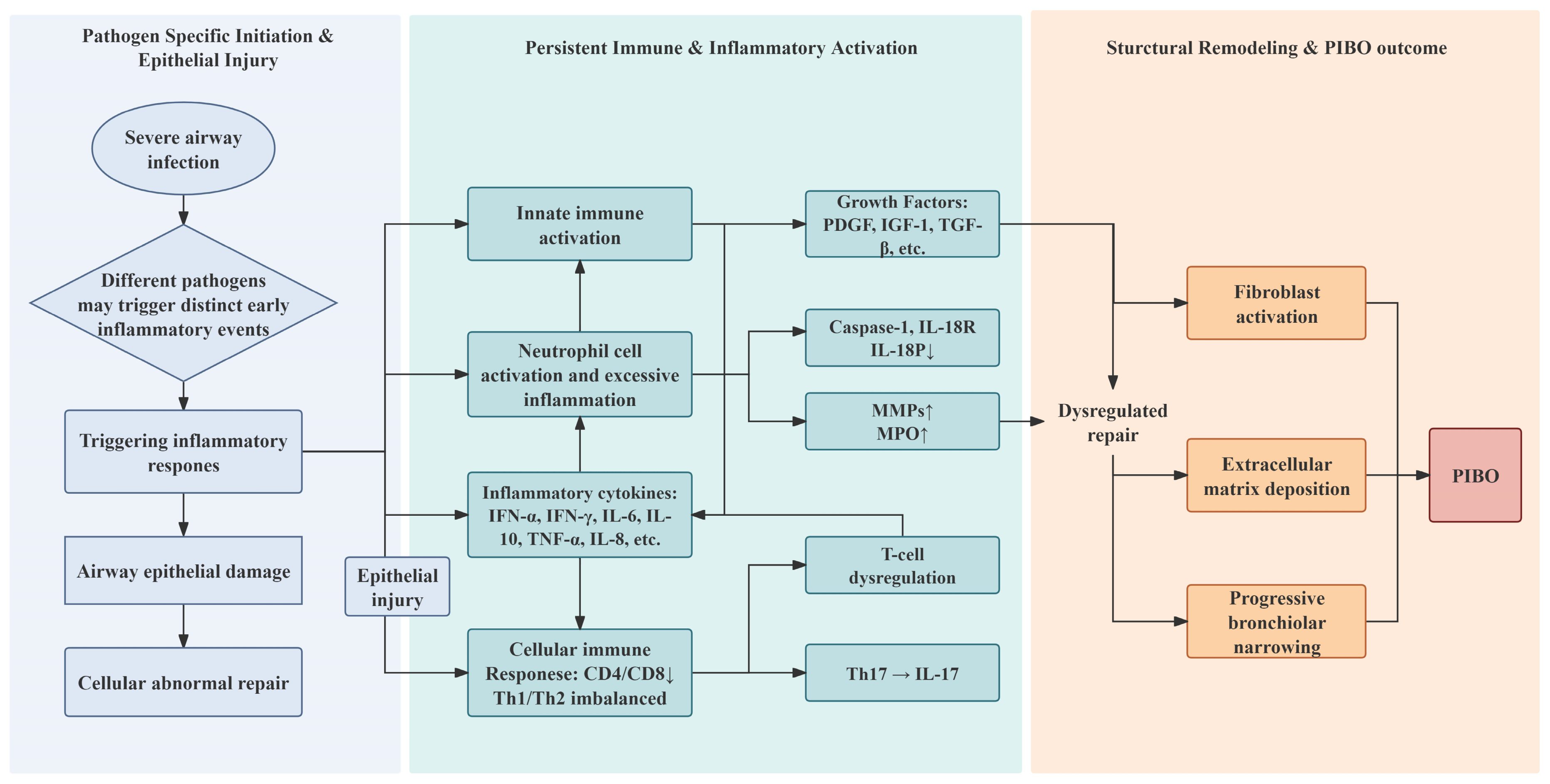
Pathogen-specific inflammatory signaling is central to PIBO pathobiology, but as shown in Figure 1, its clinical relevance lies in whether acute immune activation progresses to persistent epithelial injury, dysregulated repair, fibroblast activation, and fixed bronchiolar narrowing. The exact mechanisms may vary depending on the etiological agent, as different pathogens trigger distinct immune responses. This variability explains the differences in diagnostic and prognostic biomarkers, as well as the risk factors for PIBO, depending on the causative agents [11]. HAdV infection remains one of the most strongly associated infectious antecedents of childhood PIBO, particularly after severe pneumonia requiring intensive respiratory support [4,12,13]. The invasion, replication, and release of HAdV represent a complex process. Other respiratory viruses, including respiratory syncytial virus (RSV) and influenza virus, have been sporadically reported as causes of PIBO in certain geographic regions, though at considerably lower frequencies than HAdV [14,15]. The relative contribution of these pathogens to the overall PIBO burden, particularly in settings where HAdV circulation is low, remains poorly characterized and warrants further epidemiological investigation.

2.1. HAdV-Induced Inflammation

HAdV initiates infection by binding to cell surface receptors, primarily the coxsackievirus and adenovirus receptor (CAR), which is crucial for cell–cell interactions. Certain HAdV types, such as HAdV-3, HAdV-7, and HAdV-11, can also interact with CD80 or CD86 [16,17]. This binding is facilitated by Arginine-Glycine-Aspartic acid (RGD) peptides on the viral penton base, which interact with cellular integrins, promoting cellular adhesion and endocytosis [18,19]. Once inside the cell, the virus is transported to the nucleus, where it hijacks the host cell machinery for replication and assembly [20,21]. The release of HAdV triggers downstream signaling pathways, leading to the production of inflammatory cytokines and chemokines that cause significant lung tissue damage.
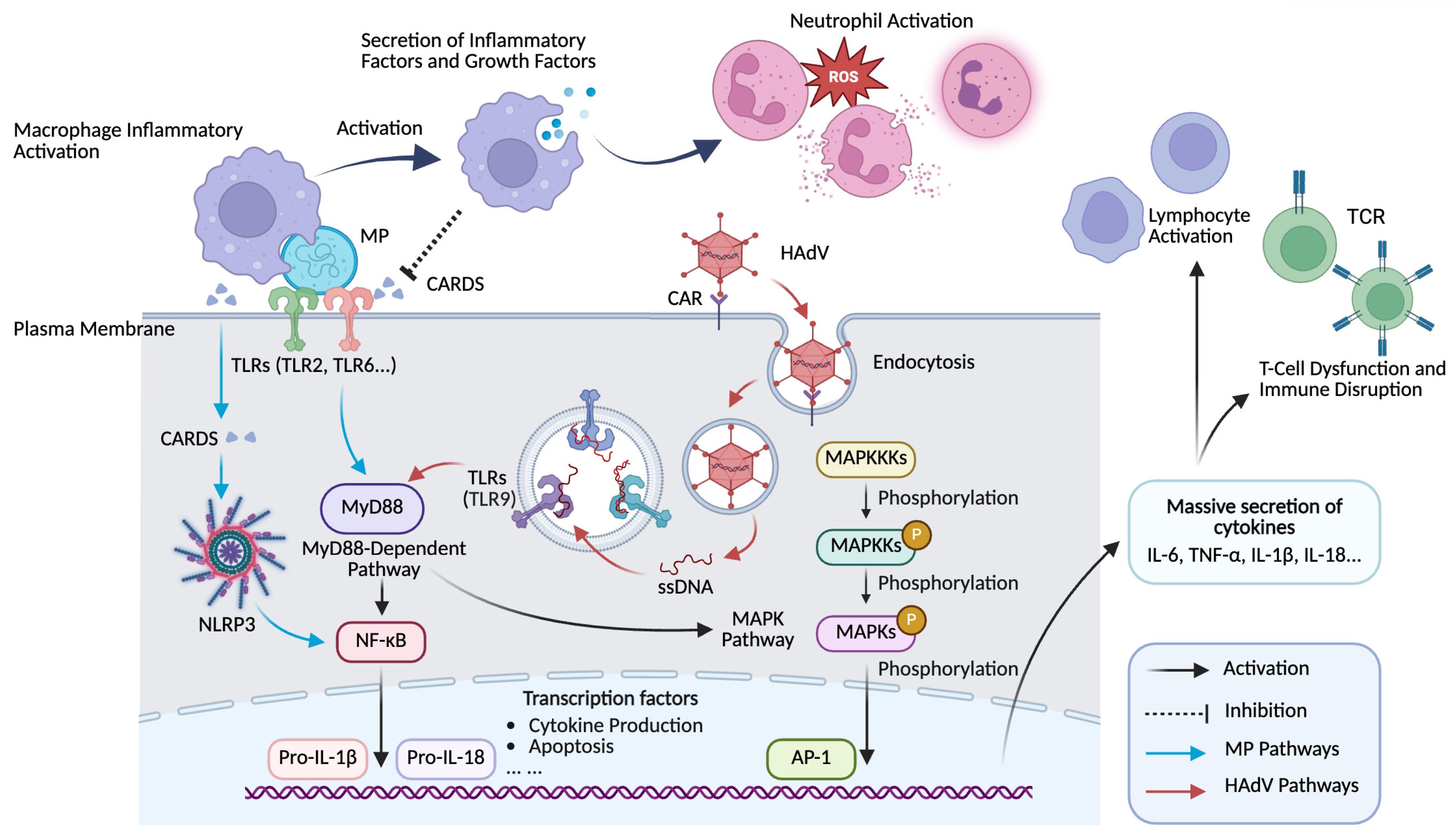
Previous research has indicated that Toll-like receptor 9 (TLR-9) is the predominant Toll-like receptor for HAdV [22]. Tang Z et al. revealed that high mobility group box-1 (HMGB1), an inflammatory mediator released by necrotic cells, promotes HAdV-7 replication and plays a crucial role in HAdV infection [23]. Furthermore, HMGB1 interacts with multiple membrane receptors, including the receptor for advanced glycation end-products (RAGE), TLR-2, TLR-4, and TLR-9 [22,23,24,25,26,27]. This interaction initiates the myeloid differentiation factor 88 (MyD88)-dependent signaling pathway, which subsequently triggers two distinct downstream cascades. The first is the mitogen-activated protein kinase (MAPK) pathway. The second is the nuclear factor-kappa B (NF-κB) pathway [27,28]. Consequently, the expression of pro-inflammatory cytokines is upregulated, setting off a cascade of immune and inflammatory responses. High levels of these cytokines and chemokines can induce cell damage and mediate destructive tissue inflammation [29,30]. Chen Q et al. observed a significant increase in multiple cytokines in lung tissues infected with HAdV-7, including inducible protein-10 (IP-10), macrophage inflammatory protein 1β (MIP-1β), monokine induced by gamma interferon (MIG), MIP-1α, monocyte chemoattractant protein-1 (MCP-1), interferon-α (IFN-α), IFN-γ, IL-6, IL-10, and TNF-α. Notably, HAdV-7 induced higher levels of IL-10, MIP-1α, and MIP-1β than did HAdV-3 [31]. Collectively, these findings suggest that severe HAdV infection may establish a pro-fibrotic repair milieu through the convergence of extensive epithelial injury, high viral burden, and a cytokine profile skewed toward monocyte/macrophage-driven responses, thereby increasing the risk of aberrant bronchiolar remodeling [12,23,31,32,33]. Additionally, Xie L et al. found that HAdV-7 had a higher average viral load than other serotypes (except HAdV-3), which may contribute to the observed variations in disease severity [33]. The HAdV-specific entry and TLR9 signaling pathways are depicted in Figure 2.

2.2. MP-Induced Inflammation

Mycoplasma pneumoniae (MP) is a significant pathogen in pediatric community-acquired pneumonia (CAP) and an important contributor to PIBO, particularly in East Asia. The role of MP in PIBO has gained increasing recognition, with studies from Malaysia and Korea identifying it as the second most common etiology after HAdV infection [34,35,36]. Severe or refractory cases of MP pneumonia, especially those unresponsive to macrolides, are prevalent in East Asia and can lead to atelectasis, bronchiectasis, and PIBO [34,35,36]. Like HAdV, MP may persist within airway epithelial cells, potentially sustaining low-grade inflammation and contributing to chronic airway remodeling. Recognition of MP as a PIBO-associated pathogen has expanded in recent years, but the literature remains geographically imbalanced.
The intrapulmonary pathogenesis of MP is complex. During the initial phase, MP adheres to the bronchial epithelium via its terminal structure. This adhesion induces intracellular metabolic and ultrastructural changes in infected cells, disrupts cytoskeletal organization, and depletes host cell nutrients, ultimately resulting in ciliary stasis and cell death [37]. This adhesion process is multifactorial, involving surface proteins such as P1, P30, P90, P40, and P116 [38,39,40,41]. MP also invades host cells, releases reactive oxygen species that cause direct cellular damage, and induces cytokine production, resulting in inflammatory injury [37].
The Community-Acquired Respiratory Distress Syndrome (CARDS) toxin of MP is a key virulence factor that activates inflammasomes and plays a crucial role in MP-induced lung injury [42,43,44,45]. CARDS toxin binds to the surfactant protein A (SP-A) receptor and is internalized, leading to vacuolar degeneration of airway epithelial cells, impaired ciliary motility, and loss of epithelial integrity [45,46]. The toxin promotes inflammasome activation via ribosylation, which triggers the NLRP3 inflammasome and facilitates the maturation and release of pro-inflammatory cytokines, including IL-1β and IL-18 [47]. Additionally, CARDS toxin-induced inflammasome activation may be relevant to PIBO because repeated epithelial injury, amplified IL-1 family signaling, and downstream non-resolving inflammation can create a microenvironment that favors aberrant repair and airway fibrosis [48]. IL-1β, in turn, activates NF-κB-dependent pathways, amplifying the inflammatory response [40,49,50]. CARDS toxin also induces the secretion of T-helper 2 (Th2)-associated cytokines such as interleukin-3 (IL-3), IL-4, and TNF-α, thereby enhancing the Th2-mediated immune response in children with MP pneumonia (MPP) [51,52,53].
MP components, including lipids and lipoproteins, act as ligands for TLR4 and TLR2/6. They stimulate macrophage autophagy and activate both the NLRP3 inflammasome and the NF-κB pathway [37,54,55]. Lipoproteins are primarily recognized by TLR2, together with TLR6 or TLR1, via their leucine-rich repeat (LRR) regions. This recognition activates MyD88-dependent signaling, leading to the activation of NF-κB, MAPKs, and activator protein 1 (AP-1). Through mechanisms similar to those described for HAdV, these MP components induce immune cells to produce a range of pro-inflammatory cytokines [56,57,58,59,60]. Figure 2 dissects the mechanistic convergence and divergence between HAdV and MP at the molecular and cellular levels.

2.3. Cellular Immune Disruptions and T Lymphocyte Dynamics

Several studies have reported cellular immune abnormalities in children with PIBO [61,62,63,64]. Research from Brazil demonstrated that both B and T lymphocytes are involved in the pathogenesis of childhood PIBO, with T cells being the predominant infiltrating cell type in the airways [61]. Among these, CD3+ T cells are the most frequently observed, and the CD8+ T cell subset predominates. Cazzato S et al. documented elevated levels of peripheral blood CD8+ T cells, HLA-DR+ CD8+ T cells, and serum interferon-gamma (IFN-γ) in children with HAdV infection, suggesting that activated CD8+ T cells may serve as an immunological marker of disease severity [62].
CD8+ T cells can contribute to tissue damage through multiple cytotoxic mechanisms. They release granule enzymes such as granzyme B and perforin, which induce apoptosis of target cells, including airway epithelial cells [61]. They also secrete chemokines that recruit additional inflammatory cells, thereby amplifying local inflammation. Furthermore, activated CD8+ T cells produce IFN-γ, which can sustain macrophage activation and further promote the release of pro-fibrotic mediators [62,63,64,65]. These combined actions may perpetuate epithelial injury and create a microenvironment conducive to chronic airway remodeling.
Consistent with these observations, subsequent work by Cazzato S et al. found that PIBO patients have a decreased CD4/CD8 T-cell ratio [63]. Given that CD4+ T cells comprise both Th1 and Th2 subsets, alterations in the CD4/CD8 ratio are accompanied by shifts in the Th1/Th2 balance. Although Th1/Th2 imbalance has been implicated in other forms of BO, studies indicate that in pediatric PIBO, peripheral blood levels of Th1-associated IFN-γ and Th2-associated IL-4 and IL-10 do not differ significantly from healthy controls, suggesting that Th1/Th2 dysregulation may not be a major driver in this specific context [48]. Taken together, these findings suggest that PIBO involves a persistent adaptive immune imbalance characterized by cytotoxic-leaning T-cell responses, reduced CD4/CD8 ratios, and sustained chemokine amplification, all of which may reinforce epithelial injury and chronic airway remodeling.

2.4. Neutrophil-Driven Inflammation

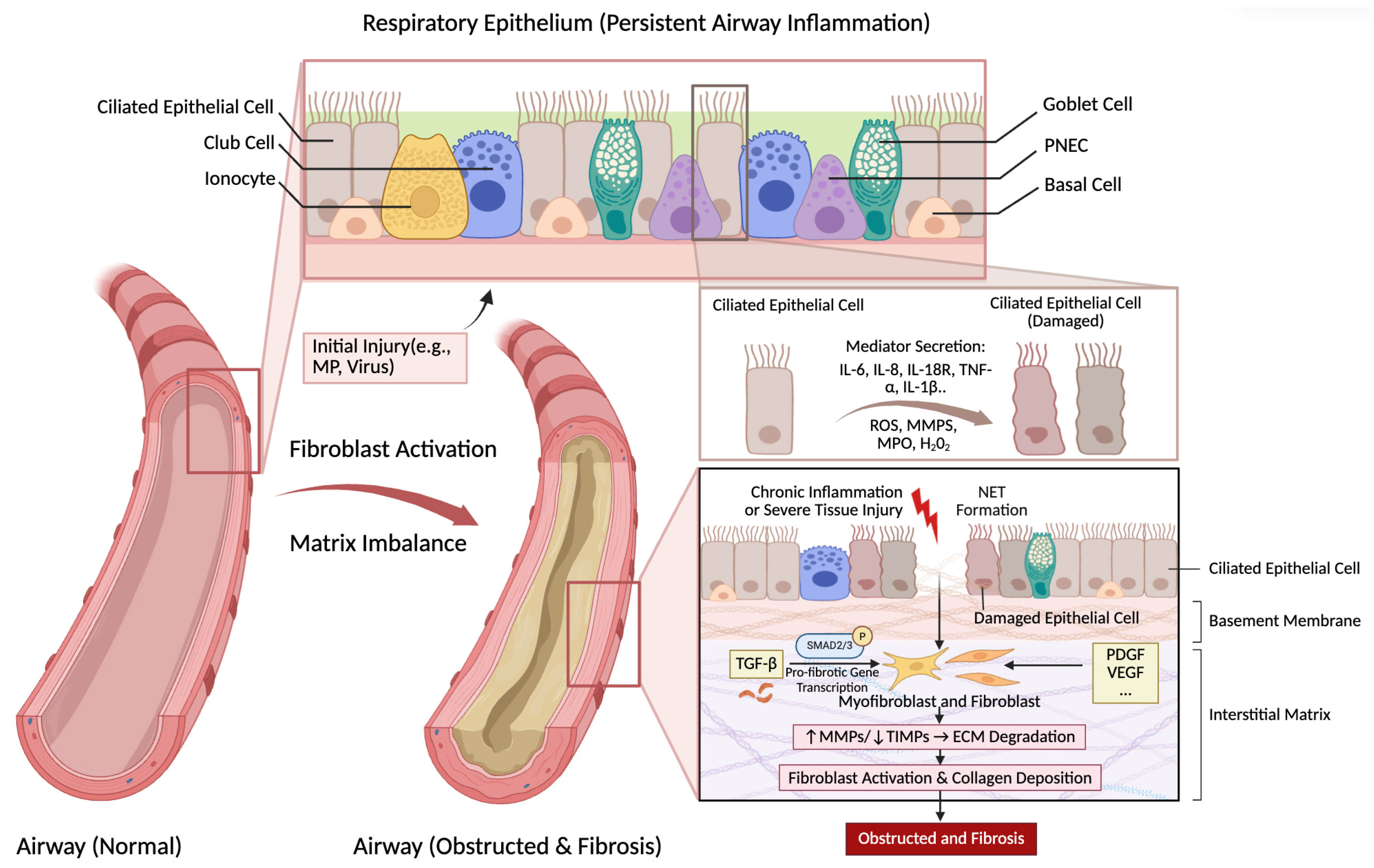
Neutrophils are the dominant effectors of small airway inflammation in PIBO [66], with interleukin-8 (IL-8) acting as the pivotal orchestrator of their recruitment and activation. Clinical data consistently show a robust correlation between elevated IL-8 levels in induced sputum and heightened neutrophil counts [67,68,69,70], emphasizing IL-8 as a central driver of pathogenesis. As shown in Figure 3, once activated, neutrophils engage in a respiratory burst that generates reactive oxygen species (ROS), inducing severe oxidative stress and damaging the respiratory epithelium. Simultaneously, degranulation releases proteolytic enzymes, such as matrix metalloproteinases (MMPs) and neutrophil elastase, which degrade the lung parenchyma and perpetuate the inflammatory cycle [66,71]. Antineutrophil cytoplasmic antibodies (ANCA) can also activate neutrophils, triggering a respiratory burst and promoting the production of pro-inflammatory cytokines (including IL-6 and IL-8) as well as endothelial damage [72,73,74].
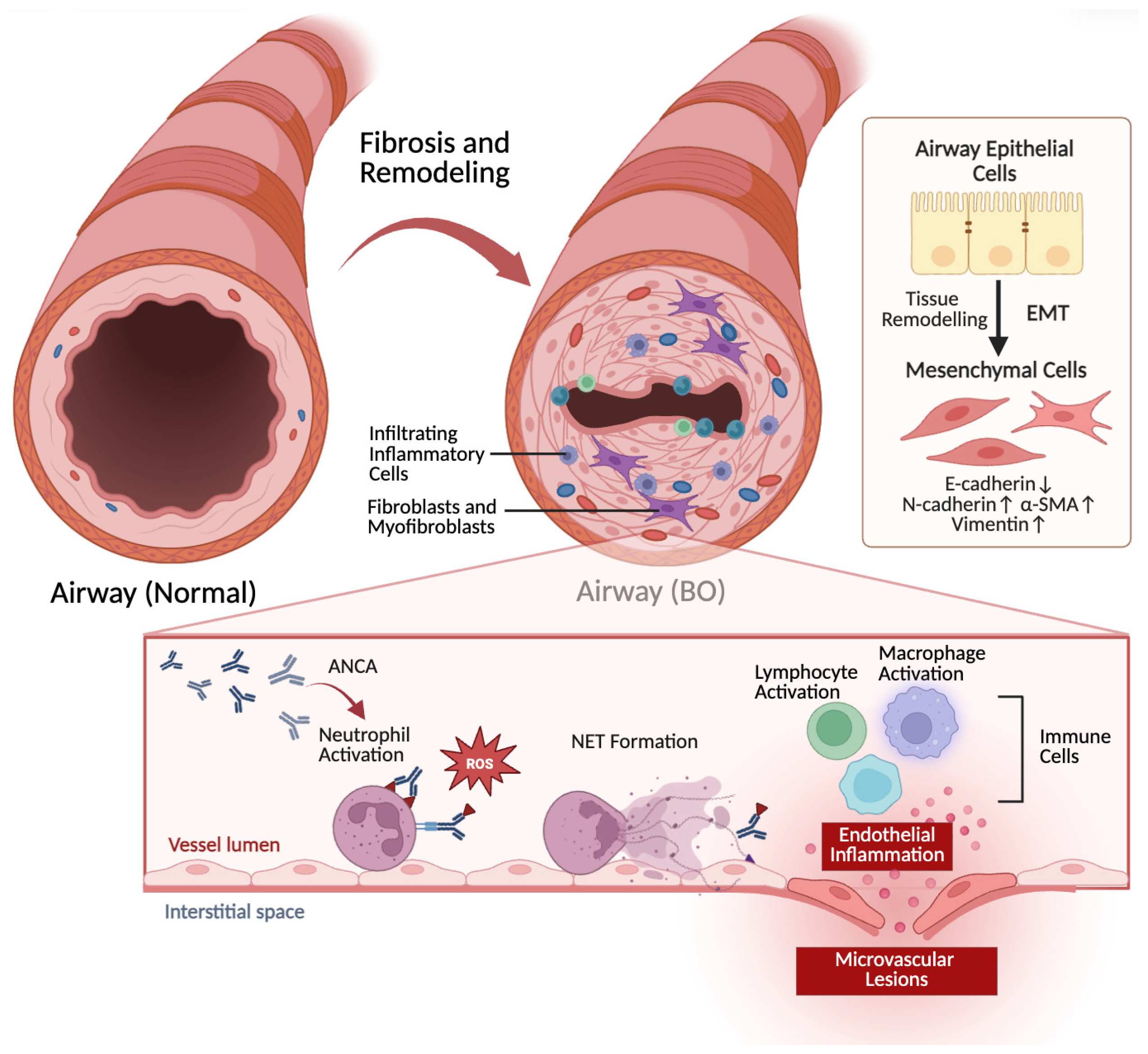
Recent transcriptomic insights highlight the role of neutrophil extracellular traps (NETs) in activating epithelial–mesenchymal transition (EMT) pathways in small airway epithelial cells (SAECs). This finding suggests that neutrophils directly facilitate the transition from acute inflammation to structural airway remodeling [75]. The failure of pro-resolving pathways to clear these inflammatory cells allows the acute response to evolve into the chronic obstructive lesions characteristic of PIBO. The role of NETs in this transition is summarized in Figure 4, where neutrophil activation and NET formation are linked to microvascular lesions and airway obstruction.

2.5. Macrophage-Mediated Inflammation and Fibrosis

Macrophages serve as critical intermediaries between innate and adaptive immunity in the pathogenesis of BO. They are recruited in response to neutrophil chemotaxis and, once activated, secrete a variety of inflammatory mediators that amplify neutrophil chemotaxis, aggregation, and adhesion. Activated macrophages also release growth factors such as platelet-derived growth factor (PDGF), insulin-like growth factor-1 (IGF-1), and transforming growth factor-β (TGF-β), thereby actively participating in fibrosis and airway remodeling [66].

2.6. Failure of Inflammatory Resolution and Th17/Treg Imbalance

The failure of inflammatory resolution is a critical turning point in the progression from acute inflammation to chronic PIBO. The imbalance between Th17 and regulatory T cells (Tregs) is involved in the development of airway fibrosis. Th17 cells drive autoimmune responses and inflammatory reactions, whereas Tregs restrain inflammation and preserve immune homeostasis [48]. In the airway microenvironment of PIBO, this disturbed balance hinders the resolution of inflammation and fosters fibrotic progression.
Th17 cells and their cytokine IL-17 have been implicated in bronchiolitis obliterans syndrome (BOS) after lung transplantation [76]. In children with PIBO, the proportion of Th17 cells in bronchoalveolar lavage fluid is significantly increased and positively correlates with declining lung function, suggesting overlapping mechanisms between PIBO and post-transplant BOS [77]. IL-17 promotes neutrophil recruitment and type V collagen production. Together with IL-18, it can upregulate IL-6 and IL-8, thereby activating the NF-κB pathway [78,79,80].
Recent research highlights that specialized pro-resolving mediators (SPMs) including resolvin D1, resolvin D2, and maresin 1 are critical for actively regulating the Th17/Treg balance [81,82,83]. These mediators reduce Th17 differentiation by downregulating transcription factors such as Rorc and simultaneously promote the generation of Foxp3+ Tregs [81]. The role of Tregs is complex and context-dependent. Tregs can suppress inflammation by secreting IL-10 and TGF-β [84,85,86], and may protect against airway fibrosis by facilitating epithelial repair and inhibiting proinflammatory mediators. They can also promote fibrosis by secreting PDGF and TGF-β, which enhance epithelial–mesenchymal transition (EMT) and fibroblast activation [48].
These insights suggest that therapies aimed at restoring Th17/Treg balance or enhancing proresolving pathways, for example, using IL-10 or Treg-enhancing agents, hold promise for PIBO [84,85].

3. Fibroblast Activation, Matrix Remodeling, and Epithelial–Mesenchymal Transition

3.1. Fibroblast Activation and Matrix Imbalance

Fibroblasts are essential for tissue fibrotic repair. Inflammation and infection damage airway epithelial cells, leading to depletion of airway progenitor cells and the initiation of aberrant repair responses. Fibrous and purulent exudates then accumulate in the airway lumen, further triggering myofibroblasts to deposit collagen and mucopolysaccharides into the extracellular matrix. An imbalance between matrix metalloproteinases (MMPs) and their inhibitors (TIMPs) contributes to fibrosis and airway remodeling in PIBO. Excessive MMP expression, mainly secreted from activated neutrophils, degrades the extracellular matrix (ECM), promoting fibroblast infiltration, proliferation, and activation, as well as the release of VEGF and TGF-β. This process drives airway fibrosis [87] (Figure 3, lower part).

3.2. Epithelial–Mesenchymal Transition and Molecular Markers

Epithelial–mesenchymal transition (EMT) represents a pivotal phenotypic reprogramming in PIBO, where stationary epithelial cells lose their polarity and transform into invasive, contractile myofibroblasts. This process is characterized by the downregulation of epithelial markers, such as E-cadherin, and the concomitant upregulation of mesenchymal markers including N-cadherin, α-smooth muscle actin (α-SMA), and Vimentin [88].

3.3. Fibroblast Activation and Molecular Pathways

The central driver of fibrotic remodeling in PIBO is the persistent activation of fibroblasts, primarily orchestrated by the TGF-β/SMAD signaling pathway. Upon activation by tissue injury or inflammatory stimuli, TGF-β1 binds to its receptors (TβRI/II), leading to the phosphorylation of SMAD2 and SMAD3. These phosphorylated SMADs form a heteromeric complex with SMAD4, which translocates into the nucleus to initiate the transcription of pro-fibrotic genes, including collagen types I and III [88]. Beyond the classical SMAD pathway, fibroblast activation in PIBO is intensified through extensive crosstalk with inflammatory cascades [89].
Recent studies have identified epigenetic regulation as an additional critical layer in maintaining the fibrotic phenotype. Epigenetic modifications, including DNA hypermethylation of anti-fibrotic genes and the dysregulation of microRNAs (miRNAs), contribute to the irreversible nature of fibroblast-to-myofibroblast differentiation. For example, reduced expression of miR-29 family members has been linked to the failure of ECM degradation control. Additionally, histone acetylation status modulated by p300/CBP hub enzymes integrates metabolic signals with fibrotic gene expression. This multi-layered regulatory network, involving SMAD-dependent signaling, inflammatory interactions, and epigenetic shifts, underpins the robust cellular memory of fibrotic cells in PIBO, explaining why standard anti-inflammatory therapies often fail to reverse established airway obliteration [90].

4. Microvascular Alterations

The microvascular lesions that occur during BO are mainly caused by abnormal vascular regeneration and remodeling mediated by immune and inflammatory responses. As shown in Figure 4, immune and inflammatory reactions lead to microvascular endothelial ischemic and hypoxic injury, endothelial inflammation, abnormal microvascular regeneration, fibrosis of terminal capillaries, and microvascular remodeling. The primary manifestation is ischemic injury to vascular endothelial cells, encompassing endothelial inflammation and fibrotic constriction of small terminal vessels, both of which impair small airway function. An increase in inflammatory mediators such as TGF-β and VEGF can promote the occurrence of airway fibrosis and occlusive lesions [80,91].

5. Persistent Airway Inflammation and Fibrosis

These pathogens, particularly MP and HAdV, can persist within the host for an extended period, with ongoing airway inflammation leading to continuous formation of peribronchial scars and fibrosis. Figure 3 illustrates the cellular events underlying persistent airway inflammation and the transition to fibrosis, while Figure 4 contrasts a normal bronchiole with the characteristic obstructive and fibrotic changes seen in PIBO. Studies have demonstrated that the development of BO is associated with an increase in fibroblast-like cells expressing type III procollagen mRNA. As the occlusion of the lumen progresses, these cells become dominant. These fibroblasts become excessively activated, secreting a substantial amount of collagen and extracellular matrix, which deposits on the walls of the small bronchi. With the ongoing progression of airway inflammation, fibrosis around the small airways and intraluminal scarring continue to form, leading to centripetal narrowing and destruction of the bronchiole lumens. Necrotic and desquamated epithelial cells, inflammatory exudates, and fibrotic debris may obstruct bronchi, bronchioles, or alveolar ducts following organization, leading to irreversible airflow limitation and ultimately the pathological picture of BO [61,92].

6. Risk Factors for PIBO

Current research on risk factors for PIBO is limited. A major challenge is that predictive variables, severity markers, treatment exposures, and causal determinants are often grouped together under the broad label of risk factors. Predictive model variables help make accurate predictions, but do not necessarily cause the outcome. In contrast, true risk factors require evidence of a causal relationship [93]. Variables such as prolonged fever, hypoxemia, long hospitalization, pleural effusion, extensive consolidation, and atelectasis are better interpreted primarily as markers of severe acute airway injury unless supported by stronger causal analyses [6,11,34,94] (Table 1). Notably, while hypoxemia shows the strongest correlation with PIBO development, it remains to be explored whether it serves as a direct driver of pathogenesis or merely a surrogate for severe disease [11,94]. Elevated lactate dehydrogenase (LDH), mechanical ventilation, and use of corticosteroids or γ-globulins have also been reported as potential risk factors. These indicators likely represent the intensity of the acute lung injury, though they may also contribute to PIBO development through specific pathogenic pathways. However, the reported associations must be interpreted with caution. For instance, the link between mechanical ventilation and PIBO often reflects confounding by indication, as ventilatory support is typically reserved for children with the most severe acute disease [94]. Similarly, the role of corticosteroids and γ-globulins remains obscured by similar biases in retrospective cohorts. Although corticosteroids are commonly used for their anti-inflammatory properties, their safety and efficacy have not been established in controlled trials [95]. Consequently, further high-quality research into the optimal timing, duration, and dosage of these therapies is essential to provide a robust basis for clinical treatment. Recent literature suggests that atopic conditions may be a risk factor for PIBO, and the co-existence of PIBO and asthma in some patients points to a potential link between these conditions, possibly mediated by shared inflammatory pathways or genetic predispositions [96].
Mechanistically, co-infection with multiple pathogens (e.g., HAdV, MP, and other pathogens) may act as a credible risk factor by activating broader immune pathways. HAdV infection, in particular, is a well-established driver of persistent airway damage. HAdV can sustain an inflammatory state through the production of early viral proteins like E1A and non-coding RNAs, which amplify host inflammatory genes. Furthermore, HAdV binds to the cellular protein FUBP1 to suppress the p53 stress response, thereby inhibiting the host’s normal antiviral immune response [97]. This allows for persistent infectious damage even in the absence of active viral replication [61,97]. Hogg [98] suggested that latent HAdV infection expressing E1A could stimulate connective-tissue growth and transform acute bronchiolitis into PIBO by activating inflammation-amplifying genes. Viruses may also trigger autoimmune-like reactions through molecular mimicry, lymphocyte activation, or exposure of host self-epitopes [61].
Genetic susceptibility and epigenetic regulation are crucial emerging factors in explaining PIBO risk and its geographic distribution [99,100]. Variants in the mannose-binding lectin 2 (MBL2) gene, such as the rs1800450 B-allele, lead to low circulating MBL protein levels and impaired innate immunity [101,102,103,104]. High frequencies of this B-allele in certain South American populations correlate with the historically higher incidence of PIBO in countries like Argentina and Chile [4,105,106]. Alongside MBL2 deficiency, genetic variants in DNAH9 and aberrant miRNA expression profiles are also associated with PIBO pathogenesis. DNAH9 mutations impair ciliary motility and mucin clearance while altering cytokine profiles (e.g., reducing IL-1α and TNF-α), which facilitates persistent lung lesions [107]. Simultaneously, the downregulation of specific miRNAs, such as miR-335-5p and miR-186-5p, exacerbates inflammatory and fibrotic processes by disinhibiting the TGF-β and FoxO signaling pathways, thereby driving irreversible airway remodeling [100,108,109]. These genetic and epigenetic insights provide a more precise framework for understanding population-level differences in PIBO incidence without relying on imprecise racial categories.
Table 1. Risk Factors and Prediction Models for PIBO in children.
Study Author, YearCountryPathogensSample Size (PIBO/Total)Multiple-Factor AnalysisAUC
Xu, W. et al. (2024) [96] ChinaHAdV66/131Co-infection, atopic conditions, and duration of feverNA
Wen S et al. (2024) [110]ChinaHAdV36/148Aged <1 year, admission to PICU, long duration of fever, and bilateral lung infection0.85 (95% CI, 0.78–0.92)
Yan S et al. (2023) [111]ChinaUnlimited78/228Age of patients, length of hospital stay, mechanical ventilation, HAdV, and IL-2 level0.907 (95% CI, 0.888–0.926)
Peng L et al. (2023) [112]ChinaHAdV46/863Univariate analysis only: duration of fever, invasive mechanical ventilation, complications, and N%; Male, duration of fever, HAdV load, and fungi coinfection (HAdV cases with IMV)0.857 (95% CI, 0.744–0.928)
Yuan J et al. (2023) [113]ChinaHAdV28/112Respiratory support, length of wheezing days, and LDH levels0.870 (95% CI, 0.801–0.939, p < 0.001)
Cheng Q et al. (2021) [114]ChinaMP65/141WBC count, ALB level, consolidation range exceeding 2/3 of lung lobes, timing of macrolides, glucocorticoids or fiber bronchoscopy and plastic bronchitis0.899 (95% CI, 0.848–0.950)
MP, Mycoplasma pneumoniae; HAdV, Human adenovirus; PIBO, Post-infectious bronchiolitis obliterans; PICU, Pediatric intensive care unit; LDH, Lactate dehydrogenase; N, Neutrophil; ALB, Albumin; IMV, Invasive mechanical ventilation; AUC, Area under the curve; CI, Confidence interval; NA, not applicable.

7. Conclusions

This review synthesizes current knowledge on the pathogenesis of pediatric PIBO with a specific focus on HAdV and MP. We propose a comprehensive integrative model in which acute immune activation progresses to persistent epithelial injury, dysregulated repair, fibroblast activation, and irreversible bronchiolar narrowing. By systematically comparing pathogen-specific responses, we demonstrate that HAdV and MP converge on the MyD88/NF-κB/MAPK pathways and neutrophil-driven inflammation, but diverge in their initial host engagement (CAR/integrins vs. TLR2/6 and CARDS toxin) and inflammasome activation (TLR9-related vs. NLRP3-related).
Markers such as IL-8, neutrophils, and TGF-β have been consistently reported as elevated across multiple cohorts and studies, leading to their recognition as core drivers of the disease. In contrast, chemokines including IP-10, MIG, and MCP-1 appear to be bystanders that lack consistent replication across different pathogens and geographic regions [31]. Recognition of these core drivers is essential for the development of targeted immunomodulatory interventions.
Currently, there is no clearly defined or globally accepted treatment protocol for PIBO, and management typically combines anti-inflammatory and supportive care. Corticosteroids (systemic or inhaled) remain the most commonly used anti-inflammatory agents, but evidence from controlled trials is limited, and their long-term benefit remains inconclusive [5,14,15]. A recent study reviewing early pulse corticosteroid therapy in children with PIBO reported fewer wheezing exacerbations, reduced hospitalizations, and improved oxygen saturation [95]. Macrolides such as azithromycin are often incorporated into maintenance therapy via the FAM (fluticasone, azithromycin, montelukast) regimen to attenuate neutrophilic inflammation by inhibiting chemotaxis and downregulating IL-8 production [5,14,15].
Current knowledge gaps include the lack of single-cell resolution studies and the absence of animal models for pathogen co-infection. Future research priorities should involve validating miRNAs, which hold promise as non-invasive biomarkers and may form the basis for a new class of therapeutic agents in PIBO. Furthermore, the TGF-β/SMAD pathway stands as a key target for future treatments. Drawing insights from anti-fibrotic strategies used in BOS may provide a roadmap for preventing abnormal airway remodeling in PIBO [48]. Well-designed trials are needed to establish the safety and efficacy of new preventive and therapeutic strategies. Prioritizing the early identification of at-risk individuals and standardizing treatment through high-quality clinical trials will be essential to mitigating the global health burden of this debilitating disease.

Author Contributions

D.T. conceptualized and designed the study, as well as reviewed and edited the final manuscript. L.Z. wrote the original draft, prepared all tables and figures, and made subsequent revisions. C.M., C.Z., and J.L. collected relevant literature and provided critical suggestions for the study. All authors have read and agreed to the published version of the manuscript.

Funding

This research was funded by the National Natural Science Foundation of China (grant 82171712).

Institutional Review Board Statement

Not applicable.

Informed Consent Statement

Not applicable.

Data Availability Statement

Data sharing is not applicable to this article as no datasets were generated or analyzed during the current study.

Acknowledgments

Figure 2, Figure 3 and Figure 4 were created using BioRender. Z, L. (2026). https://BioRender.com/wcwkc7q (accessed on 10 May 2026).

Conflicts of Interest

The authors declare no conflicts of interest.

Abbreviations

The following abbreviations are used in this manuscript:
BOBronchiolitis obliterans
PIBOPost-infectious bronchiolitis obliterans
HAdVHuman adenovirus
CARCoxsackievirus and adenovirus receptor
RGDArginine-Glycine-Aspartic acid
TLRToll-like receptor
HMGB1High mobility group box-1
RAGEReceptor for advanced glycation end-products
MyD88Myeloid differentiation factor 88
MAPKMitogen-activated protein kinase
ILInterleukin
TNF-αTumor necrosis factor-α
NF-κBNuclear factor-kappa B
IP-10Inducible protein-10
MIP-1βMacrophage inflammatory protein 1β
MIGMonokine induced by gamma interferon
MIP-1αMacrophage inflammatory protein-1α
MCP-1Monocyte chemoattractant protein-1
IFN-αInterferon-α
MPMycoplasma pneumoniae
CAPCommunity-acquired pneumonia
CARDSCommunity-Acquired Respiratory Distress Syndrome
SP-ASurfactant protein A
Th2T-helper 2 cells
MPPMP pneumonia
LRRLeucine-rich repeat
AP-1Activator protein-1
ROSReactive oxygen species
MMPsMatrix metalloproteinases
MPOMyeloperoxidase
ANCAAntineutrophil cytoplasmic antibodies
IL-18RIL-18 receptor
IL-18BPIL-18 binding protein
BOSBronchiolitis obliterans syndrome
RMPPRefractory mycoplasma pneumoniae
TIMPsTissue inhibitors of metalloproteinases
NETsNeutrophil extracellular traps
SAECsSmall airway epithelial cells
EMTEpithelial–mesenchymal transition
LDHLactate dehydrogenase
MBL2Mannose-Binding Lectin 2
ECMExtracellular matrix
TGF-βTransforming growth factor-β
PDGFPlatelet-derived growth factor
IGF-1Insulin-like growth factor-1
SPMsSpecialized pro-resolving mediators
TregsRegulatory T cells
VEGFVascular endothelial growth factor
α-SMAα-smooth muscle actin
miRNAsMicroRNAs

References

  1. Flanagan, F.; Casey, A.; Reyes-Mugica, M.; Kurland, G. Post-infectious bronchiolitis obliterans in children. Paediatr. Respir. Rev. 2022, 42, 69–78. [Google Scholar] [CrossRef]
  2. Barker, A.F.; Bergeron, A.; Rom, W.N.; Hertz, M.I. Obliterative bronchiolitis. N. Engl. J. Med. 2014, 370, 1820–1828. [Google Scholar] [CrossRef]
  3. Smith, K.J.; Fan, L.L. Insights into post-infectious bronchiolitis obliterans in children. Thorax 2006, 61, 462–463. [Google Scholar] [CrossRef] [PubMed]
  4. Castro-Rodriguez, J.A.; Giubergia, V.; Fischer, G.B.; Castanos, C.; Sarria, E.E.; Gonzalez, R.; Mattiello, R.; Vega-Briceno, L.E.; Murtagh, P. Postinfectious bronchiolitis obliterans in children: The South American contribution. Acta Paediatr. 2014, 103, 913–921. [Google Scholar] [CrossRef]
  5. Teper, A.; Colom, A.J.; Schubert, R.; Jerkic, P.S. Update in postinfectious bronchiolitis obliterans. Pediatr. Pulmonol. 2024, 59, 2338–2348. [Google Scholar] [CrossRef]
  6. Xu, W.; Wang, H.; Wen, X.; Yang, H.; Zhao, S.; Liu, J. Risk factors for bronchiolitis obliterans development in children after Mycoplasma pneumoniae pneumonia: A retrospective study of 981 patients. Ital. J. Pediatr. 2025, 51, 105. [Google Scholar] [CrossRef]
  7. Martin-de Vicente, C.; Gimenez-Molina, V.; Fernandez-Atuan, R.; Buzon-Serrano, L. Post-infectious bronchiolitis obliterans in children after the end of the COVID-19 pandemic. Pediatr. Pulmonol. 2025, 60, e27319. [Google Scholar] [CrossRef]
  8. Yazan, H.; Khalif, F.; Shadfaan, L.A.; Bilgin, S.; Nursoy, M.; Cakir, F.B.; Cakin, Z.E.; Uzuner, S.; Cakir, E. Post-infectious bronchiolitis obliterans in children: Clinical and radiological evaluation and long-term results. Heart Lung 2021, 50, 660–666. [Google Scholar] [CrossRef] [PubMed]
  9. De Baets, F. Bronchiolitis obliterans in children: A ghostly journey to the origin. Allergol. Immunopathol. 2011, 39, 251–252. [Google Scholar] [CrossRef] [PubMed]
  10. Colom, A.J.; Teper, A.M. Post-infectious bronchiolitis obliterans. Pediatr. Pulmonol. 2019, 54, 212–219. [Google Scholar] [CrossRef]
  11. Lee, E.; Park, S.; Kim, K.; Yang, H.J. Risk Factors for the Development of Post-Infectious Bronchiolitis Obliterans in Children: A Systematic Review and Meta-Analysis. Pathogens 2022, 11, 1268. [Google Scholar] [CrossRef] [PubMed]
  12. Castro-Rodriguez, J.A.; Daszenies, C.; Garcia, M.; Meyer, R.; Gonzales, R. Adenovirus pneumonia in infants and factors for developing bronchiolitis obliterans: A 5-year follow-up. Pediatr. Pulmonol. 2006, 41, 947–953. [Google Scholar] [CrossRef]
  13. Moonnumakal, S.P.; Fan, L.L. Bronchiolitis obliterans in children. Curr. Opin. Pediatr. 2008, 20, 272–278. [Google Scholar] [CrossRef] [PubMed]
  14. Mazenq, J.; Dubus, J.C.; Chanez, P.; Gras, D. Post viral bronchiolitis obliterans in children: A rare and potentially devastating disease. Paediatr. Respir. Rev. 2024, 52, 58–65. [Google Scholar] [CrossRef]
  15. Wan, L.; Wang, Z. Postinfectious Bronchiolitis Obliterans in Children. Can. Respir. J. 2025, 2025, 7790381. [Google Scholar] [CrossRef]
  16. Russell, W.C. Adenoviruses: Update on structure and function. J. Gen. Virol. 2009, 90, 1–20. [Google Scholar] [CrossRef]
  17. Greber, U.F. Adenoviruses—Infection, pathogenesis and therapy. FEBS Lett. 2020, 594, 1818–1827. [Google Scholar] [CrossRef]
  18. Mathias, P.; Wickham, T.; Moore, M.; Nemerow, G. Multiple adenovirus serotypes use alpha v integrins for infection. J. Virol. 1994, 68, 6811–6814. [Google Scholar] [CrossRef] [PubMed]
  19. Dechecchi, M.C.; Melotti, P.; Bonizzato, A.; Santacatterina, M.; Chilosi, M.; Cabrini, G. Heparan sulfate glycosaminoglycans are receptors sufficient to mediate the initial binding of adenovirus types 2 and 5. J. Virol. 2001, 75, 8772–8780. [Google Scholar] [CrossRef]
  20. White, J.M.; Whittaker, G.R. Fusion of Enveloped Viruses in Endosomes. Traffic 2016, 17, 593–614. [Google Scholar] [CrossRef]
  21. Sun, Y.; Tien, P. From endocytosis to membrane fusion: Emerging roles of dynamin in virus entry. Crit. Rev. Microbiol. 2013, 39, 166–179. [Google Scholar] [CrossRef]
  22. Zhou, X.; Ramke, M.; Chintakuntlawar, A.V.; Lee, J.Y.; Rajaiya, J.; Chodosh, J. Role of MyD88 in adenovirus keratitis. Immunol. Cell Biol. 2017, 95, 108–116. [Google Scholar] [CrossRef]
  23. Tang, Z.; Zang, N.; Fu, Y.; Ye, Z.; Chen, S.; Mo, S.; Ren, L.; Liu, E. HMGB1 mediates HAdV-7 infection-induced pulmonary inflammation in mice. Biochem. Biophys. Res. Commun. 2018, 501, 1–8. [Google Scholar] [CrossRef] [PubMed]
  24. Ding, J.; Cui, X.; Liu, Q. Emerging role of HMGB1 in lung diseases: Friend or foe. J. Cell Mol. Med. 2017, 21, 1046–1057. [Google Scholar] [CrossRef] [PubMed]
  25. Imbalzano, E.; Quartuccio, S.; Di Salvo, E.; Crea, T.; Casciaro, M.; Gangemi, S. Association between HMGB1 and asthma: A literature review. Clin. Mol. Allergy 2017, 15, 12. [Google Scholar] [CrossRef]
  26. Chen, X.; Wu, S.; Chen, C.; Xie, B.; Fang, Z.; Hu, W.; Chen, J.; Fu, H.; He, H. Omega-3 polyunsaturated fatty acid supplementation attenuates microglial-induced inflammation by inhibiting the HMGB1/TLR4/NF-kappaB pathway following experimental traumatic brain injury. J. Neuroinflamm. 2017, 14, 143. [Google Scholar] [CrossRef]
  27. Kikuchi, K.; Tancharoen, S.; Ito, T.; Morimoto-Yamashita, Y.; Miura, N.; Kawahara, K.; Maruyama, I.; Murai, Y.; Tanaka, E. Correction: Kikuchi, K.; et al., Potential of the Angiotensin Receptor Blockers (ARBs) Telmisartan, Irbesartan, and Candesartan for Inhibiting the HMGB1/RAGE Axis in Prevention and Acute Treatment of Stroke. Int. J. Mol. Sci. 2013, 14, 18899–18924. Int. J. Mol. Sci. 2014, 15, 5410–5411. [Google Scholar] [CrossRef]
  28. Lee, C.H.; Yoon, S.J.; Lee, S.M. Chlorogenic acid attenuates high mobility group box 1 (HMGB1) and enhances host defense mechanisms in murine sepsis. Mol. Med. 2013, 18, 1437–1448. [Google Scholar] [CrossRef] [PubMed]
  29. Bhatia, M.; Moochhala, S. Role of inflammatory mediators in the pathophysiology of acute respiratory distress syndrome. J. Pathol. 2004, 202, 145–156. [Google Scholar] [CrossRef]
  30. Chi, Y.; Zhu, Y.; Wen, T.; Cui, L.; Ge, Y.; Jiao, Y.; Wu, T.; Ge, A.; Ji, H.; Xu, K.; et al. Cytokine and chemokine levels in patients infected with the novel avian influenza A (H7N9) virus in China. J. Infect. Dis. 2013, 208, 1962–1967. [Google Scholar] [CrossRef]
  31. Chen, Q.; Liu, J.; Liang, W.; Chen, Y.; Dou, M.; Liu, Z.; Chen, Y.; Zheng, Z.; Zhu, B.; Lin, Y. Clinical Features, Replication Competence, and Innate Immune Responses of Human Adenovirus Type 7 Infection. J. Infect. Dis. 2021, 223, 1390–1399. [Google Scholar] [CrossRef]
  32. Murtagh, P.; Giubergia, V.; Viale, D.; Bauer, G.; Pena, H.G. Lower respiratory infections by adenovirus in children. Clinical features and risk factors for bronchiolitis obliterans and mortality. Pediatr. Pulmonol. 2009, 44, 450–456. [Google Scholar] [CrossRef]
  33. Xie, L.; Zhang, B.; Zhou, J.; Huang, H.; Zeng, S.; Liu, Q.; Xie, Z.; Gao, H.; Duan, Z.; Zhong, L. Human adenovirus load in respiratory tract secretions are predictors for disease severity in children with human adenovirus pneumonia. Virol. J. 2018, 15, 123. [Google Scholar] [CrossRef]
  34. Zheng, H.Q.; Ma, Y.C.; Chen, Y.Q.; Xu, Y.Y.; Pang, Y.L.; Liu, L. Clinical Analysis and Risk Factors of Bronchiolitis Obliterans After Mycoplasma Pneumoniae Pneumonia. Infect. Drug Resist. 2022, 15, 4101–4108. [Google Scholar] [CrossRef] [PubMed]
  35. Lee, E.; Young Lee, Y. Risk factors for the development of post-infectious bronchiolitis obliterans after Mycoplasma pneumoniae pneumonia in the era of increasing macrolide resistance. Respir. Med. 2020, 175, 106209. [Google Scholar] [CrossRef]
  36. Liu, J.; He, R.; Zhang, X.; Zhao, F.; Liu, L.; Wang, H.; Zhao, S. Clinical features and “early” corticosteroid treatment outcome of pediatric mycoplasma pneumoniae pneumonia. Front. Cell Infect. Microbiol. 2023, 13, 1135228. [Google Scholar] [CrossRef]
  37. Hu, J.; Ye, Y.; Chen, X.; Xiong, L.; Xie, W.; Liu, P. Insight into the Pathogenic Mechanism of Mycoplasma pneumoniae. Curr. Microbiol. 2022, 80, 14. [Google Scholar] [CrossRef] [PubMed]
  38. Jiang, Z.; Li, S.; Zhu, C.; Zhou, R.; Leung, P.H.M. Mycoplasma pneumoniae Infections: Pathogenesis and Vaccine Development. Pathogens 2021, 10, 119. [Google Scholar] [CrossRef]
  39. Miyata, M.; Hamaguchi, T. Integrated Information and Prospects for Gliding Mechanism of the Pathogenic Bacterium Mycoplasma pneumoniae. Front. Microbiol. 2016, 7, 960. [Google Scholar] [CrossRef] [PubMed]
  40. Chaudhry, R.; Ghosh, A.; Chandolia, A. Pathogenesis of Mycoplasma pneumoniae: An update. Indian. J. Med. Microbiol. 2016, 34, 7–16. [Google Scholar] [CrossRef]
  41. Widjaja, M.; Berry, I.J.; Jarocki, V.M.; Padula, M.P.; Dumke, R.; Djordjevic, S.P. Cell surface processing of the P1 adhesin of Mycoplasma pneumoniae identifies novel domains that bind host molecules. Sci. Rep. 2020, 10, 6384. [Google Scholar] [CrossRef]
  42. Kannan, T.R.; Provenzano, D.; Wright, J.R.; Baseman, J.B. Identification and characterization of human surfactant protein A binding protein of Mycoplasma pneumoniae. Infect. Immun. 2005, 73, 2828–2834. [Google Scholar] [CrossRef]
  43. Kannan, T.R.; Baseman, J.B. ADP-ribosylating and vacuolating cytotoxin of Mycoplasma pneumoniae represents unique virulence determinant among bacterial pathogens. Proc. Natl. Acad. Sci. USA 2006, 103, 6724–6729. [Google Scholar] [CrossRef]
  44. Kannan, T.R.; Musatovova, O.; Balasubramanian, S.; Cagle, M.; Jordan, J.L.; Krunkosky, T.M.; Davis, A.; Hardy, R.D.; Baseman, J.B. Mycoplasma pneumoniae Community Acquired Respiratory Distress Syndrome toxin expression reveals growth phase and infection-dependent regulation. Mol. Microbiol. 2010, 76, 1127–1141. [Google Scholar] [CrossRef] [PubMed]
  45. Ramasamy, K.; Balasubramanian, S.; Kirkpatrick, A.; Szabo, D.; Pandranki, L.; Baseman, J.B.; Kannan, T.R. Mycoplasma pneumoniae CARDS toxin exploits host cell endosomal acidic pH and vacuolar ATPase proton pump to execute its biological activities. Sci. Rep. 2021, 11, 11571. [Google Scholar] [CrossRef]
  46. Krishnan, M.; Kannan, T.R.; Baseman, J.B. Mycoplasma pneumoniae CARDS toxin is internalized via clathrin-mediated endocytosis. PLoS ONE 2013, 8, e62706. [Google Scholar] [CrossRef]
  47. Bose, S.; Segovia, J.A.; Somarajan, S.R.; Chang, T.H.; Kannan, T.R.; Baseman, J.B. ADP-ribosylation of NLRP3 by Mycoplasma pneumoniae CARDS toxin regulates inflammasome activity. mBio 2014, 5, e02186-14. [Google Scholar] [CrossRef]
  48. Deng, K.; Lu, G. Immune dysregulation as a driver of bronchiolitis obliterans. Front. Immunol. 2024, 15, 1455009. [Google Scholar] [CrossRef] [PubMed]
  49. Gabay, C.; Lamacchia, C.; Palmer, G. IL-1 pathways in inflammation and human diseases. Nat. Rev. Rheumatol. 2010, 6, 232–241. [Google Scholar] [CrossRef]
  50. Latz, E.; Xiao, T.S.; Stutz, A. Activation and regulation of the inflammasomes. Nat. Rev. Immunol. 2013, 13, 397–411. [Google Scholar] [CrossRef] [PubMed]
  51. Tian, F.; Chen, L.P.; Yuan, G.; Zhang, A.M.; Jiang, Y.; Li, S. Differences of TNF-alpha, IL-6 and Gal-3 in lobar pneumonia and bronchial pneumonia caused by mycoplasma pneumoniae. Technol. Health Care 2020, 28, 711–719. [Google Scholar] [CrossRef]
  52. Medina, J.L.; Coalson, J.J.; Brooks, E.G.; Le Saux, C.J.; Winter, V.T.; Chaparro, A.; Principe, M.F.; Solis, L.; Kannan, T.R.; Baseman, J.B.; et al. Mycoplasma pneumoniae CARDS toxin exacerbates ovalbumin-induced asthma-like inflammation in BALB/c mice. PLoS ONE 2014, 9, e102613. [Google Scholar] [CrossRef][Green Version]
  53. Wang, Y.; Zhang, Y.; Lu, W.; Wang, L. Serum Tumor Necrosis Factor-alpha and Interferon-gamma Levels in Pediatric Mycoplasma pneumoniae Pneumonia: A Systematic Review and Meta-Analysis. Can. Respir. J. 2018, 2018, 8354892. [Google Scholar] [CrossRef]
  54. Luo, H.; He, J.; Qin, L.; Chen, Y.; Chen, L.; Li, R.; Zeng, Y.; Zhu, C.; You, X.; Wu, Y. Mycoplasma pneumoniae lipids license TLR-4 for activation of NLRP3 inflammasome and autophagy to evoke a proinflammatory response. Clin. Exp. Immunol. 2021, 203, 66–79. [Google Scholar] [CrossRef]
  55. Shimizu, T.; Kimura, Y.; Kida, Y.; Kuwano, K.; Tachibana, M.; Hashino, M.; Watarai, M. Cytadherence of Mycoplasma pneumoniae induces inflammatory responses through autophagy and toll-like receptor 4. Infect. Immun. 2014, 82, 3076–3086. [Google Scholar] [CrossRef] [PubMed]
  56. Shimizu, T.; Kida, Y.; Kuwano, K. Triacylated lipoproteins derived from Mycoplasma pneumoniae activate nuclear factor-kappaB through toll-like receptors 1 and 2. Immunology 2007, 121, 473–483. [Google Scholar] [CrossRef] [PubMed]
  57. Perez-Regidor, L.; Zarioh, M.; Ortega, L.; Martin-Santamaria, S. Virtual Screening Approaches towards the Discovery of Toll-Like Receptor Modulators. Int. J. Mol. Sci. 2016, 17, 1508. [Google Scholar] [CrossRef] [PubMed]
  58. Fujita, M.; Into, T.; Yasuda, M.; Okusawa, T.; Hamahira, S.; Kuroki, Y.; Eto, A.; Nisizawa, T.; Morita, M.; Shibata, K. Involvement of leucine residues at positions 107, 112, and 115 in a leucine-rich repeat motif of human Toll-like receptor 2 in the recognition of diacylated lipoproteins and lipopeptides and Staphylococcus aureus peptidoglycans. J. Immunol. 2003, 171, 3675–3683. [Google Scholar] [CrossRef]
  59. Hu, Q.; Zhao, Y.; Wang, Z.; Hou, Y.; Bi, D.; Sun, J.; Peng, X. Chicken gga-miR-19a Targets ZMYND11 and Plays an Important Role in Host Defense against Mycoplasma gallisepticum (HS Strain) Infection. Front. Cell Infect. Microbiol. 2016, 6, 102. [Google Scholar] [CrossRef]
  60. Li, L.B.; Leung, D.Y.; Goleva, E. Activated p38 MAPK in Peripheral Blood Monocytes of Steroid Resistant Asthmatics. PLoS ONE 2015, 10, e0141909. [Google Scholar] [CrossRef]
  61. Mauad, T.; van Schadewijk, A.; Schrumpf, J.; Hack, C.E.; Fernezlian, S.; Garippo, A.L.; Ejzenberg, B.; Hiemstra, P.S.; Rabe, K.F.; Dolhnikoff, M.; et al. Lymphocytic inflammation in childhood bronchiolitis obliterans. Pediatr. Pulmonol. 2004, 38, 233–239. [Google Scholar] [CrossRef]
  62. Matsubara, T.; Inoue, T.; Tashiro, N.; Katayama, K.; Matsuoka, T.; Furukawa, S. Activation of peripheral blood CD8+ T cells in adenovirus infection. Pediatr. Infect. Dis. J. 2000, 19, 766–768. [Google Scholar] [CrossRef]
  63. Cazzato, S.; Poletti, V.; Bernardi, F.; Loroni, L.; Bertelli, L.; Colonna, S.; Zappulla, F.; Timoncini, G.; Cicognani, A. Airway inflammation and lung function decline in childhood post-infectious bronchiolitis obliterans. Pediatr. Pulmonol. 2008, 43, 381–390. [Google Scholar] [CrossRef]
  64. Mistchenko, A.S.; Koch, E.R.; Kajon, A.E.; Tibaldi, F.; Maffey, A.F.; Diez, R.A. Lymphocyte subsets and cytokines in adenoviral infection in children. Acta Paediatr. 1998, 87, 933–939. [Google Scholar] [CrossRef]
  65. Nicolet, B.P.; Guislain, A.; van Alphen, F.P.J.; Gomez-Eerland, R.; Schumacher, T.N.M.; van den Biggelaar, M.; Wolkers, M.C. CD29 identifies IFN-γ-producing human CD8(+) T cells with an increased cytotoxic potential. Proc. Natl. Acad. Sci. USA 2020, 117, 6686–6696. [Google Scholar] [CrossRef]
  66. Rosewich, M.; Zissler, U.M.; Kheiri, T.; Voss, S.; Eickmeier, O.; Schulze, J.; Herrmann, E.; Ducker, R.P.; Schubert, R.; Zielen, S. Airway inflammation in children and adolescents with bronchiolitis obliterans. Cytokine 2015, 73, 156–162. [Google Scholar] [CrossRef]
  67. Kennedy, V.E.; Todd, J.L.; Palmer, S.M. Bronchoalveolar lavage as a tool to predict, diagnose and understand bronchiolitis obliterans syndrome. Am. J. Transplant. 2013, 13, 552–561. [Google Scholar] [CrossRef]
  68. Elssner, A.; Vogelmeier, C. The role of neutrophils in the pathogenesis of obliterative bronchiolitis after lung transplantation. Transpl. Infect. Dis. 2001, 3, 168–176. [Google Scholar] [CrossRef]
  69. Devouassoux, G.; Drouet, C.; Pin, I.; Brambilla, C.; Brambilla, E.; Colle, P.E.; Pison, C.; Grenoble Lung Transplant, G. Alveolar neutrophilia is a predictor for the bronchiolitis obliterans syndrome, and increases with degree of severity. Transpl. Immunol. 2002, 10, 303–310. [Google Scholar] [CrossRef]
  70. Lino, C.A.; Batista, A.K.; Soares, M.A.; de Freitas, A.E.; Gomes, L.C.; Filho, J.H.M.; Gomes, V.C. Bronchiolitis obliterans: Clinical and radiological profile of children followed-up in a reference outpatient clinic. Rev. Paul. Pediatr. 2013, 31, 10–16. [Google Scholar] [CrossRef]
  71. Wright, T.K.; Gibson, P.G.; Simpson, J.L.; McDonald, V.M.; Wood, L.G.; Baines, K.J. Neutrophil extracellular traps are associated with inflammation in chronic airway disease. Respirology 2016, 21, 467–475. [Google Scholar] [CrossRef]
  72. Kettritz, R. How anti-neutrophil cytoplasmic autoantibodies activate neutrophils. Clin. Exp. Immunol. 2012, 169, 220–228. [Google Scholar] [CrossRef]
  73. Schreiber, A.; Choi, M. The role of neutrophils in causing antineutrophil cytoplasmic autoantibody-associated vasculitis. Curr. Opin. Hematol. 2015, 22, 60–66. [Google Scholar] [CrossRef]
  74. Chen, D.; Xie, N.; Lin, Y.; Yang, Z.; Liu, W.; Wu, S.; Chen, J.; Pan, X.; Yang, S.; Cai, Y. Diagnostic value of antineutrophil cytoplasmic antibodies in children with bronchiolitis obliterans. J. Thorac. Dis. 2016, 8, 1306–1315. [Google Scholar] [CrossRef] [PubMed]
  75. Wu, Z.; Chen, X.; Wu, S.; Liu, Z.; Li, H.; Mai, K.; Peng, Y.; Zhang, H.; Zhang, X.; Zheng, Z.; et al. Transcriptome analysis reveals the impact of NETs activation on airway epithelial cell EMT and inflammation in bronchiolitis obliterans. Sci. Rep. 2023, 13, 19226. [Google Scholar] [CrossRef] [PubMed]
  76. Burlingham, W.J.; Love, R.B.; Jankowska-Gan, E.; Haynes, L.D.; Xu, Q.; Bobadilla, J.L.; Meyer, K.C.; Hayney, M.S.; Braun, R.K.; Greenspan, D.S.; et al. IL-17-dependent cellular immunity to collagen type V predisposes to obliterative bronchiolitis in human lung transplants. J. Clin. Investig. 2007, 117, 3498–3506. [Google Scholar] [CrossRef]
  77. Xu, W.; Yang, H.; Liu, H.; Tang, X.; Xu, H.; Li, H.; Zhao, S. Bronchoalveolar lavage T cell cytokine profiles and their association with lung function in children with Mycoplasma pneumoniae-associated bronchiolitis obliterans. Pediatr. Pulmonol. 2020, 55, 2033–2040. [Google Scholar] [CrossRef] [PubMed]
  78. Hwang, S.Y.; Kim, J.Y.; Kim, K.W.; Park, M.K.; Moon, Y.; Kim, W.U.; Kim, H.Y. IL-17 induces production of IL-6 and IL-8 in rheumatoid arthritis synovial fibroblasts via NF-kappaB- and PI3-kinase/Akt-dependent pathways. Arthritis Res. Ther. 2004, 6, R120–R128. [Google Scholar] [CrossRef]
  79. Kurai, D.; Nakagaki, K.; Wada, H.; Saraya, T.; Kamiya, S.; Fujioka, Y.; Nakata, K.; Takizawa, H.; Goto, H. Mycoplasma pneumoniae extract induces an IL-17-associated inflammatory reaction in murine lung: Implication for mycoplasmal pneumonia. Inflammation 2013, 36, 285–293. [Google Scholar] [CrossRef]
  80. Guo, H.; He, Z.; Li, M.; Wang, T.; Zhang, L. Corrigendum to “Imbalance of peripheral blood Th17 and Treg responses in children with refractory Mycoplasma pneumoniae pneumonia” [J Infect Chemother 22 (2016) 162–166]. J. Infect. Chemother. 2017, 23, 193. [Google Scholar] [CrossRef]
  81. Chiurchiù, V.; Leuti, A.; Dalli, J.; Jacobsson, A.; Battistini, L.; Maccarrone, M.; Serhan, C.N. Proresolving lipid mediators resolvin D1, resolvin D2, and maresin 1 are critical in modulating T cell responses. Sci. Transl. Med. 2016, 8, 353ra111. [Google Scholar] [CrossRef]
  82. Ma, Q. Polarization of Immune Cells in the Pathologic Response to Inhaled Particulates. Front. Immunol. 2020, 11, 1060. [Google Scholar] [CrossRef]
  83. Serhan, C.N.; Levy, B.D. Proresolving Lipid Mediators in the Respiratory System. Annu. Rev. Physiol. 2025, 87, 491–512. [Google Scholar] [CrossRef]
  84. Lourenço, J.D.; Ito, J.T.; Martins, M.A.; Tibério, I.; Lopes, F. Th17/Treg Imbalance in Chronic Obstructive Pulmonary Disease: Clinical and Experimental Evidence. Front. Immunol. 2021, 12, 804919. [Google Scholar] [CrossRef] [PubMed]
  85. Thomas, R.; Qiao, S.; Yang, X. Th17/Treg Imbalance: Implications in Lung Inflammatory Diseases. Int. J. Mol. Sci. 2023, 2, 4865. [Google Scholar] [CrossRef] [PubMed]
  86. Zheng, X.; Zhang, L.; Chen, J.; Gu, Y.; Xu, J.; Ouyang, Y. Dendritic cells and Th17/Treg ratio play critical roles in pathogenic process of chronic obstructive pulmonary disease. Biomed. Pharmacother. 2018, 108, 1141–1151. [Google Scholar] [CrossRef]
  87. Liu, X.; Yue, Z.; Yu, J.; Daguindau, E.; Kushekhar, K.; Zhang, Q.; Ogata, Y.; Gafken, P.R.; Inamoto, Y.; Gracon, A.; et al. Proteomic Characterization Reveals That MMP-3 Correlates With Bronchiolitis Obliterans Syndrome Following Allogeneic Hematopoietic Cell and Lung Transplantation. Am. J. Transplant. 2016, 16, 2342–2351. [Google Scholar] [CrossRef] [PubMed]
  88. Pardali, E.; Sanchez-Duffhues, G.; Gomez-Puerto, M.C.; Ten Dijke, P. TGF-beta-Induced Endothelial-Mesenchymal Transition in Fibrotic Diseases. Int. J. Mol. Sci. 2017, 18, 2157. [Google Scholar] [CrossRef]
  89. Li, J.; Kong, X.; Jiang, S.; Liao, W.; Zhang, Z.; Song, J.; Liang, Y.; Zhang, W. miR-627/HMGB1/NF-κB regulatory loop modulates TGF-β1-induced pulmonary fibrosis. J. Cell Biochem. 2019, 120, 2983–2993. [Google Scholar] [CrossRef]
  90. Shen, Z.; Yang, S.; Zhang, Q.; Liu, Q.; Wang, H.; Tao, J.; Li, Z.; Wang, C.; Nie, Y.; Xu, X.; et al. Research advances in epigenetic modifications and post-translational modifications in endothelial-mesenchymal transition. Epigenet. Chromatin 2025, 18, 80. [Google Scholar] [CrossRef] [PubMed]
  91. Douglas, I.S.; Nicolls, M.R. Chemokine-mediated angiogenesis: An essential link in the evolution of airway fibrosis? J. Clin. Investig. 2005, 115, 1133–1136. [Google Scholar] [CrossRef]
  92. Alho, H.S.; Inkinen, K.A.; Salminen, U.S.; Maasilta, P.K.; Taskinen, E.I.; Glumoff, V.; Vuorio, E.I.; Ikonen, T.S.; Harjula, A.L. Collagens I and III in a porcine bronchial model of obliterative bronchiolitis. Am. J. Respir. Crit. Care Med. 2001, 164, 1519–1525. [Google Scholar] [CrossRef] [PubMed]
  93. Lesko, C.R.; Fox, M.P. An evolved interpretation of Austin Bradford Hill’s causal viewpoints and their influence on epidemiologic methods. Am. J. Epidemiol. 2025, 194, 1476–1481. [Google Scholar] [CrossRef]
  94. Liu, D.; Liu, J.; Zhang, L.; Chen, Y.; Zhang, Q. Risk Factors for Post-infectious Bronchiolitis Obliterans in Children: A Systematic Review and Meta-Analysis. Front. Pediatr. 2022, 10, 881908. [Google Scholar] [CrossRef]
  95. Tomikawa, S.O.; Rodrigues, J.C.; Nakaie, C.M.A.; Silva Filho, L. Methylprednisolone intravenous pulse therapy for pediatric patients with post-infectious bronchiolitis obliterans: An update. J. Bras. Pneumol. 2024, 50, e20230373. [Google Scholar] [CrossRef]
  96. Xu, W.; Wen, X.; Yang, H.; Liu, J.; Tang, X.; Xu, H.; Liu, H.; Li, H.; Zhao, S. Clinical features and risk factors for development of post-infectious bronchiolitis obliterans in children. BMC Pediatr. 2024, 24, 759. [Google Scholar] [CrossRef] [PubMed]
  97. Frost, J.R.; Mendez, M.; Soriano, A.M.; Crisostomo, L.; Olanubi, O.; Radko, S.; Pelka, P. Adenovirus 5 E1A-Mediated Suppression of p53 via FUBP1. J. Virol. 2018, 92, e00439-18. [Google Scholar] [CrossRef]
  98. Hogg, J. Infectious-related bronchiolitis obliterans organizing pneumonia. In Diseases of the Bronchioles; Raven Press, Ltd.: New York, NY, USA, 1994; pp. 377–388. [Google Scholar]
  99. Tongal, S.N.; Kayhan, G.; Yilmaz, O.; Ocalan, M.; Yuksel, H. The Role of Pulmonary Genetic Variations in the Pathogenesis of Pediatric Postinfectious Bronchiolitis Obliterans. Thorac. Res. Pract. 2025, 26, 191–196. [Google Scholar] [CrossRef] [PubMed]
  100. Duecker, R.P.; De Mir Messa, I.; Jerkic, S.P.; Kochems, A.; Gottwald, G.; Moreno-Galdó, A.; Rosewich, M.; Gronau, L.; Zielen, S.; Geburtig-Chiocchetti, A.; et al. Epigenetic regulation of inflammation by microRNAs in post-infectious bronchiolitis obliterans. Clin. Transl. Immunol. 2022, 11, e1376. [Google Scholar] [CrossRef]
  101. Fidler, K.J.; Hilliard, T.N.; Bush, A.; Johnson, M.; Geddes, D.M.; Turner, M.W.; Alton, E.W.; Klein, N.J.; Davies, J.C. Mannose-binding lectin is present in the infected airway: A possible pulmonary defence mechanism. Thorax 2009, 64, 150–155. [Google Scholar] [CrossRef]
  102. Heitzeneder, S.; Seidel, M.; Förster-Waldl, E.; Heitger, A. Mannan-binding lectin deficiency—Good news, bad news, doesn’t matter? Clin. Immunol. 2012, 143, 22–38. [Google Scholar] [CrossRef]
  103. Koch, A.; Melbye, M.; Sørensen, P.; Homøe, P.; Madsen, H.O.; Mølbak, K.; Hansen, C.H.; Andersen, L.H.; Hahn, G.W.; Garred, P. Acute respiratory tract infections and mannose-binding lectin insufficiency during early childhood. JAMA 2001, 285, 1316–1321. [Google Scholar] [CrossRef] [PubMed]
  104. Mangano, A.; Rocco, C.; Marino, S.M.; Mecikovsky, D.; Genre, F.; Aulicino, P.; Bologna, R.; Sen, L. Detrimental effects of mannose-binding lectin (MBL2) promoter genotype XA/XA on HIV-1 vertical transmission and AIDS progression. J. Infect. Dis. 2008, 198, 694–700. [Google Scholar] [CrossRef] [PubMed]
  105. Giubergia, V.; Salim, M.; Fraga, J.; Castiglioni, N.; Sen, L.; Castaños, C.; Mangano, A. Post-infectious bronchiolitis obliterans and mannose-binding lectin insufficiency in Argentinean children. Respirology 2015, 20, 982–986. [Google Scholar] [CrossRef]
  106. Giubergia, V.; Gravina, L.P.; Castaños, C.; Chertkoff, L.; Grenoville, M. Influence of beta2-adrenoceptor polymorphisms on the response to chronic use of albuterol in asthmatic children. Pediatr. Pulmonol. 2008, 43, 421–425. [Google Scholar] [CrossRef] [PubMed]
  107. Guan, Y.; Zhang, X.; Tang, X.; Yang, H.; Zhao, S. DNAH9 variants in children with post-infectious bronchiolitis/bronchitis obliterans. Orphanet J. Rare Dis. 2025, 20, 111. [Google Scholar] [CrossRef]
  108. Gronau, L.; Duecker, R.P.; Jerkic, S.P.; Eickmeier, O.; Trischler, J.; Chiocchetti, A.G.; Blumchen, K.; Zielen, S.; Schubert, R. Dual Role of microRNA-146a in Experimental Inflammation in Human Pulmonary Epithelial and Immune Cells and Expression in Inflammatory Lung Diseases. Int. J. Mol. Sci. 2024, 25, 7686. [Google Scholar] [CrossRef]
  109. Zheng, Y.; Wu, Z.; Lin, L. miR-335-5p Predicts Elevated Chronic Obstructive Pulmonary Disease (COPD) Susceptibility and Its Role in Human Bronchial Epithelial Cells Injury. Int. J. Chron. Obstruct. Pulmon. Dis. 2025, 20, 3317–3326. [Google Scholar] [CrossRef]
  110. Wen, S.; Xu, M.; Jin, W.; Zeng, L.; Lin, Z.; Yu, G.; Lv, F.; Zhu, L.; Xu, C.; Zheng, Y.; et al. Risk factors and prediction models for bronchiolitis obliterans after severe adenoviral pneumonia. Eur. J. Pediatr. 2024, 183, 1315–1323. [Google Scholar] [CrossRef]
  111. Yan, S.; Sun, C.; Jiang, K. A Diagnostic Nomogram for Early Prediction of Post-Infectious Bronchiolitis Obliterans in Severe Pneumonia. J. Inflamm. Res. 2023, 16, 2041–2050. [Google Scholar] [CrossRef]
  112. Peng, L.; Liu, S.; Xie, T.; Li, Y.; Yang, Z.; Chen, Y.; Deng, L.; Huang, H.; Ding, X.; Chen, M.; et al. Construction and analysis of a nomogram prediction model for post-infectious bronchiolitis obliterans in children with adenovirus pneumonia after invasive mechanical ventilation. BMC Pediatr. 2023, 23, 81. [Google Scholar] [CrossRef]
  113. Yuan, J.; Wei, M.; Chen, M.; Wang, R.; Diao, J.; Tian, M.; Zhao, D.; Chen, M. Risk factors for the development of bronchiolitis obliterans in children after suffering from adenovirus pneumonia. Front. Pediatr. 2023, 11, 1335543. [Google Scholar] [CrossRef] [PubMed]
  114. Cheng, Q.; Zhang, H.; Shang, Y.; Zhao, Y.; Zhang, Y.; Zhuang, D.; Cai, X.; Chen, N. Clinical features and risk factors analysis of bronchitis obliterans due to refractory Mycoplasma pneumoniae pneumonia in children: A nomogram prediction model. BMC Infect. Dis. 2021, 21, 1085. [Google Scholar] [CrossRef]
Figure 1. Progression stages of PIBO from initial insult to structural remodeling. The sequence begins with severe airway infection, where different pathogens may trigger distinct early inflammatory events, leading to airway epithelial damage and abnormal cellular repair. The secretion of pro-inflammatory cytokines and chemokines sustains a state of persistent inflammation, which eventually leads to significant airway remodeling and fibrosis. ↑ indicates increase; ↓ indicates decrease. PIBO, post-infectious bronchiolitis obliterans; IFN, interferon; IL, interleukin; TNF, tumor necrosis factor; PDGF, platelet-derived growth factor; IGF-1, insulin-like growth factor-1; TGF-β, transforming growth factor-β; IL-18R, interleukin-18 receptor; IL-18BP, interleukin-18 binding protein; MMPs, matrix metalloproteinases; MPO, myeloperoxidase.
Pathogens 15 00533 g001
Figure 2. Mechanistic convergence and divergence of HAdV and MP in host cell engagement. HAdV utilizes the CAR for attachment and enters the host cell through endocytosis, where it subsequently interacts with TLR9 to initiate intracellular signaling. In contrast, MP engages host cells via TLR2/6 and the CARDS toxin, with the latter activating the NLRP3 inflammasome to trigger the inflammatory response. These distinct triggers converge on shared signaling pathways including MyD88-dependent signaling, NF-κB, and MAPK to drive the massive release of cytokines and chemokines. The resulting molecular cascade sustains the cellular immune disorders that characterize the disease. … indicates additional downstream effects not listed. MP, Mycoplasma pneumoniae; HAdV, human adenovirus; TLR, Toll-like receptor; CARDS, Community-Acquired Respiratory Distress Syndrome; MyD88, myeloid differentiation factor 88; MAPK, mitogen-activated protein kinase; MAPKKK, MAPK kinase kinase; MAPKK, MAPK kinase; NF-κB, nuclear factor-kappa B; AP-1, activator protein 1; IL, interleukin; TNF, tumor necrosis factor; ROS, reactive oxygen species.
Pathogens 15 00533 g002
Figure 3. Persistent airway inflammation, fibroblast activation, and matrix imbalance in PIBO. Initial injury (e.g., by MP or virus) damages the respiratory epithelium. Damaged epithelial cells secrete mediators such as IL-6, IL-8, IL-18R, TNF-α, and IL-1β, as well as ROS, MMPs, MPO, and H2O2. NETs also contribute to epithelial injury. Chronic inflammation or severe tissue injury triggers the release of growth factors (TGF-β, PDGF, VEGF) and disruption of the MMP/TIMP balance. Specifically, TGF-β promotes SMAD2/3 phosphorylation and pro-fibrotic gene transcription. An increased MMP/TIMP ratio triggers ECM degradation, further driving fibroblast activation and collagen deposition. These processes result in the characteristic airway obstruction and fibrosis. ↑ indicates increase; ↓ indicates decrease; … indicates additional factors not listed. PIBO, post-infectious bronchiolitis obliterans; MP, Mycoplasma pneumoniae; IL, interleukin; IL-18R, interleukin-18 receptor; TNF-α, tumor necrosis factor-α; ROS, reactive oxygen species; MMPs, matrix metalloproteinases; MPO, myeloperoxidase; TGF-β, transforming growth factor-β; PDGF, platelet-derived growth factor; VEGF, vascular endothelial growth factor; TIMP, tissue inhibitor of metalloproteinases; ECM, extracellular matrix; PNEC, pulmonary neuroendocrine cell; NETs, neutrophil extracellular traps.
Pathogens 15 00533 g003
Figure 4. Airway remodeling and microvascular lesions in bronchiolitis obliterans. A normal bronchiole is shown on the left, with intact airway epithelial cells, normal interstitial space and vessel lumen. In PIBO (right), inflammatory infiltration (macrophage activation, lymphocyte activation, neutrophil activation, and NET formation) drives EMT, characterized by the downregulation of E-cadherin and upregulation of N-cadherin, α-SMA, and vimentin, converting epithelial cells into mesenchymal cells. Fibroblasts and myofibroblasts proliferate, leading to tissue remodeling. Microvascular lesions include endothelial inflammation, immune cell accumulation in the interstitial space, and vessel lumen changes. These combined processes result in the characteristic fibrotic occlusion of the small airway. ↑ indicates upregulation; ↓ indicates downregulation. PIBO, post-infectious bronchiolitis obliterans; NET, neutrophil extracellular trap; EMT, epithelial–mesenchymal transition; α-SMA, α-smooth muscle actin.
Pathogens 15 00533 g004
Disclaimer/Publisher’s Note: The statements, opinions and data contained in all publications are solely those of the individual author(s) and contributor(s) and not of MDPI and/or the editor(s). MDPI and/or the editor(s) disclaim responsibility for any injury to people or property resulting from any ideas, methods, instructions or products referred to in the content.