Six Decades of Global Research on Bovine Babesiosis Vaccines: A Comprehensive Systematic Review and Meta-Analysis

 , and
, and 
Abstract
1. Introduction
2. Materials and Methods
2.1. Literature Search Strategy
2.2. Inclusion and Exclusion Criteria
2.3. Data Extraction and Bibliometric, Scientometric, and Methodological Analysis
2.4. Meta-Analysis of Vaccine Protective Efficacy Across Reported Studies
3. Results
3.1. Scientific Literature
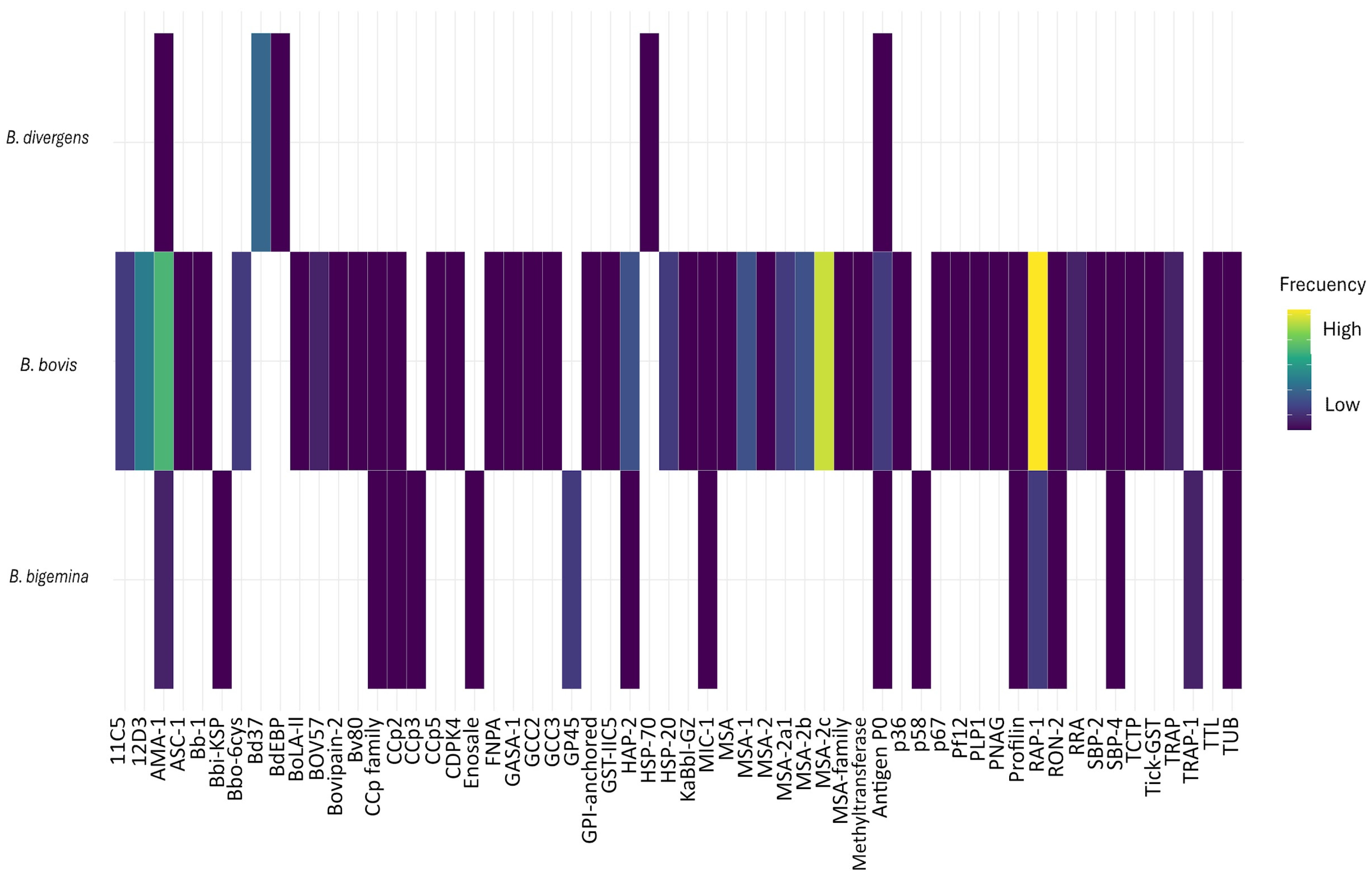
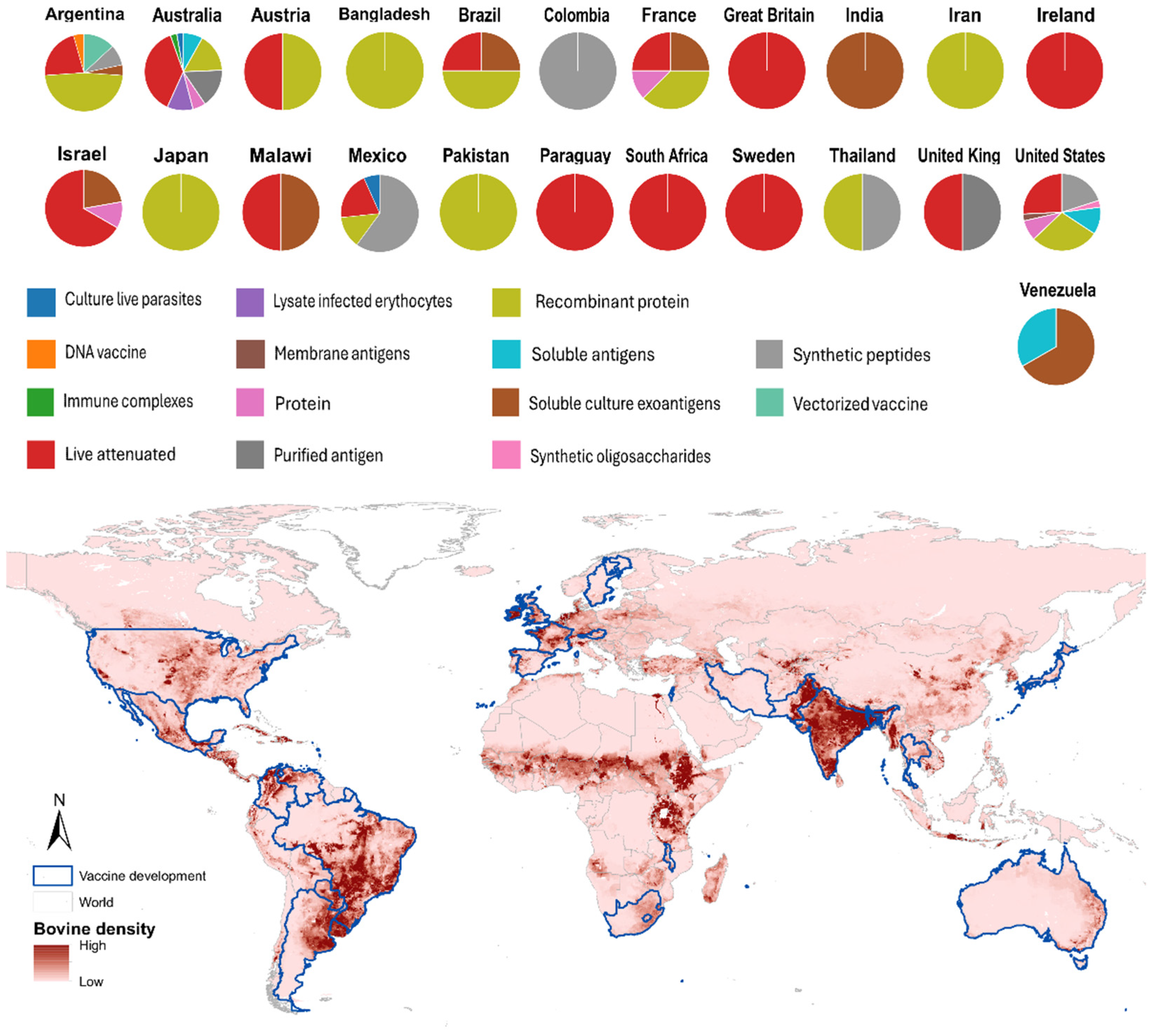
3.2. Development of Vaccines Against Bovine Babesiosis
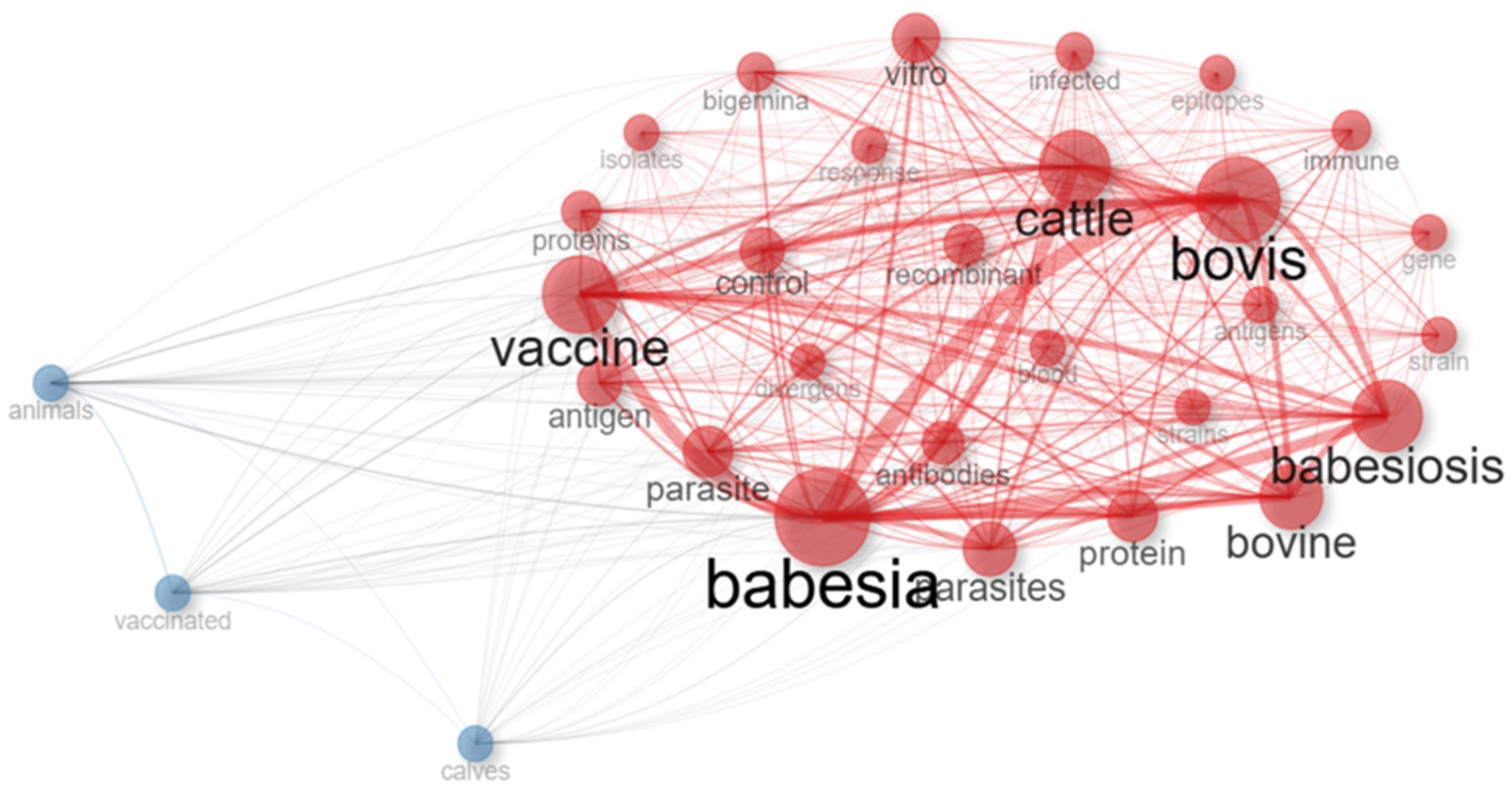
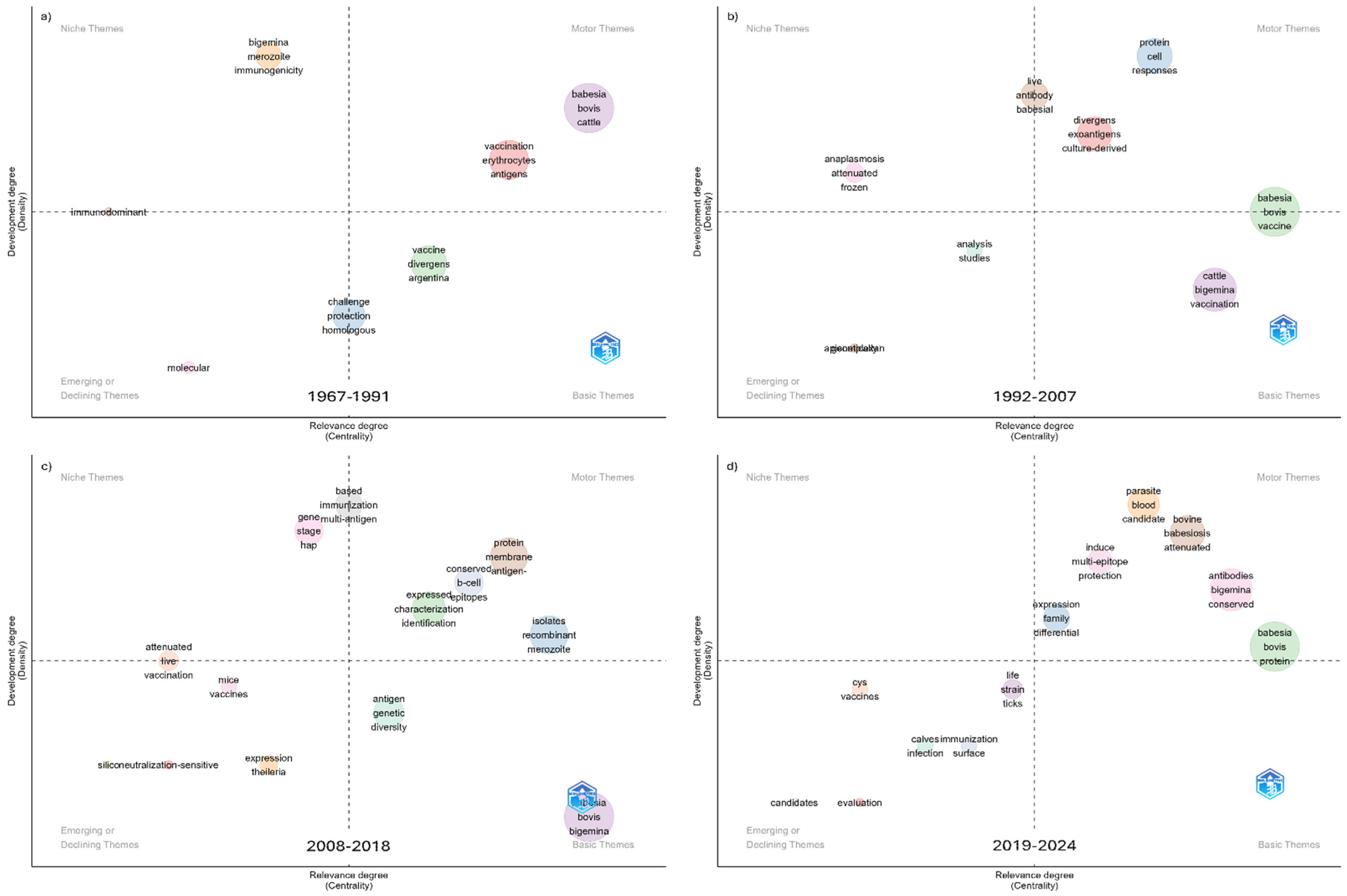
3.3. Bibliometric and Scientometric Analysis
3.4. Protective Efficacy of Vaccines Across Studies
3.4.1. Mortality Protection
3.4.2. Analysis by Vaccine Technology
3.4.3. Type of Experiment
3.4.4. Babesia Species
3.4.5. Body Temperature and Hematocrit in Vaccine Challenge
- Controlled Experiments
- Body Temperature
- Hematocrit
- Field Experiments
- Body temperature
- Hematocrit
- Subunit Vaccines in Controlled Experiments
- Body Temperature
- Hematocrit
3.4.6. Global Analysis of Body Temperature and Hematocrit Values
- Body Temperature
- Hematocrit
3.5. Risk of Bias Assessment
4. Discussion
5. Future Perspectives and a Roadmap for Next-Generation Vaccines
- Climate-Resilient Formulations: Developing thermostable vaccine formulations that do not rely on a cold chain is essential for deployment in remote and expanding endemic areas.
- Geographically Tailored Vaccines: Establishing regional surveillance networks to monitor the emergence of new Babesia strains and genotypes, informing the continuous update of vaccine candidates to ensure regional relevance.
- Pre-emptive Vaccination Strategies: Using ecological niche modeling to predict future outbreak zones and guide pre-emptive vaccination campaigns, rather than reactive control.
6. Conclusions and Future Directions
- Leverage Advanced Platforms: Prioritize the development of multi-epitope vaccines using delivery systems that overcome antigenic diversity and enhance immunogenicity.
- Embrace Data-Driven Discovery: Integrate AI and machine learning with multi-omics data to refine epitope prediction, identify correlates of protection, and guide rational vaccine and adjuvant design.
- Adopt an Eco-Epidemiological Framework: Address the challenge of climate change by developing thermostable, geographically informed vaccines and using ecological modeling to guide pre-emptive vaccination strategies in areas of vector expansion.
Supplementary Materials
Author Contributions
Funding
Institutional Review Board Statement
Informed Consent Statement
Data Availability Statement
Conflicts of Interest
Appendix A
| Section and Topic | Item # | Checklist Item | Page # |
| TITLE | |||
| Title | 1 | Identify the report as a systematic review. | 1 |
| ABSTRACT | |||
| Abstract | 2 | The abstract presents the study as a systematic review, including the objective, search sources, methods for synthesis, and the interpretation of the results and discussion. | 1 |
| INTRODUCTION | |||
| Rationale | 3 | Describe the rationale for the review in the context of existing knowledge. | 2–3 |
| Objectives | 4 | Provide an explicit statement of the objective(s) or question the review addresses. | 3 |
| METHODS | |||
| Eligibility criteria | 5 | Specify the inclusion and exclusion criteria for the review and how studies were grouped for the syntheses. | 3 |
| Information sources | 6 | Specify all databases, registers, websites, organizations, reference lists, and other sources searched or consulted to identify studies. Specify the date when each source was last searched or consulted. | 3 |
| Search strategy | 7 | Present the full search strategies for all databases, registers, and websites, including any filters and limits used. | 3 |
| Selection process | 8 | Specify the methods used to decide whether a study met the inclusion criteria of the review, including how many reviewers screened each record and each report retrieved, whether they worked independently, and, if applicable, details of the automation tools used in the process. | 3 |
| Data collection process | 9 | Specify the methods used to collect data from reports, including how many reviewers collected data from each report, whether they worked independently, any processes for obtaining or confirming data from study investigators, and, if applicable, details of the automation tools used in the process. | 3–4 |
| Data items | 10a | List and define all outcomes for which data were sought. Specify whether all results that were compatible with each outcome domain in each study were sought (e.g., for all measures, time points, analyses), and if not, the methods used to decide which results to collect. | 3–4 |
| 10b | List and define all other variables for which data were sought (e.g., participant and intervention characteristics and funding sources). Describe any assumptions made about any missing or unclear information. | 3–4 | |
| Study risk of bias assessment | 11 | Specify the methods used to assess the risk of bias in the included studies, including details of the tool(s) used, how many reviewers assessed each study, and whether they worked independently, and, if applicable, details of automation tools used in the process. | 3–5 |
| Effect measures | 12 | Specify for each outcome the effect measure(s) (e.g., risk ratio and mean difference) used in the synthesis or presentation of results. | NA |
| Synthesis methods | 13a | Describe the processes used to decide which studies were eligible for each synthesis (e.g., tabulating the study intervention characteristics and comparing against the planned groups for each synthesis (item #5)). | 4 |
| 13b | Describe any methods required to prepare the data for presentation or synthesis, such as handling of missing summary statistics or data conversions. | 4 | |
| 13c | Describe any methods used to tabulate or visually display the results of individual studies and syntheses. | 4 | |
| 13d | Describe any methods used to synthesize results and provide a rationale for the choice(s). If meta-analysis was performed, describe the model(s), method(s) to identify the presence and extent of statistical heterogeneity, and software package(s) used. | 4 | |
| 13e | Describe any methods used to explore possible causes of heterogeneity among study results (e.g., subgroup analysis and meta-regression). | 4 | |
| 13f | Describe any sensitivity analyses conducted to assess the robustness of the synthesized results. | 4 | |
| Reporting bias assessment | 14 | Describe any methods used to assess the risk of bias due to missing results in a synthesis (arising from reporting biases). | 4–5 |
| Certainty assessment | 15 | Describe any methods used to assess certainty (or confidence) in the body of evidence for an outcome. | 4 |
| RESULTS | |||
| Study selection | 16a | Describe the results of the search and selection process, from the number of records identified in the search to the number of studies included in the review, ideally using a flow diagram. | 4–5 |
| 16b | Cite studies that might appear to meet the inclusion criteria, but which were excluded, and explain why they were excluded. | 5–10 | |
| Study characteristics | 17 | Cite each included study and present its characteristics. | 5–10 |
| Risk of bias in studies | 18 | Present assessments of the risk of bias for each included study. | 5–10 |
| Results of individual studies | 19 | For all outcomes, present for each study: (a) summary statistics for each group (where appropriate) and (b) an effect estimate with its precision (e.g., confidence/credible interval), ideally using structured tables or plots. | 11–15 |
| Results of syntheses | 20a | For each synthesis, briefly summarize the characteristics and the risk of bias among contributing studies. | 15 |
| 20b | Present the results of all statistical syntheses conducted. If meta-analysis was done, present for each the summary estimate and its precision (e.g., confidence/credible interval) and measures of statistical heterogeneity. If comparing groups, describe the direction of the effect. | 11–15 | |
| 20c | Present the results of all investigations of possible causes of heterogeneity among study results. | 5–10 | |
| 20d | Present the results of all sensitivity analyses conducted to assess the robustness of the synthesized results. | 5–10 | |
| Reporting biases | 21 | Present the assessments of the risk of bias due to missing results (arising from reporting biases) for each synthesis assessed. | 5–10 |
| Certainty of evidence | 22 | Present the assessments of certainty (or confidence) in the body of evidence for each outcome assessed. | 5–10 |
| DISCUSSION | |||
| Discussion | 23a | Provide a general interpretation of the results in the context of other evidence. | 15–20 |
| 23b | Discuss any limitations of the evidence included in the review. | 15–20 | |
| 23c | Discuss any limitations of the review processes used. | 15–20 | |
| 23d | Discuss implications of the results for practice, policy, and future research. | 15–20 | |
| OTHER INFORMATION | |||
| Registration and protocol | 24a | Provide registration information for the review, including register name and registration number, or state that the review was not registered. | NA |
| 24b | Indicate where the review protocol can be accessed or state that a protocol was not prepared. | NA | |
| 24c | Describe and explain any amendments to the information provided at registration or in the protocol. | NA | |
| Support | 25 | Describe the sources of financial or non-financial support for the review and the role of the funders or sponsors in the review. | 20 |
| Competing interests | 26 | Declare any competing interests of review authors. | 20 |
| Availability of data, code, and other materials | 27 | Report which of the following are publicly available and where they can be found: template data collection forms; data extracted from included studies; data used for all analyses; analytic code; any other materials used in the review. (See supplementary materials) | 20 |
References
- Bock, R.; Jackson, L.; De Vos, A.; Jorgensen, W. Babesiosis of Cattle. Parasitology 2004, 129, S247–S269. [Google Scholar] [CrossRef]
- Ristic, M. Diseases of Cattle in the Tropics; Ristic, M., McIntyre, I., Eds.; Martinus Nijhoff Publishers: The Hague, The Netherlands, 1981; Volume 6, pp. 443–468. [Google Scholar]
- Babes, V. Sur l’Hémoglobinurie Bactérienne du Bœuf. Comptes Rendus L’Académie Sci. 1888, 107, 692–694. [Google Scholar]
- Smith, T.; Kilborne, F.L. Investigations into the Nature, Causation, and Prevention of Texas or Southern Cattle Fever; USDA, Bureau of Animal Industry: Washington, DC, USA, 1893.
- Uilenberg, G. Babesia—A Historical Overview. Vet. Parasitol. 2006, 138, 3–10. [Google Scholar] [CrossRef]
- Mihalca, A.D.; Cozma, V.; Şuteu, E.; Marinculic, A.; Boireau, P. The Quest for Piroplasms: From Babeş and Smith to Molecules. Sci. Parasitol. 2010, 11, 14–19. [Google Scholar]
- M’Fadyean, J.; Stockman, S. A New Species of Piroplasm Found in the Blood of British Cattle. J. Comp. Pathol. Ther. 1911, 24, 340–354. [Google Scholar] [CrossRef]
- Minami, T.; Ishihara, T. Babesia ovata sp. n. Isolated from Cattle in Japan. Natl. Inst. Anim. Health Q. 1980, 20, 101–113. [Google Scholar] [PubMed]
- Lu, W.S.; Yin, H.; Lu, W.X.; Yu, F.; Zhang, O.C.; Dou, H.F. Discovery of Babesia major from Cattle and Confirmation of Its Transmitting Vector Tick in China. Chin. J. Vet. Sci. Technol. 1988, 12, 11–14. [Google Scholar]
- Sivakumar, T.; Tuvshintulga, B.; Otgonsuren, D.; Batmagnai, E.; Ahedor, B.; Kothalawala, H.; Vimalakumar, S.C.; Silva, S.S.P.; Yamagishi, J.; Yokoyama, N. Phylogenetic Analyses of the Mitochondrial, Plastid, and Nuclear Genes of Babesia sp. Mymensingh and Its Naming as Babesia naoakii n. sp. Parasites Vectors 2022, 15, 299. [Google Scholar] [CrossRef]
- de Waal, D.T.; Combrink, M.P. Live Vaccines against Bovine Babesiosis. Vet. Parasitol. 2006, 138, 88–96. [Google Scholar] [CrossRef]
- Schnittger, L.; Rodriguez, A.E.; Florin-Christensen, M.; Morrison, D.A. Babesia: A World Emerging. Infect. Genet. Evol. 2012, 12, 1788–1809. [Google Scholar] [CrossRef]
- He, L.; Bastos, R.G.; Sun, Y.; Hua, G.; Guan, G.; Zhao, J.; Suarez, C.E. Babesiosis as a Potential Threat for Bovine Production in China. Parasites Vectors 2021, 14, 352. [Google Scholar] [CrossRef]
- Pfaeffle, M.; Littwin, N.; Muders, S.V.; Petney, T.N. The Ecology of Tick-Borne Diseases. Int. J. Parasitol. 2013, 43, 1059–1077. [Google Scholar] [CrossRef]
- Gray, J.S.; Estrada-Peña, A.; Zintl, A. Vectors of Babesiosis. Annu. Rev. Entomol. 2019, 64, 149–165. [Google Scholar] [CrossRef] [PubMed]
- Zintl, A.; Mulcahy, G.; Skerrett, H.E.; Taylor, S.M.; Gray, J.S. Babesia divergens, a Bovine Blood Parasite of Veterinary and Zoonotic Importance. Clin. Microbiol. Rev. 2003, 16, 622–636. [Google Scholar] [CrossRef]
- Karshima, S.N.; Karshima, M.N.; Ahmed, M.I. Animal Reservoirs of Zoonotic Babesia Species: A Global Systematic Review and Meta-Analysis. Vet. Parasitol. 2021, 298, 109539. [Google Scholar] [CrossRef]
- Sun, M.; Guan, G.; Liu, Z.; Wang, J.; Wang, D.; Wang, S.; Ma, C.; Cheng, S.; Yin, H.; Luo, J. Molecular Survey and Genetic Diversity of Babesia spp. and Theileria spp. in Cattle in Gansu Province, China. Acta Parasitol. 2020, 65, 422–429. [Google Scholar] [CrossRef]
- McCosker, P.J. The Global Importance of Babesiosis. In Babesiosis; Ristic, M., Kreier, J.P., Eds.; Academic Press: New York, NY, USA, 1981; pp. 1–24. [Google Scholar]
- Sivakumar, T.; Igarashi, I.; Yokoyama, N. Babesia ovata: Taxonomy, Phylogeny and Epidemiology. Vet. Parasitol. 2016, 229, 99–106. [Google Scholar] [CrossRef]
- Galon, E.M.; Zafar, I.; Ji, S.; Li, H.; Ma, Z.; Xuan, X. Molecular Reports of Ruminant Babesia in Southeast Asia. Pathogens 2022, 11, 915. [Google Scholar] [CrossRef]
- Kuibagarov, M.; Makhamed, R.; Zhylkibayev, A.; Berdikulov, M.; Abdrakhmanov, S.; Kozhabayev, M.; Akhmetollayev, I.; Mukanov, K.; Ryskeldina, A.; Ramankulov, Y.; et al. Theileria and Babesia Infection in Cattle—First Molecular Survey in Kazakhstan. Ticks Tick-Borne Dis. 2023, 14, 102078. [Google Scholar] [CrossRef] [PubMed]
- Jacob, S.S.; Sengupta, P.P.; Paramanandham, K.; Suresh, K.P.; Chamuah, J.K.; Rudramurthy, G.R.; Roy, P. Bovine Babesiosis: An insight into the global Distribution via Systematic Review and Meta-Analysis. Vet. Parasitol. 2020, 283, 109136. [Google Scholar] [CrossRef] [PubMed]
- Uilenberg, G. International Collaborative Research: Significance of Tick-Borne Homoparasitic Diseases to World Animal Health. Vet. Parasitol. 1995, 57, 19–41. [Google Scholar] [CrossRef]
- Mahoney, D.F. Bovine Babesiosis: Immunization of Cattle with Killed Babesia argentina. Exp. Parasitol. 1967, 20, 125–129. [Google Scholar] [CrossRef]
- Mahoney, D.F.; Wright, I.G.; Goodger, B.V. Bovine Babesiosis: The Immunization of Cattle with Fractions of Erythrocytes Infected with Babesia bovis (syn. B. argentina). Vet. Immunol. Immunopathol. 1981, 2, 145–156. [Google Scholar] [CrossRef]
- Hentrich, B.; Böse, R. Cryopreservation of Babesia divergens from Jirds as a Live Vaccine for Cattle. Int. J. Parasitol. 1993, 23, 771–776. [Google Scholar] [CrossRef]
- Rojas, C.; Figueroa, J.V.; Alvarado, A.; Mejia, P.; Mosqueda, J.J.; Falcon, A.; Vega, C.A.; Alvarez, A. Bovine Babesiosis Live Vaccine Production: Use of Gamma Irradiation on the Substrate. Ann. N. Y. Acad. Sci. 2006, 1081, 405–416. [Google Scholar] [CrossRef] [PubMed]
- Mosqueda Gualito, J.J.; Falcón Neri, A.; Ramos Aragón, J.A.; Canto Alarcón, G.J.; Camacho Nuez, M. Genome and Molecular Strategies for Bovine Babesiosis Control. Rev. Mex. Cienc. Pecu. 2012, 3, 51–59. Available online: https://cienciaspecuarias.inifap.gob.mx/index.php/Pecuarias/article/view/1828 (accessed on 10 August 2025).
- Florin-Christensen, M.; Suarez, C.E.; Rodriguez, A.E.; Flores, D.A.; Schnittger, L. Vaccines against Bovine Babesiosis: Where We Are Now and Possible Roads Ahead. Parasitology 2014, 141, 1563–1592. [Google Scholar] [CrossRef]
- De Vos, A.J.; Bock, R.E. Vaccination against Bovine Babesiosis. Ann. N. Y. Acad. Sci. 2000, 916, 540–545. [Google Scholar] [CrossRef] [PubMed]
- Späth, E.J.; Mangold, A.J.; Guglielmone, A.A. Estimation of the Potential Demand for a Bovine Babesiosis and Anaplasmosis Vaccine in Argentina. Vet. Parasitol. 1990, 36, 131–140. [Google Scholar] [CrossRef]
- Brizuela, C.M.; Ortellado, C.A.; Sanabria, E.; Torres, O.; Ortigosa, D. The Safety and Efficacy of Australian Tick-Borne Disease Vaccine Strains in Cattle in Paraguay. Vet. Parasitol. 1998, 76, 27–41. [Google Scholar] [CrossRef]
- Hornok, S.; Edelhofer, R.; Szotáczky, I.; Hajtós, I. Babesia divergens Becoming Extinct in Cattle of Northeast Hungary: Past and Present Situation. Acta Vet. Hung. 2006, 54, 493–501. [Google Scholar] [CrossRef] [PubMed]
- Chávez-Larrea, M.A.; Cholota-Iza, C.; Medina-Naranjo, V.; Yugcha-Díaz, M.; Ron-Román, J.; Martin-Solano, S.; Gómez-Mendoza, G.; Saegerman, C.; Reyna-Bello, A. Detection of Babesia spp. in High Altitude Cattle in Ecuador, Possible Evidence of the Adaptation of Vectors and Diseases to New Climatic Conditions. Pathogens 2021, 10, 1593. [Google Scholar] [CrossRef]
- Najar, T.A.; Tufani, N.A.; Allaie, I.M.; Tramboo, S.R.; Dar, A.A.; Malik, H.U. The Prevalence and Molecular Characterization of Bovine Babesia Species and the First Report of B. bovis from Kashmir Himalayas. Iran. J. Parasitol. 2024, 19, 86–97. [Google Scholar] [CrossRef]
- Marques, R.; Krüger, R.F.; Peterson, A.T.; de Melo, L.F.; Vicenzi, N.; Jiménez-García, D. Climate Change Implications for the Distribution of the Babesiosis and Anaplasmosis Tick Vector, Rhipicephalus (Boophilus) microplus. Vet. Res. 2020, 51, 81. [Google Scholar] [CrossRef] [PubMed]
- Cunze, S.; Glock, G.; Kochmann, J.; Klimpel, S. Ticks on the Move—Range Shifts in Europe. Parasitol. Res. 2022, 121, 2241–2252. [Google Scholar] [CrossRef]
- Okely, M.; Al-Khalaf, A.A. Predicting the Potential Distribution of the Cattle Fever Tick Rhipicephalus annulatus (Acari: Ixodidae) Using Ecological Niche Modeling. Parasitol. Res. 2022, 121, 3467–3476. [Google Scholar] [CrossRef] [PubMed]
- Nava, S.; Gamietea, I.J.; Morel, N.; Guglielmone, A.A.; Estrada-Peña, A. Assessment of Habitat Suitability for the Cattle Tick Rhipicephalus (Boophilus) microplus in Temperate Areas. Res. Vet. Sci. 2022, 150, 10–21. [Google Scholar] [CrossRef]
- Estrada-Peña, A.; Mallón, A.R.; Bermúdez, S.; de la Fuente, J.; Domingos, A.; García, M.P.E.; Labruna, M.B.; Merino, O.; Mosqueda, J.; Nava, S.; et al. One Health Approach to Identify Research Needs on Rhipicephalus microplus Ticks in the Americas. Pathogens 2022, 11, 1180. [Google Scholar] [CrossRef]
- Alvarez, J.A.; Rojas, C.; Figueroa, J.V. An Overview of Current Knowledge on in Vitro Babesia Cultivation for Production of Live Attenuated Vaccines for Bovine Babesiosis in Mexico. Front. Vet. Sci. 2020, 7, 364. [Google Scholar] [CrossRef]
- McFadzean, H.; Johnson, N.; Phipps, L.P.; Swinson, V.; Boden, L.A. Surveillance and Risk Analysis for Bovine Babesiosis in England and Wales to Inform Disease Distribution. Animals 2023, 13, 2118. [Google Scholar] [CrossRef] [PubMed]
- Toure, A.; Sanogo, M.; Sghiri, A.; Sahibi, H. Rhipicephalus (B.) microplus-Transmitted Pathogens in Cattle in West Africa. Acta Parasitol. 2022, 67, 1585–1592. [Google Scholar] [CrossRef]
- Cuy-Chaparro, L.; Reyes, C.; Díaz-Guiot, E.V.; Moreno-Pérez, D.A.; Patarroyo, M.A. Developing Anti-Babesia bovis Blood Stage Vaccines: A New Perspective Regarding Synthetic Vaccines. Int. J. Mol. Sci. 2023, 24, 5219. [Google Scholar] [CrossRef] [PubMed]
- Purnell, R.E.; Lewis, D.; Brocklesby, D.W.; Taylor, S.M. Bovine Babesiosis: Steps Towards an Irradiated Vaccine. J. S. Afr. Vet. Assoc. 1979, 50, 339–344. [Google Scholar] [PubMed]
- Rathinasamy, V.; Poole, W.A.; Bastos, R.G.; Suarez, C.E.; Cooke, B.M. Babesiosis Vaccines: Lessons Learned, Challenges Ahead, and Future Glimpses. Trends Parasitol. 2019, 35, 622–635. [Google Scholar] [CrossRef]
- Florin-Christensen, M.; Schnittger, L.; Dominguez, M.; Mesplet, M.; Rodríguez, A.; Ferreri, L.; Asenzo, G.; Wilkowsky, S.; Farber, M.; Echaide, I.; et al. Search for Babesia bovis Vaccine Candidates. Parassitologia 2007, 49, 9–12. [Google Scholar] [PubMed]
- Wright, I.G.; Casu, R.; Commins, M.A.; Dalrymple, B.P.; Gale, K.R.; Goodger, B.V.; Riddles, P.; Waltisbuhl, D.; Abetz, I.; Berrie, D.; et al. Development of a Recombinant Babesia Vaccine. Vet. Parasitol. 1992, 44, 3–13. [Google Scholar] [CrossRef]
- Lew-Tabor, A.E.; Rodriguez-Valle, M. Reverse Vaccinology Approaches for Tick Vaccines. Ticks Tick-Borne Dis. 2016, 7, 573–585. [Google Scholar] [CrossRef]
- Burgers, C.; Brugman, B.C.; Boeynaems, A. Systematic Literature Reviews in Interdisciplinary Research. J. Pragmat. 2019, 145, 102–109. [Google Scholar] [CrossRef]
- Parlina, A.; Ramli, K.; Murfi, H. Theme Mapping and Bibliometric Analysis in Scopus. Information 2020, 11, 209. [Google Scholar] [CrossRef]
- Cobo, M.J.; Lopez-Herrera, A.G.; Herrera-Viedma, E.; Herrera, F. Evolution of Research Fields: Fuzzy Sets Theory. J. Informetr. 2011, 5, 146–166. [Google Scholar] [CrossRef]
- Öztürk, O.; Kocaman, R.; Kanbach, D.K. Designing Bibliometric Research: Framework Proposal. Rev. Manag. Sci. 2024, 18, 1025–1050. [Google Scholar] [CrossRef]
- Rodriguez-Morales, A.J.; Bonilla-Aldana, D.K.; Escalera-Antezana, J.P.; Alvarado-Arnez, L.E. Research on Babesia: A Bibliometric Assessment. F1000Research 2018, 7, 1446. [Google Scholar] [CrossRef]
- Malgwi, S.A.; Ogunsakin, R.E.; Oladepo, A.D.; Adeleke, M.A.; Okpeku, M. Literature on Babesia Infection (1982–2022): A Systematic Bibliometric Approach. Int. J. Environ. Res. Public Health 2023, 20, 12615. [Google Scholar] [CrossRef] [PubMed]
- Santos, J.H.M.; Siddle, H.V.; Raza, A.; Stanisic, D.I.; Good, M.F.; Tabor, A.E. Exploring the Landscape of Babesia bovis Vaccines. Parasites Vectors 2023, 16, 385. [Google Scholar] [CrossRef]
- Page, M.J.; McKenzie, J.E.; Bossuyt, P.M.; Boutron, I.; Hoffmann, T.C.; Mulrow, C.D.; Shamseer, L.; Tetzlaff, J.M.; Akl, E.A.; Brennan, S.E.; et al. The PRISMA 2020 Statement. BMJ 2021, 372, n71. [Google Scholar] [CrossRef]
- R Core Team. R: A Language and Environment for Statistical Computing; R Foundation for Statistical Computing: Vienna, Austria, 2019. [Google Scholar]
- Wickham, H.; Averick, M.; Bryan, J.; Chang, W.; McGowan, L.D.A.; François, R.; Grolemund, G.; Hayes, A.; Henry, L.; Hester, J.; et al. Welcome to the Tidyverse. J. Open Source Softw. 2019, 4, 1686. [Google Scholar] [CrossRef]
- Garnier, S.; Ross, N.; Rudis, R.; Camargo, P.; Sciaini, M.; Scherer, C. viridis(Lite): Colorblind-Friendly Color Maps for R, Version 0.6.1 (CRAN). Available online: https://CRAN.R-project.org/package=viridis (accessed on 9 August 2025).
- Wickham, H. ggplot2: Elegant Graphics for Data Analysis, 2nd ed.; Springer: New York, NY, USA, 2016. [Google Scholar]
- Aria, M.; Cuccurullo, C. bibliometrix: R-Tool for Comprehensive Science Mapping. J. Informetr. 2017, 11, 959–975. [Google Scholar] [CrossRef]
- Vesterinen, H.M.; Sena, E.S.; Egan, K.J.; Hirst, T.C.; Churolov, L.; Currie, G.L.; Antonic, A.; Howells, D.W.; Macleod, M.R. Meta-Analysis of Data from Animal Studies: A Practical Guide. J. Neurosci. Methods 2014, 221, 92–102. [Google Scholar] [CrossRef]
- Viechtbauer, W. Conducting Meta-Analyses in R with the Metafor Package. J. Stat. Softw. 2010, 36, 1–48. [Google Scholar] [CrossRef]
- Lippi, C.A.; Ryan, S.J.; White, A.L.; Gaff, H.D.; Carlson, C.J. Trends and Opportunities in Tick-Borne Disease Geography. J. Med. Entomol. 2021, 58, 2021–2029. [Google Scholar] [CrossRef]
- Mosqueda, J.; Olvera-Ramírez, A.; Aguilar-Tipacamu, G.; Canto, G.J. Current Advances in Detection and Treatment of Babesiosis. Curr. Med. Chem. 2012, 19, 1504–1518. [Google Scholar] [CrossRef] [PubMed]
- Gohil, S.; Herrmann, S.; Günther, S.; Cooke, B.M. Bovine Babesiosis: Advances in Biology and Functional Genomics. Int. J. Parasitol. 2013, 43, 125–132. [Google Scholar] [CrossRef]
- Alzan, H.F.; Mahmoud, M.S.; Suarez, C.E. Current Vaccines, Experimental Immunization Trials, and New Perspectives for Vector-Borne Parasite Control. Front. Vet. Sci. 2024, 11, 1484787. [Google Scholar] [CrossRef]
- Suarez, C.E.; Alzan, H.F.; Silva, M.G.; Rathinasamy, V.; Poole, W.A.; Cooke, B.M. Unravelling the Cellular and Molecular Pathogenesis of Bovine Babesiosis. Int. J. Parasitol. 2019, 49, 183–197. [Google Scholar] [CrossRef]
- Yokoyama, N.; Okamura, M.; Igarashi, I. Erythrocyte Invasion by Babesia Parasites. Vet. Parasitol. 2006, 138, 22–32. [Google Scholar] [CrossRef]
- Santamaría, R.M.; Estrada, K.; López, M.E.; Rojas, E.; Martínez, G.; Alcalá, Y.; Rojas, C.; Álvarez, J.A.; Lira, J.J.; Santamaria, T.V.; et al. Comparative Transcriptome of Babesia bigemina Vaccine and Virulent Strains. Vaccines 2024, 12, 309. [Google Scholar] [CrossRef]
- Cuy-Chaparro, L.; Martínez-González, J.P.; Moreno-Pérez, D.A. Babesia Species Biology Based on Omics Studies. In Recent Advances in Parasitomics; Springer: Cham, Switzerland, 2025; pp. 189–203. [Google Scholar] [CrossRef]
- Sachman-Ruiz, B.; Lozano, L.; Lira, J.J.; Martínez, G.; Rojas, C.; Álvarez, J.A.; Figueroa, J.V. Draft Genome Sequences of Mexican Babesia bovis Virulent and Attenuated Strains. Microbiol. Resour. Announc. 2022, 11, e0115321. [Google Scholar] [CrossRef]
- Dominguez, M.; Echaide, I.; Echaide, S.T.; Mosqueda, J.; Cetrá, B.; Suarez, C.E.; Florin-Christensen, M. In Silico Predicted Conserved B-Cell Epitopes in the Merozoite Surface Antigen-2 Family of B. bovis Are Neutralization Sensitive. Vet. Parasitol. 2010, 167, 216–226. [Google Scholar] [CrossRef]
- Nogueira, B.C.F.; Honório, N.T.B.S.; Souza, P.E.A.; Soares, G.O.; Campos, A.K.; Martins, M.F.; Carvalho, W.A.; Gaspar, E.B. Evidence of the Efficiency of Reverse Vaccinology against Bovine Parasites: A Systematic Review. Acta Trop. 2024, 260, 107478. [Google Scholar] [CrossRef] [PubMed]
- Wasnik, A.; Gupta, L.; Ranjan, A.; Suresh, H. Effectiveness of Interventions to Improve Vaccine Efficacy: A Systematic Review and Meta-Analysis. Syst. Rev. 2025, 14, 105. [Google Scholar] [CrossRef] [PubMed]
- Mahoney, D.F.; Kerr, J.D.; Goodger, B.V.; Wright, I.G. Immune Response of Cattle to Babesia bovis: Nature and Specificity of Protection. Int. J. Parasitol. 1979, 9, 297–306. [Google Scholar] [CrossRef]
- Hall, W.T.K. The Immunity of Calves to Babesia argentina Infection. Aust. Vet. J. 1960, 36, 361–366. [Google Scholar] [CrossRef]
- Kuttler, K.L.; Levy, M.G.; James, M.A.; Ristic, M. Efficacy of a Non-Viable Culture-Derived Babesia bovis Vaccine. Am. J. Vet. Res. 1982, 43, 281–284. [Google Scholar] [CrossRef]
- Smith, R.D.; James, M.A.; Ristic, M.; Aikawa, M.; Vega y Murguia, C.A. Bovine Babesiosis: Protection of Cattle with Culture-Derived Soluble Babesia bovis Antigen. Science 1981, 212, 335–338. [Google Scholar] [CrossRef] [PubMed]
- Mtshali, P.S.; Mtshali, M.S. Genetic Characterization and Phylogenetic Analysis of Babesia bigemina Isolates in Cattle from South Africa Based on BgRAP-1, BgAMA-1 and BgβTUB Genes. Biology 2025, 14, 355. [Google Scholar] [CrossRef]
- Hernández-Silva, D.J.; Valdez-Espinoza, U.M.; Mercado-Uriostegui, M.A.; Aguilar-Tipacamú, G.; Ramos-Aragón, J.A.; Hernández-Ortiz, R.; Ueti, M.; Mosqueda, J. Immunomolecular Characterization of MIC-1, a Novel Antigen in Babesia bigemina, Which Contains Conserved and Immunodominant B-Cell Epitopes That Induce Neutralizing Antibodies. Vet. Sci. 2018, 5, 32. [Google Scholar] [CrossRef] [PubMed]
- Mosqueda, J.; Hernández-Silva, D.J.; Ueti, M.W.; Cruz-Reséndiz, A.; Marquez-Cervantez, R.; Valdez-Espinoza, U.M.; Dang-Trinh, M.A.; Nguyen, T.T.; Camacho-Nuez, M.; Mercado-Uriostegui, M.A.; et al. Spherical Body Protein 4 from Babesia bigemina: A Novel Gene That Contains Conserved B-Cell Epitopes and Induces Cross-Reactive Neutralizing Antibodies in Babesia ovata. Pathogens 2023, 12, 495. [Google Scholar] [CrossRef] [PubMed]
- Mercado-Uriostegui, M.A.; Castro-Sánchez, L.A.; Batiha, G.E.; Valdez-Espinoza, U.M.; Falcón-Neri, A.; Ramos-Aragon, J.A.; Hernández-Ortiz, R.; Kawazu, S.I.; Igarashi, I.; Mosqueda, J. The GP-45 Protein, a Highly Variable Antigen from Babesia bigemina, Contains Conserved B-Cell Epitopes in Geographically Distant Isolates. Pathogens 2022, 11, 591. [Google Scholar] [CrossRef]
- Timms, P.; Barry, D.N.; Gill, A.C.; Sharp, P.J.; De Vos, A.J. Failure of a Recombinant Babesia bovis Antigen to Protect Cattle against Heterologous Challenge. Res. Vet. Sci. 1988, 45, 267–269. [Google Scholar] [CrossRef]
- Goodger, B.V.; Commins, M.A.; Wright, I.G.; Mirre, G.B. Babesia bovis: Vaccination against Heterologous Challenge with Fractions of Infected Erythrocyte Lysate. Parasitol. Res. 1984, 70, 321–329. [Google Scholar] [CrossRef]
- Aguirre-Liguori, J.A.; Ramírez-Barahona, S.; Gaut, B.S. The Evolutionary Genomics of Species’ Responses to Climate Change. Nat. Ecol. Evol. 2021, 5, 1350–1360. [Google Scholar] [CrossRef] [PubMed]
- Wiens, J.J.; Donoghue, M.J. Historical Biogeography, Ecology and Species Richness. Trends Ecol. Evol. 2004, 19, 639–644. [Google Scholar] [CrossRef]
- Yannic, G.; Pellissier, L.; Ortego, J.; Lecomte, N.; Couturier, S.; Cuyler, C.; Dussault, C.; Hundertmark, K.J.; Irvine, R.J.; Jenkins, D.A.; et al. Genetic Diversity in Caribou Linked to Climate Change. Nat. Clim. Change 2014, 4, 132–137. [Google Scholar] [CrossRef]
- Cabezas-Cruz, A.; Cano-Argüelles, A.L.; Tonnerre, P. What Vaccines Teach Us about Pathogen Ecology. Trends Immunol. 2025, 46, 353–356. [Google Scholar] [CrossRef]
- De Kort, H.; Prunier, J.G.; Ducatez, S.; Honnay, O.; Baguette, M.; Stevens, V.M.; Blanchet, S. Life history, climate and biogeography interactively affect worldwide genetic diversity of plant and animal populations. Nat. Commun. 2021, 12, 516. [Google Scholar] [CrossRef]
- Baggio-Souza, V.; Berger, L.; Mallmann-Bohn, R.; Reis, A.O.; Basilio, L.G.; Pereira, Y.S.; Tirelli, L.; Fagundes-Moreira, R.; da Silva, J.V.D.S.A.; das Neves, L.F.; et al. Are Babesia vogeli Genotypes Associated with Rhipicephalus sanguineus and Rhipicephalus linnaei Distribution? Parasites Vectors 2025, 18, 282. [Google Scholar] [CrossRef]
- Kabi, F.; Contreras, M.; Semakula, J.; Sánchez-Sánchez, M.; Muñoz-Hernández, C.; Mugerwa, S.; Kasaija, P.; Kirunda, H.; de la Fuente, G.; Fernández-Melgar, R.; et al. Evaluation of Effectiveness and Safety of Subolesin Anti-Tick Vaccine in Ugandan Multi-Site Field Trial. npj Vaccines 2024, 9, 174. [Google Scholar] [CrossRef]
- Jiao, J.; Wu, P. A Meta-Analysis on the Potency of Foot-and-Mouth Disease Vaccines in Different Animal Models. Sci. Rep. 2024, 14, 8931. [Google Scholar] [CrossRef]
- Elrashedy, A.; Mousa, W.; Nayel, M.; Salama, A.; Zaghawa, A.; Elsify, A.; Hasan, M.E. Systematic Review and Meta-Analysis of the Effectiveness of Polypeptide, Virus-Like Particles, and Viral Vector Vaccines for Foot-and-Mouth Disease (2020–2025). Sci. Rep. 2025, 15, 39370. [Google Scholar] [CrossRef]
- Sanhueza, J.M.; Wilson, P.R.; Benschop, J.; Collins-Emerson, J.M.; Heuer, C. Meta-Analysis of the Efficacy of Leptospira Serovar Hardjo Vaccines to Prevent Urinary Shedding in Cattle. Prev. Vet. Med. 2018, 153, 71–76. [Google Scholar] [CrossRef] [PubMed]
- Wubshet, A.K.; Werid, G.M.; Teklue, T.; Zhou, L.; Bayasgalan, C.; Tserendorj, A.; Liu, J.; Heath, L.; Sun, Y.; Ding, Y.; et al. Foot and Mouth Disease Vaccine Efficacy in Africa: A Systematic Review and Meta-Analysis. Front. Vet. Sci. 2024, 11, 1360256. [Google Scholar] [CrossRef]
- Rojas-Martínez, C.; Rodríguez-Vivas, R.I.; Figueroa-Millán, J.V.; Acosta-Viana, K.Y.; Gutiérrez-Ruíz, E.J.; Bautista-Garfias, C.R.; Lira-Amaya, J.J.; Polanco-Martínez, D.J.; Álvarez-Martínez, J.A. Babesia bigemina: Advances in Continuous In Vitro Culture Using Serum-Free Medium Supplemented with Insulin, Transferrin, Selenite, and Putrescine. Parasitol. Int. 2018, 67, 294–301. [Google Scholar] [CrossRef]
- Álvarez-Martínez, J.A.; Figueroa-Millán, J.V.; Ueti, M.W.; Rojas-Martínez, C. Establishment of Babesia bovis In Vitro Culture Using Medium Free of Animal Products. Pathogens 2021, 10, 770. [Google Scholar] [CrossRef]


Disclaimer/Publisher’s Note: The statements, opinions and data contained in all publications are solely those of the individual author(s) and contributor(s) and not of MDPI and/or the editor(s). MDPI and/or the editor(s) disclaim responsibility for any injury to people or property resulting from any ideas, methods, instructions or products referred to in the content. |
© 2026 by the authors. Licensee MDPI, Basel, Switzerland. This article is an open access article distributed under the terms and conditions of the Creative Commons Attribution (CC BY) license.
Share and Cite
Valdez-Espinoza, U.M.; Pérez-Almeida, C.; Cárdenas-Flores, A.; Hernández-Arvizu, E.E.; Mosqueda, J. Six Decades of Global Research on Bovine Babesiosis Vaccines: A Comprehensive Systematic Review and Meta-Analysis. Pathogens 2026, 15, 500. https://doi.org/10.3390/pathogens15050500
Valdez-Espinoza UM, Pérez-Almeida C, Cárdenas-Flores A, Hernández-Arvizu EE, Mosqueda J. Six Decades of Global Research on Bovine Babesiosis Vaccines: A Comprehensive Systematic Review and Meta-Analysis. Pathogens. 2026; 15(5):500. https://doi.org/10.3390/pathogens15050500
Chicago/Turabian StyleValdez-Espinoza, Uriel Mauricio, Chyntia Pérez-Almeida, Alma Cárdenas-Flores, Edwin Esaú Hernández-Arvizu, and Juan Mosqueda. 2026. "Six Decades of Global Research on Bovine Babesiosis Vaccines: A Comprehensive Systematic Review and Meta-Analysis" Pathogens 15, no. 5: 500. https://doi.org/10.3390/pathogens15050500
APA StyleValdez-Espinoza, U. M., Pérez-Almeida, C., Cárdenas-Flores, A., Hernández-Arvizu, E. E., & Mosqueda, J. (2026). Six Decades of Global Research on Bovine Babesiosis Vaccines: A Comprehensive Systematic Review and Meta-Analysis. Pathogens, 15(5), 500. https://doi.org/10.3390/pathogens15050500