Antimicrobial Consumption and Resistance Dynamics Across Healthcare Level: Global Evidence and Stewardship Implications
 , , , and
Abstract
1. Introduction
Methods
2. Global Patterns of Human Antimicrobial Exposure
2.1. Antimicrobial Exposure Across Countries
2.2. Antimicrobial Utilization and Resistance in Low- and Middle-Income Countries
2.3. Exposure in Different Healthcare Settings
2.3.1. Primary Care
2.3.2. Secondary/Tertiary Hospitals
2.3.3. Telemedicine/Online Prescribing
2.3.4. WHO AWaRe (Access, Watch, Reserve) Classification Trends
2.4. Patterns of Antibiotic Classes Used
2.4.1. Broad-Spectrum vs. Narrow-Spectrum
2.4.2. OTC and Non-Prescription Antibiotic Use
3. Antimicrobial Exposure in Vulnerable Populations
3.1. Pediatric Population
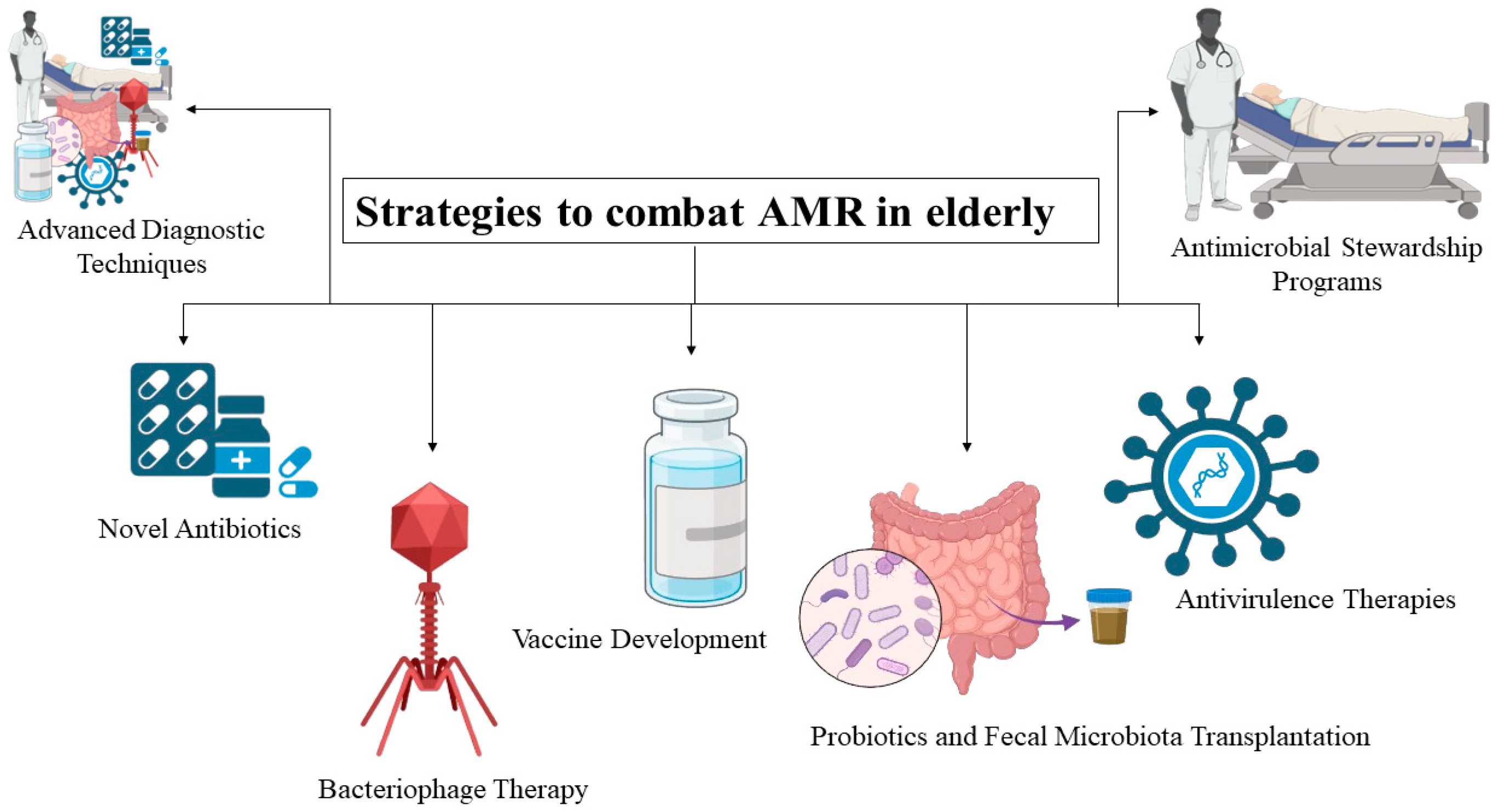
3.2. Elderly Population
- Novel Antibiotics
- Bacteriophage Therapy
- Antivirulence Therapies
- Probiotics and Faecal Microbiota Transplantation
- Vaccine Development
- -
- Multi-Epitope Vaccines Using Immuno-informatics and mRNA Technologies
- -
- Nanoparticle-Based Vaccines
- -
- Reverse Vaccinology and Antigen Discovery
- -
- Lipopeptide Adjuvants
- -
- Other Strategies to Enhance Immunity Following Vaccination
- Antimicrobial Stewardship Programs
- Advanced Diagnostic Techniques
3.3. Pregnant & Postpartum Women
3.4. Immunocompromised Groups
4. Determinants of Antimicrobial Use
4.1. Healthcare System Factors
4.2. Patient-Related Factors
4.3. Socio-Cultural and Economic Factors
4.4. Pharmaceutical and Supply-Chain Factors
5. Safety Issues Related to Antimicrobial Exposure
5.1. Adverse Drug Reactions
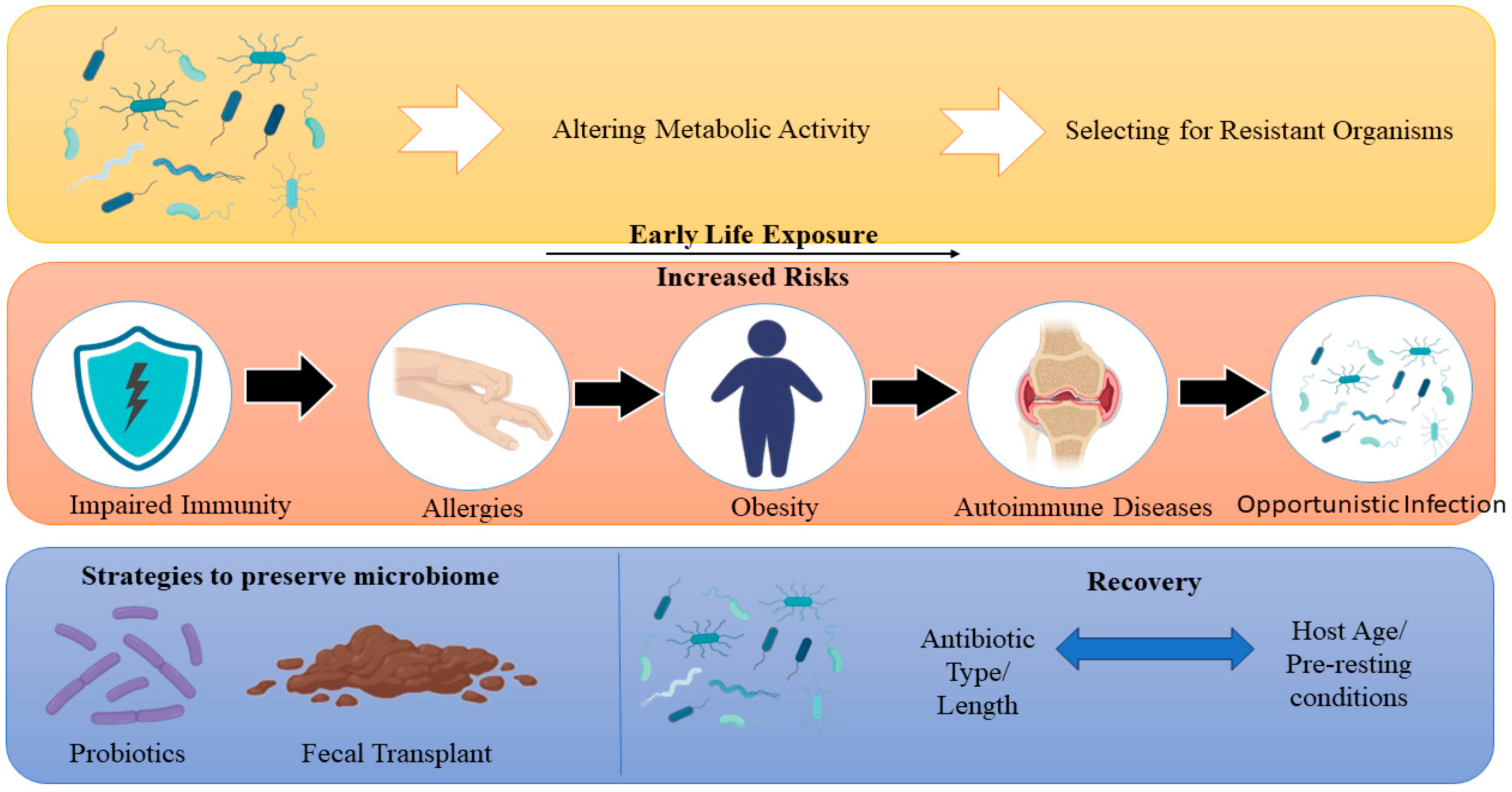
5.2. Microbiome Disruption
6. Evidence from Population-Level and Registry-Based Data
6.1. National Antimicrobial Consumption Data Systems
6.2. Strengths and Limitations of Registry-Based Research
6.3. Examples of Registry-Based Findings
7. One Health Interactions Affecting Human AMU
7.1. Animal Antimicrobial Use Contributing to Human Exposure
7.2. Environmental Contamination (Water, Soil, Food Chain)
7.3. Interventions and Stewardship Programs
7.3.1. Hospital Antimicrobial Stewardship Programs (ASP)
7.3.2. Community and Primary Healthcare Interventions
7.4. Role of Digital Health and Artificial Intelligence in Antimicrobial Stewardship

| Digital AMS Tool | Description/Function | Impact on Antimicrobial Use | References |
|---|---|---|---|
| Electronic Health Records (EHRs) | Integration of prescribing, laboratory, and clinical data to support real-time monitoring of antimicrobial use | Enables audit and feedback, improves guideline adherence, and facilitates de-escalation | [167] |
| Clinical Decision Support Systems (CDSS) | Automated alerts, dosing guidance, drug–bug matching, and guideline-based recommendations | Reduces inappropriate broad-spectrum antibiotic use and duration of therapy | [168,169] |
| Electronic Prescribing Systems | Digital prescription platforms with stewardship rules and restriction policies | Decreases prescribing errors and non-indicated antimicrobial use | [170,171] |
| Rapid Diagnostic & Microbiology Integration | Real-time linkage of culture, susceptibility, and molecular diagnostics with prescribing systems | Enables early targeted therapy and timely de-escalation | [172] |
| AI-Based Predictive Analytics | Machine-learning models predicting resistance patterns and infection risk | Optimizes empiric therapy and supports resistance trend forecasting | [173] |
| Antimicrobial Utilization Dashboards | Visualization tools for tracking antimicrobial consumption and resistance trends | Supports benchmarking, surveillance, and institutional stewardship reporting | [174] |
| Mobile Health (mHealth) Applications | Smartphone-based stewardship tools for guideline access and decision support | Improves prescriber compliance, especially in resource-limited settings | [175] |
7.5. Policy, Regulatory, and One Health Implications
- Increased Mortality: Patients with multidrug-resistant organism (MDRO) infections face a substantially greater risk of mortality, estimated at 1.7 times greater than those with open and exposed infections.
- Morbidity and Readmissions: Beyond first and beginning treatment failure, MDROs are associated with greater rates of hospital readmission, frequently doubling the probability of a patient returning within 30 days of discharge [185].
- Healthcare Costs: The need for more intense care, prolonged hospital stays, and the application of expensive, frequently toxic last-line medications drives up overall expenditures.
- Therapeutic Risks and Inappropriate Exposure: Inappropriate antimicrobial exposure, whether through erroneous dosing or prolonged duration, amplifies the risk of dose-dependent toxicities [186].
- Common Toxicities: Antimicrobials are regular and recurring causes of drug-induced liver injury (hepatotoxicity) and kidney injury (nephrotoxicity) [187].
- Vulnerable Populations: Toxicity risks are especially acute in vulnerable groups where individual pharmacokinetics differ considerably, making a “one-size-fits-all” dosing plan risky and hazardous [188].
- Selective Pressure: The overuse of broad-spectrum antibiotics, such as carbapenems, increases particular pressure, which accelerates the emergence of resistant bacteria and narrows future therapeutic choices [189].
- Narrow Therapeutic Index: While necessary and fundamental for treating multidrug-resistant Gram-negative germs, polymyxins are extremely nephrotoxic.
- Emerging Alternatives: To reduce reliance on these toxic agents, new β-lactam/-lactamase inhibitor combinations (like ceftazidime-avibactam) are being used as safer, more effective options for distinct resistant strains [190].
8. Novel Therapies to Treat AMR
9. Discussion
10. Conclusions
11. Future Perspectives
Author Contributions
Funding
Data Availability Statement
Acknowledgments
Conflicts of Interest
Abbreviations
| AMR | Antimicrobial Resistance |
| AMU | Antimicrobial Use |
| WHO | World Health Organization |
| AWaRe | Access, Watch, Reserve (classification) |
| PKs | Pharmacokinetics |
| PDs | Pharmacodynamics |
| SSA | Sub-Saharan Africa |
| MRSA | Methicillin-Resistant Staphylococcus aureus |
| ESBL | Extended-Spectrum Beta-Lactamase |
| GLASS | Global Antimicrobial Resistance and Use Surveillance System |
| LMIC | Low- and Middle-Income Countries |
| AMS | Antimicrobial Stewardship |
| PHC | Primary Health Care |
| ASP | Antimicrobial Stewardship Program |
| DOT | Days of Therapy |
| ICU | Intensive Care Unit |
| OTC | Over-the-Counter |
| MDR | Multidrug Resistance |
| AKI | Acute Kidney Injury |
| HIV | Human Immunodeficiency Virus |
| OPD | Outpatient Department |
| ADR | Adverse Drug Reactions |
| ED | Emergency Department |
| ESAC-Net | European Surveillance of Antimicrobial Consumption Network |
| ECDC | European Centre for Disease Prevention and Control |
| EARS-Net | European Antimicrobial Resistance Surveillance Network |
| DDD | Defined Daily Dose |
| DASC | Days of Antibiotic Spectrum Coverage |
| ASI | Antibiotic Spectrum Index |
| CDSS | Clinical Decision Support Systems |
| AI | Artificial Intelligence |
| EHR | Electronic Health Record |
| GAP-AMR | Global Action Plan on Antimicrobial Resistance |
| FMT | Fecal Microbiota Transplantation |
| AACs | Antibody–Antibiotic Conjugates |
References
- Hay, S.I.; Rao, P.C.; Dolecek, C.; Day, N.P.J.; Stergachis, A.; Lopez, A.D.; Murray, C.J.L. Measuring and mapping the global burden of antimicrobial resistance. BMC Med. 2018, 16, 78. [Google Scholar] [CrossRef]
- Antimicrobial Resistance Collaborators. Global burden of bacterial antimicrobial resistance in 2019: A systematic analysis. Lancet 2022, 399, 629–655. [Google Scholar] [CrossRef]
- Dadgostar, P. Antimicrobial Resistance: Implications and Costs. Infect. Drug Resist. 2019, 12, 3903–3910. [Google Scholar] [CrossRef]
- Osgood-Zimmerman, A.; Millear, A.I.; Stubbs, R.W.; Shields, C.; Pickering, B.V.; Earl, L.; Graetz, N.; Kinyoki, D.K.; Ray, S.E.; Bhatt; et al. Mapping child growth failure in Africa between 2000 and 2015. Nature 2018, 555, 41–47. [Google Scholar] [CrossRef] [PubMed]
- Graham, D.W.; Bergeron, G.; Bourassa, M.W.; Dickson, J.; Gomes, F.; Howe, A.; Kahn, L.H.; Morley, P.S.; Scott, H.M.; Simjee, S.; et al. Complexities in understanding antimicrobial resistance across domesticated animal, human, and environmental systems. Ann. N. Y. Acad. Sci. 2019, 1441, 17–30. [Google Scholar] [CrossRef] [PubMed]
- de la Fuente-Nunez, C.; Cesaro, A.; Hancock, R.E.W. Antibiotic failure: Beyond antimicrobial resistance. Drug Resist. Updates 2023, 71, 101012. [Google Scholar] [CrossRef]
- Haney, E.F.; Hancock, R.E.W. Addressing Antibiotic Failure—Beyond Genetically Encoded Antimicrobial Resistance. Front. Drug Discov. 2022, 2, 892975. [Google Scholar] [CrossRef]
- Downes, K.J.; Goldman, J.L. Too Much of a Good Thing: Defining Antimicrobial Therapeutic Targets to Minimize Toxicity. Clin. Pharmacol. Ther. 2021, 109, 905–917. [Google Scholar] [CrossRef] [PubMed]
- Naylor, N.R.; Lines, J.; Waage, J.; Wieland, B.; Knight, G.M. Quantitatively evaluating the cross-sectoral and One Health impact of interventions: A scoping review and case study of antimicrobial resistance. One Health 2020, 11, 100194. [Google Scholar] [CrossRef]
- Fan, Z.; Yin, J.; Zhang, Z.; Wei, X.; Yang, D.; Sun, Q. Cross-sectoral synergy governance programme for antimicrobial resistance control in China using a ‘One Health’ approach: Study protocol for a mixed-methods study. BMJ Open 2025, 15, e095062. [Google Scholar] [CrossRef]
- Sukhera, J. Narrative Reviews: Flexible, Rigorous, and Practical. J. Grad. Med. Educ. 2022, 14, 414–417. [Google Scholar] [CrossRef]
- Mollabagher, M.; Hassanzadeh, A.; Sepehri, M.M.; Habibelahi, A.; Sarabadani, A. Towards an Integrated Framework for Health Surveillance Systems: A Systematic Literature Review of Design Components and Implementation Challenges. Health Sci. Rep. 2026, 9, e71652. [Google Scholar] [CrossRef]
- Agyare, E.; Acolatse, J.E.E.; Dakorah, M.P.; Akafity, G.; Chalker, V.J.; Spiller, O.B.; Schneider, K.A.; Yevutsey, S.; Aidoo, N.B.; Blankson, S.; et al. Antimicrobial stewardship capacity and antibiotic utilisation practices in the Cape Coast Teaching Hospital, Ghana: A point prevalence survey study. PLoS ONE 2024, 19, e0297626. [Google Scholar] [CrossRef] [PubMed]
- Doshi, J.; Ngoc, Y.P.; Ma, T.T.; Duong, L.T.; Pham, V.T.T.; Vu, V.G.; James, R.; Li, Q.; Van, Q.T.; Nguyen, T.S.; et al. The effect of antimicrobial stewardship interventions upon antimicrobial consumption and appropriateness in Vietnamese district hospitals: A cluster randomised trial. Lancet Reg. Health West. Pac. 2025, 60, 101620. [Google Scholar] [CrossRef]
- Patel, J.; Harant, A.; Fernandes, G.; Mwamelo, A.J.; Hein, W.; Dekker, D.; Sridhar, D. Measuring the global response to antimicrobial resistance, 2020–2021: A systematic governance analysis of 114 countries. Lancet Infect. Dis. 2023, 23, 706–718. [Google Scholar] [CrossRef]
- Olawade, D.B.; Fidelis, S.C.; Marinze, S.; Egbon, E.; Osunmakinde, A.; Osborne, A. Artificial intelligence in clinical trials: A comprehensive review of opportunities, challenges, and future directions. Int. J. Med. Inform. 2026, 206, 106141. [Google Scholar] [CrossRef]
- Jamrozik, E.; Selgelid, M. (Eds.) Ethics and Drug Resistance: Collective Responsibility for Global Public Health; Springer International Publishing: Cham, Switzerland, 2020; Volume 5. [Google Scholar] [CrossRef]
- Seale, A.C.; Hutchison, C.; Fernandes, S.; Stoesser, N.; Kelly, H.; Lowe, B.; Turner, P.; Hanson, K.; Chandler, C.I.R. Supporting surveillance capacity for antimicrobial resistance: Laboratory capacity strengthening for drug resistant infections in low and middle income countries. Wellcome Open Res. 2017, 2, 91. [Google Scholar] [CrossRef]
- Van Boeckel, T.; Pires, J.; Silvester, R.; Zhao, C.; Song, J.; Criscuolo, N.; Gilbert, M.; Bonhoeffer, S.; Laxminarayan, R. Global trends in antimicrobial resistance in animals in low- and middle-income countries. Int. J. Infect. Dis. 2020, 101, 19. [Google Scholar] [CrossRef]
- Antimicrobial Resistance Collaborators. The burden of antimicrobial resistance in the Americas in 2019: A cross-country systematic analysis. Lancet Reg. Health-Am. 2023, 25, 100561. [Google Scholar] [CrossRef]
- Wang, L.; Chen, H.; Zhang, Y.; Tian, Y.; Hu, X.; Wu, J.; Li, X.; Jia, H.; Wang, H.; Yu, C.; et al. Global antibiotic consumption and regional antimicrobial resistance, 2010–2021: An analysis of pharmaceutical sales and antimicrobial resistance surveillance data. Lancet Glob. Health 2025, 13, e1880–e1891. [Google Scholar] [CrossRef]
- WHO Regional Office for Europe/European Centre for Disease Prevention and Control. Antimicrobial Resistance Surveillance in Europe 2022–2020 Data; WHO Regional Office for Europe: Copenhagen, Denmark, 2022. [Google Scholar]
- Mestrovic, T.; Robles Aguilar, G.; Swetschinski, L.R.; Ikuta, K.S.; Gray, A.P.; Davis Weaver, N.; Han, C.; Wool, E.E.; Gershberg Hayoon, A.; Hay, S.I.; et al. The burden of bacterial antimicrobial resistance in the WHO European region in 2019: A cross-country systematic analysis. Lancet Public Health 2022, 7, e897–e913. [Google Scholar] [CrossRef]
- Kariuki, S.; Kering, K.; Wairimu, C.; Onsare, R.; Mbae, C. Antimicrobial Resistance Rates and Surveillance in Sub-Saharan Africa: Where Are We Now? Infect. Drug Resist. 2022, 15, 3589–3609. [Google Scholar] [CrossRef] [PubMed]
- Totaro, V.; Guido, G.; Cotugno, S.; De Vita, E.; Asaduzzaman, M.; Patti, G.; Segala, F.V.; Putoto, G.; Frallonardo, L.; Farkas, F.B.; et al. Antimicrobial Resistance in Sub-Saharan Africa: A Comprehensive Landscape Review. Am. J. Trop. Med. Hyg. 2025, 113, 253–263. [Google Scholar] [CrossRef]
- Mohd, A.B.; Huneiti, N.; Hasan, H.; Mohd, O.B.; Khaity, A.; Albakri, K. Carbapenem-resistance worldwide: A call for action–correspondence. Ann. Med. Surg. 2023, 85, 632–634. [Google Scholar] [CrossRef]
- Hays, J.P.; Safain, K.S.; Almogbel, M.S.; Habib, I.; Khan, M.A. Extended Spectrum- and Carbapenemase-Based β-Lactam Resistance in the Arabian Peninsula—A Descriptive Review of Recent Years. Antibiotics 2022, 11, 1354. [Google Scholar] [CrossRef]
- World Health Organization. Global Antibiotic Resistance Surveillance Report 2025; World Health Organization: Geneva, Switzerland, 2025. [Google Scholar] [CrossRef]
- Chakrabarti, A.; Balaji, V.; Bansal, N.; Gopalakrishnan, R.; Gupta, P.; Jain, A.; Kale, P.; Kapil, A.; Prasad, K.N.; Ray, P.; et al. NAMS task force report on antimicrobial resistance. Ann. Natl. Acad. Med. Sci. 2025, 61, 171. [Google Scholar] [CrossRef]
- Koli, S.V.; Mali, S.V.; Geevarghese, J. Global divide in carbapenem resistance and hypervirulence of Klebsiella pneumonia: Comparing trends in India and developed nations—A comprehensive review. J. Antibiot. 2025, 78, 457–471. [Google Scholar] [CrossRef]
- Ssekatawa, K.; Byarugaba, D.K.; Wampande, E.; Ejobi, F. A systematic review: The current status of carbapenem resistance in East Africa. BMC Res. Notes 2018, 11, 629. [Google Scholar] [CrossRef] [PubMed]
- Akeda, Y. Current situation of carbapenem-resistant Enterobacteriaceae and Acinetobacter in Japan and Southeast Asia. Microbiol. Immunol. 2021, 65, 229–237. [Google Scholar] [CrossRef] [PubMed]
- Sulis, G.; Sayood, S.; Gandra, S. Antimicrobial resistance in low- and middle-income countries: Current status and future directions. Expert Rev. Anti Infect. Ther. 2022, 20, 147–160. [Google Scholar] [CrossRef]
- Gandra, S.; Alvarez-Uria, G.; Turner, P.; Joshi, J.; Limmathurotsakul, D.; van Doorn, H.R. Antimicrobial Resistance Surveillance in Low- and Middle-Income Countries: Progress and Challenges in Eight South Asian and Southeast Asian Countries. Clin. Microbiol. Rev. 2020, 33, e00048-19. [Google Scholar] [CrossRef] [PubMed]
- Klein, E.Y.; Impalli, I.; Poleon, S.; Denoel, P.; Cipriano, M.; Van Boeckel, T.P.; Pecetta, S.; Bloom, D.E.; Nandi, A. Global trends in antibiotic consumption during 2016–2023 and future projections through 2030. Proc. Natl. Acad. Sci. USA 2024, 121, e2411919121. [Google Scholar] [CrossRef] [PubMed]
- Llor, C.; Bjerrum, L. Antimicrobial resistance: Risk associated with antibiotic overuse and initiatives to reduce the problem. Ther. Adv. Drug Saf. 2014, 5, 229–241. [Google Scholar] [CrossRef]
- Ajulo, S.; Awosile, B. Global antimicrobial resistance and use surveillance system (GLASS 2022): Investigating the relationship between antimicrobial resistance and antimicrobial consumption data across the participating countries. PLoS ONE 2024, 19, e0297921. [Google Scholar] [CrossRef]
- Brusselaers, N.; Vogelaers, D.; Blot, S. The rising problem of antimicrobial resistance in the intensive care unit. Ann. Intensive Care 2011, 1, 47. [Google Scholar] [CrossRef] [PubMed]
- Majumder, M.A.A.; Rahman, S.; Cohall, D.; Bharatha, A.; Singh, K.; Haque, M.; Gittens-St Hilaire, M. Antimicrobial Stewardship: Fighting Antimicrobial Resistance and Protecting Global Public Health. Infect. Drug Resist. 2020, 13, 4713–4738. [Google Scholar] [CrossRef]
- Shamas, N.; Stokle, E.; Ashiru-Oredope, D.; Wesangula, E. Challenges of implementing antimicrobial stewardship tools in Low to Middle Income Countries (LMICs). Infect. Prev. Pract. 2023, 5, 100315. [Google Scholar] [CrossRef]
- Ramdas, N.; Meyer, J.C.; Schellack, N.; Godman, B.; Turawa, E.; Campbell, S.M. Knowledge, Attitudes, Motivations, Expectations, and Systemic Factors Regarding Antimicrobial Use Amongst Community Members Seeking Care at the Primary Healthcare Level: A Scoping Review. Antibiotics 2025, 14, 78. [Google Scholar] [CrossRef]
- Yau, J.W.; Thor, S.M.; Tsai, D.; Speare, T.; Rissel, C. Antimicrobial stewardship in rural and remote primary health care: A narrative review. Antimicrob. Resist. Infect. Control 2021, 10, 105. [Google Scholar] [CrossRef]
- Lekhan, V.M.; Puchkova, N.V.; Zaiarskyi, M.I. Problems of antimicrobial resistance in the primary health care system (results of the sociological study. Wiadomości Lek. 2025, 78, 981–987. [Google Scholar] [CrossRef]
- Mathew, P.; Ranjalkar, J.; Chandy, S.J. Challenges in Implementing Antimicrobial Stewardship Programmes at Secondary Level Hospitals in India: An Exploratory Study. Front. Public Health 2020, 8, 493904. [Google Scholar] [CrossRef]
- Puri, B.; Vaishya, R.; Vaish, A. Antimicrobial resistance: Current challenges and future directions. Med. J. Armed Forces India 2025, 81, 247–258. [Google Scholar] [CrossRef]
- Rolfe, R., Jr.; Kwobah, C.; Muro, F.; Ruwanpathirana, A.; Lyamuya, F.; Bodinayake, C.; Nagahawatte, A.; Piyasiri, B.; Sheng, T.; Bollinger, J.; et al. Barriers to implementing antimicrobial stewardship programs in three low- and middle-income country tertiary care settings: Findings from a multi-site qualitative study. Antimicrob. Resist. Infect. Control 2021, 10, 60. [Google Scholar] [CrossRef]
- Pappalardo, M.; Fanelli, U.; Chiné, V.; Neglia, C.; Gramegna, A.; Argentiero, A.; Esposito, S. Telemedicine in Pediatric Infectious Diseases. Children 2021, 8, 260. [Google Scholar] [CrossRef]
- Dirjayanto, V.J.; Lazarus, G.; Geraldine, P.; Dyson, N.G.; Triastari, S.K.; Anjani, J.V.; Wisnu, N.K.; Sugiharta, A.J. Efficacy of telemedicine-based antimicrobial stewardship program to combat antimicrobial resistance: A systematic review and meta-analysis. J. Telemed. Telecare 2025, 31, 615–627. [Google Scholar] [CrossRef] [PubMed]
- Han, S.M.; Greenfield, G.; Majeed, A.; Hayhoe, B. Impact of Remote Consultations on Antibiotic Prescribing in Primary Health Care: Systematic Review. J. Med. Internet Res. 2020, 22, e23482. [Google Scholar] [CrossRef]
- Gagliotti, C.; Cangini, A.; Da Cas, R.; Ippoliti, I.; Trotta, F.; Fortinguerra, F. Patterns of community antibiotic use with reference to the AWaRe classification of the World Health Organization. JAC-Antimicrob. Resist. 2024, 6, dlae110. [Google Scholar] [CrossRef] [PubMed]
- Simmons, B.; Ariyoshi, K.; Ohmagari, N.; Pulcini, C.; Huttner, B.; Gandra, S.; Satta, G.; Moja, L.; Sharland, M.; Magrini, N.; et al. Progress towards antibiotic use targets in eight high-income countries. Bull. World Health Organ. 2021, 99, 550–561. [Google Scholar] [CrossRef]
- Pauwels, I.; Versporten, A.; Drapier, N.; Vlieghe, E.; Goossens, H.; Global-PPS network. Hospital antibiotic prescribing patterns in adult patients according to the WHO Access, Watch and Reserve classification (AWaRe): Results from a worldwide point prevalence survey in 69 countries. J. Antimicrob. Chemother. 2021, 76, 1614–1624. [Google Scholar] [CrossRef] [PubMed]
- Bhardwaj, A.; Kapoor, K.; Singh, V. Trend analysis of antibiotics consumption using WHO AWaRe classification in tertiary care hospital. Int. J. Basic Clin. Pharmacol. 2020, 9, 1675. [Google Scholar] [CrossRef]
- Mugada, V.; Mahato, V.; Andhavaram, D.; Vajhala, S.M. Evaluation of Prescribing Patterns of Antibiotics Using Selected Indicators for Antimicrobial Use in Hospitals and the Access, Watch, Reserve (AWaRe) Classification by the World Health Organization. Turk. J. Pharm. Sci. 2021, 18, 282–288. [Google Scholar] [CrossRef] [PubMed]
- Bhat, P.; Bhumbla, U.; Kaur, J. War in the Middle Ear: Microbiology of Chronic Suppurative Otitis Media with Special Reference to Anaerobes and Its Antimicrobial Susceptibility Pattern: Optimizing Antimicrobial Therapy in A Tertiary Care Hospital of Rural India. Int. J. Pharm. Pharm. Sci. 2025, 17, 12–20. [Google Scholar] [CrossRef]
- Kotekar, N.; Pawar, V.; Giri, A. Comparative Analysis Between Broad-Spectrum and Narrow-Spectrum Antibiotics Used. Int. J. Pharm. Pharm. Sci. 2025, 3, 18–23. [Google Scholar] [CrossRef]
- Liu, J. Tackling the global non-prescription use of antibiotics. Lancet Infect. Dis. 2020, 20, 169–170. [Google Scholar] [CrossRef]
- Torres, N.F.; Chibi, B.; Kuupiel, D.; Solomon, V.P.; Mashamba-Thompson, T.P.; Middleton, L.E. The use of non-prescribed antibiotics; prevalence estimates in low-and-middle-income countries. A systematic review and meta-analysis. Arch. Public Health 2021, 79, 2. [Google Scholar] [CrossRef]
- Kotwani, A.; Joshi, J.; Lamkang, A.S. Over-the-Counter Sale of Antibiotics in India: A Qualitative Study of Providers’ Perspectives across Two States. Antibiotics 2021, 10, 1123. [Google Scholar] [CrossRef]
- Batista, A.D.; Rodrigues, D.A.; Figueiras, A.; Zapata-Cachafeiro, M.; Roque, F.; Herdeiro, M.T. Antibiotic Dispensation without a Prescription Worldwide: A Systematic Review. Antibiotics 2020, 9, 786. [Google Scholar] [CrossRef]
- Adhikari, B.; Pokharel, S.; Raut, S.; Adhikari, J.; Thapa, S.; Paudel, K.; GC, N.; Neupane, S.; Neupane, S.R.; Yadav, R.; et al. Why do people purchase antibiotics over-the-counter? A qualitative study with patients, clinicians and dispensers in central, eastern and western Nepal. BMJ Glob. Health 2021, 6, e005829. [Google Scholar] [CrossRef] [PubMed]
- Mombelli, A.; Edwards, L.; Nibali, L. Empiric or individually targeted antimicrobial therapy. Historical perspective and current state. Periodontol. 2000 2025, 1–14. [Google Scholar] [CrossRef] [PubMed]
- Donà, D.; Barbieri, E.; Daverio, M.; Lundin, R.; Giaquinto, C.; Zaoutis, T.; Sharland, M. Implementation and impact of pediatric antimicrobial stewardship programs: A systematic scoping review. Antimicrob. Resist. Infect. Control 2020, 9, 3. [Google Scholar] [CrossRef]
- Romandini, A.; Pani, A.; Schenardi, P.A.; Pattarino, G.A.C.; De Giacomo, C.; Scaglione, F. Antibiotic Resistance in Pediatric Infections: Global Emerging Threats, Predicting the Near Future. Antibiotics 2021, 10, 393. [Google Scholar] [CrossRef]
- Rezk, A.R.; Bawady, S.A.; Omar, N.N. Incidence of emerging multidrug-resistant organisms and its impact on the outcome in the pediatric intensive care. Egypt. Pediatr. Assoc. Gaz. 2021, 69, 25. [Google Scholar] [CrossRef]
- Soraci, L.; Cherubini, A.; Paoletti, L.; Filippelli, G.; Luciani, F.; Laganà, P.; Gambuzza, M.E.; Filicetti, E.; Corsonello, A.; Lattanzio, F. Safety and Tolerability of Antimicrobial Agents in the Older Patient. Drugs Aging 2023, 40, 499–526. [Google Scholar] [CrossRef] [PubMed]
- Theodorakis, N.; Feretzakis, G.; Hitas, C.; Kreouzi, M.; Kalantzi, S.; Spyridaki, A.; Boufeas, I.Z.; Sakagianni, A.; Paxinou, E.; Verykios, V.S.; et al. Antibiotic Resistance in the Elderly: Mechanisms, Risk Factors, and Solutions. Microorganisms 2024, 12, 1978. [Google Scholar] [CrossRef]
- Chinzowu, T.; Roy, S.; Nishtala, P.S. Risk of antimicrobial-associated organ injury among the older adults: A systematic review and meta-analysis. BMC Geriatr. 2021, 21, 617. [Google Scholar] [CrossRef]
- Ngonzi, J.; Bebell, L.M.; Fajardo, Y.; Boatin, A.A.; Siedner, M.J.; Bassett, I.V.; Jacquemyn, Y.; Van Geertruyden, J.P.; Kabakyenga, J.; Wylie, B.J.; et al. Incidence of postpartum infection, outcomes and associated risk factors at Mbarara regional referral hospital in Uganda. BMC Pregnancy Childbirth 2018, 18, 270. [Google Scholar] [CrossRef]
- Chelkeba, L.; Fanta, K.; Mulugeta, T.; Melaku, T. Bacterial profile and antimicrobial resistance patterns of common bacteria among pregnant women with bacteriuria in Ethiopia: A systematic review and meta-analysis. Arch. Gynecol. Obstet. 2022, 306, 663–686. [Google Scholar] [CrossRef] [PubMed]
- Yeta, K.I.; Michelo, C.; Jacobs, C. Antimicrobial Resistance among Pregnant Women with Urinary Tract Infections Attending Antenatal Clinic at Levy Mwanawasa University Teaching Hospital (LMUTH), Lusaka, Zambia. Int. J. Microbiol. 2021, 2021, 8884297. [Google Scholar] [CrossRef] [PubMed]
- Al Kadri, H.M.; El-Metwally, A.A.; Al Sudairy, A.A.; Al-Dahash, R.A.; Al Khateeb, B.F.; Al Johani, S.M. Antimicrobial resistance among pregnant women with urinary tract infections is on rise: Findings from meta-analysis of observational studies. J. Infect. Public Health 2024, 17, 102467. [Google Scholar] [CrossRef]
- Belete, M.A.; Saravanan, M. A Systematic Review on Drug Resistant Urinary Tract Infection Among Pregnant Women in Developing Countries in Africa and Asia; 2005–2016. Infect. Drug Resist. 2020, 13, 1465–1477. [Google Scholar] [CrossRef]
- Liu, C.; Rosen, E.A.; Stohs, E.J.; Imlay, H.; Nigo, M.; Gottesdiener, L.S.; So, M.; Tverdek, F.; Dadwal, S.; Gudiol, C.; et al. Tackling antimicrobial resistance in people who are immunocompromised: Leveraging diagnostic and antimicrobial stewardship. Lancet Infect. Dis. 2026, 26, e30–e48. [Google Scholar] [CrossRef]
- Olaru, I.D.; Tacconelli, E.; Yeung, S.; Ferrand, R.A.; Stabler, R.A.; Hopkins, H.; Aiken, A.M.; Kranzer, K. The association between antimicrobial resistance and HIV infection: A systematic review and meta-analysis. Clin. Microbiol. Infect. 2021, 27, 846–853. [Google Scholar] [CrossRef] [PubMed]
- Ntim, O.K.; Awere-Duodu, A.; Osman, A.-H.; Donkor, E.S. Antimicrobial resistance of bacterial pathogens isolated from cancer patients: A systematic review and meta-analysis. BMC Infect. Dis. 2025, 25, 296. [Google Scholar] [CrossRef]
- So, M.; Walti, L. Challenges of Antimicrobial Resistance and Stewardship in Solid Organ Transplant Patients. Curr. Infect. Dis. Rep. 2022, 24, 63–75. [Google Scholar] [CrossRef]
- Cervera, C.; van Delden, C.; Gavaldà, J.; Welte, T.; Akova, M.; Carratalà, J. Multidrug-resistant bacteria in solid organ transplant recipients. Clin. Microbiol. Infect. 2014, 20, 49–73. [Google Scholar] [CrossRef]
- Giannella, M.; Rinaldi, M.; Viale, P. Antimicrobial Resistance in Organ Transplant Recipients. Infect. Dis. Clin. N. Am. 2023, 37, 515–537. [Google Scholar] [CrossRef] [PubMed]
- Bartoletti, M.; Giannella, M.; Tedeschi, S.; Viale, P. Multidrug-Resistant Bacterial Infections in Solid Organ Transplant Candidates and Recipients. Infect. Dis. Clin. N. Am. 2018, 32, 551–580. [Google Scholar] [CrossRef] [PubMed]
- Shafiekhani, M.; Shekari, Z.; Zamani, A.; Zare, Z.; Haem, E.; Jalali, S.S.; Akbari, A.; Nikoupour, H.; Shahabinezhad, F. Antimicrobial resistance surveillance of gram-negative bacteria among solid organ transplant recipients, a 4-year retrospective study. Sci. Rep. 2025, 15, 19371. [Google Scholar] [CrossRef]
- Pouch, S.M.; Patel, G. Multidrug-resistant Gram-negative bacterial infections in solid organ transplant recipients—Guidelines from the American Society of Transplantation Infectious Diseases Community of Practice. Clin. Transplant. 2019, 33, e13594. [Google Scholar] [CrossRef]
- Liu, A.J.; Dennis, A.S.M.; Fariha, Z.; Mangalore, R.P.; Macesic, N. Multidrug-resistant organism bloodstream infections in solid organ transplant recipients and impact on mortality: A systematic review. JAC Antimicrob. Resist. 2024, 6, dlae152. [Google Scholar] [CrossRef]
- Kasse, G.E.; Humphries, J.; Cosh, S.M.; Islam, M.S. Factors contributing to the variation in antibiotic prescribing among primary health care physicians: A systematic review. BMC Prim. Care 2024, 25, 8. [Google Scholar] [CrossRef]
- Quadranti, N.R.; Vlahović-Palčevski, V.; Popović, B.; Diminić-Lisica, I. Impact of guidelines on antibiotic prescribing approach in primary care—A 10-year study. Fam. Pract. 2021, 38, 259–264. [Google Scholar] [CrossRef]
- Bindel, L.J.; Seifert, R. Determinants of prescribing behaviour of antibacterial drugs in Europe and use of appropriate nomenclature in the literature. Naunyn. Schmiedebergs. Arch. Pharmacol. 2025, 399, 89–112. [Google Scholar] [CrossRef]
- Reali, S.; Kwang, Y.C.; Cho, J.; Alffenaar, J.; Aslani, P. Factors influencing physicians’ antimicrobial prescribing decisions: A systematic review of qualitative studies. Br. J. Clin. Pharmacol. 2025, 91, 1330–1351. [Google Scholar] [CrossRef] [PubMed]
- Coffey, K.; Morgan, D.J.; Claeys, K.C. Diagnostic stewardship: What impacts antibiotics use? Curr. Opin. Infect. Dis. 2023, 36, 270–275. [Google Scholar] [CrossRef]
- Laka, M.; Milazzo, A.; Merlin, T. Inappropriate antibiotic prescribing: Understanding clinicians’ perceptions to enable changes in prescribing practices. Aust. Health Rev. 2022, 46, 21–27. [Google Scholar] [CrossRef] [PubMed]
- Karimi, G.; Kabir, K.; Farrokhi, B.; Abbaszadeh, E.; Esmaeili, E.D.; Khodamoradi, F.; Sarbazi, E.; Azizi, H. Prescribing pattern of antibiotics by family physicians in primary health care. J. Pharm. Policy Pract. 2023, 16, 11. [Google Scholar] [CrossRef] [PubMed]
- Huang, Z.; Weng, Y.; Ang, H.; Chow, A. Determinants of antibiotic over-prescribing for upper respiratory tract infections in an emergency department with good primary care access: A quantitative analysis. J. Hosp. Infect. 2021, 113, 71–76. [Google Scholar] [CrossRef]
- Guo, H.; Hildon, Z.J.; Loh, V.W.K.; Sundram, M.; Ibrahim, M.A.B.; Tang, W.E.; Chow, A. Exploring antibiotic prescribing in public and private primary care settings in Singapore: A qualitative analysis informing theory and evidence-based planning for value-driven intervention design. BMC Fam. Pract. 2021, 22, 205. [Google Scholar] [CrossRef]
- Sydenham, R.V.; Jarbøl, D.E.; Hansen, M.P.; Justesen, U.S.; Watson, V.; Pedersen, L.B. Prescribing antibiotics: Factors driving decision-making in general practice. A discrete choice experiment. Soc. Sci. Med. 2022, 305, 115033. [Google Scholar] [CrossRef]
- Papadimou, D.; Malmqvist, E.; Ancillotti, M. Socio-cultural determinants of antibiotic resistance: A qualitative study of Greeks’ attitudes, perceptions and values. BMC Public Health 2022, 22, 1439. [Google Scholar] [CrossRef]
- Kapatsa, T.; Lubanga, A.F.; Bwanali, A.N.; Harawa, G.; Mudenda, S.; Chipewa, P.C.; Kamayani, M.; Makole, T.J.; Ali, A.Y.; Mohamed, A.A.; et al. Behavioral and Socio-Economic Determinants of Antimicrobial Resistance in Sub-Saharan Africa: A Systematic Review. Infect. Drug Resist. 2025, 18, 855–873. [Google Scholar] [CrossRef]
- Muhammed, O.S.; Serbessa, M.K.; Fenta, T.G. Unraveling behavioral and sociocultural factors that shape antimicrobial use among patients and general public, Addis Ababa, Ethiopia, a qualitative study. J. Pharm. Health Care Sci. 2025, 11, 97. [Google Scholar] [CrossRef]
- Kamere, N.; Rutter, V.; Munkombwe, D.; Aywak, D.A.; Muro, E.P.; Kaminyoghe, F.; Rajab, K.; Lawal, M.O.; Muriithi, N.; Kusu, N.; et al. Supply-chain factors and antimicrobial stewardship. Bull. World Health Organ. 2023, 101, 403–411. [Google Scholar] [CrossRef] [PubMed]
- Sharma, A.; Kumar, D.; Arora, N. Supply chain risk factor assessment of Indian pharmaceutical industry for performance improvement. Int. J. Product. Perform. Manag. 2024, 73, 119–157. [Google Scholar] [CrossRef]
- Sharma, M.; Baghel, R.; Thakur, S.; Adwal, S. Surveillance of adverse drug reactions at an adverse drug reaction monitoring centre in Central India: A 7-year surveillance study. BMJ Open 2021, 11, e052737. [Google Scholar] [CrossRef] [PubMed]
- Ramos, S.F.; do Sacramento, L.G.; de Silva, R.O.S.; Aires-Moreno, G.T.; Dos Santos Gomes, J.; Mesquita, A.R.; Lima, E.C.; de Lyra, D.P. Moderate and serious adverse reactions to antimicrobials among hospitalized children: A systematic review. Br. J. Clin. Pharmacol. 2024, 90, 2092–2110. [Google Scholar] [CrossRef] [PubMed]
- Del Pozzo-Magaña, B.R.; Liy-Wong, C. Drugs and the skin: A concise review of cutaneous adverse drug reactions. Br. J. Clin. Pharmacol. 2024, 90, 1838–1855. [Google Scholar] [CrossRef]
- Khalil, H.; Huang, C. Adverse drug reactions in primary care: A scoping review. BMC Health Serv. Res. 2020, 20, 5. [Google Scholar] [CrossRef]
- Jiang, H.; Lin, Y.; Ren, W.; Fang, Z.; Liu, Y.; Tan, X.; Lv, X.; Zhang, N. Adverse drug reactions and correlations with drug–drug interactions: A retrospective study of reports from 2011 to 2020. Front. Pharmacol. 2022, 13, 923939. [Google Scholar] [CrossRef]
- Rajesh, D.; Thejaswini, M. Drug Safety Alerts Issued by the National Coordination Centre for Pharmacovigilance Programme of India. Asian J. Pharm. Res. Health Care 2023, 15, 64–69. [Google Scholar] [CrossRef]
- Bin Yousef, N.; Yenugadhati, N.; Alqahtani, N.; Alshahrani, A.; Alshahrani, M.; Al Jeraisy, M.; Badri, M. Patterns of adverse drug reactions (ADRs) in Saudi Arabia. Saudi Pharm. J. 2022, 30, 8–13. [Google Scholar] [CrossRef]
- Qiu, X.; Yang, S.; Zhang, Y.; Wang, Q.; Kong, L.; Zhou, L. Effect of N-acetylcysteine on antimicrobials induced nephrotoxicity: A meta-analysis. BMC Nephrol. 2025, 26, 128. [Google Scholar] [CrossRef]
- Morales-Alvarez, M.C. Nephrotoxicity of Antimicrobials and Antibiotics. Adv. Chronic Kidney Dis. 2020, 27, 31–37. [Google Scholar] [CrossRef]
- Campbell, R.E.; Chen, C.H.; Edelstein, C.L. Overview of Antibiotic-Induced Nephrotoxicity. Kidney Int. Rep. 2023, 8, 2211–2225. [Google Scholar] [CrossRef]
- Petejova, N.; Martinek, A.; Zadrazil, J.; Kanova, M.; Klementa, V.; Sigutova, R.; Kacirova, I.; Hrabovsky, V.; Svagera, Z.; Stejskal, D. Acute Kidney Injury in Septic Patients Treated by Selected Nephrotoxic Antibiotic Agents—Pathophysiology and Biomarkers—A Review. Int. J. Mol. Sci. 2020, 21, 7115. [Google Scholar] [CrossRef]
- Stathopoulos, P.; Romanos, L.T.; Loutradis, C.; Falagas, M.E. Nephrotoxicity of New Antibiotics: A Systematic Review. Toxics 2025, 13, 606. [Google Scholar] [CrossRef] [PubMed]
- Ma, J.; Björnsson, E.S.; Chalasani, N. Hepatotoxicity of Antibiotics and Antifungals and Their Safe Use in Hepatic Impairment. Semin. Liver Dis. 2024, 44, 239–257. [Google Scholar] [CrossRef] [PubMed]
- Iorga, A.; Dara, L.; Kaplowitz, N. Drug-Induced Liver Injury: Cascade of Events Leading to Cell Death, Apoptosis or Necrosis. Int. J. Mol. Sci. 2017, 18, 1018. [Google Scholar] [CrossRef] [PubMed]
- Nithiyanandam, S.; Prince, S.E. Toxins mechanism in instigating hepatotoxicity. Toxin Rev. 2021, 40, 616–631. [Google Scholar] [CrossRef]
- Blumenthal, K.G.; Peter, J.G.; Trubiano, J.A.; Phillips, E.J. Antibiotic allergy. Lancet 2019, 393, 183–198. [Google Scholar] [CrossRef]
- Sánchez-Borges, M.; Thong, B.; Blanca, M.; Ensina, L.F.; González-Díaz, S.; Greenberger, P.A.; Jares, E.; Jee, Y.K.; Kase-Tanno, L.; Khan, D. Hypersensitivity reactions to non beta-lactam antimicrobial agents, a statement of the WAO special committee on drug allergy. World Allergy Organ. J. 2013, 6, 18. [Google Scholar] [CrossRef]
- Collins, C.D.; Scheidel, C.; Anam, K.; Polega, S.; Malani, A.N.; Hayward, A.; Leo, H.L.; Shankar, T.; Morrin, C.; Brockhaus, K. Impact of an Antibiotic Side-Chain–Based Cross-reactivity Chart Combined with Enhanced Allergy Assessment Processes for Surgical Prophylaxis Antimicrobials in Patients with β-Lactam Allergies. Clin. Infect. Dis. 2021, 72, 1404–1412. [Google Scholar] [CrossRef]
- Zagursky, R.J.; Pichichero, M.E. Cross-reactivity in β-Lactam Allergy. J. Allergy Clin. Immunol. Pract. 2018, 6, 72–81.e1. [Google Scholar] [CrossRef]
- Tramper-Stranders, G.; Ambrożej, D.; Arcolaci, A.; Atanaskovic-Markovic, M.; Boccabella, C.; Bonini, M.; Karavelia, A.; Mingomataj, E.; O’ Mahony, L.; Sokolowska, M. Dangerous liaisons: Bacteria, antimicrobial therapies, and allergic diseases. Allergy 2021, 76, 3276–3291. [Google Scholar] [CrossRef] [PubMed]
- Ramirez, J.; Guarner, F.; Fernandez, L.B.; Maruy, A.; Sdepanian, V.L.; Cohen, H. Antibiotics as Major Disruptors of Gut Microbiota. Front. Cell. Infect. Microbiol. 2020, 10, 572912. [Google Scholar] [CrossRef]
- Kesavelu, D.; Jog, P. Current understanding of antibiotic-associated dysbiosis and approaches for its management. Ther. Adv. Infect. Dis. 2023, 10, 20499361231154443. [Google Scholar] [CrossRef]
- Schwartz, D.J.; Langdon, A.E.; Dantas, G. Understanding the impact of antibiotic perturbation on the human microbiome. Genome Med. 2020, 12, 82. [Google Scholar] [CrossRef] [PubMed]
- Francino, M.P. Antibiotics and the Human Gut Microbiome: Dysbioses and Accumulation of Resistances. Front. Microbiol. 2016, 6, 1543. [Google Scholar] [CrossRef]
- Becattini, S.; Taur, Y.; Pamer, E.G. Antibiotic-Induced Changes in the Intestinal Microbiota and Disease. Trends Mol. Med. 2016, 22, 458–478. [Google Scholar] [CrossRef] [PubMed]
- Robertson, J.; Vlahović-Palčevski, V.; Iwamoto, K.; Högberg, L.D.; Godman, B.; Monnet, D.L.; Garner, S.; Weist, K.; ESAC-Net Study Group; WHO Europe AMC Network Study Group. Variations in the Consumption of Antimicrobial Medicines in the European Region, 2014–2018: Findings and Implications from ESAC-Net and WHO Europe. Front. Pharmacol. 2021, 12, 639207. [Google Scholar] [CrossRef]
- McSorley, J.C. Analysis of ESAC-Net/EARS-Net Data from 29 EEA Countries for Spatiotemporal Associations Between Antimicrobial Use and Resistance—Implications for Antimicrobial Stewardship? Antibiotics 2025, 14, 399. [Google Scholar] [CrossRef] [PubMed]
- Butler, M.S.; Henderson, I.R.; Capon, R.J.; Blaskovich, M.A.T. Antibiotics in the clinical pipeline as of December 2022. J. Antibiot. 2023, 76, 431–473. [Google Scholar] [CrossRef] [PubMed]
- Bonacini, L.; Domen, J.; De Munter, P.; Hites, M.; Huis In’t Veld, D.; Pardo, A.; Van Laethem, J.; Vogelaers, D.; Catry, B.; Catteau, L. Trends in hospital antibacterial consumption: A retrospective analysis of reimbursement data, Belgium 2017 to 2022. Eurosurveillance 2025, 30, 2500088. [Google Scholar] [CrossRef]
- Sakeena, M.H.F.; Bennett, A.A.; McLachlan, A.J. Non-prescription sales of antimicrobial agents at community pharmacies in developing countries: A systematic review. Int. J. Antimicrob. Agents 2018, 52, 771–782. [Google Scholar] [CrossRef]
- Misra, A.K.; Sharma, S.; Rai, S.; Madhavrao, C.; Rangari, G.; Katiboina, S.R.; Kutikuppala, L.V.S.; Tejus, V.; Subalakshmi, R. Defined Daily Dose (DDD): An Essential Metric in the Antimicrobial Stewardship Programmes (AMSPs) in the Healthcare Sector. J. Antimicrob. Steward. Pract. Infect. Dis. 2023, 1, 27–33. [Google Scholar] [CrossRef]
- Nguyen Phan Thuy, N.; Truong, Q.; Huynh, T.; Pham, H.; Le, T.; Nguyen, Y.; Nguyen, N. Measurement of DDD and DOT metrics for optimizing antimicrobial surveillance in two tertiary hospitals in Viet Nam: A four-year retrospective study. Pharm. Sci. Asia 2024, 51, 301–313. [Google Scholar] [CrossRef]
- Chen, J.; Ekaney, I.; Shah, P.J. Comparison of antimicrobial utilization metrics: Food for thought for an antimicrobial stewardship programme. Int. J. Antimicrob. Agents 2022, 60, 106681. [Google Scholar] [CrossRef]
- Kandimahforoujaki, M.; Patanwala, K.A.; Alffenaar, J.C.; Patanwala, A.E. A systematic scoping review of metrics utilized to measure antibiotic consumption in hospital settings. Br. J. Clin. Pharmacol. 2025, 1–11. [Google Scholar] [CrossRef]
- Okeke, I.N.; de Kraker, M.E.A.; Van Boeckel, T.P.; Kumar, C.K.; Schmitt, H.; Gales, A.C.; Bertagnolio, S.; Sharland, M.; Laxminarayan, R. The scope of the antimicrobial resistance challenge. Lancet 2024, 403, 2426–2438. [Google Scholar] [CrossRef] [PubMed]
- Shawa, M.; Paudel, A.; Chambaro, H.; Kamboyi, H.; Nakazwe, R.; Alutuli, L.; Zorigt, T.; Sinyawa, T.; Samutela, M.; Chizimu, J.; et al. Trends, patterns and relationship of antimicrobial use and resistance in bacterial isolates tested between 2015–2020 in a national referral hospital of Zambia. PLoS ONE 2024, 19, e0302053. [Google Scholar] [CrossRef] [PubMed]
- van Kessel, S.A.M.; Wielders, C.C.H.; Schoffelen, A.F.; Verbon, A. Enhancing antimicrobial resistance surveillance and research: A systematic scoping review on the possibilities, yield and methods of data linkage studies. Antimicrob. Resist. Infect. Control 2025, 14, 25. [Google Scholar] [CrossRef]
- Lim, C.; Ashley, E.A.; Hamers, R.L.; Turner, P.; Kesteman, T.; Akech, S.; Corso, A.; Mayxay, M.; Okeke, I.N.; Limmathurotsakul, D.; et al. Surveillance strategies using routine microbiology for antimicrobial resistance in low- and middle-income countries. Clin. Microbiol. Infect. 2021, 27, 1391–1399. [Google Scholar] [CrossRef]
- Collignon, P.; Beggs, J.J. The Persistence of Antibiotic Resistance in Observational Studies: Is It Really Due to Differences in Sub-Populations Rather than Antibiotic Use? Antibiotics 2025, 14, 39. [Google Scholar] [CrossRef]
- Mori, V.; Grant, G.; Hattingh, L. Evaluation of antimicrobial resistance surveillance data sources in primary care setting: A scoping review. Fam. Pract. 2025, 42, cmaf013. [Google Scholar] [CrossRef]
- Karabasil, N.; Mirković, M.; Vićić, I.; Perić, I.; Zlatković, N.; Luković, B.; Gajić, I. Antimicrobial Resistance in Diverse Ecological Niches—One Health Perspective and Food Safety. Antibiotics 2025, 14, 443. [Google Scholar] [CrossRef]
- Mbwasi, R.; Omolo, C.A.; Ombaka, E.; Kingo, R.M.; Mungai, S.; Wiedenmayer, K. Retrospective antimicrobial consumption surveillance at health facility level in Dodoma Region, Tanzania. BMJ Open 2025, 15, e096682. [Google Scholar] [CrossRef]
- Collignon, P.J.; McEwen, S.A. One Health—Its Importance in Helping to Better Control Antimicrobial Resistance. Trop. Med. Infect. Dis. 2019, 4, 22. [Google Scholar] [CrossRef]
- Ahmad, N.; Joji, R.M.; Shahid, M. Evolution and implementation of One Health to control the dissemination of antibiotic-resistant bacteria and resistance genes: A review. Front. Cell. Infect. Microbiol. 2023, 12, 1065796. [Google Scholar] [CrossRef] [PubMed]
- Velazquez-Meza, M.E.; Galarde-López, M.; Carrillo-Quiróz, B.; Alpuche-Aranda, C.M. Antimicrobial resistance: One Health approach. Vet. World 2022, 15, 743–749. [Google Scholar] [CrossRef] [PubMed]
- Torres, R.T.; Carvalho, J.; Fernandes, J.; Palmeira, J.D.; Cunha, M.V.; Fonseca, C. Mapping the scientific knowledge of antimicrobial resistance in food-producing animals. One Health 2021, 13, 100324. [Google Scholar] [CrossRef]
- Utomo, B. Connection of Human, Animal, and Environmental Health: A One Health Perspective. In One Health Integration; Wiley: Hoboken, NJ, USA, 2025; pp. 63–80. [Google Scholar] [CrossRef]
- Rhouma, M.; Archambault, M.; Butaye, P. Antimicrobial Use and Resistance in Animals from a One Health Perspective. Vet. Sci. 2023, 10, 319. [Google Scholar] [CrossRef]
- Aslam, B.; Aljasir, S.F. Climate Change and AMR: Interconnected Threats and One Health Solutions. Antibiotics 2025, 14, 946. [Google Scholar] [CrossRef]
- Pokharel, S.; Shrestha, P.; Adhikari, B. Antimicrobial use in food animals and human health: Time to implement ‘One Health’ approach. Antimicrob. Resist. Infect. Control 2020, 9, 181. [Google Scholar] [CrossRef]
- Endale, H.; Mathewos, M.; Abdeta, D. Potential Causes of Spread of Antimicrobial Resistance and Preventive Measures in One Health Perspective-A Review. Infect. Drug Resist. 2023, 16, 7515–7545. [Google Scholar] [CrossRef] [PubMed]
- Mazzitelli, M.; Mengato, D.; Barbato, G.; Lo Menzo, S.; Dalla Valle, F.; Boschetto, M.; Stano, P.; Contessa, C.; Donà, D.; Scaglione, V. Outcomes of Implementing a Multidimensional Antimicrobial Stewardship Program in a Medical Ward in a Third-Level University Hospital in Northern Italy. Antibiotics 2025, 14, 683. [Google Scholar] [CrossRef] [PubMed]
- Ya, K.Z.; Win, P.T.N.; Bielicki, J.; Lambiris, M.; Fink, G. Association Between Antimicrobial Stewardship Programs and Antibiotic Use Globally. JAMA Netw. Open 2023, 6, e2253806. [Google Scholar] [CrossRef]
- Pouly, E.; Coppry, M.; Rogues, A.-M.; Dumartin, C. Systematic review of factors promoting behaviour change toward antibiotic use in hospitals. Clin. Microbiol. Infect. 2022, 28, 911–919. [Google Scholar] [CrossRef]
- Harun, M.G.D.; Sumon, S.A.; Hasan, I.; Akther, F.M.; Islam, M.S.; Anwar, M.M.U. Barriers, facilitators, perceptions and impact of interventions in implementing antimicrobial stewardship programs in hospitals of low-middle and middle countries: A scoping review. Antimicrob. Resist. Infect. Control 2024, 13, 8. [Google Scholar] [CrossRef] [PubMed]
- Harbarth, S.; Balkhy, H.H.; Goossens, H.; Jarlier, V.; Kluytmans, J.; Laxminarayan, R.; Saam, M.; Van Belkum, A.; Pittet, D.; for the World Healthcare-Associated Infections Resistance Forum participants. Antimicrobial resistance: One world, one fight! Antimicrob. Resist. Infect. Control 2015, 4, 49. [Google Scholar] [CrossRef]
- Cocker, D.; Birgand, G.; Zhu, N.; Rodriguez-Manzano, J.; Ahmad, R.; Jambo, K.; Levin, A.S.; Holmes, A. Healthcare as a driver, reservoir and amplifier of antimicrobial resistance: Opportunities for interventions. Nat. Rev. Microbiol. 2024, 22, 636–649. [Google Scholar] [CrossRef] [PubMed]
- McCubbin, K.D.; de Jong, E.; Smid, A.C.; Ida, J.A.; Bodaneze, J.; Anholt, R.M.; Larose, S.; Otto, S.J.G.; Barkema, H.W. Perceptions of antimicrobial stewardship: Identifying drivers and barriers across various professions in Canada utilizing a one health approach. Front. Public Health 2023, 11, 1222149. [Google Scholar] [CrossRef] [PubMed]
- Monaci, M.; Rake, A.; Acampora, M.; Barello, S. Digital educational interventions for antimicrobial stewardship: A systematic review. Res. Soc. Adm. Pharm. 2025, 21, 991–1012. [Google Scholar] [CrossRef]
- Hardefeldt, L.Y.; Thursky, K. One Health antimicrobial resistance: Stewardship in Australia. Microbiol. Aust. 2024, 45, 79–82. [Google Scholar] [CrossRef]
- Tumwine, C.; Kiggundu, R.; Lwaigale, F.; Mwanja, H.; Katumba, H.; Hope, M.; Waswa, J.P.; Dhikusooka, F.; Twemanye, V.; Kambugu, A. Strengthening Community Antimicrobial Stewardship in Africa: A Systematic Review of the Roles, Challenges, and Opportunities of Community Health and Animal Health Workers. Wellcome Open Res. 2025, 10, 346. [Google Scholar] [CrossRef]
- Parajuli, A.; Mitchell, J.; King, N.; Arjyal, A.; Latham, S.; King, R.; Baral, S. Drivers of antimicrobial resistance within the communities of Nepal from One Health perspective: A scoping review. Front. Public Health 2024, 12, 1384779. [Google Scholar] [CrossRef]
- Bosetti, D.; Grant, R.; Catho, G. Computerized decision support for antimicrobial prescribing: What every antibiotic steward should know. Antimicrob. Steward. Healthc. Epidemiol. 2025, 5, e210. [Google Scholar] [CrossRef]
- Schaut, M.; Schaefer, M.; Trost, U.; Sander, A. Integrated antibiotic clinical decision support system (CDSS) for appropriate choice and dosage: An analysis of retrospective data. Germs 2022, 12, 203–213. [Google Scholar] [CrossRef]
- Ho, C.; Zhang, P.C. Patient Safety from a Pharmacy Perspective. In Encyclopedia of Evidence in Pharmaceutical Public Health and Health Services Research in Pharmacy; Springer International Publishing: Cham, Switzerland, 2023; pp. 1005–1018. [Google Scholar] [CrossRef]
- Pennisi, F.; Pinto, A.; Ricciardi, G.E.; Signorelli, C.; Gianfredi, V. The Role of Artificial Intelligence and Machine Learning Models in Antimicrobial Stewardship in Public Health: A Narrative Review. Antibiotics 2025, 14, 134. [Google Scholar] [CrossRef]
- Rawson, T.M.; Zhu, N.; Galiwango, R.; Cocker, D.; Islam, M.S.; Myall, A.; Vasikasin, V.; Wilson, R.; Shafiq, N.; Das, S.; et al. Using digital health technologies to optimise antimicrobial use globally. Lancet Digit. Health 2024, 6, e914–e925. [Google Scholar] [CrossRef]
- Abernethy, A.; Adams, L.; Barrett, M.; Bechtel, C.; Brennan, P.; Butte, A.; Faulkner, J.; Fontaine, E.; Friedhoff, S.; Halamka, J.; et al. The Promise of Digital Health: Then, Now, and the Future. NAM Perspect. 2022. [Google Scholar] [CrossRef]
- Van Dort, B.A.; Penm, J.; Ritchie, A.; Baysari, M.T. The impact of digital interventions on antimicrobial stewardship in hospitals: A qualitative synthesis of systematic reviews. J. Antimicrob. Chemother. 2022, 77, 1828–1837. [Google Scholar] [CrossRef] [PubMed]
- Shahmoradi, L.; Safdari, R.; Ahmadi, H.; Zahmatkeshan, M. Clinical decision support systems-based interventions to improve medication outcomes: A systematic literature review on features and effects. Med. J. Islam. Repub. Iran 2021, 35, 27. [Google Scholar] [CrossRef]
- Kullar, R.; Tran, M.-C.N.; Goldstein, E.J. Investigational Treatment Agents for Recurrent Clostridioides difficile Infection (rCDI). J. Exp. Pharmacol. 2020, 12, 371–384. [Google Scholar] [CrossRef] [PubMed]
- Charani, E.; de Barra, E.; Rawson, T.M.; Gill, D.; Gilchrist, M.; Naylor, N.R.; Holmes, A.H. Antibiotic prescribing in general medical and surgical specialties: A prospective cohort study. Antimicrob. Resist. Infect. Control 2019, 8, 151. [Google Scholar] [CrossRef]
- Jenkins, J.A.; Pontefract, S.K.; Cresswell, K.; Williams, R.; Sheikh, A.; Coleman, J.J. Antimicrobial stewardship using electronic prescribing systems in hospital settings: A scoping review of interventions and outcome measures. JAC. Antimicrob. Resist. 2022, 4, dlac063. [Google Scholar] [CrossRef]
- Ryu, H.; Abdul Azim, A.; Bhatt, P.J.; Uprety, P.; Mohayya, S.; Dixit, D.; Kirn, T.J.; Narayanan, N. Rapid Diagnostics to Enhance Therapy Selection for the Treatment of Bacterial Infections. Curr. Pharmacol. Rep. 2023, 9, 198–216. [Google Scholar] [CrossRef]
- Iseri, F.; Iseri, H.; Chrisandina, N.J.; Iakovou, E.; Pistikopoulos, E.N. AI-based predictive analytics for enhancing data-driven supply chain optimization. J. Glob. Optim. 2025. [Google Scholar] [CrossRef]
- Jones, D.; Marra, A.R.; Livorsi, D.; Perencevich, E.; Goto, M. Perceptions of an automated benchmarking dashboard for antimicrobial stewardship programs among antimicrobial stewards within the veterans’ health administration: A multicenter qualitative study. Antimicrob. Steward. Healthc. Epidemiol. 2023, 3, e118. [Google Scholar] [CrossRef]
- Helou, R.I.; Foudraine, D.E.; Catho, G.; Latif, A.P.; Verkaik, N.J.; Verbon, A. Use of stewardship smartphone applications by physicians and prescribing of antimicrobials in hospitals: A systematic review. PLoS ONE 2020, 15, e0239751. [Google Scholar] [CrossRef] [PubMed]
- Patra, M.; Gupta, A.; Kumar, D.; Kumar, B. Antimicrobial Resistance: A Rising Global Threat to Public Health. Infect. Drug Resist. 2025, 18, 5419–5437. [Google Scholar] [CrossRef]
- Luong, N.T.; Wernli, D.; Målqvist, M.; Jørgensen, P.S. ‘When Global Health Meets Global Goals’: A Comparative Analysis of the Alignment between Action Plans on AMR and Sustainable Development Goals at the Global and National Level. SSRN 2024. [Google Scholar] [CrossRef]
- Price, R. O’Neill report on antimicrobial resistance: Funding for antimicrobial specialists should be improved. Eur. J. Hosp. Pharm. 2016, 23, 245–247. [Google Scholar] [CrossRef]
- O’Neill, E.; Wei, J.; Machado, S.; Galarraga, O.; Papanicolas, I. An assessment of antimicrobial resistance national action plans and their impact on antibiotic use. BMJ Glob. Health 2025, 10, e020536. [Google Scholar] [CrossRef]
- Al-Khalaifah, H.; Rahman, M.H.; Al-Surrayai, T.; Al-Dhumair, A.; Al-Hasan, M. A One-Health Perspective of Antimicrobial Resistance (AMR): Human, Animals and Environmental Health. Life 2025, 15, 1598. [Google Scholar] [CrossRef]
- Goudar, T.; Desai, S.; Basappa, M. Strategies and Recent Advances in Tackling Antibacterial Resistance in India: A Comprehensive Narrative Review. Cureus 2025, 17, e95613. [Google Scholar] [CrossRef] [PubMed]
- Lappan, R.; Chown, S.L.; French, M.; Perlaza-Jiménez, L.; Macesic, N.; Davis, M.; Brown, R.; Cheng, A.; Clasen, T.; Conlan, L.; et al. Towards integrated cross-sectoral surveillance of pathogens and antimicrobial resistance: Needs, approaches, and considerations for linking surveillance to action. Environ. Int. 2024, 192, 109046. [Google Scholar] [CrossRef]
- Herrera, C.A.; Bascolo, E.; Villar-Uribe, M.; Houghton, N.; Bennett, S.; Castro, M.C.; Massuda, A.; Bauhoff, S.; Cunningham Kain, M.K.; Figueroa, J.P.; et al. No time to wait: Resilience as a cornerstone for primary health care across Latin America and the Caribbean, a World Bank-PAHO Lancet Regional Health Americas Commission. Lancet Reg. Health-Am. 2025, 50, 101240. [Google Scholar] [CrossRef] [PubMed]
- Arunkumar, D.J.; Shanmugapriya, D.R.; Rathipriya, D.S.; Kovendhan, D.S. Antimicrobial Stewardship: Strategies to Combat Drug Resistance and Improve Patient Outcomes. J. Popul. Ther. Clin. Pharmacol. 2025, 32, 856–872. [Google Scholar] [CrossRef]
- Cosgrove, S.E. The Relationship between Antimicrobial Resistance and Patient Outcomes: Mortality, Length of Hospital Stay, and Health Care Costs. Clin. Infect. Dis. 2006, 42, S82–S89. [Google Scholar] [CrossRef] [PubMed]
- FRENCH, G. Clinical impact and relevance of antibiotic resistance. Adv. Drug Deliv. Rev. 2005, 57, 1514–1527. [Google Scholar] [CrossRef]
- Downes, K.J.; Hayes, M.; Fitzgerald, J.C.; Pais, G.M.; Liu, J.; Zane, N.R.; Goldstein, S.L.; Scheetz, M.H.; Zuppa, A.F. Mechanisms of antimicrobial-induced nephrotoxicity in children. J. Antimicrob. Chemother. 2020, 75, 1–13. [Google Scholar] [CrossRef]
- Landmark, C.J.; Johannessen, S.I.; Tomson, T. Dosing strategies for antiepileptic drugs: From a standard dose for all to individualised treatment by implementation of therapeutic drug monitoring. Epileptic Disord. 2016, 18, 367–383. [Google Scholar] [CrossRef]
- Wilcox, M.H. The tide of antimicrobial resistance and selection. Int. J. Antimicrob. Agents 2009, 34, S6–S10. [Google Scholar] [CrossRef]
- Christensen, S.B. Drugs That Changed Society: History and Current Status of the Early Antibiotics: Salvarsan, Sulfonamides, and β-Lactams. Molecules 2021, 26, 6057. [Google Scholar] [CrossRef] [PubMed]
- Alanazi, A.J.; Al-Khaldi, N.K.; Alotibi, F.S.N. Antimicrobial stewardship: Integrating laboratory diagnostics, nursing interventions, and pharmacological strategies. Int. J. Health Sci. 2018, 2, 431–443. [Google Scholar] [CrossRef]
- Mo, Y. Rapid Diagnostics for Antibiotic Resistance: Urgent Need for Strong Clinical Evidence. Clin. Infect. Dis. 2022, 75, 2076–2078. [Google Scholar] [CrossRef] [PubMed]
- Kaye, K.S. Antimicrobial de-escalation strategies in hospitalized patients with pneumonia, intra-abdominal infections, and bacteremia. J. Hosp. Med. 2012, 7, S13–S21. [Google Scholar] [CrossRef]
- Kang, J.-S.; Lee, M.-H. Overview of Therapeutic Drug Monitoring. Korean J. Intern. Med. 2009, 24, 1–10. [Google Scholar] [CrossRef]
- Chang, R.Y.K.; Nang, S.C.; Chan, H.-K.; Li, J. Novel antimicrobial agents for combating antibiotic-resistant bacteria. Adv. Drug Deliv. Rev. 2022, 187, 114378. [Google Scholar] [CrossRef]
- Mohammadzadeh, R.; Shahbazi, S.; Khodaei, N.; Sabzi, S. Emerging Therapeutic Strategies to Combat Antimicrobial Resistance in the Post-Antibiotic Era. J. Basic Microbiol. 2025, 65, e70070. [Google Scholar] [CrossRef]
- Kaspute, G.; Zebrauskas, A.; Streckyte, A.; Ivaskiene, T.; Prentice, U. Combining Advanced Therapies with Alternative Treatments: A New Approach to Managing Antimicrobial Resistance? Pharmaceutics 2025, 17, 648. [Google Scholar] [CrossRef]
- Jacobowski, A.C.; Boleti, A.P.A.; Cruz, M.V.; Santos, K.F.D.P.; de Andrade, L.R.M.; Frihling, B.E.F.; Migliolo, L.; Paiva, P.M.G.; Teodoro, P.E.; Teodoro, L.P.R.; et al. Combating Antimicrobial Resistance: Innovative Strategies Using Peptides, Nanotechnology, Phages, Quorum Sensing Interference, and CRISPR-Cas Systems. Pharmaceuticals 2025, 18, 1119. [Google Scholar] [CrossRef]
- Tarín-Pelló, A.; Suay-García, B.; Pérez-Gracia, M.-T. Antibiotic resistant bacteria: Current situation and treatment options to accelerate the development of a new antimicrobial arsenal. Expert Rev. Anti Infect. Ther. 2022, 20, 1095–1108. [Google Scholar] [CrossRef]
- Murray, E.; Draper, L.A.; Ross, R.P.; Hill, C. The Advantages and Challenges of Using Endolysins in a Clinical Setting. Viruses 2021, 13, 680. [Google Scholar] [CrossRef] [PubMed]
- Cresti, L.; Cappello, G.; Pini, A. Antimicrobial Peptides towards Clinical Application—A Long History to Be Concluded. Int. J. Mol. Sci. 2024, 25, 4870. [Google Scholar] [CrossRef] [PubMed]
- Bucataru, C.; Ciobanasu, C. Antimicrobial peptides: Opportunities and challenges in overcoming resistance. Microbiol. Res. 2024, 286, 127822. [Google Scholar] [CrossRef]
- Mayorga-Ramos, A.; Zúñiga-Miranda, J.; Carrera-Pacheco, S.E.; Barba-Ostria, C.; Guamán, L.P. CRISPR-Cas-Based Antimicrobials: Design, Challenges, and Bacterial Mechanisms of Resistance. ACS Infect. Dis. 2023, 9, 1283–1302. [Google Scholar] [CrossRef]
- Johnson, K.; Delaney, J.C.; Guillard, T.; Reffuveille, F.; Varin-Simon, J.; Li, K.; Wollacott, A.; Frapy, E.; Mong, S.; Tissire, H.; et al. Development of an antibody fused with an antimicrobial peptide targeting Pseudomonas aeruginosa: A new approach to prevent and treat bacterial infections. PLoS Pathog. 2023, 19, e1011612. [Google Scholar] [CrossRef]
- Karnwal, A.; Jassim, A.Y.; Mohammed, A.A.; Al-Tawaha, A.R.M.S.; Selvaraj, M.; Malik, T. Addressing the global challenge of bacterial drug resistance: Insights, strategies, and future directions. Front. Microbiol. 2025, 16, 1517772. [Google Scholar] [CrossRef] [PubMed]
- Haque, M.; Islam, S.; Sheikh, M.A.; Dhingra, S.; Uwambaye, P.; Labricciosa, F.M.; Iskandar, K.; Charan, J.; Abukabda, A.B.; Jahan, D. Quorum sensing: A new prospect for the management of antimicrobial-resistant infectious diseases. Expert Rev. Anti Infect. Ther. 2021, 19, 571–586. [Google Scholar] [CrossRef] [PubMed]
- Ferreira, M.; Ogren, M.; Dias, J.N.R.; Silva, M.; Gil, S.; Tavares, L.; Aires-da-Silva, F.; Gaspar, M.M.; Aguiar, S.I. Liposomes as Antibiotic Delivery Systems: A Promising Nanotechnological Strategy against Antimicrobial Resistance. Molecules 2021, 26, 2047. [Google Scholar] [CrossRef] [PubMed]
- Eleraky, N.E.; Allam, A.; Hassan, S.B.; Omar, M.M. Nanomedicine Fight against Antibacterial Resistance: An Overview of the Recent Pharmaceutical Innovations. Pharmaceutics 2020, 12, 142. [Google Scholar] [CrossRef] [PubMed]
- Angelini, P. Plant-Derived Antimicrobials and Their Crucial Role in Combating Antimicrobial Resistance. Antibiotics 2024, 13, 746. [Google Scholar] [CrossRef]


| Strategy | Objective | Clinical Impact | References |
|---|---|---|---|
| AMS Programs | Optimize drug selection, dose, and duration. | Lower mortality, shorter stays, and cost savings | [191] |
| Rapid Diagnostics | Identify pathogens and susceptibility quickly. | Reduces unnecessary use of broad-spectrum empirical therapy. | [192] |
| Antibiotic De-escalation | Transition from broad-spectrum to narrow-spectrum drugs once results are known. | Minimizes the risk of resistance development and unnecessary drug exposure. | [193] |
| Therapeutic Drug Monitoring (TDM) | Measure blood concentrations to guide individualized dosing. | Proactively prevents toxicity while ensuring effective drug levels. | [194] |
| Sr. No | Novel Therapy | Use | Limitations | References |
|---|---|---|---|---|
| 1 | Bacteriophages and phage-derived enzymes (endolysins) | High specificity for targeting germs, active against multidrug-resistant strains, can penetrate biofilms when designed or combined with enzymes. | Narrow host range immune clearance, regulatory and production difficulties. | [200] |
| 2 | Antimicrobial peptides | Broad-spectrum activity, fast bactericidal action, activity vs. biofilms and some MDR pathogens. | Hemolytic/toxic effects at high doses, proteolytic deterioration. | [201,202] |
| 3 | CRISPR-Cas established antimicrobials | Removing resistance plasmids or killing solely resistant bacteria enables precision microbiome editing. | Safe delivery in vivo remains an important and significant hurdle due to potential off-target effects and immune responses. | [203] |
| 4 | Antibody–antibiotics conjugates (AACs) | Improves local drug concentration, reduces systemic exposure and toxicity, reach intracellular pathogens. | Complex production, cost, and conditions for good bacterial surface goals. | [204] |
| 5 | Microbiome and bacteriotherapy techniques | Prevents infection and colonization, can reduce antibiotic application and choice pressure. | Variable effectiveness, regulatory intricacy, donor screening and safety concerns for FMT. | [205] |
| 6 | Anti-virulence and quorum-sensing inhibitors | Less selection pressure for resistance because these agents disarm rather than kill bacteria; good as adjunctive therapies. | Often pathogen and mechanism-specific, effectiveness may depend on host immune competence. | [206,207] |
| 7 | Nanoparticles, liposomal delivery | Improve PK/PD, overcome permeability obstacles, reduce systemic toxicity, and can synergize with existing antibiotics. | Safety/toxicity and scale-up/regulatory limitations continue. | [207,208] |
| 8 | Phytochemicals and herb-based antimicrobials | Disrupt bacterial membranes, inhibit efflux pumps, and interfere with resistance enzymes, frequently showing synergistic effects when combined with existing antibiotics | Variability in phytochemical composition, absence of uniform dosing, potential toxicity, and inadequate clinical trials to validate safety and effectiveness | [209] |
Disclaimer/Publisher’s Note: The statements, opinions and data contained in all publications are solely those of the individual author(s) and contributor(s) and not of MDPI and/or the editor(s). MDPI and/or the editor(s) disclaim responsibility for any injury to people or property resulting from any ideas, methods, instructions or products referred to in the content. |
© 2026 by the authors. Licensee MDPI, Basel, Switzerland. This article is an open access article distributed under the terms and conditions of the Creative Commons Attribution (CC BY) license.
Share and Cite
Raut, N.; Chaudhary, A.A.; Patil, H.; Shidhaye, S.; Khobragade, R.; Umekar, M.; Ali, M.A.M.; Trivedi, R. Antimicrobial Consumption and Resistance Dynamics Across Healthcare Level: Global Evidence and Stewardship Implications. Pathogens 2026, 15, 414. https://doi.org/10.3390/pathogens15040414
Raut N, Chaudhary AA, Patil H, Shidhaye S, Khobragade R, Umekar M, Ali MAM, Trivedi R. Antimicrobial Consumption and Resistance Dynamics Across Healthcare Level: Global Evidence and Stewardship Implications. Pathogens. 2026; 15(4):414. https://doi.org/10.3390/pathogens15040414
Chicago/Turabian StyleRaut, Neha, Anis A. Chaudhary, Harshad Patil, Supriya Shidhaye, Ruchi Khobragade, Milind Umekar, Mohamed A. M. Ali, and Rashmi Trivedi. 2026. "Antimicrobial Consumption and Resistance Dynamics Across Healthcare Level: Global Evidence and Stewardship Implications" Pathogens 15, no. 4: 414. https://doi.org/10.3390/pathogens15040414
APA StyleRaut, N., Chaudhary, A. A., Patil, H., Shidhaye, S., Khobragade, R., Umekar, M., Ali, M. A. M., & Trivedi, R. (2026). Antimicrobial Consumption and Resistance Dynamics Across Healthcare Level: Global Evidence and Stewardship Implications. Pathogens, 15(4), 414. https://doi.org/10.3390/pathogens15040414