The N-Terminal Domain of LIC12756 Is the Key Determinant of This Protein’s Anti-Sigma Activity Toward LIC12757 in Pathogenic Leptospira interrogans

Abstract
1. Introduction
2. Materials and Methods
2.1. Bacterial Strains, Growth Media, Plasmids, and Genomic DNA
| E. coli Strain/Plasmid | Genotype | Reference/Source |
|---|---|---|
| DH5α | supE44, hsdR1, recA1, endA1, gyrA1, gyrA96, thi-1, relA1 | laboratory stock |
| DHM1 | F-, cya-854, recA1, endA1, gyrA96 (Nal r), thi1, hsdR17, spoT1, rfbD1, glnV44(AS) | Euromedex (France) |
| MG1655 | F-, lambda− ilvG−, rfb-50, rph-1 | laboratory stock |
| XL1-Blue | recA1, endA1, gyrA96, thi-1 hsdR17, supE44, relA1, lac [F’proAB lacIq Z∆M15Tn10(Tetr)] | laboratory stock |
| BL21(λDE3) | F− ompT gal dcm lon hsdSB(rB−mB−) λ(DE3 [lacI lacUV5-T7p07 ind1 sam7 nin5]) [malB+]K-12(λS) | Novagen |
| pJET1.2/blunt | PCR cloning vector carrying an ampicillin resistance gene | ThermoFisher Scientific, Poland |
| pKT25 | a pSU40-derived plasmid encoding the T25 fragment of CyaA (1–224 aa) under control of the lac promoter, carrying a kanamycin resistance gene | Euromedex (France) |
| pUT18C | a pUC19-derived plasmid encoding the T18 fragment of CyaA (225–399 aa) under control of the lac promoter, carrying an ampicillin resistance gene | Euromedex (France) |
| pKT25-zip | pKT25 derivative encoding GCN4-T25 fusion protein, used with pUT18C-zip as a positive control (BACTH assay) | Euromedex (France) |
| pUT18C-zip | pUT18C derivative encoding GCN4-T18 fusion protein, used with pKT25-zip as a positive control (BACTH assay) | Euromedex (France) |
| pAC-LIC12757 | pAC7 derivative containing the L. interrogans LIC_12757 gene under control of the pBAD promoter and a chloramphenicol resistance gene; used for luciferase activity assay | [38] |
| prLIC12757luxAB | pGB2 derivative containing the V. harveyi luxAB genes and a promoter region of the L. interrogans LIC_12757 gene (used for luciferase activity assay) | [34] |
| pKT25-LIC12757 | pKT25 derivative encoding a fusion protein T25-LIC12757 (BACTH assay) | [35] |
| pUT18C-LIC12756 | pUT18C derivative encoding a fusion protein T18-LIC_12756 (BACTH assay) | [35] |
| pUT18-NTD LIC12756 | pUT18C derivative encoding a fusion protein T18-NTD LIC12756 (BACTH assay) | this study |
| pUT18C-NTD ½ TMD LIC12756 | pUT18C derivative encoding a fusion protein T18-NTD ½ TMD LIC_12756 (BACTH assay) | this study |
| pUT18C-NTD TMD LIC12767 | pUT18C derivative encoding a fusion protein T18-NTD ½ TMD LIC_12756 (BACTH assay) | this study |
| pAC7 | plasmid carrying pBAD promoter and chloramphenicol resistance gene | [39] |
| pAC-LIC12757-NTD LIC12756 | pAC7 derivative carrying LIC12757 and a 219 bp fragment of LIC12756 under control of the pBAD promoter | this study |
2.2. Plasmid Construction and DNA Manipulations
2.3. Interaction Analysis of LIC_12757 and LIC_12756 Variants
2.3.1. BACTH Assay—Screening and β-Galactosidase Activity Assays
2.3.2. Affinity Pull-Down Assay of LIC12756 N-Terminal Domain with LIC12757
2.4. In Vivo Promoter Activity Assay—Luciferase Activity Measurement
2.5. SDS-PAGE and Western Blot Analysis
2.6. Statistical Analysis
3. Results
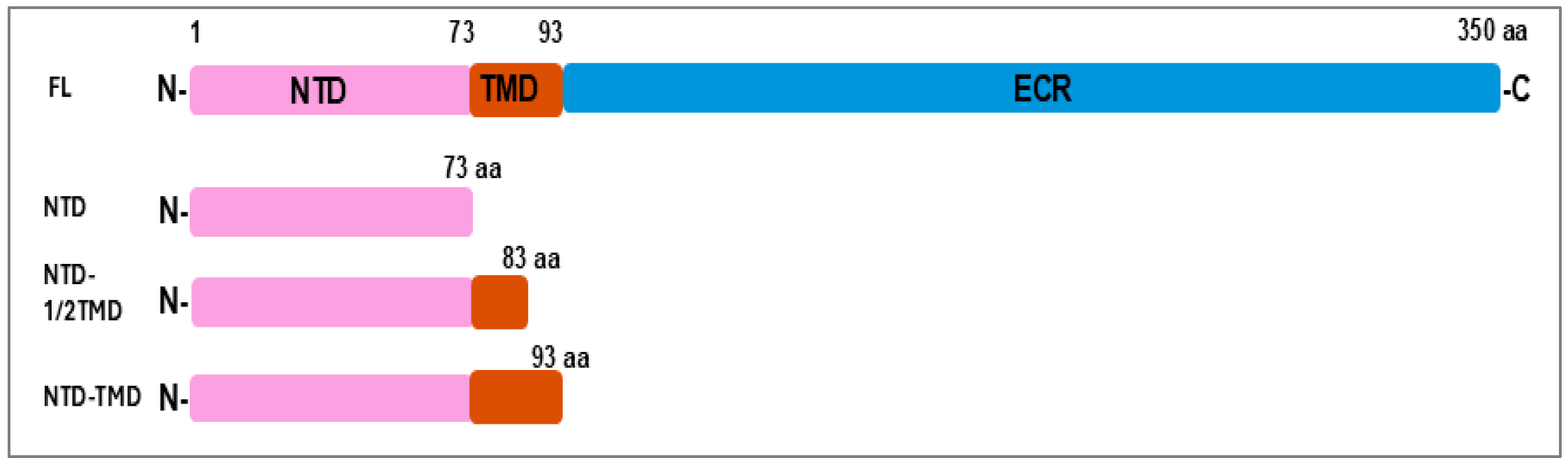
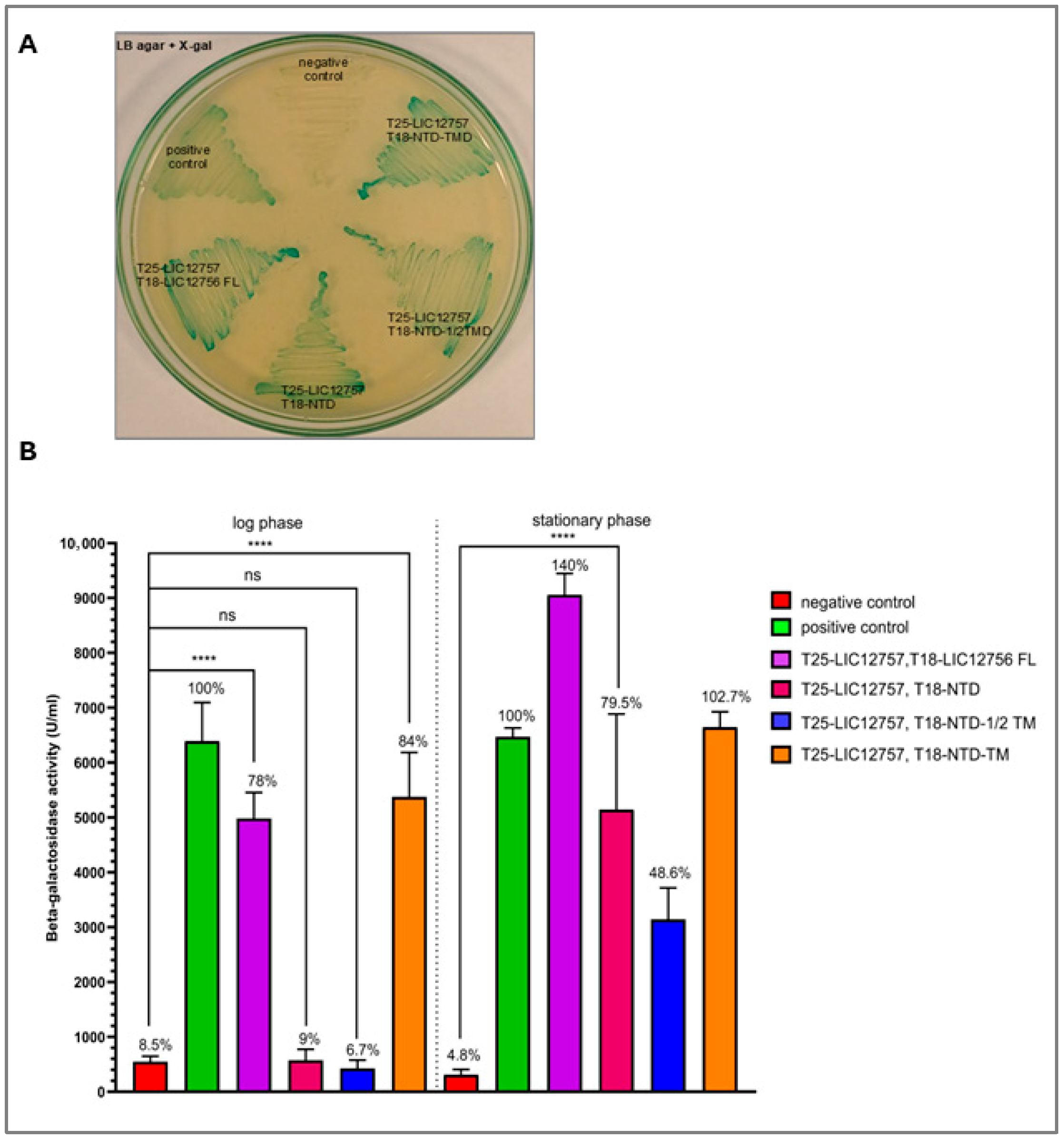
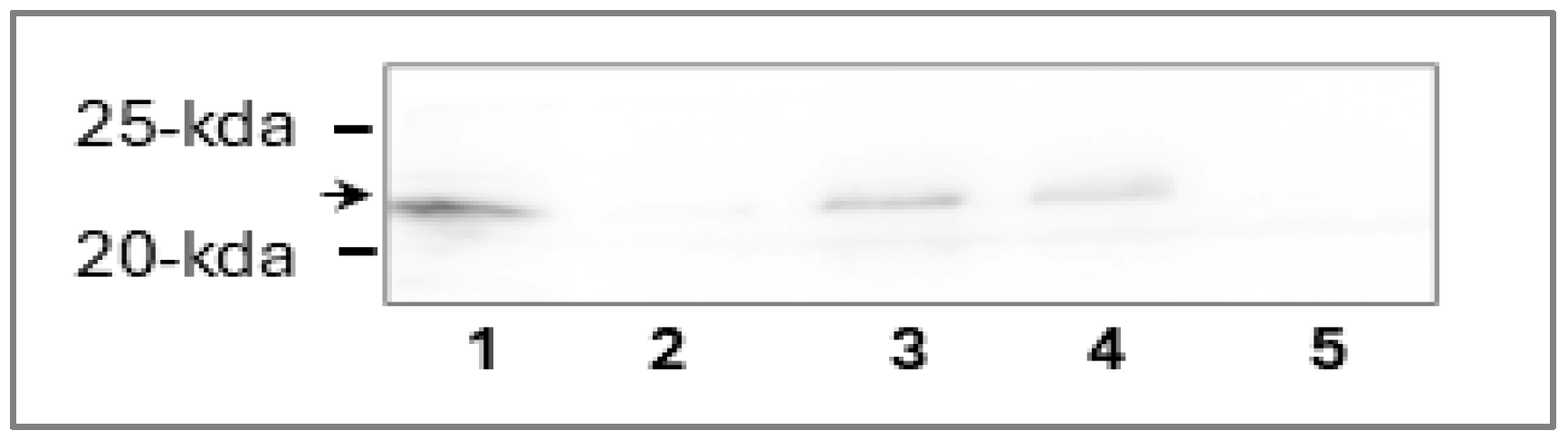
3.1. The Role of LIC12756 Domains in Interactions with the ECF σ Factor LIC12757
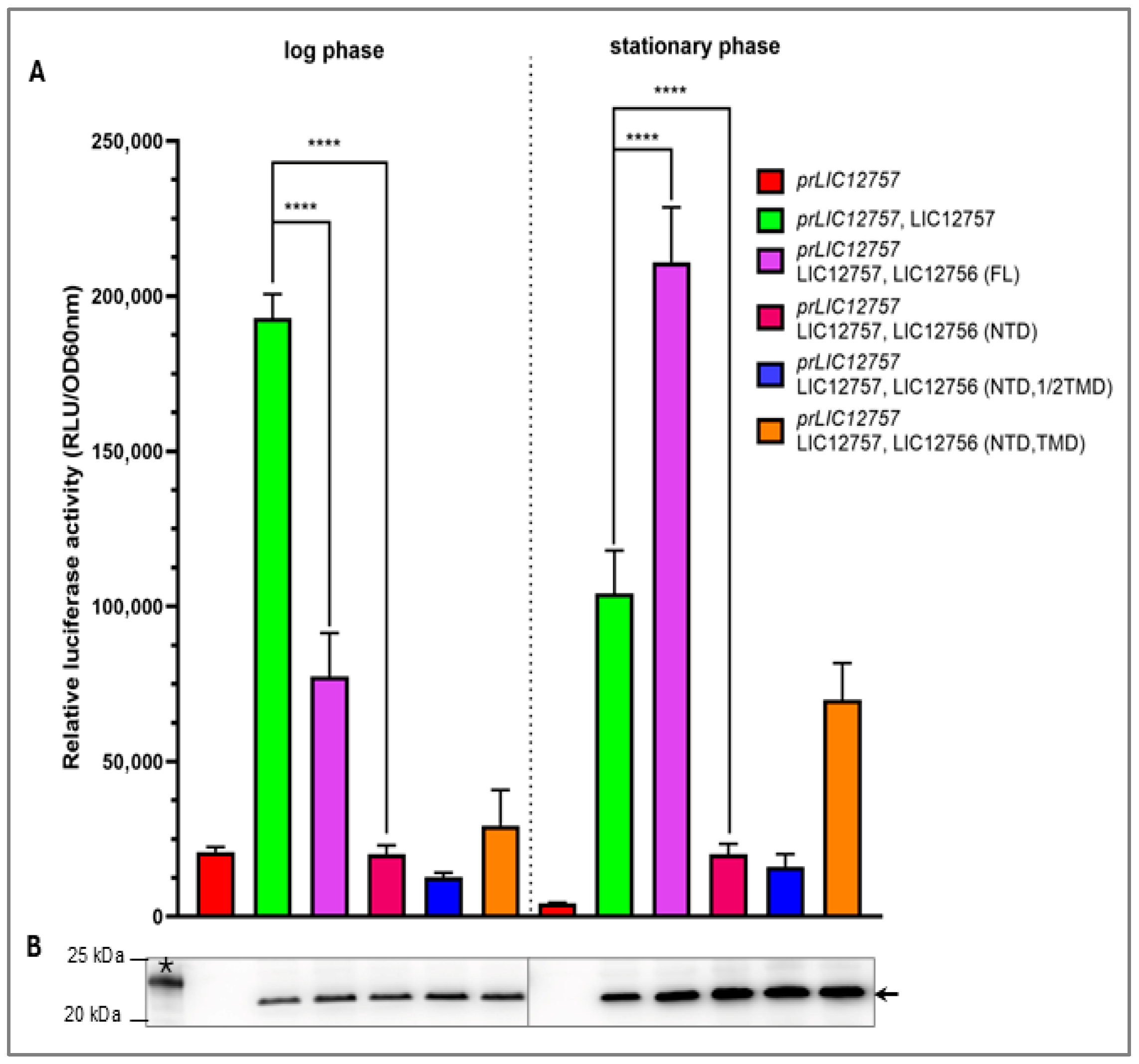
3.2. Effect of LIC_12756 Domains on LIC12757 Transcriptional Activity
4. Discussion
5. Conclusions
Supplementary Materials
Funding
Institutional Review Board Statement
Informed Consent Statement
Data Availability Statement
Acknowledgments
Conflicts of Interest
Abbreviations
| NTD | N-terminal domain |
| log | logarithmic/exponential phase of growth |
| TMD | Transmembrane domain |
| ECF | Extracytoplasmic function |
| ECFs | ECF σ factors |
| ECR | C-terminal non-cytoplasmic region/extracellular region |
References
- Helmann, J.D. The extracytoplasmic function (ECF) sigma factors. Adv. Microb. Physiol. 2002, 46, 47–110. [Google Scholar] [CrossRef]
- Feklístov, A.; Sharon, B.D.; Darst, S.A.; Gross, C.A. Bacterial sigma factors: A historical, structural, and genomic perspective. Annu. Rev. Microbiol. 2014, 68, 357–376. [Google Scholar] [CrossRef]
- Davis, M.C.; Kesthely, C.A.; Franklin, E.A.; MacLellan, S.R. The essential activities of the bacterial sigma factor. Can. J. Microbiol. 2017, 63, 89–99. [Google Scholar] [CrossRef]
- Gross, C.A.; Chan, C.; Dombrowski, A.; Gruber, T.; Sharp, M.; Tupy, J.; Young, B. The functional and regulatory roles of sigma factors in transcription. Cold Spring Harb. Symp. Quant. Biol. 1998, 63, 141–155. [Google Scholar] [CrossRef]
- Burgess, R.R.; Anthony, L. How sigma docks to RNA polymerase and what sigma does. Curr. Opin. Microbiol. 2001, 4, 12. [Google Scholar] [CrossRef]
- Paget, M.S. Bacterial sigma factors and anti-sigma factors: Structure, function and distribution. Biomolecules 2015, 5, 1245–1265. [Google Scholar] [CrossRef] [PubMed]
- Kazmierczak, M.J.; Wiedmann, M.; Boor, K.J. Alternative sigma factors and their roles in bacterial virulence. Microbiol. Mol. Biol. Rev. 2005, 69, 527–543. [Google Scholar] [CrossRef] [PubMed]
- Kędzierska-Mieszkowska, S. Sigma factors of RNA polymerase in the pathogenic spirochaete Leptospira interrogans, the causative agent of leptospirosis. FASEB J. 2023, 37, e23163. [Google Scholar] [CrossRef]
- Kędzierska-Mieszkowska, S.; Arent, Z. Alternative sigma factors of RNA polymerase as master regulators in the pathogenic spirochaete Leptospira interrogans. Pathogens 2025, 14, 1100. [Google Scholar] [CrossRef]
- Mascher, T. Past, present, and future of extracytoplasmic function σ factors: Distribution and regulatory diversity of the thirdpillar of bacterial signal transduction. Annu. Rev. Microbiol. 2023, 77, 625–644. [Google Scholar] [CrossRef] [PubMed]
- Todor, H.; Osadnik, H.; Campbell, E.A.; Myers, K.S.; Li, H.; Donohue, T.J.; Gross, C.A. Rewiring the specificity of extracytoplasmic function sigma factors. Proc. Natl. Acad. Sci. USA 2020, 117, 33496–33506. [Google Scholar] [CrossRef] [PubMed]
- Otero-Asman, J.R.; Quesada, J.M.; Jim, K.K.; Ocampo-Sosa, A.; Civantos, C.; Bitter, W.; Llamas, M.A. The extracytoplasmic function sigma factor σVrel is active during infection and contributes to phosphate starvation-induced virulence of Pseudomonas aeruginosa. Sci. Rep. 2020, 10, 3139. [Google Scholar] [CrossRef]
- Karls, R.; Guarner, J.; McMurray, D.N.; Birkness, K.A.; Quin, F.D. Examination of Mycobacterium tuberculosis sigma factor mutants using low-dose aerozol infection of guinea pigs suggest a role for SigC in pathogenesis. Microbiology 2006, 152, 1591–1600. [Google Scholar] [CrossRef]
- Manganelli, R.; Fattorini, L.; Tan, D.; Iona, E.; Orefici, G.; Altavilla, G.; Cusatelli, P.; Smith, I. The extracytoplasmic function sigma factor σE is essentials for Mycobacterium tuberculosis virulence in mice. Infect. Immun. 2004, 72, 3038–3041. [Google Scholar] [CrossRef]
- McMeechan, A.; Roberts, M.; Cogan, T.A.; Jorgensen, F.; Stevenson, A.; Lewis, C.; Rowley, G.; Humphrey, T.J. Role of the alternative sigma factors σE and σS in survival of Salmonella enterica serovar Typhimurium during starvation, refrigeration andosmotic shock. Microbiology 2007, 15, 263–269. [Google Scholar] [CrossRef]
- Brooks, B.E.; Buchanan, S.K. Signaling mechanisms for activation of extracytoplasmic function (ECF) sigma factors. Biochim. Biophys. Acta 2008, 1778, 1930–1945. [Google Scholar] [CrossRef]
- Braun, V.; Mahren, S.; Ogierman, M. Regulation of the FecI-type ECF sigma factor by transmembrane signalling. Curr. Opin. Microbiol. 2003, 6, 173–180. [Google Scholar] [CrossRef] [PubMed]
- Enz, S.; Mahren, S.; Stroeher, U.H.; Braun, V. Surface signaling in ferric citrate transport gene induction: Interaction of the FecA, FecR, and FecI regulatory proteins. J. Bacteriol. 2000, 182, 637–646. [Google Scholar] [CrossRef] [PubMed]
- Moraleda-Muñoz, A.; Marcos-Torres, F.J.; Pérez, J.; Muñoz-Dorado, J. Metal-responsive RNA polymerase extracytoplasmic function (ECF) sigma factors. Mol. Microbiol. 2019, 112, 385–398. [Google Scholar] [CrossRef]
- Yokoyama, T.; Niinae, T.; Tsumagari, K.; Imami, K.; Ishihama, Y.; Hizukuri, Y.; Akiyama, Y. The Escherichia coli S2P intramembrane protease RseP regulates ferric citrate uptake by cleaving the sigma factor regulator FecR. J. Biol. Chem. 2021, 296, 100673. [Google Scholar] [CrossRef] [PubMed]
- Yokoyama, T.; Miyazaki, R.; Suzuki, T.; Dohmae, N.; Nagai, H.; Tsukazaki, T.; Kubori, T.; Akiyama, Y. Cleavage cascade of the sigma regulator FecR orchestrates TonB-dependent signal transduction. Proc. Natl. Acad. Sci. USA 2025, 122, e2500366122. [Google Scholar] [CrossRef]
- Haake, D.A.; Levett, P.N. Leptospirosis in humans. Curr. Top. Microbiol. Immunol. 2015, 387, 65–97. [Google Scholar] [CrossRef]
- Casanovas-Massana, A.; Pedra, G.G.; Wunder, E.A., Jr.; Diggle, P.J.; Begon, M.; Ko, A.I. Quantification of Leptospira interrogans survival in soil and water microcosms. Appl. Environ. Microbiol. 2018, 84, e00507-18. [Google Scholar] [CrossRef]
- Bierque, E.; Thibeaux, R.; Girault, D.; Soupé-Gilbert, M.; Goarant, C. A systematic review of Leptospira in water and soil environments. PLoS ONE 2020, 15, e0227055. [Google Scholar] [CrossRef]
- Pal, M.; Bulcha, M.R.; Bune, W.M. Leptospirosis and one health perspective. Am. J. Public Health Res. 2021, 9, 180–183. [Google Scholar] [CrossRef]
- Costa, F.; Hagan, J.E.; Calcagno, J.; Kane, M.; Torgerson, P.; Martinez-Silveira, M.S.; Stein, C.; Abela-Ridder, B.; Ko, A.I. Global morbidity and mortality of leptospirosis: A systematic review. PLoS Negl. Trop. Dis. 2015, 9, e0003898. [Google Scholar] [CrossRef]
- Levett, P.N. Leptospirosis. Clin. Microbiol. Rev. 2001, 14, 296–326. [Google Scholar] [CrossRef] [PubMed]
- Adler, B.; De la Peña Moctezuma, A. Leptospira and leptospirosis. Vet. Microbiol. 2010, 140, 287–296. [Google Scholar] [CrossRef] [PubMed]
- Ryan, E.G.; Nola, L.; O’Grady, L.; More, S.J.; Doherty, L.M. Seroprevalence of Leptospira Hardjo in the irish suckler cattle population. Ir. Vet. J. 2012, 65, 8. [Google Scholar] [CrossRef]
- Arent, Z.J.; Kędzierska-Mieszkowska, S. Seroprevalence study of leptospirosis in horses in northern Poland. Vet. Rec. 2013, 172, 269. [Google Scholar] [CrossRef]
- Orjuela, A.G.; Parra-Arango, J.L.; Sarmiento-Rubiano, L.A. Bovine leptospirosis: Effects on reproduction and an approach to research in Colombia. Trop. Anim. Health Prod. 2022, 54, 251. [Google Scholar] [CrossRef]
- Fouts, D.E.; Matthias, M.A.; Adhikarla, H.; Adler, B.; Amorim-Santos, L.; Berg, D.E.; Bulach, D.; Buschiazzo, A.; Chang, Y.F.; Galloway, R.L.; et al. What makes a bacterial species pathogenic?: Comparative genomic analysis of the genus Leptospira. PLoS Negl. Trop. Dis. 2016, 10, e0004403. [Google Scholar] [CrossRef] [PubMed]
- Zhukova, A.; Fernandes, L.G.; Hugon, P.; Pappas, C.J.; Sismeiro, O.; Coppee, J.-Y.; Becavin, C.; Malabat, C.; Eshghi, A.; Zhang, J.J.; et al. Genome-wide transcriptional start site mapping and sRNA identification in the pathogen Leptospira interrogans. Front. Cell. Infect. Microbiol. 2017, 7, 10. [Google Scholar] [CrossRef]
- Kędzierska-Mieszkowska, S.; Kędzierska, B.; Potrykus, K. LIC_12757 from the pathogenic spirochaetes Leptospira interrogans encodes an autoregulated ECF σE-type factor. Vet. Microbiol. 2024, 293, 110092. [Google Scholar] [CrossRef] [PubMed]
- Kędzierska-Mieszkowska, S.; Kędzierska, B.; Pardyak, L.; Arent, Z. Evidence for a putative regulatory system consisting of an ECF σE-type factor, LIC_12757, and a FecR-like σ factor regulator, LIC_12756, in the pathogenic spirochaetes Leptospira interrogans. Int. J. Mol. Sci. 2025, 26, 4994. [Google Scholar] [CrossRef]
- Krajewska, J.; Arent, Z.; Zolkiewski, M.; Kędzierska-Mieszkowska, S. Immunoreactivity of the AAA+ chaperone ClpB from Leptospira interrogans with sera from Leptospira-infected animals. BMC Microbiol. 2016, 16, 151. [Google Scholar] [CrossRef]
- Nascimento, A.L.; Verjovski-Almeida, S.; Van Sluys, M.A.; Monteiro-Vitorello, C.B.; Camargo, L.E.; Digiampietri, L.A.; Harstkeerl, R.A.; Ho, P.L.; Marques, M.V.; Oliveira, M.C.; et al. Genome features of Leptospira interrogans serovar Copenhageni. Braz. J. Med. Biol. Res. 2004, 37, 459–477. [Google Scholar] [CrossRef]
- Kędzierska-Mieszkowska, S.; Potrykus, K.; Arent, Z.; Krajewska, J. Identification of σE-dependent promoter upstream of clpB from the pathogenic spirochaete Leptospira interrogans by applying an E. coli two-plasmid system. Int. J. Mol. Sci. 2019, 20, 6325. [Google Scholar] [CrossRef]
- Rezuchova, B.; Kormanec, J. A two-plasmid system for identification of promoters recognized by RNA polymerase containing extracytoplasmic stress response σE in Escherichia coli. J. Microbiol. Methods 2001, 45, 103–111. [Google Scholar] [CrossRef]
- Sambrook, J.; Fritsch, E.F.; Maniatis, T. Molecular Cloning: A Laboratory Manual; Cold Spring Harbor Laboratory Press: Cold Spring Harbor, NY, USA, 1989. [Google Scholar]
- Karimova, G.; Pidoux, J.; Ullmann, A.; Ladant, D. A bacterial two-hybrid system based on a reconstituted signal transduction pathway. Proc. Natl. Acad. Sci. USA 1998, 95, 5752–5756. [Google Scholar] [CrossRef] [PubMed]
- Olson, M.G.; Goldammer, M.; Gauliard, E.; Ladant, D.; Ouellette, S.P. A bacterial adenylate cyclase-based two-hybrid system compatible with gateway cloning. Methods Mol. Biol. 2018, 1794, 5–96. [Google Scholar] [CrossRef]
- Miller, J.H. Experiments in Molecular Genetics; Cold Spring Harbor Laboratory Press: Cold Spring Harbor, NY, USA, 1972. [Google Scholar]
- Braun, V.; Hartmann, M.D.; Hantke, K. Transcription regulation of iron carrier transport genes by ECF sigma factors through signaling from the cell surface into the cytoplasm. FEMS Microbiol. Rev. 2022, 46, fuac010. [Google Scholar] [CrossRef]
- Louvel, H.; Bommezzadri, S.; Zidane, N.; Boursaux-Eude, C.; Creno, S.; Magnier, A.; Rouy, Z.; Médigue, C.; Saint Girons, I.; Bouchier, C.; et al. Comparative and functional genomic analyses of iron transport and regulation in Leptospira spp. J. Bacteriol. 2006, 188, 7893–7904. [Google Scholar] [CrossRef] [PubMed]
- Paysan-Lafosse, T.; Blum, M.; Chuguransky, S.; Grego, T.; Pinto, B.L.; Salazar, G.A.; Bileschi, M.L.; Bork, P.; Bridge, A.; Colwell, L.; et al. InterPro in 2022. Nucleic Acids Res. 2023, 51, D418–D427. [Google Scholar] [CrossRef] [PubMed]


| Oligonucleotide | Sequence (5′ to 3′) | Purpose |
|---|---|---|
| pF12756PstI | CTGCAGGATGGAACCTAATTCAGATTC | cloning of LIC12756 fragments into pJET1.2/blunt → pUT18C |
| Prev219_12756KpnI | GGTACCCGTGAATTTCTAATATAGAAAG | cloning of a 219 bp fragment of LIC12756 into pJET1.2/blunt → pUT18C |
| Prev249_12756KpnI | GGTACCCGAAGCAAAAGAACACAAGCAG | cloning of a 249 bp fragment of LIC12756 into pJET1.2/blunt → pUT18C |
| Prev279_12756KpnI | GGTACCCGAAAAAATCTGAAATAAAAA | cloning of a 279 bp fragment of LIC12756 into pJET1.2/blunt → pUT18C |
| pFLIC12756NdeI | CATATGGAACCTAATTCAGATTCAAATCG | cloning of a 219 bp fragmet of LIC12756 into pJET1.2/blunt →pET28 |
| prev219_LIC12756HindIII | AAGCTTATGAATTTCTAATATAGAAAG | cloning of a 219 bp fragmet of LIC12756 into pJET1.2/blunt →pET28 and together with LIC12757 into pAC7 |
| pF12757NdeI | CATATGGCCAAAATTCCGAAAG | cloning of LIC12757 with LIC12756 219 bp fragment into pAC7 |
Disclaimer/Publisher’s Note: The statements, opinions and data contained in all publications are solely those of the individual author(s) and contributor(s) and not of MDPI and/or the editor(s). MDPI and/or the editor(s) disclaim responsibility for any injury to people or property resulting from any ideas, methods, instructions or products referred to in the content. |
© 2026 by the author. Licensee MDPI, Basel, Switzerland. This article is an open access article distributed under the terms and conditions of the Creative Commons Attribution (CC BY) license.
Share and Cite
Kędzierska-Mieszkowska, S. The N-Terminal Domain of LIC12756 Is the Key Determinant of This Protein’s Anti-Sigma Activity Toward LIC12757 in Pathogenic Leptospira interrogans. Pathogens 2026, 15, 379. https://doi.org/10.3390/pathogens15040379
Kędzierska-Mieszkowska S. The N-Terminal Domain of LIC12756 Is the Key Determinant of This Protein’s Anti-Sigma Activity Toward LIC12757 in Pathogenic Leptospira interrogans. Pathogens. 2026; 15(4):379. https://doi.org/10.3390/pathogens15040379
Chicago/Turabian StyleKędzierska-Mieszkowska, Sabina. 2026. "The N-Terminal Domain of LIC12756 Is the Key Determinant of This Protein’s Anti-Sigma Activity Toward LIC12757 in Pathogenic Leptospira interrogans" Pathogens 15, no. 4: 379. https://doi.org/10.3390/pathogens15040379
APA StyleKędzierska-Mieszkowska, S. (2026). The N-Terminal Domain of LIC12756 Is the Key Determinant of This Protein’s Anti-Sigma Activity Toward LIC12757 in Pathogenic Leptospira interrogans. Pathogens, 15(4), 379. https://doi.org/10.3390/pathogens15040379