Article

Seasonal Turnover in Bat Skin Mycobiota: Contrasting Fungal Communities Between Hibernation and Reproduction in Greater Mouse-Eared Bats (Myotis myotis)


by
Rafał Ogórek
1,*,
Jakub Suchodolski
1,*,
Justyna Borzęcka
1 and
Tomasz Kokurewicz
2
1
Department of Mycology and Genetics, Faculty of Biological Sciences, University of Wrocław, Przybyszewskiego Street 63-77, 51-148 Wrocław, Poland
2
Department of Vertebrate Ecology and Paleontology, Institute of Biology, Wrocław University of Environmental and Life Sciences, Kożuchowska 5b, 51-631 Wrocław, Poland
*
Authors to whom correspondence should be addressed.
Pathogens 2026, 15(1), 83; https://doi.org/10.3390/pathogens15010083

Submission received: 8 December 2025 / Revised: 29 December 2025 / Accepted: 7 January 2026 / Published: 12 January 2026
(This article belongs to the Special Issue Emerging and Rare Fungal Pathogens in a Changing World)

Abstract

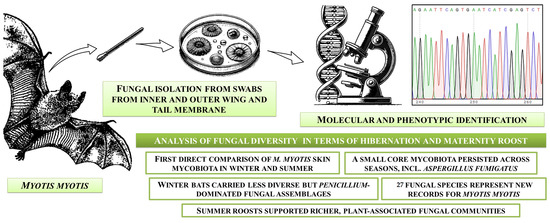
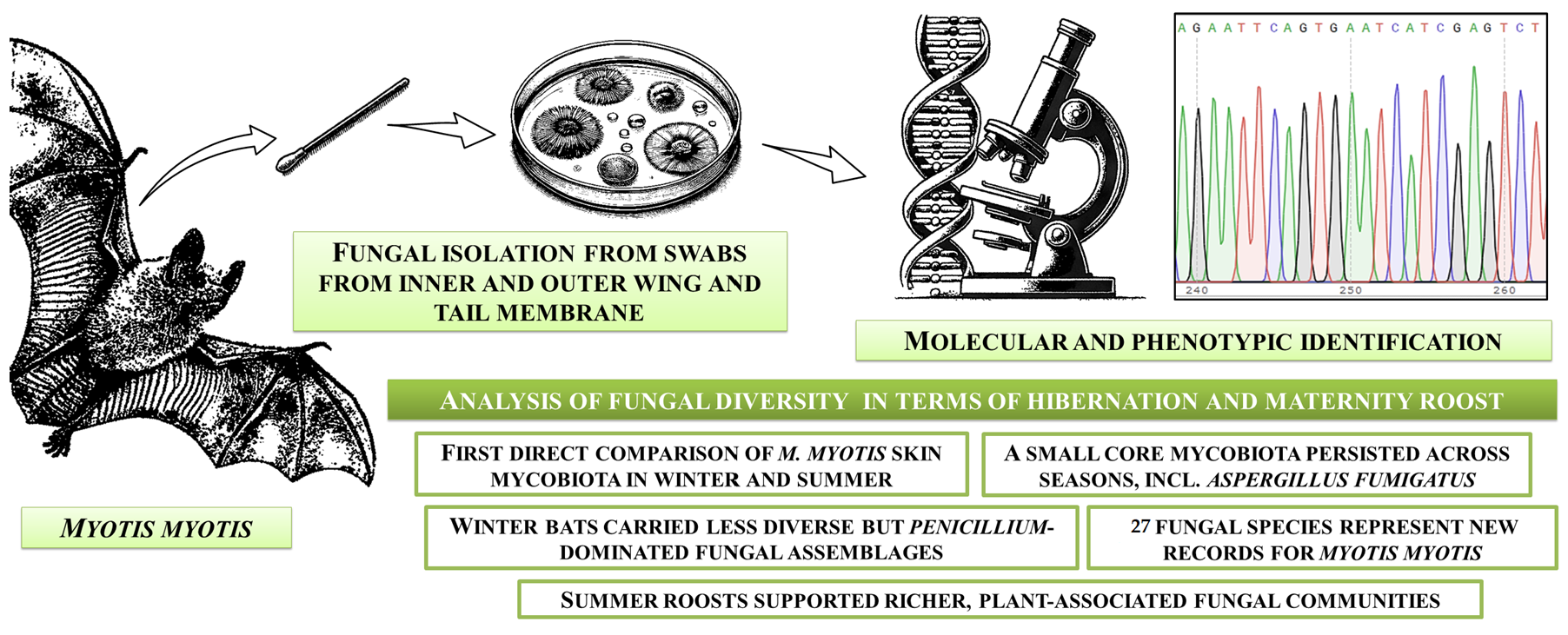
The skin of bats hosts diverse microbial communities, yet most research has focused on bacteria or single fungal pathogens such as Pseudogymnoascus destructans. Here, we present the first direct comparison of culturable skin mycobiota in the greater mouse-eared bat (Myotis myotis) between hibernation and the reproductive season. Swabs collected from hibernating bats in the Nietoperek reserve and from maternity colonies in Lipy yielded 41 fungal species, including 27 that represent new records for M. myotis. Winter assemblages were less diverse but strongly dominated by Penicillium (>90% of isolates), while summer maternity roosts supported broader communities shaped by environmental exposure and plant-associated fungi. Despite seasonal turnover, a small set of taxa, including Aspergillus fumigatus, Mucor fragilis, and Pseudogymnoascus pannorum, persisted across both seasons, indicating the presence of a limited core mycobiota. Richness was higher on wing membranes than on tail membranes, whereas biometric variables such as sex, age, body mass, and forearm length showed only weak and inconsistent associations with fungal diversity. These findings demonstrate that seasonal filtering is likely one of the main factors determining the skin mycobiota in M. myotis. Additionally, we expand the known fungal diversity of this species, and emphasize its role as a reservoir of environmental, opportunistic, and pathogenic fungi.

Graphical Abstract

1. Introduction

Bats (Chiroptera) represent one of the most diverse groups of mammals and play an essential role in tropical ecosystems as pollinators and seed dispersers, while in temperate zones, insectivorous bats feeding on vast numbers agricultural and forestry pests are successfully suppressing their number [1,2]. Their annual cycle exposes them to different microclimatic conditions: during hibernation, they inhabit underground sites with relatively stable, low temperatures and high humidity, whereas in summer, they often form maternity colonies in attics or tree hollows, where conditions are warmer, less humid, and more variable [3,4]. These contrasting environments may strongly influence the composition and dynamics of the microbial communities associated with bats, especially fungi [5].
Fungal communities on the skin and wing membranes of bats are of particular importance. On one hand, they may include saprophytic or commensal species that form part of the natural microbiota; on the other, they can harbour opportunistic pathogens of medical and veterinary importance [6,7]. Moreover, certain cold-adapted fungi such as Pseudogymnoascus destructans are recognized as causative agents of white-nose syndrome (WNS), a devastating disease that has severely reduced bat populations in North America [8]. In Europe, where Myotis myotis remains relatively abundant, studies have shown that fungal diversity on these bats differs depending on season and microhabitat [7,9,10], but simultaneous comparisons between hibernation and maternity periods remain scarce. Our recent autumn data on M. myotis [7] showed that the skin mycobiota of this species differs between body regions and is influenced by host traits. We demonstrated higher fungal diversity on wing membranes than on tail membranes and reported age- and sex-related differences in fungal richness. We indicated that both microhabitat and host condition may affect the skin mycobiota during the autumn activity period. However, it is still unknown whether these patterns persist across the two strongest seasonal contrasts in the bats’ annual cycle, namely hibernation and the maternity period [7].
Temperature is one of the key factors structuring fungal communities. Stable, cold cave environments promote the growth of psychrophilic and psychrotolerant taxa, while fluctuating and often warmer conditions in summer roosts may favour mesophilic or thermotolerant species [11,12,13,14]. Such environmental contrasts are expected to shape both the diversity and the functional potential of bat-associated fungi, yet few studies have examined them simultaneously.
In light of these considerations, the present study aims to compare the cultivable fungal diversity associated with M. myotis wing and tail membranes during two critical stages of their annual cycle: the end of hibernation in a cold, stable underground environment and the reproductive period in a maternity colony exposed to fluctuating temperatures and lower humidity. By isolating fungi under three incubation conditions (5 °C, 24 °C, and 37 °C), we aimed to capture a broad spectrum of taxa with different thermal preferences. Furthermore, by integrating biometric parameters of the bats, we explored potential host-related factors influencing fungal colonization. Such an approach allowed the understanding of how seasonal, environmental, and biometric variation shapes bat-associated mycobiota.

2. Materials and Methods

2.1. Study Area

The study was conducted in the underground tunnels of the Nietoperek bat reserve (52°25′ N, 15°32′ E) during hibernation on 8 April 2021 (Section 7.2, from location nos. 4 to 6 in Borzęcka et al. [10]) and from a maternity colony in the attic of the forester’s lodge in Lipy on 31 August 2021 (52°52′ N, 15°17′ E). Both research locations are located in Western Poland in a ca. 60 km straight-line distance from each other. The first one is the largest bat hibernation site in Poland and one of the ten-largest in the European Union protected in November 2007 as the Natura 2000 site “Nietoperek” (area code: PLH080003). Out of 12 bat species found hibernating there, four, including M. myotis, are mentioned in Annex II of the European Union Habitat Directive (92/43/EEC) [15].
We do not have direct proof that the maternity colony in the attic of the forester’s lodge in Lipy is formed by the same individuals that hibernate in the Nietoperek bat reserve. However, taking into account our own data based on migrations of ringed individuals [16,17], proving the migration between summer and winter colonies exceeding 226.7 km, and taking the knowledge about the migration behaviour of M. myotis [18] and also the short distance between our study sites, we may assume with high certainty that the investigated individuals belong to the same population using Nietoperek underground tunnels as central winter roosts for individuals from nearby breeding colonies.
The study was performed according to the ARRIVE guidelines 2.0 [19]. Samplings in the Nietoperek bat reserve were made under licence no. WPN-I.6205.24.2021.MG issued by the Regional Directorate for Environmental Protection in Gorzów Wielkopolski (approval date: 29 March 2021), while that in the maternity colony in Lipy were made under licence no. DZP-WG.6401.179.2021.EB issued by the General Directorate for Environmental Protection in Warsaw (approval date: 3 August 2021).

2.2. Microclimatic Parameter Measurement

The air temperature (Ta) and relative humidity (RH) at both sites were measured by loggers (i-button DS 1923, Texas Instruments, Dallas, TX, USA) recording microclimatic parameters at 10 min intervals with an accuracy to 0.1 °C and 0.6% on the day of sampling the fungi from captured bats.

2.3. Sampling Methods

Bats were collected manually in winter and summer colonies—30 bats from each location. To avoid contamination, immediately after capture, four body swabs were collected from each individual for further mycological analyses according to Borzęcka et al. [7]. Next, species [20], sex, age, reproductive status, forearm length (±0.05 mm accuracy), and body weight (Pesola balance, ±0.1 g accuracy) were recorded for each individual. Age was assessed non-invasively based on ossification of finger epiphyseal joints: fully ossified in adults and partially ossified with a visible gap in juveniles and subadults [21]. By late summer and autumn, juveniles develop stronger ossification and are classified as subadults; thus, two age categories were distinguished: adults and subadults.
Wing membrane swabs were collected using sterile, saline-moistened swabs (0.85% NaCl) in transport tubes (plastic applicator with 15 cm viscose swab) following Ogórek et al. [9]. Each bat was sampled with four swabs: two per wing (ventral and dorsal surfaces, covering the plagiopatagium, dactylopatagium, and propatagium) and two from the tail membrane (ventral and dorsal surfaces). The procedure lasted up to 15 min, after which bats were released at the capture site [9].
To minimize cross-contamination, the following precautions were applied: wearing surgical gowns and changing gloves between animals [7]. Samples were transported under cooling conditions (10 ± 2 °C), stored at 5 ± 0.5 °C, and processed within seven days [9]. Each swab was labelled with bat ID, membrane type, collection date, sex, and location. In total, 240 swabs were obtained from 60 bats.

2.4. Isolation of Fungi from Samples

Fungal isolation was performed using standard culture methods. Swabs were immersed in sterile 50 mL polypropylene tubes (FL Medical, Via Enrico Fermi, Italy) containing 3 mL of sterile distilled water and vortexed at room temperature (3 min, 500 rpm). Aliquots of 100 µL and 1000 µL were spread, in triplicate, onto potato dextrose agar (PDA; BioMaxima, Lublin, Poland). Plates were incubated in the dark at 5 ± 0.5 °C, 24 ± 0.5 °C, and 37 ± 0.5 °C for 5–90 days. The incubation temperatures represented (i) 5 °C, approximating hibernation site conditions and favouring psychrophilic conditions, monitored in the manner of Vanderwolf et al. [22]; (ii) 24 °C, optimal for most fungal species; and (iii) 37 °C, reflecting mammalian body temperature.
Pure cultures were obtained using the single hyphal tip method [23] and maintained on PDA slants at 5 or 24 ± 0.5 °C for molecular analyses and further characterization.

2.5. Identification of Fungi

Fungal identification combined phenotypic and molecular approaches. Macroscopic traits were evaluated on PDA, and for selected genera (Aspergillus or Penicillium), additional media were used: Czapek yeast autolysate agar (CYA), Czapek-Dox agar (1.2% agar; BioMaxima, Lublin, Poland), and malt extract agar (MEA; BioMaxima, Lublin, Poland) [9]. Colony growth rate, texture, pigmentation, sporulation, cleistothecia formation, production of soluble pigments and exudates, and colony reverse coloration were recorded. Microscopic traits included hyphal structures and spore morphology, observed in preparations from PDA and MEA cultures [23]. Identification was supported by diagnostic keys and standard mycological monographs [8,24,25,26,27,28,29,30,31,32].
Molecular confirmation involved sequencing of the rDNA internal transcribed spacer (ITS) region. For isolates not conclusively identified, partial β-tubulin gene sequencing was performed. Genomic DNA was extracted from 20-day-old PDA cultures using the Bead-Beat Micro AX Gravity kit (A&A Biotechnology, Gdańsk, Poland), following the manufacturer’s instructions. DNA quality was verified by electrophoresis on 1.2% agarose gels and by spectrophotometry (NanoPhotometer® NP80, Implen, Munich, Germany).
The ITS region was amplified with primers ITS1 (5′-TCCGTAGGTGAACCTGCGG-3′) and ITS4 (5′-TCCTCCGCTTATTGATATGC-3′) [33], and in cases of inconclusive results, Bt2a_F (5′-GGTAACCAAATCGGTGCTGCTTTC-3′) and Bt2a_R (5′-ACCCTCAGTGTAGTGACCCTTGGC-3′) were applied [34]. PCRs were performed in a T100 Thermal Cycler (Bio-Rad, Berkeley, CA, USA) according to Ogórek et al. [11]. Amplification of DNA was performed in a 50 μL reaction mixture using the 2 × PCR mixture containing Taq polymerase (0.1 U µL−1), dNTP mix (2 mM), MgCl2 (4 mM) (Blirt), 0.25 μM of each primer, and 45 ng of genomic DNA. Products were verified by agarose gel electrophoresis, purified with the Clean-Up kit (A&A Biotechnology, Gdańsk, Poland), and sequenced by Macrogen Europe (Amsterdam, The Netherlands) using Sanger sequencing.

2.6. Data Analyses

Sequences were analyzed using the BioEdit Sequence Alignment Editor. Fungal ITS sequences were compared with GenBank records using the BLAST algorithm (BLAST+ 2.17.0, http://www.ncbi.nlm.nih.gov/, accessed on 2 September 2025), and the obtained sequences were deposited in GenBank. Interpretation followed the criteria of Zhang et al. [35].
Associations between fungal species richness and host traits (age, sex, forearm length, body mass) were assessed using Spearman’s rank correlation coefficient (rS) at α = 0.05. For analyses, age and sex were treated as binary variables (age: 0 = subadult, 1 = adult; sex: 0 = female, 1 = male) according to Borzęcka et al. [7].

3. Results

In total, 60 individuals of M. myotis were examined, i.e., 30 individuals from each study period. Of these, males dominated during hibernation (17 out of 30) and females dominated in maternity roosts (25 out of 30). Most of the individuals examined in the Nietoperek bat reserve were adults (18 out of 30), while in the attic of the forester’s lodge in Lipy, most of the individuals were subadults (28 out of 30) (Table A1).

3.1. Biometric Features of Bats and Microclimatic Conditions in Habitats

The body weight of M. myotis ranged from 22.0 g to 28.0 g (mean: 24.9 g ± 1.5), and their forearm lengths ranged from 58.7 mm to 64.1 mm (mean: 61.0 mm ± 1.4) during hibernation. In turn, the body weight of M. myotis ranged from 20.0 g to 29.0 g (mean: 24.6 g ± 2.0), and their forearm lengths ranged from 56.8 mm to 64.8 mm (mean: 61.7 mm ± 1.8) in maternity roosts (Table A1).
The microclimatic conditions at the sampling site in the Nietoperek underground tunnels ranged from 8.9 to 9.7 °C and 81 to 84%, while in the attic in Lipy, it ranged from 20 to 25 °C and 20 to 40%.

3.2. Fungal Isolation and Identification

Classical mycological analysis of the fungal isolates allowed for their classification into 22 groups (isolates UWR_744-UWR_765) from the Nietoperek bat reserve and 29 groups (isolates UWR_766-UWR_794) from the forester’s lodge in Lipy. These fungal groups were differentiated in macroscopic and/or microscopic colony morphology. Molecular analyses confirmed the species identity of the fungi from each group, allowing for verification of the initial phenotypic classification. However, in several cases, in addition to standard rDNA ITS region sequencing, β-tubulin gene sequencing was necessary to ensure effective species identification in the case of 10 isolates (Table 1).
Consequently, 22 and 29 culturable species of fungi were identified from bats during hibernation and from maternity roosts, respectively. These fungi represented two morphological forms: filamentous fungi (most species) and yeast-like fungi (Aureobasidium pullulans). Based on BLAST analysis, all fungal sequences had an E-value of zero and 100% query cover, except for isolate UWR_778. The sequence lengths ranged from 357 to 529 bp, and an identity range of 98.20–100% (Table 1).

3.3. Fungal Diversity Across Body Regions and the Effect of Age and Sex

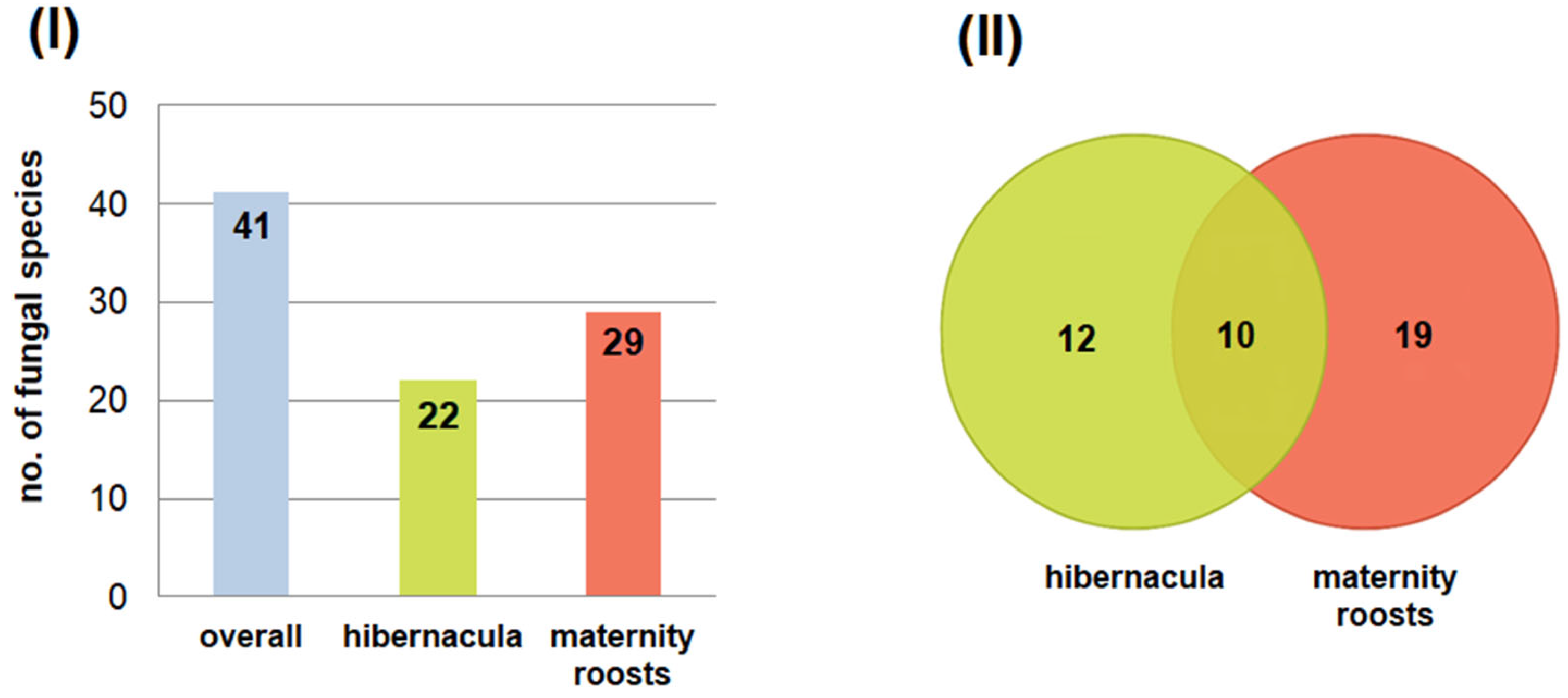
A total of 41 fungal species were detected across all sampled M. myotis, where 22 species were found on the skin of these small mammals in the underground tunnels of the Nietoperek bat reserve during hibernation and 29 were found in maternity roosts in the attic of the forester’s lodge in Lipy. Some fungal species were strictly associated with a specific habitat (12 species occurred only on bats during hibernation and 19 occurred in maternity roosts) and 10 species occurred in both studied locations (Figure 1).
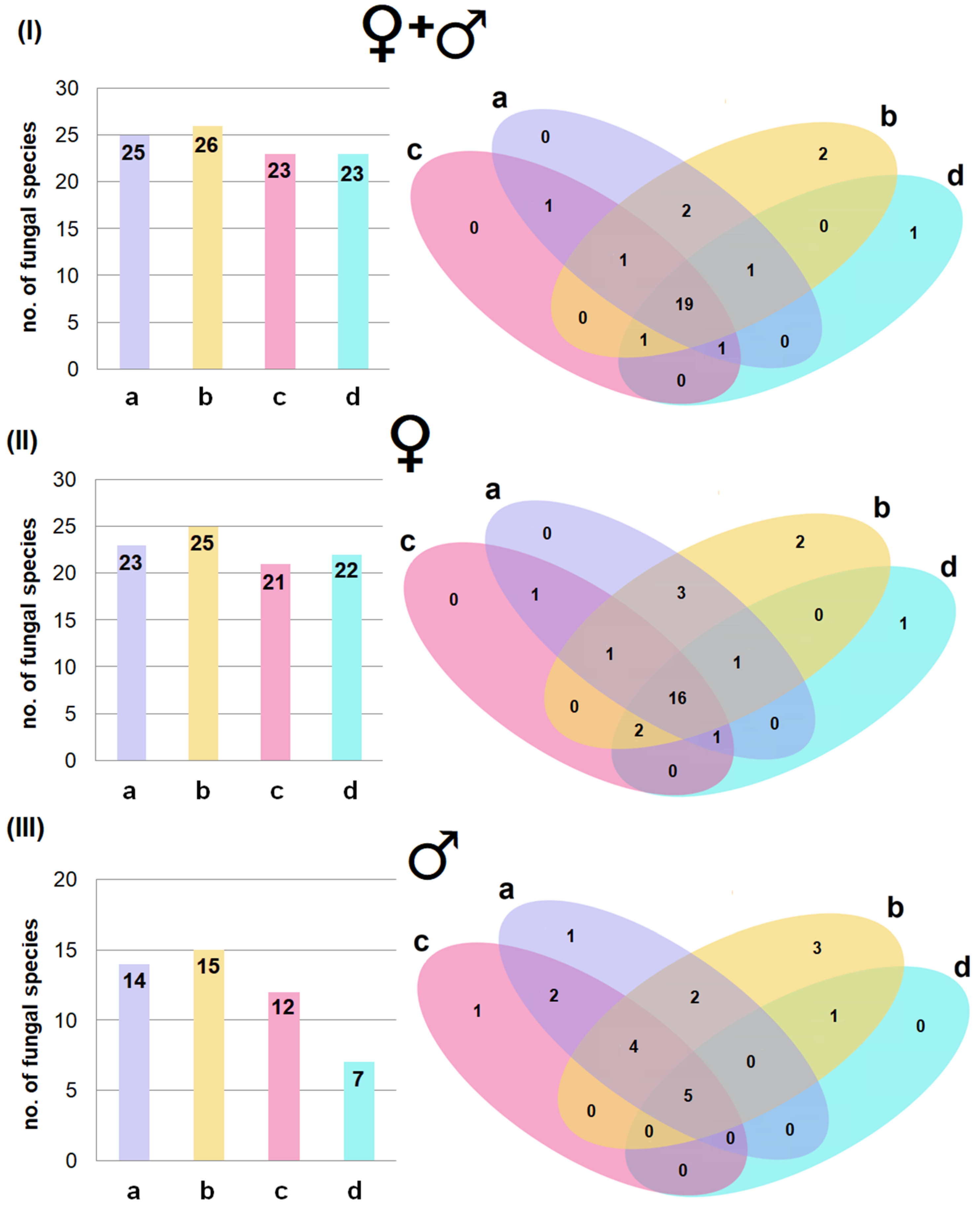
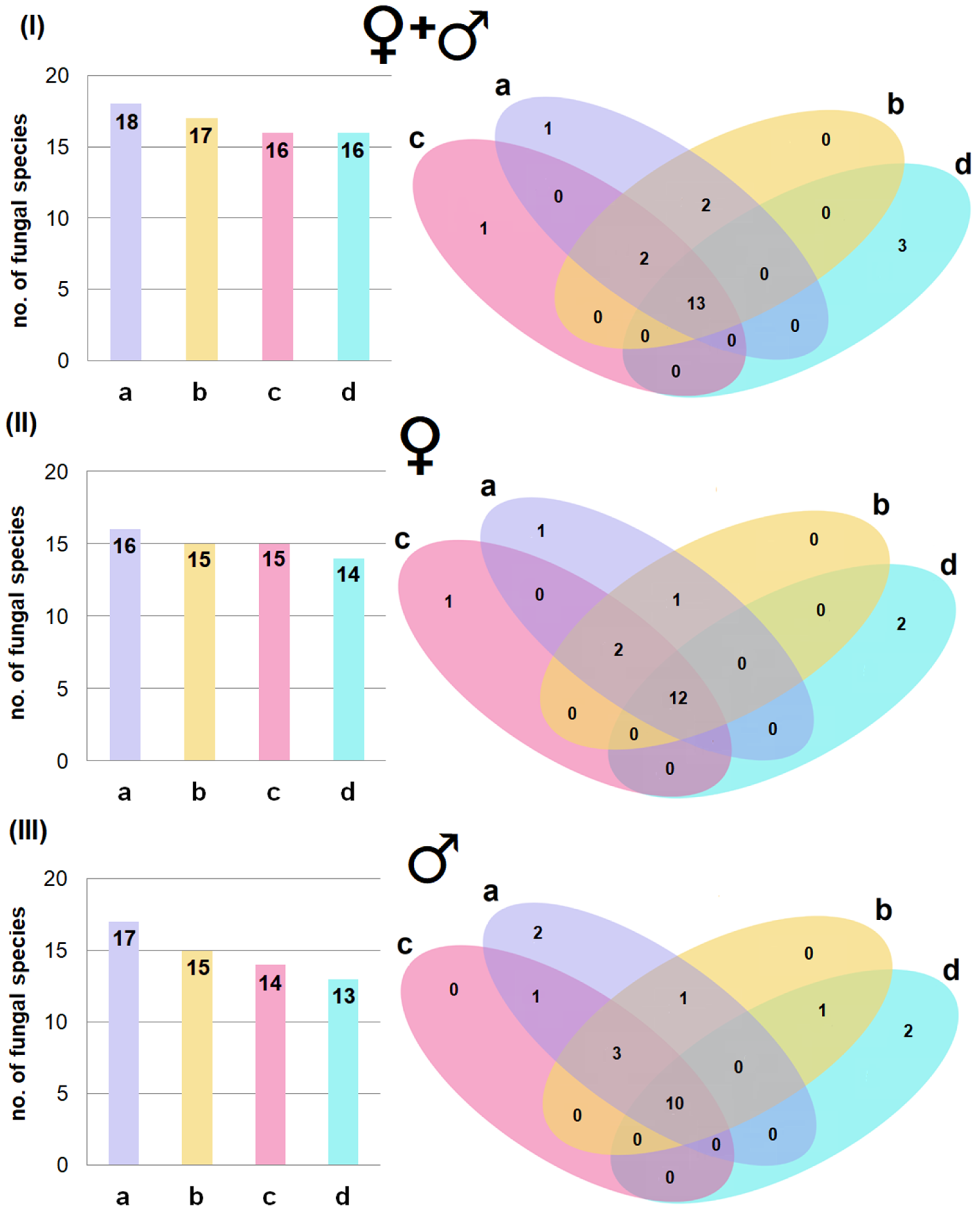
Overall, 18 fungal species were found on the ventral side of the wing membranes in hibernating bats and 17 on the dorsal side. Additionally, 16 species were found on either the ventral side or on the dorsal side of their tail membranes (Figure 2I). A similar trend in the number of species inhabiting individual membranes was also observed when classifying hibernating bats based by sex. Thus, their wing membranes (especially the ventral side) harboured a more diverse fungal community than the tail membranes (Figure 2).
Moreover, some fungal species were strictly associated with specific body regions, with the highest number found on the dorsal side of tail membranes across all bats (Figure 2I: 3 species) and when divided by sex (Figure 2II: 2 species in females; Figure 2III: 2 fungal species in male). However, it should be noted that most fungal species were present across multiple body regions (Figure 2).
The wing membranes of bats in maternity roosts, similarly to those of hibernating individuals, harboured a more diverse fungal community than the tail membranes. However, in this case, the largest number of species was found for the dorsal side—26 fungal species for all bats, 25 for females and 15 species for males (Figure 3).
Most fungal species were present across multiple body regions (Figure 3), but it was also noted, as in the case of hibernating bats, that some fungal species found on the skin of bats in maternity roosts were closely associated with specific body areas. However, in this case, the largest numbers were found on the dorsal sides of the wing membranes, both in all bats (Figure 3I: two fungal species) and when divided by sex (Figure 3II: two fungal species for females; Figure 3III: three fungal species for males).

3.4. Effect of Incubation Temperature on Fungal Isolation

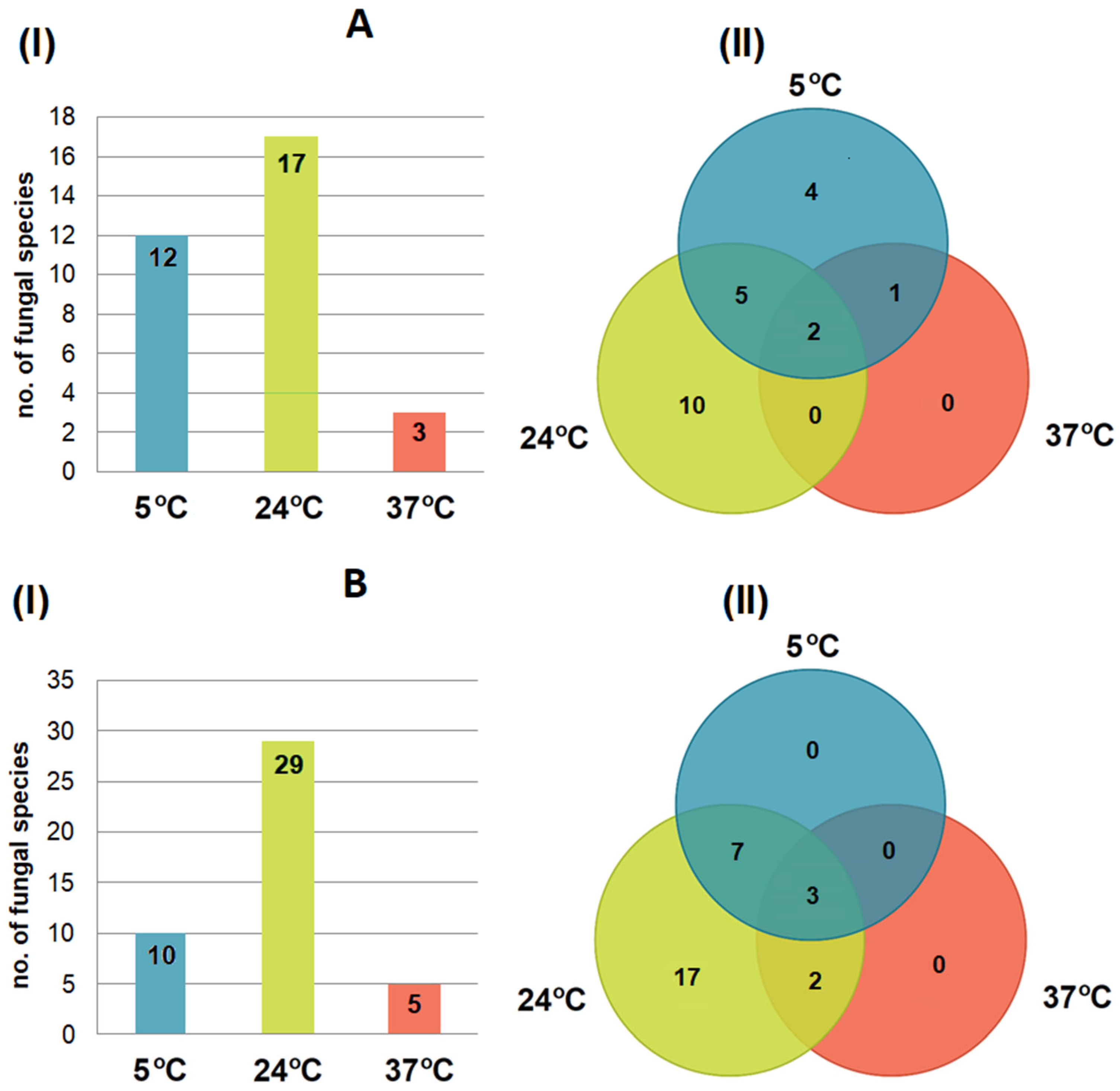
The number of cultured fungal species varied depending on the incubation temperature (Figure 4). The highest species richness was recorded at 24 °C at both study sites (17 and 29 species for hibernation and maternity roosts, respectively), while the lowest was at 37 °C (5 and 3 species for hibernation and maternity roosts, respectively) (Figure 4). Some species were obtained at all three incubation temperatures used (2 and 3 species for hibernation and maternity roosts, respectively), whereas others were temperature-specific (e.g., 10 and 17 species were only obtained at 24 °C for hibernation and maternity roosts, respectively) (Figure 4).

3.5. Dominant Fungal Species and the Effect of Biometric Features on Fungal Diversity

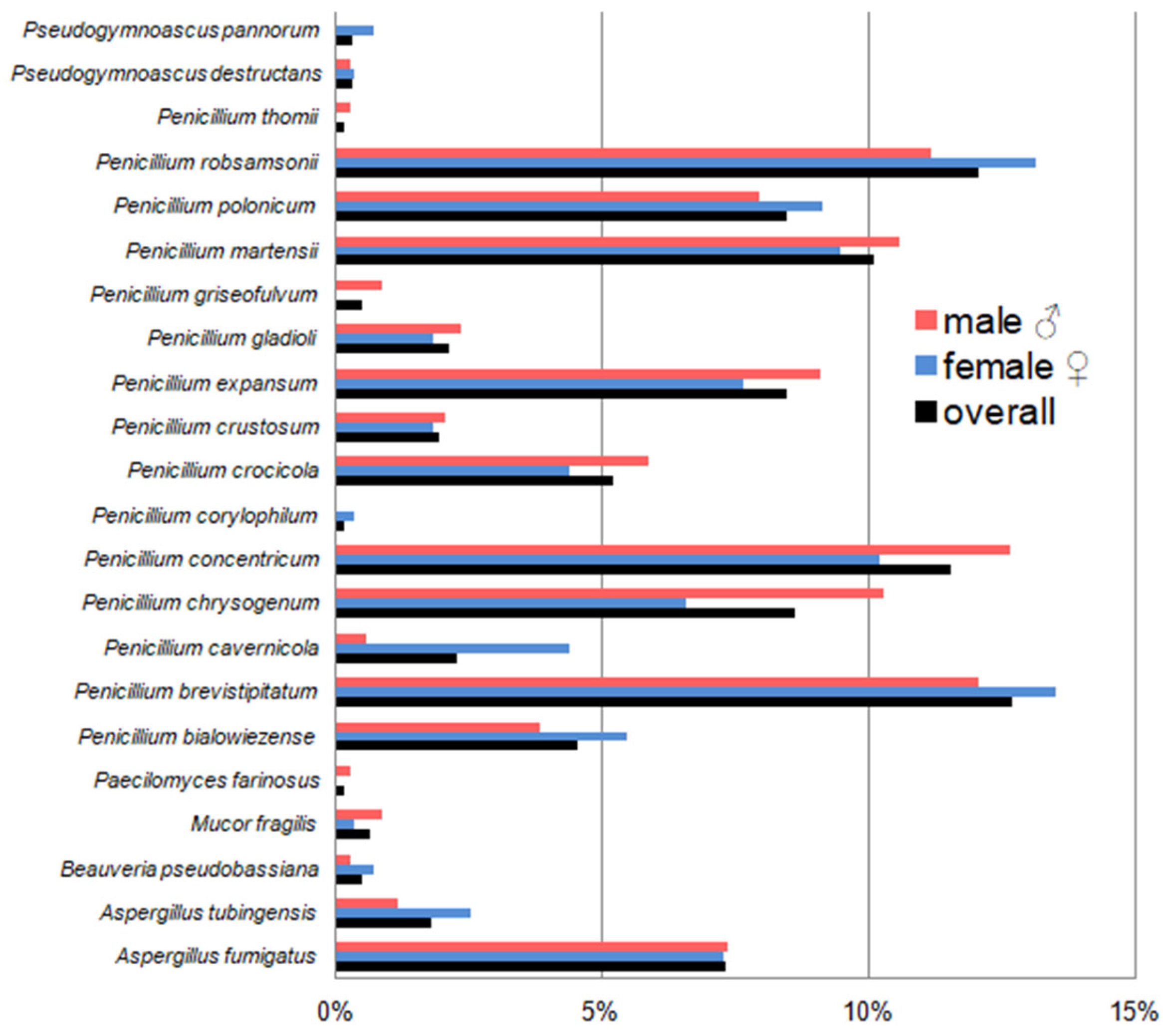
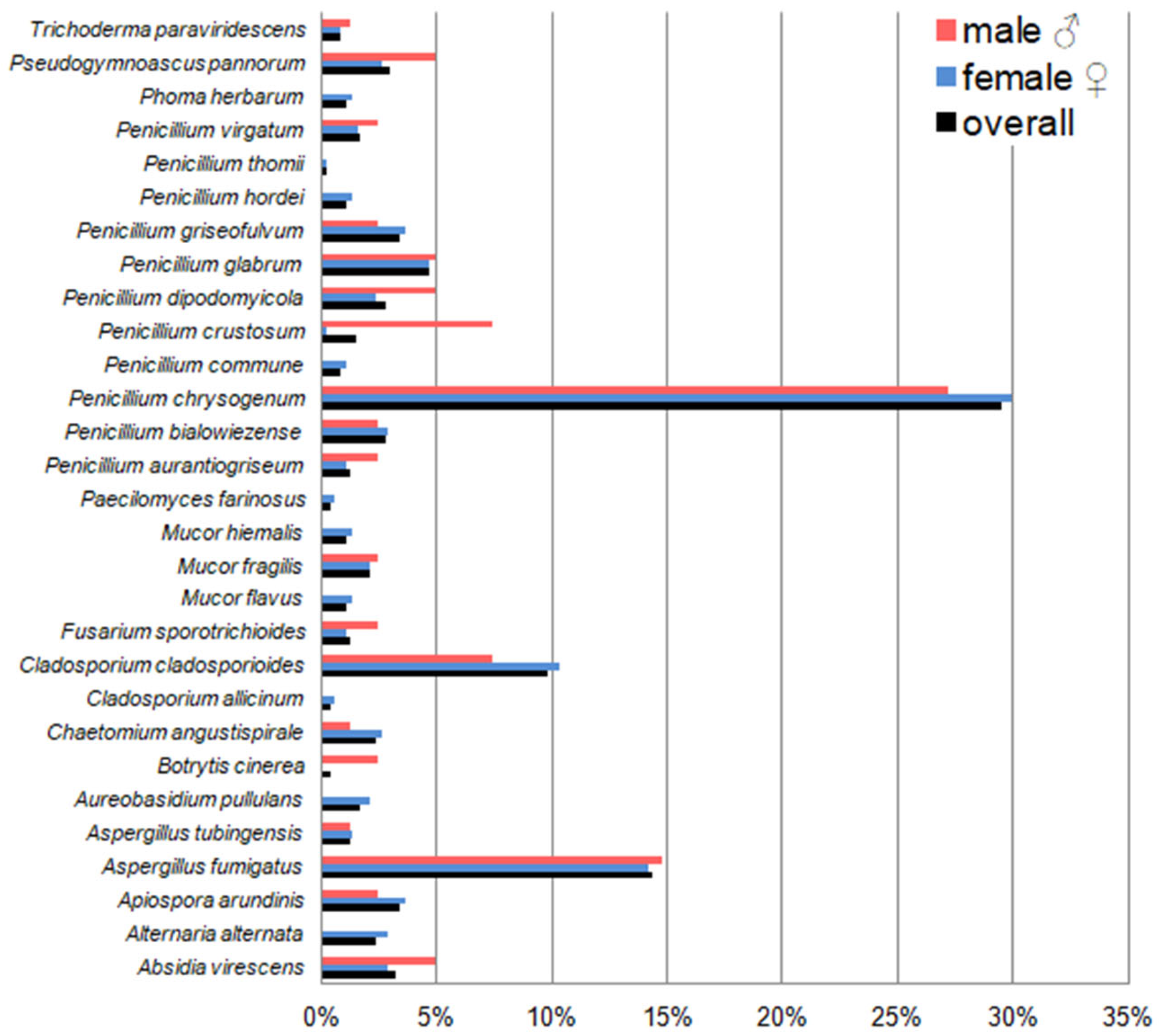
Overall, fungi belonging to the genus Penicillium dominated in these studies, constituting almost 90% of all fungi identified in the case of bats hibernating in the underground tunnels of the Nietoperek bat reserve and about 50% in the case of individuals in maternity roosts in the attic of the forester’s lodge in Lipy (Figure 5 and Figure 6, Table A2 and Table A3). In turn, the most frequently isolated fungal species of all the bats studied, regardless of sex and only females during hibernation, was Penicillium brevistipitatum, which accounted for 12.70% and 13.50% of all isolated fungi, respectively. In the case of males from this study location, the dominant fungal species was Penicillium concentricum—it constituted 12.65% of all isolated fungi (Figure 5, Table A2). On the other hand, the dominant species on the skin M. myotis in maternity roosts (without division into sex and with division into female and male) was also Penicillium chrysogenum, which accounted for 29.49%, 29.97%, and 27.16% of all obtained species, respectively (Figure 6, Table A3).
The ventral sides of the wing membranes of M. myotis were most abundantly colonized by fungi in the Nietoperek bat reserve and in maternity roosts, constituting 28.01% and 29.62%, respectively. In turn, the least fungi were cultured from swabs taken from the ventral sides of the tail membrane of these small mammals at both study sites, constituting 20.36% and 20.80%, respectively (Table A2 and Table A3). In the case of hibernation, P. chrysogenum and Penicillium robsamsonii dominated on the ventral sides of the wing membranes; P. brevistipitatum on the ventral dorsal sides of the wing membranes and the dorsal sides of the tail membrane; and P. concentricum on the ventral sides of the tail membrane (Table A2). On the other hand, P. chrysogenum was the most frequently isolated species on all examined bat membranes from maternity roosts (Table A3).
Aspergillus fumigatus, Aspergillus tubingensis, Mucor fragilis, Penicillium bialowiezense, P. chrysogenum, Penicillium crustosum, Penicillium griseofulvum, Penicillium thomii, Pseudogymnoascus pannorum, and Paecilomyces farinosus were isolated at both study sites (Figure 5 and Figure 6, Table A2 and Table A3). In turn, Beauveria pseudobassiana, P. brevistipitatum, Penicillium cavernicola, P. concentricum, Penicillium corylophilum, Penicillium crocicola, Penicillium expansum, Penicillium gladioli, Penicillium martensii, Penicillium polonicum, P. robsamsonii, and Pseudogymnoascus destructans were cultured only from swabs taken from M. myotis during hibernation (Figure 5, Table A2), and Absidia virescens, Alternaria alternata, Apiospora arundinis, Aureobasidium pullulans, Botrytis cinerea, Chaetomium angustispirale, Cladosporium allicinum, Cladosporium cladosporioides, Fusarium sporotrichioides, Mucor flavus, Mucor hiemalis, Penicillium aurantiogriseum, Penicillium commune, Penicillium dipodomyicola, Penicillium glabrum, Penicillium hordei, Penicillium virgatum, Phoma herbarum, and Trichoderma paraviridescens were obtained only from samples in maternity roosts (Figure 6, Table A3).
The number of fungal species isolated from bats in both studied habitats tended to decrease with age; however, these relationships were weak and statistically non-significant in both hibernation and maternity roosts (Appendix B).
Similarly, correlations between fungal species richness and other examined bat traits (sex, body mass, and forearm length) were generally weak (rS < 0.3) and not statistically significant across seasons (Appendix B).
A few moderate correlation coefficients were observed (e.g., between forearm length and fungal species richness in males from maternity roosts); however, these patterns were not supported statistically and should therefore be interpreted with caution (full statistical data in Appendix B).

4. Discussion

To our knowledge, this is the first study to directly compare the culturable skin mycobiota of Myotis myotis between hibernation and reproductive season. The closest comparison comes from previous bacterial studies, where the seasonal turnover of skin microbiota was shown in Eptesicus fuscus, with an almost-complete replacement of taxa between summer and winter despite functional redundancy [36]. Although this involved a different host species, both E. fuscus and M. myotis change roosting habitats seasonally, indicating that similar environmental processes might shape microbial communities in M. myotis. However, Grisnik and Walker [36] noted that their sampling was geographically unbalanced, with winter bats collected across a wider range of ecoregions, which may have contributed to the observed differences. For that reason, we examined two colonies located in close proximity, both of anthropogenic origin, where field observations indicate that bats hibernating in Nietoperek frequently form maternity colonies in Lipy, suggesting that the colonies are ecologically linked.
In total, we recovered 22 fungal species during hibernation and 29 during the reproductive season. Previous culture-based surveys of M. myotis have been restricted to winter or spring emergence, with 32 airborne species documented in the Nietoperek hibernaculum during winter [10] and 17 species reported from females leaving the same site in spring [9]. Our results align with recent findings from the autumn season, where 39 fungal species were isolated from the wing and tail membranes of M. myotis during swarming [7]. Both studies therefore indicate clear seasonal restructuring of the skin mycobiota, with autumn and summer representing periods of high fungal accumulation, while winter shows a much narrower species spectrum.
Culture-based surveys of hibernating Myotis lucifugus and M. septentrionalis in Canada reported 117 fungal taxa in one survey and 80 in another, with individual bats carrying on average 7–9 species [37,38]. However, comparable culture-based data from the summer season are scarce. In the Neotropics, a survey of insectivorous bats recovered 16 fungal species from the rostral region, with opportunistic taxa such as Aspergillus sydowii and P. crustosum dominating unidentified Myotis spp. individuals [39]. While informative, these findings reflect tropical conditions and cannot be directly compared to European bats’ maternity colonies. Thus, it can be concluded that, to date, culture-based summer data for M. myotis remain very limited, and our study helps address this gap.
The higher diversity recorded in summer roosts likely reflects the combined influence of roost microclimate and increased environmental exposure of the bats. Maternity colonies are warmer and more variable than underground hibernacula. Such conditions have been shown to support higher concentrations and the diversity of mesophilic fungi in cave environments [40,41,42]. In addition, active bats forage daily and thus encounter multiple environmental sources of spores, including soil, vegetation, and insect prey, which can subsequently colonize the skin surface [9,39,43]. Several of the taxa isolated in our summer studies, such as B. cinerea, A. alternata, and Ph. herbarum, are typically associated with plants [44,45,46], which are abundant and actively flowering during this period, providing additional reservoirs of fungal propagules. In addition to the external influx of spores, maternity roosts also host dense aggregations of females and young, which may facilitate the internal transmission of environmentally acquired fungi through frequent physical contact [47,48]. Together, these factors provide a plausible explanation for the higher fungal species richness observed during the reproductive season.
In contrast, hibernation sites are cold, humid, and microclimatically stable environments that exert strong selective pressures on the fungal communities [13,49]. Such conditions favour psychrophilic and psychrotolerant taxa, which were also prominent in our winter samples, including Ps. destructans, Ps. pannorum, and other cold-adapted fungi such as B. pseudobassiana and P. farinosus [50,51,52].
The recorded ranges of microclimatic conditions during our sampling are consistent with the previous observations at both hibernation sites [53] and in maternity colonies [54]; however, they do not reflect the variation in ambient temperature and relative humidity in both types of bat roosts. The lack of Pd on the wing membranes of individuals in maternity roosts in Lipy may be explained by the large differences in microclimatic conditions at hibernation sites (8.9–9.7 °C and 81–84%) and maternity roosts (20–25 °C and 20–40%).
Comparable culture-based surveys of hibernating Myotis spp. in North America recovered high numbers of cold-adapted fungi, with Pseudogymnoascus, Oidiodendron, and Naganishia spp. consistently among the most frequent isolates [37,38]. Aeromycological monitoring in caves and mines has likewise shown that winter speleomycobiota are dominated by a smaller set of psychrotolerant propagules [55,56]. Additionally, the absence of foraging during bats’ hibernation further reduces opportunities for acquiring transient environmental fungi, leading to a less diverse but more specialized winter mycobiota, as observed in our samples.
Such specialization was reflected in the dominance of Penicillium spp., which accounted for over 90% of isolates in winter compared to roughly 50% of the summer dataset. Many species of this genus can germinate and grow at temperatures close to 0 °C [57]. In vitro studies further demonstrated that Penicillium spp. respond to cold by enhancing antioxidant defences and accumulating protective carbohydrates such as trehalose and glycogen [58,59].
However, despite seasonal differences, several taxa overlapped between hibernation and maternity roosts. These included A. fumigatus, A. tubingensis, M. fragilis, and multiple Penicillium species, including P. bialowiezense and P. chrysogenum, as well as P. farinosus and Ps. pannorum. Notably, members of the family Aspergillaceae, which include the genera Aspergillus and Penicillium, are among the most cosmopolitan fungi, occurring in diverse climates and habitats ranging from soils and compost to built environments and even arctic substrates [60,61,62]. Even psychrotolerant taxa such as Ps. pannorum show broad ecological distribution, having been isolated from Antarctic soils [63], hibernating bats [37], and occasionally from humans where it can act as an opportunistic pathogen despite having a body temperature of ~36.6 °C [64]. In our studies, the occurrence of such fungi across different seasonal samples suggests that a limited group of fungi can persist on M. myotis independently of external conditions. Similar observations have been made for bacterial skin microbiota of E. fuscus, where seasonal turnover is tempered by the persistence of a few overlapping taxa across summer and winter [36].
When considering individual host traits, biometric variables such as sex, age, body mass, and forearm length showed, at best, weak and inconsistent relationships with fungal richness. For example, fungal richness was higher on wing membranes than on tail membranes, likely reflecting micro-environmental differences such as moisture, temperature, and skin structure, as well as the effects of flight aerodynamics and metabolic heat that make the wings more exposed to spore deposition [65]. However, it can be concluded that morphological traits are not strong predictors of skin mycobiota composition in M. myotis. Ecologically, this is not unexpected: while body size or sex may influence contact rates or grooming behaviour to some extent, the dominant drivers of fungal communities appear to be seasonal microclimate and environmental exposure. Thus, biometric traits may modulate fungal richness only marginally, overshadowed by the much stronger seasonal filtering processes. However, these patterns differ from those observed in autumn [7], when age and sex had a stronger influence on fungal richness, including a clear increase in species number with age in males and the opposite trend in females. This suggests that the effect of host traits on the skin mycobiota may change seasonally, being more visible during periods of high environmental exposure and largely reduced during hibernation.
Beyond such seasonal patterns, our study also expands the list of fungi documented from the skin of M. myotis. Some taxa obtained here are well established in M. myotis-associated mycobiota, whereas others have only been reported from environmental contexts, such as guano, cave air, or cave soil/sediments [7,9,10,14,37,38,49,56,60,66,67,68,69,70,71,72,73,74,75,76,77,78,79,80,81,82,83,84] (Table S1). Several species appear to represent new records for the skin of M. myotis, thereby broadening the known ecological range of these fungi. To better contextualize our findings, we summarized previous records of the fungi isolated here in relation to M. myotis or other bat species and their environments [7,9,10,14,37,38,49,56,60,66,67,68,69,70,71,72,73,74,75,76,77,78,79,80,81,82,83,84] (Table S1). In total, 27 of the 41 fungal species documented here represent new records for M. myotis, while 15 represent new records for bat species in general, as well as 7 that were never reported in bat-associated environments, such as caves. This highlights the extent to which the skin of M. myotis may serve as an overlooked reservoir for diverse fungi, bridging environmental, but also pathogenic, taxa.
Our dataset illustrates this pathogenic component, with several opportunistic fungi of medical, agricultural, and veterinary relevance. Among them, A. fumigatus is particularly noteworthy due to its clinical relevance as a major cause of aspergillosis in humans [85]. Other taxa frequently detected in summer, such as A. alternata and B. cinerea, are well-recognized plant pathogens with allergenic potential for humans [44,46]. In winter samples, we detected Ps. destructans, the etiological agent of white-nose syndrome, underscoring that the skin of M. myotis not only hosts opportunistic fungi but also pathogens with profound impacts on other bat species populations [86]. Together, these findings indicate that the skin of M. myotis can also serve as a reservoir for fungi, including the taxa of medical, agricultural, and veterinary importance.
However, in interpreting the results, several limitations should be considered. First, fungal isolation was performed using only one culture medium (PDA). Although this medium is commonly used in mycological studies, it may preferentially promote the growth of fast-growing filamentous fungi, while underrepresenting slow-growing or substrate-specific species [87]. As a result, the fungal diversity reported here likely reflects only the culturable fraction detectable under these laboratory conditions. Second, bats were sampled only once in each season, in contrast to the studies described, e.g., by Kokurewicz et al. [84], who examined airborne fungal composition and changes during the bat hibernation season. Therefore, our design does not allow assessment of short-term temporal fluctuations in the skin mycobiota or potential effects of changing environmental conditions within a given season. These methodological constraints may have influenced the observed patterns. Nevertheless, we believe our study contributes new knowledge regarding the interactions of bats with their skin fungi.

5. Conclusions

This study provides the first direct comparison of culturable skin mycobiota in Myotis myotis across hibernation and the reproductive season. We found clear seasonal differences: winter assemblages were less diverse but strongly dominated by Penicillium, while summer maternity roosts supported broader communities shaped by environmental exposure and plant-associated fungi. A limited set of taxa, including cosmopolitan Aspergillus fumigatus, Mucor fragilis, and Pseudogymnoascus pannorum, persisted across both seasons, indicating the presence of a small core M. myotis mycobiota. Fungal richness was highest on wing membranes compared to tail membranes, whereas biometric traits such as sex, age, body mass, and forearm length showed inconsistent associations with diversity. In total, 27 species represent new records for M. myotis, underscoring the role of this host as a reservoir that bridges environmental, opportunistic, and pathogenic fungi. These results demonstrate the ecological importance of seasonal filtering in shaping M. myotis-associated fungal communities and emphasize the need for further work to explore their functional roles and potential health implications.

Supplementary Materials

The following supporting information can be downloaded at https://www.mdpi.com/article/10.3390/pathogens15010083/s1, Table S1: Literature records of fungi isolated in this study in relation to Myotis myotis.

Author Contributions

Conceptualization, R.O., J.S. and J.B.; methodology, R.O.; software, R.O.; validation, R.O.; formal analysis, R.O. and J.B.; investigation, R.O., J.B. and T.K.; resources, R.O.; data curation, R.O. and J.B.; writing—original draft preparation, R.O., J.S., J.B. and T.K.; writing—review and editing, R.O., J.S., J.B. and T.K.; visualization, R.O.; supervision, R.O.; project administration, R.O.; funding acquisition, R.O. All authors have read and agreed to the published version of the manuscript.

Funding

This research was funded by the National Science Centre, Poland (NCN), grant number DEC-2022/06/X/NZ9/01178.

Institutional Review Board Statement

Samples were under licences: for Nietoperek hibernation site no. WPN-I.6205.24.2021.MG issued by the Regional Directorate for Environmental Protection in Gorzów Wielkopolski (approval date: 29 March 2021) and no. DZP-WG.6401.179.2021.EB, issued by the General Directorate for Environmental Protection in Warsaw for maternity colony in Lipy (approval date: 3 August 2021).

Informed Consent Statement

Not applicable.

Data Availability Statement

Experimental data will be made available upon request. The fungal ITS rDNA nucleotide sequences obtained in the study were submitted to GenBank under accession numbers PX393922-PX393972, and the β-tubulin nucleotide sequences under accession numbers PX502280-PX502289.

Conflicts of Interest

The authors declare no conflicts of interest.

Appendix A

Table A1. Biometric characteristics of M. myotis bats collected from the underground tunnels of the Nietoperek bat reserve during hibernation and from maternity roosts in the attic of the forester’s lodge in Lipy.
Study SitesBat No.SexForearm Length (mm)Weight (g)Age
Nietoperek bat reserve1male59.624.0adult
2male59.325.0adult
3male60.526.5subadult
4female62.925.0subadult
5male60.723.0subadult
6male60.326.0adult
7male61.324.0subadult
8male59.125.0subadult
9male59.224.5adult
10male59.924.0adult
11female60.726.0adult
12male61.028.0adult
13female64.127.5adult
14male59.623.5subadult
15female62.722.0adult
16male59.424.5subadult
17female61.024.0adult
18female61.427.0subadult
19female63.223.0subadult
20male61.426.0adult
21female62.025.0adult
22male60.624.5adult
23female63.827.5adult
24female60.625.0adult
25male61.124.0adult
26male58.724.0adult
27female60.522.5subadult
28male60.523.0subadult
29female62.126.0adult
30female61.426.0subadult
forester’s lodge in Lipy1female59.426.5subadult
2female62.523.5subadult
3female61.121.0adult
4female60.822.5subadult
5female63.423.5subadult
6female63.524.5subadult
7male59.920.0subadult
8female63.723.0subadult
9female62.227.0subadult
10female64.825.5subadult
11female63.228.0subadult
12female61.823.5subadult
13female62.524.0subadult
14female63.025.0subadult
15female60.029.0subadult
16male58.124.5subadult
17female60.723.5subadult
18female61.624.5subadult
19male60.022.5subadult
20female62.625.0subadult
21female62.026.0subadult
22female62.225.5subadult
23female61.626.5subadult
24female62.424.5subadult
25female63.927.0subadult
26male56.822.5subadult
27female62.423.5adult
28male59.624.0subadult
29female61.924.5subadult
30female62.526.0subadult
Table A2. Diversity of fungal species cultured from the ventral (a) and dorsal (b) sides of the wing membranes (plagiopatagium, dactylopatagia, and propatagium regions), and the ventral (c) and dorsal (d) sides of tail membranes of M. myotis (n = 30) in the underground tunnels of the Nietoperek bat reserve during hibernation: n.d.—not detected.
Fungal SpeciesBat Number and Swab Location
5 °C24 °C37 °C
Aspergillus fumigatus12 (a), 18 (a,b)n.d.1 (c,d), 2 (a), 3 (b), 4 (b,d), 5 (a,b,c,d), 8 (a,c), 9 (d), 10 (c,d), 11 (b), 12 (a,b), 14 (a,b), 15 (a,d), 16 (a), 18 (a,c,d), 19 (b,c), 20 (c,d), 21 (d), 22 (c), 23 (b), 24 (a,d), 25 (d), 26 (b,c), 27 (c), 29 (b), 30 (a,c)
Aspergillus tubingensisn.d.15 (a), 18 (c)1 (c), 5 (a), 8 (a), 16 (a), 18 (c,d), 27 (c), 29 (b), 30 (a)
Beauveria pseudobassianan.d.1 (a), 19 (a,b)n.d.
Mucor fragilisn.d.16 (b), 28 (a,b), 29 (a)n.d.
Paecilomyces farinosusn.d.12 (d)n.d.
Penicillium bialowiezensen.d.1 (a,d), 4 (a,c), 7 (b), 8 (c), 14 (b,d), 19 (b), 20 (b,d), 21 (a,b,c), 22 (a,b,d), 23 (c), 24 (a,b), 25 (b), 26 (d), 27 (a,b,c), 29 (d), 30 (a,c)n.d.
Penicillium brevistipitatum2 (a,b), 6 (c,d), 10 (d), 11 (b), 15 (a), 19 (c), 20 (b), 30 (c)1 (a,b,c,d), 3 (a,b,d), 4 (a,b,c), 5 (a,b,d), 6 (b,d), 7 (a,b,d), 8 (d), 9 (b,d), 10 (d), 12 (b), 13 (a,b,c,d), 14 (b,d), 15 (a), 16 (a,b), 17 (a,b,c,d), 18 (a,b,c,d), 19 (a,b,c), 20 (d), 21 (a,b,c,d), 22 (a,d), 23 (a,b,d), 24 (c), 25 (a,c,d), 26 (b), 27 (b), 28 (a,b,c,d), 29 (b,d), 30 (b,c,d)n.d.
Penicillium cavernicolan.d.4 (a,b), 5 (b), 6 (d), 13 (d), 17 (a,b,c,d), 18 (a,b,c,d), 30 (b)n.d.
Penicillium chrysogenum1 (c), 2 (a,b,d), 6 (a), 7 (a,c,d), 9 (b), 11 (a,b), 12 (a), 14 (a), 15 (a,b), 19 (c,d), 20 (a,b,c), 27 (a,d), 30 (c)2 (a), 3 (a,d), 5 (a), 6 (a,d), 7 (a,b,c,d), 8 (a,b,c,d), 9 (a,b), 10 (d), 15 (b), 18 (a), 19 (a,c), 20 (a), 21 (b,c), 22 (d), 25 (d), 26 (a,d), 27 (a)5 (a), 19 (c), 30 (c)
Penicillium concentricum1 (d), 5 (d), 6 (b), 8 (c), 12 (b), 18 (b,c,d), 19 (a,b,c), 21 (b), 22 (c), 23 (b), 25 (a,c,d), 27 (c), 29 (a,c)1 (a,c,d), 2 (c), 3 (c,da), 4 (a,c), 5 (d), 7 (a,b), 8 (a,b,c,d), 9 (a,b,d), 10 (d), 11 (b), 13 (a), 14 (a,c), 15 (a,d), 16 (c,d), 17 (d), 18 (b), 19 (a,b,c), 20 (a,b), 21 (a,b,c), 22 (a,d), 24 (d), 26 (a,b,c,d), 28 (a,b,c,d), 29 (b), 30 (b)n.d.
Penicillium corylophilumn.d.18 (c)n.d.
Penicillium crocicolan.d.2 (a,d), 3 (a), 5 (d), 6 (c,d), 7 (c,d), 8 (d), 9 (b,d), 11 (b,c,d), 12 (b,c), 15 (b,c), 16 (b,c,d), 19 (a,c), 20 (c), 25 (c), 26 (a,d), 28 (b), 29 (a,b), 30 (c,d)n.d.
Penicillium crustosum1 (c), 4 (a), 8 (c), 10 (c), 11 (c), 17 (a,c), 20 (a), 21 (b), 26 (b), 27 (b,c)n.d.n.d.
Penicillium expansum1 (a), 2 (a,b), 3 (a,b), 5 (c,d), 6 (c,d), 7 (a,c,d), 8 (c), 9 (b,c), 10 (c,d), 12 (b), 13 (a), 14 (d), 15 (a,d), 16 (a), 18 (a,b), 19 (c,d), 20 (b), 22 (a,c), 23 (b), 24 (d), 25 (b,d), 26 (a,b,c), 27 (b), 29 (a,b,d), 30 (b,c)6 (c), 24 (d)9 (d), 15 (d), 16 (a), 19 (b), 21 (d), 29 (b), 30 (a)
Penicillium gladiolin.d.1 (b), 2 (a,b), 3 (b), 4 (b,c), 5 (b,c), 20 (a), 24 (d), 26 (b), 29 (a), 30 (b)n.d.
Penicillium griseofulvum20 (c)2 (a,b)n.d.
Penicillium martensii1 (c,d), 3 (a,b,c,d), 4 (a,b,c), 5 (a,b), 6 (b), 7 (a,b), 8 (a,b,d), 9 (a,d), 12 (b), 13 (a,b,d), 14 (a,c,d), 16 (a,b), 17 (a,d), 18 (c,d), 19 (a,b), 20 (a,d), 21 (a,b,d), 22 (a,b,d), 23 (a,b,d), 24 (a,b), 25 (a,b,c,d), 26 (b), 27 (a,b), 28 (a,b,c,d), 29 (b,d), 30 (b,d)n.d.n.d.
Penicillium polonicum1 (c), 2 (a), 3 (a,b,c,d), 4 (a,c), 5 (b), 7 (b), 8 (a,c,d), 9 (a), 12 (d), 13 (a), 14 (b,d), 16 (a), 17 (a,b,c,d), 18 (a,d), 19 (b), 20 (a,d), 21 (a,c,d), 22 (a,b,c), 23 (a,b,c), 24 (a,c), 26 (b), 27 (a,c), 28 (a,b,c,d), 29 (b,d), 30 (a,b,d)2 (a)n.d.
Penicillium robsamsonii10 (d), 13 (c), 20 (c)1 (a,c), 3 (a,b,c,d), 4 (a,b,c), 5 (a,b,c,d), 6 (b,c), 7 (a,b,c,d), 9 (a,b,d), 10 (a), 11 (b), 13 (a,b,c,d), 14 (b,c,d), 17 (a,b,d), 19 (a,b,d), 20 (a,b,d), 21 (a,b,c,d), 22 (a,b,c), 23 (a,b,c,d), 24 (a,b,c), 25 (a,b), 26 (a,b), 27 (a,b,c,d), 28 (a,b,d), 29 (a,b,d), 30 (a,b,d)n.d.
Penicillium thomii 6 (a)n.d.
Pseudogymnoascus destructans11 (d), 12 (d)n.d.n.d.
Pseudogymnoascus pannorum27 (d), 30 (d)n.d.n.d.
Table A3. Diversity of fungal species cultured from the ventral (a) and dorsal (b) sides of the wing membranes (plagiopatagium, dactylopatagia, and propatagium regions), and the ventral (c) and dorsal (d) sides of tail membranes of M. myotis (n = 30) in maternity roosts in the attic of the forester’s lodge in Lipy: n.d.—not detected.
Fungal Species Bat Number and Swab Location
5 °C 24 °C 37 °C
Absidia virescensn.d.3 (d), 9 (a,b,d), 10 (a), 12 (b), 15 (a), 17 (b,c), 26 (b,c), 28 (a,c), 30 (a,b)n.d.
Alternaria alternatan.d.2 (a,b,d), 10 (a,c), 24 (a,c)2 (d), 10 (a), 24 (c), 25 (a)
Apiospora arundinis12 (a), 13 (a,b), 15 (b,d), 17 (c), 18 (c), 20 (a), 25 (d), 27 (c,d), 28 (a,b)13 (a,b), 27 (d)n.d.
Aspergillus fumigatusn.d.1 (c), 2 (b), 3 (c), 6 (d), 7 (c), 8 (c), 10 (c,d), 11 (d), 17 (a)1 (a,b,c), 2 (a,d), 3 (b), 4 (a,b), 5 (a,b,c), 6 (a,b,d), 7 (a,b,d), 8 (c), 9 (c,d), 10 (c), 11 (a,c,d), 12 (a,d), 13 (a,b,c), 14 (a), 15 (d), 16 (a,b,d), 17 (a,b,c,d), 18 (a,c,d), 19 (c,d), 20 (a,b,d), 22 (a), 23 (b), 24 (a,c), 26 (a,d), 27 (c,d), 28 (c), 29 (a), 30 (c)
Aspergillus tubingensis13 (c,d)3 (c), 15 (a), 19 (c), 23 (d)7 (c), 9 (a)
Aureobasidium pullulans1 (a), 13 (b), 20 (d), 21 (a,b), 22 (a)21 (a,d)n.d.
Botrytis cinerea19 (b)19 (b)n.d.
Chaetomium angustispiralen.d.1 (b,d), 2 (b,c), 17 (a,c), 18 (b), 20 (d), 23 (d), 25 (d), 28 (b)
Cladosporium allicinumn.d.20 (a,c)n.d.
Cladosporium cladosporioides1 (b,d), 2 (a,d), 6 (a,d), 7 (b,c), 8 (c), 9 (a,b,d), 10 (a,d), 11 (d), 12 (a,b), 15 (a,b), 17 (a,b,d), 18 (b), 19 (b), 22 (a,d), 24 (a), 28 (a)1 (d), 2 (a,d), 6 (d), 7 (b,c), 9 (a,b), 10 (a,d), 12 (a,b), 15 (a,b), 17 (a,b), 22 (a,d)n.d.
Fusarium sporotrichioidesn.d.9 (a,b,c,d), 19 (b,d)n.d.
Mucor flavus10 (b)10 (a,b), 23 (a,b)n.d.
Mucor fragilisn.d.2 (b), 3 (b), 4 (d), 5 (a), 6 (d), 7 (a,c), 23 (b), 29 (b,d)n.d.
Mucor hiemalis16 (b,c,d), 24 (b,c)9 (a,b), 14 (b), 16 (b,c), 24 (d)26 (a,b), 29 (b)
Paecilomyces farinosusn.d.13 (d), 22 (d)n.d.
Penicillium aurantiogriseumn.d.19 (a,b), 30 (a,b,c,d)n.d.
Penicillium bialowiezensen.d.1 (c,d), 2 (a,b,d), 4 (a), 6 (d), 7 (a), 10 (a), 12 (b), 17 (b,c), 28 (b)n.d.
Penicillium chrysogenum1 (a,b), 3 (a), 4 (a,b,c), 5 (b,c,d), 6 (b,c,d), 7 (b,d), 8 (a,b,c,d), 10 (c,d), 11 (a,b), 14 (a,b,c,d), 15 (a,b,c), 16 (c,d), 18 (a,b,c,d), 19 (a), 20 (a,c), 21 (b), 22 (a,c,d), 23 (b), 24 (c,d), 25 (a), 26 (a,d,c), 27 (a,b,c), 28 (c), 29 (a,b,c,d), 30 (b)1 (a,c,d), 2 (a,c), 3 (b,c), 4 (a,b,c,d), 5 (b,c,d), 6 (a,b,c,d), 7 (a,b,d), 8 (a,b,d), 9 (c,d), 10 (d), 11 (a,b,c,d), 12 (c,d), 13 (a,b,d), 14 (a,b,d), 15 (a,d), 16 (c,d), 17 (b,c), 18 (b,c,d), 19 (a), 20 (c), 21 (a,c), 22 (b), 23 (c), 24 (c,d), 25 (a,b), 26 (a,d), 27 (a,b,c,d), 28 (a,b,c,d), 29 (b)3 (c), 4 (c), 5 (a), 6 (a,c,d), 8 (b), 16 (d), 17 (a,d)
Penicillium communen.d.12 (a,b), 21 (a), 23 (a)n.d.
Penicillium crustosumn.d.18 (b), 26 (a,b,c,d), 28 (b,d)n.d.
Penicillium dipodomyicolan.d.6 (b), 7 (b), 10 (d), 11 (c,d), 14 (c), 16 (a,c,d), 20 (b), 21 (b), 23 (b,c)n.d.
Penicillium glabrumn.d.2 (a,d), 4 (a), 8 (a), 9 (a,b), 10 (a,b,c), 16 (d), 17 (b), 18 (b), 19 (b), 20 (a,b), 22 (a), 24 (b), 25 (a), 26 (c), 27 (a), 28 (a), 30 (a)n.d.
Penicillium griseofulvum1 (a,d), 3 (c), 7 (a), 9 (d), 18 (c,d), 20 (c), 23 (c,d), 26 (d)16 (a), 17 (d), 18 (a), 20 (b), 23 (b), 25 c),n.d.
Penicillium hordein.d.29 (c), 30 (a,b,c,d)n.d.
Penicillium thomiin.d.30 (b)n.d.
Penicillium virgatumn.d.5 (a), 24 (a,d), 25 (b,c,d), 28 (a,b)n.d.
Phoma herbarumn.d.1 (b,c), 2 (d), 5 (a), 24 (a)n.d.
Pseudogymnoascus pannorum6 (a), 7 (b), 8 (a), 13 (a), 20 (a), 26 (a,b)6 (a), 7 (c), 12 (b), 15 (a), 20 (a), 21 (a), 29 (c)n.d.
Trichoderma paraviridescensn.d.15 (b,c,d), 19 (b)n.d.

Appendix B. Supplementary Correlation Analyses

The number of fungal species inhabiting the bats in both studied habitats decreased with age (rS = −0.32831, p = 0.07651 for hibernation; rs = −0.26534, p = 0.15645 for maternity roosts). The Spearman (rS) values for the interactions between the number of fungal species and the remaining examined bat traits were in the range above −0.2 and below 0.2, suggesting weak correlations, which proves the lack of relationship between the examined data (rS = 0.06333, p = 0.73953 for sex in hibernation; rS = −0.04357, p = 0.81918 for forearm length during hibernation; rS = 0.05239, p = 0.78337 for weight during hibernation; rS = −0.1712, p = 0.36571 for forearm length in maternity roosts; rS = 0.04772, p = 0.80226 for weight in maternity roosts; rS = −0.11492, p = 0.54538 for sex in maternity roosts).
A low positive correlation was noted between the number of fungal species inhabiting M. myotis males and their weight during hibernation (rS = 0.23734, p = 0.35902), and in the case of summer studies, this relationship had a low negative correlation (rS = −0.20520, p = 0.74058), but in both cases, it was not statistically significant. In turn, a moderate positive correlation, but statistically insignificant, was noted between the forearm length and the number of species inhabiting M. myotis males in maternity roosts (rS = 0.60000, p = 0.28476), while in wintering colonies, this relationship was close to zero (rS = 0.03959, p = 0.88008). A similar situation with weak positive and statistically insignificant correlations was found between the age of males during hibernation and the number of fungal species inhabiting them (rS = 0.03872, p = 0.88271). In turn, the number of fungal species colonizing females of these small mammals correlated negatively, but statistically insignificantly, to varying degrees, with their biometric traits, both in hibernation (rS = −0.22596, p = 0.45791 for forearm length; rS = −0.06629, p = 0.82964 for weight; except for rS = −0.66418, p = 0.01329 for age) and maternity roosts (rS = −0.19744, p = 0.34414 for forearm length; rS = −0.2903, p = 0.15922 for age). The exception was the body mass of the male during the summer in the attic of the forester’s lodge in Lipy, which correlated weakly and positively with the number of inhabiting fungal species (rS = 0.17711, p = 0.39703), but statistically insignificantly.

References

  1. Vilas, R.A. Ecological and economical impact of bats on ecosystem. Int. J. Life Sci. 2016, 4, 432–440. [Google Scholar]
  2. Camacho, J.; Heyde, A.; Bhullar, B.-A.S.; Haelewaters, D.; Simmons, N.B.; Abzhanov, A. Peramorphosis, anevolutionary developmental mechanism in neotropical bat skull diversity. Dev. Dynam. 2019, 248, 1129–1143. [Google Scholar] [CrossRef]
  3. Kunz, T.H.; Lumsden, L.F. Ecology of cavity and foliage roosting bats. In Bat Ecology; The University of Chicago Press: Chicago, IL, USA, 2003; pp. 3–87. [Google Scholar]
  4. Johnson, J.S.; Lacki, M.J. Effects of reproductive condition, roost microclimate, and weather patterns on summer torpor use by a vespertilionid bat. Ecol. Evol. 2014, 4, 157–166. [Google Scholar] [CrossRef] [PubMed]
  5. Federici, L.; Masulli, M.; De Laurenzi, V.; Allocati, N. An overview of bats microbiota and its implication in transmissible diseases. Front. Microbiol. 2020, 20, 1012189. [Google Scholar] [CrossRef]
  6. Wang, D.; Wang, F.; Huang, Z.; Li, A.; Dai, W.; Leng, H.; Jin, L.; Li, Z.; Sun, K.; Feng, J. Structure and assembly process of skin fungal communities among bat species in Northern China. Front. Microbiol. 2024, 15, 1458258. [Google Scholar] [CrossRef]
  7. Borzęcka, J.; Suchodolski, J.; Cal-Smok, M.; Furmankiewicz, J.; Ogórek, R. Insight into the Skin Mycobiota of Myotis myotis: How Age, Sex, and Biometric Traits Correlate with Fungal Diversity. Animals 2025, 15, 3020. [Google Scholar] [CrossRef]
  8. Minnis, A.M.; Lindner, D.L. Phylogenetic evaluation of Geomyces and allies reveals no close relatives of Pseudogymnoascus destructans, comb. nov., in bat hibernacula of eastern North America. Fungal Biol. 2013, 117, 638–649. [Google Scholar] [CrossRef]
  9. Ogórek, R.; Kurczaba, K.; Cal, M.; Apoznański, G.; Kokurewicz, T. A culture-based ID of micromycetes on the wing membranes of Greater mouse-eared bats (Myotis myotis) from the “Nietoperek” site (Poland). Animals 2020, 10, 1337. [Google Scholar] [CrossRef]
  10. Borzęcka, J.; Piecuch, A.; Kokurewicz, T.; Lavoie, K.H.; Ogórek, R. Greater mouse-eared bats (Myotis myotis) hibernating in the Nietoperek bat reserve (Poland) as a vector of airborne culturable fungi. Biology 2021, 10, 593. [Google Scholar] [CrossRef]
  11. Ogórek, R.; Dyląg, M.; Kozak, B. Dark stains on rock surfaces in Driny Cave (Little Carpathian Mountains, Slovakia). Extremophiles 2016, 20, 641–652. [Google Scholar] [CrossRef]
  12. Stupar, M.; Savković, Ž.; Pećić, M.; Jerinkić, D.; Jakovljević, O.; Popović, S. Some Like It Rock ‘N’ Cold: Speleomycology of Ravništarka Cave (Serbia). J. Fungi 2025, 11, 706. [Google Scholar] [CrossRef] [PubMed]
  13. Poulson, T.L.; White, W.B. The cave environment. Science 1969, 165, 971–981. [Google Scholar] [CrossRef] [PubMed]
  14. Liu, X.F.; Karunarathna, S.C.; Tibpromma, S.; Chethana, K.W.T.; Hyde, K.D.; Elgorban, A.M.; Suwannarach, N.; Kumla, J.; Mortimer, P.E.; Hughes, A.C. Understanding the role of bats as fungal vectors in the environment. IMA Fungus 2024, 15, 28. [Google Scholar] [CrossRef] [PubMed]
  15. European Commission. Directive 92/43/EEC—The Conservation of Natural Habitats and of Wild Fauna and Flora in the Habitats Directive. 1992. Available online: http://ec.europa.eu/environment/nature/legislation/habitatsdirective/index_en.htm (accessed on 18 December 2024).
  16. Rogowska, K.; Kokurewicz, T. The longest migrations of three bat species to the “Nietoperek” bat reserve (Western Poland). Berichte Naturforschenden Ges. Oberlausitz Suppl. Band 2007, 15, 53–60. [Google Scholar]
  17. Kokurewicz, T.; Apoznański, G.; Gyselings, R.; Kirkpatrick, L.; De Bruyn, L.; Haddow, J.; Glover, A.; Schofield, H.; Schmidt, C.; Bongers, F.; et al. 45 years of bat study and conservation in Nietoperek bat reserve (Western Poland). Nyctalus 2019, 19, 252–269. [Google Scholar]
  18. Hutterer, R.; Ivanova, T.; Meyer-Cords, C.; Rodrigues, L. Bat Migrations in Europe: A Review of Banding Data and Literature; Biologische Vielfalt in Deutschland; Federal Agency for Nature Conservation: Bonn, Germany, 2005; pp. 11–109. [Google Scholar]
  19. Percie du Sert, N.; Hurst, V.; Ahluwalia, A.; Alam, S.; Avey, M.T.; Baker, M.; Browne, W.J.; Clark, A.; Cuthill, I.C.; Dirnagl, U.; et al. The ARRIVE guidelines 2.0: Updated guidelines for reporting animal research. PLoS Biol. 2020, 18, e3000410. [Google Scholar] [CrossRef]
  20. Dietz, C.; von Helversen, O. Illustrated Identification Key to the Bats of Europe. Tech. Rep. 2004, 1, 6–72. [Google Scholar]
  21. Brunet-Rossinni, A.K.; Wilkinson, G.S. Methods for age estimation and the study of senescence in bats. In Ecological and Behavioral Methods for the Study of Bats; Kunz, T.H., Parsons, S., Eds.; Johns Hopkins University Press: Baltimore, MD, USA, 2009. [Google Scholar]
  22. Vanderwolf, K.J.; McAlpine, D.F.; Malloch, D.; Forbes, G.J. Ectomycota associated with hibernating bats in eastern Canada caves prior to the emergence of white-nose syndrome. Northeast. Nat. 2013, 20, 115–130. [Google Scholar]
  23. Spychała, K.; Kłosińska, K.; Salwińska, W.; Ogórek, R. Diversity of soil-borne fungi isolated from places frequently visited by people in the city of Wrocław (Poland). Appl. Sci. 2024, 14, 2782. [Google Scholar] [CrossRef]
  24. Zalar, P.; Gostincar, C.; de Hoog, G.S.; Ursic, V.; Sudhadham, M.; Gunde-Cimerman, N. Redefinition of Aureobasidium pullulans and its varieties. Stud. Mycol. 2008, 61, 21–38. [Google Scholar] [CrossRef]
  25. Bensch, K.; Braun, U.; Groenewald, J.Z.; Crous, P.W. The genus Cladosporium. Stud. Mycol. 2012, 72, 1–401. [Google Scholar] [CrossRef] [PubMed]
  26. Woudenberg, J.H.; Groenewald, J.Z.; Binder, M.; Crous, P.W. Alternaria redefined. Stud. Mycol. 2013, 75, 171–212. [Google Scholar] [CrossRef] [PubMed]
  27. Visagie, C.M.; Hirooka, Y.; Tanney, J.B.; Whitfield, E.; Mwange, K.; Meijer, M.; Amend, A.S.; Seifert, K.A.; Samson, R.A. Aspergillus, Penicillium, and Talaromyces isolated from house dust samples collected around the world. Stud. Mycol. 2014, 78, 63–139. [Google Scholar] [CrossRef] [PubMed]
  28. Liu, X.Y.; Zheng, R.Y. New taxa of Ambomucor (Mucorales, Mucoromycotina) from China. Mycotaxon 2015, 30, 165–171. [Google Scholar] [CrossRef]
  29. Goh, J.; Nam, B.; Lee, J.S.; Mun, H.Y.; Oh, Y.; Lee, H.B.; Chung, N.; Choi, Y.J. First report of six Trichoderma species isolated from freshwater environment in Korea. Korean J. Mycol. 2018, 46, 213–225. [Google Scholar] [CrossRef]
  30. Wang, Y.; Tang, D.X.; Duan, D.E.; Wang, Y.B.; Yu, H. Morphology, molecular characterization, and virulence of Beauveria pseudobassiana isolated from different hosts. J. Invertebr. Pathol. 2020, 172, 107333. [Google Scholar] [CrossRef]
  31. Crous, P.W.; Lombard, L.; Sandoval-Denis, M.; Seifert, K.A.; Schroers, H.J.; Chaverri, P.; Gené, J.; Guarro, J.; Hirooka, Y.; Bensch, K.; et al. Fusarium: More than a node or a foot-shaped basal cell. Stud. Mycol. 2021, 98, 100116. [Google Scholar] [CrossRef]
  32. Liao, C.; Senanayake, I.C.; Dong, W.; Thilini Chethana, K.W.; Tangtrakulwanich, K.; Zhang, Y.; Doilom, M. Taxonomic and phylogenetic updates on Apiospora: Introducing four new species from Wurfbainia villosa and Grasses in China. J. Fungi 2023, 9, 1087. [Google Scholar] [CrossRef]
  33. White, T.; Bruns, T.; Lee, S.; Taylor, J. Amplification and direct sequencing of fungal ribosomal RNA genes for phylogenetics. In PCR Protocols: A Guide to Methods and Applications; Innis, M., Gelfand, D., Sninsky, J., White, T., Eds.; Academic Press: New York, NY, USA, 1990; pp. 315–322. [Google Scholar]
  34. Glass, N.L.; Donaldson, G.C. Development of Primer Sets Designed for Use with the PCR to Amplify Conserved Genes from Filamentous Ascomycetes. Appl. Environ. Microbiol. 1995, 61, 1323–1330. [Google Scholar] [CrossRef]
  35. Zhang, T.; We, X.-L.; Zhang, Y.Q.; Liu, H.-Y.; Yu, L.-Y. Diversity and distribution of lichen-associated fungi in the Ny-Ålesund region (Svalbard, High Arctic) as revealed by 454 pyrosequencing. Sci. Rep. 2015, 5, 14850. [Google Scholar] [CrossRef]
  36. Grisnik, M.; Walker, D.M. Bat cutaneous microbial assemblage functional redundancy across a host-mediated disturbance. Microb. Ecol. 2024, 87, 161. [Google Scholar] [CrossRef] [PubMed]
  37. Vanderwolf, K.J.; McAlpine, D.F.; Forbes, G.J.; Malloch, D. Bat populations and cave microclimate prior to and at the outbreak of white-nose syndrome in New Brunswick. Can. Field-Nat. 2012, 126, 125–134. [Google Scholar] [CrossRef]
  38. Vanderwolf, K.J.; Malloch, D.; McAlpine, D.F. Fungi on white-nose infected bats (Myotis spp.) in Eastern Canada show no decline in diversity associated with Pseudogymnoascus destructans (Ascomycota: Pseudeurotiaceae). Int. J. Speleol. 2016, 45, 43–50. [Google Scholar] [CrossRef]
  39. Furtado, B.G.; Savi-Bortolotto, G.D.; Soto, T.S.; Rocha, L.O.; Supi, K.P.; Angioletto, E.; Carvalho, F. Molecular characterization of fungal species in bats from Brazil’s Atlantic forest. Braz. J. Biol. 2025, 85, e293859. [Google Scholar] [CrossRef]
  40. Jurado, V.; Porca, E.; Cuezva, S.; Fernandez-Cortes, A.; Sánchez-Moral, S.; Sáiz-Jiménez, C. Fungal outbreak in a show cave. Sci. Total Environ. 2010, 408, 3632–3638. [Google Scholar] [CrossRef]
  41. Raudabaugh, D.B.; Rivera, N.A.; Anchor, G.C.; Bach, E.; Miller, A.N.; Mateus-Pinilla, N.E. Preliminary Study of Cave Sample Storage Conditions on Fungal Community Diversity. Diversity 2021, 13, 188. [Google Scholar] [CrossRef]
  42. Stupar, M.; Savković, Ž.; Popović, S.; Simić, G.S.; Grbić, M.L. Speleomycology of air in Stopića cave (Serbia). Microb. Ecol. 2023, 86, 2021–2031. [Google Scholar] [CrossRef]
  43. Li, J.; Li, L.; Jiang, H.; Yuan, L.; Zhang, L.; Ma, J.E.; Zhang, X.; Cheng, M.; Chen, J. Fecal bacteriome and mycobiome in bats with diverse diets in South China. Curr. Microbiol. 2018, 75, 1352–1361. [Google Scholar] [CrossRef]
  44. Thomma, B.P.H.J. Alternaria spp.: From general saprophyte to specific parasite. Mol. Plant Pathol. 2003, 4, 225–236. [Google Scholar] [CrossRef]
  45. Deb, D.; Khan, A.; Dey, N. Phoma diseases: Epidemiology and control. Plant Pathol. 2020, 69, 1203–1217. [Google Scholar] [CrossRef]
  46. Dean, R.; Van Kan, J.A.L.; Pretorius, Z.A.; Hammond-Kosack, K.E.; Di Pietro, A.; Spanu, P.D.; Rudd, J.J.; Dickman, M.; Kahmann, R.; Ellis, J.; et al. The top 10 fungal pathogens in molecular plant pathology. Mol. Plant Pathol. 2012, 13, 414–430. [Google Scholar] [CrossRef]
  47. Kerth, G. Causes and consequences of sociality in bats. Bioscience 2008, 58, 737–746. [Google Scholar] [CrossRef]
  48. Lorch, J.M.; Meteyer, C.U.; Behr, M.J.; Boyles, J.G.; Cryan, P.M.; Hicks, A.C.; Ballmann, A.E.; Coleman, J.T.H.; Redell, D.N.; Reeder, D.M.; et al. Experimental infection of bats with Geomyces destructans causes white-nose syndrome. Nature 2011, 480, 376–378. [Google Scholar] [CrossRef] [PubMed]
  49. Poli, A.; Zanellati, A.; Piano, E.; Biagioli, F.; Coleine, C.; Nicolosi, G.; Selbmann, L.; Isaia, M.; Prigione, V.; Varese, G.C. Cultivable fungal diversity in two karstic caves in Italy: Under-investigated habitats as source of putative novel taxa. Sci. Rep. 2024, 14, 4164. [Google Scholar] [CrossRef] [PubMed]
  50. Pannkuk, E.L.; Blair, H.B.; Fischer, A.E.; Gerdes, C.L.; Gilmore, D.F.; Savary, B.J.; Risch, T.S. Triacylglyceride composition and fatty acyl saturation profile of a psychrophilic and psychrotolerant fungal species grown at different temperatures. Fungal Biol. 2014, 118, 792–799. [Google Scholar] [CrossRef]
  51. Hassan, N.; Rafiq, M.; Haya, M.; Shah, A.A.; Hasan, F. Psychrophilic and psychrotrophic fungi: A comprehensive review. Rev. Environ. Sci. Biotechnol. 2016, 15, 147–172. [Google Scholar] [CrossRef]
  52. Fernandes, E.K.; Rangel, D.E.; Moraes, A.M.; Bittencourt, V.R.; Roberts, D.W. Cold activity of Beauveria and Metarhizium, and thermotolerance of Beauveria. J Invertebr. Pathol. 2008, 98, 69–78. [Google Scholar] [CrossRef]
  53. Boratyński, J.; Rusiński, M.; Kokurewicz, T.; Bereszyński, A.; Wojciechowski, M.S. Clustering behavior in wintering greater mouse-eared bats Myotis myotis—The effect of micro-environmental conditions. Acta Chiropterologica 2012, 4, 417–424. [Google Scholar] [CrossRef]
  54. Zahn, A. Reproductive success, colony size and roost temperature in attic-dwelling bat Myotis myotis. J. Zool. 1999, 247, 275–280. [Google Scholar] [CrossRef]
  55. Pusz, W.; Król, M.; Zwijacz-Kozica, T. Airborne fungi as indicators of ecosystem disturbance: An example from selected Tatra Mountains caves (Poland). Aerobiologia 2018, 34, 111–118. [Google Scholar] [CrossRef]
  56. Jurado, V.; Del Rosal, Y.; Liñan, C.; Martin-Pozas, T.; Gonzalez-Pimentel, J.L.; Saiz-Jimenez, C. Diversity and seasonal dynamics of airborne fungi in nerja cave, Spain. Appl. Sci. 2021, 11, 6236. [Google Scholar] [CrossRef]
  57. Samson, R.A.; Houbraken, J.; Thrane, U.; Frisvad, J.C.; Andersen, B. Food and Indoor Fungi; CBS Laboratory Manual Series 2; CBS-KNAW Fungal Biodiversity Centre: Utrecht, The Netherlands, 2010; p. 390. [Google Scholar]
  58. Gocheva, Y.G.; Tosi, S.; Krumova, E.T.; Slokoska, L.S.; Miteva, J.G.; Vassilev, S.V.; Angelova, M.B. Temperature-downshift induction of antioxidant enzyme responses in fungi isolated from Antarctica. Extremophiles 2009, 13, 273–281. [Google Scholar] [CrossRef] [PubMed]
  59. Miteva-Staleva, J.; Krumova, E.T.; Vassilev, S.V.; Angelova, M.B. Cold-stress response during the stationary-growth phase of Antarctic and temperate-climate Penicillium strains. Microbiology 2017, 163, 1042–1051. [Google Scholar] [CrossRef] [PubMed]
  60. Nováková, A. Microscopic fungi isolated from the Domica Cave system (Slovak Karst National Park, Slovakia). A review. Int. J. Speleol. 2009, 38, 71–82. [Google Scholar] [CrossRef]
  61. Pitt, I.J. The current role of Aspergillus and Penicillium in human and animal health. J. Med. Vet. Mycol. 1994, 32, 17–32. [Google Scholar]
  62. Kwon-Chung, K.J.; Sugui, J.A. Aspergillus fumigatus—What makes the species a ubiquitous human fungal pathogen? PLoS Pathog. 2013, 9, e1003743. [Google Scholar] [CrossRef]
  63. Marshall, W. Aerial transport of keratinaceous substrate and distribution of the fungus Geomyces pannorum in Antarctic Soils. Microb. Ecol. 1998, 36, 212–219. [Google Scholar] [CrossRef]
  64. Lueschow, S.R.; Johnson, L.J.A.N.; Williams, T.F.; McCleery, R.; Porras-Alfaro, A. Opportunistic Pseudogymnoascus and Geomyces species isolated from humans and bats. Sydowia 2019, 71, 25–33. [Google Scholar] [CrossRef]
  65. Gardiner, J.D.; Dimitriadis, G.; Codd, J.R.; Nudds, R.L. A potential role for bat tail membranes in flight control. PLoS ONE 2011, 6, e18214. [Google Scholar] [CrossRef]
  66. Ogórek, R.; Dyląg, M.; Kozak, B.; Višňovská, Z.; Tančinová, D.; Lejman, A. Fungi isolated and quantified from bat guano and air in Harmanecká and Driny Caves (Slovakia). J. Cave Karst. Stud. 2016, 78, 41–49. [Google Scholar] [CrossRef]
  67. Voyron, S.; Lazzari, A. First mycological investigation on Italian bats. Hystrix 2011, 22, 189–197. [Google Scholar] [CrossRef]
  68. Becker, P.; Van Den Eynde, C.; Baert, F.; Elizabet, D.; De Pauw, R.; Normand, A.; Piarroux, R.; Stubbe, D. Remarkable fungal biodiversity on northern Belgium bats and hibernacula. Mycologia 2023, 115, 484–498. [Google Scholar] [CrossRef] [PubMed]
  69. Holz, P.H.; Lumsden, L.F.; Marenda, M.S.; Browning, G.F.; Hufschmid, J. Two subspecies of bent-winged bats (Miniopterus orianae bassanii and oceanensis) in southern Australia have diverse fungal skin flora but not Pseudogymnoascus destructans. PLoS ONE 2018, 13, e0204282. [Google Scholar] [CrossRef]
  70. Grbić, M.L.; Dimkić, I.; Savković, Ž.; Stupar, M.; Knežević, A.; Jelikić, A.; Unković, N. Mycobiome Diversity of the Cave Church of St. Peter and Paul in Serbia—Risk assessment implication for the conservation of rare cavern habitat housing a peculiar fresco painting. J. Fungi 2022, 8, 1263. [Google Scholar] [CrossRef]
  71. Cunha, A.O.B.; Bezerra, J.D.P.; Oliveira, T.G.L.; Barbier, E.; Bernard, E.; Machado, A.R.; Souza-Motta, C.M. Living in the dark: Bat caves as hotspots of fungal diversity. PLoS ONE 2020, 15, e0243494. [Google Scholar] [CrossRef]
  72. Sanchez-Moral, S.; Jurado, V.; Fernandez-Cortes, A.; Cuezva, S.; Martin-Pozas, T.; Gonzalez-Pimentel, J.L.; Ontañon, R.; Saiz-Jimenez, C. Environment-driven control of fungi in subterranean ecosystems: The case of La Garma Cave (Northern Spain). Int. Microbiol. 2021, 24, 573–591. [Google Scholar] [CrossRef]
  73. Jacobs, A.; Msimang, D.; Venter, E. First survey of the fungi from the Bakwena Cave in South Africa suggests low human disturbance. J. Cave Karst. Stud. 2017, 79, 89–94. [Google Scholar] [CrossRef]
  74. Šimonovičová, A.; Pangallo, D.; Chovanová, K.; Lehotská, B. Geomyces destructans associated with bat disease WNS detected in Slovakia. Biologia 2011, 66, 562–564. [Google Scholar] [CrossRef][Green Version]
  75. Visagie, C.M.; Yilmaz, N.; Vanderwolf, K.; Renaud, J.B.; Sumarah, M.W.; Houbraken, J.; Assebgui, R.; Seifert, K.A.; Malloch, D. Penicillium diversity in Canadian bat caves, including a new species, P. speluncae. Fungal Syst. Evol. 2020, 5, 1–15. [Google Scholar] [CrossRef]
  76. Swezey, C.S.; Garrity, C.P. Geographical and geological data from caves and mines infected with white-nose syndrome (WNS) before September 2009 in the eastern United States. J. Cave Karst. Stud. 2011, 73, 125–157. [Google Scholar] [CrossRef][Green Version]
  77. Urbina, J.; Chestnut, T.; Schwalm, D.; Allen, J.; Levi, T. Experimental evaluation of genomic DNA degradation rates for the pathogen Pseudogymnoascus destructans (Pd) in bat guano. PeerJ 2020, 8, e8141. [Google Scholar] [CrossRef] [PubMed]
  78. Urbina, J.; Chestnut, T.; Allen, J.M.; Levi, T. Pseudogymnoascus destructans growth in wood, soil and guano substrates. Sci. Rep. 2021, 11, 763. [Google Scholar] [CrossRef] [PubMed]
  79. Ogórek, R.; Speruda, M.; Borzęcka, J.; Piecuch, A.; Cal, M. First speleomycological study on the occurrence of psychrophilic and psychrotolerant aeromycota in the Brestovská cave (Western Tatras Mts., Slovakia) and first reports for some species at underground sites. Biology 2021, 10, 497. [Google Scholar] [CrossRef] [PubMed]
  80. Ogórek, R.; Suchodolski, J.; Piecuch, A.; Przywara, K.; Višňovská, Z. Keratinophilic and keratinolytic fungi in cave ecosystems: A culture-based study of Brestovská cave and Demänovská L’adová and Slobody caves (Slovakia). Appl. Sci. 2022, 12, 1455. [Google Scholar] [CrossRef]
  81. Ogórek, R.; Borzęcka, J.; Spychała, K.; Piecuch, A.; Suchodolski, J. Soil and sediments in natural underground ecosystems as a source of culturable micromycetes: A case study of the Brestovská cave (Western Tatras, Slovakia). Appl. Sci. 2024, 14, 3517. [Google Scholar] [CrossRef]
  82. Ogórek, R.; Spychała, K.; Cal, M.; Lejman, A.; Suchodolski, J. Speleomycological and chemical assessment of sediments in Demänovská Slobody cave (Slovakia). Int. Biodeterior. Biodegrad. 2024, 192, 105828. [Google Scholar] [CrossRef]
  83. Wasti, I.G.; Seelan, J.S.S. The fungal diversity of Madai Cave, Sabah, Malaysia. Asian Sch. Netw. 2019, 264–274. [Google Scholar]
  84. Kokurewicz, T.; Ogórek, R.; Pusz, W.; Matkowski, K. Bats Increase the Number of Cultivable Airborne Fungi in the “Nietoperek” Bat Reserve in Western Poland. Microb. Ecol. 2016, 72, 36–48. [Google Scholar] [CrossRef]
  85. Latgé, J.-P.; Chamilos, G. Aspergillus fumigatus and aspergillosis in 2019. Clin. Microbiol. Rev. 2020, 33, e00140-18. [Google Scholar] [CrossRef]
  86. Campbell, L.J.; Walsh, D.P.; Blehert, D.S.; Lorch, J.M. Log-term survival of Pseudogymnoascus destructans at elevated temperatures. J. Wildl. Dis. 2020, 56, 278–287. [Google Scholar] [CrossRef]
  87. Suchodolski, J.; Parol, M.; Cal-Smok, M.; Piecuch, A.; Ogórek, R. First report of increased amphotericin B resistance in Coniochaeta polymorpha isolates from Rangifer tarandus platyrhynchus droppings in Spitsbergen. Fungal Biol. 2025, 129, 101567. [Google Scholar] [CrossRef]
Figure 1. The number of cultured fungal species from the wing and tail membranes of M. myotis in the underground tunnels of the Nietoperek bat reserve during hibernation and in maternity roosts in the attic of the forester’s lodge in Lipy: (I) the number of species obtained at a given study site, and (II) the relationships between study sites and isolated species.
Pathogens 15 00083 g001
Figure 2. The number of fungal species isolated from the ventral (a) and dorsal (b) sides of the wing membranes, and the ventral (c) and dorsal (d) sides of tail membranes of M. myotis in the underground tunnels of the Nietoperek bat reserve during hibernation: (I) from all studied bats, (II) only from females, and (III) only from males.
Pathogens 15 00083 g002
Figure 3. The number of fungal species isolated from the ventral (a) and dorsal (b) sides of the wing membranes, and the ventral (c) and dorsal (d) sides of tail membranes of M. myotis in maternity roosts in the attic of the forester’s lodge in Lipy: (I) from all studied bats, (II) only from females, and (III) only from males.
Pathogens 15 00083 g003
Figure 4. The influence of isolation temperature on the number of cultured fungal species from the wing and tail membranes of M. myotis in the underground tunnels of the Nietoperek bat reserve during hibernation (A) and in maternity roosts in the attic of the forester’s lodge in Lipy (B): (I) the number of species obtained at a given temperature, and (II) the relationships between incubation temperatures and isolated species.
Pathogens 15 00083 g004
Figure 5. The percentage contribution of each fungal species isolated from the wing and tail membranes of M. myotis to the total number of isolates in the underground tunnels of the Nietoperek bat reserve during hibernation.
Pathogens 15 00083 g005
Figure 6. The percentage contribution of each fungal species isolated from the wing and tail membranes of M. myotis to the total number of isolates in maternity roosts in the attic of the forester’s lodge in Lipy.
Pathogens 15 00083 g006
Table 1. Results of the BLAST analyses of fungi cultured from the wing and tail membranes of M. myotis bats in the underground tunnels of the Nietoperek bat reserve during hibernation (isolates UWR_744-UWR_765) and in maternity roosts in the attic of the forester’s lodge in Lipy (isolates UWR_766-UWR_794). All E-values were zero. Sequences were obtained using the primer pairs ITS1 and ITS4 * or/and Bt2a_F and Bt2a_R **.
Isolate
Number
Identified FungiGenBank Accession No.The Sequence Length (bp)Identity with Sequence from GenBank
Query Cover (%)Identity (%)Accession
UWR_744Aspergillus fumigatusPX393922 *522 *100% *100% *MN588001.1 *
UWR_745Aspergillus tubingensisPX393923 */PX502280 **403 */388 **100% */100% **99.50% */99.23% **HQ262499.1 */KU711869.1 **
UWR_746Beauveria pseudobassianaPX393924390100%100%OR544477.1
UWR_747Mucor fragilisPX393925412100%100%PV801950.1
UWR_748Paecilomyces farinosus (syn. Cordyceps farinosa)PX393926448100%100%AF368793.1
UWR_749Penicillium bialowiezensePX393927/PX502281459/381100%/100%100/99.48%OK094894.1/PP524992.1
UWR_750Penicillium brevistipitatumPX393928357100%100%MW534763.1
UWR_751Penicillium cavernicolaPX393929/PX502282386/370100%/100%99.22%/100%NR_163684.1/KJ834439.1
UWR_752Penicillium chrysogenumPX393930416100%99.76%MK690561.1
UWR_753Penicillium concentricumPX393931/PX502283483/388100%/100%100%/98.20%PV871543.1/OR217443.1
UWR_754Penicillium corylophilumPX393932/PX502284503/381100%/100%100%/99.48%JN986758.1/MK450958.1
UWR_755Penicillium crocicolaPX393933/PX502285459/361100%/100%100%/100%JX869556.1/KU516393.1
UWR_756Penicillium crustosumPX393934413100%100%PV935558.1
UWR_757Penicillium expansumPX393935/PX502286480/372100%/100%100%/98.92%MN587988.1/MT387277.1
UWR_758Penicillium gladioliPX393936404100%100%PV688793.1
UWR_759Penicillium griseofulvumPX393937/PX502287504/373100%/100%100%/99.73%KR135143.1/MW080344.1
UWR_760Penicillium martensiiPX393938451100%100%MH865218.1
UWR_761Penicillium polonicumPX393939378100%100%OM892855.1
UWR_762Penicillium robsamsoniiPX393940374100%100%NR_144866.1
UWR_763Penicillium thomiiPX393941503100%100%OM415949.1
UWR_764Pseudogymnoascus destructansPX393942421100%100%MT015949.1
UWR_765Pseudogymnoascus pannorumPX393943394100%100%MT072091.1
UWR_766Absidia virescensPX393944484100%100%MZ354150.1
UWR_767Alternaria alternataPX393945474100%100%PP781340.1
UWR_768Apiospora arundinisPX393946429100%99.53%KX778673.1
UWR_769Aspergillus fumigatusPX393947/PX502288415/483100%/100%100%/100%OL589185.1/MN637746.1
UWR_770Aspergillus tubingensisPX393948502100%100%PP718796.1
UWR_771Aureobasidium pullulansPX393949366100%100%PQ849090.1
UWR_772Botrytis cinereaPX393950367100%99.18%OQ625843.1
UWR_773Chaetomium angustispiralePX393951368100%99.73%JN209862.1
UWR_774Cladosporium allicinumPX393952358100%99.44%OK445637.1
UWR_775Cladosporium cladosporioidesPX393953481100%100%KM816685.1
UWR_777Fusarium sporotrichioidesPX393955374100%100%PQ340452.1
UWR_778Mucor flavusPX39395640099%99.75%NR_103633.1
UWR_779Mucor fragilisPX393957469100%100%PP956644.1
UWR_780Mucor hiemalisPX393958457100%100%MN817788.1
UWR_776Paecilomyces farinosus (syn. Cordyceps farinose)PX393954488100%100%PQ678803.1
UWR_781Penicillium aurantiogriseumPX393959498100%100%MZ157166.1
UWR_782Penicillium bialowiezensePX393960529100%100%OK510276.1
UWR_783Penicillium chrysogenumPX393961/PX502289425/391100%/100%100%/96.93%PQ329214.1/KP329944.1
UWR_784Penicillium communePX393962372100%100%KF990135.1
UWR_785Penicillium crustosumPX393963506100%100%KY558627.1
UWR_786Penicillium dipodomyicolaPX393964468100%100%DQ339570.1
UWR_787Penicillium glabrumPX393965388100%100%MK761053.1
UWR_788Penicillium griseofulvumPX393966503100%100%PV240451.1
UWR_789Penicillium hordeiPX393967420100%100%OR513086.1
UWR_790Penicillium thomiiPX393968499100%100%MZ423029.1
UWR_791Penicillium virgatumPX393969389100%100%KF578441.1
UWR_792Phoma herbarumPX393970455100%100%KP794136.1
UWR_793Pseudogymnoascus pannorumPX393971465100%100%MW113278.1
UWR_794Trichoderma paraviridescensPX393972507100%100%KJ728696.1
Disclaimer/Publisher’s Note: The statements, opinions and data contained in all publications are solely those of the individual author(s) and contributor(s) and not of MDPI and/or the editor(s). MDPI and/or the editor(s) disclaim responsibility for any injury to people or property resulting from any ideas, methods, instructions or products referred to in the content.