Systematic Review

Torque Teno Virus (TTV) Plasma Load and Immune Reconstitution Post-Transplantation in Patients with Lymphoproliferative Disorders: A Systematic Review


by
Eugenia Quiros-Roldan
1,
Martina Salvi
1,
Maria Alberti
1,
Giorgio Tiecco
1,
Giorgio Biasiotto
2,3,
Roberto Bresciani
2,3,
Diego Bertoli
3,
Alessandra Sottini
3 and
Maria Antonia De Francesco
2,3,*
1
Unit of Infectious and Tropical Diseases, Department of Clinical and Experimental Sciences, University of Brescia and ASST Spedali Civili of Brescia, 25123 Brescia, Italy
2
Department of Molecular and Translational Medicine, University of Brescia, 25123 Brescia, Italy
3
Highly Specialized Laboratory, ASST Spedali Civili of Brescia, 25123 Brescia, Italy
*
Author to whom correspondence should be addressed.
Pathogens 2026, 15(1), 105; https://doi.org/10.3390/pathogens15010105
Submission received: 13 November 2025 / Revised: 14 January 2026 / Accepted: 15 January 2026 / Published: 19 January 2026
(This article belongs to the Section Immunological Responses and Immune Defense Mechanisms)

Abstract

Torque Teno Virus (TTV), a common and genetically diverse component of the human virome, is not linked to any known disease but reflects immune status. Its plasma viral load has shown clinical relevance in solid organ transplant recipients, correlating it with immunosuppression when present at high levels. However, the clinical significance of TTV viral load in hematopoietic stem cell transplantation (HSCT) recipients is less understood. This systematic review aims to evaluate whether plasma TTV DNA load directly correlates with the degree of T-cell immune reconstitution after HSCT, supporting its potential role as a biomarker for immune competence. The study protocol was registered in the PROSPERO International Prospective Register of Systematic Reviews (CRD420251116208) and followed the Preferred Reporting Items for Systematic Reviews and Meta-Analyses (PRISMA) guidelines. Twenty-one studies were included. The results showed concordant data about TTV kinetics with peak levels reaching approximately between +90 to +120 days after transplantation. Contradictory results have instead been found for the association of TTV load with immune parameters (lymphocyte counts, viral opportunistic infection, and development of acute graft versus host diseases). Even if a low-risk bias assessment was classified in most studies (67%), it was possible to identify important clinical and methodological differences between them, which might account for the different findings observed. Therefore, future larger studies with standardized protocols are needed to assess whether TTV viral load can serve as a reliable tool for guiding clinical decisions in the context of HSCT.

1. Introduction

Torque Teno Virus (TTV) is considered an important component of the human virome [1,2,3] and it was never associated with any pathology in humans [4]. The virus, characterized by a small negative-sense circular single-stranded DNA, belongs to the family Anelloviridae, which includes, to date, 31 genera and 155 species [5]. Human colonization is due to three genera of Anelloviridae: Alphatorquetenovirus (including TTV), Betatorquetenovirus (including Torque teno mini virus [TTMV]) and Gammatorquetenovirus (including Torque teno midi virus [TTMDV]) [6,7]. TTV exhibits a high genetic variability, which can be divided into five genetic groups differing by approximately 50% of their genomic sequence and different genotypes inside the groups (characterized by a difference of about 30% in their genomic sequence) [8]. Various studies show that TTV is acquired early in life by many transmission routes such as breast milk, saliva, and fecal–oral and respiratory transmission [9,10], reaching a prevalence ranging from 65% to 94% in older age [11]. The virus is prevalently localized in lymphocyte cells, even if it has been detected in different tissues and fluids, leading thereby to the definition of TTV as a “pantropic virus” [12,13]. Its replication is kept under control by a competent immune system. So far, high plasma TTV viral loads have been associated with immunosuppression, and low plasma TTV viral loads have been associated with an increased risk of organ rejection in subjects who have received solid organ transplants (SOTs) [14]. This peculiarity makes TTV a promising biomarker to monitor the immunological state of individuals who are immunosuppressed for various reasons.
While in recent years, many studies have shown the clinical value of TTV viral load evaluation in SOT population, there is limited evidence for this in hematopoietic stem cell transplantation (HSCT) recipients. In these subjects, the prolonged lymphopenia due to conditioning treatments or T-cell depletion is generally responsible for the often-undetectable TTV DNA. After transplantation, TTV viral load kinetics seem to follow the process of immunological reconstitution.
Therefore, the aim of this review is to evaluate TTV plasma viral load in HSCT recipients before the transplantation and during the immune reconstitution process. The results could allow for establishing a correlation between the changes in TTV DNA levels in plasma and the restoration of the immune system, consequently contributing to a better understanding of this complex interplay.

2. Methods

This systematic review followed the Preferred Reporting Items for Systematic Reviews and Meta-Analyses (PRISMA) 2020 guidelines (Supplementary Tables S1 and S2) [15]. The study protocol was registered in the PROSPERO International Prospective Register of Systematic Reviews (registration number: CRD420251116208).

2.1. Eligibility Criteria

We included randomized controlled trials (RCTs), prospective or retrospective cohort studies, case series, and cross-sectional studies published in peer-reviewed journals that reported TTV viral load kinetics in adult or pediatric patients undergoing allo-HSCT for lymphoproliferative disorders. Eligible studies were required to measure TTV viral load at baseline (pre-transplant) and during immune reconstitution (≥1 time point ≥30 days post-transplant) or at least the quantification of TTV viral load at two time points (one before and one after an episode that leads to a change in patients’ immunological activity such as opportunistic infections or GVHD occurrence). We excluded case reports; studies of SOT; HSCT studies without TTV viral load data; non-English-language publications; preprints; preclinical (in vitro or animal) studies; reviews; systematic reviews; meta-analyses; short communications; and commentaries.

2.2. Information Sources and Search Strategy

An electronic search was employed to find the published articles, which reported viral load kinetics of TTV in allo-HSCT recipients through the United States National Library of Medicine, PubMed (last accessed August 2025), OVID MED-LINE (last accessed August 2025), and the Cochrane Controlled Trials (August 2025). References for this review were identified with the following research term combinations: “TTV” OR “Torque teno virus” AND “HSCT” OR “immunocompromised” AND “Adults” AND “children”. No time window was applied to the search.

2.3. Selection and Data Collection Process

A team of two resident doctors in Infectious and Tropical Diseases of the University of Brescia, Italy, read the abstract of each scientific work and independently selected the articles according to the established criteria (MA and MS). A Professor in Infectious and Tropical Diseases of the University of Brescia, Italy (EQR) and a Professor in Microbiology of the University of Brescia (MADF) revised the included and the rejected papers. Then, the selected papers were equally distributed among each resident doctor to assess full-text eligibility. Each resident doctor read, collected, and synthesized the data for the articles assigned using a detailed database. Afterwards, the cross-checking phase was performed: each reviewer re-examined data extracted by a colleague to ensure consistency and accuracy. Disagreements were resolved by a joint discussion supervised by the Professor in Infectious and Tropical Diseases (EQR) and the Professor in Microbiology (MADF).

2.4. Data Items

For each included study, three independent reviewers (MA, MS, and MADF) systematically extracted data on study characteristics (first author, year, country, journal, and design) and population details, including sample size, age, gender, underlying lymphoproliferative disorder, type of graft (autologous or allogeneic), conditioning regimen, and stem cell source. Clinical and virological data were collected on the timing of sample collection, the methods used for TTV quantification, and TTV viral load expressed as log10 copies/mL at baseline (pre-transplant) and during immune reconstitution at the reported time points. Disagreements were resolved by a joint discussion. The main outcome of interest was the correlation between TTV load and immune reconstitution, analyzed by the absolute T-cell number. When available, the absolute T-cell number and TTV viral load were evaluated at the same time points. Furthermore, secondary outcomes were the development of opportunistic infections and/or a graft versus host diseases (GVHDs) and these data have been included if reported together with TTV viral load. Missing or unclear data were reported as “non-available” (NA). No standardized extraction tool was used. The presence of substantial clinical and methodological heterogeneity among the included studies, although assessed qualitatively during data extraction, does not allow for a quantitative synthesis. Therefore, a qualitative narrative synthesis was adopted in accordance with PRISMA guidelines to avoid misleading quantitative estimates.

2.5. Assessment of Risk of Bias

Two reviewers (GB and GT) used the Joanna Briggs Institute’s Critical Appraisal Checklist to assess independently the risk of bias of the included studies [16]. Risk of bias was categorized as “high” when the study reached up to 50% score “yes”; “unclear” when the study reached up 51% to 70% score “yes”; and “low” when the study reached more than 70% score “yes”. The results are represented as traffic light and weighted bar graphs generated by using the generic dataset model of the Risk of Bias Visualization (ROBVIS) package [17].

3. Results

3.1. Study Selection and Search Results

A total of 109 studies were retrieved from our search through the databases used and a total of 12 duplicate records were removed. We excluded 68 studies by screening titles and abstracts and performed a full-text review with 29 articles. Eight articles were excluded because they did not meet the inclusion criteria. A total of 21 articles were extracted for the systematic review (Figure 1).
The studies included were mostly classified as longitudinal (16/21, 76.0%) since they reported data at two or more time points of the populations analyzed, while four (19%) were retrospective studies and one was a cross-sectional study (4.7%). They were performed all in Europe (20/21, 95.2%): Spain (5/21, 23.8%), Germany (4/21, 19.0%), Italy (4/21, 19.0%), Switzerland (3/21, 14.2%), France (2/21, 9.5%), Austria (1/21, 4.7%), Belgium (1/21, 4.7%), and Turkey (1/21, 4.7%). The studies were mostly conducted on adults (19/21, 90.4%).
The study design, number of patients, and demographic and clinical characteristics of patients are summarized in Table 1.
A total of 1196 adults (median age, 54 years), males (median, 58%) were included [18,19,20,21,22,23,24,25,26,27,28,29,30,31,32,33,34,35,36]. Furthermore, a total of 76 pediatric patients, divided into two studies, were included [37,38]. Most of the adult patients received as stem cell source peripheral blood cells (713/1196, 59.6%). GVHD prophylaxis was mostly reported among the studies (13/21, 61.9%) and it was principally based on cyclosporine plus micophenolate or cyclosporine plus methotrexate.

3.2. Quality Assessment of the Articles

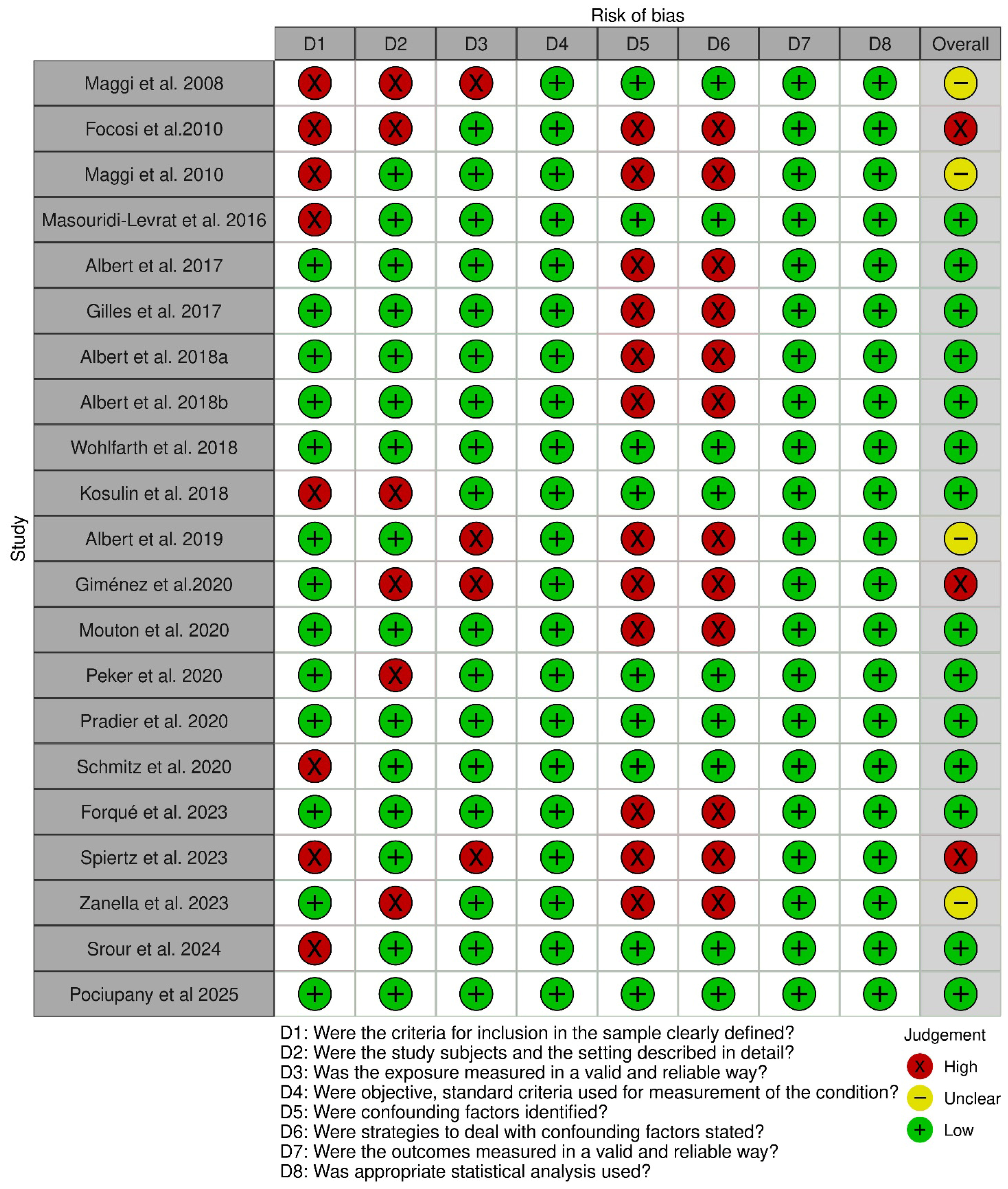
The quality assessment of the 21 studies is summarized in Figure 2. The risk of bias analysis indicated that most of the studies included in this systematic review had a low risk of bias (67%).
However, 19% of the studies showed an unclear risk of bias and in 14% of the studies, the risk of bias was considered high. All 21 studies had well defined study questions. Some studies (8/21, 38%) did not clearly define the inclusion criteria for patients. The methods to measure TTV load were adequately described in all the studies.
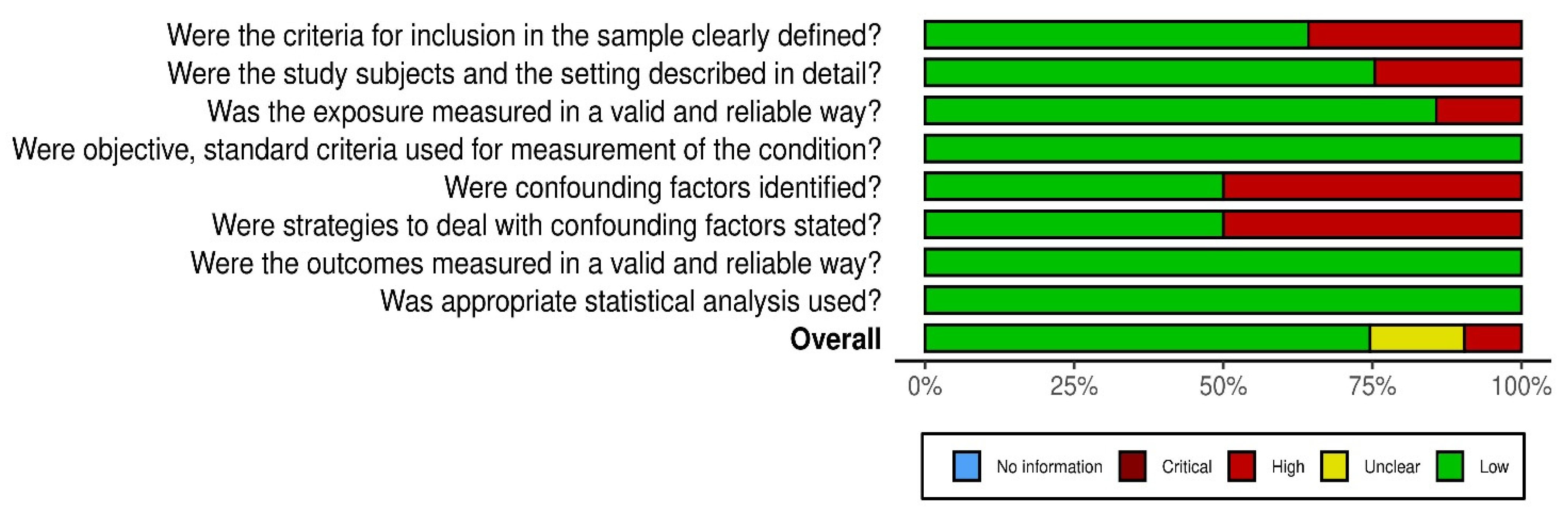
The principal reasons for which most of the studies have been classified as having a risk of bias were related to confounding factors and strategies to deal with confounding factors (Figure 3).
These studies included, in fact, in the analysis, very different HSCT patient groups. These patients suffered from different hematological diseases, which might have a potential different impact on their immunity, experienced different pre-transplant treatment, and also exhibit different baseline immune status—all factors that can independently affect immune recovery and TTV replication. When the authors failed to address these issues, they constituted potential confounding factors. Then, they included patients who were subjected to different prophylaxis treatment for acute graft versus host disease (aGVHD). These differences comprised different types of drugs, different doses, and different lengths of treatment. Such differences can significantly influence immune recovery and viral dynamics, introducing potential bias into the observed associations. Finally, strategies to control confounding, such as patient stratification, were often insufficient, leaving residual bias.

3.3. Dynamics of TTV Viral Load Before and After HSCT

All the studies reported in Table 2, 16 in adult and 2 in pediatric patients, investigated the kinetics of plasma TTV viral load after engraftment. Most of the patients tested positive for TTV before transplantation, ranging from 1 to 5.65 log10 copies/mL in adults and from 4 to 5.70 log10 copies/mL in children. A control group constituted by healthy subjects was included only in four studies [21,23,30,38]. No significant differences were observed between patient and control groups in terms of TTV DNA levels in two studies [21,38], while Peker et al. [38] found a significant difference (p < 0.004).
Then, Mouton et al. [29] analyzed TTV viremia in 80 healthy subjects compared to that of 41 allo-HSCT recipients after 6 months of transplant and found that TTV was detected in 68% (54/80) of healthy subjects and in all patients and that it was significantly higher in allo-HSCT recipients (3.9 vs. 2.1 log10 copies/mL, p < 0.001). Gilles et al. [23] did not report TTV viral load for patient groups before transplantation, limiting, therefore, the comparison between the two groups. Most of the included studies (52%) have the last time point of sample collection after HSCT at +90 days. Many of them [18,19,20,22,23,25,35] performed three sampling time points for evaluating TTV viremia spanning from 30 to 200 days post-transplantation. Among these studies, Albert et al. [22] did not report the median value of TTV viral load for each time point, only the median of the logarithmic increase in DNAemia. Peker et al. [38] limited the analysis of TTV viremia at early engraftment (around +20 days) and after 31–60 days. Two studies [21,28] considered only one time point after transplantation at +90 and +30 days, respectively, while others [26,30,34] performed TTV quantification at more time points until the first year after HSCT.
The method used for quantitative analysis was a quantitative real-time PCR developed in-house for all the studies except two [29,35], which used a commercial assay. Most of the tests used a highly conserved segment of the TTV untranslated region (UTR) as target, and only two studies [21,34] used an assay, which targeted the TTV open reading frame 2 (ORF2). The detection limit ranged from 10 to 100 copies/mL.
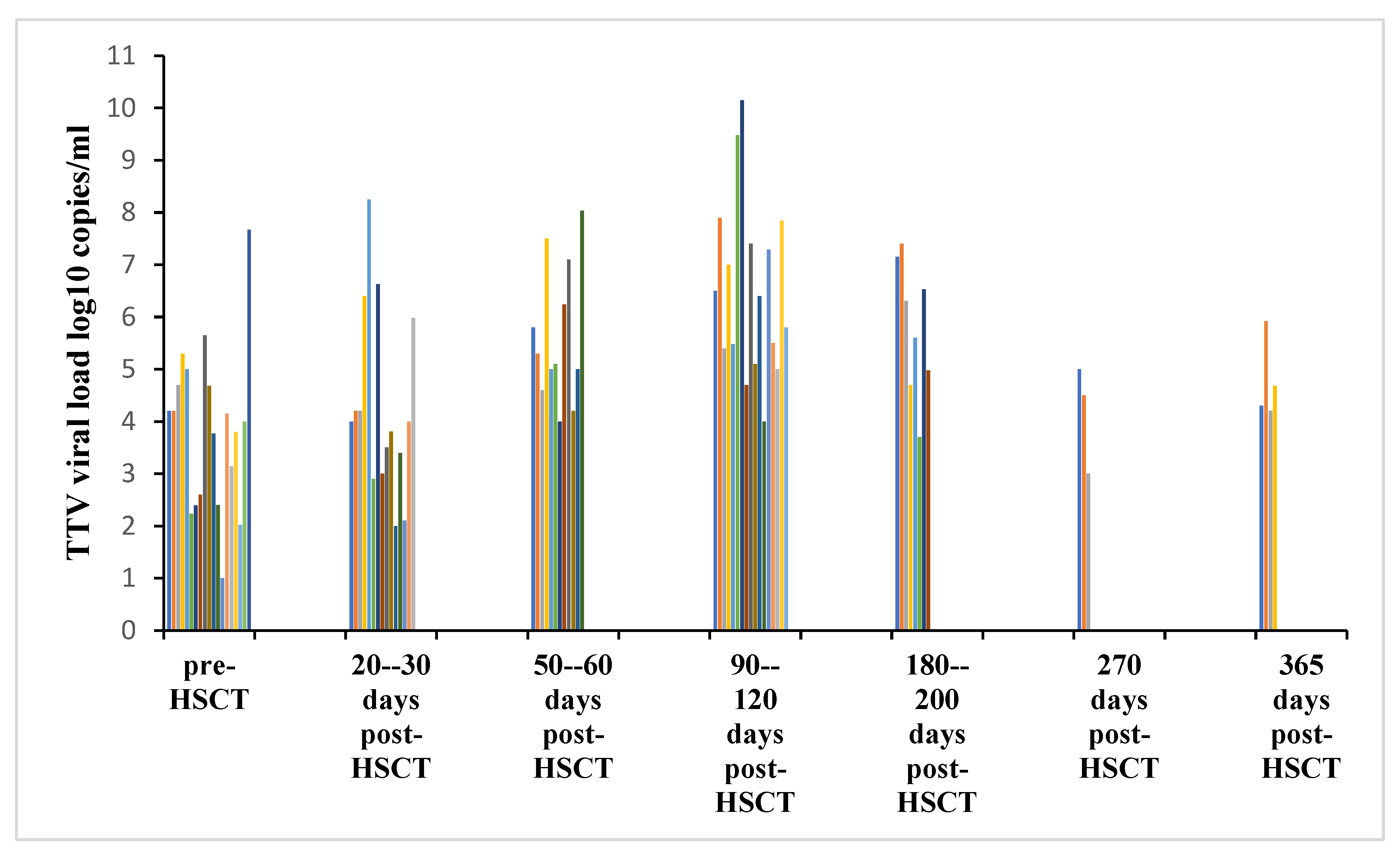
Figure 4 illustrates how the results from all the analyzed studies converge with each other, indicating that TTV viral load increases after HSCT, reaching a peak mostly around days +90 and +120. In detail, Spiertz et al. [33] found that the peak of TTV viral load was reached at days +56, Peker et al. [38] at days +60, and Wohlfarth et al. [26] at days +79. Eight studies [21,22,25,27,31,32,34,35] detected the peak at days +90, and three studies [18,19,37] reported a peak at days +100, while Gilles et al. [23] found that TTV viremia peaked at days +200. After around +120 days, TTV viremia decreases, returning over one year after transplantation to basal values.

3.4. TTV Viral Load and Immune Reconstitution

Thirteen studies investigated whether between TTV viral load and lymphocyte numbers a correlation might be established, but the results were contradictory (Table 2). Because only a few studies reported the absolute T-cell number at the same time points of TTV viral load evaluation, we considered only their correlation. Eight studies [18,19,20,22,23,25,37,38] found that the increase in TTV DNA load over time seemed to parallel that of absolute lymphocyte numbers. Maggi et al. [18] and Focosi et al. [19] observed that the increase in TTV viremia paralleled the increase in circulating CD8+CD57+ T lymphocytes. Gilles et al. [23] reported that the increase in TTV viral load was related to a concomitant normalization of lymphocyte counts. Albert et al. [27] showed that until days +60, TTV DNAemia directly correlated with absolute lymphocyte counts (ALCs) (p = 0.031, rho = 0.171), while days +120 up to days +210 were inversely correlated (p = 0.003, rho = 0.263). According to what is proposed by the authors, TTV viral load can be considered as a biological marker for T-cell reconstitution in the early stages after HSCT, while after day +100, it might indicate a patients’ immunosuppression. In support of this hypothesis, they showed that, in patients treated with corticosteroids for treating GVHD, the median TTV DNA area under a curve between days +90 and +210 was higher than patients to whom the drug was not administered (p = 0.025) [27]. Kosulin et al. [37] did not find any significant correlation between the lymphocyte counts and TTV viral load at days +30, +60, or +100 post-HSCT, while they detected TTV in granulocytes where they evidenced a median DNA copy number increase of 1.8 logs between days +30 and + 60 post-transplantation in a pediatric setting. Wohlfarth et al. [26] found that, immediately afterwards the engraftment, there was an increase in TTV levels and ALCs, but then for all the subsequent follow up periods, they showed an inverse correlation (rs = −0.27; p < 0.01). Pradier et al. [30] also found an inverse correlation between TTV viremia and the number of CD4+ T and NK cells at days +100. Furthermore, Schmitz et al. [31] did not observe any statistically significant correlation between TTV levels and different lymphocyte subpopulations such as CD3+T-cells, CD3+/CD8+ suppressor T-cells, CD3+/CD4+ T-helper cells, or CD45+ lymphocytes until day +300 of follow up. Finally, Mouton et al. [21] also detected no significant correlation between TTV viral load and ALCs or CD3+T-cells after 6 months HSCT.

3.5. TTV Viral Load, Opportunistic Viral Infections, and GVHD

Some studies [22,23,24,26,29,30,31,32,33,35,36] analyzed whether differences in TTV viral load might be related to the occurrence of opportunistic viral reactivation and/or of acute GVHD (aGVHD) (Table 3).
Regarding opportunistic viral infections and TTV viral load (Table 3), Gilles et al. [23] found that patients with detectable CMV, EBV, or BKPyV viremia in the first 100 days post-transplantation had higher TTV viral loads at day +30 than patients negative for these opportunistic viruses (9.26 vs. 6.40 log10 copies/mL, p = 0.005). Albert et al. [24] showed that the mean of TTV DNA load measured at the area under the curve (AUC) between 20 and 30 days post-HSCT was lower in patients with CMV viremia than in patients without it, even though it was not statistically significant (3.3 copies × days × mL−1 vs. 4.4 copies × day × mL−1). However, they found that patients with TTV DNA load AUC 20–30 < 2.8 copies × days × mL−1 developed high levels of CMV viremia. Then, because most of EBV reactivation episodes took place after 50 days HSCT, they investigated the TTV DNA load AUC between day 20 and day 50 after transplantation, showing that there was no significant difference between patients with and without EBV DNAemia. Wohlfarth et al. [26] reported a statistically significant correlation between TTV and CMV DNA loads and between TTV and EBV DNA loads. Then, Mouton et al. [29] found higher TTV DNA loads in patients with CMV viremia than in those who were negative for the virus (median, 4.8 vs. 3.7 log10 copies/mL; p = 0.02) about 6 months after transplantation. Schmitz et al. [31] found that virus reactivation of CMV, EBV, and BKPyV with a viral load > 1000 copies/mL, measured between 0 and 50 days after HSCT, was associated with higher TTV DNAemia, even if not statistically significant, while when the viral load was lower than 1000 copies/mL, no significant difference was observed. On the contrary, Spiertz et al. [33] showed that a TTV load < 1000 copies/mL at the early stages of HSCT was significantly (p not reported) related to a higher risk of CMV infection/reactivation. Pradier et al. [30] established that higher TTV titers at day 100 had higher rates of viral infections after 6 months post-transplant. Forqué et al. [32] found no significative difference in TTV viral load between patients with or without CMV DNAemia, while they observed that a DNA load cut-off ≥ 4.40 log10 copies/mL at pre-transplant might predict the occurrence of BKPyV-HC with a sensitivity ≥ 89%. Srour et al. [35] did not find any difference in median TTV load between the groups with and without viral infections. Finally, Pociupany et al. [36] observed a trend where higher TTV levels were present in patients with viral infections than patients without them.
Regarding the association between TTV viral load and the development of an aGVHD (Table 3), Albert et al. [22] found significant higher TTV levels in patients who developed severe aGVHD than patients without GVHD. Gilles et al. [23] observed that a TTV DNA load < 8.48 log10 copies/mL after 30 days HSCT combined with a lymphocyte count ≥ 5.5 × 10⁸ cells/L positively correlated with a low incidence of aGVHD within the first 100 days after allo-HSCT. Wohlfarth et al. [26] found that higher TTV DNA load in patients who had not received ATG during the conditioning was significantly associated with the development of aGVHD after days +120 and +160. Then, Pradier et al. [30], Forqué et al. [32], and Srour et al. [35] showed that patients with high TTV DNA loads after 100, 30, and 60 days, respectively, had a significantly higher risk of developing aGVHD. Finally, Schmitz et al. [31] did not observe any significant difference in TTV DNAemia between groups of patients with and without aGVHD (Table 3).

4. Discussion

The hypothesis that TTV, one of the first viruses recognized as part of the human virome, might be used to assess the function of the immune system has developed quickly in recent years. TTV, in fact, possesses several notable features that make it a reliable immune marker [39], such as its widespread prevalence, extensive distribution, resistance to antiviral treatments, and the possibility to measure DNA with different PCR assays. However, while TTV viremia could be considered as an indirect measure of immune function in SOT recipients as confirmed by different studies [2,40,41,42,43,44,45,46,47], the clinical utility of TTV viral load in HSCT patients is still under debate, underlining the profound biological differences between these two transplant modalities.
For this reason, our systematic review analyzed whether TTV might be considered a biological marker of immune competence also in the HSCT setting.
The results showed that there was a consensus between all the studies included about the kinetics of TTV DNA viral load, which followed a characteristic pattern. It, in fact, decreased dramatically after conditioning therapy and reached the lowest levels around the time of hematopoietic engraftment; then, the TTV viremia steadily increased, reaching peak levels at day +90 and +120 in most of the analyzed studies. After about 100 days, TTV viral load slightly decreased until it reached a stable plateau over one year after transplantation.
Because hematopoietic cells are considered the principal competent cells for TTV replication, it was suggested that the increase in TTV viral load in blood compartment parallels the repopulation of lymphocytes and therefore measuring the TTV levels might be useful to assess both the hematological and immunological reconstitution.
The results provided by the studies were conflicting. Six studies [18,19,20,22,23,25], performed in adult patients and monitored for about 100 days after HSCT, found that the increase in TTV DNA load over time seemed to parallel that of ALCs. However, this correlation can be explained by the ALC reconstitution post-engraftment, which then serves as a TTV replication reservoir, but did not allow for extrapolating a correlation between TTV and T-cell function.
Three studies [26,27,30], on the contrary, found an inverse correlation between ALCs and TTV viral load after 100 days post-transplantation.
In pediatric patients, Kosulin et al. [37] evidenced no significant correlation between the ALCs and TTV levels at +30, +60, or +100 days post-transplant in 43 children. However, they found that the virus replicated in CD15+ cells, the most representative fraction of neutrophilic granulocytes, revealing that TTV levels correlated significantly with the number of neutrophils at +30 and +60 days after HSCT. Furthermore, they found that expansion of the virus generally starts 1 month after transplantation, with the engraftment of these cells. This finding might suggest that high granulocyte numbers are needed for efficient TTV replication post-transplant and could provide a reason for the delayed initiation of rapid replication of the virus. Then, Peker et al. [38] found in 33 pediatric patients that lymphocyte counts and TTV viral load were positively correlated even if weakly (Spearman’s rank test, rho = 0.29, p = 0.001). These two studies provided additional information about the potential impact of TTV viral load in pediatric HSCTs where data are not available except for a paper that describes a correlation between the chemokine MCP-3 and TTV positivity [48].
Furthermore, in two studies [37,38], higher TTV viral loads were detected after transplantation compared to those observed in adults. This difference could be ascribed to new infections with different genotypes, as detected in a longitudinal study in children [9]. The diversity of TTV genotypes has been found, in fact, to increase in transplant recipients because of engraftment and the transfusion of blood products from multiple donors during the post-transplant period [19].
Based on these results, TTV dynamics might exhibit Janus-like behavior, playing two opposite roles: in the early stages after HSCT, it might parallel immunological reconstitution, and in the long-term after transplantation (around +100 days), TTV viral load might represent the degree of the patient’s immunosuppression.
However, establishing which cut-off value for TTV viral load should be used as watershed between immunosuppression and immunocompetence remains an open question.
TTV-related immune dynamics in patients with hematologic disorders are very complex because immune reconstitution is a multifaceted process that varies significantly between individuals and includes both quantitative and functional parameters of ALC [49].
Therefore, variability found among studies may be influenced by many factors such as the source of the graft (BM, PB, and CB stem cells), which affects immune cell reconstitution. It was, in fact, found that cord blood stem cells led to earlier NK/B reconstitution than BM or PB, skewing TTV kinetics [50]. Another source of variability is linked to the conditioning regimen administered prior to transplantation and to the use of T-cell depletion (e.g., ATG, alemtuzumab), which profoundly affects immune recovery kinetics and TTV replication. Both myeloablative conditioning and higher ATG doses were found to correlate with elevated TTV titers [31,35].
These interventions can delay lymphocyte reconstitution and confound the relationship between TTV load and immune status.
Furthermore, other influencing factors might be due to the cell dose, human leukocyte antigen compatibility, and post-transplant interventions aimed at preventing or managing complications such as opportunistic infections and severe GVHD [51]. Viral interactions are complex and not completely studied; therefore, differences in antiviral prophylaxis (drug type, dose, duration) influence both viral replication and immune dynamics. Herpesviruses, for example, can induce the amplification of other persisting viral DNA. Higher levels of TTV replication have indeed been described in EBV-infected cell lines [52] and persistent human cytomegalovirus infection has been significantly related to higher TTV DNA loads, especially at a younger age [53].
Furthermore, the observed differences might be assigned to different time points chosen for follow up because TTV levels fluctuate during the post-transplant period, and some time point measurements may not capture meaningful trends in immune recovery. Then, another limiting factor is the genomic variability of TTV. Due to the extensive sequence diversity, even within its most conserved region, the efficiency of qPCR amplification can vary across different TTV species, potentially leading to inaccuracies, which might limit its clinical applicability [54].
Then, variability in PCR targets (UTR or ORF 2 regions) across studies can also lead to differences in amplification efficiency and quantification accuracy, making inter-study comparisons problematic.
Similarly, some studies analyzed a possible association between TTV-DNA levels and episodes of viral opportunistic infections and GVHD, but they again yielded inconsistent results.
The discrepancies in findings may stem from heterogeneity in study designs. Some studies focus on correlation, others on predictive value, leading to inconsistent conclusions. Then, lack of standardized monitoring windows reduces the ability to establish causality or predictive accuracy.
Furthermore, post-transplant immunosuppressive therapy is highly variable, influencing significantly both TTV replication and the risk of opportunistic infections or GVHD. Agents such as calcineurin inhibitors (e.g., cyclosporine, tacrolimus) and high doses of corticosteroids can suppress T-cell function to different degrees and durations, with a significant effect on viral control mechanisms. Stronger or prolonged immunosuppression may allow for the persistence of higher TTV loads, which therefore are not necessarily correlated to poor immune recovery but rather to pharmacologic suppression. Future studies should analyze how specific agents influence TTV kinetics and immune cell subsets, while integrated approaches combining TTV load with functional immune assays could improve specificity.
Furthermore, in general, even if a low-risk bias assessment was classified in most studies (67%), it was possible to identify important clinical and methodological differences.
In fact, substantial variability remains in their design, ranging from cross-sectional and retrospective to longitudinal approaches. Additional inconsistencies include imbalances in baseline characteristics, small sample sizes with more than half (52%) of the studies evaluating fewer than 50 patients, differences in age groups (adults vs. children), diagnostic techniques, immune parameters assessed, and the inclusion or absence of control groups. Finally, publication bias cannot be excluded, although an assessment using funnel plots or statistical tests was not performed due to outcome heterogeneity. So far, there is the possibility that negative or inconclusive results were underreported, potentially affecting the overall interpretation of evidence.

5. Conclusions

TTV plasma viral load may reflect the degree of immunosuppression and immune reconstitution after HSCT and therefore could serve as a candidate biomarker in patients with immunoproliferative disorders, although current evidence remains heterogenous.
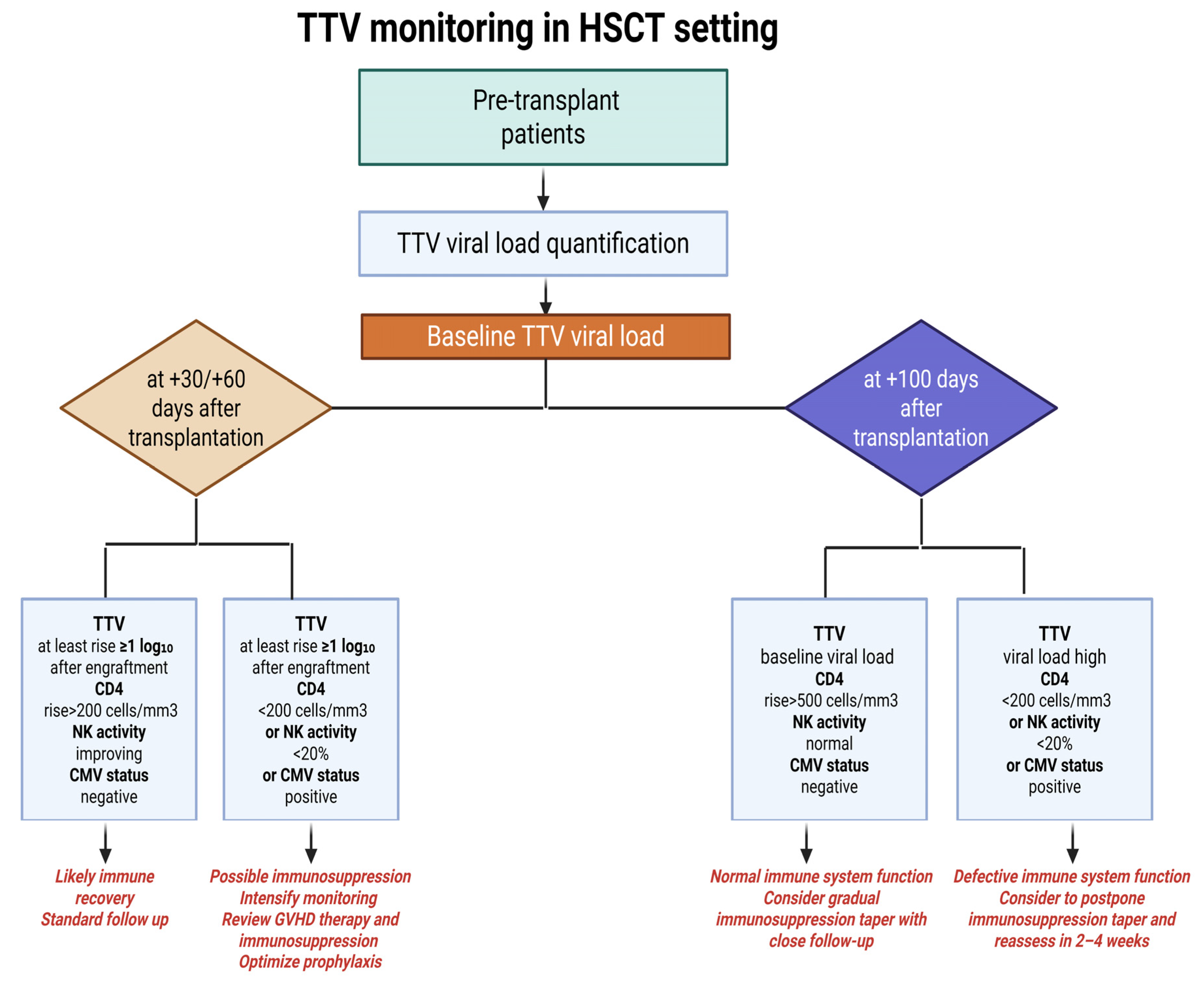
Nevertheless, evidence from the analyzed studies suggests that during the early post-transplant phase (approximately day +30 to +60), increasing TTV levels may parallel immune recovery, in terms of lymphocyte reconstitution. Conversely, in the later phase (>100 days), persistently high TTV loads are more likely to indicate ongoing immunosuppression, particularly in patients receiving intensive GVHD prophylaxis or treatment. To implement TTV monitoring in routine practice, standardized sampling at key time points (baseline, day +30, +60, and +100) should be combined with complementary functional markers such as CD4+ T-cell counts, NK cell activity, and CMV reactivation to guide immunosuppressive treatment and infection risk stratification, as proposed in Figure 5.
Future studies and standardized protocols are essential to establish clinically meaningful cut-off values that are able to clarify whether TTV viral load evaluated at specific time points reflects immune recovery or immunosuppression.

Supplementary Materials

The following supporting information can be downloaded at: https://www.mdpi.com/article/10.3390/pathogens15010105/s1, Table S1: PRISMA 2020 abstract checklist; Table S2: PRISMA 2020 27-item checklist.

Author Contributions

M.A.D.F. and E.Q.-R. were responsible for conceptualization and search design. M.A.D.F. supervised the study. M.S., M.A., G.B., R.B., D.B. and A.S. were responsible for screening, data extraction, quality assessment, and interpretation. M.A.D.F., E.Q.-R. and G.T. prepared the first draft. All authors have read and agreed to the published version of the manuscript.

Funding

This research received no external funding.

Institutional Review Board Statement

Not applicable.

Informed Consent Statement

Not applicable.

Data Availability Statement

Not applicable.

Conflicts of Interest

The authors declare no conflicts of interest.

References

  1. Nishizawa, T.; Okamoto, H.; Konishi, K.; Yoshizawa, H.; Miyakawa, Y.; Mayumi, M. A Novel DNA Virus (TTV) Associated with Elevated Transaminase Levels in Posttransfusion Hepatitis of Unknown Etiology. Biochem. Biophys. Res. Commun. 1997, 241, 92–97. [Google Scholar] [CrossRef]
  2. De Vlaminck, I.; Khush, K.K.; Strehl, C.; Kohli, B.; Luikart, H.; Neff, N.F.; Okamoto, J.; Snyder, T.M.; Cornfield, D.N.; Nicolls, M.R.; et al. Temporal Response of the Human Virome to Immunosuppression and Antiviral Therapy. Cell 2013, 155, 1178–1187. [Google Scholar] [CrossRef] [PubMed]
  3. Sabbaghian, M.; Gheitasi, A.A.; Shekarchi, A.A.; Tavakoli, A.; Pootahmasebi, V. The mysterious anelloviruses: Investigating its role in human diseases. BMC Microbiol. 2024, 24, 40. [Google Scholar] [CrossRef] [PubMed]
  4. Okamoto, H. History of discoveries and pathogenicity of TT viruses. Curr. Top. Microbiol. Immunol. 2009, 331, 1–20. [Google Scholar] [CrossRef] [PubMed]
  5. Varsani, A.; Opriessnig, T.; Celer, V.; Maggi, F.; Okamoto, H.; Blomström, A.L.; Cadar, D.; Harrach, B.; Biagini, P.; Kraberger, S. Taxonomic update for mammalian anelloviruses (family Anelloviridae). Arch. Virol. 2021, 166, 2943–2953. [Google Scholar] [CrossRef]
  6. Takahashi, K.; Iwasa, Y.; Hijikata, M.; Mishiro, S. Identification of a new human DNA virus (TTV-like mini virus, TLMV) intermediately related to TT virus and chicken anemia virus. Arch. Virol. 2000, 145, 979–993. [Google Scholar] [CrossRef]
  7. Ninomiya, M.; Nishizawa, T.; Takahashi, M.; Lorenzo, F.R.; Shimosegawa, T.; Okamoto, H. Identification and genomic characterization of a novel human torque teno virus of 3.2 kb. J. Gen. Virol. 2007, 88, 1939–1944. [Google Scholar] [CrossRef]
  8. Spandole, S.; Cimponeriu, D.; Berca, L.M.; Mihaescu, G. Human anelloviruses: An update of molecular, epidemiological and clinical aspects. Arch. Virol. 2015, 160, 893–908. [Google Scholar] [CrossRef]
  9. Väisänen, E.; Kuisma, I.; Mäkinen, M.; Ilonen, J.; Veijola, R.; Toppari, J.; Hedman, K.; Söderlund-Venermo, M. Torque teno virus primary infection kinetics in early childhood. Viruses 2022, 14, 1277. [Google Scholar] [CrossRef]
  10. Tyschik, E.; Rasskazova, A.; Degtyareva, A.V.; Rebrikov, D.V.; Sukhikh, G. Torque teno virus dynamics during the first year of life. Virol. J. 2018, 15, 94–96. [Google Scholar] [CrossRef]
  11. Goens, M.; Mouton, W.; Oriol, G.; Cheynet, V.; Restier, L.; Bal, A.; Brengel-Pesce, K.; Rozières, A.; Viret, C.; Nancey, S.; et al. Deep characterization of circulating Torque teno virus DNA load in Chron’s disease patients. J. Med. Virol. 2025, 97, e70473. [Google Scholar] [CrossRef] [PubMed]
  12. Goto, K.; Sugiyama, K.; Ando, T.; Mizutani, F.; Terabe, K.; Tanaka, K.; Nishiyama, M.; Wada, Y. Detection rates of TT virus DNA in serum of umbilical cord blood, breast milk and saliva. Tohoku J. Exp. Med. 2000, 191, 203–207. [Google Scholar] [CrossRef] [PubMed]
  13. Maillard, A.; Feghoul, L.; Lemiale, V.; Mercier-Delarue, S.; Demoule, A.; Jaber, S.; Klouche, K.; Kouatchet, A.; Argaud, L.; Barbier, F.; et al. Clinical significance of respiratory Torque Teno virus in immunocompromised patients with acute respiratory failure. Clin. Microbiol. Infect. 2025, 31, 2073–2081. [Google Scholar] [CrossRef] [PubMed]
  14. van Rijn, A.; Wunderink, H.; Sidorov, I.; de Brouwer, C.; Kroes, A.; Putter, H.; de Vries, A.P.; Rotmans, J.I.; Feltkamp, M.C. Torque teno virus loads after kidney transplantation predict allograft rejection but not viral infection. J. Clin. Virol. 2021, 140, 104871. [Google Scholar] [CrossRef]
  15. Page, M.J.; McKenzie, J.E.; Bossuyt, P.M.; Boutron, I.; Hoffmann, T.C.; Mulrow, C.D.; Shamseer, L.; Tetzlaff, J.M.; Akl, E.A.; Brennan, S.E.; et al. The PRISMA 2020 statement: An updated guideline for reporting systematic reviews. BMJ 2021, 372, n71. [Google Scholar] [CrossRef]
  16. Tufanaru, C.; Munn, Z.; Aromataris, E.; Campbell, J.; Hopp, L. Chapter3: Systematic reviews of effectiveness. In JBJ Manual for Evidence Synthesis; Joanna Briggs Institute: North Adelaide, SA, Australia, 2020. [Google Scholar]
  17. McGuinness, L.A.; Higgins, J.P.T. Risk of bias VISualization (robvis): An R package and Shiny web app for visualization risk of bias assessments. Res. Synth. Methods 2021, 12, 55–61. [Google Scholar] [CrossRef]
  18. Maggi, F.; Ricci, V.; Bendinelli, M.; Ceccherini-Nelli, L. Changes in CD8+57+ T lymphocyte expansions after autologous hematopoietic stem cell transplantation correlate with changes in Torquetenovirus viremia. Transplantation 2008, 85, 1867–1868. [Google Scholar] [CrossRef]
  19. Focosi, D.; Maggi, F.; Albani, M.; Macera, L.; Ricci, V.; Gragnani, S.; Di Beo, S.; Ghimenti, M.; Antonelli, G.; Bendinelli, M.; et al. Torquetenovirus viremia kinetics after autologous stem cell transplantation are predictable and may serve as a surrogate marker of functional immune reconstitution. J. Clin. Virol. 2010, 47, 189–192. [Google Scholar] [CrossRef]
  20. Maggi, F.; Focosi, D.; Albani, M.; Lanini, L.; Vatteroni, M.L.; Petrini, M.; Ceccherini-Nelli, L.; Pistello, M.; Bendinelli, M. Role of hematopoietic cells in the maintenance of chronic human torquetenovirus plasma viremia. J. Virol. 2010, 84, 6891–6893. [Google Scholar] [CrossRef]
  21. Masouridi-Levrat, S.; Pradier, A.; Simonetta, F.; Kaiser, L.; Chalandon, Y.; Roosnek, E. Torque teno virus in patients undergoing allogeneic hematopoietic stem cell transplantation for hematological malignancies. Bone Marrow Transplant. 2016, 51, 440–442. [Google Scholar] [CrossRef]
  22. Albert, E.; Solano, C.; Pascual, T.; Torres, I.; Macera, L.; Focosi, D.; Maggi, F.; Giménez, E.; Amat, P.; Navarro, D. Dynamics of Torque Teno virus plasma DNAemia in allogeneic stem cell transplant recipients. J. Clin. Virol. 2017, 94, 22–28. [Google Scholar] [CrossRef] [PubMed]
  23. Gilles, R.; Herling, M.; Holtick, U.; Heger, E.; Awerkiew, S.; Fish, I.; Höller, K.; Sierra, S.; Knops, E.; Kaiser, R.; et al. Dynamics of Torque Teno virus viremia could predict risk of complications after allogeneic hematopoietic stem cell transplantation. Med. Microbiol. Immunol. 2017, 206, 355–362. [Google Scholar] [CrossRef] [PubMed]
  24. Albert, E.; Solano, C.; Giménez, E.; Focosi, D.; Pérez, A.; Macera, L.; Piñana, J.L.; Boluda, J.C.H.; Maggi, F.; Navarro, D. The kinetics of torque teno virus plasma DNA load shortly after engraftment predicts the risk of high-level CMV DNAemia in allogeneic hematopietic stem cell transplant recipients. Bone Marrow Transplant. 2018, 53, 180–187. [Google Scholar] [CrossRef] [PubMed]
  25. Albert, E.; Torres, I.; Talaya, A.; Giménez, E.; Piñana, J.L.; Hernández-Boluda, J.C.; Focosi, D.; Macera, L.; Maggi, F.; Solano, C.; et al. Kinetics of torque teno virus DNA load in saliva and plasma following allogeneic hematopoietic stem cell transplantation. J. Med. Virol. 2018, 90, 1438–1443. [Google Scholar] [CrossRef]
  26. Wohlfarth, P.; Leiner, M.; Schoergenhofer, C.; Hopfinger, G.; Goerzer, I.; Puchhammer-Stoeckl, E.; Rabitsch, W. Torquetenovirus dynamics and immune marker properties in patients following allogeneic hematopoietic stem cell transplantation: A prospective longitudinal study. Biol. Blood Marrow Transplant. 2018, 24, 185–199. [Google Scholar] [CrossRef]
  27. Albert, E.; Solano, C.; Giménez, E.; Focosi, D.; Pérez, A.; Macera, L.; Piñana, J.L.; Mateo, E.V.; Hernández-Boluda, J.C.; Maggi, F.; et al. Kinetics of Alphatorquevirus plasma DNAemia at late times after allogeneic hematopoietic stem cell transplantation. Med. Microbiol. Immunol. 2019, 208, 253–258. [Google Scholar] [CrossRef]
  28. Giménez, E.; Monzó, C.; Albert, E.; Fuentes-Trillo, A.; Seda, E.; Piñana, J.L.; Hernández-Boluda, J.C.; Solano, C.; Chaves, J.; Navarro, D. Diversity and dynamic change of anelloviruses in plasma following allogeneic hematopoietic stem cell transplantation. J. Med. Virol. 2021, 93, 5167–5172. [Google Scholar] [CrossRef]
  29. Mouton, W.; Conrad, A.; Bal, A.; Boccard, M.; Malcus, C.; Ducastelle-Lepretre, S.; Balsat, M.; Barraco, F.; Larcher, M.V.; Fossard, G.; et al. Torque teno virus viral load as a marker of immune function in allogeneic hematopoietic stem cell transplantation recipients. Viruses 2020, 12, 1292. [Google Scholar] [CrossRef]
  30. Pradier, A.; Masouridi-Levrat, S.; Bosshard, C.; Dantin, C.; Vu, D.L.; Zanella, M.C.; Boely, E.; Tapparel, C.; Kaiser, L.; Chalandon, Y.; et al. Torque Teno Virus as a Potential Biomarker for Complications and Survival After Allogeneic Hematopoietic Stem Cell Transplantation. Front. Immunol. 2020, 11, 998. [Google Scholar] [CrossRef]
  31. Schmitz, J.; Kobbe, G.; Kondakci, M.; Schuler, E.; Magorsch, M.; Adams, O. The value of Torque teno virus (TTV) as a marker for the degree of immunosuppression in adult patients after hematopoietic stem cell transplantation (HSCT). Biol. Blood Marrow Transplant. 2020, 26, 643–650. [Google Scholar] [CrossRef]
  32. Forqué, L.; Albert, E.; Piñana, J.L.; Pérez, A.; Hernani, R.; Solano, C.; Navarro, D.; Giménez, E. Monitoring of plasma Torque teno virus, total Anelloviridae and Human Pegivirus 1 viral load for the prediction of infectious events and acute graft versus host disease in the allogeneic stem cell transplantation setting. J. Med. Virol. 2023, 95, e29107. [Google Scholar] [CrossRef] [PubMed]
  33. Spiertz, A.; Tsakmaklis, A.; Farowski, F.; Knops, E.; Heger, E.; Wirtz, M.; Kaiser, R.; Holtick, U.; Vehreschild, M.J.G.T.; Di Cristanziano, V. Torque teno virus-DNA load as individual cytomegalovirus risk assessment parameter upon allogeneic hematopoietic stem cell transplantation. Eur. J. Haematol. 2023, 111, 963–969. [Google Scholar] [CrossRef] [PubMed]
  34. Zanella, M.C.; Vu, D.L.; Hosszu-Fellous, K.; Neofytos, D.; Van Delde, C.; Turin, L.; Poncet, A.; Simonetta, F.; Masouridi-Levrat, S.; Chalandon, Y.; et al. Longitudinal Detection of Twenty DNA and RNA Viruses in Allogeneic Hematopoietic Stem Cell Transplant Recipients Plasma. Viruses 2023, 15, 928. [Google Scholar] [CrossRef] [PubMed]
  35. Srour, M.; Grenier, C.; Magro, L.; Hober, D.; Yakoub-Agha, I.; Engelmann, I. High Torque teno virus load and outcome of patients undergoing allogeneic hematopoietic cell transplantation. J. Med. Virol. 2024, 96, e29458. [Google Scholar] [CrossRef]
  36. Pociupany, M.; Tarabella, C.; Snoeck, R.; Dierickx, D.; Andrei, G. Viral Infections in HSCT Recipients with Post-Transplant Lymphoproliferative Disorder: The Role of Torque Teno Virus as a Marker of Immune Functions. Microorganisms 2025, 13, 326. [Google Scholar] [CrossRef]
  37. Kosulin, K.; Kernbichler, S.; Pichler, H.; Lawitschka, A.; Geyeregger, R.; Witt, V.; Lion, T. Post-transplant Replication of Torque Teno Virus in Granulocytes. Front. Microbiol. 2018, 9, 2956. [Google Scholar] [CrossRef]
  38. Peker, B.O.; Daloğlu, A.E.; Görzer, I.; Purchhammer-Stöckl, E.; Parkan, O.M.; Akbas, H.; Kintrup, G.T.; Mutlu, D.; Küpesiz, O.A.; Colak, D. Investigation of Torque teno virus (TTV) DNA as an immunological and virological marker in pediatric hematopoietic stem cell transplantation (HSCT) patients. Microb. Pathog. 2020, 149, 104397. [Google Scholar] [CrossRef]
  39. Medina, J.B.; França Vieira e Silva, F.; Veloso Caixeta, R.A.; de Oliveira Rech, B.; Perez-Jardón, A.; Padin-Iruega, M.E.; Pérez-Sayans, M.; Braz-Silva, P.H.; Ortega, K.L. Torque teno virus as a marker of immune status in immunocompromised patients: A systematic review. Eur. J. Clin. Investig. 2025, 55, e70068. [Google Scholar] [CrossRef]
  40. Focosi, D.; Antonelli, G.; Pistello, M.; Maggi, F. Torquetenovirus: The human virome from bench to bedside. Clin. Microbiol. Infect. 2016, 22, 589–593. [Google Scholar] [CrossRef]
  41. Gorzer, I.; Jaksch, P.; Kundi, M.; Seitz, T.; Klepetko, W.; Puchhammer-Stockl, E. Pre-transplant plasma Torque Teno virus load and increase dynamics after lung transplantation. PLoS ONE 2015, 10, e0122975. [Google Scholar] [CrossRef]
  42. Beland, K.; Dore-Nguyen, M.; Gagne, M.J.; Patey, N.; Brassard, J.; Alvarez, F.; Halac, U. Torque Teno Virus in children who underwent orthotopic liver transplantation: New insights about a common pathogen. J. Infect. Dis. 2014, 209, 247–254. [Google Scholar] [CrossRef]
  43. Focosi, D.; Macera, L.; Pistello, M.; Maggi, F. Torquetenovirus (TTV) viremia correlates with intensity of maintenance immunosuppression in adult orthotopic liver transplantation. J. Infect. Dis. 2014, 43. 210, 667–668. [Google Scholar] [CrossRef]
  44. Gorzer, I.; Haloschan, M.; Jaksch, P.; Klepetko, W.; Puchhammer-Stockl, E. Plasma DNA levels of Torque teno virus and immunosuppression after lung transplantation. J. Heart Lung Transpl. 2014, 33, 320–328. [Google Scholar] [CrossRef] [PubMed]
  45. Schiemann, M.; Puchhammer-Stöckl, E.; Eskandary, F.; Kohlbeck, P.; Rasoul-Rockenschaub, S.; Heilos, A.; Kozakowski, N.; Görzer, I.; Kikić, Ž.; Herkner, H.; et al. Torque teno virus load-inverse association with antibody-mediated rejection after kidney transplantation. Transplantation 2017, 101, 360–367. [Google Scholar] [CrossRef] [PubMed]
  46. Simonetta, F.; Pradier, A.; Masouridi-Levrat, S.; van Delden, C.; Giostra, E.; Morard, I.; Mueller, N.; Muellhaupt, B.; Valli, P.V.; Semmo, N.; et al. Torque teno virus load and acute rejection after orthotopic liver transplantation. Transplantation 2017, 101, e219–e221. [Google Scholar] [CrossRef] [PubMed]
  47. Jaksch, P.; Kundi, M.; Görzer, I.; Muraközy, G.; Lambers, C.; Benazzo, A.; Hoetzenecker, K.; Klepetko, W.; Puchhammer-Stöckl, E. Torque teno virus as a novel biomarker targeting the efficacy of immunosuppression after lung transplantation. J. Infect. Dis. 2018, 218, 1922–1928. [Google Scholar] [CrossRef]
  48. Zanotta, N.; Maximova, N.; Campisciano, G.; Del Savio, R.; Pizzol, A.; Casalicchio, G.; Berton, E.; Comar, M. Up-regulation of the monocyte chemotactic protein-3 in sera from bone marrow transplanted children with torquetenovirus infection. J. Clin. Virol. 2015, 63, 6–11. [Google Scholar] [CrossRef]
  49. Velardi, E.; Clave, E.; Arruda, L.C.M.; Benini, F.; Locatelli, F.; Toubert, A. The role of the thymus in allogeneic bone marrow transplantation and the recovery of the peripheral T-cell compartment. Semin. Immunopathol. 2021, 43, 101–117. [Google Scholar] [CrossRef]
  50. Ando, T.; Tachibana, T.; Tanaka, M.; Suzuki, T.; Ishiyama, Y.; Koyama, S.; Ogusa, E.; Numata, A.; Matsumoto, K.; Kanamori, H.; et al. Impact of graft sources on immune reconstitution and survival outcomes following allogeneic stem cell transplantation. Blood Adv. 2020, 4, 408–419. [Google Scholar] [CrossRef]
  51. Yanir, A.; Schulz, A.; Lawitschka, A.; Nierkens, S.; Eyrich, M. Immune Reconstitution After Allogeneic Haematopoietic Cell Transplantation: From Observational Studies to Targeted Interventions. Front. Pediatr. 2022, 9, 786017. [Google Scholar] [CrossRef]
  52. Borkosky, S.S.; Whitley, C.; Kopp-Schneider, A.; zur Hausen, H.; de Villiers, E.M. Epstein-Barr virus stimulates torque teno virus replication: A possible relationship to multiple sclerosis. PLoS ONE 2012, 7, 32160. [Google Scholar] [CrossRef]
  53. Haloschan, M.; Bettesch, R.; Görzer, I.; Weseslindtner, L.; Kundi, M.; Puchhammer-Stöckl, E. TTV DNA plasma load and its association with age, gender, and HCMV IgG serostatus in healthy adults. Age 2014, 36, 9716. [Google Scholar] [CrossRef]
  54. Alhadid, Y.; Mamroth, M.; Wang, Z.; Chadha, A.; Rumpler, M.; Vlassov, A.; Chikova, A. Development of a novel qPCR test for monitoring immunuppression levels by quantifying torque teno virus (TTV) in whole blood. Hum. Immunol. 2025, 86, 111348. [Google Scholar] [CrossRef]
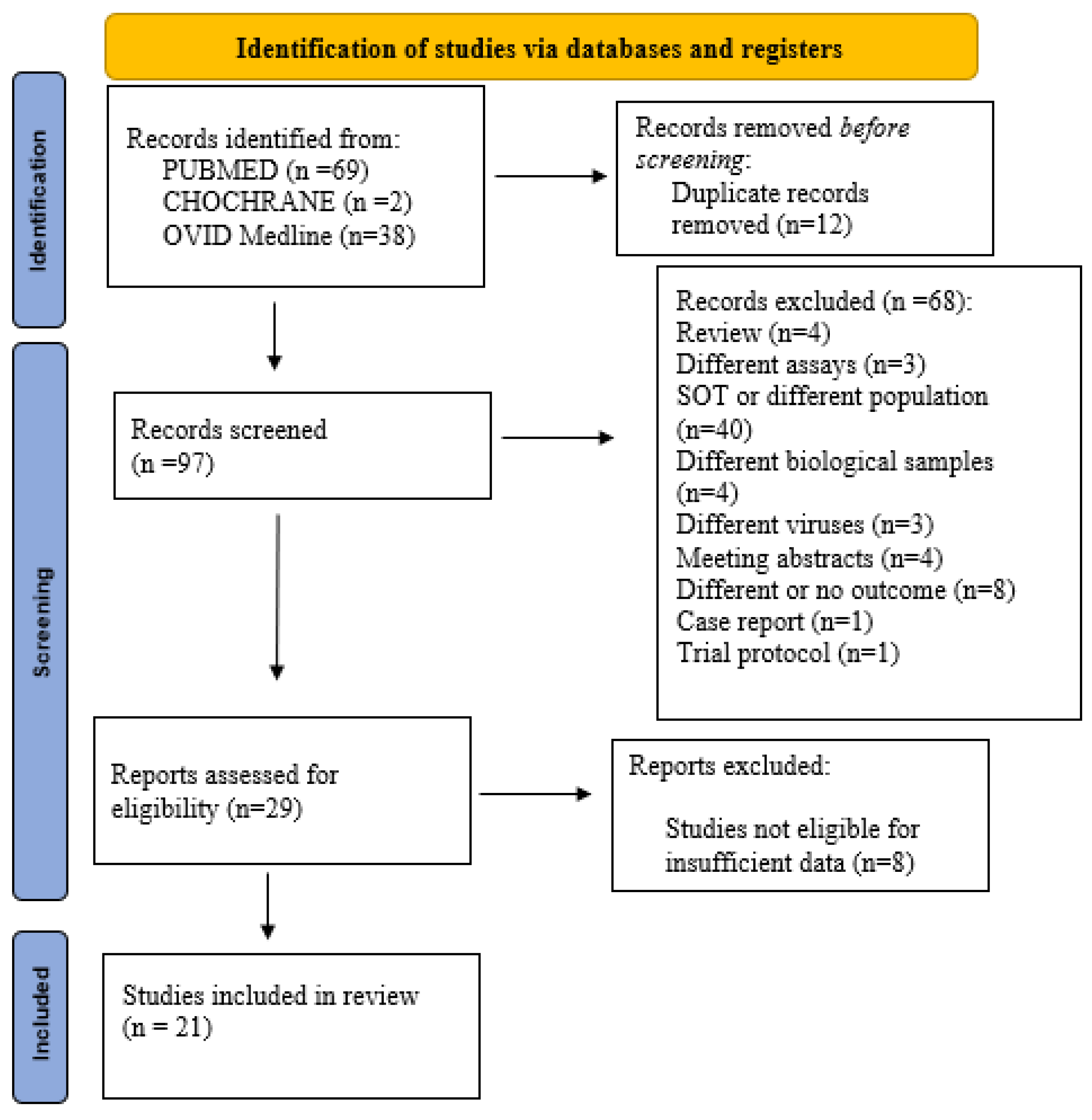
Figure 1. Adapted PRISMA 2020 flow diagram.
Pathogens 15 00105 g001
Figure 2. Traffic light plots of the domain-level judgements for each individual result. Maggi et al., 2008 [18]; Focosi et al., 2010 [19];Maggi et al., 2010 [20]; Masouridi-Levrat et al., 2016 [21], Albert et al., 2017 [22]; Gilles et al., 2017 [23]; Albert et al., 2018a [24]; Albert et al., 2018b [25], Wohlfarth et al., 2018 [26]; Kosulin et al., 2018 [37]; Albert et al., 2019 [27]; Giménez et al., 2020 [28]; Mouton et al., 2020 [29]; Peker et al., 2020 [38]; Pradier et al., 2020 [30]; Schmitz et al., 2020 [31]; Forqué et al., 2023 [32]; Spiertz et al., 2023 [33]; Zanella et al., 2023 [34]; Srour et al., 2024 [35]; Pociupany et al., 2025 [36].
Pathogens 15 00105 g002
Figure 3. Weighted bar plots of the distribution of risk of bias judgements within each bias domain.
Pathogens 15 00105 g003
Figure 4. TTV DNA load kinetics in allogeneic hematopoietic stem cell transplant recipients according to the studies included in the systematic review.
Pathogens 15 00105 g004
Figure 5. TTV-guided immune monitoring after HSCT. Patients are sampled at standardized time points (pre-HSCT, at days +30, +60, +100). At each time point, TTV viral load (qPCR) detection should be integrated with CD4+ T-cell counts, NK cell activity, and CMV DNAemia. Suggested actions include intensified monitoring or adjustment of immunosuppression when risk markers are high, versus cautious taper when the composite profile indicates recovery. Created by using Biorender.com.
Pathogens 15 00105 g005
Table 1. Summary of characteristics of included studies and patients.
SourceYearCountryStudy DesignPatient NumberMale, n (%) Patient Age, Median (Range) Clinical
Endpoint
Donors (n) Stem Cell Source (n) Diagnosis (n) Conditioning Prophylaxis (n) Reference
Maggi et al.2008ItalyLongitudinal19NANAIRNAPB (15)MM (19)MACNA[18]
Focosi et al.2010ItalyLongitudinal47NANAIRRelatedPB (47)MM (36), LY (10), AML (1)MAC (37), HCDT (10)NA[19]
Maggi et al.2010ItalyLongitudinal41 (25)50 (41–58)IRNAPB (4)T-ALL (1), B-ALL (1), ALL (1), AML (1)NANA[20]
Masouridi-Levrat et al.2016SwitzerlandLongitudinal12167 (55)50 (18–70)IRMMURD (10), MMRD (7), MSD (29), MUD (37)PB (121)AML (58), ALL (15), MDS (12), NHL (10), MPS (6), MM (9), HL (5), CML (39, CLL (1), MDPS (1)NANA[21]
Albert et al.2017SpainLongitudinal7238 (53)54 (18–69)aGVHDRelated (37); unrelated (35); matched (49); mismatched (23)PB (68); BM (3); CB (1)HL (5); NHL (15); CLL (6); ALL (7); AML (19); CML (1); MM (5); MDS (10); others (4)MAC (13); NMA (59)Steroids (45), ASCT (30), TKI (16)[22]
Gilles et al.2017GermanyLongitudinal2313 (57)57 (33–75)IRMRD (5); MUD (8); MMURD (9); haploidentical (1)PB (23)AML (11); ALL (1); CLL (1); CMML (1); others (9)RIC (23)CSA/MMF (18), CSA/MTX (2), ATG/CSA (1), CSA/TAC (1), MMF/TAC (1)[23]
Albert et al.2018aSpainLongitudinal7142 (59)55 (18–70)OIRelated (39); unrelated (32); matched (50); mismatched (21)PB (69); BM (1); CB (1)HL (3); NHL (21); CLL (6); ALL (6); AML (15); MM (5); MDS (7); others (8)MAC (13), NMA (58)CSA or MTF/TAC (24), CSA or MMF/TAC (29), regimens including thymoglobulin (4), regimens including cyclophosphamide (14)[24]
Albert et al.2018bSpainLongitudinal3822 (58)55 (26–69)IRRelated (22); unrelated (16); matched (26);
mismatched (12)
PB (37), BM (1)HL (1), NHL (14), ALL (4), CLL (3), AML (6), MM (2), MDS (6), others (2)MAC (5); RIC (33)CSA or MTF/TAC (13), CSA or MMF/TAC (18), regimens including cyclophosphamide (7)[25]
Wohlfarth et al.2018AustriaLongitudinal5032 (64)49 (37–57)IR, OI, aGVHDUnrelated (35), SIB (13), mismatched (18)PB (45), CB (3), BM (2)AML (25), ALL (9), MDS (6), NHL (3), others (7)MAC (26), RIC (16), NMA (8)CSA + MTX (26), CSA + MMF (24)[26]
Albert et al.2019GermanyLongitudinal3316 (48)56 (19–70)IRRelated (18), unrelated (15)PB (31), BM (1), CB (1)Lymphoma (12), leukemia (12), myeloma (4), MDS (3), MF (2)MAC (6), NMA (27)CSA + MTX or MMF (19), TAC + SIRO (14)[27]
Gimenez et al.2020SpainLongitudinal2514 (56)54 (24–69)IRMRD (7), MUD (8),
MMRD (5), Haplo (5)
PB (23), BM (2)Lymphoma (10), AML (4), ALL (4), MDS (2), CLL (3), MM (2)NANA[28]
Mouton et al.2020FranceCross-sectional4125 (61)56 (40–64)IR, OIMRD (23), MUD (15), MMURD (3)PB (28), BM (13)Myeloid neoplasm and acute leukemia (37), others (4)MAC (17), RIC (24)100% but not reported specifically for each patient[29]
Pradier et al.2020SwitzerlandLongitudinal168104 (62)51 (39–59)IR, aGVHDSIB (71), MUD (75),
MMUD (13), Haplo (9)
PB (149),
BM (19)
AML (78), ALL (17), MDS (22), MPS (11), lymphoma (12), myeloma (11)RIC (85),
MAC (83)
CSA + MMF (85),
CSA + MTX (83)
[30]
Schmitz et al.2020GermanyRetrospective12374 (60)54 (19–75)IR, OI, aGVHDUnrelated (90), related (33), matched (105),
mismatched (18)
PB (116), BM (7)AML (58), ALL (9), MDS (33), NHL (11), others (12)MAC (48), RIC (75)MMF + CSA (30),
MMF + TAC (83)
[31]
Forqué et al.2023SpainRetrospective7543 (57)54 (19–70)IR,OI,
aGVHD
Related (46),
unrelated (29),
matched (41),
mismatched (9),
Haplo (25)
PB (75)AML (28), ALL (1), CML (3), CLL (3), HL (13), MM (1), MDS (4), MF (4), NHL (15),
others (3)
MAC (14), RIC (61)SIRO + MMF + cyclophosphamide (71), TAC + SIRO (2), TAC +
CP (2)
[32]
Spiertz et al.2023GermanyRetrospective5933 (56)52 (19–74)IR,OIMUD (36),
MRD (13),
MMUD (7),
MMRD haplo-identical (3)
NAAML (31), ALL (6),
CML (2), CLL (4), MDS (10),
others (6)
RIC (54), MAC (5)CSA + MMF or MTX (59)[33]
Zanella et al.2023SwitzerlandLongitudinal10972 (66)56 (no range)IRMUD (47),
MSD (28),
Haplo (24), MMURD (10)
PB (96), BM (13)AML (59), MDS/MDPS (27), ALL (10), MPS (4),
lymphoma (4), CLL (2), myeloma (2),
CML (1)
RIC (74), MAC (43)NA[34]
Srour et al.2024FranceLongitudinal7041 (59)54 (19–73)IR, OI, aGVHDMRD (14), MUD (40), MMURD (5), Haplo (11)PB (37), BM (33)HL (1), NHL (6), MM (2), ALL (13), AML (27), CML (1), MDS (13), MF (3), others (4)MAC (36), RIC (34)NA[35]
Pociupany et al.2025BelgiumLongitudinal4828 (58)PTLD patients 52 (16–67), not PTLD 53 (0–68)OIMUD (27), MRD (15), Haplo (6), CB (1)PB (40), BM (8)HL (3), T-cell/NK-cell lymphoma (3), MCL (1), ALL (3), AML (18), MDS (5), MF (1), CML (1), MM (1),
others (5), NA (7)
MAC (29), NMA (29)ATG, CSA + MTX (7), ATG, CSA + MMF (1), CSA + MMF (4), MMF (1), CSA (2), CSA + CP (3), others (3), NA (27)[36]
Kosulin et al.2018ItalyLongitudinal43NAPediatric patients (age NA)IRUnrelated (27), MSD (10), MMRD (6)NAHM (45), SCID (7), FAA (1)MAC (22), RIC (21)NA[37]
Peker et al.2020TurkeyRetrospective3319 (58)7.8 (0.7–18.6)IRMUD (19), MRD (11), autolog (2), Haplo (1)PB (16), BM (16), CB + BM (1)HLH (2), AML (7), ALL (5), TM (8), FAA (3), JMML (1), WAS (1), SCID (2), CN (2), NB (1)MAC (21), NMA (12)CSA + MTX (18), CSA + MMF (4), CSA (6), CSA + MMF + MTX (3), NA (2)[38]
ALL, acute lymphoid leukemia; AML, acute myeloid leukemia; ASCT, autologous stem cell transplantation; ATG, anti-thymocyte globulin; B-ALL, B-cell acute lymphoblastic leukemia; BM, bone marrow; CB, cord blood; CLL, chronic lymphoid leukemia; CML, chronic myeloid leukemia; CMML, chronic myelomonocytic leukemia; CN, Congenital Neutropenia; CP, cyclophosphamide; CSA, ciclosporin; FAA; Fanconi aplastic anemia; aGVHD, acute graft versus host disease; Haplo, haploidentical donor; HL, Hodgkin lymphoma; HLH, hemophagocytic lymphohistiocytosis; HM, hematological malignancies; IR, immune reconstitution; JMML, juvenile myelomonocytic leukemia; MAC, myeloablative conditioning; MDPS, myelodysplastic/myeloproliferative syndrome; MCL, Mantle cell lymphoma; MDS, myelodysplastic syndrome; MF, myelofibrosis; MM, multiple myeloma; MMF, mycophenolate mofetil; MMRD, mismatched related donor; MMURD, mismatched unrelated donor; MPS, myeloproliferative syndrome; MRD, matched related donor; MSD, matched sibling donor; MTX, methotrexate; MUD, matched unrelated donor; NA, not available; NB, neuroblastoma NHL, non-Hodgkin lymphoma; NMA, non-myeloablative conditioning; OI, opportunistic infections; PB, peripheral blood stem; PTLD, post-transplant lymphoproliferative disorder; RIC, reduced intensity conditioning; SCID, severe combined immunodeficiencies; SIRO, sirolimus; TAC, tacrolimus; T-ALL, T-cell acute lymphoblastic leukemia; TKI, tyrosine kinase inhibitor; TM, thalassemia major; WAS, Wiskott Aldrich syndrome.
Table 2. TTV viral load changes at pre- and post-transplantation and correlation with absolute T-cell number.
First Author,
Year of Publication
Number of
Patients Included in Follow Up
Control GroupQuantitative Method Used, Target GeneTTV
DNAemia *
Pre-HSCT
TTV
DNAemia *
Post-HSCT
(20–30 Days)
TTV DNAemia *
Post-HSCT
(50–60 Days)
TTV DNAemia *
Post-HSCT
(90–120 Days)
TTV DNAemia *
Post-HSCT
(180–200 Days)
TTV DNAemia *
Post-HSCT
(270 Days)
TTV DNAemia *
Post-HSCT
(365 Days)
ALCs in Correlation with TTV Load
Maggi, 2008 [18] 19NoRT PCR
in-house, UTR, detection limit = NR
4.245.86.5NANANADirect correlation
(r = 0.049, p = 0.001)
Focosi, 2010 [19]47NoRT-PCR
in-house, UTR
detection limit = 100 copies/
mL
4.24.25.37.9NANANADirect correlation
(r = 0.062, p = 0.001)
Maggi, 2010 [20]3NoRT-PCR
in-house, UTR
detection limit = 100 copies/
mL
Pz n°1 = 4.7
Pz n°2 = 5.3
Pz n°3 = 5.0
Pz n°2 = 4.2NAPz n°1 = 5.4
+ 80 d
Pz n°3 = 7.0
+ 110 d
NANANADirect correlation
(r not determined)
Masouridi-Levrat, 2016 [21]77Yes
74 HS
RT-PCR in-house, ORF2 detection limit = 25 copies/mLHS = 2.23
Pz = 2.39
NANA5.48NANANANot determined
Albert, 2017 [22]55NoRT-PCR
in-house, UTR
detection limit = 10 copies/mL
TTV DNA loads ranging from 1.40 to 7.97 in 32 PzAfter 30 days a median increase of 3.34 in 16 PzTTV DNA load continued to rise, with a median increase of 4.43 in 22 Pz.TTV DNA load peaked, with a median increase of 5.02 in 19 PzNANANADirect correlation
(r = 0.285, p = 0.032)
Gilles, 2017 [23]23Yes
16 HS
RT-PCR
in-house, UTR
detection limit = 100 copies/mL
HS BL = 5.08
LR Pz = 12
HR Pz = 11
TTV viral load baseline for Pz was not reported
8 LR Pz = 6.40
11 HR Pz = 9.26
NA10 LR Pz = 9.48
9 HR Pz = 10.15
12 LR Pz = 7.15
11 HR
Pz = 7.40
NANADirect correlation
(r not determined)
Albert, 2018b [25]Pre-transplant = 23
FU at +30 = 24
FU at +50 = 32
FU at +90 = 25
NoRT-PCR
in-house, UTR
detection limit = 10 copies/mL
2.6 = 20 Pz pos/232.9 = 16 Pz
pos/24
4.6 = 30 Pz pos/324.7 = 24 Pz pos/25NANANADirect correlation
(r = 0.317, p = 0.002)
Wohlfarth, 2018 [26]40NoRT-PCR
in-house, UTR
detection limit = 10 copies/mL
5.656.637.507.406.315.04.68Inverse correlation
(r = −0.27, p < 0.01)
Mouton, 2020 [29]41Yes
80 HS
TTV R-GENE® kit (BioMérieux, Marcy-l’Étoile, France
) (bioMérieux)
Detection limit = 10 copies/mL
NANANANA3.1 = 41 Pz
2.1 = 54/80 HS
NANANo correlation (r = −0.13, p = 0.42)
Albert, 2019 [27]33NoRT PCR
in-house, UTR, detection limit = 10 copies/mL
4.683 after 20 d
3.5 after 30 d
55.14.74.5NADirect correlation until +60 days (r = 0.171, p = 0.031), then inverse correlation (r = −0.263, p = 0.003)
Giménez, 2020 [28]25NoRT-PCR
in-house, UTR
detection limit = 10 copies/mL
3.773.81NANANANANANot determined
Pradier, 2020 [30]130Yes
91 HS
RT-PCR
in-house, UTR
detection limit = 25 copies/mL
2.2 = 91 HS
2.4 = 130 Pz
NA5.1 = 124 Pz6.4 = 115 Pz5.6 = 95 Pz4.7 = 81 Pz4.3 = 64 PzInverse correlation at day 100
(r =
−0.271, p = 0.005)
Schmitz, 2020 [31]123NoRT-PCR
in-house, UTR
detection limit = 100 copies/mL
1 = 62 Pz~2 §~4 §~4 §~3.7 §~3 §NANo correlation (r = 0.092, p not indicated)
Forqué, 2023 [32]75NoRT PCR
in-house, UTR, detection limit = 10 copies/mL
4.15 = 52 Pz3.40 = 64 Pz6.24 = 65 Pz7.29 = 61 Pz6.53 = 33 PzNANANot determined
Spiertz, 2023 [33]59NoRT PCR
in-house, UTR, detection limit = 100 copies/mL
3.14NA7.10NANANA5.92Not determined
Zanella, 2023 [34]109NoRT-PCR
in-house, ORF2
Detection limit = 25 copies/mL
3.8 = 42 PzNA4,25.51 = 93 Pz4.98 = 79 PzNA4.2 = 48 PzNot determined
Srour, 2023 [35]70NoTTV R-GENE® kit (bioMérieux)
Detection limit = 10 copies/ mL
2.022.155.8 after 90 d
5 after 120 d
NANANANot determined
Kosulin, 2018 [37]43 pediatric patientsNoRT-PCR
in-house, UTR
detection limit = 10 copies/mL
44NA7.84NANANADirect correlation with granulocytes at +30 and +60 days (r = 0.494, p = 0.002)
Peker, 2020 [38]33 pediatric patientsYes
38 HS
RT-PCR in-house, UTR
detection limit = 100 copies/mL
5.51 = HS
7.67 = Pz
5.98 + 20 d8.03NANANANADirect correlation (r = 0.29, p = 0.001)
* Expressed as mean [log10 copies/mL]; §, extrapolated approximately from the figure; ALCs, absolute lymphocyte counts; d, days; HSCT, hematopoietic stem cell transplantation; HS, healthy subjects; ORF, open reading frame; NA, not available; NR, not reported; Pz, patient; UTR, untranslated region.
Table 3. TTV viral load in relation to viral opportunistic infection reactivation and/or the development of an aGVHD after HSCT.
First Author,
Year of Publication
TTV Viral Load *
Post-HSCT in Patients Without OI
TTV Viral Load *
Post-HSCT in Patients with OI
pTTV Viral Load *
Post-HSCT in Patients Without aGVHD
TTV Viral Load *
Post-HSCT in Patients with aGVHD
p
Albert, 2017 [22]Not determinedNot determinedNA4 after 60 days4.8 after 60 days0.09
Gilles, 2017 [23]6.40 after 30 days9.26 after 30 days0.005<8.48 after 30 days was related to lower incidence of aGVHDNA
Albert, 2018a [24]4.4 for CMV risk AUCs20–30
7.10 for EBV risk AUCs20–50
3.3 for CMV risk AUCs20–30
6.67 for EBV risk AUCs20–50
0.123
0.31
Not determinedNot determinedNA
Wohlfarth, 2018 [26]4.28 after 365 days5.40 after 365 days0.045.76 after 120 days
5.29 after 160 days
7.59 after 120 days
6.96 after 160 days
0.04
0.01
Mouton, 2020 [29]3.2 for OI after 6 months
3.7 for CMV risk after 6 months
4.1 for OI after 6 months
4.8 for CMV after 6 months
0.02
0.02
Not determinedNot determinedNA
Pradier, 2020 [30]Higher TTV titers at day 100 had higher rates of infectionNA5.6 after 100 days6.9 after 100 days0.013
Schmitz, 2020 [31]Virus reactivation > 1000 copies/mL was associated with a higher but not significant TTV viral load>0.05The group of patients without GVHD vs. patients with an aGVHD of grade II or higher revealed no significant difference in TTV viral load>0.05
Forqué, 2023 [32]3.14 after 30 days3.80 after 30 days0.462.66 after 30 days4.53 after 30 days0.02
Spiertz, 2023 [33]3.03 at early stage of HSCT4.40 at early stage of HSCTNANot determinedNot determinedNA
Srour, 2023 [35]No difference in TTV viral load between the two groups of patientsNA4.97 after 60 days6.18 after 60 days0.02
Pociupany, 2025 [36]4.94 after 90 days7.56 after 90 days0.059Not determinedNot determinedNA
* Expressed as mean [log10 copies/mL]; OI, opportunistic infections; aGVHD, acute graft versus host disease; HSCT, hematopoietic stem cell transplantation; AUC, area under the curve; NA, not available; p values statistically significant are in bold.
Disclaimer/Publisher’s Note: The statements, opinions and data contained in all publications are solely those of the individual author(s) and contributor(s) and not of MDPI and/or the editor(s). MDPI and/or the editor(s) disclaim responsibility for any injury to people or property resulting from any ideas, methods, instructions or products referred to in the content.