Article

Impact of pH, Temperature and Exogenous Proteins on Aspartic Peptidase Secretion in Candida auris and the Candida haemulonii Species Complex


by
Gabriel C. Silva
1,2,†,
Pedro F. Barbosa
1,3,4,†,
Lívia S. Ramos
1,5,
Marta H. Branquinha
1,3,5,* and
André L. S. Santos
1,3,4,5,*
1
Laboratório de Estudos Avançados de Microrganismos Emergentes e Resistentes (LEAMER), Departamento de Microbiologia Geral, Instituto de Microbiologia Paulo de Góes (IMPG), Universidade Federal do Rio de Janeiro (UFRJ), Rio de Janeiro 21941-901, RJ, Brazil
2
Universidade Estadual do Rio de Janeiro (UERJ), Rio de Janeiro 20559-900, RJ, Brazil
3
Programa de Pós-Graduação em Ciências (Microbiologia), Instituto de Microbiologia Paulo de Góes (IMPG), Universidade Federal do Rio de Janeiro (UFRJ), Rio de Janeiro 21941-901, RJ, Brazil
4
Programa de Pós-Graduação em Bioquímica, Instituto de Química, Universidade Federal do Rio de Janeiro (UFRJ), Rio de Janeiro 21941-909, RJ, Brazil
5
Rede Micologia RJ—FAPERJ, Rio de Janeiro 21941-901, RJ, Brazil
*
Authors to whom correspondence should be addressed.
These authors contributed equally to this work.
Pathogens 2025, 14(9), 873; https://doi.org/10.3390/pathogens14090873

Submission received: 30 June 2025 / Revised: 15 August 2025 / Accepted: 1 September 2025 / Published: 2 September 2025
(This article belongs to the Special Issue Rare Fungal Infection Studies)

Abstract

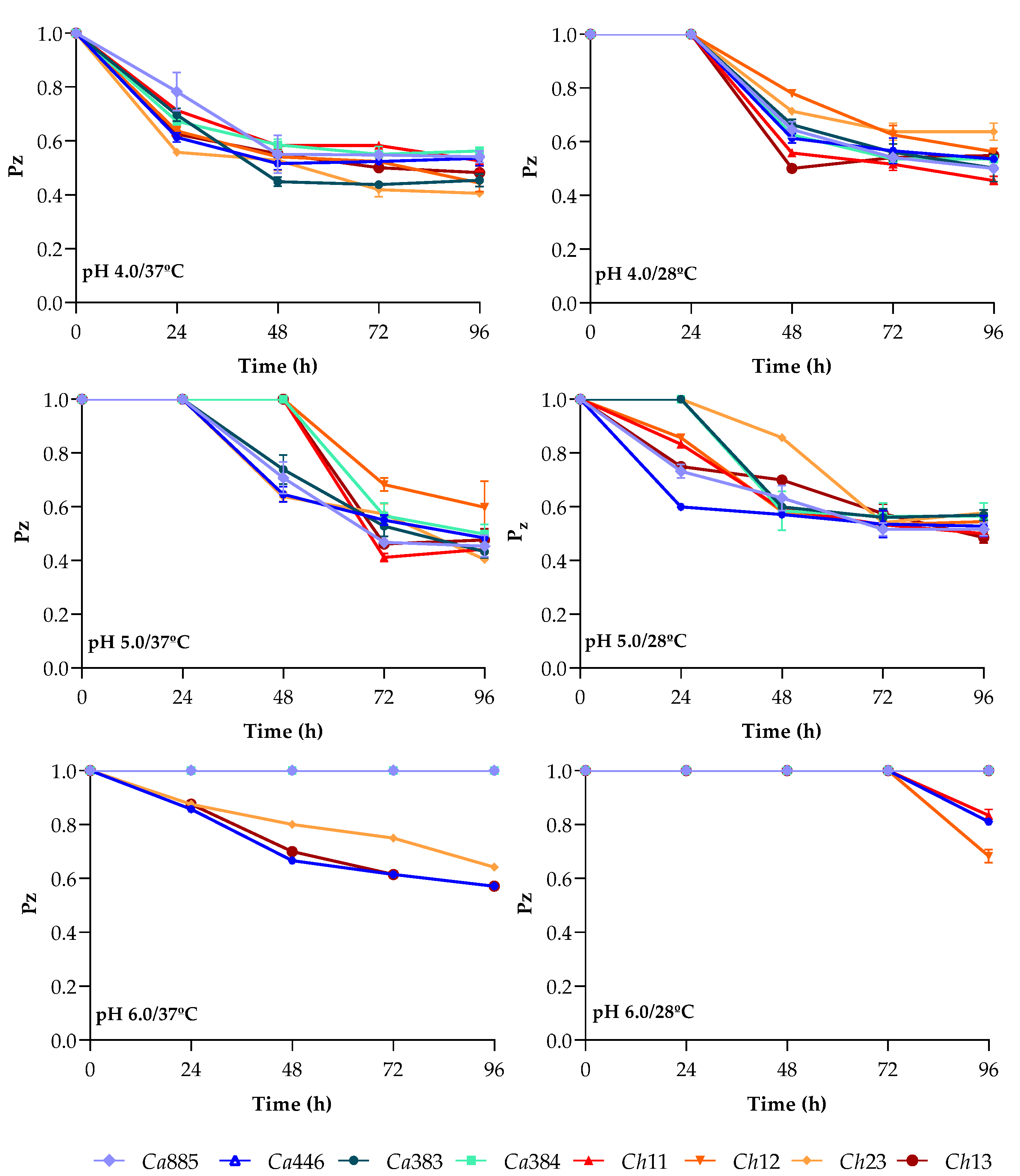
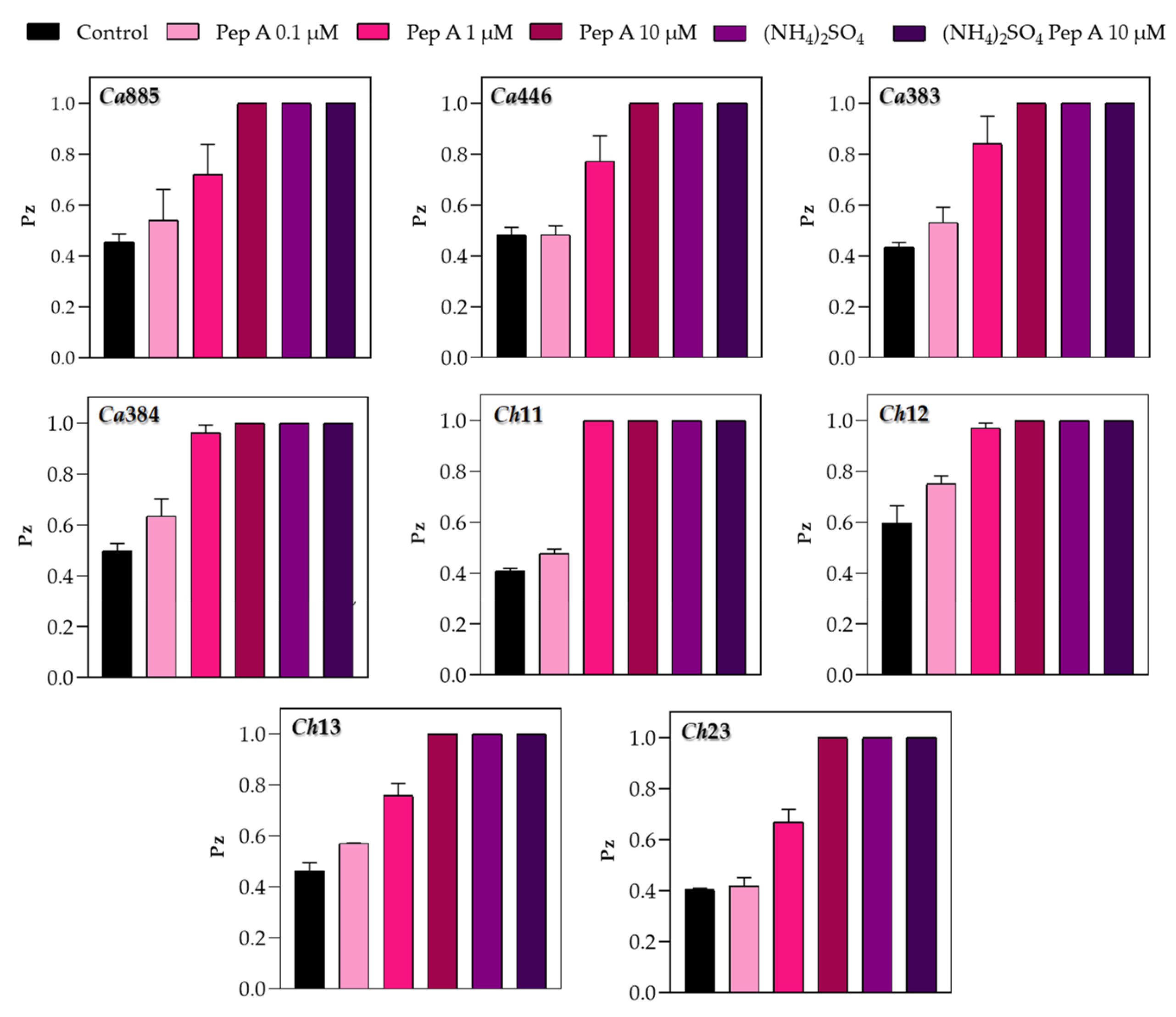
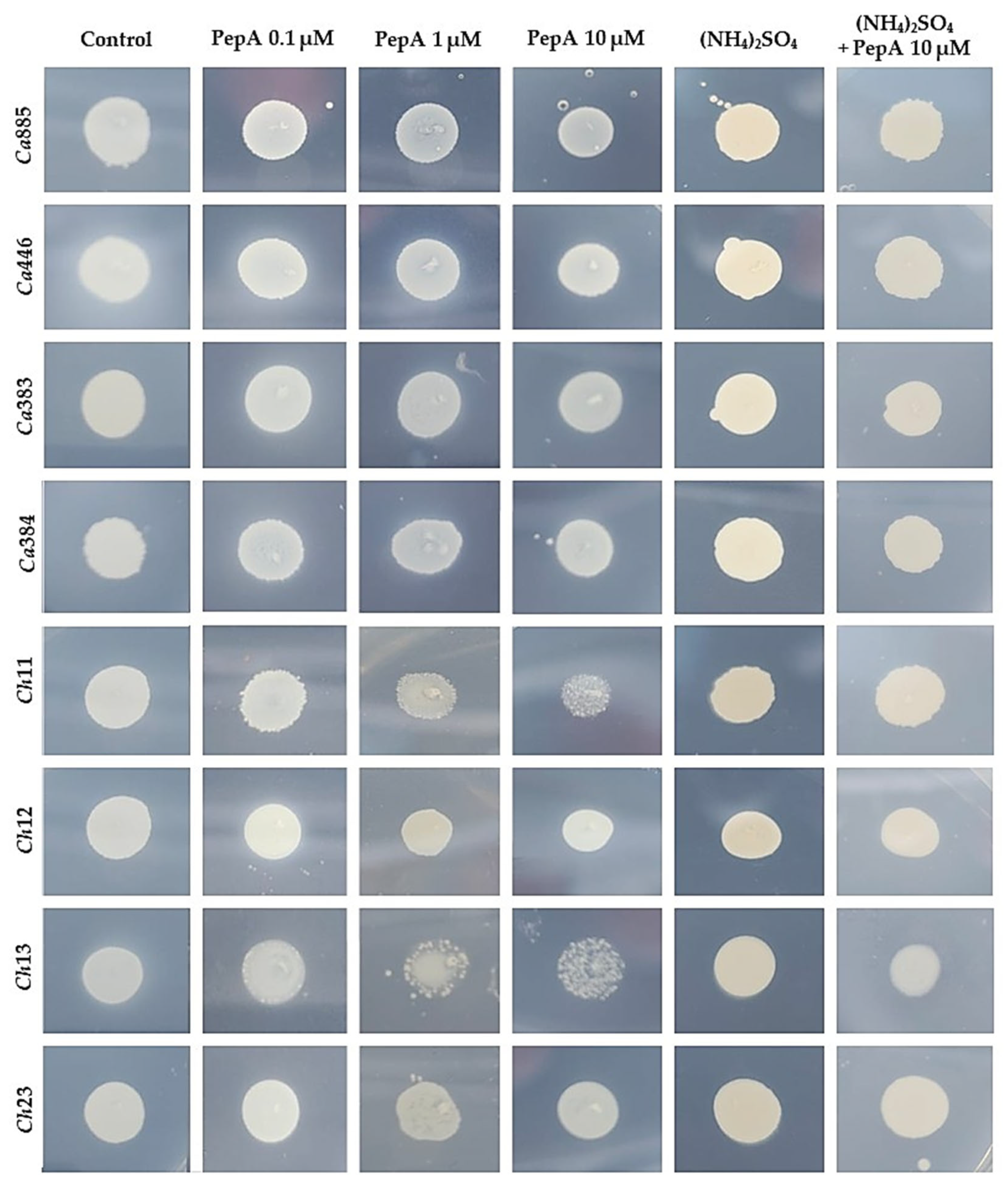
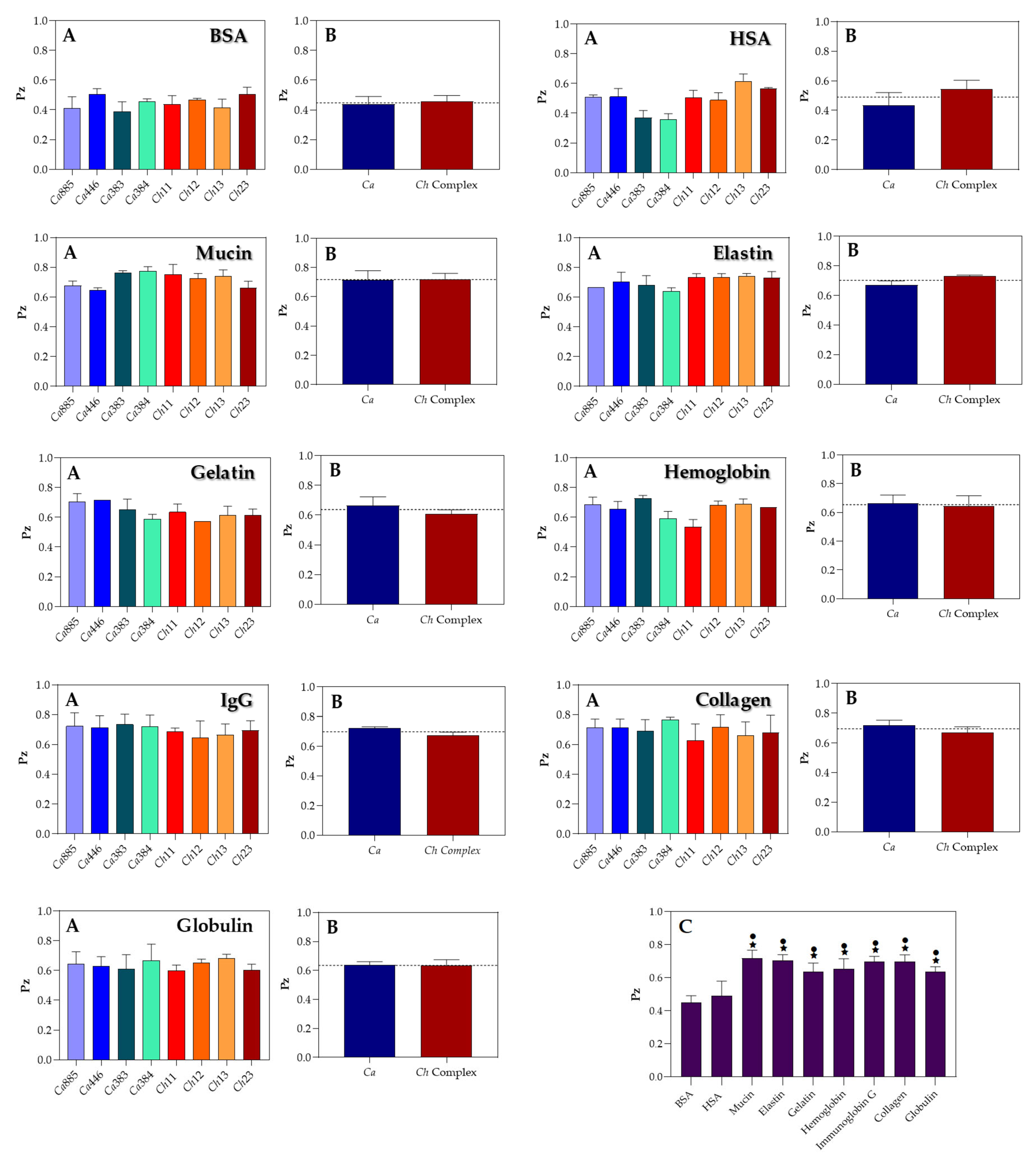
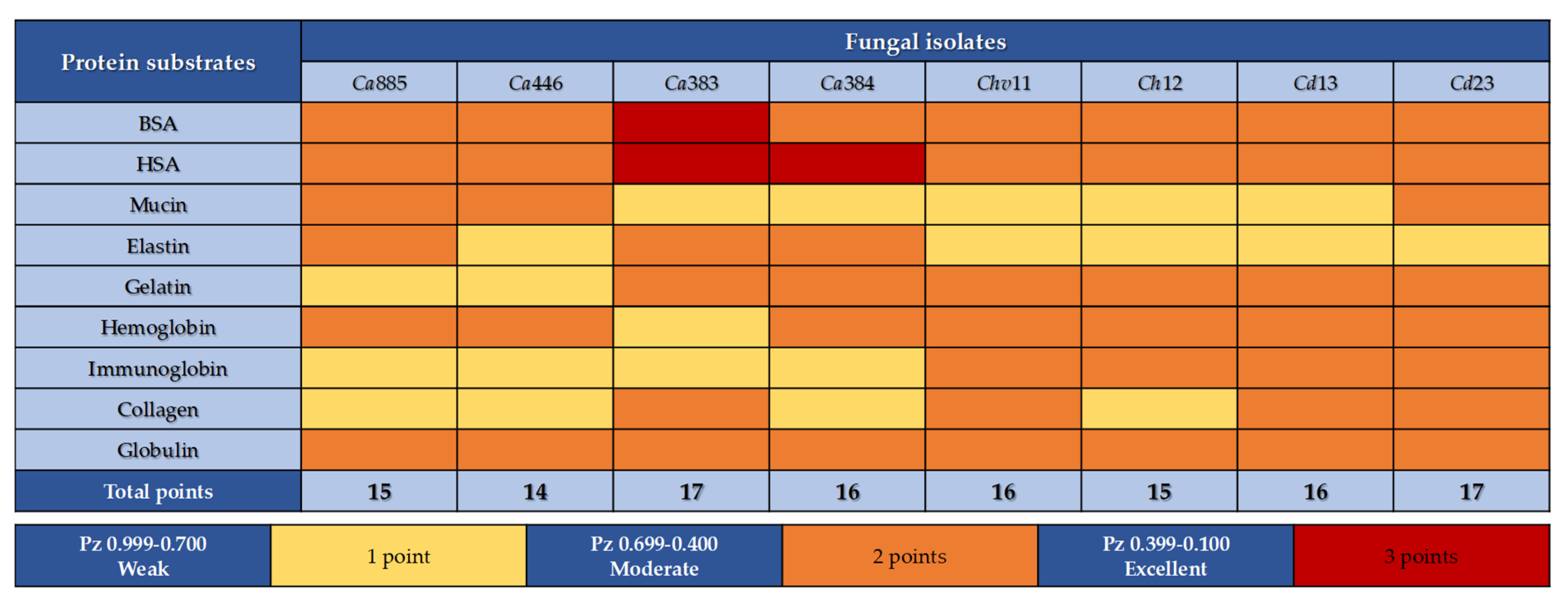
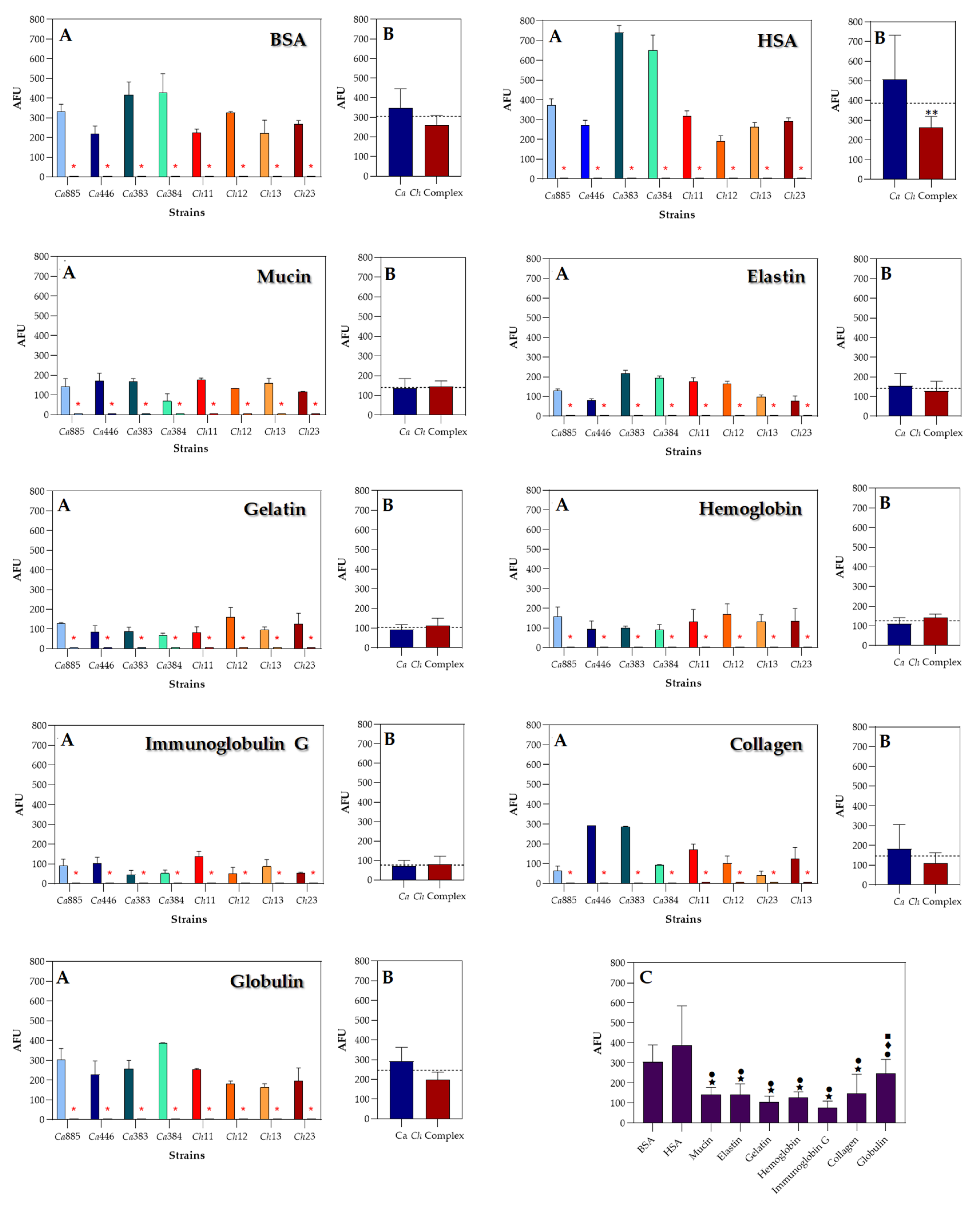
Candida species commonly secrete aspartic peptidases (Saps), which are virulence factors involved in nutrient acquisition, colonization, tissue invasion, immune evasion and host adaptation. However, the regulation of Sap production remains poorly characterized in emerging, widespread and multidrug-resistant members of the Candida haemulonii clade (C. auris, C. haemulonii, C. haemulonii var. vulnera and C. duobushaemulonii). This study investigated the influence of temperature, pH and protein substrate on Sap production using bloodstream isolates of the C. haemulonii clade. Sap activity was initially assessed using the enzyme coefficient (Pz) in fungal cells grown on yeast carbon base (YCB) agar supplemented with bovine serum albumin (BSA) to determine optimal conditions for enzymatic production. C. auris and C. duobushaemulonii exhibited the highest Sap activity at 96 h, pH 4.0–5.0, and 37 °C, whereas C. haemulonii and C. haemulonii var. vulnera displayed more variable and isolate-dependent profiles. Sap production was markedly suppressed at pH 6.0. The addition of pepstatin A, an inhibitor of aspartic peptidases, abolished Sap activity and impaired fungal growth in a dose-dependent manner, confirming both the enzymatic identity and its critical role in nitrogen acquisition. Conversely, YCB supplemented with an inorganic nitrogen source (ammonium sulfate) supported fungal growth but did not induce Sap production. To explore substrate specificity, YCB was supplemented with a panel of proteins. Serum albumins (bovine and human) induced the highest Sap production, followed by globulin, gelatin, hemoglobin, collagen and immunoglobulin G, while elastin and mucin elicited the lowest Sap production. Isolate-specific preferences for protein substrates were observed. Finally, fluorometric assays using a Sap-specific fluorogenic peptide substrate confirmed the presence of Sap activity in cell-free supernatants, which was consistently and entirely blocked by pepstatin A. These findings highlight inter- and intraspecies variability in Sap regulation among C. haemulonii clade, stressing the critical roles of substrate availability, pH and temperature in shaping fungal adaptation to host environments.
Keywords: Candida auris; Candida haemulonii complex; aspartic peptidases; virulence; Saps; growth conditions Candida auris; Candida haemulonii complex; aspartic peptidases; virulence; Saps; growth conditions