The Microbiota–Gut–Brain Axis in Autism: Associations, Causal Inference, and Interventions—A Narrative Review

Abstract
1. Introduction
1.1. Autism Spectrum Disorder (ASD) Heterogeneity and Epidemiologic Challenges
1.2. The Microbiota–Gut–Brain Axis (MGBA) Framework for Understanding ASD
1.3. Gastrointestinal Comorbidity in ASD: Prevalence and Clinical Correlates
2. Methods and Search Strategy
- Step 1: Prioritize Causal Candidates with MR and Colocalization.
- ○
- Action: Employ robust MR analyses and colocalization to identify microbial functions or metabolites with a putative causal link to ASD, ensuring shared genetic causality.
- ○
- Outcome: A high-confidence list of candidates for experimental validation.
- Step 2: Interrogate Mechanisms in Patient-Derived Functional Models.
- ○
- Action: Expose prioritized metabolites to patient-derived intestinal or BBB organoids.
- ○
- Outcome: Quantify key endpoints like barrier integrity (TEER, tight junctions) and immune activation (cytokine profiles) to establish biological plausibility.
- Step 3: Confirm Causality with Dose-Response and Time-Series Analyses.
- ○
- Action: Perform systematic dose-response and time-series experiments. Where feasible, use inhibitors for reverse validation.
- ○
- Outcome: Robust preclinical evidence of a specific, dose-dependent causal relationship.
- Action 1: Employ Bidirectional MR.
- ○
- Method: Use genetic instruments for ASD as the exposure and microbial features as the outcome. This formally tests the hypothesis that genetic liability for ASD causally influences the gut microbiome.
- ○
- Outcome: Genetic evidence for or against a causal effect of ASD on the microbiome, helping to untangle the direction of the primary association.
- Action 2: Implement Longitudinal and Cross-Lagged Models.
- ○
- Method: In prospective cohort studies, use advanced statistical models (e.g., cross-lagged panel models, linear mixed-effects models) to analyze the temporal interplay between ASD-related behaviors (e.g., changes in diet, medication use) and microbiome shifts over time.
- ○
- Outcome: A dynamic, longitudinal understanding of how ASD-related factors drive microbial changes, thereby statistically controlling for the confounding effects discussed throughout this review.
3. MGBA: Bidirectional Neurobiology
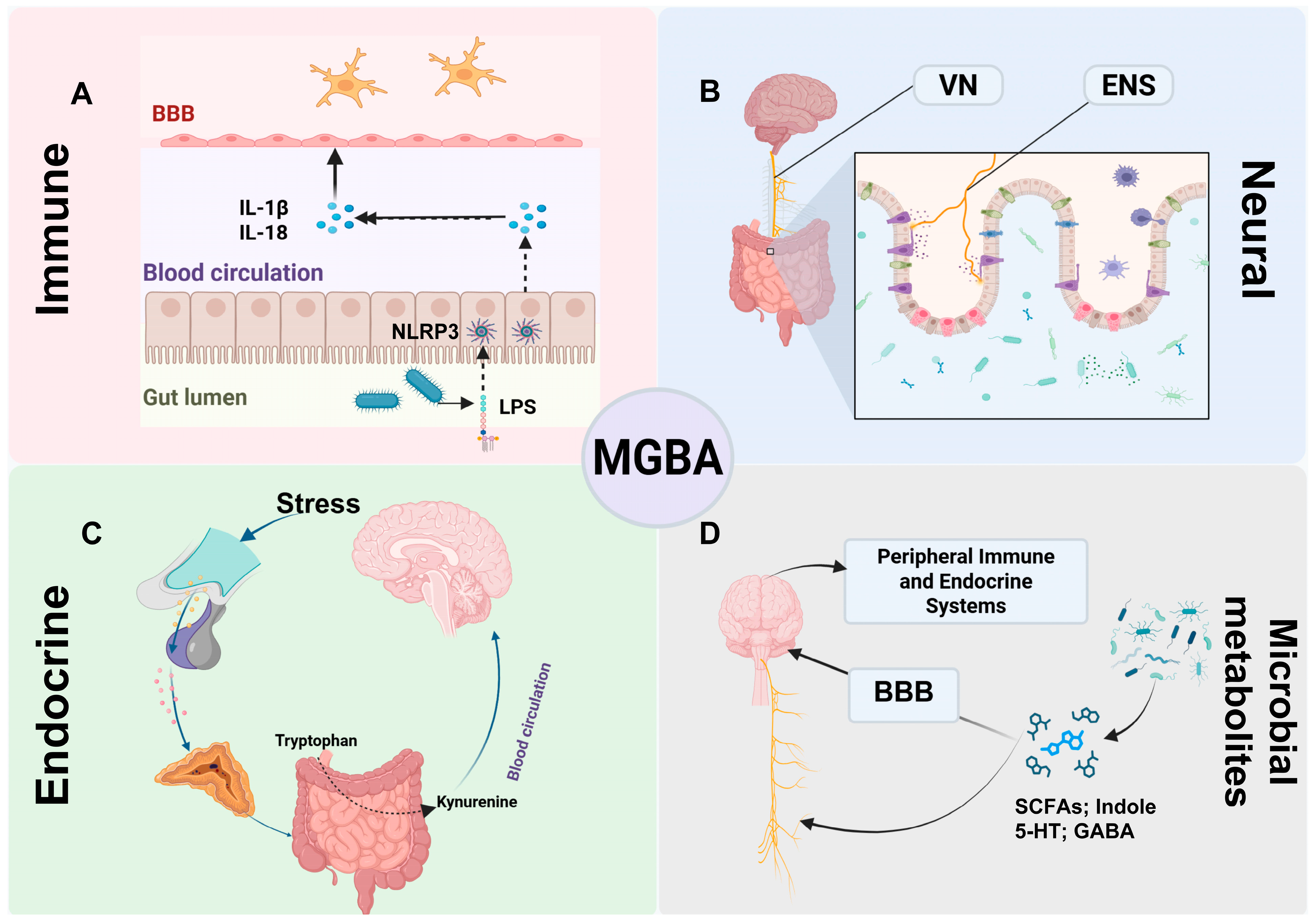
3.1. Immune: Barrier, Cytokines, and Neuroinflammation
3.2. Neural: A Rapid Conduit
3.3. Endocrine: HPA Axis
3.4. Systems Crosstalk: From Pathways to Metabolites
4. Microbial Metabolites: Regulatory Roles in Neural Function
4.1. SCFAs: Gut-to-Brain Mediators
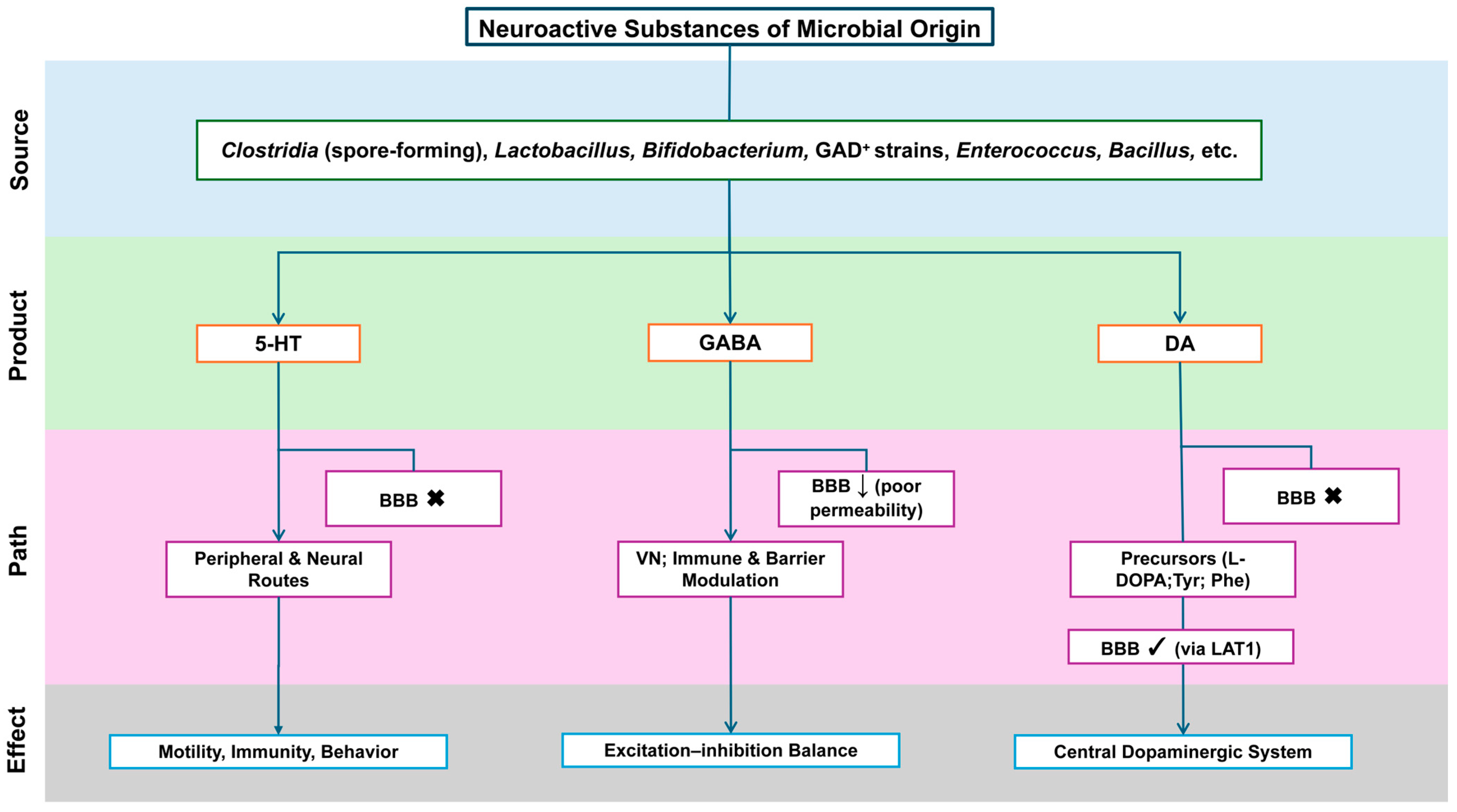
4.2. Neuroactive Compounds and Precursors
4.3. Tryptophan Metabolism: Imbalance and Neuroinflammation
5. MGBA Dysregulation in ASD: Clinical Relevance and Pathophysiology
5.1. Dysbiosis in ASD: Evidence, Confounders, and Variability
- (1)
- Clinical and behavioral heterogeneity: ASD phenotypes and the spectrum of GI comorbidities vary widely, with pronounced subgroup differences [53].
- (2)
- (3)
- Sequencing and analytic variation: 16S rRNA gene amplicon sequencing versus whole-metagenome shotgun sequencing differ in taxonomic resolution and functional inference; batch effects, often addressed with tools like ComBat-Seq or RUV-III-NB, and statistical pipelines, which must account for the compositional nature of microbiome data using methods such as centered/additive log-ratio transformations, ANCOM-BC, or ALDEx2, further influence differential-abundance conclusions [89,106,107,108].
5.2. Barrier Disruption and Neuroimmune Activation
6. From Correlation to Causation: Methodological Challenges and Emerging Advances
6.1. Core Challenge: Correlation Is Not Causation
6.2. Mendelian Randomization (MR) and Multi-Omics Integration
7. Interventions Targeting MGBA: Therapeutic Prospects and Challenges
7.1. Probiotics and Prebiotics: Promise and Limits

| Intervention | Study Design | Sample Type (n, Age) | Duration/Follow-Up | Main Findings | Limitations and Challenges | Reference |
|---|---|---|---|---|---|---|
| Probiotics/Prebiotics | Double-blind RCT | 80 children (5–14 y) | 12 weeks | Microbial α-diversity increases; shifts in several genera; signals linked to GI symptoms/anxiety | Short intervention; 16S limits species/function; activity predicted, not measured | Novau-Ferré et al. 2025 [129] |
| Double-blind RCT | 46 preschoolers (18–72 mo; 26 vs. 20) | 6 months | EEG coherence changes; correlations with behavior + lower inflammatory markers | Small n; wide age; no multiple-testing correction; no stratification by GI/sex | Billeci, L. et al. 2023 [130] | |
| Double-blind RCT | 80 children (5–16 y) | 12 weeks | No overall core-ASD improvement; age-stratified benefit (reduced hyperactivity/impulsivity in younger children) | Small n; mild baseline severity; non-personalized strains; 12 weeks may be short | Rojo-Marticella, M. et al. 2025 [123] | |
| Post hoc of Double-blind RCT | 35 (3–25 y) | 16 weeks | Baseline biomarkers ↔ ASD severity; probiotic group showed symptom improvement | Post hoc; wide age; no healthy biomarker controls; no multiple-testing correction | Sherman, H. T. et al. 2022 [131] | |
| Crossover RCT | 15 males (15–27 y) | 14-day washout; 28-day treatment | Adaptive behavior improved; trend toward greater social preference (eye-tracking); no GI outcomes captured | Very small, male-only; short; no GI assessment | Schmitt, L. M. et al. 2023 [132] | |
| Single-blind RCT | 180 children (2–9 y) | 3 months | Improvements on selected behavioral domains and constipation/diarrhea | Single-blind; short; parent-reported scales, limited validation | Narula Khanna, H. et al. 2025 [120] | |
| 2-stage pilot RCT | 35 (3–20 y) | 28 weeks (oxytocin added from week 16) | Probiotic + oxytocin > either alone on clinical measures | Small pilot; wide age; two-stage less robust; parental-report bias | Kong, X. J. et al. 2021 [133] | |
| Nutritional RCT | 30 (ASD + neurotypical controls) | 12 weeks | Immune reconfiguration (e.g., IFN-γ ↓, IL-8/MIP-1β ↑); behavior not integrated | Small n; immunology-only endpoints; limited link to clinical behavior | Naranjo-Galvis, C. A. et al. 2025 [134] | |
| Parallel-group Double-blind RCT | 43 children (2–8 y) | 6 months | QoL and some behavioral measures improved; no change in core-ASD severity | Small n; COVID-19 recruitment issues; few females; core scale may be insensitive at 6 mo | Mazzone, L. et al. 2024 [135] | |
| FMT | Multi-center Double-blind RCT | 29 children with ASD (2–13 y) | 4 months | GI outcomes improved; some behavioral measures improved; taxa shifts (e.g., Collinsella) tracked with outcomes; younger children responded better | Open-label components; small n; inconsistent endpoints/timepoints; missing final metagenomic/metabolomic timepoint in some. | Chen, Q. et al. 2024 [136] |
7.2. FMT: Breakthroughs and Caution
8. Conclusions and Future Directions
8.1. Summary of Current Evidence
8.2. Contribution and Limitations of This Review
8.3. Priorities for Future Research
Author Contributions
Funding
Institutional Review Board Statement
Informed Consent Statement
Data Availability Statement
Conflicts of Interest
Abbreviations
| 5-HT | Serotonin (5-hydroxytryptamine) |
| ASD | Autism spectrum disorder |
| BBB | Blood–brain barrier |
| EC | Enterochromaffin (cells) |
| ENS | Enteric nervous system |
| FDA | United States Food and Drug Administration |
| FMT | Fecal microbiota transplantation |
| GI | Gastrointestinal |
| GABA | γ-Aminobutyric acid |
| HPA | Hypothalamic-pituitary-adrenal (axis) |
| IDO | Indoleamine 2,3-dioxygenase |
| IL-1β | Interleukin-1β |
| IL-18 | Interleukin-18 |
| KYN | Kynurenine |
| LAT1 | Large neutral amino acid transporter 1 |
| L-DOPA | L-3,4-dihydroxyphenylalanine |
| LPS | Lipopolysaccharide |
| MGBA | Microbiota–gut–brain axis |
| MR | Mendelian randomization |
| MR-Egger | Mendelian randomization-Egger (regression) |
| NMDA | N-methyl-D-aspartate |
| NLRP3 | NLRP3 inflammasome |
| RCTs | Randomized controlled trials |
| rCDI | Recurrent Clostridioides difficile infection |
| SCFAs | Short-chain fatty acids |
| SNS | sympathetic nervous systems |
| TRP | Tryptophan |
| TRYCATs | Tryptophan catabolites |
| TSPO | 18-kDa translocator protein |
| VN | Vagus nerve |
References
- Centers for Disease Control and Prevention. Clinical Testing and Diagnosis for Autism Spectrum Disorder. Available online: https://www.cdc.gov/autism/hcp/diagnosis/index.html (accessed on 27 November 2024).
- Korteniemi, J.; Karlsson, L.; Aatsinki, A. Systematic review: Autism spectrum disorder and the gut microbiota. Acta Psychiatr. Scand. 2023, 148, 242–254. [Google Scholar] [CrossRef]
- Stilling, R.M.; van de Wouw, M.; Clarke, G.; Stanton, C.; Dinan, T.G.; Cryan, J.F. The neuropharmacology of butyrate: The bread and butter of the microbiota-gut-brain axis? Neurochem. Int. 2016, 99, 110–132. [Google Scholar] [CrossRef]
- Clarke, G.; Stilling, R.M.; Kennedy, P.J.; Stanton, C.; Cryan, J.F.; Dinan, T.G. Minireview: Gut microbiota: The neglected endocrine organ. Mol. Endocrinol. 2014, 28, 1221–1238. [Google Scholar] [CrossRef] [PubMed]
- Usui, N.; Kobayashi, H.; Shimada, S. Neuroinflammation and oxidative stress in the pathogenesis of autism spectrum disorder. Int. J. Mol. Sci. 2023, 24, 5487. [Google Scholar] [CrossRef]
- Sandin, S.; Yip, B.H.K.; Yin, W.; Weiss, L.A.; Dougherty, J.D.; Fass, S.; Constantino, J.N.; Hailin, Z.; Turner, T.N.; Marrus, N.; et al. Examining Sex Differences in Autism Heritability. JAMA Psychiatry 2024, 81, 673–680. [Google Scholar] [CrossRef] [PubMed]
- Love, C.; Sominsky, L.; O’Hely, M.; Berk, M.; Vuillermin, P.; Dawson, S.L. Prenatal environmental risk factors for autism spectrum disorder and their potential mechanisms. BMC Med. 2024, 22, 393. [Google Scholar] [CrossRef] [PubMed]
- Chaste, P.; Leboyer, M. Autism risk factors: Genes, environment, and gene-environment interactions. Dialogues Clin. Neurosci. 2012, 14, 281–292. [Google Scholar] [CrossRef] [PubMed]
- Zeidan, J.; Fombonne, E.; Scorah, J.; Ibrahim, A.; Durkin, M.S.; Saxena, S.; Yusuf, A.; Shih, A.; Elsabbagh, M. Global prevalence of autism: A systematic review update. Autism Res. 2022, 15, 778–790. [Google Scholar] [CrossRef] [PubMed]
- Crowell, J.A.; Keluskar, J.; Gorecki, A. Parenting behavior and the development of children with autism spectrum disorder. Compr. Psychiatry 2019, 90, 21–29. [Google Scholar] [CrossRef] [PubMed]
- Greenlee, J.L.; Stelter, C.R.; Piro-Gambetti, B.; Hartley, S.L. Trajectories of dysregulation in children with autism spectrum disorder. J. Clin. Child. Adolesc. Psychol. 2021, 50, 858–873. [Google Scholar] [CrossRef]
- Hyman, S.L.; Levy, S.E.; Myers, S.M.; Kuo, D.Z.; Apkon, S.; Davidson, L.F.; Ellerbeck, K.A.; Foster, J.E.; Noritz, G.H.; Leppert, M.O.C. Identification, evaluation, and management of children with autism spectrum disorder. Pediatrics 2020, 145, e20193447. [Google Scholar] [CrossRef] [PubMed]
- Zhou, M.; Niu, B.; Ma, J.; Ge, Y.; Han, Y.; Wu, W.; Yue, C. Intervention and research progress of gut microbiota-immune-nervous system in autism spectrum disorders among students. Front. Microbiol. 2025, 16, 1535455. [Google Scholar] [CrossRef]
- Mayer, E.A. Gut feelings: The emerging biology of gut-brain communication. Nat. Rev. Neurosci. 2011, 12, 453–466. [Google Scholar] [CrossRef]
- Cryan, J.F.; Dinan, T.G. Mind-altering microorganisms: The impact of the gut microbiota on brain and behaviour. Nat. Rev. Neurosci. 2012, 13, 701–712. [Google Scholar] [CrossRef]
- Dalile, B.; Van Oudenhove, L.; Vervliet, B.; Verbeke, K. The role of short-chain fatty acids in microbiota-gut-brain communication. Nat. Rev. Gastroenterol. Hepatol. 2019, 16, 461–478. [Google Scholar] [CrossRef]
- O’Riordan, K.J.; Moloney, G.M.; Keane, L.; Clarke, G.; Cryan, J.F. The gut microbiota-immune-brain axis: Therapeutic implications. Cell Rep. Med. 2025, 6, 101982. [Google Scholar] [CrossRef]
- Adams, J.B.; Johansen, L.J.; Powell, L.D.; Quig, D.; Rubin, R.A. Gastrointestinal flora and gastrointestinal status in children with autism–comparisons to typical children and correlation with autism severity. BMC Gastroenterol. 2011, 11, 22. [Google Scholar] [CrossRef]
- Holingue, C.; Newill, C.; Lee, L.C.; Pasricha, P.J.; Daniele Fallin, M. Gastrointestinal symptoms in autism spectrum disorder: A review of the literature on ascertainment and prevalence. Autism Res. 2018, 11, 24–36. [Google Scholar] [CrossRef]
- Esnafoglu, E.; Cırrık, S.; Ayyıldız, S.N.; Erdil, A.; Ertürk, E.Y.; Daglı, A.; Noyan, T. Increased serum zonulin levels as an intestinal permeability marker in autistic subjects. J. Pediatr. 2017, 188, 240–244. [Google Scholar] [CrossRef] [PubMed]
- Lasheras, I.; Real-López, M.; Santabárbara, J. Prevalence of gastrointestinal symptoms in autism spectrum disorder: A meta-analysis. An. Pediatría (Engl. Ed.) 2023, 99, 102–110. [Google Scholar] [CrossRef] [PubMed]
- Liu, J.; Gao, Z.; Liu, C.; Liu, T.; Gao, J.; Cai, Y.; Fan, X. Alteration of Gut Microbiota: New Strategy for Treating Autism Spectrum Disorder. Front. Cell Dev. Biol. 2022, 10, 792490. [Google Scholar] [CrossRef]
- Fulceri, F.; Morelli, M.; Santocchi, E.; Cena, H.; Del Bianco, T.; Narzisi, A.; Calderoni, S.; Muratori, F. Gastrointestinal symptoms and behavioral problems in preschoolers with Autism Spectrum Disorder. Dig. Liver Dis. 2016, 48, 248–254. [Google Scholar] [CrossRef]
- Missiego-Beltran, J.; Beltran-Velasco, A.I. The Role of Microbial Metabolites in the Progression of Neurodegenerative Diseases—Therapeutic Approaches: A Comprehensive Review. Int. J. Mol. Sci. 2024, 25, 10041. [Google Scholar] [CrossRef]
- Violi, F.; Cammisotto, V.; Bartimoccia, S.; Pignatelli, P.; Carnevale, R.; Nocella, C. Gut-derived low-grade endotoxaemia, atherothrombosis and cardiovascular disease. Nat. Rev. Cardiol. 2023, 20, 24–37. [Google Scholar] [CrossRef]
- Blevins, H.M.; Xu, Y.; Biby, S.; Zhang, S. The NLRP3 inflammasome pathway: A review of mechanisms and inhibitors for the treatment of inflammatory diseases. Front. Aging Neurosci. 2022, 14, 879021. [Google Scholar] [CrossRef]
- Chen, Y.; Xueying, Z.; Jiaqu, C.; Qiyi, C.; Huanlong, Q.; Ning, L.; Yasong, D.; Xiaoxin, Z.; Rong, Y.; Jubao, L.; et al. FTACMT study protocol: A multicentre, double-blind, randomised, placebo-controlled trial of faecal microbiota transplantation for autism spectrum disorder. BMJ Open 2022, 12, e051613. [Google Scholar] [CrossRef] [PubMed]
- Miller, A.H.; Raison, C.L. The role of inflammation in depression: From evolutionary imperative to modern treatment target. Nat. Rev. Immunol. 2016, 16, 22–34. [Google Scholar] [CrossRef] [PubMed]
- Segerstrom, S.C.; Miller, G.E. Psychological stress and the human immune system: A meta-analytic study of 30 years of inquiry. Psychol. Bull. 2004, 130, 601–630. [Google Scholar] [CrossRef]
- Varatharaj, A.; Galea, I. The blood-brain barrier in systemic inflammation. Brain Behav. Immun. 2017, 60, 1–12. [Google Scholar] [CrossRef]
- Hoogland, I.C.; Houbolt, C.; van Westerloo, D.J.; van Gool, W.A.; van de Beek, D. Systemic inflammation and microglial activation: Systematic review of animal experiments. J. Neuroinflammation 2015, 12, 114. [Google Scholar] [CrossRef]
- Frick, L.R.; Williams, K.; Pittenger, C. Microglial dysregulation in psychiatric disease. Clin. Dev. Immunol. 2013, 2013, 608654. [Google Scholar] [CrossRef] [PubMed]
- Yoon, S.-H.; Kim, C.y.; Lee, E.; Lee, C.; Lee, K.-S.; Lee, J.; Park, H.; Choi, B.; Hwang, I.; Kim, J.; et al. Microglial NLRP3-gasdermin D activation impairs blood-brain barrier integrity through interleukin-1β-independent neutrophil chemotaxis upon peripheral inflammation in mice. Nat. Commun. 2025, 16, 699. [Google Scholar] [CrossRef]
- Simpson, D.; Gharehgazlou, A.; Da Silva, T.; Labrie-Cleary, C.; Wilson, A.A.; Meyer, J.H.; Mizrahi, R.; Rusjan, P.M. In vivo imaging translocator protein (TSPO) in autism spectrum disorder. Neuropsychopharmacology 2022, 47, 1421–1427. [Google Scholar] [CrossRef]
- Carabotti, M.; Scirocco, A.; Maselli, M.A.; Severi, C. The gut-brain axis: Interactions between enteric microbiota, central and enteric nervous systems. Ann. Gastroenterol. Q. Publ. Hell. Soc. Gastroenterol. 2015, 28, 203–209. [Google Scholar]
- Waise, T.M.Z.; Dranse, H.J.; Lam, T.K.T. The metabolic role of vagal afferent innervation. Nat. Rev. Gastroenterol. Hepatol. 2018, 15, 625–636. [Google Scholar] [CrossRef]
- Bonaz, B.; Bazin, T.; Pellissier, S. The Vagus Nerve at the Interface of the Microbiota-Gut-Brain Axis. Front. Neurosci. 2018, 12, 49. [Google Scholar] [CrossRef] [PubMed]
- Han, Y.; Wang, B.; Gao, H.; He, C.; Hua, R.; Liang, C.; Zhang, S.; Wang, Y.; Xin, S.; Xu, J. Vagus Nerve and Underlying Impact on the Gut Microbiota-Brain Axis in Behavior and Neurodegenerative Diseases. J. Inflamm. Res. 2022, 15, 6213–6230. [Google Scholar] [CrossRef]
- Miri, S.; Yeo, J.; Abubaker, S.; Hammami, R. Neuromicrobiology, an emerging neurometabolic facet of the gut microbiome? Front. Microbiol. 2023, 14, 1098412. [Google Scholar] [CrossRef]
- Li, Y.; Hao, Y.; Zhu, J.; Owyang, C. Serotonin released from intestinal enterochromaffin cells mediates luminal non-cholecystokinin-stimulated pancreatic secretion in rats. Gastroenterology 2000, 118, 1197–1207. [Google Scholar] [CrossRef]
- Strader, A.D.; Woods, S.C. Gastrointestinal hormones and food intake. Gastroenterology 2005, 128, 175–191. [Google Scholar] [CrossRef]
- Bravo, J.A.; Forsythe, P.; Chew, M.V.; Escaravage, E.; Savignac, H.M.; Dinan, T.G.; Bienenstock, J.; Cryan, J.F. Ingestion of Lactobacillus strain regulates emotional behavior and central GABA receptor expression in a mouse via the vagus nerve. Proc. Natl. Acad. Sci. USA 2011, 108, 16050–16055. [Google Scholar] [CrossRef]
- Bercik, P.; Park, A.J.; Sinclair, D.; Khoshdel, A.; Lu, J.; Huang, X.; Deng, Y.; Blennerhassett, P.A.; Fahnestock, M.; Moine, D.; et al. The anxiolytic effect of Bifidobacterium longum NCC3001 involves vagal pathways for gut-brain communication. Neurogastroenterol. Motil. 2011, 23, 1132–1139. [Google Scholar] [CrossRef]
- Bonaz, B. Is-there a place for vagus nerve stimulation in inflammatory bowel diseases? Bioelectron. Med. 2018, 4, 4. [Google Scholar] [CrossRef]
- Bali, A.; Jaggi, A.S. An Integrative Review on Role and Mechanisms of Ghrelin in Stress, Anxiety and Depression. Curr. Drug Targets 2016, 17, 495–507. [Google Scholar] [CrossRef]
- Guo, H.; Tang, X.; He, X.; Weng, Y.; Zhang, Q.; Fang, Q.; Zhang, L. A Comprehensive Review of the Role of the Microbiota-Gut-Brain Axis via Neuroinflammation: Advances and Therapeutic Implications for Ischemic Stroke. Biomolecules 2025, 15, 920. [Google Scholar] [CrossRef]
- Osredkar, J.; Kumer, K.; Godnov, U.; Jekovec Vrhovsek, M.; Vidova, V.; Price, E.J.; Javornik, T.; Avgustin, G.; Fabjan, T. Urinary Metabolomic Profile in Children with Autism Spectrum Disorder. Int. J. Mol. Sci. 2025, 26, 2254. [Google Scholar] [CrossRef] [PubMed]
- Yang, J.; Ran, M.; Li, H.; Lin, Y.; Ma, K.; Yang, Y.; Fu, X.; Yang, S. New insight into neurological degeneration: Inflammatory cytokines and blood–brain barrier. Front. Mol. Neurosci. 2022, 15, 1013933. [Google Scholar] [CrossRef] [PubMed]
- Chiappelli, J.; Pocivavsek, A.; Nugent, K.L.; Notarangelo, F.M.; Kochunov, P.; Rowland, L.M.; Schwarcz, R.; Hong, L.E. Stress-induced increase in kynurenic acid as a potential biomarker for patients with schizophrenia and distress intolerance. JAMA Psychiatry 2014, 71, 761–768. [Google Scholar] [CrossRef] [PubMed]
- Huuskonen, J.; Suuronen, T.; Nuutinen, T.; Kyrylenko, S.; Salminen, A. Regulation of microglial inflammatory response by sodium butyrate and short-chain fatty acids. Br. J. Pharmacol. 2004, 141, 874–880. [Google Scholar] [CrossRef]
- Hosoi, T.; Okuma, Y.; Matsuda, T.; Nomura, Y. Novel pathway for LPS-induced afferent vagus nerve activation: Possible role of nodose ganglion. Auton. Neurosci. 2005, 120, 104–107. [Google Scholar] [CrossRef]
- Silva, Y.P.; Bernardi, A.; Frozza, R.L. The Role of Short-Chain Fatty Acids From Gut Microbiota in Gut-Brain Communication. Front. Endocrinol. 2020, 11, 25. [Google Scholar] [CrossRef]
- Sauer, A.K.; Malijauskaite, S.; Meleady, P.; Boeckers, T.M.; McGourty, K.; Grabrucker, A.M. Zinc is a key regulator of gastrointestinal development, microbiota composition and inflammation with relevance for autism spectrum disorders. Cell. Mol. Life Sci. 2022, 79, 46. [Google Scholar] [CrossRef]
- Chernikova, M.A.; Flores, G.D.; Kilroy, E.; Labus, J.S.; Mayer, E.A.; Aziz-Zadeh, L. The brain-gut-microbiome system: Pathways and implications for autism spectrum disorder. Nutrients 2021, 13, 4497. [Google Scholar] [CrossRef] [PubMed]
- Mishra, A.P.; Marrelli, L.M.; Bonner-Reid, F.T.; Shekhawat, P.; Toney, R.; Benipal, I.K.; Dias, H.A.; Kandi, A.; Siddiqui, H.F. Gut-Brain Axis: Understanding the Interlink Between Alterations in the Gut Microbiota and Autism Spectrum Disorder. Cureus 2025, 17, e88579. [Google Scholar] [CrossRef]
- Miller, T.L.; Wolin, M.J. Pathways of acetate, propionate, and butyrate formation by the human fecal microbial flora. Appl. Environ. Microbiol. 1996, 62, 1589–1592. [Google Scholar] [CrossRef] [PubMed]
- Macfarlane, S.; Macfarlane, G.T. Regulation of short-chain fatty acid production. Proc. Nutr. Soc. 2003, 62, 67–72. [Google Scholar] [CrossRef]
- Sanders, M.E. Probiotics: Definition, sources, selection, and uses. Clin. Infect. Dis. 2008, 46 (Suppl. 2), S58–S61; discussion S144-151. [Google Scholar] [CrossRef] [PubMed]
- LeBlanc, J.G.; Chain, F.; Martin, R.; Bermudez-Humaran, L.G.; Courau, S.; Langella, P. Beneficial effects on host energy metabolism of short-chain fatty acids and vitamins produced by commensal and probiotic bacteria. Microb. Cell Fact. 2017, 16, 79. [Google Scholar] [CrossRef]
- Lewis, K.; Lutgendorff, F.; Phan, V.; Soderholm, J.D.; Sherman, P.M.; McKay, D.M. Enhanced translocation of bacteria across metabolically stressed epithelia is reduced by butyrate. Inflamm. Bowel Dis. 2010, 16, 1138–1148. [Google Scholar] [CrossRef]
- Vijay, N.; Morris, M.E. Role of monocarboxylate transporters in drug delivery to the brain. Curr. Pharm. Des. 2014, 20, 1487–1498. [Google Scholar] [CrossRef]
- Kekuda, R.; Manoharan, P.; Baseler, W.; Sundaram, U. Monocarboxylate 4 mediated butyrate transport in a rat intestinal epithelial cell line. Dig. Dis. Sci. 2013, 58, 660–667. [Google Scholar] [CrossRef]
- Dass, N.B.; John, A.K.; Bassil, A.K.; Crumbley, C.W.; Shehee, W.R.; Maurio, F.P.; Moore, G.B.; Taylor, C.M.; Sanger, G.J. The relationship between the effects of short-chain fatty acids on intestinal motility in vitro and GPR43 receptor activation. Neurogastroenterol. Motil. 2007, 19, 66–74. [Google Scholar] [CrossRef]
- Nohr, M.K.; Egerod, K.L.; Christiansen, S.H.; Gille, A.; Offermanns, S.; Schwartz, T.W.; Moller, M. Expression of the short chain fatty acid receptor GPR41/FFAR3 in autonomic and somatic sensory ganglia. Neuroscience 2015, 290, 126–137. [Google Scholar] [CrossRef] [PubMed]
- Le Poul, E.; Loison, C.; Struyf, S.; Springael, J.Y.; Lannoy, V.; Decobecq, M.E.; Brezillon, S.; Dupriez, V.; Vassart, G.; Van Damme, J.; et al. Functional characterization of human receptors for short chain fatty acids and their role in polymorphonuclear cell activation. J. Biol. Chem. 2003, 278, 25481–25489. [Google Scholar] [CrossRef] [PubMed]
- Fellows, R.; Denizot, J.; Stellato, C.; Cuomo, A.; Jain, P.; Stoyanova, E.; Balazsi, S.; Hajnady, Z.; Liebert, A.; Kazakevych, J.; et al. Microbiota derived short chain fatty acids promote histone crotonylation in the colon through histone deacetylases. Nat. Commun. 2018, 9, 105. [Google Scholar] [CrossRef]
- Rodrigues, H.G.; Takeo Sato, F.; Curi, R.; Vinolo, M.A.R. Fatty acids as modulators of neutrophil recruitment, function and survival. Eur. J. Pharmacol. 2016, 785, 50–58. [Google Scholar] [CrossRef]
- Chang, P.V.; Hao, L.; Offermanns, S.; Medzhitov, R. The microbial metabolite butyrate regulates intestinal macrophage function via histone deacetylase inhibition. Proc. Natl. Acad. Sci. USA 2014, 111, 2247–2252. [Google Scholar] [CrossRef]
- Park, J.; Kim, M.; Kang, S.G.; Jannasch, A.H.; Cooper, B.; Patterson, J.; Kim, C.H. Short-chain fatty acids induce both effector and regulatory T cells by suppression of histone deacetylases and regulation of the mTOR-S6K pathway. Mucosal Immunol. 2015, 8, 80–93. [Google Scholar] [CrossRef] [PubMed]
- Erny, D.; Hrabě de Angelis, A.L.; Jaitin, D.; Wieghofer, P.; Staszewski, O.; David, E.; Keren-Shaul, H.; Mahlakoiv, T.; Jakobshagen, K.; Buch, T.; et al. Host microbiota constantly control maturation and function of microglia in the CNS. Nat. Neurosci. 2015, 18, 965–977. [Google Scholar] [CrossRef]
- Kim, H.J.; Leeds, P.; Chuang, D.M. The HDAC inhibitor, sodium butyrate, stimulates neurogenesis in the ischemic brain. J. Neurochem. 2009, 110, 1226–1240. [Google Scholar] [CrossRef]
- Church, J.S.; Bannish, J.A.M.; Adrian, L.A.; Rojas Martinez, K.; Henshaw, A.; Schwartzer, J.J. Serum short chain fatty acids mediate hippocampal BDNF and correlate with decreasing neuroinflammation following high pectin fiber diet in mice. Front. Neurosci. 2023, 17, 1134080. [Google Scholar] [CrossRef]
- Terry, N.; Margolis, K.G. Serotonergic Mechanisms Regulating the GI Tract: Experimental Evidence and Therapeutic Relevance. Handb. Exp. Pharmacol. 2017, 239, 319–342. [Google Scholar] [CrossRef]
- Yano, J.M.; Yu, K.; Donaldson, G.P.; Shastri, G.G.; Ann, P.; Ma, L.; Nagler, C.R.; Ismagilov, R.F.; Mazmanian, S.K.; Hsiao, E.Y. Indigenous bacteria from the gut microbiota regulate host serotonin biosynthesis. Cell 2015, 161, 264–276. [Google Scholar] [CrossRef]
- Mlynarska, E.; Barszcz, E.; Budny, E.; Gajewska, A.; Kopec, K.; Wasiak, J.; Rysz, J.; Franczyk, B. The Gut-Brain-Microbiota Connection and Its Role in Autism Spectrum Disorders. Nutrients 2025, 17, 1135. [Google Scholar] [CrossRef]
- Stasi, C.; Bellini, M.; Bassotti, G.; Blandizzi, C.; Milani, S. Serotonin receptors and their role in the pathophysiology and therapy of irritable bowel syndrome. Tech. Coloproctol. 2014, 18, 613–621. [Google Scholar] [CrossRef]
- Browning, K.N. Role of central vagal 5-HT3 receptors in gastrointestinal physiology and pathophysiology. Front. Neurosci. 2015, 9, 413. [Google Scholar] [CrossRef]
- Strandwitz, P.; Kim, K.H.; Terekhova, D.; Liu, J.K.; Sharma, A.; Levering, J.; McDonald, D.; Dietrich, D.; Ramadhar, T.R.; Lekbua, A.; et al. GABA-modulating bacteria of the human gut microbiota. Nat. Microbiol. 2019, 4, 396–403. [Google Scholar] [CrossRef]
- Rautio, J.; Gynther, M.; Laine, K. LAT1-mediated Prodrug Uptake: A Way to Breach the blood–brain barrier? Ther. Deliv. 2013, 4, 281–284. [Google Scholar] [CrossRef]
- Puris, E.; Gynther, M.; Auriola, S.; Huttunen, K.M. L-Type amino acid transporter 1 as a target for drug delivery. Pharm. Res. 2020, 37, 88. [Google Scholar] [CrossRef]
- Launay, J.-M.; Delorme, R.; Pagan, C.; Callebert, J.; Leboyer, M.; Vodovar, N. Impact of IDO activation and alterations in the kynurenine pathway on hyperserotonemia, NAD+ production, and AhR activation in autism spectrum disorder. Transl. Psychiatry 2023, 13, 380. [Google Scholar] [CrossRef]
- Almulla, A.F.; Thipakorn, Y.; Tunvirachaisakul, C.; Maes, M. The tryptophan catabolite or kynurenine pathway in autism spectrum disorder; a systematic review and meta-analysis. Autism Res. 2023, 16, 2302–2315. [Google Scholar] [CrossRef]
- Santana-Coelho, D. Does the kynurenine pathway play a pathogenic role in autism spectrum disorder? Brain Behav. Immun. Health 2024, 40, 100839. [Google Scholar] [CrossRef]
- Fattorusso, A.; Di Genova, L.; Dell’Isola, G.B.; Mencaroni, E.; Esposito, S. Autism spectrum disorders and the gut microbiota. Nutrients 2019, 11, 521. [Google Scholar] [CrossRef]
- West, K.A.; Yin, X.; Rutherford, E.M.; Wee, B.; Choi, J.; Chrisman, B.S.; Dunlap, K.L.; Hannibal, R.L.; Hartono, W.; Lin, M.; et al. Multi-angle meta-analysis of the gut microbiome in Autism Spectrum Disorder: A step toward understanding patient subgroups. Sci. Rep. 2022, 12, 17034. [Google Scholar] [CrossRef]
- David, M.M. The Role of the Microbiome in Autism: All That We Know about All That We Don’t Know. mSystems 2021, 6, e00234-21. [Google Scholar] [CrossRef]
- Liu, F.; Li, J.; Wu, F.; Zheng, H.; Peng, Q.; Zhou, H. Altered composition and function of intestinal microbiota in autism spectrum disorders: A systematic review. Transl. Psychiatry 2019, 9, 43. [Google Scholar] [CrossRef]
- Jung, Y.; Lee, T.; Oh, H.-S.; Hyun, Y.; Song, S.; Chun, J.; Kim, H.-W. Gut microbial and clinical characteristics of individuals with autism spectrum disorder differ depending on the ecological structure of the gut microbiome. Psychiatry Res. 2024, 335, 115775. [Google Scholar] [CrossRef]
- Yap, C.X.; Henders, A.K.; Alvares, G.A.; Wood, D.L.; Krause, L.; Tyson, G.W.; Restuadi, R.; Wallace, L.; McLaren, T.; Hansell, N.K. Autism-related dietary preferences mediate autism-gut microbiome associations. Cell 2021, 184, 5916–5931.e17. [Google Scholar] [CrossRef]
- Plaza-Díaz, J.; Gómez-Fernández, A.; Chueca, N.; Torre-Aguilar, M.J.d.l.; Gil, Á.; Perez-Navero, J.L.; Flores-Rojas, K.; Martín-Borreguero, P.; Solis-Urra, P.; Ruiz-Ojeda, F.J. Autism spectrum disorder (ASD) with and without mental regression is associated with changes in the fecal microbiota. Nutrients 2019, 11, 337. [Google Scholar] [CrossRef]
- Kong, X.; Liu, J.; Cetinbas, M.; Sadreyev, R.; Koh, M.; Huang, H.; Adeseye, A.; He, P.; Zhu, J.; Russell, H. New and preliminary evidence on altered oral and gut microbiota in individuals with autism spectrum disorder (ASD): Implications for ASD diagnosis and subtyping based on microbial biomarkers. Nutrients 2019, 11, 2128. [Google Scholar] [CrossRef]
- Li, N.; Yang, J.; Zhang, J.; Liang, C.; Wang, Y.; Chen, B.; Zhao, C.; Wang, J.; Zhang, G.; Zhao, D. Correlation of gut microbiome between ASD children and mothers and potential biomarkers for risk assessment. Genom. Proteom. Bioinform. 2019, 17, 26–38. [Google Scholar] [CrossRef]
- Dan, Z.; Mao, X.; Liu, Q.; Guo, M.; Zhuang, Y.; Liu, Z.; Chen, K.; Chen, J.; Xu, R.; Tang, J. Altered gut microbial profile is associated with abnormal metabolism activity of Autism Spectrum Disorder. Gut Microbes 2020, 11, 1246–1267. [Google Scholar] [CrossRef]
- Xie, X.; Li, L.; Wu, X.; Hou, F.; Chen, Y.; Shi, L.; Liu, Q.; Zhu, K.; Jiang, Q.; Feng, Y. Alteration of the fecal microbiota in Chinese children with autism spectrum disorder. Autism Res. 2022, 15, 996–1007. [Google Scholar] [CrossRef]
- Ha, S.; Oh, D.; Lee, S.; Park, J.; Ahn, J.; Choi, S.; Cheon, K.-A. Altered gut microbiota in Korean children with autism spectrum disorders. Nutrients 2021, 13, 3300. [Google Scholar] [CrossRef] [PubMed]
- Zhai, Q.; Cen, S.; Jiang, J.; Zhao, J.; Zhang, H.; Chen, W. Disturbance of trace element and gut microbiota profiles as indicators of autism spectrum disorder: A pilot study of Chinese children. Environ. Res. 2019, 171, 501–509. [Google Scholar] [CrossRef]
- Zhang, M.; Ma, W.; Zhang, J.; He, Y.; Wang, J. Analysis of gut microbiota profiles and microbe-disease associations in children with autism spectrum disorders in China. Sci. Rep. 2018, 8, 13981. [Google Scholar] [CrossRef]
- Williams, B.L.; Hornig, M.; Parekh, T.; Lipkin, W.I. Application of novel PCR-based methods for detection, quantitation, and phylogenetic characterization of Sutterella species in intestinal biopsy samples from children with autism and gastrointestinal disturbances. MBio 2012, 3, e00261-11. [Google Scholar] [CrossRef]
- Chen, Z.; Shi, K.; Liu, X.; Dai, Y.; Liu, Y.; Zhang, L.; Du, X.; Zhu, T.; Yu, J.; Fang, S. Gut microbial profile is associated with the severity of social impairment and IQ performance in children with autism spectrum disorder. Front. Psychiatry 2021, 12, 789864. [Google Scholar] [CrossRef]
- Bedarf, J.R.; Hildebrand, F.; Coelho, L.P.; Sunagawa, S.; Bahram, M.; Goeser, F.; Bork, P.; Wüllner, U. Functional implications of microbial and viral gut metagenome changes in early stage L-DOPA-naïve Parkinson’s disease patients. Genome Med. 2017, 9, 39. [Google Scholar] [CrossRef]
- Zurita, M.F.; Cárdenas, P.A.; Sandoval, M.E.; Peña, M.C.; Fornasini, M.; Flores, N.; Monaco, M.H.; Berding, K.; Donovan, S.M.; Kuntz, T. Analysis of gut microbiome, nutrition and immune status in autism spectrum disorder: A case-control study in Ecuador. Gut Microbes 2020, 11, 453–464. [Google Scholar] [CrossRef]
- Zou, R.; Xu, F.; Wang, Y.; Duan, M.; Guo, M.; Zhang, Q.; Zhao, H.; Zheng, H. Changes in the gut microbiota of children with autism spectrum disorder. Autism Res. 2020, 13, 1614–1625. [Google Scholar] [CrossRef]
- Niu, M.; Li, Q.; Zhang, J.; Wen, F.; Dang, W.; Duan, G.; Li, H.; Ruan, W.; Yang, P.; Guan, C. Characterization of intestinal microbiota and probiotics treatment in children with autism spectrum disorders in China. Front. Neurol. 2019, 10, 1084. [Google Scholar] [CrossRef]
- Wang, Y.; Li, N.; Yang, J.-J.; Zhao, D.-M.; Chen, B.; Zhang, G.-Q.; Chen, S.; Cao, R.-F.; Yu, H.; Zhao, C.-Y. Probiotics and fructo-oligosaccharide intervention modulate the microbiota-gut brain axis to improve autism spectrum reducing also the hyper-serotonergic state and the dopamine metabolism disorder. Pharmacol. Res. 2020, 157, 104784. [Google Scholar] [CrossRef]
- Zhang, S.; Han, F.; Wang, Q.; Fan, F. Probiotics and Prebiotics in the Treatment of Autism Spectrum Disorder: A Narrative Review. J. Integr. Neurosci. 2024, 23, 20. [Google Scholar] [CrossRef]
- Nearing, J.T.; Douglas, G.M.; Hayes, M.G.; MacDonald, J.; Desai, D.K.; Allward, N.; Jones, C.M.A.; Wright, R.J.; Dhanani, A.S.; Comeau, A.M.; et al. Microbiome differential abundance methods produce different results across 38 datasets. Nat. Commun. 2022, 13, 342. [Google Scholar] [CrossRef] [PubMed]
- Scanu, M.; Del Chierico, F.; Marsiglia, R.; Toto, F.; Guerrera, S.; Valeri, G.; Vicari, S.; Putignani, L. Correction of Batch Effect in Gut Microbiota Profiling of ASD Cohorts from Different Geographical Origins. Biomedicines 2024, 12, 2350. [Google Scholar] [CrossRef] [PubMed]
- Morton, J.T.; Jin, D.-M.; Mills, R.H.; Shao, Y.; Rahman, G.; McDonald, D.; Zhu, Q.; Balaban, M.; Jiang, Y.; Cantrell, K.; et al. Multi-level analysis of the gut–brain axis shows autism spectrum disorder-associated molecular and microbial profiles. Nat. Neurosci. 2023, 26, 1208–1217. [Google Scholar] [CrossRef]
- Su, Q.; Wong, O.W.H.; Lu, W.; Wan, Y.; Zhang, L.; Xu, W.; Li, M.K.T.; Liu, C.; Cheung, C.P.; Ching, J.Y.L.; et al. Multikingdom and functional gut microbiota markers for autism spectrum disorder. Nat. Microbiol. 2024, 9, 2344–2355. [Google Scholar] [CrossRef] [PubMed]
- Li, F.; Ke, H.; Wang, S.; Mao, W.; Fu, C.; Chen, X.; Fu, Q.; Qin, X.; Huang, Y.; Li, B.; et al. Leaky Gut Plays a Critical Role in the Pathophysiology of Autism in Mice by Activating the Lipopolysaccharide-Mediated Toll-Like Receptor 4-Myeloid Differentiation Factor 88-Nuclear Factor Kappa B Signaling Pathway. Neurosci. Bull. 2023, 39, 911–928. [Google Scholar] [CrossRef]
- Serrano-Tomás, M.I.; Contreras-Romero, P.; Parellada, M.; Chaves-Cordero, J.; Zamora, J.; Hengst, M.; Pozo, P.; Del Campo, R.; Guzmán-Salas, S. Recognition of the microbial metabolite p-cresol in autism spectrum disorder: Systematic review and meta-analysis. Front. Mol. Neurosci. 2025, 18, 1576388. [Google Scholar] [CrossRef]
- Zarimeidani, F.; Rahmati, R.; Mostafavi, M.; Darvishi, M.; Khodadadi, S.; Mohammadi, M.; Shamlou, F.; Bakhtiyari, S.; Alipourfard, I. Gut Microbiota and Autism Spectrum Disorder: A Neuroinflammatory Mediated Mechanism of Pathogenesis? Inflammation 2025, 48, 501–519. [Google Scholar] [CrossRef] [PubMed]
- Tseng, C.-E.J.; Canales, C.; Marcus, R.E.; Parmar, A.J.; Hightower, B.G.; Mullett, J.E.; Makary, M.M.; Tassone, A.U.; Saro, H.K.; Townsend, P.H.; et al. In vivo translocator protein in females with autism spectrum disorder: A pilot study. Neuropsychopharmacology 2024, 49, 1193–1201. [Google Scholar] [CrossRef]
- De Picker, L.J.; Morrens, M.; Branchi, I.; Haarman, B.C.M.; Terada, T.; Kang, M.S.; Boche, D.; Tremblay, M.-E.; Leroy, C.; Bottlaender, M.; et al. TSPO PET brain inflammation imaging: A transdiagnostic systematic review and meta-analysis of 156 case-control studies. Brain Behav. Immun. 2023, 113, 415–431. [Google Scholar] [CrossRef]
- Kim, J. Autism Spectrum Disorder and Eating Problems: The Imbalance of Gut Microbiota and the Gut-Brain Axis Hypothesis. J. Korean Acad. Child. Adolesc. Psychiatry 2024, 35, 51–56. [Google Scholar] [CrossRef] [PubMed]
- Hartwig, F.P.; Davies, N.M.; Hemani, G.; Davey Smith, G. Two-sample Mendelian randomization: Avoiding the downsides of a powerful, widely applicable but potentially fallible technique. Int. J. Epidemiol. 2016, 45, 1717–1726. [Google Scholar] [CrossRef]
- Chen, Y.; Xue, Y.; Jia, L.; Yang, M.; Huang, G.; Xie, J. Causal effects of gut microbiota on autism spectrum disorder: A two-sample mendelian randomization study. Medicine 2024, 103, e37284. [Google Scholar] [CrossRef]
- Li, Z.; Liu, S.; Liu, F.; Dai, N.; Liang, R.; Lv, S.; Bao, L. Gut microbiota and autism spectrum disorders: A bidirectional Mendelian randomization study. Front. Cell Infect. Microbiol. 2023, 13, 1267721. [Google Scholar] [CrossRef]
- Wang, J.; Dou, H.-H.; Liang, Q.-Y. Causal relationship between gut microbiota, blood metabolites and autism spectrum disorder: A Mendelian randomization study. R. Soc. Open Sci. 2025, 12, 250158. [Google Scholar] [CrossRef]
- Narula Khanna, H.; Roy, S.; Shaikh, A.; Chhabra, R.; Uddin, A. Impact of probiotic supplements on behavioural and gastrointestinal symptoms in children with autism spectrum disorder: A randomised controlled trial. BMJ Paediatr. Open 2025, 9, e003045. [Google Scholar] [CrossRef]
- Puricelli, C.; Rolla, R.; Gigliotti, L.; Boggio, E.; Beltrami, E.; Dianzani, U.; Keller, R. The Gut-Brain-Immune Axis in Autism Spectrum Disorders: A State-of-Art Report. Front. Psychiatry 2021, 12, 755171. [Google Scholar] [CrossRef] [PubMed]
- Mohle, L.; Mattei, D.; Heimesaat, M.M.; Bereswill, S.; Fischer, A.; Alutis, M.; French, T.; Hambardzumyan, D.; Matzinger, P.; Dunay, I.R.; et al. Ly6C(hi) Monocytes Provide a Link between Antibiotic-Induced Changes in Gut Microbiota and Adult Hippocampal Neurogenesis. Cell Rep. 2016, 15, 1945–1956. [Google Scholar] [CrossRef]
- Rojo-Marticella, M.; Arija, V.; Canals-Sans, J. Effect of Probiotics on the Symptomatology of Autism Spectrum Disorder and/or Attention Deficit/Hyperactivity Disorder in Children and Adolescents: Pilot Study. Res. Child. Adolesc. Psychopathol. 2025, 53, 163–178. [Google Scholar] [CrossRef] [PubMed]
- Soleimanpour, S.; Abavisani, M.; Khoshrou, A.; Sahebkar, A. Probiotics for autism spectrum disorder: An updated systematic review and meta-analysis of effects on symptoms. J. Psychiatr. Res. 2024, 179, 92–104. [Google Scholar] [CrossRef]
- Sandhu, K.V.; Sherwin, E.; Schellekens, H.; Stanton, C.; Dinan, T.G.; Cryan, J.F. Feeding the microbiota-gut-brain axis: Diet, microbiome, and neuropsychiatry. Transl. Res. 2017, 179, 223–244. [Google Scholar] [CrossRef]
- Rahim, F.; Toguzbaeva, K.; Qasim, N.H.; Dzhusupov, K.O.; Zhumagaliuly, A.; Khozhamkul, R. Probiotics, prebiotics, and synbiotics for patients with autism spectrum disorder: A meta-analysis and umbrella review. Front. Nutr. 2023, 10, 1294089. [Google Scholar] [CrossRef]
- Zeng, P.; Zhang, C.-z.; Fan, Z.-x.; Yang, C.-j.; Cai, W.-y.; Huang, Y.-f.; Xiang, Z.-j.; Wu, J.-y.; Zhang, J.; Yang, J. Effect of probiotics on children with autism spectrum disorders: A meta-analysis. Ital. J. Pediatr. 2024, 50, 120. [Google Scholar] [CrossRef]
- Phan, J.; Calvo, D.C.; Nair, D.; Jain, S.; Montagne, T.; Dietsche, S.; Blanchard, K.; Treadwell, S.; Adams, J.; Krajmalnik-Brown, R. Precision synbiotics increase gut microbiome diversity and improve gastrointestinal symptoms in a pilot open-label study for autism spectrum disorder. mSystems 2024, 9, e0050324. [Google Scholar] [CrossRef]
- Novau-Ferré, N.; Papandreou, C.; Rojo-Marticella, M.; Canals-Sans, J.; Bulló, M. Gut microbiome differences in children with Attention Deficit Hyperactivity Disorder and Autism Spectrum Disorder and effects of probiotic supplementation: A randomized controlled trial. Res. Dev. Disabil. 2025, 161, 105003. [Google Scholar] [CrossRef]
- Billeci, L.; Callara, A.L.; Guiducci, L.; Prosperi, M.; Morales, M.A.; Calderoni, S.; Muratori, F.; Santocchi, E. A randomized controlled trial into the effects of probiotics on electroencephalography in preschoolers with autism. Autism 2023, 27, 117–132. [Google Scholar] [CrossRef] [PubMed]
- Sherman, H.T.; Liu, K.; Kwong, K.; Chan, S.T.; Li, A.C.; Kong, X.J. Carbon monoxide (CO) correlates with symptom severity, autoimmunity, and responses to probiotics treatment in a cohort of children with autism spectrum disorder (ASD): A post-hoc analysis of a randomized controlled trial. BMC Psychiatry 2022, 22, 536. [Google Scholar] [CrossRef] [PubMed]
- Schmitt, L.M.; Smith, E.G.; Pedapati, E.V.; Horn, P.S.; Will, M.; Lamy, M.; Barber, L.; Trebley, J.; Meyer, K.; Heiman, M.; et al. Results of a phase Ib study of SB-121, an investigational probiotic formulation, a randomized controlled trial in participants with autism spectrum disorder. Sci. Rep. 2023, 13, 5192. [Google Scholar] [CrossRef]
- Kong, X.J.; Liu, J.; Liu, K.; Koh, M.; Sherman, H.; Liu, S.; Tian, R.; Sukijthamapan, P.; Wang, J.; Fong, M.; et al. Probiotic and Oxytocin Combination Therapy in Patients with Autism Spectrum Disorder: A Randomized, Double-Blinded, Placebo-Controlled Pilot Trial. Nutrients 2021, 13, 1552. [Google Scholar] [CrossRef]
- Naranjo-Galvis, C.A.; Trejos-Gallego, D.M.; Correa-Salazar, C.; Triviño-Valencia, J.; Valencia-Buitrago, M.; Ruiz-Pulecio, A.F.; Méndez-Ramírez, L.F.; Zabaleta, J.; Meñaca-Puentes, M.A.; Ruiz-Villa, C.A.; et al. Anti-Inflammatory Diet and Probiotic Supplementation as Strategies to Modulate Immune Dysregulation in Autism Spectrum Disorder. Nutrients 2025, 17, 2664. [Google Scholar] [CrossRef]
- Mazzone, L.; Dooling, S.W.; Volpe, E.; Uljarević, M.; Waters, J.L.; Sabatini, A.; Arturi, L.; Abate, R.; Riccioni, A.; Siracusano, M.; et al. Precision microbial intervention improves social behavior but not autism severity: A pilot double-blind randomized placebo-controlled trial. Cell Host Microbe 2024, 32, 106–116.e106. [Google Scholar] [CrossRef]
- Chen, Q.; Wu, C.; Xu, J.; Ye, C.; Chen, X.; Tian, H.; Zong, N.; Zhang, S.; Li, L.; Gao, Y.; et al. Donor-recipient intermicrobial interactions impact transfer of subspecies and fecal microbiota transplantation outcome. Cell Host Microbe 2024, 32, 349–365.e344. [Google Scholar] [CrossRef]
- Takyi, E.; Nirmalkar, K.; Adams, J.; Krajmalnik-Brown, R. Interventions targeting the gut microbiota and their possible effect on gastrointestinal and neurobehavioral symptoms in autism spectrum disorder. Gut Microbes 2025, 17, 2499580. [Google Scholar] [CrossRef] [PubMed]
- Kang, D.-W.; Adams, J.B.; Coleman, D.M.; Pollard, E.L.; Maldonado, J.; McDonough-Means, S.; Caporaso, J.G.; Krajmalnik-Brown, R. Long-term benefit of Microbiota Transfer Therapy on autism symptoms and gut microbiota. Sci. Rep. 2019, 9, 5821. [Google Scholar] [CrossRef]
- Maniscalco, I.; Bartochowski, P.; Priori, V.; Iancau, S.P.; De Francesco, M.; Innamorati, M.; Jagodzinska, N.; Giupponi, G.; Masucci, L.; Conca, A.; et al. The Effects of Fecal Microbial Transplantation on the Symptoms in Autism Spectrum Disorder, Gut Microbiota and Metabolites: A Scoping Review. Microorganisms 2025, 13, 1290. [Google Scholar] [CrossRef]
- Wan, L.; Wang, H.; Liang, Y.; Zhang, X.; Yao, X.; Zhu, G.; Cai, J.; Liu, G.; Liu, X.; Niu, Q.; et al. Effect of oral faecal microbiota transplantation intervention for children with autism spectrum disorder: A randomised, double-blind, placebo-controlled trial. Clin. Transl. Med. 2024, 14, e70006. [Google Scholar] [CrossRef] [PubMed]
- Wang, L.; Yu, L.; Liu, Z.; Che, C.; Wang, Y.; Zhao, Y.; Zhu, M.; Yang, G.; Cao, A. FMT intervention decreases urine 5-HIAA levels: A randomized double-blind controlled study. Front. Med. 2024, 11, 1411089. [Google Scholar] [CrossRef]
- Food, U.; Administration, D. Safety Alert Regarding Use of Fecal Microbiota for Transplantation and Risk of Serious Adverse Events Likely Due to Transmission of Pathogenic Organisms; Food and Drug Administration: Silver Spring, MD, USA, 2020. [Google Scholar]
- Jain, N.; Umar, T.P.; Fahner, A.-F.; Gibietis, V. Advancing therapeutics for recurrent clostridioides difficile infections: An overview of vowst’s FDA approval and implications. Gut Microbes 2023, 15, 2232137. [Google Scholar] [CrossRef] [PubMed]
- Alamoudi, M.U.; Hosie, S.; Shindler, A.E.; Wood, J.L.; Franks, A.E.; Hill-Yardin, E.L. Comparing the Gut Microbiome in Autism and Preclinical Models: A Systematic Review. Front. Cell Infect. Microbiol. 2022, 12, 905841. [Google Scholar] [CrossRef] [PubMed]


| Metabolites | Primary Sources | Principal Functions and Mechanisms | Potential Effects on Neural Function and ASD |
|---|---|---|---|
| SCFAs | Fermentation of dietary fibre/resistant starch | Gut barrier: colonocyte fuel; maintain integrity [24]. BBB: support integrity [52]. Neural: modulate neurotrophic factors, neurogenesis [52]. | Butyrate improves gut/BBB integrity; deficiency may exacerbate neuroinflammation [24]. |
| Neuroactive compounds and precursors | Microbial synthesis; host-microbiota regulation | 5-HT: microbiota regulate EC-cell synthesis; affect mood/cognition/digestion. GABA: produced by select strains; influence brain signaling; promote relaxation/emotional balance. Dopamine: tune precursor metabolism; indirect brain effects. | Dysbiosis may reduce 5-HT and GABA synthesis, correlating with ASD behaviors [53]. |
| Kynurenine pathway metabolites | Host TRP metabolism via IDO/TDO | Kynurenic acid (neuroprotective) and quinolinic acid (neurotoxic at high levels). | Dysbiosis/inflammation bias toward neurotoxic quinolinic acid, amplifying neuroinflammation; implicated in ASD pathophysiology [47]. |
| Indole derivatives | Bacterial TRP catabolism | Indole, indole-3-acetic acid; key to gut health. | Urinary/fecal indole derivatives altered in ASD; associated with behavioral symptoms [54]. |
| p-Cresol | Microbial metabolism | Neurotransmitter-degradation related; crosses gut barrier and BBB. | Urinary/fecal levels elevated in ASD; linked to increased gut permeability; potential biomarker [55]. |
| Taxa | Trend in ASD | Evidence Sources | Notes/Confounders |
|---|---|---|---|
| Proteobacteria (phylum) | Commonly increased | [90,91,92,93,94,95,96,97,98,99] | Typically associated with inflammation and disease states. |
| Actinobacteria (phylum) | |||
| Sutterella (genus) | |||
| Firmicutes/Bacteroidetes ratio | Altered, direction inconsistent | [84,93,100] | Typically associated with inflammation and disease states [86]. |
| Clostridium (genus) | Mixed findings | ||
| Prevotella (genus) | |||
| Akkermansia (genus) | [93,101,102,103,104] | ||
| Bacteroides (genus) | |||
| Bifidobacterium (genus) | May increase after probiotic interventions [105]. | ||
| Lactobacillus (genus) |
Disclaimer/Publisher’s Note: The statements, opinions and data contained in all publications are solely those of the individual author(s) and contributor(s) and not of MDPI and/or the editor(s). MDPI and/or the editor(s) disclaim responsibility for any injury to people or property resulting from any ideas, methods, instructions or products referred to in the content. |
© 2025 by the authors. Licensee MDPI, Basel, Switzerland. This article is an open access article distributed under the terms and conditions of the Creative Commons Attribution (CC BY) license (https://creativecommons.org/licenses/by/4.0/).
Share and Cite
Zhang, Z.; Kang, W.; Mi, Y.; Zhong, X.; He, Y. The Microbiota–Gut–Brain Axis in Autism: Associations, Causal Inference, and Interventions—A Narrative Review. Pathogens 2025, 14, 1145. https://doi.org/10.3390/pathogens14111145
Zhang Z, Kang W, Mi Y, Zhong X, He Y. The Microbiota–Gut–Brain Axis in Autism: Associations, Causal Inference, and Interventions—A Narrative Review. Pathogens. 2025; 14(11):1145. https://doi.org/10.3390/pathogens14111145
Chicago/Turabian StyleZhang, Zhiqiang, Wenkai Kang, Yu Mi, Xin Zhong, and Yulong He. 2025. "The Microbiota–Gut–Brain Axis in Autism: Associations, Causal Inference, and Interventions—A Narrative Review" Pathogens 14, no. 11: 1145. https://doi.org/10.3390/pathogens14111145
APA StyleZhang, Z., Kang, W., Mi, Y., Zhong, X., & He, Y. (2025). The Microbiota–Gut–Brain Axis in Autism: Associations, Causal Inference, and Interventions—A Narrative Review. Pathogens, 14(11), 1145. https://doi.org/10.3390/pathogens14111145