Article

Year-Long Prevalence and Antibiotic Resistance Profiles of Salmonella enterica Serogroups Isolated from a Wisconsin Dairy Farm


by
Courtney L. Deblois
1,2,
Andrew D. J. Tu
1,3,
Andrew J. Scheftgen
1,† and
Garret Suen
1,*
1
Department of Bacteriology, University of Wisconsin-Madison, Madison, WI 53706, USA
2
Microbiology Doctoral Training Program, Department of Bacteriology, University of Wisconsin-Madison, Madison, WI 53706, USA
3
Nutrition and Metabolism Graduate Program, Department of Nutritional Sciences, University of Wisconsin-Madison, Madison, WI 53706, USA
*
Author to whom correspondence should be addressed.
Current address: Department of Life and Food Sciences, Obihiro University of Agriculture and Veterinary Medicine, Obihiro 080-8555, Japan.
Pathogens 2024, 13(12), 1031; https://doi.org/10.3390/pathogens13121031

Submission received: 6 November 2024 / Revised: 14 November 2024 / Accepted: 15 November 2024 / Published: 22 November 2024

Abstract

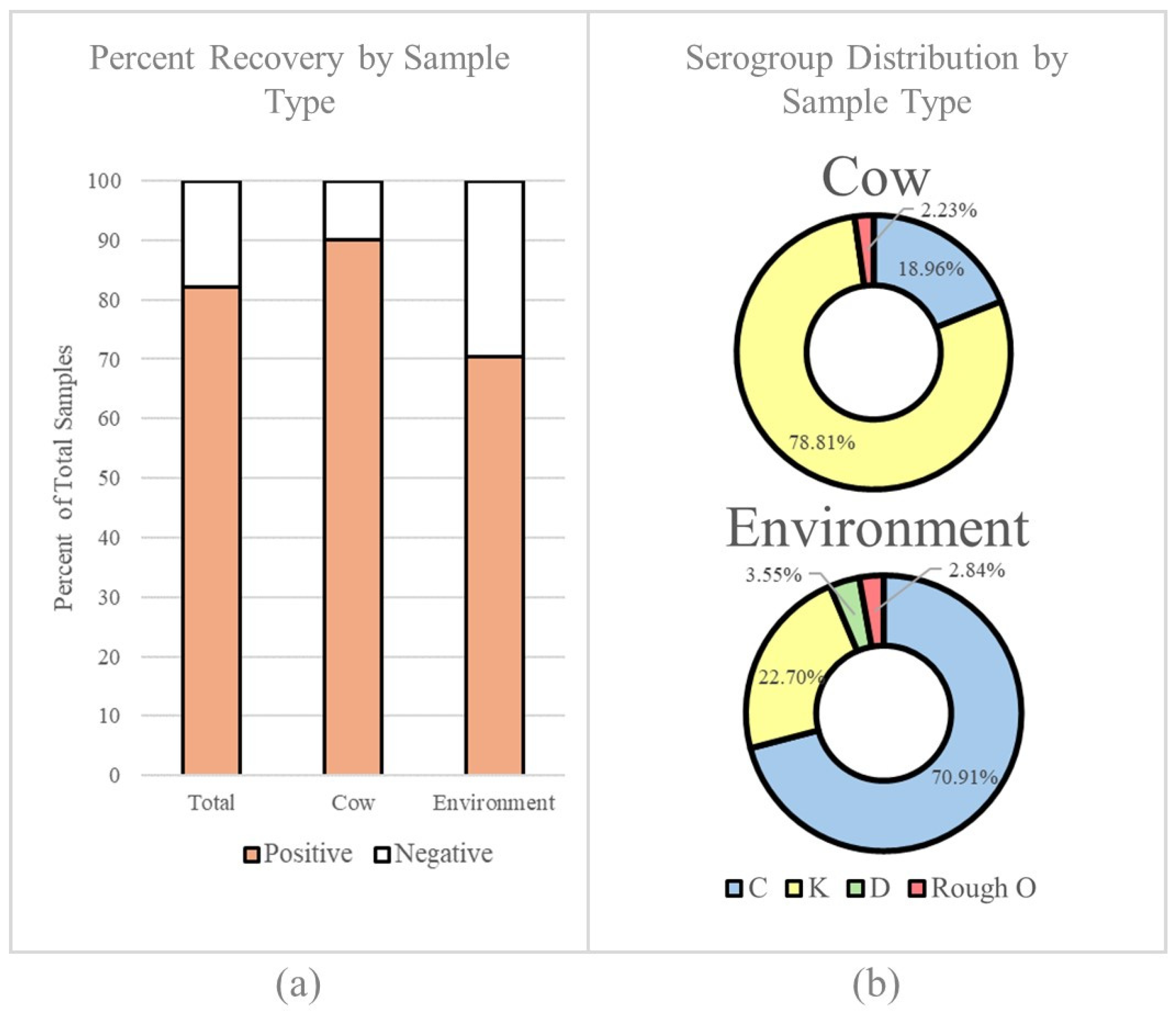
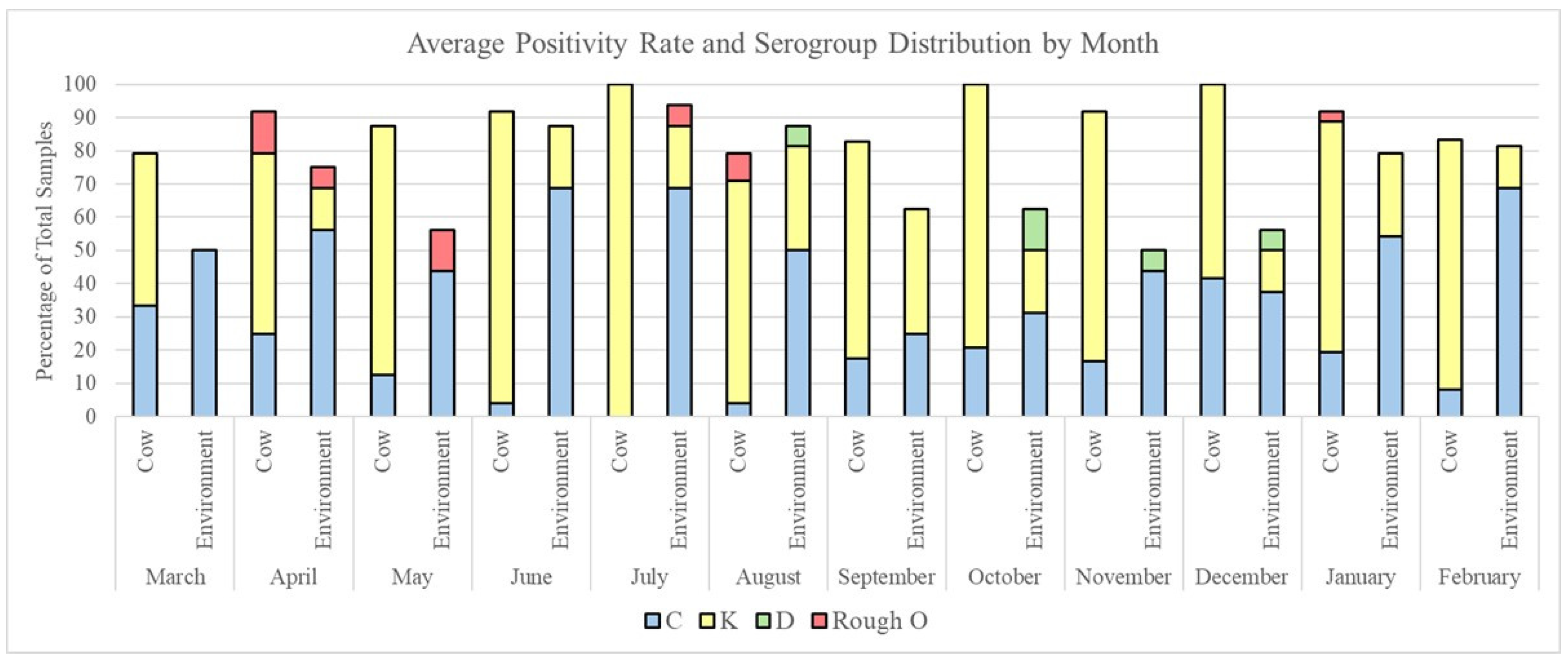
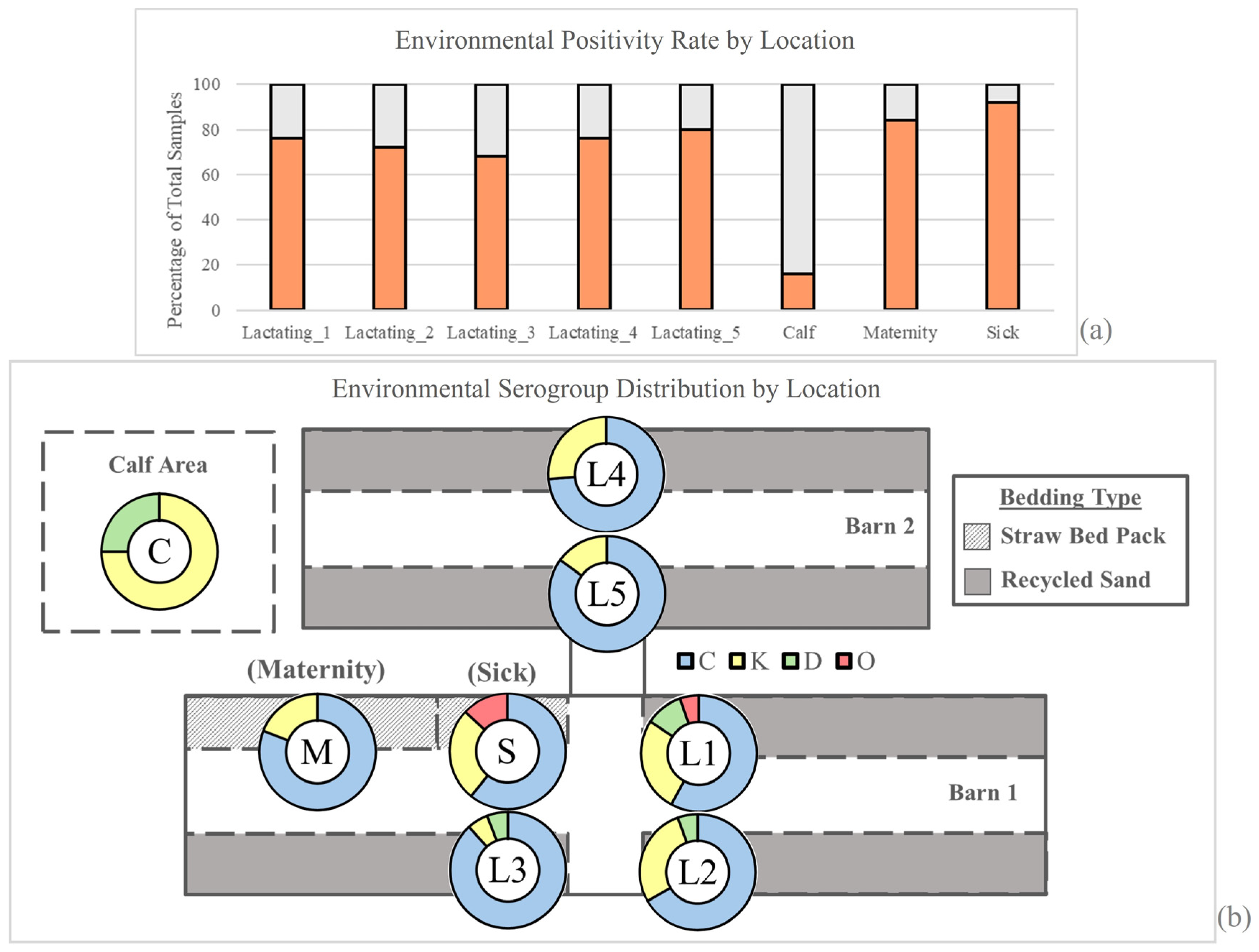
Salmonella enterica infections can significantly impact the health and productivity of dairy cattle. Asymptomatic carriage of Salmonella can make it difficult to identify and monitor this pathogen across a herd. Therefore, a more focused Salmonella census on dairy farms is needed to better understand the dynamics of asymptomatic carriage. Here, we monitored the prevalence of Salmonella enterica on a dairy operation in Wisconsin, USA. Fecal samples were collected over 12 months from cattle and the farm environment, subjected to Salmonella isolation, serogrouped, and tested for antibiotic resistance. Salmonella was highly prevalent on this farm, with an average of 90% of the cattle being carriers. Total recovery of Salmonella from environmental samples ranged from 40 to 90%. Four serogroups were identified on the farm, with K being most common in cattle and C being most common in the environment. Antibiotic resistance was tested against eight antibiotics and was found to be highest for neomycin (44.5%) and sulfadimethoxine (86.3%). Our data show that serogroups associated with asymptomatic carriages are persistent and highly prevalent, with niche specificity to different locations. These results provide useful information for studying within-herd transmission of Salmonella and contributes to our understanding of transmission risks within the farm ecosystem.
Keywords: dairy; Salmonella; transmission; prevalence; antibiotic; serogroup dairy; Salmonella; transmission; prevalence; antibiotic; serogroup