
Communication

Far-UVC Radiation for Disinfecting Hands or Gloves?

Institute of Medical Engineering and Mechatronics, Ulm University of Applied Sciences, Albert-Einstein-Allee 55, D-89081 Ulm, Germany
*
Author to whom correspondence should be addressed.
Pathogens 2023, 12(2), 213; https://doi.org/10.3390/pathogens12020213

Submission received: 18 November 2022 / Revised: 10 January 2023 / Accepted: 23 January 2023 / Published: 29 January 2023
(This article belongs to the Special Issue Hospital-Acquired Infections: Risk Factors and Preventions)

Abstract

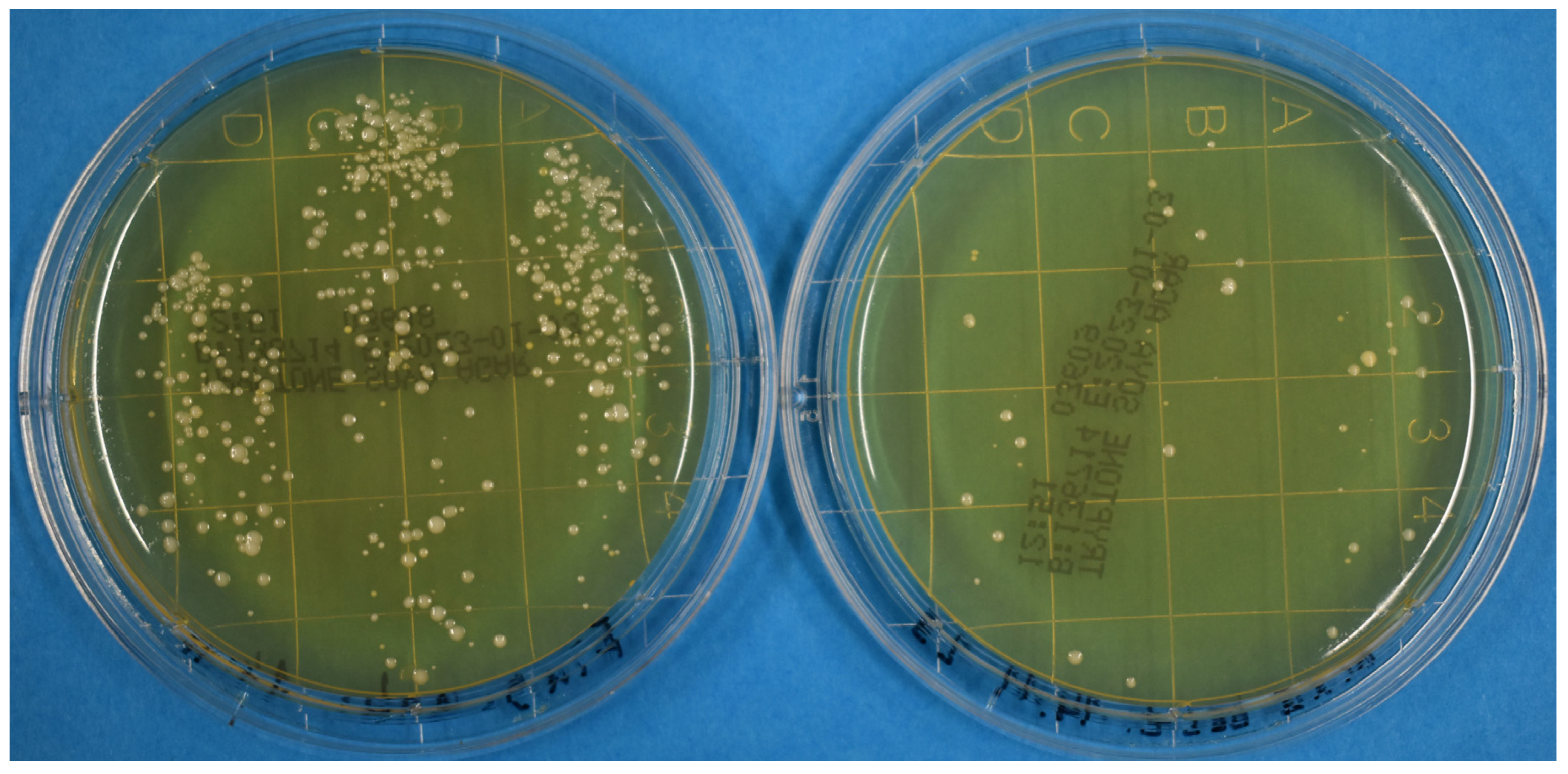
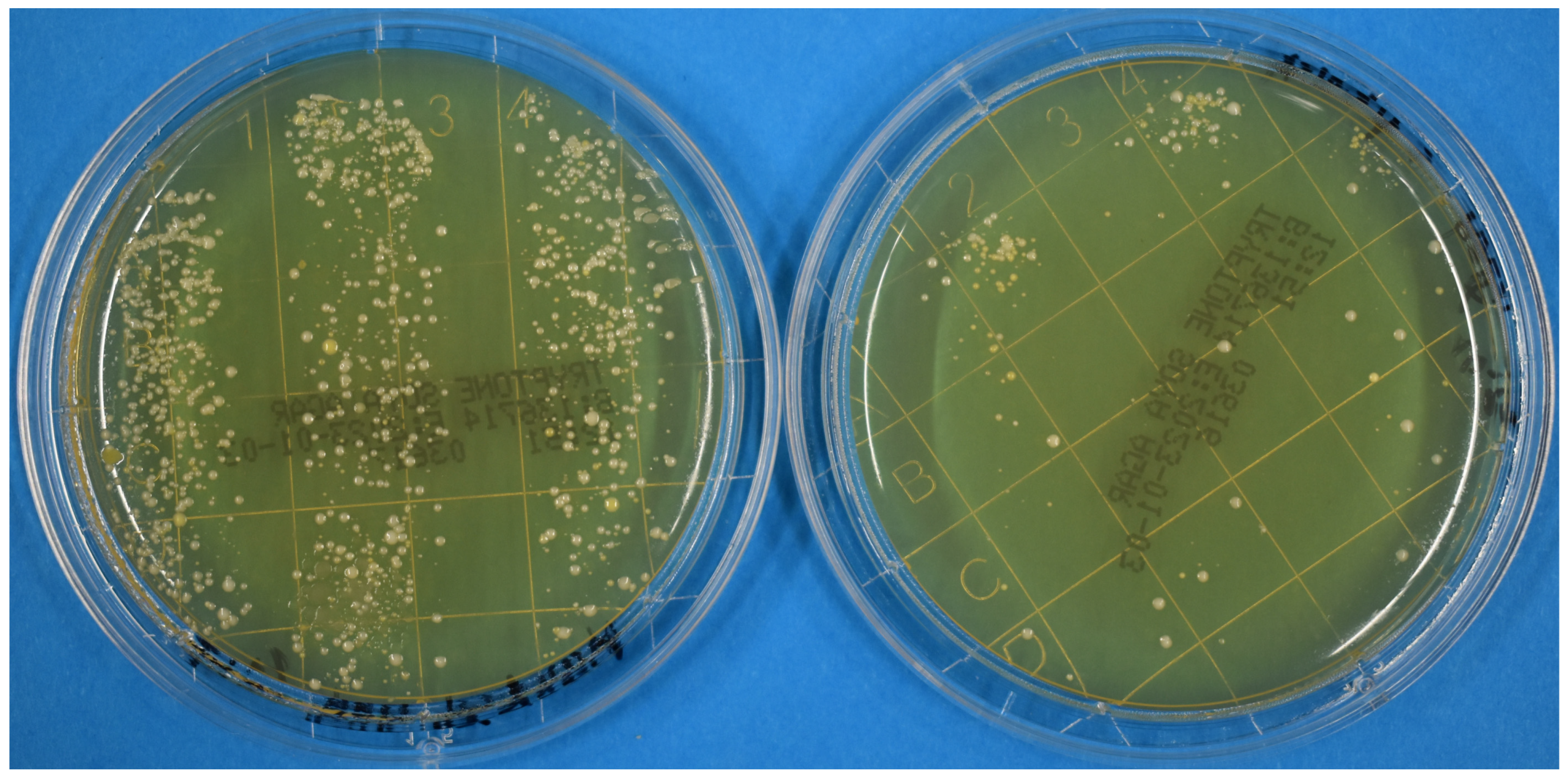
(1) Background: Far-UVC radiation in the spectral range 200–230 nm has, according to previous findings, a strong antimicrobial effect on pathogens, but exhibits hardly any harmful effect on human skin. Therefore, the present study will discuss whether such radiation could also be suitable for hand disinfection in the healthcare sector. (2) Methods: Hands and gloves were microbially contaminated and exposed to radiation from a 222 nm krypton-chloride-excimer lamp. The applied doses were 23 mJ/cm2 and 100 mJ/cm2, respectively. Irradiated and non-irradiated hands and gloves were pressed onto agar plates and colonies were counted and compared after 24 h of incubation. For comparison, we also treated hands and gloves with a commercial liquid alcohol-based disinfectant. (3) Results: On the hand, the 23 mJ/cm2 resulted in the reduction of the observed colonies on the agar plates by one log level. For the gloves irradiated with 100 mJ/cm2, a colony reduction of 1.3 log levels was recorded. In the comparative experiments with the commercial disinfectant, a colony reduction of 1.9 and approximately one log level was observed on hand and gloves, respectively. (4) Conclusion: In both cases, far-UVC radiation provided a considerable reduction in microorganisms. However, compared to published far-UVC irradiation results in suspensions, the disinfection success on hands and gloves was rather low. With regard to the irradiation limits currently existing in the European Union, multiple daily hand disinfection with far-UVC radiation is actually legally not possible at present, but the thresholds are currently under discussion and could change in the future. Far-UVC disinfection of hands in gloves seems theoretically possible if attention is paid to potential perforations in the gloves.
Keywords: hand hygiene; far-UVC radiation; 222 nm excimer lamp; gloves hand hygiene; far-UVC radiation; 222 nm excimer lamp; gloves