Review

Invasive Candida Infections in Neonates after Major Surgery: Current Evidence and New Directions

by
Domenico Umberto De Rose
1,
Alessandra Santisi
1,
Maria Paola Ronchetti
1,
Ludovica Martini
1,
Lisa Serafini
2,
Pasqua Betta
3,
Marzia Maino
4,
Francesco Cavigioli
5,
Ilaria Cocchi
5,
Lorenza Pugni
6,
Elvira Bonanno
7,
Chryssoula Tzialla
8,
Mario Giuffrè
9,
Jenny Bua
10,
Benedetta Della Torre
11,
Giovanna Nardella
12,
Danila Mazzeo
13,
Paolo Manzoni
14,
Andrea Dotta
1,
Pietro Bagolan
15,
Cinzia Auriti
1,* and
on behalf of Study Group of Neonatal Infectious Diseases
add Show full author list remove Hide full author list
1
Neonatal Intensive Care Unit, Medical and Surgical Department of Fetus, Newborn and Infant, “Bambino Gesù” Children’s Hospital IRCCS, 00165 Rome, Italy
2
Neonatal Intensive Care Unit, Department of Critical Care Medicine, “A. Meyer” University Children’s Hospital, 50139 Florence, Italy
3
Neonatology Unit, Azienda Ospedaliero-Universitaria “Policlinico-Vittorio Emanuele”, 95124 Catania, Italy
4
Neonatal Intensive Care Unit, Giovanni XXIII Hospital, 24127 Bergamo, Italy
5
Neonatology Unit, Ospedale dei Bambini “V. Buzzi”, ASST FBF-Sacco-Buzzi, 20154 Milan, Italy
6
Neonatal Intensive Care Unit, Fondazione IRCCS Ca’ Granda Ospedale Maggiore Policlinico, 20122 Milan, Italy
7
Neonatology Unit, Azienda Ospedaliera SS. Annunziata, 87100 Cosenza, Italy
8
Neonatal Unit and Neonatal Intensive Care Unit, Fondazione IRCCS Policlinico San Matteo, 27100 Pavia, Italy
9
Department of Health Promotion Sciences, Maternal and Infant Care, Internal Medicine and Medical Specialties “G. D’Alessandro”, University of Palermo, 90133 Palermo, Italy
10
Neonatal Intensive Care Unit, Institute for Maternal and Child Health IRCCS “Burlo Garofolo”, 34137 Trieste, Italy
11
Neonatal Intensive Care Unit, Santa Maria della Misericordia Hospital, 06123 Perugia, Italy
12
Division of Neonatology, Azienda Ospedaliero-Universitaria “Ospedali Riuniti”, 71122 Foggia, Italy
13
Neonatology Unit, Policlinico Gaetano Martino, 98124 Messina, Italy
14
Division of Pediatrics and Neonatology, Department of Maternal, Neonatal, and Infant Health, Ospedale degli Infermi, ASL Biella, 13875 Ponderano, Biella, Italy
15
Neonatal Surgery Unit, Medical and Surgical Department of Fetus, Newborn and Infant, “Bambino Gesù” Children’s Hospital IRCCS, 00165 Rome, Italy
*
Author to whom correspondence should be addressed.
On behalf of Study Group of Neonatal Infectious Diseases of the Italian Society of Neonatology (SIN).
Pathogens 2021, 10(3), 319; https://doi.org/10.3390/pathogens10030319

Submission received: 30 January 2021 / Revised: 3 March 2021 / Accepted: 4 March 2021 / Published: 9 March 2021
(This article belongs to the Special Issue Candida albicans: A Major Fungal Pathogen of Humans)

Abstract

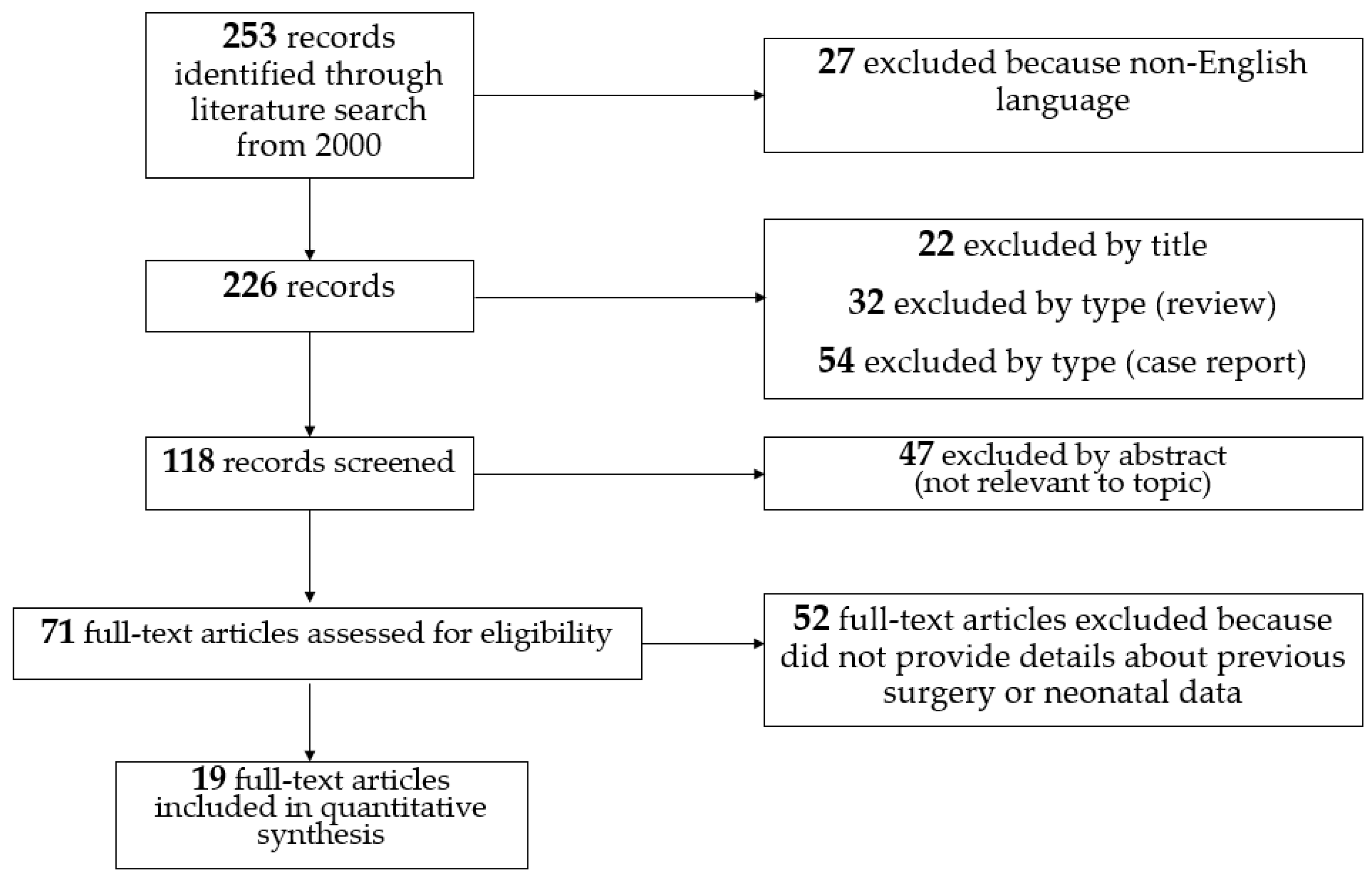
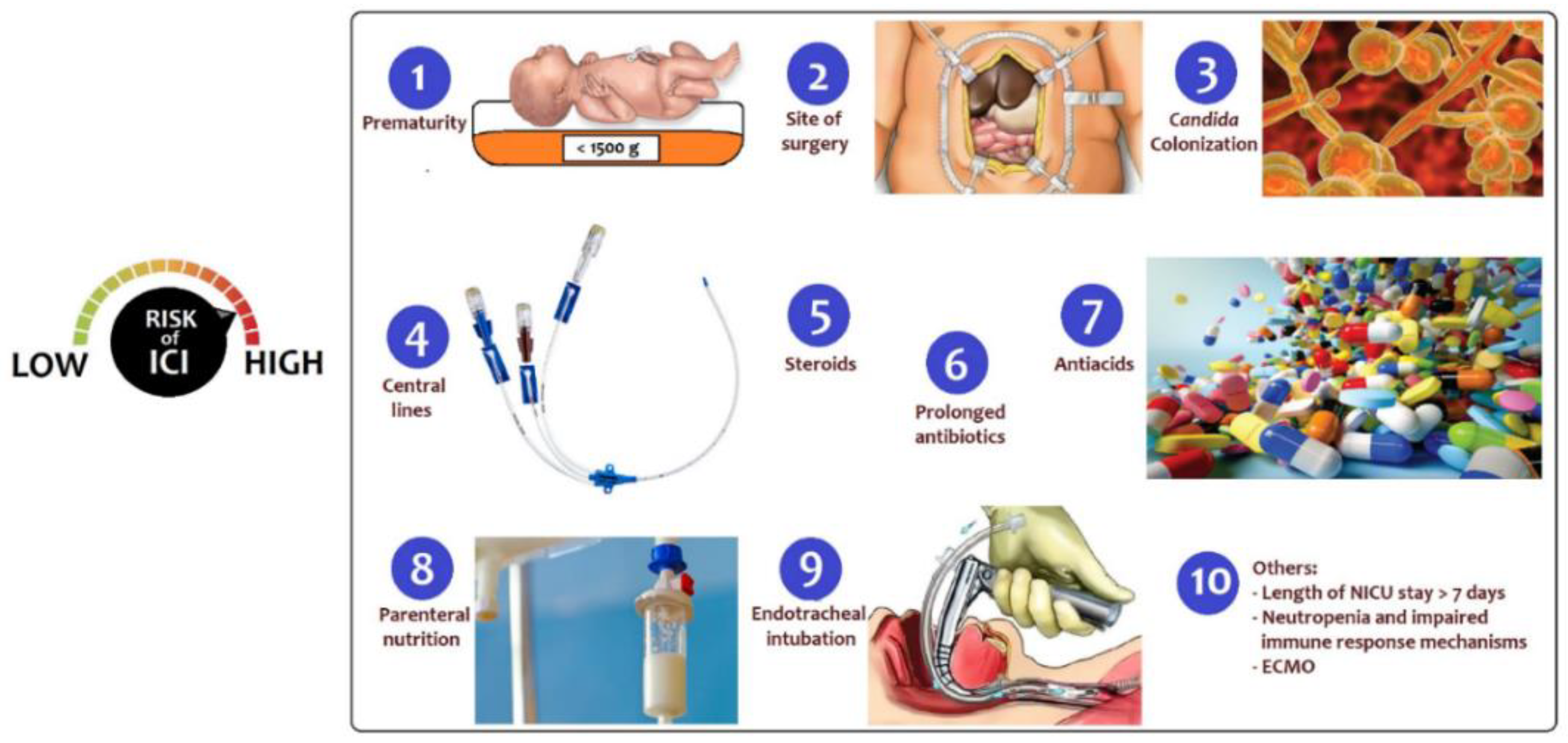
Infections represent a serious health problem in neonates. Invasive Candida infections (ICIs) are still a leading cause of mortality and morbidity in neonatal intensive care units (NICUs). Infants hospitalized in NICUs are at high risk of ICIs, because of several risk factors: broad spectrum antibiotic treatments, central catheters and other invasive devices, fungal colonization, and impaired immune responses. In this review we summarize 19 published studies which provide the prevalence of previous surgery in neonates with invasive Candida infections. We also provide an overview of risk factors for ICIs after major surgery, fungal colonization, and innate defense mechanisms against fungi, as well as the roles of different Candida spp., the epidemiology and costs of ICIs, diagnosis of ICIs, and antifungal prophylaxis and treatment.
Keywords: invasive Candida infections; invasive fungal infections; antifungal prophylaxis; newborns; surgery; neonatal surgery invasive Candida infections; invasive fungal infections; antifungal prophylaxis; newborns; surgery; neonatal surgery