
Review

Host Range, Biology, and Species Specificity of Seven-Segmented Influenza Viruses—A Comparative Review on Influenza C and D

1
Maxwell H. Gluck Equine Research Center, University of Kentucky, Lexington, KY 40546, USA
2
Aaron Diamond AIDS Research Center, Vagelos College of Physicians and Surgeons, Columbia University, New York, NY 10032, USA
*
Author to whom correspondence should be addressed.
Pathogens 2021, 10(12), 1583; https://doi.org/10.3390/pathogens10121583

Submission received: 31 October 2021 / Revised: 26 November 2021 / Accepted: 30 November 2021 / Published: 5 December 2021
(This article belongs to the Special Issue Influenza-Host Interactions)

Abstract

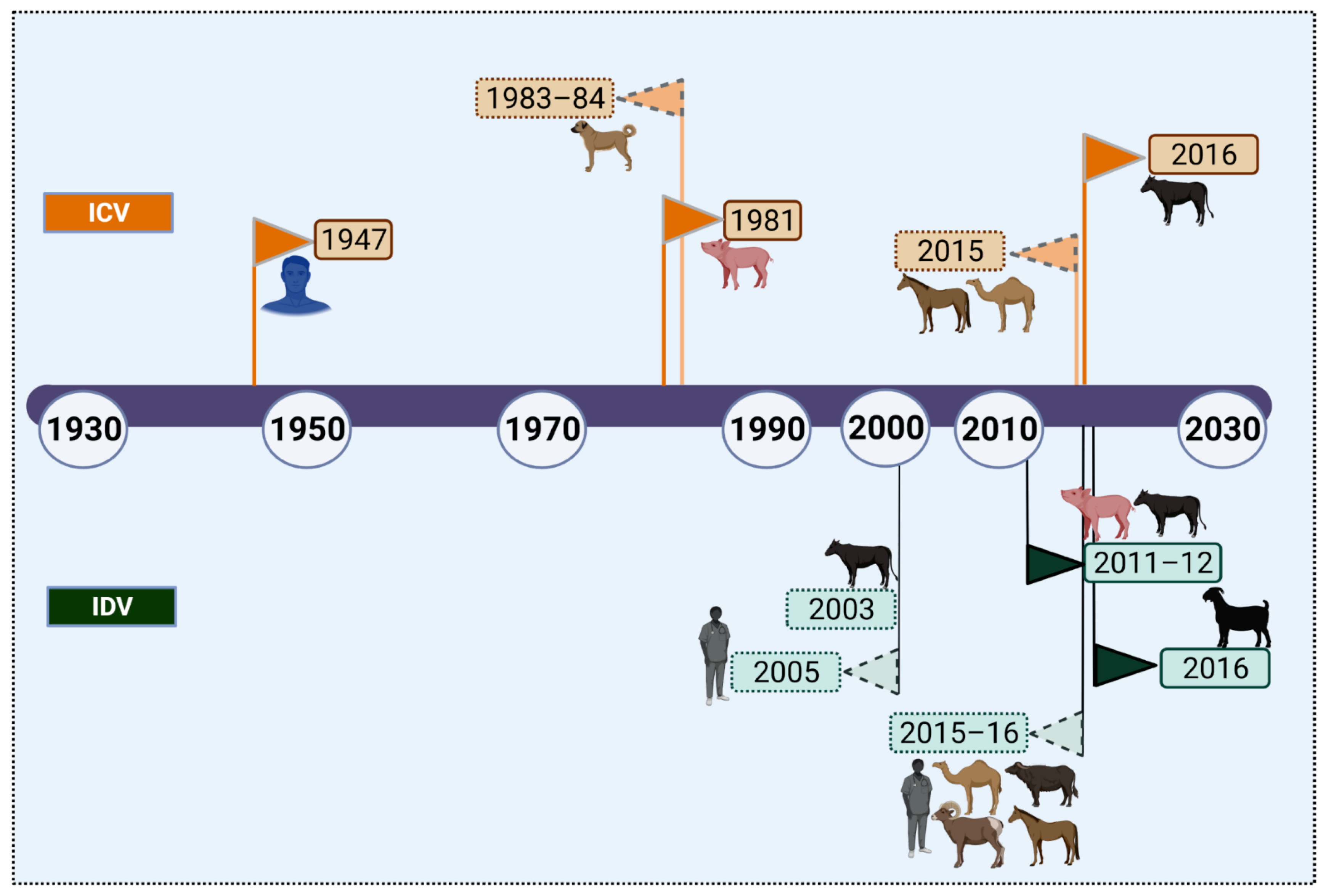
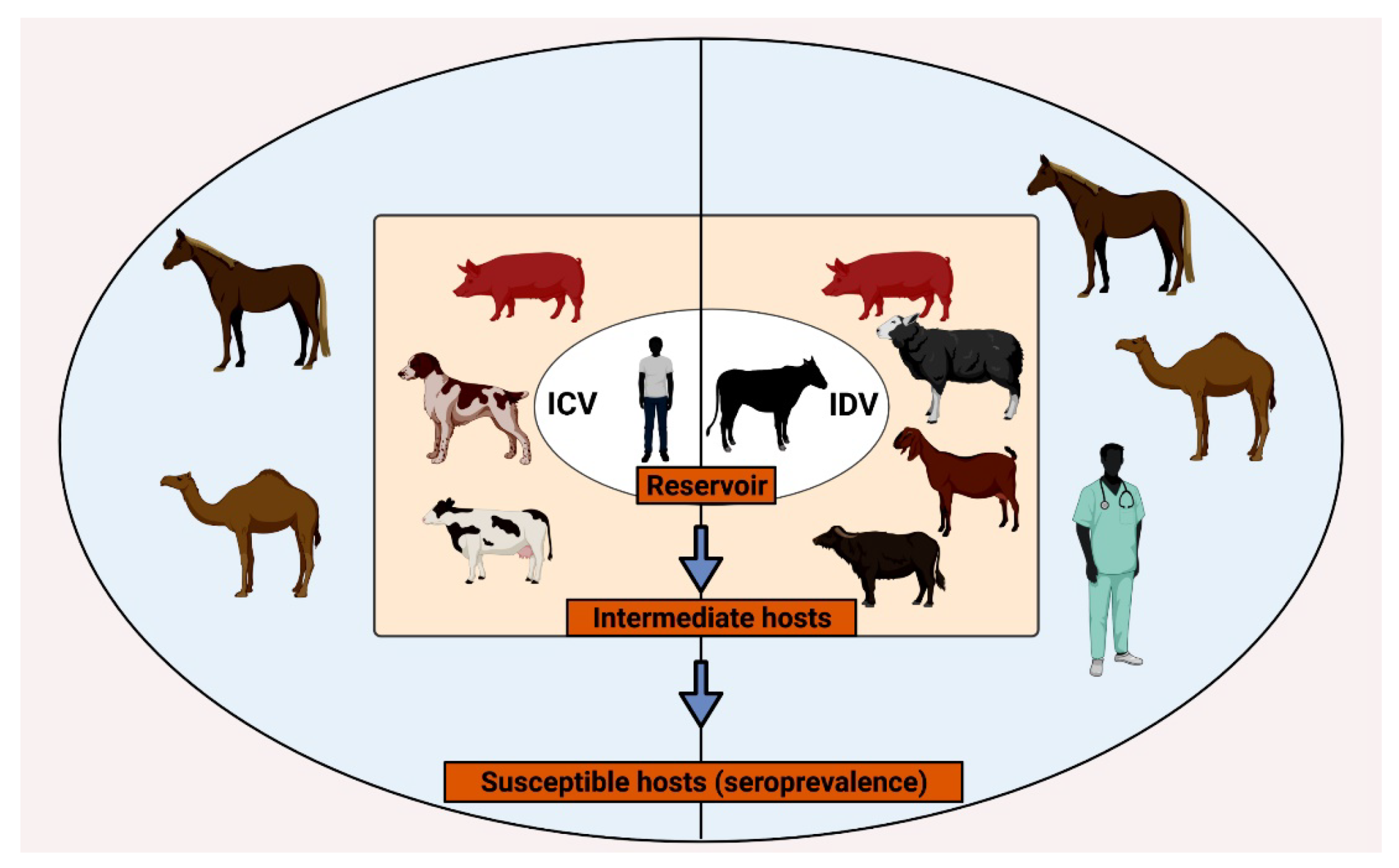
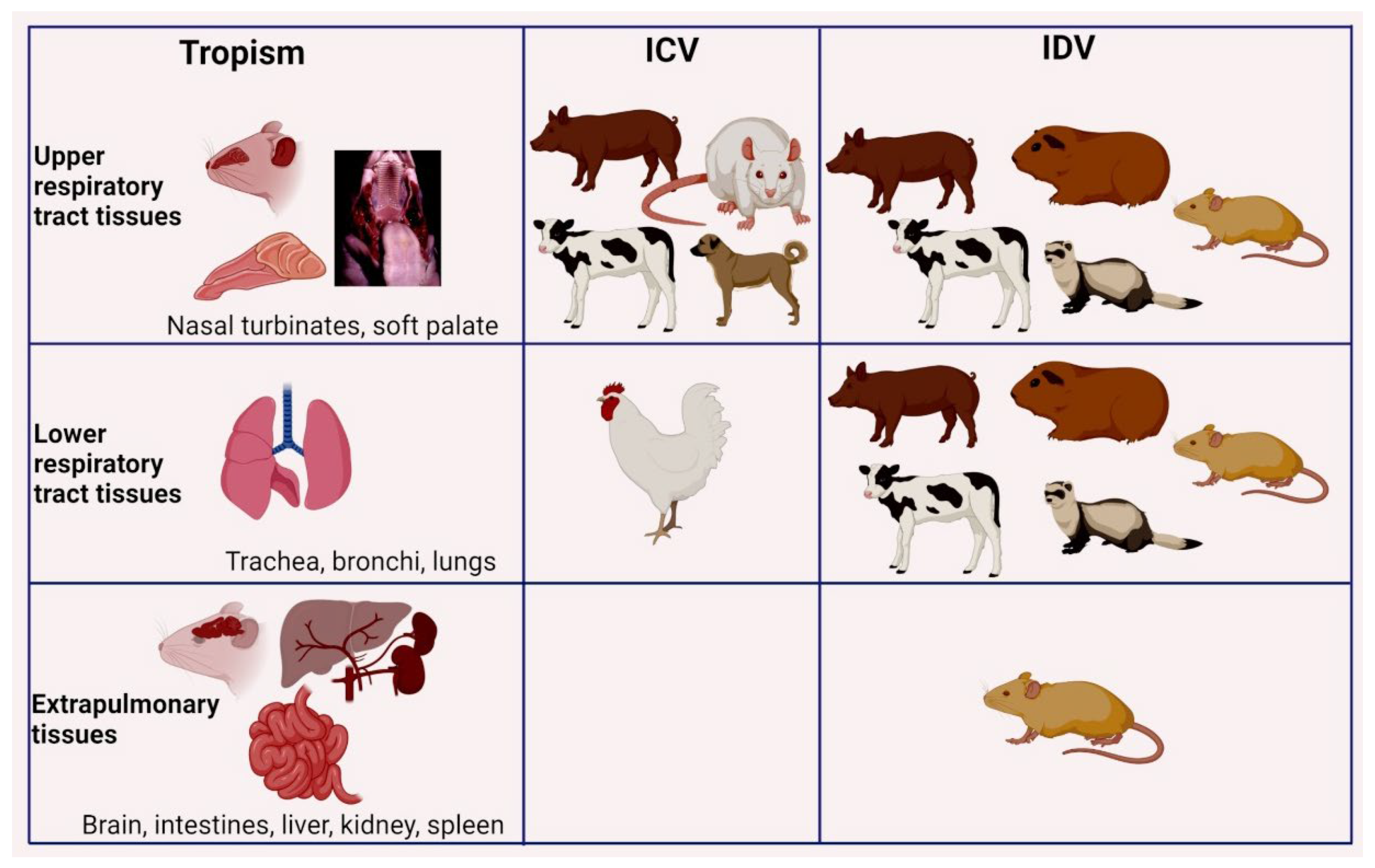
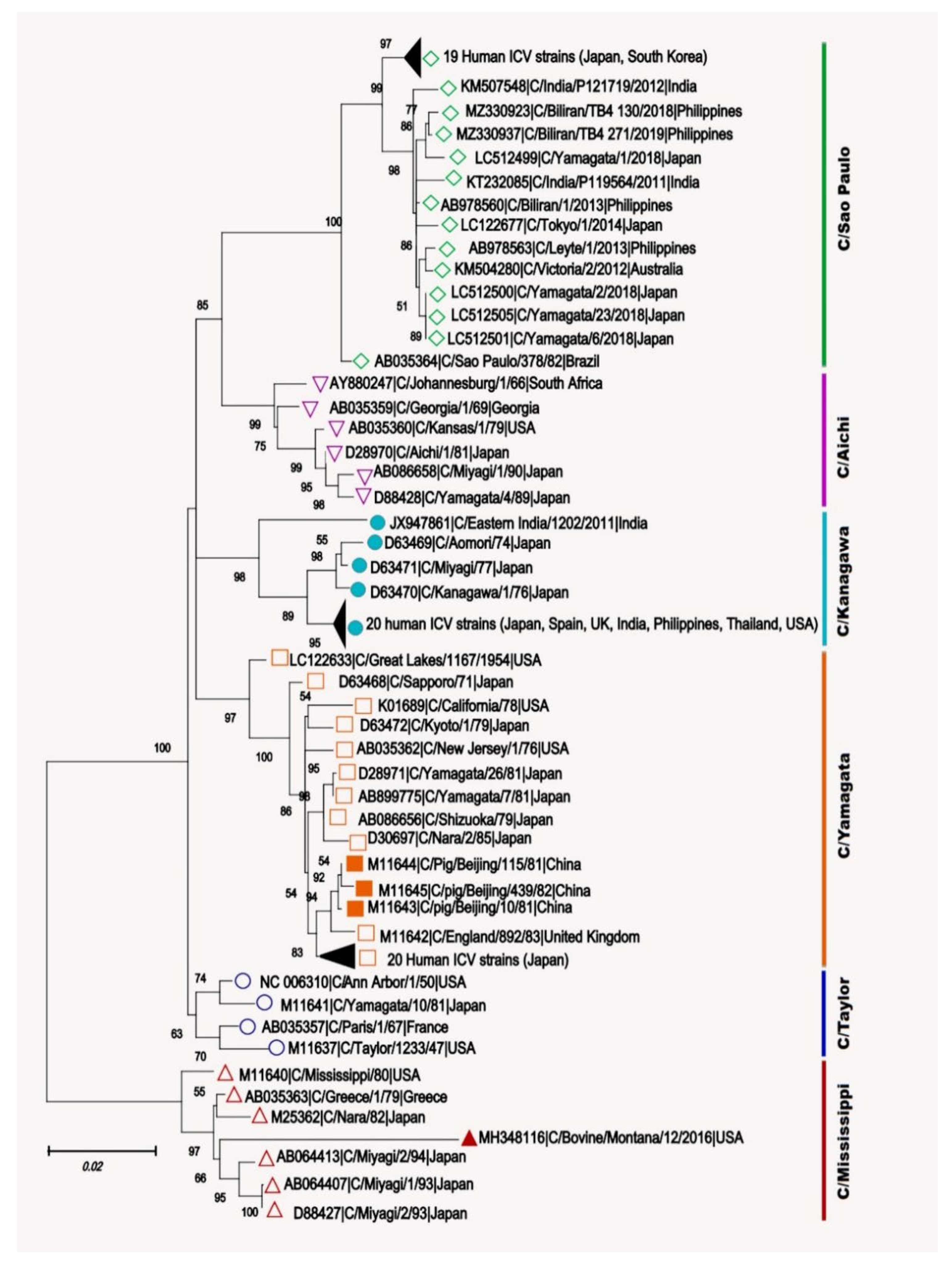
Other than genome structure, influenza C (ICV), and D (IDV) viruses with seven-segmented genomes are biologically different from the eight-segmented influenza A (IAV), and B (IBV) viruses concerning the presence of hemagglutinin–esterase fusion protein, which combines the function of hemagglutinin and neuraminidase responsible for receptor-binding, fusion, and receptor-destroying enzymatic activities, respectively. Whereas ICV with humans as primary hosts emerged nearly 74 years ago, IDV, a distant relative of ICV, was isolated in 2011, with bovines as the primary host. Despite its initial emergence in swine, IDV has turned out to be a transboundary bovine pathogen and a broader host range, similar to influenza A viruses (IAV). The receptor specificities of ICV and IDV determine the host range and the species specificity. The recent findings of the presence of the IDV genome in the human respiratory sample, and high traffic human environments indicate its public health significance. Conversely, the presence of ICV in pigs and cattle also raises the possibility of gene segment interactions/virus reassortment between ICV and IDV where these viruses co-exist. This review is a holistic approach to discuss the ecology of seven-segmented influenza viruses by focusing on what is known so far on the host range, seroepidemiology, biology, receptor, phylodynamics, species specificity, and cross-species transmission of the ICV and IDV.
Keywords: seven-segmented; eight-segmented; influenza C; influenza D; host range; species specificity; structure; biology; receptor 9; transmission seven-segmented; eight-segmented; influenza C; influenza D; host range; species specificity; structure; biology; receptor 9; transmission