
Leishmania Promastigotes Enhance Neutrophil Recruitment through the Production of CXCL8 by Endothelial Cells
 , , ,
, , ,  and
and
Abstract
1. Introduction
2. Results
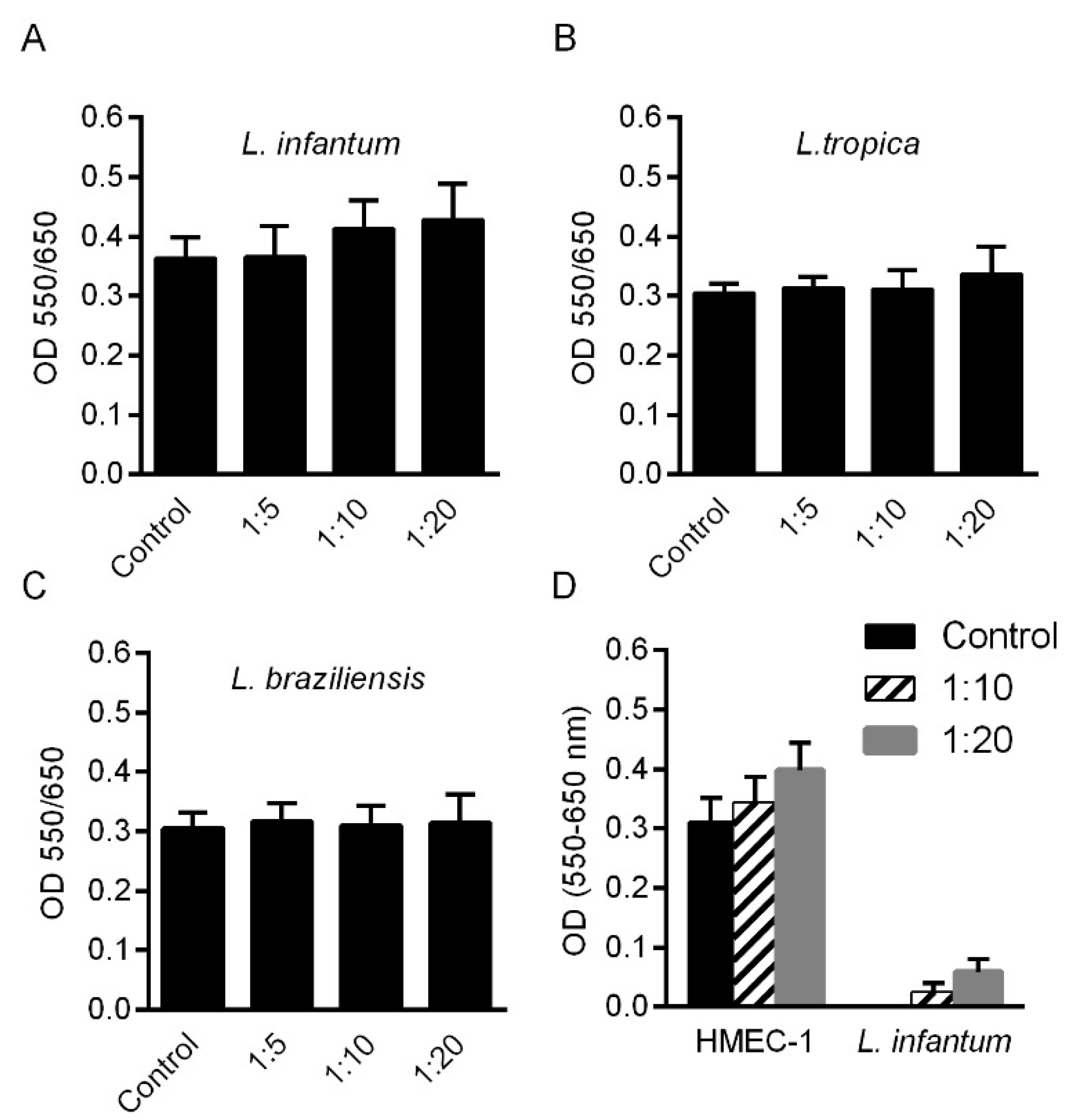
2.1. HMEC-1 Viability in the Presence of Leishmania spp.
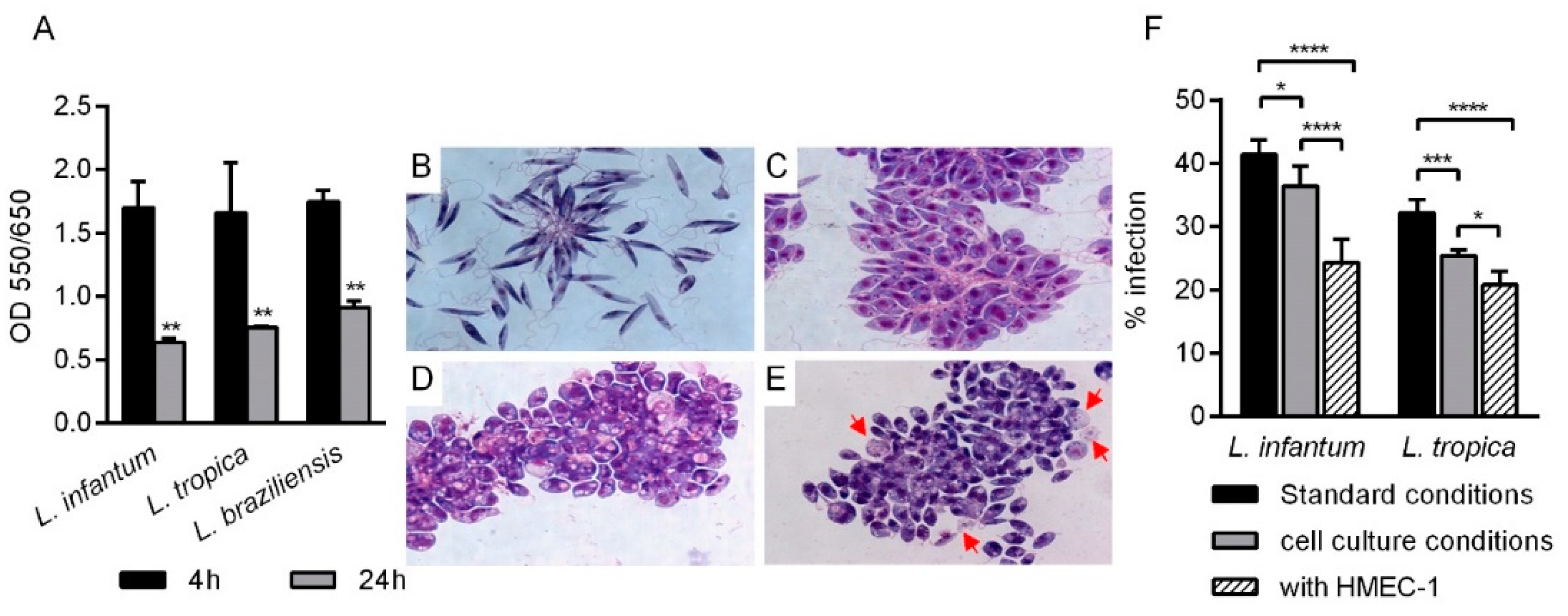
2.2. Viability, Morphological Analysis and Infectivity of Leishmania spp. in HMEC-1 Culture Conditions
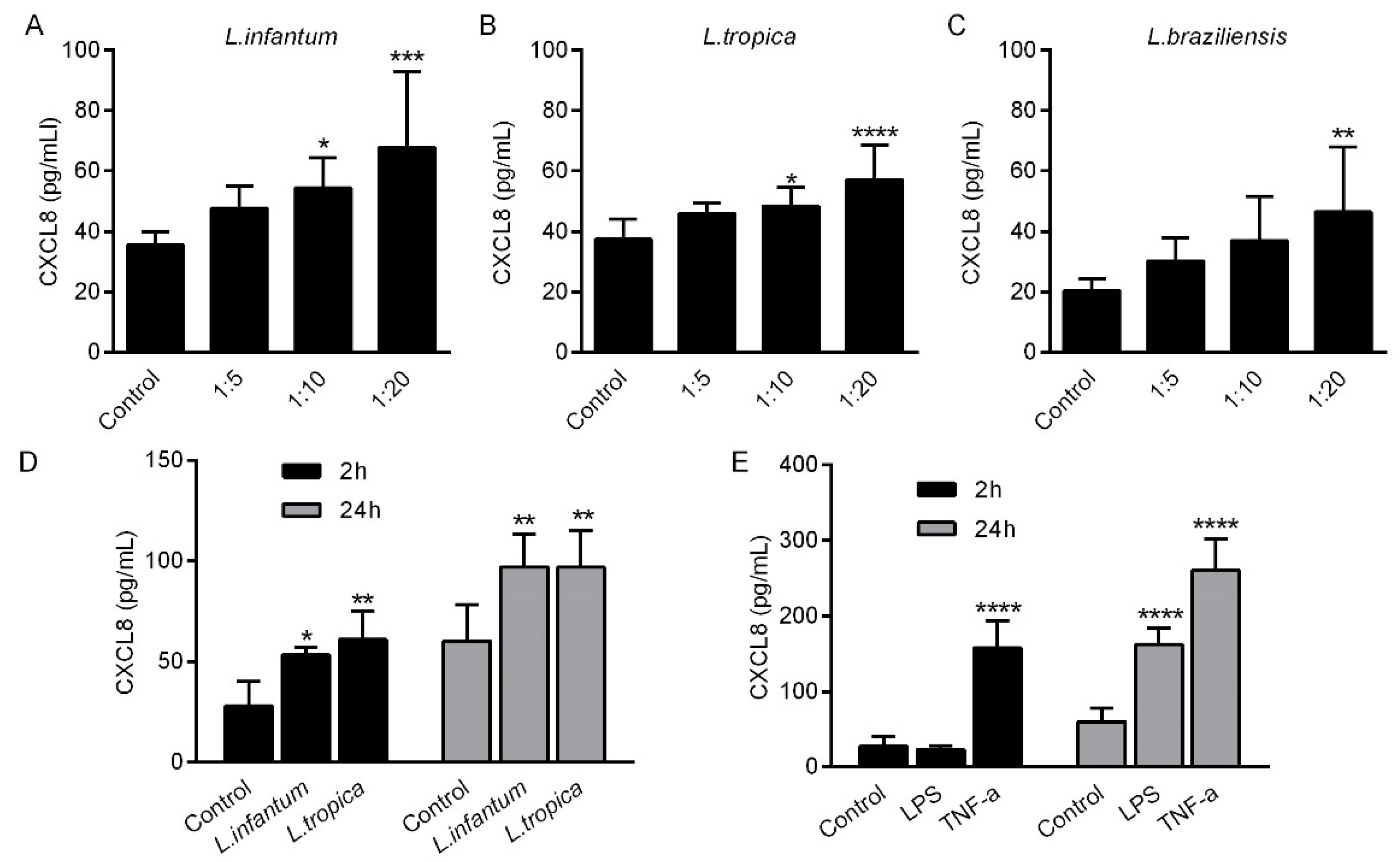
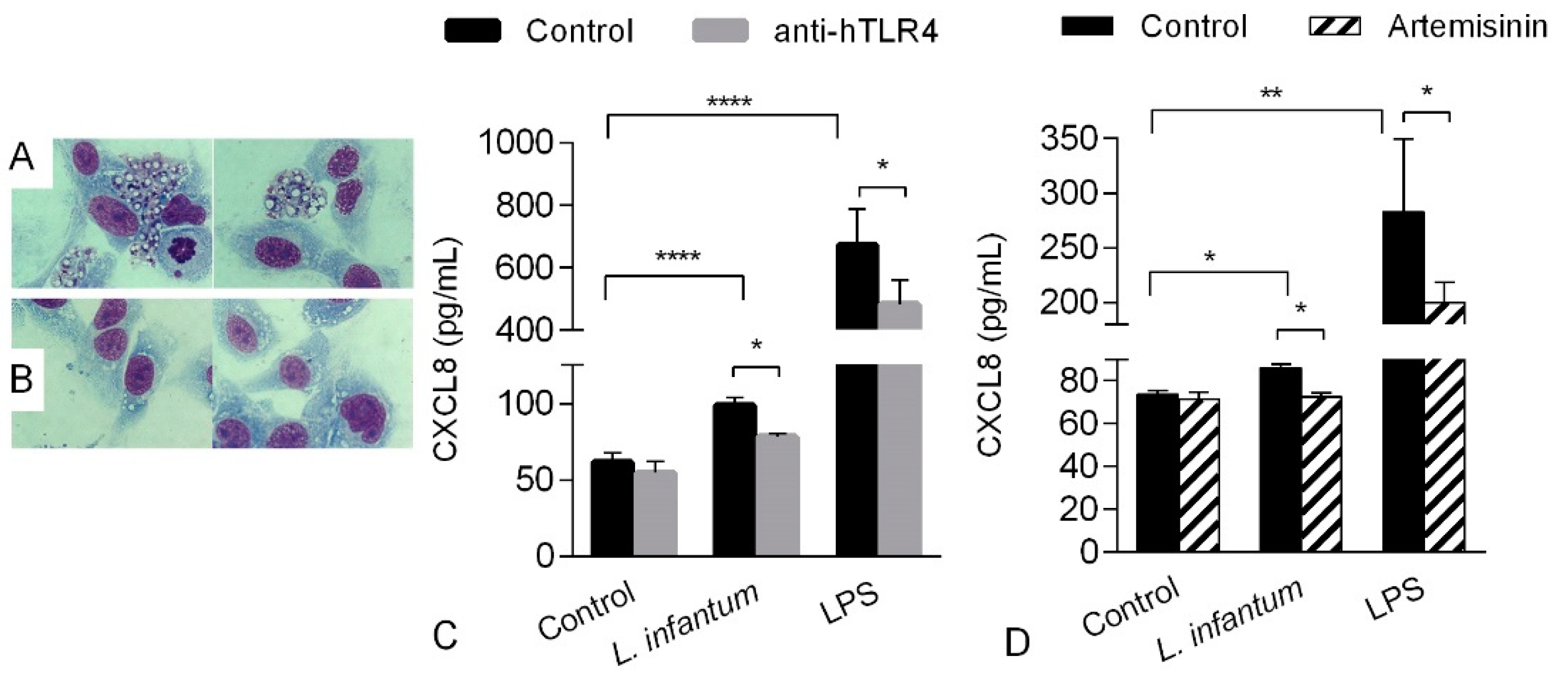
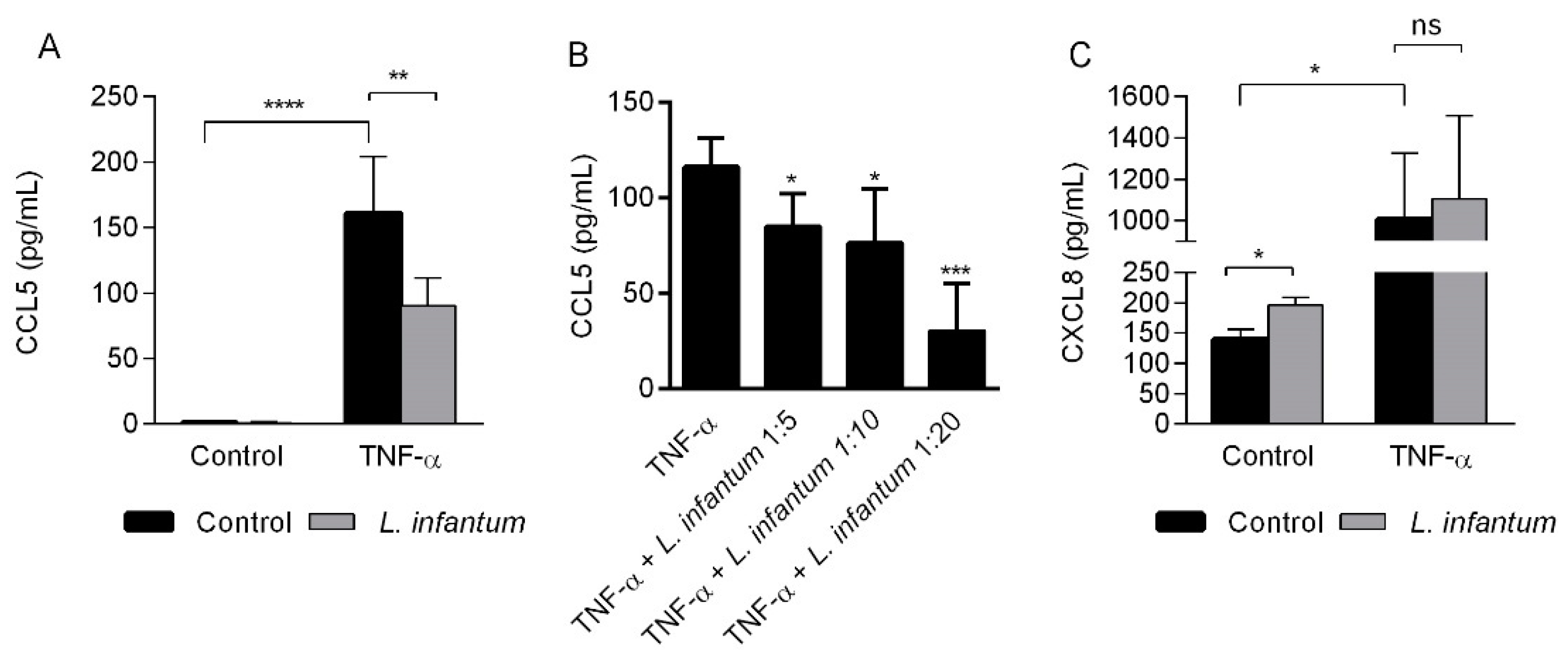
2.3. CXCL8 Production by Endothelial Cells Treated with Leishmania spp. Promastigotes
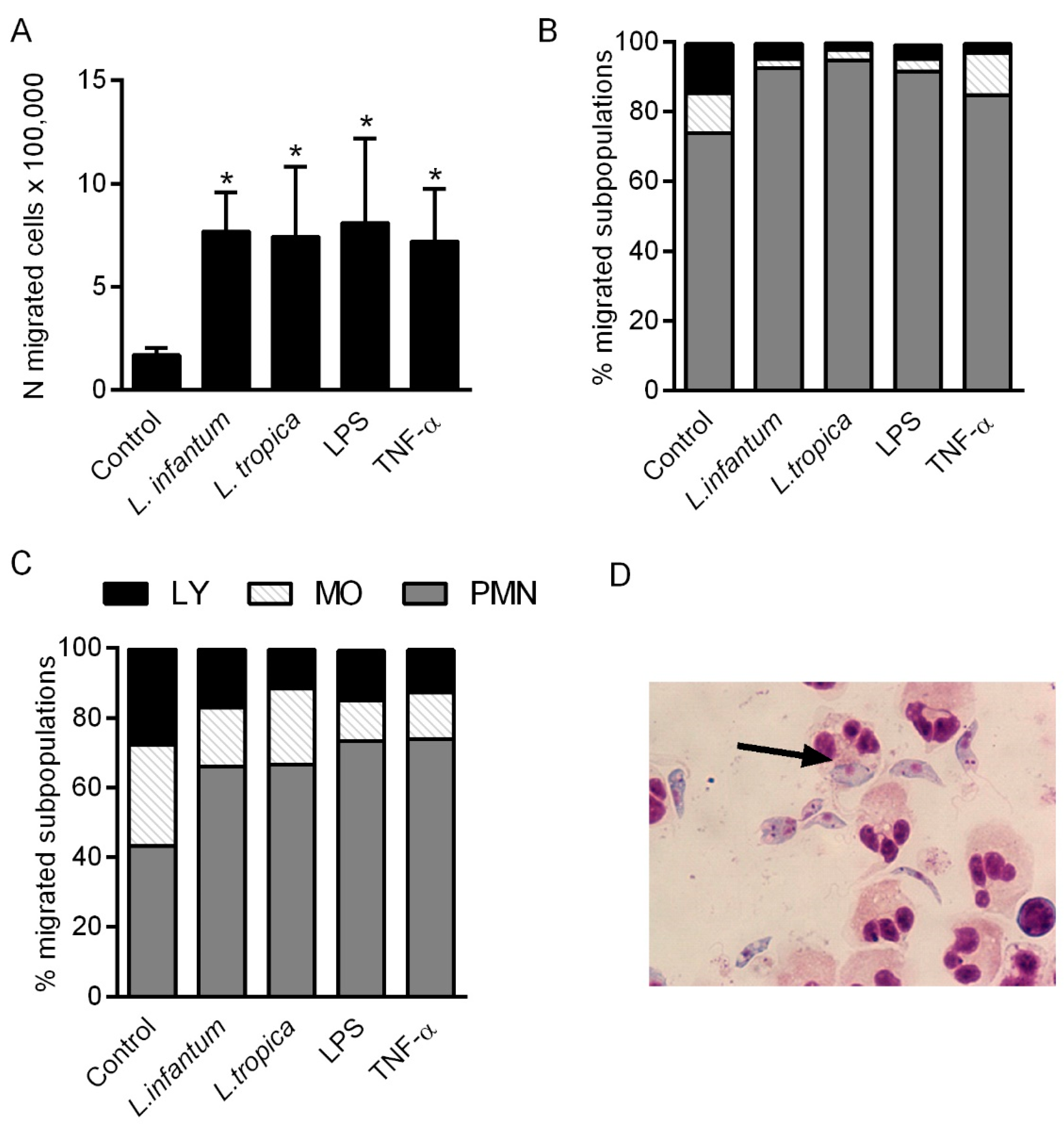
2.4. Neutrophils Recruitment by Supernatant of Endothelial Cells Treated with Leishmania Promastigotes
3. Discussion
4. Materials and Methods
4.1. Leishmania spp. Culture
4.2. Endothelial Cells Culture
4.3. Morphological Studies of Leishmania Promastigotes
4.4. Cell and Leishmania spp. Viability
4.5. Phagocytosis of Leishmania Promastigotes by Macrophages
4.6. Endothelial Cells Treatment
4.7. Chemokine Determination
4.8. Isolation of Peripheral Blood Lymphocytes (PBL) and Transwell Migration Assay
4.9. Statistical Analyses
Author Contributions
Funding
Institutional Review Board Statement
Informed Consent Statement
Data Availability Statement
Acknowledgments
Conflicts of Interest
References
- World Health Organization Fact-Sheet Leishmaniasis. Available online: https://www.who.int/news-room/fact-sheets/detail/leishmaniasis (accessed on 31 July 2021).
- Burza, S.; Croft, S.L.; Boelaert, M. Leishmaniasis. Lancet 2018, 392, 951–970. [Google Scholar] [CrossRef] [Scilit]
- Peters, N.C.; Egen, J.G.; Secundino, N.; Debrabant, A.; Kimblin, N.; Kamhawi, S.; Lawyer, P.; Fay, M.P.; Germain, R.N.; Sacks, D. In vivo imaging reveals an essential role for neutrophils in leishmaniasis transmitted by sand flies. Science 2008, 321, 970–974. [Google Scholar] [CrossRef] [Scilit]
- Peters, N.C.; Sacks, D.L. The impact of vector-mediated neutrophil recruitment on cutaneous leishmaniasis. Cell Microbiol. 2009, 11, 1290–1296. [Google Scholar] [CrossRef] [Scilit] [PubMed]
- Ribeiro-Gomes, F.L.; Peters, N.C.; Debrabant, A.; Sacks, D.L. Efficient capture of infected neutrophils by dendritic cells in the skin inhibits the early anti-leishmania response. PLoS Pathog. 2012, 8, e1002536. [Google Scholar] [CrossRef] [Scilit]
- Thalhofer, C.J.; Chen, Y.; Sudan, B.; Love-Homan, L.; Wilson, M.E. Leukocytes infiltrate the skin and draining lymph nodes in response to the protozoan Leishmania infantum chagasi. Infect. Immun. 2011, 79, 108–117. [Google Scholar] [CrossRef] [Scilit]
- Wilson, M.E.; Innes, D.J.; Sousa, A.D.; Pearson, R.D. Early histopathology of experimental infection with Leishmania donovani in hamsters. J. Parasitol. 1987, 73, 55–63. [Google Scholar] [CrossRef] [Scilit] [PubMed]
- Pompeu, M.L.; Freitas, L.A.; Santos, M.L.; Khouri, M.; Barral-Netto, M. Granulocytes in the inflammatory process of BALB/c mice infected by Leishmania amazonensis. A quantitative approach. Acta Trop. 1991, 48, 185–193. [Google Scholar] [CrossRef] [Scilit]
- Beil, W.J.; Meinardus-Hager, G.; Neugebauer, D.C.; Sorg, C. Differences in the onset of the inflammatory response to cutaneous leishmaniasis in resistant and susceptible mice. J. Leukoc. Biol. 1992, 52, 135–142. [Google Scholar] [CrossRef] [Scilit]
- Müller, K.; van Zandbergen, G.; Hansen, B.; Laufs, H.; Jahnke, N.; Solbach, W.; Laskay, T. Chemokines, natural killer cells and granulocytes in the early course of Leishmania major infection in mice. Med. Microbiol. Immunol. 2001, 190, 73–76. [Google Scholar] [CrossRef] [Scilit]
- Guimaraes-Costa, A.B.; Shannon, J.P.; Waclawiak, I.; Oliveira, J.; Meneses, C.; de Castro, W.; Wen, X.; Brzostowski, J.; Serafim, T.D.; Andersen, J.F.; et al. A sand fly salivary protein acts as a neutrophil chemoattractant. Nat. Commun. 2021, 12, 3213. [Google Scholar] [CrossRef] [Scilit]
- Ribeiro-Gomes, F.L.; Sacks, D. The influence of early neutrophil-Leishmania interactions on the host immune response to infection. Front. Cell. Infect. Microbiol. 2012, 2, 59. [Google Scholar] [CrossRef] [Scilit] [PubMed]
- Dey, R.; Joshi, A.B.; Oliveira, F.; Pereira, L.; Guimarães-Costa, A.B.; Serafim, T.D.; de Castro, W.; Coutinho-Abreu, I.V.; Bhattacharya, P.; Townsend, S.; et al. Gut Microbes Egested during Bites of Infected Sand Flies Augment Severity of Leishmaniasis via Inflammasome-Derived IL-1β. Cell Host Microbe 2018, 23, 134–143.e6. [Google Scholar] [CrossRef] [Scilit]
- Nauseef, W.M.; Borregaard, N. Neutrophils at work. Nat. Immunol. 2014, 15, 602–611. [Google Scholar] [CrossRef] [Scilit]
- Regli, I.B.; Passelli, K.; Hurrell, B.P.; Tacchini-Cottier, F. Survival Mechanisms Used by Some Leishmania Species to Escape Neutrophil Killing. Front. Immunol. 2017, 8, 1558. [Google Scholar] [CrossRef] [Scilit]
- Aga, E.; Katschinski, D.M.; van Zandbergen, G.; Laufs, H.; Hansen, B.; Müller, K.; Solbach, W.; Laskay, T. Inhibition of the Spontaneous Apoptosis of Neutrophil Granulocytes by the Intracellular Parasite Leishmania major. J. Immunol. 2002, 169, 898. [Google Scholar] [CrossRef] [Scilit] [PubMed]
- van Zandbergen, G.; Klinger, M.; Mueller, A.; Dannenberg, S.; Gebert, A.; Solbach, W.; Laskay, T. Cutting edge: Neutrophil granulocyte serves as a vector for Leishmania entry into macrophages. J. Immunol. 2004, 173, 6521–6525. [Google Scholar] [CrossRef] [Scilit] [PubMed]
- Viola, A.; Luster, A.D. Chemokines and their receptors: Drug targets in immunity and inflammation. Annu. Rev. Pharm. Toxicol. 2008, 48, 171–197. [Google Scholar] [CrossRef] [Scilit]
- Baggiolini, M. Chemokines in pathology and medicine. J. Intern. Med. 2001, 250, 91–104. [Google Scholar] [CrossRef] [Scilit]
- Abdeladhim, M.; Kamhawi, S.; Valenzuela, J.G. What’s behind a sand fly bite? The profound effect of sand fly saliva on host hemostasis, inflammation and immunity. Infect. Genet. Evol. 2014, 28, 691–703. [Google Scholar] [CrossRef] [Scilit]
- Alcolea, P.J.; Alonso, A.; Gómez, M.J.; Sánchez-Gorostiaga, A.; Moreno-Paz, M.; González-Pastor, E.; Toraño, A.; Parro, V.; Larraga, V. Temperature increase prevails over acidification in gene expression modulation of amastigote differentiation in Leishmania infantum. BMC Genom. 2010, 11, 31. [Google Scholar] [CrossRef] [Scilit]
- Zilberstein, D.; Shapira, M. The role of pH and temperature in the development of Leishmania parasites. Annu. Rev. Microbiol. 1994, 48, 449–470. [Google Scholar] [CrossRef]
- Mittra, B.; Cortez, M.; Haydock, A.; Ramasamy, G.; Myler, P.J.; Andrews, N.W. Iron uptake controls the generation of Leishmania infective forms through regulation of ROS levels. J. Exp. Med. 2013, 210, 401–416. [Google Scholar] [CrossRef] [Scilit]
- Alzate, J.F.; Arias, A.A.; Moreno-Mateos, D.; Alvarez-Barrientos, A.; Jiménez-Ruiz, A. Mitochondrial superoxide mediates heat-induced apoptotic-like death in Leishmania infantum. Mol. Biochem. Parasitol. 2007, 152, 192–202. [Google Scholar] [CrossRef] [Scilit]
- Puentes, F.; Diaz, D.; Hoya, R.D.; Gutíerrez, J.A.; Lozano, J.M.; Patarroyo, M.E.; Moreno, A. Cultivation and characterization of stable Leishmania guyanensis complex axenic amastigotes derived from infected U937 cells. Am. J. Trop. Med. Hyg. 2000, 63, 102–110. [Google Scholar] [CrossRef] [Scilit]
- van Zandbergen, G.; Hermann, N.; Laufs, H.; Solbach, W.; Laskay, T. Leishmania promastigotes release a granulocyte chemotactic factor and induce interleukin-8 release but inhibit gamma interferon-inducible protein 10 production by neutrophil granulocytes. Infect. Immun. 2002, 70, 4177–4184. [Google Scholar] [CrossRef] [Scilit] [PubMed]
- Kumar, R.; Bumb, R.A.; Salotra, P. Evaluation of localized and systemic immune responses in cutaneous leishmaniasis caused by Leishmania tropica: Interleukin-8, monocyte chemotactic protein-1 and nitric oxide are major regulatory factors. Immunology 2010, 130, 193–201. [Google Scholar] [CrossRef] [Scilit]
- Costa, D.J.; Favali, C.; Clarêncio, J.; Afonso, L.; Conceição, V.; Miranda, J.C.; Titus, R.G.; Valenzuela, J.; Barral-Netto, M.; Barral, A.; et al. Lutzomyia longipalpis salivary gland homogenate impairs cytokine production and costimulatory molecule expression on human monocytes and dendritic cells. Infect. Immun. 2004, 72, 1298–1305. [Google Scholar] [CrossRef] [Scilit] [PubMed]
- Utgaard, J.O.; Jahnsen, F.L.; Bakka, A.; Brandtzaeg, P.; Haraldsen, G. Rapid secretion of prestored interleukin 8 from Weibel-Palade bodies of microvascular endothelial cells. J. Exp. Med. 1998, 188, 1751–1756. [Google Scholar] [CrossRef] [Scilit] [PubMed]
- Gao, C.; Xie, R.; Li, W.; Zhou, J.; Liu, S.; Cao, F.; Liu, Y.; Ma, R.; Si, Y.; Bi, Y.; et al. Endothelial cell phagocytosis of senescent neutrophils decreases procoagulant activity. Thromb. Haemost. 2013, 109, 1079–1090. [Google Scholar] [CrossRef] [Scilit]
- Dini, L.; Lentini, A.; Diez, G.D.; Rocha, M.; Falasca, L.; Serafino, L.; Vidal-Vanaclocha, F. Phagocytosis of apoptotic bodies by liver endothelial cells. J. Cell Sci. 1995, 108 Pt 3, 967–973. [Google Scholar] [CrossRef] [Scilit]
- Ma, R.; Xie, R.; Yu, C.; Si, Y.; Wu, X.; Zhao, L.; Yao, Z.; Fang, S.; Chen, H.; Novakovic, V.; et al. Phosphatidylserine-mediated platelet clearance by endothelium decreases platelet aggregates and procoagulant activity in sepsis. Sci. Rep. 2017, 7, 4978. [Google Scholar] [CrossRef] [Scilit]
- Rengarajan, M.; Hayer, A.; Theriot, J.A. Endothelial Cells Use a Formin-Dependent Phagocytosis-Like Process to Internalize the Bacterium Listeria monocytogenes. PLoS Pathog. 2016, 12, e1005603. [Google Scholar] [CrossRef] [Scilit]
- Taylor, K.R.; Trowbridge, J.M.; Rudisill, J.A.; Termeer, C.C.; Simon, J.C.; Gallo, R.L. Hyaluronan fragments stimulate endothelial recognition of injury through TLR4. J. Biol. Chem. 2004, 279, 17079–17084. [Google Scholar] [CrossRef] [Scilit] [PubMed]
- Kropf, P.; Freudenberg, N.; Kalis, C.; Modolell, M.; Herath, S.; Galanos, C.; Freudenberg, M.; Müller, I. Infection of C57BL/10ScCr and C57BL/10ScNCr mice with Leishmania major reveals a role for Toll-like receptor 4 in the control of parasite replication. J. Leukoc. Biol. 2004, 76, 48–57. [Google Scholar] [CrossRef] [Scilit]
- Paul, J.; Naskar, K.; Chowdhury, S.; Alam, M.N.; Chakraborti, T.; De, T. TLR4-mediated activation of MyD88 signaling induces protective immune response and IL-10 down-regulation in Leishmania donovani infection. Indian J. Biochem. Biophys. 2014, 51, 531–541. [Google Scholar]
- Liu, T.; Zhang, L.; Joo, D.; Sun, S.C. NF-κB signaling in inflammation. Signal Transduct. Target. Ther. 2017, 2, 17023. [Google Scholar] [CrossRef] [Scilit]
- Aldieri, E.; Atragene, D.; Bergandi, L.; Riganti, C.; Costamagna, C.; Bosia, A.; Ghigo, D. Artemisinin inhibits inducible nitric oxide synthase and nuclear factor NF-kB activation. FEBS Lett. 2003, 552, 141–144. [Google Scholar] [CrossRef] [Scilit]
- Sacramento, L.A.; da Costa, J.L.; de Lima, M.H.; Sampaio, P.A.; Almeida, R.P.; Cunha, F.Q.; Silva, J.S.; Carregaro, V. Toll-Like Receptor 2 Is Required for Inflammatory Process Development during. Front. Microbiol. 2017, 8, 262. [Google Scholar] [CrossRef] [Scilit] [PubMed]
- Gupta, C.L.; Akhtar, S.; Waye, A.; Pandey, N.R.; Pathak, N.; Bajpai, P. Cross talk between Leishmania donovani CpG DNA and Toll-like receptor 9: An immunoinformatics approach. Biochem. Biophys. Res. Commun. 2015, 459, 424–429. [Google Scholar] [CrossRef] [Scilit] [PubMed]
- Rossi, M.; Fasel, N. How to master the host immune system? Leishmania parasites have the solutions! Int. Immunol. 2018, 30, 103–111. [Google Scholar] [CrossRef] [Scilit]
- Sacks, D.L.; Perkins, P.V. Identification of an infective stage of Leishmania promastigotes. Science 1984, 223, 1417–1419. [Google Scholar] [CrossRef] [Scilit]
- Weber, C.; Weber, K.S.C.; Klier, C.; Gu, S.; Wank, R.; Horuk, R.; Nelson, P.J. Specialized roles of the chemokine receptors CCR1 and CCR5 in the recruitment of monocytes and TH1-like/CD45RO+T cells. Blood 2001, 97, 1144–1146. [Google Scholar] [CrossRef] [Scilit] [PubMed]
- Aliberti, J.; Reis e Sousa, C.; Schito, M.; Hieny, S.; Wells, T.; Huffnagle, G.B.; Sher, A. CCR5 provides a signal for microbial induced production of IL-12 by CD8α+ dendritic cells. Nat. Immunol. 2000, 1, 83–87. [Google Scholar] [CrossRef] [Scilit]
- Makino, Y.; Cook, D.N.; Smithies, O.; Hwang, O.Y.; Neilson, E.G.; Turka, L.A.; Sato, H.; Wells, A.D.; Danoff, T.M. Impaired T cell function in RANTES-deficient mice. Clin. Immunol. 2002, 102, 302–309. [Google Scholar] [CrossRef] [Scilit] [PubMed]
- Santiago, H.C.; Oliveira, C.F.; Santiago, L.; Ferraz, F.O.; de Souza, D.G.; de-Freitas, L.A.; Afonso, L.C.; Teixeira, M.M.; Gazzinelli, R.T.; Vieira, L.Q. Involvement of the chemokine RANTES (CCL5) in resistance to experimental infection with Leishmania major. Infect. Immun. 2004, 72, 4918–4923. [Google Scholar] [CrossRef] [Scilit]
- Futosi, K.; Fodor, S.; Mócsai, A. Neutrophil cell surface receptors and their intracellular signal transduction pathways. Int. Immunopharmacol. 2013, 17, 638–650. [Google Scholar] [CrossRef] [Scilit] [PubMed]
- Ades, E.W.; Candal, F.J.; Swerlick, R.A.; George, V.G.; Summers, S.; Bosse, D.C.; Lawley, T.J. HMEC-1: Establishment of an immortalized human microvascular endothelial cell line. J. Investig. Derm. 1992, 99, 683–690. [Google Scholar] [CrossRef] [Scilit] [PubMed]
- Baiocco, P.; Ilari, A.; Ceci, P.; Orsini, S.; Gramiccia, M.; Di Muccio, T.; Colotti, G. Inhibitory Effect of Silver Nanoparticles on Trypanothione Reductase Activity and Leishmania infantum Proliferation. ACS Med. Chem. Lett. 2011, 2, 230–233. [Google Scholar] [CrossRef] [Scilit]
- Kuhns, D.B.; Priel, D.A.L.; Chu, J.; Zarember, K.A. Isolation and Functional Analysis of Human Neutrophils. Curr. Protoc. Immunol. 2015, 111. [Google Scholar] [CrossRef] [Scilit]


Publisher’s Note: MDPI stays neutral with regard to jurisdictional claims in published maps and institutional affiliations. |
© 2021 by the authors. Licensee MDPI, Basel, Switzerland. This article is an open access article distributed under the terms and conditions of the Creative Commons Attribution (CC BY) license (https://creativecommons.org/licenses/by/4.0/).
Share and Cite
D’Alessandro, S.; Parapini, S.; Corbett, Y.; Frigerio, R.; Delbue, S.; Modenese, A.; Gramiccia, M.; Ferrante, P.; Taramelli, D.; Basilico, N. Leishmania Promastigotes Enhance Neutrophil Recruitment through the Production of CXCL8 by Endothelial Cells. Pathogens 2021, 10, 1380. https://doi.org/10.3390/pathogens10111380
D’Alessandro S, Parapini S, Corbett Y, Frigerio R, Delbue S, Modenese A, Gramiccia M, Ferrante P, Taramelli D, Basilico N. Leishmania Promastigotes Enhance Neutrophil Recruitment through the Production of CXCL8 by Endothelial Cells. Pathogens. 2021; 10(11):1380. https://doi.org/10.3390/pathogens10111380
Chicago/Turabian StyleD’Alessandro, Sarah, Silvia Parapini, Yolanda Corbett, Roberta Frigerio, Serena Delbue, Annalisa Modenese, Marina Gramiccia, Pasquale Ferrante, Donatella Taramelli, and Nicoletta Basilico. 2021. "Leishmania Promastigotes Enhance Neutrophil Recruitment through the Production of CXCL8 by Endothelial Cells" Pathogens 10, no. 11: 1380. https://doi.org/10.3390/pathogens10111380
APA StyleD’Alessandro, S., Parapini, S., Corbett, Y., Frigerio, R., Delbue, S., Modenese, A., Gramiccia, M., Ferrante, P., Taramelli, D., & Basilico, N. (2021). Leishmania Promastigotes Enhance Neutrophil Recruitment through the Production of CXCL8 by Endothelial Cells. Pathogens, 10(11), 1380. https://doi.org/10.3390/pathogens10111380