
Article

Digital Leadership as a Networked Social Process: Evidence from Twitter (X) Leadership Communities

1
College of Merchandising, Hospitality & Tourism, University of North Texas, Denton, TX 76203, USA
2
School of Business Administration, Texas Wesleyan University, Fort Worth, TX 76105, USA
*
Author to whom correspondence should be addressed.
Soc. Sci. 2026, 15(7), 426; https://doi.org/10.3390/socsci15070426

Submission received: 28 March 2026 / Revised: 23 June 2026 / Accepted: 24 June 2026 / Published: 28 June 2026

Abstract

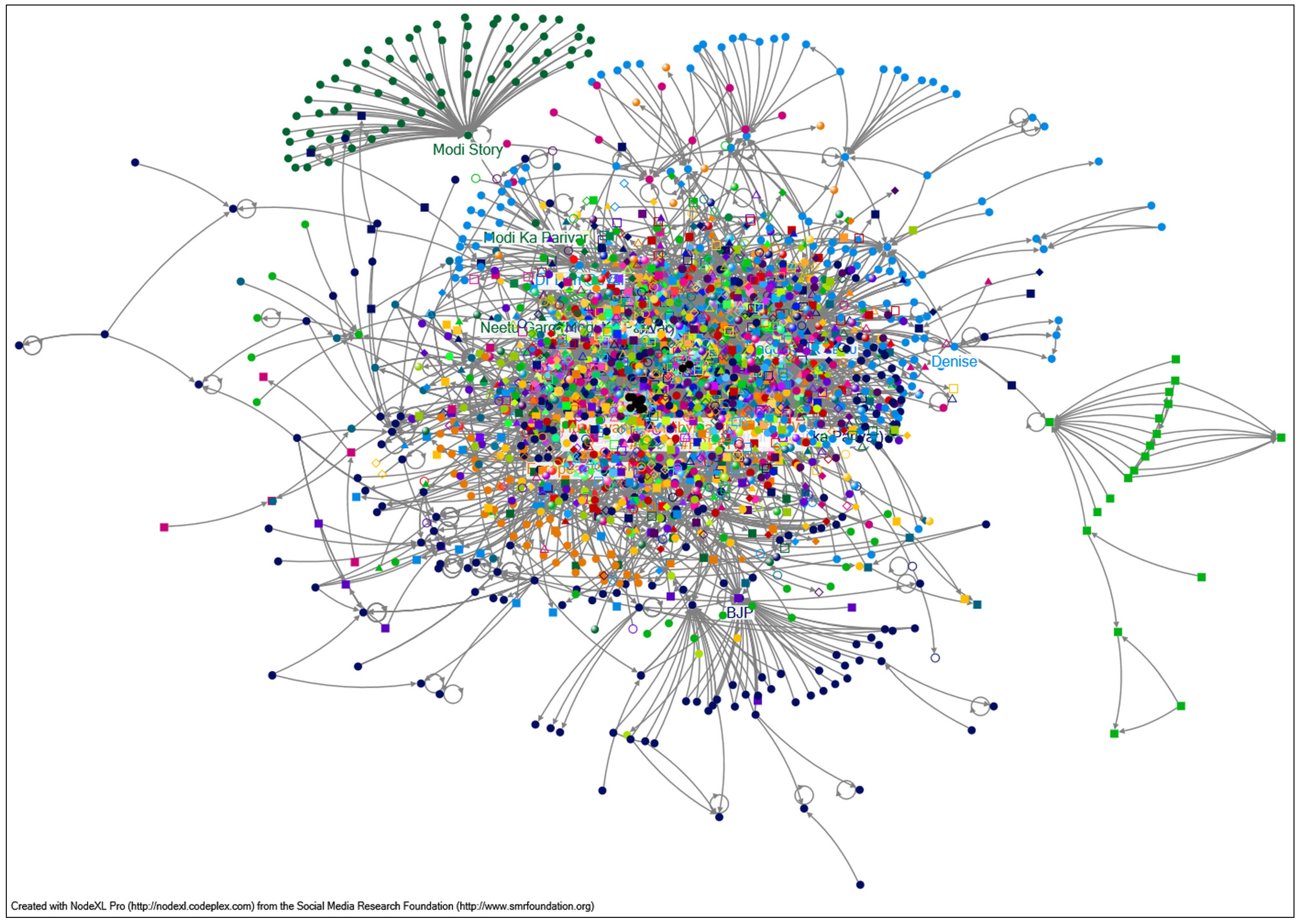
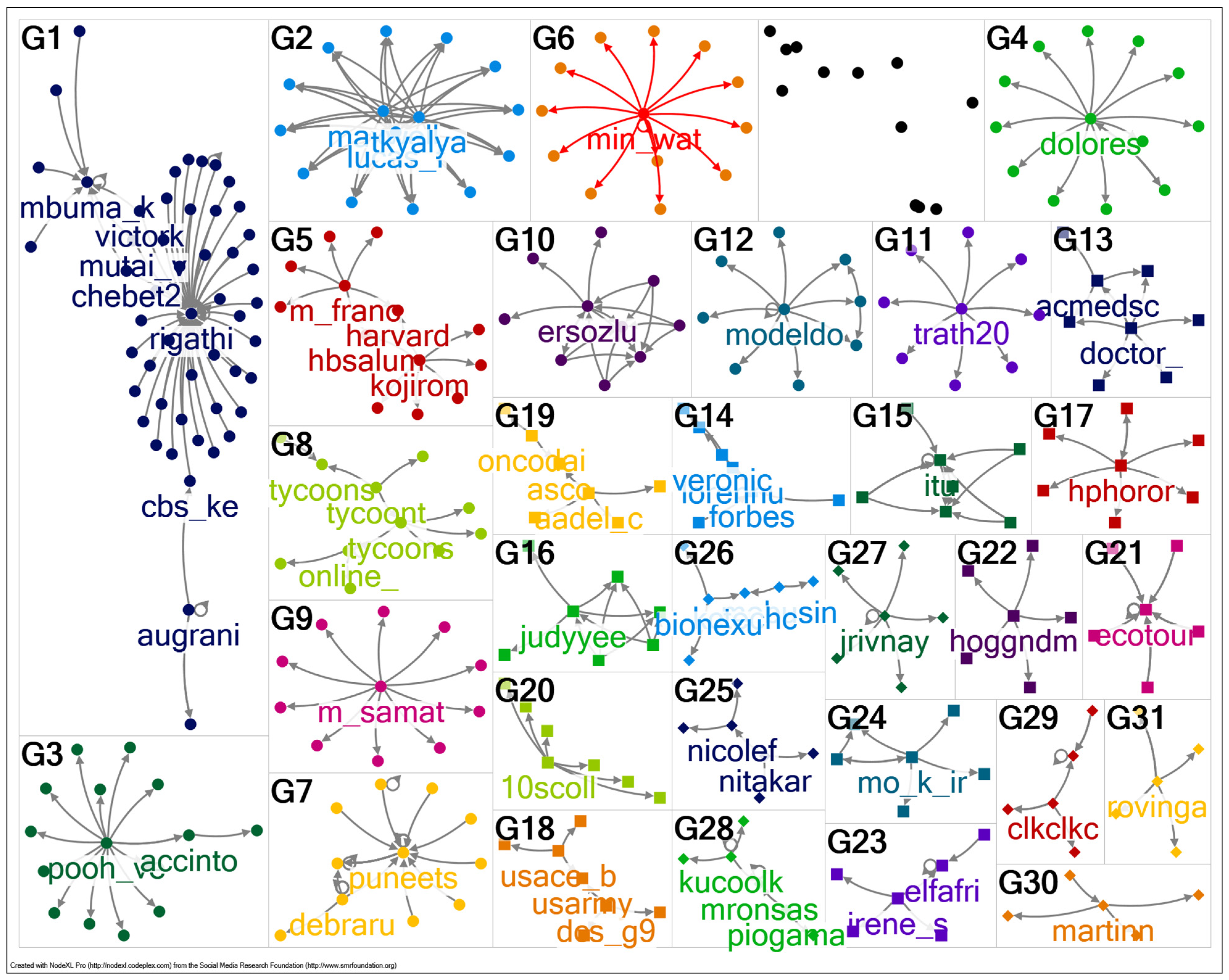
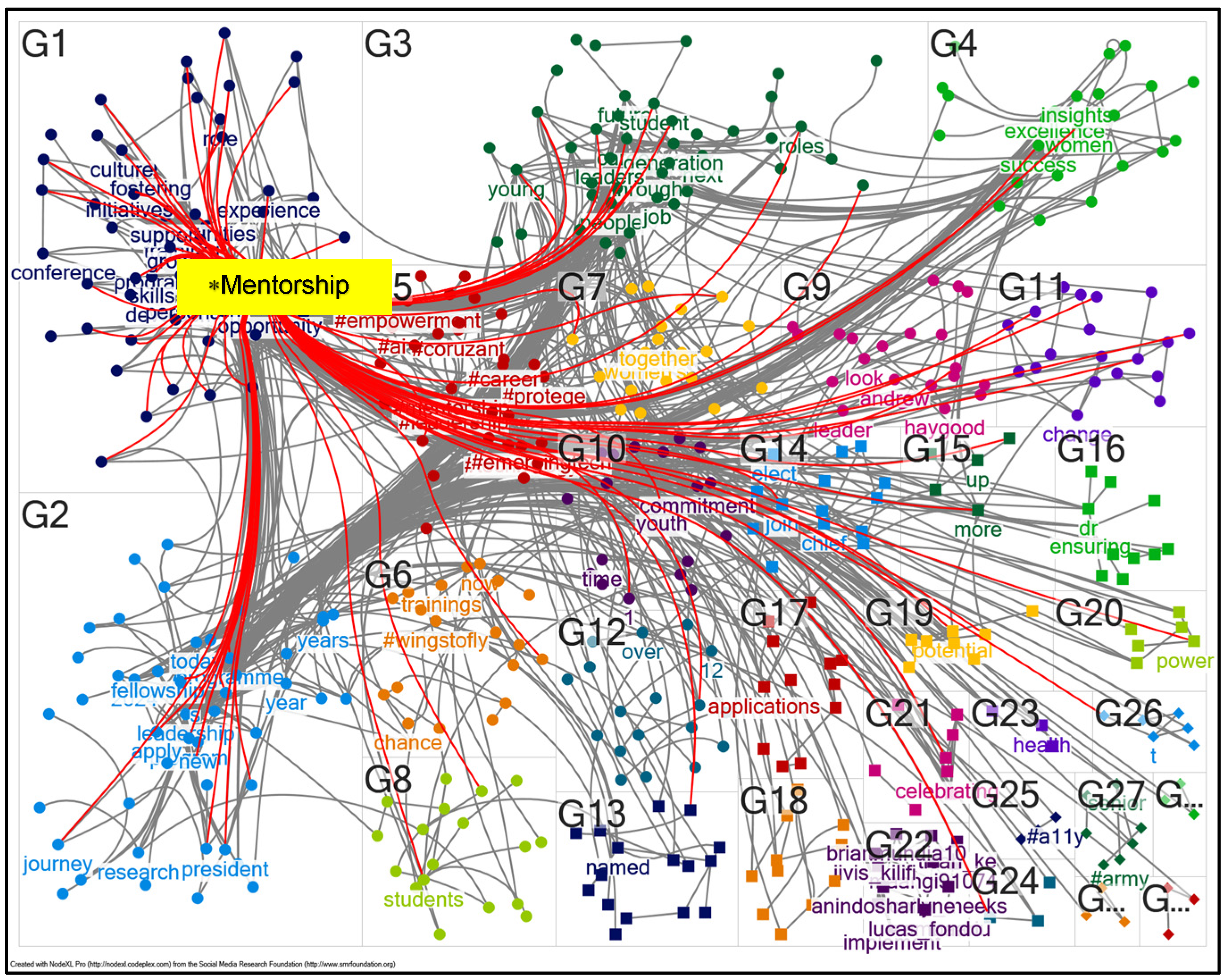
This study investigates digital leadership as a networked social process by analyzing how influential actors operating across professional and institutional domains construct leadership discourse and draw on transformational leadership (TFL) principles within Twitter (X) networks, with particular attention to the skill-transfer gaps that persist between formal academic preparation and workforce demands. Social Network Analysis (SNA) using the NodeXL program was used to examine the relational structure of that discourse across a dataset of 1186 Twitter accounts and 1362 relational ties. The analysis identified 27 prominent actors operating within a distinct community cluster whose discourse spanned politics, health, technology, media, and education, with thematically diverse but uneven engagement with leadership topics. Combining semantic cluster analyses, inductive thematic mapping, and a supplementary exploratory factor analysis (EFA), the study finds that the four TFL principles (individualized consideration, intellectual stimulation, inspirational motivation, and idealized influence) are unevenly represented in this discourse. The EFA condensed the co-occurrence structure into three platform-shaped factors, with the strongest support for individualized consideration and no coherent factor for idealized influence, indicating partial rather than comprehensive alignment with the four-dimensional TFL model. The findings position digital leadership as a relational and iterative social process, sustained through repeated interactions, endorsements, and positional recognition within platform-based publics that extend across academic, industry, and socio-political boundaries. The study highlights social media as a networked yet uneven environment for leadership development and the broader social negotiation of skill-transfer challenges across digital professional contexts.
Keywords: community clusters; digital leadership; social process; social network analysis; transformational leadership; Twitter (X) community clusters; digital leadership; social process; social network analysis; transformational leadership; Twitter (X)