1. Introduction
We are old in our search for work,
yet we are youth encountering struggle.
We dwell within rural margins,
where opportunity seldom arrives.
Scrap collection becomes our hope,
fragile, yet necessary for survival.
The N2 Highway stretches before us,
and becomes our second home.
In contexts characterised by pervasive structural inequality, limited employment opportunities and entrenched rural poverty, participation in informal livelihood strategies often emerges not as a matter of choice but of necessity. Within such conditions, scrap collection has become a critical, albeit precarious, means through which marginalised populations, particularly rural women, attempt to secure subsistence and sustain their households (
Schenck et al. 2018). Existing scholarship highlights that waste picking, while economically marginal, plays a significant yet under-recognised role in both household survival and broader waste management systems (
Sibanda et al. 2023;
Kibonde and Mwasha 2025). However, despite its contributions, the activity remains deeply embedded within conditions of vulnerability, informality and social exclusion.
Empirical evidence from the rural Eastern Cape of South Africa, as documented by
Schenck et al. (
2018), illustrates that many women engaged in scrap collection are aged between 55 and 60 years, an age at which they become eligible for state old-age pensions. Notwithstanding access to such social protection, these grants are widely reported as insufficient to meet the extensive and often multigenerational demands placed upon them, thereby necessitating the supplementation of income through scrap collection. Compounding this vulnerability is the intersection of advanced age and limited educational attainment, which significantly constrains access to formal or semi-formal employment opportunities (
Xweso 2025). This observation is consistent with broader literature (
Schenck et al. 2019a;
Ibelli-Bianco et al. 2022), which underscores the pervasive lack of formal education among waste pickers as a structural barrier that entrenches their marginalisation and restricts upward livelihood mobility.
At a structural level, poverty and chronic unemployment function as primary drivers pushing individuals into informal economic participation (
Loots and Ntsala 2024). Yet, beyond these structural constraints, engagement in scrap collection is also shaped by forms of agency and resilience. Women actively navigate constrained circumstances to fulfil caregiving responsibilities, secure food and support the educational needs of their children (
Xweso 2025). As noted by
Schenck et al. (
2018), such participation is often motivated by aspirations toward improved household wellbeing, reflecting a complex interplay between necessity and agency. Nevertheless, while these motivations underscore the adaptive capacities of waste pickers, they do not negate the profound challenges associated with this form of work. It is characterised by profound complexities and marked by the harsh and often adverse conditions experienced by those engaged in it.
Waste pickers, particularly women, are routinely exposed to hazardous working conditions, including heightened risks of non-communicable diseases due to prolonged exposure to waste (
Schenck et al. 2019b;
Wilson et al. 2022), as well as gendered forms of violence and exploitation (
Koroma et al. 2025). Despite their substantial contributions to environmental sustainability and municipal waste reduction, their work remains undervalued and inadequately supported. Furthermore, studies suggest that waste pickers often derive limited intrinsic satisfaction from this activity, engaging in it primarily for its instrumental benefits such as income generation, a sense of independence, and the ability to support their families (
Schenck et al. 2021).
Against this backdrop, and notwithstanding the expanding corpus of scholarship documenting the vulnerabilities inherent in waste picking, a significant lacuna persists in research that rigorously interrogates the motivations underpinning engagement in scrap collection and the perceived livelihood benefits derived therefrom, particularly within rural contexts situated along critical economic corridors such as the N2 Highway in South Africa. Accordingly, this study addresses this empirical and analytical gap by offering a nuanced examination of the lived experiences of rural women engaged in scrap collection, with a focused emphasis on the structural drivers of participation and the constrained livelihood outcomes associated with this form of informal labour.
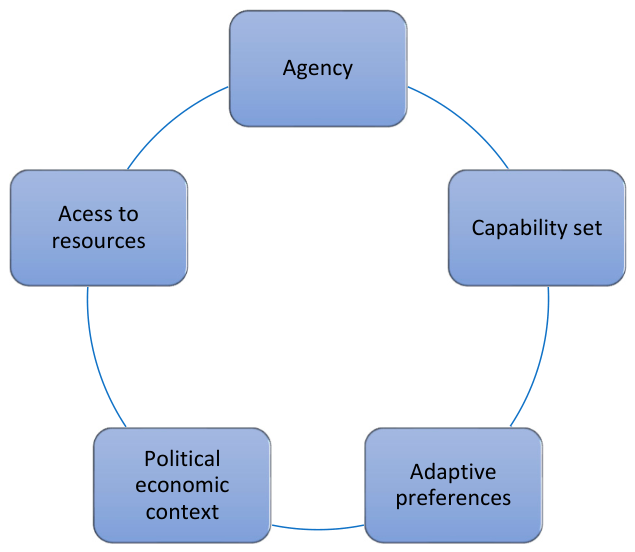
Theoretically, the study makes a substantive contribution to the application of the Capability Approach within informal economy research by empirically operationalising capability deprivation in survivalist labour contexts. It demonstrates that engagement in scrap collection reflects not merely conditions of income poverty, but rather entrenched, multidimensional restrictions across core capability domains, including bodily health, economic security, mobility and psychosocial wellbeing. Furthermore, the study extends existing scholarship by critically illuminating how adaptive preferences are constituted under conditions of prolonged structural constraint, thereby advancing a more analytically robust interpretation of agency as inherently constrained rather than freely exercised within contexts of marginality.
The central research question guiding this inquiry is: What motivates rural women along the N2 Highway to engage in scrap collection, and what livelihood benefits do they derive from this form of informal work?
3. Materials and Methods
3.1. Study Design and Setting
This study employed a cross-sectional survey design incorporating structured qualitative components, integrating closed-ended quantitative items with open-ended qualitative questions to generate both descriptive statistical data and thematic accounts of participants’ lived experiences. Such an approach is consistent with mixed-methods research designs, which enable researchers to draw on the strengths of both quantitative and qualitative methodologies within a single study (
Creswell and Creswell 2018). The research was conducted across three sites in the Eastern Cape province of South Africa, Mthatha, Xhora and Qumbu, all located along or in proximity to the N2 Highway, a major arterial route along which informal scrap collectors congregate to access transport to selling points, principally in Durban. These sites were selected purposively based on known concentrations of women engaged in scrap-collecting activity and together represent a cross-section of the rural Eastern Cape informal waste economy.
3.2. Participants and Sampling
The study recruited a total of 126 female scrap collectors across three sites, with approximately equal representation from each location: Xhora
(n = 45, 35.7%), Qumbu (
n = 41, 32.5%), and Mthatha (
n = 39, 31.0%). Eligibility criteria were restricted to women who were actively engaged in scrap collection at the time of recruitment. A purposive sampling strategy (
Fouche et al. 2021) was employed, whereby participants were identified through direct engagement at collection points and informal waiting sites along the N2 Highway.
In light of the absence of a formal sampling frame, given that scrap collectors are neither registered nor systematically enumerated by any official authority, purposive and convenience sampling constituted the most appropriate and pragmatic approaches for accessing this hard-to-reach population. Participant recruitment was sustained until data saturation was achieved and the targeted sample sizes at each site were attained. All participants were Black African women, isiXhosa-speaking, and residents within or in close proximity to the three study sites.
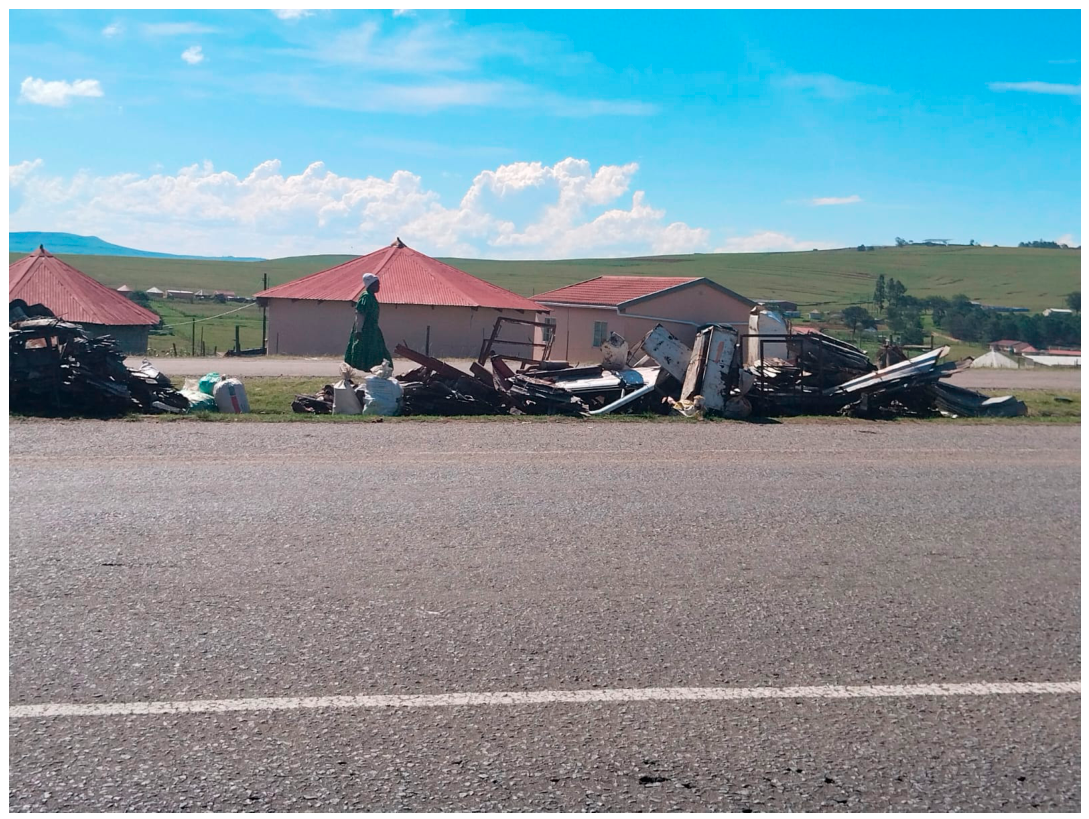
A visual depiction of the recruitment contexts and working environments of participants is presented in
Figure 2, which offers further contextual insight into the lived realities of female scrap collectors within these settings.
3.3. Instrument
Data were collected using a structured interviewer-administered questionnaire developed for this study. The instrument comprised five thematic sections covering demographic and background characteristics (gender, cultural identity, home language, age and educational attainment); educational history (highest grade completed and reasons for leaving school); employment history (prior training, formal employment, job type, and tenure); scrap-collecting activity (what participants liked and disliked about the work, motivations for collecting and duration of involvement); and subjective wellbeing (self-reported happiness and reasons for this assessment). The inclusion of both fixed-response and open-ended items allowed for the collection of quantifiable data alongside narrative accounts, enabling a richer analysis of the conditions and experiences associated with scrap collecting as a livelihood strategy.
3.4. Data Collection Method
Interviews were conducted in isiXhosa by the first author, who was fluent in the language and familiar with the communities in which data collection took place. The use of isiXhosa as the medium of interview was essential for ensuring comprehension and facilitating candid responses among participants, the majority of whom had limited formal education and for whom isiXhosa was the primary language of daily communication. Interviews were administered face to face at or near participants’ collection and waiting sites along N2 Highway. Responses to open-ended questions were recorded verbatim in isiXhosa and subsequently translated into English for analysis. Translations were conducted by the first author, who is fluent in and has a comprehensive understanding of the language, thereby ensuring high-quality translation and the preservation of semantic meaning and contextual accuracy. A subset of responses was independently coded by an independent person, and discrepancies were resolved through discussion to enhance analytical reliability.
Saturation was determined when no new themes emerged across successive responses within each thematic category.
3.5. Data Analysis
Quantitative data were analysed using descriptive statistics, including frequencies, percentages, means, standard deviations and ranges, to characterise the demographic and employment profile of the sample. Open-ended qualitative responses were analysed using thematic coding. Each response was read in full, assigned to one or more codes reflecting the primary meaning unit expressed, and codes were subsequently grouped into themes. Where responses contained more than one distinct reason or sentiment, the primary or most salient meaning unit was assigned as the dominant code, with overlapping codes noted. Frequencies were calculated for each code and theme to enable a quantified account of the prevalence of each pattern across the sample. The analysis was conducted iteratively, with codes reviewed and refined until a stable coding framework was established. All coding was conducted by the research team, with inter-rater agreement sought on ambiguous or borderline responses.
3.6. Ethical Considerations
This study was conducted in strict accordance with established ethical standards, with formal ethical clearance granted by the Faculty Research Committee of the Faculty of Community and Health Sciences at the University of the Western Cape, under Ethics Reference Number: HS20/5/27. Participation in the study was entirely voluntary, and informed consent was obtained from all participants prior to data collection. Participants were explicitly informed of their right to withdraw from the study at any stage without penalty or adverse consequences. Measures were taken to ensure strict confidentiality and anonymity; no personally identifying information was recorded in the dataset, and all data were securely stored. Consent was also obtained for photos taken.
Given the involvement of a potentially vulnerable population, women engaged in informal and precarious employment, often with limited formal education, heightened ethical sensitivity was maintained throughout the research process. The informed consent procedure was conducted using clear, accessible, and culturally appropriate language to ensure full comprehension. Participants were provided with a thorough explanation of the study’s purpose, procedures, and the intended use of the findings, thereby enabling them to make an informed and autonomous decision regarding their participation.
4. Findings
4.1. Demographic Profile of Participants
The study sample comprised 126 female scrap collectors drawn from three towns in the Eastern Cape province of South Africa. Most participants were recruited in Xhora (n = 45, 35.7%), followed by Qumbu (n = 41, 32.5%) and Mthatha (n = 39, 31.0%), with one participant not reporting a location. All participants were women and identified as Black Africans, with all interviews conducted in isiXhosa. Given the uniformity of these three variables across the full sample, the demographic profile focuses on the distributions of age and educational attainment, which showed meaningful variation across participants.
4.2. Gender, Culture and Language
The sample comprised exclusively female participants, reflecting the gendered nature of informal scrap collection within this study context. This finding represents a regional pattern, in contrast to the study by
Chitaka et al. (
2022), which reported that 75% of respondents were male, thereby underscoring contextual variations in gender participation within the informal waste sector. All 126 participants identified as Black Africans and all interviews were administered in isiXhosa, indicating a culturally and linguistically homogeneous sample. This homogeneity is consistent with the geographic and community context in which recruitment took place and reduces the likelihood that cultural or linguistic variation confounded participants’ responses.
4.3. Age
Participants ranged in age from 34 to 68 years, with a mean age of 54.3 years (SD = 5.5) and a median of 55 years. The distribution was moderately right-skewed, with most participants concentrated in the 50–59-year age band. As shown in
Table 1, nearly two thirds of participants (64.3%,
n = 81) were aged between 50 and 59 years, and a further 15.1% (
n = 19) were aged 60 years or older. Only a small proportion of the sample was under the age of 40 (1.6%,
n = 2). These figures indicate that scrap collecting in this context is predominantly an occupation of middle-aged to older women, which has important implications for the physical health risks associated with the work, including overnight outdoor exposure and manual labour, as reported in participants’ own accounts.
4.4. Educational Attainment
Educational attainment data were available for 118 of the 126 participants (nine did not report their level of schooling). Among those who did report, the sample was characterised by low to moderate levels of formal education. As presented in
Table 2, the largest group, nearly half of the valid sample (44.9%,
n = 53), had completed only primary schooling (Grade 1 to Grade 7). A further 20.3% (
n = 24) had reached junior secondary level (Grade 8 or 9), and 23.7% (
n = 28) had completed some senior secondary schooling (Grade 10 or 11). Only 11.0% of participants (
n = 13) had completed their matric (Grade 12), the final year of schooling in the South African system. No participant reported any post-school qualification.
When the primary and junior secondary categories are combined, 65.3% of the valid sample had not progressed beyond Grade 9, indicating that most participants left school before reaching the final phase of secondary education. The modal grade attained was Grade 10 (n = 18), followed jointly by Grade 5, Grade 7, and Grade 12 (n = 13 each). The two participants who reported only Grade 1 represent the least formally educated members of the sample. These educational profiles are consistent with research on women in informal and precarious employment in South Africa, where limited schooling is both a barrier to formal labour market entry and a driver of participation in low-income informal work such as waste picking and scrap collection.
4.5. Reason for Leaving School
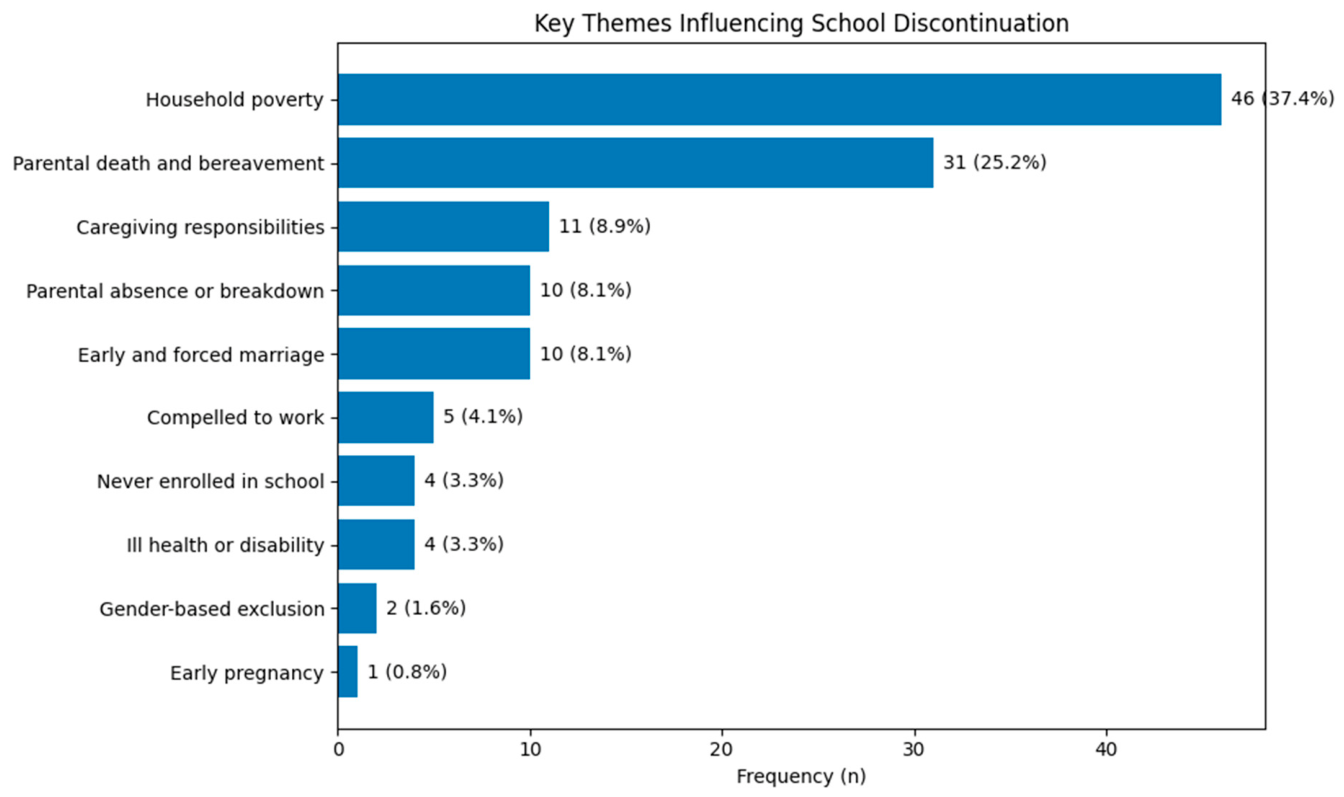
Participants were asked to describe why they left school, with responses available from 123 participants. The analysis identified ten distinct reasons, which were organised thematically. The dominant finding across all themes is that school leaving was almost universally involuntary, driven by poverty, household crisis, and gender-based expectations rather than personal choice or disengagement from education. The most frequently cited reason was household poverty, accounting for 46 responses (37.4%). Participants described having no money for school fees, no resources for uniforms or materials, and households in which no adult was employed, with responses such as “We had no money to continue with school”, “Hunger problems at home, “had no money” and “Poor family circumstances at home”.
The death of one or both parents was the second most common reason, cited by 31 participants (25.2%), with many responses stark and unelaborated, such as “Parents died” and “I lost my parents”, while others described the cascading consequences of bereavement, including the loss of financial support and the forced assumption of household responsibilities. In three cases parental death and financial hardship were explicitly intertwined within a single response, underscoring how bereavement compounded existing material precarity.
Eleven participants (8.9%) described leaving school to assume caregiving responsibilities, including looking after sick parents, caring for younger siblings, and raising children, with care work imposed on them as children or adolescents and displacing their education without apparent consideration of the developmental cost. A further ten participants (8.1%) attributed their leaving to parental absence or household breakdown, including fathers forming new households and departing, mothers leaving, and the relocation of the family, with adult departure severing the material and protective conditions that had made schooling possible. An equal number of participants (8.1%, n = 10) reported leaving school as a result of early or forced marriage, with several describing this as a directive issued by a parent or father figure, such as “My father told me I must get married” or “I was forced to get married”, pointing to a patriarchal household context in which girls’ educational trajectories were subordinated to marital arrangements.
Smaller numbers of participants described being compelled to work or contribute economically to the household while still of school-going age (4.1%,
n = 5), never having been enrolled in school in the first place (3.3%,
n = 4), leaving due to their own ill health or permanent disability (3.3%,
n = 4), being told explicitly that girls do not finish school (1.6%,
n = 2), and falling pregnant at a young age (0.8%,
n = 1). Taken together, these findings indicate that the low levels of educational attainment recorded in this sample are the direct product of compounding structural disadvantages, poverty, bereavement, household instability, gender inequality, and the extraction of children’s labour and care, experienced during childhood and adolescence, and that the early and involuntary termination of schooling for the majority of participants is directly implicated in their adult trajectories into informal and precarious work.
Figure 3 presents the key themes influencing school discontinuation among the participants.
4.6. Skills and Training
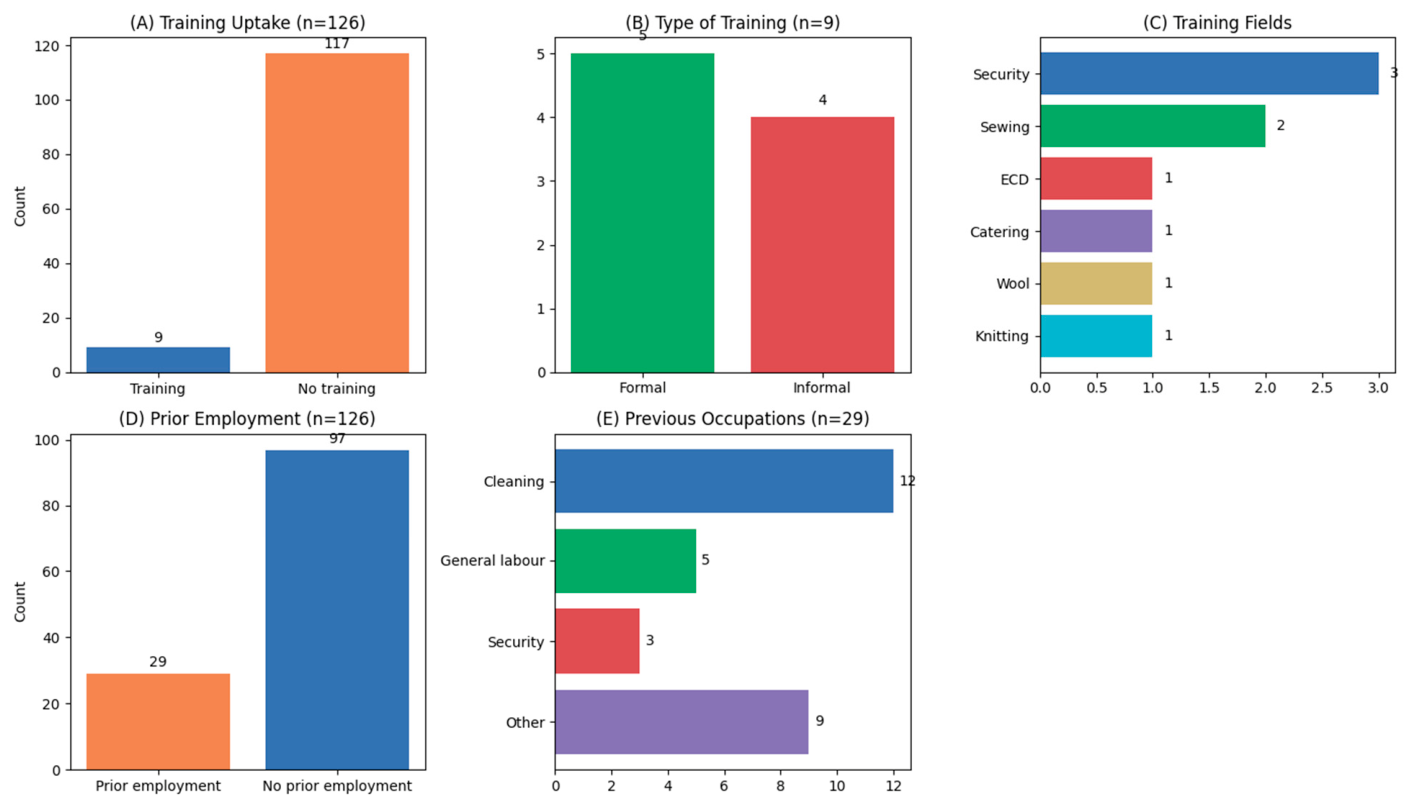
Of the 126 participants, a small minority reported having received some form of skills training prior to their current work as scrap collectors. Nine participants (7.1%) indicated that they had undergone training, with five of these (55.6%) having received formal training and four (44.4%) informal training. The types of training reported were varied and included security (n = 3), sewing (n = 2), day care and early childhood development (n = 1), catering (n = 1), wool making (n = 1), and knitting (n = 1). Training was obtained from a range of providers, including formally registered companies and training centres such as Nyathi Company, Seseko Training Centre, SEDA in Mpumalanga, and Qumbu Municipality, as well as informal arrangements with individuals or community organisations. The low rate of training uptake across the sample is consistent with the educational profile described above and reflects the limited access to human capital development that has characterised participants’ working lives.
With respect to prior formal employment, 29 participants (23.0%) reported having held a full-time job at some point before entering scrap collecting. The most common previous occupation was cleaning or domestic work, reported by 12 participants (41.4% of those with prior employment), followed by general labouring (n = 5, 17.2%) and security work (n = 3, 10.3%). Other roles included construction work, cooking, tailoring, sewing, packing, care work, sales, data capturing, and road construction, each reported by one participant. The duration of previous employment ranged from one to fifteen years, with a mean tenure of 6.3 years and a median of six years, suggesting that where formal employment had been held, it tended to represent a sustained period of work rather than brief or casual engagement. The longest reported tenure was fifteen years in a cleaning role, and the shortest was one year each in road construction and sales.
The occupational profile of prior employment, concentrated in low-wage, labour-intensive roles in the cleaning, security, and general labour sectors, reflects a pattern of employment within the secondary labour market, characterised by limited skills requirements, low remuneration, and high vulnerability to job loss. The transition from these roles into informal scrap collecting is consistent with the accounts participants gave elsewhere in the survey regarding job loss as a primary motivator for entering this form of work.
Figure 4 provides an overview of the participants’ skills training and prior employment history.
4.7. Experiences of Scrap Collecting Work
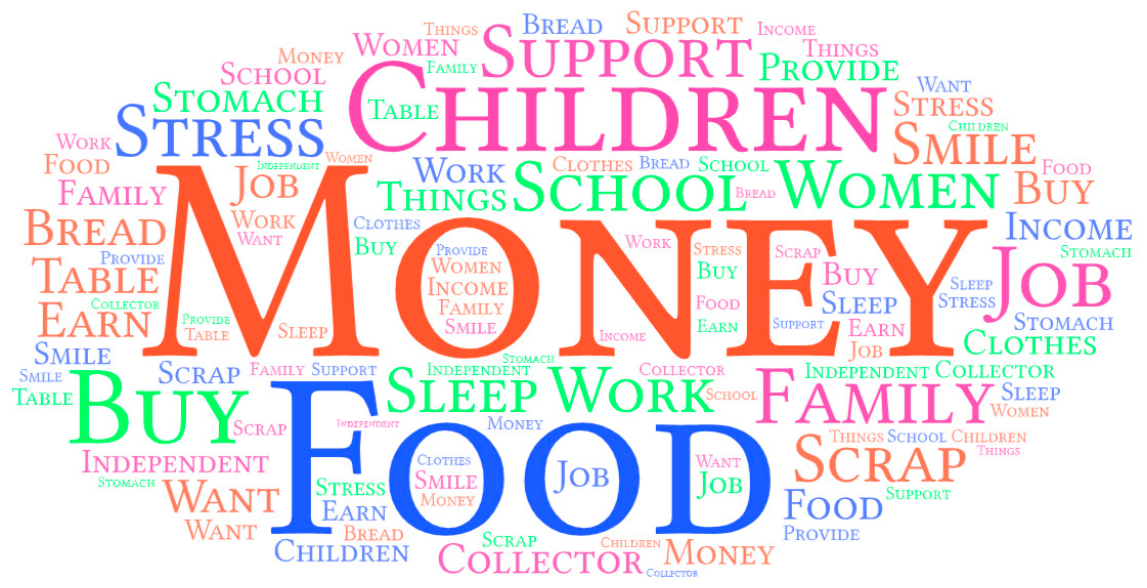
When asked to describe what it is like to work as a scrap collector, participants’ responses were dominated by a single overriding theme: the economic necessity that the work fulfils. Across the full sample (n = 120), approximately 98 responses mapped onto the theme of income and economic survival, making it by far the most prevalent dimension of participants’ experiences. Within this theme, the most frequently coded response was a general reference to receiving money or income (n = 55), followed by the specific ability to buy food for their children or family (n = 28), and the capacity to pay school fees or meet children’s material needs (n = 10). A small number of participants highlighted that the work allowed them to avoid borrowing money from others (n = 2) or to earn additional income beyond other sources (n = 3). Illustrative responses include “I get money to buy food for my children”, “At least I can take my children to school” and “I do not borrow money from people, I get it from this job”. These responses indicate that, for most participants, any positive orientation towards scrap collecting is instrumental rather than intrinsic, rooted in the absence of alternatives rather than genuine satisfaction with the work.
A secondary theme, social support from co-workers, emerged across seven responses. Participants described the solidarity of working alongside other women as a source of psychological relief, with five responses specifically noting that working with other women helped to relieve stress, and two describing their colleagues as making the physical demands more manageable. Representative responses include “I like working with other women, I do not feel anything hard because of their support”, and “Working with other women as a scrap collector takes my stress away”. A further theme of independence and autonomy was present but limited (n = 3), with two participants noting that no one controls them in this work, and one participant highlighting the physical benefit of staying active rather than sedentary.
Notably, a theme of ambivalent acceptance was identified in twelve responses, reflecting participants who expressed no genuine appreciation for the work but acknowledged that they force themselves to continue because they need the money. A further four participants stated outright that they liked nothing about the work and described themselves as suffering. These responses complicate any reading of the positive-framing questions and underscore the degree to which participation in scrap collecting is experienced as coerced by economic circumstance.
Figure 5 illustrates the experiences of female scrap collectors engaged in scrap collection work.
4.8. Negative Experiences and Challenges
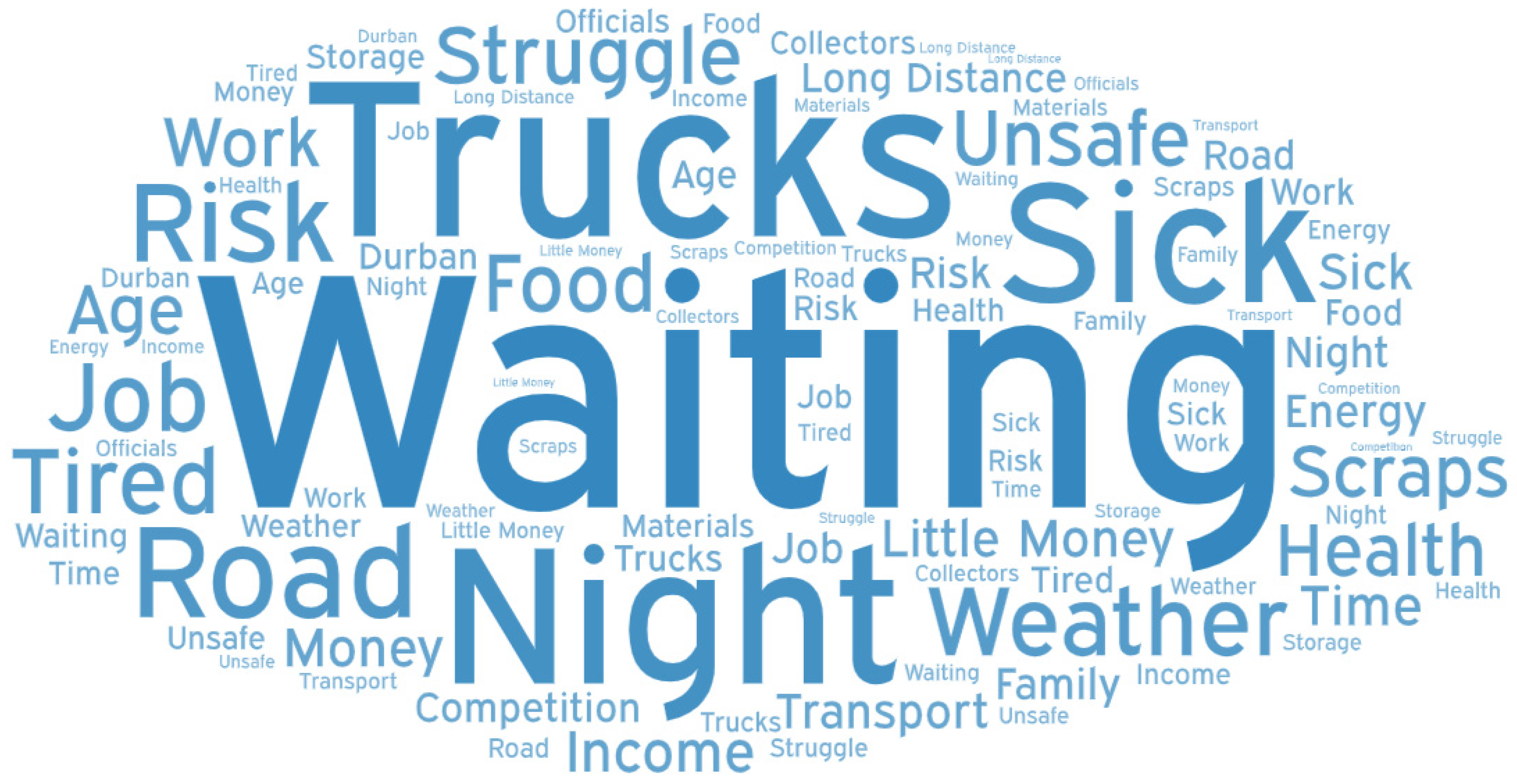
Participants identified a range of serious challenges associated with scrap collecting, with responses clustering into four distinct themes. The most prevalent theme concerned unsafe transport and night waiting (n = 52). Within this theme, the dominant code was waiting at night or for extended hours for trucks to transport them to selling points, most commonly Durban (n = 35). Participants described spending entire nights alongside roads in all weather conditions, with responses such as “Sleeping outside waiting for trucks to take us to Durban” “Waiting many days for trucks to take us to Durban” and “Waiting along the road even when the weather is not good”. A further ten responses specifically identified the trucks themselves as dangerous or unsafe, and seven described sleeping outside next to the road as a distinct source of distress. These responses collectively point to the transport infrastructure of scrap collecting as a central site of vulnerability for participants.
Health and physical hardship constituted the second major theme (n = 28). Eighteen participants specifically described getting sick because of sleeping outside and exposure to adverse weather, with responses such as “We get sick because we sleep outside” “We are old for this job, we always get sick because we stay outside” and “We are not safe here, we get sick”. Physical exhaustion from carrying heavy loads was raised by six participants, and walking long distances was identified as a health concern by a further four. These findings suggest that the physical toll of scrap collecting is substantial, with outdoor overnight exposure representing a significant occupational health risk.
The third theme, insufficient income, was present in twenty responses. Seventeen participants described the money earned as too little or not enough to meet their needs, and three reflected specifically on the disjunction between the effort required and the remuneration received, captured in responses such as “We work hard for less money” and “Working so hard but not enough money”. A fourth theme of operational difficulties (n = 12) encompassed challenges in sourcing scrap material (n = 6), lack of access to transport (n = 4), pressure from municipal officials to move their collections (n = 1), and competition from other collectors (n = 1). A smaller theme of time demands (n = 6) reflected participants’ concerns that the job consumes excessive time and energy relative to its returns.
Figure 6 presents participants’ negative perceptions and experiences regarding their engagement in scrap collection activities.
4.9. Motivations for Collecting Scrap
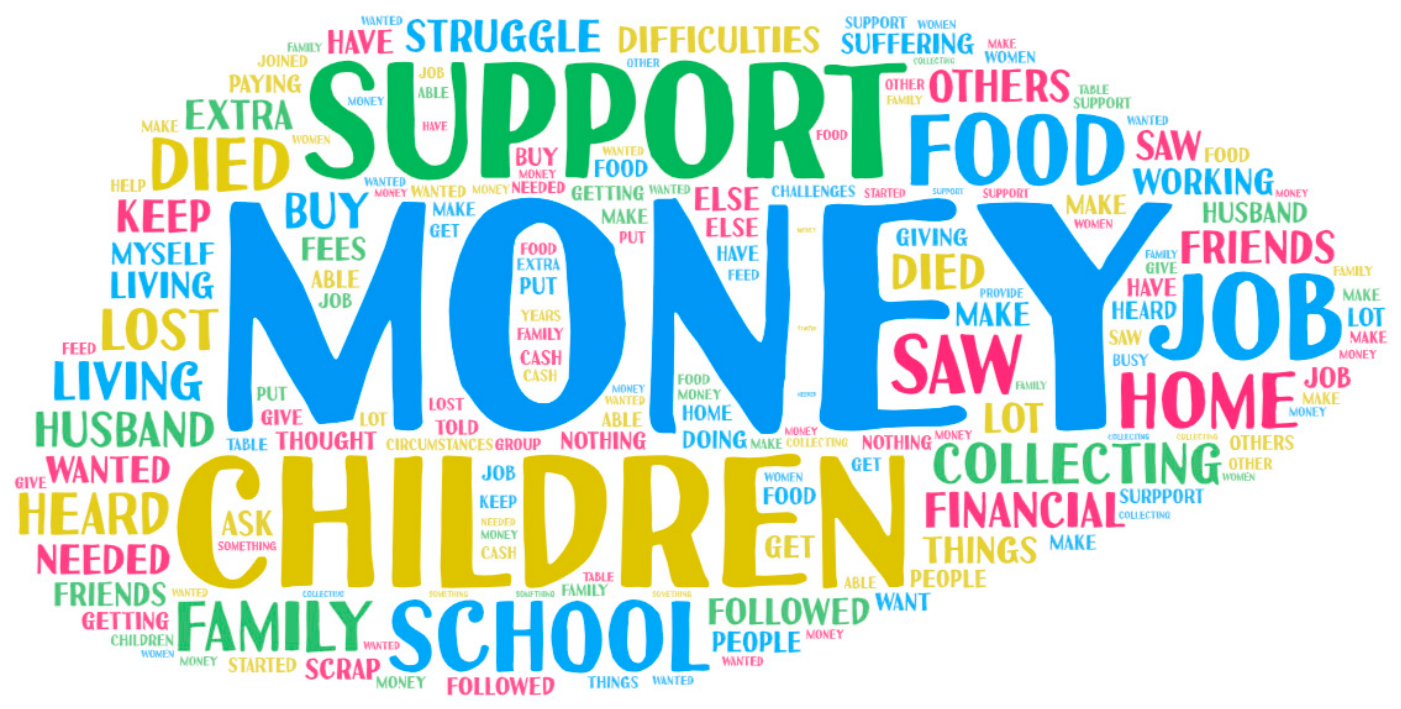
Participants’ motivations for entering scrap collecting were analysed across 119 responses and organised into five themes. Economic necessity related to children and family was by far the most prominent motivation (n = 58). Supporting children, through providing food, paying school fees, and meeting daily needs, was the most common code (n = 38), followed by supporting the family more generally (n = 12). Eight participants described having no money or food at home as the immediate catalyst for beginning to collect. Representative responses include “I wanted money to support my children”, “My children are not working, and I need money” “My husband died, and I needed money to keep me living” and “I had no job to support my family, so I decided to start collecting”. These responses frame scrap collecting not as a chosen livelihood but as a response to acute household economic pressure.
Job loss and unemployment constituted the second most important motivational theme (n = 22). Seventeen participants explicitly stated that they had lost a previous job or had never been employed, while five described an inability to find other work despite searching. The theme of social influence was notable in eighteen responses: thirteen participants described seeing friends or other women collecting scrap and deciding to follow them, while five reported being actively invited or recruited into collecting by other women. This suggests that informal social networks play a meaningful role in the recruitment of new collectors. A fourth theme of a general desire for money, without further elaboration, was present in sixteen responses, with participants offering responses such as “I wanted money” or “I wanted money, nothing else”. A smaller crisis and bereavement theme (n = 5) encompassed respondents who had experienced the death of a spouse or acute household difficulties that necessitated immediate income generation.
Figure 7 summarises the participants’ reported motivations for entering scrap collection work.
4.10. Subjective Wellbeing and Happiness
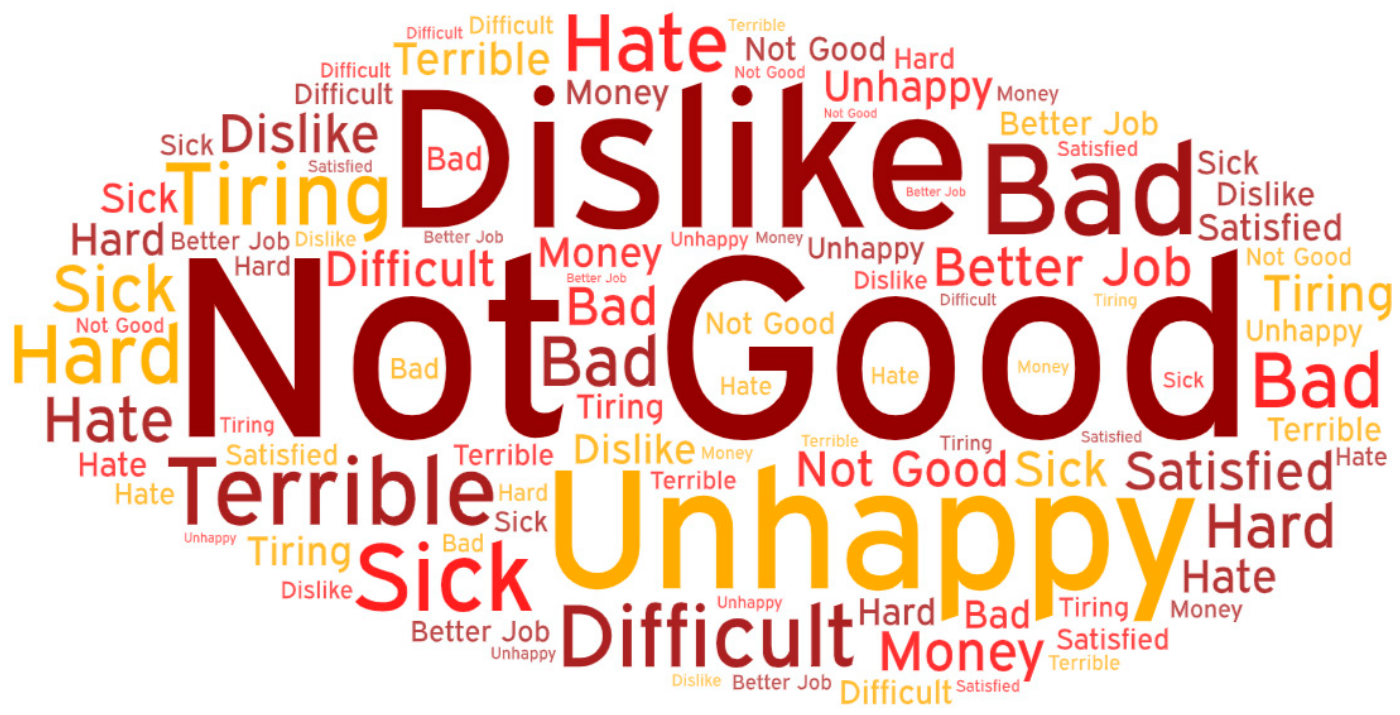
Responses to the question of how happy participants are in their work revealed a strikingly homogeneous pattern of negative affect. Across 118 responses, 95 were coded as expressing negative sentiment, making this the most thematically uniform question in the dataset. The most frequent code was describing the work as “not a good job” or “a bad job” (n = 38), followed by direct statements of unhappiness (n = 22), characterisations of the work as terrible or tiring (n = 14), expressions of a wish for better employment (n = 8), reports of illness caused by the job (n = 7), and explicit statements of dislike or absence of enjoyment (n = 6). Illustrative responses include “This is not a good job”, “I am not happy at all with what I am doing”, “This is a terrible job”, “I wish to have a good job” and “This is a tiring job, and it does not make money”.
A secondary theme of qualified or resigned acceptance was present in sixteen responses. These participants did not express happiness with the work per se but acknowledged that the income, however modest, justified their continued participation. Responses in this category included “At least I get the money from the job” and “I do not like this job, but at least I have money”. Four responses were coded as neutral or ambiguous, including descriptions of the work as “very difficult” without a clear affective valence. Only three responses across the entire sample could be coded as expressing anything resembling a positive orientation towards the work, and even these were qualified by reference to income rather than intrinsic satisfaction. The near-universal negativity of responses to this question, combined with the qualified acceptance theme, suggests that participants engage in scrap collecting in a state of resigned economic necessity rather than fulfilment and that subjective wellbeing in this occupational context is severely compromised.
Figure 8 presents participants’ reported experiences of subjective well-being and happiness in relation to their engagement in scrap collection.
4.11. Summary of Thematic Findings
Taken together, the four questions reveal a coherent and troubling picture of informal scrap collecting as an occupation entered and sustained by economic coercion rather than choice. Participants value the work almost exclusively for the income it provides, particularly as it relates to caregiving responsibilities; often they articulated this through the idiom of ‘feeding’ their children and meeting basic household needs. Concurrently, they identify its principal costs as physical illness resulting from overnight outdoor exposure, the dangers and indignities of nighttime truck transport and earnings that are widely experienced as inadequate relative to the effort and risk involved. Entry into scrap collecting is most precipitated by unemployment or job loss, with social networks providing a secondary recruitment pathway. Subjective wellbeing is overwhelmingly negative, with most participants describing the work as bad, exhausting, or harmful and very few expressing anything beyond the most qualified acceptance. These findings underscore the need for policy and programmatic interventions that address both the occupational health risks and the income insecurity that characterise scrap collecting as an informal livelihood.
5. Discussion
Despite the profoundly adverse and dehumanising conditions confronting women engaged in scrap collection in the rural Eastern Cape of South Africa, the findings of this study do not support an interpretation of this livelihood as an expression of resilience, empowerment, or voluntary economic participation. Rather, the empirical evidence consistently demonstrates that engagement in scrap collection is undertaken under conditions of structural economic coercion, characterised by chronic unemployment, entrenched poverty, extensive caregiving burdens, and the absence of viable livelihood alternatives, a pattern that is congruent with the findings of
Schenck et al. (
2018). Participants’ accounts of illness, prolonged exposure to harsh environmental conditions, unsafe night-time waiting for transport, low and unstable income and pervasive dissatisfaction underscore the fundamentally precarious and hazardous nature of this form of work. In this regard, scrap collection is more accurately conceptualised as a survivalist livelihood strategy, sustained not by choice but by necessity within a structurally constrained opportunity environment.
While it is analytically important to avoid portraying participants as passive victims, the findings necessitate a careful reconceptualisation of agency. Rather than reflecting autonomous decision-making or informal work, participants’ actions are more appropriately understood as constrained agency, exercised within a severely restricted field of substantive freedoms. Interpreted through the lens of the Capability Approach (
Sen 1999), this constrained agency reflects significant limitations in participants’ capability sets, particularly in relation to economic security, bodily health, mobility and psychosocial wellbeing. Structural factors such as limited educational attainment, shaped by early school exit due to poverty, bereavement and gendered caregiving responsibilities (
Xweso 2025;
Smit 2025), further entrench exclusion from formal labour markets and reinforce dependence on precarious informal work (
Viljoen et al. 2018;
Yu et al. 2020).
Importantly, the findings also provide empirical support for the concept of adaptive preferences, as articulated by
Nussbaum (
2000), whereby individuals adjust their expectations and aspirations in response to prolonged structural deprivation. Participants’ expressions of acceptance, such as valuing scrap collection primarily for its minimal income despite recognising its harms, should not be interpreted as evidence of satisfaction or empowerment. Rather, they reflect a process of preference adaptation under constraint, which risks obscuring the depth of deprivation and normalising structurally imposed hardship (
Nussbaum 2000,
2006). This interpretation aligns with broader critiques cautioning against overly affirmative readings of informality that inadvertently legitimise exploitative conditions (
Meagher 2013).
Furthermore, the findings highlight the critical importance of situating participants’ experiences within a broader framework of structural inequality and labour precarity. Informal scrap collection, as evidenced in this study, is characterised by low returns to labour, absence of regulatory protection, and exposure to significant occupational risks. These conditions are consistent with global and regional scholarship on informal labour, which identifies precarity, informality and marginalisation as defining features of survivalist economic activities (
Chen 2012;
ILO 2018). The persistence of such conditions reflects not only labour market exclusion but also the inadequacy of existing social protection systems in addressing the needs of marginalised populations.
A particularly significant contribution of this study lies in its illumination of psychosocial suffering as a structurally produced consequence of precarious labour conditions. Participants’ narratives of stress, exhaustion, fear, illness, and persistent unhappiness provide compelling evidence of the profound psychological and emotional burdens associated with scrap collection. Consistent with the literature on the social determinants of mental health, these experiences should not be misconstrued as manifestations of individual psychological inadequacy but rather understood as direct outcomes of entrenched socio-economic deprivation, chronic insecurity, and continuous exposure to occupational hazards (
Lund et al. 2018;
Patel et al. 2018). Emerging scholarship on waste pickers further substantiates the strong association between informal waste work and elevated psychosocial vulnerability, including heightened levels of anxiety, stress, and diminished wellbeing (
Dias 2016;
Wilson et al. 2022). Within this context, the limited expressions of social support reported by participants, although significant, merely constitute survival-oriented coping mechanisms within a fundamentally oppressive and constrained environment, rather than indicators of substantive wellbeing or social protection. Furthermore, drawing on the Capabilities Approach advanced by
Sen (
1999) and
Nussbaum (
1997), bodily health emerges as one of the most fundamental human capabilities, serving as a prerequisite for the attainment and exercise of virtually all other valued functionings. The health-related findings of this study therefore demonstrate, with considerable force, that scrap collection along the N2 Highway systematically undermines this foundational human capability, thereby reproducing conditions of multidimensional deprivation and social injustice.
Taken together, these findings call for a decisive shift away from narratives that emphasise resilience or adaptive capacity in ways that may inadvertently obscure structural injustice. Instead, the study underscores the need to foreground exploitation, structural inequality and the insufficiency of institutional responses in shaping the lived realities of informal workers. Addressing these challenges requires comprehensive and multi-level interventions, including the formal recognition of informal workers, improved occupational protections, expanded access to social protection, and the creation of alternative livelihood pathways. Without such interventions, scrap collection will remain a livelihood of necessity, sustained within conditions that fundamentally constrain human capabilities and undermine dignity.
6. Recommendations
These findings raise critical questions concerning agency, motivation and mobility: Why do women persist in scrap collection despite its adversities? What compels their movement to urban centres such as Durban? Such questions foreground the capability-driven motivations underpinning livelihood choices. The women’s continued engagement reflects a rejection of dependency, demonstrating self-reliance and proactive livelihood construction in the absence of adequate institutional support. However, the broader structural context within which informal workers operate remains deeply exclusionary, dehumanising and marginalising, necessitating a paradigmatic shift towards inclusive, participatory and justice-oriented systems.
6.1. Occupational Health and Safety as a Mechanism for Capability Protection
The documented health risks associated with overnight outdoor exposure, physically hazardous working conditions and unsafe transportation practices constitute a significant occupational health and human rights concern requiring urgent intervention. The formal recognition of scrap collecting as a legitimate category of informal labour would represent a critical step towards addressing these structural vulnerabilities. Drawing on the Capabilities Approach (
Sen 1999), the state’s continued reliance on and implicit benefit from the environmental and economic contributions of scrap collectors generates a corresponding ethical and developmental obligation to safeguard the bodily health and wellbeing capabilities of those engaged in this labour. Consequently, the establishment of minimum standards relating to transportation safety, the provision of sheltered waiting facilities at recognised collection points along the N2 Highway, and access to basic healthcare services for informal waste workers should be regarded not merely as welfare interventions but as essential capability-protective measures that are both ethically justified and practically attainable.
6.2. Education and Training as Investments in Human Capability Expansion
Given that low levels of educational attainment constitute both a structural determinant driving entry into scrap collecting and a persistent barrier to socioeconomic mobility and occupational exit, the implementation of targeted adult education and skills development programmes is imperative. Such interventions, specifically designed around the lived realities and socioeconomic circumstances of middle-aged women residing in rural contexts, should be conceptualised as direct investments in human capability expansion. These programmes must therefore be accessible in terms of geographical location, affordability and scheduling, while simultaneously recognising and building upon, rather than disregarding, the experiential knowledge and occupational competencies that these women have acquired through their participation in the informal economy.
6.3. Strengthening the Advocacy Role of Non-Governmental Organisations
From a social justice and human rights perspective, non-governmental organisations (NGOs) must adopt a far more assertive, interventionist and advocacy-oriented role in advancing the recognition, protection and socio-economic rights of women engaged in scrap collection. Despite the state’s continued articulation of ambitious policy commitments aimed at addressing unemployment, poverty and inequality, a profound disjuncture persists between policy rhetoric and the lived realities of marginalised women operating within the informal economy. NGOs are therefore strategically positioned to bridge this implementation gap through the development of tangible and contextually responsive interventions that prioritise recognition, livelihood support, skills development and capability enhancement for scrap collectors.
6.4. Mobilising Community and Faith-Based Structures for Social Inclusion
Equally important is the mobilisation of community structures and faith-based organisations, which constitute critical reservoirs of social capital, collective solidarity and community-based agency. These structures possess significant potential to facilitate sustainable support mechanisms, amplify the marginalised voices of women scrap collectors and advance their meaningful inclusion within local developmental processes and initiatives. Their active involvement is therefore indispensable in promoting social cohesion, strengthening participatory development and fostering community responsiveness to the structural vulnerabilities experienced by women in the informal waste economy.