1. Introduction: Hybrid Role-Playing Games and Democratic Pedagogy
There is a long tradition in pedagogy of using serious games to promote motivation, engagement, and learning in educational environments. Among these, role-playing games (RPGs) occupy a distinctive position because they combine structured rules and objectives with improvisation and social interaction. Participants are invited to act through fictional characters, often within stylised settings, in ways that encourage perspective-taking, negotiation, and experiential learning rather than the passive acquisition of information (
Zagal and Deterding 2018;
Hammer et al. 2018).
RPGs have been applied across a wide range of domains, including language and medical education (
Frisby 1957;
Barrows and Abrahamson 1964), military and emergency training (
Hammer et al. 2018), international relations (
Dayé 2020), and social relations in schools (
Chesler and Fox 1966). Parallel to this pedagogical tradition, political role-playing games have been used since the 1970s to explore issues of power, inequality, and collective decision-making, from the Theatre of the Oppressed (
Boal 2002) to planning games examining distributive justice and participation (
Sanoff 1979;
Lerner 2013). At the same time, urban planning games have evolved as tools to help participants understand trade-offs in land use, budgeting, and multi-actor governance, often privileging realism and the faithful reproduction of institutional processes (
Sanoff 1979;
Tóth 2015).
Despite their shared emphasis on experiential learning, these traditions have largely developed in parallel. Political RPGs tend to prioritise role immersion and conflict, while planning simulations often emphasise procedural realism and system dynamics. As a result, relatively little work has examined hybrid designs that deliberately combine fictional role-play with realistic participatory institutions, or assessed how such designs shape learning, inclusion, and deliberative dispositions in applied settings.
This paper addresses this gap by describing and evaluating Empaville, a hybrid role-playing game designed to simulate a participatory budgeting (PB) process. Empaville integrates deliberative ideation, competitive campaigning, and voting within a fictional city, assigning participants roles that embody recurrent conflicts observed in real PB processes. The game blends elements of political RPGs with urban planning simulations, combining face-to-face interaction with digital proposal submission and voting. Its design is modular and has evolved iteratively over several years, allowing for comparative observation of how specific design choices relate to engagement and role-play activation.
Beyond the serious games and participatory budgeting studies, the study connects to three bodies of scholarship that it speaks to without being fully embedded in. The first is deliberative democracy theory, which holds that legitimate political decisions emerge from reasoned exchange in which participants encounter diverse viewpoints and revise their positions through argument rather than coercion (
Habermas 1996;
Dryzek 2002;
Bächtiger et al. 2018). Role-playing games offer a low-stakes, playful operationalisation of deliberative conditions: by assigning participants positions they must defend and legitimise through persuasion, they generate the structured conflict and perspective exposure that deliberative theorists identify as the core mechanism of democratic learning. This is relevant given growing interest in whether civic simulations and mini-publics can reliably produce the epistemic and attitudinal shifts deliberative theory predicts (
Curato et al. 2017;
Dryzek et al. 2019). The second literature is research on engagement in educational and game-based settings, where engagement is understood as a multidimensional construct encompassing cognitive, emotional, and behavioural dimensions, shaped by activity design, group dynamics, and individual dispositions (
Fredricks et al. 2004;
Skinner et al. 2008;
Plass et al. 2015). The multi-phase structure of Empaville offers a naturalistic setting for examining how different procedural moments generate different forms of involvement, a question that game-based learning research has not yet addressed systematically in the context of democratic simulations. The third is research on perspective-taking—the capacity to reason from another’s point of view—identified across social psychology, deliberative theory, and civic education as foundational to constructive disagreement and democratic reasoning (
Batson et al. 1997;
Mutz 2006;
Morrell 2010). Role immersion is expected to activate perspective-taking by requiring participants to reason and speak from a position that is not their own, a mechanism with implications beyond the game context for how democratic institutions might be designed to produce durable shifts in how participants understand opposing views (
Broockman and Kalla 2016). These connections inform the selection of outcome variables and the interpretation of findings and point toward a broader agenda of cross-fertilisation between game-based learning research and democratic theory.
We analyse six implementations of Empaville conducted between 2023 and 2025 in the UK and Morocco (N = 118), combining participant observation with post-game survey data. The analysis focuses on three related questions: whether the game activates role-play; whether participants report learning, inclusion, perspective-taking, and constructive engagement with disagreement; and whether these experiences vary in systematic but substantively meaningful ways across contexts. While existing research shows that serious games can support learning and affective outcomes (
Clark et al. 2016;
Lamb et al. 2018), there is limited empirical work assessing hybrid RPGs in the domain of democratic innovations, particularly outside high-income Western contexts.
Our findings show that Empaville is associated with reported deliberative openness and constructive engagement across settings, while perceived learning and participation intensity are more heterogeneous. Cross-national comparisons reveal statistically detectable but substantively small differences in how participants evaluate specific phases of the process, suggesting that core pedagogical effects are largely consistent even when experiential preferences vary.
The paper contributes an exploratory but methodologically explicit framework for analysing small-N pedagogical interventions, linking specific game design features to reported deliberative outcomes while avoiding causal overreach.
The paper proceeds as follows. The next section describes the design of Empaville and its evolution across different versions. We then present the empirical evaluation based on six implementations in the UK and Morocco. Subsequent sections analyse role engagement, phase-level enjoyment, and reported learning and deliberative experiences before concluding with implications for design and future research.
2. The EMPAVILLE Game Origin and Evolution
This section documents the iterative evolution of Empaville in order to clarify which design features are being analysed in the empirical analysis that follows.
Gamified participatory budgeting simulators were popularised in the early 2000s by the so called “ambassadors of participation” (
De Oliveira 2017), actors that travelled the world to promote the adoption of participatory budgeting such as Giovanni Allegretti that was instrumental in promoting the diffusion of participatory budgeting in Portugal and Italy, Jez Hal that promoted the adoption in the UK via the UK PB Network, and Josh Lerner that promoted the diffusion in North America via the Participatory Budgeting Project. These early simulations were not codified, had limited role-playing aspects and had custom rules that changed from setting to setting, adapting to the scenario that was most appropriate for the occasion.
In 2016, a consortium of twelve partners led by Allegretti won a Horizon2020 grant to develop a digital platform for supporting the implementation of multichannel participatory systems. The project called EMPATIA (Enabling Multichannel Participation via ICT Adaptation) developed Empaville as a testing and dissemination tool for the digital platform. The Empaville game outlived the project, with its dissemination and use continuing far beyond that of the platform.
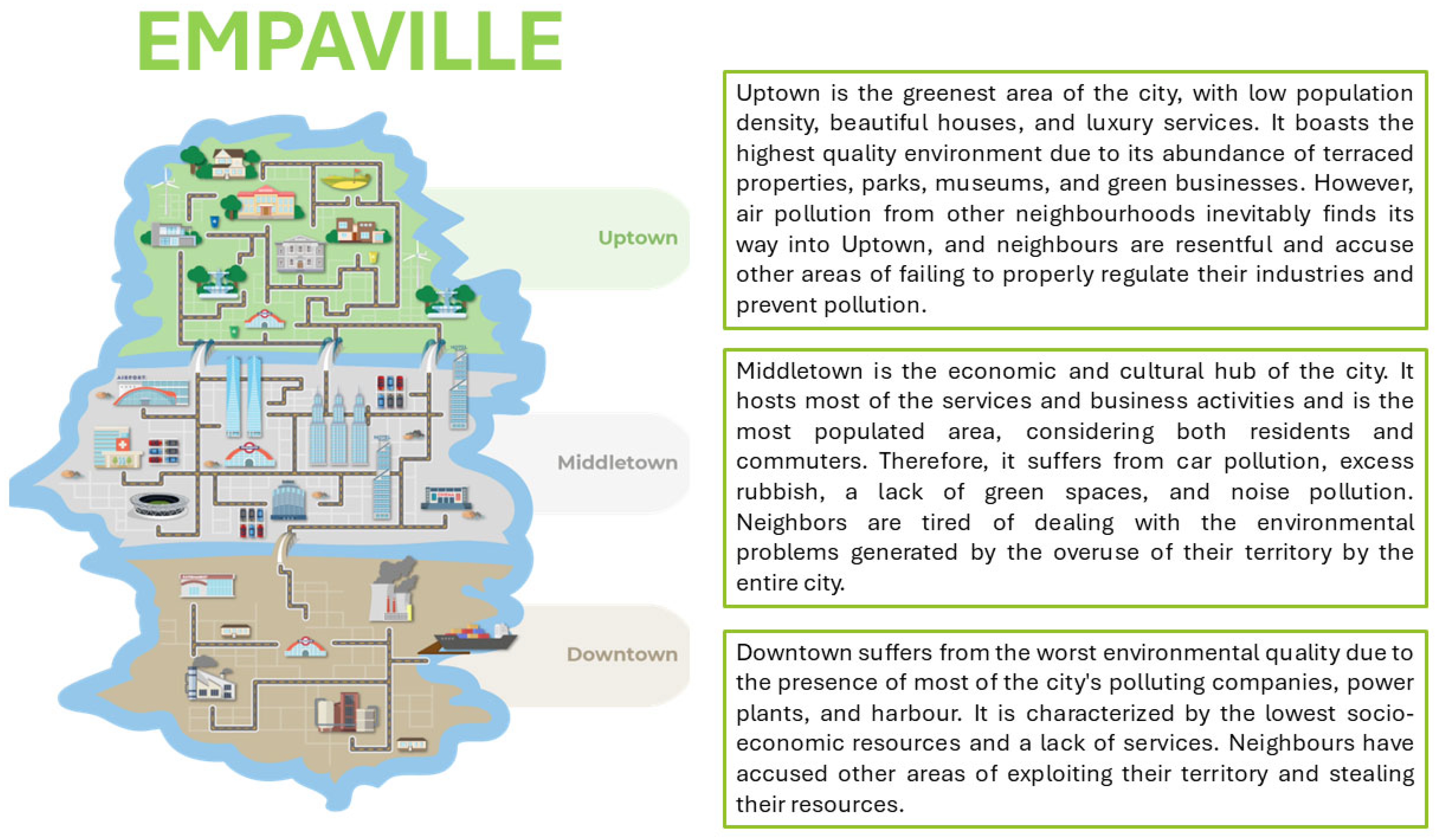
Empaville V1.0 refined earlier prototype simulators by introducing stronger role-play elements through individual character cards assigned to each participant and a fictional setting inspired by a stylised Manhattan (see
Figure 1). Participants were divided into three districts with unequal resources, as shown on a map provided at each table. These districts are designed to embody unequal socio-economic conditions and competing policy priorities, providing a structured source of conflict that participants must navigate during deliberation. Participants use the map as a shared reference point when proposing and justifying projects, anchoring discussion in spatial and distributive trade-offs rather than abstract preferences. This design encourages participants to situate arguments within collective constraints, mirroring key features of real-world participatory budgeting processes. The setup was designed to stimulate conflict both within and across districts, blending traditions from Latin American political games with urban planning simulations. Empaville integrated in-person deliberation with a platform for uploading proposals and digital voting, facilitating discussion of the process in both methodological and practical terms.
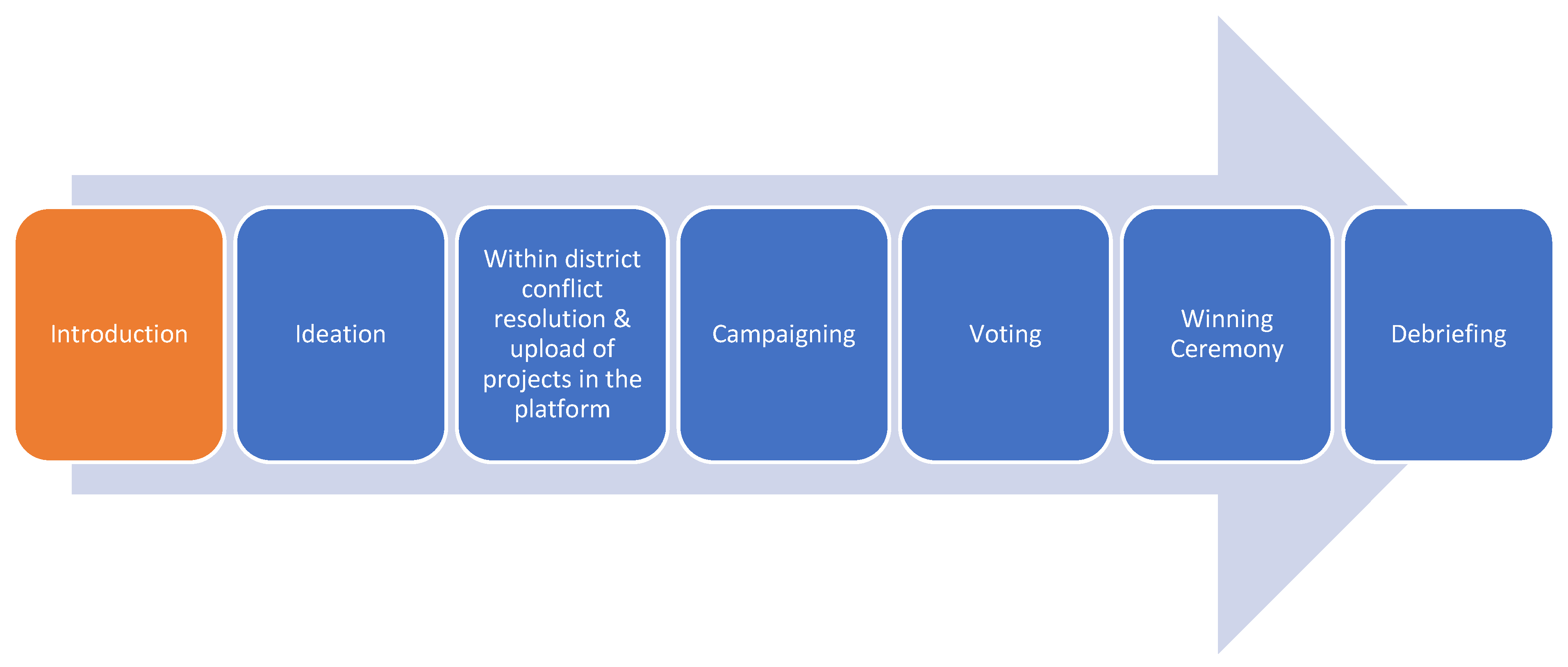
A typical Empaville session lasted around 90 min and included between 12 and 45 participants divided into three groups and assigned role cards that included biographical characteristics and tips on role-playing the character. The groups could be equal or unequal in size to introduce another challenge for the players. The facilitator, role-playing Empaville’s mayor, briefly introduced a scenario in which the city had decided to allocate 1000 empacoins—a fictional secondary currency designed to simplify feasibility calculations—to participatory budgeting. Each district was supposed to propose two different projects, which would then be uploaded to the EMPATIA digital platform and voted on by all participants (see
Figure 2 for the game flow of EMPAVILLE V1.0).
The game ended with a ceremony where the mayor awarded the proponents of the projects that received the most votes compatibly with the budget allocation. If time permitted, a debriefing discussion followed. An extended version of the game accommodated up to 100 participants by introducing immigrants and/or city users as additional playable groups and splitting some districts across separate tables, which requires more time and a larger facilitation team.
During the two years of the project (2016–2018), 35 instances of Empaville were deployed in various settings and different languages. A version dedicated to young adults (under 15) in middle and high schools was also developed. This Empaville 1.5 (
Figure 3) is the one presented in the demo (
https://www.youtube.com/watch?v=hfjFrWgdiP8&ab_channel=EmpatiaProject, accessed on 15 January 2026). It eliminated individual character cards and within district conflict, a different map, and a strong crafting component. Participants were asked to create a social media page for their project using a simple collage technique, cutting images from magazine and pasting them on a large poster, then take a picture of the poster and upload it to the platform before voting.
The game was released in an open-source format with a Creative Commons license. However, this early version of Empaville had a complex management platform that limited its dissemination outside the project consortium. An Italian participatory services provider, Bipart, redeveloped the game for high schools using their own platform (
https://bipart.org/download/EN-empavilleGame.pdf, accessed on 15 January 2026), introducing more complexity and detail.
In 2022, a new four-year Horizon grant (PHOENIX) allowed the development of the Empaville digital platform to restart. Additional funding from Southampton University in 2023 (DemoPlay project) supported a complete redesign in collaboration with digital humanities and design thinking experts from computer science. This led the consortium—with the support of the IT partner OneSource—to the creation of Empaville 2.0, an updated version with a flexible digital platform accommodating various game themes, starting with a green participatory budgeting scenario. A fully functioning management platform was developed to facilitate reuse of the game. Drawing from seven years of experimentation, the design team streamlined the game by removing redundant, complex elements. Players were assigned four interests—Transportation, Green Spaces, Energy Transition, and Recycling—to guide their project ideation, which they could then upload to the digital platform.
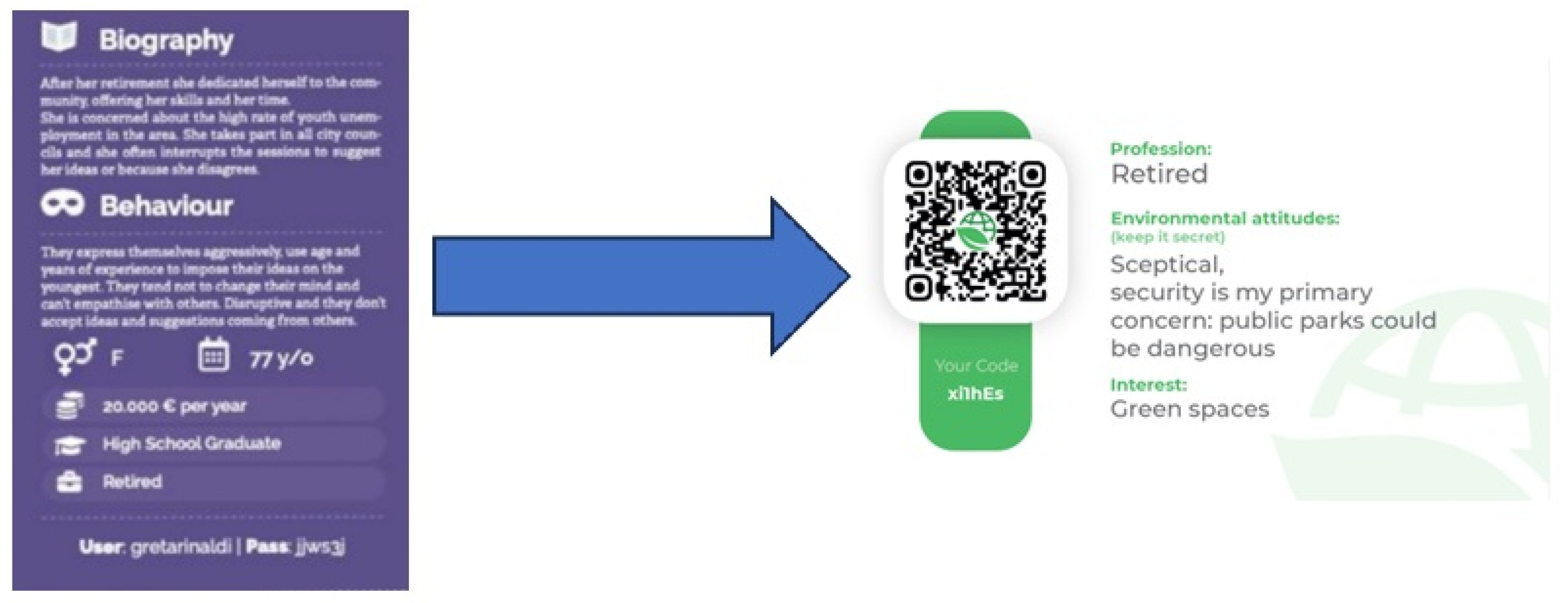
The character cards were simplified to provide only information effectively used by players (
Figure 4). In the 90 min game, players do not have the time to leverage complex information. Participants’ behavior was categorized into environmentalist, skeptic, and moderate to better manage intra-district conflict, as the conflict resolution component had uneven results in the first version of the game.
Systematic user testing during multiple sessions identified the most engaging parts of the game. It was realized that the game introduction was too long and complex. The introduction of Empaville 1.0 detailed the entire procedures of the 3 main phases (ideation, campaigning, and voting).
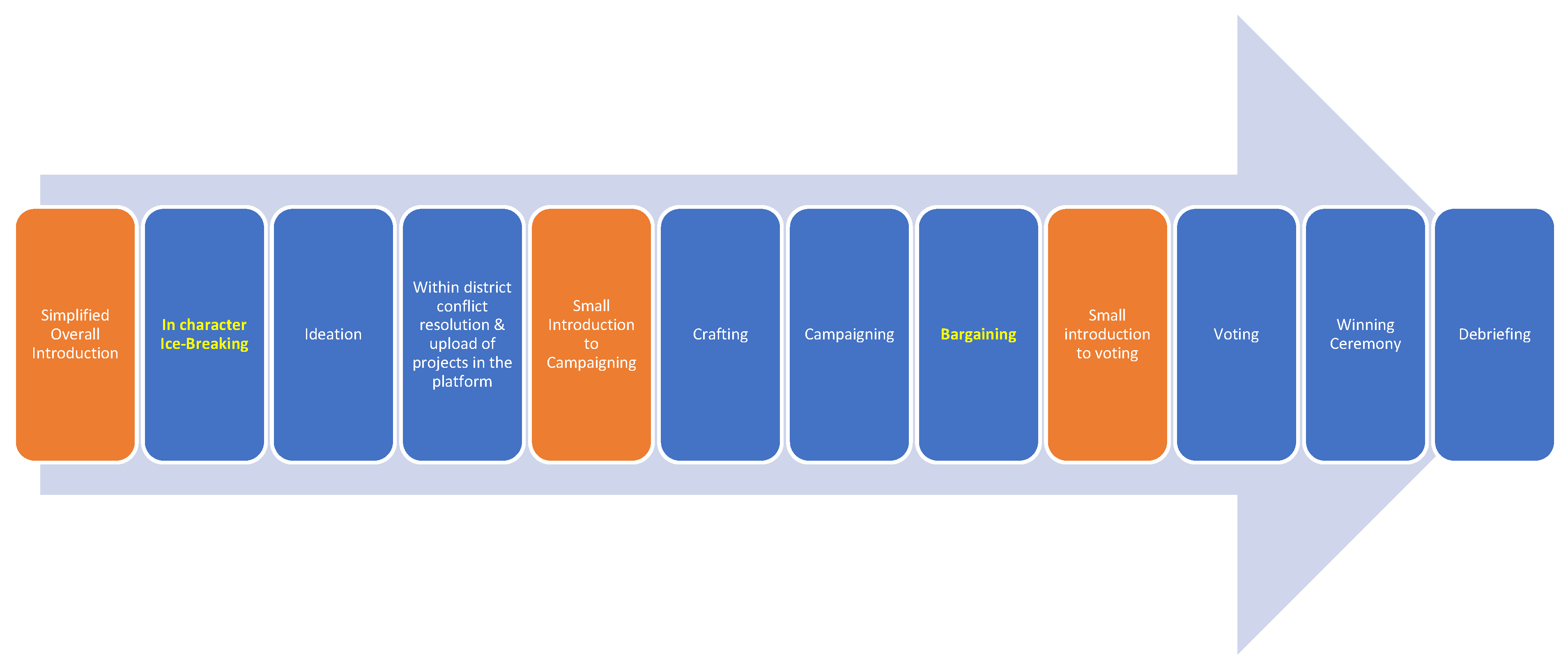
Participant observation showed disengagement, especially when less experienced facilitators could not compensate with storytelling. Thus, the introduction was significantly shortened and simplified to cover only information regarding the ideation phase, with each subsequent phase having a brief introduction, and a set of printed instruction provided at each table. Second, to promote participants’ ownership of their character, an icebreaking phase was introduced before deliberation, where each participant introduced themselves as their character and proposed a starting project idea.
Third, the crafting component, initially developed for middle schools, was tested with adults, significantly increasing participation. This change aimed to offer a variety of ways to contribute to group success, beyond project-making and presentation abilities. Lastly, a bargaining phase was introduced to promote intergroup negotiations during the campaigning phase after observing such behavior spontaneously emerge from players.
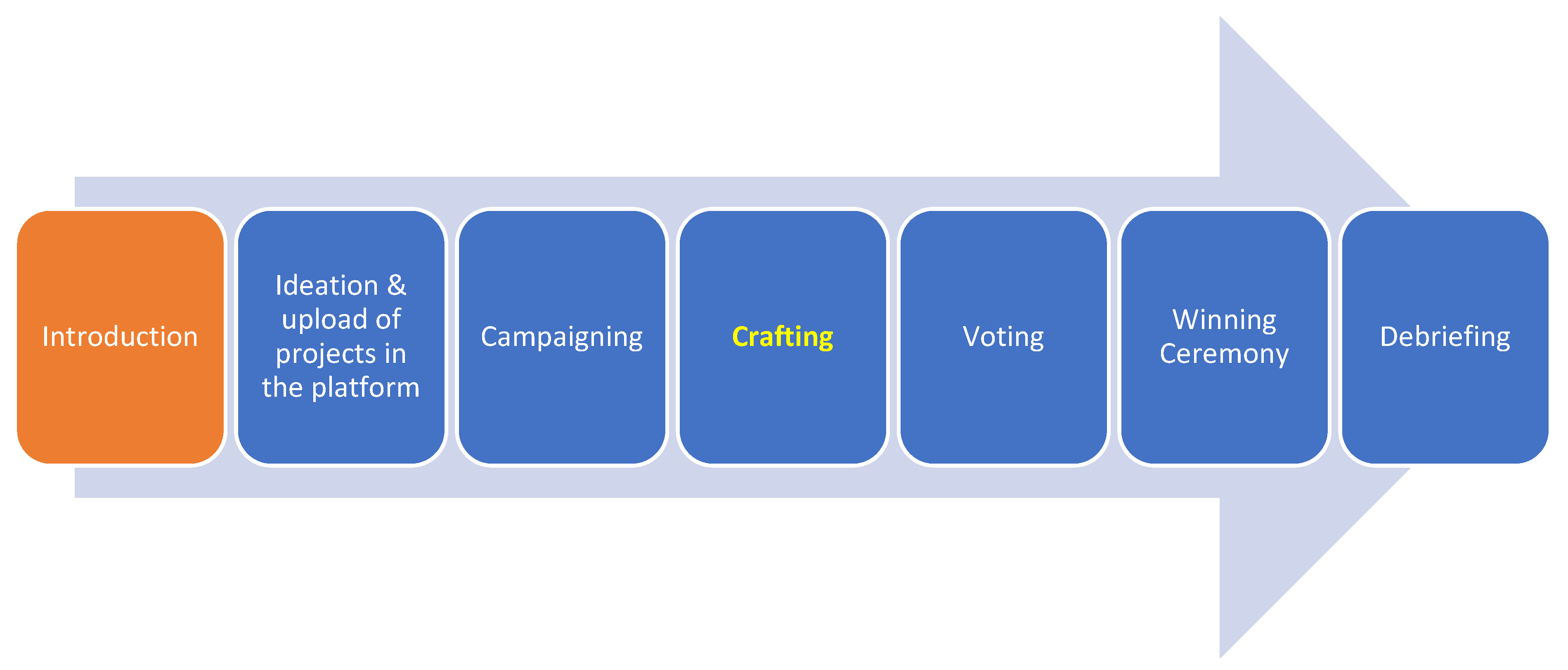
The version used in the evaluation reported in this paper is Empaville Green 2.0, which incorporates these design changes and runs in approximately 90 min (
Figure 5). Its modular architecture and flexible platform support future adaptations, but the core structure—role-based groups, thematically guided project ideation, deliberation, campaigning, bargaining, and voting—remains stable across settings.
4. Research Design and Analytical Approach
This study uses a mixed-methods, exploratory design to examine the pedagogical and deliberative effects of Empaville. The term “evaluation” is used throughout in a broad empirical sense, referring to systematic analysis of reported outcomes across multiple implementations, rather than in the formal sense of programme evaluation research (
Patton 2008;
Rossi et al. 2004), which implies a pre-specified theory of change, a summative judgement of merit, or a counterfactual comparison. The study is better described as an exploratory empirical analysis of the effects of implementing Empaville across diverse contexts.
The study pursues three related objectives: (1) to assess whether the game successfully activates role-play as intended by the design modifications introduced in version 2.0; (2) to examine whether participants report learning, perspective-taking, and deliberative openness following participation; and (3) to explore whether these reported outcomes and experiential evaluations vary in substantively meaningful ways across the two national contexts. These objectives guided the selection of measured variables. Role activation reflects the character-assignment mechanism central to the redesign. Perspective-taking and deliberative openness are the expected outputs of cross-district negotiation and structured disagreement. Phase-level enjoyment captures variation in the affective dimension of engagement across the procedural stages of the game. All three sets of outcomes connect directly to the game’s design logic. The design also implies a set of expected relationships between variables. In particular, stronger role activation is expected to be associated with higher levels of perspective-taking and deliberative openness, while variation in phase-level enjoyment is expected to reflect differences in engagement styles rather than differences in learning outcomes.
Participant observation was conducted at each session by one or more members of the research team, who recorded field notes on facilitation quality, group dynamics, and role activation during gameplay. Post-game surveys were administered immediately after each session and included a 10-point role activation scale, a forced-ranking task covering six game phases, five Likert-scale items measuring deliberative and learning outcomes, and open-ended questions about role-play preferences and phase evaluations. Survey instruments were adapted iteratively across sessions, with some items introduced from session 2 onwards, which explains the varying response totals reported in the findings.
Quantitative analysis used descriptive statistics, non-parametric tests (Wilcoxon rank-sum; Fisher’s exact test; chi-square), and effect size measures (Cliff’s delta; rank-biserial correlation). Non-parametric tests were selected, given the small samples and ordinal data structure. Effect sizes are reported alongside p-values throughout to support substantive interpretation rather than relying on binary significance judgements alone.
Qualitative analysis applied thematic analysis (
Braun and Clarke 2006;
Mayer et al. 2014) to open-ended survey responses. The approach was inductive: themes were developed from the data rather than derived from a pre-existing theoretical framework, through an iterative process of initial coding, pattern identification, and theme refinement. Coding was conducted by the lead author; a second researcher independently reviewed a subset of responses to check interpretive consistency. Thematic analysis was preferred over content analysis because the focus was on underlying experiential logics and orientations—patterns of meaning across participant accounts—rather than on the frequency of discrete response categories.
More broadly, the design of Empaville links specific game mechanisms to expected democratic learning outcomes. Role assignment is intended to foster perspective-taking and epistemic humility by requiring participants to argue from positions not their own. The structured phases of ideation and negotiation aim to promote collaborative problem-solving and exposure to disagreement, while the voting phase introduces collective decision-making under constraint. These mappings allow us to interpret reported outcomes as responses to specific design features rather than as undifferentiated engagement effects.
4.1. Understanding Players’ Role Engagement in Empaville
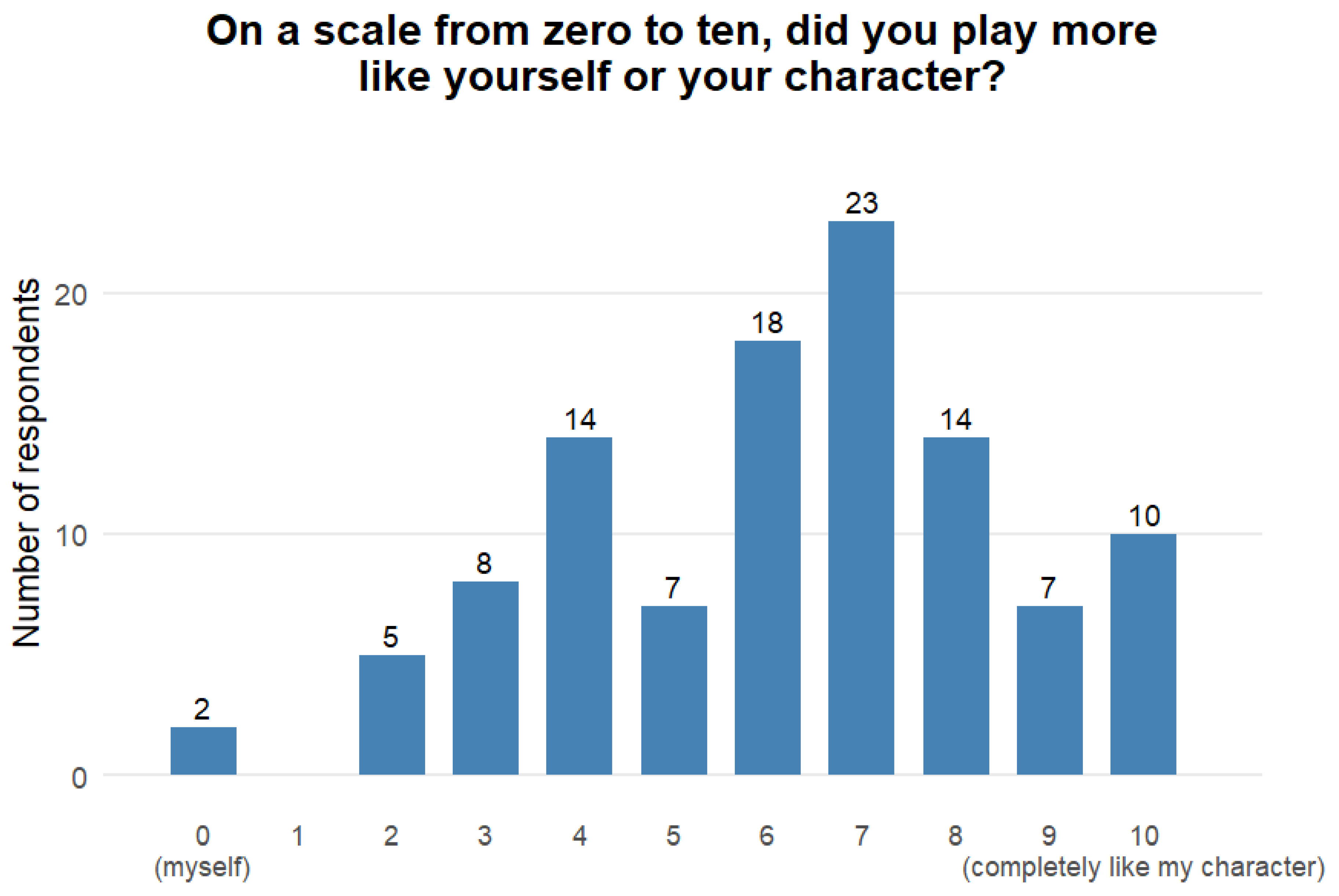
A central design goal for Empaville Version 2.0 was activating role-play, an area where earlier versions struggled. To assess whether the redesign succeeded, we asked participants to rate on a 1–10 scale whether they played more as themselves (1) or more as their assigned character (10).
Results indicate substantial success. As shown in
Figure 6, 67% of participants (72 of 108 respondents) reported playing more like their character than themselves, scoring 6 or above on the scale. Only 27% (29 respondents) reported limited role activation (scores of 4 or below), while 6.5% (7 respondents) chose the neutral midpoint of 5. This distribution demonstrates that the majority of players perceived themselves as engaging in roleplay rather than simply acting as themselves within the game scenario.
This finding supports the core premise of our evaluation. Participants’ perception of engaging in roleplay is methodologically essential: it confirms that the intervention manipulated what we intended to manipulate. If most players had reported playing primarily as themselves, we could not credibly assess whether outcomes like perspective-taking or intellectual humility stemmed from role-based mechanisms or simply from general group discussion. The strong role activation across contexts allows us to interpret subsequent findings as effects of hybrid role-playing game design rather than merely structured deliberation.
Moreover, this result supports the specific design modifications implemented in Version 2.0. Earlier iterations suffered from inconsistent role activation, with many participants defaulting to playing as themselves. The combination of simplified character cards, an icebreaker phase for character introduction, and clearer role-based interest assignments appears to have successfully addressed this limitation.
4.2. Cross-Cultural Comparison of Role Activation
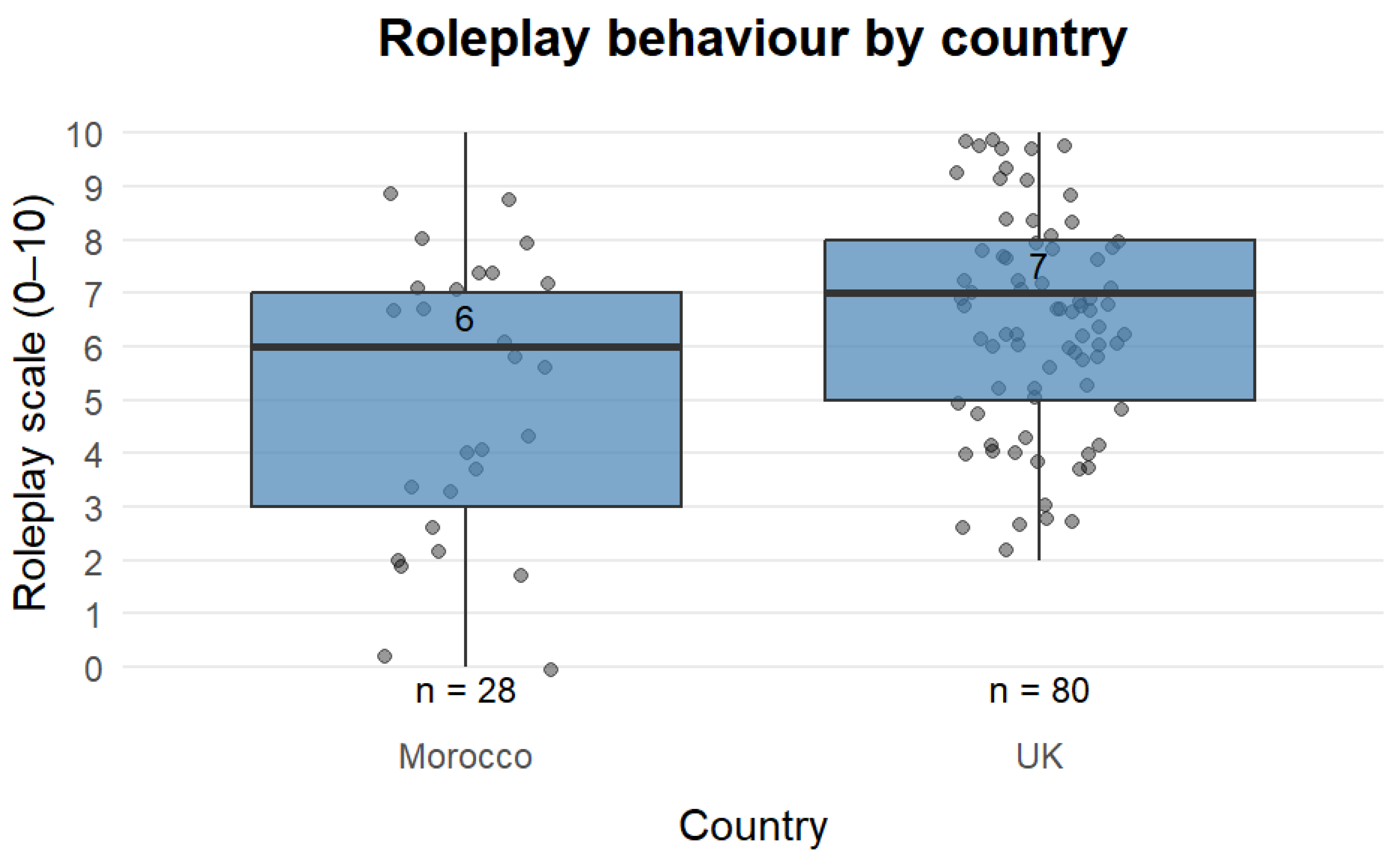
Figure 7 displays the distribution of roleplay activation scores in Morocco and the UK using boxplots with individual data points overlaid. The thick horizontal line inside each box represents the median score: 6 in Morocco and 7 in the UK. This indicates that UK participants reported somewhat stronger roleplay engagement on average.
The boxes themselves capture the middle 50% of responses (interquartile range) in each country. The vertical lines (whiskers) extend to the typical range of non-outlier values. Individual dots show each participant’s score, revealing that Morocco exhibits greater variability, including several low values, whereas UK respondents cluster more consistently in the upper part of the scale.
A Wilcoxon rank-sum test confirms that this difference is statistically detectable (W = 802.5, p = 0.025). The associated effect size, measured by Cliff’s delta, indicates a small negative effect (δ = −0.28, 95% CI [−0.51, −0.01]), meaning UK respondents tended to report stronger roleplay activation than Moroccan respondents, though the magnitude is modest.
Taken together, these results suggest a modest difference in self-reported roleplay engagement across the two data collections. However, this result requires careful interpretation. The UK data derive from four sessions, while Morocco data come from only two, creating an imbalance that complicates inference. The observed difference could reflect genuine cross-country variation in comfort with role-playing, cultural norms around adopting fictional personas, or different interpretations of the rating scale. Alternatively, it might stem from session-level factors unrelated to national context: group composition, facilitator experience and style, session timing, physical setting, or idiosyncratic group dynamics within each event.
Crucially, both contexts show strong overall activation. The median scores of 6 and 7 both fall well above the scale midpoint, indicating successful role engagement in both Morocco and the UK. The difference between them is one of degree rather than kind. This indicates that while cultural or contextual factors may influence the intensity of role immersion, the core design successfully promotes role activation across diverse settings. Additional Moroccan implementations would be required to determine whether the observed pattern represents a stable cross-cultural difference or simply reflects variability across a small number of sessions.
4.3. Preferences for Playing as Character vs. Self
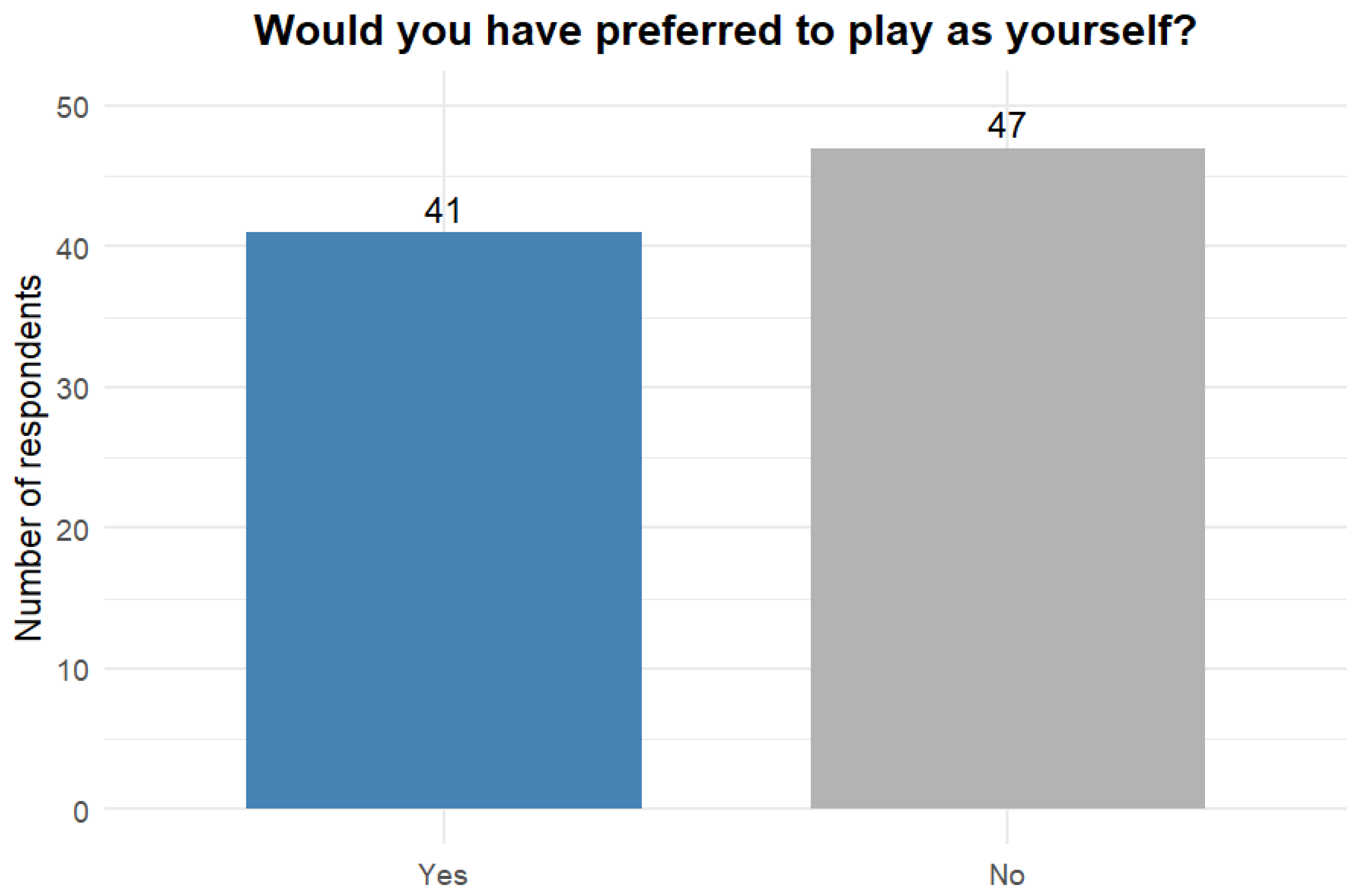
Beyond measuring actual role activation, we asked participants whether they would have preferred to play as themselves rather than their assigned character. A slight majority in
Figure 8 (53%, or 47 of 88 respondents) indicated that they preferred playing as a fictional character, answering “No” to this question.
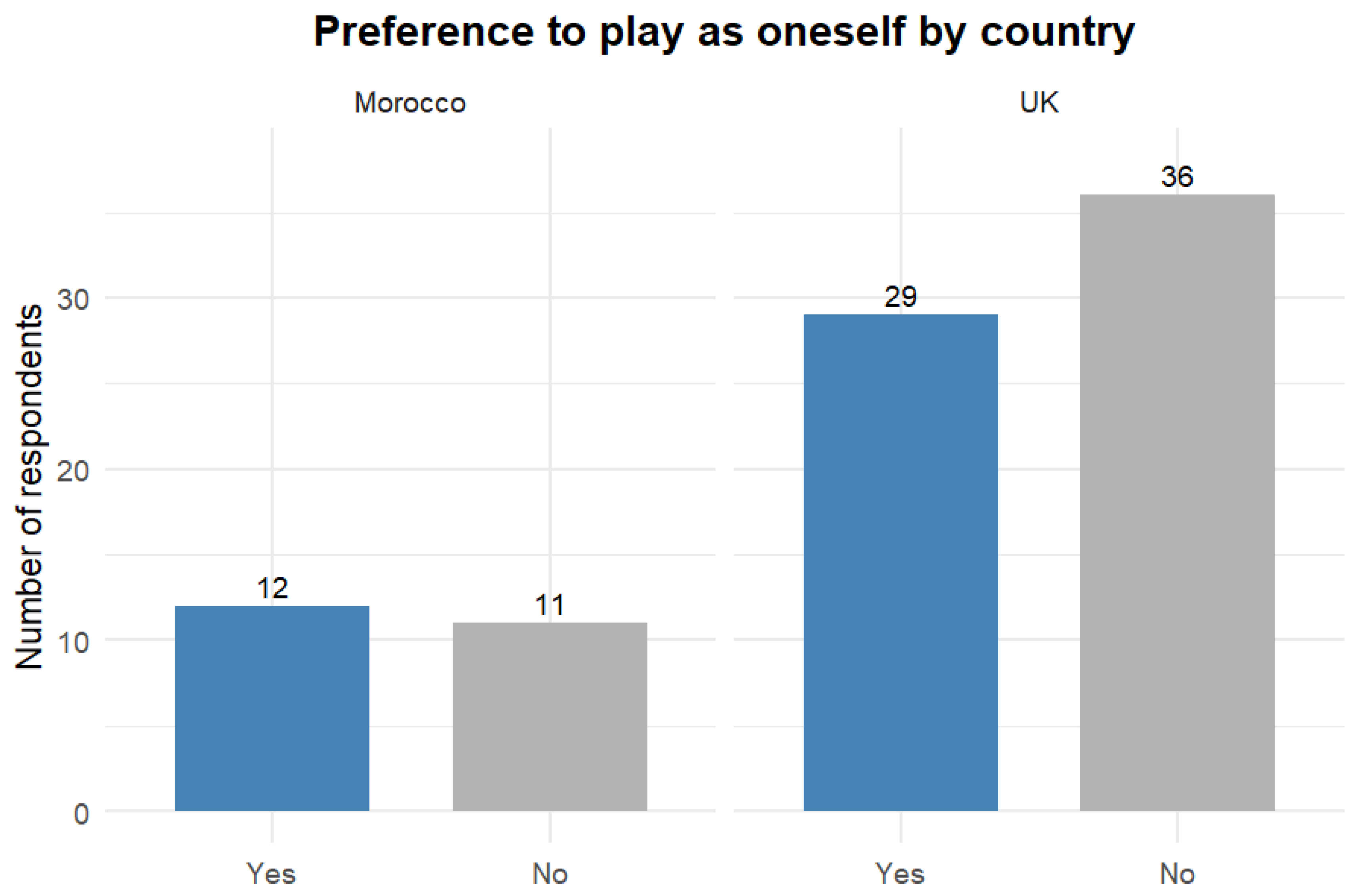
This result is driven by the UK respondents.
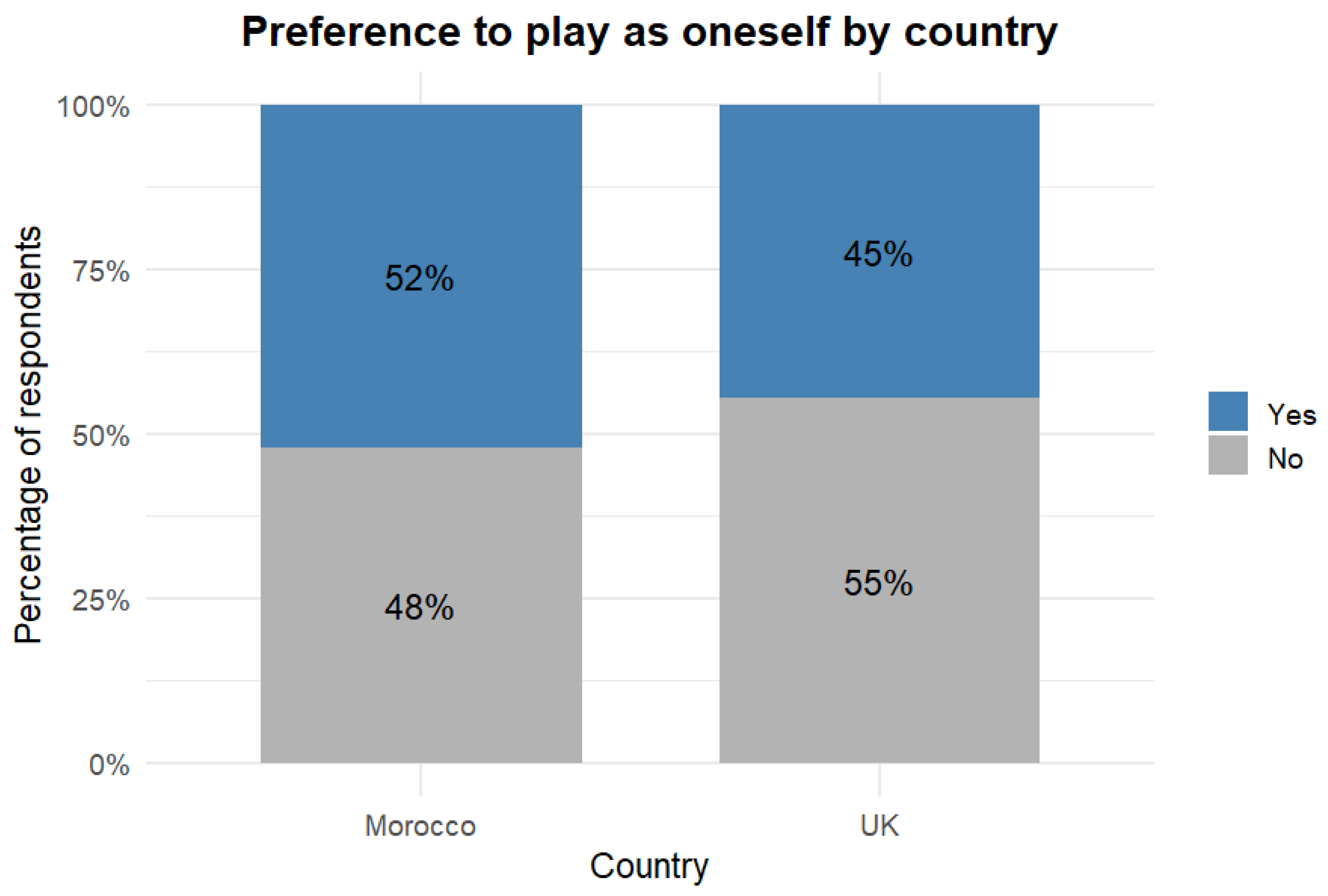
Figure 9 and
Figure 10 show the number and percentages of participants in Morocco and the United Kingdom who reported that they would have preferred to play as themselves. In Morocco, responses were almost evenly divided (52 percent Yes, 48 percent No), whereas in the UK the distribution leaned slightly in the opposite direction (45 percent Yes, 55 percent No).
These percentage differences create a visible contrast in the plot, but a Fisher’s exact test indicates that the variation is not statistically reliable (p = 0.629, odds ratio = 1.35, 95 percent CI [0.47, 3.93]). The confidence interval is wide and spans values consistent with Morocco having higher, lower, or identical preferences relative to the UK. This reflects the substantial statistical uncertainty associated with the small number of Moroccan respondents (n = 23).
These results have two important implications. First, preferences are genuinely divided. While role activation was high overall, nearly half of participants retrospectively expressed that they would have preferred to play as themselves. This indicates that although the game successfully activates roleplay, some participants experience this activation as constraining rather than liberating. This tension has design implications, which we explore through qualitative analysis in the following section.
Second, the lack of significant cross-country difference in preferences, despite the modest difference in reported activation levels, suggests that cultural context may shape how intensely participants engage with roles without necessarily determining whether they enjoy that engagement. UK participants reported stronger role activation but were only marginally more likely to prefer playing as characters. This dissociation between activation and preference indicates that roleplay can be effective (i.e., successfully implemented) without being universally preferred, and that implementation success varies somewhat independently from subjective preference.
4.4. Thematic Analysis on Roleplaying Preferences
While the quantitative results indicate a relatively balanced distribution of preferences between playing as a character (53%) and playing as oneself (47%), these aggregate figures obscure systematic differences in how participants understood and evaluated role-based engagement. To unpack these preferences, we conducted a thematic analysis of open-ended responses in which participants explained their answers to the question “Would you have preferred to play as yourself?” (
Appendix A and
Appendix B).
The analysis reveals two coherent and internally consistent experiential logics rather than random individual reactions. Preferences are structured around different orientations toward authenticity, cognitive effort, emotional exposure, and learning value. Importantly, these orientations are not reducible to enjoyment alone. Participants often framed their preferences in terms of what felt legitimate, manageable, or pedagogically valuable rather than what felt immediately comfortable.
4.4.1. Preferring to Play as Oneself: Authenticity, and Control
Participants who expressed a preference for playing as themselves consistently framed their reasoning around authenticity and cognitive manageability. For these respondents, acting as oneself enabled clearer self-expression and reduced uncertainty about appropriate behaviour. Typical statements include: “Can express my opinion more freely,” “Because I know more about me and my personality than the person I played,” and “It is easier and more flexible for me to play as myself” (
Appendix A). These comments indicate that authenticity was valued not as an abstract norm, but as a practical resource that made participation feel legitimate and fluent.
Closely related to authenticity was concern about cognitive load and role ambiguity. Many respondents reported difficulty sustaining a character when information felt incomplete or when expectations were unclear. One participant explained: “I didn’t know how to behave for sure about certain aspects… so I just made it up,” while another noted, “Hard to maintain interests of a character… I knew what my character liked but not disliked” (
Appendix A). Rather than experiencing this indeterminacy as creative freedom, these participants experienced it as a source of anxiety or improvisational pressure.
Some respondents explicitly requested richer character materials as a solution, suggesting that additional backstory or personality detail would facilitate immersion: “Maybe a more detailed personality around other aspects would be useful to get into character,” and “I would like a fuller backstory to help with that” (
Appendix A). These requests reflect a belief that role-play failure stemmed from insufficient information rather than from the role-play format itself.
A further subset of responses framed the preference for playing as oneself in terms of comfort and emotional regulation. Participants described role-play as “less fun,” “too hard,” or simply confusing, with some offering minimal explanations such as “I have no idea” (
Appendix A). While these responses are sparse, they reinforce the interpretation that role-play can generate discomfort when it disrupts familiar modes of participation without providing sufficient scaffolding.
Taken together, these accounts suggest that for this group, role-play was experienced as a constraint rather than an enabling device. Playing as oneself offered clarity, control, and reduced cognitive effort, allowing participants to focus on the substance of discussion rather than on performance.
4.4.2. Preferring to Play as a Character: Perspective-Taking and Learning
Participants who preferred playing as their assigned character articulated a contrasting experiential logic centred on perspective-taking and learning through distance. Many respondents explicitly valued the opportunity to adopt viewpoints different from their own. Illustrative comments include: “It allowed for me to see things from other peoples’ perspectives,” “It’s good to challenge your mindset and imagine what realistically would be the priorities of someone different to myself,” and “Character helps you consider another perspective” (
Appendix B). For these participants, the character functioned as a cognitive scaffold that supported empathetic reasoning and reflection.
A second, closely related theme was psychological safety through emotional distance. Several respondents noted that role-play allowed them to express positions they might otherwise hesitate to articulate. One participant explained: “Better to have some distance, not take it personally; and get the diversity that would otherwise not be present,” while another observed that role-play enables participants to “reveal preferences which you might be less comfortable revealing if you were with work people or strangers” (
Appendix B). This distancing effect was framed not as disengagement, but as a condition for more open deliberation.
Enjoyment and engagement also featured prominently in this group’s accounts. Some respondents simply described role-play as fun or motivating: “Was fun doing roleplay,” “Its more fun to take on a character,” and “I loved it to take the challenge and to be affected a certain role that I should’ve go with it” (
Appendix B). Importantly, these expressions of enjoyment were often intertwined with challenge and effort, suggesting that fun emerged from immersion rather than ease.
A smaller but analytically important set of responses emphasised the methodological and educational value of role-play. Participants described character-based participation as “more insightful,” as providing “a lot of value in participating from other viewpoints,” and as a way to better understand disagreement (
Appendix B). These respondents explicitly framed role-play as a learning device rather than merely a game mechanic.
Finally, some participants highlighted novelty and imaginative escape as secondary motivations. Statements such as “I much rather prefer playing in the Empaville world than in the real world” and “It’s good to think outside of the box” (
Appendix B) suggest that fictionalisation itself can lower stakes and invite experimentation, particularly in discussions of contested policy issues.
4.4.3. Interpreting the Divide: Role-Play as Enabler and Constraint
Taken together, the thematic evidence shows that preferences for playing as a character versus playing as oneself reflect fundamentally different orientations toward participation rather than differences in engagement or seriousness. Participants who preferred authenticity and cognitive control experienced role-play as an added burden, particularly when character information felt incomplete. Participants who valued learning through perspective-taking and emotional distance experienced the same ambiguity as productive openness.
This tension between effective role activation and divided subjective preference foreshadows similar patterns observed later in participants’ evaluations of different game phases.
This divide mirrors the tension identified in the thematic analysis of enjoyment. Just as competitive or strategic phases polarised enjoyment rather than maximising it, role-play itself functions as a polarising design feature. It enables deep engagement for some participants while generating discomfort or resistance for others.
4.4.4. Design Implications: The Character Complexity Trade-Off
The qualitative evidence points to a structural design tension rather than a simple optimisation problem. Participants who struggled with role-play frequently requested more detailed character materials, assuming that richer information would support immersion. However, observations from earlier Italian implementations with substantially more detailed character cards indicate that excessive complexity can increase cognitive load and reduce role activation, leading participants to default to playing as themselves despite greater informational support.
Empaville 2.0’s design, which prioritises simplified character cards focused on core interests and behavioural cues, appears to strike a workable compromise. With 67% of participants reporting strong role activation, the design successfully enables role-play for most participants while limiting overload. At the same time, the near-even split in preferences indicates that no single level of character complexity will satisfy all participants.
Rather than attempting to eliminate this tension, hybrid RPGs may benefit from explicitly accommodating diverse engagement styles. Empaville’s inclusion of creative tasks, structured phases, and multiple forms of contribution allows participants uncomfortable with sustained role performance to remain engaged without undermining the experience for others.
The thematic analysis demonstrates that the balanced quantitative distribution of role-play preferences reflects meaningful pedagogical trade-offs rather than ambivalence or design failure. Participants differ systematically in how they value authenticity, cognitive effort, emotional distance, and learning through perspective-taking. Role-play can therefore be both enabling and constraining, depending on individual orientation.
Crucially, high role activation can coexist with mixed preferences. Role-play does not need to be universally preferred to be pedagogically effective. For many participants, productive discomfort accompanied valuable learning and reflection. Hybrid role-playing games should therefore be evaluated not by whether they eliminate tension, but by whether they channel it into constructive engagement.
4.5. Perceived Fun and Engagement: A Phase-by-Phase Analysis
The preceding thematic analyses showed that participants’ experiences of Empaville are shaped by heterogeneous motivations, dispositions, and engagement styles. Preferences for role-play, competition, collaboration, and emotional distance varied systematically across individuals, suggesting that no single design element is uniformly experienced as enjoyable or constraining. While these qualitative findings clarify why participants value or resist particular features of the game, they do not indicate how these orientations map onto the different phases of the participatory budgeting process as a whole.
To address this gap, this section shifts from individual-level motivations to a process-level perspective, examining how participants evaluated the relative enjoyability of each phase of the game. Rather than asking whether Empaville was enjoyable overall, we analyse how enjoyment was distributed across its six sequential components: introduction, ideation, presenting, campaigning, voting, and conclusion. This phase-by-phase approach allows us to assess whether certain procedural moments consistently resonate more strongly with participants, and whether phases that appear most dynamic or contentious during observation are also those most positively evaluated in retrospect.
We operationalise perceived enjoyment through a forced-ranking task in which respondents ordered the six phases from most to least enjoyable. This design requires participants to make explicit trade-offs, revealing relative preferences even when all phases were experienced positively.
Table 2 summarises these rankings, providing both distributional information and summary indicators that allow comparison across phases and, later, across national contexts.
The distribution of responses shows that the Ideation phase was by far the most positively evaluated overall, receiving 27 first-place votes and appearing 60 times within participants’ top three phases. Presenting and Voting also performed relatively well. By contrast, the Introduction and Campaigning phases attracted the highest number of lower rankings, each appearing more than 50 times in respondents’ bottom three.
The Average row consolidates these distributions into a single metric, confirming the pattern: Ideation has the lowest mean rank (2.97), indicating the highest enjoyment, while Introduction (3.82) is the least enjoyable. This sits in tension with our field observations. During gameplay, the campaigning phase was consistently the liveliest moment in the room, characterised by animated discussions, humour, and what several participants referred to as “horse trading.” By contrast, the ideation phase often appeared quieter and more subdued. Our prior expectation, based on these observations, was that campaigning would be ranked highly. Instead, the anonymous survey (summarised in
Table 2) shows a more mixed outcome: only 39 respondents (out of 92) placed campaigning in their top three.
This discrepancy raises several possibilities. One is that participant observations may have been disproportionately influenced by a subset of especially charismatic or vocal players, whose energy shaped the atmosphere but did not reflect wider enjoyment. Another possibility is that respondents retrospectively evaluated phases using normative criteria about what counts as appropriate or legitimate democratic behaviour, rather than relying solely on momentary affect.
There is also a substantive explanation connected to the nature of the campaigning phase itself. Campaigning is the least cooperative component of the game: it introduces explicit persuasion, strategic negotiation, and interpersonal competition. Research on player typologies suggests that while some individuals thrive in competitive, performative, or socially dynamic environments, others prefer structured, exploratory, or reflective forms of engagement. In this sense, campaigning may be highly enjoyable for “socialisers” or “achievers” who appreciate dynamic interaction, but less appealing for “explorers” or “cooperators” who favour collaborative problem-solving over strategic confrontation (
Bartle 1996;
Yee 2006). The survey results appear to reflect this diversity: campaigning elicited strong reactions in both directions, generating lively energy in the room while still being placed in the bottom three by a majority of respondents.
When we examine cross-national differences, we observe several systematic but selective divergences.
Table 3 compares how respondents in Morocco and the UK ranked the enjoyability of each phase of the game. Across both contexts, Ideation is the most consistently appreciated phase. It receives the lowest mean rank in both samples and appears most frequently in the top three, confirming that the creative and collaborative stage of the exercise resonates with participants regardless of context. Other phases display clearer cross-country differences. The Introduction and Presentation phases are both ranked somewhat more favorably in the UK than in Morocco (
p = 0.0012 and
p = 0.0225, with medium and small effect sizes). This indicates that UK participants evaluated these early and explanatory stages somewhat more positively, although the differences are not large in substantive terms.
The most substantial divergence concerns the Voting phase. Moroccan respondents rated voting much more positively (mean 2.64; top three count 23) than UK respondents, who ranked it as the least enjoyable phase overall (mean 4.08; bottom three count 40). The Wilcoxon test confirms that this difference is statistically significant (p = 0.00037), with a medium-sized negative effect (Cliff’s delta = −0.45). One interpretation relates to context. In the UK, voting is a routine political act that carries little novelty, and forms of direct democracy are often viewed with scepticism or framed as potentially disruptive. Deliberation, rather than voting, may be perceived as the more meaningful or distinctive democratic moment. In Morocco, by contrast, opportunities for formal voting and open political choice are far more restricted due to the nature of the regime. The chance to vote collectively in a low-risk setting may therefore carry a different emotional and symbolic weight, which could explain its higher enjoyment among Moroccan participants.
The Campaigning phase shows no meaningful cross-country difference (
p = 0.8799; negligible effect size in
Table 4). Although gameplay observations noted high energy and animated interactions during this phase, enjoyment appears to vary mainly at the individual level rather than culturally. Some participants enjoy strategic persuasion, while others find it stressful or less appealing. The absence of a country difference supports the idea that variation in this phase is tied to player typologies rather than contextual factors. This interpretation helps explain the discrepancy between the high levels of observed energy during campaigning and its more mixed retrospective enjoyment rankings.
Taken together, the results indicate that the creative and interactive phases of the game are valued consistently across contexts, while evaluative and decisional elements generate more divergent responses. Importantly, variation in perceived enjoyment does not map neatly onto variation in engagement or visible participation. Phases that some participants found less enjoyable—such as voting or campaigning—often played a central role in structuring interaction, disagreement, and collective decision-making. This distinction raises a critical question for pedagogical evaluation: whether phases that are less enjoyable or more polarising nonetheless contribute to learning, perspective-taking, and deliberative quality. The next section addresses this question directly by examining participants’ reported learning and deliberative experiences.
4.6. Thematic Analysis of Participants’ Motivations for Enjoyment/Not Enjoyment
While the quantitative rankings indicate which phases of the game were most and least enjoyed on average, they do not explain why participants evaluated phases differently. To address this, we conducted a thematic analysis of open-ended responses in which participants explained their reasons for ranking particular phases as the most or least enjoyable (
Appendix C and
Appendix D). The analysis reveals coherent experiential logics underpinning both enjoyment and reduced enjoyment, rather than idiosyncratic reactions.
Across responses, enjoyment was consistently associated with interaction, creativity, and role immersion, whereas reduced enjoyment clustered around confusion, limited interaction, time pressure, and uncomfortable group dynamics. Importantly, phases that generated visible energy in the room were not always those most consistently enjoyed, highlighting a distinction between observable activity and retrospective evaluation.
4.6.1. Enjoyment: Interaction, Creativity, and Role Activation
Participants who ranked a phase as the most enjoyable overwhelmingly emphasised active interaction with others. Enjoyment was frequently framed in relational terms, with respondents highlighting discussion, exchange, and debate. Typical comments include: “Interaction between People,” “Everyone can interact with others,” and “The students exchanged ideas with each other” (
Appendix D). Several respondents explicitly linked enjoyment to deliberative exchange, describing phases as enjoyable because “discussion was great” and because it was “interesting seeing different perspectives and having a little debate” (
Appendix D). These responses indicate that enjoyment was strongly tied to reciprocal engagement rather than to the substantive topic of a phase.
Closely related to interaction was creative co-production. Phases involving brainstorming, project design, and proposal development were frequently described as enjoyable because they were generative and collaborative. Respondents referred to “brainstorm is interesting,” “designing the projects,” and “creation of proposal” as key sources of enjoyment (
Appendix D). Others emphasised the cognitive stimulation of collective creativity, noting that ideation “can stimulate my mind and innovation” and that “there are lots of ideas we shared and co-operated together” (
Appendix D). This helps explain why the ideation phase was ranked most consistently enjoyable across participants.
Role immersion also featured prominently in accounts of enjoyment. Several participants explicitly linked fun to acting in character, describing pleasure in “being your character,” “ideating in character,” or “become immersed in the fictional city and relationships” (
Appendix D). For these respondents, enjoyment derived from imaginative engagement rather than procedural outcomes. One participant noted that it was “very informative but fun at the same time… and was very fun to embody my character,” underscoring the compatibility of learning and enjoyment in role-based settings (
Appendix D).
A further set of responses associated enjoyment with strategic persuasion and competition. Campaigning and voting were described as enjoyable because they involved convincing others, negotiating support, or exercising influence. Examples include “Because you have to convince other with your ideas,” “The lobbying phase is very fun,” and “We were looking for successful strategies to win the vote” (
Appendix D). Some respondents highlighted the emotional payoff of outcomes, noting enjoyment because “my group won the game” or because it was “the AHA moment, the culmination of everything” (
Appendix D). Importantly, these motivations coexist with, rather than replace, collaborative motivations.
Finally, enjoyment was often tied to group atmosphere and social bonding. Participants emphasised teamwork and relational quality, describing enjoyable phases as those where “group working together is a good idea,” “I love the teamwork,” or “I had the honor to work with a great team, in a great and fun environment” (
Appendix D). These comments suggest that enjoyment is shaped not only by formal game design but also by contingent group dynamics.
4.6.2. Reduced Enjoyment: Confusion, Passivity, and Constraint
Participants who ranked a phase as least enjoyable described a different set of experiential problems, documented in
Appendix C. A prominent theme was confusion or lack of clarity. Several respondents reported uncertainty about objectives, instructions, or expectations, particularly in the introduction or early stages. Illustrative comments include: “I didn’t get the objective of the game in the first,” “At this stage the game wasn’t clear for me,” and “Unclear at beginning of instructions, hard to think of proposals with no examples/guidance” (
Appendix C). For these participants, reduced enjoyment stemmed from cognitive overload or anxiety rather than from disagreement with the activity itself.
Another recurring source of reduced enjoyment was limited interaction or passivity. Phases perceived as individualised or procedural were frequently ranked lowest. Respondents described these phases as “less interactive,” “just voting,” or moments where “we didn’t have to do anything there apart from noticing the voting result” (
Appendix C). This pattern helps explain why voting, despite its formal importance, was often evaluated negatively by participants who valued discussion and exchange.
Time pressure and pacing issues also featured prominently. Some participants felt rushed (“the speed is not good,” “we hadn’t enough time to do it correctly”), while others experienced phases as poorly structured or unevenly timed (“the intro was quite long,” “this part didn’t take up too much time”) (
Appendix C). These comments indicate that enjoyment is sensitive to temporal design and facilitation, not only to the substantive nature of each phase.
Emotional discomfort and confidence-related factors further shaped reduced enjoyment. Several respondents reported feeling nervous, shy, or stressed, particularly in performative or confrontational phases: “Make me a little nervous,” “I am shy,” “The stress,” and “It felt cringey at times” (
Appendix C). These reactions were often framed as personal rather than contextual, reinforcing the idea that phases are experienced differently depending on individual disposition.
Finally, dissatisfaction with outcomes or perceived unfairness reduced enjoyment for some participants. Respondents expressed frustration that “some good ideas will always not be adopted,” that “the results doesn’t reflect the collective wishes of the group,” or simply that “we lost the voting” (
Appendix C). Others noted discomfort with strategic behaviour, such as voting instrumentally “to gain others votes and not due to my own preferences” (
Appendix C). These responses highlight that enjoyment is influenced not only by process but also by perceived legitimacy and success.
4.6.3. Interpreting the Tension Between Energy and Enjoyment
Taken together, the qualitative evidence clarifies why phases such as campaigning generated high visible energy yet received mixed enjoyment rankings. Campaigning was frequently described as “fun,” “humorous,” and “very interactive” (
Appendix D), but also as stressful, confrontational, or uncomfortable for others (
Appendix C).
As in the analysis of roleplaying preferences, enjoyment reflects divergent orientations toward engagement. Some participants value challenge, persuasion, and competition, while others prefer collaborative creativity and cognitive clarity. High interaction intensity does not necessarily translate into positive subjective experience, particularly when competition and strategic behaviour are involved. Enjoyment is therefore better understood as polarised rather than uniformly distributed across participants.
4.6.4. Implications for Interpretation and Design
The thematic analysis shows that enjoyment in hybrid role-playing games is driven primarily by inclusive interaction, creative collaboration, and clarity of purpose, rather than by competition or spectacle alone. At the same time, phases associated with discomfort or frustration may still serve important pedagogical functions. Reduced enjoyment does not necessarily imply reduced learning or disengagement.
Overall, these findings reinforce the importance of distinguishing between what energises a room and what participants retrospectively value. By grounding interpretation in participants’ own explanations (
Appendix C and
Appendix D), the analysis demonstrates that variation in enjoyment across phases reflects structured experiential trade-offs rather than design failure.
4.7. Reported Effects on Learning, Engagement, and Deliberation
Building on the phase-by-phase analysis of enjoyment, which revealed substantial heterogeneity in how participants experienced different components of the game, this section examines whether these differences in perceived fun translate into differences in reported learning, engagement, and deliberative dispositions.
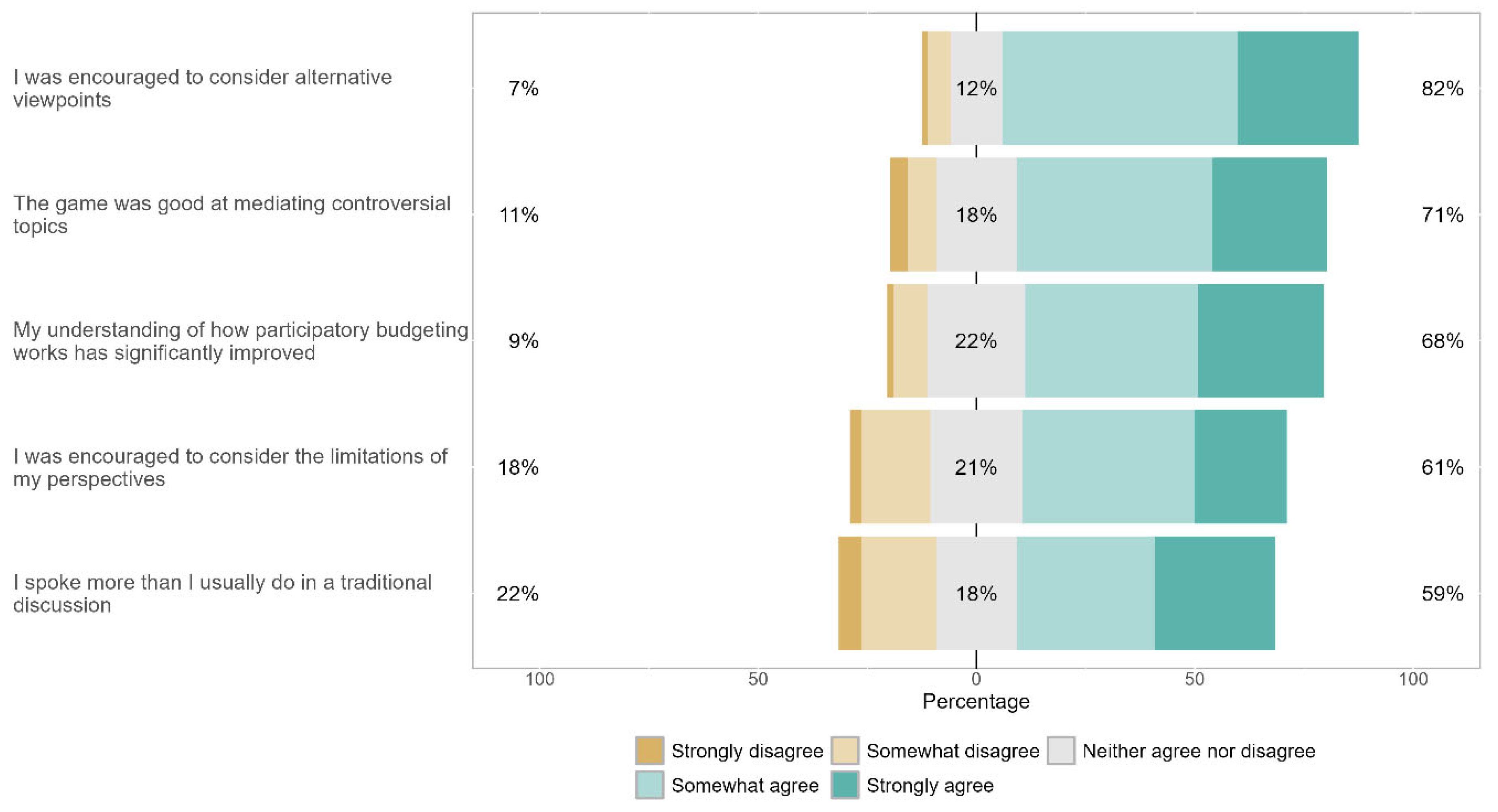
Table 5 and
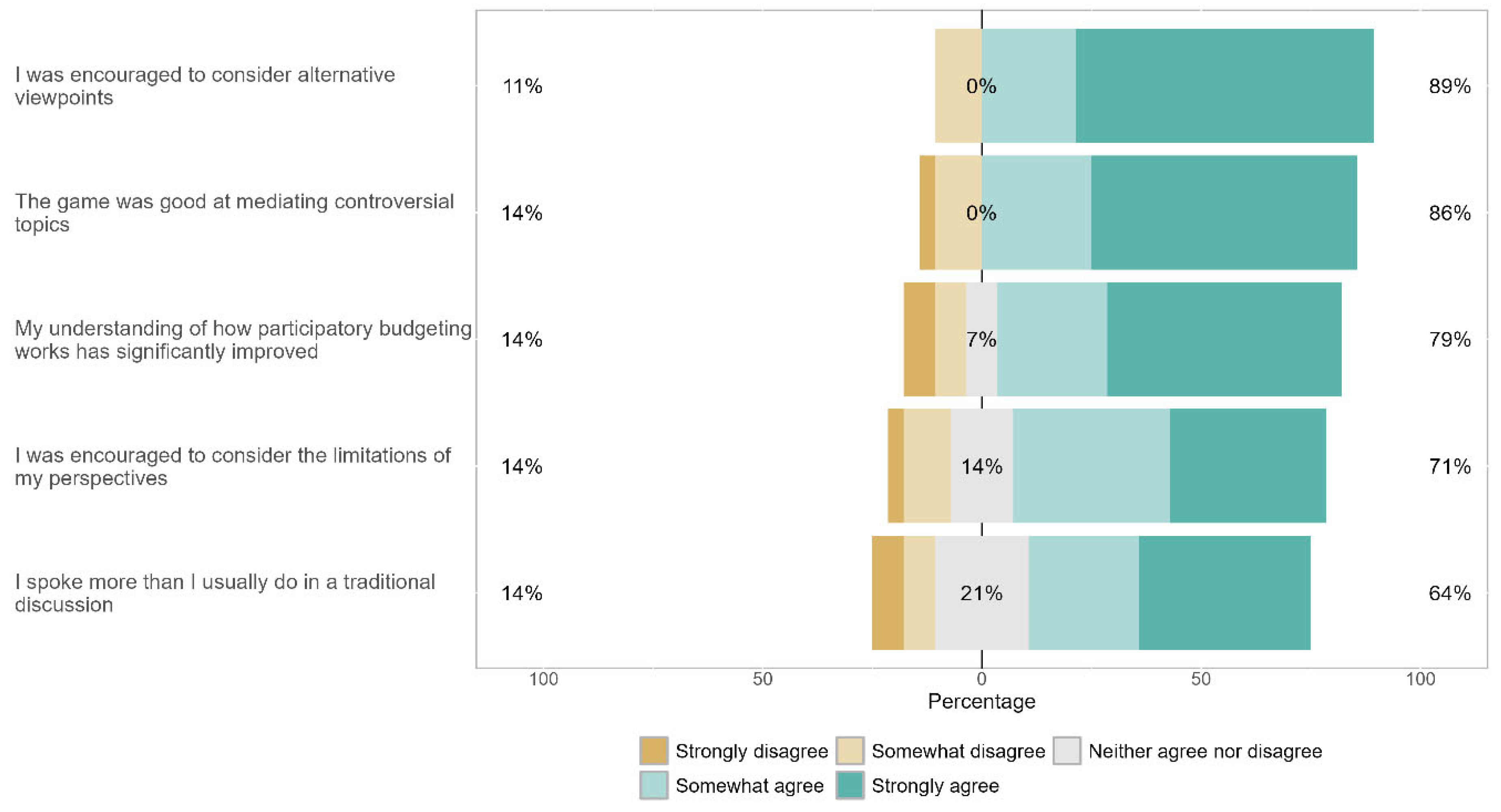
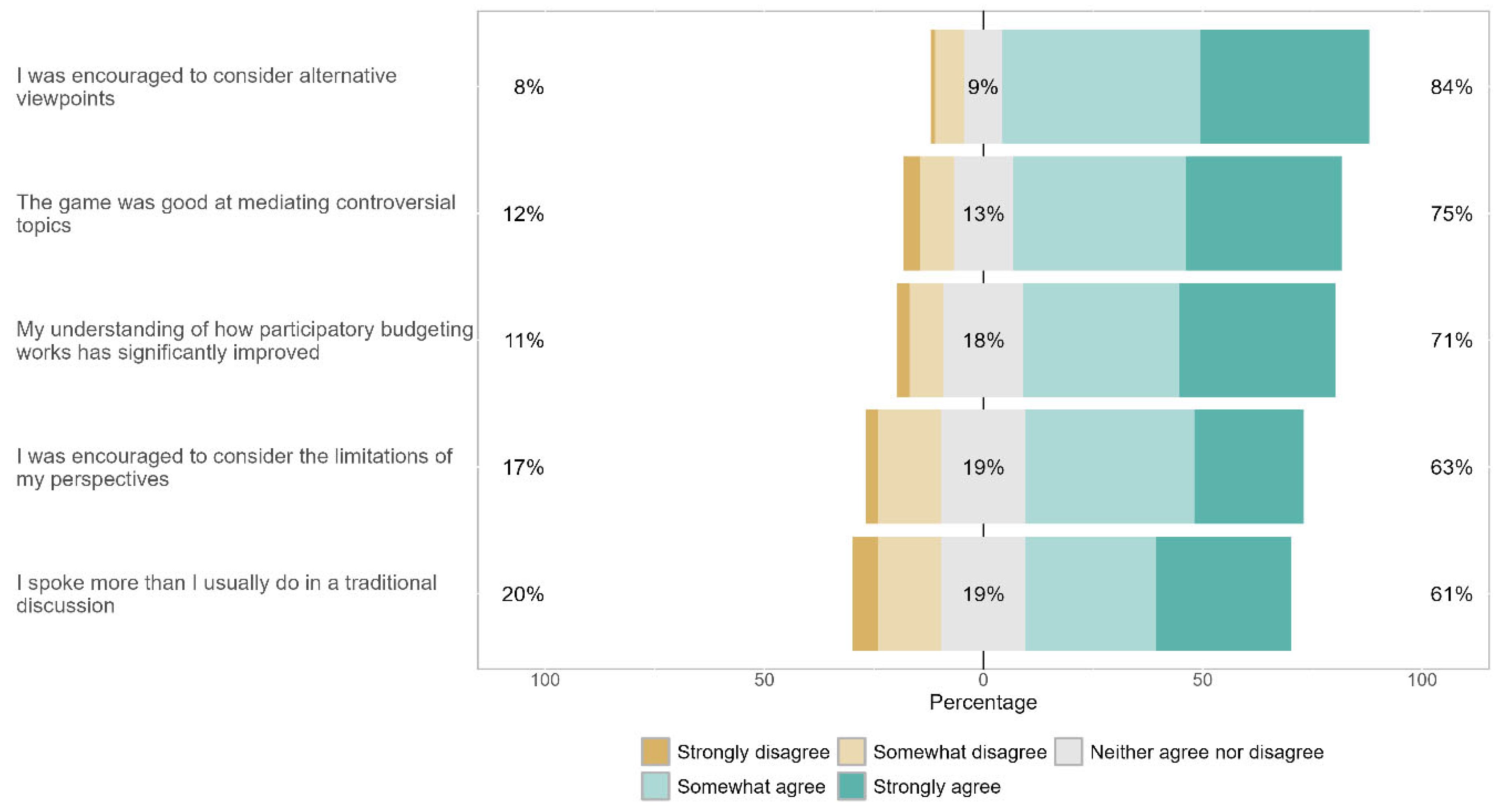
Figure 11 together provide a complementary account of participants’ evaluations of the exercise.
Table 5 reports the raw counts of respondents selecting each Likert category for the five statements (N = 104). The table shows that, for all items, the largest numbers of responses fall in the two agreement categories, with relatively small minorities expressing disagreement. This is particularly evident for items related to perspective-taking and mediation, where strong agreement is common and outright disagreement is rare. At the same time, the table makes visible the non-trivial presence of neutral responses, especially for items related to participation intensity and learning outcomes, indicating that not all respondents experienced the exercise in the same way.
Figure 11 translates these counts into percentages and displays them in a diverging Likert plot centred on the neutral category. This representation makes the balance between agreement and disagreement immediately apparent and facilitates comparison across items. The figure shows a clear rightward skew for all statements, indicating overall positive evaluations. Agreement is strongest for being encouraged to consider alternative viewpoints (84%) and for the game’s ability to mediate controversial topics (75%), suggesting that the exercise was particularly effective in fostering deliberative openness and constructive engagement with disagreement. Perceived learning gains in understanding participatory budgeting are also substantial (71% agreement). By contrast, the statement on speaking more than in a traditional discussion, while still supported by a majority (61%), displays the largest shares of disagreement and neutrality, pointing to more heterogeneous experiences in terms of participation dynamics.
Read together, the table and the figure indicate that the intervention was broadly successful across multiple dimensions, while also revealing meaningful variation in how participants experienced its effects. Importantly, reported learning and deliberative effects should not be interpreted as simple extensions of enjoyment. As the previous section showed, phases that were polarising or ranked lower in enjoyment were often those that introduced strategic choice, disagreement, or evaluative judgement. The analysis below therefore treats learning and deliberative outcomes as analytically distinct from affective enjoyment, allowing for the possibility that discomfort, tension, or reduced fun may coexist with perceived pedagogical value.
To assess whether the overall response patterns observed in the pooled sample mask systematic cross-national differences,
Figure 12 and
Figure 13 present the distribution of responses separately for Morocco and the UK.
To assess whether the visual response patterns observed in
Figure 12 and
Figure 13 reflect comparable experiences across countries or mask systematic differences, we conduct chi-square tests comparing the full Likert distributions for each item. The results indicate that cross-national differences are not uniform across dimensions of the experience. For two items—speaking more than usual in discussion and considering the limitations of one’s own perspectives—the null hypothesis of independence cannot be rejected. This indicates that participants in Morocco and the UK distributed their responses similarly across disagreement, neutrality, and agreement on these dimensions, consistent with the close visual alignment observed in the corresponding diverging Likert plots.
For the item measuring the impact of the game on learning, captured by respondents’ level of agreement with the statement “my understanding of how participatory budgeting works has significantly increased”, the chi-square test indicates a marginally statistically significant difference between countries (χ2 = 9.71, p < 0.05). This result suggests some divergence in how respondents in Morocco and the UK distributed their answers across the Likert scale. However, given the proximity of the p-value to the conventional 0.05 threshold, this finding should be interpreted cautiously and as indicative of modest distributional differences rather than strong cross-national divergence in learning outcomes.
By contrast, statistically significant differences emerge for two items. Responses to the statement on considering alternative viewpoints differ strongly between countries (χ2 = 17.98, p < 0.01), while evaluations of the game’s capacity to mediate controversial topics also vary significantly across contexts (χ2 = 14.45, p < 0.01), indicating that participants distributed themselves differently across the agreement categories in these domains. Importantly, these differences emerge not in baseline engagement, but in outcomes more closely associated with deliberative quality and mediation.
Taken together, the findings suggest that while the intervention generated broadly comparable participatory experiences across contexts, its deliberative and mediating effects were shaped by national context.
These results indicate that, although overall levels of agreement are high in both countries, the pattern of responses across Likert categories differs systematically, pointing to contextual variation in how deliberative openness and mediation are experienced. Importantly, the chi-square test assesses whether the distribution of responses differs between countries, not whether one country scores “higher” or “lower” on average, nor the substantive magnitude of these differences. The test is sensitive to how respondents are spread across categories rather than to directional effects or effect sizes. Accordingly, statistically significant results should be interpreted as evidence of distributional differences, not as definitive claims about superiority, effectiveness, or causal impact across national contexts.
Then we use Wilcoxon rank-sum tests, complemented by rank-biserial effect sizes, to assess whether respondents in Morocco and the UK differ systematically in the central tendency of their evaluations. The test statistics and effect sizes reported in
Table 6 are consistent with the earlier Wilcoxon p-values: we observe no conventional statistical significance for the items on understanding participatory budgeting, speaking more than usual, or considering the limitations of one’s own perspectives. The corresponding rank-biserial effect sizes are small (r ≈ 0.17–0.26), indicating only modest shifts in the distribution of responses that are not statistically distinguishable from chance at conventional thresholds.
By contrast, the items capturing whether participants considered alternative viewpoints and whether the game helped to mediate controversial topics reached conventional levels of statistical significance (
p < 0.01 in both cases
Table 7). However, the associated rank-biserial effect sizes are trivial (r ≈ 0.01 and r ≈ 0.05), suggesting that these differences, while detectable given the sample size, are substantively very small. In other words, the UK tends to score slightly higher than Morocco on these two deliberative dimensions, but the magnitude of the shift is limited.
5. Conclusions
This study evaluated Empaville, a hybrid role-playing game designed to simulate participatory budgeting, across six implementations in the United Kingdom and Morocco involving 118 participants. Three main findings emerge.
First, Empaville successfully activates role-play across contexts. Two-thirds of participants reported embodying their assigned characters rather than playing as themselves, validating the design modifications introduced in version 2.0, including simplified character cards, an early icebreaker phase, and the incorporation of creative activities. This result is methodologically important: it confirms that the intervention operated through role-based mechanisms rather than functioning merely as a structured group discussion.
Second, participants consistently reported deliberative benefits. Across both countries, large majorities indicated that the game encouraged perspective-taking, helped them reflect on the limitations of their own views, and supported constructive engagement with controversial topics. These outcomes are central to the pedagogical aims of democratic innovations and suggest that hybrid role-playing games can foster deliberative dispositions even in short, single-session interventions. Importantly, these reported effects were broadly comparable across contexts, despite differences in participant composition and setting. These findings can be directly linked to the underlying design mechanisms of the game. Role-based interaction appears to support perspective-taking and reflection on one’s own assumptions, while structured phases of discussion and negotiation create repeated exposure to disagreement in a controlled setting. The combination of fictional distance and institutional structure therefore helps translate interaction into deliberative learning outcomes, rather than merely increasing participation or enjoyment.
Third, while the core pedagogical and deliberative effects were largely consistent, participants’ experiential evaluations of specific procedural phases varied. The most notable divergence concerned the voting phase, which Moroccan participants evaluated more positively than UK participants. This pattern suggests that identical participatory mechanisms may carry different affective and symbolic meanings depending on political context. In settings where opportunities for meaningful voting are limited, even simulated collective choice may be experienced as novel or empowering, whereas in consolidated democracies voting may be perceived as routine and less distinctive than deliberation. This interpretation should be treated as provisional and hypothesis-generating, given the small number of Moroccan sessions and the absence of controls for session-level effects. Nonetheless, it points to a potentially important interaction between political opportunity structures and how democratic procedures are experienced.
Taken together, these findings indicate variation in enjoyment across phases does not map neatly onto variation in learning or deliberative value. Phases that were polarising or ranked lower in enjoyment, such as campaigning or voting, often played a central role in structuring disagreement, strategic interaction, and collective decision-making. Enjoyment, visible energy, and pedagogical effectiveness should therefore be treated as analytically distinct dimensions rather than as proxies for one another.
The paper’s primary contribution is pedagogical and methodological. Substantively, it shows that hybrid role-playing games combining fictional role immersion with realistic institutional procedures can promote deliberative learning outcomes that neither political role-play nor procedural simulations achieve alone. Fictionalisation provides psychological distance and intrinsic motivation, while institutional realism supports transferable understanding of democratic processes. Methodologically, the study addresses a recurrent challenge in research on pedagogical games and democratic innovations: how to draw credible inferences from small-N, high-complexity interventions without overstating effects.
By combining participant observation, self-reported outcomes, effect size reporting, and qualitative analysis, the paper demonstrates a cautious but systematic approach to evaluation that is appropriate for exploratory research.
The design implications that emerge are best understood as trade-offs rather than prescriptions. Character materials must balance immersion against cognitive load; excessive detail can undermine role activation, while insufficient guidance can generate uncertainty. Multiple modes of participation, including creative and non-verbal activities, help accommodate diverse engagement styles. Competitive and strategic phases can generate high energy but also polarise enjoyment, suggesting that they should be integrated carefully rather than maximised uncritically.
Several limitations qualify these conclusions. The sample consists of educated, self-selected participants in institutional settings, outcomes are self-reported and measured immediately after gameplay, and cross-national comparisons are based on a small number of sessions. The absence of pre-post measures or control conditions prevents causal inference. These limitations are acceptable for an exploratory evaluation but point to clear directions for future research, including experimental designs, longitudinal follow-up, and implementations in community settings.
Overall, the findings suggest that hybrid role-playing games can function as serious pedagogical tools for democratic education when their effects are evaluated with methodological restraint and when variation in enjoyment is treated as analytically informative rather than as evidence of design failure. Rather than seeking universally enjoyable experiences, designers and researchers should attend to how different procedural moments generate distinct forms of engagement, learning, and deliberative practice.
Lastly, while the connections between game mechanisms and democratic outcomes traced in this paper are necessarily exploratory, they point toward a set of potentially productive intersections between research on hybrid role-playing games and several long-standing debates in democratic theory. The finding that role immersion was associated with perspective-taking and self-reported intellectual humility invites dialogue with deliberative theorists who have long debated the conditions under which exposure to difference produces genuine epistemic openness rather than mere tolerance (
Mutz 2006;
Morrell 2010;
Bächtiger et al. 2018): whether short-duration role-play can reliably activate the empathetic reasoning deliberative democracy requires is an open empirical question that the game learning literature and deliberative theory have yet to address jointly. The ideation phase, which consistently produced the strongest collaborative engagement, raises questions about the relationship between creative co-production and participatory citizenship that connect to older debates about whether active participation in decision-making builds the capacities needed to sustain democratic life (
Pateman 2012;
Biesta 2011;
Westheimer 2015). The campaigning and bargaining phases shed light on the contested boundary between deliberation and strategic action: participants were exposed to persuasion, argumentation, and the legitimisation of competing claims in ways that speak directly to ongoing theoretical discussions about whether self-interest and power are pathologies of deliberation or constitutive features of it (
Mansbridge et al. 2010;
Dryzek 2010). Finally, the contextually variable meaning of the voting phase (enjoyed markedly more by Moroccan than UK participants) raises questions about the relationship between procedural experience, political opportunity structures, and democratic legitimacy that are directly relevant to comparative work on participatory institutions and citizen engagement (
Wampler 2012;
Curato et al. 2017;
Norris 2011). Taken together, these findings suggest that hybrid role-playing games may serve not only as pedagogical tools but as micro-laboratories for observing democratic dynamics under controlled conditions, opening productive venues for cross-fertilisation between game-based learning research, participatory democracy scholarship, and deliberative theory.