
Article

The Inclusion of Vulnerable Groups in Slovenian Cultural Institutions

Department of Music Education, Academy of Music, University of Ljubljana, 1000 Ljubljana, Slovenia
*
Author to whom correspondence should be addressed.
Soc. Sci. 2026, 15(4), 249; https://doi.org/10.3390/socsci15040249
Submission received: 26 January 2026 / Revised: 9 March 2026 / Accepted: 6 April 2026 / Published: 13 April 2026

Abstract

The inclusion of vulnerable groups in cultural life is a central issue of social justice, equality, and sustainable development. While equality ensures formal access to cultural participation, equity requires differentiated, needs-responsive measures that address structural barriers to meaningful engagement. Vulnerable groups—those at increased risk of social exclusion and inequality—often face such barriers despite the recognized role of the arts in promoting well-being, empowerment, and social cohesion. This study examines how Slovenia’s main cultural institutions conceptualize and implement inclusion, focusing on target groups, accessibility measures, and structural challenges and assessing whether their practices reflect principles of equality or equity. A mixed-methods approach combined an online survey of 26 institutions with semi-structured interviews with six representatives. Data were analyzed using descriptive statistics and thematic coding. The findings indicate that inclusion is present but fragmented and largely unsystematic. Institutions predominantly adopt equality-based approaches through general programming and standard adaptations, while equity-oriented, structurally embedded measures remain limited. Groups requiring sensory, communicative, or content-related adaptations are less frequently included. Overall, inclusion remains capacity-driven rather than equity-oriented, highlighting the need for coherent, equity-based frameworks to ensure sustainable and meaningful cultural participation.

1. Introduction

In contemporary cultural policy and social theory, inclusion, equality, equity, and social sustainability represent central normative frameworks for democratic development. Social sustainability refers to the creation of inclusive, cohesive, and resilient societies in which all individuals can participate meaningfully in social, economic, and cultural life (Sachs 2015; UNESCO 2005). Cultural participation is increasingly recognized as a fundamental human right and a key dimension of sustainable development, as it fosters belonging, well-being, and social cohesion (United Nations 1948; UNESCO 2005). Within this framework, the inclusion of vulnerable groups in cultural life is not merely a matter of access to leisure activities but a question of justice and equal citizenship.
Inclusion goes beyond formal participation. It involves actively removing the structural, social, economic, and cultural barriers that prevent marginalized groups from fully engaging in society (Ainscow 2020; Slee 2018). Unlike integration—which often assumes adaptation to dominant norms—inclusion requires institutional transformation, recognizing diversity as a resource and embedding representation, co-creation, and shared decision-making into organizational practices. In the cultural sector, this means rethinking programming, governance, communication, and production models to ensure that marginalized voices are not only present but influential.
A crucial distinction in this context is that between equality and equity. Equality implies providing identical rights or opportunities to all individuals. However, as theories of justice emphasize, equal treatment does not automatically result in fair outcomes when structural inequalities persist (Rawls 1971; Sen 2009). Equity, by contrast, acknowledges that individuals and groups begin from unequal social positions and therefore require differentiated, needs-responsive measures to achieve comparable participation. From Fraser’s (2008) perspective, justice requires both redistribution (addressing socioeconomic inequalities) and recognition (addressing cultural marginalization). In cultural institutions, equality may be reflected in formally open access to events, whereas equity requires measures such as adapted communication formats, sign language interpretation, economic support mechanisms, community partnerships, and long-term structural adjustments.
Closely connected to equity is the concept of accessibility, which encompasses physical, sensory, cognitive, linguistic, digital, and economic dimensions. Accessibility grounded in the principles of universal design and reasonable accommodation ensures that participation in cultural life is substantive rather than symbolic. Without such measures, cultural systems risk reproducing existing social hierarchies and inequalities (Belfiore 2021).
Vulnerable groups—individuals or communities at increased risk of social exclusion due to physical, social, economic, or environmental factors—often encounter intersecting forms of disadvantage (Inter-Agency Network for Education in Emergencies n.d.; World Health Organization Centre for Health Development n.d.). These groups include persons with disabilities, migrants and refugees, ethnic and religious minorities, older adults, individuals with mental or physical impairments, LGBTQIA+ persons, and others exposed to structural discrimination. Importantly, vulnerability is not static; it is shaped by contextual and systemic conditions, and individuals may belong to multiple vulnerable groups simultaneously, resulting in compounded barriers to participation.
Within this broader justice-oriented framework, music and the arts hold particular significance. Music has a documented positive impact on mental health, psychological well-being, and quality of life (MacDonald 2013). It also functions as a medium of social connection and collective identity formation, with the potential to foster empowerment and intercultural dialogue (Allan 2022). However, the inclusive potential of music can only be realized when cultural institutions adopt equity-oriented and socially sustainable practices. Without structural attention to inclusion and accessibility, artistic production may inadvertently reinforce existing exclusions (Yerichuk and Krar 2019).
In Slovenia, cultural institutions have increasingly recognized the importance of including vulnerable groups since the 1990s, supported in part by initiatives linked to the European Social Fund (Human Rights Ombudsman of the Republic of Slovenia n.d.). Nevertheless, inclusion remains largely project-based and fragmented. Vulnerable groups are most often represented in educational or therapeutic contexts, while their sustained presence in professional and repertory institutions is limited. The absence of systemic frameworks, long-term funding structures, and institutionalized equity strategies suggests that inclusion is frequently capacity-driven rather than embedded in broader principles of social sustainability.
This study therefore examines how Slovenian cultural institutions conceptualize and implement inclusion and to what extent their practices reflect principles of equality or equity. By situating cultural participation within the broader discourse of social justice and sustainability, the research contributes to the development of more coherent, equity-oriented cultural policies capable of ensuring meaningful and sustained inclusion in the public cultural sphere.

2. Materials and Methods

The study employed a mixed-methods research framework that integrated complementary quantitative and qualitative procedures for data collection and analysis. This approach enabled a comprehensive examination of the research objectives and is detailed in the subsections below.

2.1. Participants

The quantitative phase of the study included 26 representatives of cultural institutions operating in Slovenia, representing a response rate of 61.9%, as the questionnaire was distributed to 42 cultural institutions. Institutions with 11–25 employees predominate (38.5%), followed by very small institutions with fewer than five employees (34.6%). Most participating institutions report more than 10,000 visitors annually (73.1%). Among the types of activities offered, concert programming is most prevalent (96.2%), followed by theater (88.5%), exhibition activities (73.1%), film and dance activities (each 65.4%), and literary programming (53.9%). Respondents also highlighted additional forms of activity (50.0%), including chamber and choral concerts, music education programs, cultural tourism, conference activities, and various multicultural events.
The qualitative phase of the study included six representatives from major Slovenian cultural institutions. To ensure privacy and uphold ethical standards in qualitative research, all interviewees were anonymized and assigned codes P1–P6 (see Table 1).
The Slovenian Philharmonic is a national public institution dedicated to performing and promoting art music in Slovenia and abroad. The Cankar Centre Ljubljana is Slovenia’s main cultural center, offering a multidisciplinary artistic and congress program. As part of the public broadcasting service, RTV Slovenia—Program Ars fulfills its cultural mission with a strong focus on artistic production. The Slovenian National Theatre Maribor is the country’s largest cultural institution, comprising opera, ballet, a symphony orchestra, and a drama program. The Music Society Glasbena matica has a long tradition of music education and the dissemination of musical culture and has played a significant historical role in shaping the Slovenian musical landscape. The Slovenian Chamber Music Theatre, a non-governmental organization, works in chamber and contemporary opera production and contributes to the diversity of musical creativity in Slovenia.

2.2. Instruments

Data were collected through a survey questionnaire and semi-structured interviews. Both instruments were developed based on a review of relevant literature and the central research questions concerning the inclusion of vulnerable groups in the activities of cultural institutions. The survey questionnaire included closed and open-ended questions to capture both quantitative and qualitative data, and its content aligned with the core research themes of inclusion strategies, target groups, program accessibility, challenges, and communication practices. It was administered electronically using the online tool 1KA (EnKlikAnketa, Ljubljana, Slovenia) (Version 20.03.02). To gain a more nuanced understanding of institutional practices and perspectives, additional semi-structured interviews were conducted. Organized around thematic areas similar to those in the questionnaire, the interviews used pre-prepared open-ended questions that encouraged reflection and elicited detailed responses. The survey questionnaire is included in Appendix A.1, and the interview questions are provided in Appendix A.2.

2.3. Procedure

Data collection proceeded in two phases, consistent with the mixed-methods research design. The quantitative phase targeted representatives of cultural institutions across Slovenia active in music, theater, dance, film, exhibition, literature, and other artistic fields. Participation invitations were sent to official institutional email addresses and shared through professional networks that connect public and non-governmental cultural organizations. The questionnaire was distributed to 42 cultural institutions by the head of the Združenje kulturnih domov in ustanov v Sloveniji (KUDUS, Association of Cultural Centres and Institutions of Slovenia). A reminder was also sent to increase the response rate. Of these, 26 institutions responded, resulting in a response rate of 61.9%. The non-response rate may be attributed to several factors. First, cultural institutions are often subject to considerable time and workload pressures, which may reduce their capacity to participate in research. Second, both the invitation to complete the questionnaire and the reminder were sent to the general institutional email addresses. As a result, these messages may not necessarily have reached the management staff directly, but rather administrative offices, secretarial services, or project departments, whose personnel may not have had sufficient insight into the institutional practices addressed in the study. This may partly explain why some institutions did not respond.
The accompanying letter specified the purpose of the study, ensured anonymity and voluntary participation, and confirmed that all data would be used solely for research purposes. The survey was open during October 2025, required approximately 15 min to complete, and could be submitted once per institution. Responses were automatically recorded in a consolidated dataset. The qualitative phase consisted of semi-structured interviews conducted via the MS Teams platform in June and July 2025. The participants received a written informed consent form in advance, which they signed and returned electronically. The study’s aims were reiterated at the start of each interview, and verbal consent for audio recording was obtained. The interviews lasted 40 to 50 min. Recordings were transcribed, and the transcripts were then returned to the participants for confirmation. All participants verified the accuracy of the transcripts and authorized the use of their statements in the research report.
Data processing took place in several stages. Survey data were exported to a consolidated spreadsheet and checked for completeness, validity, and consistency; incomplete or invalid cases were excluded. The quantitative data were analyzed in JASP Statistics using descriptive statistics, including frequencies, percentages, means, and standard deviations. This provided a clear overview of sample characteristics and variation across institutional artistic activities, with results presented in tables and figures. Qualitative data from open-ended responses and interviews were reviewed and coded to identify recurring ideas that contextualized and complemented the quantitative results.

3. Results

This section presents the study’s findings based on quantitative survey data and qualitative interview insights. The results are organized into four areas: the vulnerable groups most frequently addressed by cultural institutions, the programs developed for their inclusion, the accessibility measures and adaptations implemented, and the challenges and barriers that institutions encounter in this process.

3.1. Target Vulnerable Groups

This section presents findings on the vulnerable target groups most frequently addressed by the programs and activities of cultural institutions (see Table 2).
The quantitative results show that cultural institutions most frequently target older adults and people with mobility impairments, followed by children and young people from socially disadvantaged backgrounds, blind and visually impaired individuals, and deaf and hard-of-hearing individuals. Low-income families, immigrants and refugees, and individuals with mental health difficulties are also relevant target populations, while programs for individuals on the autism spectrum and LGBTQIA+ communities are less common. Additional groups, such as the Roma community, were mentioned under “Other,” along with statements emphasizing that all visitors are welcome regardless of specific program orientation.
The qualitative findings reinforce these patterns by showing that institutions generally view the inclusion of vulnerable groups as an integral part of their core mission, not as a separate activity. The participants emphasized a commitment to creating environments where artistic experiences are accessible without reinforcing categorical distinctions: “Our aim is to enable inclusion without separating individuals as ‘different’” (P1). Vulnerability was often described as a universal human condition: “Each of us is vulnerable” (P3), and respondents stressed that groups labeled as vulnerable primarily seek equal and respectful treatment: “/…/ they want to be included and treated as equals, not as ‘the vulnerable’” (P4).

3.2. Programs Addressing Vulnerable Groups

Building on the identification of the vulnerable groups most frequently addressed by cultural institutions, this section examines how these institutions design and implement programs to support their inclusion (see Table 3).
The reported results suggest that concerts, film screenings, collaborative projects, and theater performances are among the most commonly offered programs for vulnerable groups, while workshops and other activities appear less frequently. Since many cultural institutions in Slovenia operate across multiple artistic and cultural domains, the higher frequency of certain activities may be related not only to programming choices for vulnerable groups but also to the broader areas of activity represented within the sample. Therefore, these findings should not be understood as a strict comparison between cultural sectors, but rather as an indicative overview of the types of programs most commonly reported by participating institutions.
The qualitative findings complement the quantitative results by showing that most institutions support inclusion through broadly accessible programs rather than specialized activities. One participant emphasized that programming follows “the basic premise of public interest /…/ which assumes the presentation of high-quality, diverse, and accessible content,” with “quality remain[ing] the common denominator of everything we seek to place in our public service” (P2). This participant also noted that their institution does not offer content “designed exclusively for visitors from vulnerable groups” (P2), while another explained that programs are intended for wide audiences and “adjusted when specific needs arise” (P4). Inclusion is often embedded thematically. In one institution, programs “frequently focus on themes affecting vulnerable groups,” developed through long-term creative processes in which “our productions are not just artistic events, but long-term processes” (P5). Another institution provides family programs “carefully adapted for children” (P1). Elsewhere, the inclusion of minority groups is incorporated within existing program cycles, where this focus is “embedded in the very definition of the cycle” (P2). One participant added that programming choices are shaped by the broader social context, as they are “often connected to current social circumstances /…/ and the conceptual framework of the projects” (P3). Some productions also include reflective components, such as post-performance conversations (P5).

3.3. Accessibility and Adaptations

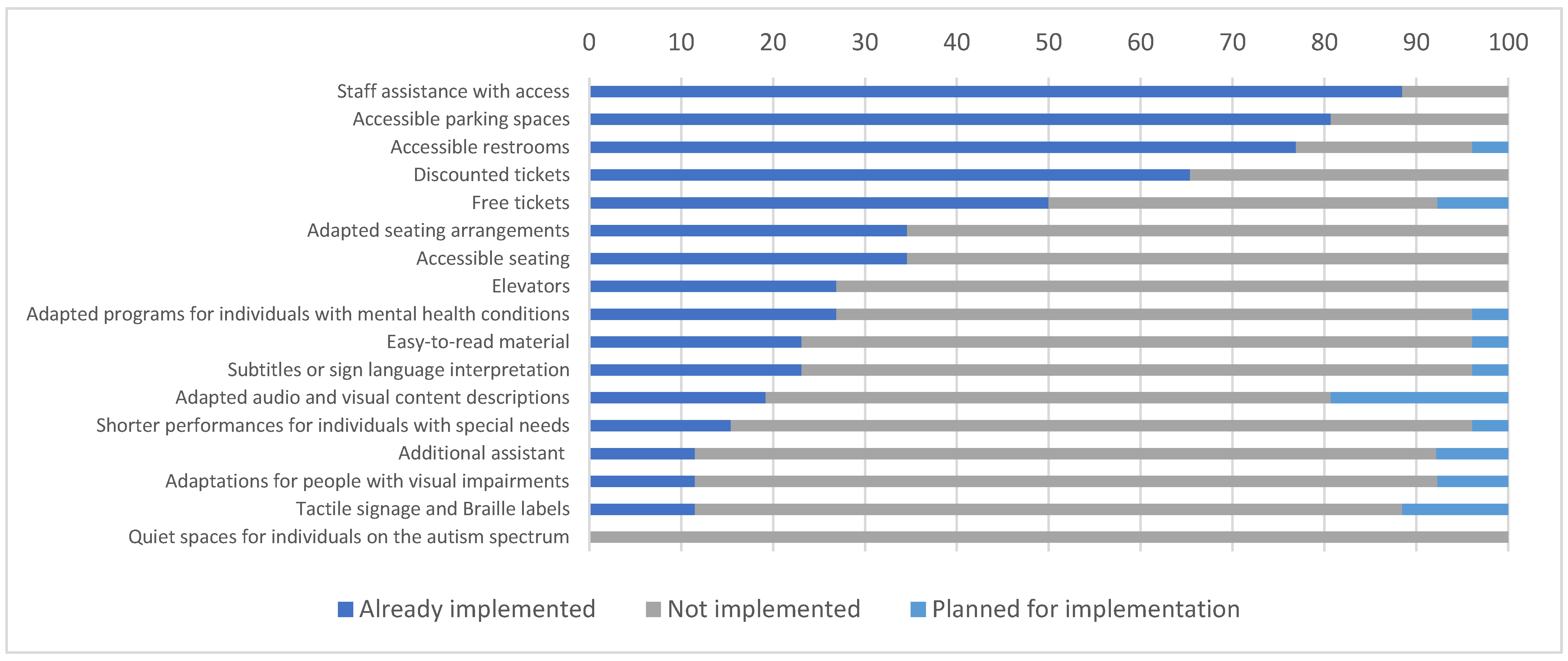
This subsection draws on three sources of data: a closed-ended survey question indicating how frequently specific adaptations are implemented (see Figure A1 in Appendix B), an open-ended question providing concrete examples of these measures, and interview insights that further contextualize accessibility practices within institutions.
Spatial adaptations are the most consistently developed. The quantitative results show a high provision of staff assistance (88.5%), accessible parking (80.7%), and adapted sanitary facilities (76.9%). In the open-ended responses, institutions specified accessible halls (n = 4), elevators (n = 2), designated wheelchair spaces (n = 3), and step-free access (n = 1). Interviews confirmed these practices: P1 noted “an elevator, accessible toilets and designated seating,” while P2 described advising visitors using walkers to request assistance and offering standard wheelchairs to those arriving with electric models to “maintain auditorium capacity.”
Sensory and communication measures remain limited. The quantitative data show low provision of sign language interpretation or captioning (23.1%), audio–visual descriptions (19.2%), and tactile signage or Braille labels (11.5%), with no quiet rooms for autistic visitors. Open-ended responses mentioned induction loops (n = 4), Braille labels (n = 2), tactile markings (n = 1), and occasional sign language interpretation (n = 1). Interviewees cited additional examples, such as including a sign language interpreter (P5) and providing appropriately placed and illuminated exhibit labels (P2).
Content adjustments are selective. The quantitative results indicate that 15.4% of institutions provide easy-to-read materials, 11.5% offer adapted programs, and 7.7% plan shorter performances. Five institutions reported similar measures in the open-ended responses, with one specifically offering shorter performances. P5 added that they “organize seminars for children with disabilities,” illustrating occasional content-focused initiatives.
Financial measures are relatively common. According to the survey, 65.4% of institutions offer reduced tickets, and 50.0% provide free admission.
Individual adjustments are uncommon. The quantitative data show that 7.7% of institutions (n = 2) plan additional personalized assistance, and three institutions reported such practices in the open-ended responses. Interview data highlight organizational and digital solutions supporting individual access; as P1 stated, “we support persons with disabilities through organizational measures, such as online concerts.”

3.4. Challenges and Barriers

Building on the previous section, which outlined the accessibility measures currently implemented by cultural institutions, this subsection examines the challenges and barriers that continue to limit the full inclusion of vulnerable groups. These insights highlight the structural, organizational, and resource-related constraints that institutions face, despite ongoing efforts to improve accessibility. The survey assessed these challenges using a five-point Likert scale, where 1 indicated a factor that was not a barrier, and 5 indicated a substantial barrier (see Table 4).
Financial constraints, identified as the most significant barrier in the quantitative data, were consistently emphasized by interview participants. Institutions reported that dedicated funding for work on inclusion is largely absent: “Current funding for cultural institutions is not specifically designated for vulnerable groups” (P1). Several participants noted that more comprehensive inclusion requires additional financial and staffing resources (P2), while the feasibility of specific artistic formats depends directly on available funding: “For demanding projects, such as symphonic works, costs are high and groups are small, raising questions of long-term sustainability” (P3). Even fully funded institutions acknowledged limitations, explaining that more resources would allow additional programs and more specialized work (P4). Others described reliance on external collaborators: “We always invite external experts, which requires financial resources; otherwise, we must stay within what we can scrape together” (P5).
Knowledge gaps and staff capacity, identified quantitatively as moderate barriers, were also reflected in the interviews. One participant highlighted the lack of specialized expertise among staff, noting that institutions often rely on contractual collaborators because “we are not specialists for everything /…/ I can propose an idea, but I cannot execute it, as I am not a music therapist nor a psychotherapist” (P5). Another added that limited staffing prevents structured inclusion practices, such as employing persons with disabilities: “Because we lack staff, we cannot systematically employ a person with special needs /…/ yet we remain open to all” (P6).
Organizational challenges, identified quantitatively as moderate barriers, were described in detail by participants. Legal restrictions complicate the participation of children in performances: “/…/ we often cannot include children due to legal and time limitations” (P4). Spatial or content-related constraints can limit the inclusion of persons with disabilities in artistic work: “/…/ regarding the inclusion of persons with disabilities in performance itself –-here we face limitations, mainly due to space and the nature of the content” (P5). Institutions also encounter gaps in programs for groups with highly specific needs, such as individuals recovering from addiction: “/…/ for whom we have neither suitable programs nor trained staff” (P5). P2 noted additional challenges in presenting inclusive artistic projects, while P3 described conceptual and communication challenges in connecting artistic music with very young audiences.
Spatial limitations, rated as a lower but still relevant barrier, were frequently mentioned in interviews. Architectural inaccessibility—often linked to heritage protection—significantly restricts adaptation options: “/…/ the existing building allows basic access, but conditions are not optimal” (P1), with narrow corridors, limited step-free entrances, and constrained backstage areas. Institutions housed in protected buildings face additional constraints: “/…/ the building is listed as cultural heritage /…/ interventions are more restricted than we would wish” (P2). Limited room availability further restricts program development (P5). In spite of these constraints, institutions express a strong commitment to inclusion: “Despite the limitations of a historic building, we strive to be as inclusive as possible” (P1).

4. Discussion

As no comparable empirical research has systematically examined the inclusion of vulnerable groups within Slovenian cultural institutions, the present discussion interprets the findings through the theoretical framework of inclusion, equality, equity, and social sustainability outlined in the introduction. In line with UNESCO’s (2005) understanding of cultural participation as a pillar of sustainable development and the United Nations’ (1948) recognition of participation in cultural life as a fundamental human right, the findings are examined as indicators of how far institutions move from formal access toward substantive inclusion.
The results show that the inclusion of vulnerable groups in Slovenian cultural institutions is relatively widespread but fragmented and uneven. From a social sustainability perspective (Sachs 2015), such fragmentation suggests that inclusion has not yet been structurally embedded in long-term institutional strategies. Institutions most frequently include groups whose needs can be addressed through existing programs and standard adaptations—primarily older adults, people with physical disabilities, and children and young people from socially disadvantaged backgrounds. Groups requiring more complex sensory, communicative, or content-related adaptations, such as people on the autism spectrum and members of the LGBTQIA+ community, are included less frequently. This pattern reflects what Belfiore (2021) describes as a capacity-shaped model of cultural inclusion, in which institutions adapt practices to available resources rather than restructuring organizational frameworks.
Interpreted through the distinction between equality and equity (Rawls 1971; Sen 2009), the findings reveal a central conceptual tension. Institutions frequently emphasize that programs are intended for all audiences and conceptualize vulnerability as a universal human condition. This reflects an equality-based orientation, grounded in identical access and non-differentiation. However, as justice-oriented theories emphasize, equal treatment does not necessarily result in fair or equivalent outcomes when structural barriers persist. From Fraser’s (2008) perspective, justice requires both redistribution and recognition; thus, differentiated, equity-based adaptations are necessary to ensure substantive participation. The reluctance toward specialized programs—motivated by concerns about stigmatization—demonstrates the difficulty of balancing recognition with non-differentiation. While this approach promotes formal equality, it may unintentionally limit equitable responsiveness to specific needs.
Patterns of accessibility further illustrate this dynamic. Spatial and financial accessibility are relatively well institutionalized, whereas sensory, communicative, and content-related adaptations remain selective and predominantly project-based. From the perspective of inclusive institutional transformation (Ainscow 2020; Slee 2018), the absence of systemic solutions indicates that inclusion remains procedural rather than structural.
Addressing the second research question, the identified challenges stem not from a lack of measures but from their fragmentation and limited strategic coherence. Sustainable inclusion requires moving beyond project-based responsiveness toward institutional learning and structural adaptation. The selective targeting of vulnerable groups reflects pragmatic capacity considerations rather than explicit exclusion; however, without long-term frameworks, professional development, and coordinated standards, such pragmatism risks reproducing inequalities. Strengthening staff competencies and fostering interdisciplinary collaboration would align institutional practices more closely with equity-based principles and the broader goals of socially sustainable cultural development.
Overall, the findings suggest that inclusion in Slovenian cultural institutions is evolving but remains predominantly equality-oriented and capacity-driven. A clearer conceptual differentiation between equality and equity is required to align practice with the normative frameworks of social sustainability and justice articulated in the introduction (Rawls 1971; Sen 2009; UNESCO 2005). Inclusion must be understood not as identical treatment but as an ongoing, reflexive institutional process grounded in differentiated support, structural transformation, and long-term commitment. By empirically situating these dynamics in the Slovenian context, this study provides a foundation for further research on equity-oriented cultural policy and sustainable inclusion in the arts.

5. Conclusions

This study offers empirically grounded insights into how Slovenian cultural institutions conceptualize and implement the inclusion of vulnerable groups, while also revealing the limitations of current practices. The main shortcomings are the uneven development of various dimensions of accessibility and the absence of comprehensive, long-term inclusion strategies embedded at the institutional level.
Several limitations of the study must be acknowledged. The survey was completed by institutional representatives who may not have a comprehensive understanding of all aspects of institutional practices, particularly those involving direct interactions with audiences. Additionally, the sample of institutions and respondents does not allow for generalization across the entire cultural field, and the data primarily reflect institutional perspectives rather than the lived experiences of vulnerable groups. Given the lack of comparable empirical research in the Slovenian context, this study serves as an initial analytical foundation. Its contribution lies not in confirming established findings but in opening a research field and establishing conceptual and empirical reference points for future studies. Further research should include the perspectives of individuals from diverse vulnerable groups, employ longitudinal approaches, conduct comparative analyses across cultural sectors and national contexts, and examine organizational cultures and professional competencies that shape inclusive practices in cultural and musical institutions.
The findings suggest that the greatest developmental potential for including vulnerable groups in the cultural field lies not in introducing additional isolated measures but in critically rethinking and transforming fundamental institutional assumptions. A shift from minimal accessibility to equity, from fragmented project-based initiatives to systemic strategies, and from equal treatment to consciously differentiated inclusion creates opportunities for cultural institutions to develop as spaces of sustainable, reflective, and non-stigmatizing inclusion for vulnerable groups.

Author Contributions

Conceptualization, K.H.; methodology, Š.P. and U.K.; investigation (interviews), Š.P. and U.K.; formal analysis and data processing (quantitative research), Š.P.; data analysis (qualitative research), U.K.; writing—original draft preparation, Š.P. and K.H.; writing—review and editing, Š.P., U.K., and K.H.; supervision, K.H. All authors have read and agreed to the published version of the manuscript.

Funding

This research was funded by the Academy of Music, University of Ljubljana, Start-up Research Program “Music as an Inclusive Means to Promote Mental Health and Psychological Well-Being of Vulnerable Groups” (Decision No.: 802-14/2024). The APC was funded by the University of Ljubljana.

Institutional Review Board Statement

The study was conducted in accordance with the Declaration of Helsinki and approved by the Ethics Committee of University of Ljubljana (KERL UL) (protocol code: 054-2025; 27 June 2025).

Informed Consent Statement

Informed consent was obtained from all participants in the study.

Data Availability Statement

The data presented in this study are not publicly available due to ethical and privacy considerations but may be obtained from the corresponding author upon reasonable request.

Acknowledgments

The authors thank all participating institutions for their cooperation and contributions to the study. During manuscript preparation, the authors used ChatGPT 5.4 (OpenAI, Ljubljana, Slovenia) for language editing and translation. The authors reviewed and edited the output and take full responsibility for the content of this publication.

Conflicts of Interest

The authors declare no conflict of interest. The funding sponsors had no role in the design of the study; in the collection, analyses, or interpretation of data; in the writing of the manuscript, and in the decision to publish the results.

Appendix A

Appendix A.1. Survey Questionnaire

This appendix presents the survey questionnaire used in the study. It supports the explanation of the measurement instrument described in Section 3.2 and contributes to the interpretation of the study’s overall findings.
Dear Sir or Madam,
We invite you to participate in a research study aimed at gaining insight into the inclusion of vulnerable groups in the Slovenian cultural sphere.
Vulnerable groups are populations in society that are more susceptible to harm, discrimination, or disadvantage due to factors such as social, economic, or geographical position, or physical circumstances. These groups may face greater risks, have limited access to resources or opportunities, and require special support and protection to ensure their well-being and equal participation in society. Vulnerable groups may vary depending on the context, but common examples include children, older adults, persons with disabilities, women and girls, ethnic and racial minorities, LGBTQIA+ individuals, and immigrants, migrants, and refugees.
Your responses will help us understand the current situation and contribute to the development of recommendations for improvement.
Participation in the study involves completing this online questionnaire, which takes approximately 15 min. There are no risks associated with participation. There are no direct benefits for you; however, your contribution may help improve understanding of the challenges related to the inclusion of vulnerable groups in the Slovenian cultural sphere.
Your participation is entirely voluntary, and you may withdraw at any time without consequences. Your identity will remain anonymous. The data will be treated confidentially, processed at the group level, and stored in encrypted form. Access to the data will be restricted exclusively to the research team, and the data will be used solely for scientific research purposes.
If you have any additional questions, please contact us at (katarina.habe@ag.uni-lj.si).
Thank you very much for your participation.
  • _____________________________________________________________________________
1.
In which region is your cultural institution located?
(a)
Primorska (Slovenian Littoral)
(b)
Gorenjska (Upper Carniola)
(c)
Osrednjeslovenska (Central Slovenia)
(d)
Podravska (Drava Region)
(e)
Pomurska (Mura Region)
(f)
Koroška (Carinthia)
(g)
Savinjska (Savinja Region)
(h)
Zasavska (Central Sava Region)
(i)
Posavska (Lower Sava Region)
(j)
Jugovzhodna Slovenija (Southeast Slovenia)
(k)
Goriška (Gorizia Region)
2.
What is the size of your cultural institution in terms of number of employees?
(a)
Very small (fewer than 5 employees)
(b)
Small (5–10 employees)
(c)
Medium-small (11–25 employees)
(d)
Medium (26–50 employees)
(e)
Large (51–100 employees)
(f)
Very large (more than 100 employees)
3.
How many visitors does your institution receive on average each year?
(a)
Up to 500 visitors per year
(b)
From 500 to 1000 visitors per year
(c)
From 1000 to 5000 visitors per year
(d)
From 5000 to 10,000 visitors per year
(e)
More than 10,000 visitors per year
4.
What types of activities does your cultural institution regularly offer to visitors? Multiple answers are possible.
(a)
Concert activities
(b)
Film activities
(c)
Dance activities
(d)
Theater activities
(e)
Exhibition activities
(f)
Literary activities
(g)
Other:
5.
Please estimate and write the approximate percentage share of each activity in the overall program of your cultural institution. The total should equal 100%.
  • Concert activities: _____ %
  • Film activities: _____ %
  • Dance activities: _____ %
  • Theater activities: _____ %
  • Exhibition activities: _____ %
  • Literary activities: _____ %
  • Other: _____ %
  • Total: 100%
6.
Does your institution already conduct activities intended for vulnerable groups (such as performances, workshops, or programs designed exclusively for these groups)?
(a)
Yes, we implement specially adapted activities or programs intended exclusively for vulnerable groups
(b)
No, we do not implement special programs, but our cultural activities are accessible to vulnerable groups
(c)
Yes, we do both—we have special programs and adaptations within our regular offerings
(d)
No, we currently do not implement such activities
(e)
No, but we plan to do so in the future
(f)
I do not know/I am not sure
(g)
Other:
7.
Which vulnerable groups are your activities intended for? Multiple answers possible.
(a)
People with physical disabilities
(b)
Blind and partially sighted people
(c)
Deaf and hard-of-hearing people
(d)
People with autism
(e)
People with intellectual disabilities
(f)
People with mental health difficulties
(g)
Older adults
(h)
Low-income families
(i)
Immigrants and refugees
(j)
Children and young people from socially disadvantaged backgrounds
(k)
LGBTQIA+ people
(l)
Other:
8.
Which artistic activities in your institution are intended for vulnerable groups? Multiple answers possible.
(a)
Concerts
(b)
Theater performances
(c)
Dance performances or workshops
(d)
Visual arts workshops
(e)
Film screenings
(f)
Collaborative projects (for example, with schools, institutions, or associations)
(g)
Other:
(h)
Artistic activities are not specifically intended for vulnerable groups
9.
How often do you organize events or activities that are adapted exclusively for vulnerable groups?
(a)
Never
(b)
Rarely (once a year or less)
(c)
Occasionally (several times a year, approximately every 2–3 months)
(d)
Often (approximately 1–2 times per month)
(e)
Very often (weekly or several times per week)
10.
Please list specific programs or activities within your institution that are intended for vulnerable groups.
__________________________________________________________________________________________________________________________________________________________________________________________________________
11.
Please list specific examples of artistic creations you have implemented in your cultural institution that addressed the theme of vulnerable groups.
__________________________________________________________________________________________________________________________________________________________________________________________________________
12.
To what extent, in your experience, does the music program at your institution attract vulnerable groups to attend compared to other artistic programs (film, dance, drama)?
(a)
More than other programs
(b)
The same as other programs
(c)
Less than other programs
(d)
We do not have a music program
(e)
I do not know/I cannot assess
(f)
Other:
13.
Which elements, in your opinion, most strongly address or attract vulnerable groups in the music program? Multiple answers possible.
(a)
Music selection (e.g., recognizable, accessible, or thematically relevant works)
(b)
Musical performers (e.g., local performers, performers from vulnerable groups)
(c)
Interactive orientation (opportunities for participation, response, improvisation)
(d)
Event theme (e.g., social justice, personal stories, integration)
(e)
Performance adaptations (e.g., shorter duration, gentle sound dynamics, visual support)
(f)
Venue and atmosphere (e.g., a sense of a safe and inclusive environment)
(g)
Accompanying program (e.g., discussions after the event, workshops)
(h)
I do not know enough to assess this
(i)
We do not run a music program
(j)
Other:
14.
Please name a music event at your cultural institution that addressed the theme of vulnerable groups and specify which vulnerable group(s) it focused on.
__________________________________________________________________________________________________________________________________________________________________________________________________________
15.
What adaptations for vulnerable groups does your institution offer?
AdaptationAnswer
ElevatorsAlready implementedNot implementedPlanned for implementation
Adapted sanitary facilitiesAlready implementedNot implementedPlanned for implementation
Adapted seatingAlready implementedNot implementedPlanned for implementation
Accessible parking areasAlready implementedNot implementedPlanned for implementation
Tactile markings and Braille signageAlready implementedNot implementedPlanned for implementation
Staff assistance with accessAlready implementedNot implementedPlanned for implementation
Adapted audio and visual content descriptionsAlready implementedNot implementedPlanned for implementation
Free ticketsAlready implementedNot implementedPlanned for implementation
Discounted ticketsAlready implementedNot implementedPlanned for implementation
Adaptations for the visually impaired, such as enhanced lightingAlready implementedNot implementedPlanned for implementation
Quiet spaces for people with autismAlready implementedNot implementedPlanned for implementation
Subtitles or sign language interpretationAlready implementedNot implementedPlanned for implementation
Adapted programs for people with mental health difficultiesAlready implementedNot implementedPlanned for implementation
Easy-to-read materialsAlready implementedNot implementedPlanned for implementation
Adapted seating layoutAlready implementedNot implementedPlanned for implementation
Additional assistants or companionsAlready implementedNot implementedPlanned for implementation
Shorter performances for people with special needsAlready implementedNot implementedPlanned for implementation
Other:Already implementedNot implementedPlanned for implementation
16.
What specific adaptations in event implementation do you provide for individual vulnerable groups? Please provide a few examples.
__________________________________________________________________________________________________________________________________________________________________________________________________________
17.
Where did you obtain funding to implement adaptations for vulnerable groups in your cultural institution? Multiple answers are possible.
(a)
From own funds
(b)
From municipal funds
(c)
From European funds
(d)
From project calls
(e)
From sponsorship or donor funds
(f)
Other:
18.
Have you noticed an increase in attendance among vulnerable groups after introducing adaptations?
(a)
Yes, attendance has increased noticeably
(b)
Yes, attendance has increased slightly
(c)
No, attendance has remained the same
(d)
No, attendance has decreased
(e)
We have not yet introduced adaptations
(f)
I do not know enough to assess this
(g)
Other:
19.
Which adaptations do you think have contributed most to improving the accessibility of your institution? Multiple answers are possible.
(a)
Spatial adaptations (ramps, elevators, accessible paths, adapted seating, accessible restrooms)
(b)
Financial adaptations (free or discounted tickets, donations, packages for socially disadvantaged groups)
(c)
Program/content adaptations (shorter performances, special events, adapted performances)
(d)
Communication adaptations (sign language interpretation, easy-to-read materials, subtitles)
(e)
Personal assistance (staff assistance, additional companions)
(f)
Time adaptations (events scheduled at times more suitable for older adults, children, etc.)
(g)
I do not know enough to assess this
(h)
Other:
20.
To what extent does your institution clearly indicate in its promotional and informational materials (such as invitations, website, or social media) that events or spaces are intended for vulnerable groups? Multiple answers are possible.
(a)
Very clearly—accessibility and adaptations are regularly and visibly highlighted
(b)
Occasionally—in some cases we provide information on accessibility
(c)
Rarely—this is not systematically included in communication
(d)
Never—we do not include such information in our communication
(e)
I do not know/I am not sure
(f)
Other:
21.
To what extent do the following factors pose an obstacle to the inclusion of vulnerable groups in your cultural institution?
ChallengeAnswer
Lack of financial resources for adaptationsNot a challenge at allA minor challengeA moderate challengeA major challengeA very major challengeI do not know enough to assess this
Lack of staffNot a challenge at allA minor challengeA moderate challengeA major challengeA very major challengeI do not know enough to assess this
Insufficient interest and response from vulnerable groupsNot a challenge at allA minor challengeA moderate challengeA major challengeA very major challengeI do not know enough to assess this
Spatial limitations of the buildingNot a challenge at allA minor challengeA moderate challengeA major challengeA very major challengeI do not know enough to assess this
Organizational difficulties in adapting programsNot a challenge at allA minor challengeA moderate challengeA major challengeA very major challengeI do not know enough to assess this
Staff training for adapting music programsNot a challenge at allA minor challengeA moderate challengeA major challengeA very major challengeI do not know enough to assess this
Lack of knowledge and information about the needs of vulnerable groupsNot a challenge at allA minor challengeA moderate challengeA major challengeA very major challengeI do not know enough to assess this
The institution is oriented toward a general audienceNot a challenge at allA minor challengeA moderate challengeA major challengeA very major challengeI do not know enough to assess this
This is not our priorityNot a challenge at allA minor challengeA moderate challengeA major challengeA very major challengeI do not know enough to assess this
Other:Not a challenge at allA minor challengeA moderate challengeA major challengeA very major challengeI do not know enough to assess this
22.
List three advantages that the inclusion of vulnerable groups brings to your institution.
__________________________________________________________________________________________________________________________________________________________________________________________________________
23.
Do you see potential for greater inclusion of vulnerable groups in your institution? If yes, what do you think your institution would need to begin developing programs for vulnerable groups in the future?
__________________________________________________________________________________________________________________________________________________________________________________________________________
24.
What benefits do you think including vulnerable groups could bring to your institution?
__________________________________________________________________________________________________________________________________________________________________________________________________________
25.
When did you begin to pay more attention to the inclusion of vulnerable groups in your institution?
(a)
More than 5 years ago
(b)
In the last 5 years
(c)
In the last year
(d)
I do not know/I am not sure
(e)
Other:
26.
Does your institution have a defined vision or strategy for including vulnerable groups in programs or activities?
(a)
Yes, the vision or strategy is formally documented and actively implemented
(b)
Yes, the vision or strategy exists but is not formally documented
(c)
I do not know/I am not sure
(d)
No, we do not have a defined vision or strategy
(e)
Other:
27.
Please describe your vision or strategy for including vulnerable groups.
__________________________________________________________________________________________________________________________________________________________________________________________________________

Appendix A.2. Interview Questions

This appendix presents the interview questions used in the study. It supports the explanation of the measurement instrument described in Section 3.2 and contributes to the interpretation of the study’s findings.
  • General questions
1.
Could you briefly describe your cultural institution and its mission?
2.
How does your institution define “vulnerable groups”?
3.
How important is the inclusion of vulnerable groups in music and cultural programs for your institution?
4.
How do you perceive changes in attitudes toward vulnerable groups in the music and cultural sector in recent years? Have you received any information or guidelines regarding the accessibility of cultural institutions for vulnerable groups?
  • Accessibility and adaptations
5.
Do you adapt the content of music and cultural events to make them suitable for vulnerable groups? If so, how?
6.
What types of adaptations for vulnerable groups does your institution currently provide? For example, physical accessibility for people with disabilities, tactile signage, adapted sanitary facilities, sign language interpretation, shorter performances, or dedicated performances.
7.
How does your institution ensure financial accessibility for vulnerable groups? Do you offer free or discounted tickets for these groups?
8.
Do you believe the accessibility of your institution for vulnerable groups could be further improved? If so, how?
  • Programs and activities for vulnerable groups
9.
Does your institution already implement specific music and cultural programs that thematically address vulnerable groups? If so, which ones?
10.
How do you determine which vulnerable groups to include in your music and cultural programs?
11.
What kind of feedback do you receive from audiences in vulnerable groups regarding your adapted music and cultural programs?
12.
Could you provide an example of a good practice from your institution—a music and cultural program that you consider particularly successful in engaging vulnerable groups?
  • Sustainable approach and long-term vision
13.
When did your institution begin to place greater emphasis on including vulnerable groups in the design of its music and cultural programs?
14.
Does your institution have a long-term vision or strategy for improving accessibility and inclusion of vulnerable groups? If so, how?
15.
How do you ensure that your adaptations and programs are sustainable and effective over the long term?
16.
How do you assess the support provided by the state and local communities for including vulnerable groups in musical and cultural life?
  • Challenges and future plans
17.
What challenges do you encounter when including vulnerable groups in your institution’s activities?
18.
Do you have sufficient financial and human resources to implement adapted programs?
19.
Are you planning any changes or improvements in accessibility and inclusion of vulnerable groups in the future?

Appendix B

Existing and Planned Accessibility Measures

This appendix provides a detailed overview of all accessibility measures reported by cultural and music institutions, including those currently implemented and those planned for the future. These details complement the summary in Section 3.3 and present a complete graphical representation of the data.
Figure A1. Existing and planned accessibility measures in cultural and music institutions.
Socsci 15 00249 g0a1
This appendix presents an analytically derived framework that systematically identifies gaps and challenges in everyday institutional practices related to the inclusion of vulnerable groups. Based on an integrated quantitative and qualitative analysis, these gaps serve as the basis for formulating corresponding opportunities for further development in cultural institutions. The Table A1 therefore represents a researcher-led synthesis rather than a descriptive account of reported practices and complements the findings discussed in Section 4.
Table A1. Key challenges and opportunities for advancing the inclusion of vulnerable groups in cultural institutions.
Everyday Institutional
Practices
Gaps and ChallengesOpportunities
Institutions highlight the high costs of demanding projects and the need for extra funding to hire external experts.Dedicated funding streams for cultural institutions to support the inclusion of vulnerable groups are largely absent.Expand the number of targeted funding calls that cultural institutions can apply for, enabling them to secure earmarked resources.
The inclusion of vulnerable groups is widespread but remains unsystematic and unevenly developed.There is no comprehensive or strategic approach to inclusion; measures are fragmented and often based on individual projects.Development of a long-term institutional strategy to include vulnerable groups.
Institutions primarily include vulnerable groups whose needs can be met through existing programs and standard adaptations.Selective inclusion; marginalization of groups with more complex sensory, communication, and content-related needs.Targeted introduction of adaptations for underrepresented vulnerable groups.
Spatial and financial accessibility are relatively well-established.There is an imbalance among types of adaptations, and accessibility is limited to physical and financial measures.Expansion of existing measures to improve sensory, communicative, and content-related accessibility.
Sensory, communicative, and content-related adaptations are rare, occasional, and project-based.Lack of systemic solutions and professional expertise.Strengthening knowledge, standards, and interdisciplinary collaboration.
The inclusion of vulnerable groups is based on the principle of universal equality.Conflating equality with identical treatment neglects specific needs.Clearer differentiation between equality and equity in institutional policies and inclusive practices is needed.
The inclusion of vulnerable groups is usually incorporated into existing programs and is less often presented as a standalone framework.Lack of clearly structured, inclusive programs and organizational models.Development of flexible program models that allow adaptation without stigmatization and address the specific needs of individual vulnerable groups.

References

  1. Ainscow, Mel. 2020. Promoting inclusion and equity in education: Lessons from international experiences. Nordic Journal of Studies in Educational Policy 6: 7–16. [Google Scholar] [CrossRef]
  2. Allan, Amalia A. 2022. Vision 2020: A Review of 20 Years of Inclusion Studies in Music Education. Applications of Research in Music Education 40: 47–55. [Google Scholar] [CrossRef]
  3. Belfiore, Eleonora. 2021. Who cares? At what price? The hidden costs of socially engaged arts labour and the moral failure of cultural policy. European Journal of Cultural Studies 24: 61–78. [Google Scholar] [CrossRef]
  4. Fraser, Nancy. 2008. Scales of Justice: Reimagining Political Space in a Globalizing World. Cambridge: Polity Press. [Google Scholar]
  5. Human Rights Ombudsman of the Republic of Slovenia. n.d. Respect for Human Rights as a Path to a Just and Inclusive Society. Available online: https://arhiv.varuh-rs.si/kaj-delamo/skrb-za-pravice-posebej-ranljivih-skupin/lgbtq/levi-meni/novica/index4680.html?tx_news_pi1%5Bnews%5D=8026&cHash=af782818a458f8258066fa01a43edb92 (accessed on 8 October 2025).
  6. Inter-Agency Network for Education in Emergencies. n.d. Vulnerable Groups. Available online: https://inee.org/eie-glossary/vulnerable-groups (accessed on 8 October 2025).
  7. MacDonald, Raymond A. 2013. Music, health, and well-being: A review. International Journal of Qualitative Studies on Health and Well-Being 8: 20635. [Google Scholar] [CrossRef] [PubMed]
  8. Rawls, John. 1971. A Theory of Justice. Cambridge, MA: Harvard University Press. [Google Scholar]
  9. Sachs, Jeffrey D. 2015. The Age of Sustainable Development. New York: Columbia University Press. [Google Scholar]
  10. Sen, Amartya. 2009. The Idea of Justice. Cambridge, MA: Harvard University Press. [Google Scholar]
  11. Slee, Roger. 2018. Inclusive Education Isn’t Dead, It Just Smells Funny. London: Routledge. [Google Scholar]
  12. UNESCO. 2005. Convention on the Protection and Promotion of the Diversity of Cultural Expressions. Available online: https://www.unesco.org/en/legal-affairs/convention-protection-and-promotion-diversity-cultural-expressions (accessed on 5 March 2026).
  13. United Nations. 1948. Universal Declaration of Human Rights. Available online: https://www.un.org/en/about-us/universal-declaration-of-human-rights (accessed on 5 March 2026).
  14. World Health Organization Centre for Health Development. n.d. Vulnerability and Vulnerable Populations. Available online: https://wkc.who.int/our-work/health-emergencies/knowledge-hub/community-disaster-risk-management/vulnerability-and-vulnerable-populations (accessed on 8 October 2025).
  15. Yerichuk, Deanna, and Justis Krar. 2019. From inclusion to inclusivity: A scoping review of community music scholarship. International Journal of Community Music 12: 169–88. [Google Scholar] [CrossRef] [PubMed]
Table 1. Qualitative participant data.
ParticipantGenderCultural Institutions
P1MaleSlovenian Philharmonic
P2MaleCankar Centre Ljubljana
P3MaleRTV Slovenia—Program ARS
P4MaleSlovenian National Theatre Maribor
P5FemaleGlasbena matica Music Society
P6FemaleSlovenian Chamber Music Theatre
Table 2. Vulnerable groups addressed by the activities of cultural institutions.
Vulnerable Groupf 1
Older adults19
People with mobility impairments16
Children and young people from socially disadvantaged backgrounds15
Blind and visually impaired individuals12
Deaf and hard-of-hearing individuals12
Low-income families11
Immigrants and refugees10
Individuals with mental health difficulties10
Individuals on the autism spectrum7
LGBTQIA+ individuals5
Other2
Total119
1 The sum of categories (f) does not equal the total sample size, as respondents were able to select multiple options.
Table 3. Programs provided by cultural institutions for vulnerable groups.
Programsf 1
Concerts11
Film screenings11
Collaborative projects (e.g., with schools, institutions, associations)11
Theater performances9
Art workshops4
Dance performances/workshops3
Artistic programs not specifically directed at vulnerable groups3
Other4
Total56
1 The sum of categories (f) does not equal the total sample size, as respondents were able to select multiple options.
Table 4. Arithmetic mean (M) of challenges and barriers to the inclusion of vulnerable groups.
FactorM
Lack of financial resources for adaptations4.25
Lack of staff3.75
Lack of knowledge and information about the needs of vulnerable groups3.68
Inadequate staff training for program adaptation3.68
Insufficient interest and engagement from vulnerable groups3.25
Organizational difficulties in adapting programs3.18
The institution is oriented toward a general audience3.18
Spatial limitations of the building3.06
This is not our priority2.68
Disclaimer/Publisher’s Note: The statements, opinions and data contained in all publications are solely those of the individual author(s) and contributor(s) and not of MDPI and/or the editor(s). MDPI and/or the editor(s) disclaim responsibility for any injury to people or property resulting from any ideas, methods, instructions or products referred to in the content.