1. Introduction
Rapidly increasing volumes of domestic waste and the persistence of illegal dumping constitute a major environmental governance challenge in low-income and densely populated urban settlements globally (
Grobler et al. 2022;
Polasi 2018). As global population growth and urbanization accelerate, waste generation continues to rise, with approximately 2 billion metric tons of municipal solid waste generated worldwide in 2015 and projections indicating an increase to 3.4 billion tons by 2050. This growth is expected to be most pronounced in low-income countries, where waste generation may more than triple over the same period (
Ferronato and Torretta 2019). In contexts characterized by limited infrastructure, fiscal constraints, and uneven service provision, these trends have intensified pressures on municipal waste management systems and contributed to the proliferation of illegal dumping practices. Illegal dumping poses significant risks to public health, environmental quality, and socio-economic wellbeing. Poorly managed waste contributes to soil and water contamination, increased exposure to disease vectors, air pollution from open burning, and declining property values (
Niyobuhungiro and Schenck 2020). Empirical studies consistently show that illegal dumping tends to occur in accessible but poorly monitored spaces, including vacant land, road verges, green belts (i.e., designated undeveloped open spaces or ecological corridors intended to manage urban sprawl), and drainage systems, particularly in areas with limited lighting and weak enforcement presence (
Wright et al. 2018). While individual behaviour is often emphasized, research increasingly points to structural drivers such as affordability constraints, inadequate waste collection services, limited recycling infrastructure, and governance failures as central to the persistence of illegal dumping (
Rogoff 2014;
Polasi 2018).
In the South African regulatory context, the
National Environmental Management: Waste Act (Act 59 of 2008) (
2008) differentiates between ‘domestic waste’ and ‘general waste.’ Domestic waste is formally defined as non-hazardous waste emanating from premises used wholly or mainly for residential, educational, health care, sport, or recreation purposes. However, this study adopts a broader lens by including other ‘general waste’ streams, specifically garden waste, building rubble, and small business waste, that are frequently commingled in illegal dumping sites. While these streams may fall outside the technical definition of household refuse, they are generated within the residential precinct and are critical to understanding the total waste profile of the township (
Haywood et al. 2021).
The challenge of illegal dumping is particularly acute in the Global South, where waste management systems often suffer from a ‘complete dysfunction’ due to inadequate regulatory frameworks and weak institutions (
Gutberlet 2023). In India, for example, it is estimated that over 90% of municipal solid waste is disposed of in public spaces rather than engineered landfills, driven by a combination of rapid urbanization and a lack of infrastructure (
Randhawa et al. 2020). Similar patterns are observed in Nigeria, where inadequate collection rates in cities like Lagos force residents to resort to unauthorized disposal sites (
Ichipi and Senekane 2023). These international examples underscore that illegal dumping is a prevalent practice in underserviced neighbourhoods across the globe, as residents are forced to find their own ways of disposing of waste when formal systems are chronically underfunded or inaccessible (
Gutberlet 2023).
In South Africa, townships occupy a complex position within the urban landscape. Although formally recognized and legally entitled to municipal services, many townships continue to experience uneven service delivery, infrastructural backlogs, and limited enforcement capacity, particularly in relation to waste management (
Polasi 2018). Post-apartheid urban expansion, including large-scale Reconstruction and Development Programme (RDP) housing developments, has further strained municipal waste systems where planning has failed to adequately integrate waste infrastructure and long-term service provision (
B. R. Dlamini 2019). As a result, illegal dumping has become a persistent feature of township environments, with municipalities often relying on costly and reactive clean-up operations that fail to address underlying causes (
Godfrey and Oelofse 2017). Ngwelezana Township in KwaZulu-Natal exemplifies these challenges. The illegal dumping of domestic waste has been identified as a long-standing and growing problem, with residents and businesses reporting increasing volumes of waste disposed of in open spaces and, in some cases, burnt in situ (
Abrahams 2020). Municipal data indicate that general household waste constitutes most of the illegally dumped material, placing significant financial pressure on uMhlathuze Local Municipality, which is able to remove only a fraction of illegal dumping with existing resources (
Abrahams 2020). While previous research has documented the prevalence of illegal dumping in South African townships, there remains a limited empirical focus on how governance capacity, service accessibility, cost structures, and spatial infrastructure interact to shape everyday waste disposal practices at the township scale (
Grangxabe et al. 2023).
Against this backdrop, this paper examines the illegal dumping of domestic waste in Ngwelezana Township through a governance and infrastructure lens. Rather than treating illegal dumping primarily as a problem of awareness or individual non-compliance, this study explores how enforcement capacity, municipal resource constraints, waste collection systems, affordability, and the management of open spaces collectively shape dumping practices. Using a qualitative case study approach, this paper analyses perspectives from municipal officials, waste workers, community members, and local stakeholders to identify systemic drivers of illegal dumping and assess the limitations of existing responses. In doing so, this study contributes to debates on preventative, community-centred waste governance and offers policy-relevant insights for improving waste management in township contexts in South Africa and comparable Global South settings. By identifying the ‘governance disconnect’ between formal waste mandates and local operational constraints, this paper contributes a systemic framework for transitioning toward preventative, infrastructure-led waste management in the Global South (
da Cruz et al. 2026).
This paper is divided into several sections including this introduction. The next section establishes the conceptual framework by discussing the governance, infrastructure, and illegal dumping of waste in townships. This will be followed by a section presenting details of the qualitative case study methodology, describing the selection of Ngwelezana as the study site and the use of semi-structured interviews to capture diverse stakeholder perspectives. The empirical results will then be presented, followed by a discussion and then the conclusion and recommendations.
Governance, Infrastructure, and Illegal Dumping in Townships
The illegal dumping of domestic waste in South African townships has become a persistent manifestation of uneven urban service delivery, reflecting deeper governance, infrastructural, and socio-economic constraints rather than isolated behavioural failures (
Rasmenia and Madyira 2019). Although townships are formally recognized settlements and legally entitled to municipal services, they continue to experience disproportionate waste management challenges linked to rapid population growth, spatial marginalization, and limited municipal capacity (
Statistics South Africa (Stats SA) 2016;
Grobler et al. 2022). Existing research indicates that illegal dumping in township contexts is best understood as an outcome of misalignment between waste generation patterns, service provision models, and local governance arrangements. South Africa’s waste management system operates within a complex legislative and policy framework that assigns municipalities responsibility for refuse removal, landfill management, and the enforcement of waste by-laws. In practice, however, municipal waste services in townships are often constrained by limited financial resources, aging infrastructure, and competing service delivery priorities (
Godfrey and Oelofse 2017). Weekly waste collection remains the dominant service model in most townships, a frequency that is increasingly misaligned with rising household waste volumes driven by changing consumption patterns and greater reliance on disposable packaging (
Brandt 2017). These structural limitations create conditions under which excess waste accumulates and informal disposal practices emerge. Governance is defined here as the institutional ‘software’ encompassing the formal and informal arrangements that determine decision-making, accountability, and resource allocation within the waste management system (
Gutberlet et al. 2020). This construct integrates dimensions of institutional capacity, inter-departmental coordination, and regulatory enforcement with participatory engagement between municipal authorities and community stakeholders.
Post-apartheid township expansion, particularly through Reconstruction and Development Programme (RDP) housing developments, has further intensified waste management pressures where settlement planning has failed to adequately integrate waste infrastructure and long-term servicing needs (
B. R. Dlamini 2019). In many RDP areas, communal skip systems have been introduced as a substitute for door-to-door collection. While intended as a cost-saving measure, these systems often suffer from poor siting, inadequate capacity, uneven distribution, and infrequent servicing, limiting their accessibility for many households (
Polasi 2018). Empirical studies show that where communal collection points are distant, overcrowded, or poorly maintained, residents are more likely to dispose of waste in nearby open spaces, road verges, and drainage systems (
Wright et al. 2018;
Grangxabe et al. 2023).
Governance and enforcement capacity play a critical role in shaping waste disposal practices in township environments. Despite the existence of municipal waste by-laws, enforcement remains weak in many municipalities due to shortages of dedicated environmental law enforcement officers, limited monitoring capacity, and fragmented institutional responsibilities (
Polasi 2018;
Selahle 2020). As a result, illegal dumping is rarely penalized consistently, contributing to a culture of low compliance and the normalization of informal disposal practices. Studies from townships such as Diepsloot, Orange Farm, Bram Fischerville, Nyanga, and Gugulethu demonstrate that illegal dumping sites frequently re-emerge shortly after clean-up operations, underscoring the limited deterrent effect of reactive management approaches (
Molefe 2016;
Engel 2021). The transition toward sustainable waste management is fundamentally tied to municipal service efficiency and the integration of robust recycling productivity frameworks within a circular economy model (
Barbosa et al. 2025). However, in the Global South, this transition is frequently obstructed by governance gaps that fail to formalize the role of the informal sector or align household disposal habits with resource recovery infrastructure (
Abubakar et al. 2022).
The spatial configuration of townships further exacerbates illegal dumping. Vacant land, green belts, and undeveloped open spaces, often poorly maintained and weakly monitored, provide convenient dumping sites, particularly where visibility and enforcement are low (
Wright et al. 2018). In provinces such as Gauteng, the Western Cape, and KwaZulu-Natal, rising municipal solid waste generation has coincided with increasing pressure on these marginal spaces, intensifying environmental and public health risks associated with open dumping and waste burning (
B. R. Dlamini 2019;
Niyobuhungiro and Schenck 2020). These risks include soil and water contamination, blocked drainage systems, and increased exposure to disease vectors, disproportionately affecting already vulnerable communities (
Grobler et al. 2022). Importantly, the literature increasingly cautions against framing illegal dumping primarily as a problem of individual irresponsibility or lack of awareness. While environmental education remains important, evidence suggests that dumping practices are often shaped by constrained choices within contexts of limited service accessibility, affordability challenges, and weak governance (
Polasi 2018;
Brandt 2017). Municipal responses that prioritize repeated clean-up operations without addressing enforcement gaps, infrastructure deficits, and community engagement have proven costly and ineffective, as demonstrated by the substantial expenditure incurred by municipalities such as the City of Cape Town with little long-term impact (
Engel 2021). Taken together, existing scholarship highlights the need to reframe illegal dumping in South African townships as a governance and service delivery issue embedded in broader patterns of urban inequality. Addressing illegal dumping therefore requires integrated, preventative, and community-centred approaches that align waste infrastructure design, enforcement capacity, communication strategies, and local participation with the lived realities of township environments (
Selahle 2020). This framing provides the conceptual foundation for the present study, which examines how these structural and governance dynamics manifest in Ngwelezana Township.
2. Materials and Methods
2.1. Case Study Site: Ngwelezana Township, KwaZulu-Natal
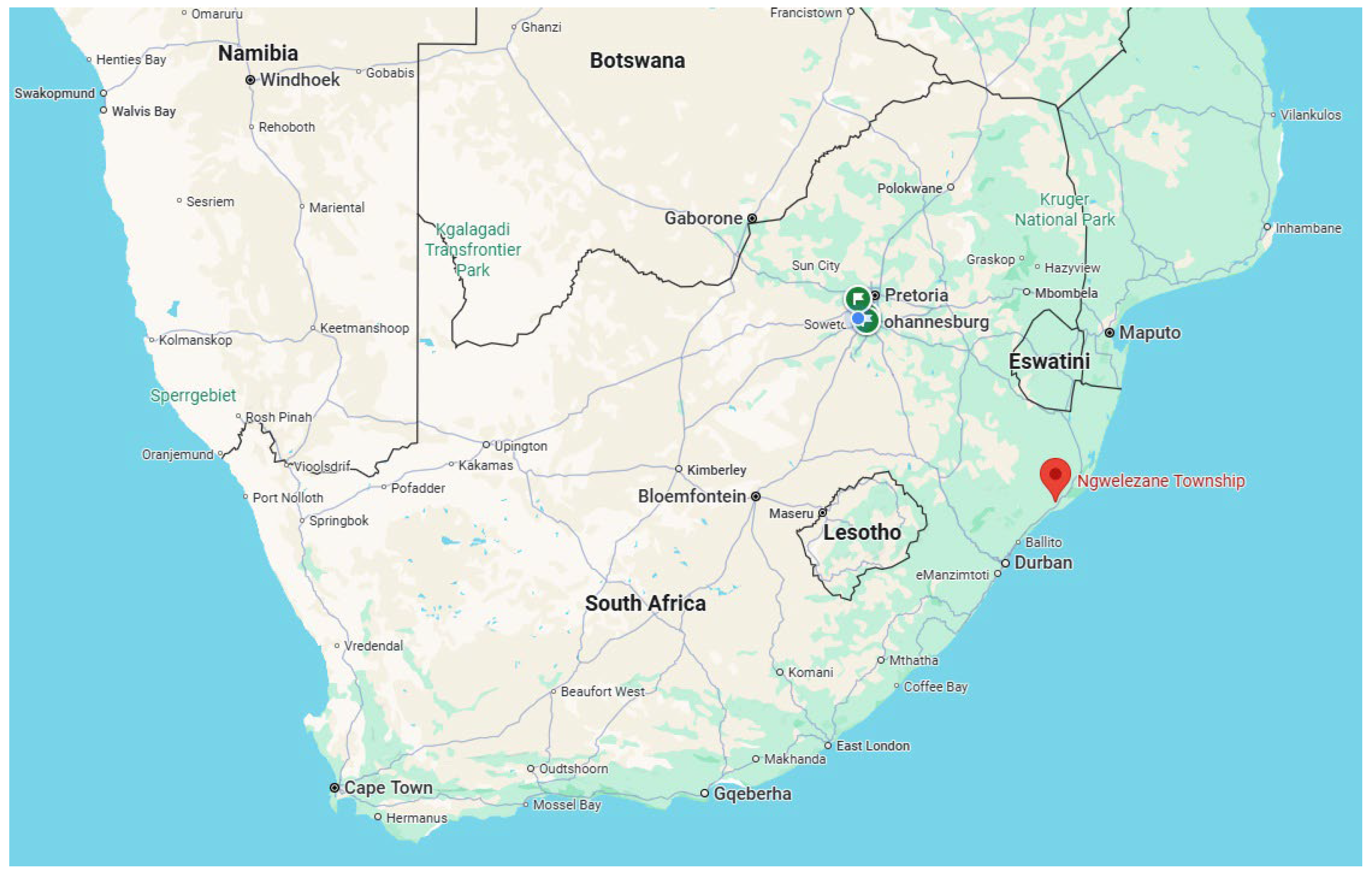
This study was carried out in Ngwelezana Township, which is situated on the outskirts of Empangeni Town under uMhlathuze Local Municipality in northern KwaZulu-Natal (
Figure 1). It is located on the north-east coast of the province of KwaZulu-Natal, about 180 km north-east of Durban. It consists of 7 wards, including the Madlebe Traditional Council, and covers 590 hectares (
UMhlathuze Integrated Development Plan Review 2019/2020). Ngwelezana has an estimated total population of 18,450 and an estimated number of 5474 households as per the community survey of 2016. uMhlathuze Local Municipality (KZ282) is situated under King Cetshwayo District Municipality. Of the total of 110,503 households, about 68% (74,856) had access to a basic solid waste removal service in 2018 in the entire uMhlathuze Local Municipality. In total, 32,578 low-income (indigent) households receive free basic service delivery, including 275 skips (i.e., large, open-topped metal containers used for centralized bulk waste collection) that are placed in rural communities and schools (UMhlathuze Integrated Development Plan Review, KwaZulu-Natal, KZN, South Africa, 2019–2020).
2.2. Research Design and Methods
Given the nature of this study, a qualitative research method was employed as it is considered the most suitable method to examine factors contributing to illegal waste dumping at Ngwelezana Township. To effectively understand and obtain relevant information about causes and factors contributing to illegal dumping in Ngwelezana Township, this study employed semi-structured interviews with key informants (refer to
Table 1 for key informants interviewed). The use of semi-structured interviews allowed for the understanding of different perspectives on the subject. The semi-structured interview employed closed- and open-ended questions. Personal communication with informants was employed, meaning that the interviews were held in person and were face to face. The semi-structured interviews were conducted at a place convenient for informants to ensure a naturalistic environment and lasted for an average of thirty minutes–one hour. All sessions were digitally audio-recorded with participants’ consent and transcribed verbatim to ensure an ‘authentic representation’ of their subjective experiences. This interview technique is an appropriate method for qualitative research because it probes informative answers, and respondents are free to express their views (
Kakilla 2021). About 98% of interviews were conducted in English. The remaining 2% were conducted in the Zulu language and translated into English during data transcription.
Purposive sampling was employed to identify key participants based on a set of predefined selection criteria designed to ensure data reliability and depth. Informants were selected based on three primary components: Functional Position, involving their direct role in waste management policy or operational oversight within uMhlathuze Local Municipality; Lived Experience and Local Knowledge, specifically targeting long-term residents and business owners in Ngwelezana with direct proximity to dumping hotspots; and Community Influence, including faith-based and educational leaders.
To ensure balanced and objective findings, the sampling strategy purposefully sought to avoid domination by any single stakeholder group, such as municipal administration or business interests. By recruiting a diverse cross-section of participants ranging from high-level officials and frontline waste workers to community members and informal recyclers, this study facilitated the triangulation of perspectives. This approach allowed this research to contrast ‘top-down’ governance mandates with ‘bottom-up’ community realities, thereby mitigating bias and ensuring that the findings reflect the multifaceted nature of the illegal dumping challenge. Additionally, snowball sampling was used to identify further informants from relevant government institutions and the community to complement the initial purposive sample.
The decision to include non-domestic waste streams such as rubble, garden waste, and bulk items in this study is justified by the heterogeneous nature of illegal dumping in Ngwelezana. Preliminary field observations and participant accounts revealed that these materials are often the primary drivers of dumping because they are not accommodated by the standard weekly wheelie bin service (i.e., mobile, 240-litre plastic waste containers for household curbside collection). Furthermore, small-scale business waste is included because many commercial enterprises in townships are integrated into residential wards and rely on the same communal infrastructure, such as skips, as households (
Maphumulo et al. 2023). Including these streams allows for a more accurate assessment of the ‘governance gaps’ that lead to informal disposal practices (
Haywood et al. 2021).
2.3. Data Analysis
Qualitative data for this study were analyzed using a hybrid approach to content analysis, which integrated deductive, theory-driven coding with inductive, data-driven theme development. To ensure systematic analysis, a formal codebook was developed. Transcripts were coded manually, and the codebook was refined through multiple rounds of ‘constant comparison’ until thematic saturation was achieved. Content analysis was selected due to its flexibility and suitability for analyzing qualitative data through inductive and abductive reasoning, allowing meanings to be derived directly from participants’ accounts (
Leedy and Ormrod 2014;
Creswell 2014). Interview recordings were stored as separate electronic files and anonymized using unique codes to ensure confidentiality.
The findings are presented in descriptive, narrative form, which is the most used method for displaying qualitative data and allows for contextualized interpretation of participants’ experiences (
Creswell 2014). In addition to interviews and field observations, a systematic review of national and local policy documents was conducted to provide a regulatory framework for the study. The analyzed documents included the
National Environmental Management: Waste Act (Act 59 of 2008) (
2008), the uMhlathuze Integrated Waste Management Plan (IWMP), and the uMhlathuze Local Municipality Waste Management by-laws.
These documents were integrated into the analysis through methodological triangulation, where policy mandates were compared against participant accounts to identify ‘governance gaps.’ For example, while the uMhlathuze IWMP outlines a formal mandate for equitable skip distribution and weekly collection, this was contrasted with interview data from Respondent S, who highlighted the ‘inequity and unfair distribution’ of skips in specific wards. This comparison allowed this study to demonstrate where formal policy fails to translate into operational reality, thereby validating the findings regarding ‘constrained compliance’ among township residents.
2.4. Ethics
The Health Research Ethics Committee (HREC) of the University of South Africa granted ethical clearance for this study. Participants were informed of voluntary participation and their right to withdraw from the interviews at any time, provided they wished to do so. Participants were assured that all their views and suggestions would be used only for research and not for commercial purposes. Acknowledging researcher positionality is critical in qualitative research within South African townships to ensure rigour and reflexivity. The researchers in this study are academic outsiders, which allowed for a ‘fresh eyes’ approach to observing systemic failures. To mitigate potential bias and power dynamics, this research employed the triangulation of interview data with field observations and document analysis.
3. Results
The findings reveal that illegal dumping in Ngwelezana Township is shaped by a combination of governance failures, infrastructural limitations, affordability constraints, weak enforcement, and limited municipal–community communication. While waste collection services are provided by uMhlathuze Municipality, persistent capacity and coordination gaps constrain effective service delivery and compliance. Illegal dumping practices reflect not only deliberate non-compliance but also constrained household and business choices within a context of limited access to appropriate waste infrastructure and inconsistent enforcement. The following themes related to municipal enforcement gaps and non-compliance are presented: cost and distance to landfill sites; the lack of law enforcement; the spread of green belts and open spaces; overflowing communal skips and excess waste generation; and inadequate municipal resources.
3.1. Municipal Enforcement Gaps and Household Non-Compliance
The lack of dedicated environmental enforcement capacity was identified as a critical systemic failure by 19 participants, including all interviewed municipal officials. These officials consistently noted that the absence of dedicated officers necessitates an ad hoc reliance on traffic cops for waste-related monitoring. uMhlathuze Municipality is legally mandated to ensure compliance with waste legislation within its jurisdiction, including Ngwelezana Township. The
National Environmental Management: Waste Act (Act 59 of 2008) (
2008) emphasizes the importance of effective compliance monitoring and enforcement to achieve waste management objectives. However, the findings reveal that the municipality lacks dedicated environmental law enforcement officers, significantly constraining its ability to monitor and enforce compliance with waste regulations. Non-compliance was particularly evident following the phasing out of refuse bags in 2006 and the introduction of wheelie bins. Despite this policy change, some households continue to use refuse bags, which are no longer collected by the municipality, resulting in their disposal in open spaces. As Respondent E (personal communication) explained, “Since the municipality eliminates refuse bags during waste collection, probably they are eventually being dumped illegally in the open spaces.” Respondent E further highlighted that poor household planning around activities such as gardening and home renovations exacerbates illegal dumping, as residents often fail to arrange municipal skips in advance:
“The municipal waste skip must be organised and be at the gate before such work commences. However, most people in Ngwelezana do not comply… Ultimately, such waste is loaded in a van and in garbage bags and dumped in open spaces.”
The findings indicate that non-compliance is frequently driven by cost avoidance rather than a lack of awareness. Although municipal by-laws require residents to request and pay for skips for bulk waste, many households deliberately bypass these procedures. Respondent E noted that, even for small projects, residents prefer informal disposal methods instead of transporting waste to designated landfill sites. Similar patterns of non-compliance were reported among businesses. Respondent U (personal communication) indicated that businesses are required to notify the municipality when skips are nearing capacity to arrange special collections. However, in practice, “Owners wait for the normal collection schedule or burn their waste when the skips are full.” Overall, the results suggest that weak enforcement, limited monitoring capacity, and the absence of consistent penalties have normalized non-compliance with waste regulations, reinforcing illegal dumping practices within Ngwelezana Township.
3.2. Costs and Distance to the Landfill Site
Cost-related barriers to formal disposal were frequently raised, particularly by mainly community members (i.e., 14). The Empangeni landfill, located approximately 10 km from Ngwelezana Township, poses financial and logistical challenges for many residents. Transport costs alone were high, excluding disposal fees at the landfill (Respondents Y and BB, personal communication). Unemployment and lack of private transport further limit households’ ability to dispose of excess waste properly (Respondent R, personal communication). Respondent R emphasized the need for a local site:
“There is a need for the municipality to build a dump site within the township for disposal of excess waste that cannot be collected by the municipality. The normal distance to skips is more than four kilometres.”
Confusion and lack of awareness about disposal charges exacerbate non-compliance. Some residents perceive waste services as expensive without knowing the exact costs (Respondent E, personal communication), highlighting a need for municipal awareness campaigns (Respondent X, personal communication). Businesses also contribute to illegal dumping by using Ngwelezana skips to avoid landfill fees. Respondent E (personal communication) noted the following:
“Some business owners drive from Empangeni Town to dump their waste in the communal skips in Ngwelezana Township as they do not want to pay for the landfill site… Casual garden landscapers often leave large stones and trees that cannot fit in wheelie bins, leading to further dumping.”
High costs of wheelie bins present an additional barrier. Residents must pay approximately R900 per bin, with limited alternatives for payment (Respondent S, personal communication). Respondent U (personal communication) highlighted the cumulative burden of wheelie bin charges and municipal rates, noting affordability constraints even among willing households. Overall, these findings indicate that both cost and distance, combined with limited awareness and confusing municipal procedures, drive illegal dumping in Ngwelezana Township.
3.3. Lack of Law Enforcement
Municipalities are responsible for enforcing waste by-laws and setting service standards in line with Chapter 7 of the
National Environmental Management: Act (Act 107 of 1998) (
1998). Enforcement requires dedicated, trained officials within a municipal environmental unit. However, uMhlathuze Municipality lacks such capacity. Respondent E (personal communication) noted the following:
“Although the law provides that it is a responsibility of the municipality to enforce environmental laws, uMhlathuze Municipality does not have law enforcement officers. Instead, they use traffic cops when necessary. Previously, nuisance inspectors1enforced environmental management issues, including waste, which is no longer the case. Waste by-laws exist but are poorly implemented due to inadequate human resources. This negatively impacts waste management operations, and having unenforceable regulations is ineffective. There is a need to strengthen law enforcement to prevent illegal dumping.”
The absence of dedicated officers is perceived to create a compliance gap, allowing offenders to exploit the situation. Signage at illegal dumping hotspots is limited and written only in English, reducing effectiveness (Respondent FF, personal communication). Respondent DD (personal communication) added that signs are poorly distributed, allowing continued backyard dumping. Even when offenders are caught, enforcement is weak. The municipality claims that culprits receive a compliance notice and a fine if non-compliant, but the study findings suggest the inconsistent implementation and misalignment of internal communication. Although government indicates plans to increase fines and reinforce by-laws, but contradictory information among municipal sections may confuse the public (
Ncalane 2021). These findings highlight an urgent need for coordinated enforcement and clear communication within the municipality to effectively deter illegal dumping.
3.4. Spread of Green Belts and Open Spaces
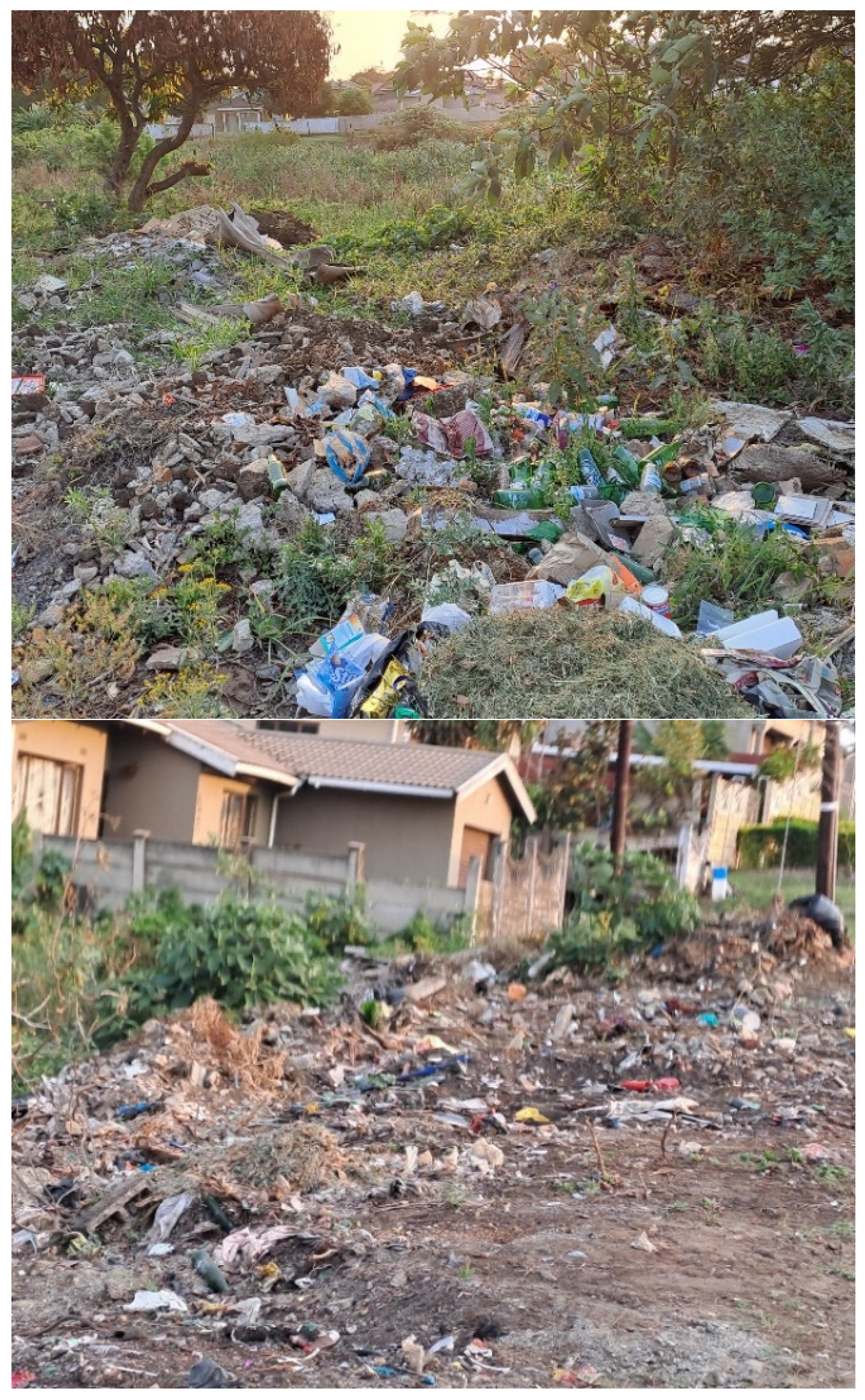
The study findings suggests that open spaces are scattered in Ngwelezana Township, and they are accessible to the public, which makes them more vulnerable to illegal dumping. Respondent F (personal communication) claimed that almost every corner house in Ngwelezana Township has a green belt adjacent to it.
Figure 2 shows one of the illegal dumps in the green belt just next to households. These pictures are important to illustrate the scale of the problem. Respondent L (personal communication) noted that open spaces are the most targeted spots for illegal dumping, including pedestrian routes that mostly cut across them. It was observed during this study that people can even dump waste in front of schools, provided there is an open space. However, few cars were seen dumping black refuse bags full of waste in the illegal dump hotspot during this research. Respondent N (personal communication) was concerned about the number of open spaces in the township and the way in which they attract illegal dumping. A boy pushing a wheelbarrow full of waste to the illegal dumpsite in the open space was observed in broad daylight during this research. When asked why he is not dumping in the wheelie bin at home, he simply said, “a bin is full”. Informant U (personal communication) shared the same view with respondent N and pleaded with the municipality to put more effort into protecting open spaces:
“The municipality must fence off these green belts and use them for constructive purposes such as parks, etc. Most of these spaces are overgrown and not maintained, which makes it easier for the perpetrators to dump their rubbish without being noticed. If these open spaces are not taken care of, the illegal dumping problem will exacerbate.”
Respondent M (personal communication) emphasized that if green belts are still open to the public, illegal dumping challenges will persist and concurred that they must be used for something valuable to the community. Mountains of solid waste disposed of in vacant spaces are growing daily and are sometimes burnt in open spaces.
3.5. Overflowing Communal Skips and Excess Waste Generation
The issue of overflowing skips was a cross-cutting theme mentioned by 17 participants across all wards. The study results showed that although the municipality provides communal skips and collects waste every week in Ngwelezana Township, some households and businesses generate excess waste that does not fit in the skip or wheelie bins provided by the municipality. A few schools revealed that they normally store excess waste in refuse bags and bury or burn it. Data from school interviews and field observations suggest that this uncollected excess waste is subsequently diverted to the nearest communal skip or adjacent open spaces, where it contributes to chronic overcapacity.
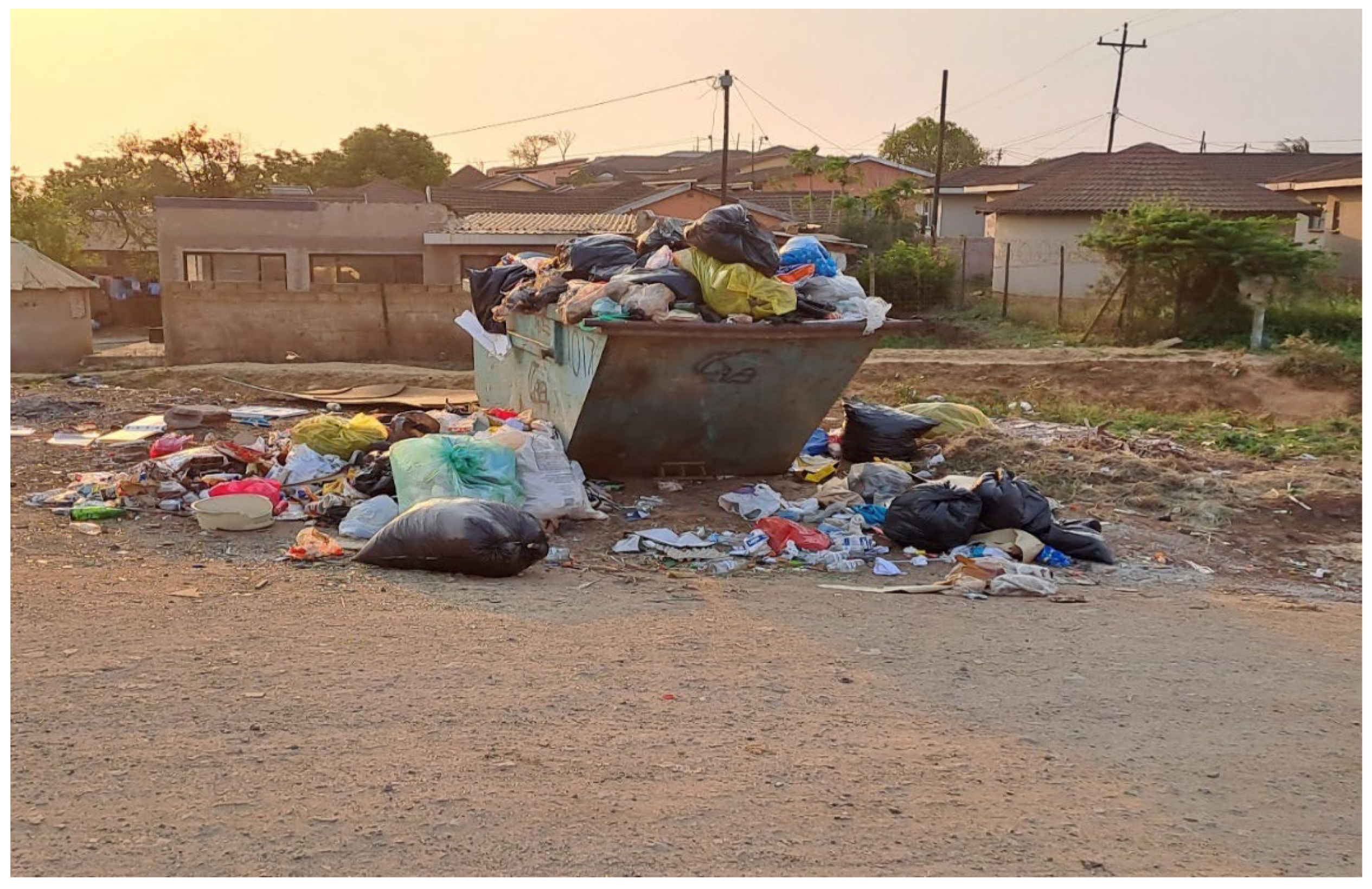
Hence, the skips that are meant for a tribal society are always full. Respondent V (personal communication) noted that waste is also dumped on the ground around the skips since there is no space to dispose of more waste in the skip, as shown in
Figure 3. This figure shows the severity of the problem of overflowing skips as one of many overflowing skips around the township.
Respondent G (personal communication) argued that even though the municipality is trying to empty the skips daily, they become full quickly as waste such as rubble and garden waste is also dumped into the skips sometimes. Respondent L (personal communication) stated that no one knows what these skips are for, as the municipality just places them without communicating with the residents. Thus, the community thinks they can utilize them to dispose of excess waste. Respondent M (personal communication, 7 October 2022) noted that there is a lack of proper public consultation by the municipality regarding the purpose of waste skips placed in Ngwelezana Township. Respondent S (personal communication) agreed that the issue of overflowing skips is a serious challenge in Ngwelezana:
“I think the main contributing factor to the overflowing communal skips is the inequity and unfair distribution of these skips in the township. It is unclear to us as residents as to what criteria are used to provide and place these skips because some wards do not have them at all. As a result, people are expected to travel or walk long distances to dispose of waste in some wards. While some residents are closer to them, the reality is that most households for whom these skips are intended find it difficult to access them. Apparently, due to the limited number and capacity, they become full within a very short period. The way these receptacles are serviced is also unacceptable, as the municipality sometimes takes a long time to empty them after they are full. Maybe the person who is supposed to take care of them does not report in time.”
Overflowing skips were also observed during this study, whereby waste was scattered all over and around the skip. This proved that one skip is not enough per ward. Respondent Q (personal communication) indicated that it would be better if at least two communal skips could be provided per site as a strategy to increase capacity. According to Domestic Waste Collection Standards, “Communal collection points should be clearly demarcated areas with appropriate receptacles where household waste can be deposited for collection by the service provider. The receptacles should also be covered to prevent wind-blown litter and user-friendly to allow even children to safely deposit waste into the receptacles, and the municipality must ensure that communal collection points are always kept tidy”. Respondent Z (personal communication) argued that households that generate more waste must request additional bins from the municipality and stop dumping in the communal skips that are not meant for them. Respondent L (personal communication) claimed that the culprits behind the overflowing skips are businesses operating in the township, as they do not have enough bins to accommodate the waste they generate. As a result, they dump their excess waste in the communal receptacles. It was clear from the findings that communal skips are being provided without a needs analysis being done in terms of their capacity, which is one of the aspects the municipality should improve.
3.6. Inadequate Municipal Resources
This study revealed that uMhlathuze Municipality faces significant resource constraints, particularly a shortage of waste collection vehicles, which disrupts operations in Ngwelezana Township. Vehicle breakdowns are frequent, and repairs are often delayed. Respondent I (personal communication) confirmed that there are no standby trucks to cover for breakdowns. Consequently, the municipality must borrow vehicles from other depots to maintain collection schedules, as explained by Respondent H (personal communication). Respondent E (personal communication) noted that the shortage of waste collection trucks contributes directly to illegal dumping in the township. Respondent R (personal communication) highlighted that delays can leave waste uncollected on streets for an entire day. Respondent I (personal communication) recommended the following:
“The municipality must consider buying multifunctional waste collection vehicles that can service both wheelie and skip bins to avoid delays. It is also important to acquire a Tractor-Loader-Backhoe (TLB) to remove waste dumped on the ground, as workers currently rely on manpower, which is time-consuming and hazardous. The same trucks used for collection also attend illegal dumping sites, further disrupting schedules. Sometimes, waste collection staff are idle in depots due to unavailable vehicles.”
These findings indicate that inadequate resources are a major factor driving illegal dumping. Respondent D (personal communication) emphasized the need for the municipality to prioritize waste management and invest more resources, while Respondent U (personal communication) raised concerns about slow response times for urgent waste-related issues. Proper maintenance plans for vehicles were also highlighted as essential by Respondent I (personal communication) to prevent service interruptions. Collectively, these insights suggest that the reallocation of existing resources and strategic investment in vehicles and equipment are critical interim and long-term solutions to improve waste collection in Ngwelezana Township.
Overall, the findings demonstrate that illegal dumping in Ngwelezana Township is driven by a combination of governance failures, affordability constraints, limited community awareness, infrastructural inadequacies, and weak enforcement, underscoring the need for integrated, preventative, and community-centred waste management interventions.
4. Discussion
This paper set out to move beyond behavioural explanations of illegal dumping by examining how governance capacity, infrastructure provision, affordability, and spatial planning interact to shape waste disposal practices in Ngwelezana Township. The findings confirm that illegal dumping is not primarily the result of ignorance or environmental apathy but rather a structurally embedded response to constrained service accessibility, weak enforcement, and misaligned waste management systems. In this respect, this study reinforces a growing body of scholarship that frames illegal dumping as a governance and service delivery failure rather than an individual moral shortcoming (
Polasi et al. 2020;
Brandt 2017;
Godfrey and Oelofse 2017).
Consistent with prior research in South African townships such as Diepsloot, Orange Farm, and Nyanga (
Molefe 2016;
Engel 2021), the findings demonstrate that weak enforcement capacity significantly undermines compliance with waste by-laws in Ngwelezana. The absence of dedicated environmental law enforcement officers, reliance on traffic officers, and inconsistent follow-through on penalties have normalized non-compliance and reduced the deterrent effect of existing legislation. This aligns with
Polasi (
2018) and
Selahle (
2020), who argue that by-laws without enforcement capacity function symbolically rather than operationally. However, this paper extends previous work by showing that enforcement deficits do not operate in isolation but are compounded by internal municipal coordination failures and contradictory communication between municipal departments. While earlier studies often attribute non-compliance to a lack of enforcement presence alone, the Ngwelezana case illustrates how fragmented governance and inconsistent messaging further erode regulatory credibility. This finding adds empirical depth to calls for integrated municipal governance by demonstrating how institutional incoherence actively shapes everyday waste disposal practices.
A key contribution of this study lies in its detailed examination of affordability and cost structures as drivers of illegal dumping. While previous South African studies acknowledge poverty and unemployment as contextual factors (
S. Dlamini 2016;
Grobler et al. 2022), this research provides fine-grained empirical evidence showing how specific cost burdens, including wheelie bin purchase costs, landfill gate fees, and transport expenses, directly influence disposal behaviour. The findings reveal that cost avoidance is often a rational response to financial constraints rather than deliberate environmental harm.
This challenges dominant policy assumptions that non-compliance primarily reflects irresponsibility or poor planning. Instead, illegal dumping emerges as a form of “constrained choice” within a system that formally mandates compliance while offering limited affordable pathways to do so. In this respect, this study builds on
Brandt (
2017) and
Polasi et al. (
2020) but advances the literature by explicitly linking cost structures to everyday household and small business decision-making at the township scale, an area that remains underexplored in South African waste governance research. Communal skips are widely promoted as a cost-effective waste management solution in low-income and peri-urban areas (
Polasi 2018). However, the Ngwelezana findings demonstrate that poorly planned skip systems can inadvertently reproduce and intensify illegal dumping. Overflowing skips, uneven spatial distribution, inadequate capacity, and delayed servicing create conditions where dumping around skips becomes both visible and socially normalized. While earlier studies have documented problems associated with communal collection points (
Wright et al. 2018;
Grangxabe et al. 2023), this study extends existing work by highlighting the absence of meaningful public consultation and needs-based planning in skip placement. Participants’ uncertainty about the purpose and intended users of skips underscores how infrastructure provision without community engagement undermines service effectiveness. This finding supports international evidence that technical solutions divorced from social context are unlikely to achieve compliance (
Ferronato and Torretta 2019) while adding township-specific empirical detail.
The proliferation of illegal dumping in green belts and open spaces in Ngwelezana mirrors patterns observed in other South African and Global South cities, where marginal, poorly monitored spaces become dumping hotspots (
Wright et al. 2018). However, this study contributes a more nuanced understanding of how spatial governance failures intersect with infrastructure and enforcement gaps. The lack of fencing, maintenance, and productive use of green belts effectively converts these spaces into informal waste repositories, reinforcing cycles of dumping and environmental degradation. Importantly, the findings suggest that illegal dumping is not merely attracted to open space but is actively enabled by the municipal neglect of these areas. This extends previous work by reframing green belts not as passive dumping grounds but as contested governance spaces where the absence of state presence signals permissibility. The recommendation to repurpose open spaces for community use aligns with international best practice on preventative urban environmental management (
UN-Habitat 2018) while grounding such strategies in township realities.
Much of the existing literature on illegal dumping in South Africa emphasizes awareness campaigns, environmental education, and behavioural change initiatives (
Rasmenia and Madyira 2019). While the present study does not dismiss the importance of awareness, it demonstrates that knowledge alone is insufficient where structural barriers persist. Participants were generally aware that illegal dumping is unlawful and environmentally harmful, and continued dumping reflected limited alternatives rather than ignorance. This paper, therefore, departs from awareness-centric narratives by empirically demonstrating that sustainable compliance requires alignment between enforcement capacity, infrastructure planning, affordability, and communication. In doing so, it contributes to emerging scholarship advocating for preventative, community-centred waste governance approaches that recognize residents as co-producers of environmental outcomes rather than targets of discipline (
Selahle 2020). Overall, this paper makes three key contributions to existing scholarship on illegal dumping: It provides one of the few in-depth qualitative analyses of illegal dumping in a formally serviced South African township, highlighting how governance failures persist despite formal inclusion in municipal systems. It advances the concept of illegal dumping as a product of constrained compliance, shaped by cost structures, infrastructure misalignment, and fragmented governance rather than individual misconduct. It challenges reactive clean-up and awareness-led interventions, offering evidence-based support for integrated, preventative, and community-centred waste governance strategies. By foregrounding the interplay between governance capacity, infrastructure, affordability, and spatial planning, this study extends township-level waste research and contributes to broader debates on urban environmental governance in South Africa and comparable Global South contexts.
Given the ‘fragmented governance’ and ‘inconsistent messaging’ identified in this study, it is critical to move beyond a flat list of recommendations toward a prioritized framework for action. The primary hurdle to regulatory credibility in Ngwelezana is the gap between municipal mandates and operational capacity. Therefore, the highest priority must be assigned to stabilizing the waste collection infrastructure and establishing a dedicated enforcement presence. Without these foundational elements, secondary interventions such as community awareness or spatial repurposing are likely to be undermined by the continued visibility of uncollected waste and the absence of a credible deterrent for illegal dumping.
The ‘institutional incoherence’ identified in uMhlathuze Municipality reflects a broader ‘governance disconnect’ observed in other developing urban centres, such as Addis Ababa and Faisalabad, where formal waste mandates often clash with local operational realities (
da Cruz et al. 2026). Research into the BRICS countries further highlights that the transition from informal to formal waste management is often hindered by a failure to account for informal institutions and the survivalist strategies of marginalized communities (
da Silva et al. 2019). By framing the Ngwelezana case within this global context, it becomes clear that ‘constrained compliance’ is a predictable outcome of neoliberal approaches to public service privatization that prioritize high-income neighbourhoods while leaving informal settlements underserviced (
Gutberlet 2023;
Sasahara et al. 2024).