Article

Income Convergence in Europe: The Role of Institutions and Structural Factors

Faculty of Social Sciences, University of Business Academy in Novi Sad, 11000 Belgrade, Serbia
*
Author to whom correspondence should be addressed.
Soc. Sci. 2026, 15(3), 180; https://doi.org/10.3390/socsci15030180

Submission received: 9 February 2026 / Revised: 3 March 2026 / Accepted: 6 March 2026 / Published: 11 March 2026
(This article belongs to the Section Social Economics)

Abstract

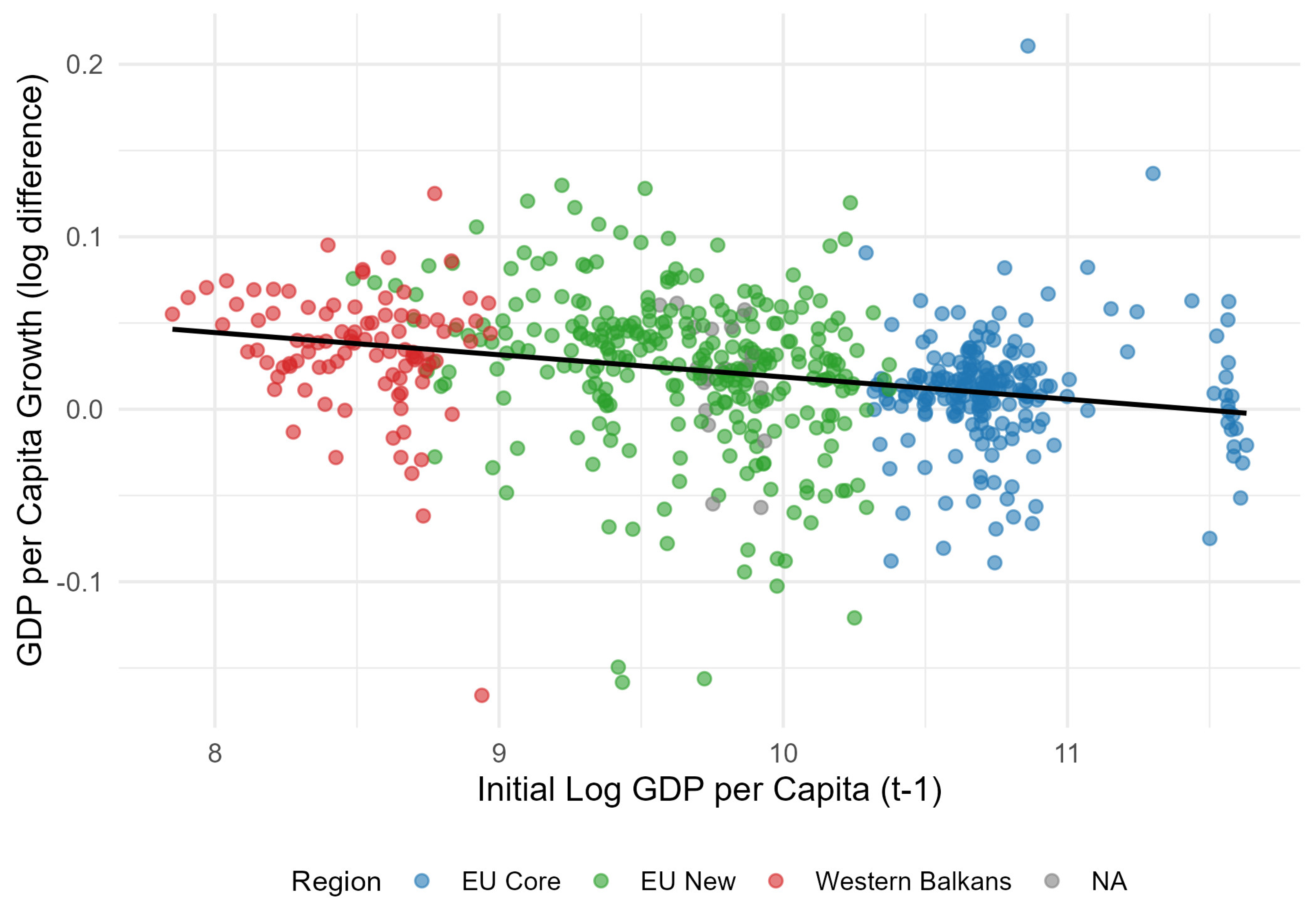
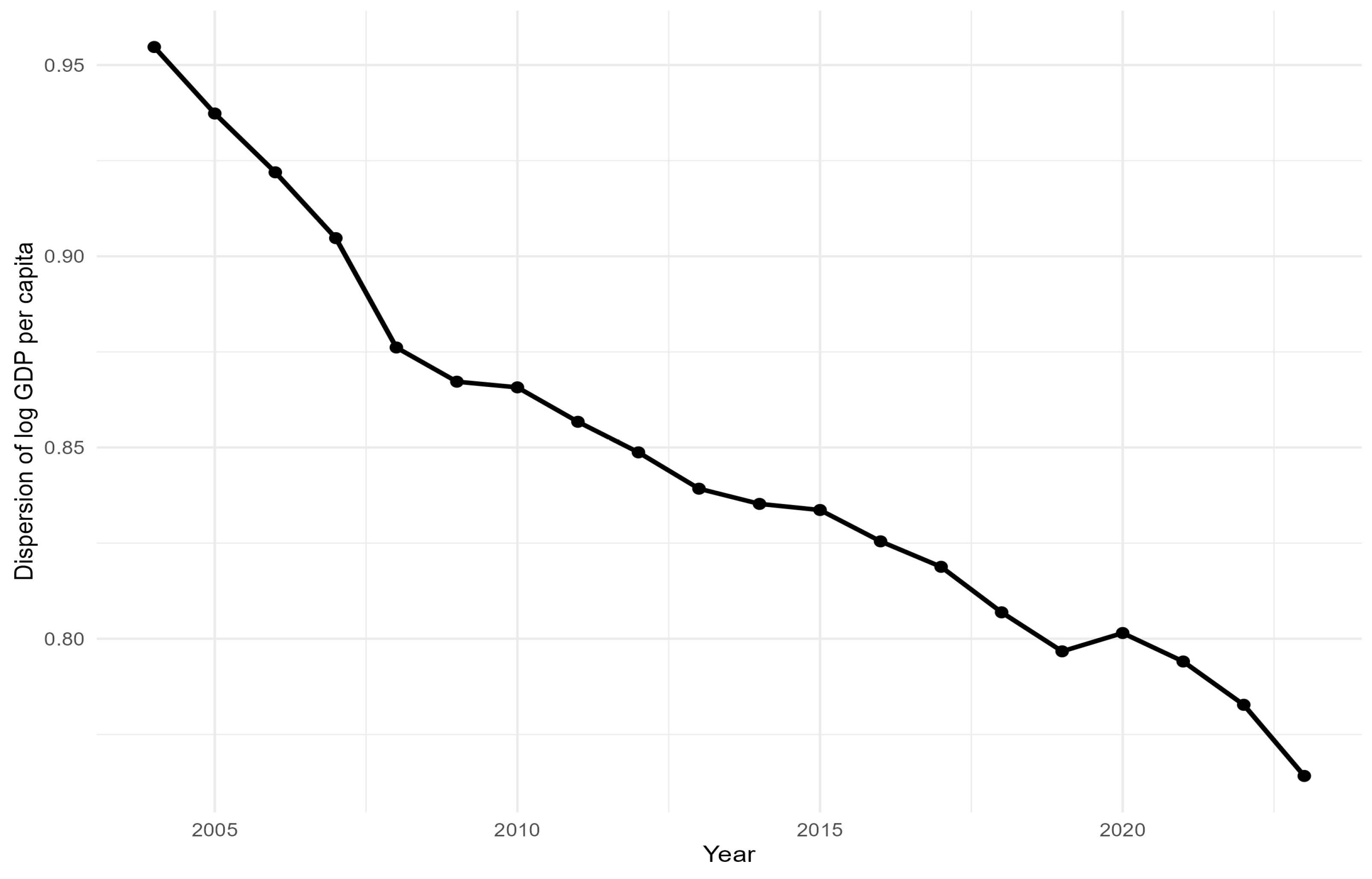
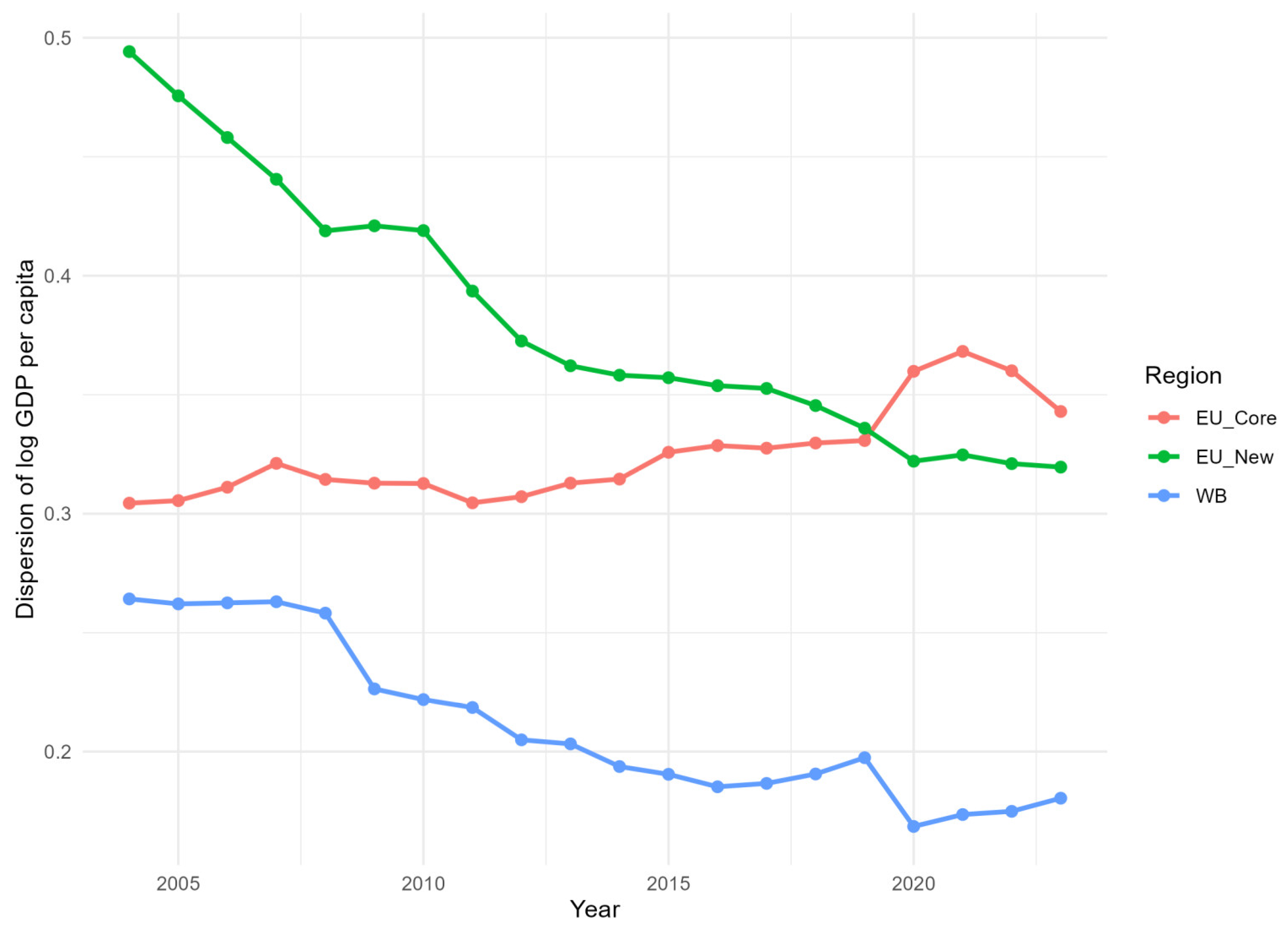
This paper examines income convergence in Europe by jointly analyzing European Union member states and Western Balkan economies over the period 2004–2023. While classical growth theory predicts that poorer economies should grow faster than richer ones, empirical evidence for Europe remains mixed, particularly when institutional and structural heterogeneity is taken into account. Using panel data techniques, the study tests for absolute and conditional β-convergence and complements this analysis with an assessment of σ-convergence. The results provide strong evidence of absolute income convergence across the sample, indicating that economies with lower initial income levels tend to grow faster. Conditional convergence is also confirmed, although the direct effect of institutional quality weakens once structural factors such as foreign direct investment and human capital are included, suggesting that institutions operate primarily through indirect channels. An interaction analysis shows no systematic evidence that institutional quality alters the speed of convergence. Finally, σ-convergence analysis reveals pronounced regional heterogeneity, with strong convergence among new EU member states, stable but low dispersion within the Western Balkans, and more modest convergence patterns in the EU core. Overall, the findings highlight that European convergence remains uneven and highly conditional on institutional and structural characteristics.
Keywords: income convergence; beta-convergence; sigma-convergence; institutional quality; economic growth; European Union; Western Balkans; panel data income convergence; beta-convergence; sigma-convergence; institutional quality; economic growth; European Union; Western Balkans; panel data