Skip to Content
Social SciencesSocial Sciences
  • Review
  • Open Access

23 January 2026

Rape Victim–Survivors’ Experiences of Social Relationships and Supports: Implications of Sexism and Racism


School of Counseling, Psychotherapy and Spirituality, Saint Paul University, Ottawa, ON K1S 1C4, Canada

Abstract

This article discusses the implications of gender- and race-based discrimination on the social relationships and trauma recovery process of victim–survivors of sexual violence. Challenges faced by victim–survivors in reflecting on their trauma experience and seeking social and professional support are discussed. Marginalizing social and sexual norms, implications of gender- and race-based oppression, and context-based factors in trauma recovery work are also discussed. The analysis shared in this article is based on a literature review, supported by a case discussion. Using key words like sexual trauma/sexual violence/rape, sexism, racism, racial trauma, and social marginalization, the author conducted a search and review of the available scientific literature using two databases: PsycINFO and Google Scholar. The results from the literature review and analysis suggest that fostering healthy relational experiences is key to safely and effectively supporting sexual trauma recovery for racialized women victim–survivors. Based on the analysis of the existing literature and a clinical case, this article seeks to shed light on multilayered relational challenges facing racialized women victim–survivors of sexual violence. A relational–systemic approach to clinical work with the studied population is also discussed and recommended.

1. Introduction

The experience of sexual trauma has long been studied and identified as the leading traumatic experience resulting in serious psychological impacts, such as suffering from PTSD (Norris 1992) and relational challenges (Maisha et al. 2024). It is among the most deleterious traumatic experiences with a high frequency (Ogle et al. 2013). Racial and gendered attacks are arguably universal experiences among racialized women and girls, with their consequences being of grave impact on the social functioning of the victim–survivors1 (Gobin and Gómez 2022). This creates a necessity to approach the sexual trauma of individuals also faced with racial and gendered traumatic experiences from the lens of complex trauma, given their exposure to multiple forms of trauma and the often-repeated occurrence of all these traumas (Cénat 2022).
The literature review and discussion in this article provide insightful therapeutic considerations in working with racialized women and girl victim–survivors of sexual assaults. Race- and gender-specific challenges facing sexual trauma victim–survivors are discussed, as the author hopes to inform best practices in therapeutic work and relational support as well as victim–survivors’ self-help efforts. This article contributes knowledge towards navigating recovery challenges stemming from the sociocultural and racial–gendered marginalization of racialized women victim–survivors. This recognizes the necessity of approaching mental health in general, and complex issues such as sexual trauma in particular, from a culturally sensitive framework in order to adapt and respond to the needs of an increasingly diverse society (Roberts et al. 2010) with a complex history of racial and gendered trauma that must be assessed and understood in order to effectively assess and treat sexual trauma with racialized families (Fortuna et al. 2022). This article supports cultural sensitivity in the care for racialized women victim–survivors of sexual abuse, with a focus on the impacts of rape on relationships. The author discusses the relevance of working from a relationship-based approach, focusing on the victim–survivors’ internalized images of the self and others, in marginalizing sociocultural environments that negatively impact the sexual trauma recovery process (Pitino 2021; Maisha et al. 2017).
Based on the existing literature, key concepts such as racism, racial trauma, sexism, and sexual trauma are defined in an attempt to illustrate the intersectionality of sexual, gendered, and racial traumas and to contribute to a simplified understanding of these complex experiences. Also, a discussion of the ReSTO2 (Relationship to Self, the Therapist, and Others), an emerging therapeutic model first published in Maisha (2021), provides a conceptualization framework for the analysis of the theoretical knowledge from the reviewed sources and the case study.

2. Definition of Key Concepts

2.1. Racism and Racial Trauma

Racism is a chronic stressor (Petrak and Hedge 2002; Clark et al. 1999). It comprises words and actions with negative impacts on the targeted person member of a racial minority. It is facilitated by dominant cultural norms, creating a social climate of racial oppression and leading to racial trauma. Comas-Díaz (2016) considers racial trauma as a societal trauma resulting from “experiencing or witnessing real or perceived racial discrimination that involves danger, threats of harm and injury, humiliation, or shaming”. Cénat (2022) provides a similar definition, describing racial trauma as referring to “experiences related to threats, prejudices, harm, shame, humiliation and guilt” stemming from experiences of racial discrimination. Racial trauma can also be the result of intracultural victimization, because of the internalization of racial oppression among fellow cultural members who perpetrate racial attacks or of the revictimization of survivors through attitudes and behaviors enforcing intracultural loyalty, such as that expected of black women asked to protect their aggressor black men against feared historic institutional racism (e.g., police brutality; Gómez 2015). Cultural loyalty refers to members’ behaviors that foster the group’s welfare (Murray et al. 2024); it means protecting and defending the group’s interest against any external involvement that could hurt group members or destabilize in-group cohesion. For example, the history of racial trauma endured by black communities has contributed to silencing in-group victim–survivors as a way to uphold cultural loyalty against feared systemic-racism-fueled brutality.

2.2. Sexism

Sexism refers to hostile attitudes and behaviors against women. It can also refer to non-hostile attitudes and behaviors, such as encouraging and valuing women only when they adhere to gendered expectations, therefore having “subjectively positive feelings toward women that often go hand in hand with sexist antipathy” (Fiske 2018; Cromer and Freyd 2007). Glick and Fiske (1996) propose an ambivalent model of sexism comprising hostile and benevolent sexism. The first is based on man’s power and the reduction of women to a lower status, while the second refers to restricted, stereotyped roles for women. For Swim and Hyers (2009), sexism refers to “individuals’ attitudes, beliefs, and behaviors, and organizational, institutional, and cultural practices that reflect negative evaluations of individuals based on their gender”. Such attitudes, beliefs, behaviors, and practices promote gender-based violence and cause gender-based traumatic experiences.

2.3. Sexual Trauma

Sexual trauma derives from sexual violence, which we will refer to as the commission of undesired sexual acts against a victim. As mentioned in the introduction, sexual violence is one of a traumatic experience with a high frequency and dire consequences (e.g., psychological, relational, and physical). Regardless of race and gender, sexual violence has grave consequences for the victim’s holistic well-being (Maisha 2016; Petrak and Hedge 2002). However, in this article, it is argued that sexual violence is experienced differently when mixed with the complexity of intersectional identities feeding gendered and racial oppressions.
The intersectional and complex trauma from sexual, sexist, and racial attacks creates a barrage of challenges for victims’ individual and relational well-being. Racialized women suffer sexual assaults at a higher rate than white women but report the assaults less (Slatton and Richard 2020). Furthermore, oppressive sexist and racist attitudes and practices are often experienced in silence despite their complex traumatic impact (Cénat 2022). Therefore, mental health professionals are encouraged to assess for gendered and racial traumatic experiences to better support racialized women victim–survivors of sexual assault.

3. Methodology

This review sought to answer the following question: what are the relational challenges faced by racialized women victim–survivors of rape, and how do these impact their recovery? The main source search engines for this article were the PsycINFO database and Google Scholar. Unlimited access to the University of Ottawa’s library database allowed for the identification and selection of a range of primary sources focusing on the relational experiences of racialized victim–survivor women in different parts of the world, mainly North America. As part of the Omni database accessible through the University of Ottawa’s library, PsycINFO is considered the main search engine used within the school of Psychotherapy Counselling and Spirituality and for this review article. The use of Google Scholar helped reach more sources that were not accessible via PsycINFO. Different combinations of the following keywords and their synonyms were used to find pertinent sources: rape; sexual trauma; sexism; racism; marginalization; relationships; recovery/healing; and victim–survivors.
A backward citation search was also helpful in finding cited sources that were not directly displayed through the search engines, while a forward citation search informed the source selection based on the popularity among newer publications. The backward and forward citation search, also referred to as citation chasing, “is a popular supplementary research method” both for primary and review research (Gusenbauer 2024; Haddaway et al. 2022).
Three inclusion criteria were considered during the literature search: the year of publication, a strong relevance to the studied topic as supported by use of similar key concepts in the title and throughout the text, and the scientific value of the article based on the number of times it has been previously cited. For the first criterion, articles published within the last 15 years make up most of the cited works (75%). Based on the second and third criteria, some articles (16, that is 25% of the 56 cited sources) published beyond the 15-year cutoff mark were still included due to their strong relevance to the topic or their popularity, being cited at least one hundred times in previous scientific work focusing on the topic discussed herein. Despite not using the same or similar keywords this literature review, two articles were cited in this methodology section; another was cited to support the definition of cultural loyalty and its impact on racialized women victim–survivors of rape. An overview of the cited sources is provided in Appendix A.
In addition to the literature review, a clinical case is presented and discussed with confidentiality measures taken to protect the client’s personal and identifying information. In my 15 years of experience as a psychotherapist working with victim–survivors of sexual trauma from a relational–systemic lens, Anna’s story was particularly illustrative of the challenges many face from revictimizing social reactions stemming from cultural beliefs. While the reviewed literature discusses both racism and sexism experiences often endured by racialized women victim–survivors, Anna’s case was selected for its strong illustration of culturally based revictimizing treatments to which women victim–survivors are often subjected in contexts where rape is viewed as a sexual taboo.
Finally, a discussion of the ReSTO (Relationship to Self, the Therapist, and Others), an emerging therapeutic model, adds a conceptualization framework for the analyzed theoretical and practical information. In short, this research looks at the available theoretical insights on the topic and applies them to a victim–survivor’s lived experience from a systemic lens, the ReSTO model.

4. Literature Review and Case Illustration

4.1. The Invisible Wounds of Rape Victim–Survivors Facing Gendered and Racial Traumas

Defining the concepts of sexual, sexist (gender-based), and racial traumas allows for a conceptualization of these experiences as threatening to the holistic well-being of the victim–survivors and, more importantly, to their ability to navigate social relationships. The scientific literature leaves no doubt about the traumatic nature of racism, sexism, and sexual assault. It also presents a host of barriers to disclosing these experiences and seeking adequate formal (e.g., therapeutic), institutional (e.g., legal and spiritual), and relational (e.g., family and social) help. Among these barriers are discriminatory policies, social stigma, and financial constraints, as well as obligations to uphold cultural loyalty (Gómez and Gobin 2020; Bryant-Davis et al. 2009; McNair and Neville 1996). Cultural minority women often face the dilemma of choosing between addressing feelings of betrayal of their cultural trust and observing expected cultural loyalty to safeguard in-group members from further traumatic racial experiences at the hands of the dominant culture and its biased policies against minority groups. Gómez (2015) presents cultural betrayal as the violation of intracultural trust by in-group members. Because of the cultural expectation of group loyalty, intra-group sexual assaults and gendered racial violence (e.g., inter-partner violence) often remain undisclosed, and victim–survivors remain unsupported, leading to serious invisible traumatic wounds with serious implications for the victim–survivors’ ability to form and maintain meaningful and safe relationships (Eshelman et al. 2024). As a result, victim–survivors tend to resort to unhealthy ways of coping, such as social withdrawal, substance abuse, denial, and self-blame (Lewis et al. 2013; Donovan and Williams 2002). Bryant-Davis et al. (2009) note the exacerbation of the mental health effects of sexual assault for indigenous women, who face multiple barriers such as racism and a fear of losing child custody. Similarly to black women, these barriers often prevent indigenous victim–survivors of sexual assaults from seeking and accessing necessary support, especially in the context of a professional relationship.
It can be argued that untreated (for a lack of disclosure or incomplete clinical assessment) sexual trauma creates challenging living conditions for victim–survivors. They might live under constant and heightened alertness as they face challenges trusting individuals from inside and outside their cultural group. Internalized blame and perceptions of defective images of the self and of others can keep the victim–survivors in isolation, feeling unworthy of or unsafe in relationships (Gómez and Gobin 2020; Maisha 2016). Untreated trauma raises the risks of internalized negative messages of self, which can also lead to self-devaluation, an assaulted sense of self, psychological homelessness (not feeling safe with the majority culture nor with their minority group), voicelessness, and emotional dysregulation. Moreover, untreated traumatic experiences expose future generations to intergenerational trauma (Hardy 2023).

4.2. Suffering in Silence for Fear of Negative Social Reaction

Sexual trauma is a relational trauma. Its occurrence infringes on interpersonal boundaries and ruptures relational trust as victim–survivors do not feel safe or protected. Adding to that, cultural norms tend to stigmatize and marginalize rape victim–survivors, especially when they are perceived as disloyal to their cultural group by exposing its members to the feared danger of oppressive norms conceived in the interest of the cultural majority group. Samuel (2024) notes the impact of racial/ethnic identity on the secretive handling of trauma and mental health by Nigerian participants and their families: “racial identity prolonged how long [the participant] kept her trauma to herself due to a fear of responses from others”. Victim–survivors can choose silence or have it imposed on them by their families in an attempt to maintain honor within their community; disclosing and discussing sexual trauma can therefore be a transgression of taboo with negative implications for social relationships (Maisha et al. 2024; Ajayi et al. 2022).
Individual and relational implications of disclosing or not disclosing sexual trauma are well documented. One determining factor in deciding whether to disclose or not is the meaning assigned to the experience (Maisha et al. 2024). The interpretation of rape as a sexual taboo is documented as a major challenge to effectively addressing sexual trauma in therapy and within social relationships (Foussiakda et al. 2025; Yagi et al. 2022; Maisha 2016). Also, as previously referenced in this text, notions like cultural loyalty, individual/family honor, racial and gendered stereotyping, and stigmatizing portrayals of the victim–survivors (Samuel 2024; Bryant-Davis and Tummala-Narra 2017; Bryant-Davis et al. 2009) prevent them from disclosing their sexual trauma experiences and seeking help.
Facing negative social consequences for disclosing rape has been a recurrent story through my 15 years of clinical work with victim–survivors of sexual assault. One victim–survivor, Anna—whose case is presented below and whose name and any identifying information have been changed for confidentiality reasons—shared a poignant traumatic story illustrating the grave deterioration of victim–survivors’ social relations due to gendered or racial attacks following the disclosure of a sexual assault. Anna’s story echoes the lived experience of many rape victim–survivors, including those whose experiences informed many of the scientific works reviewed and analyzed for the purpose of this article.

4.3. Anna’s Case (Adapted from Maisha 2020)

On a beautiful day in August 2015, Anna, 15, is excited as she goes to her mother’s village to attend her cousin’s wedding. Once there, she goes to look for firewood in a nearby field. Unfortunately, a militiaman finds and rapes her. Angry, Anna’s family confronts the rapist’s family and demands that he marries her as she has been defiled by his actions. In the process, Anna is forced to recount the rape situation in front of a crowd gathered for the matter; she feels humiliated and blames her family. As the marriage talks continue, Anna endures extreme stigmatization from the community, who blame “the bad girl in her”. “She has bad habits and makes up stories of rape,” people said. The situation became unbearable for Anna and her family. To avoid further shame and stigma, Anna’s parents send her to live in the city under the care of one of her cousins. Sadly, the cousin doubts Anna’s story and blames her for “the shame she brings to the family and the community”. Anna has no choice but to go back to the village. Upon her return, the parents observe a drastic change: “she has become very oppositional, insulting her mother, saying that her brother is planning to kill her and refusing to share meals with other members of the family”. During a therapy session, Anna denies her parents, saying: “I cannot say anything in the presence of this woman, this witch. She must leave first, she has nothing to do with my care, and I do not even know her. She is not my mother. My mother is Mary, and Rome is my home. I do not know this woman”. To the family, Anna has gone crazy, she needs to be treated. Anna finds reassurance and safety at the trauma care facility where she works with her psychologist and attends ergotherapy sessions with fellow teenagers and victim–survivors.

Anna’s Case Discussion

Anna’s story speaks of the problematic social interpretation of sexual violence that puts the family and community’s honor above her well-being. Priority is given to preserving her family’s image by attempting to force her into a marriage to her rapist and by sending her away to the city. While the family’s initial anger towards the rapist can be viewed as a way of protesting against the crime, their focus on marriage reflects a common practice where families see the victim–survivors as devalued and worthless, a broken good they can no longer keep as their own and must be transferred to a new owner—the rapist who broke it (Pitino 2021; Maisha et al. 2017; Ahrens 2006). The story also reflects challenges deriving from the expected in-group loyalty and cultural betrayal discussed earlier in this text. Reporting the rape has antagonized Anna against her community, including some members of her own family (e.g., the cousin). Her decision to speak out “ruins” her family’s and community’s reputation and makes her a target of various verbal and psychological attacks from those she trusted to love and protect her. Consequently, Anna experiences what Gómez (2015) calls cultural betrayal not only from the sexual violence at the hands of a community member assuming a protection role but also from the social reaction that lacked efforts to protect and defend her. Instead, Anna experiences re-traumatization (public humiliation, stigma by the community and the family). It can be argued that the apparent sexism-driven social rejection of Anna stems from the fact that she is a girl in a society that views sexual purity and marriage as essential values for a woman (Mulumeoderhwa 2017).

4.4. Applying a Therapeutic Modality: ReSTO—Systemic Therapeutic Care for Victim–Survivors

The reviewed literature and Anna’s illustrative case suggest a critical impact of rape on racialized women victim–survivors’ social relationships. The impact includes a negative perception of victim–survivors, seen as having a bad sexual reputation (Perilloux et al. 2012) or as untrustworthy (Ahrens and Aldana 2012). These negative social reactions have a deeper impact on victim–survivors when they originate from close family members (Ahrens and Aldana 2012), as was the case for Anna. In light of this, a systemic approach, herein the ReSTO, is recommended in therapeutic care for victim–survivors, especially those whose relational circles blame them for disclosing the rape and view them as disloyal to their cultural group’s interests. The quality of these relationships has a significant impact on the victim–survivors’ recovery journey (Ahrens and Aldana 2012).
ReSTO stands for the Relationship to Self, the Therapist, and Others.
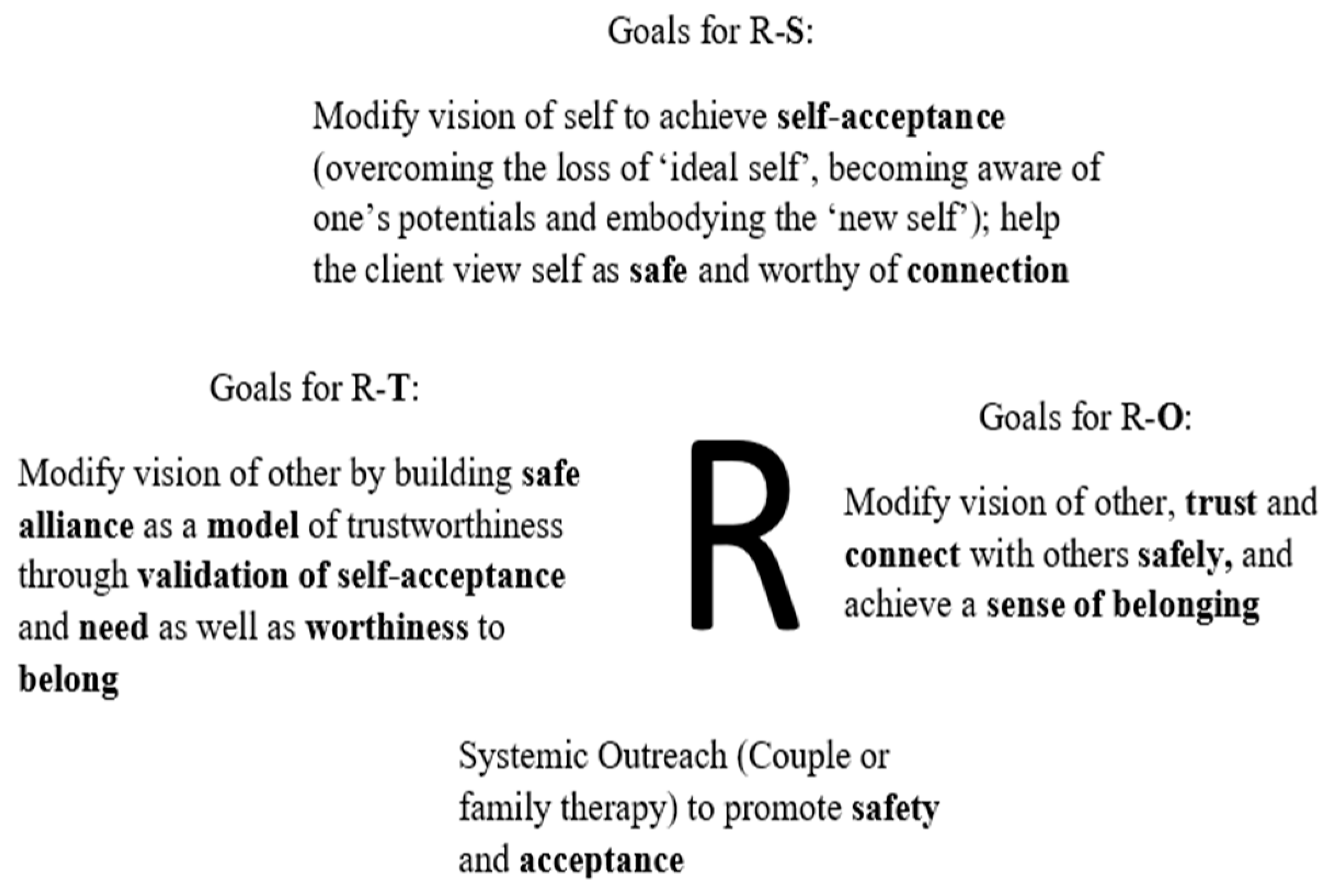
This approach initially sought to address cultural norms that contribute to the social marginalization of victim–survivors of sexual violence interpreted in the framework of a sexual taboo, which has regulated sexual behaviors for centuries and is still a main reference in many contemporary societies. Sexual taboos impose social sanctions on any person who makes contact with a forbidden condition, that is a sexual act contrary to the dictates of societal norms. Such contact, being a transgression of sexual taboos, does not discriminate between consensual and non-consensual sexual acts; it automatically triggers a condition of defilement and renders the alleged transgressor vulnerable to punitive interpersonal and spiritual responses (Maisha 2016). This exposes victim–survivors to discriminatory and punitive treatments. Moreover, current research shows that the survivor’s social identity plays a significant role in the way they deal with sexual trauma, from attributing meaning to the traumatic experience to navigating relational, institutional, and professional resources in search of support (Maisha 2021; Staples and Fuller 2021; Sigurvinsdottir and Ullman 2016). The ReSTO postulates that the victim–survivors’ worldviews on the self and relationships are fundamental to their recovery, particularly for victim–survivors with intersecting and marginalized identities (Maisha et al. 2024). ReSTO-based therapy rests on three nonlinear phases: creating a safe therapeutic alliance, exploring the intrapsychic process on the concept of self, and exploring the client’s paradigms of relationships to identify their abilities and limitations in creating and maintaining healthy relationships. The Figure 1 below shows the main ReSTO-informed assessment and intervention goals, first reported in Maisha (2021).
Figure 1. ReSTO therapeutic assessment and intervention goals. Adapted from Maisha (2021), p. 176. The bold-formatted words indicate the key concepts to focus on during the clinical assessment and treatment plan writing stages.
As noted by Maisha (2021), “ReSTO aims to help develop a modified vision of self in the survivor, leading to self-acceptance, and a modified vision of interpersonal relationships allowing [for] the ability to create and maintain relationships with others”. In other words, ReSTO-based therapy will target negative images of the self and others, which impede the ability to create meaningful relationships. The goal is to foster self-acceptance, safe connections/alliances, relational trust, and a sense of belonging. From an ReSTO perspective, (self-) acceptance and (relational) safety are two key factors in sexual trauma therapy, especially when victim–survivors face social marginalization. They help develop a positive image of the self and others and lay the foundation for trust, connection, and a sense of belonging. The ReSTO’s systemic lens requires an exhaustive assessment of the sexual trauma’s impact on the individual as well as on their family and the mobilization of both personal and relational resources for an integrative effort towards recovery.

5. Discussion

This article analyzes the theoretical knowledge gathered through a literature review and the practical lived experience of a survivor through a case study, with a systemic conceptual lens illustrated through the ReSTO therapeutic model. Rape, followed by sexist or racist social reactions, can lead to significant relational issues for racialized women victim–survivors. This is well illustrated by Anna’s story. Due to the negative social reactions, particularly from her family members, Anna develops difficulty trusting; she believes that she can no longer be safe with those she once trusted. She now has a negative image of self (rejection of “self”/own cultural identity) and others (perception of others as danger/unsafe: rejection of own family). Her post-rape negative relational experience illustrates multiple examples of challenges faced by racialized women victim–survivors of sexual violence:
  • A negative perception of self (defiled, family betrayer) as a woman, a mother, a wife, a daughter, a member of the community, and a believer (e.g., Christian);
  • An internalized negative perception of others stemming from social rejection;
  • A demoted social status as an untrustworthy member of her community;
  • Isolated/sent away under the assumption that she represents a danger to in-group cohesion;
  • Vulnerability to (re)victimization.
Indeed, the reviewed literature in this article and Anna’s story suggest the existence of serious relational impacts of rape and trauma, aggravating the role of sexist or racist attitudes and behaviors towards victim–survivors (Bird et al. 2021; Bryant-Davis and Tummala-Narra 2017; Carr et al. 2014; Perilloux et al. 2012; Ahrens 2006; Donovan and Williams 2002). There is a risk of suffering in silence out of fear of in-group marginalization, social rejection, and isolation. Incompatibility between cultural group welfare and the personal need for professional help creates a dilemma for victim–survivors who might need to choose between two necessities: personal and relational/community well-being. The cultural or racial group of the victim–survivor should therefore not be ignored by helping professionals. As Hardy (2023) says, “To engage Clients of Color in therapy without, at the very least, some cursory knowledge of racial trauma and an accompanying skillset to address it borders on racial malpractice”. Hardy’s statement seems even more relevant for effective work with victim–survivors of sexual assault facing concomitant wounds from sexist and racist oppression. Particularly, Black women can face gendered racism as they hold multiple historically marginalized identities (Lewis et al. 2019; Essed 1991), rendering them as a vulnerable population contrary to their portrayal as angry and strong women (Slatton and Richard 2020).
While speaking out poses risks to the quality of in-group relationships, as observed in the reviewed literature and in Anna’s case, it can also open the door to professional help, with the potential for a healthy modeling of relationships. It is important to make the point that victim–survivors’ image of relationships needs to be reconstructed and can be modeled by professionals, as illustrated by Anna’s psychologist who provided the starting step towards relational trust and trauma recovery for her. Therefore, to effectively support racialized women victim–survivors of sexual violence, those in the helping role need to not only consider the complexity of the intersecting traumas (sexual, sexist, and racial) and their contribution to the complexity of victim–survivors’ psychological suffering but also assess impacts on social relationships and provide a safe and trust-nurturing work relationship, as this is critical for the survivor’s healing journey.
Arguably, the findings from this review and case discussion suggest that sexual violence is a relational trauma that cannot be effectively addressed without taking into account its implications on the victim–survivors’ relationships. Also, it is suggested to factor in the role of gender and racial trauma in dealing with sexual assault among cultural minority victim–survivors. It is worth noting that all three types of traumas (racial, sexist, and sexual) we have discussed occur in the context of interpersonal relationships, be it on a dyadic or systemic/group scale. It is therefore critical to work from a relational lens to ensure that trauma-aggravating factors and recovery support resources are all considered. This is why a case has been made for a systemic approach to the therapeutic care for victim–survivors. An emerging relationship-focused therapeutic approach first published in Maisha (2021) has been presented and discussed. Relationship-based modalities like the ReSTO provide a pertinent framework to explore, understand, and address victim–survivors’ therapeutic needs and gather relevant information on rebuilding and maintaining post-rape relationships.

6. Conclusions

Building on the existing literature, the author’s clinical experience and past research focusing on the sociocultural interpretation of rape and its implication on victim–survivors’ relationships, this article attempts to shed light on the complexity of rape experiences for victim–survivors facing race- and gender-based discrimination. This review and case discussion analyze the relational challenges faced by racialized women victim–survivors of rape and how these impact their recovery. They emphasize the importance of understanding how the victim–survivors’ social circle reacts to the rape experience through the lenses of sexism and racism and the impact of such reactions on the victim–survivors’ social relations and recovery process. The discussed literature shows that being a woman from a cultural minority and a victim–survivor of sexual violence often means facing intersecting traumatic experiences, each with serious implications on the survivor’s social relations, which are crucial to the survivor’s ability to process sexual trauma. Hence, for the effectiveness of trauma healing work, it is recommended to explore challenges to social relationships and improve them, that is, transforming hostile connections into safe allyships in healing.

7. Limitations

The data discussed in this article is limited by its nature (existing literature review) and regional scope (only one case from one country was discussed). The suggested findings should be interpreted with caution. While this article provides an overview of the existing scientific literature addressing the intersectionality of rape, sexism, and racism experiences for racialized women, conducting primary research would have allowed this work to reach primary sources of knowledge. Furthermore, the author has attempted to connect the existing literature with clinical experience through the case study and build a rationale for the emerging ReSTO model. The clinical validity of this model has yet to be tested; this will be considered for future primary research. Finally, due to time constraints and the initial lack of tracking the categories and different scopes for the selected articles, a Prisma chart could not be effectively generated for the source search and selection.

Funding

This research received no external funding.

Data Availability Statement

No new data was collected, nor was any archived data used for this article, which is based on scientific literature retrieved in two major databases: PsycINFO and Google Scholar.

Conflicts of Interest

The authors declare no conflict of interest.

Appendix A

List of Cited Sources Based on Inclusion Criteria in the Literature Review
SourceInclusion Criteria (a) Year of Publication and (b) Scientific Value for Frequency of Citation in Existing LiteratureInclusion Criterion (c) Contains Keywords/Similar to Those Used in the Review (Rape/Sexual Trauma a; Sexism b; Racism c; Racial Trauma d; Marginalization e; Victim/Survivor f; Relationships g; Recovery/Healing h)
2010+<2010 But Cited More than 100 Times
Ahrens (2006)-1a, f, and g
Ahrens and Aldana (2012)1 a and g
Ajayi et al. (2022)2-a, b, f, and g
Banyard et al. (2002)-2a and f
Barrios et al. (2025)3-a and e
Bird et al. (2021)4-c, f, and h
Bower (2025)5-a and f
Boykins et al. (2010)6-a, f, and g
Bryant-Davis et al. (2009)-3a, c, and h
Bryant-Davis and Tummala-Narra (2017)7-a and c
Bryant-Davis et al. (2011)8-a, g, and h
Carr et al. (2014)9-a, b, and c
Cénat (2022)10-c and d
Clark et al. (1999)-4c and g
Comas-Díaz (2016)11-c and d
Cromer and Freyd (2007)-5a, b, and f
Donovan and Williams (2002)-6a and b,
Eshelman et al. (2024)12-a, c, and h
Essed (1991)-7b, c and g
Fiske (2018)13-b and c
Forbes et al. (2004) 8a and b
Fortuna et al. (2022)14 c, d, and f
Foussiakda et al. (2025)15-a, f, g, and h
Franklin and Garza (2021)16-a, f, and g
Glick and Fiske (1996)-9b and e
Gobin and Gómez (2022)17-a, c, and f
Gómez (2015)18-a and g
Gómez et al. (2023)19-a and c
Gómez and Gobin (2020)20-a, c, d, g, and h
Gusenbauer (2024)21--
Haddaway et al. (2022)22--
Hardy (2023)23-d and g
Hyman et al. (2003) 10a and g
Jean-Charles (2014)24-a and f
Katz et al. (2018)25-a, b, and c
Koci and Strickland (2009)-11a and e
Lahav and Elklit (2016)26-a, f, and g
Lanthier et al. (2023)27-a, e, and f
Lanthier et al. (2023)28-a, e, and f
Leung (2017)29-a, c, e, and g
Lewis et al. (2019)30-a, c, f, and g,
Lewis et al. (2013)31-b and c
Maisha et al. (2024)32-a, b, e, f, g, and h
Maisha (2021)33-a, g, and h
Maisha (2020)34-a, f, and h
Maisha et al. (2017)35-a, e, f, g, and h
Maisha (2016)36-a, e, f, g, and h
McNair and Neville (1996)-12a, b, c, and f
McQueeney and Girgenti-Malone (2018)37-a, b, c, and f
Mulumeoderhwa (2017)38-a, b, and f
Murray et al. (2024)39--
Norris (1992)-13a and c
Ogle et al. (2013)40-a and c
Perilloux et al. (2012)41-a, b, and f
Petrak and Hedge (2002)-14a and g
Pitino (2021)42-a, e, f, and g
Roberts et al. (2010)43 a, e, and f
Samuel (2024)44-a, b, c, and f
Sigurvinsdottir and Ullman (2016)45-a, c, and e
Slatton and Richard (2020)46-a, b, c, e, and f
Staples and Fuller (2021)47-a and c
Swim and Hyers (2009)-15a, b, e and g
Watson et al. (1996)-16a, b, e, and f
Yagi et al. (2022)48-a and e

Notes

1
The term victim–survivor is used in this article to acknowledge both the sexual assault endured and the recovery journey of the racialized women whose experience as a victim is often denied or minimized (Bower 2025; Slatton and Richard 2020; Jean-Charles 2014).
2
The previous publication (Maisha 2021) used the acronym R-STO. In this work and subsequent publication, the acronym ReSTO is used for an easier pronunciation and memorisation.

References

  1. Ahrens, Courtney E. 2006. Being Silenced: The Impact of Negative Social Reactions on the Disclosure of Rape. American Journal of Community Psychology 38: 263–74. [Google Scholar] [CrossRef] [Scilit] [PubMed]
  2. Ahrens, Courtney E., and Erendira Aldana. 2012. The Ties That Bind: Understanding the Impact of Sexual Assault Disclosure on Survivors’ Relationships with Friends, Family, and Partners. Journal of Trauma & Dissociation 13: 226–43. [Google Scholar] [CrossRef] [Scilit]
  3. Ajayi, Chinyere E., Khatidja Chantler, and Lorraine Radford. 2022. The Role of Cultural Beliefs, Norms, and Practices in Nigerian Women’s Experiences of Sexual Abuse and Violence. Violence Against Women 28: 465–86. [Google Scholar] [CrossRef] [Scilit]
  4. Banyard, Victoria L., Linda M. Williams, Jane A. Siegel, and Carolyn M. West. 2002. Childhood Sexual Abuse in the Lives of Black Women: Risk and Resilience in a Longitudinal Study. Women & Therapy 25: 45–58. [Google Scholar] [CrossRef] [Scilit]
  5. Barrios, Veronica R., Kristen Budd, Rose Marie Ward, and Elizabeth Neilson. 2025. Disclosure of Campus Sexual Assault Among Students with Marginalized and Majority Identities: Implications for Future Research. Journal of School Violence 24: 266–82. [Google Scholar] [CrossRef] [Scilit]
  6. Bird, Claire M., E. Kate Webb, Andrew T. Schramm, Lucas Torres, Christine Larson, and Terri A. deRoon-Cassini. 2021. Racial Discrimination is Associated with Acute Posttraumatic Stress Symptoms and Predicts Future Posttraumatic Stress Disorder Symptom Severity in Trauma-Exposed Black Adults in the United States. Journal of Traumatic Stress 34: 995–1004. [Google Scholar] [CrossRef] [Scilit]
  7. Bower, Laura J. 2025. Is ‘Victim-Survivor’ Our Imperfect Alternative to Describing People with Lived Experience of Sexual Violence? A Feminist Symbolic Interactionist Analysis, Considering How Ethnicity, Gender, and Disability Interact with Language Choice. Violence Against Women. [Google Scholar] [CrossRef] [Scilit]
  8. Boykins, Anita D., Anika A. H. Alvanzo, Susan Carson, Janett Forte, Monica Leisey, and Stacey B. Plichta. 2010. Minority Women Victims of Recent Sexual Violence: Disparities in Incident History. Journal of Women’s Health 19: 453–61. [Google Scholar] [CrossRef] [Scilit] [PubMed]
  9. Bryant-Davis, Thema, and Pratyusha Tummala-NarraLynch. 2017. Cultural Oppression and Human Trafficking: Exploring the Role of Racism and Ethnic Bias. Women & Therapy 40: 152–69. [Google Scholar] [CrossRef] [Scilit]
  10. Bryant-Davis, Thema, Heewoon Chung, and Shaquita Tillman. 2009. From the Margins to the Center: Ethnic Minority Women and the Mental Health Effects of Sexual Assault. Trauma, Violence, & Abuse 10: 330–57. [Google Scholar] [CrossRef] [Scilit]
  11. Bryant-Davis, Thema, Sarah E. Ullman, Yuying Tsong, and Robyn Gobin. 2011. Surviving the Storm: The Role of Social Support and Religious Coping in Sexual Assault Recovery of African American Women. Violence Against Women 17: 1601–18. [Google Scholar] [CrossRef] [Scilit]
  12. Carr, Erica R., Dawn M. Szymanski, Farah Taha, Lindsey M. West, and Nadine J. Kaslow. 2014. Understanding the Link Between Multiple Oppressions and Depression Among African American Women: The Role of Internalization. Psychology of Women Quarterly 38: 233–45. [Google Scholar] [CrossRef] [Scilit]
  13. Cénat, Jude M. 2022. Complex Racial Trauma: Evidence, Theory, Assessment, and Treatment. Perspectives on Psychological Science 18: 675–87. [Google Scholar] [CrossRef] [Scilit] [PubMed]
  14. Clark, Rodney, Norman B. Anderson, Vernessa Clark, and David R. Williams. 1999. Racism as a stressor for African Americans: A biopsychosocial model. American Psychologist 54: 805–16. [Google Scholar] [CrossRef]
  15. Comas-Díaz, Lillian. 2016. Racial trauma recovery: A race-informed therapeutic approach to racial wounds. In The Cost of Racism for People of Color: Contextualizing Experiences of Discrimination. Edited by Alvin N. Alvarez, Christopher T. H. Liang and Helen A. Neville. Washington: American Psychological Association. [Google Scholar] [CrossRef] [Scilit]
  16. Cromer, Lisa D., and Jennifer J. Freyd. 2007. What Influences Believing Child Sexual Abuse Disclosures? The Roles of Depicted Memory Persistence, Participant Gender, Trauma History, and Sexism. Psychology of Women Quarterly 31: 13–22. [Google Scholar] [CrossRef] [Scilit]
  17. Donovan, Roxanne, and Michelle Williams. 2002. Living at the Intersection: The Effects of Racism and Sexism on Black Rape Survivors. Women & Therapy 25: 95–105. [Google Scholar] [CrossRef] [Scilit]
  18. Eshelman, Lee R., Selime R. Salim, Prachi H. Bhuptani, and Mariam Saad. 2024. Sexual Objectification Racial Microaggressions Amplify the Positive Relation Between Sexual Assault and Posttraumatic Stress Among Black Women. Psychology of Women Quarterly 48: 180–94. [Google Scholar] [CrossRef] [Scilit]
  19. Essed, Philomena. 1991. Understanding Everyday Racism: An Interdisciplinary Theory. London: Sage, vol. 2. [Google Scholar] [CrossRef] [Scilit]
  20. Fiske, Susan T. 2018. Social Cognition: Selected Works of Susan T. Fiske, 1st ed. London: Routledge. [Google Scholar] [CrossRef] [Scilit]
  21. Forbes, Gordon B., Leah E. Adams-Curtis, and Kay B. White. 2004. First- and Second-Generation Measures of Sexism, Rape Myths and Related Beliefs, and Hostility Toward Women: Their Interrelationships and Association with College Students’ Experiences with Dating Aggression and Sexual Coercion. Violence Against Women 10: 236–61. [Google Scholar] [CrossRef] [Scilit]
  22. Fortuna, Lisa R., Amalia L. Tobón, Yohanis L. Anglero, Alejandra Postlethwaite, Michelle V. Porche, and Eugenio M. Rothe. 2022. Focusing on racial, historical and intergenerational trauma, and resilience: A paradigm to better serving children and families. Child and Adolescent Psychiatric Clinics of North America 31: 237–50. [Google Scholar] [CrossRef] [Scilit]
  23. Foussiakda, Cécilia A., Juvénal B. Balegamire, Gavray Claire, Yannick Mugumaarhahama, and Adélaïde Blavier. 2025. Posttraumatic Stress Disorder, Dyadic Adjustment, Sexual Desire, and Couple Resilience 10 Years After the Experience of Rape by Survivors in the Eastern Democratic Republic of the Congo. Social Sciences 14: 131. [Google Scholar] [CrossRef] [Scilit]
  24. Franklin, Cortney A., and Alondra D. Garza. 2021. Sexual Assault Disclosure: The Effect of Victim Race and Perpetrator Type on Empathy, Culpability, and Service Referral for Survivors in a Hypothetical Scenario. Journal of Interpersonal Violence 36: 2327–52. [Google Scholar] [CrossRef] [Scilit]
  25. Glick, Peter, and Susan T. Fiske. 1996. The Ambivalent Sexism Inventory: Differentiating hostile and benevolent sexism. Journal of Personality and Social Psychology 70: 491–512. [Google Scholar] [CrossRef]
  26. Gobin, Robyn L., and Jennifer M. Gómez. 2022. The Cultural Context of Sexual Assault and Its Consequences Among Ethnic Minority Women. In Handbook of Interpersonal Violence and Abuse Across the Lifespan. Edited by Geffner Robert, Jacquelyn W. White, Kevin L. Hamberger, Alan Rosenbaum, Viola Vaughan-Eden and Victor I. Vieth. Cham: Springer International Publishing, pp. 3741–64. [Google Scholar] [CrossRef] [Scilit]
  27. Gómez, Jennifer M. 2015. Conceptualizing trauma: In pursuit of culturally relevant research. Trauma Psychology Newsletter (American Psychological Association Division 56) 10: 40–44. [Google Scholar]
  28. Gómez, Jennifer M., and Robyn L. Gobin. 2020. Black Women and Girls & #MeToo: Rape, Cultural Betrayal, & Healing. Sex Roles 82: 1–12. [Google Scholar] [CrossRef] [Scilit]
  29. Gómez, Jennifer M., Jennifer J. Freyd, Jorge Delva, Brenda Tracy, Lori N. Mackenzie, Victor Ray, and Beverly Weathington. 2023. Institutional Courage in Action: Racism, Sexual Violence, & Concrete Institutional Change. Journal of Trauma & Dissociation 24: 157–70. [Google Scholar] [CrossRef] [Scilit]
  30. Gusenbauer, Michael. 2024. Beyond Google Scholar, Scopus, and Web of Science: An evaluation of the backward and forward citation coverage of 59 databases’ citation indices. Research Synthesis Methods 15: 802–17. [Google Scholar] [CrossRef] [Scilit] [PubMed]
  31. Haddaway, Neal R., Matthew J. Grainger, and Charles T. Gray. 2022. Citationchaser: A tool for transparent and efficient forward and backward citation chasing in systematic searching. Research Synthesis Methods 13: 533–45. [Google Scholar] [CrossRef] [Scilit]
  32. Hardy, Kenneth V. 2023. Racial Trauma: Clinical Strategies and Techniques for Healing Invisible Wounds. New York: WW Norton & Company. [Google Scholar]
  33. Hyman, Scott M., Steven N. Gold, and Melissa A. Cott. 2003. Forms of Social Support That Moderate PTSD in Childhood Sexual Abuse Survivors. Journal of Family Violence 18: 295–300. [Google Scholar] [CrossRef] [Scilit]
  34. Jean-Charles, Régine M. 2014. Toward a Victim-Survivor Narrative: Rape and Form in Yvonne Vera’s Under the Tongue and Calixthe Beyala’s Tu t’appelleras Tanga. Research in African Literatures 45: 39–62. [Google Scholar] [CrossRef] [Scilit]
  35. Katz, Jennifer, Christine Merrilees, Jillian LaRose, and Claire Edgington. 2018. White Female Bystanders’ Responses to a Black Woman at Risk for Sexual Assault: Associations with Attitudes About Sexism and Racial Injustice. Journal of Aggression, Maltreatment & Trauma 27: 444–59. [Google Scholar] [CrossRef] [Scilit]
  36. Koci, Anne, and Ora Strickland. 2009. Marginality and Physical and Sexual Abuse in Women. Health Care for Women International 30: 79–92. [Google Scholar] [CrossRef] [Scilit]
  37. Lahav, Yael, and Ask Elklit. 2016. The cycle of healing—Dissociation and attachment during treatment of CSA survivors. Child Abuse & Neglect 60: 67–76. [Google Scholar] [CrossRef] [Scilit]
  38. Lanthier, Stephanie, Robin Mason, Carmen H. Logie, Ted Myers, and Janice Du Mont. 2023. “Coming out of the closet about sexual assault”: Intersectional sexual assault stigma and (non) disclosure to formal support providers among survivors using Reddit. Social Science & Medicine 328: 115978. [Google Scholar] [CrossRef] [Scilit]
  39. Leung, Lai-ching. 2017. Intersectional Challenges: Marginalization of Ethnic Minority Sexual Assault Survivors in Hong Kong. Affilia 32: 217–29. [Google Scholar] [CrossRef] [Scilit]
  40. Lewis, Jioni A., Ruby Mendenhall, Stacy A. Harwood, and Margaret B. Huntt. 2013. Coping with gendered racial microaggressions among Black women college students. Journal of African American Studies 17: 51–73. [Google Scholar] [CrossRef] [Scilit]
  41. Lewis, Kaleea R., Alyssa Robillard, Deborah Billings, and Kellee White. 2019. Differential perceptions of a hypothetical sexual assault survivor based on race and ethnicity: Exploring victim responsibility, trauma, and need for social support. Journal of American College Health 67: 308–17. [Google Scholar] [CrossRef] [Scilit] [PubMed]
  42. Maisha, Buuma. 2016. «Image de soi et de l’autre souillées: La problématique des tabous sexuels en thérapie et l’apport du rite de purification dans la reconstruction du ‘soi’ chez la femme survivante de viol à l’Est de la R.D. Congo». Doctoral thesis, Saint Paul University, Ottawa, ON, Canada. [Google Scholar] [CrossRef]
  43. Maisha, Buuma. 2020. Contextualising therapeutic care for child survivors of sexual violence in situations of war: A reflection on theory, context and practice. Intervention 18: 45–51. [Google Scholar] [CrossRef] [Scilit]
  44. Maisha, Buuma. 2021. Relationships as resilience and posttraumatic growth factors for war-time survivors with interpretations of rape as sexual taboo: Healing Embrace. In Fostering Resilience Before, During, and After Experiences of Trauma: Insights to Inform Practice Across the Lifetime. Edited by Buuma Maisha, Stephanie Massicotte and Melanie Morin. New York: Routledge. [Google Scholar] [CrossRef] [Scilit]
  45. Maisha, Buuma, Janelle Anglin, Timothee Mwindo, Carolanne Tomsine, and Sandrine M’Bassé Florent. 2024. Exploring Cultural Factor in the “Systemic Revictimization” of Rape Survivors in Mwenga (DRC). Social Sciences 13: 411. [Google Scholar] [CrossRef] [Scilit]
  46. Maisha, Buuma, Judith Malette, and Karlijn Demasure. 2017. Survivors’ sociocultural status in Mwenga: A comparison of the issue before and after rape. Social Sciences 6: 64. [Google Scholar] [CrossRef] [Scilit]
  47. McNair, Lily D., and Helen Neville. 1996. African American Women Survivors of Sexual Assault: The Intersection of Race and Class. Women & Therapy 18: 107–18. [Google Scholar] [CrossRef] [Scilit]
  48. Mcqueeney, Krista, and Alicia Girgenti-Malone, eds. 2018. Girls, Aggression, and Intersectionality: Transforming the Discourse of “Mean Girls” in the United States, 1st ed. London: Routledge. [Google Scholar] [CrossRef] [Scilit]
  49. Mulumeoderhwa, Maroyi. 2017. Virginity Requirement Versus Sexually-Active Young People: What Girls and Boys Think About Virginity in South Kivu, Democratic Republic of Congo. Archives of Sexual Behavior 47: 565–75. [Google Scholar] [CrossRef] [Scilit]
  50. Murray, Samuel, Gino M. C. Díaz, Laura S. Vega-Plazas, William Jiménez-Leal, and Santiago Amaya. 2024. Loyalty from a personal point of view: A cross-cultural prototype study of loyalty. Journal of Experimental Psychology: General 153: 3002–26. [Google Scholar] [CrossRef] [Scilit] [PubMed]
  51. Norris, Fran H. 1992. Epidemiology of trauma: Frequency and impact of different potentially traumatic events on different demographic groups. Journal of Consulting and Clinical Psychology 60: 409–18. [Google Scholar] [CrossRef] [PubMed]
  52. Ogle, Christin M., David C. Rubin, Dorthe Berntsen, and Ilene C. Siegler. 2013. The Frequency and Impact of Exposure to Potentially Traumatic Events Over the Life Course. Clinical Psychological Science 1: 426–34. [Google Scholar] [CrossRef] [Scilit]
  53. Perilloux, Carin, Joshua D. Duntley, and David M. Buss. 2012. The Costs of Rape. Archives of Sexual Behavior 41: 1099–1106. [Google Scholar] [CrossRef] [Scilit] [PubMed]
  54. Petrak, Jennifer, and Barbara Hedge. 2002. The Trauma of Sexual Assault: Treatment, Prevention and Practice. New York: Wiley. [Google Scholar]
  55. Pitino, Marta. 2021. Destined For Exclusion?: Resilient Group Identities and Social Acceptance of Wartime Sexual Violence Survivors. Master’s dissertation, Uppsala University, Uppsala, Sweden. Available online: https://urn.kb.se/resolve?urn=urn:nbn:se:uu:diva-444323 (accessed on 5 January 2026).
  56. Roberts, Sushma T., Christina G. Watlington, Sara D. Nett, and Sonja V. Batten. 2010. Sexual trauma disclosure in clinical settings: Addressing diversity. Journal of Trauma & Dissociation 11: 244–59. [Google Scholar] [CrossRef] [Scilit]
  57. Samuel, Danielle A. 2024. Ain’t i a Survivor Too: Contextualizing Black Women’s Experience of Sexual Trauma and Healing. Doctoral dissertation, Antioch University New England, Keene, NH, USA. Available online: https://aura.antioch.edu/cgi/viewcontent.cgi?article=2055&context=etds (accessed on 5 January 2026).
  58. Sigurvinsdottir, Rannveig, and Sarah E. Ullman. 2016. Sexual orientation, race, and trauma as predictors of sexual assault recovery. Journal of Family Violence 31: 913–21. [Google Scholar] [CrossRef] [Scilit] [PubMed]
  59. Slatton, Brittany C., and April L. Richard. 2020. Black Women’s experiences of sexual assault and disclosure: Insights from the margins. Sociology Compass 14: e12792. [Google Scholar] [CrossRef] [Scilit]
  60. Staples, Jennifer M., and Caitlin C. Fuller. 2021. Adult sexual assault severity among transgender people of color: The impact of double marginalization. Journal of Aggression, Maltreatment & Trauma 30: 694–706. [Google Scholar] [CrossRef] [Scilit]
  61. Swim, Janet K., and Lauri L. Hyers. 2009. Sexism. In Handbook of Prejudice, Stereotyping, and Discrimination. Edited by Todd D. Nelson. New York: Psychology Press. [Google Scholar] [CrossRef] [Scilit]
  62. Watson, Gilli, Carol Scott, and Sandra Ragalsky. 1996. Refusing to be Marginalized: Groupwork in Mental Health Services for Women Survivors of Childhood Sexual Abuse. Journal of Community & Applied Social Psychology 6: 341–54. [Google Scholar] [CrossRef] [Scilit]
  63. Yagi, Ines, Judith Malette, Timothee Mwindo, and Buuma Maisha. 2022. Characteristics and Impacts of Conflict-Related Sexual Violence against Men in the DRC: A Phenomenological Research Design. Social Sciences 11: 34. [Google Scholar] [CrossRef] [Scilit]
Disclaimer/Publisher’s Note: The statements, opinions and data contained in all publications are solely those of the individual author(s) and contributor(s) and not of MDPI and/or the editor(s). MDPI and/or the editor(s) disclaim responsibility for any injury to people or property resulting from any ideas, methods, instructions or products referred to in the content.

Article Metrics

Citations

Article Access Statistics

Multiple requests from the same IP address are counted as one view.