
Article

Responding to Racism in the Academy: Black Women Professors Engaging in Public Discourse

by
Kelsey Bogard
*,
Ruqayyah Perkins-Williams
and
Mary Howard-Hamilton
Department of Educational Leadership, Indiana State University, Terre Haute, IN 47809, USA
*
Author to whom correspondence should be addressed.
Soc. Sci. 2025, 14(12), 730; https://doi.org/10.3390/socsci14120730
Submission received: 11 October 2025 / Revised: 11 December 2025 / Accepted: 12 December 2025 / Published: 18 December 2025
(This article belongs to the Special Issue Race and Ethnicity Without Diversity)

Abstract

Perspectives on race and gender from Black women professors in higher education today are shaped by their lived experiences navigating both systemic racism and sexism within academia. These perspectives often reflect a unique intersectional understanding of institutional challenges, resilience, and advocacy for equity.

1. Introduction

Black women professors frequently discuss how they experience marginalization not just as women or as Black individuals, but through the compounding effects of both. Hooks (1995) eloquently stated in her book Killing Rage:
Until progressive women and men engaged in anti-racist, anti-sexist work fully recognize that continued devaluation of black womanhood undermines these struggles neither movement can progress. We must vigilantly challenge negative representations of black women, understanding that they both shape public policy and determine attitudes towards us in everyday life
(p. 85).
This study will share the current state of Black women scholars in higher education, specifically, their representation in terms of academic rank, administrative leadership, and presence in the academy from a longitudinal perspective and what has changed and what has remained the same from the standpoint of the data and experiences of Black women. The concept of intersectionality, popularized by Crenshaw (1991), is central to how they understand their place in academia. Other theorists used here are Bell Hooks and Patricia Hill Collins.
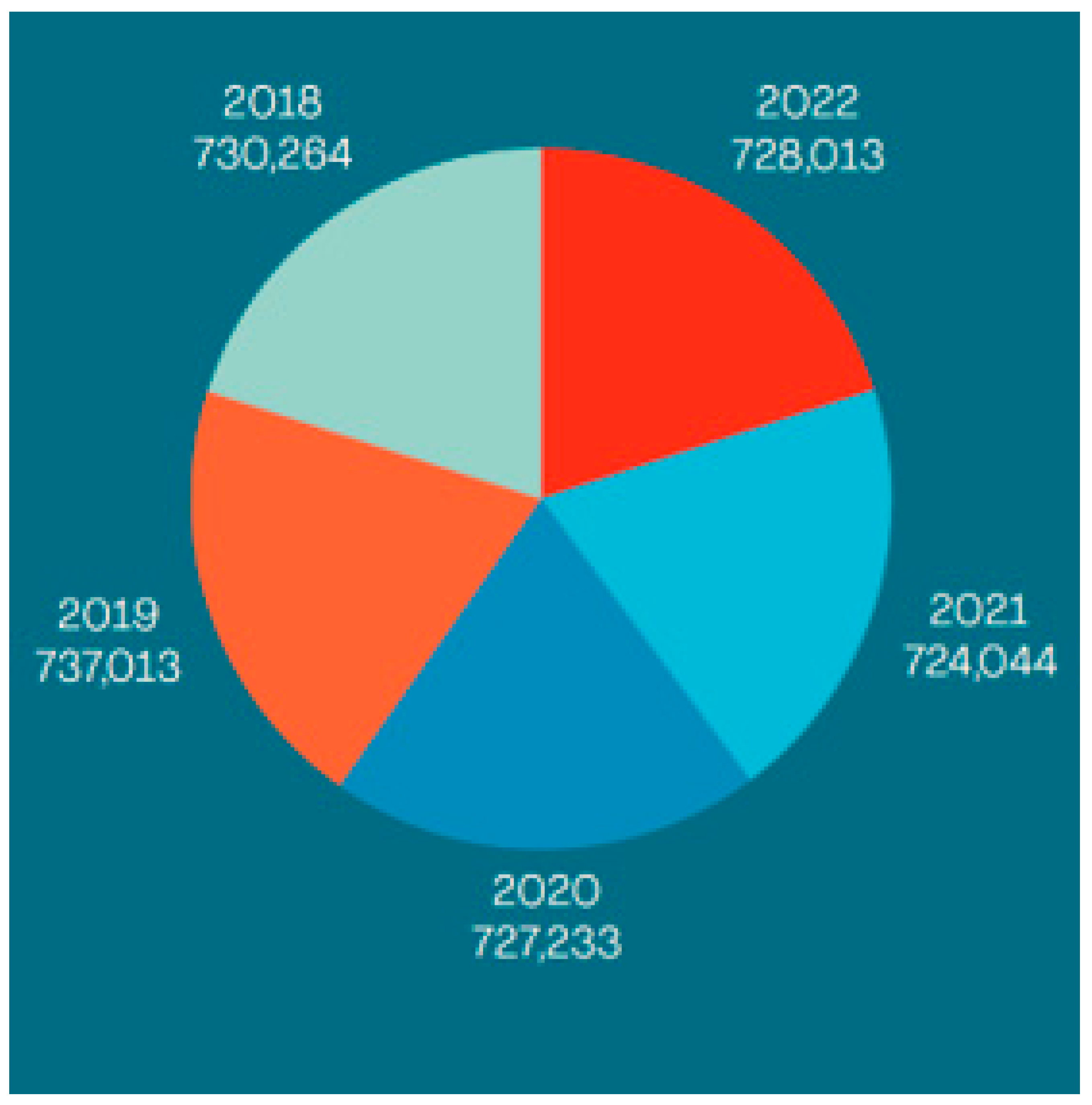
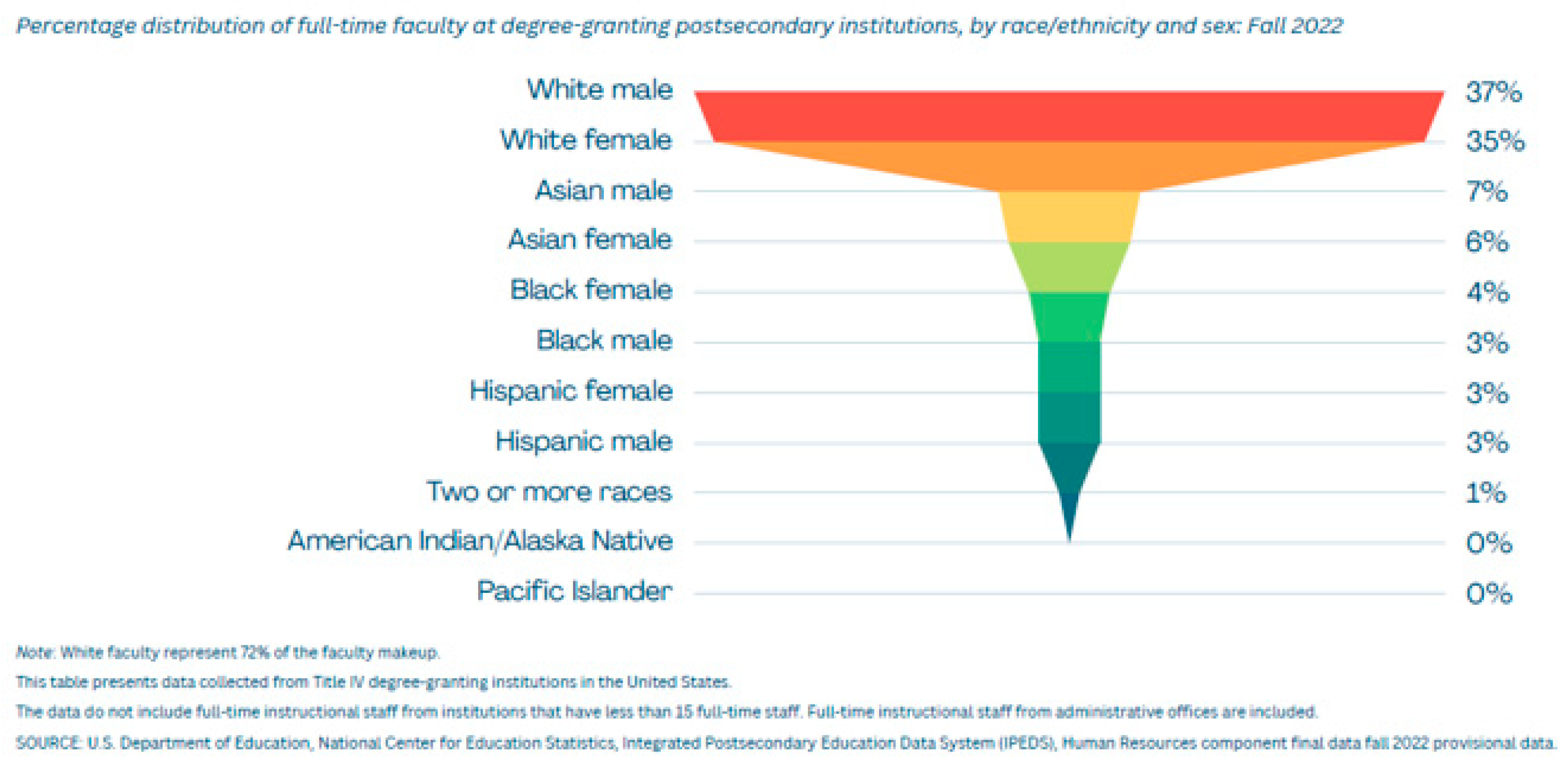
The percentages of minorities among tenured professors from 2016 to 2023 have increased from 18.4% in 2016 to 23.9% in 2023 (The Chronicle of Higher Education Almanac 2025) (Figure 1). However, the ethnic group the contributed to this growth was Asian Americans. The percentage of Black professors rose from 3.7% in 2016 to only 4.1% in 2023. The total number of full-time tenured faculty members in the fall of 2023 was 291,895, and in the category of full professor, there were 154,865 with 114,159 who were White and 6219 identifying as Black. According to The Chronicle of Higher Education Almanac (2025) (Figure 2) tenured professors had the lowest percentage of women, and tenured ranks across the board were more likely to be White. Further illustrating this point is the number of faculty at 4-year public institutions who are tenured, 175,159, and when disaggregated, women comprise 39% or 69,848 with Black women numbering 4112 or 2.4%. Moreover, “women make up more than half of tenure track and non-tenure track faculty, but less than 40 percent of tenured faculty. White women make up more than 70 percent of the women holding tenured faculty positions at public and private four-year colleges” (The Chronicle of Higher Education Almanac 2025, p. 32).
The data on the paucity of Black women in the academy provide evidence that there is a problem in the pipeline moving through rank and tenure. Concomitantly, the pipeline includes getting Black women into doctoral programs, through candidacy, and then encouraging them to join the faculty ranks.
Black women remain significantly underrepresented in tenured and senior academic roles. Many report feelings of isolation and tokenism, often being the “only one” in their departments. Black women professors often perform additional labor, such as mentoring students of color or serving on diversity committees, which is rarely acknowledged or rewarded in tenure and promotion processes. Many Black women scholars use their research to challenge dominant narratives and advocate for social justice, often pioneering work in Africana Studies, Black Feminist Thought, and Critical Race Theory.

2. Review of Literature

The following areas will be discussed along with the public discourse, personal narratives, and experiences of each author sharing how the impact of these central themes has affected their response to racism in the academy.

2.1. Advocacy and Scholarship

“Advocacy is the act of speaking truth to power, of naming injustice in spaces where silence is the norm” (Collins 2019, p. 34). Within academia, advocacy can take many forms, from challenging inequitable policies to transforming institutional cultures that marginalize underrepresented groups. For Black women faculty, advocacy is often inseparable from scholarship. Their research agendas, classroom practices, and service commitments reflect a deep engagement with equity and social justice. Scholarship itself becomes a form of advocacy when it generates knowledge that critiques systemic oppression and affirms marginalized voices (Patton 2016).
Yet this work occurs within a double-bind. Black women are frequently expected to maintain academic “neutrality”, to present themselves as objective and detached. At the same time, their scholarship often directly addresses racism, sexism, and structural inequities, critiques that are sometimes viewed as disruptive or unprofessional by peers (Griffin et al. 2013). This tension illustrates both the courage and the precarity of being a Black woman scholar whose work insists on justice. Understanding advocacy and scholarship as intertwined practices reveals how Black women reshape higher education while navigating the risks of being both hyper-visible and undervalued.

2.2. Historical Context

Black women scholars have a long tradition of using research and advocacy as intertwined tools for justice. Anna Julia Cooper’s A Voice from the South (Cooper 1892) framed education as liberation for Black women and their communities. Later, Hooks (2000), Lorde (1984), and Collins (2000) built theoretical frameworks that remain foundational to critical scholarship today. Their writings established Black feminist thought, intersectionality, and the power of lived experience as legitimate sources of knowledge. These foremothers modeled how scholarship can simultaneously resist oppression and reimagine new possibilities. Contemporary Black women professors draw on this legacy, positioning their work as part of an ongoing intellectual and activist tradition within the academy.

2.3. Cultural Taxation and Invisible Labor

Service without recognition is exploitation (Padilla 1994). The concept of cultural taxation, first described by Padilla (1994), refers to the disproportionate service obligations placed on faculty of color to perform tasks related to diversity, inclusion, and representation. These additional responsibilities are often uncompensated and undervalued, taking time away from other work and contributing to higher rates of burnout and departure from institutions, especially at predominantly white institutions (PWIs) (Rollock 2023). These expectations can range from mentoring underrepresented students to serving on diversity committees and representing the institution in ways not expected of their white colleagues. Closely tied to cultural taxation is the notion of invisible labor, which encompasses the unacknowledged emotional and intellectual labor faculty engage in that is rarely documented or rewarded in tenure and promotion processes (June 2015; Turner et al. 2008).
For Black women professors, the weight of these expectations is compounded by the layered challenges they encounter at the intersections of race and gender (Crenshaw 1989). Black women are often expected to serve as delegate mentors for students of color and women, the token representatives for equity initiatives, and othermothering, where Black women act as extensions of students’ families while also navigating oppressive institutional environments (Collins 2000). While this labor reflects deep commitment and care, it can limit time for research and writing, which are still the primary metrics of academic success. Understanding cultural taxation and invisible labor is essential to addressing inequities in higher education and ensuring that Black women’s contributions are valued in meaningful and sustainable ways.

2.4. Black Women’s Endurance

The enduring expectation that Black women exist to serve has simply reshaped itself over time, binding us to stereotypes rooted in caretaking and exploitation within a capitalist society (Collins 2000). Historically, Black women have been positioned in roles that emphasize service without recognition, both in society and in higher education. From enslavement to the Jim Crow era, the trope of the “mammy” or caretaker defined Black women as nurturers responsible for the well-being of others, often at the expense of their own needs. These stereotypes have endured in academic settings, where Black women faculty are often viewed as natural caregivers or cultural brokers (Harlow 2003). This historical framing continues to shape expectations today, as Black women professors are disproportionately called upon to provide emotional support, diversity expertise, and community engagement that far exceed the responsibilities of their peers, labor that demands long hours and deep emotional investment. Yet, rooted in a long tradition that views education as a tool for empowerment and racial uplift, Black women have carried forward the belief that learning is not a commodity for individual gain, but a shared resource to strengthen communities (Collins 2000). Historically and still today, Black women’s classrooms became sites of resistance and development, where the struggle for educational equity both politicized Black women and advanced African American community growth.

3. Materials and Methods

This study employs a collaborative autoethnographic (CE) method (Chang et al. 2016; Boylorn and Orbe 2013; Ellis 2004; Hughes and Pennington 2017) to explore the experiences of three Black women faculty members of PWIs. Of the three women, Ruqayyah has the least experience, as she enters her third year as a faculty member. Kelsey, a scholar of higher education and student affairs, is on the cusp of going up for tenure. Mary is a seasoned scholar, with several decades of scholarship and leadership to inform her story. While we cannot possibly speak to the experiences of every Black woman who is a faculty member in higher education, our experiences can inform how we are characterized as a group due to commonalities fostered by our racialized, gendered, and classed location (Collins 2000). As such, the use of autoethnographic research method is valuable in that it unites “the autobiographical and personal to the cultural, social, and political”, (Ellis 2004, p. xix). According to Hughes and Pennington (2017), autoethnography allows scholars to critically examine their subjectivity and own lived experiences. As an extension, CE (Chang et al. 2016) focuses on the researchers as selves and as part of a scholarly community. The benefits of CE are as follows:
  • Collective exploration of researcher subjectivity;
  • Power-sharing among researcher-participants;
  • Efficiency and enrichment in the research process;
  • Deeper learning about self and other;
  • Community building.
As faculty members in varying stages of our academic career, it was important for us to find an equitable approach to data collection and analysis, which CE provides. Furthermore, this method allows for those with marginalized identities to write and speak for themselves while pushing back on the notion that valid research must be objective, emotionally distant research, and devoid of subjectivity. These critical reflections demonstrate how the researcher’s experiences might translate to the broader context. These methodological approaches align with our frameworks of intersectionality and Black Feminist Thought by allowing us to make sense of our lived experiences through exploring the “themes, interpretive frameworks, epistemological stances, and insights concerning empowerment” (Collins 2000, p. 17) of Black women, particularly in the U.S. higher educational context.

Data Sources and Analysis

For data collection and analysis, we used the assemblage method (Denshire and Lee 2013; Hughes and Pennington 2017) which is used to “fit together… a rich, multi-perspectival account of this time, this place, this moment in the history of… a profession” (p. 224). The steps included: selecting journal articles—here, we researched the literature on Black women faculty, pre-tenured faculty, faculty of color, and the journey itself of higher education. This allowed us to situate our stories in broader literature. Next, we straddled multiple temporalities and personal–professional herstories. We wrote our stories across multiple time periods, institutions, and roles, drawing from our memories (Chang et al. 2016)—both shared and individual—to use as the main units of analyses. We examined our personal–professional herstories for recurring themes within and across our experiences, focusing on prominent patterns and connecting our stories to our theoretical frames. Finally, we crafted three accounts of our most salient memories, some of which overlap, to share for this project: the experiences of the seasoned, sassy, and struggling starter.

4. Results

4.1. Ruqayyah’s Voice—Struggling to Be Seen: Reflections of a Junior Faculty Member

As a newer pre-tenure faculty member, I have been taken aback several times by the ways in which the literature I studied as a doctoral student on the lived realities of Black women in academia (Alston 2012; Chang et al. 2016; Horsford and Tillman 2014; Howard-Baptiste 2014; James-Gallaway et al. 2020) came to life in my new role as a tenure-track faculty member (Gray-Nicolas and Miles Nash 2024). Meeting and reading the works of noted scholars such as Linda Tillman, Adrienne Dixson, Sonya Douglass Horsford, and Judy Alston gave me a glimpse into the life and challenges of a Black women academician. However, I did not realize how soon I would encounter those same challenges in my own academic career. In this section, I will describe my first two years as a tenure track faculty member, both pre- and postdoctoral at a teaching university in the Midwest U.S.

4.1.1. Future Faculty Preparation

I was not what one might consider a typical doctoral student. I was a newly divorced mother of two, and I decided to reinvent myself as a public intellectual. I felt that obtaining my doctorate degree would surely give credence to my ideas. Previously, I experienced being silenced when offering nuanced analysis of the conditions of my K-12 students (Dixson and Anderson 2006; McCallum 2017). Yet, when those same analyses were offered by noted scholars, they were heralded as groundbreaking. I assumed that the only difference between their conclusions and mine were the letters behind their name (Chang 2011).
My graduate school journey led me across three institutions. Having already earned one degree, an MAT in Music Education, I thought I knew how to navigate the inherent stressors that accompany graduate school. However, attending these top institutions was different. I worked with scholars and peers who were serious about achieving institutional justice in various forms. Through these interactions, I learned the names of the various silencing tactics I endured. Concepts such as systemic oppression, misogynoir (Bailey 2013), and intersectionality (Crenshaw 1991) allowed me to move from self-blame and internalized oppression to the focus systems which were designed to keep me in my stratified location. I became a student of not only Intersectional theory but also Black Feminist Thought (Collins 2000), Womanism (Walker 1983), Critical Race Theory (Delgado and Stefancic 2023), and critical cultural theory (Lyotard 1999).
As I was learning how to identify and resist multiple oppressions, I kept hearing a familiar refrain particularly from Black women academics: the Ivory Tower is not for us (Ferguson et al. 2021; Lee and Han 2023). In my naivete that would belie my training, I assumed that the academy was beyond the mistreatment of Black women academics that I read about. After all, were in a post-George Floyd hyper-DEI era. Everyone was admitting their sins of racial discrimination and asking for forgiveness. As I was finishing my dissertation, I too, was hired under a special program designed to increase diversity in the academy (Ferguson et al. 2021). I was ready to face institutional oppression head on a make a difference in the academy. I was not prepared for what I encountered.

4.1.2. Transition to Tenure Track

Isolation. Although the literature has spoken to the tendency for newer faculty to feel isolated after coming from the warm embrace of doctoral programs (Turner et al. 1999; Cole et al. 2017; Yeo et al. 2015), I was surprised by the extent to which my isolation was seemingly facilitated by institutional practices and policies (Ferguson et al. 2021; Merrill et al. 2022). For example, my department made the decision to move all of the courses, which met exclusively in the evening and on weekends, to an online delivery mode. This mode of delivery virtually eliminated any reason to come to my office on campus. Thus, two dilemmas were created: (1) the safety issue of remaining in an empty building to teach from a video conferencing platform late into the evening and (2) minimal opportunity to interact with my colleagues because they were at home teaching as well. This put me at a disadvantage with more senior faculty who had been able to enjoy the socialization and informal mentorship that generally takes place in the office (Johnson and Harvey 2002). Coming on the heels of COVID-19 isolation (Filho et al. 2021), I did not feel properly integrated into the department (Yeo et al. 2015). I felt more like an outsider each day. My chair did not notice my increasing isolation, because it seemed that as long as there was a warm body to teach the class, she was happy. This positioning reminded me of the concept presented by Collins (2000) of controlling images, particularly that of the mammy.
Unforeseen Risks. Another instance was watching my fellow junior faculty colleague have her career nearly railroaded due to her outspokenness as a black woman who stood up against white women (Collins 2000) for which she was rewarded with an “unsatisfactory” annual review (Gutiérrez y Muhs et al. 2012; Harley 2008). At the time, I did not understand the extent or importance the annual review played in gaining tenure and promotion. Neither did I know that one’s annual review follows you from institution to institution. To see senior colleagues handle a newly graduated doctoral student so harshly opened my eyes to the ways in which black women were expected to come in and to be the clean-up women (Peters 2012) or the mules (Hurston 1937; Collins 2000) of the department, silently bearing indignities for the sake of career (Harley 2008). I was expected to prep difficult courses with very little preparation or mentoring or often pressured to be on service committees due to the agenda of the department chair versus that which was necessarily helpful to me as a scholar. I did not receive the same kind of protection or freedom that is often afforded pre-tenured faculty (Gutiérrez y Muhs et al. 2012). There was a clear hidden curriculum (Matthew 2016)—rules that governed academic conduct that disadvantaged early career academics, particularly Black women (Gutiérrez y Muhs et al. 2012; Moses 1989).
Challenges. Although I knew that publish or perish was a common expectation at my institution, I was often surprised at how little support I received to publish, as well as institutional barriers that seemed intent on seeing me perish. Barriers such as lack of access to start-up funds, complicated reimbursement processes, lack of access to data analysis software (Walkington 2017), and even scheduling classes late into the evening with no department leadership around to ask questions seemed to signal to me that I was unwanted, unworthy, and unwelcome in the academy (Gutiérrez y Muhs et al. 2012). Little to no mentoring made it difficult to understand if I were the problem, doing something wrong, or just misunderstanding the processes. The paradox was that it was often done with a smile and soft voice, never any outright hostility (Vassar and Barnett 2020). How does one combat microaggressions wrapped in velvet?

4.1.3. The Struggle Continues

Resistance and Resilience. The purpose of this vignette is not to cast myself as a victim, but to discuss how unprepared I was to encounter the harsh realities of an all-white academy that only welcomed my black womaness on paper (Matias et al. 2019). Turner (2002) discusses the ways in which Black academics experience multiple marginalities in their roles as faculty members. So do many others. So, I ask the following: How and when will I be able to move past these microaggressions so that I too may enjoy the fruits of my labor from earning the doctorate? What must I do to earn the respect of my collogues? The academy must change. Too many Black women are gaining their doctorate and entering faculty roles only to turn right back around and exit them. (Rucks-Ahidiana 2021). I know that I must continue to resist, as I have earned every right to exist in this space (Matias et al. 2019).

4.2. Kelsey’s Voice—Unseen and Essential: Navigating Labor and Advocacy in the Academy

In this subsection, I will discuss my experiences as a Black woman in the academy, specifically within the Department of Educational Leadership at a historically and traditionally white institution. I will use Intersectionality and Critical Race Theory as frameworks to contextualize my journey. My path within the department began as a graduate student and progressed to lecturer and eventually assistant professor on the tenure track. Throughout my professional journey, I have been deeply committed to confronting historical erasure and advancing racial justice as the foundation of genuine social equity. My scholarship and teaching challenge ahistoricism and emphasize the importance of acknowledging racism’s enduring presence within educational systems. Through this work, I strive to illuminate the ways history, power, and race intersect in shaping academic spaces, reaffirming that the pursuit of racial justice is essential to achieving true social justice for all. I have been fortunate to have a Black woman department chair and Black women colleagues throughout my professorial experience, which provided a sense of support and protection. However, despite this support, the demands of my workload and the persistent underrepresentation of Black women in the field often added significant weight to my responsibilities.

4.2.1. Advocacy Roles

Advocacy for Black women faculty, for me, occurs on multiple fronts. In the classroom, teaching itself becomes a form of advocacy. I strive to create inclusive affirming spaces where students from marginalized backgrounds feel seen, valued, and supported. At the same time, I aim to equip all students to critically engage with issues of power, inequality, and social justice (Ladson-Billings 1995). This work is deeply meaningful but also emotionally demanding, as I carry the responsibility of ensuring that my classroom is a space of belonging for all students.
At the institutional level, my advocacy often involves challenging inequitable structures in hiring, promotion, and resource allocation. I serve on committees and lead initiatives designed to diversify faculty ranks, revise curricula to address bias, and improve campus climate for students and staff (Turner et al. 2008). Through my work as Program Coordinator for the Student Affairs and Higher Education master’s program, I am continually advocating policies and practices that support both students and faculty, particularly those from marginalized backgrounds.
Community engagement is another area where I merge my professional and personal commitments. I strive to bridge my academic expertise with the needs of local and national communities, using research and programming to address educational inequities, health disparities, and systemic racism (Patton and Croom 2017). Through initiatives such as ACPA involvement and my podcast, “Seasoned & Sassy Sista Scholars”, I amplify conversations around equity, leadership, and the experiences of Black women in higher education.
Policy advocacy also extends my work beyond campus walls. I engage with professional organizations and networks to ensure that research informs equitable policies and practices. By grounding my advocacy in both scholarship and lived experience, I hope to create pathways for transformation that are both institutional and societal.

4.2.2. Scholarship as Activism

For me, scholarship is inseparable from activism. The fields of Africana Studies, Black Feminist Thought, and Critical Race Theory exist because Black women demanded space for knowledge that challenges dominant narratives (Crenshaw 1991; Collins 2000). My own research and writing aim to produce counter-narratives that validate Black women’s lived experiences and contest deficit-based assumptions about communities of color.
However, I am aware that this work is often devalued. Research rooted in social justice is sometimes dismissed as “too activist”, “too niche”, or lacking objectivity. I have experienced moments when I had to justify the legitimacy of my scholarship and its relevance within the broader academy (Matthew 2016). Despite these challenges, I continue to pioneer new methodologies and frameworks, centering voices historically excluded from academic discourse. This work requires courage, as my scholarship attracts scrutiny that many of my white colleagues do not face. Yet, I remain committed, because I believe intellectual labor and justice are inseparable. My scholarship, while demanding, allows me to expand the boundaries of what counts as legitimate knowledge while advancing equity.

4.2.3. Risks and Challenges

The advocacy and scholarship I engage in as a Black woman professor come with real risks. Speaking out against inequity can result in professional backlash, and I have sometimes been labeled “angry”, “biased”, or “difficult” when challenging institutional norms (Harley 2008). Gatekeeping within journals and professional networks can also restrict opportunities, as research that is justice-oriented or critical of traditional structures is often undervalued.
The emotional toll is significant. Researching and addressing issues of racism and sexism while simultaneously navigating them in my own life creates cycles of personal and professional strain. There are moments when I feel isolated, unsupported, and pressured to suppress aspects of my identity to fit into academic spaces (Harlow 2003). Institutional support for advocacy work is often minimal, as tenure and promotion processes prioritize research productivity while overlooking relational and community-centered labor. These challenges make the pursuit of advocacy-driven scholarship risky and exhausting; yet, I persist because of my commitment to equity, to students, and to the legacy I hope to leave in higher education.

4.2.4. Impact and Transformation

Despite these obstacles, I have seen how Black women scholars can profoundly reshape higher education. Through my research, teaching, and program leadership, I strive to embed principles of intersectionality, equity, and social justice into curricula, mentoring, and student support structures (Patton 2016). My advocacy has opened doors for students, influenced policies in my department, and encouraged others to critically examine practices that perpetuate inequity.
I also focus on building legacies through mentoring, leadership, and scholarships that empower future generations of scholars. Working with students, guiding them on their professional journeys, and sharing my experiences through ACPA and my podcast demonstrates that the work of Black women extends far beyond personal career advancement. It shapes the academy itself, reimagining it as a space where equity, inclusion, and justice are possible. In this way, my contributions reflect not only my personal commitment but also a broader mission to transform institutional and societal structures for the better.

4.2.5. Forms of Cultural Taxation

Cultural taxation manifests in my life in multiple and overlapping ways. One of the most visible things is mentoring and advising. As an Assistant Professor and Program Coordinator for the Student Affairs and Higher Education master’s program, I am often sought out by students of color, first-generation students, and other marginalized groups who see me as someone they can relate to and trust. They share their stories, challenges, and dreams with me, because they see in me a reflection of themselves. While I deeply value these mentoring relationships and find purpose in walking alongside my students, this work often happens outside of my assigned advising responsibilities. It requires a tremendous amount of emotional energy and time that is rarely acknowledged in my formal workload or evaluations. Yet, I continue to show up, because I know how much it means for students to see someone who looks like them thriving in spaces where they often feel invisible (Griffin and Reddick 2011).
Another layer of cultural taxation in my experience involves representation on committees. I am frequently asked to serve on diversity, equity, and inclusion (DEI) committees, search committees seeking diverse perspectives, and task forces addressing climate or equity issues. These invitations are often presented as opportunities to make a difference, but they also reflect the scarcity of Black women faculty in academia. Because there are so few of us, I am called upon repeatedly to represent “diversity”. While I am honored to lend my voice, the reality is that the same small group of us end up carrying an enormous share of this labor, often without corresponding recognition or relief from other duties (Turner et al. 2008).
Student support is another major site of taxation in my career. I have become a safe space for students who experience racial or gender bias or who simply need someone to listen to and affirm their worth. I often find myself wearing multiple hats such as mentor, counselor, advocate, and even protector. These moments are powerful and deeply human, but they are also emotionally draining. This type of labor, though rarely acknowledged in faculty workload policies, is vital to student success. Many of my students come to me not only for academic guidance but also for encouragement and reassurance as they navigate their own educational journeys. As Chaisson et al. (2023) described, this additional labor functions as the Black women’s tax in higher education, requiring a great deal of time, emotional investment, and care that is seldom reflected in institutional reward structures.
Finally, cultural taxation extends beyond my campus responsibilities. I am often invited to speak on panels, represent my institution in community initiatives, and serve as the public face of diversity and inclusion. For example, through my involvement with ACPA and my podcast, “Seasoned & Sassy Sista Scholars”, which I co-lead with Dr. Mary Howard-Hamilton, I engage in conversations about Black women in leadership and higher education. While I value these opportunities and know they align with my purpose, they also reflect the constant expectation that I give of myself for the betterment of others. Although this work enhances the institution’s visibility, it rarely translates into professional credit or advancement for me. These experiences reinforce how Black women professors are often expected to give endlessly, to the institution, to the students, and to the broader community, without equal reciprocity or recognition (Thomas and Hollenshead 2001).

4.2.6. Invisible Labor

Invisible labor is deeply intertwined with my experience as a Black woman in academia, yet it extends beyond cultural taxation. A significant part of this labor involves managing the emotional toll of navigating microaggressions while maintaining professionalism in predominantly white academic spaces. I often find myself educating colleagues about racism, sexism, or equity issues, even in moments when I am simultaneously experiencing those very dynamics. It takes a great deal of grace, restraint, and faith to remain composed while advocating for understanding in environments where my perspective can be dismissed or misunderstood (Harley 2008).
Another form of invisible labor in my life is the constant need to overprepare. Because I know my competence is often quietly questioned, I feel an unspoken pressure to ensure that my lectures, scholarships, and committee contributions are flawless and beyond critique. I spend extra hours reviewing materials, refining presentations, and double-checking details, not out of insecurity, but out of necessity. This vigilance, while it ensures excellence, can also be exhausting. It consumes time and energy that could otherwise be devoted to research, writing, or self-care (Harlow 2003).
Shadow advising is another invisible responsibility I carry. Students who are not officially assigned to me frequently seek me out for mentorship, guidance, and encouragement. They often express that they feel more comfortable speaking with me because I make them feel seen and valued. I rarely turn them away, even though these relationships are not documented in my annual evaluations or workload reports. I understand the importance of these connections, especially for students from underrepresented backgrounds, and so I continue to do this work quietly, even when it stretches me thin. These moments are some of the most meaningful aspects of my work, even if they remain unrecognized.
Finally, invisible labor shows up in the form of disproportionate service expectations. I am often asked to take on additional administrative tasks such as coordinating my master’s program, overseeing recruitment and advising, leading community engagement projects, and supporting study abroad initiatives like our faculty-led trip to South Africa. While I take great pride in these responsibilities and see them as extensions of my calling, they often leave limited time for research and writing, the very areas that institutions prioritize for promotion and tenure (Matthew 2016). This imbalance requires constant negotiation between meeting institutional expectations and staying true to my purpose of serving others and creating spaces of belonging for students. Despite the challenges, I remain committed to this work because it aligns with my faith, my values, and my belief in the transformative power of education.

4.2.7. Consequences

The consequences of cultural taxation and invisible labor are profound in my own academic journey. Career stagnation is a very real challenge for me. The time I invest in mentoring students, leading committees, coordinating programs, and engaging with the community is rarely credited in tenure and promotion processes (Turner et al. 2008). I often find myself praised for my service, yet questioned or judged for not producing enough research, creating structural barriers that make advancement more difficult, despite the significance of the work I do.
Burnout is another consequence I experience personally. Balancing high emotional labor, long hours, and the persistent need to be a safe space for students can be mentally, emotionally, and physically exhausting (Griffin et al. 2013). I have felt the effects of this persistent burnout in my own life, including stress, fatigue, and moments when I worry about my long-term health. There are times when the pressure feels overwhelming, and I have seen colleagues, Black women I respect, make the painful decision to leave academia entirely. I remain committed to my work, but I also recognize the toll it takes on me personally and professionally.
Isolation is another significant issue I face. Even as I invest deeply in my students, programs, and broader institutional initiatives, I often feel invisible within my department. My contributions can go unrecognized, leaving me feeling marginalized within the institution as a whole. These experiences highlight the persistent inequities that exist in higher education.
Disparities between my experience and that of my white colleagues are also apparent. While white faculty may receive recognition for their research or benefit from institutional mentorship, my contributions, whether in scholarship, mentoring, or service, are often minimized, misinterpreted, or dismissed. These disparities reinforce the inequities that shape the professional lives of Black women in higher education, including myself.

4.2.8. Strategies of Resistance and Survival

Despite these challenges, I have learned to employ strategies of resistance and survival that allow me to navigate academia with intention and resilience.
Boundary setting is a critical strategy for me. I have had to learn to strategically say no to excessive service requests in order to protect my research time, my energy, and my well-being. This is not always easy, but it is necessary to ensure that I can sustain my work without becoming overwhelmed.
Collective support has also been essential. I participate in sister circles, affinity groups, and professional networks that provide spaces for validation, mentorship, and the sharing of strategies for navigating higher education (Patton and Croom 2017). Through these networks, I can discuss experiences that are often overlooked by institutions, gain perspective, and find encouragement in knowing that I am not alone.
Documentation is another strategy I rely on. I keep detailed records of my mentoring, committee service, community engagement, and other forms of invisible labor. By doing so, I make tangible the work that is often unseen, ensuring that I have evidence of my contributions when advocating for recognition or promotion.
Finally, advocacy itself has become both a strategy and a source of strength. I continue to push for institutional recognition of DEI labor and for more equitable tenure and promotion policies. Whether through my program coordination, my work with ACPA, or my podcast, “Seasoned & Sassy Sista Scholars”, I advocate not only for myself but for all Black women faculty whose labor is often undervalued. These strategies help me maintain resilience, purpose, and faith while navigating the systemic challenges of academia.

4.3. Mary’s Voice—Seen It All, Still Standing: Tenure and Triumph as a Black Woman

As a senior and seasoned scholar in higher education I have experienced and observed overt and covert racism in the academy and vowed that I would assist and mentor (formally and informally) every Black woman who aspires to become a professor. The reason for this broad and sweeping statement is because when I sought out faculty who could write an external review letter for my tenure and promotion dossier, there were only White men and women who, at the time, were credentialed to do so. I was at The University of Florida, and the rule was that the individual had to be a full professor at a Research 1 institution whose background was in higher education/student affairs or in a college/school of education. I was “going up” for promotion and tenure in 1995 and was told repeatedly that “a Black woman has never been promoted and/or tenured in the School of Education”. I was aware of this because when I arrived at Florida, there was a Black woman who had just been denied tenure and promotion to the rank of Associate Professor. Her last year at Florida was the year I arrived, and thankfully she mentored me before leaving the university. She gave me sound advice the entire year, helping me develop my research agenda, networking with key stakeholders on campus, and sharing her dossier with me. She also told me that publications were important, however, if you do not assimilate or adapt to the culture in school, you will struggle. I knew that my arrival was already in question because my salary was “close to or higher than” a few of the faculty members who had been in the department for several years (my starting salary was USD36,000). In addition, my credential was an Ed.D. rather than a Ph.D. so there was a sense of doubt about my research abilities. Last, my research agenda was diversity and multiculturalism in higher education, and my sister mentor said, “you won’t get tenured writing about Black students”. I shifted my research interests temporarily until my materials were submitted for promotion and tenure. As requested, my mentor left the university one year after she was denied tenure and was offered a tenured Associate Professorship at The University of Maryland—College Park.
It was a rough road, and I persevered. There were colleagues who co-authored articles with me and mentors who helped me become an exceptional professor. I had been at The University of Florida for nearly a decade and was ready to become a full professor. I met with the department chair, the dean, and my faculty mentors with mixed feedback on my trajectory. Overall, I was told to wait because I needed to publish more, possibly obtain a grant, and gain more international presence. It was obvious that the full professors who were men did not have nearly scholarship or national reputation I was building for myself in the field; here we go again…
God is good! I was about to accept a Fulbright Fellowship to Swaziland when the Dean of the School of Education at Indiana University—Bloomington called me and asked if I would be interested in applying for a position in the Higher Education and Student Affairs Program. My response was “absolutely”! They reviewed my credentials and said that I could go up for full professor after one year in the department so that my colleagues could get to know me. I packed my bags, moved to Bloomington, and immersed myself in research, teaching, and service. Year two, I surveyed the landscape and asked my chair if this would be the year I could submit my dossier. I got the green light to move my materials forward, and this was an arduous task, which was “before electronic submission” and all paper in large binders. Done… submitted… moved through the department level… denied at the college level. The action was agonizing, hurtful, demoralizing, devasting, and I was emotionally distraught. I was given the news by the Associate Dean of the College, and my question was “is there an appeal process”? He said yes and gave me the details as well as the deadline. There was no time to have “pity party” so I called my sister scholars, and we caucused, cursed, commiserated, and began writing the appeal, another lengthy document with additional justification for my research, teaching, and service, along with my candid opinion about the promotion process for Black women. The College and the Dean moved my credentials forward to the provost and I was granted a promotion to full professor.
There is one more story that must be shared that occurred during the time in which I was writing my appeal. I was in my office late one evening and received an email from the Chancellor that had been addressed to all faculty in my department. There was a colleague in our department who was a “faculty fellow” for the Chancellor, and his area of expertise was finance and policy. The Chancellor was very supportive of him, and in the email, he stated, “I would like to promote Dr. XYZ from Associate to Full Professor and this request is outside of the normal tenure processes”. He further stated that the faculty would need to review the attached CV and vote to approve the promotion. That was it… that was all he needed to do… and I voted yes, because the Chancellor’s review was the next step in my process. Favor is not fair, and I went through hell to get promoted, and my colleague simply submitted his CV and asked for the Chancellor’s blessing. I had to play the game, and this was not the first nor the last time I observed the wide, smooth, and comfortable road be taken by White men going through the tenure and promotion or promotion process. Most Black women do not have the luxury of finding mentors who look like them to help navigate the rough academic environment. The average length of time it takes for a Black woman to move through the tenure and promotion pipeline from assistant to full professor is approximately 12 years. However, for men the journey is about 6–7 years, short and painless.
I stated in the beginning that I would support all Black women who are in higher education and the reason is simple, there are only 3–5% of us in the upper ranks of academia. If we do not get tenured and promoted, who can they reach out to for external letters? I have kept my word and written numerous tenure review letters. My prayer is that the pipeline will widen enough so that Black women can up in rank and become scholar/leaders on campus.

5. Discussion

Our stories are shared to provide an understanding of the challenges faced by Black women scholars in the academy. Although the age range of the authors are in the 70s, 50s, and 30s, the duress endured from Black taxation, marginalization, pay disparities, toxic colleagues and environments, as well as the assumption that we are not intellectually competent is not a new phenomenon. Each of us has faced the same racism, sexism, and discrimination in different decades of our careers. The question is “when will this hatred stop”? Sadly, racism is endemic in our system and will never be eradicated (Delgado and Stefancic 2023). However, this does not mean that we should pack our bags, leave the academy, and give up on our scholarly dreams and ideas. Staying steadfast and being successful in the ivory tower requires strategic plans to endure in this profession. A few of our recommendations are as follows:
  • Maintain a strong spiritual presence whether you are in the sanctuary, on-line, or connected to a prayer partner or team. It is imperative that there is a foundation, the “black sacred cosmos” (Collins 2000, p. 213), that remains firm and will not falter. This foundation keeps you grounded and focused so that the tenure and promotion path is a career goal.
  • Find a writing partner or team early in your professorial career. Even if you do not like “group projects”, the partner will be there as a sounding board for your ideas or as an editor when you write a manuscript or have writers block. I found that a writing team or co-authoring articles allowed me to get at least one publishable piece completed while working individually on my own research. The strict requirements of “solo authorship” have relaxed, and tenure committees have been more supportive of collaborative research because of the length of time it takes to get an article in print.
  • Have more than one mentor. In other words, you should have a mentor who has made it through the gauntlet of tenure and promotion as well as promotion to full professor. There should be a mentor who helps with your teaching skills and provides good feedback during observations periodically throughout the academic year. There should be a mentor who helps with your career goals, because there may be an academic administrator somewhere in your future. For example, Ruqayyah would have fared better and fought off feelings of isolation had she had multiple mentors guiding her through her first years. This also speaks to the ways in which Black women rely on networks of support vs. individuals (Gray-Nicolas and Miles Nash 2024).
  • Do not prepare only for tenure and promotion. If you have stayed at your institution for at least 5–7 years, the next goal is sabbatical leave. This is your time to refresh, renew, and refocus (Quaye et al. 2023). I, Mary, have talked to many scholars who seem to brag about not ever taking their sabbatical. My belief is that if you are a faculty member in your 30s or 40s you should apply for sabbatical leave every seven years, which should be three periods of renewal during your career. Some sabbatical plans could be applying for a Fulbright, writing a book, collecting data, or being a visiting scholar in a similar program area at a different institution. Whatever you do, make sure you strengthen your spiritual core (see #1). The sabbatical is your “selah” time to heal, renew your strength, and self-recovery. When self-recovery occurs, the individual becomes the subject of reality rather than the object left in the margins of society (Hooks 1989).
  • Listen to the chair or head of the department about when you need to say yes or no to certain institutional requests (e.g., committees, meetings, special meals or events, etc.). This person should help you navigate the requests and, when necessary, say no on your behalf.
  • Teach a course that you love, because it will give you a reason to always be your professorial best in the classroom. It also keeps you from getting burnt out, not motivated, and uninterested in your academic field.
Overall, what is most important are the words that a mentor imparted upon entering the field of student affairs and higher education as an administrator. When asked, “How will I know when it is time for me to leave?”, she said “when you start complaining about your work in front of your students; you can vent to your colleagues but never to the students. When that happens, your reputation diminishes with your students and colleagues.” Stay focused and vigilant; if you build your network, there will be support for you.

6. Conclusions

Despite the challenges, many Black women professors are leading efforts to reform academic culture, pushing for equity in hiring, curriculum, and governance. In this section, we share where we are currently battling racism in this political landscape and “where do we go from here”? a question that was proffered by Martin Luther King, Jr. and is still relevant today.
Zora Neale Hurston provided a poetic and metaphorical description of how differently men and women visualize the future in Their Eyes Were Watching God (Hurston 1937, chap. 1):
Ships at a distance have every man’s wish on board. For some, they come in with the tide. For others they sail forever on the horizon, never out of sight, never landing until the watcher turns his eyes away in resignation, his dreams mocked to death by time. That is the life of men. Now, women forget all those things they don’t want to remember and remember everything they don’t want to forget. The dream is the truth. Then they act and do things accordingly.
Overall, the journey is different for Black women in the academy compared to men. Our stories are the things we do not want to forget, because these narratives must be shared so that the truth is evident, and the system can be interrupted as well as disrupted. Advocacy and scholarship are inseparable for Black women professors, forming the heart of their contributions to higher education. Through teaching, research, service, and activism, they challenge inequity while constructing spaces of inclusion and justice. Yet the risks and burdens of this labor underscore the urgent need for structural change. Institutions must recognize and reward advocacy-driven scholarship rather than treating it as peripheral or secondary. As Hooks (1995) reminds us, progress requires valuing the voices and contributions of Black women. Only when higher education honors this truth can it fulfill its promise of equity and transformation.
The historical and contemporary realities of cultural taxation and invisible labor reveal the invisible burdens carried by Black women faculty in higher education. While their mentoring, service, and advocacy sustain students and institutions, these contributions are too often undervalued or dismissed in professional evaluations. Addressing these inequities requires more than individual resilience; it demands structural change in how higher education defines and rewards faculty work. Recognizing cultural taxation and invisible labor as legitimate scholarly contributions is essential to advancing equity and ensuring the retention and success of Black women professors. This discussion also lays the groundwork for understanding how advocacy and scholarship function as powerful tools of resistance and transformation for Black women in academia.

Author Contributions

Conceptualization, M.H.-H.; Methodology, R.P.-W.; Formal analysis, K.B.; Resources, K.B. and M.H.-H.; Writing—original draft, K.B., R.P.-W. and M.H.-H.; Writing—review & editing, K.B., R.P.-W. and M.H.-H.; Visualization, M.H.-H.; Supervision, K.B.; Project administration, K.B. All authors have read and agreed to the published version of the manuscript.

Funding

This research received no external funding.

Institutional Review Board Statement

Not applicable.

Informed Consent Statement

Not applicable.

Data Availability Statement

No new data were created or analyzed in this study. Data sharing is not applicable to this article.

Conflicts of Interest

The authors declare no conflict of interest.

References

  1. Alston, Judy. 2012. Standing on the promises: A new generation of Black women scholars in educational leadership and beyond. International Journal of Qualitative Studies in Education 25: 127–29. [Google Scholar] [CrossRef]
  2. Bailey, Moya. 2013. New terms of resistance: A response to Zenzele Isoke. Souls 15: 341–43. [Google Scholar] [CrossRef]
  3. Boylorn, Robin M., and Mark P. Orbe, eds. 2013. Critical Autoethnography: Intersecting Cultural Identities in Everyday Life. Walnut Creek: Left Coast Press. [Google Scholar]
  4. Chaisson, Rebecca, Rae Stevenson, Marva L. Lewis, and Joan M. Blakey. 2023. The Black Woman’s Tax. In Social Work, White Supremacy, and Racial Justice: Reckoning with Our History, Interrogating Our Present, Reimagining Our Future. Edited by Laura S. Abrams, Sandra Edmonds Crewe, Alan J. Dettlaff and James Herbert Williams. Oxford: Oxford University Press, pp. 271–88. [Google Scholar]
  5. Chang, Aurora. 2011. Undocumented to hyperdocumented: A jornada of papers, protection, and PhD status. Harvard Educational Review 81: 508–20. [Google Scholar] [CrossRef]
  6. Chang, Heewon, Faith Ngunjiri, and Kathy-Ann. C. Hernandez. 2016. Collaborative Autoethnography. Abingdon: Routledge. [Google Scholar]
  7. Cole, Eddie R., Brian L. McGowan, and Desiree D. Zerquera. 2017. First-year faculty of color: Narratives about entering the academy. Equity & Excellence in Education 50: 1–12. [Google Scholar] [CrossRef]
  8. Collins, P. Hill. 2000. Black Feminist Thought: Knowledge, Consciousness, and the Politics of Empowerment, 2nd ed. Abingdon: Routledge. [Google Scholar]
  9. Collins, P. Hill. 2019. Intersectionality as Critical Social Theory. Durham: Duke University Press. [Google Scholar]
  10. Cooper, Anna J. 1892. A Voice from the South. By a Black Woman of the South. Venice: The Aldine Printing House. [Google Scholar]
  11. Crenshaw, Kimberlé W. 1989. Demarginalizing the intersection of race and sex: A Black Feminist critique of antidiscrimination doctrine, feminist theory and antiracist politics. University of Chicago Legal Forum 1989: 139–67. [Google Scholar]
  12. Crenshaw, Kimberlé W. 1991. Mapping the margins: Intersectionality, identity politics, and violence against women of color. Stanford Law Review 43: 1241–300. [Google Scholar] [CrossRef]
  13. Delgado, Richard, and Jean Stefancic. 2023. Critical Race Theory: An Introduction, 4th ed. New York: NYU Press. [Google Scholar]
  14. Denshire, Sally, and Alison Lee. 2013. Conceptualizing autoethnography as assemblage: Accounts of occupational therapy practice. International Journal of Qualitative Methods 12: 221–36. [Google Scholar] [CrossRef]
  15. Dixson, Adrienne D., and Celia R. Anderson, eds. 2006. Critical Race Theory in Education: All God’s Children Got a Song. Abingdon: Routledge. [Google Scholar]
  16. Ellis, Carolyn. 2004. The Ethnographic I: A Methodological Novel About Autoethnography. Lanham: Rowman Altamira. [Google Scholar]
  17. Ferguson, Tomika L., Risha R. Berry, and Jasmine D. Collins. 2021. “Where is our space within this ivory tower?” The teaching experiences of Black women faculty in education programs. Journal of Research on Leadership Education 16: 140–57. [Google Scholar] [CrossRef]
  18. Filho, Walter Leal, Tony Wall, Lez Rayman-Bacchus, Mark Mifsud, Diana J. Pritchard, Violeta Orlovic Lovren, Carla Farinha, Danijela S. Petrovic, and Abdul-Lateef Balogun. 2021. Impacts of COVID-19 and social isolation on academic staff and students at universities: A cross-sectional study. BMC Public Health 21: 1–19. [Google Scholar] [CrossRef]
  19. Gray-Nicolas, Nakia M., and Angel Miles Nash. 2024. First things first: Black women situating identity in the first-year faculty experience. Race, Ethnicity and Education 27: 717–36. [Google Scholar] [CrossRef]
  20. Griffin, Kimberly A., and Richard J. Reddick. 2011. Surveillance and sacrifice: Gender differences in the mentoring patterns of Black professors at predominantly White research universities. American Educational Research Journal 48: 1032–57. [Google Scholar] [CrossRef]
  21. Griffin, Kimberly A., Jessica C. Bennett, and Jessica Harris. 2013. Marginalizing merit?: Gender differences in Black faculty D/discourses on tenure, advancement, and professional success. The Review of Higher Education 36: 489–512. [Google Scholar] [CrossRef]
  22. Gutiérrez y Muhs, Gabriella, Yolanda F. Niemann, Carmen G. González, and Angela P. Harris, eds. 2012. Presumed Incompetent: The Intersections of Race and Class for Women in Academia. Denver: University Press of Colorado. [Google Scholar]
  23. Harley, Debra A. 2008. Maids of academe: African American women faculty at predominately white institutions. Journal of African American Studies 12: 19–36. [Google Scholar] [CrossRef]
  24. Harlow, Roxana. 2003. “Race doesn’t matter, but…”: The effect of race on professors’ experiences and emotion management in the undergraduate college classroom. Social Psychology Quarterly 66: 348–63. [Google Scholar] [CrossRef]
  25. Hooks, Bell. 1989. Talking Back: Thinking Feminist, Thinking Black. Cambridge: South End Press. [Google Scholar]
  26. Hooks, Bell. 1995. Killing Rage: Ending Racism. New York: Henry Holt and Company, Inc. [Google Scholar]
  27. Hooks, Bell. 2000. Feminist Theory: From Margin to Center, 2nd ed. Cambridge: South End Press. [Google Scholar]
  28. Horsford, Sonya D., and Linda C. Tillman, eds. 2014. Intersectional Identities and Educational Leadership of Black Women in the USA. Abingdon: Routledge. [Google Scholar]
  29. Howard-Baptiste, Shewanee D. 2014. Arctic space, lonely place: “Mammy moments” in higher education. The Urban Review 46: 764–82. [Google Scholar] [CrossRef]
  30. Hughes, Sherick A., and Julie L. Pennington. 2017. Autoethnography: Process, Product, and Possibility for Critical Social Research. Thousand Oaks: SAGE Publications, Inc. [Google Scholar]
  31. Hurston, Zora N. 1937. Their Eyes Were Watching God. Philadelphia: J.B. Lippincott. [Google Scholar]
  32. James-Gallaway, Chaddrick D., Janine Minnett, and Adrienne D. Dixson. 2020. Scratching and surviving: Critical race theory and being a “blackademic” in the academy. In Critical Race Theory in the Academy. Edited by Vernon L. Farmer and Evelyn S. W. Farmer. Leeds: Emerald Publishing, pp. 339–57. [Google Scholar] [CrossRef]
  33. Johnson, Bonita J., and William B. Harvey. 2002. The socialization of Black college faculty: Implications for policy and practice. The Review of Higher Education 25: 297–314. [Google Scholar] [CrossRef]
  34. June, Audrey W. 2015. The Invisible Labor of Minority Faculty. The Chronicle of Higher Education. November 13. Available online: https://www.chronicle.com/article/the-invisible-labor-of-minority-professors/ (accessed on 12 June 2023).
  35. Ladson-Billings, Gloria. 1995. Toward a theory of culturally relevant pedagogy. American Educational Research Journal 32: 465–91. [Google Scholar] [CrossRef]
  36. Lee, In Hee, and Eun Jin Han. 2023. Black Women in the Ivory Tower: Institutional Oppression and Intersectionality. Journal of African American Studies 27: 416–32. [Google Scholar] [CrossRef]
  37. Lorde, Audre. 1984. Sister Outsider: Essays and Speeches. Berkeley: Crossing Press. [Google Scholar]
  38. Lyotard, Jean-François. 1999. Postmodern Fables. Minneapolis: University of Minnesota Press. [Google Scholar]
  39. Matias, Cheryl, Daniel Walker, and Marcos del Hierro. 2019. Tales from the ivory tower: Women of color’s resistance to whiteness in academia. Taboo: The Journal of Culture and Education 18: 4. [Google Scholar] [CrossRef]
  40. Matthew, Patricia A., ed. 2016. Written/Unwritten: Diversity and the Hidden Truths of Tenure. Chapel Hill: University of North Carolina Press. [Google Scholar]
  41. McCallum, Carmen. 2017. Giving back to the community: How African Americans envision utilizing their PhD. Journal of Negro Education 86: 138–53. [Google Scholar] [CrossRef]
  42. Merrill, Elizabeth H., Pamela L. Kennedy, Susan K. Skagen, and Kimberly A. Granillo. 2022. Personal and institutional barriers to success. In Women in Wildlife Science: Building Equity, Diversity, and Inclusion. Baltimore: Johns Hopkins University Press, pp. 82–112. [Google Scholar]
  43. Moses, Yolanda T. 1989. Black Women in Academe. Issues and Strategies. New York: Ford Foundation, pp. 1–29. [Google Scholar]
  44. Padilla, Amado M. 1994. Research news and comment: Ethnic minority scholars; research, and mentoring: Current and future issues. Educational Researcher 23: 24–27. [Google Scholar] [CrossRef]
  45. Patton, Lori D. 2016. Disrupting postsecondary prose: Toward a critical race theory of higher education. Urban Education 51: 315–42. [Google Scholar] [CrossRef]
  46. Patton, Lori D., and Natoya N. Croom, eds. 2017. Critical Perspectives on Black Women and College Success. Abingdon: Routledge. [Google Scholar]
  47. Peters, April L. 2012. Leading through the challenge of change: African-American women principals on small school reform. International Journal of Qualitative Studies in Education 25: 23–38. [Google Scholar] [CrossRef]
  48. Quaye, Stephan J., Erin M. Satterwhite, and Jamaal Abukar. 2023. Black women’s narratives navigating gendered racism in student affairs. Education Sciences 13: 874. [Google Scholar] [CrossRef]
  49. Rollock, Nicola. 2023. “I would have become wallpaper had racism had its way”: Black female professors, racial battle fatigue, and strategies for surviving higher education. In Education Across the African Diaspora. Edited by Derron Wallace, Kassie Freeman, Ernest Morrell and Henry Levin. Abingdon: Routledge, pp. 90–101. [Google Scholar]
  50. Rucks-Ahidiana, Zawadi. 2021. The Systemic Scarcity of Tenured Black Women. Inside Higher Ed. July 15. Available online: https://www.insidehighered.com/advice/2021/07/16/black-women-face-many-obstacles-their-efforts-win-tenure-opinion (accessed on 8 September 2025).
  51. The Chronicle of Higher Education Almanac. 2025. Washington, DC: The Chronicle of Higher Education.
  52. Thomas, Gail D., and Carol Hollenshead. 2001. Resisting from the margins: The coping strategies of Black women and other women of color faculty members at a research university. Journal of Negro Education 70: 166–75. [Google Scholar] [CrossRef]
  53. Turner, Caroline Sotello Viernes. 2002. Women of color in academe: Living with multiple marginality. The Journal of Higher Education 73: 74–93. [Google Scholar] [CrossRef]
  54. Turner, Caroline Sotello Viernes, Juan Carlos González, and J. Luke Wood. 2008. Faculty of color in academe: What 20 years of literature tells us. Journal of Diversity in Higher Education 1: 139. [Google Scholar] [CrossRef]
  55. Turner, Caroline Sotello Viernes, Samuel L. Myers, Jr., and John W. Creswell. 1999. Exploring underrepresentation: The case of faculty of color in the Midwest. The Journal of Higher Education 70: 27–59. [Google Scholar] [CrossRef]
  56. Vassar, Rosalyn R., and Charles Barnett, III. 2020. No Country for Us: A Qualitative Exploration of Black Women Faculty’s Experiences Navigating Isolating Spaces in the Academy. Journal of the Professoriate 11: 59. [Google Scholar]
  57. Walker, Alice. 1983. Womanist Prose: In Search of Our Mother’s Gardens. New York: Harcourt Brace Jovanovich. [Google Scholar]
  58. Walkington, Lori. 2017. How far have we really come? Black women faculty and graduate students’ experiences in higher education. Humboldt Journal of Social Relations 39 S39: 51–65. [Google Scholar] [CrossRef]
  59. Yeo, Michelle, Doug Bennett, Jacqueline S. McNichol, and Cory Merkley. 2015. New Faculty Experience in Times of Institutional Change. Canadian Journal of Higher Education 45: 283–97. [Google Scholar] [CrossRef]
Figure 1. Number of Faculty from 2019 through 2022 (The Chronicle of Higher Education Almanac 2025, p. 32).
Socsci 14 00730 g001
Figure 2. Gender Breakdown by Race/ Ethnicity (The Chronicle of Higher Education Almanac 2025, p. 32).
Socsci 14 00730 g002
Disclaimer/Publisher’s Note: The statements, opinions and data contained in all publications are solely those of the individual author(s) and contributor(s) and not of MDPI and/or the editor(s). MDPI and/or the editor(s) disclaim responsibility for any injury to people or property resulting from any ideas, methods, instructions or products referred to in the content.