
Resisting Uniformity: How Transgender and Gender-Diverse Teachers Subvert School Dress Codes for Self-Affirmation and Possibility


Abstract
1. Introduction
1.1. Theoretical Framework
1.2. Literature Review
2. Materials and Methods
3. Findings and Discussion
3.1. Charlie (He/Him)
3.2. Oli (They/Them)
Oli is a white 25-year-old non-binary identifying teacher who uses they/them pronouns and the honorific ‘Mx’. Oli works in a mainstream secondary school and teaches IT (information technology). They are an early career teacher, having taught for less than five years, and have always wanted to use their gender identity to create spaces and pedagogies where students can explore who they are, question assumptions, and embrace curiosity. While this is Oli’s intention, they have often struggled to sustain a visibly gender-nonconforming presence. Their Instagram account has been trolled by grandparents of their students posting hostile criticism, and despite consistently challenging school policy for the benefit of themselves and their students, they have seen little change.Blue (they/them)
Blue is a 52-year-old white non-binary teacher who uses they/them pronouns and the honorific ‘Mx’. They work in a SEND (Special Educational Needs and Disabilities) school, teaching both primary and secondary pupils, and live in the north of England. With over 20 years of teaching experience, Blue chose their current setting due to the LGBTQ+ representation within the school’s leadership team. They are out as a non-binary teacher to pupils, parents, and colleagues, and describe their workplace as one where they can authentically express their identity. Blue is committed to supporting LGBTQ+ rights and plays an active role in an organisation that actively campaigns for transgender equality. Within their school, Blue has developed the curriculum and supported annual events that celebrate diversity and promote inclusion.
3.3. C/Overt Self-Empowerment and Affirmation
“I can get away with teaching the lessonsI teach because they see me as a straight ciswhite man. So I can teach them the stuff aboutgender. And the thing is as well, I am a rolemodel for it.”
“I think if I was to come out in that school, particularlyin the area we are, it wouldn’t… it would be a lot. I thinkit would be quite a lot. And the other thing is the kidswould also say stuff that their parents have said, and Ithink it would be more hassle.”
“I would love nothing more than just to talk to thisperson and let them know that whether they’re transor not, how they’re feeling is okay and you can stillbe something as well.”
“I could wear this all the time that I was at school.It could be on my jacket or on my bag or it could beon my lanyard. And it was such a subtle little rainbowthat it meant I could still have a little part of me thatwas out.”
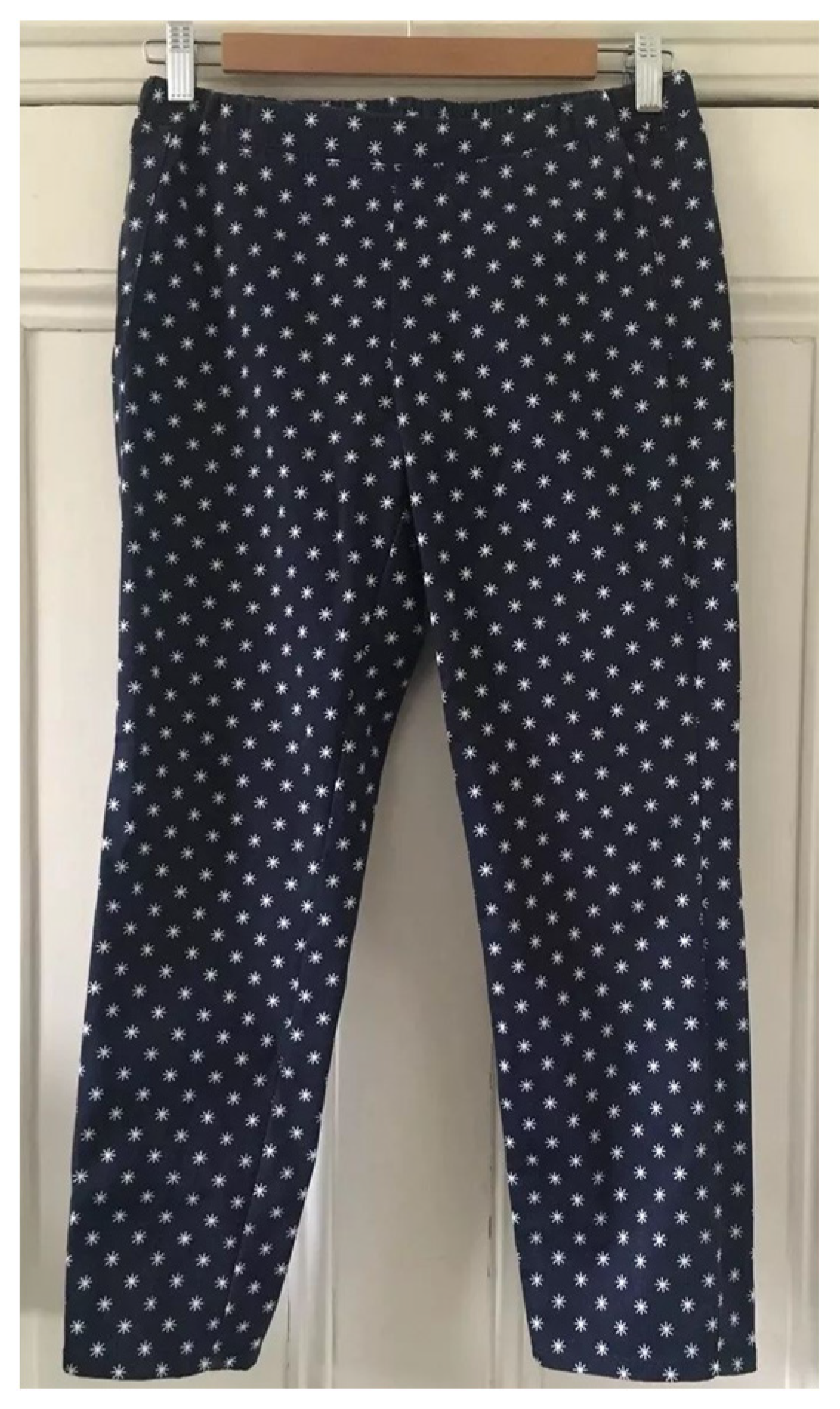
“They’re used to that. It’s not major makeup, but,you know, just the sort of normal workplace levelof slap, you know, just enough to not quite look asrough as you feel.”
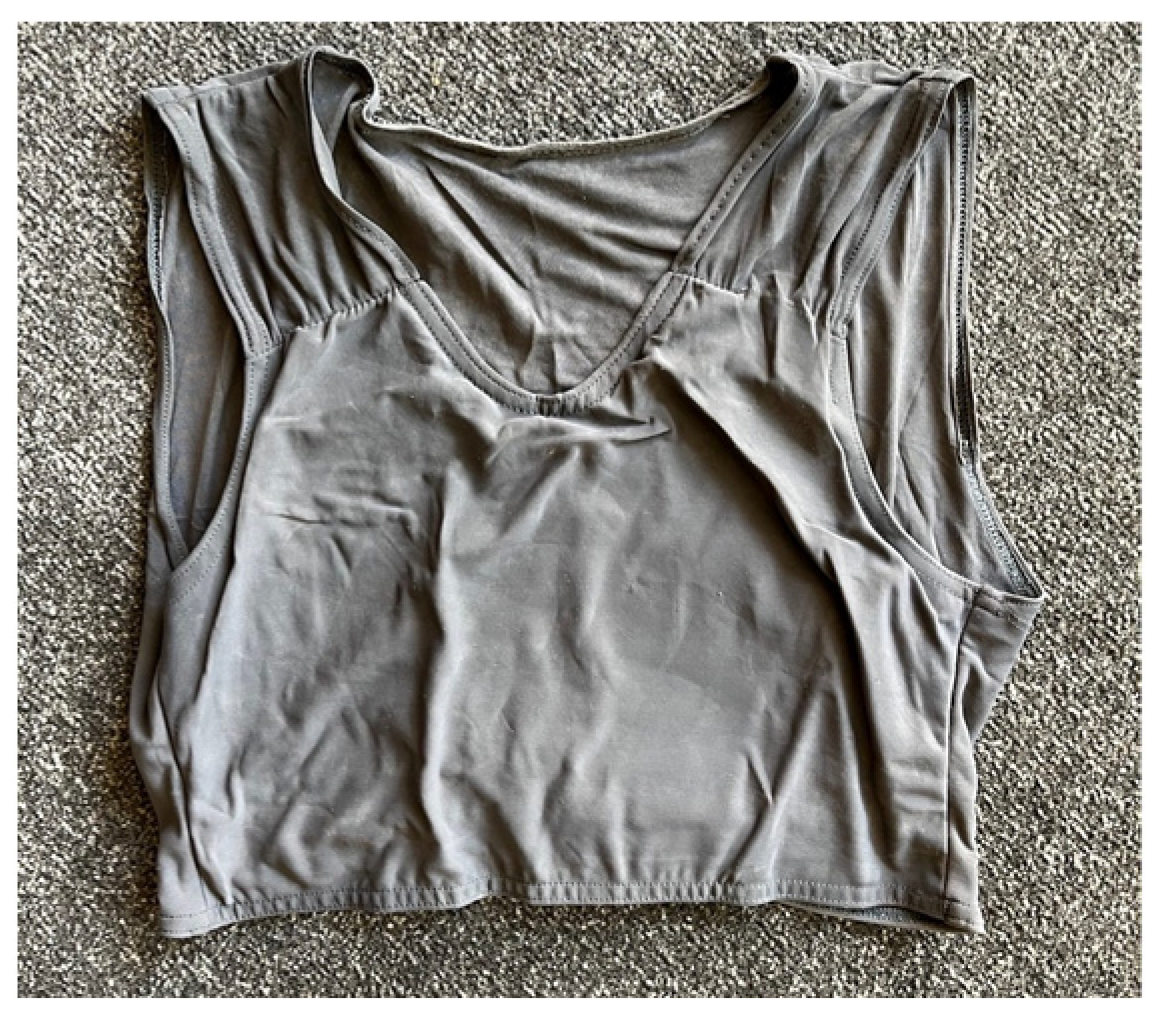
“One of the first things I did as a newly qualified teacher,sort of a quiet act of gender nonconformity, was buyinga blue suit from the women’s section. It felt a bit sneakyat the time, like I wasn’t sure if I was allowed to do it, butit also felt really good. I wore it to school and no onecommented on it, which was kind of the point. It washidden, nothing that would get flagged or draw too muchattention, but for me it was really affirming. It let me feelmore like myself without having to say anything or explain.Looking back, it was definitely one of those early stepswhere I was still figuring things out as how to be anonbinary teacher but doing so in ways that weretangible and meaningful to me.
3.4. Resistance and Possibility in Gendered Professionalism
“If I wore what would generally be consideredmale attire, but slightly outside the norm, itwas deemed inappropriate. If I worestereotypically female attire, it didn’t matter…”
“I didn’t have to clarify the fact thatI’m not a boy and all that stuff. I had a lessonto teach, but I really liked the interaction…once that had been settled, the boy didn’traise any more fuss.”
“I turned up in a skirt, and that was fine, I wasin the band…. nobody said a word.”
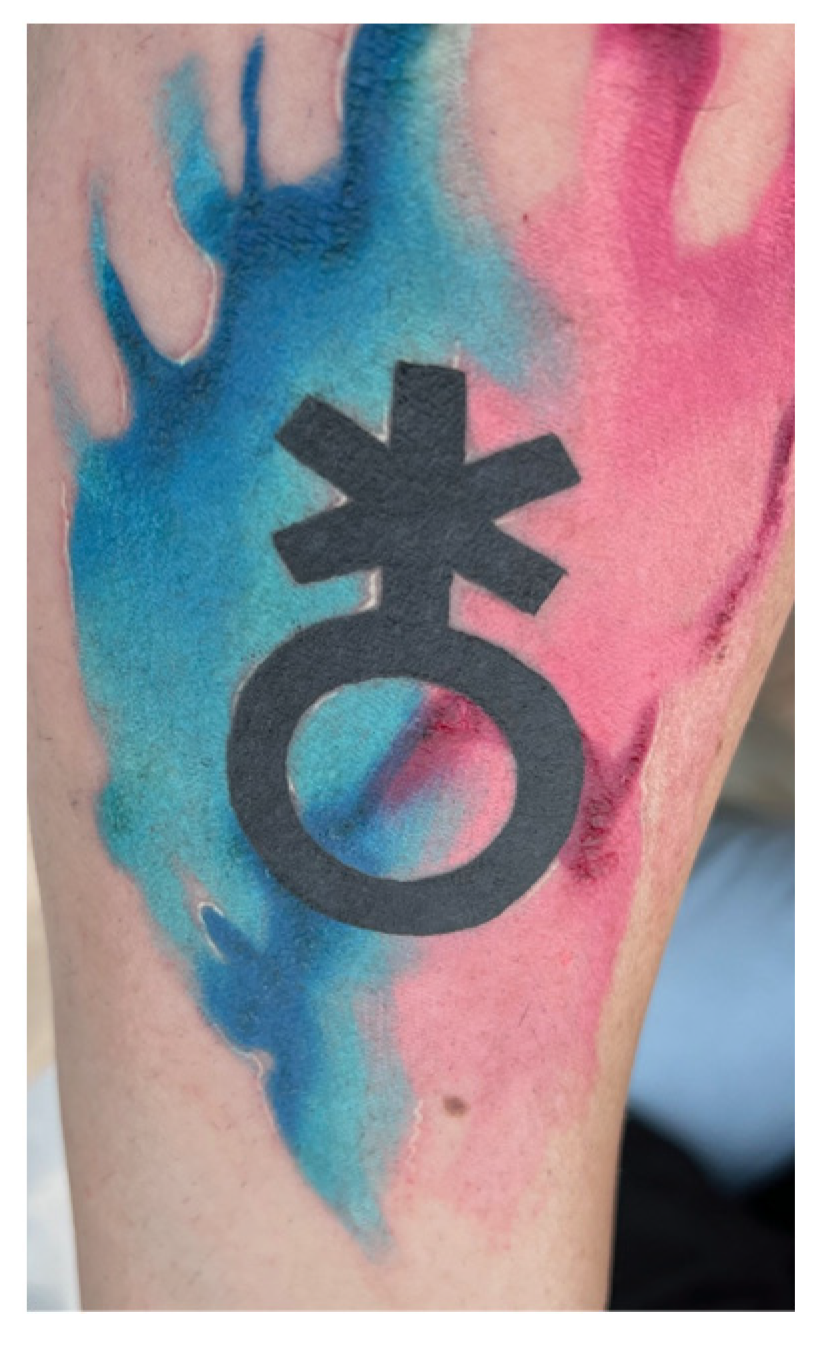
“I deliberately got it somewhere visible. It wasabsolutely about just saying to myself, look, thisis my sort of certainty of who I am. It’s sort oflike a little commitment ceremony to myself.You know, you can look down and know you’vegot this. You know, when things are crap andyou’re being denied your existence and yourrights, you can just remember yourself thatyou’re not the only one.”
“Bodies do not simply take their places in theworld. They are not simply situated in, or locatedin, particular environments. Rather, ‘‘environments’’and ‘‘bodies’’ are intra-actively co-constituted.”
4. Conclusions
Author Contributions
Funding
Institutional Review Board Statement
Informed Consent Statement
Data Availability Statement
Acknowledgments
Conflicts of Interest
Abbreviations
| LGBTQ+ | Lesbian, Gay, Bisexual, Transgender, Queer etc. |
| UK | United Kingdom |
References
- Adomaitis, Alyssa Dana, Diana Saiki, Kim KP Johnson, Rafi Sahanoor, and Arsha Attique. 2021. Relationships between dress and gender identity: LGBTQIA+. Clothing and Textiles Research Journal 42: 3–18. [Google Scholar] [CrossRef]
- Ahmed, Sara. 2004. Affective economies. Social Text 22: 117–39. [Google Scholar] [CrossRef]
- Ahmed, Sara. 2006. Queer Phenomenology: Orientations, Objects, Others. Durham: Duke University Press. [Google Scholar]
- Airton, Lee, Michelle Searle, Sofia I. Melendez, Katrina Carbone, Beck Watt, Kel Martin, and Natalie Lefebvre. 2024. Toward Proactive Support for Transgender and/or Gender Nonconforming Students in Teacher Education: Initial Findings of an Action Research Study. Bulletin of Applied Transgender Studies 3: 113–36. [Google Scholar]
- Allen, Louisa. 2018. Sexuality Education and New Materialism: Queer Things. Berlin and Heidelberg: Springer. [Google Scholar]
- Anderson, Joel R. 2025. Beyond the binary: On the multiplicity of sex and gender in a Western-centric world. Archives of Sexual Behavior, 1–4. [Google Scholar] [CrossRef]
- Anzaldúa, Gloria. 2012. Borderlands/La Frontera: The New Mestiza, 4th ed. San Francisco: Aunt Lute Books. [Google Scholar]
- Aranda, Kay. 2017. Feminist Theories and Concepts in Healthcare: An Introduction for Qualitative Research, 1st ed. London: Palgrave Macmillan. [Google Scholar]
- Bancroft, Kate, and Scott Greenspan. 2023. Facilitators and barriers of inclusion: A critical incident technique analysis of one non-binary physical education teacher’s workplace experiences. Sport, Education and Society 28: 1034–46. [Google Scholar] [CrossRef]
- Barad, Karen. 2007. Meeting the Universe Halfway: Quantum Physics and the Entanglement of Matter and Meaning. Durham: Duke University Press. [Google Scholar]
- Barad, Karen. 2022. TransMaterialities: Trans*/Matter/Realities and Queer Political Imaginings. In The Transgender Studies Reader Remix. Oxfordshire: Routledge, pp. 105–19. [Google Scholar]
- Bartholomaeus, Clare, and Damien W. Riggs. 2017. Transgender People and Education. London: Palgrave Macmillan. [Google Scholar]
- Bennett, Jane. 2010. Vibrant Matter: A Political Ecology of Things. Durham: Duke University Press. [Google Scholar]
- Bourdieu, Pierre. 2001. Masculine Domination. Redwood City: Stanford University Press. [Google Scholar]
- Bragg, Sara, and Jessica Ringrose. 2023. Intervening in school uniform debates: Making equity matter in England. In School Uniforms: New Materialist Perspectives. Cham: Springer International Publishing, pp. 49–65. [Google Scholar]
- Bragg, Sara, Emma Renold, Jessica Ringrose, and Carolyn Jackson. 2018. ‘More than boy, girl, male, female’: Exploring young people’s views on gender diversity within and beyond school contexts. Sex Education 18: 420–34. [Google Scholar] [CrossRef]
- Brett, Adam. 2022. Under the spotlight: Exploring the challenges and opportunities of being a visible LGBT+ teacher. Sex Education 24: 61–75. [Google Scholar] [CrossRef]
- Brett, Adam, Kalum Bodfield, Aisling Culshaw, and Ben Johnson. 2024. Exploring LGBTQ+ teacher professional identity through the power threat meaning framework. British Educational Research Journal 50: 2920–36. [Google Scholar] [CrossRef]
- Brown, Anthony, and Boitumelo M. Diale. 2017. “You should wear to show what you are”: Same-sex sexuality student teachers troubling the heteronormative professional identity. Gender Questions 5: 1. Available online: https://www.unisapressjournals.co.za/index.php/GQ/article/download/2986/2346 (accessed on 10 November 2025).
- Bundock, Lis. 2025. Que(e)rying traditional approaches: Using creative methods in LGBTQ+ research. In The Guide to LGBTQ+ Research. Edited by Adam Brett and Catherine Lee. Leeds: Emerald Publishing, pp. 213–20. [Google Scholar]
- Bundock, Lis, and Rosie Moore. 2022. The Tempered Radical’s Quiet Resistance How Trainee and New Teachers Disturb the Dominance of Neoliberal Policy in Mainstream English Schools. In FORUM. London: Lawrence and Wishart, vol. 64, pp. 11–20. [Google Scholar]
- Burkman, Amy. 2018. At the Intersection of Personal Expression and Professionalism in Education: Perceptions of Body Art in K-12 Schools. eJEP: eJournal of Education Policy, Fall 2018: 1–14. [Google Scholar]
- Butler, Judith. 1993. Bodies That Matter: On the Discursive Limits of “Sex”. Oxfordshire: Routledge. [Google Scholar]
- Butler, Judith. 2024. Who’s Afraid of Gender? London: Allen Lane. [Google Scholar]
- Calvard, Thomas, Michelle O’Toole, and Hannah Hardwick. 2020. Rainbow lanyards: Bisexuality, queering and the corporatisation of LGBT inclusion. Work, Employment and Society 34: 356–68. [Google Scholar] [CrossRef]
- Cano Diaz, Jacqueline C. 2024. Dress to Impress: New Composition Instructors’ Interpretations and Embodiment of Professionalism as Displayed Through Dress. Available online: https://stars.library.ucf.edu/etd2023/231 (accessed on 10 November 2025).
- Cass, Hilary. 2024. Independent Review of Gender Identity Services for Children and Young People: Final Report. Available online: https://cass.independent-review.uk/home/publications/final-report/ (accessed on 10 November 2025).
- Costello, Carrie Yang. 2005. Professional Identity Crisis: Race, Class, Gender, and Success at Professional Schools. Nashville: Vanderbilt University Press. [Google Scholar]
- Cumberbatch, Shannon. 2021. When Your Identity Is Inherently” Unprofessional”: Navigating Rules of Professional Appearance Rooted in Cisheteronormative Whiteness as Black Women and Gender Non-Conforming Professionals. Journal of Civil Rights & Economic Development 34: 81. [Google Scholar]
- Cumming-Potvin, Wendy. 2023. The politics of school dress codes and uniform policies: Towards gender diversity and gender equity in schools. International Journal of Educational Research 122: 102239. [Google Scholar] [CrossRef]
- Davies, Bronwyn. 2020. Entanglement in the World’s Becoming and the Doing of New Materialist Inquiry. Oxfordshire: Routledge. [Google Scholar]
- Deleuze, Gilles, and Félix Guattari. 2004. A Thousand Plateaus: Capitalism and Schizophrenia. Continuum. Available online: https://files.libcom.org/files/A%20Thousand%20Plateaus.pdf (accessed on 10 November 2025).
- Department for Education. 2023. Gender Questioning Children: Non-Statutory Guidance for Schools and Colleges in England (Draft for Consultation). GOV.UK. Available online: https://consult.education.gov.uk/equalities-political-impartiality-anti-bullying-team/gender-questioning-children-proposed-guidance/supporting_documents/Gender%20Questioning%20Children%20%20nonstatutory%20guidance.pdf (accessed on 10 November 2025).
- Department for Education. 2024. Developing School Uniform Policy. GOV.UK. Available online: https://www.gov.uk/government/publications/school-uniform/school-uniforms (accessed on 10 November 2025).
- Department for Education. 2025. Political Impartiality in Schools. GOV.UK. Available online: https://www.gov.uk/government/publications/political-impartiality-in-schools/political-impartiality-in-schools (accessed on 10 November 2025).
- Donovan, Catherine, Geetanjali Gangoli, Hannah King, and Ayurshi Dutt. 2023. Understanding gender and sexuality: The hidden curriculum in English schools. Review of Education 11: e3440. [Google Scholar] [CrossRef]
- Dvorak, Fabian, Urs Fischbacher, and Katrin Schmelz. 2025. Strategic Conformity or Anti-Conformity to Avoid Punishment and Attract Reward. The Economic Journal 135: 556–83. [Google Scholar] [CrossRef]
- Equality and Human Rights Commission. 2025. EHRC Statement on Supreme Court Ruling in For Women Scotland v Scottish Ministers [Press Release]. Available online: https://www.equalityhumanrights.com/ehrc-statement-supreme-court-ruling-women-scotland-v-scottish-ministers (accessed on 10 November 2025).
- Ferfolja, Tania, and Jacqueline Ullman. 2020. Gender and sexuality diverse teachers within a culture of limitation. In Gender and Sexuality Diversity in a Culture of Limitation: Student and Teacher Experiences in Schools. Oxfordshire: Routledge. [Google Scholar]
- Fish, Julie, Andrew King, and Kathryn Almack. 2018. Queerying activism through the lens of the sociology of everyday life. The Sociological Review 66: 1194–208. [Google Scholar] [CrossRef]
- For Women Scotland Ltd. v The Scottish Ministers. 2025. UKSC 16. Available online: https://supremecourt.uk/uploads/uksc_2024_0042_judgment_aea6c48cee.pdf (accessed on 10 November 2025).
- Foucault, Michel. 1980. Power/Knowledge: Selected Interviews and Other Writings, 1972–1977. Edited by Colin Gordon. New York: Pantheon Books. [Google Scholar]
- Frohard-Dourlent, Helene. 2016. Muddling Through Together: Educators Navigating Cisnormativity While Working with Trans and Gender-Nonconforming Students. Doctoral dissertation, University of British Columbia, Vancouver, BC, Canada, April 16. [Google Scholar]
- Fullagar, Simone, and Carol A. Taylor. 2021. Assemblage. In A Glossary for Doing Postqualitative, New Materialist and Critical Posthumanist Research Across Disciplines. Oxfordshire: Routledge, pp. 32–33. [Google Scholar]
- Galarte, Francisco J. 2014. Pedagogy. Transgender Studies Quarterly 1: 145–148. [Google Scholar] [CrossRef]
- Garner, T. 2014. Becoming. Transgender Studies Quarterly 1: 30–32. [Google Scholar] [CrossRef]
- Gray, Emily M. 2021. LGBTIQ+ teachers in Australia. In The Oxford Encyclopaedia of Gender and Sexuality in Education. Edited by Cris Mayo. Oxford: Oxford University Press. [Google Scholar] [CrossRef]
- Green, Kai M. 2017. Trans* movement/trans* moment: An afterword. International Journal of Qualitative Studies in Education 30: 320–21. [Google Scholar] [CrossRef]
- Happel, Alison. 2013. Ritualized girling: School uniforms and the compulsory performance of gender. Journal of Gender Studies 22: 92–96. [Google Scholar] [CrossRef]
- Harris, Anne, and Tiffany Jones. 2014. Trans teacher experiences and the failure of visibility. In Queer Teachers, Identity and Performativity. London: Palgrave Macmillan UK, pp. 11–28. [Google Scholar]
- Harris, Richard, Ann E. Wilson-Daily, and Georgina Fuller. 2021. Exploring the secondary school experience of LGBT+ youth: An examination of school culture and school climate as understood by teachers and experienced by LGBT+ students. Intercultural Education 32: 368–85. [Google Scholar] [CrossRef]
- Herre, Bastian, and Pablo Arriagada. 2024. LGBT+ Rights Have Become More Protected in Dozens of Countries, But Are Not Recognized Across Most of the World. Oxford: Our World in Data. [Google Scholar]
- Hickey-Moody, Anna. 2013. Youth, Arts, and Education: Reassembling Subjectivity Through Affect. Oxfordshire: Routledge. [Google Scholar]
- Hickey-Moody, Anna, and Marissa Willcox. 2019. Entanglements of difference as community togetherness: Faith, art and feminism. Social Sciences 8: 264. [Google Scholar] [CrossRef]
- Holmes, Helen. 2020. Material relationships: Object interviews as a means of studying everyday life. In Mundane Methods: Methodological Innovations for Exploring the Everyday. Edited by Helen Holmes and Sarah Marie Hall. Manchester: Manchester University Press, pp. 55–70. [Google Scholar]
- Horton, John, and Peter Kraftl. 2009. Small acts, kind words and “not too much fuss”: Implicit activisms. Emotion, Space and Society 2: 14–23. [Google Scholar] [CrossRef]
- House of Commons. 2025. Gender Self-Identification [Debate]. Nassau: Hansard. Available online: https://hansard.parliament.uk/commons/2025-05-19/debates/2801067E-044C-4628-A022-FC405ABBA9DA/GenderSelf-Identification (accessed on 10 November 2025).
- Howard, Patrick, Charity Becker, Sean Wiebe, Mindy Carter, Peter Gouzouasis, Mitchell McLarnon, Pamela Richardson, Kathryn Ricketts, and Layal Schuman. 2018. Creativity and pedagogical innovation: Exploring teachers’ experiences of risk-taking. Journal of Curriculum Studies 50: 850–64. [Google Scholar] [CrossRef]
- Ingram, Toni. 2024. The material-discursive phenomena of queer-bodies, clothing and schooling. Discourse: Studies in the Cultural Politics of Education 45: 494–505. [Google Scholar] [CrossRef]
- Ingrey, Jennifer C. 2016. Heterotopia. In Critical Concepts in Queer Studies and Education: An International Guide for the Twenty First Century. New York: Palgrave Macmillan US, pp. 149–59. [Google Scholar]
- Iskander, Lee. 2021. Nonbinary beginning teachers: Gender, power, and professionalism in teacher education. Teachers College Record 123: 199–222. [Google Scholar] [CrossRef]
- Iskander, Lee, Christina Cook, Harper Benjamin Keenan, Mollie McQuillan, and Mario I. Suárez. 2025. “A world of trans vibrance and trans liberation”: How schools support trans educators. Journal of Educational Administration. [Google Scholar] [CrossRef]
- Jackson, Alecia Y., and Lisa A. Mazzei. 2022. Thinking with Theory in Qualitative Research, 2nd ed. Oxfordshire: Routledge. [Google Scholar]
- Joseph, Stephen. 2017. Student perceptions of teacher professional attire. Journal of Education and human Development 6: 31–41. [Google Scholar] [CrossRef][Green Version]
- Katić, Elvira. 2025. What Teachers Wear: Working the Wardrobe across 15 Years. Signs and Society 13: 167–98. [Google Scholar] [CrossRef]
- Keenan, Harper B. 2017. Khaki drag: Race, gender and the performance of professionalism in teacher education. In Confronting Racism in Teacher Education. Oxfordshire: Routledge, pp. 97–102. [Google Scholar]
- Keenan, Harper B., Lee Iskander, and Rachel Marie-Crane Williams. 2024. Introduction: The adventures of trans educators: A comic book issue. Occasional Paper Series 2024: 1. [Google Scholar] [CrossRef]
- Kirby, Vicki. 2013. Human nature. Australian Feminist Studies 28: 369–76. [Google Scholar] [CrossRef]
- Lee, Amanda. 2024. Understanding the Decision-Making Process Behind LGBTQ+ Teachers in the UK Openly Expressing Their Gender and Sexual Identity in the Workplace. Octopus.ac. Available online: https://sure.sunderland.ac.uk/id/eprint/17852/ (accessed on 10 November 2025).
- Lee, Catherine. 2019. Fifteen years on: The legacy of section 28 for LGBT+ teachers in English schools. Sex Education 19: 675–90. [Google Scholar] [CrossRef]
- Lee, Catherine. 2022. How does openness about sexual and gender identities influence self-perceptions of teacher leader authenticity? Educational Management Administration & Leadership 50: 140–62. [Google Scholar]
- Lee, Catherine, Nicola Walshe, and Hannah Branton. 2024. Pronouns, pin badges and pride: LGBTQ+ student experiences of inclusion and belonging in a UK university. Social Sciences 13: 662. [Google Scholar] [CrossRef]
- Let Clothes Be Clothes. 2021. School Uniform: Dressing Girls to Fail. Available online: https://www.letclothesbeclothes.co.uk/girls-school-uniform-report-2021 (accessed on 10 November 2025).
- MacLure, Maggie. 2013a. Researching without representation? Language and Materiality in post-qualitative methodology. International Journal of Qualitative Studies in Education 26: 658–67. [Google Scholar] [CrossRef]
- MacLure, Maggie. 2013b. The wonder of data. Cultural Studies. Critical Methodologies 13: 228–32. [Google Scholar] [CrossRef]
- MacLure, Maggie. 2017. Qualitative methodology and the new materialisms: “A little of Dionysus’s blood?”. Qualitative Inquiry 23: 3–11. [Google Scholar]
- MacLure, Maggie. 2023. Ambulant methods and rebel becomings: Reanimating language in post-qualitative inquiry. Qualitative Inquiry 29: 212–22. [Google Scholar] [CrossRef]
- Moorosi, Pontso. 2012. Who wears the trousers here? Women teachers and the politics of gender and the dress code in South African schools. In Was It Something I Wore? Edited by Relebohile Moletsane, Claudia Mitchell and Ann Smith. Cape Town: HSRC Press, pp. 181–95. [Google Scholar]
- Murris, Karin, and Weili Zhao. 2021. Agency. In A Glossary for Doing Postqualitative, New Materialist and Critical Posthumanist Research Across Disciplines. Edited by Karin Murris. Oxfordshire: Routledge, pp. 28–29. [Google Scholar]
- Nicolazzo, Z. 2021. Imagining a trans* epistemology: What liberation thinks like in postsecondary education. Urban Education 56: 511–36. [Google Scholar] [CrossRef]
- Nicolazzo, Z. 2023. Trans* in College: Transgender Students’ Strategies for Navigating Campus Life and the Institutional Politics of Inclusion. Oxford: Taylor & Francis. [Google Scholar]
- Omercajic, Kenan, and Wayne Martino. 2020. Supporting transgender inclusion and gender diversity in schools: A critical policy analysis. Frontiers in Sociology 5: 27. [Google Scholar] [CrossRef]
- Owis, Bishop. 2024. Radical care as epistemic justice: A queer and trans refusal of neoliberalism, whiteness and the settler colonial gaze. Discourse: Studies in the Cultural Politics of Education 45: 655–73. [Google Scholar] [CrossRef]
- Pajaziti, Valentina. 2025. The influence of teachers’ clothing on aesthetic education. Knowledge International Journal 69: 913–18. [Google Scholar]
- Palkki, Joshua. 2023. Navigating cisgenderism: The experiences of three gender-expansive music educators. Journal of Music Teacher Education 33: 103–21. [Google Scholar] [CrossRef]
- Payne, Elizabethe, and Melissa Smith. 2014. The big freak out: Educator fear in response to the presence of transgender elementary school students. Journal of Homosexuality 61: 399–418. [Google Scholar] [CrossRef] [PubMed]
- Peim, Nick. 2024. A Critique of Pure Education: Radically Rethinking the Education Archipelago. Berlin: Springer Nature. [Google Scholar]
- Phipps, Catherine, and Christopher John Blackall. 2021. “I wasn’t allowed to join the boys”: The ideology of cultural cisgenderism in a UK school. Pedagogy, Culture & Society 31: 1097–114. [Google Scholar] [CrossRef]
- Posner, Saburah Ameena F. 2024. The Importance of Mirrors: Understanding the Impact of Out Queer Teachers and Administrators on LGBTQ+ Students. Radnor: Cabrini University. [Google Scholar]
- Raby, Rebecca. 2012. School Rules: Obedience, Discipline, and Elusive Democracy. Toronto: University of Toronto Press. [Google Scholar]
- Ramdeo, Janet. 2022. Black Female Teachers in White-Dominated Educational Spaces: Narratives of Professional Identity. Doctoral dissertation, London South Bank University, London, UK, April 14. [Google Scholar]
- Reilly, Andrew, and Eirik J. Saethre. 2013. The hankie code revisited: From function to fashion. Critical Studies in Men’s Fashion 1: 69–78. [Google Scholar] [CrossRef] [PubMed]
- Reimers, Eva. 2020. Disruptions of desexualized heteronormativity–queer identification(s) as pedagogical resources. Teaching Education 31: 112–25. [Google Scholar] [CrossRef]
- Rice, Matthew D., and Heather Killelea McEntarfer. 2023. “Be ready for us”: Gender-diverse teachers share advice for school leaders. Educational Leadership 80: 64–68. [Google Scholar]
- Riddle, Stewart, and Andrew Hickey. 2024. Unlocking the Potential of Relational Pedagogy: Reimagining Teaching, Learning and Policy for Contemporary Schooling. Oxford: Taylor & Francis. [Google Scholar]
- Rogers, Christopher. 2022. Don’t touch my hair: How hegemony operates through dress codes to reproduce whiteness in schools. Du Bois Review: Social Science Research on Race 19: 175–91. [Google Scholar] [CrossRef]
- Schumacher, Kayden J. 2025a. Charting the Course: Enlightening Perspectives in Research and Teaching from Insider and Outsider Standpoints. Hillary Place Papers 9: 23–30. [Google Scholar] [CrossRef]
- Schumacher, Kayden J. 2025b. The intersection of queer theory and transgender sexuality: Why new conceptualisations are needed. Sexualities, 1–20. [Google Scholar] [CrossRef]
- Sotak, Kristin Lee, Andra Serban, Barry A. Friedman, and Michael Palanski. 2023. Perceptions of Ethicality: The Role of Attire Style, Attire Appropriateness, and Context. Journal of Business Ethics: JBE, 1–27. [Google Scholar] [CrossRef]
- Suárez, Mario I., and Melinda Mangin, eds. 2022. Trans Studies in K–12 Education: Creating an Agenda for Research and Practice. Cambridge: Harvard Education Press. [Google Scholar]
- Swain, Harriet. 2017. Should Teachers Be Able to Have Tattoos? The Guardian. Quote from Vic Goddard About Teacher Tattoos. Available online: https://www.theguardian.com/education/2017/jul/04/should-teachers-have-tattoos-school (accessed on 10 November 2025).
- Taylor, Carol A. 2013. Objects, bodies and space: Gender and embodied practices of mattering in the classroom. Gender and Education 25: 688–703. [Google Scholar] [CrossRef]
- Thorpe, Holly, Julie Brice, Anoosh Soltani, Mihi Nemani, and Grace O’Leary. 2024. Methods for more-than-human wellbeing: A collaborative journey with object interviews. Qualitative Research 24: 147–70. [Google Scholar] [CrossRef]
- Truman, Sarah E. 2019. Feminist New Materialisms. Edited by Paul Atkinson, Sara Delamont, Alexandru Cernat, Joseph W. Sakshaug and Richard A. Williams. London: SAGE Research Methods Foundations. [Google Scholar] [CrossRef]
- Ullman, Jacqueline. 2023. Present, yet not welcomed: Gender diverse teachers’ experiences of discrimination. In LGBTIQ+ Teachers. Edited by Jen Gilbert and Emily Gray. Oxfordshire: Routledge, pp. 67–83. [Google Scholar] [CrossRef]
- van Amsterdam, Noortje, Dide Van Eck, and Katrine Meldgaard Kjær. 2023. On (not) fitting in: Fat embodiment, affect and organizational materials as differentiating agents. Organization Studies 44: 593–612. [Google Scholar] [CrossRef]
- van Leent, Lisa, and Nerida Spina. 2023. Teachers’ representations of genders and sexualities in primary school: The power of curriculum and an institutional ideological code. The Australian Educational Researcher 50: 683–700. [Google Scholar] [CrossRef]
- Wells, Kristopher. 2018. Transgender teachers: The personal, pedagogical, and political. Journal of Homosexuality 65: 1543–81. [Google Scholar] [CrossRef] [PubMed]
- Wieringa, Saskia E. 2014. Symbolic subversion. Transgender Studies Quarterly 1: 210–12. [Google Scholar] [CrossRef][Green Version]
- Workman, Jane E., and Beth Winfrey Freeburg. 2010. Teacher dress codes in employee handbooks: An analysis. Journal of Family and Consumer Sciences 102: 9–15. Available online: https://www.proquest.com/scholarly-journals/teacher-dress-codes-employee-handbooks-analysis/docview/820914377/se-2 (accessed on 10 November 2025).
- Zembylas, Michalinos. 2014. Theorizing “difficult knowledge” in the aftermath of the “affective turn”: Implications for curriculum and pedagogy in handling traumatic representations. Curriculum Inquiry 44: 390–412. [Google Scholar] [CrossRef]


Disclaimer/Publisher’s Note: The statements, opinions and data contained in all publications are solely those of the individual author(s) and contributor(s) and not of MDPI and/or the editor(s). MDPI and/or the editor(s) disclaim responsibility for any injury to people or property resulting from any ideas, methods, instructions or products referred to in the content. |
© 2025 by the authors. Licensee MDPI, Basel, Switzerland. This article is an open access article distributed under the terms and conditions of the Creative Commons Attribution (CC BY) license (https://creativecommons.org/licenses/by/4.0/).
Share and Cite
Schumacher, K.J.; Bundock, L.; Clough, P. Resisting Uniformity: How Transgender and Gender-Diverse Teachers Subvert School Dress Codes for Self-Affirmation and Possibility. Soc. Sci. 2025, 14, 706. https://doi.org/10.3390/socsci14120706
Schumacher KJ, Bundock L, Clough P. Resisting Uniformity: How Transgender and Gender-Diverse Teachers Subvert School Dress Codes for Self-Affirmation and Possibility. Social Sciences. 2025; 14(12):706. https://doi.org/10.3390/socsci14120706
Chicago/Turabian StyleSchumacher, Kayden J., Lis Bundock, and Peter Clough. 2025. "Resisting Uniformity: How Transgender and Gender-Diverse Teachers Subvert School Dress Codes for Self-Affirmation and Possibility" Social Sciences 14, no. 12: 706. https://doi.org/10.3390/socsci14120706
APA StyleSchumacher, K. J., Bundock, L., & Clough, P. (2025). Resisting Uniformity: How Transgender and Gender-Diverse Teachers Subvert School Dress Codes for Self-Affirmation and Possibility. Social Sciences, 14(12), 706. https://doi.org/10.3390/socsci14120706