1. Introduction
Internal displacement represents a profound global humanitarian challenge, with millions of individuals forced to flee their homes due to conflict, violence, and other crises, yet remaining within their national borders. According to the Internal Displacement Monitoring Centre, by the end of 2023, approximately 75.9 million people were internally displaced worldwide, a significant increase from 71.1 million in 2022, with 68.3 million displacements attributed to conflict, the highest figure on record (
IDMC 2024). Africa bears a disproportionate burden, hosting 32.5 million internally displaced persons (IDPs) by 2023, driven primarily by conflict and violence, with countries such as Sudan, the Democratic Republic of the Congo (DRC), and Ethiopia accounting for a significant share (
IDMC 2024). The causes of conflict are complex, rooted in historical legacies such as colonial border demarcations, resource conflicts, and ethnic tensions, which not only disrupt livelihoods but also pose threats to regional and international stability (
Cohen and Deng 1998;
Kälin and Schrepfer 2012). In the Horn of Africa, these dynamics are particularly acute, with Ethiopia witnessing a dramatic surge in internal displacement, rising from 670,999 IDPs before 2018 to approximately 3.9 million by 2022, a 135% increase over two decades driven by constitutional, socio-cultural, political, and economic factors (
Bayu and Sunjo 2023).
According to the International Organization for Migration (IOM), over 3 million people were internally displaced in Ethiopia by the end of 2023, with 69% displaced due to conflict. The Tigray region in northern Ethiopia hosts the largest number of IDPs, primarily as a result of on-going conflict (
IOM 2024). This conflict has inflicted devastating consequences, displacing millions and subjecting them to profound agony, including food insecurity and disrupted social networks (
Geremedhn and Gebrihet 2024;
Gebrihet et al. 2025;
Gebrihet and Gebresilassie 2025a,
2025b). The crisis is exacerbated by systemic issues, including an ethnic-based federal system identified as a major driver of conflict-induced displacement, as well as insufficient humanitarian responses that fail to address the scale of the problem (
Nigusie 2025).
Despite the growing body of research on internal displacement in Africa since the 1990s, which has explored legal, social, and health dimensions (
Adeola 2020), there remains a critical gap in empirical studies focusing specifically on the experiences, vulnerabilities, and human security concerns of IDPs. While studies such as
Gebreyesus et al. (
2023) have documented the health impacts of the Tigray conflict, and
Desalegn et al. (
2023) have highlighted gender-based violence and family separation in IDP camps, as well as
Abdisa and Likal (
2024) on the social consequences of displacement in Oromia, the unique challenges faced by IDPs, including the psychosocial impacts of prolonged displacement, the strain on host communities, issues of human security, and the responses of government and international organizations, have not been adequately addressed. Moreover, there remains a significant gap in the development of long-term strategies aimed at achieving durable solutions. This gap hinders the development of targeted interventions to alleviate the suffering of IDPs and promote their dignity and security.
The study addresses this gap by offering an in-depth analysis of the suffering, deprivation, and human security challenges faced by IDPs in Ethiopia, Adigrat City. It examines the root causes and dynamics of displacement, the living conditions of IDPs, and their pressing human security concerns. The study also investigates the psychosocial and emotional effects of prolonged displacement and evaluates the adequacy of government and international responses.
The mixed-methods approach used in this research captures data from a total of 349 respondents for survey questionnaires and 17 respondents for qualitative interviews to examine the lived experiences of IDPs and uncover systemic barriers to durable solutions. The findings provide evidence-based insights to inform policies that promote safe return, local integration, or resettlement while protecting human dignity and security. This study enhances understanding of conflict-induced displacement in Ethiopia and adds to broader regional and global discussions on sustainable solutions, while calling for urgent and coordinated interventions to address the complex needs of displaced populations.
2. Brief Literature Review
Internal displacement refers to the forced movement of individuals within their country due to conflict, violence, or environmental stressors (
Cohen and Deng 1998). Unlike refugees, IDPs remain under their government’s jurisdiction, often facing neglect due to weak legal protections (
Kälin and Schrepfer 2012). In Ethiopia, conflict-induced displacement, particularly in Tigray, has surged since 2020, with over 3 million displaced, driven by the Tigray war (
IOM 2024). The concept of human security, encompassing economic, food, health, environmental, personal, community, and political dimensions, provides a lens to analyse IDP vulnerabilities (
UNDP 1994).
The causes of displacement in Ethiopia are multifaceted, including inter-communal conflicts, political instability, and environmental stressors (
Yigzaw and Abitew 2019;
Tesfaw 2022;
Desalegn et al. 2023;
Gebreyesus et al. 2023;
Geremedhn and Gebrihet 2024;
Gebrihet et al. 2025;
Gebrihet and Gebresilassie 2025a,
2025b;
Nigusie 2025). In Tigray, the war has exacerbated these dynamics, creating a humanitarian crisis marked by deprivation and violence (
Gebrihet et al. 2025;
Gebrihet and Gebresilassie 2025a,
2025b;
Geremedhn and Gebrihet 2024). Living conditions for IDPs often involve overcrowded shelters, limited access to basic services, and heightened risks of gender-based violence, particularly for women (
Desalegn et al. 2023).
This study employs the Human Security Framework, originally articulated by the United Nations Development Programme (UNDP) in 1994, to examine the multidimensional vulnerabilities experienced by IDPs (
UNDP 1994). Unlike conventional state-centric conceptions of security, the human security paradigm shifts the focus to individual protection and empowerment. It comprises seven interrelated domains: economic, food, health, environmental, personal, community, and political security. These dimensions enable a holistic understanding of threats to well-being, particularly in contexts marked by protracted conflict and humanitarian crises. Given the scale of displacement in Tigray, the framework offers a suitable lens for analysing the complex insecurities affecting displaced populations.
In this study, the framework facilitates an in-depth analysis of the overlapping vulnerabilities produced by conflict and forced displacement. Economic security has deteriorated due to widespread livelihood loss and unemployment, leaving many IDPs unable to meet basic needs (
Gebreyesus et al. 2023). Food insecurity has intensified amid disrupted agricultural production and supply chains (
Gebrihet et al. 2025;
Gebrihet and Gebresilassie 2025a,
2025b), while health security is compromised by limited access to healthcare, the spread of disease, and poor conditions in overcrowded displacement sites (
Conzatti et al. 2022). Personal and community security have been further eroded by violence, human rights violations, and the breakdown of social networks, contributing to widespread psychosocial distress (
Makango et al. 2023). Political security is similarly threatened by the exclusion and marginalization of Tigrayan communities from political processes (
Geremedhn and Gebrihet 2024). These intersecting threats reveal that displacement constitutes an enduring condition of multidimensional insecurity.
To guide empirical analysis, the framework is operationalized through both quantitative and qualitative indicators aligned with each security dimension. The framework also helps identify gaps in humanitarian responses, including restricted access, insecurity, and administrative delays. The framework’s multidimensional orientation is especially relevant in Tigray’s on-going crisis, shaped by conflict, environmental stress, and limited humanitarian access. It reflects the lived reality of IDPs, who simultaneously face challenges related to livelihoods, physical safety, social cohesion, and political inclusion. Previous comparative research on human security in Tigray and Afar identified persistent personal and physical insecurities as major barriers to rights protection (
Gebru 2017), a trend that has deepened since the 2020 escalation. Nonetheless, applying the framework requires sensitivity to political and logistical constraints.
Empirical research on internal displacement in Ethiopia has revealed a consistent pattern of vulnerability, deprivation, and systemic neglect. Conflict is the predominant driver, with both inter-communal violence and large-scale armed confrontations forcing populations to flee.
Yigzaw and Abitew (
2019) highlight how ethnic tensions and territorial disputes disrupt livelihoods and displace entire communities, leading to long-term socioeconomic instability. In regions such as Benishangul-Gumuz and Oromia, similar displacement patterns have been documented, with recurring cycles of violence eroding community trust and state legitimacy (
Jafer et al. 2022).
In Tigray, the scale and intensity of the war since 2020 have created one of the most acute displacement crises in the country.
Gebreyesus et al. (
2023) document how the destruction of infrastructure, health systems, and agricultural production has compounded the suffering of displaced populations. Internally displaced persons in this region have lost access to basic necessities, with food shortages, contaminated water sources, and inaccessible healthcare becoming the norm. Field-based assessments show that even when aid is delivered, it often fails to meet the nutritional and medical needs of vulnerable groups, particularly children, the elderly, and people with disabilities (
Geremedhn and Gebrihet 2024;
Miller 2024;
Gebrihet et al. 2025;
Gebrihet and Gebresilassie 2025a,
2025b). Poor shelter conditions are a recurring issue across multiple displacement settings.
Conzatti et al. (
2022) report that IDP camps frequently lack adequate drainage, ventilation, and privacy, creating environments conducive to disease transmission and psychological distress. Overcrowding increases vulnerability to communicable diseases such as respiratory infections and waterborne illnesses.
Gendered impacts are widely recognized in the empirical literature.
Desalegn et al. (
2023) and
Gebrihet and Gebresilassie (
2025c) emphasize that displaced women and girls face elevated risks of sexual and gender-based violence. Access to maternal health services and reproductive healthcare is severely constrained, increasing risks during pregnancy and childbirth (
Makango et al. 2023).
Institutional responses remain inadequate.
Jafer et al. (
2022) report that in Oromia, fragmented coordination among humanitarian agencies and the government has hindered the effectiveness of displacement responses. A reliance on short-term relief, rather than sustainable recovery strategies, limits the capacity of IDPs to rebuild their lives.
Miller (
2024) confirms that humanitarian aid has been intermittent and politicized, with delays in distribution and security barriers preventing consistent support. Displacement has also led to legal identity loss for many IDPs, restricting access to public services and participation in social or economic activities (
Kälin and Schrepfer 2012).
This study draws on the conceptual, theoretical, and empirical insights reviewed above to explore the multidimensional insecurities facing internally displaced populations in Ethiopia. The human security framework provides a structured lens through which the intersections of conflict, displacement, and deprivation can be analysed. Existing literature reveals critical gaps in both scholarly understanding and institutional response, highlighting the need for grounded, context-specific inquiry that captures the complexity of protracted displacement and its implications for recovery and long-term stability.
3. Materials and Methods
3.1. Research Design
This study adopts a cross-sectional descriptive survey design. The design is appropriate for examining the prevalence and distribution of key variables related to displacement, living conditions, and well-being at a specific point in time, facilitating the identification of patterns and associations without asserting causal relationships. The integration of quantitative and qualitative methods enhances the analytical depth of the study, enabling a balanced assessment of both statistically measurable indicators and the contextual realities shaping IDPs’ lived experiences.
3.2. Target Population
The study targets IDPs residing in Adigrat City, specifically those displaced due to conflict in the Tigray region. The study specifically focuses on Adigrat for several reasons. Primarily, it is the largest city and the seat of the zonal administration, hosting a significant number of internally displaced persons (IDPs) from Amhara, Oromia, the Western and Northwestern Zones of Tigray, as well as from Zalambessa and Irob woredas in the Eastern Zone of Tigray, who are residing in various IDP camps within Adigrat City. Therefore, choosing Adigrat City, as a major IDP destination in the Eastern Zone of the Tigray region, was found to be representative of the living conditions and other concerns of the IDP population. Second, due to limited funding, the scope of the research was constrained, restricting the study to a select number of IDP-hosting cities in the region. Inclusion criteria encompass adults aged 18 years and above who have been displaced for at least three months and are living in IDP camps or host communities. This focus ensures the study captures the perspectives of individuals with sustained displacement experiences, reflecting the protracted nature of the crisis in Adigrat.
3.3. Sampling Technique
A stratified random sampling technique was employed to ensure representative inclusion of IDPs from diverse settings and demographic groups. The population was divided into strata based on location (three IDP camps, Old Airport, Welwalo, Agazi, and host communities) and household headship (male- and female-headed households). This approach minimizes variability within strata while maximizing differences between them, enhancing the precision of estimates (
Kothari 2004). Within each stratum, participants were randomly selected to reduce bias, ensuring proportional representation of the heterogeneous IDP population in Adigrat.
3.4. Sample Size Determination
The sample size was calculated using Yamane’s formula, which balances precision, confidence level, and population size (
Yamane 1967). Given a total IDP population in Adigrat of approximately 43,957, a margin of error of 5.33%, and a 95% confidence level, the formula is applied as follows:
where—n = sample size,
N = population size
e = margin of error (5.33%).
The sample of 349 IDPs ensures analytical rigor while remaining feasible for detailed data collection.
3.5. Data Collection Tools
Data were collected using a mixed-methods approach to capture both quantitative metrics and qualitative insights. A structured questionnaire, administered via Kobo Toolbox, served as the primary tool, featuring closed-ended questions to gather data on demographic characteristics, causes of displacement, living conditions, human security concerns, and psychosocial well-being. The questionnaire was pre-tested with a small group of IDPs to ensure clarity and cultural appropriateness, with minor revisions made to improve comprehension. In addition, observational checklists were used to document physical conditions in IDP sites, such as shelter quality and sanitation facilities. Structured key informant interviews (KIIs) and in-depth interviews (IDIs) with IDP representatives, camp coordinators, and local leaders provided qualitative depth, exploring perceptions of displacement dynamics and response effectiveness. Secondary data, including reports from
IDMC (
2024) and
IOM (
2024), supplemented primary findings to contextualize the study within broader displacement trends. All tools were designed to align with ethical standards, ensuring informed consent, confidentiality, and sensitivity to participants’ trauma.
3.6. Methods of Data Analysis
Quantitative data were analyzed using descriptive statistics to summarize demographic profiles, living conditions, and human security concerns. Statistical Package for the Social Sciences (SPSS Version 25) was employed to compute frequency distributions, mean, and standard deviation, facilitating the identification of patterns and relationships. Graphical representations, such as tables and charts, were used to present findings clearly and accessibly. Qualitative data from interviews were analyzed using content analysis. This mixed-methods analysis triangulates findings, enhancing the study’s validity and providing a comprehensive understanding of the IDP experience in Adigrat town.
3.7. Ethical Approval Statement
The study was approved by the Research and Quality Assurance Committee (RQAC) at Adigrat University on 10 October 2024, with approval number CSSH/RCSH/25/2024. The research adheres to national and international ethical guidelines, ensuring informed and voluntary consent, protection of participants’ confidentiality and privacy, prevention of harm, and respect for the dignity and rights of all individuals involved.
4. Results
This section presents the findings from a cross-sectional descriptive survey of 349 IDPs. The results are organized into key themes: causes and dynamics of displacement, living conditions, human security concerns, psychosocial and emotional impacts, government and international responses, and challenges to access support.
4.1. Causes and Dynamics of Displacement
Table 1 presents data on the principal causes of displacement among the surveyed IDPs.
A substantial majority of respondents (93.7%) identified armed conflict or violence as the primary reason for their displacement. This finding reflects the severity of hostilities that erupted in the Tigray region, which subjected civilian populations to widespread violence and insecurity. In addition, 55.3% of respondents reported being displaced due to human rights violations, while 43.6% cited the destruction of property or essential infrastructure. These figures indicate that the drivers of displacement were not limited to immediate threats to physical safety, but also involved structural damage and abuses that rendered return or continued residence impossible.
Qualitative data from interviews provide further insight into the abrupt and violent nature of these displacements. An elderly female respondent from the Old Airport site recalled, “We never thought to be displaced from our homes. “When the fighting suddenly began and heavy weapons struck civilian homes, people fled in all directions, leaving their houses unlocked and possessions behind.” This account illustrates the speed and intensity of the violence, which forced families to escape in disarray, without the chance to gather belongings or plan for relocation. Another respondent, a camp coordinator from the same site, added, “They not only forced us into displacement but also looted and burned our possessions and committed heinous crimes against our families and neighborhoods.”
The survey also explored the perceived inevitability of displacement. A large majority of respondents (92%) believed that their displacement was unavoidable, given the extreme nature of the violence and the lack of safe alternatives. Only 8% considered that they might have remained in their homes, although often at great personal risk. One male respondent from the Welwalo site stated, “There was no choice. Bullets were everywhere, and our village was burning. Staying meant death for me and my children.” Such accounts reflect the coercive conditions under which displacement occurred, where leaving became the only viable option for survival.
The data in
Table 1 also reflect the broader impacts of displacement, particularly in relation to economic loss. Many respondents reported the destruction of farms, homes, and small businesses, leading to a complete collapse of livelihoods. A female IDP now residing in a host community shared, “Our farm was burned, our house gone. We had nothing left to live on, so we came here hoping for help.” This statement illustrates the compounded vulnerability faced by those whose displacement involved not only physical dislocation but also the loss of all material means of subsistence.
4.2. Living Conditions of IDPs in Adigrat
4.2.1. Shelter Type of IDPs in Adigrat City
Table 2 presents data on the shelter types currently occupied by IDPs. As shown in
Table 2, 66.2% of respondents reside in inadequate temporary shelters, including 39.8% in plastic sheeting and 26.4% in tents. These types of shelters offer minimal protection from environmental elements such as rain, wind, heat, and cold. Frequently assembled from makeshift materials, they provide insufficient insulation and structural support. Many IDPs living under these conditions are vulnerable to illness, especially during the rainy season, when standing water and poor sanitation create a fertile environment for diseases such as malaria and respiratory infections. Only 33.8% of respondents live in permanent structures, including schools, community buildings, and houses provided by host families. However, these sites are often overcrowded, compromising hygiene, privacy, and overall quality of life.
The interview findings underscore the gravity of the housing crisis. A volunteer from the Welwalo IDP site described the situation that: “Many of the families are living in tents and tattered plastic shelters. The plastic shelters could not protect from rains and suns. For instance, when it rains, everything gets wet. As a result, people are caught by malaria. It is tragic that the people in the IDP camps are living in extremely harsh and miserable conditions.” This description illustrates not only the inadequate nature of the shelters but also the emotional toll of prolonged exposure to unsafe living conditions. Similarly, a mother residing at the Old Airport site explained, “Our tent leaks every time it rains. My children get sick, and we have no dry clothes or blankets. It is like living outside, but with no choice.” Her opinion reflects the daily hardships faced by families who are unable to shield their children from the elements or maintain a minimum level of comfort.
Although 33.8% of IDPs living in permanent structures are in relatively better conditions, these shelters present their own challenges. Schools and community buildings, originally intended for other purposes, have been repurposed to accommodate displaced families. A key informant from the Agazi site noted, “The school they stay in has no space. Families sleep side by side, and there’s no proper toilet or place to cook. It’s better than a tent, but it’s still not a home.” Overcrowding, poor sanitation, and the absence of privacy contribute to tensions and elevate the risk of disease transmission, particularly among children and the elderly.
Table 2 also indicates that 96.3% of the respondents reported that their current living arrangements fail to meet even basic standards of safety or habitability. This reveals the extent to which displacement has undermined the capacity to secure dignified shelter. The lack of durable, weather-resistant housing not only jeopardises physical health but also erodes a sense of stability and belonging.
4.2.2. Access to Basic Needs and Services
As presented in
Table 3, there is a lack of access to basic needs and services among IDPs. The data reveal a troubling reality where most displaced households lack access to clean water, sufficient food, sanitation, electricity, and healthcare.
Clean water access remains alarmingly insufficient. A total of 83.1% of respondents indicated irregular or non-existent access to safe drinking water, often relying on polluted sources that increase their exposure to waterborne diseases. The consequences of this are reflected in frequent outbreaks of diarrhoeal illnesses, particularly affecting children. Equally distressing is the prevalence of food insecurity, reported by 98.9% of respondents. Families are frequently forced to skip meals, and the limited aid that occasionally arrives fails to meet nutritional needs.
Sanitation remains a critical gap, with 97.1% of IDPs lacking adequate facilities, resulting in widespread open defecation. This significantly increases disease risk, particularly during the rainy season when waste disperses across living spaces. Electricity and healthcare are unavailable to 70.5% of respondents, compounding hardship. The absence of electricity undermines personal safety, restricts communication, and limits economic or educational engagement. Similarly, lack of healthcare access delays treatment. A local leader from Old Airport noted, “Food is insufficient. Aid rarely comes, but it is not enough. Many of the families eat once a day, and there are also the days where the household heads skip a meal.” A woman from Welwalo added, “We walk far to fetch water, but it’s often dirty. My kids get sick from drinking it, and we have no medicine to help them.” Her testimony reflects the 83.1% lacking access to clean water and the resulting child morbidity. On sanitation, a key informant from Agazi stated: “There are no toilets in the camp. People go in the open, and when it rains, the waste spreads everywhere, making everyone sick.”
Electricity deprivation also poses safety risks. A male IDP from a host community observed: “Without electricity, we cannot even charge a phone to call for help or check on family. At night, it’s dark and dangerous, especially for our daughters.” A mother from Old Airport IDP site reported: “My son has a fever, but the nearest clinic is too far, and we can’t afford medicine. We just pray he gets better.” This highlights the serious consequences faced by the 70.5% of individuals who lack access to medical care. A volunteer at Welwalo also remarked, “Aid comes sometimes, but it’s never enough. Families fight over the little food or water we get, and there’s no system to make sure everyone is helped.” The near-universal levels of food insecurity (98.9%), inadequate sanitation (97.1%), poor water access (83.1%), and lack of electricity and healthcare (70.5%) point to widespread deprivation. These unmet needs erode mental well-being and human agency, framing broader challenges in protection and long-term displacement recovery.
4.2.3. Education and Employment Conditions of IDPs
Table 4 presents a detailed account of the educational and employment barriers confronting IDPs. Although 62.8% of respondents indicated that educational facilities are available in or near their current locations, only 45.6% reported that children in their households actually attend school. This discrepancy highlights the presence of deeper structural barriers that hinder participation despite the availability of services. Among those with access to schools, 79.5% identified financial constraints as the primary obstacle, while 10% pointed to safety concerns and 7.9% cited the lack of schools in close proximity.
An education officer at the Welwalo site remarked that “there are schools albeit not enough. For some families, even though there are nearby public schools, they don’t send their children to schools not because they are asked tuition fee but costs of uniforms, food, and related costs.” A mother at the Old Airport site shared a similar concern, stating, “My daughter wants to learn, but we cannot pay for her books or clothes. She stays in the camp all day, and I worry she will never have a chance to escape this life.” Insecurity and distance also contribute to the problem, especially for girls. A woman from the Agazi site explained, “The school is far, and the road is not safe. I cannot let my girls walk alone, so they stay with me instead of learning.” This supports the 10% of respondents who cited security issues and the 7.9% who indicated that schools were too far from their locations.
Table 4 also shows that 84.2% of respondents have no access to any livelihood opportunities. This figure underscores the limited economic options available to IDPs and the extent to which they are dependent on irregular humanitarian assistance. Many respondents explained that their daily survival depends on sporadic food distributions, informal aid networks, or small-scale activities that offer little income. A male IDP from a host community recalled, “There are no jobs here. I used to farm, but now I wait for aid that barely comes. My family suffers because I cannot provide.” Discrimination and the lack of market access were also noted as additional barriers. A key informant from the Old Airport site observed that “some IDPs try to sell small things, but there is no market, and locals do not trust us. Without jobs, people lose hope.” His remarks draw attention to social exclusion and the absence of enabling environments for economic participation.
4.2.4. Human Security Concerns of IDPs in Adigrat
Table 5 provides an overview of the physical security concerns faced by IDPs. Most respondents (93.7%) reported feeling unsafe in their current locations, reflecting a widespread perception of danger that undermines their ability to live with dignity and stability. Gender-based violence (GBV) is the primary threat, cited by 40.9%, followed by theft (22.6%), property damage (19.2%), and harassment (17.2%). In addition, 85.7% reported no security measures such as guards or lighting, leaving camps vulnerable to crime and attacks. This lack of protection amplifies fear and insecurity. A female IDP coordinator from the Old Airport site stated, “Given the current security situations in Adigrat, many female-headed IDPs do not sleep well at night because there are no security protections around the IDP sites.” Women, who represent 51.3% of the surveyed population, live in constant anxiety without guards or secure shelters. A mother from Welwalo shared, “At night, we hear noises outside our tent, and I hold my daughters close. There is no one to protect us if someone comes.” This testimony underscores the 40.9% citing GBV as a major concern, highlighting the vulnerability of women and girls.
The concern about theft expressed by 22.6% of respondents underscores the precariousness of life in displacement sites. A male IDP from Agazi said, “Thieves come at night because there are no lights or guards. We lost our blankets and clothes, and now we have nothing to keep warm.” Harassment, noted by 17.2%, adds another layer of insecurity, especially for IDPs in host communities, where tensions with locals escalate into confrontations. A key informant from a host community said, “Some locals harass IDPs because they think we take their resources. It makes us feel unwelcome and unsafe outside the camps.” This social tension compounds physical insecurity. The sense of un-safety (93.7%) reveals a broader failure to establish secure environments in displacement sites. The absence of lighting, patrols, or secure shelters leaves families exposed to multiple risks. A volunteer at Old Airport said, “Without security, people live in fear every day. Women are afraid to leave their tents, and children cannot play outside safely.” This connects the high fear levels to the lack of protective measures.
4.2.5. Economic and Food Security
Table 6 reveals the severe challenges faced by IDPs. A total of 89.7% of respondents reported having no means to generate income, with 62.5% attributing this to a lack of available jobs and 14.6% identifying discriminatory practices that obstruct their ability to work. Food insufficiency affects 96.8% respondents, with 45.0% consuming only one meal daily and 7.2% receiving less than one meal, placing them at substantial risk of malnutrition and illness.
As indicated in
Table 6, access to income-generating activities is extremely limited among the surveyed IDPs, with only 10.3% reporting engagement in such activities. For those unable to work, the primary obstacle is the unavailability of jobs, followed by social exclusion manifested as discrimination against displaced individuals. Additional barriers include insufficient skills or education and other factors, which together compound the difficulty of securing livelihoods. Financial support reaches only 44.1% of respondents, leaving the majority without critical aid.
Financial concerns are dominated by the inability to purchase food, reported by 85.1%, alongside challenges affording rent (69.6%) and healthcare (58.2%). When it comes to daily nutrition, 45.0% of the population eat only one meal, 46.1% manage two meals, a negligible 1.7% consume three meals, and 7.2% subsist on less than one meal per day. One individual living with host families noted, “Many of us depend on food aid or money sent by relatives. When it is delayed, we go to bed hungry.” This corresponds with the high prevalence of food insufficiency reported in
Table 6 and emphasizes the detrimental effects of inconsistent aid. A father residing in the Old Airport camp recounted, “I used to farm and provide for my family. Now, there is no work, and my children frequently go hungry.” Similarly, a woman from the Welwalo camp described the social barriers encountered: “I tried selling small items, but local people refuse to buy from me. They treat me as an outsider.” The scarcity of employment opportunities in Adigrat is echoed by a young man from the Agazi camp who stated, “There are no jobs here, no farms, no shops. I wait all day, but waiting does not put food on the table.” This account highlights the frustrations and despair of the 62.5% citing lack of jobs and the broader 89.7% unable to earn income.
4.2.6. Community and Social Security
Table 7 reveals the complex social environment that IDPs. A total of 56.4% of the respondents reported feeling welcomed by host communities, signalling moments of solidarity where locals provide emotional support, resources, or shelter. In contrast, 43.6% encounter social rejection, with discrimination accounting for 51.3% of the reasons given, and competition over scarce resources such as food, water, or humanitarian assistance explaining 46.7%. The tension between IDPs and members of the host community in Adigrat City is largely caused by a struggle for resources. The scarcity of financial loans, aid, and employment opportunities in the host community has led IDPs to face pressures on infrastructure and limited access to essential resources. The issue of aid diversion, where some members of the hosting community registered themselves as members of IDPs in order to benefit from aid, has been found as a cause for much resentment. Moreover, this perceived unfairness is then compounded by a lack of financial loans, credits and workplace opportunities to the IDPs from the local government. Their sustenance is therefore left solely in the hands of the meager resources of the IDPs. This, in turn, resulted in a rivalry for economic opportunities between the IDPs and the host community, thereby reinforcing a “we versus they” mentality. In this regard,
Myers et al. (
2024) argued that poor economic conditions can undermine and destabilize social cohesion among the host communities and the IDPs. On the other hand, improved service delivery and economic conditions strengthen social cohesion. However,
Myers et al. (
2024) further noted that inclusive policies that integrate public goods play a substantial role in improving social cohesion between the displaced and host communities. Nevertheless, no existing tensions between the host community and IDPs were reported in the study area on grounds of ethnicity, political affiliation, and religious beliefs.
Within this fragmented social landscape, discrimination emerges as a persistent barrier. Verbal hostility, stigma, and exclusion from local activities are common experiences, reinforcing IDPs’ outsider status. A key informant from a host community remarked on how locals accuse IDPs of depleting shared resources, creating a climate of suspicion and fear. The competition for limited aid exacerbates divisions. One female IDP recounted the discomfort and isolation she felt when market vendors and neighbours silently labelled her as an outsider. Such social exclusion compounds the psychological distress of displacement, limiting opportunities for connection. Children bear a particular burden, with reports of local youths teasing displaced children, thereby restricting their ability to engage freely in play and community life.
4.2.7. Environmental Security
Table 8 exposes the significant environmental vulnerabilities that IDPs confront. A total of 86.8% of respondents expressed concerns about environmental hazards, highlighting the precariousness of their living conditions. Illnesses associated with poor-quality shelters affected 60.4% of the population, while risks from flooding and fire impacted 29.2% and 27.3%, respectively. These figures point to systemic deficiencies in providing secure, resilient environments, placing displaced families in jeopardy of illness, injury, and property loss.
A key informant at the Welwalo site described tents tearing in strong winds and flooding spreading disease throughout the camp. This aligns with the nearly one-third of respondents affected by flooding. At the Old Airport site, a mother recounted her child’s illness caused by constant dampness and voiced on-going fears of fire from cooking activities, echoing the concerns reported by many IDPs. Similarly, a father from Agazi shared a harrowing experience of escaping a fire that destroyed his family’s few possessions.
This variation clearly indicates that disparities in the living conditions of internally displaced persons (IDPs) are driven by a combination of factors, including the duration of displacement and the socioeconomic capacities of the IDPs. The length of displacement time triggers a natural process of transition from temporary to more permanent shelters when temporary shelters eventually become risky for the IDPs living due to floods, disease and lack of protection. Moreover, this variation could also happen when the economic needs of IDPs are met. However, IDPs in official camps and those in need of aid are confined to temporary and official shelters. Thus, this inequality depends on the scenario of the displacement emergency and indirectly on the capabilities of IDPs to privately negotiate socioeconomic resources.
The intersection of poor sanitation, flooding, and fire hazards creates an acutely dangerous environment in displacement sites. “We are seeing a health crisis,” noted a volunteer at the Old Airport site, citing the lack of drainage and toilets. Floodwaters routinely soak shelters and belongings, raising the risk of respiratory and waterborne diseases. Fire remains a constant threat, with plastic sheeting and open cooking flames endangering lives. A community leader stressed how the camps’ design exposes families to repeated disasters, forcing them to live in fear of losing what little they have. These accounts point to a deeper pattern of neglect and an urgent need for safer, more resilient infrastructure.
4.3. Psychosocial and Emotional Impacts of Displacement on IDPs in Adigrat
Table 9 exposes a distressing portrait of the mental health challenges afflicting IDPs. A total of 91.4% of respondents reported psychological distress, with 65.3% identifying trauma linked to conflict-related violence. Grief over lost homes or family members affected 52.7%, while 47.6% revealed anxiety stemming from an uncertain future. Access to mental health support remains critically low at only 8.6%, underscoring the enormous gap in services necessary to address these emotional burdens.
A female IDP at the Welwalo site described recurring nightmares of bombings that continue to fuel fear even in moments of physical safety. Her account mirrors widespread trauma captured in the survey and the deep psychological wounds left by violence. At the Old Airport site, a father recounted losing his wife during the conflict and now raising their children alone in quiet sorrow. At the Agazi IDP site, a woman described how sleepless nights are consumed by thoughts of returning home, her uncertainty echoing the anxieties expressed by nearly half of the respondents.
Coping strategies reflect varied efforts to manage emotional pain. Nearly half of respondents use prayer and religious participation, while one quarter rely on conversations with family or friends. Few seek professional counselling, highlighting gaps in accessible mental health care. Distractions through activities provide an outlet but do not replace needed psychological interventions.
4.4. Government and International Responses
Table 10 offers a detailed assessment of the humanitarian and government initiatives aimed at assisting IDPs. A total of 56.4% of the respondents reported no awareness of government programs, whereas 43.6% acknowledged their existence. In contrast, 95.1% recognized international organizations’ involvement and 4.9% unaware. Despite this widespread awareness of international actors, actual aid delivery remains irregular: 61.6% receive support occasionally, 38.1% rarely, and just 0.3% benefit from regular assistance.
The interview findings enrich this picture. A female IDP at the Old Airport site shared, “Food aid comes sometimes, but it is never enough for my family. We wait weeks, and then it is gone in days.” Her experience exemplifies the uncertainty faced by the majority who receive occasional support. A male IDP from Welwalo reflected, “They gave us tents, but they tear easily, and no one comes to fix them. We need real houses.” A young mother from Agazi also explained, “My child was sick, but the clinic had no medicine. We feel forgotten by those who should help us.” A community leader from a host community remarked, “International groups try, but their help is uneven. Some get aid; others wait in vain.”
The large proportion of implementation gaps worsens the physical and psychological hardships documented earlier. The recognition of international support contrasts with irregular aid delivery, suggesting that logistical and resource limitations constrain effective coverage. A volunteer at Old Airport observed, “People know help is out there, but it does not reach them when needed. The system is broken.” This highlights the disconnect between awareness and access, particularly for the 4.9% who remain unaware of international support.
4.5. IDP Satisfaction with the Government Responses
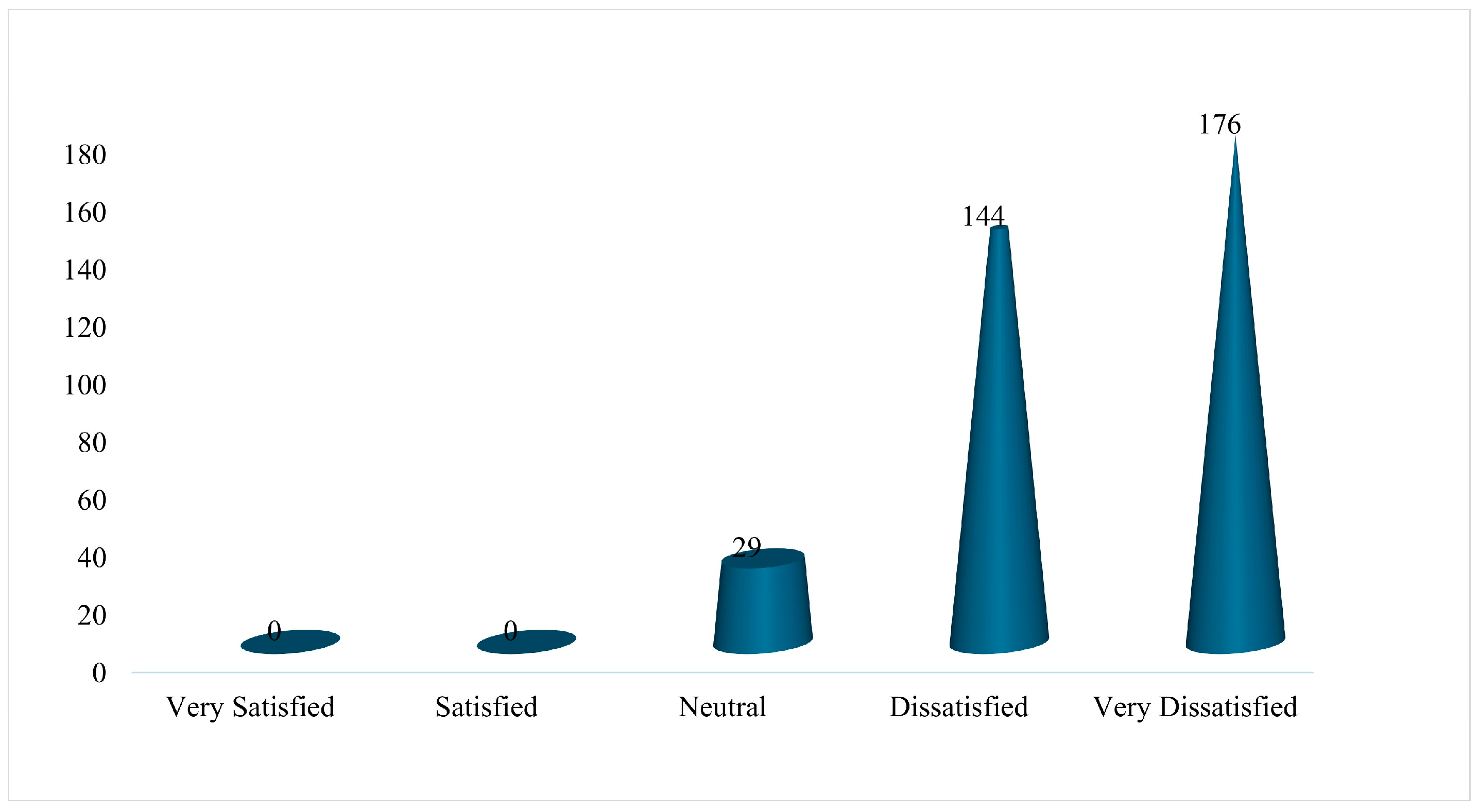
Figure 1 illustrates satisfaction levels among IDPs regarding humanitarian crisis responses. A combined 92% expressed dissatisfaction: 50.4% reported being very dissatisfied, while 41.3% were dissatisfied. This signals’ profound dissatisfaction with how the humanitarian crisis in Adigrat city’s IDP communities has been managed.
Widespread dissatisfaction with government responses reveals a deep perception of political neglect and the politicisation of aid across different levels of authority. The 8.3% of respondents who reported a neutral stance may reflect uncertainty rather than genuine approval. Notably, no respondent expressed clear satisfaction with ongoing humanitarian efforts. These findings point to an urgent need for immediate, targeted interventions to address the critical needs of IDPs, while also reinforcing the importance of enabling safe and voluntary return in accordance with the Pretoria Peace Accord on the Cessation of Hostilities.
4.6. IDP Satisfaction with the International Organizations’ Response
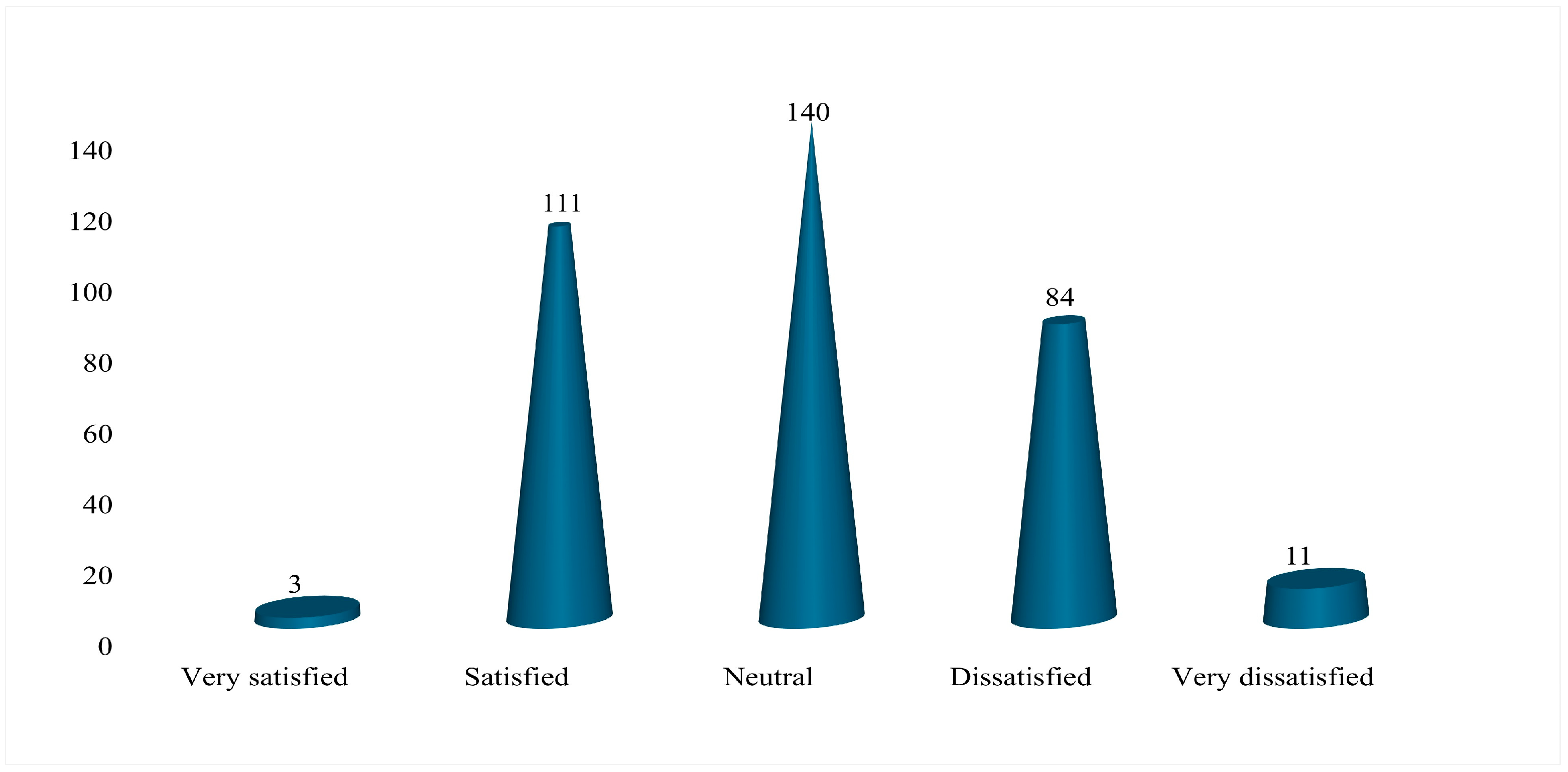
Figure 2 provides IDPs’ satisfaction levels regarding the response of international humanitarian organizations to their needs. The figure shows that only 0.9% of respondents are very satisfied, 31.8% are satisfied, 40.1% remain neutral, 24.1% are dissatisfied, and 3.2% are very dissatisfied. This distribution underscores a predominant uncertainty among IDPs, with the largest share adopting a neutral stance, while 27.3% express dissatisfaction. The findings from interviews enrich this picture. A female IDP from Welwalo remarked, “The international teams brought us blankets once, and I felt thankful, though it was brief.” This aligns with the 0.9% very satisfied, highlighting rare but impactful aid.
Perceptions of international aid among IDPs reveal a complex mix of uncertainty, conditional appreciation, and dissatisfaction. A male IDP from Old Airport stated, “I appreciate the food aid, but it is not regular, so I cannot fully trust it,” echoing the 31.8% who reported partial satisfaction. A young mother from Agazi remarked, “I do not know what to think. The help comes sometimes, but not when we need it most,” reflecting the 40.1% who were neutral. Meanwhile, a community elder from a host community observed, “Some get aid, others do not. The unfairness makes people angry and hopeless,” aligning with the 27.3% who expressed dissatisfaction. A local volunteer noted, “Satisfaction depends on what people receive. Some feel helped, others feel abandoned, and many just do not know,” capturing the uneven distribution and communication gaps that characterize aid delivery. These perspectives underscore a broader pattern: while some assistance reaches IDPs, its inconsistency and perceived unfairness contribute to a prevailing sense of insecurity and mistrust.
4.7. Challenges in Accessing Support
Table 11 analyses the barriers IDPs face when seeking support from government and international humanitarian organizations. The findings reveal a stark contrast: 86.2% of respondents reported challenges accessing government assistance, whereas only 12.3% experienced obstacles with international support. 13.8% encountered no difficulties with government aid, and a notable 87.7% had smooth access to international aid. For government support, the predominant challenges include bureaucratic obstacles (95.0%), perceived discrimination or favouritism (61.8%), lack of information (36.2%), and distance to service centres (6.3%). In contrast, challenges with international organizations centre on inadequate resources (84.6%), long waiting times (73.9%), lack of information (28.1%), and discrimination (15.0%).
The interview findings further illustrate the human impact behind these figures. “I tried to get government help, but their rules are confusing, and I don’t have the right papers,” said a male IDP from the Old Airport site, reflecting the 95.0% who face bureaucratic obstacles and the 36.2% who report a lack of information. A female IDP from Welwalo shared, “They give aid to some families but not mine. It feels like they do not want us here,” mirroring the 61.8% who perceive discrimination or favouritism. A young mother from Agazi described international aid as “never enough,” with long waits, “standing in lines with sick children,” corresponding to the 84.6% citing insufficient aid and the 73.9% reporting long delays. A host community leader added, “The service centres are far, and people cannot travel easily with no money,” emphasizing the geographic barriers experienced by 6.3% of respondents. These accounts underscore the institutional and logistical hurdles that define the daily realities of displaced persons.
While 86.2% of IDPs struggle to access government assistance, the complexity of administrative requirements and documentation issues contributes to widespread exclusion. Discrimination (61.8%), poor outreach (36.2%), and geographic isolation (6.3%) further constrain access. Although fewer respondents (12.3%) report issues with international aid, major concerns persist regarding the adequacy (84.6%), timeliness (73.9%), and fairness (15.0%) of distribution, alongside communication gaps (28.1%). “Access is a battle, government rules block people, and international aid falls short when it matters,” summarized a volunteer at Old Airport, encapsulating the tensions between bureaucratic exclusion and inconsistent humanitarian support, and pointing to the urgent need for more coordinated, equitable intervention.
5. Discussion
This study offers a critical interpretation of the protracted displacement crisis in Adigrat town, positioning it as a multidimensional phenomenon shaped by overlapping failures in political governance, institutional capacity, and conflict resolution. Displacement in this context extends beyond the immediate consequences of armed violence to reveal systemic weaknesses that have transformed temporary emergency conditions into a chronic humanitarian and political dilemma.
While armed conflict remains the proximate cause, the longevity and intensity of displacement are rooted in unresolved political contestation and a fragile institutional landscape. Violence not only precipitated mass movement but also dismantled the protective mechanisms that might have enabled recovery (
Gebreyesus et al. 2023). The widespread breakdown of civilian protection, rule of law, and basic service delivery illustrates how the absence of functioning institutions facilitates the normalization of displacement (
Kälin and Schrepfer 2012). In such a context, human security is undermined not simply by violence but by the failure of the state to uphold its foundational responsibilities.
The Pretoria Agreement, widely recognized as a critical juncture in Ethiopia’s post-conflict trajectory, was intended to provide a comprehensive roadmap for resolving the humanitarian fallout of the war in Tigray. It offered the potential to operationalize commitments to civilian protection, humanitarian access, and political normalization. However, the persistence of displacement underscores a fundamental gap between normative aspiration and political will. As
Gebreyesus et al. (
2023) and
Nigusie (
2025) argue, weak institutions and fragmented governance continue to obstruct progress, leading to minimal implementation of return and reintegration measures. This disjuncture has profound implications: it not only prolongs displacement but also deepens social fragmentation, reinforces exclusion, and erodes trust in both state and international actors.
Displacement in Adigrat reveals how forced migration is not solely a humanitarian concern but an indicator of broader state fragility. As
Gebrihet and Mwale (
2024) demonstrate, these challenges are increasingly rooted in political structures that marginalize specific populations in regions marked by ethnic polarisation. The continuation of such conditions reflects not a lack of knowledge or resources, but the absence of a coordinated and sustained response framework. The Pretoria Agreement has remained largely declarative in the absence of mechanisms to enforce accountability or provide institutional incentives for implementation (
African Union 2022). Consequently, affected populations experience displacement not as an exceptional disruption but as an enduring condition of political abandonment (
Kälin and Schrepfer 2012).
The effects of this protracted displacement are multidimensional. Insecurity, poor living conditions, and lack of access to basic services are compounded by social tensions, economic exclusion, and psychosocial trauma.
Desalegn et al. (
2023) and
Makango et al. (
2023) identify these overlapping vulnerabilities as part of a broader crisis of protection and well-being, exacerbated by a lack of attention to the lived experiences of displaced populations. Gender-based violence, social exclusion, and loss of livelihoods become daily realities for those uprooted by conflict, yet these conditions remain peripheral in post-conflict planning (
Conzatti et al. 2022;
Desalegn et al. 2023). The continued failure to address these issues reveals not only gaps in humanitarian delivery but also the limitations of peace-building frameworks that overlook structural and relational dimensions of displacement (
Geremedhn and Gebrihet 2024).
International aid, while present, has failed to close the gap between emergency response and sustainable recovery.
Gebreyesus et al. (
2023) and
Miller (
2024) observe that the fragmentation of aid systems, coupled with insufficient political coordination, has led to inefficiencies, uneven resource distribution, and perceptions of politicisation. These factors diminish the effectiveness of external support and contribute to growing mistrust among displaced populations. While the Pretoria Agreement outlined mechanisms for oversight and humanitarian access (
African Union 2022), its implementation has been uneven and largely neglected in relation to the return of IDPs in Adigrat. This failure has further entrenched the food insecurity and structural vulnerabilities associated with displacement (
Gebrihet and Gebresilassie 2025a,
2025b;
Jafer et al. 2022).
The findings underscore the need for a reconceptualization of displacement as a political and developmental challenge rather than solely a humanitarian issue. Addressing the crisis in Adigrat requires more than emergency relief; it demands transformative strategies that engage directly with the causes and consequences of displacement. These include rebuilding institutional legitimacy, ensuring equitable resource distribution, facilitating social reintegration, and restoring the rights of displaced populations (
Kälin and Schrepfer 2012;
Geremedhn and Gebrihet 2024). As argued by
Geremedhn and Gebrihet (
2024)
Gebrihet et al. (
2025);
Gebrihet and Gebresilassie (
2025a,
2025b) on the dynamics of humanitarian diplomacy and food insecurity in conflict-affected Tigray, a sustainable response must be holistic, integrating governance reform, service delivery, and inclusive decision-making.
The Pretoria Cessation of Hostilities Agreement, while symbolically important, risks losing relevance unless its provisions are implemented through concrete and verifiable actions. The credibility of the post-conflict order hinges on the extent to which such agreements translate into tangible improvements in people’s lives. In the absence of enforceable commitments and consistent follow-through, the gap between promise and practice widens, allowing displacement to persist as a symptom of institutional dysfunction and human insecurity. At stake is not only the fate of those currently displaced but also the state’s capacity to restore public trust, build inclusive institutions, and prevent future cycles of conflict-induced displacement.
6. Conclusions and Implications
This study highlights the complex and enduring challenges faced by IDPs in Adigrat City, shaped by the violent conflict in Tigray and deep structural weaknesses in governance and social systems. The hardships endured by IDPs extend beyond immediate survival needs to encompass long-term physical insecurity, deprivation of basic rights, and profound psychosocial distress. Their lives are marked by a persistent lack of access to essential services, fragile living conditions, and social exclusion. These conditions reflect failures not only in humanitarian response but also in political and institutional commitments to address displacement comprehensively.
Displacement in this context is not a short-term event but a protracted crisis fuelled by ongoing insecurity and fractured social relations. The breakdown of infrastructure and services in areas of origin prevents safe returns and prolongs IDPs’ reliance on inadequate aid, often delivered in a fragmented and insufficient manner. This situation intensifies competition and mistrust between displaced populations and host communities, further destabilizing the social fabric and limiting prospects for peaceful coexistence. Addressing these challenges demands more than emergency relief; it requires integrated efforts to restore rights, security, and community cohesion.
The Pretoria Cessation of Hostilities Agreement represents the most important political framework designed to resolve these issues. It contains provisions aimed at ceasing hostilities, protecting civilians, restoring essential services, and facilitating the safe and voluntary return of displaced persons. Despite its promise, the agreement’s impact re-mains limited by incomplete and delayed implementation. The absence of clear enforce-ment, weak coordination between federal and regional authorities, and on-going security concerns continue to obstruct progress. Without full adherence to the agreement, the root causes of displacement remain unaddressed, and the cycle of vulnerability endures.
The safe return of IDPs depends on restoring security in their places of origin and rebuilding the infrastructure necessary to support sustainable livelihoods. This process requires strong political will to ensure that all parties respect ceasefire commitments and allow humanitarian access. It also involves establishing legal protections for returnees, including guarantees of property restitution and safeguards against renewed violence. Only through coordinated action between government levels and international actors can the conditions for dignified return be created.
A durable solution must extend beyond technical and humanitarian measures. It requires addressing political grievances and fostering reconciliation to rebuild trust among communities affected by conflict. Without these deeper efforts, returns may be unsafe or unsustainable, and displacement will continue to undermine regional stability and development. Failure to act decisively will perpetuate displacement and obstruct lasting peace in the region.



 ,
,